


Real Patient Results
Deep Plane Facelift Before And After Gallery
- Medically Reviewed by Akif Mehmetoğlu, MD
AI Summary:
- Deep plane facelift before and after galleries should be evaluated with timeline transparency — early vs 6-month results tell very different stories.
- Natural-looking results show restored facial contour without a “pulled” or “wind-swept” appearance — especially around the earlobe, hairline, and neck.
- Neck-inclusive photos are essential because the neck is often the deciding factor between “nice” and “10 years younger.”
- AKM Clinic cases include primary patient details: age, procedures combined, post-op timing, and ethnicity/gender whenever shared by the patient.
Summary generated by AI, fact-checked by our medical experts.

What You'll See in This Deep Plane Facelift Gallery
Timeline transparency
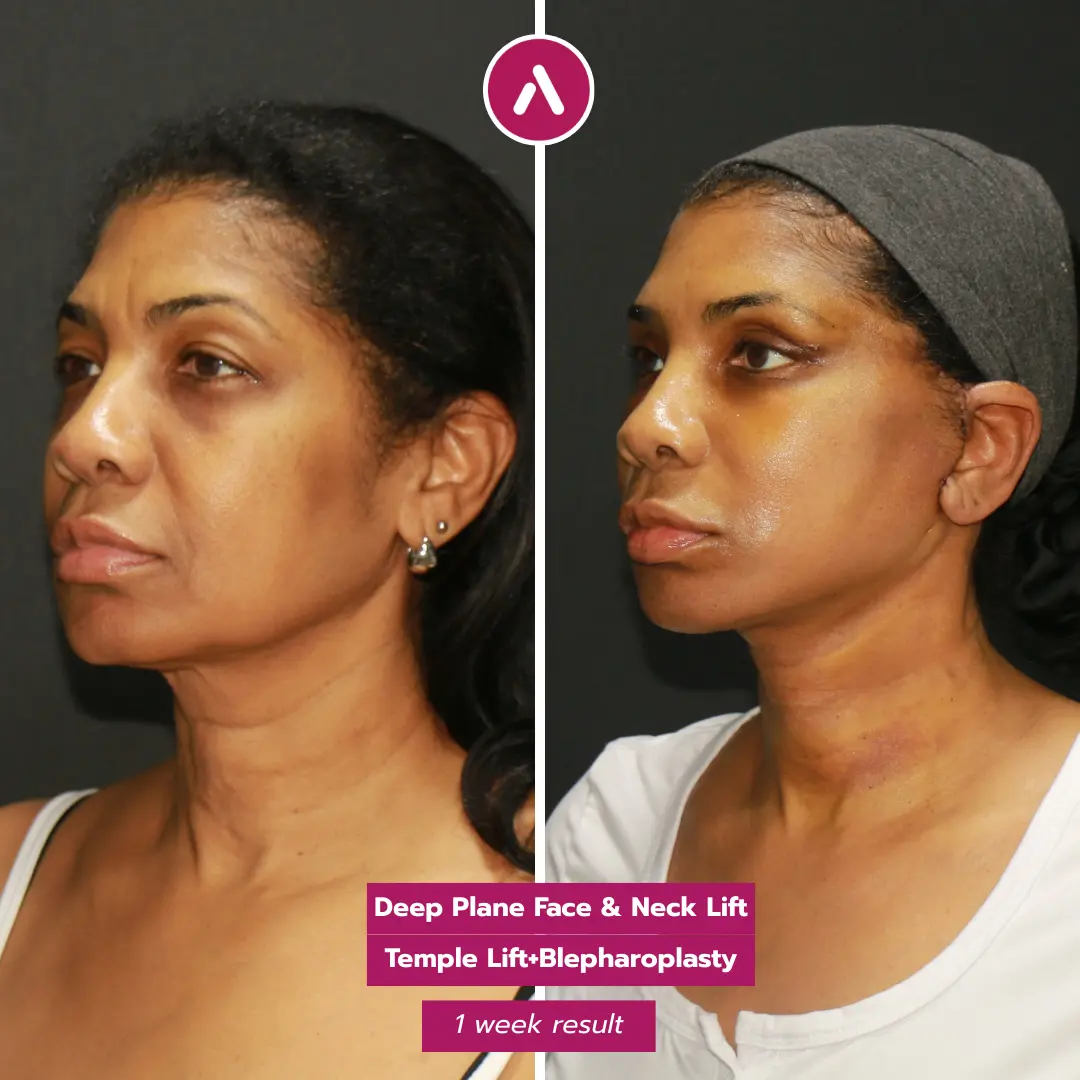
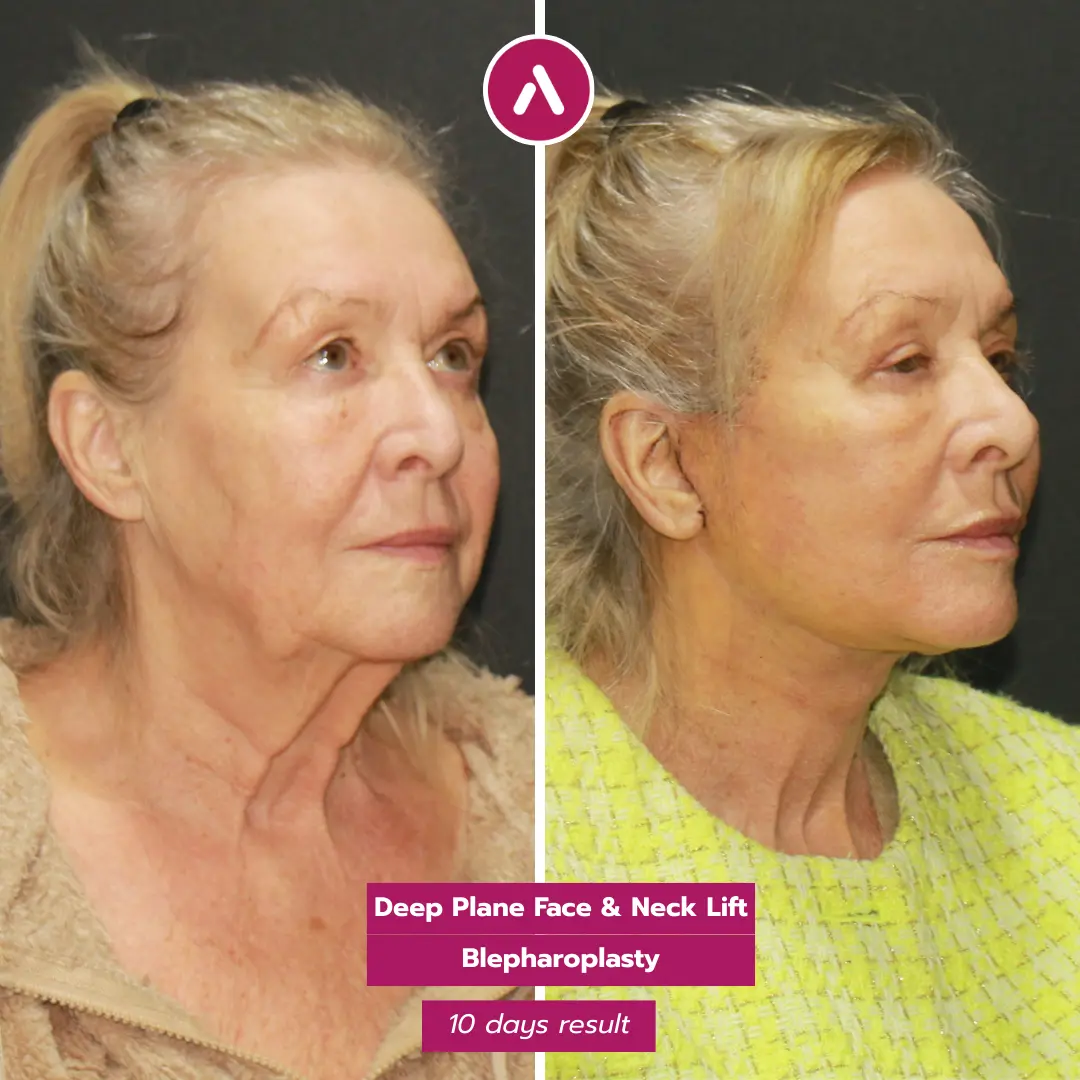
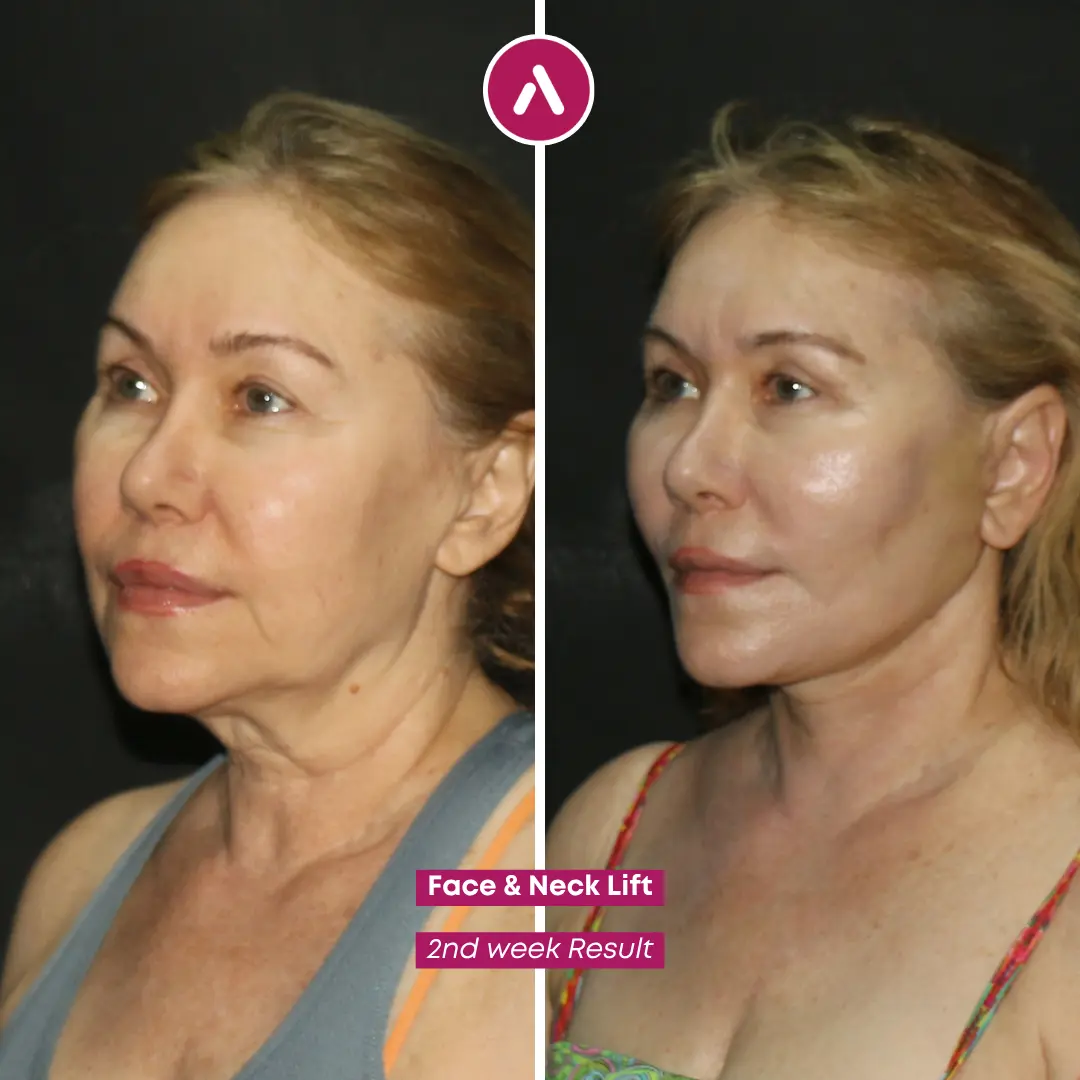
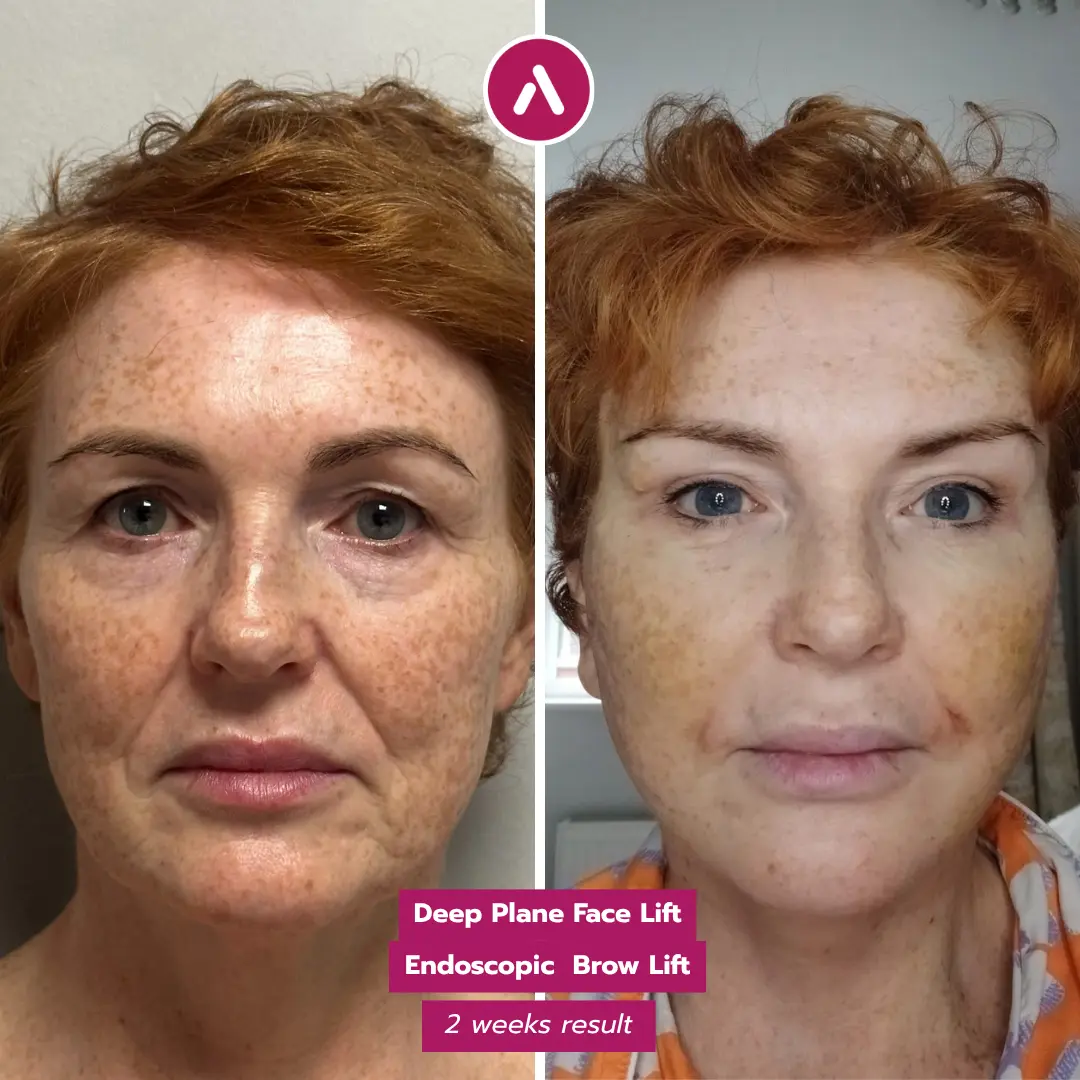
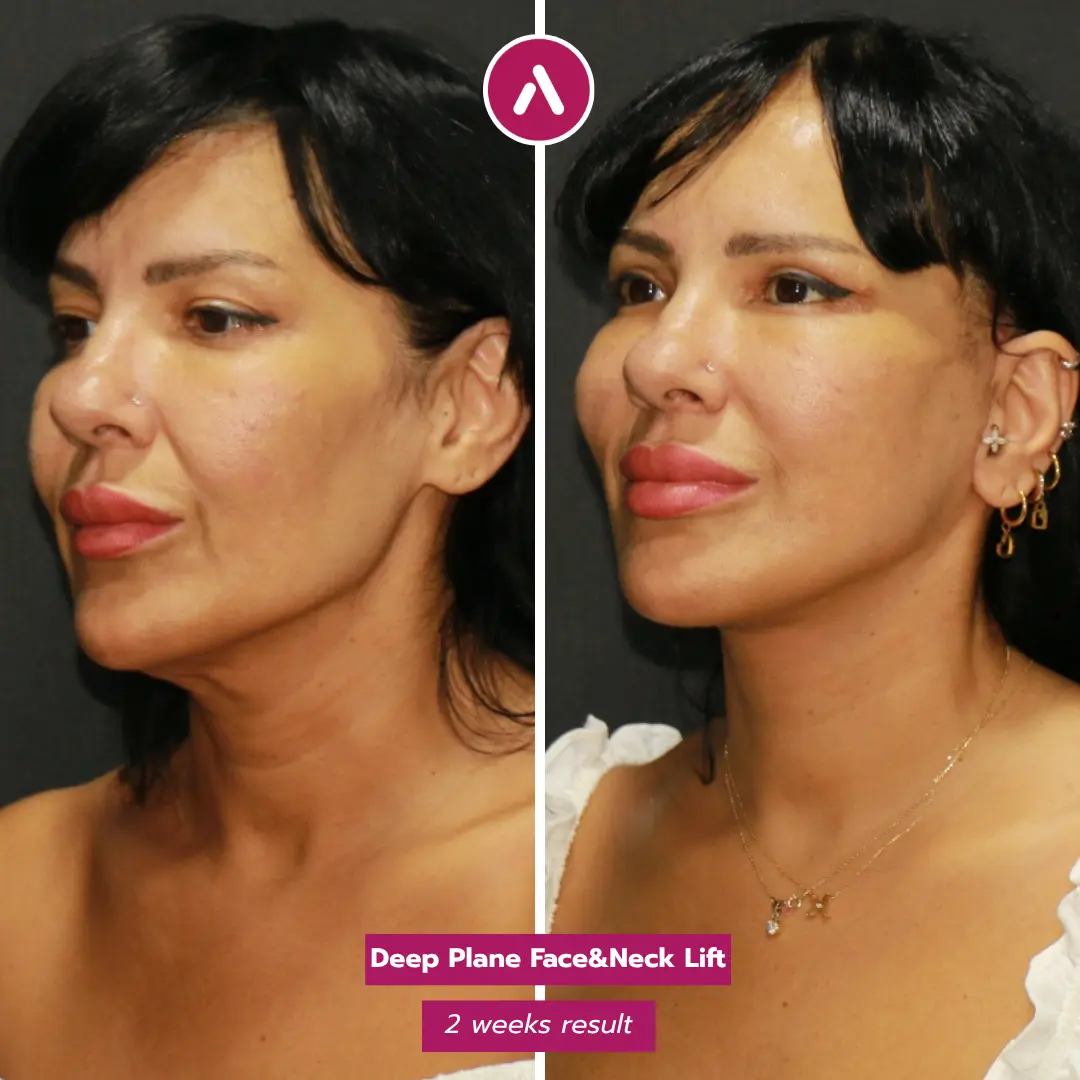
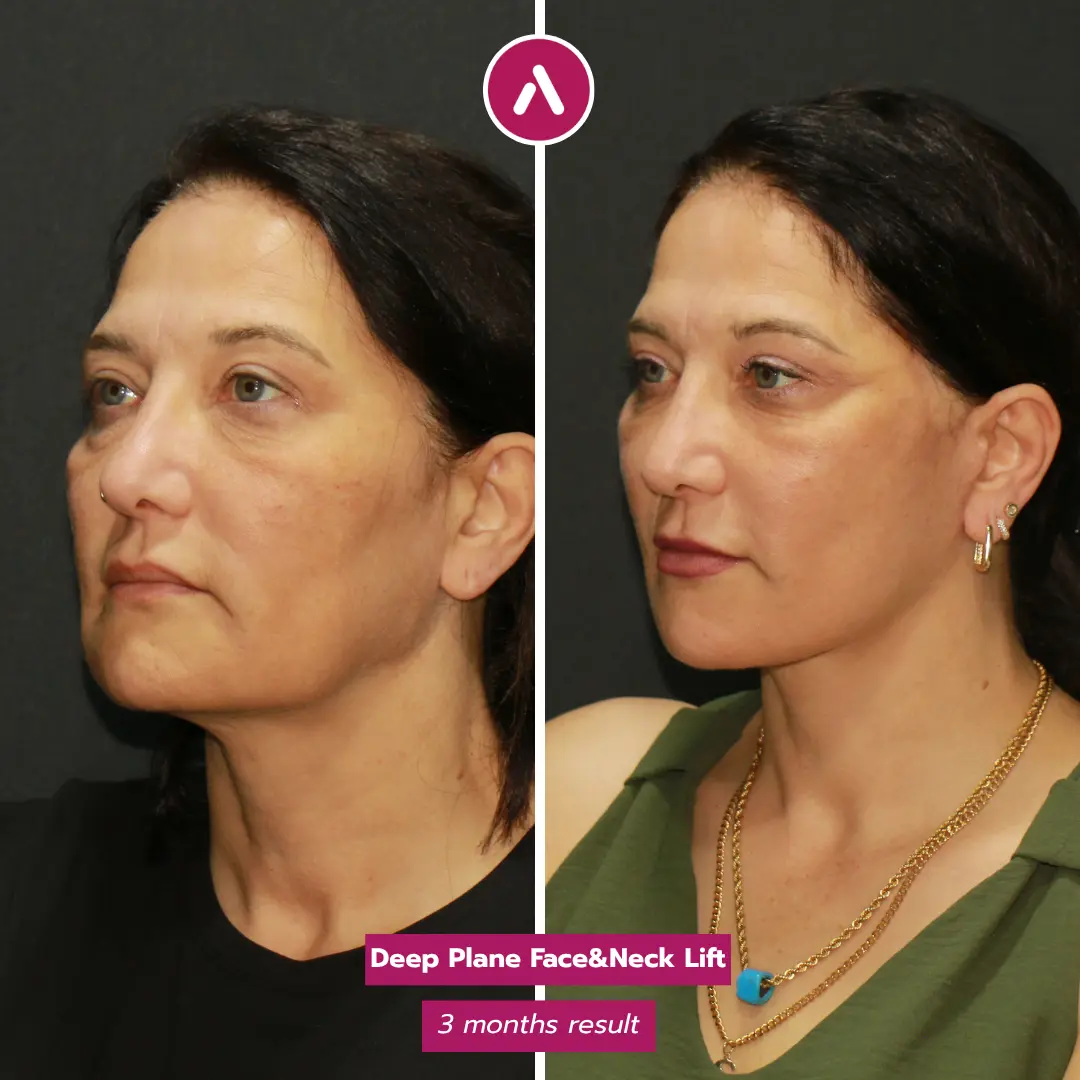
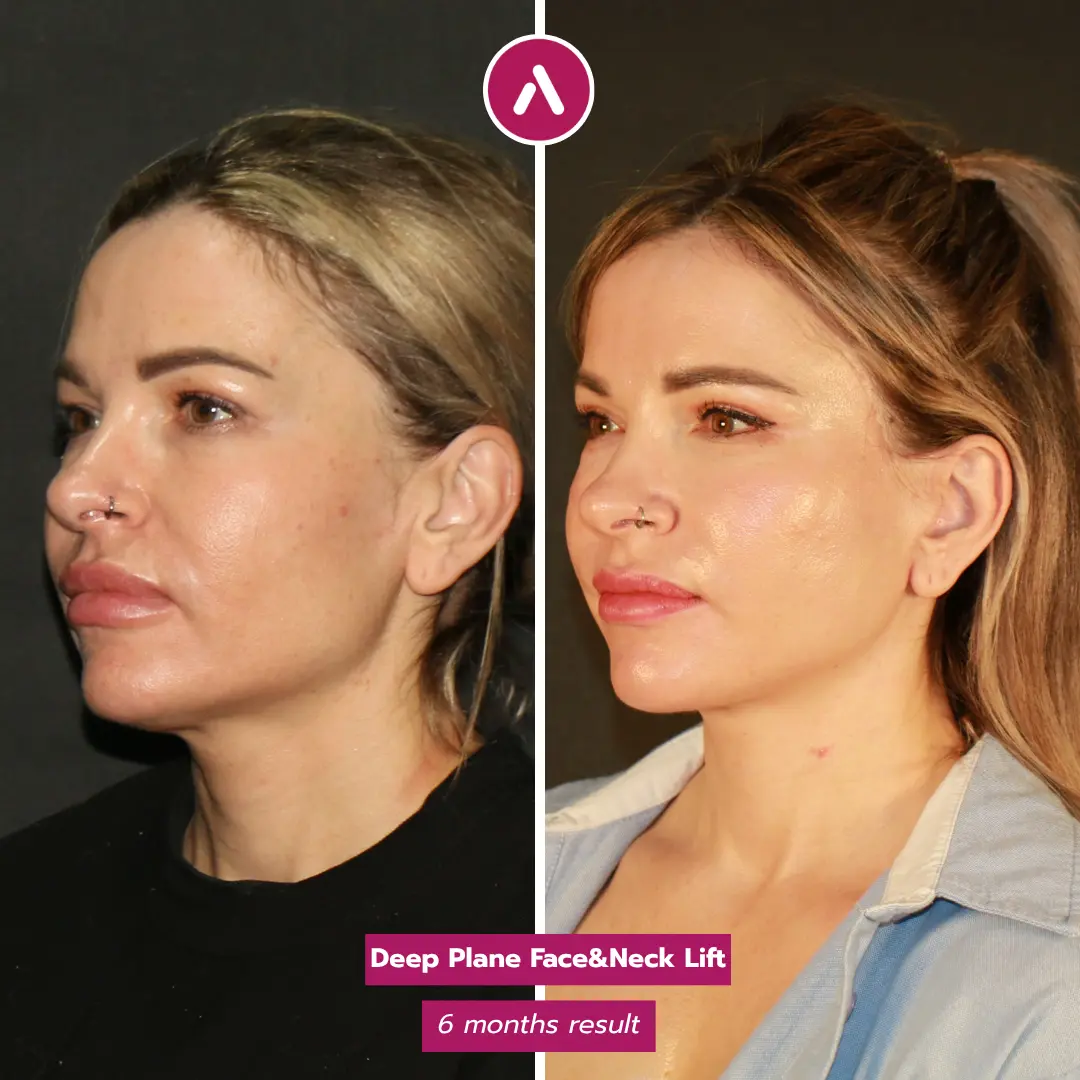
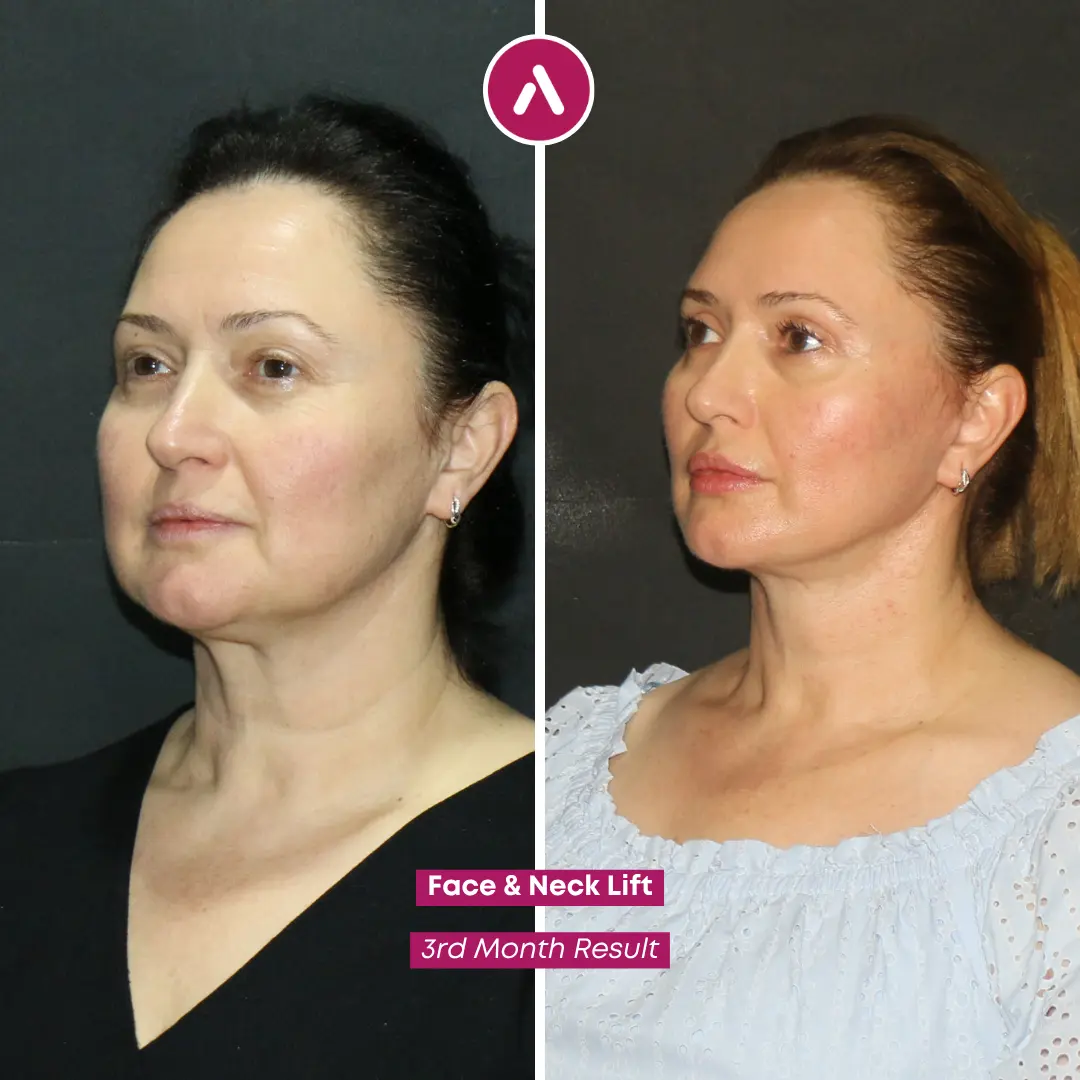
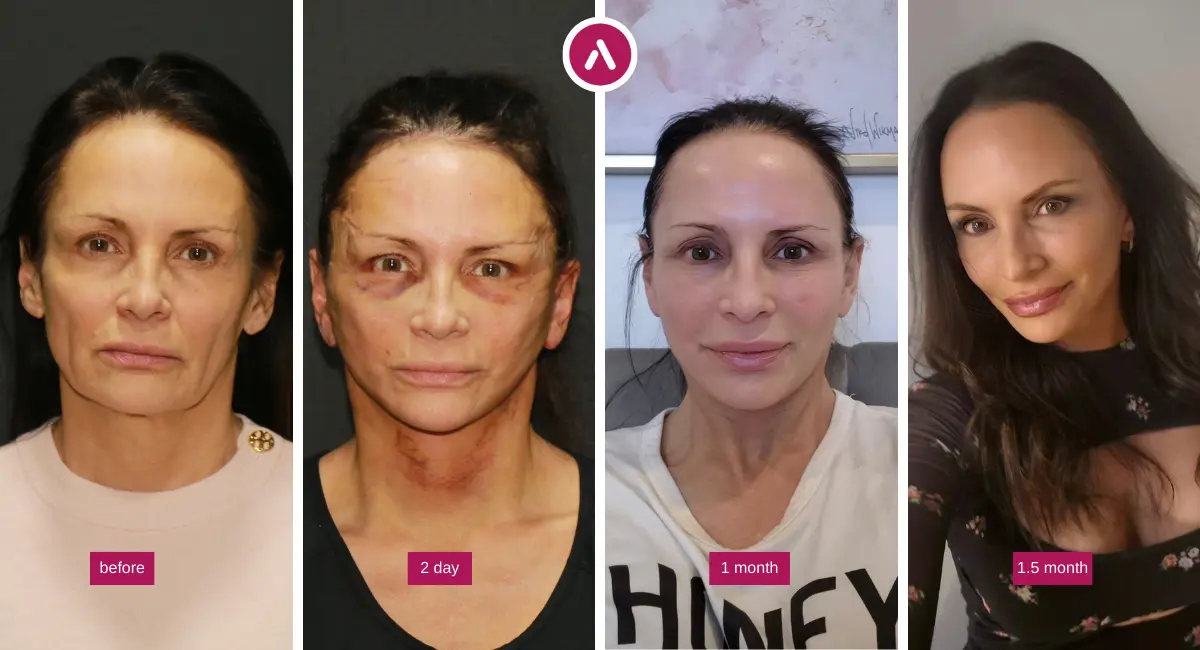
Every photo is labeled with the specific post-op time (1 week, 1 month, 3 months, 6 months, 1 year). This matters because swelling biology continues to evolve for months after surgery. A Week 1 "after" photo and a Month 6 "after" photo describe completely different moments in healing — confusing the two leads to either over-promising (if early photos look better than final) or under-estimating a truly excellent surgeon (if they only show honest mid-term results).
Multiple angles per case
You'll see front view, three-quarter view, and profile view wherever available. This is intentional: the quality of a deep plane facelift is revealed in the earlobe, hairline transition, cheek-to-jaw contour, and neck angle — not in a single front-facing shot. Any clinic showing only front photos is likely hiding something at the sides.
Neck-inclusive framing
Most "dramatic" transformations are actually face-and-neck cases. A face-only photo crop can hide whether the neck was addressed. In this gallery, photos include the neck whenever the patient underwent combined face and neck surgery — because the cervicomental angle (the neck-to-chin transition) is often where "years younger" visually lives.
* Usually responds in ~15 min
Explore Deep Plane Facelift Before and After Results
* No cost · No obligation · Surgeon-reviewed response
How to Read Deep Plane Facelift Before & After Photos
| Post-Op Timing | What You Can Realistically Judge | What’s Still Changing |
|---|---|---|
| 1 week | Bruising reduction, early contour direction, incision placement | Significant swelling, tight skin feel, residual numbness |
| 1 month | Improving definition, reduced swelling, more natural movement | Residual swelling (especially neck), scar maturation beginning |
| 3 months | Jawline contour becoming stable, softer facial movement | Final contour refinement, scar fading continues |
| 6–12 months | Stable final contour, mature scars, realistic “10 years younger” outcome | Very little — this is the most reliable stage |
Expert patient rule: If a before/after photo has no timeline label, assume it’s an early result being marketed as a final one. The clinics that label timelines honestly are the clinics worth trusting.
Green Flags vs Red Flags: What to Look For in Every Case
Green Flags (Signs of a Natural Deep Plane Result)
- Restored facial triangles — cheeks look supported, not pulled sideways
- Softened nasolabial folds — reduced, not erased (erasing looks frozen)
- Clean cervicomental angle — neck-to-chin transition is defined but not sharp
- Intact earlobe anatomy — no stretching, pinning, or elongation (no "pixie ear")
- Natural hairline — sideburn and temple hairline in original position
- Preserved facial expression — the patient looks like themselves, just rested
Red Flags (Signs of Over-Tension or Wrong Technique)
- Lateral pull near the ears — tightness radiating toward the ears instead of restoring midface
- Pixie ear deformity — earlobe stretched or pulled downward
- Shifted hairline — temple or sideburn visibly relocated
- "Wind tunnel" look — face tight but not youthful, stiff shine
- Distorted mouth corners — pulled-down or asymmetric smile
- Cropped photos that hide the ears or neck — a marketing move to hide problem areas
* Real coordinator · No robot chat · English-speaking
What Makes These Deep Plane Facelift Results Possible
Deep plane technique, not skin tightening
A deep plane facelift releases key retaining ligaments — including the zygomatic and masseteric ligaments — and repositions the composite skin-and-fascial flap as a single connected unit. Tension is distributed through the structural layer, not the skin. This is why AKM Clinic patients consistently show natural jawline restoration without earlobe distortion or lateral pull.
Dermatosurgeon + facial surgeon collaboration
AKM Clinic's distinctive model combines a facial-focused surgical team with dermatosurgeon expertise. This means rejuvenation is addressed at both the structural (deep-tissue lifting) and skin-quality (texture, healing, scar maturation) levels — which is why 6-month results often look more refined than early post-op photos.
HBOT + LLLT recovery protocol
Every deep plane facelift patient at AKM follows a structured recovery protocol including Hyperbaric Oxygen Therapy (HBOT) and Low-Level Laser Therapy (LLLT). These supportive modalities help with swelling management, tissue recovery, and scar quality during the critical first 2–4 weeks. They don't replace surgical skill — but they make the healing journey more predictable and comfortable.
Explore Related Facial Rejuvenation Procedures



Who Gets the Best Deep Plane Facelift Results?
The most impressive deep plane facelift before and after transformations aren’t only about surgical technique — they’re about matching the right operation to the right face at the right time. Ideal candidates in our gallery share similar patterns:
- Jowls and lower-face heaviness — the classic deep plane indication; a structural lift can restore a cleaner jawline without a “pulled” effect
- Neck laxity or a softened cervicomental angle — when paired with neck work, improvements are often striking (see our deep plane neck lift cases above)
- Midface descent — dropped cheeks and a heavier under-eye/cheek transition; deep structural repositioning creates a fresher midface
- Good overall health — no uncontrolled conditions, nicotine-free for at least 4 weeks pre-op
- Realistic expectations — wanting to look like a refreshed version of themselves, not a different person
When a Deep Plane Facelift May Not Be the Right Fit (Yet)
A responsible consultation sometimes means recommending a different approach — or waiting. Common reasons include:
- Primarily surface-level concerns (fine lines, skin texture, sun damage) — non-surgical treatments may be more appropriate first
- Advanced skin damage — deep plane work repositions structure, but severely thin or sun-damaged skin may still show texture issues after surgery
- Unrealistic expectations — if “10 years younger” is interpreted as “20+ years younger,” disappointment is likely regardless of surgeon skill
Expectation reset that protects you: A deep plane facelift changes contour first. Skin texture and fine lines may improve somewhat, but they’re not the primary target.
* Real coordinator · No robot chat · English-speaking
Frequently Asked Questions: Deep Plane Facelift Before & After
How long after surgery are these before and after photos taken?
Every case in this gallery is labeled with the exact post-op timing — 1 week, 10 days, 1 month, 3 months, or 6+ months. The most reliable comparison photos are taken at 6–12 months post-op when swelling has fully resolved, scars have matured, and the final contour is stable. Early photos (1–4 weeks) show healing direction but not final outcomes.
Will I really look "10 years younger" after a deep plane facelift?
Many AKM Clinic patients describe their result this way, but “10 years younger” is not a standardized measurement — it’s shorthand for restored facial triangles, a cleaner jawline, and a refined neck contour. The real question to ask: does the after still look like you, just refreshed? A well-executed deep plane facelift restores facial proportions; it doesn’t reinvent your identity.
What's the difference between deep plane facelift and SMAS facelift results?
Both techniques address facial laxity, but the deep plane approach releases deeper retaining ligaments and repositions the composite tissue flap as a connected unit. In before/after terms, this usually translates to smoother cheek-to-jaw transitions, less earlobe distortion, and longer-lasting results — especially in the midface. For a full technique comparison, see our deep plane facelift procedure page.
Can a deep plane facelift fix my neck?
Deep plane technique can improve the lower face and jawline significantly, but neck bands and submental (under-chin) laxity typically require a dedicated neck lift strategy. Most “wow” transformations in this gallery are actually combined face-and-neck cases. If the neck is your top priority, use the filter above to prioritize deep plane neck lift before and after cases specifically.
How do I know these photos aren't edited, staged, or cherry-picked?
Every AKM Clinic photo follows standardized conditions: same lighting, same camera distance, neutral expression, and consistent angles between before and after. We publish multiple angles per case (front, three-quarter, profile) and label exact post-op timing. On any single case detail page, you can see day-by-day recovery photos that would be impossible to stage or edit retroactively. We also include both early (1-week) and later (3+ month) photos — early images are kept deliberately because they demonstrate honest healing, not just flattering final shots.
What age range sees the best deep plane facelift results?
Most patients in this gallery are between 44 and 70 years old. Younger patients (44–49) often pursue a mini deep plane facelift for early-stage jowls, while patients in their 60s and 70s often combine full deep plane with neck lift and eyelid surgery for comprehensive facial harmony. The “best” result depends more on anatomy and aging pattern than age alone.
Do deep plane facelift results last longer than traditional facelifts?
Yes, typically. Because deep plane repositions structural layers rather than just tightening skin, results tend to be more stable over time. Most patients enjoy meaningful, stable improvement for 8–15 years, though aging continues and lifestyle factors (sun exposure, weight changes, skin quality) affect longevity.
Can I combine deep plane facelift with eyelid surgery, brow lift, or fat transfer?
Yes, and most cases in this gallery are combined procedures. Common additions include upper and lower blepharoplasty (eyelid surgery), endoscopic temporal brow lift, and fat transfer to face for volume restoration. Combined procedures often produce more balanced “whole face” rejuvenation than a facelift alone. Use the procedure filter above to see specific combinations.
What should I compare between my own photos and the cases in this gallery?
Before your consultation, take standardized photos of yourself — front, three-quarter, and profile views in consistent lighting with a neutral expression. Then identify the gallery cases whose starting point (not just end result) most closely matches your anatomy: similar jowl pattern, similar neck laxity, similar midface descent. This helps you form realistic expectations about what’s achievable for your face specifically.
How do I book a consultation to see if my results could look like these?
Share your photos and medical history through our free virtual consultation to receive a personalized assessment from our European Board-Certified facial surgery team. We’ll review the cases in this gallery that most closely match your starting point and explain what’s realistically achievable for your anatomy — including whether a standalone deep plane facelift, combined procedure, or alternative approach best fits your goals.
Hear from Real AKM Clinic Deep Plane Facelift Patients
Laura

Sarah

Dilek

* No cost · No obligation · Surgeon-reviewed response
Choose Your All-Inclusive Deep Plane Facelift Package





* From $5,000 · All-inclusive · No hidden fees
Ready to Start Your Own Transformation Journey?
Join the 2,000+ patients who trusted the AKM Clinic team. Your journey to a more confident, revitalized you begins with a simple, no-obligation conversation. Contact us today from the USA for your free virtual consultation.
#1: Get Your Free Personalised Quote
Start with a free, no-obligation online consultation. Share your photos, and our surgical team will provide a fully personalised treatment plan and a transparent, all-inclusive price package. No hidden fees.
#2: Secure Your Date & VIP Booking
Once you're ready, our dedicated patient coordinators will help you secure your procedure date. We'll handle all your bookings, including your 5-star hotel and private VIP airport transfers.
#3: Arrive in Istanbul & Meet Your Surgeon
Arrive at Istanbul Airport (IST) and be greeted by your private driver. Settle into your hotel and prepare for your in-person consultation, where you'll meet your specialist surgeon to finalise the details for your "natural, subtle, and revitalized" new look.