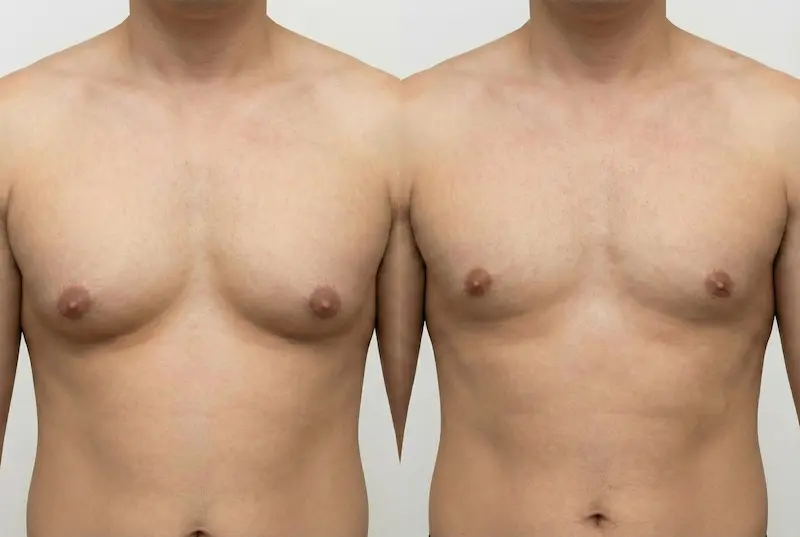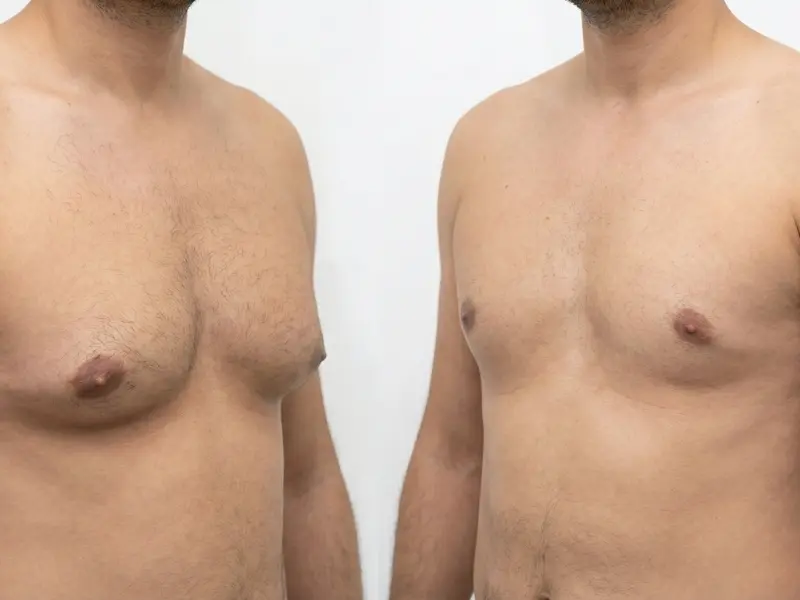

If you’ve been comparing gynecomastia surgery Turkey options, you’re probably not looking for “just flatter.” You want a chest that looks athletic, defined, and natural—with clean lines, balanced shape, and no obvious signs of surgery. That “high-definition” result is possible, but it depends on choosing the right technique (gland removal vs. lipo vs. both), having a surgeon who understands male chest anatomy, and following a recovery plan that supports predictable healing.
This guide is written for the expert-level patient—someone who reads gynecomastia surgery Turkey reviews, studies gynecomastia surgery before and after galleries, and wants decisions grounded in medical science and real-world surgical outcomes (not marketing promises).
Patient perspective matters: One AKM Clinic patient described his result simply as: “I didn’t think it could turn out this well.” The goal of this article is to help you understand what makes that kind of outcome more likely—especially for high-definition contouring.
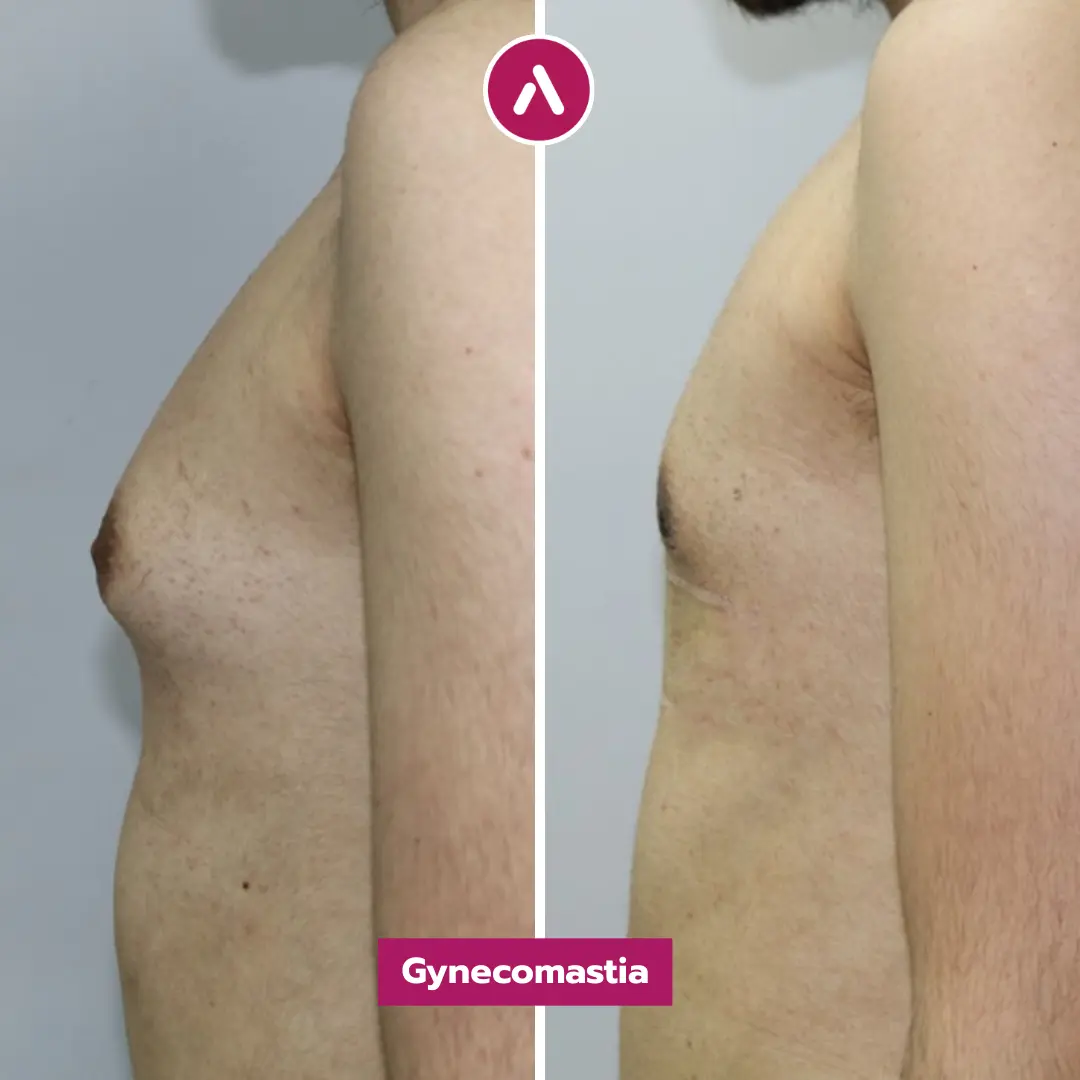
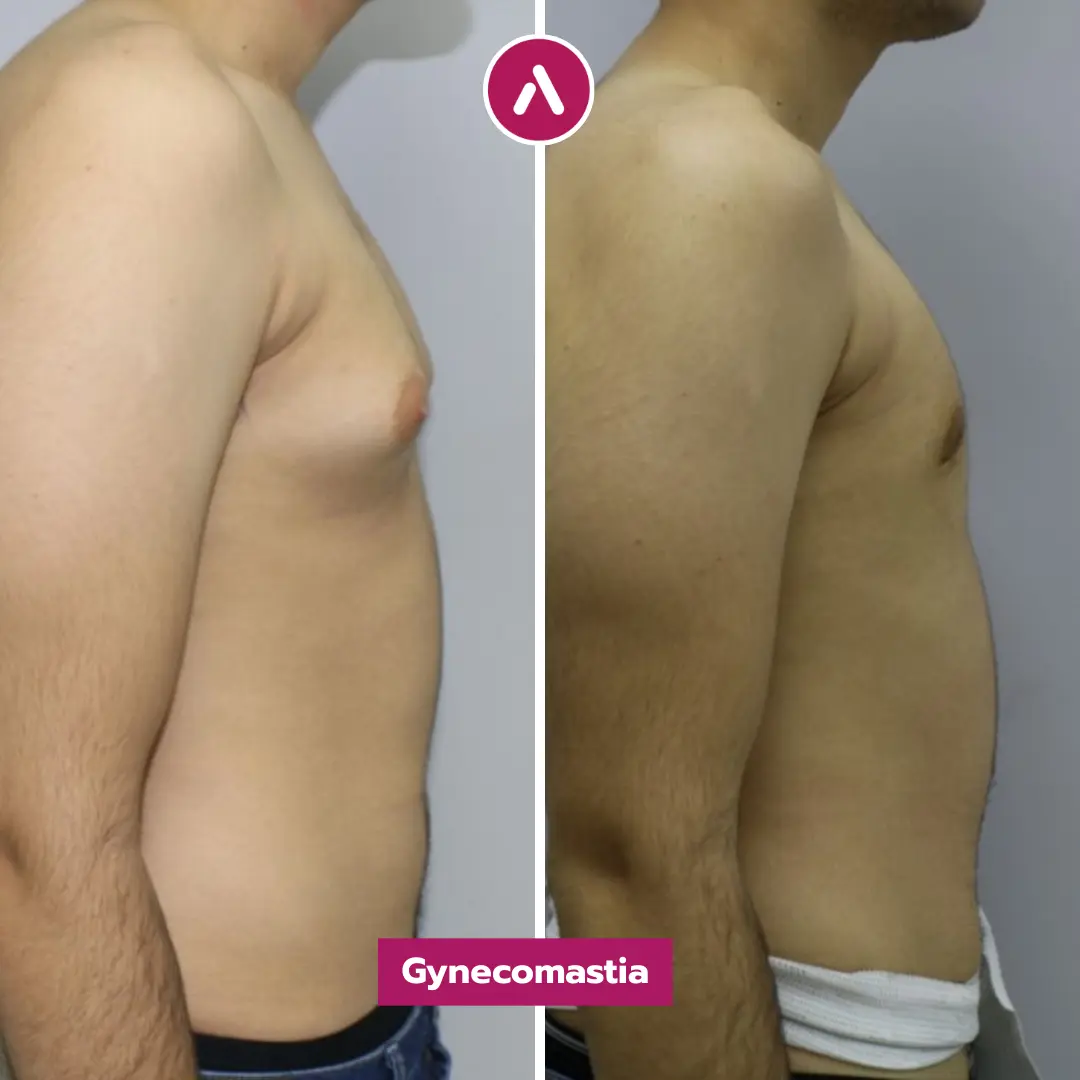
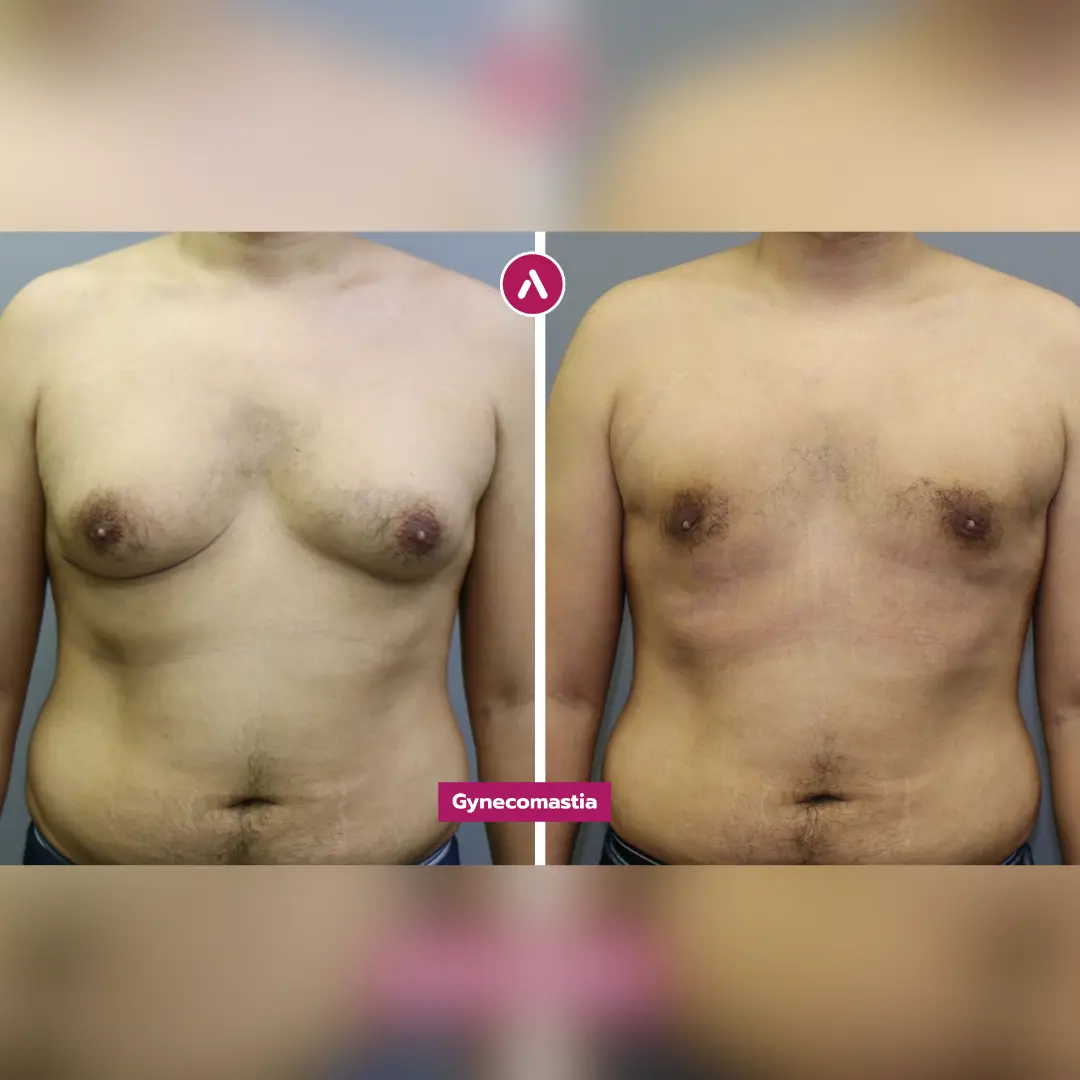
Table of Contents
What Is Gynecomastia—and What “High-Def Chest” Really Means
Gynecomastia is the enlargement of male breast tissue—often caused by a combination of dense gland and fat. The “high-def” goal isn’t only reducing volume; it’s sculpting the chest so it reads as masculine in real life: smooth transitions, symmetric contours, and a natural nipple-areola position. In gynecomastia surgery in Turkey, the best outcomes typically come from matching the technique to your exact tissue type and skin quality.
True gynecomastia vs. “puffy chest” (fat-dominant pseudogynecomastia)
Many men assume they only have fat, but true gynecomastia usually includes a firm gland under the nipple. From a scientific research standpoint, gland-dominant cases respond poorly to “lipo-only” approaches because dense tissue isn’t reliably removed with suction alone.
| What you feel/see | More likely | What typically works best |
|---|---|---|
| Firm, rubbery disc under the nipple | True gynecomastia (gland) | Gland excision ± liposuction for blending |
| Soft fullness across the chest | Pseudogynecomastia (fat-dominant) | Liposuction with precise contouring |
| Fullness + firmness + uneven shape | Mixed (gland + fat) | Combined approach (common for high-def results) |
What “high-definition” contouring aims to achieve (shape, shadows, symmetry)
A high-def chest is about controlled shadow and highlight: a clean border where the chest meets the armpit line, smooth transitions along the sternum, and symmetry between left and right. In practice, it means your surgeon isn’t only “removing,” but also shaping—especially around the lower chest and outer edges where contour mistakes show most.
The #1 reason results look “flat” or “unfinished” after surgery
The most common reason is an incomplete plan: either gland is left behind (persistent puffiness) or blending isn’t done well (visible step-offs/irregularities). High-definition outcomes usually require a combination of precise tissue removal and careful contour blending rather than a single, one-size technique.
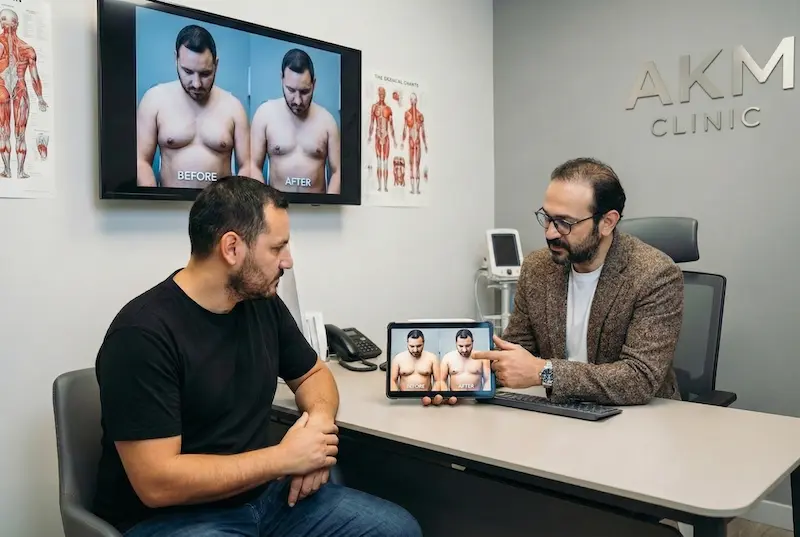
Am I a Good Candidate for Gynecomastia Surgery in Turkey?
Good candidates want a chest that looks natural, not “operated.” You don’t need perfection—just the right baseline: stable weight, a clear understanding of what surgery can and can’t do, and a plan for recovery. When patients search Turkey gynecomastia surgery, the real differentiator is often whether the clinic can tailor the approach to your tissue, skin elasticity, and definition goals.
How to tell if you need gland excision, liposuction, or both
If you have a firm lump under the nipple, excision is often necessary. If you have diffuse fullness, lipo may be enough. If you have both (very common), a combined strategy is usually best for high-definition shaping. Your consult should include a plain-English explanation of why a certain approach fits your anatomy.
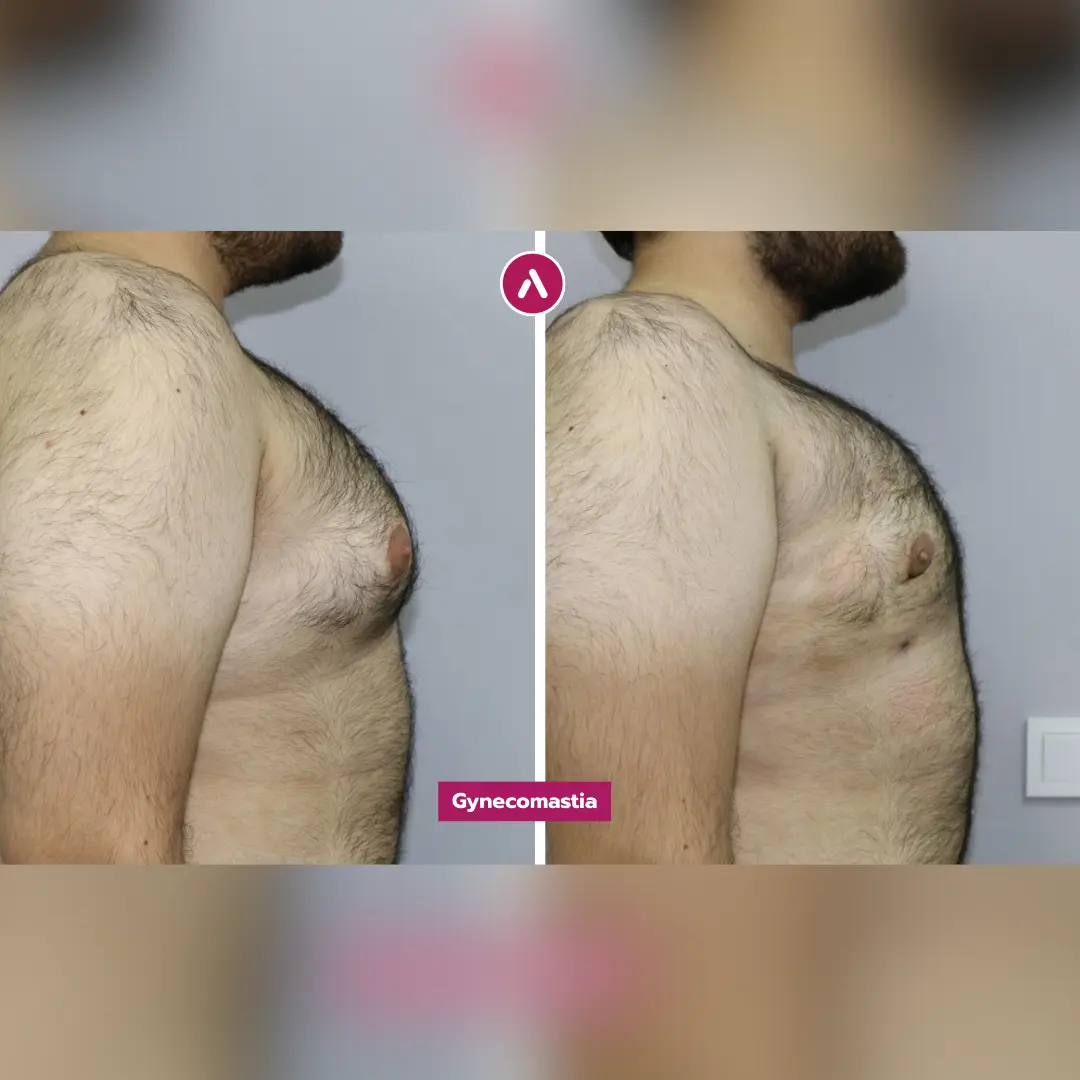
Skin quality, weight stability, and realistic expectations
Skin retraction (how well the skin “snaps back”) depends on elasticity, the amount removed, and individual biology. The most predictable outcomes happen when your weight is stable and your expectations are aligned with how healing works in medical science: swelling resolves gradually, scars mature over months, and definition improves with time—not overnight.
When you may need skin tightening or additional chest reshaping
If there’s significant looseness, removal alone may not create a tight, athletic contour. In those cases, your surgeon may discuss strategies to improve retraction and reduce wrinkling. The key is honesty: you want a plan that prioritizes a natural look rather than an over-promised “instant tight chest.”
Techniques Used to Create a High-Def Male Chest
High-definition results come from technique selection and execution—especially around the nipple area and the chest borders. While many patients focus on gynecomastia surgery Turkey price or gynecomastia surgery cost Turkey, outcomes are more closely tied to surgical planning, anatomy-based sculpting, and controlled healing.
Gland excision: how surgeons remove dense tissue for a flatter, masculine contour
Excision targets the dense gland beneath the nipple that often causes “puffy” projection. Done well, it reduces fullness while preserving a natural contour. Done aggressively, it can create a “crater” or indentation—one of the most common concerns expert patients watch for in gynecomastia surgery before and after photos.
Vaser lipo for chest sculpting: blending the borders for a natural “athletic” look
When used appropriately, ultrasound-assisted liposuction (often referred to as VASER) can help refine contours and blend transitions—especially at the outer chest and underarm region. The goal is not a “hollow” chest, but a smooth, masculine shape that looks right in motion and under real lighting.
Nipple-areola refinement and symmetry strategies (avoiding “crater deformity”)
The nipple-areola complex is where high-def results are won or lost. The surgical plan should address symmetry, avoid over-resection under the nipple, and prioritize a natural position. In your consult, ask exactly how the surgeon prevents contour collapse and how symmetry is checked during surgery.
Step-by-Step: What Happens Before, During, and Right After Surgery
For patients traveling for gynecomastia surgery in Turkey, clarity reduces anxiety. A structured pathway—pre-op assessment, a defined surgical plan, and a disciplined early aftercare routine—helps you avoid the “unknowns” that often drive fear of complications. This section breaks down what typically happens so you can compare clinics using real decision points (not vague promises).
Pre-op planning: measurements, photos, marking, and “target shape” alignment
A high-def result starts before you enter the operating room. Pre-op planning usually includes standardized photos, measurements, and surgical markings while standing—because chest shape changes with posture. This is where you and the surgeon align on your “target outcome”: flatter vs. athletic definition, how aggressive contouring should be, and how to handle asymmetry (which is extremely common). In evidence-based practice and scientific research on aesthetic outcomes, clear pre-op planning is consistently linked to higher satisfaction.
Surgery day overview: anesthesia options, procedure flow, and typical duration
Most gynecomastia procedures are performed as day surgery. The surgical flow generally includes: anesthesia, infiltration (fluid to reduce bleeding and support lipo), liposuction (if planned), gland excision (if needed), symmetry checks, and closure. The exact anesthesia choice depends on your medical profile and surgeon preference. For expert patients, the key question is not just “How long?” but: How is symmetry verified during surgery? and How is under/over-resection prevented?
First 72 hours: swelling, bruising, garment use, and pain expectations
The first 72 hours are when swelling and fluid shifts are most noticeable. Most patients report manageable discomfort rather than severe pain—especially when the aftercare plan is clear. Compression garments matter because they support skin adherence and reduce fluid accumulation. If you’re comparing Turkey gynecomastia surgery programs, look for a clinic that gives a written protocol: garment hours/day, shower timing, and the exact warning signs that require urgent contact.
| Timeframe | What’s normal | What needs attention |
|---|---|---|
| 0–24 hours | Swelling, tightness, mild drainage (if used) | Rapid one-sided swelling, severe pain, shortness of breath |
| 24–72 hours | Bruising increases then stabilizes, soreness with movement | Fever, increasing redness, sudden firm expanding lump |
| Days 4–7 | Swelling begins to soften, mobility improves | Worsening pain, foul-smelling drainage, persistent asymmetry spike |
Safety, Risks, and How “Botched” Outcomes Happen (and How to Avoid Them)
Most fears around gynecomastia surgery Turkey reviews trace back to a few predictable problems: bleeding/hematoma, fluid collection, contour irregularity, and unnatural nipple appearance. These are not “mystery complications”—they usually happen for identifiable reasons. A high-quality clinic reduces risk with good candidate selection, precise technique, and disciplined aftercare standards supported by medical science.
Most common issues: hematoma, seroma, contour irregularity, under/over-resection
Hematoma (bleeding under the skin) is one of the more urgent early risks; it can threaten the final shape if not managed quickly. Seroma (fluid collection) can also distort contour and delay skin adherence. Then there are aesthetic issues: under-resection (persistent puffiness), over-resection (crater/indentation), and uneven blending. When you compare clinics by gynecomastia surgery Turkey price, don’t ignore what’s included in follow-up care—early detection and management is part of outcome quality.
Nipple sensation changes: what’s normal, what’s not, and recovery likelihood
Temporary sensation changes can occur because swelling and tissue handling affect nerves. Many patients see improvement as healing progresses. The practical point: your clinic should explain what patterns are typical (numbness that improves gradually) versus concerning (progressively worsening pain, intense discoloration, or signs of compromised blood flow). If a clinic won’t discuss this transparently, that’s a red flag.
Infection prevention and aftercare standards that reduce complication rates
Infection is uncommon when proper sterile technique and post-op guidance are followed, but it’s still a known risk. Strong aftercare reduces risk: clear wound care instructions, compression guidance, and accessible clinical support. In scientific research on surgical safety, consistent protocols and timely follow-up are repeatedly associated with fewer complications and faster recovery.
Expert patient tip: Ask clinics to walk you through their “if-then” plan. If swelling spikes, if you suspect a seroma, if you develop a fever—what happens next, and who responds?
Scars and Skin Retraction: What Your Chest Will Look Like Long-Term
For most patients, scars are not the main problem—shape is. But scar placement and maturation still matter, especially if you want a confident shirtless look. The best approach balances discreet incisions with the ability to remove gland tissue properly and sculpt the chest smoothly. If you’re reviewing gynecomastia surgery before and after cases, look at more than “flatness”: check nipple position, contour consistency, and how scars sit in normal lighting.
Typical incision locations and scar visibility over time
Incisions are commonly placed at the edge of the areola (to hide the line in the color transition) and/or in small lipo entry points. Early scars can look pink and firm, then gradually fade. True long-term appearance is judged over months, not weeks.
Skin retraction: why it varies and how surgeons optimize it
Skin retraction depends on elasticity, the amount of tissue removed, and the quality of contouring underneath the skin. When sculpting is smooth and compression is used correctly, the skin is more likely to adhere evenly. If there is significant laxity, expectations should be discussed upfront—because “high-def” requires not only removal but also a skin envelope that can settle properly.
Scar maturation timeline and evidence-based scar care plan
Scar remodeling is gradual. Many patients notice improvements in texture and color over 3–12 months. Evidence-based scar care often includes silicone-based products and sun protection (if the area is exposed). The key is consistency—short bursts of care rarely change outcomes.
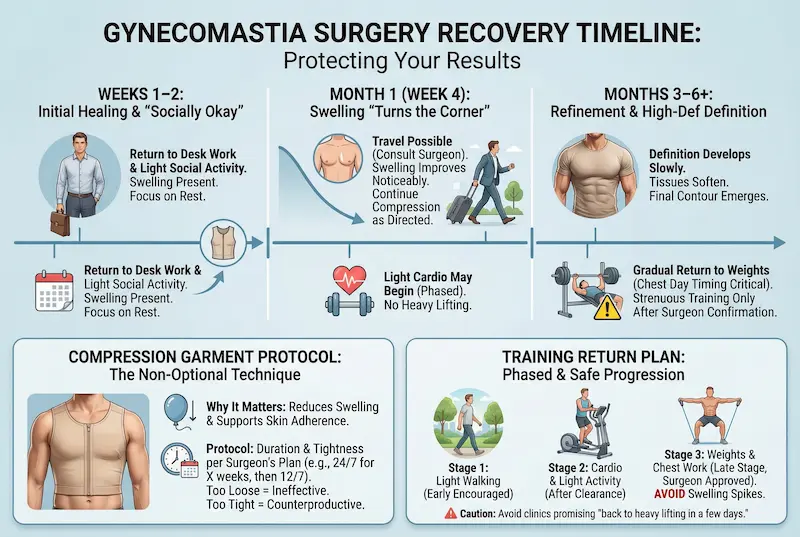
Recovery Timeline—When You Can Work, Travel, and Return to the Gym
Recovery is where results are protected—or compromised. Most dissatisfaction comes from either unrealistic timelines or poor adherence to compression/activity restrictions. If you’re comparing gynecomastia surgery cost Turkey packages, check whether structured follow-ups and clear recovery instructions are included, because they directly affect your final contour.
Week-by-week milestones (including when swelling “turns the corner”)
Many patients feel “socially okay” within 1–2 weeks, but definition develops more slowly. Swelling often improves noticeably over the first month, then continues to refine over several months. High-def results are often best assessed later—after the chest has settled and tissues soften.
Compression garment protocol: how long, how tight, and why it matters
Compression helps reduce swelling and supports skin adherence. The exact duration varies by surgeon, but the principle is consistent: compression is part of the technique, not an optional accessory. Too loose is ineffective; too tight can be uncomfortable and counterproductive. Your plan should specify hours/day and total weeks.
Training return plan: cardio vs. weights, chest day timing, and safe progression
Light walking is usually encouraged early. Strenuous training—especially heavy chest work—typically waits until the surgeon confirms healing is adequate. A phased return reduces swelling spikes and helps keep the contour smooth. If a clinic promises “back to heavy lifting in a few days,” treat that as a credibility issue.
| Activity | Common timing (varies by patient) | Why it matters |
|---|---|---|
| Desk work / light duties | ~3–7 days | Minimizes strain while swelling stabilizes |
| Travel / flights | Often within 5–10 days (case-dependent) | Comfort, swelling control, safe mobility |
| Cardio (light) | ~1–2 weeks | Supports circulation without stressing chest tissues |
| Weights (upper body/chest) | Commonly ~4–6+ weeks | Protects healing and reduces contour distortion risk |
Gynecomastia Surgery Cost in Turkey (and What You’re Actually Paying For)
When patients search gynecomastia surgery cost Turkey or gynecomastia surgery Turkey price, it’s easy to compare numbers and miss the bigger question: what does the price include—and what is it designed to protect? The cost of gynecomastia surgery is driven by your technique (lipo-only vs gland excision vs combined), the operating environment, anesthesia, and—most importantly for “high-def”—the surgeon’s ability to shape the chest with smooth transitions.
Price drivers: technique (gland + lipo), surgeon expertise, facility, aftercare
A “high-def” chest usually requires a combined approach (gland removal plus contouring lipo), especially when you want clean borders and no residual puffiness. Costs also rise with complexity: significant asymmetry, tougher gland tissue, or loose skin that requires more advanced planning. From an expert-patient perspective, the smartest question is: Does the quote include a complete technique plan + structured follow-up?
Comparison: New York vs Los Angeles vs Miami vs Istanbul (AKM Clinic) expectations
In the U.S., published averages vary widely depending on what is included (surgeon fee vs total cost). The American Society of Plastic Surgeons (ASPS) reports an average surgeon fee of $7,000, noting this does not include anesthesia or facility fees.
City-based estimates can trend higher: one published cost guide lists average prices around $9,000 in New York City, $7,550 in Los Angeles, and $8,825 in Miami (with wide ranges).
For gynecomastia surgery in Turkey, international marketplace estimates commonly place typical ranges around $3,000–$4,000, depending on technique and what’s included.
| Location | Published “typical” pricing signals (varies by case) | What expert patients should verify |
|---|---|---|
| New York City | Higher city averages reported (around $9k in some guides) | Total cost vs surgeon fee, follow-up plan, revision policy |
| Los Angeles | Often high; published city averages around mid–high $7k | Technique details: gland + blending, symmetry process |
| Miami | Published averages often in the $8k range; some lower ranges exist | Scar strategy, contour smoothing, complication response plan |
| Istanbul (Turkey) | International estimates often around $3k–$4k | What’s included (tests, garments, follow-ups), safety standards |
Why patients compare Turkey with Mexico and Thailand—and what to weigh beyond price
Some patients also compare Turkey gynecomastia surgery with Mexico and Thailand due to lower costs. Published estimates commonly put Mexico around $3,500–$5,000 and Thailand around $2,700–$2,800 (range varies by source and technique).
But cost alone doesn’t protect outcomes. Expert patients weigh: (1) surgeon’s high-def chest portfolio consistency, (2) facility standards and sterility, (3) post-op accessibility and protocols, and (4) what happens if swelling spikes or a seroma develops. This is where “cheap” can become expensive in revisions.
How to Choose the Right Surgeon and Clinic in Istanbul for High-Def Results
Most disappointing outcomes aren’t “bad luck”—they’re predictable: lipo-only when gland was the real issue, over-resection under the nipple, poor blending at the borders, or weak aftercare instructions. If you’re reading gynecomastia surgery Turkey reviews, look for patterns that reflect process quality: clear planning, safe recovery, and results that look natural from multiple angles—not just one hero photo.
The “high-def chest” checklist: before-after patterns, symmetry, and revision signals
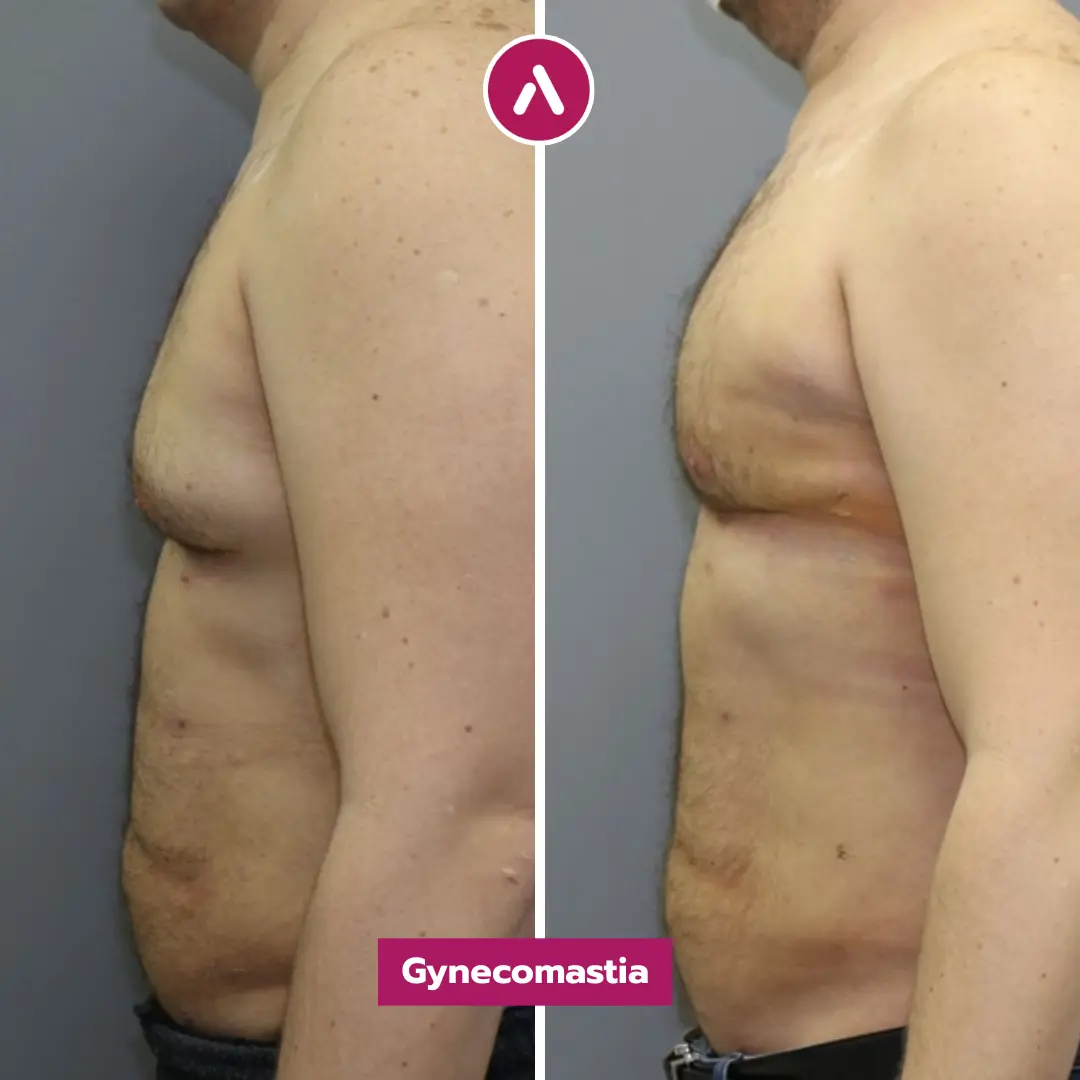
When reviewing gynecomastia surgery before and after cases, don’t only look for “flat.” Check:
- Nipple area: no crater/indentation and no persistent puffiness.
- Outer chest blend: smooth transitions toward the armpit line.
- Symmetry: similar contour and nipple position left vs right.
- Consistency: multiple patients with similar “natural athletic” outcomes.
Questions to ask in a consult: plan, garment, follow-ups, and emergency protocols
- “Based on my tissue, do I need gland excision, lipo, or both—and why?”
- “How do you prevent under-resection (puffiness) and over-resection (crater)?”
- “What is your compression garment protocol—hours/day and total weeks?”
- “If swelling spikes or I suspect a seroma, what is the exact response pathway?”
- “When do you consider a result ‘final’ and how do you handle revisions?”
Red flags: guaranteed outcomes, vague technique, no aftercare roadmap
Be cautious if a clinic guarantees a “perfect” result, can’t explain technique differences, or doesn’t provide a written recovery plan. High-definition contouring is detail work—if the communication is vague, the plan usually is too.
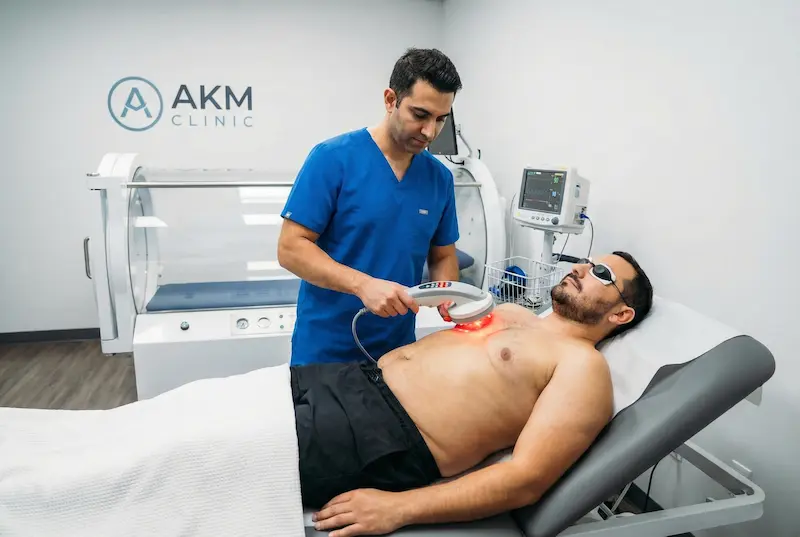
Recovery Support That Protects Your Result: HBOT & LLLT at AKM Clinic
A high-def chest is not only created in surgery—it’s protected during healing. AKM Clinic emphasizes structured post-op recovery support that includes advanced therapies designed to reduce swelling, support tissue healing, and improve scar quality. This matters because swelling control and tissue adherence influence how “defined” your final contour looks.
HBOT (Hyperbaric Oxygen Therapy): swelling control, tissue support, and scar healing
AKM Clinic highlights Hyperbaric Oxygen Therapy (HBOT) as a core safety-focused recovery tool. HBOT is positioned to support tissue oxygenation, reduce inflammation-related swelling, support scar healing processes, and help mitigate infection risk as part of a broader safety framework.
LLLT (Low-Level Laser Therapy): cellular repair support during healing
AKM Clinic also uses Low-Level Laser Therapy (LLLT) as a non-invasive recovery support tool. LLLT is described as supporting cellular activity involved in repair processes—an approach often discussed in medical science contexts where clinicians aim to reduce downtime and support skin/tissue recovery.
Safety standards as part of the “high-def” outcome equation
For international patients, safety is part of the result. AKM Clinic’s care standards emphasize strict sterilization and hygiene protocols, official licensing and authorization, and applying recovery technologies within a structured clinical pathway. In practical terms: fewer complications, more predictable healing, and better conditions for refined contouring.
Real-world note from a patient story: One male patient described his outcome with genuine surprise: “I didn’t think it could turn out this well.” That reaction typically comes from a combination of the right surgical plan and a recovery process that protects the contour as swelling resolves.
How to Read Gynecomastia Surgery Turkey Reviews Like an Expert (Not Like a Shopper)
Most gynecomastia surgery Turkey reviews mix emotional reactions with limited technical detail. As an “expert patient,” your job is to filter for signals that correlate with surgical quality: consistent contour logic, realistic timelines, and a clinic’s ability to manage predictable bumps in recovery (swelling spikes, fluid collections, scar phases). This is where medical science and real-world healing patterns matter more than star ratings.
Look for “process clues,” not hype words
- Planning clarity: Did the patient mention a clear explanation of gland vs fat and why their plan fit their anatomy?
- Compression + follow-up: Were garment instructions specific (hours/day, weeks) and were follow-ups structured?
- Problem-solving: If swelling or fluid happened, did the clinic respond quickly with a clear protocol?
Match the reviewer to your body type and goal (high-def vs “just flatter”)
When reviewing testimonials, prioritize patients who wanted the same endpoint you do. A high-def goal (athletic definition) is different than simply reducing fullness. Your best “comparison set” is men with similar skin quality, similar starting fullness, and similar expectations—then evaluate if the result looks natural from multiple angles.
Use before-and-after photos correctly (most patients don’t)
Gynecomastia surgery before and after images can be misleading if lighting, posture, and camera distance change. Try to assess:
- Nipple-areola zone: Is there residual puffiness or a crater?
- Outer border blend: Does the chest transition smoothly into the underarm line?
- Symmetry: Are left and right contours comparable in relaxed posture?
Patient realism: In AKM Clinic’s testimonial set, one male patient described his outcome with genuine surprise: “I didn’t think it could turn out this well.” That kind of reaction usually reflects both a sound plan and a recovery pathway that protects the contour while swelling resolves.
A Quick Self-Check: Do You Need Gland Removal, Lipo, or Both?
Many men who search Turkey gynecomastia surgery assume they just need liposuction. In reality, dense gland tissue is a frequent cause of persistent nipple projection—and it often requires excision to achieve a truly masculine contour. A careful consult is still essential, but this self-check helps you ask sharper questions.
The “pinch test” and the “disc test” (simple but not perfect)
- Soft, diffuse pinchable tissue: may indicate fat-dominant fullness.
- Firm, rubbery disc under nipple: more suggestive of true gynecomastia (gland component).
These are not diagnostic tools—just a way to understand why lipo-only sometimes fails to deliver high-definition outcomes.
What skin quality tells you about the final “definition”
Even a perfectly executed reduction can look “soft” if skin elasticity is poor. The skin envelope needs time to settle and adhere. In scientific research and clinical practice, swelling resolution and tissue remodeling are gradual—so definition improves over weeks and months, not days.
When a “high-def” result is most realistic
High-definition contouring is most predictable when: your weight is stable, your skin has reasonable elasticity, and the plan includes both removal (gland/fat) and blending (smooth borders). If those factors aren’t present, the goal should shift toward “natural and balanced,” with high-def as a possibility—not a guarantee.
Evidence Snapshot: What Published Sources Say About Costs (Use This for Context, Not as a Quote)
Pricing varies by surgeon, facility, technique, and what’s included. Still, published benchmarks can help you interpret gynecomastia surgery cost Turkey and gynecomastia surgery Turkey price ranges more responsibly—especially if you’re comparing large U.S. metro areas to Istanbul.
U.S. baseline: ASPS average surgeon fee (not total cost)
The American Society of Plastic Surgeons (ASPS) lists an average surgeon fee of $5,587 for gynecomastia surgery and notes that anesthesia and facility fees are not included. (So your total can be higher.)
City-level variation: why New York / Los Angeles / Miami can trend higher
City-level cost guides show wide ranges and reflect market differences; they’re useful for “direction,” not precision.
International ranges: Turkey vs Mexico vs Thailand (ranges vary by source)
International marketplaces commonly report ranges for gynecomastia surgery in Turkey, Mexico, and Thailand, but inclusions differ across packages—so always verify what’s included.
Frequently Asked Questions (FAQ): Gynecomastia Surgery Turkey
These are the most common questions patients ask when deciding on gynecomastia surgery in Turkey—especially when they want a high-definition result and are comparing gynecomastia surgery Turkey reviews, pricing, and before-after outcomes.
How long do gynecomastia surgery results last—can it come back?
Results are typically long-lasting when the gland is removed (if present) and weight remains stable. Recurrence is uncommon, but significant weight gain, certain medications, or hormonal factors can affect chest appearance over time.
Will I have visible scars around the nipple?
Many approaches place incisions at the edge of the areola where the color change helps camouflage the line. Scars usually mature over months and often become much less noticeable, but scar quality varies by individual healing.
When can I fly home after gynecomastia surgery in Turkey?
Many patients travel within about a week, but timing depends on swelling, comfort, and surgeon guidance—especially if there’s any concern about bleeding or fluid collection. Your clinic should give a clear travel plan and warning-sign checklist.
How do I know if I need gland removal or just lipo?
Firm tissue under the nipple often indicates a gland component, which may require excision. Fat-dominant fullness may respond to lipo alone. The most reliable answer comes from a surgeon’s exam (or a detailed remote assessment when in-person is not possible).
What if I have loose skin—will surgery fix it?
Mild looseness often improves as swelling resolves and the skin retracts. More significant laxity may limit “high-def” definition and can require additional strategies. A trustworthy consult will explain what your skin can realistically do.
When can I return to weightlifting and chest workouts?
Light activity often returns earlier, but heavy chest training typically waits several weeks so tissues can stabilize. Returning too aggressively can prolong swelling and affect contour refinement.
What are the most common reasons patients need revision surgery?
The most common reasons are persistent puffiness from under-resection (often gland left behind), crater/indentation from over-resection, contour irregularities from poor blending, and unresolved asymmetry. A precise plan + strong aftercare reduces these risks.
If you’d like to go beyond the topic covered here, you can also explore our related resources, including Questions to Ask Plastic Surgeon for smarter consultations, Ghost Surgery in Turkey to understand safety red flags, and Plastic Surgeon Board Certification to verify credentials. We also break down what’s typically included in Plastic Surgery Packages Turkey, what to expect from Lymphatic Drainage Massage After Lipo during recovery, and when Scar Revision Surgery Turkey may be considered for optimizing long-term aesthetic outcomes.