
If you’re searching deep plane facelift Turkey before and after, you’re probably not looking for marketing—you’re looking for proof: real facial changes that still look like you. The phrase “10 years younger” can be true for the right candidate, but it’s not a promise. It’s a result of precise anatomy-based lifting (not skin-pulling), realistic expectations, and a healing timeline that’s understood—stage by stage.
In this guide, you’ll learn how to evaluate deep plane facelift before and after photos like an expert patient, what “natural” looks like in deep plane facelift before and after results, and how to avoid common photo traps (angles, swelling, lighting). We’ll also reference what medical science considers normal healing changes so you can judge results at the right time—not too early.
Key takeaway: The best deep plane face lift before and after results don’t scream “surgery.” They quietly restore contour—jawline, midface, and neck—without tension or distortion.
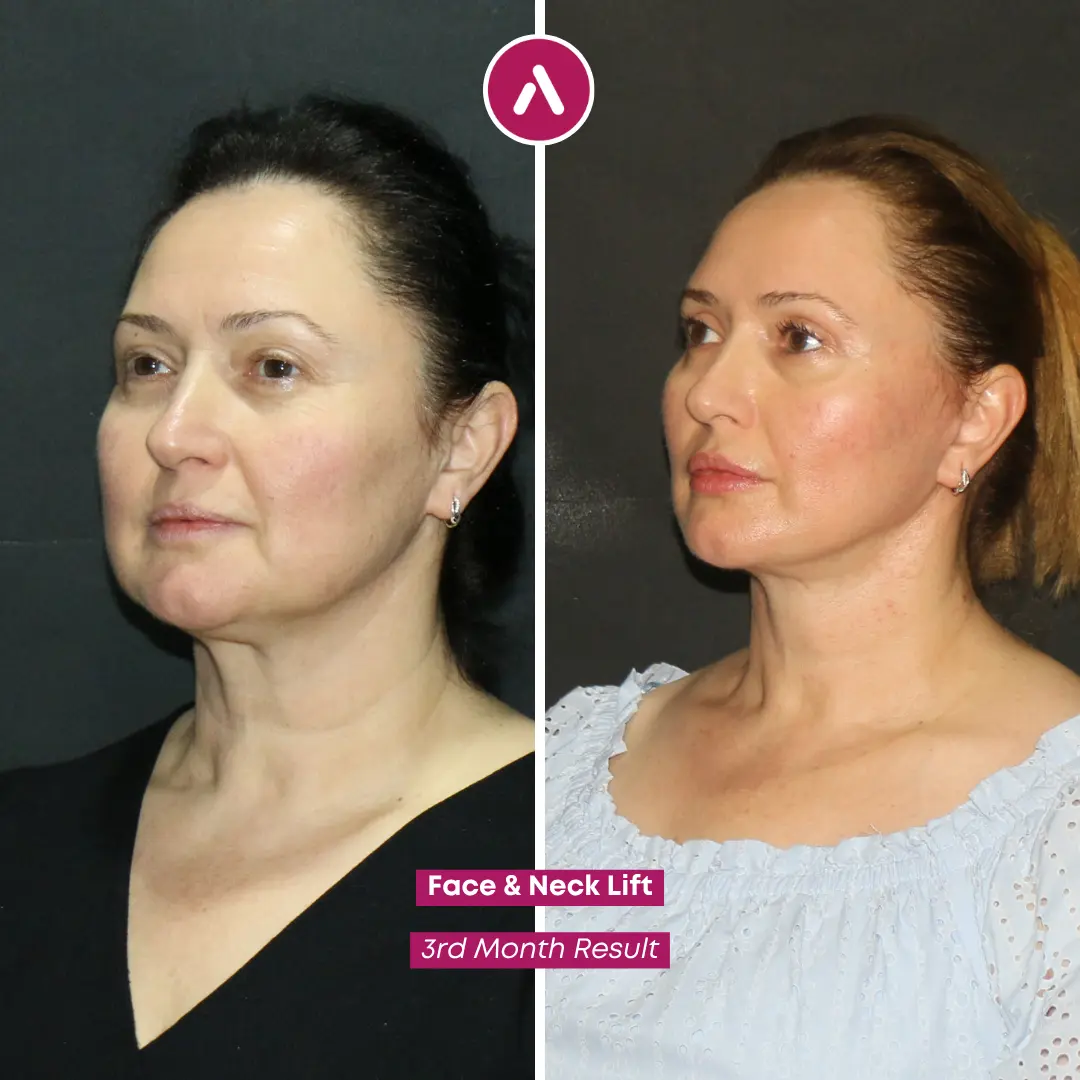
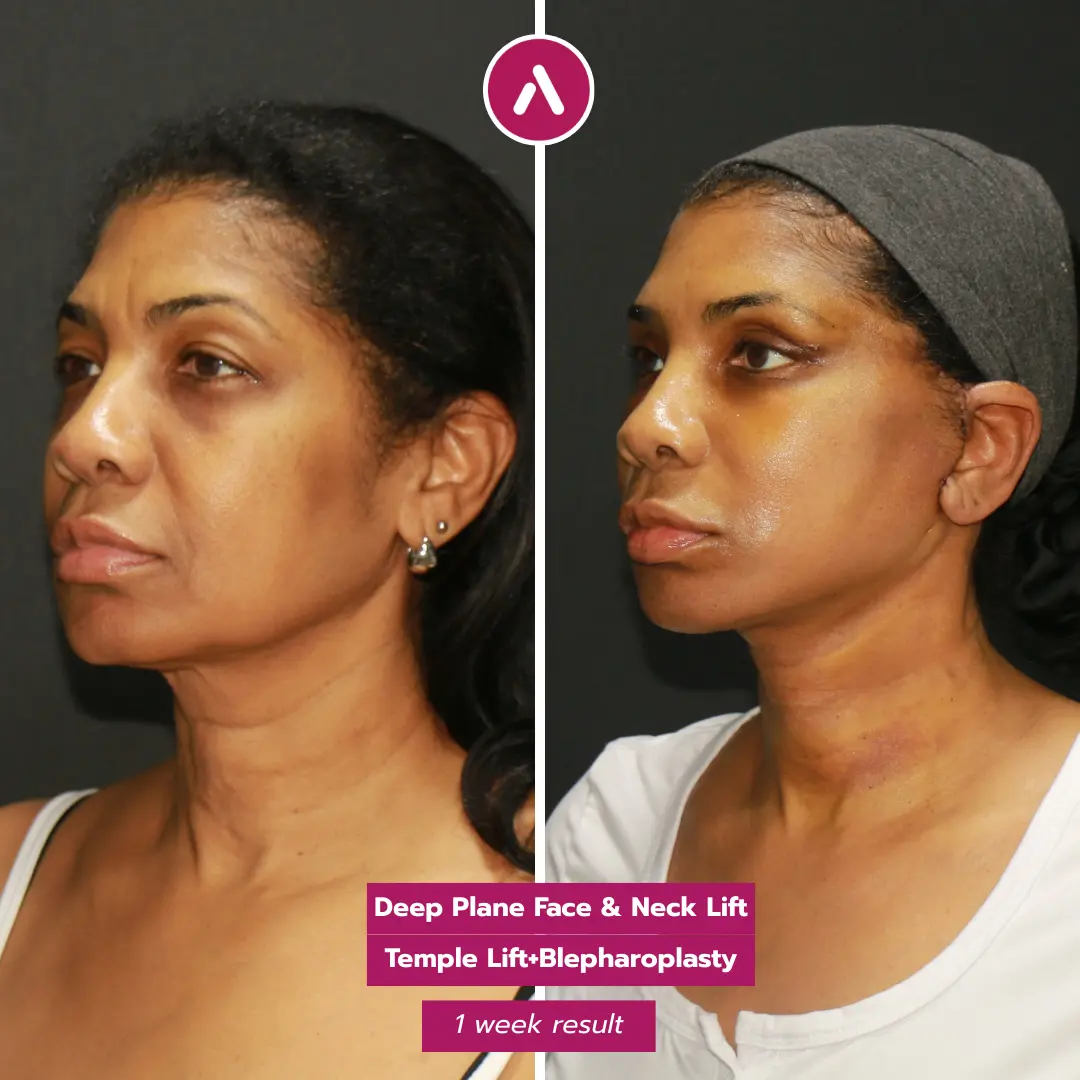
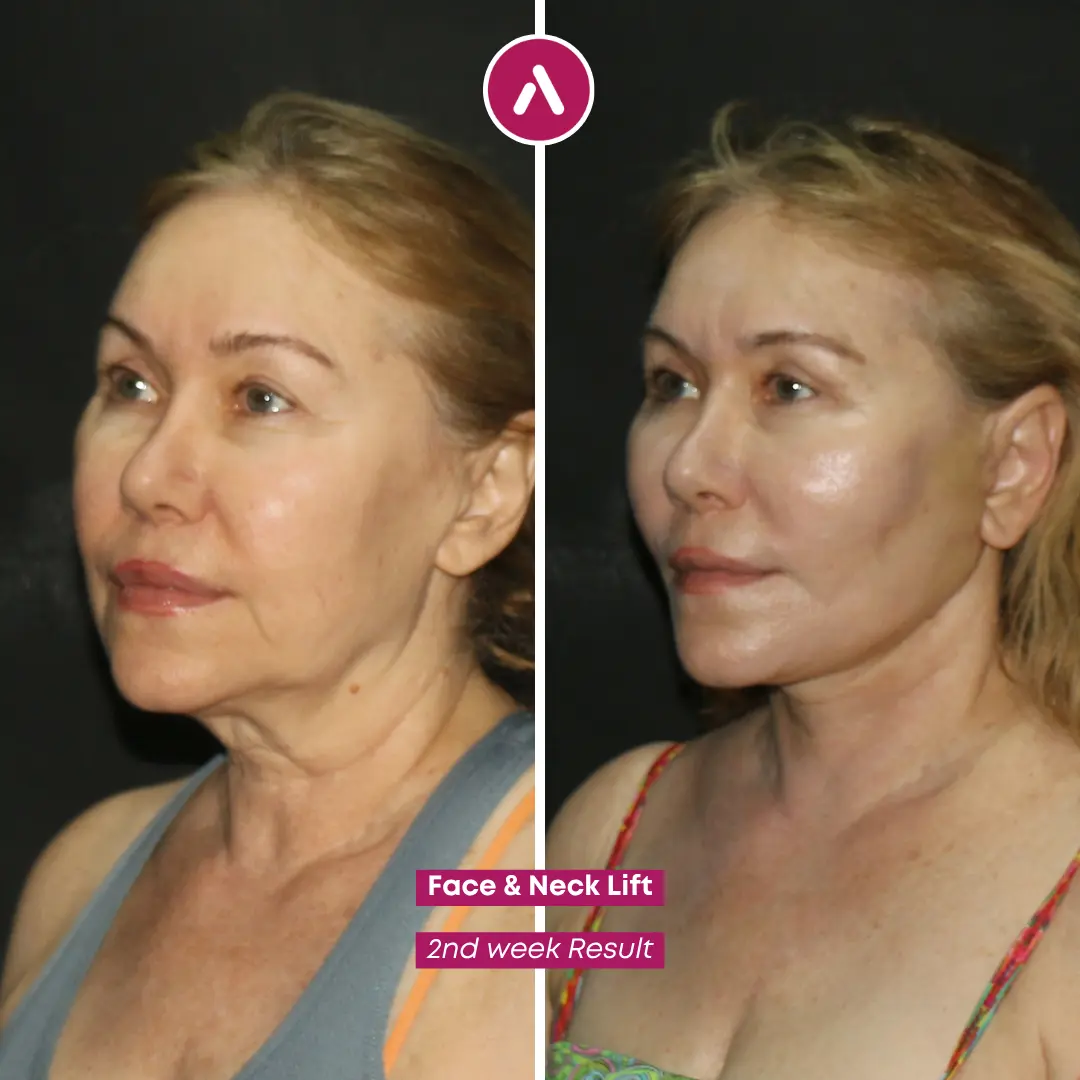
Table of Contents
What Is a Deep Plane Facelift Before and After?
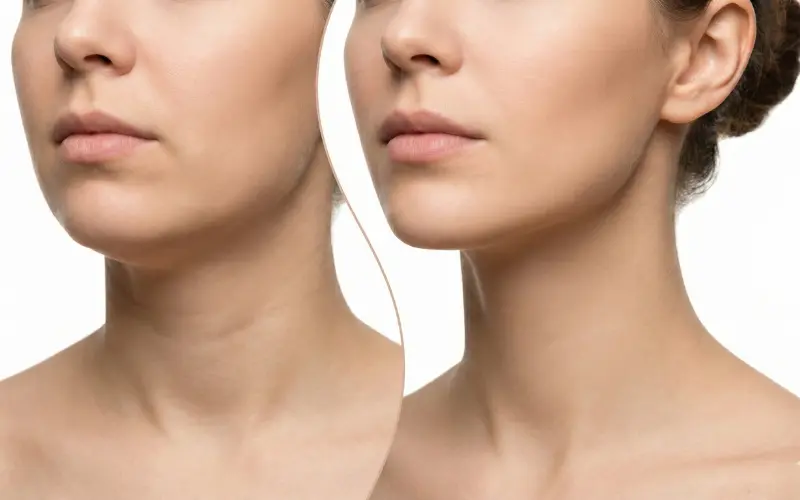
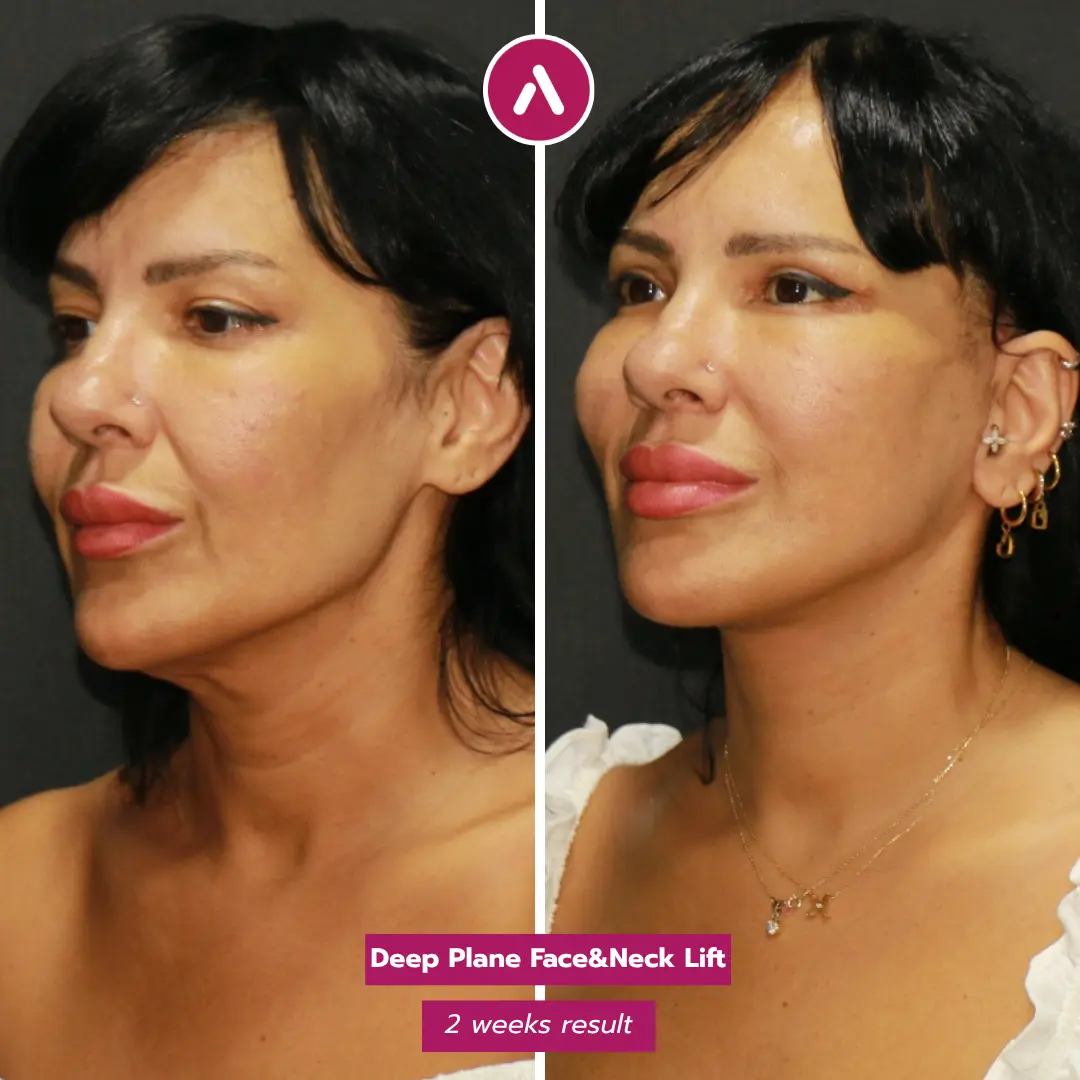
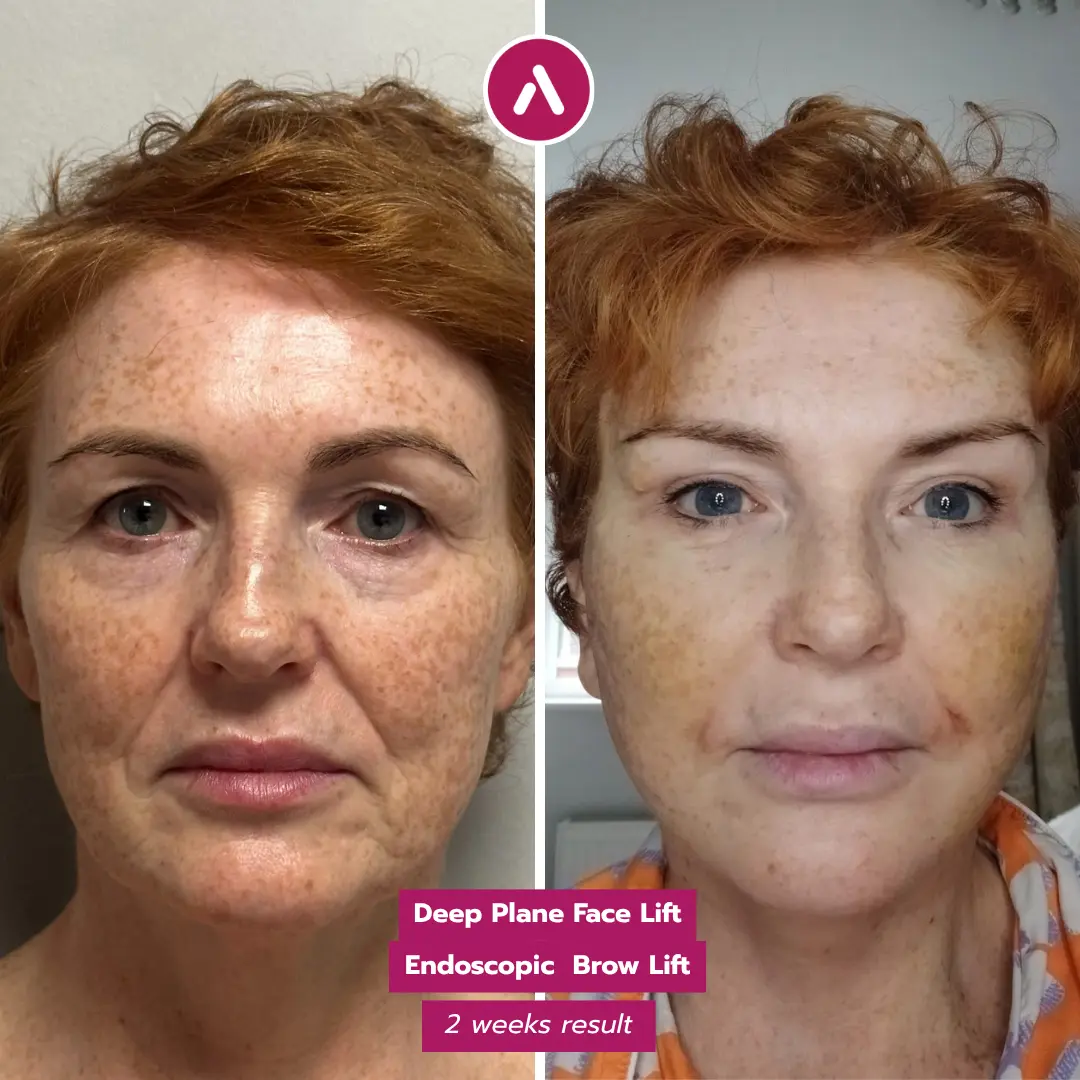
When patients search deep plane facelift Turkey before and after, they’re usually trying to understand one core question: what changes are realistic—and what’s just photo illusion. A deep plane facelift is designed to reposition deeper facial support structures rather than simply tightening skin. In practical terms, the best deep plane facelift before and after comparisons show a smoother jawline, reduced jowling, and a more refined neck-to-chin angle—without the “over-pulled” look that many expert patients fear. Because healing evolves over time, the most reliable deep plane facelift before and after results are typically judged months after surgery, when swelling has settled and contours look stable.
Deep plane facelift before and after men
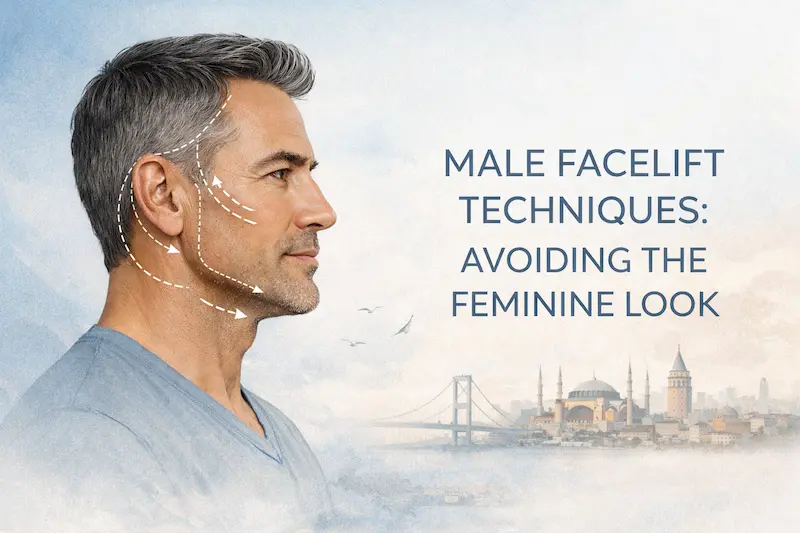
For men, the goal is subtle rejuvenation that preserves a masculine jawline and natural hairline placement. Strong results often look “rested” rather than dramatically changed, with improved lower-face heaviness and neck definition—while keeping facial expressions and identity intact.
Mini deep plane facelift before and after
A mini deep plane facelift can be appropriate for early to moderate aging changes, especially when jowls are mild and the neck is not the primary issue. Mini procedures may offer a lighter change and potentially shorter downtime, but they are not a substitute for comprehensive lifting when laxity is advanced.
Deep plane facelift before and after natural results
Natural results come from anatomy-based planning, conservative tension, and transparent photo standards. When evaluating deep plane facelift before and after natural results, look for consistent angles and lighting, full-profile shots (including neck and ears), and clearly labeled timelines—so you’re comparing like with like, not early swelling to a final outcome.
“10 Years Younger” — What It Really Means (and What It Doesn’t)
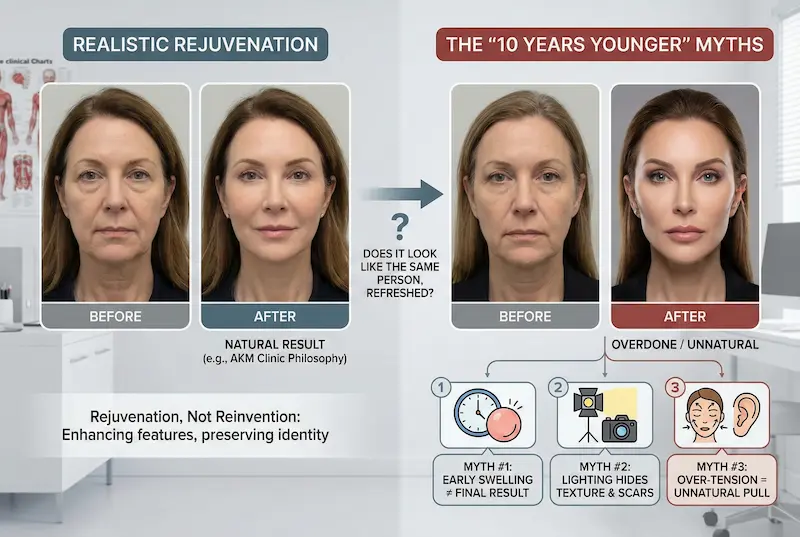
“10 years younger” is a shorthand patients use to describe a specific visual effect: restored facial triangles, smoother transitions from cheek-to-jaw, and a cleaner neck contour. But it’s not a standardized measurement, and it should never be framed as a guarantee. In deep plane facelift before and after comparisons, the most honest question is: Does the after look like a refreshed version of the same person?
The realistic goal: rejuvenation, not reinvention
A well-executed deep plane facelift aims to reposition underlying facial structures rather than simply tightening skin. The outcome should look like you slept well for a year—not like your face was “pulled.” At AKM Clinic, this philosophy is central to how facial rejuvenation is planned: enhancement without changing identity.
Why “years younger” looks different on different faces
Two patients can have the same procedure and look dramatically different afterward because “baseline” matters: skin quality, fat distribution, bone structure, and how aging shows up (jowls vs. midface descent vs. neck laxity). That’s why the best deep plane facelift before and after results are not about copying a celebrity outcome—they’re about matching technique to anatomy.
The 3 most common myths in before/after photos (lighting, angles, swelling stage)
- Myth #1: One “after” photo equals final results. Early photos often reflect swelling reduction rather than final contour.
- Myth #2: Better lighting = better surgery. Studio lighting can disguise texture, swelling, and scar maturation.
- Myth #3: A sharper jawline always means a better lift. Over-tension can create an unnatural lateral pull—especially noticeable near the ears.
What Makes a Deep Plane Facelift Look More Natural in Before & After Photos
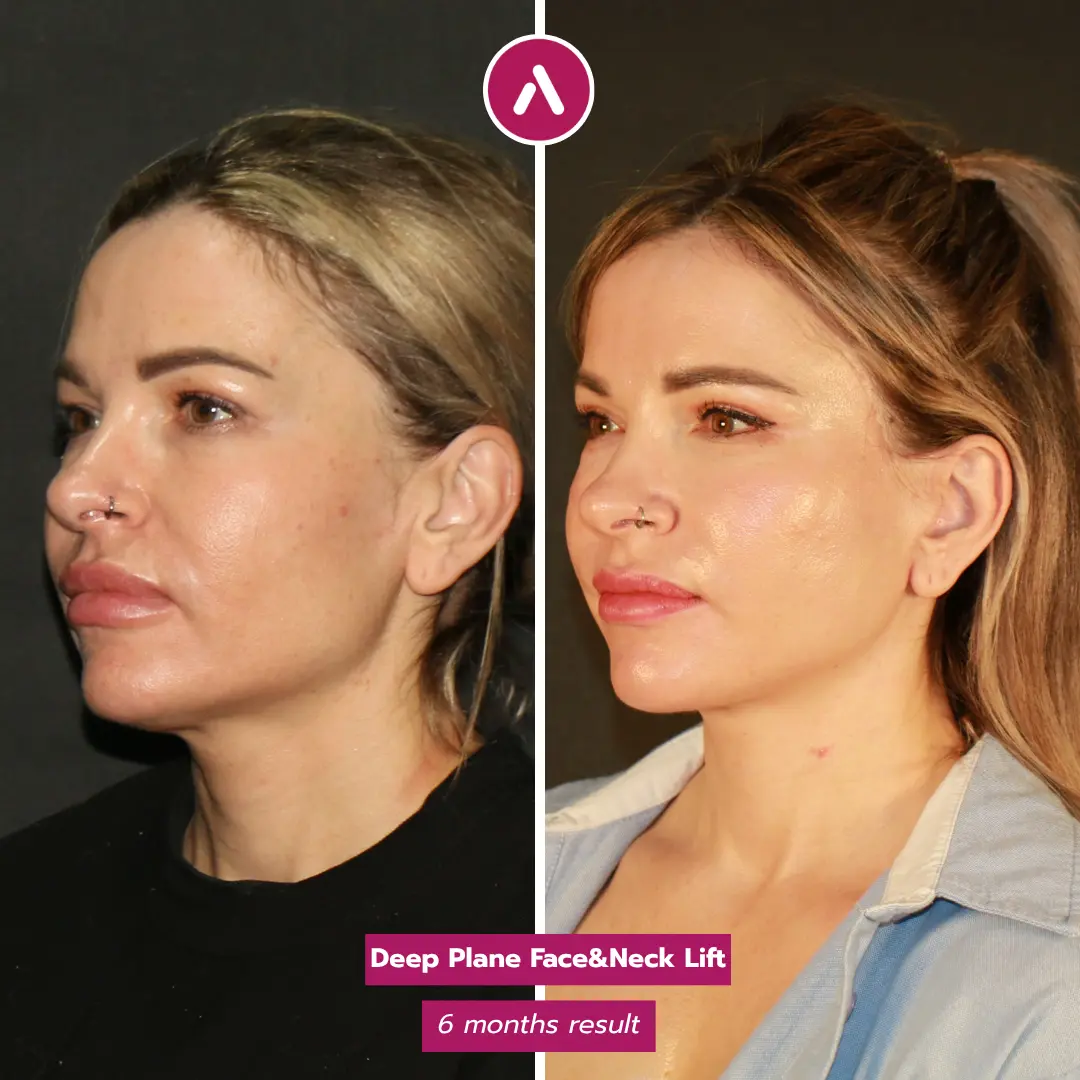
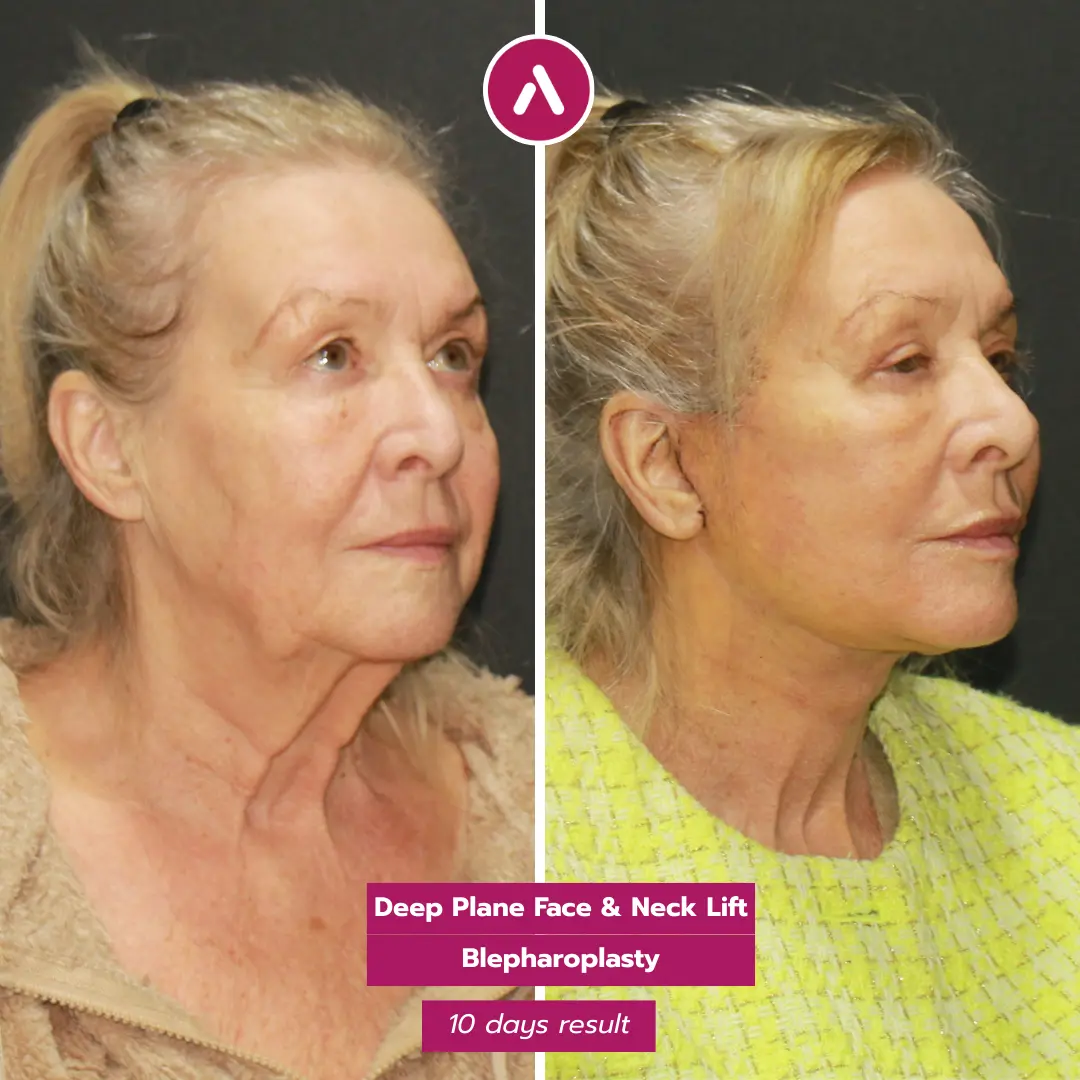
Patients often ask why some “after” photos look effortless while others look tight or “done.” The difference is typically technique—and where the lift is applied. In deep plane face lift Turkey before and after galleries, a natural result usually comes from deep structural repositioning, not superficial skin tension.
Deep plane vs. SMAS vs. mini facelift: what changes where
While several facelift techniques target facial laxity, the deep plane approach is known for addressing deeper facial layers to restore contour—particularly in the midface and lower face. In practical terms, that can translate to a smoother cheek-to-jowl transition and a more harmonious jawline in deep plane facelift before and after comparisons.
Why deep plane can improve jowls + midface without a “pulled” look
Patients worried about looking “overdone” are often reacting to outcomes created by tension placed on skin rather than structure. A deep plane strategy can reduce that risk by focusing on anatomical repositioning. That’s also why surgeon experience matters: it’s a technically demanding procedure where judgment is as important as skill.
The role of neck work (when “face-only” results look incomplete)
Many “wow” transformations are actually a combined face-and-neck strategy. If the neck is a major concern (bands, laxity, heaviness under the chin), a face-only approach can look unfinished. This is why patients researching deep plane neck lift before and after often get better clarity: a refined neck contour can be the difference between “nice” and “truly younger.”
| What you see in photos | What it can indicate |
|---|---|
| Sharper jawline + natural cheek position | Structural lift without skin tension |
| Over-tight skin near ears / distorted earlobe | Excessive lateral pull (a red flag) |
| Clean neck angle + softer jaw heaviness | Face + neck addressed together |
Real-patient perspective matters: One AKM Clinic patient described her outcome as looking like “nothing happened” but significantly younger—exactly the goal most expert patients are chasing.
How to Judge Before & After Results Like an Expert Patient (Photo Checklist)
Most patients don’t realize how easy it is to “manufacture” a dramatic transformation using photography alone. If you’re evaluating deep plane facelift before and after results, your job is to control for variables: lighting, camera distance, head position, and even facial expression. This is why experienced surgeons—and science-minded patients—treat photos as data, not just visuals. Think of it like a mini quality-control process based on common-sense standards that align with what scientific research calls consistency and comparability.
“Same conditions” checklist: lighting, camera distance, head position, expression
- Lighting: Ideally same room, same time of day, same direction of light. Overhead light can exaggerate laxity; soft frontal light can hide texture.
- Camera distance: Close-up wide-angle shots distort facial proportions. Consistent distance reduces “lens trick” effects.
- Head position: A slightly lifted chin can “fake” a tighter neck; a tucked chin can exaggerate bands and submental fullness.
- Facial expression: Smiling can mask jowls; tension can create lines that look like “aging.” Neutral expression is best.
If you’re specifically searching deep plane face lift Turkey before and after, apply this checklist first. A clinic with transparent, standardized photos is often a clinic that is confident in the work.
Red flags: over-tight lateral pull, distorted earlobe, hairline shift, “wind tunnel” look
Not every “tight” result is a good result. Some results look pulled because tension was placed on the skin rather than structure. When evaluating deep plane face lift before and after galleries, these are common warning signs:
- Distorted earlobe: The earlobe looks stretched, pinned, or elongated.
- Lateral pull: Tightness appears strongest toward the ears instead of restoring midface contour naturally.
- Hairline shift: A noticeably moved temple or sideburn can indicate aggressive skin repositioning.
- “Wind tunnel” look: The face looks tight but not youthful—often paired with unnatural shine or stiffness.
Green flags: restored facial triangles, softened folds without stiffness, natural neck angle
Natural rejuvenation has a recognizable “quiet” signature. The best deep plane facelift before and after transformations typically show:
- Restored facial balance: The midface looks supported; the lower face looks lighter (less heaviness at the jowls).
- Softened folds, not erased: Lines reduce naturally—without a frozen or mask-like quality.
- Improved cervicomental angle: The neck-to-chin contour looks cleaner, especially when a neck strategy is included.
If your main concern is the neck, prioritize cases labeled deep plane neck lift before and after—because “face-only” photos may not answer the question you truly care about.
Expert patient tip: Ask what “month” the after photo was taken. A Week-3 photo and a Month-9 photo are not the same result.
Timeline Matters: When Are “Before & After” Photos Actually Comparable?
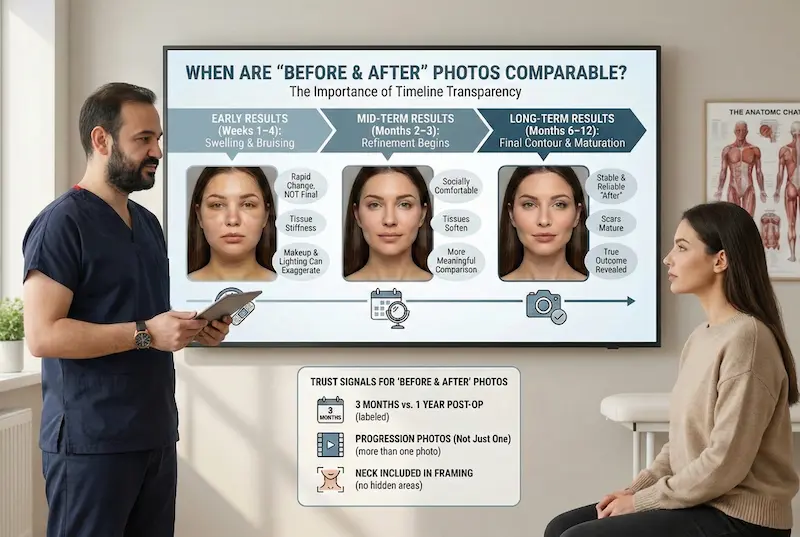
One of the biggest sources of disappointment is judging results too early. Deep plane facelift healing is dynamic—swelling resolves, tissues soften, scars mature, and facial movement returns to normal. Medical science recognizes that soft-tissue healing and remodeling occur over months, not days. So when someone shows you a dramatic early “after,” you should ask: Is that a final outcome—or simply the end of bruising?
Early results (Weeks 1–4): swelling, bruising, stiffness — what’s normal
In the first month, patients often see rapid improvement because bruising fades and swelling decreases. But tissues can still feel firm, tight, and “different.” It’s common to look better in photos than you feel in motion, because subtle stiffness isn’t always visible in still images. This is also the stage where “makeup + lighting” can overstate results.
Mid-term results (Months 2–3): when refinement begins
Between 8–12 weeks, many patients feel more socially comfortable. Swelling continues to resolve, the face starts to move more naturally, and the result becomes easier to evaluate. If you’re comparing deep plane facelift before and after results across clinics, Month 2–3 is typically when photos become more meaningful—though still not final.
Long-term results (Months 6–12): scar maturation + final contour
The most reliable “after” photos are usually taken after 6 months, often closer to 9–12 months. This is when the jawline contour is stable, the neck looks refined, and scars are maturing. For patients searching deep plane face lift Turkey before and after, this stage is where you’ll see whether a result is not only impressive—but also stable and natural over time.
What to look for in “timeline transparency” (a trust signal)
- Clearly labeled months: “3 months post-op” vs “1 year post-op.”
- More than one after photo: A single after image is less informative than a progression.
- Neck included in framing: Cropped photos can hide the very area you’re trying to assess.
| Time after surgery | What you can realistically judge | What can be misleading |
|---|---|---|
| Weeks 1–4 | Bruising reduction; early contour direction | Swelling, stiffness, camera tricks |
| Months 2–3 | More natural movement; improving definition | Residual swelling; scars still “active” |
| Months 6–12 | Stable contour; mature-looking result | Very little—this is the most reliable stage |
Who Gets the Best “10 Years Younger” Outcome? (Candidacy & Expectations)
The most impressive deep plane facelift before and after transformations aren’t only about technique—they’re about choosing the right operation for the right face at the right time. “10 years younger” is most achievable when the visible aging problem is mainly descent and heaviness (jowls, lower-face fullness, neck laxity) rather than only surface-level skin texture. This is why an evaluation that respects anatomy and healing biology (the fundamentals of medical science) matters as much as the surgery itself.
Best candidates: lower face heaviness, jowls, neck laxity, midface descent
Patients who tend to see the most dramatic but still natural-looking improvement often share similar patterns:
- Jowls and lower-face heaviness: A deep plane approach can restore a cleaner jawline without creating a “pulled” effect.
- Neck laxity or a softened neck angle: When paired with neck work, improvements are often striking—this is where deep plane neck lift before and after photos become highly relevant.
- Midface descent: When cheeks have “dropped” and the under-eye/cheek transition looks heavier, deep structural repositioning can create a fresher midface.
In real life, the best deep plane facelift before and after results don’t look like a different person—they look like the same person with restored facial proportions.
When you may need add-ons (neck lift, fat transfer, eyelids) for harmony
Many patients start with “I want a facelift,” but what they’re actually describing is facial harmony. A facelift alone can’t correct everything, and that’s not a flaw—it’s normal.
- Neck component: If the neck is a primary complaint, a combined plan may outperform a face-only lift. This is why searching deep plane face lift Turkey before and after should include neck-inclusive cases.
- Volume restoration (fat transfer): Some faces don’t just “drop”—they also lose volume. In those cases, tightening alone can look flat. Strategic volume can make the result look healthier and more youthful.
- Eyelids (upper/lower blepharoplasty): If the eyes are the dominant aging signal, eyelid surgery may be needed to match the “younger” effect of the lower face.
When not to do it (or delay it): unrealistic expectations, unstable health factors, skin quality constraints
A responsible clinic will sometimes recommend waiting or adjusting the plan. Common reasons include:
- Unrealistic expectations: If “10 years younger” is interpreted as “20–25 years younger,” disappointment is likely—no matter how skilled the surgeon is.
- Health factors: Certain medical conditions or medications can affect healing and safety; these must be optimized first.
- Skin quality limitations: Deep plane work repositions structure, but if skin is extremely sun-damaged or thin, texture may still show. You can look younger in shape, but not magically change skin biology overnight.
Expectation reset that protects you: A deep plane facelift changes contour first. Skin texture and fine lines may improve somewhat, but they’re not the primary target.
Safety + Trust Signals: What to Look for in Turkey (Beyond Photos)
Before-and-after images are important, but they’re not enough. The safest decisions come from combining visuals with measurable trust signals: surgeon experience, a clear plan for anesthesia, a documented aftercare pathway, and transparent communication. For patients comparing deep plane facelift before and after results across clinics, these non-photo factors often predict the quality of the entire journey—including how supported you feel during recovery.
Surgeon-specific expertise: deep plane experience and complication management
Deep plane surgery is not “one-size-fits-all.” It requires advanced anatomical skill, a refined aesthetic eye, and the ability to manage (and prevent) complications. When you’re evaluating a clinic in Turkey, ask questions that reveal genuine surgical depth:
- How many deep plane facelifts does the surgeon perform regularly?
- Are cases shown with long-term follow-up (6–12 months)?
- What is the plan if swelling, hematoma, or nerve irritation occurs?
In surgeon-led clinics, these questions are welcomed—because they’re the same questions that guide clinical quality and patient safety.
Why surgeon-led planning beats “package-first” medical tourism marketing
Many patients arrive in Turkey after seeing beautifully curated galleries. But your real protection is a plan built around your anatomy—one that prioritizes safety and natural outcomes over speed. A surgeon-led approach usually includes:
- Structured evaluation: what’s causing the “aged” look (descent, volume loss, neck laxity) and what technique best addresses it.
- Realistic result framing: what will improve dramatically vs. what may improve moderately.
- Aftercare clarity: who you contact, how follow-up works, and what happens if you need extra support.
Comfort/safety angle: local/tumescent anesthesia + sedation option (who it may suit)
Some facelift approaches can be performed with local/tumescent anesthesia combined with sedation in appropriate candidates, depending on the surgical plan and the patient’s needs. This can be appealing to patients who want a different anesthesia experience—but it must be individualized. The “right” choice depends on medical history, anxiety level, procedure scope (especially neck work), and surgeon preference.
| Trust signal | Why it matters | What to ask |
|---|---|---|
| Long-term before/after (6–12 months) | Shows stability + natural tissue behavior | “What month is this after photo?” |
| Neck-inclusive framing | Prevents “cropped-proof” marketing | “Can I see full profile photos?” |
| Surgeon-led consult + clear plan | Signals individualized medicine | “What exactly will be addressed: face, neck, volume?” |
| Defined aftercare pathway | Predicts smoother recovery + less anxiety | “Who follows me daily in the first week?” |

Recovery Optimization at AKM Clinic: HBOT & LLLT as a Clinical Protocol
When patients evaluate deep plane facelift Turkey before and after, they often focus on the final photo—but the experience in between matters just as much. Recovery influences comfort, confidence, and how quickly you can return to normal life (and normal photos). At AKM Clinic, deep plane facelift recovery support is approached as a structured clinical pathway, not an “afterthought.” Two technologies often discussed in this context are HBOT (Hyperbaric Oxygen Therapy) and LLLT (Low-Level Laser Therapy). While no clinic can ethically promise “zero swelling” or “instant results,” these protocols are often used to support healing physiology in ways that align with modern medical science.
HBOT: why oxygenation can support faster tissue recovery (patient-facing benefits)
HBOT involves breathing oxygen in a controlled environment where pressure is higher than normal atmospheric pressure. In patient terms, the goal is to support the body during a phase where tissues are recovering and adapting. After facial surgery, patients typically care about a few practical outcomes:
- Swelling comfort: Patients want the “puffy phase” to feel more manageable.
- Confidence in healing: Many expert patients feel calmer when there is a structured recovery plan.
- Earlier social readiness: Not “back to normal overnight,” but a smoother early phase.
Important: HBOT is not a magic eraser. It supports deep plane facelift recovery conditions; it does not replace surgical skill, good aftercare, or your individual biology.
LLLT: inflammation control & tissue healing support (patient-facing benefits)
LLLT (sometimes called “cold laser”) is used in many medical settings with the goal of supporting tissue recovery and comfort. In facelift recovery, it’s commonly framed around:
- Comfort support: Helping patients feel less “tight” or irritated during the early healing window.
- Supporting normal healing: Helping tissues settle progressively as swelling resolves.
- Reducing downtime anxiety: Patients often worry they’ll look “strange” for too long; structured support can reduce that stress.
If you’re comparing deep plane facelift before and after results across clinics, ask whether the clinic has a consistent protocol for swelling and comfort—because the first 2–4 weeks can shape your entire perception of the journey.
What “accelerated recovery” changes in your before/after timeline (realistic framing)
Patients often ask: “Will HBOT and LLLT make me look normal faster?” The ethical, science-aligned answer is: they may support the recovery environment, but your timeline still follows biology. In most cases, what patients notice is:
- More comfortable early phase: less stress during swelling fluctuations.
- Better week-by-week momentum: feeling like improvement is steady rather than unpredictable.
- Clearer milestones: knowing what to expect at Week 1, Week 3, Month 2, Month 6.
| Recovery question patients ask | What’s realistic | How protocols can help |
|---|---|---|
| “When will I look presentable?” | Often improves noticeably by Weeks 2–4, varies by person | Supports comfort and confidence during visible swelling |
| “When is my ‘real’ after photo?” | Most reliable at 6–12 months | Helps the journey feel more controlled and supported |
| “Will my neck settle at the same pace?” | Neck can take longer to refine | Structured follow-up reduces anxiety in slower-refining areas |
Bottom line: Great deep plane face lift before and after outcomes start with technique—but the patient experience depends heavily on the recovery plan. Supportive protocols can make the healing window feel safer, calmer, and more predictable.
Frequently Asked Questions (FAQ): Deep Plane Facelift Turkey Before and After
This FAQ is designed for “expert patients” who want clear, non-salesy answers while evaluating deep plane facelift Turkey before and after outcomes. If you’re comparing clinics, use these questions to structure your consultation and to interpret deep plane facelift before and after results with the right expectations and timeline.
How long does a deep plane facelift last?
A deep plane facelift is generally considered a long-lasting facial rejuvenation approach because it repositions deeper structures, not just skin. Aging continues, but many patients enjoy meaningful, stable improvement for years. A surgeon should explain what is realistic for your anatomy, lifestyle, and skin quality.
When will I look “socially presentable” after surgery?
Many patients feel more socially comfortable somewhere in the 2–4 week range, but it varies based on swelling, bruising, and how your tissues settle. The most “camera-ready” results typically take longer. If you’re judging deep plane facelift before and after photos, always ask: “What week or month is this after image?”
When is the best time to evaluate deep plane facelift before and after results?
Early results can look impressive, but the most meaningful comparisons are typically at 6–12 months, when swelling has resolved, tissues have softened, and scars have matured. This timeline is consistent with how medical science describes soft-tissue healing and remodeling over time.
Can a deep plane facelift be done under local anesthesia with sedation?
In selected candidates and depending on the surgical plan, some facelift approaches can be performed with local/tumescent anesthesia plus sedation. However, the choice depends on your medical history, anxiety level, the extent of planned work (especially the neck), and the surgeon’s judgment. A safe clinic will discuss what’s appropriate rather than pushing a one-size-fits-all anesthesia option.
What’s the difference between deep plane facelift and SMAS facelift?
Both approaches aim to improve facial laxity, but they differ in the surgical plane and how structural support is addressed. In patient terms: deep plane is often discussed for its ability to create natural-looking contour restoration—particularly in the midface and lower face—when performed by an experienced surgeon. Your consultation should clarify why one technique fits your anatomy better than another.
Does a deep plane facelift fix jowls and neck bands?
Deep plane techniques can be very effective for jowls and lower-face heaviness. Neck bands and neck laxity often require a dedicated neck strategy for the best outcome. If the neck is your top priority, evaluate cases labeled deep plane neck lift before and after (and ensure the photos show the full profile and neck).
What are the most common risks or complications?
Any facelift can involve risks such as swelling, bruising, hematoma, infection, scarring issues, and temporary (rarely persistent) nerve-related changes. The most important factor is how the clinic reduces risk through careful patient selection, surgical technique, and structured post-op monitoring.
How do I know if a before/after photo is “real” and comparable?
Use an expert checklist: same lighting, same camera distance, same angle, neutral expression, and a clearly stated timeline (e.g., “3 months post-op”). Be cautious with heavily curated images that crop out the neck or hide the ears—those areas often reveal whether a result is truly natural.
Will I look “pulled” after a deep plane facelift?
A well-executed deep plane approach is typically chosen precisely to reduce the “pulled” risk by focusing on structural repositioning rather than skin tension. That said, outcomes depend heavily on surgeon technique and your individual tissue behavior—so insist on viewing multiple long-term deep plane facelift before and after results from the same surgeon.
What should I prioritize if my main concern is the neck?
Prioritize: (1) full-profile photos, (2) neck-inclusive cases, (3) clearly labeled timelines, and (4) a plan that explicitly addresses neck anatomy. Search and request examples specifically under deep plane neck lift before and after rather than general facelift galleries.
Can I combine a deep plane facelift with non-surgical treatments later?
Yes. Many patients choose to add or maintain results with non-surgical options later (e.g., skin treatments or injectables). The key is timing: you should wait until healing is stable and your surgeon confirms tissues have settled before starting any additional treatments.
What should I ask in a consultation to verify “before & after” credibility?
Ask for the exact post-op timing of each photo (e.g., 3 months vs 12 months), whether lighting/angles were standardized, and whether you can see full-profile images that include the neck and ears. Transparency around photo conditions is a strong trust signal.
Will a deep plane facelift change my smile or facial expressions?
In the early healing phase, tightness and swelling can temporarily affect how expressions feel or look. As tissues soften over the following weeks and months, facial movement typically becomes more natural. Choosing an experienced surgeon and following aftercare guidance helps support a normal, expressive result.
If you’d like to explore more than just before-and-after results, you can also get detailed guidance on related topics such as Deep Plane Facelift Cost Turkey, how to choose the Best Surgeons for Filler Removal, what defines the Best Plastic Surgery Clinic Turkey, and the key safety considerations in Is It Safe to Have Plastic Surgery in Turkey? You may also find it helpful to review real patient experiences through AKM Clinic Reviews, especially if you’re comparing surgeon skill, recovery support, and overall trust signals before making a decision.