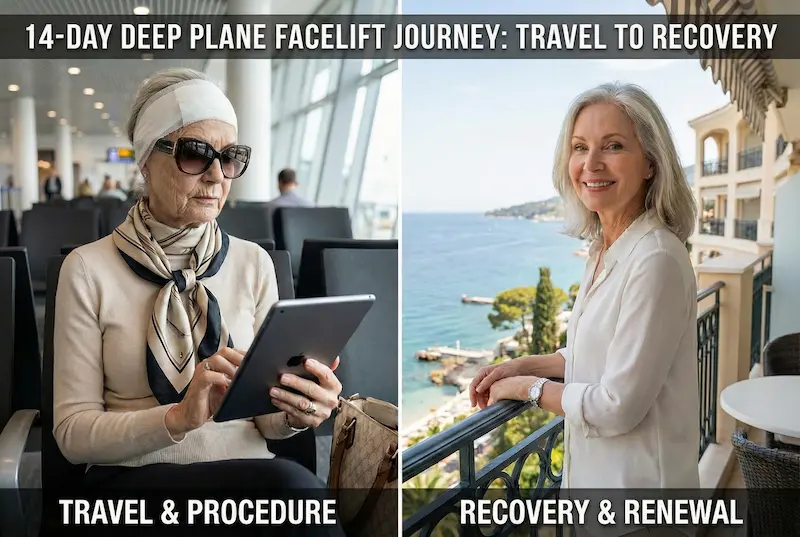
If you’re mapping out a deep plane facelift journey turkey, you’re probably not looking for vague inspiration—you want a clear, practical plan: when to fly, what happens on consult day, what “normal” swelling looks like, and how you’ll safely get home.
This guide is written for the “expert patient” mindset (and especially the Travel Planner type): step-by-step, logistics-first, and honest about recovery variability. It’s not medical advice, and your surgeon’s instructions always come first—but it will help you plan your deep plane facelift journey with fewer surprises.
Key idea: A smooth deep plane facelift journey turkey is rarely about “toughing it out.” It’s about planning the first 72 hours like a checklist—then letting your body do what it’s designed to do: heal.
| Timeline | What you’ll focus on | What “success” looks like |
|---|---|---|
| Day 1–3 | Arrival, assessments, surgery day, first-night safety | Comfort controlled, swelling expected, you feel supported |
| Day 4–7 | Bruising/swelling peak & early settling, follow-ups | You’re walking more, sleeping better, incisions monitored |
| Day 7–14 | Final checks, flight prep, home-care plan | Cleared to travel, confident with your aftercare routine |
Table of Contents
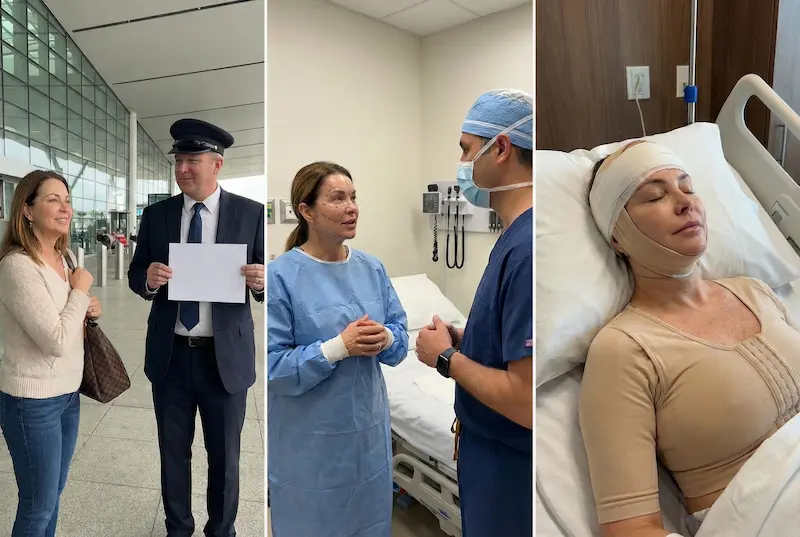
Day 1–3: Arrival & Surgery
The first three days set the tone for your entire deep plane facelift in Turkey. The goal isn’t perfection—it’s predictability: you know what happens when, you’re medically cleared, and you have a realistic plan for the “first night” (which is where most travel anxiety tends to spike).
Pre-Travel Checklist (documents, meds, planning your first 72 hours)
Before you book your flights, treat this like planning a mini “medical project.” Whether you’re comparing a deep plane facelift Turkey clinic or narrowing down the best deep plane facelift surgeons in Turkey, the checklist below keeps your logistics and safety aligned.
- Travel timing: Plan to arrive with enough buffer for pre-op assessment (many patients prefer 1–2 days before surgery).
- Passport & entry requirements: Confirm validity and any visa rules for Turkey based on your citizenship.
- Medication list: Bring a written list of prescriptions, supplements, and allergies (and share it with your surgical team).
- Smoking/nicotine plan: If applicable, follow your surgeon’s guidance—nicotine can affect healing.
- Compression/comfort items: Button-up tops, a travel neck pillow, ice packs (if approved), and slip-on shoes.
- Support decision: If you’re traveling solo, confirm what support is available (nursing, driver, hotel assistance).
- How to vet a surgeon: When searching “best deep plane facelift surgeon turkey” or “deep plane facelift surgeon turkey,” prioritize verifiable credentials, a clear surgical plan, and consistent natural-result outcomes over marketing.
| Bring with you | Why it matters |
|---|---|
| Printed passport copy + digital backup | Fast access if you misplace documents while recovering |
| Medication/supplement list | Safer anesthesia planning and post-op prescriptions |
| Button-up or zip tops | No pulling clothing over your head post-op |
| Simple wound-care basics (as advised) | Helps you stay consistent once you’re back at the hotel |
| “Quiet recovery” plan (audiobooks, shows, soft foods) | Reduces stress—stress can amplify discomfort |
Surgeon-led principle we follow at AKM Clinic: aim for “a refreshed appearance, not an obvious surgical procedure.” In a deep plane approach, that means focusing on structure and skin quality—not just tightening skin—an idea well supported by medical science.
Airport Pickup, Hotel Check-in & Pre-Op Assessment (labs, consult, final plan)
Most patients doing a turkey deep plane facelift feel two worries at the same time: “Will I be taken care of?” and “What if something changes after I land?” Your arrival day should answer both.
- Transfer coordination: Confirm who meets you at the airport, how you’ll identify them, and what happens if your flight is delayed.
- Hotel logistics: Choose a quiet room, elevator access, and an easy path from entrance to your room (you’ll appreciate this on Day 1–2).
- Pre-op workup: Expect a review of medical history, vitals, any required labs, and a focused exam of facial anatomy.
- Final surgical plan: This is where “expert patient” questions belong—incision placement, what deep plane means in your case, and how the neck/jawline will be addressed.
One theme we hear often from international patients is that detailed, specific communication reduces fear. For example, one U.S. patient described feeling reassured because the process was comprehensive and “everything is included” (drivers, nurses, medications)—which matters even more if you’re traveling alone.
Surgery Day Walkthrough (what happens before, during, and right after surgery)
Surgery day is usually structured and repetitive (in a good way). Your team is trying to remove uncertainty—because calm patients tend to do better with pain control, sleep, and early mobility.
| Step | What happens | Why it matters |
|---|---|---|
| Pre-op prep | Photos, markings, confirmation of plan, consent | Aligns expectations and creates a clear surgical roadmap |
| Anesthesia plan | May vary (general, local + sedation, etc.) | Chosen based on safety, comfort, and procedure complexity |
| Deep plane work | Repositioning deeper facial tissues (not just skin) | Supports natural contours and longer-lasting structure |
| Immediate recovery | Monitoring, fluids, nausea control, pain plan | Prevents small issues from turning into big setbacks |
AKM Clinic note: For facial rejuvenation cases, AKM Clinic’s approach is surgeon-led and anatomy-driven. Our Founder & Lead Doctor, Dr. Akif Mehmetoğlu (Dermatosurgeon & Face Expert), brings dermatosurgical expertise that complements structural facelift technique—helping patients pursue a natural result that respects both underlying support and skin quality.
First Night Comfort & Safety (pain control, nausea, mobility, support team)
Your first night is usually about three things: comfort, monitoring, and simple movement. You’re not trying to “bounce back.” You’re trying to stabilize.
- Swelling expectations: Swelling and tightness are normal early on, and bruising varies by person.
- Pain plan: Many patients find discomfort is manageable with the prescribed plan. One “expert patient” from the U.S. described her experience as having “no pain” and minimal bruising; a UK patient noted she only needed painkillers “for probably one day.”
- Sleep positioning: Head elevation matters more than you think—plan pillows before surgery day.
- Short walks: With guidance, gentle walking helps circulation and lowers clot risk, especially for travelers.
- When to contact your team: Uncontrolled pain, sudden one-sided swelling, breathing issues, chest pain, or fever should be treated as urgent.
If you’re choosing among the best deep plane facelift surgeons turkey searches online, one useful filter is how clearly the clinic explains the first night and aftercare. A great operation can still feel like a bad experience if the first 12–24 hours aren’t managed thoughtfully.
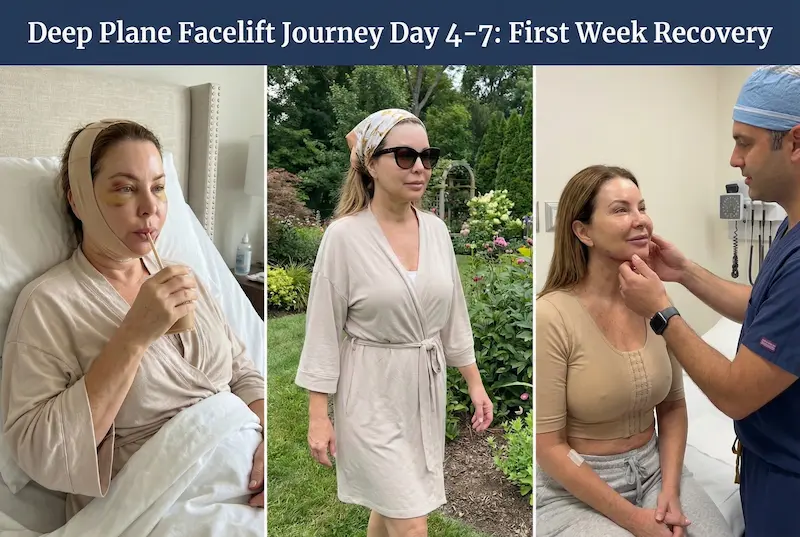
Day 4–7: First Week Recovery
In most deep plane facelift journey turkey plans, Days 4–7 are the “reality week”: swelling and bruising can still be obvious, sleep can feel awkward, and it’s common to second-guess your reflection. The goal of Week 1 isn’t to look “done.” It’s to heal steadily, protect your incisions, and stay closely monitored by your surgical team.
What many patients don’t expect: you can feel emotionally up-and-down in Week 1—even if everything is going perfectly. That’s normal after major surgery, travel, and disrupted sleep.
Swelling & Bruising Timeline (what’s normal vs. what’s not)
Swelling and bruising vary widely. Some patients have surprisingly little; others look significantly “puffy” for longer. Even experienced “expert patients” note variability—Barbara (USA), who had a Deep Plane Facelift + Neck Lift at AKM Clinic, described her recovery as “no pain” with minimal bruising. That’s reassuring, but it’s not a promise—your body may respond differently.
| Day | What you may notice | What helps most | When to message your team |
|---|---|---|---|
| Day 4 | Tightness, swelling that can feel “heavy,” bruising still visible | Head elevation, gentle walking, hydration, prescribed meds | Sudden one-sided swelling, uncontrolled pain, fever |
| Day 5–6 | Swelling may begin to shift downward; numbness/odd sensations are common | Consistent sleep position, light activity, nutrition | Increasing redness/warmth around incisions, unusual drainage |
| Day 7 | Some visible improvement, but still “not camera-ready” for most people | Follow-up check, incision care routine, calm pacing | Shortness of breath, chest pain, calf swelling (urgent) |
Important: A deep plane facelift repositions deeper facial structures. That’s one reason it can produce more natural contours—but it also means the early “settling” phase is a process. In Week 1, your job is to protect the result, not judge it.
Wound Care Basics (dressings, hygiene, sleeping position, garment guidance)
Your surgeon’s protocol always wins. Still, most Week 1 care falls into a few consistent categories that support a safe deep plane facelift journey—especially if you’re recovering in a hotel.
| Category | Best practice | Common mistake to avoid |
|---|---|---|
| Sleep | Head elevated; protect your neck and avoid twisting | Sleeping flat too early or rolling onto your side |
| Hygiene | Follow your clinic’s instructions for washing hair/face safely | Scrubbing near incision lines or using harsh products |
| Incisions | Keep clean, dry as advised; attend all checks | Self-adjusting dressings without guidance |
| Activity | Short walks several times/day (as approved) | “Testing” your stamina or resuming workouts early |
| Nutrition | Protein + fluids; easy-to-chew meals early on | High-salt foods (can worsen swelling) |
If you’re researching terms like deep plane facelift turkey clinic, one practical question to ask is: “What does your Week 1 aftercare look like day-by-day?” Detailed aftercare planning is often the difference between a stressful trip and a supported one.
Follow-Up Visits & Monitoring (what the team checks and why it matters)
Follow-ups in the first week are not “formalities.” They’re where your surgeon/team verifies that healing is on track and adjusts your plan if needed. This is also why surgeon selection matters beyond the operating room: patients often judge their experience by the clarity and responsiveness of post-op care.
- Swelling/bruising assessment: confirming what’s normal for your pattern and timing.
- Incision review: checking cleanliness, tension, early scar behavior, and dressing strategy.
- Comfort plan: medication adjustments if nausea, insomnia, or tightness are interfering with rest.
- Travel readiness: building a safe plan toward Day 14 (mobility, hydration, clot-risk prevention).
Sarah (UK), who chose AKM Clinic after comparing options and noting the surgeons are “board certified,” described that she “only took painkillers for probably one day.” Again, experiences vary—but it highlights why structured follow-up and comfort management can make recovery feel more manageable.
How this ties to “best surgeon” searches: When people type “best deep plane facelift surgeon in turkey” or “best deep plane facelift surgeons turkey,” they’re often really asking: “Who will keep me safe, informed, and supported when I’m swollen, tired, and far from home?”
AKM Clinic care model note: AKM Clinic emphasizes a surgeon-led, patient-psychology-aware approach—especially relevant for international patients. The clinic’s Founder & Lead Doctor, Dr. Akif Mehmetoğlu (Dermatosurgeon & Face Expert), is known for prioritizing results that look refreshed—not “obviously surgical”—and that mindset also shapes how recovery guidance is communicated.
Recovery Tech Support (how HBOT/LLLT can help early healing)
At AKM Clinic, two non-invasive supportive therapies are highlighted as part of recovery optimization—especially relevant in the first week of a turkey deep plane facelift itinerary:
- HBOT (Hyperbaric Oxygen Therapy): positioned by the clinic as its “#1 safety promise,” HBOT involves breathing high-concentration oxygen in a pressurized environment. The clinic’s stated aim is to increase oxygen delivery to healing tissues—supporting recovery, scar quality, and infection-risk reduction.
- LLLT (Low-Level Laser Therapy): described as a cellular-level supportive therapy (“photobiomodulation”-type approach) used post-facelift to help with inflammation control and collagen support—without heat damage.
| Therapy | When it’s often used | What it’s intended to support | What it does not replace |
|---|---|---|---|
| HBOT | Early recovery window (protocol varies) | Oxygenation support for healing tissues | Good surgery, good hygiene, proper wound care |
| LLLT | Week 1+ as advised | Inflammation modulation & cellular recovery support | Time, rest, nutrition, and surgeon follow-ups |
Think of HBOT and LLLT as adjuncts: they may support recovery, but they don’t “erase” swelling overnight, and they don’t override the fundamentals (sleep positioning, incision care, activity pacing, and follow-up monitoring).
Patients who worry about traveling solo often care about systems, not slogans. Laura (USA), who traveled alone for multiple procedures, described the experience as reassuring because “the nurses, the doctors, the medications, everything is included.” That kind of end-to-end structure is exactly what reduces anxiety during Days 4–7, when you’re tired and want fewer decisions.
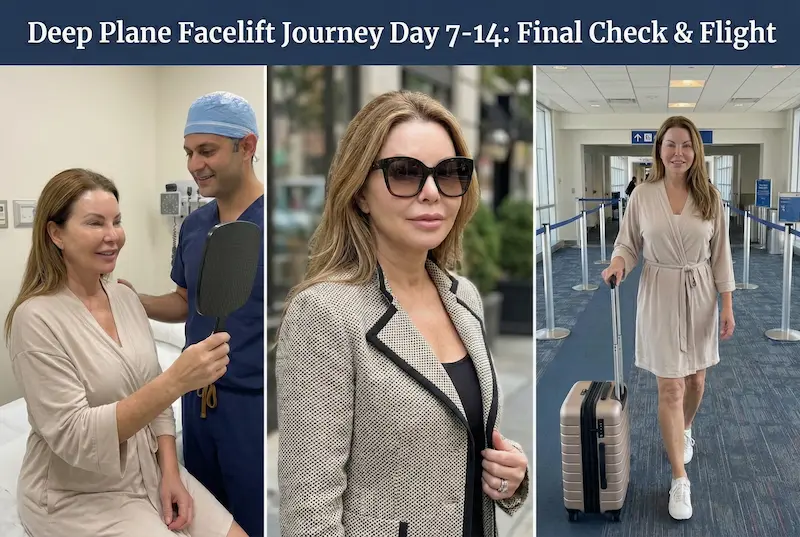
Day 7–14: Final Check & Flight
By the second week of a deep plane facelift journey turkey, most patients feel noticeably more comfortable: sleep improves, swelling starts to “move” and soften, and you can usually do more normal daily tasks. But Week 2 is also where smart travelers stay disciplined—because you’re feeling better before you’re fully healed.
Week 2 mindset: You’re not trying to “look perfect” before you fly. You’re trying to be stable, safe, and prepared for travel and home recovery.
Milestones in Week 2 (incision review, comfort improvements, confidence returning)
Week 2 milestones will depend on your individual plan, but these are common “green flags” patients notice during a deep plane facelift journey:
- Swelling feels less tight: your face may still look puffy, but the “pressure” sensation often reduces.
- Bruising starts fading: it can shift colors and move downward before it disappears.
- Walking is easier: you can usually do more frequent short walks comfortably.
- Incisions look calmer: still visible, but less angry/red (your team will guide scar care timing).
- Less need for medication: many patients rely less on pain relief as the week progresses.
| What’s common in Week 2 | What’s usually NOT urgent | What should be reported quickly |
|---|---|---|
| Numbness, tingling, “weird” sensations | Mild asymmetry (swelling rarely resolves evenly) | Sudden severe one-sided swelling or rapidly worsening pain |
| Swelling that changes throughout the day | Patchy tightness or stiffness | Fever, spreading redness/warmth, unusual drainage/odor |
| Fatigue from travel + healing | Feeling emotional or impatient | Shortness of breath, chest pain, calf swelling (urgent) |
If you’re evaluating a deep plane facelift Turkey clinic, this is also where you’ll appreciate a team that gives you a clear “Week 2 roadmap”—because you’ll be transitioning from in-person care to self-management and remote check-ins.
“Am I cleared to fly?” (safety criteria, DVT prevention, cabin comfort tips)
Flying is not just about comfort—it’s about circulation and minimizing risk. Your clinic should give you a specific clearance plan for your deep plane facelift in turkey timeline (and it may differ depending on whether you had additional procedures).
Clearance is commonly based on factors like:
- Stable healing: incisions are clean, no signs of infection, and wound care is manageable.
- Comfort control: pain and nausea are controlled without heavy sedation.
- Mobility: you can walk comfortably and safely (important for long flights).
- Swelling status: expected swelling is fine; concerning swelling patterns are not.
- Overall medical stability: your team confirms you’re safe for travel.
Travel safety tip: If you’re planning long-haul flights after a turkey deep plane facelift, ask your team specifically about DVT prevention (hydration, walking schedule, leg exercises, and any patient-specific measures).
| Flight Day Checklist | Why it matters |
|---|---|
| Hydrate (avoid alcohol) | Supports circulation and reduces fatigue |
| Walk every 60–90 minutes (if approved) | Reduces clot risk and stiffness |
| Easy-to-remove layers + button-up top | Less friction and easier bathroom breaks |
| Neck pillow + sunglasses + mask (optional) | Comfort + privacy when you don’t feel “public-ready” |
| Printed aftercare instructions + clinic contact | Instant reference if you have a question mid-travel |
When people Google “best deep plane facelift surgeon turkey” or “best deep plane facelift surgeons in turkey,” this is a smart filter: does the clinic offer a real flight-clearance protocol and individualized travel safety guidance, or just a generic timeline?
Packing for the return flight (aftercare kit, skincare, compression, documents)
For most travelers, the return flight is easier than expected—because Week 2 generally feels more stable. But packing well can prevent small annoyances from turning into big stress during your deep plane facelift journey turkey.
- Aftercare kit: any clinic-provided ointments/cleanser, sterile gauze (if advised), and a small mirror.
- Comfort items: neck pillow, lip balm, saline spray (dry cabin air can feel harsh).
- Food plan: easy snacks and water; avoid high-salt meals that can worsen swelling.
- Clothing plan: loose layers, button-up top, comfortable shoes.
- Documentation: discharge notes, medication list, and surgeon/clinic contact details.
| Carry-on | Checked luggage |
|---|---|
| Medications + written instructions | Extra clothing and backups |
| Small wound-care items (if approved) | Non-essential toiletries |
| Neck pillow + sunglasses | Anything you can live without in transit |
| Clinic contact number(s) | Souvenirs and extras |
Privacy note: Many patients like to wear sunglasses and a mask in the airport—not because it’s “necessary,” but because it reduces self-consciousness. Emotional comfort is part of recovery, too.
Back Home Plan (remote follow-ups, when to resume work/exercise, scar care basics)
The smartest part of your deep plane facelift journey happens after you land: your first two weeks at home. This is where patients either stay consistent—or accidentally “graduate too early” because they feel better.
A strong back-home plan usually includes:
- Remote follow-ups: scheduled photo/video check-ins with your team (your clinic should set expectations on frequency).
- Clear activity timeline: when to return to desk work, driving, gym, and social events (your surgeon will personalize this).
- Scar strategy: when to start scar care, what products to avoid early, and how sun protection affects scar quality.
- “Normal vs not normal” list: a simple list you can reference at 2 a.m. without spiraling.
Natural results depend on recovery discipline. Even if you chose the best deep plane facelift surgeons turkey for technique, your outcome still benefits from quiet sleep, hydration, and following the plan—especially in the first month.
AKM Clinic approach note: In facial rejuvenation planning, AKM Clinic emphasizes both structure and skin quality. That’s where a Dermatosurgeon’s perspective can add value alongside the plastic surgery team—because long-term “natural” results are not only about lift vectors, but also how the skin heals, ages, and settles over time.
Patient Tips for Future Travelers
Planning a deep plane facelift journey turkey is less like booking a vacation and more like coordinating a short, high-stakes recovery project: timing, contingency buffers, and clear communication. The good news is that once you know what to prioritize, the process becomes surprisingly manageable—even for solo travelers.
Travel Planner rule: If your plan only works when everything goes perfectly, it’s not a plan—it’s a hope. Build buffers.
How to Plan Flights & Timing (buffers, jet lag, avoiding rushed travel)
Whether you’re searching “deep plane facelift in Turkey” or comparing a deep plane facelift Turkey clinic, the timeline you choose can directly affect your stress level in Week 1. The biggest mistake we see is packing the schedule too tightly.
- Arrive with a buffer: Many patients feel more confident arriving 1–2 days before surgery to settle in, complete pre-op steps, and reduce jet-lag-related fatigue.
- Avoid “tight” return flights: Don’t plan your flight home the morning after a major check. Give yourself room for a final review and calm packing.
- Choose flight routes wisely: Fewer layovers usually means less walking, less time in dry airport air, and fewer “surprises.”
- Plan for sleep disruption: Your first week can come with light sleep and early waking—jet lag can amplify that. Build restful days into the schedule.
| Flight Planning | Recommended approach | Why it helps |
|---|---|---|
| Arrival | Arrive 24–48 hours before surgery | Less rushed pre-op, smoother first-night setup |
| Return | Leave after your final clearance and a calm night | Reduces panic packing and last-minute stress |
| Layovers | Minimize layovers when possible | Less walking/standing in early recovery |
If you’re doing a turkey deep plane facelift and traveling solo, your timeline should be even more conservative. Laura (USA), who traveled alone, described feeling at ease because “the nurses, the doctors, the medications—everything is included.” The lesson isn’t that solo travel is effortless; it’s that systems reduce anxiety.
What to Budget For (what’s typically included vs. personal extras)
When planning your deep plane facelift journey, budgeting is about clarity—not just price. Many patients compare surgeons while searching “deep plane facelift turkey” and get confused because packages can look similar on paper while being very different in what’s included.
| Category | Often included in a medical travel package | Often a personal extra |
|---|---|---|
| Local logistics | Airport transfers, clinic transportation | Room upgrades, additional hotel nights |
| Medical care | Surgery, standard follow-ups, basic meds (varies) | Extra lab work unrelated to surgery, optional add-ons |
| Recovery support | Scheduled checks, aftercare instructions | Additional nursing hours (if not included) |
| Travel costs | (Usually not) international flights | Flights, baggage fees, travel insurance |
Budgeting tip: Ask every clinic to list inclusions in writing. If you’re comparing the best deep plane facelift surgeons turkey, transparency is part of safety. A patient’s experience can feel very different depending on whether support is “built in” or pieced together.
Also consider recovery-enhancing support. AKM Clinic highlights HBOT and LLLT as supportive recovery therapies—these are typically discussed as adjuncts (not replacements) for excellent surgical technique and disciplined aftercare.
How to Reduce “Botched” Risk (credential checks, realistic goals, photo planning)
Most “botched” fears aren’t about the word itself—they’re about unnatural results, visible scarring, or a clinic feeling unresponsive once you’re swollen and vulnerable. If you’re searching for a best deep plane facelift surgeon in turkey or a deep plane facelift surgeon turkey, use an evaluation framework instead of vibes.
- Verify credentials and specialization: Look for verifiable training, surgical focus, and consistency in facelift outcomes.
- Ask about the exact technique: “Deep plane” can be described differently; you want to understand what’s being lifted/repositioned and why.
- Study before/after sets for your anatomy: Don’t just look for “wow.” Look for naturalness, symmetry, and neck/jawline harmony.
- Discuss revision philosophy: What happens if you need additional care? A clear plan is a sign of professionalism.
- Set realistic goals: Deep plane technique can refresh the face and improve contours, but it won’t freeze time or change core identity—and it shouldn’t.
Natural-result filter: The best “deep plane” work often looks like “you, rested,” not “you, operated.”
AKM Clinic perspective: For facial rejuvenation, AKM Clinic emphasizes a combined lens: structure and skin quality. Dr. Akif Mehmetoğlu’s dermatosurgical background is relevant here—because natural results aren’t only about repositioning deeper tissues; they also depend on how the skin heals, behaves, and ages over time. This skin-and-structure approach can matter when patients are comparing a list of best deep plane facelift surgeons in turkey.
And don’t ignore the “soft” signals. Sarah (UK) mentioned she chose AKM Clinic after considering factors like surgeon qualifications and described minimal need for pain medication. Barbara (USA) described “no pain” and minimal bruising after her Deep Plane Facelift + Neck Lift. Individual experiences vary—but they reflect the value of planning, comfort management, and close follow-up.
Communication & Peace of Mind (questions to ask, daily updates, emergency plan)
For international patients, communication is not a luxury—it’s part of safety. Your deep plane facelift journey turkey should come with a clear communication rhythm and a “what if” plan.
| Question to ask | Why it matters |
|---|---|
| Who is my primary contact before and after surgery? | Reduces confusion when you’re tired or anxious |
| How often will I be checked in Week 1? | Early monitoring catches small issues early |
| What symptoms are “normal,” and what is urgent? | Prevents panic and prevents dangerous delays |
| How do remote follow-ups work once I’m home? | Supports long-term scar and swelling management |
| What is your after-hours emergency protocol? | Peace of mind for solo travelers and long-haul flyers |
If you’re comparing clinics under searches like deep plane facelift turkey or deep plane facelift journey, prioritize the team that answers questions clearly, provides written instructions, and offers a structured plan. Calm, consistent communication is one of the most under-rated predictors of a “good experience.”

Deep Plane Facelift Journey Turkey Frequently Asked Questions (FAQ):
Below are the most common planning and safety questions patients ask while organizing a deep plane facelift journey turkey. Answers are intentionally concise—because when you’re planning travel and recovery, clarity beats clutter.
Is 14 days enough time in Turkey for a deep plane facelift journey?
For many patients, 14 days can be a workable on-the-ground timeline for a deep plane facelift journey—especially if the plan includes multiple early follow-ups and a final “cleared to fly” assessment. However, it depends on:
Whether you’re combining procedures (e.g., neck lift, blepharoplasty)
Your individual swelling/bruising pattern
Your flight length and layovers
If you want a less rushed experience, adding buffer days (before or after) often reduces stress.
When do swelling and bruising usually peak—and when do they improve?
Swelling and bruising vary, but many patients experience more noticeable swelling in the first week, with gradual improvement in week two. It’s common for swelling to change throughout the day and for bruising to “travel” downward before fading.
Tip: Early results are not final results—especially after a turkey deep plane facelift where deeper tissues are repositioned.
What should I bring in my suitcase for recovery?
For a smoother deep plane facelift in Turkey experience, pack for comfort and simplicity:
Button-up/zip tops, slip-on shoes
Neck pillow, extra pillowcase, gentle lip balm
Your medication list and any prescribed medications
Clinic instructions printed + saved on your phone
Easy snacks (low-salt), reusable water bottle
When is it safe to fly after a deep plane facelift?
Safety depends on your surgeon’s clearance and your healing status (incisions, swelling pattern, comfort control, mobility). Your clinic should give you a clear flight-readiness checklist and guidance on circulation (hydration, walking schedule, leg exercises).
If you’re comparing options under searches like deep plane facelift surgeon turkey, prioritize clinics that provide a structured “cleared to fly” protocol, not just a generic timeline.
What are the biggest red flags during recovery that require urgent contact?
Contact your surgical team urgently (and seek emergency care when appropriate) if you experience:
Sudden, rapidly worsening one-sided swelling
Uncontrolled pain not improving with your plan
Fever, spreading redness/warmth, unusual drainage/odor
Shortness of breath, chest pain, or calf swelling
Good clinics expect questions—early reporting is part of safe care.
How soon can I return to work, workouts, and social events?
This is individualized. Many patients can return to light desk work earlier than they can return to exercise or long social events. Your surgeon will tailor timing based on your healing, procedure details, and swelling.
Practical rule: If an activity raises your heart rate significantly or increases facial pressure, it’s usually not a “Week 1” activity.
How do online follow-ups work after I’m back in the US/UK/Canada?
Most international patients continue with remote follow-ups using scheduled photo/video check-ins. A good plan includes:
What photos to take (angles, lighting, distance)
How often to check in (first month vs. later months)
Clear scar-care and sun-protection guidance
If you’re searching for the best deep plane facelift surgeon in Turkey or the best deep plane facelift surgeons turkey, include remote follow-up structure as part of your evaluation—not an afterthought.
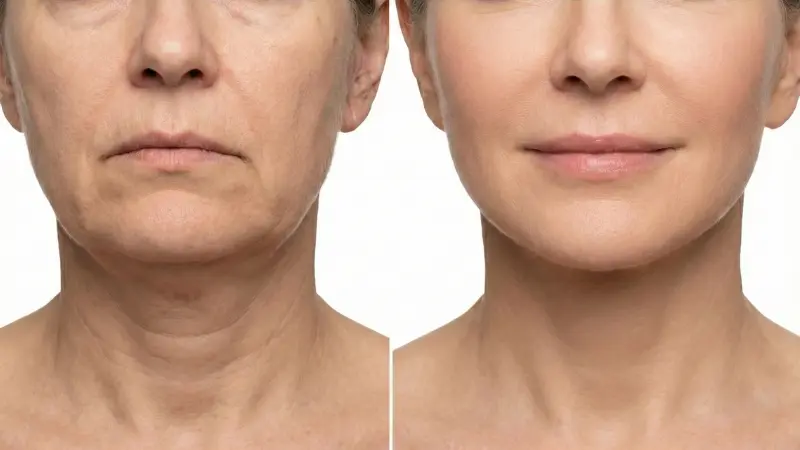
If you’d like to go beyond this Deep Plane Facelift Journey Turkey guide, you can also explore our visual case resources to better understand realistic outcomes and healing patterns—such as Awake Facelift Before and After, Deep Plane Facelift Before and After, and SMAS Facelift Before and After. And if you’re considering a broader transformation, we also share results and recovery insights for Tummy Tuck Before & After and Hair Transplant Before and After, so you can compare timelines, expectations, and what “natural results” look like across procedures.