If you’re searching for best surgeons for filler removal, you’re probably not looking for a “quick fix.” You want a safe, predictable plan that prevents the most common complications: under-eye hollowness, persistent puffiness, unevenness, or a “pulled” facelift look. In 2026, patients researching best surgeons for filler removal eye rejuvenation mini facelift in Turkey 2026 are typically doing what medical science encourages—verifying credentials, protocols, and complication readiness before they commit.
This guide is written for the detail-oriented, cautious patient who wants to understand how surgeon skill is proven—not just advertised—when combining filler removal, eye rejuvenation, and a mini facelift into one cohesive, medically responsible strategy.
Key idea: When under-eye filler, eyelid aging, and lower-face laxity are treated as separate “mini-problems,” the risk of an unnatural result increases. The safest approach is one integrated plan with the right sequence.
Table of Contents
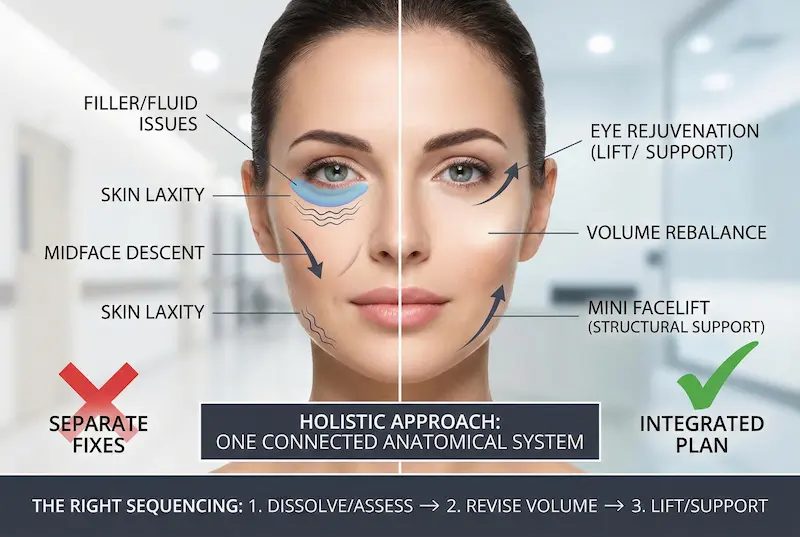
Why “Filler Removal + Eye Rejuvenation + Mini Facelift” Must Be Treated as One Plan (Not 3 Separate Fixes)
These three concerns often share one root problem: the face is a connected anatomical system. What looks like “under-eye filler gone wrong” can actually be a combination of retained filler, fluid dynamics, skin laxity, and structural descent in the midface and lower face. A surgeon who is truly experienced will first identify what is filler-related versus what is anatomy-related—then build a staged plan that reduces risk and supports natural harmony.
The “puffy / heavy / tired eye” problem: when it’s filler vs. laxity vs. anatomy
Under-eye puffiness can be caused by:
- Filler-related issues: superficial placement, product migration, fluid attraction, or a persistent “Tyndall” hue.
- Skin and soft-tissue laxity: thinning skin, crepey texture, and reduced elasticity that no filler can truly “fix.”
- Anatomical factors: lower lid support, natural fat compartments, and midface position.
A careful surgeon separates these causes before deciding whether the right next step is dissolution, eyelid surgery, skin-quality support, or a lift. This decision-making process is exactly where “best surgeon” standards show up in real life—through diagnosis and sequencing, not marketing.
Why treating one area alone can worsen the others (common “botched” pathways)
Many disappointing outcomes come from well-intentioned but disconnected treatments, such as:
- Adding more filler to camouflage laxity: can increase heaviness and worsen swelling or irregularity.
- Dissolving aggressively without a staged reassessment: can create hollowness, texture issues, or uneven contours.
- Doing a “mini facelift only” for a problem driven by midface/eye aging: can leave the eyes looking tired even if the jawline improves.
Evidence-based practice in cosmetic medicine favors conservative intervention, reassessment, and anatomical respect—principles aligned with scientific research and patient safety.
The right sequencing: dissolve/assess → revise volume → lift/support
In most cases, the safest sequence looks like this:
- Dissolve or reduce problematic filler (if appropriate), then reassess after swelling settles.
- Rebuild or rebalance volume only if truly needed (often less than you think).
- Address structural descent and laxity with the right lifting/support technique—sometimes a mini facelift, sometimes more comprehensive support depending on anatomy.
This staged strategy is especially relevant for patients exploring best surgeons for filler removal eye rejuvenation mini facelift in Turkey medical tourism, where clear planning and predictable aftercare matter just as much as surgical technique.
How to Choose the Best Surgeon for Filler Removal (Safety-First Criteria)
The best outcomes in filler removal are strongly linked to two things: protocol discipline and complication readiness. You’re not simply choosing someone to “inject dissolver.” You’re choosing a clinician who understands under-eye anatomy, vascular safety, staged dosing, and what to do if tissue response is not straightforward.
Hyaluronidase protocol: conservative dosing, staged sessions, and tissue respect
When filler is hyaluronic acid–based, hyaluronidase can be used to dissolve it. A high-standard approach typically means:
- Conservative, staged dosing: avoid overcorrection and reduce risk of sudden hollowness.
- Reassessment between sessions: swelling can temporarily mask true contours.
- Respect for tissue planes: under-eye areas are unforgiving; expertise matters.
In science-driven aesthetic practice, “less but safer” is often the rule—especially in delicate periorbital anatomy.
Red flags: “same-day dissolve + surgery” promises, no diagnostics, no plan B
Be cautious if you hear:
- “We’ll dissolve everything and do surgery immediately” without explaining swelling timelines and reassessment.
- “No risks” language (responsible teams discuss risks transparently).
- No complication plan or vague answers about what happens if results are uneven or tissue reacts unpredictably.
What to ask in a consult: complication plan, vascular risk, aftercare access
Use these questions to evaluate surgeon quality:
- How do you confirm whether my issue is filler, skin laxity, or anatomy?
- What is your staged plan if I look hollow after dissolution?
- What’s your protocol for vascular risk awareness and emergency readiness?
- How will follow-up work if I’m traveling internationally?
The most trustworthy teams welcome these questions—because transparent protocols are part of modern, patient-centered medical care.
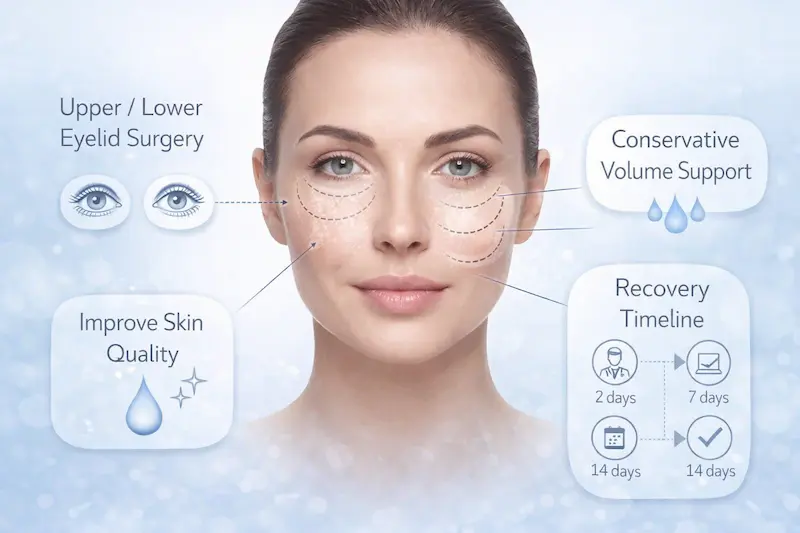
Eye Rejuvenation Options After (or Instead of) Filler Removal
Once problematic filler is reduced (or ruled out as the main cause), the next step is choosing the right eye rejuvenation method based on anatomy—not trends. The under-eye and eyelid region is where “over-treatment” happens most often, so a careful surgeon will match the treatment to the true driver: excess skin, fat prominence, lid laxity, texture changes, or volume imbalance. This is especially important for patients researching best surgeons for filler removal eye rejuvenation mini facelift in Turkey 2026, because safe sequencing and predictable recovery matter when planning travel and follow-up.
Upper vs. lower eyelid surgery: when blepharoplasty is the real solution
In many cases, the most natural “eye refresh” isn’t more filler—it’s correcting tissue changes that filler cannot fix:
- Upper eyelids: excess skin, heaviness, or hooding that makes the eyes look tired.
- Lower eyelids: persistent bags, laxity, or contour irregularities that don’t respond to dissolving.
A best-practice consult will include a discussion of eyelid anatomy, lid support, and realistic limits of non-surgical approaches. In medical science, the guiding principle is simple: treat the underlying cause, not the symptom.
Skin quality vs. volume: why under-eye issues aren’t always “more filler”
Under-eye “darkness” and “tiredness” can come from skin thinning, pigment, vascular show-through, or shadows created by contour transitions. Adding volume in the wrong plane can worsen puffiness or create an unnatural, swollen look.
A safe plan may prioritize:
- Skin-quality strategies (texture, laxity, crepiness) rather than volume.
- Conservative volume correction only when it is clearly indicated after reassessment.
- Structural support when the issue is descent, not deficiency.
This is where scientific research-informed thinking matters: the goal is not “maximum correction,” but maximum naturalness with minimum risk.
Recovery expectations: bruising, swelling timeline, and “social downtime” planning
For international patients considering best surgeons for filler removal eye rejuvenation mini facelift in Turkey medical tourism, planning downtime is part of safety. Typical recovery considerations include:
- Bruising/swelling: often most noticeable in the first 7–14 days (varies by individual and procedure).
- Contour settling: the eye area can continue refining for several weeks.
- Travel timing: choose a clinic that supports staged check-ins and clear “what’s normal vs. not normal” guidance.
| Stage | What You May Notice | What a High-Standard Team Provides |
|---|---|---|
| Days 1–3 | Peak swelling, tightness, visible bruising | Written aftercare, direct contact access, monitored check-ins |
| Days 4–10 | Bruising transitions, swelling begins to reduce | Reassurance + escalation plan if symptoms fall outside normal range |
| Weeks 2–6 | Refinement and “normalizing” of contours | Follow-up structure, photo reviews, and staged adjustments if needed |
Patient-safe mindset: The best surgeon doesn’t promise “zero downtime.” They provide a realistic timeline, clear risk education, and a plan for what happens if swelling or asymmetry lingers.
Mini Facelift Done Right: Natural Lower-Face Refinement (Without the “Pulled” Look)
A mini facelift can be a powerful option for the right patient—especially when the main concern is early jowling or jawline softening. But the phrase “mini facelift” is often used loosely. The safest, most natural outcomes come from proper technique selection and honest candidacy. For Skeptical Sam, the key question is not “Can you do a mini facelift?” but “Is a mini facelift truly the correct procedure for my anatomy—and how do you avoid an unnatural result?”
Mini facelift vs. deep plane vs. SMAS: who truly benefits from “mini”
While each method has its place, the best surgeon explains which layer is being addressed and why:
- Mini facelift: often best for earlier-stage laxity primarily in the lower face.
- SMAS-based approaches: add structural support beyond skin tightening alone.
- Deep plane techniques: may be more appropriate when descent is more significant and the goal is long-lasting, natural repositioning.
A surgeon with high standards will show you what each approach can—and cannot—achieve. This is critical when combining with eye rejuvenation: the face should look balanced, not “fixed in zones.”
The “jawline + jowls” problem: structural support vs. skin tightening myths
One of the most common causes of a “pulled” look is relying on skin tension instead of deeper support. Natural outcomes typically come from:
- Support where it matters: addressing deeper structures (when indicated) rather than only removing skin.
- Vector control: lifting in a direction that respects facial anatomy.
- Harmonized planning: ensuring the lower face refinement doesn’t clash with the eye area results.
This is why surgeon selection is central to your search for best surgeons for filler removal combined with rejuvenation procedures: the artistry is built on anatomy and safety, not aggressive tightening.
Combining with neck refinement: when a mini facelift alone is not enough
Some patients seek a mini facelift expecting it to fully correct neck laxity or deeper banding. A trustworthy consult clarifies:
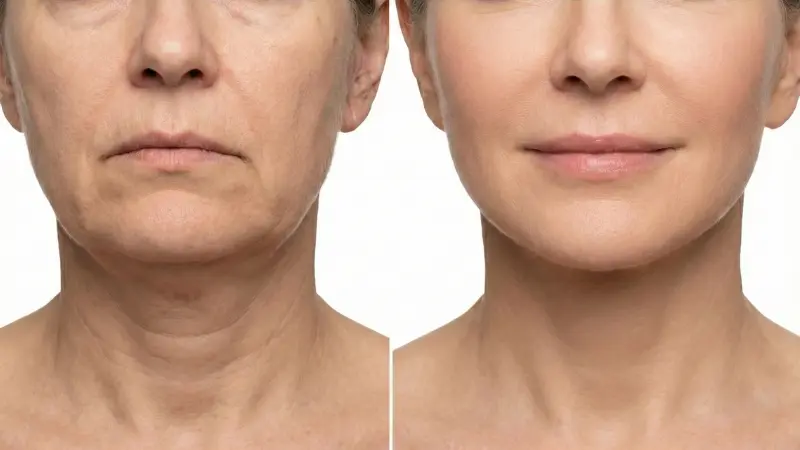
- What a mini facelift can realistically improve (often jawline and early jowls).
- When additional neck-focused steps are needed for a cohesive result.
- Why “doing less” can sometimes look better—if it matches your anatomy and goals.
In science-aligned, ethical aesthetic practice, the “best” plan is the one that fits your face, risk tolerance, and recovery reality—especially in medical tourism settings where planning and follow-up structure are essential.
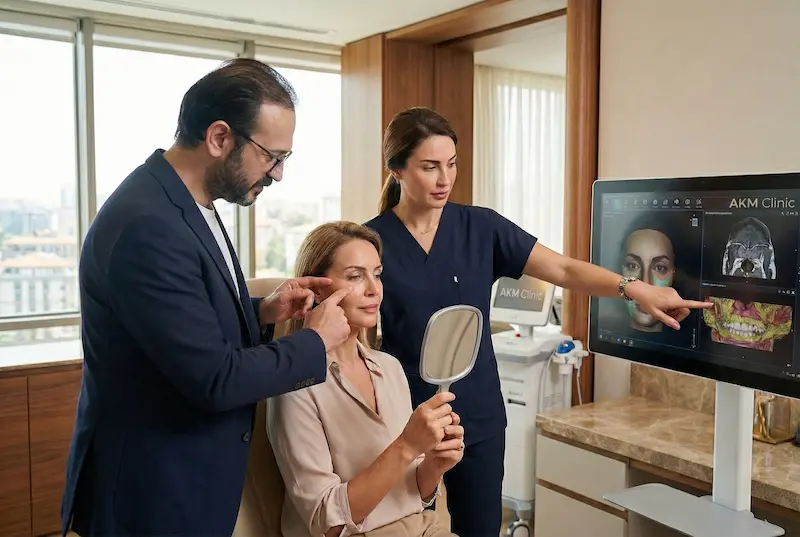
The AKM Clinic Surgical Advantage: Dermatosurgeon + Facial Plastic Surgery Team Approach
When you’re comparing options for best surgeons for filler removal plus eye rejuvenation and a mini facelift, the difference is rarely “who can do the procedure.” The difference is who can plan it safely, tailor it to your anatomy, and protect naturalness—especially around the eyes and midface, where a small mistake can look obvious. At AKM Clinic, procedures are approached with a team mindset that combines facial plastic surgery planning with the added perspective of a Dermatosurgeon—an advantage for patients who prioritize subtlety, skin quality, and scar outcomes.
Why dermatosurgery matters for scar quality, skin healing, and subtle refinement
Eye rejuvenation and facial lifting live at the intersection of structure and skin. A Dermatosurgeon’s expertise contributes to:
- Skin-focused precision: incision planning, tissue handling, and minimizing visible scarring.
- Texture and quality awareness: understanding how thin eyelid skin and facial skin behave during healing.
- Natural-result detail work: avoiding overcorrection and maintaining facial “identity.”
For the cautious “expert patient,” this matters because a natural result is often the product of micro-decisions—how tissues are handled, how tension is managed, and how healing is supported.
Facial anatomy expertise for harmony and function (credential-based trust signals)
The safest, most natural outcomes come from surgeons who treat the face as a connected system. In practical terms, this means:
- Sequencing logic: deciding what must happen first (e.g., staged dissolution and reassessment) to avoid a cascade of “fixes.”
- Harmony planning: balancing eye rejuvenation with lower-face improvement so the face looks refreshed—not “done.”
- Function-aware decisions: respecting eyelid support and facial movement so results remain expressive.
This is the difference between marketing claims and a plan that stands up to medical scrutiny—especially for patients researching best surgeons for filler removal eye rejuvenation mini facelift in Turkey 2026.
Revision-minded planning: how experienced teams prevent—and manage—complications
Skeptical patients often ask the right question: “What if something doesn’t go perfectly?” A high-standard clinic answers this directly with:
- Conservative choices: avoiding aggressive same-day combinations when swelling and tissue response could distort decisions.
- Defined escalation pathways: what triggers an urgent review vs. a normal healing reassurance.
- Structured follow-up: clear checkpoints and responsiveness—critical in best surgeons for filler removal eye rejuvenation mini facelift in Turkey medical tourism scenarios.
Trust signal: The best teams don’t promise perfection. They demonstrate preparedness—protocols, transparency, and a plan for the “what ifs.”
Recovery & Risk Reduction: What High-Standard Clinics Do Differently
For international patients, “safe surgery” is not only about the operating room. It’s the entire system: pre-op screening, anesthesia planning, sterile standards, post-op monitoring, and healing support. If you’re aiming for the best surgeons for filler removal combined with eye rejuvenation and a mini facelift, you should also evaluate the clinic’s recovery infrastructure—because that’s what reduces stress and lowers complication risk.
Advanced healing support: Hyperbaric Oxygen Therapy (HBOT) and Low-Level Laser Therapy (LLLT)
AKM Clinic highlights supportive recovery technologies that are commonly used to assist healing and patient comfort:
- HBOT (Hyperbaric Oxygen Therapy): supports oxygen delivery to tissues, which can be beneficial during healing phases.
- LLLT (Low-Level Laser Therapy): often used to support recovery comfort and tissue response.
While individual outcomes vary and these are not “magic” solutions, this kind of recovery support reflects a science-minded clinic culture—one that treats healing as a structured process, not an afterthought. In scientific research, supportive perioperative care is widely recognized as a factor that can influence recovery quality.
Safety systems: pre-op screening, sterile standards, and monitored aftercare
High-standard clinics reduce risk through systems—not slogans. Look for:
- Pre-op evaluation: medical history review, anesthesia suitability, and individualized planning.
- Operating room discipline: sterile protocols and consistent intraoperative monitoring.
- Aftercare readiness: planned check-ins, clear medication guidance, and quick access when concerns arise.
This matters more than people realize in combined aesthetic plans, where swelling patterns can overlap and the patient needs clear guidance on what is normal.
Travel logistics for US patients: follow-ups, communication, and “who helps if I’m worried?”
If you’re considering best surgeons for filler removal eye rejuvenation mini facelift in Turkey medical tourism, ask for a practical roadmap:
- Minimum stay guidance: not just for surgery day, but for early follow-up and safe travel timing.
- Communication clarity: who you contact, how quickly, and what symptoms require immediate review.
- Remote continuity: photo/video check-ins after you return home for reassurance and monitoring.
| What You Should Have in Writing | Why It Matters |
|---|---|
| Day-by-day aftercare instructions | Reduces anxiety and prevents avoidable mistakes during early healing |
| Normal vs. abnormal symptom checklist | Helps you identify when to seek urgent support |
| Follow-up schedule (in-person + remote) | Ensures continuity even after you fly back |
| Complication response plan | Shows preparedness and protects patient safety |
Hear From Real Patients: What “Natural Results + Strong Aftercare” Looks Like
For Skeptical Sam, the most convincing proof isn’t a perfect Instagram post—it’s a consistent pattern in real patient narratives: natural-looking outcomes, realistic recovery talk, and responsive follow-up. These are the signals expert patients look for when researching best surgeons for filler removal eye rejuvenation mini facelift in Turkey medical tourism.
Barbara (USA): “Expert patient” validation after years of research
Barbara (USA), described as an “expert patient” with many prior procedures, spent years researching globally before choosing AKM Clinic. Her summary speaks directly to the fear of an “obvious” result:
“I actually look like nothing happened but probably 20 years younger.”
That outcome—refreshed but not “done”—is exactly why the best surgeons for filler removal and facial rejuvenation are so careful with sequencing, tissue handling, and realistic planning.
Sarah (UK): Choosing Turkey after comparing results and credentials
Sarah (UK) had prior surgery experience and still chose AKM Clinic because she found the results “so natural” and valued the surgeons’ credentials. She also described a smooth recovery experience:
“I would choose Turkey over the UK.”
For patients considering best surgeons for filler removal eye rejuvenation mini facelift in Turkey 2026, this kind of comparative decision-making is a common pattern: results + credentials + recovery structure.
Dilek (Germany): Confidence from first contact and clear satisfaction
Dilek (Germany) emphasizes the emotional side of safety: feeling secure early and staying satisfied after the experience:
“100 percent… super, super, super satisfied.”
In medical tourism, emotional security is not “fluff”—it’s a practical indicator that communication, planning, and aftercare are functioning the way they should.

A Practical Consultation Checklist: How to Vet “Best Surgeons” (Use This in Any Clinic)
If you’re serious about finding the best surgeons for filler removal plus eye rejuvenation and a mini facelift, bring this checklist to your consult. It helps you separate confident marketing from science-guided surgical planning.
Ask about diagnosis (not just treatment)
- “How do you confirm whether my under-eye issue is filler, laxity, fat prominence, or skin quality?”
- “What signs suggest I’m a candidate for eyelid surgery vs. conservative correction?”
- “Can you explain the sequencing—what happens first and why?”
Ask about protocols and complication readiness
- “If hyaluronidase is used, do you stage it and reassess between sessions?”
- “What is your plan if I look hollow after dissolution?”
- “What’s your escalation pathway if swelling/asymmetry persists beyond expectations?”
Ask about travel, follow-up, and continuity of care
- “What’s the minimum safe stay in Istanbul for my specific plan?”
- “How do you handle follow-up once I’m back home (photo/video reviews, checkpoints)?”
- “Who do I contact after hours if I’m worried?”
| What You Want to Hear | What It Usually Means | Red Flag Response |
|---|---|---|
| “We’ll stage this and reassess.” | Conservative, anatomy-first planning | “We do everything in one day—no need to wait.” |
| “Here’s our complication plan.” | Prepared, accountable team | “Complications don’t happen with us.” |
| “We’ll prioritize naturalness.” | Balanced vectors + tissue respect | “We’ll tighten more if you want a stronger look.” |
Science-minded takeaway: The safest aesthetic plans are built around diagnosis, staged decision-making, and clear aftercare—not speed.
Frequently Asked Questions (FAQ): Best Surgeons for Filler Removal
Below are the most common questions from patients researching best surgeons for filler removal eye rejuvenation mini facelift in Turkey 2026. These answers are intentionally direct and practical.
How do I know if my under-eye issue is filler, fat, or skin laxity?
Look for a consult that differentiates swelling/migration (filler), true “bagging” (fat prominence), and crepey texture/looseness (skin laxity). A surgeon should explain the driver and the sequence—not jump to one-size-fits-all treatment.
Is hyaluronidase safe for under-eye filler removal? What are the real risks?
When used appropriately for hyaluronic-acid filler, hyaluronidase is a standard tool. Risks include unevenness, overcorrection (hollowness), swelling, and rare adverse reactions. Best practice is conservative dosing and staged reassessment.
How long should I wait between filler dissolution and eyelid surgery/mini facelift?
Many patients benefit from a waiting period so swelling settles and the true contour is visible. Your surgeon should give a timeline based on your tissue response and the degree of correction needed.
Can filler removal make me look “hollow,” and how is that prevented?
Yes—especially if dissolution is aggressive or if the original problem was not primarily filler. Prevention is staged dosing, reassessment, and (when truly necessary) conservative volume rebalancing or structural support rather than “refilling.”
What’s the difference between a mini facelift and a deep plane facelift for jowls?
A mini facelift can help early jowling and jawline softness. When descent is more significant, deeper techniques may offer more durable repositioning with less reliance on skin tension—reducing the risk of a pulled appearance.
What is “awake/tumescent” facelift anesthesia and is it safer than general anesthesia?
Some clinics perform certain facial procedures under local anesthesia with sedation (often discussed as “awake” approaches). Whether it’s suitable depends on your health profile, procedure scope, and surgeon protocol. The safest choice is individualized planning, not a blanket promise.
How long do I need to stay in Istanbul for this combined plan?
It depends on the exact sequencing (dissolution timing, eyelid procedure, lifting approach) and your early healing. A high-standard clinic will outline in-person checkpoints before you fly and set up remote follow-ups after you return.
If you’d like to go beyond this topic, you can also explore related guides such as Deep Plane Facelift Turkey Before and After, Deep Plane Facelift Cost Turkey, Best Plastic Surgery Clinic Turkey, AKM Clinic Reviews, and Is It Safe to Have Plastic Surgery in Turkey?—each one provides additional, practical insight to help you compare options, understand realistic outcomes, and plan your journey with more confidence.