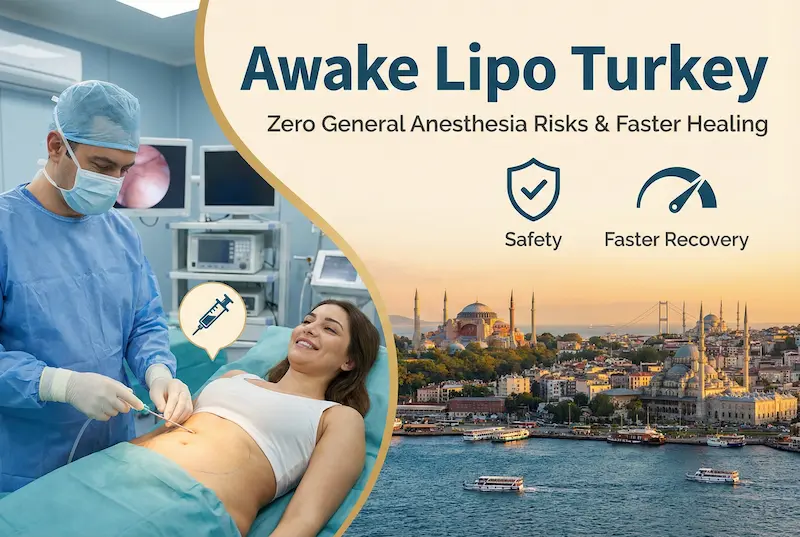
If you’ve been researching awake lipo Turkey, you’re probably not looking for “the cheapest” option—you’re looking for the safest way to get a meaningful body contouring result without the risks and downtime that worry you most. This guide is written for the expert patient who wants clarity: what “awake” really means, how tumescent liposuction Turkey differs from traditional approaches, what recovery actually feels like, and how to judge safety in a clinic setting using evidence-based thinking rooted in medical science and real-world standards of care.
We’ll also cover the practical questions patients ask most often: is awake lipo safe in Turkey, what the awake lipo Turkey procedure is like step-by-step, and—when relevant—how cost is typically structured for international patients searching awake lipo Turkey cost or how much is awake lipo Turkey.
Key idea: “Awake” liposuction is not about being fully alert and uncomfortable—it’s about using tumescent local anesthesia (often with light sedation) to reduce systemic anesthesia exposure while still keeping you calm, numb, and closely monitored.
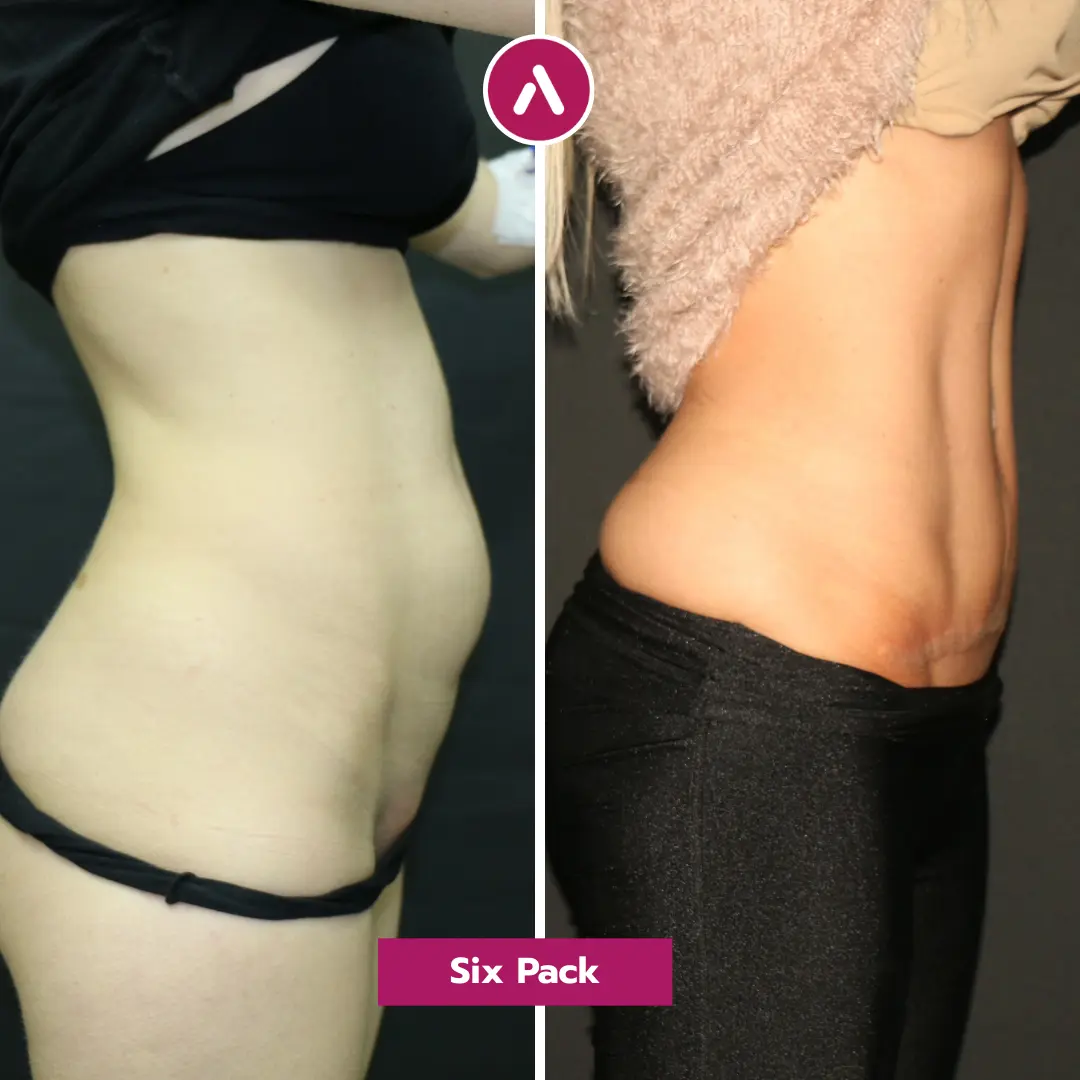
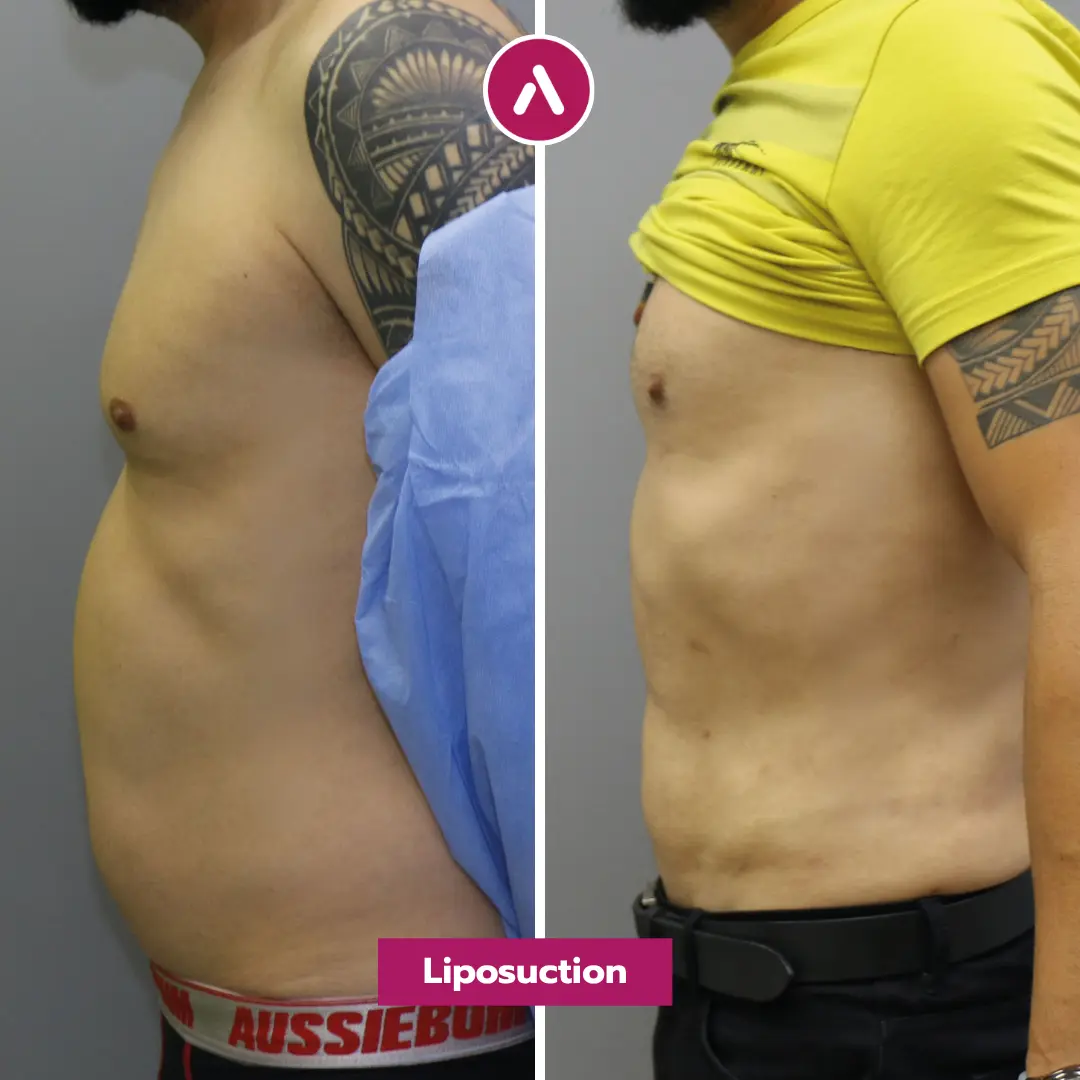
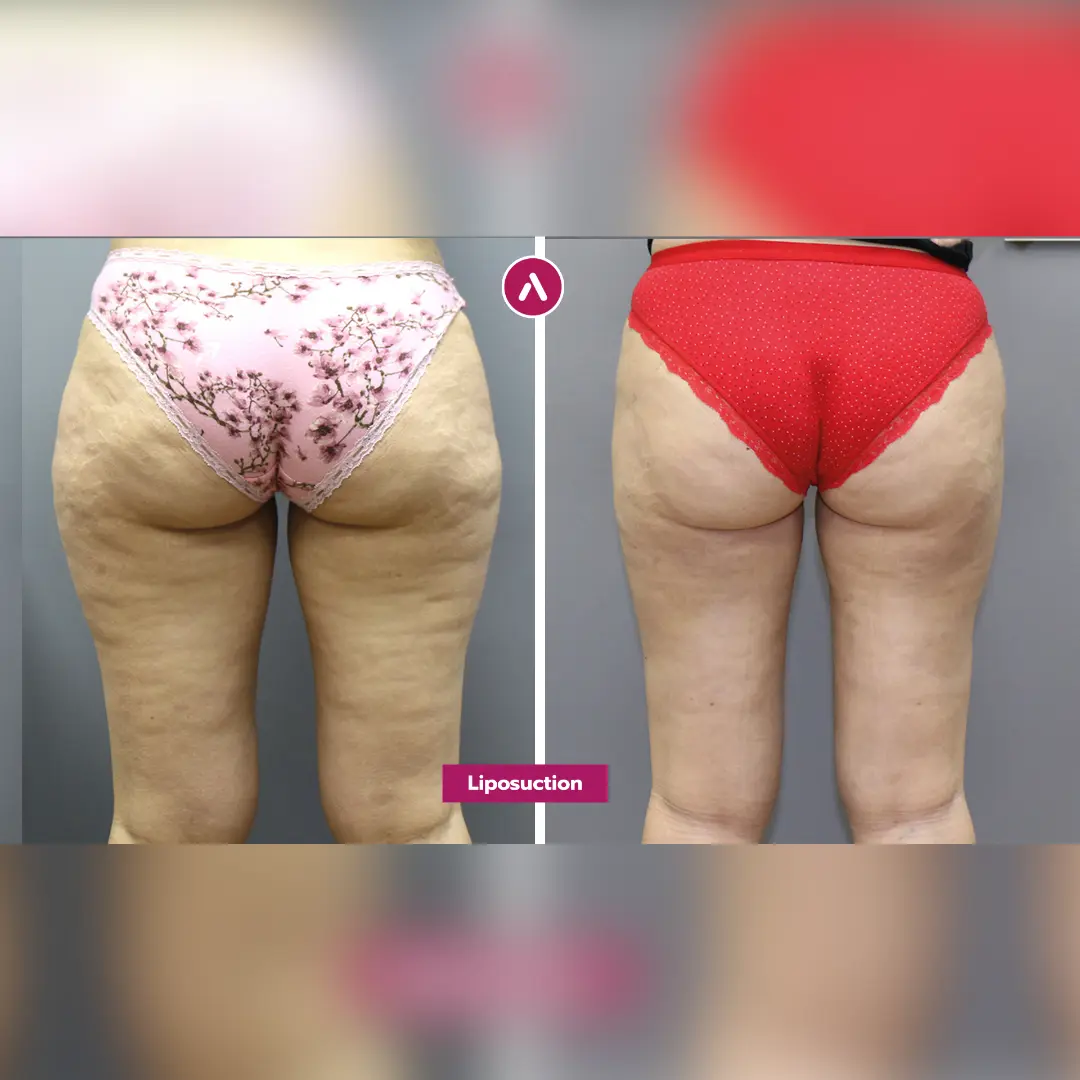
Table of Contents
Why “Awake” Lipo is Safer than Traditional Lipo
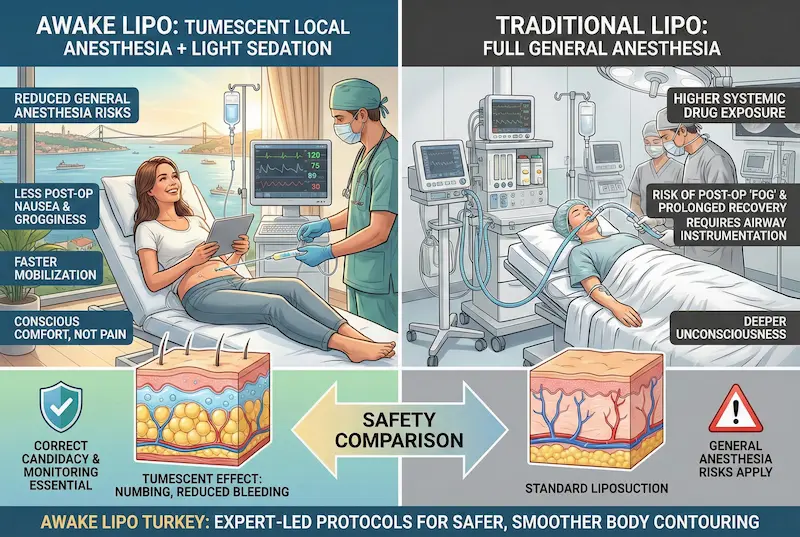
The term awake liposuction Turkey usually refers to liposuction performed under tumescent local anesthesia—sometimes paired with carefully titrated “light sedation”—instead of full general anesthesia. For many appropriately selected patients, this approach can lower anesthesia-related risks and make the immediate post-op period smoother. However, “safer” does not mean “risk-free.” Safety depends on correct candidacy, dosing limits, sterile technique, monitoring, and a surgeon-led protocol that treats liposuction as a medical procedure—not a cosmetic commodity.
Eliminating general anesthesia risks
General anesthesia can be very safe in the right setting, but it carries a different risk profile than local anesthesia. With lipo awake Turkey, the aim is to reduce exposure to systemic anesthetic drugs and airway instrumentation, which can lower the chance of issues like severe nausea, prolonged grogginess, and certain anesthesia-related complications. For patients whose biggest fear is “going under,” awake techniques can also reduce psychological stress—when done with proper comfort measures and monitoring.
- Common reasons patients choose awake techniques: less post-op “fog,” faster mobilization, and avoidance of general anesthesia when not strictly necessary.
- Important nuance: the overall safety outcome still depends on facility standards, monitoring, and patient selection.
How Tumescent Local Anesthesia works
Tumescent liposuction Turkey typically uses a dilute anesthetic solution infused into the target area. This solution helps numb tissues, reduce bleeding, and create a “tumescent” (firm, expanded) plane that can make fat removal more controlled. In modern practice, safe dosing and careful fluid management are central—this is where experience and strict protocols matter. In the language of scientific research, the goal is to optimize pain control while minimizing systemic absorption and maintaining stable vitals.
- What it does: numbs the area, constricts small vessels, and supports more precise contouring.
- Why it matters: better comfort + potentially less bruising when performed correctly.
- What patients usually feel: pressure and movement—not sharp pain—once the area is fully numb.
What “light sedation” really means (you’re comfortable, not “watching surgery”)
Many people hear “awake” and imagine being fully alert and anxious. In reality, liposuction awake Turkey often includes mild, carefully supervised sedation to help you relax. You may drift in and out, feel calm, and have reduced memory of the procedure—without the depth of anesthesia associated with full general anesthesia. Comfort should be planned: anxiety control, warming, positioning, and clear communication are part of the protocol.
- You are still monitored continuously (oxygenation, heart rate, blood pressure).
- The goal is comfort + cooperation, not “toughing it out.”
- Transparency matters: a reputable clinic explains exactly what drugs are used and why.
Safety is still about patient selection: who should NOT be awake
Even if you want awake lipo shaping Turkey, not every patient is an ideal candidate for local + sedation. Certain medical conditions, medication use, or procedure scope can shift the risk-benefit balance. A surgeon-led team should screen for factors that increase complication risk and recommend the safest anesthesia plan—even if that means saying “no” to awake lipo for your case.
- Examples of factors that may require extra caution: complex medical history, uncontrolled blood pressure, significant anemia, clotting disorders, or certain medication regimens (e.g., blood thinners).
- Procedure scope matters: very extensive multi-area cases may not be appropriate under local alone.
- Comfort tolerance: severe anxiety can be managed, but it must be planned—not improvised.
How awake technique can reduce nausea, grogginess, and “post-op fog”
One practical advantage many patients report after awake lipo Turkey procedure protocols is a clearer, more stable first day: less nausea, less disorientation, and earlier ability to eat, hydrate, and walk (within medical guidance). Early mobilization matters because it supports circulation and helps reduce avoidable post-op problems. From a medical science standpoint, the immediate recovery period is not cosmetic—it’s a safety window where good protocols can meaningfully improve the patient experience.
| First 24 Hours | Awake (Local + Light Sedation) | General Anesthesia (Typical) |
|---|---|---|
| Mental clarity | Often clearer sooner | May feel “foggy” longer |
| Nausea risk | Often lower (varies by patient) | Can be higher in some patients |
| Walking / mobility | Often earlier (with guidance) | May be delayed depending on recovery |
| Discharge | Commonly same-day | Often same-day, sometimes longer observation |
Note: These are general patterns, not guarantees. Your safest plan depends on your health profile, procedure extent (e.g., awake lipo 360 Turkey vs. smaller areas), and the clinic’s monitoring standards.
The Procedure: What You Feel During Surgery
The phrase awake liposuction Turkey can sound intimidating until you understand how the experience is engineered for comfort. The awake lipo Turkey procedure is typically built around three goals: (1) make the treatment area fully numb with tumescent liposuction Turkey techniques, (2) keep you calm and comfortable with positioning, warming, and (when appropriate) light sedation, and (3) maintain continuous monitoring so the team can respond immediately if anything feels off. For the expert patient, the key takeaway is this: a well-run awake protocol is structured and predictable—not improvised.
Pain vs. Pressure: Honest patient feedback
Most patients describe the sensation during lipo awake Turkey as pressure, tugging, and movement rather than sharp pain—once numbing is fully established. The injection phase (tumescent infusion) can feel like brief stinging or pressure, and after that the area becomes profoundly numb. If you feel sharp pain, that is feedback the surgeon can respond to immediately by adjusting the anesthetic plan.
- What you usually feel: pressure, vibration, movement.
- What you should not “push through”: sharp or escalating pain.
- How comfort is protected: incremental numbing, careful pacing, and communication.
Patient-first rule: If something hurts, say it. In awake procedures, your feedback is part of the safety system.
Communicating with your surgeon during the process
One unique advantage of liposuction awake Turkey is the ability to communicate in real time. You can tell the team if you’re uncomfortable, cold, anxious, or feeling pressure in an unexpected way. In high-standard settings, the surgeon and anesthesia/monitoring team will guide you through what’s normal and what needs adjustment. This is also why patient selection matters: awake techniques work best when you can cooperate and communicate clearly.
- Comfort check-ins: the team should regularly ask how you feel.
- Positioning matters: numbness is great, but awkward positioning can still cause discomfort.
- Expectation setting: you may hear equipment and feel movement—this is normal.
Step-by-step: marking, numbing, sculpting, and finishing
While details vary by surgeon and body area, the awake lipo Turkey procedure usually follows a consistent workflow designed for precision and safety.
- Pre-op marking: The surgeon marks treatment zones while you’re standing to map natural contours and asymmetries.
- Positioning + sterile prep: You’re positioned to protect pressure points; the skin is cleaned and draped.
- Tumescent infusion: A dilute solution is infused to numb the area and support controlled fat removal (core of tumescent liposuction Turkey).
- Contouring phase: Fat is removed in a methodical pattern to shape, not just “reduce volume.” This is where terms like awake lipo shaping Turkey come from.
- Balance checks: The surgeon reassesses symmetry and transitions to avoid dips, grooves, or harsh edges.
- Finishing + dressings: Small incision care, absorbent dressings, and compression garment fitting.
For awake lipo 360 Turkey (circumferential torso contouring), the same steps apply—just across more zones, with more frequent repositioning and time management to keep you comfortable and stable throughout.
How long it takes (by area) and what determines surgery time
Procedure time varies widely and is influenced by how many areas are treated, how much sculpting is required, and whether you’re doing a focused area versus awake lipo 360 Turkey. The most important time-related safety principle is not “fastest surgery”—it’s controlled, methodical work with appropriate breaks, comfort checks, and monitoring.
| Treatment Scope | Typical Time Range | What Most Affects Timing |
|---|---|---|
| Single small area (e.g., chin/arms) | ~1–2 hours | Fibrous tissue, precision contouring |
| Moderate multi-area (e.g., abdomen + flanks) | ~2–4 hours | Volume + symmetry refinement |
| Awake lipo 360 (torso circumferential) | ~3–5+ hours | Repositioning, comfort, safety pacing |
Important: A reputable surgeon will set an upper limit based on safety, not marketing. In clinical practice and scientific research, procedure planning focuses on physiological tolerance, fluid balance, and minimizing complication risk—not “how much can we do in one day at any cost.”
Privacy & dignity: draping, positioning, and anxiety control
Expert patients often underestimate how much comfort depends on environment. A high-standard awake protocol includes privacy-first draping, warm blankets, respectful repositioning, and calm, structured communication. Anxiety control is not an afterthought: it’s part of the plan, especially for patients choosing awake liposuction Turkey specifically to avoid the fear of general anesthesia.
- Draping: only the treatment zone is exposed at any time.
- Temperature: keeping you warm reduces stress and improves comfort.
- Noise + pacing: a calm room and predictable steps make the experience easier.
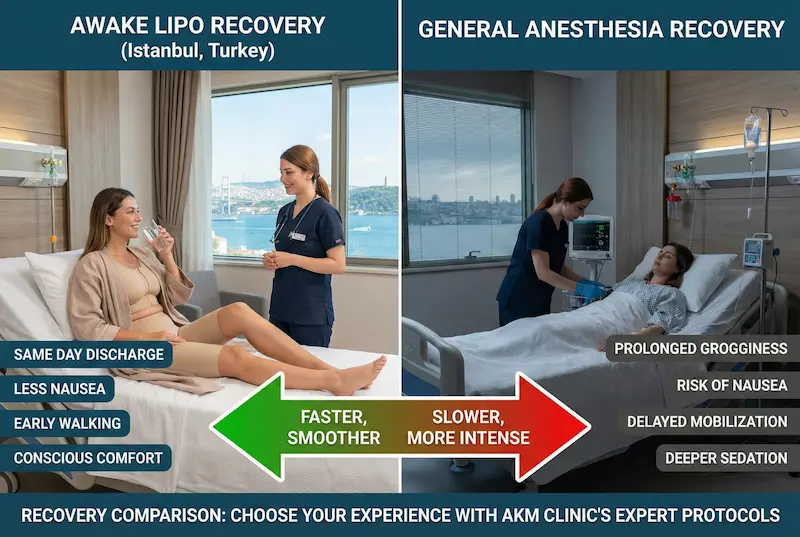
Recovery Comparison: Awake vs. General Anesthesia
Recovery is one of the biggest reasons patients search awake lipo Turkey and how much is awake lipo Turkey—because time off work, travel timing, and how you feel after surgery all matter. With lipo awake Turkey, many patients feel more “present” sooner and can begin gentle walking earlier (as medically advised). Still, liposuction recovery is not instant: swelling, soreness, and drainage are normal, and compression is non-negotiable if you want smooth contour healing.
Walking out of the clinic (Same day discharge)
In many cases, patients undergoing liposuction awake Turkey can be discharged the same day after a structured observation period—once vitals are stable, pain is controlled, and you can hydrate and walk with assistance. Early mobilization is valuable because it supports circulation. That said, discharge criteria should be strict and consistent, not rushed.
- What “safe discharge” looks like: stable vitals, controlled pain, ability to urinate, clear instructions.
- What you should receive: written meds plan, garment guidance, and emergency contact pathway.
- Red flag: being sent out without clear monitoring checks and aftercare instructions.
Reduced downtime and bruising
Some patients report less nausea and faster functional recovery after awake lipo shaping Turkey compared to deeper anesthesia approaches, which can translate into earlier light activity and improved appetite/hydration. Bruising and swelling vary by individual biology and technique; the most reliable drivers are surgical control, post-op compression, and adherence to aftercare—not just anesthesia type.
| Recovery Factor | What Patients Often Report with Awake Protocols | What Still Depends on Technique/Aftercare |
|---|---|---|
| Nausea / grogginess | Often reduced | Medication plan, hydration, individual sensitivity |
| Mobility | Often earlier gentle walking | Compression comfort, soreness, travel planning |
| Bruising / swelling | May be improved for some | Surgeon technique, garment compliance, activity |
The first 72 hours: what’s normal vs. what’s a red flag
The first three days after awake lipo Turkey procedure are about protecting healing. Expect swelling, soreness, and possibly fluid drainage from small access points depending on technique. What matters is knowing what’s within normal limits—and what requires urgent evaluation.
- Common/expected: swelling that increases then slowly improves, soreness like an intense workout, mild drainage, fatigue.
- Call your team urgently if: worsening shortness of breath, chest pain, sudden one-sided leg swelling, fever with chills, rapidly expanding redness, severe uncontrolled pain, confusion, or fainting.
- Practical comfort tips: hydrate, walk gently as advised, keep garments on, avoid salty foods that worsen swelling.
Compression garments: how long, how tight, and common mistakes
Compression is a major determinant of final contour—whether you did awake lipo 360 Turkey or a smaller area. The garment helps manage swelling, support skin retraction, and reduce fluid accumulation. The goal is firm and supportive—not so tight that it causes numbness, skin injury, or breathing restriction.
- Common mistake #1: removing the garment too often early on.
- Common mistake #2: choosing a garment that rolls and creates lines.
- Common mistake #3: assuming “tighter = better.” Fit must be medically appropriate.
Flying home: timing, mobility, and clot-prevention basics
International patients often plan their return flight around how they feel, but timing should follow medical guidance. Whether you’re researching awake lipo Turkey cost or deciding between destinations, don’t ignore travel safety: long flights increase clot risk, especially after surgery. You want a plan for walking, hydration, and any recommended prophylaxis based on your risk profile.
- In-flight basics: walk when safe, do ankle pumps, hydrate, avoid alcohol.
- Compression: follow your surgeon’s guidance; some patients may be advised to use additional measures.
- Safety principle: “feeling okay” is not the same as being medically cleared.
Who is a Good Candidate for Awake Lipo?
Most people searching awake liposuction Turkey or is awake lipo safe in Turkey are trying to answer one question: “Am I the right patient for this technique?” The honest answer is that awake lipo Turkey can be an excellent option—when patient selection is strict. The safest clinics don’t “sell everyone” the same plan; they screen medical history, body goals, skin quality, and procedure scope so the anesthesia approach matches your physiology and risk profile. In evidence-based practice and scientific research, patient selection is one of the strongest predictors of safe outcomes.
Best-fit goals: contouring vs. weight loss (setting realistic expectations)
Lipo awake Turkey is a contouring procedure, not a weight-loss strategy. The best candidates want improved shape—smoother waist transitions, better abdominal definition, or more balanced proportions—not an unrealistic “scale transformation.” If your goal is sculpting, awake lipo shaping Turkey can be very effective because it focuses on harmony between treated and untreated zones.
- Great goals: shaping the waistline, reducing stubborn fat pockets, improving proportions.
- Risky goals: expecting “maximum removal” regardless of safety limits.
- Expert-patient mindset: seek a plan that prioritizes smooth contour over aggressive volume.
BMI, skin quality, and “how much can we safely remove?”
Your BMI is only part of the story. Skin elasticity, fat distribution, and connective tissue density determine how “clean” the final contour looks—especially for larger-scope cases like awake lipo 360 Turkey. If skin is significantly lax, liposuction alone may create looseness rather than tightness. This is where a surgeon’s judgment matters: the best plan may include staged treatments or skin-tightening strategies rather than overpromising.
| Factor | What It Means for Results | Why It Matters for Safety |
|---|---|---|
| Skin elasticity | Better retraction & smoother contour | Less risk of irregularities that require revisions |
| Fat quality (soft vs. fibrous) | Fibrous fat takes more time/precision | Longer procedures require pacing and comfort planning |
| Procedure extent (single area vs. 360) | More zones = more sculpting complexity | Fluid balance, monitoring, and safe limits become critical |
Key concept: “How much” is safely removable is determined by a clinical safety framework—not a marketing number. A responsible surgeon will set limits based on physiology, fluid management, and your unique risk factors.
Medical checklist: smoking, blood thinners, anemia, diabetes
If you’re asking is awake lipo safe in Turkey, your personal medical profile is central. Even under tumescent liposuction Turkey protocols, liposuction is still surgery. The clinic should screen for smoking/nicotine exposure, medications (especially blood thinners), anemia, uncontrolled diabetes, clotting risk, and other factors that influence healing and complication probability. From a medical science standpoint, optimizing these variables can reduce infection risk, poor wound healing, and prolonged recovery.
- Smoking/nicotine: increases healing complications and should be stopped per medical guidance.
- Blood thinners/supplements: may need adjustments; never stop without physician instructions.
- Anemia/iron deficiency: can worsen fatigue and recovery tolerance.
- Diabetes: must be well-controlled to support healing.
Anxiety-sensitive patients: when awake is still possible (and when it isn’t)
“Awake” does not mean “white-knuckling through surgery.” Many anxiety-sensitive patients do well with an awake approach when comfort is planned: clear explanations, calming environment, and light sedation when appropriate. But if severe anxiety prevents cooperation or triggers panic responses, the safer choice may be a different anesthesia strategy. The goal is always the same: the safest route to a good outcome—not forcing a technique.
- Awake can still work if: you can communicate, follow instructions, and feel reassured by a structured plan.
- Consider alternatives if: panic is likely, or if your procedure scope is extensive and comfort cannot be reliably maintained.
- Green flag: the team discusses options without pressure.
Areas that work especially well with awake technique (abdomen, flanks, arms, chin, etc.)
Awake protocols can be used for a range of areas, and many patients look specifically for awake lipo 360 Turkey to address abdomen, waist, and back circumferentially. Other commonly treated zones include arms, inner thighs, and submental (chin/neck) contouring. The “best” areas depend on your anatomy and skin quality—another reason why consultations should be personalized.
- Common zones: abdomen, flanks, back/waist (360), arms, chin/neck.
- What decides suitability: tissue density, skin quality, and total scope.
- Safety principle: the bigger the scope, the more important strict limits and monitoring become.
So—Is awake lipo safe in Turkey? It can be safe when performed under strict protocols: correct candidacy, surgeon-led planning, appropriate facility standards, continuous monitoring, and clear aftercare. “Turkey” isn’t the risk factor—standards and decision-making are.
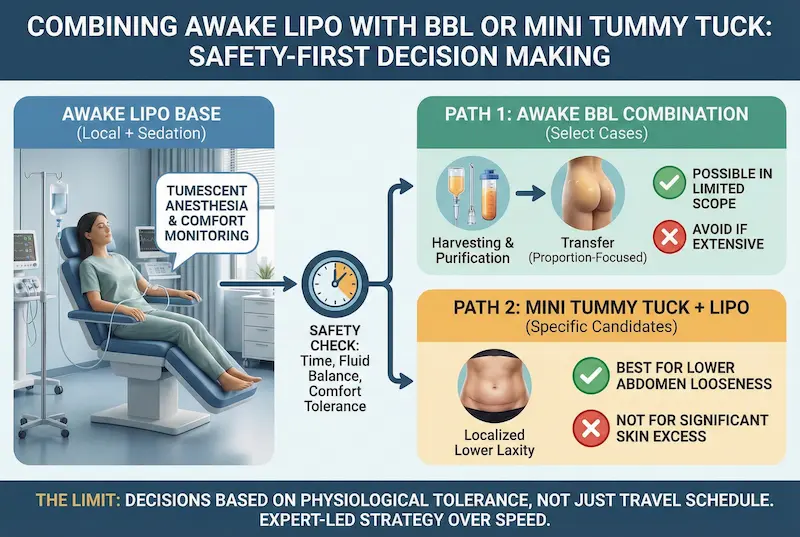
Combining Awake Lipo with BBL or Mini Tummy Tuck
Many international patients exploring awake liposuction Turkey also ask about combination surgeries: “Can I do this with a BBL?” or “Can I add a mini tummy tuck?” Combining can be efficient—one recovery window, one trip—but it increases complexity. The safest approach is always strategy over speed: define the primary goal, confirm candidacy, and only combine when it does not push beyond safe physiological limits.
When combining makes sense (one recovery period vs. added complexity)
Combining procedures can be appealing, especially for travelers who want to maximize results per trip and understand awake lipo Turkey cost structures. But “more in one day” is not automatically better. The decision depends on your tissue quality, medical profile, and how extensive your contouring plan is. In clinical decision-making grounded in science, the priority is reducing complication risk, not maximizing the surgical checklist.
- Combination can make sense if: procedure extent remains within safe limits and goals are aligned.
- Combination is risky if: it significantly increases operative time, fluid shifts, or recovery burden.
- Expert-patient tip: ask what would be staged if you were the surgeon’s family member.
Safety-first sequencing: fat harvesting, purification, and transfer basics
If a BBL is considered, the process includes harvesting fat, processing it (purifying/decanting), and then transferring it to the buttocks. Technique and safety protocols matter here. A responsible team discusses not only the aesthetic plan but also how they approach risk reduction, patient monitoring, and post-op instructions that affect outcomes.
- Harvesting: controlled removal to preserve fat quality.
- Processing: preparation to improve consistency for transfer.
- Transfer planning: proportion-focused shaping (not “overfilling”).
Awake BBL: what’s possible under local + sedation, what isn’t
Some elements of combination surgery can be compatible with local + sedation in carefully selected cases, but not all patients or procedural scopes are appropriate. The safest clinics will be explicit about what they can safely do under awake protocols, and when a different anesthesia plan is safer.
- Possible in select cases: limited-scope contouring + transfer under strict comfort/monitoring.
- Not appropriate when: the scope becomes extensive or patient comfort/monitoring would be compromised.
- Safety rule: anesthesia choice should follow medical need, not branding.
Mini tummy tuck + lipo: candidates, scar placement, and recovery tradeoffs
A mini tummy tuck can help in specific lower-abdomen cases where there is localized laxity below the belly button. For others, liposuction alone (even awake lipo shaping Turkey) won’t solve skin excess. An ethical plan clarifies scar expectations, how much tightening is realistic, and whether you’re better served by staging.
- Best candidates: localized lower abdominal looseness with relatively good overall skin quality.
- Tradeoff: scar + slightly more demanding recovery.
- Quality marker: your surgeon discusses limits openly (no “guaranteed flat stomach” promises).
How we decide the “limit”: time, fluid balance, and patient comfort
The most important safety conversation for combination cases is about limits. Limits protect you from preventable complications. A high-standard surgeon-led team will plan around safe time ranges, fluid management, monitoring stability, and your ability to remain comfortable. If your plan is being pushed simply to fit a travel schedule, that’s a red flag.
- Limit driver #1: physiological tolerance (your vitals and stability).
- Limit driver #2: fluid balance and safe anesthetic dosing.
- Limit driver #3: patient comfort and predictable recovery.
Frequently Asked Questions (FAQ): Awake Lipo Turkey
This FAQ section answers the most common expert-patient queries—especially those related to safety, comfort, and planning. If you are comparing destinations or providers, use these questions as a checklist to evaluate whether you’re being offered a medically sound plan.
Are you truly awake during awake lipo?
Usually you are awake enough to respond, but many patients feel relaxed and may drift due to light sedation. “Awake” typically means no full general anesthesia, not that you’re fully alert and stressed.
Will I feel pain—or only pressure?
Most patients feel pressure and movement, not sharp pain, once numbing is adequate. If you feel sharp pain, the team should adjust anesthesia immediately.
Is “zero general anesthesia risk” literally true? What risks still exist?
It means you avoid risks unique to general anesthesia, but you still have surgical risks (swelling, bruising, infection, contour irregularities, fluid shifts, clot risk). A safe clinic explains both honestly.
How many areas can be treated in one session?
It depends on your anatomy, safety limits, and whether you’re doing something like awake lipo 360 Turkey versus smaller zones. The right answer is “as much as is safe,” not “as much as you want.”
How long before I can fly back to the US?
Flight timing should follow medical clearance and your personal risk profile. Many patients travel after an appropriate observation window, but the safest plan includes mobility guidance and clot-prevention strategies.
What are the most common complications and how are they handled?
Common issues include swelling, bruising, temporary numbness, seroma, mild asymmetry, and contour irregularities. A trustworthy provider explains prevention, follow-up, and revision policies clearly.
How much fat can be removed safely?
Safe limits vary by patient and depend on physiology, fluid management, and procedural scope. Ethical surgeons won’t promise extreme volumes.
Will loose skin get worse after lipo? When is skin tightening needed?
If skin elasticity is poor, fat removal can reveal laxity. Skin-tightening options or a tuck procedure may be recommended depending on your anatomy and goals.
What does an all-inclusive package typically cover in Istanbul?
Packages vary. Ask for a written breakdown that includes surgeon fees, facility costs, anesthesia/monitoring, garments, medications, follow-ups, and any post-op therapies offered.
How do I verify surgeon credentials and hospital standards in Turkey?
Ask for the surgeon’s qualifications, the facility’s licensing/accreditation, and clear documentation of who performs each part of the procedure. A high-standard clinic answers transparently.