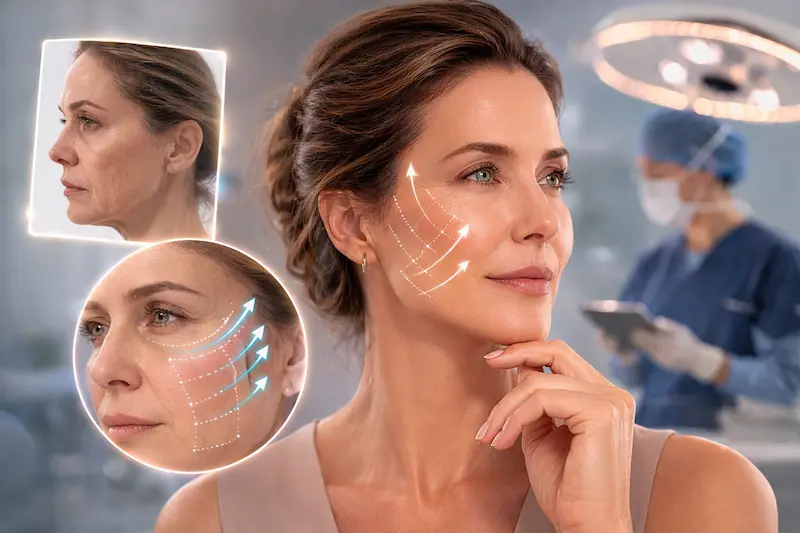

If you’re searching for the best deep plane facelift surgeon in Turkey, you’re likely past the “what is a facelift?” stage. You’re in the high-stakes phase: how do I avoid a botched result and choose a truly elite surgeon?
This guide is written for the expert, research-driven patient who wants verifiable standards—not vague promises. You’ll learn how to evaluate a surgeon’s deep plane skill set, what credentials actually matter, how to read before/after photos like a clinician, and how to avoid “ghost surgeon” risks.
Throughout, you’ll also see how a surgeon-led clinic approach—supported by modern recovery protocols—can influence safety, swelling, downtime, and scar quality. (Yes, medical science matters here: anatomy, tissue healing, and the physiology of recovery are not marketing—they’re the foundation of results.)
Before evaluating the hands that will perform your surgery, you might want a complete overview of what the operation actually entails — including the composite-flap dissection sequence, midface ligament release strategy, and the recovery timeline that flows from each technique decision. Our deep plane facelift technique reference with anatomical depth and outcome benchmarks covers the procedural anatomy, candidacy markers, and structural rationale that frame the surgeon-evaluation criteria below.
Key takeaway: There is no universal “best.” But there is a clear set of criteria that reliably identifies top talent—and filters out the risk.
Table of Contents
Why the “Deep Plane” Technique Requires Elite Skill
A true deep plane facelift is not simply “a tighter facelift.” It’s a technically demanding anatomical procedure performed in deeper facial layers to reposition descended tissues more naturally. When executed correctly, it can improve midface and jawline harmony without the “pulled” look—but the margin for error is smaller than with more superficial techniques.
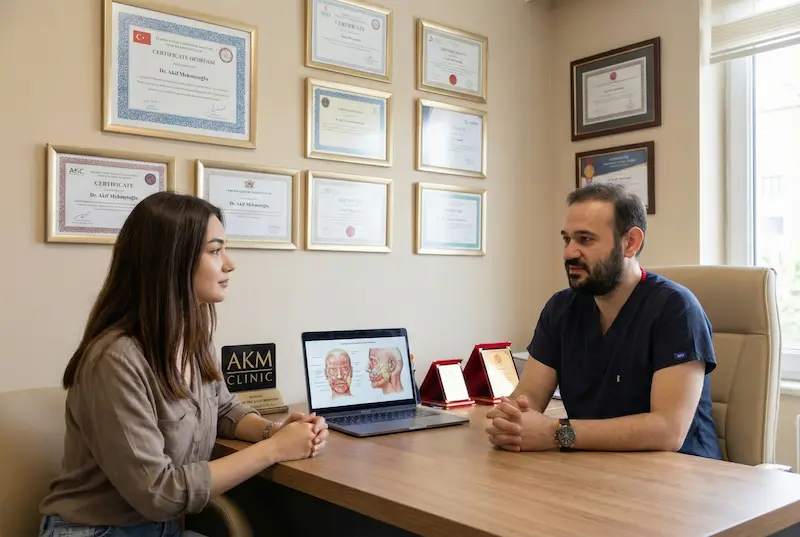
Working Below the SMAS Layer: Risks and Rewards
The deep plane approach typically involves releasing and repositioning deeper facial structures rather than relying on skin tension. The reward can be a more natural, long-lasting rejuvenation—especially in the midface and nasolabial region. The risk is that deeper work requires advanced anatomical judgment around nerves, vessels, and fixation points.
That’s why patients looking for the best deep plane facelift surgeon Turkey should focus less on flashy branding and more on the surgeon’s repeatable, documented outcomes in true deep plane cases.
Why Inexperienced Surgeons Avoid Deep Plane
Deep plane surgery is harder to “standardize” across patients. Face anatomy varies, scarring planes differ, and safe dissection requires real-time decisions that are guided by training and volume. Surgeons without deep plane experience often default to techniques they can perform more predictably—even if that means relying on skin tension, which increases the risk of unnatural vectors and visible “tight” aesthetics.
In other words: the deep plane label is easy to claim, but difficult to prove. Your job is to look for proof.
Anatomy Mastery: Nerve Safety, Vascular Planes, and Fixation Precision
The facial nerve branches and key vascular structures are not theoretical—they’re the reason revision facelifts can become complex. An elite deep plane surgeon should be able to explain their strategy for safe dissection and fixation in plain language, and show consistent results across different ages and facial types.
Surgeon mindset that matters: the goal is for others to “notice a refreshed appearance, not an obvious surgical procedure.”
That philosophy is important because it pushes the plan toward structure-first lifting, not skin-first tightening—an approach aligned with what most patients actually want: “you, but better.”
Critical Credentials to Verify Before Booking
Credentials don’t guarantee artistry, but they do help you confirm whether you’re dealing with a surgeon who has structured training, ongoing education, and accountability. This section is your practical checklist for verifying claims—especially if you’re comparing options and trying to identify the Turkey best deep plane facelift surgeon for your needs.
Board Certifications (EBOPRAS & ISAPS Explained)
When patients say “board certified,” they often mean different things. Your goal is to identify credible, relevant affiliations and formal training pathways. In facial surgery, European board certifications and internationally recognized professional memberships can be meaningful signals—particularly when combined with case volume and consistent results.
If a surgeon claims board certification, ask:
- Which board or society—exact name?
- What does it certify (plastic surgery, facial plastic surgery, ENT, dermatology)?
- Can the certification be independently verified?
Each major certification pathway covers a different scope, training duration, and procedural focus area — and patients should know how these differ before they accept “board certified” as a single uniform claim. Our complete comparative analysis of EBOPRAS, ABPS, and TPCD board certification scope and training requirements breaks down what each certification actually examines, the years of training each guarantees, and the specific procedural competencies each certifies — so you can interpret a surgeon’s credentials accurately rather than trust a generic “board certified” label.
The exact public databases, registry lookup procedures, and step-by-step cross-reference checks that catch fraudulent or expired credential claims are documented in our complete surgeon credential verification walkthrough using TPCD, ISAPS, and EBOPRAS public registries, which shows exactly which official databases to cross-check before booking any procedure.
The Importance of High Case Volumes
Deep plane results improve with repetition. Case volume matters because it reflects:
- Pattern recognition (who is a good deep plane candidate and who isn’t)
- Refined technique (stable vectors, consistent scar placement, predictable swelling patterns)
- Team proficiency (anesthesia, nursing, post-op protocols)
For the patient seeking the best surgeon for deep plane facelift in Turkey, a strong sign is a surgeon who can show many healed results—not just a few highlight cases. A 2026 study published in PubMed analyzing thirty years of deep plane facelift outcomes and longevity from a single-surgeon practice found that across 93 revision facelifts performed on patients who had originally received deep plane procedures, the average interval between primary and second facelift was approximately 11 years (from age 53.5 to 64.5), with adjunctive procedures including upper/lower blepharoplasty, brow lift, and rhinoplasty being used selectively to extend rejuvenation outcomes — reinforcing that durable deep plane outcomes correlate with surgeon-level experience accumulated over thousands of cases, not isolated technical performances.
Hospital Standards: Operating Room Team, Anesthesia Credentials, and Facility Licensing
Even an excellent surgeon is limited by the system around them. Ask where surgery is performed, who administers anesthesia, and how the facility is licensed. A transparent clinic should be clear about sterilization protocols, patient monitoring, and who is responsible for decisions if anything deviates from the expected recovery path.
| What to Verify | How to Verify It | Why It Matters |
|---|---|---|
| Who your surgeon is (name & role) | Video consult + name on surgical plan/consent | Reduces “ghost surgeon” risk |
| Facility licensing | Ask for licensing details and what authority regulates it | Baseline safety & quality controls |
| Anesthesia team credentials | Ask who the anesthesiologist is + their qualifications | Major driver of surgical safety |
| Post-op recovery standards | Written aftercare plan + follow-up schedule | Less downtime, better scar outcomes |
Surgeon-Led Care vs. Agency-Led Sales: How to Confirm Who’s Actually Responsible
If your primary contact cannot arrange direct surgeon access, that’s a warning sign. High-quality care—especially in deep plane surgery—requires surgeon-led decision-making before, during, and after surgery.
One practical test: request a surgeon consultation where you can discuss (1) your candidacy, (2) the exact technique, (3) scar placement strategy, and (4) revision policy. As a concrete reference for what individual surgeon documentation should look like, our founder’s full credential trail — including dermatosurgery training pathway, plastic surgery fellowship, ESCAD/ISAPS/ISDS memberships, and over 2,000 documented facial surgery cases — is published on our Dr. Akif Mehmetoglu’s individual surgeon profile with verifiable training pedigree and case volume documentation, which demonstrates the level of credential transparency every surgeon you evaluate should be willing to provide.
Patient perspective (from an “expert patient”): “I literally look like nothing happened but probably 20 years younger.”
That kind of natural outcome is rarely accidental. It’s usually the result of disciplined planning, deep anatomical technique, and consistent post-op care—supported by protocols that align with the physiology of healing (the part where scientific research and clinical standards make a measurable difference).
Best Deep Plane Facelift Surgeon in Turkey: A Verification Checklist for Expert Patients
Searching for the best deep plane facelift surgeon in Turkey can feel overwhelming because “deep plane” is easy to claim and difficult to prove. The safest path is to apply a verification checklist that prioritizes identity, technique, safety systems, and accountable follow-up—so you’re not choosing based on marketing. When patients search variations like best deep plane facelift surgeon Turkey or Turkey best deep plane facelift surgeon, what they usually want is the same outcome: a natural result with minimized risk, clear documentation, and a recovery plan that supports real-world healing.
Proof of a True Deep Plane Plan (Not Just a Label)
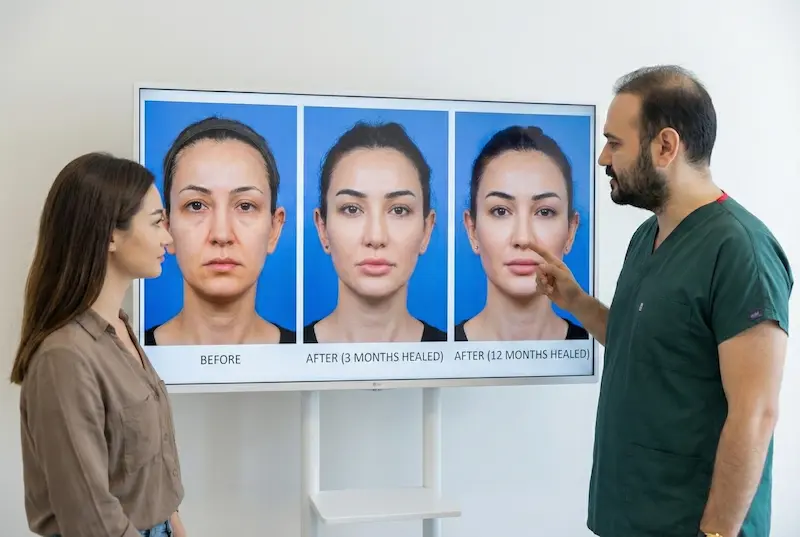
Ask the surgeon to explain what “deep plane” means in your case: which tissues are released, how the midface and jawline are repositioned, and whether the neck is addressed for harmony. Request multiple healed examples (3–6 months and 9–12 months), not only early “after” images. A clinic confident in technique should provide a written plan stating the procedure and the named operating surgeon—one of the strongest signals when comparing the best surgeon for deep plane facelift in Turkey.
Safety System and Accountability You Can Verify
Confirm where surgery is performed, who provides anesthesia, and how monitoring is handled. Transparency means your surgeon is identifiable, accessible for consultation, and responsible for post-op decisions—not hidden behind generic messaging. Expert patients should also ask how complications are managed and what the escalation pathway is after returning home.
Transparent Pricing and Recovery Support That Matches Medical Science
Compare quotes by what they include: surgeon fee, operating room, anesthesia, follow-ups, and revision policy. Recovery should be structured, with clear visits before you fly home and remote check-ins afterward. Adjunct options like HBOT and LLLT can be discussed as supportive tools, but the core value remains surgeon skill, disciplined aftercare, and natural-looking results.
Evaluating Before & After Photos Like a Pro
Before/after galleries can be helpful—but they’re also one of the easiest assets to curate, filter, or present selectively. If you’re trying to identify the best surgeon for deep plane facelift in Turkey, you want photos that function like evidence: consistent, comparable, and representative of real-world outcomes.
Think like an “expert patient” and apply a repeatable method. This is where your own mini “science” approach helps: control the variables (lighting, angles, time since surgery), then compare results across multiple patients—not just one “hero case.”
Consistency, Lighting, and Scar Visibility
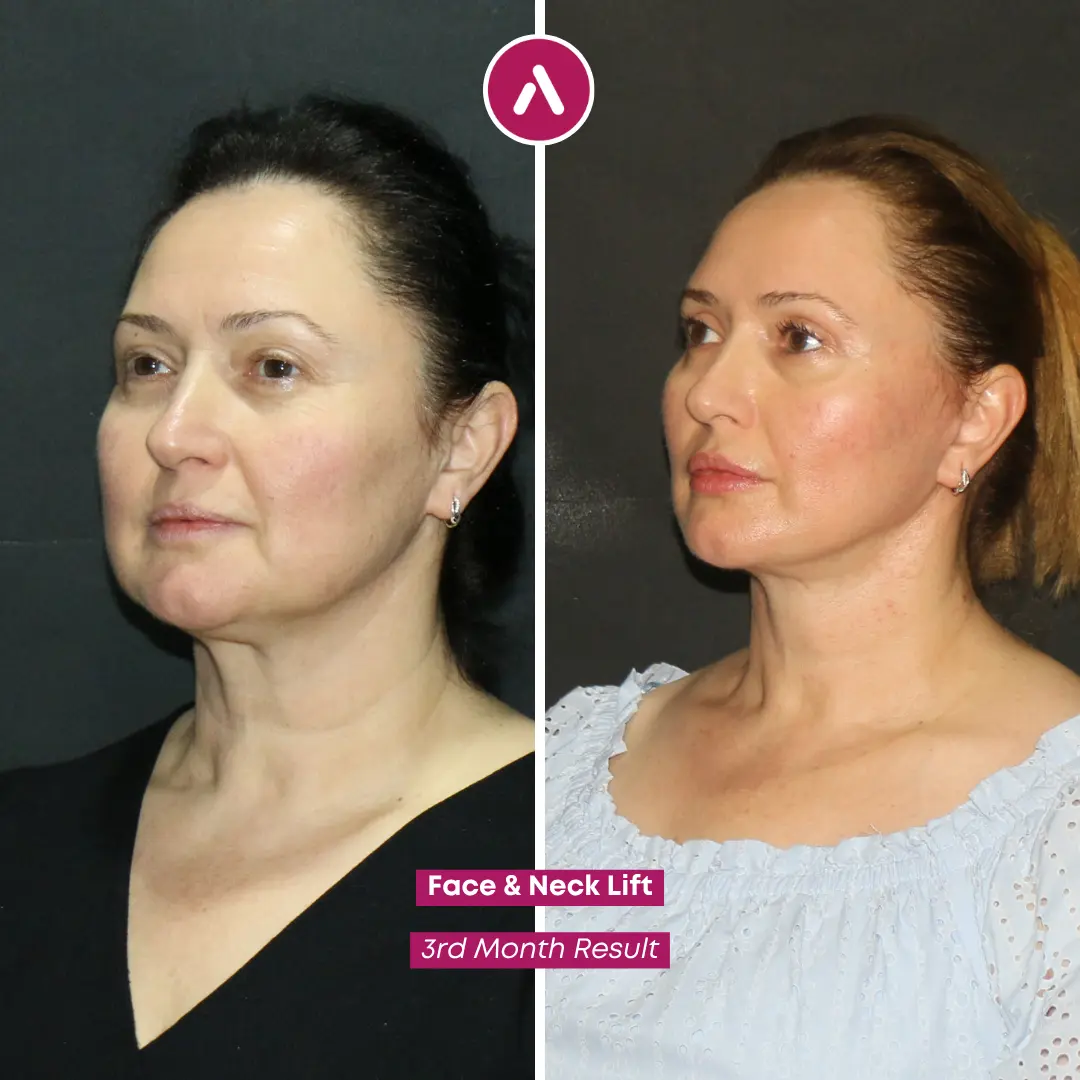
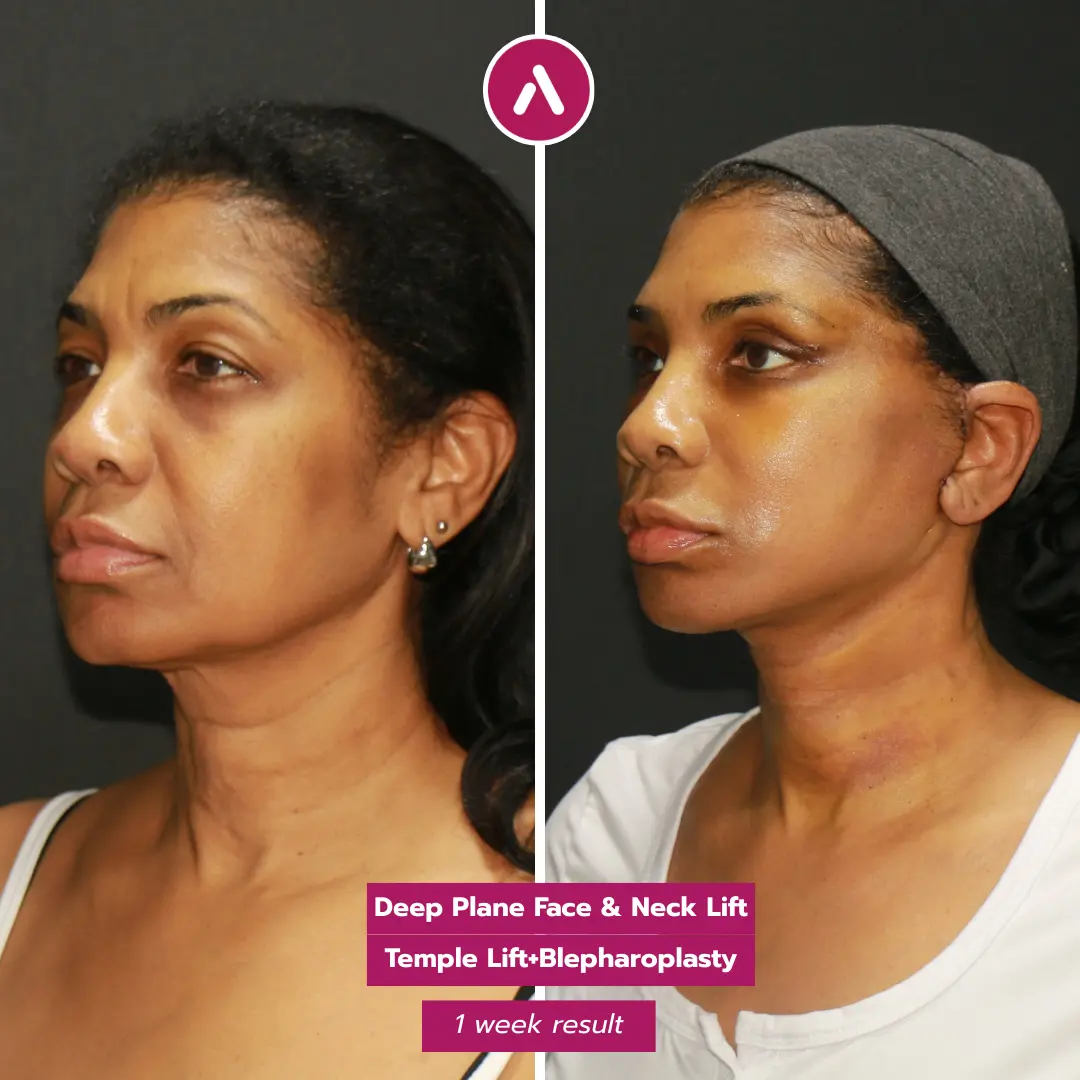
High-quality clinical documentation tends to look boring—in a good way. You should see:
- Consistent lighting (no harsh shadows in the “after” photo only)
- Similar angles and neutral facial expression
- Hair pulled back when appropriate (so you can assess hairline/temple scars)
- Neck and under-chin clearly visible (jawline/neck harmony is a key deep plane tell)
If the “after” photos are always heavily styled, heavily filtered, or shot from more flattering angles than the “before,” that’s not proof—it’s presentation.
Long-Term Healed Results vs. On-Table Photos
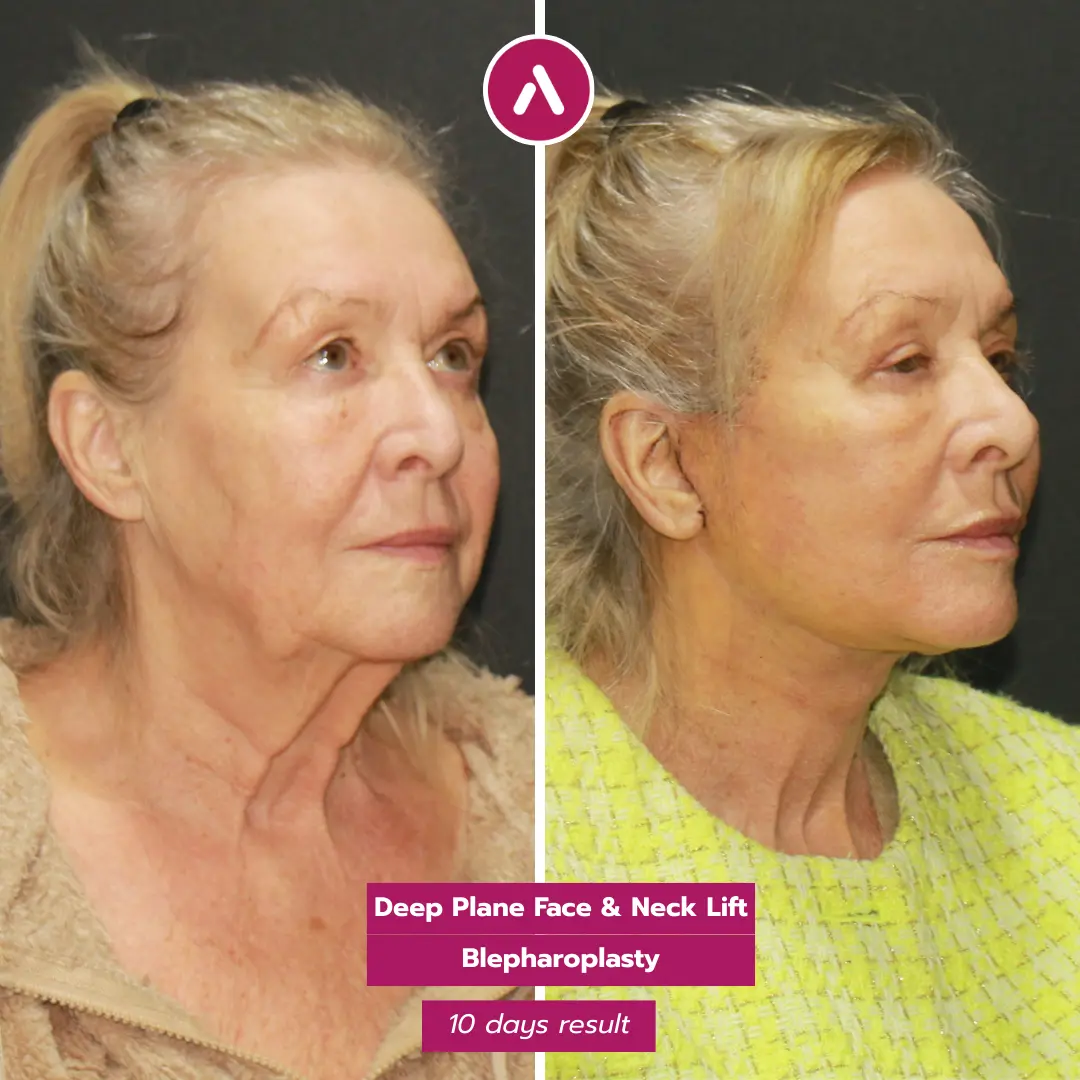
Immediately post-op photos (or on-table images) can be misleading. Early swelling can temporarily mask irregularities—and early “tightness” can falsely look like a dramatic improvement. For a true assessment, ask to see results at:
- 3–6 months (when swelling and stiffness settle significantly)
- 9–12 months (for scar maturation and refined contours)
Elite surgeons—those who could legitimately be considered the Turkey best deep plane facelift surgeon—typically have a library of healed outcomes across multiple age groups and face types.
Natural Results Checklist: Vector of Lift, Neck Harmony, and “Overpulled” Warning Signs
A deep plane facelift done well should look like a healthier, rested version of the same person—not a different person. Red flags in photos include:
- Overpulled mouth corners or a “windswept” look
- Hairline distortion (temple recession, unnatural hairline shape)
- Ear shape changes or attached-looking earlobes
- Mismatch between a tight face and an untreated neck
The most convincing deep plane outcomes show balanced improvement across the midface, jawline, and neck—without obvious skin tension. To apply the photo-evaluation criteria above against actual healed cases — including standardized angles at 1-week, 3-month, and 12-month timestamps across multiple patient ages, skin types, and laxity grades — our complete deep plane facelift outcome gallery with timestamped healing milestones across patient demographics provides the comparative dataset for assessing surgeon consistency rather than evaluating cherry-picked single hero cases.
Looking Beyond the Face: Jawline, Midface, and Under-Chin Continuity
Many patients focus only on the cheeks. But deep plane outcomes are best judged by “continuity”—how smoothly the midface transitions into the jawline and neck. Look for:
- Improved jawline definition without sharp, unnatural angles
- A cleaner cervicomental angle (under-chin/neck contour) without “strap” tightness
- Midface support that doesn’t look like filler swelling
Expert patient marker: The best results are the ones that look unremarkable in a photo—because they look like real life.
One “expert patient” from the USA described her healed outcome this way: “I literally look like nothing happened but probably 20 years younger.” That’s the goal aesthetic many people mean when they search for the best deep plane facelift surgeon Turkey.
Red Flags: How to Spot “Ghost Surgeons”
When you’re considering surgery abroad, one of the biggest fears is not the flight—it’s uncertainty about who is operating and who is accountable. If you’re researching the best deep plane facelift surgeon in Turkey, you should also be evaluating system transparency: names, roles, documentation, and responsibility.
Ghost surgery — where the surgeon you consulted is replaced by an unidentified colleague or trainee during the actual procedure — remains a documented risk in some medical tourism contexts. The full set of contractual safeguards, identity verification protocols, and pre-op clauses that legally protect international patients from this specific scenario are catalogued in our complete legal and contractual protections against ghost surgery substitution in Turkish medical tourism, which documents the surgeon-identity confirmation clauses every patient should require in their pre-op contract before signing.
Ensuring Your Consultant is Not Your Surgeon
In some medical tourism setups, your primary contact is a sales consultant. That is not inherently “bad,” but it becomes risky when:
- You cannot speak directly with the surgeon before committing
- Medical questions are answered with vague, copy-paste replies
- You’re pushed to pay before a proper surgical plan is discussed
A clinic worth trusting will facilitate direct surgeon access for procedure-specific decisions—especially if you’re trying to select the best surgeon for deep plane facelift in Turkey.
Documentation Proof: Name on Consent Forms, Surgical Plan, and Who Signs What
Ask for clarity in writing. A transparent process typically includes:
- The surgeon’s full name on your treatment plan
- A documented description of what is planned (deep plane + neck work? fat transfer?)
- Clear information about where the surgery takes place
- A defined aftercare and follow-up schedule
If the clinic avoids providing names, roles, and written details, treat that as a high-level risk signal.
Communication Red Flags: Generic Replies, No Video Consult, Avoiding Direct Surgeon Access
High-quality deep plane surgery requires individualized assessment. Watch for these patterns:
- They promise you’re a “perfect candidate” without seeing your face properly
- They avoid a video consult or refuse a surgeon consult
- They cannot explain the technique beyond buzzwords
- They dismiss your questions about complications or revision policies
Serious medical care should feel like medical science: careful assessment, clear explanation, and documentation—not persuasion.
Pricing Traps: “All-Inclusive” That Hides Anesthesia/OR/Revisions
Cost matters, but vague packaging can hide important details. A transparent quote should clarify:
- Surgeon fee vs. facility/operating room vs. anesthesia
- What nights of accommodation or nursing care are included (if any)
- What follow-up care looks like after you fly home
- Revision policy and what would (or would not) be covered
If you’re comparing options while searching for the Turkey best deep plane facelift surgeon, treat “cheapest” as a category, not a goal. The correct target is: transparent, accountable, and technically proven.
Real-world clue from a patient’s experience: She reported she “only took painkillers for probably one day” after her deep plane facelift—suggesting a well-managed surgical and recovery plan.
Beyond text testimonials, the most credible patient evidence for surgeon-evaluation purposes is on-camera video accounts where patients describe their full surgeon experience — pre-op consultation, technique discussion, recovery, and long-term outcome. Our complete on-camera patient interview library covering deep plane facelift surgeon-experience timelines includes filmed patient accounts at multiple time points (Day 7, Month 3, Year 1+) so you can evaluate surgeon performance across the full healing arc rather than from a single endpoint photo.
Why Istanbul is a Hub for Facial Plastic Surgery
Istanbul has become a major destination for facial surgery because high patient volume attracts specialist teams, international infrastructure improves the patient journey, and top clinics have invested in modern post-op recovery protocols. For the research-driven patient comparing options for the best deep plane facelift surgeon in Turkey, the key is not the city itself—it’s whether the clinic operates with surgeon-led accountability, verifiable credentials, and a recovery system built on medical discipline (and yes, real-world science of wound healing).

High Surgical Volume + Specialist Teams: Why Complex Facelifts Cluster in Major Hubs
Complex procedures like deep plane facelifts tend to “cluster” where:
- Surgeons perform a high number of facial cases each year
- Operating room teams are trained specifically for facial surgery workflows
- Aftercare pathways (swelling control, scar management, follow-up) are standardized
At AKM Clinic, the surgical model is designed around a dual-specialty team—combining dermatosurgery (skin expertise) with facial plastic surgery expertise. The full surgical roster — including each surgeon’s training pedigree, board certifications, fellowship paths, ISAPS membership status, and their specific procedure focus areas — is catalogued on our complete AKM surgical and medical team profile directory with credential transparency, where each surgeon’s qualifications can be verified individually rather than evaluated as a generic clinic claim.
Recovery Infrastructure: A Surgeon’s Best Asset
Even the most talented surgeon relies on a highly controlled environment to protect your results. While the surgeon’s technique minimizes trauma, the clinic’s recovery protocols—such as Hyperbaric Oxygen Therapy (HBOT) and advanced sterilization workflows—dictate your safety and healing speed.
This guide is the individual-credentials half of your decision. The facility-evaluation half — JCI accreditation criteria, operating room sterilization workflows, anesthesia monitoring infrastructure, and the third-party hospital safety verification that your chosen surgeon depends on — is documented separately in our companion facility-side safety review covering OR standards, anesthesia infrastructure, and JCI-accredited hospital verification. Read both: an elite surgeon constrained by a poorly equipped facility cannot deliver elite outcomes, and a world-class facility paired with the wrong surgeon is equally compromised.
Value Without Cutting Corners: What Cost Differences Usually Reflect (and What They Must NOT)
Price differences are real—but your job is to understand what the quote includes. In the U.S., published averages commonly reflect surgeon fees only, while facility fees and anesthesia can change totals dramatically. Meanwhile, international quotes may be packaged (hospital + surgeon + hotel + transfers), making comparisons confusing.
If you’re trying to choose the best deep plane facelift surgeon Turkey, treat “value” as a transparency test:
- Is anesthesia included and who provides it?
- Is the operating room fee included?
- Are follow-ups included (and what happens after you fly home)?
- Is there a written policy for complications or revision planning?
| Location | What public sources commonly report | What you should confirm in writing |
|---|---|---|
| New York City | Often reported as a high-cost market (wide ranges, surgeon reputation-driven). | Total cost breakdown (surgeon + OR + anesthesia + aftercare). |
| Los Angeles | Typically high but variable; pricing often depends on surgeon demand and what’s included. | Technique definition (true deep plane vs. modified SMAS) + revision policy. |
| Miami | Can be competitive on price; compare carefully what is included and surgeon experience level. | Facility standards + who will manage complications. |
| Istanbul (Turkey) | Often marketed as package-based pricing (surgery + stays + transfers vary by clinic). | Named surgeon, technique plan, anesthesia team, aftercare timeline, and follow-up structure. |
| Mexico / Thailand | Often marketed as value destinations with package options. | Accreditation, surgeon accountability, travel logistics for follow-up, and revision planning. |
In short: cost is not the problem. Opacity is the problem. A transparent clinic makes it easy to understand what you are paying for—and who is responsible for each part of your safety.
International Patient Logistics: Pre-op Planning, Aftercare, and Follow-up Systems
A major advantage of established Istanbul clinics is logistics designed for international patients: structured consultations, coordinated transfers, and clear day-by-day recovery scheduling.
For deep plane facelift patients traveling internationally, you should look for a plan that includes pre-op medical review with surgeon-led consultation, immediate post-op monitoring, defined follow-up visits before fly-home clearance, and a remote follow-up pathway after return. The complete operational sequence — including video consultation timing, surgeon-led pre-op planning, daily Istanbul recovery touchpoints, written fly-home clearance protocol, and 12-month structured remote follow-up cadence — is documented step-by-step on our surgeon-led international patient journey from pre-op consultation through one-year follow-up review, which translates the surgeon-evaluation criteria above into a concrete, time-stamped logistical pathway.
Expert patient lens: The best experience feels organized, documented, and calm—because it’s run like medicine, not like tourism.
Questions You Must Ask During Consultation
This section is your “decision filter.” If a clinic answers these questions clearly—and backs answers with documentation—you’re much closer to identifying the Turkey best deep plane facelift surgeon for your case. If they deflect or generalize, it’s a sign to pause.
Technique-Specific: “Are You Doing True Deep Plane?” + What That Means in Your Case
Ask the surgeon to define their deep plane approach in practical terms. A credible answer will explain:
- Which tissues are being released and repositioned
- How the neck is assessed (and whether neck lift is needed)
- Why deep plane is suitable for your anatomy (not just “because it’s the best”)
If you’re hearing buzzwords without specifics, that’s not expertise.
Safety & Team: Who Is the Anesthesiologist? Where Is Surgery Performed?
Ask directly:
- Who provides anesthesia, and what are their credentials?
- Where does surgery take place (licensed hospital vs. unclear setting)?
- How are vital signs monitored and who is present in the OR?
This is non-negotiable for any patient seeking the best deep plane facelift surgeon Turkey—because safety is a system, not a slogan. For patients with cardiovascular concerns, prior anesthesia reactions, or a strong preference to avoid general anesthesia entirely, the local-anesthesia pathway is documented on our awake deep plane facelift protocol with risk-stratified anesthesia selection criteria, which catalogs the patient profiles where this approach materially reduces anesthesia-related risk while preserving full deep plane technique execution.
Personalization: Scar Placement, Neck Work, Fat Transfer, and How “Natural” Is Protected
Natural results are rarely accidental—they are engineered by details:
- Where scars are placed (and how hairline/ear anatomy is protected)
- Whether neck contouring is addressed to match the face
- Whether fat transfer is needed for balance (when volume loss is a key issue)
- How the surgeon avoids skin tension as the “main lifting force”
Ask to see before and after examples in patients with a similar face shape, age, and degree of laxity.
Revision & Aftercare: What Happens If I’m Unhappy or Need a Touch-up?
Elite clinics have a calm, structured answer to this question. You should request clarity on:
- How early concerns are evaluated (in person and remotely)
- What is considered “normal” swelling vs. a complication
- What revision planning looks like and how decisions are made
A responsible clinic does not promise “zero risk.” Instead, it explains how risks are minimized and managed—aligned with scientific research principles of prevention, monitoring, and timely intervention.
Skin Quality Angle: Will a Dermatosurgeon/ Skin-Focused Expertise Be Involved for Better Skin Outcomes?
This is one of the most overlooked questions in facelift planning. A facelift improves structure, but your “finish” is heavily influenced by skin quality: thickness, texture, elasticity, and healing behavior.
AKM Clinic’s surgical model includes dermatosurgery expertise alongside facial plastic surgery expertise—meaning the plan can address both:
- Underlying structure: lifting and repositioning for natural contours
- Skin quality: scar quality strategy, healing optimization, and skin-focused decision-making
Take the Next Step with the Right Team
You now know how to identify elite surgical talent. If you are ready to stop researching and start planning your transformation with a transparent, dual-specialty surgical team, visit our central Deep Plane Facelift in Turkey hub. Book your direct surgeon-led consultation today and let’s craft a plan unique to your anatomy.
Frequently Asked Questions (FAQ): Best Deep Plane Facelift Surgeon in Turkey
Below are the most common questions expert patients ask when narrowing down the best deep plane facelift surgeon in Turkey. The answers are intentionally practical—focused on verification, safety systems, and what medical science (healing physiology, tissue handling, scar biology) suggests is realistic.
What makes a surgeon the “best” for deep plane facelift—training or results?
Both—but results with proof are the final judge. Look for a surgeon who can show multiple healed deep plane cases (not just immediate “after” photos), explain their technique clearly, and demonstrate consistency across different patient types. Training and credentials help you verify the foundation; outcomes and transparency prove execution.
How do I verify a surgeon’s credentials without relying on marketing?
Use a “verify, then trust” approach:
Ask for the surgeon’s full name and professional titles in writing.
Request the specific board/society names (not vague “board certified”).
Confirm you can have a direct surgeon consultation (video is ideal).
Ensure the surgeon’s name appears on your treatment plan and consent documents.
How many deep plane facelifts should a surgeon perform per year?
There is no single “magic number,” but deep plane is a repetition-driven skill. You want a surgeon who performs deep plane facelifts frequently enough to show a broad portfolio of healed cases and can confidently discuss complication prevention and revision strategy.
Is deep plane facelift safer than SMAS facelift?
Neither technique is automatically “safer.” Safety depends on surgeon expertise, patient selection, and OR standards. Deep plane can offer natural-looking lifting with less skin tension—but it is technically demanding. For most expert patients, the safer choice is the technique the surgeon performs consistently with proven outcomes.
What are the most common complications and how are they prevented?
Common concerns include hematoma (bleeding), infection, nerve irritation, skin healing issues, and visible scarring. Prevention usually comes down to:
Meticulous surgical technique and gentle tissue handling
Clear anesthesia and monitoring standards
Evidence-based post-op protocols (swelling control, wound care, follow-up)
Rapid access to the surgical team if something deviates from “normal” healing
How long does a deep plane facelift last?
Longevity varies by genetics, skin quality, lifestyle, and the extent of facial aging. Deep plane techniques are often chosen for their ability to reposition descended tissues in a stable, natural way. Still, no procedure stops aging—think of it as turning back the clock, not freezing time.
How do I know if before-after photos are authentic?
Ask for:
Consistent angles/lighting
Healed timelines (3–6 months and 9–12 months)
Multiple examples with similar age and anatomy to yours
Unedited, non-filtered clinical-style photos (not only glam shots)
What should be included in a transparent quote (so there are no surprises)?
A clear quote should separate (or clearly define) the major components:
Surgeon fee
Operating room / facility fee
Anesthesia and who provides it
Post-op medications and follow-up visits
Aftercare support and what happens after you return home
Revision policy (what is covered vs. not covered)
If you’re comparing providers for the best deep plane facelift surgeon Turkey (or searching variations like Turkey best deep plane facelift surgeon), transparency is not a “nice to have”—it’s a safety signal.
Can a deep plane facelift be combined with neck lift, fat transfer, or eyelid surgery?
Yes—combination planning is common and often improves harmony (face + neck, or structure + volume). For example, one AKM patient from the USA had a deep plane facelift combined with a neck lift and upper eyelid surgery and described the result as: “I literally look like nothing happened but probably 20 years younger.”
The key is personalization: combining procedures should be based on anatomy and goals—not “bundle logic.” A surgeon-led plan should explain what each add-on contributes and how it affects downtime and safety.
How do I confirm I’m getting a true deep plane facelift—not a modified SMAS?
Ask the surgeon to describe the exact anatomical layer they work in, what ligaments are released, and how tissues are repositioned. Request healed deep plane cases (3–6 months and 9–12 months) and ensure your written plan clearly states “deep plane” with the surgeon’s name. This verification step is essential when choosing the best deep plane facelift surgeon in Turkey.
What pre-op steps improve safety and outcomes for international patients?
For the best deep plane facelift surgeon in Turkey, a safe pre-op process includes a surgeon-led consultation, a medical history review, medication guidance (including blood thinners and supplements), and a clear day-by-day travel and aftercare plan. You should also confirm facility standards, anesthesia supervision, and how follow-up is handled once you return home.
Is “awake” or “twilight” deep plane facelift possible, and who is a good candidate?
In selected cases, an awake or twilight approach may be possible based on your anatomy, anxiety level, and medical profile—always determined by the surgeon and anesthesia team. If this matters to you, ask whether the clinic has established protocols and documented experience. When comparing options for the best surgeon for deep plane facelift in Turkey, prioritize safety criteria over preference alone.
How do I know if a clinic in Turkey can truly match the standards of the best deep plane facelift surgeons in the world?
Start by verifying the surgeon’s identity and accountability (named surgeon on your written plan and consent forms), then confirm true deep plane experience with multiple healed results (3–6 months and 9–12 months) shown in consistent lighting and angles. During a surgeon-led video consultation, ask for an anatomy-based explanation of the technique in your case (midface, jawline, and neck harmony), plus clear details on facility licensing, the anesthesia team, and a written aftercare and revision pathway. Clinics that can document these elements—without pressure or vague promises—are the ones most likely to deliver outcomes comparable to the best deep plane facelift surgeons in the world.
Medical Disclaimer: This page is provided for general educational purposes only and does not replace a face-to-face medical consultation, diagnosis, or personalised treatment plan. All surgery carries risks and outcomes vary between individuals. Suitability for a deep plane facelift, procedure selection, and anaesthesia choice can only be determined after a full clinical assessment by a qualified surgeon. Always follow your clinician’s instructions and seek urgent medical attention if you develop concerning symptoms during recovery.