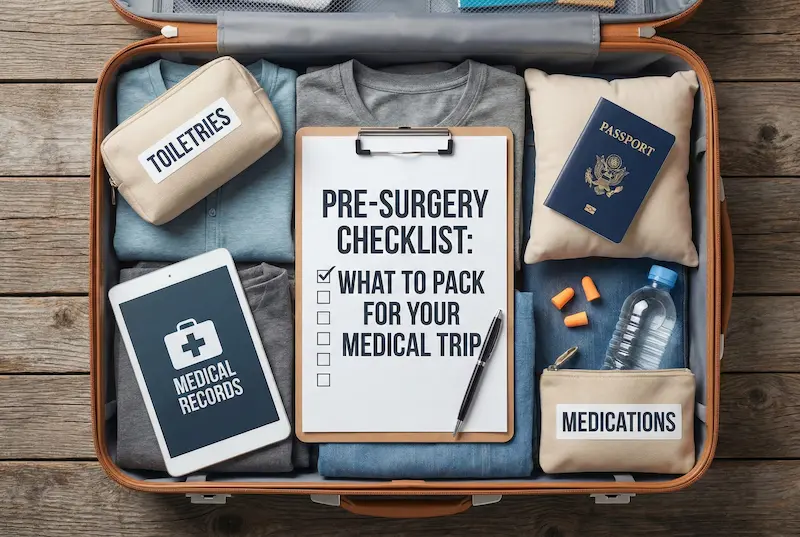
If you’re researching what to pack for surgery abroad, you’re already doing the smartest thing an “expert patient” can do: planning the details that reduce stress, protect your comfort, and prevent avoidable complications.
Whether your trip is for cosmetic surgery abroad or plastic surgery abroad, packing is not about bringing “more.” It’s about bringing the right things—especially when you’ll be navigating airports, hotel recovery, and a flight home.
This guide is your pre-surgery checklist for travel patients—an ultimate packing checklist for surgery abroad—written for people asking practical questions like: “What should I pack for my plastic surgery trip to Turkey?” It’s designed to work even if you booked all-inclusive cosmetic surgery packages abroad (where many recovery items may be provided), because you’ll still want your own “must-haves” within reach.
Rule of thumb: If you can’t replace it within 24 hours, it belongs in your carry-on.
The U.S. facelift patient quoted earlier — the one who described her decision as a multi-year research process — represents the demographic pattern of well-prepared international patients who treat packing as the visible tail of months of due diligence. What makes patient testimonials useful for packing decisions specifically: real patients note what they wished they’d brought, what the clinic actually provided, and what surprised them in recovery. Generic packing lists don’t capture those nuances; documented patient accounts often do.
Verified patient experience documentation with procedure-specific recovery notes and what-I-wish-I’d-known reflections sits on the verified patient testimonials.
Important: This is general travel-prep guidance. Always follow your surgeon’s written instructions and your clinic coordinator’s packing recommendations (especially for medications, supplements, and compression garments).
Table of Contents
Start With the Non-Negotiables (Documents & Access)
Before you buy a new pillow or pack extra pajamas, lock in the basics: identity, access, and proof. When patients wonder what to pack for your surgery trip, the biggest “trip-saving” items are almost always paperwork and offline access—because travel days are when things go missing, batteries die, and Wi-Fi disappears.
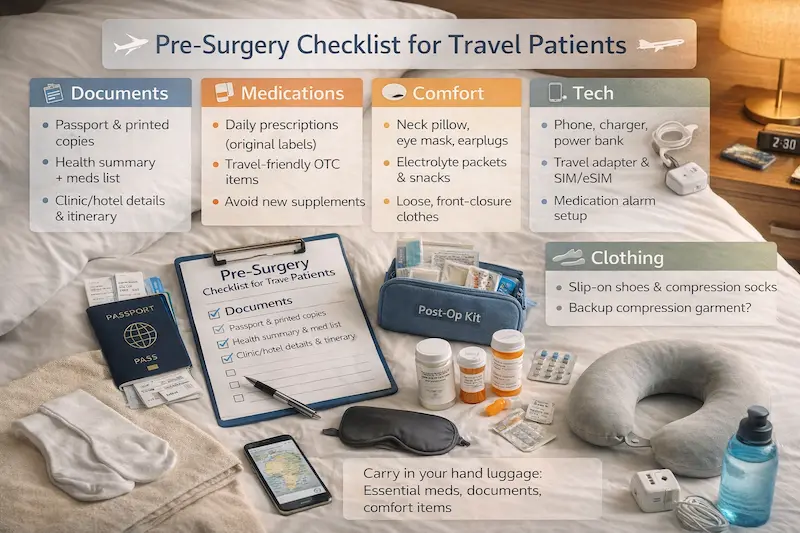
Passport, entry requirements, and printed/digital copies
- Passport (check expiration and keep it protected).
- Entry requirements for your destination (keep a screenshot or printout if applicable).
- Flight + hotel confirmations (print + saved offline on your phone).
- Copies of key IDs: a paper copy in your carry-on and a digital copy in secure cloud storage.
| Document | Where to Keep It | Backup |
|---|---|---|
| Passport + primary ID | On your person (not in checked luggage) | Photo copy + cloud copy |
| Flights + hotel details | Carry-on + phone (offline) | Printed copy |
| Clinic address + appointment times | Phone notes + printed card | Screenshot in photos |
| Emergency contacts | Phone + wallet card | Shared with travel companion |
Travel insurance and medical travel paperwork
If you have travel insurance (or medical travel coverage), pack:
- Policy details and the 24/7 contact number.
- Claim instructions (some require specific documents or timelines).
- Receipt storage plan: a folder in your phone for invoices, pharmacy receipts, and transport costs.
Even with highly organized, all-inclusive arrangements, a simple documentation system helps you stay calm and in control—especially if flights change or you need to reference your plan quickly.
Clinic address, emergency contacts, and offline access (screenshots + paper)
Create a “Recovery Access Pack” before you fly:
- Clinic details: address, phone number, WhatsApp/iMessage contact, and your coordinator’s name.
- Map screenshot: clinic location pinned and saved offline.
- Emergency contacts: a printed card with your emergency contact and basic medical info.
- Translation basics: save 5–10 phrases you might need (pain level, allergies, medication timing).
If you’re traveling for plastic surgery abroad, remember that recovery can make you tired, swollen, and less patient with logistics. Your goal is to reduce “thinking tasks” during the first 72 hours post-op.
“All-inclusive” works differently depending on which provider defines the term — and the practical question that matters during packing is: which of these items will the clinic provide, and which do you still need to bring? Items commonly included in well-structured packages: post-op compression garments fitted to size, prescribed medications for the recovery window, hotel accommodation with transfers, surgeon-led follow-up consultations, fit-to-fly clearance assessment, and basic recovery kit supplies. Items typically not included: personal medications you take outside the surgical plan, devices you depend on (CPAP, hearing aids, glasses), entertainment essentials, and outfit comfort layers tuned to your own preferences.
The line-by-line breakdown of what each package format covers — and what each one doesn’t — sits on the travel package toolkit.
Packing happens at the end of a longer decision chain — and the most-asked question that sits earlier in that chain is “how do I narrow down which Turkey clinic to actually book?” The clinic-selection framework that maps usefully to packing decisions weighs: hospital-grade facility match for the procedure, anesthesia accountability structure, transparent itemized pricing without surprise add-ons, and named coordinator access during recovery. These are the same dimensions that determine whether the package covers the medications you’d otherwise have to pack, whether the hotel logistics are pre-arranged, and whether the safety paperwork is generated in advance or improvised.
A 12-criterion clinic-selection methodology that connects directly to the packing-readiness checklist is on the top clinic selection guide.
What patients often appreciate in all-inclusive care: one patient described it as, “the nurses, the doctors, the medications, everything is included.” Even so, your personal essentials and documents should stay with you.
Medical Paperwork You’ll Be Glad You Packed
When people search for packing essentials for plastic surgery travel, they often focus on comfort items—but paperwork is what keeps your pre-op process smooth, your post-op instructions clear, and your travel less stressful. If you’re planning cosmetic surgery abroad or plastic surgery abroad, think of this section as the “calm, organized patient” toolkit.
This is especially important if you’re asking: what to pack for plastic surgery abroad or what should I pack for my plastic surgery trip to Turkey? The goal is simple: make sure your surgical team has accurate information, and make sure you can access your care plan even when you’re tired, swollen, or offline—an approach aligned with medical science, which emphasizes continuity, clarity, and error-reduction in perioperative care.
Pre-op tests, imaging, and a one-page health summary
Bring any pre-op tests your clinic requested (and any recent relevant results you already have). Even with all-inclusive cosmetic surgery packages abroad, having your copies prevents delays if files don’t sync, emails don’t download, or you’re asked to confirm details quickly.
- Pre-op labs (if completed in your home country): bring printed results + a PDF on your phone.
- Imaging (if applicable): ultrasound/CT/MRI summaries and the radiology report.
- Discharge / recovery plan (if provided in advance): print it and highlight key timings.
Pack a one-page health summary—this is the single most useful document you can hand to any clinician if you need help quickly.
| One-Page Health Summary (Template) | What to Write |
|---|---|
| Basic info | Full name, DOB, blood type (if known) |
| Conditions | High blood pressure, diabetes, thyroid disease, asthma, sleep apnea, etc. |
| Allergies | Medications, latex, adhesives, foods (include reaction type) |
| Medications | All prescriptions + dose + timing |
| Supplements | Everything you take routinely (even “natural” products) |
| Prior surgeries | What surgery + year + any complications (if any) |
| Emergency contact | Name, relationship, phone, email |
Pro tip: Keep this one-page summary both printed and saved offline on your phone. After surgery, you may not want to scroll through messages to find critical details.
Current medication list + allergy list (printed + phone note)
This is where “expert patients” avoid preventable problems. A clear medication and allergy list helps your team make safe choices—especially if you’re traveling long-distance and your routine differs from home.
- Medication list: name, dose, frequency, and why you take it.
- Allergy list: include the reaction (rash, swelling, breathing issues, nausea, etc.).
- Pharmacy labels: keep original packaging for prescriptions to reduce airport and customs friction.
If you’re coordinating multiple procedures or comparing destinations, this list is also useful for a second opinion—one of the reasons people research safe plastic surgery Turkey and clinic standards before they book.
“Is it safe to travel to Turkey for surgery?” is one of the underlying questions packing decisions answer in practice — the documentation you carry, the contacts you can reach, and the clinic accountability behind every step of the trip. What’s worth verifying before you finalize packing: the clinic’s full identity is documented in writing, the medical team is reachable through named contacts (not anonymous broker handles), and the safety framework includes anesthesia accountability, hospital-grade facility access, and a documented escalation pathway if complications surface during the trip.
Clinic identity, surgeon-led care model, and safety framework documentation for international patients are on the clinic transparency profile.
Surgeon instructions, consent forms, and your aftercare plan
For your ultimate packing checklist for surgery abroad, you want your surgeon’s instructions to be easy to follow even when your brain is foggy from travel fatigue or early recovery. Pack (or save offline):
- Your written pre-op instructions (what to stop, what to continue, and when).
- Consent forms (if provided ahead of time) and any procedure-specific notes.
- Your aftercare plan: medication schedule, follow-up timing, wound-care basics, and “red flags” to watch for.
- Clinic contact pathway: who to message after hours and where to send photos if needed.
“Verify surgeon credentials before you book, not after you land” is the protective sequencing that determines whether the rest of the packing list matters. The verification work happens weeks before packing — registries, hospital accreditation status, named anesthesia team, written escalation pathway — but its output goes in the suitcase: the printed surgeon-and-team identity document, the facility license number for emergency reference, and the consent paperwork with named clinician signatures.
A 15-minute pre-booking credential audit framework with registry checks, hospital accreditation verification, and red-flag patterns is in the surgeon verification toolkit.
Many patients feel reassured when they understand both the medical plan and the logistics—especially if they’re asking is it safe to travel to Turkey for surgery. A transparent plan (instructions, follow-ups, and contact access) is part of what “safe” actually looks like in real life.
“Is plastic surgery in Turkey safe?” sits at the top of the questions list most international patients carry into their packing process — and the honest answer is more nuanced than either side of the binary suggests. The myth structure usually flattens that nuance: “Turkey is the cheap option” misses what actually drives outcome variance (surgeon-and-facility match, not country); “Turkey is unsafe” misses the regulatory and accreditation framework that distinguishes properly licensed providers from broker-only operations. The myth-vs-reality breakdown matters for packing specifically because it shapes which safety documents and verification artifacts belong in your carry-on.
The most-believed Turkey-plastic-surgery myths and the evidence-grounded counter-points are mapped in the medical tourism myth breakdown.
Low-stress recovery is planned recovery: if you can open your post-op plan in 10 seconds—offline—you’ve already made your trip easier.
Medications, Supplements, and “What to Stop” Reminders
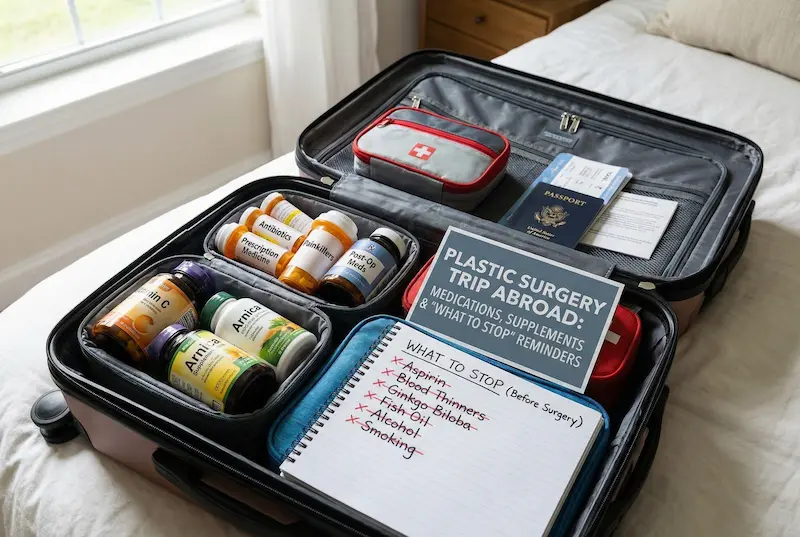
This is the part of the pre-surgery checklist for travel patients that protects both your comfort and your safety. When you’re figuring out what to pack for surgery abroad, medication planning matters because:
- Airport rules can complicate liquids, pills, and labeling.
- Recovery fatigue makes it easy to forget doses or mix up timing.
- Some common OTC meds and supplements can increase bruising or interact with anesthesia.
If you’re traveling for cosmetic surgery abroad (including plastic surgery abroad), your best strategy is to pack for clarity: original labels, a simple schedule, and a “do not take unless approved” list.
Safety note: Never stop prescription medications without your surgeon (and, when relevant, your prescribing doctor) telling you exactly what to do and when.
Prescriptions: packing strategy, labels, and refill planning
Here’s how expert travelers handle prescription meds when planning what to pack for your surgery trip:
- Keep prescriptions in original packaging with your name and dosing instructions visible.
- Pack 3–5 extra days of essentials in case flights change.
- Split your supply: keep the “must-have” portion in your carry-on and the backup portion in a separate bag (not checked if you can avoid it).
- Set phone reminders and bring a tiny weekly pill organizer (useful after surgery when your routine changes).
| Medication Item | Carry-On or Checked? | Why It Matters |
|---|---|---|
| Daily prescription meds (blood pressure, thyroid, etc.) | Carry-on | Missing doses can cause avoidable problems during travel/recovery |
| Prescription pain/anti-nausea meds (if already prescribed) | Carry-on | Needed quickly if discomfort hits during transit |
| Extra supply (backup) | Carry-on (separate pouch) | Protection if a bag is lost |
| Liquids over carry-on limits | Carry-on only if medically necessary | May require special handling—plan ahead |
If you booked all-inclusive cosmetic surgery packages abroad, ask your coordinator what is typically provided post-op (and what you should still bring). Even when many items are included, your personal daily medications should always travel with you.
OTC essentials for comfort (recovery-safe basics)
For packing essentials for plastic surgery travel, keep OTC items minimal and intentional. You don’t want a suitcase full of “maybe” products—especially if you’re trying to keep your recovery routine simple.
- Electrolyte packets (travel-friendly hydration support).
- Thermometer (small, useful, and reassuring).
- Basic digestive support if your surgeon says it’s appropriate (travel can disrupt routines).
- Gentle lip balm and saline nasal spray for dry airplane air (especially if you breathe through your mouth while sleeping).
- Skin basics: fragrance-free cleanser + simple moisturizer (avoid “actives” right before surgery unless your surgeon says otherwise).
Keep it boring: Recovery is not the time to test new supplements, new skincare, or new “miracle” products.
What to pack for plastic surgery abroad often comes down to comfort and predictability. If an item is likely to cause irritation, allergies, or extra swelling, skip it.
Supplements to pause (and why you must confirm with your surgeon)
This is where travelers can accidentally create problems. Many supplements and common pain relievers have effects that may increase bruising, bleeding risk, or interact with anesthesia. Your clinic will give you a specific list, but as a general rule, confirm every supplement you take—even if it’s “natural.”
- Bring a complete supplement list (dose + brand if possible).
- Do not self-stop medications; follow your surgeon’s exact timing and instructions.
- Ask directly about blood-thinning effects and bruising risk.
| What to Do | Why | Best Practice |
|---|---|---|
| List every supplement/OTC product you use | Some can affect bleeding, swelling, or anesthesia | Send the list before you travel |
| Follow the clinic’s “stop/continue” timeline | Timing matters and varies by procedure | Keep instructions printed + offline |
| Avoid adding new supplements right before travel | New products can cause reactions or GI upset | Keep your routine stable |
Patients researching safe plastic surgery Turkey or asking is it safe to travel to Turkey for surgery often focus on facilities and surgeon credentials—which are crucial—but safety also lives in the details: clear medication rules, transparent pre-op instructions, and a reliable post-op contact pathway.
Final 48-Hour Packing Timeline: What to Pack for Surgery Abroad Without Overpacking
Packing decisions get easier when they sit inside a fuller picture of what each day of the trip actually looks like. The 48-hour packing window connects to a longer arc — consultation timing, pre-op evaluation day, surgery day itself, the hotel-based recovery stretch, the fit-to-fly checkpoint, and the post-trip follow-up cadence. Knowing what each stage requires sharpens what belongs in your carry-on (paperwork that gets checked early) versus your hold luggage (recovery clothing you won’t reach for until day 2 or 3).
The day-by-day pacing from arrival through post-trip check-ins is mapped in the step-by-step journey blueprint.
Two Weeks Before Travel: Lock in the “Provided vs. Personal” List
Ask your coordinator what’s included in your package (post-op meds, compression, basic aftercare). Then shop only for personal preferences: front-closure clothing, slip-on shoes, gentle skincare, and a small travel comfort kit. This prevents duplicates and keeps your luggage light.
Three Days Before Travel: Build a Carry-On “Surgery Trip” Core
Your carry-on should answer one question: what to pack for your surgery trip if your checked bag is delayed. Prioritize passport, printed copies, clinic contacts, prescriptions in original labels, offline instructions, chargers/power bank, electrolytes, and a simple “travel day” pouch.
The Night Before: Do a Medication & Supplement Safety Check
Re-read your surgeon’s “what to stop” instructions, confirm your current medication list, and set phone alarms. This step reduces bruising risks and supports smoother recovery—one of the most important packing essentials for plastic surgery travel.
Travel Morning: Quick Comfort + Communication Setup
Wear loose layers, keep valuables minimal, and pin your clinic chat for easy access. A clear check-in plan with family and reliable mobile data helps you feel secure while abroad and keeps your recovery routine simple.
Clothing & Compression: Dressing for Surgery and Swelling
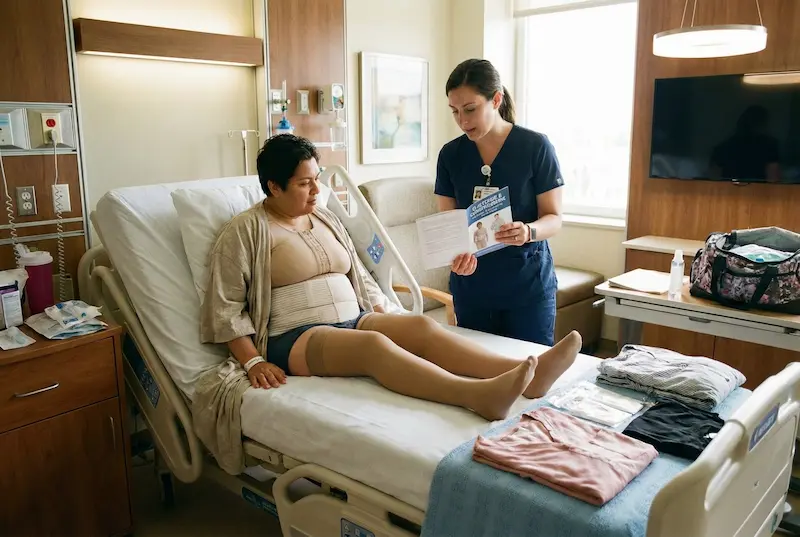
When patients ask what to pack for your surgery trip, clothing is where “small choices” make a huge difference. Post-op swelling, limited mobility, and incision sensitivity mean you want items that are easy to put on, easy to wash, and comfortable for transfers (clinic <> hotel), short walks, and your flight after surgery.
The honest evidence base on air travel and post-surgical VTE risk sits in the meta-analysis literature — specifically, the recent systematic review pooling seven retrospective studies on flight + surgery thromboembolism risk.
A May 2025 Phlebology meta-analysis by Shea and colleagues at Imperial College London and Kingston NHS Foundation Trust pooled 24,975 patients across the surgical-plus-air-travel cohort: air travel VTE study. Pooled VTE odds ratio in the flying-plus-surgery group reached 1.96 (95% CI 0.54–7.08); for surgery with post-operative flight specifically, VTE OR was 1.31 (95% CI 0.63–2.71). The authors note that low-risk prophylactic measures — graduated compression stockings, frequent ambulation during flight, hydration — remained effective across the cohort.
Worth flagging the dataset boundary: seven retrospective studies with wide confidence intervals means the absolute risk numbers should be read as direction-of-effect rather than precise estimation. The practical packing takeaway is concrete: compression garments and movement-during-flight protocols are evidence-supported, not just patient comfort theater.
This section is a core part of the ultimate packing checklist for surgery abroad—especially for anyone traveling for cosmetic surgery abroad or plastic surgery abroad and wondering what’s truly necessary vs. what’s just extra.
Front-zip/button-up tops, loose bottoms, breathable layers
Your goal is to avoid “overhead” clothing that forces you to lift arms or pull fabric across sensitive areas. Pack clothing that respects swelling and protects incisions.
- Front-zip or button-up tops (2–4): ideal after many procedures because they’re easy on/off.
- Loose, high-waisted bottoms (2–3): soft waistbands are usually more comfortable than tight elastic.
- Breathable layers: a light cardigan or zip hoodie (airplanes and clinics can be cool).
- Dark, forgiving colors: practical if you’re using ointments or gentle wound-care products.
- Easy underwear options: simple, soft, and non-irritating (avoid new lace/elastic you’ve never worn before).
Comfort rule: If it pinches, compresses, or requires “wiggling” to put on, don’t pack it.
| Situation | Best Clothing Choice | Why It Helps |
|---|---|---|
| Day 1–3 after surgery | Front-closure top + loose bottoms | Easy dressing with minimal movement |
| Hotel recovery | Soft lounge set + breathable layers | Comfort without overheating |
| Clinic follow-up visits | Loose outfit + slip-on shoes | Quick changing if needed for checks |
| Flight home | Compression (if advised) + loose, layered outfit | Supports swelling management and temperature changes |
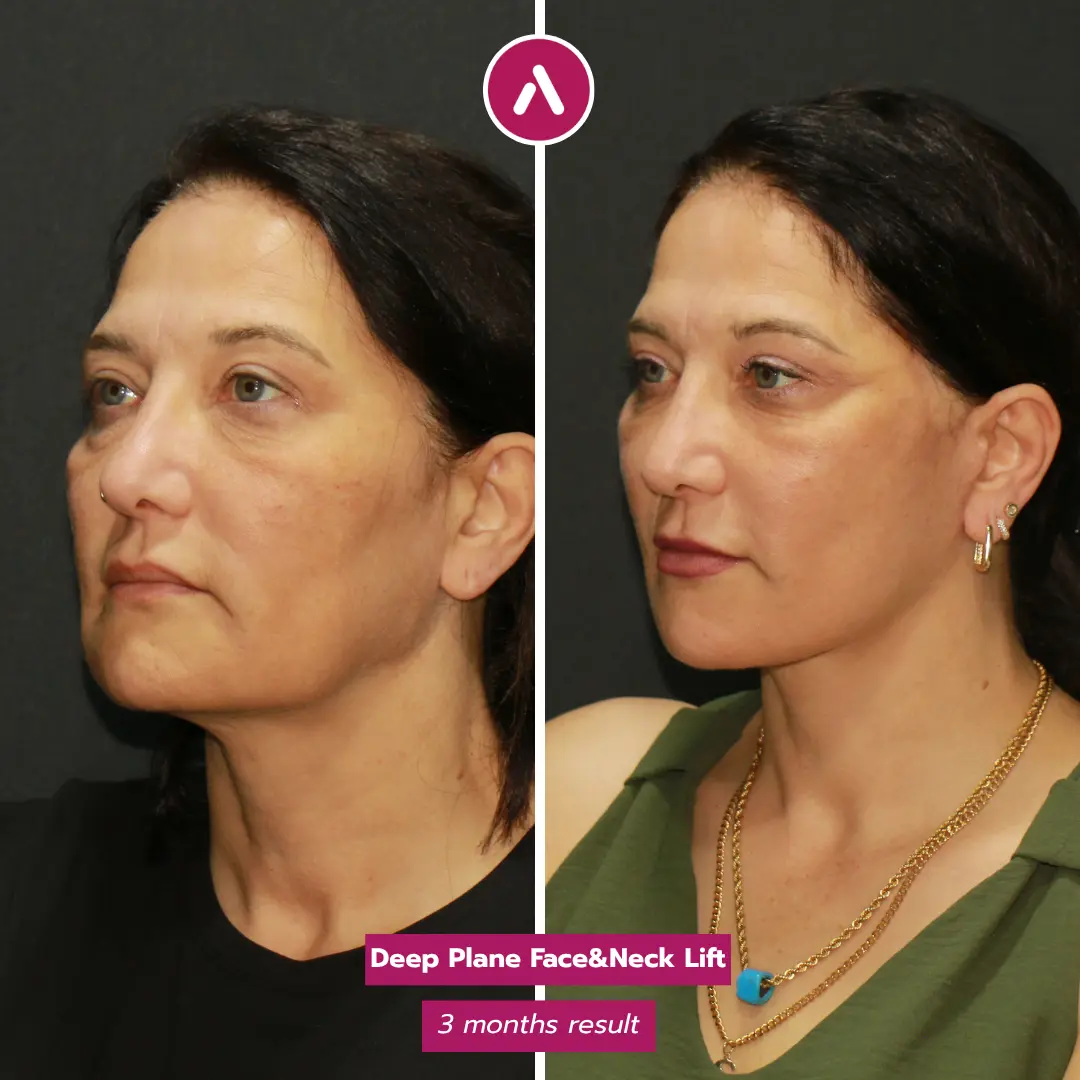
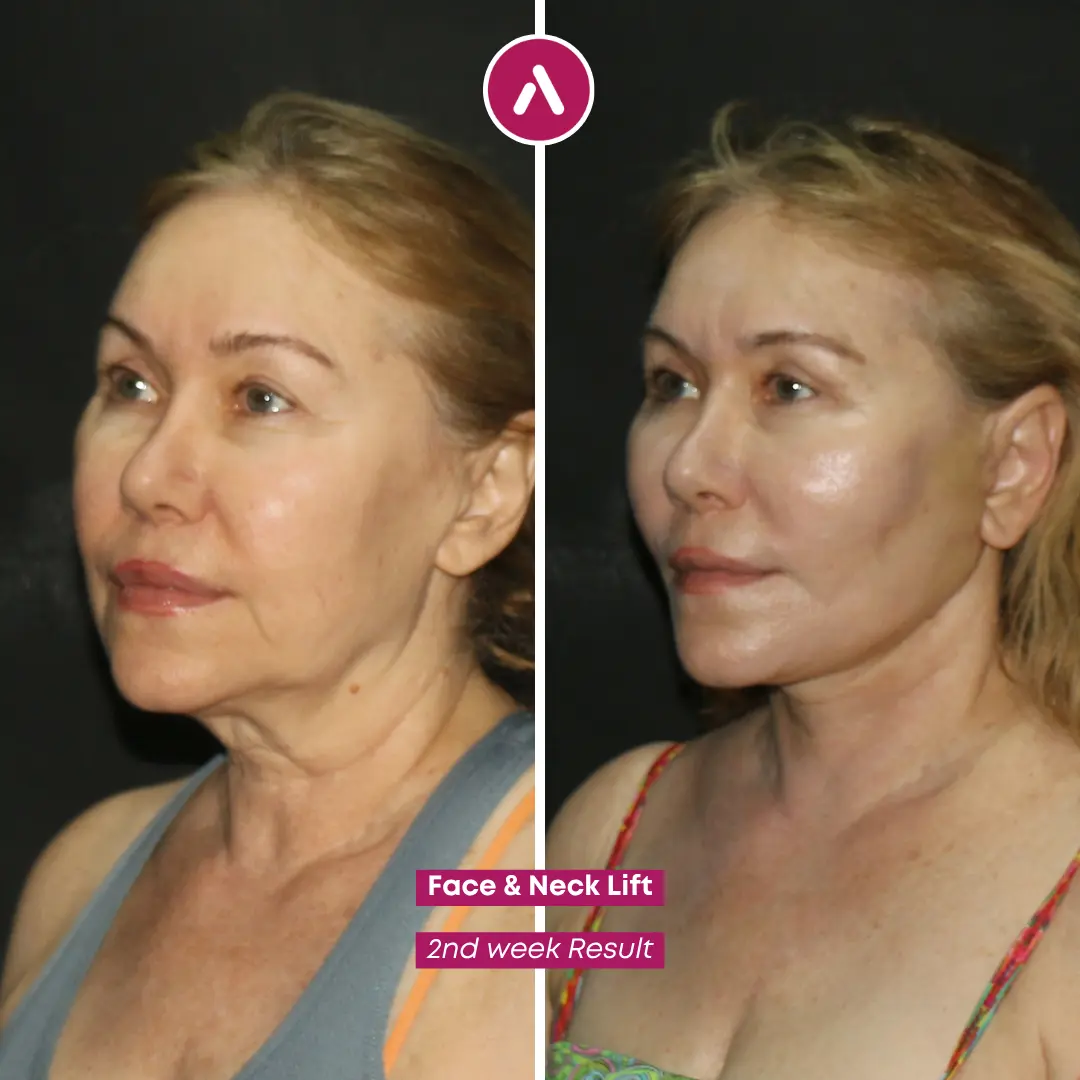
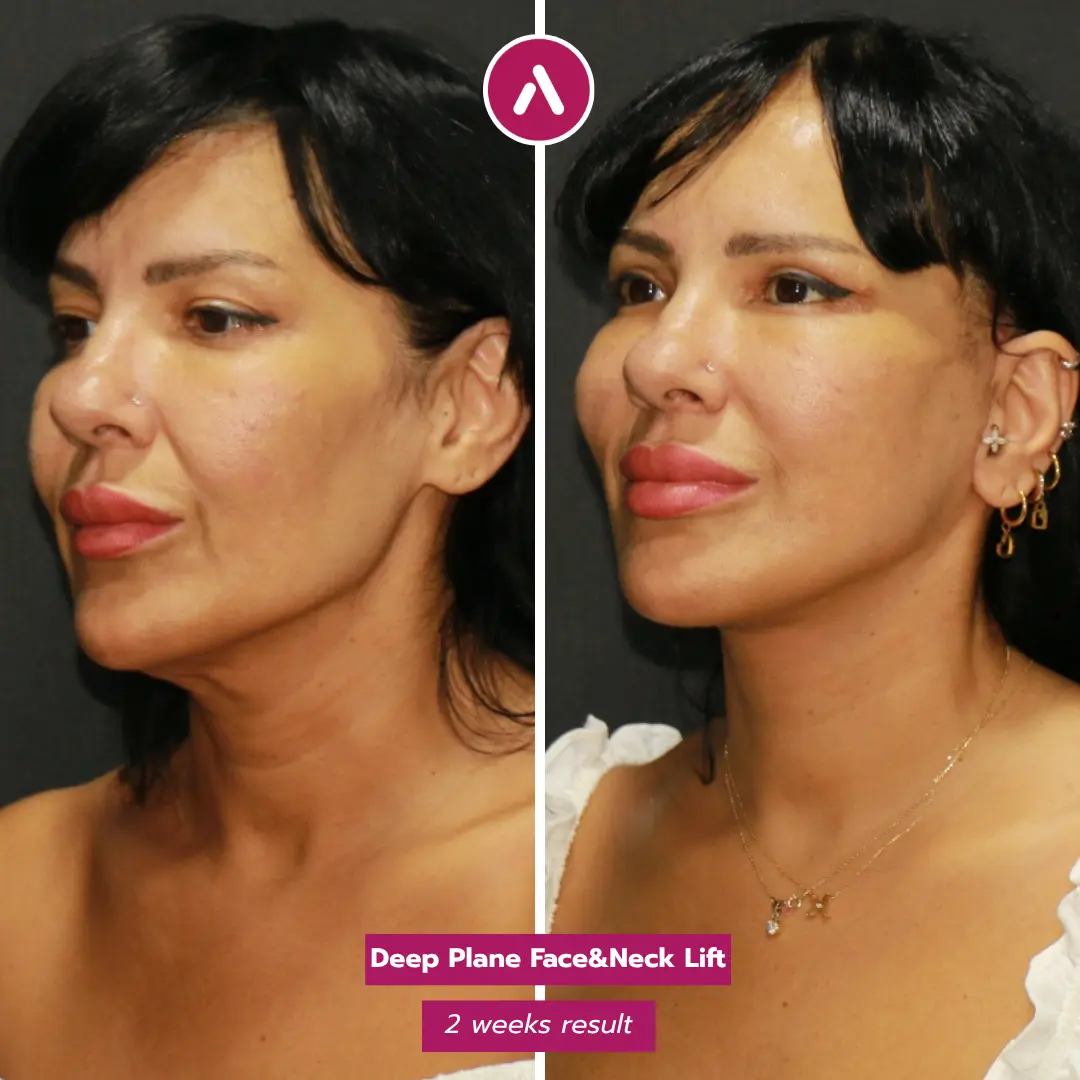
The deep plane facelift outcomes displayed above — the 49-year-old USA patient, the 54-year-old patient, and the 52-year-old patient — illustrate the recovery-timeline reality that drives many packing decisions.
Worth noticing across these three cases: the early post-op weeks involve visible swelling that genuinely benefits from front-closure clothing, compression accessories, and the recovery comfort kit detailed below. Documentation of how patients look at week 1, week 4, and month 3 grounds packing expectations in something more useful than generic “be prepared for swelling” advice.
Procedure-specific outcome series with disclosed timing milestones are catalogued in the broader patient case archive.
Compression garments: what to bring vs. what the clinic provides
Compression is procedure-specific. Some patients receive garments as part of their package; others may be advised to bring a spare or a second stage garment. If you booked all-inclusive cosmetic surgery packages abroad, confirm in writing what is included.
- Ask your coordinator: Is the initial compression garment provided? What style? What sizing method?
- Bring a backup if recommended: A spare can be helpful while one is being washed/dried.
- Don’t guess sizing: Incorrect compression can be uncomfortable—or not supportive enough.
- Plan for laundry: If you’ll be in Istanbul for a week, you may need a simple wash/dry routine.
| Compression Item | Do You Usually Need to Pack It? | Smart Approach |
|---|---|---|
| Initial compression garment | Often provided (varies) | Confirm what’s included before you fly |
| Backup garment | Sometimes helpful | Bring if your clinic recommends or if you prefer uninterrupted wear |
| Compression socks (travel) | Commonly packed by patients | Bring 1–2 pairs for flight days (if approved by your surgeon) |
Key question to ask: “Do I need one garment or two for the first week?” That single answer simplifies packing instantly.
Footwear, anti-slip items, and “easy on/off” choices
After surgery, bending, balancing, and standing for long periods can feel harder than you expect. The safest shoes are usually the simplest.
- Slip-on shoes with good grip (avoid anything that requires tight lacing or bending).
- Anti-slip socks (hotel floors can be slick).
- Shower sandals (lightweight and practical for shared/hotel bathrooms).
- Compression socks for travel days, only if your surgeon approves for your situation.
Patients focused on safe plastic surgery Turkey often think “safety” is only about the operating room. In reality, safety also includes how you move, sleep, and reduce fall risk when you’re tired and healing—especially if you’re traveling solo.
Recovery Comfort Kit for Hotel and Flight Home
Hotel-based recovery shapes the second half of every packing decision — because the items you actually reach for on days 2 through 5 are different from the ones you handle on travel day. What helps to know in advance: room-level temperature control for swelling management, blackout-curtain availability for sleep stabilization, elevator access (no stair recovery), proximity to the clinic for follow-up taxi runs rather than long transfers, and whether transportation between airport, hotel, and clinic is pre-arranged with a coordinator who can adjust timing if recovery feels slow on a given day.
Accommodation specifications, transfer coordination, and recovery-friendly hotel arrangements are documented under premium accommodation logistics.
Sleep support (pillows/positioning) and swelling comfort basics
Most patients underestimate how much better they feel after one truly good night of sleep in the first week. Set yourself up for easy positioning and less “tossing and turning.”
- Travel neck pillow (also useful on the flight home).
- Lightweight extra pillowcase (easy to change if you’re using ointments).
- Eye mask + earplugs (hotel sleep can be unpredictable).
- Loose hair ties / headband (simple comfort, especially if you don’t want hair touching your face).
- Cold/comfort items only if your surgeon approves (some procedures have specific “do/don’t” rules).
Recovery reality: Your body heals best when your sleep, hydration, and nutrition are steady. Pack for that—not for “just in case” scenarios.
| Comfort Goal | Pack This | Why It Helps |
|---|---|---|
| Better sleep | Eye mask + earplugs | Protects rest during early healing |
| Easy positioning | Neck pillow / small support pillow | Reduces strain and fidgeting |
| Less irritation | Extra pillowcase | Keeps surfaces clean and comfortable |
Hydration + protein snacks + gentle skincare staples
Travel alone can disrupt eating and drinking, and recovery can lower your appetite. Bring small, simple options that are easy to tolerate. This is a key part of the ultimate packing checklist for surgery abroad and one of the most useful packing essentials for plastic surgery travel.
- Electrolyte packets (easy to carry and helpful on flight days).
- Protein-forward snacks you already tolerate well (avoid anything brand new).
- Reusable water bottle (helps you keep a steady hydration routine).
- Gentle skincare basics: fragrance-free cleanser + simple moisturizer + lip balm.
- Face wipes (fragrance-free) for travel days only—don’t rely on them as a routine.
What to avoid packing: spicy/salty “bloat foods,” alcohol, and any new supplements or “detox” products. If your body reacts badly, it’s harder to troubleshoot while traveling.
Hygiene, simple wound-care organization, and laundry plan
Most clinics give procedure-specific wound-care guidance. Your job is to keep everything organized so you’re not searching through a suitcase when you’re tired. If you’re asking what to pack for your surgery trip, think “organized + clean + repeatable.”
- Small zip pouch labeled “Post-Op” for essentials (so you don’t misplace items).
- Hand sanitizer and a small pack of tissues (especially for airport days).
- Fragrance-free soap (if you have sensitive skin and prefer a known product).
- Disposable gloves only if your clinic recommends them for your aftercare routine.
- Laundry plan: a small bag for worn items + travel detergent sheets if you prefer to hand-wash basics.
| Organize Like This | Put These Items Inside | When You’ll Need It |
|---|---|---|
| “Post-Op Kit” pouch | Aftercare essentials + contact info card | Daily recovery routine |
| “Travel Day” pouch | Sanitizer, tissues, lip balm, meds (approved) | Flights + transfers |
| “Laundry” bag | Worn items / towel / pillowcase | Hotel recovery week |
If you’re weighing destinations and wondering is it safe to travel to Turkey for surgery, remember that safety is not only the surgical facility—it’s also the day-to-day plan: clean routines, clear instructions, and easy access to your care team.
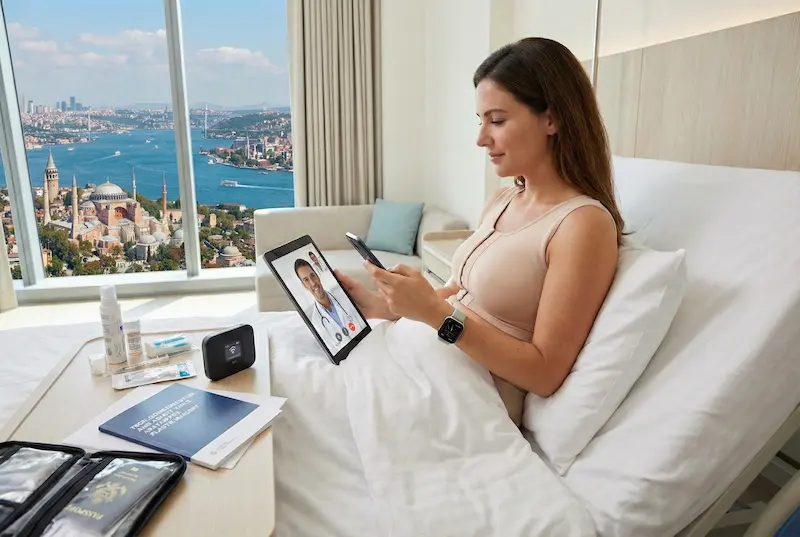
Tech, Communication, and Safety While Abroad
This section is often overlooked in “what to pack” guides, but it’s a major factor in how safe and supported you feel—especially if you’re traveling for cosmetic surgery abroad and researching questions like safe to travel to Turkey for surgery or safe plastic surgery Turkey. Practical safety isn’t only about the operating room—it’s also about staying connected, protecting your documents and money, and making it easy to reach your care team during recovery.
Patient video accounts capture something the written testimonial quotes can’t fully convey — the everyday rhythm of hotel-based recovery, how patients moved through the city between clinic follow-ups, and what their “I wish I’d packed” reflections actually looked like in the moment they realized it. Useful packing-related signals to watch for in video accounts: which items patients reached for repeatedly in the recovery footage, what they ended up borrowing from the hotel or the clinic, and which “essentials” sat untouched in their luggage.
Week-by-week video accounts from international patients documenting their packing decisions in retrospect are catalogued in the recovery video accounts.
SIM/eSIM, chargers, power adapter, and “recovery phone setup”
Your phone becomes your recovery dashboard: messages, appointment times, medication reminders, translation, and sometimes progress photos. Pack so your phone never becomes the weak link.
- eSIM/SIM plan (set up before you fly if possible): prioritize reliable data and messaging.
- Universal travel adapter (Turkey commonly uses Type F-style plugs) + a backup charging cable.
- Power bank (carry-on) for long travel days.
- Medication reminder setup: alarms for each dose time (name the alarms clearly).
- Offline folder on your phone: clinic address, coordinator contact, pre/post-op instructions, and flight details.
| Item | Where to Pack | Why It’s Worth It |
|---|---|---|
| Phone + primary charger | Carry-on | Your communication + recovery hub |
| Backup cable + adapter | Carry-on | Prevents “dead phone” emergencies |
| Power bank | Carry-on | Flight delays and transfers happen |
| Small tech pouch | Carry-on (easy access) | Keeps essentials organized when tired |
Recovery-friendly tip: Before surgery day, switch your phone to “low mental load” mode—pin your coordinator chat, set medication alarms, and save key documents offline.
Messaging/check-ins, translation tools, and photo tracking routine
One of the simplest ways to feel secure during plastic surgery abroad is to create a predictable check-in routine. This is especially helpful if you’re traveling solo or if your family is anxious back home.
- Daily check-in plan: choose two times per day to message your family/friend (e.g., morning + evening).
- Translation app: download offline language packs if available.
- Photo tracking (only if your clinic recommends): take photos in the same lighting/angle to reduce unnecessary worry.
- Notes template: pain level (0–10), meds taken, hydration, and any questions for your follow-up.
What reduces anxiety fast: A simple “I’m okay + here’s the plan” message to family, plus a clear way to reach your clinic if you need guidance.
If you booked all-inclusive cosmetic surgery packages abroad, ask your coordinator exactly how post-op communication works (WhatsApp number, after-hours contact, and how to send photos if needed). That clarity is part of what patients mean when they say they want a safe experience abroad.
Payments, valuables, and what not to bring
For what to pack for your surgery trip, the safest approach is to pack fewer valuables and keep payment options simple.
- Two payment methods (e.g., card + backup card) stored separately.
- Small amount of cash for incidentals (keep it discreet).
- Minimal jewelry (ideally none).
- Small crossbody bag that zips fully for travel days.
| Bring | Skip | Reason |
|---|---|---|
| 1–2 simple payment options | Extra cards you don’t need | Less to track if you’re tired |
| Plain, comfortable accessories | Expensive jewelry / designer items | Reduces stress and risk |
| Minimal cosmetics/skincare | New products you’ve never used | Avoids irritation during recovery |
| Simple “essentials-only” mindset | Overpacking “just in case” | Makes transfers and unpacking harder |
Many people searching safe to travel to Turkey for surgery are really asking, “Will I feel supported and in control?” This is where your personal system matters: keep valuables minimal, keep communication easy, and make sure you can reach your care team quickly.
Packing List at a Glance (Printable Checklist)
If you want a single, practical answer to what to pack for surgery abroad, it’s this: pack like you’re planning for predictable recovery—not for every hypothetical scenario. This “at a glance” section is designed as an ultimate packing checklist for surgery abroad you can copy, paste, and print.
It works whether you’re traveling for cosmetic surgery abroad, plastic surgery abroad, or using all-inclusive cosmetic surgery packages abroad. (All-inclusive often covers many items—but your carry-on essentials should always be yours.)
Carry-on essentials (must stay with you)
- Passport + printed copies (flights, hotel, clinic details, emergency contact card)
- Prescription medications (original labeled packaging + 3–5 extra days if possible)
- One-page health summary + allergies + medication list (printed + offline on phone)
- Phone + charger + backup cable + travel adapter + power bank
- Small “Travel Day” pouch: lip balm, tissues, hand sanitizer, fragrance-free wipes
- Hydration basics: empty water bottle + electrolyte packets
- Comfort items: eye mask, earplugs, neck pillow
- Compression socks for flight days (only if your surgeon approves)
- Simple snack you already tolerate well (especially for long transfers)
| Carry-On Item | Why It’s Non-Negotiable | Quick Tip |
|---|---|---|
| All daily medications | Prevents missed doses if luggage is delayed | Keep in original packaging |
| Clinic contact details | Fast access if you’re tired or offline | Save as screenshots + printed card |
| Power bank + cables | Your phone is your recovery hub | Pack in an easy-access pouch |
Checked-bag items (bulkier, non-urgent)
- Front-zip/button-up tops (2–4) + loose bottoms (2–3)
- Breathable layers (light hoodie/cardigan)
- Slip-on shoes with good grip + anti-slip socks + shower sandals
- Comfort kit: extra pillowcase, small laundry bag, travel detergent sheets (optional)
- Skincare basics: fragrance-free cleanser + simple moisturizer (no “new” products)
- Minimal toiletries (travel-size, recovery-friendly)
- Backup compression garment (only if recommended by your clinic)
Overpacking warning: If you can’t lift it comfortably post-op, it’s too much. Pack lighter than you think, and prioritize organization over volume.
Procedure-specific add-ons (face vs. body vs. hair)
These are optional and depend on your exact procedure and your surgeon’s instructions. If you’re asking what to pack for plastic surgery abroad, this is the part to tailor with your clinic coordinator.
- Face procedures (facelift/neck/lids): extra button-up tops, gentle saline spray (if advised), protective sunglasses (non-tight fit), bland lip care
- Body procedures (tummy tuck/lipo/breast): extra loose high-waist bottoms, a second stage/backup compression (if instructed), easy-to-clean slip-ons
- Hair procedures: zip-up tops, neck pillow for travel, gentle spray/saline (only if part of your clinic’s routine)
| Question to Ask Your Coordinator | Why It Matters |
|---|---|
| “What exactly is included in my package?” | Prevents duplicate packing (especially in all-inclusive plans) |
| “Do I need one compression garment or two for week one?” | Immediately simplifies luggage planning |
| “Are there any items I should NOT use before/after surgery?” | Avoids irritation, bruising triggers, and recovery setbacks |
Carry-on rule: If losing it would disrupt your surgery plan, it stays with you.
What To Pack For Surgery Abroad Frequently Asked Questions (FAQ):
These are the most common “final-mile” questions from travel patients building an ultimate packing checklist for surgery abroad—especially those planning cosmetic surgery abroad or plastic surgery abroad and trying to decide what’s truly essential.
Operational logistics questions tend to cluster the same way before every medical trip — accommodation specifics, what’s covered by the package, fit-to-fly timing, escort/companion policy, and currency or payment timing. The honest answer to most of these is “it depends on the procedure and the package,” but having the categorized question bank in front of you helps avoid the “what did I forget to ask?” cycle that adds stress in the final 48 hours before flying.
Categorized operational questions with answers tuned to international patient logistics are catalogued under the travel patient questions.
Should I pack my post-op medications or will the clinic provide them?
It depends on your clinic’s protocol and your procedure. Many all-inclusive cosmetic surgery packages abroad include post-op prescriptions and basic recovery supplies—but you should always:
Pack your daily prescription medications from home (in original labeled packaging).
Ask your coordinator for a written list of what will be provided post-op.
Bring a simple medication schedule template (paper or phone note) so you can track timing easily.
What should always go in my carry-on for surgery travel?
If you’re asking what to pack for surgery abroad, your carry-on is your “continuity of care” bag. Prioritize items you can’t replace quickly:
Passport + printed copies (flights, hotel, clinic address, emergency contacts)
All daily medications + allergy/med list + one-page health summary
Phone + charger + adapter + power bank
Post-op instructions saved offline (screenshots/PDF)
Hydration basics (empty bottle + electrolyte packets)
Comfort items (eye mask, earplugs, neck pillow)
Can I travel alone—what should I pack differently?
Yes, many patients do—but you should pack to reduce “decision fatigue” and make day-to-day tasks easier. Add:
Extra organization: two small pouches labeled “Post-Op” and “Travel Day.”
Hands-free bag: a zippered crossbody for appointments and pharmacy runs.
Pre-written check-in plan: two daily message times with your support person back home.
Slip-on shoes + anti-slip socks to reduce fall risk when tired.
If you’re anxious about safe to travel to Turkey for surgery, traveling solo is less about “bravery” and more about having a clear plan: reliable communication, easy transport, and a clinic pathway for after-hours questions.
What compression garments should I bring and how many?
Compression needs are procedure-specific, and clinics vary. The safest approach is to confirm what’s provided and whether a backup is recommended.
Ask: “Is my first-stage compression included? Do you recommend a second garment for washing?”
If advised: pack a backup garment so you can wash one while wearing the other.
Do not self-purchase sizing unless your clinic gives exact sizing guidance.
What should I avoid packing because it increases swelling or risk?
For packing essentials for plastic surgery travel, “avoid” usually means anything that complicates healing, irritates skin, or increases bruising risk.
New supplements or “detox” products you’ve never used
Alcohol (especially close to surgery)
Very salty snacks (can worsen swelling)
New skincare actives (retinoids/acids) unless your surgeon approves
Valuables you don’t need (expensive jewelry, designer items)
How do I handle liquids/skincare/wound-care supplies at airport security?
Keep it simple and compliant:
Use travel-size containers for skincare/toiletries and put them in an easy-to-access pouch.
Keep medically necessary items (if any) clearly labeled and separated.
Bring prescriptions in original packaging to reduce confusion.
If you’re unsure about a specific item, follow the airline/airport guidance for your departure country and pack the rest in checked luggage.
What if I forget something—can I buy it in Istanbul?
In most cases, yes—common toiletries, basic clothing, phone chargers, and many everyday items are widely available. The items that are hardest to replace quickly (and should be packed carefully) are:
Your daily prescription medications
Key documents (passport/IDs) and your medical summary
Procedure-specific items your surgeon requires (especially if sized/fitted)
If your question is specifically “what should I pack for my plastic surgery trip to Turkey?”—treat documents and medications as non-negotiable, and treat most comfort items as replaceable.
What to pack for your surgery trip?
Keep it simple: documents (passport + copies), daily meds (original labels), your pre/post-op instructions (offline), a recovery-friendly outfit (front-zip top + loose bottoms), chargers/power bank, and basic comfort items (eye mask, neck pillow, electrolytes).
What to pack for plastic surgery abroad?
Pack for mobility + swelling: button-up/zip tops, loose breathable clothing, slip-on shoes, a small “post-op kit” pouch, gentle skincare basics, and any surgeon-approved compression items. Avoid overpacking and avoid new supplements/skincare products.
What should I pack for my plastic surgery trip to Turkey?
Bring the non-replaceables in your carry-on: passport, clinic/hotel details, your health summary, and daily prescriptions. Add a universal adapter, backup charging cable, comfortable layers, and a simple recovery kit for the hotel. Confirm with your coordinator what your package provides so you don’t pack duplicates.
Do I need to pack special pillows or a sleeping wedge for recovery abroad?
Not usually. A travel neck pillow and one extra pillowcase are often enough—ask your clinic about ideal sleep positioning.
What’s the best way to pack skincare and toiletries without irritating healing skin?
Bring only fragrance-free basics you already use. Avoid new “active” products (retinoids/acids) unless your surgeon approves.
How can I avoid overpacking when I’m nervous about my plastic surgery trip?
Pack in two layers: a carry-on “non-negotiables” kit and a light checked bag. If it’s replaceable locally, skip it.
Should I pack a blood pressure cuff or other monitoring devices?
Only if your surgeon recommends it or you have a medical condition. For most patients, a small thermometer is sufficient.
Medical Disclaimer: This content is for educational purposes only and does not replace medical advice, diagnosis, or treatment. Surgical options, anesthesia choices, risks, costs, and recovery vary by individual. Always consult a qualified, board-certified clinician for personalized guidance. If you have urgent symptoms, seek emergency care.