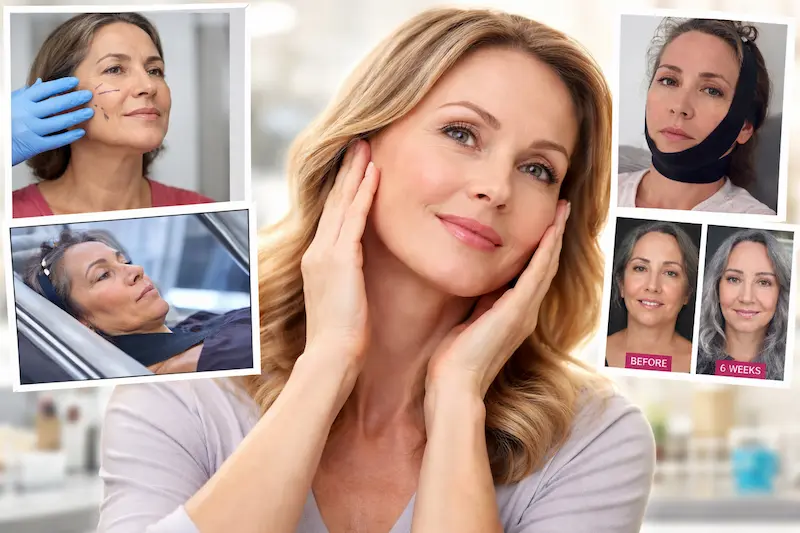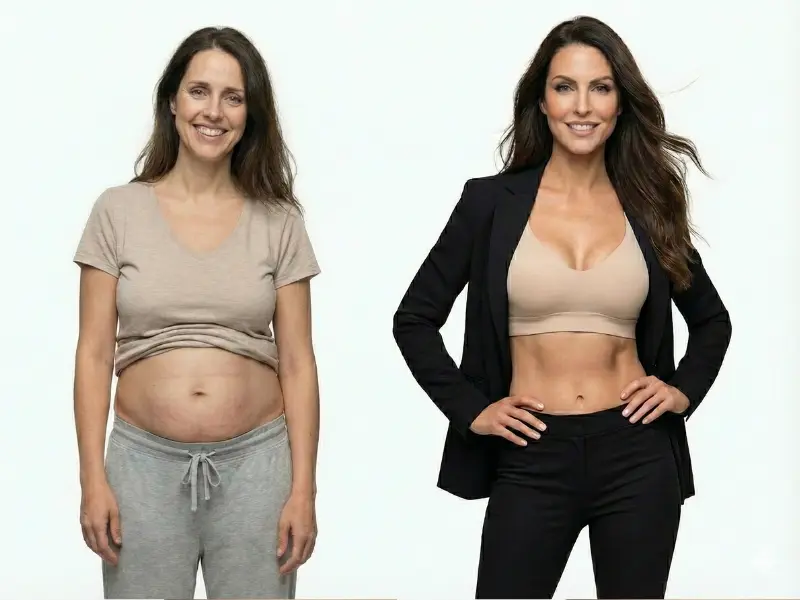
“Is plastic surgery in Turkey safe?” If you’re an American researching cosmetic surgery abroad, you’ve likely seen two extremes online: glowing before/afters and horror-story headlines. That gap creates a perfect storm for misinformation—and it’s why turkey plastic surgery myths spread so fast.
This article is a myth-busting guide for the careful, research-driven patient (the “expert patient”). If you’re searching phrases like best turkish plastic surgery, turkish plastic surgery clinics, or even turkish doctor plastic surgery, the goal shouldn’t be to “trust Turkey” or “avoid Turkey.” The goal is to learn how to separate high-standard, surgeon-led care from low-oversight, broker-style packages—anywhere in the world.
Medical note: This is educational content, not personal medical advice. Your candidacy and risk profile depend on your health history, the specific procedure, and your surgeon’s plan.
Table of Contents
“Turkey is Unsafe” Myth
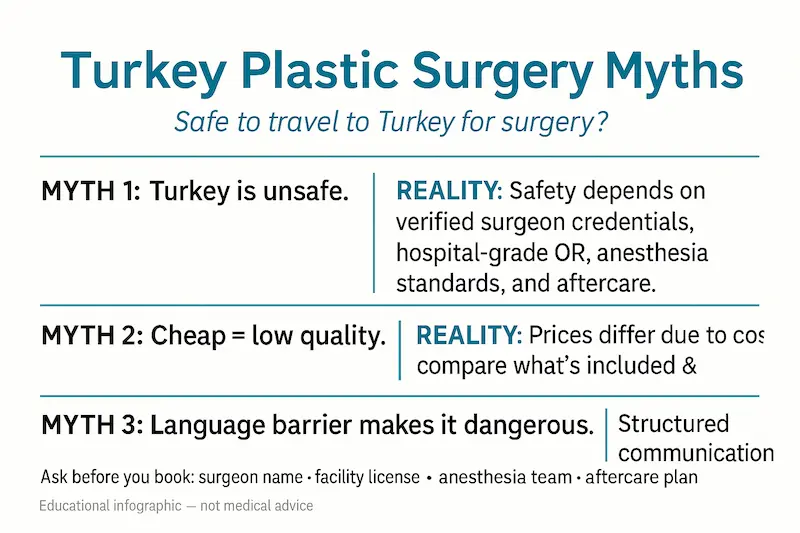
Let’s start with the most common fear: that turkish plastic surgery is inherently unsafe. In reality, “Turkey” isn’t a single provider or a single standard. Safety in aesthetic surgery is determined by verifiable factors—who performs the surgery, where it’s performed, and how complications are prevented and managed.
What Americans usually mean by “unsafe” (and why stories get generalized)
When U.S. patients say “unsafe,” they usually mean one (or more) of these concerns:
- Unclear surgeon identity: “Who is actually operating on me?”
- Non-hospital settings: Fear of limited emergency readiness.
- Weak aftercare: Worry about being “on your own” after flying home.
- Botched results: Anxiety about unnatural outcomes, scarring, or revisions.
Online, those concerns often get simplified into a single conclusion: “Turkey is unsafe.” But the truth is more nuanced: risk clusters around low-transparency systems (especially broker-led medical tourism), not a country itself.
Key takeaway: The right question isn’t “Is Turkey safe?” It’s “Can this clinic prove safety with licensing, hospital standards, surgeon credentials, and a real aftercare protocol?”
“Risk clusters around low-transparency systems, not a country itself” — that’s the most useful reframe for any patient researching plastic surgery abroad. What separates a low-transparency setup from a transparent one is whether the clinic publishes its operating logic before the inquiry form, or only after. Decline criteria, surgeon identity, hospital affiliation, aftercare structure — these are the variables that distinguish a verifiable model from a marketed one.
Our operating logic, decision philosophy, and what we publish before any booking conversation is on the clinic transparency framework.
The safety checks that actually matter (licensed facility, hospital setting, emergency readiness)
If you want to evaluate turkish clinic plastic surgery options like an expert, focus on objective safety signals—not marketing language.
| Myth-Based Question | Expert-Level Safety Check (What to Verify) |
|---|---|
| “Is Turkey safe?” | Is the clinic officially licensed and authorized for international health tourism? Are you shown documentation? |
| “Do they look popular on social media?” | Is the care surgeon-led (not broker-led)? Do you meet your operating surgeon before surgery with a documented plan? |
| “Will it be sterile?” | What hygiene and sterilization protocols are described (and how is compliance enforced)? |
| “What if something goes wrong?” | Where is surgery performed (hospital vs office)? What is the escalation pathway for emergencies? |
| “Will I be abandoned after?” | Is there a structured follow-up schedule (check-ins at 1, 3, 6, 12 months) and an accessible contact channel? |
“Sterilization protocols and how compliance is enforced” — the article flags this as one of the verifiable safety signals, and it’s the layer most patients never inspect because it sits behind closed sterilization rooms. Equipment categories matter as much as the cleaning protocol: autoclave cycle logs with verification testing, instrument tracking through individual case logs, sterile-field discipline with measurable compliance audits, anesthesia-machine service intervals, defibrillator readiness checks, blood-storage protocols. These convert “we’re very clean” into something inspectable.
Specific equipment categories, sterilization audit cycles, and compliance verification logs are mapped on facility audit standards.
At AKM Clinic, this is exactly why our model emphasizes surgeon-led accountability and a hospital-based approach for major surgery—because these are the factors that actually reduce risk in real life, not reassuring slogans.
“Where is surgery performed (hospital vs office)? What is the escalation pathway for emergencies?” — these are the safety-check questions the article itself flags as the difference between a marketed claim and a verifiable answer. The answer worth booking against is specific: facility name, room category, ICU adjacency, blood-supply protocol, anesthesia-team affiliation, escalation pathway with a defined transfer hospital. Vague answers here are the gap the myth-busting question is pointing at.
Our specific facility, operating theater configuration, ICU-adjacency setup, and escalation pathway are detailed on our hospital-grade facility page.
One more expert point that many patients miss: the “surgeon” label is not enough. For facial procedures especially, outcomes and safety improve when your plan considers both structure and skin quality. That’s where a dual-skillset approach matters—combining dermatologic surgery and advanced facial technique (i.e., dermatosurgery plus facial plastic expertise) to reduce tension-driven scarring and avoid the “pulled” look that Americans fear most.
“The ‘surgeon’ label is not enough” — and the writer of this article has been candid about that. Specialization scope matters as much as the credential itself, particularly for facial work where both deep-tissue technique and skin behavior determine outcome. Dermatologic surgery combined with facial plastic technique is one of the underappreciated specialization combinations in aesthetic medicine. It changes how incision tension gets managed, how scars mature, and how the “pulled” look gets avoided — these are skin-behavior variables, not just structural ones.
Background, dual-specialization combination, and procedure focus for our lead surgeon are documented on our dermatosurgeon’s profile.
Surgery risk depends on the procedure (why “one-size-fits-all” safety claims are misleading)
Not all procedures carry the same risk profile. A straightforward, well-indicated procedure performed on a healthy candidate is not comparable to:
- multi-procedure “combo” makeovers done too aggressively,
- revision surgery (always higher complexity),
- higher-risk anesthesia scenarios,
- patients with uncontrolled medical conditions.
So when you read sweeping claims—positive or negative—about turkish plastic surgery, translate them into specifics: What procedure? What setting? What surgeon? What aftercare?
This is also why surgeon consultation quality matters. A safe clinic will sometimes tell you “not yet,” “not a candidate,” or “do less”—because the best outcome is often the most conservative, well-planned one.
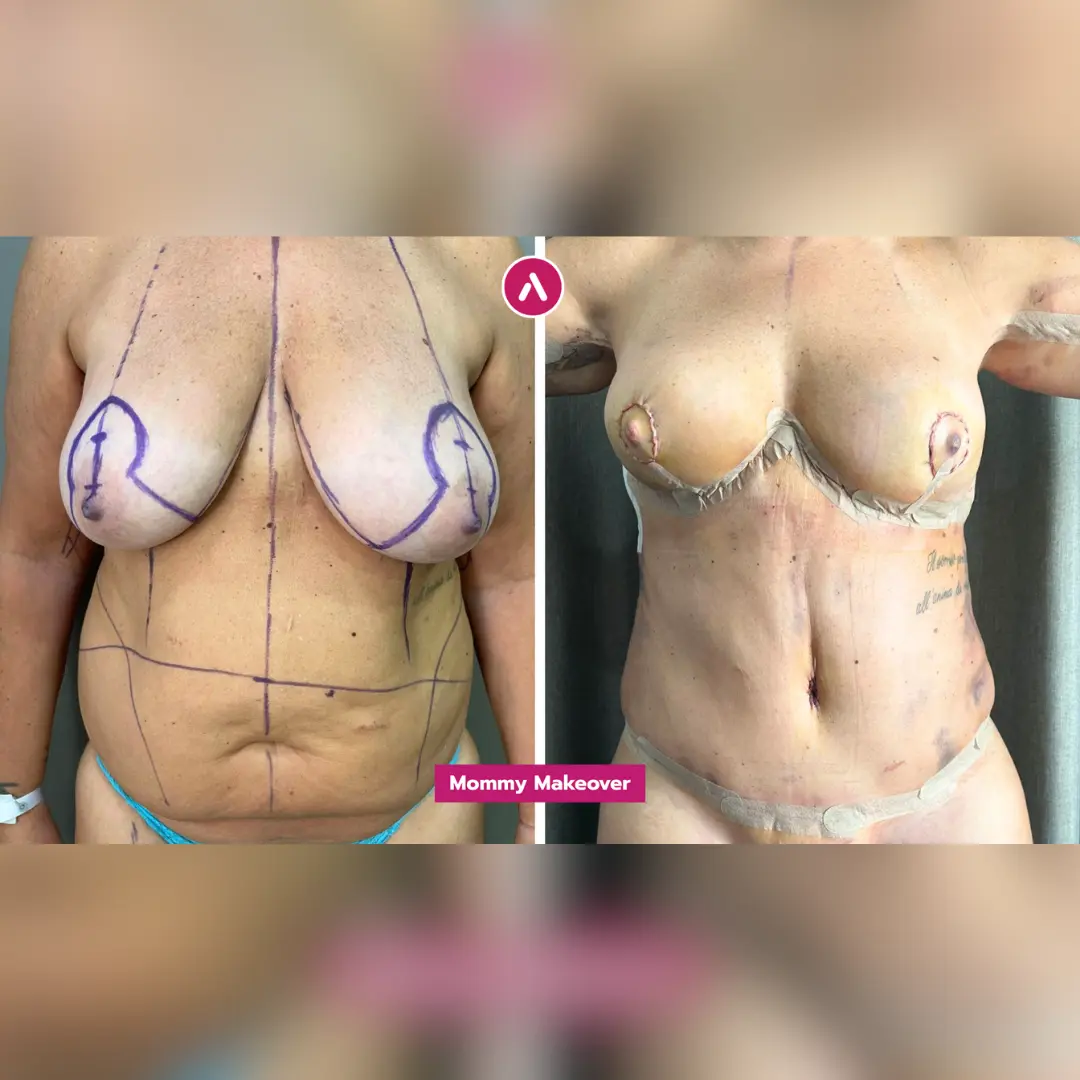

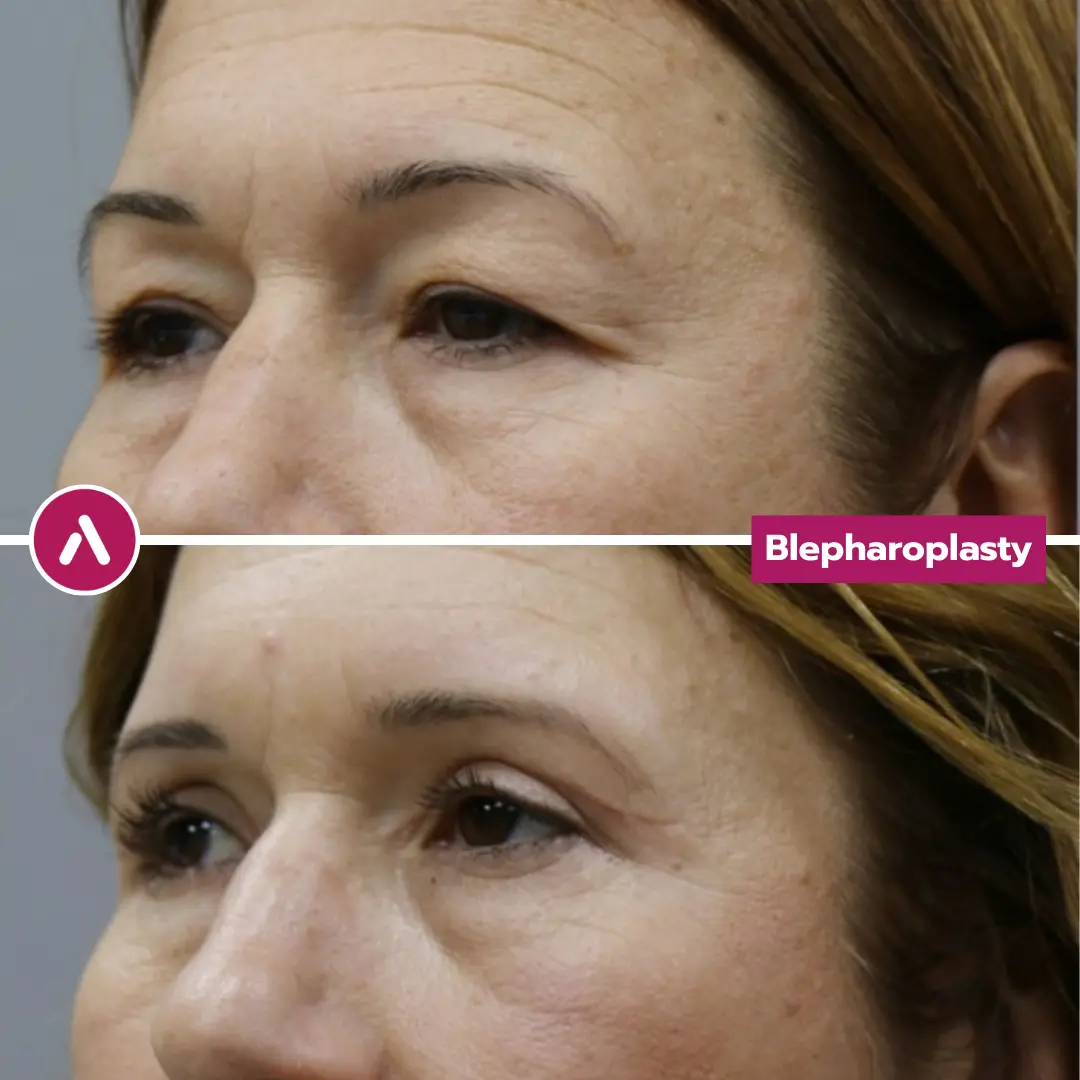
How to reduce risk as a U.S. patient (pre-op evaluation, clear candidacy criteria, written plan)
Here’s a practical, U.S.-patient checklist you can use when screening turkish plastic surgery clinics—especially if you’re trying to identify the best turkish plastic surgery option for your needs:
- Demand clarity on who operates: full surgeon name, credentials, and who handles anesthesia.
- Ask where surgery happens: hospital environment for major procedures, plus emergency readiness.
- Get a written surgical plan: what technique is proposed and why (and what is intentionally NOT being done).
- Confirm candidacy criteria: what would disqualify you (smoking, certain meds, uncontrolled health conditions).
- Understand follow-up: how you’ll be supported once you return to the U.S.
Social proof helps—but only when it reflects the experience of patients like you. One of our U.S. patients, Barbara (age 60), described researching globally for years and ultimately wanting a result that didn’t look “done.” Her summary is what most Americans are actually seeking:
“I actually look like nothing happened but probably 20 years younger.”
That sentence captures the real safety goal for the face: not only avoiding complications, but achieving natural, undetectable rejuvenation with a plan built around anatomy, skin behavior, and realistic expectations.
“It’s Cheap Because Quality Is Low” Myth
“It’s cheap because quality is low” is the myth most patients accept without inspecting the comparison’s structure — but cost in plastic surgery doesn’t work the way it works in, say, restaurant pricing.
What changes between U.S. and Turkey isn’t quality at all when the comparison is apples-to-apples on surgeon credentials and hospital setting; it’s overhead — malpractice premiums in the U.S. range $30K-$200K annually depending on specialty and state, hospital facility fees, and operational cost structure differ dramatically. A transparent itemized quote tells you whether you’re comparing equivalent care or whether something’s been cut from the package.
Our procedure-by-procedure itemized pricing with each line item defined — surgeon fee, hospital, anesthesia, aftercare, complication coverage — is on the cost comparison breakdown.
“All-inclusive vacation packages that include cosmetic surgery” is one of the phrases that comes up repeatedly in medical-tourism complication reviews — and the structural problem it points to isn’t about the package idea, it’s about which inclusions get bundled and which get cut. A real package structure separates what’s medically necessary from what’s vacation-flavored. Surgeon fee, hospital facility fee with anesthesia, pre-op assessments, post-op visits, supplies and garments, hotel nights with category specified, transfers with vehicle class specified, complication coverage scope in writing — those are medical-pathway items. “Vacation extras” should be flagged separately.
Our procedure-specific package configurations with each medical inclusion category itemized and vacation extras flagged separately are on the package medical inclusions.
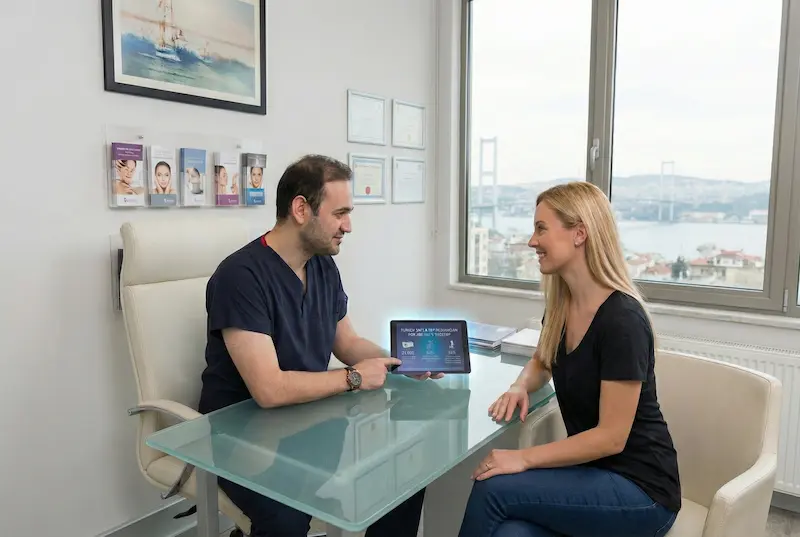
Why prices differ without automatically meaning “lower quality”
Major U.S. cities like New York, Los Angeles, and Miami are expensive places to run any medical practice. The cost of staff, rent, operating room time, insurance, and administrative overhead is higher—and that affects pricing even before you consider the surgeon’s fee.
Meanwhile, pricing in Istanbul can be lower for economic reasons that have nothing to do with “cutting corners.” That said, a lower price should never be used as proof of quality either. The correct conclusion is:
Lower cost is not evidence of lower quality. But it also isn’t evidence of high quality. Clinical proof beats pricing—every time.
It’s also worth noting: the label “turkish doctor plastic surgery” doesn’t tell you enough. Expertise varies everywhere. For facial work especially, you want a team that understands how anatomy and skin behave together—where dermatologic surgery principles (scar behavior, skin quality, vascular considerations) are integrated into surgical planning. This is one reason why a dermatosurgery-informed approach can matter for natural-looking results and clean healing.
“Cheap” vs “value”: what should be included (surgeon, hospital, anesthesia, aftercare)
If you’re comparing a quote from New York / Los Angeles / Miami to a package in Istanbul, you can’t compare totals unless the scope is truly matched. “Value” means the entire care pathway is accounted for—safely.
Use this checklist to evaluate whether a quote reflects real value or simply a low sticker price:
| Included Item | What “Good” Looks Like | Why It Matters |
|---|---|---|
| Named operating surgeon | You know exactly who operates; you meet them and receive a written plan | Accountability + continuity of care |
| Anesthesia team | Clear anesthesia method; qualified anesthesia provider identified | Most serious complications are anesthesia-related, not “cosmetic” |
| Facility setting | Appropriate hospital-grade environment for major procedures | Emergency readiness + sterile standards |
| Aftercare plan | Scheduled follow-ups + clear escalation pathway (before and after travel) | Prevents small issues from becoming big ones |
| Recovery support | Evidence-informed supportive care where appropriate | Comfort, swelling, and downtime can improve with structured recovery |
In surgeon-led models, “value” also includes how conservative and individualized the plan is. The safest surgery is often the one that avoids unnecessary add-ons and respects tissue limits—especially in facial rejuvenation where over-tightening can create an unnatural look.
The real red flags of bargain shopping (brokers, vague surgeon identity, weak aftercare)
Many negative stories associated with turkish plastic surgery don’t come from Turkey being “unsafe.” They come from the same pattern seen in every country: low-transparency, high-volume, price-first systems.
Here are red flags that matter more than geography:
- Broker-led communication: You can’t reliably speak to the surgeon pre-op, or questions are deflected.
- Vague surgeon identity: No full name, no verifiable credentials, no clear “who operates.”
- Pressure tactics: “Limited slots,” “deposit today,” or discounts that discourage careful decision-making.
- Overpromising: Guarantees of perfection, “scarless” claims, or unrealistic timelines.
- Thin aftercare: No structured follow-up schedule, no written instructions, no plan if you’re back in the U.S.
- Too many procedures at once: Pushing “full makeover” surgery without serious discussion of risk.
If you’re searching terms like turkish clinic plastic surgery and seeing wildly different price points, assume the difference may be driven by these variables. A responsible clinic will welcome your questions because informed patients are safer patients.
A practical way to compare costs responsibly (e.g., NYC/LA/Miami vs Istanbul with scope matched)
If you want to compare Istanbul to high-cost U.S. markets fairly, use a scope-matching method:
- Define the same procedure, same technique level: A “facelift” can mean very different things depending on depth, extent, and surgeon philosophy.
- Match the setting: Hospital-grade OR vs office-based surgery is not an apples-to-apples comparison.
- Match anesthesia and monitoring: Confirm who is providing anesthesia and the monitoring standards used.
- Include aftercare and revision policy: Understand what is included if a touch-up is needed (and what is not).
- Separate travel costs from medical costs: Track flights/hotel separately so you don’t confuse “medical price” with “total trip price.”
It’s also smart to compare Turkey to other medical tourism destinations that Americans often consider, such as Mexico or Thailand. The decision shouldn’t be based on a single number; it should be based on a repeatable safety framework: surgeon transparency, facility standards, and a follow-up system that functions across borders.
One more nuance: some clinics improve the “value” side by investing in recovery support (for example, structured protocols and supportive technologies such as HBOT and LLLT in appropriate cases). These don’t replace surgical skill—but they can improve patient comfort and help optimize recovery when used responsibly as part of a supervised plan.
Bottom line: If you want the “best” outcome, don’t hunt for the lowest price—hunt for the highest transparency. That’s how you find the best-fit surgeon and the right standard of care.
“Language Barrier Makes It Dangerous” Myth
“Language barrier makes it dangerous” is one of the most testable myths — testable because language-of-care competence is documented operationally, not just claimed.
What separates language-competent operations from theoretical ones: English-speaking patient coordinator with named contact (not a shared inbox), 24/7 clinical escalation line with response-time commitment, written consent forms in your native language, video-consultation transcripts available for review, structured follow-up touchpoints at week 1, week 2, month 1, month 3 with named clinical contact at each.
Our arrival-to-discharge-to-long-term-follow-up structure with English-speaking touchpoints at each phase is on the English-speaking care pathway.
How safe communication is ensured (English-speaking coordinators, interpreters, documentation)
High-standard turkish plastic surgery clinics don’t rely on “you’ll figure it out.” They design a system that makes misunderstanding unlikely:
- English-first coordination: You should be able to ask detailed questions in English and receive specific, non-generic answers.
- Surgeon-led consultation: You meet the operating surgeon (not just a sales rep) and confirm the plan before surgery.
- Written documentation: Your procedure plan, consent, medications, and aftercare instructions are written and reviewable.
- Clear points of contact: You’re told exactly who to contact for urgent questions—during your stay and after you fly home.
Expert patient mindset: Don’t settle for “Don’t worry.” Ask: “How do you prevent miscommunication—step by step?”
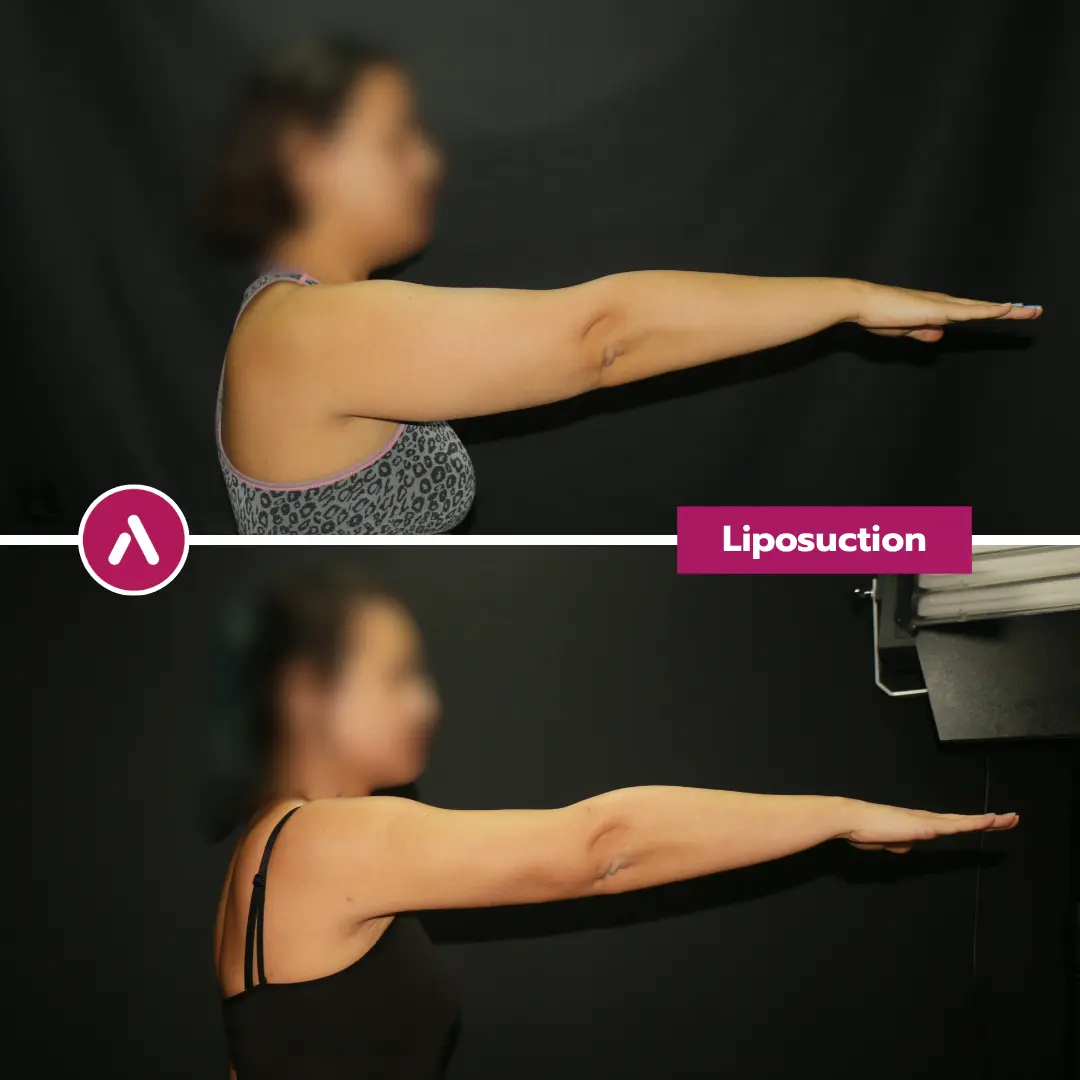
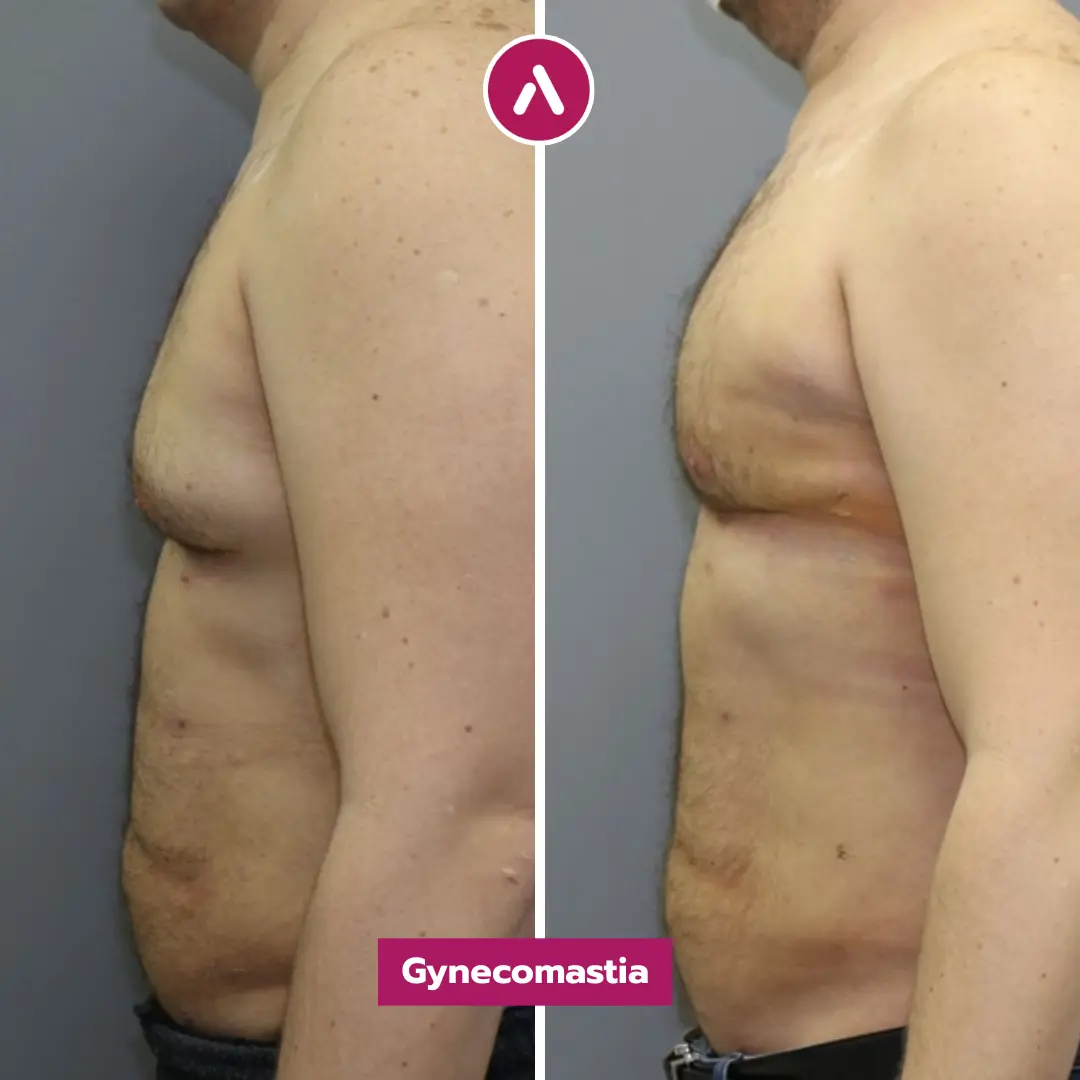
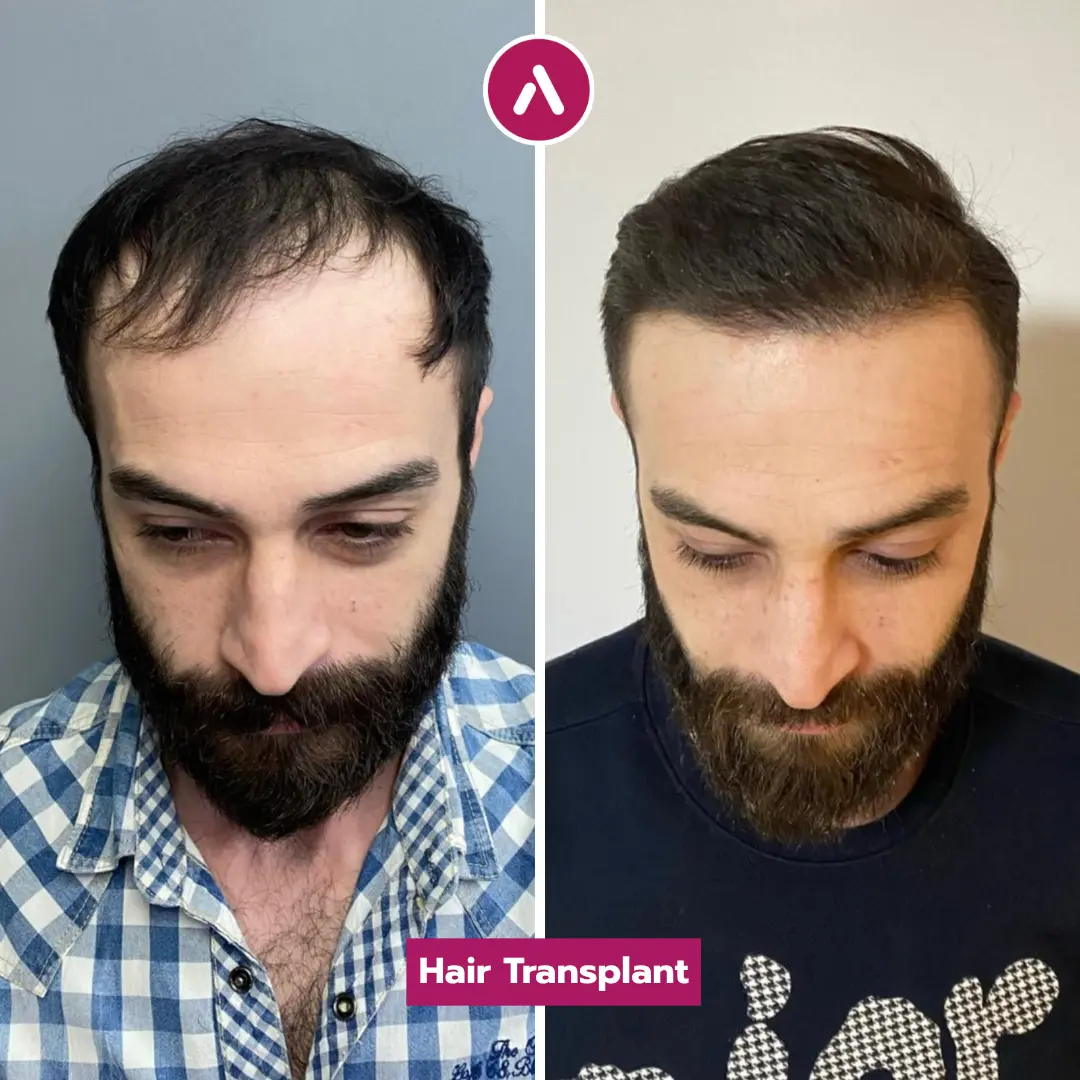
The “actual experience” question doesn’t end at photos — written and video accounts from patients with comparable procedures fill in what the photos can’t show: how the swelling phases felt, what week 2 was like, what the clinic did when something looked unexpected.
Worth distinguishing: a five-star review-count is a marketing artifact, while a review archive with variation — four-star accounts with specifics, week-by-week recovery descriptions, accounts of how rough patches got handled — is documentation. The detail level signals whether the clinic curated the reviews or whether the reviews are written by patients with full latitude.
Our written reviews archive plus video accounts walking through actual recovery timelines is in the written and video accounts.
Preventing “expectation mismatch” (photo-based goals, written notes, consent clarity)
Expectation mismatch—not language—is one of the biggest reasons patients feel unhappy after cosmetic surgery. This is especially true for facial procedures, where Americans often fear looking “pulled,” “overdone,” or like they “don’t look like themselves.”
Here’s how expert-level clinics reduce that risk:
| What Patients Fear | How a Good Clinic Prevents It |
|---|---|
| “I’ll look unnatural.” | Goals are defined with reference photos, a written surgical plan, and conservative “rejuvenation-not-alteration” boundaries. |
| “They won’t understand what I want.” | Surgeon confirms your priorities in plain English and repeats them back (a simple but powerful safety check). |
| “Scars will be obvious.” | Incision planning is explained clearly, including scar placement and scar-care steps. |
For facial work, this is also where combined expertise matters. A plan informed by dermatologic surgery (and a dermatosurgery perspective) pays attention to skin quality, scar behavior, and healing biology—not just lifting tissue. That’s one reason patients seeking the best turkish plastic surgery results should ask how the surgeon addresses both structure and skin.
How follow-up works after you fly home (remote check-ins, structured post-op plan)
Another common reason people question whether it’s safe to travel to Turkey for surgery is fear of being “abandoned” after returning home. A reputable clinic should have a long-term follow-up structure and be responsive across time zones.
One patient story captures what good remote support feels like:
“I could call again and again, and they answered me.”
That kind of access is not a luxury—it’s a safety feature. Early reassurance and timely answers can prevent small concerns (swelling, wound questions, medication confusion) from escalating into bigger problems.
What you should prepare to communicate clearly (question list, meds list, medical history)
If you want to reduce risk and make sure you’re choosing the right turkish doctor plastic surgery team, prepare like an expert patient. Bring clarity to the consult so the surgeon can be equally precise.
- Your medical history: prior surgeries, anesthesia issues, bleeding/clotting history, allergies.
- A full medication + supplement list: including blood thinners, GLP-1s, herbal supplements, and nicotine use.
- Your “non-negotiables”: what you absolutely want to preserve (identity, natural expression, subtlety).
- Your top 10 questions: technique, anesthesia plan, facility setting, aftercare schedule, and what happens if healing is slower than expected.
What U.S. Patients Actually Experience
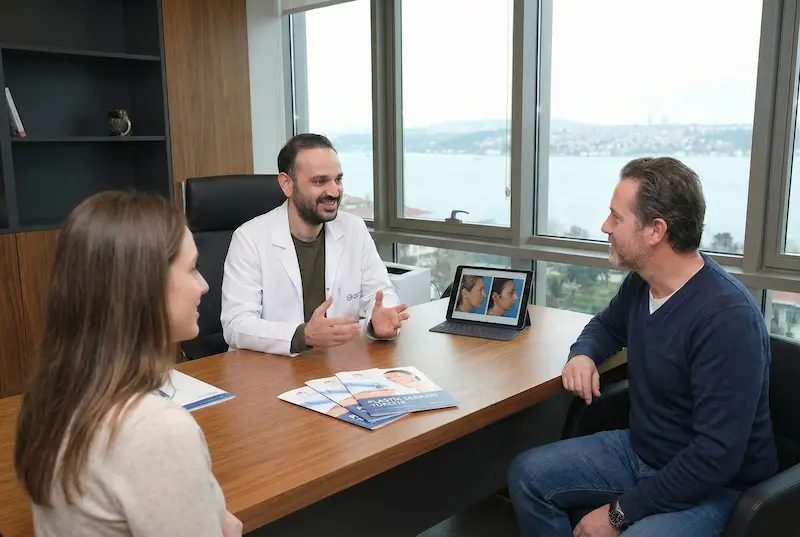
“What U.S. Patients Actually Experience” is the section that matters most in any myth-busting article, because it’s where the abstract claim (“Turkey is safe / unsafe”) meets specific cases with names, ages, procedures, and recovery timelines. The pattern worth looking for in the actual-experience evidence isn’t dramatic transformation alone — it’s procedure-specific outcomes with disclosed timing windows, anatomy-matched comparisons (similar age, similar starting point, similar skin quality), and consistent photographic standards across multiple cases rather than cherry-picked hero results.
Procedure-specific U.S. patient outcomes with disclosed timing and anatomy-matched comparisons are catalogued in our US patient outcomes gallery.
The honest evidence base for “what actually goes wrong with medical tourism” sits in the inbound-complication literature — papers tracking what patients present with after returning home, where the failure patterns get documented rather than marketed.
A May 2025 Aesthetic Plastic Surgery paper by Pikkel and colleagues reviewed 12 years of inbound medical-tourism complications at a tertiary plastic surgery centre: medical tourism complications study. Of 56 documented inbound presentations, infections and wound dehiscence dominated, with all-inclusive vacation-package framing flagged in the discussion as a structural risk pattern — low pre-op screening, compressed recovery windows before flying home, and limited aftercare continuity.
Worth flagging the dataset boundary: 56 patients at one tertiary centre over 12 years is a small inbound sample, so the value is in failure-pattern identification rather than rate estimation. The practical read for U.S. patients is that the variable distinguishing safe medical-tourism centers from unsafe ones is the same set of items this article walks through — surgeon identity, pre-op screening, hospital setting, aftercare continuity.
The real patient journey step-by-step (consult → travel → surgery → recovery → return)
Here’s what a well-structured journey typically looks like with reputable turkish plastic surgery clinics (and what you should expect if you’re comparing options under searches like turkish clinic plastic surgery or best turkish plastic surgery):
| Phase | What Happens | What to Look For (Safety + Quality Signals) |
|---|---|---|
| 1) Remote consultation | Your goals and health history are reviewed; a preliminary plan is discussed. | Specific answers (not generic), clear candidacy criteria, and documented next steps. |
| 2) Arrival in Istanbul | You arrive, settle in, and prepare for the in-person consult. | Stress-free logistics so you can focus on recovery—not navigation or uncertainty. |
| 3) In-person surgeon consult | The plan is finalized face-to-face with the operating surgeon. | Surgeon explains technique, scar strategy, risks, and realistic outcomes. |
| 4) Surgery day | Procedure performed with the appropriate anesthesia plan and monitoring. | Hospital-grade environment for major surgery; clear accountability for anesthesia. |
| 5) Early recovery | Initial swelling/bruising management + wound care + check-ups. | Proactive nurse checks, written aftercare instructions, clear “when to call” rules. |
| 6) Return home | You continue healing in the U.S. with remote guidance. | Structured virtual follow-ups and responsive support across time zones. |
One U.S. patient (Laura) described the reassurance that comes from an end-to-end model where the “unknowns” are removed:
“Transportation, the hotel, the surgery, the nurses, the doctors, the medications, everything is included.”
That kind of structure doesn’t guarantee a perfect outcome—but it does reduce the chaos that makes complications harder to catch early.
“Compressed recovery windows before flying home” is the structural risk pattern flagged repeatedly in medical-tourism complication literature — and it sits at the intersection of accommodation infrastructure and recovery medicine. The variables that matter: minimum nights post-op before flight clearance (not minimum nights paid for), elevation-supportive bedding for swelling management, clinical-check schedule integrated into the hotel stay, low-vibration airport transfer protocols, on-call English-speaking concierge with actual clinical-escalation training. Recovery accommodation is recovery infrastructure when it’s done seriously.
Our pre-arranged accommodation network with recovery-medicine-aligned room categories and clinically-integrated transfer protocols sits on our recovery accommodation network.
What “surgeon-led care” changes vs broker-led packages (accountability & continuity)
A big reason Americans get anxious about turkish plastic surgery is that the global medical tourism market includes broker-style systems where the “clinic” is essentially a middle layer. The risk isn’t Turkey—it’s diffused accountability.
Surgeon-led care is different because:
- You know who is operating on you (no ambiguity around the turkish doctor plastic surgery question).
- Your plan has medical logic—not upsells or rushed “combo” proposals.
- There’s continuity from consultation to follow-up (the same team owns your outcome).
Clinic model statement that matters: “We are not an agency; we are the surgeons.”
For facial procedures, “surgeon-led” also means better decision-making about what not to do. A conservative, anatomy-respecting plan is often the difference between “refreshed” and “overdone.” And when a clinic integrates a dermatologic surgery perspective (think: scar behavior, skin quality, healing biology) into facial planning—often described in shorthand as dermatosurgery—it can further support natural-looking results because the approach isn’t only structural; it’s also skin-aware.
Recovery support that matters to Americans (pain control, wound care, complication plan)
If you’re trying to decide whether it’s safe to travel to Turkey for surgery, evaluate what happens after the operating room. U.S. patients usually care about three things during recovery:
- Comfort and early recovery: pain control, swelling strategies, clear medication instructions.
- Wound and scar management: especially for facial procedures where incision placement and tension matter.
- A real “what if” plan: how concerns are triaged, and how the clinic responds when you’re back home.
One patient (Mehtap) described what good cross-border aftercare feels like—especially when you’re anxious and healing at home:
“I could call again and again, and they answered me.”
That responsiveness isn’t just “nice service.” It’s a patient safety mechanism—because timely guidance can prevent small issues from becoming bigger ones.
Why advanced recovery tech can reduce downtime (HBOT/LLLT as supportive care, when appropriate)
Some clinics also support recovery with adjunctive, supervised technologies. Two examples you may see discussed in advanced post-op protocols are:
- Hyperbaric Oxygen Therapy (HBOT): used to support tissue oxygenation and healing in certain recovery plans.
- Low-Level Laser Therapy (LLLT): used to support cellular repair and reduce inflammation as part of a broader recovery strategy.
These technologies are not substitutes for surgical skill, sterile standards, or proper patient selection. Think of them as supportive tools that may help optimize healing when appropriately indicated and integrated into a clinician-supervised plan.
Final reminder: The safest choice isn’t “Turkey” or “not Turkey.” The safest choice is a provider who can prove standards, document your plan, and support you through recovery—before and after you fly home.
Turkey Plastic Surgery Myths: A Verification Toolkit Before You Book
If you want to move past turkey plastic surgery myths, use a simple verification process that works for any country. The question isn’t “Do the reviews feel reassuring?” It’s whether the clinic can prove standards in writing—so you can decide if it’s truly safe to travel to Turkey for surgery based on evidence, not assumptions.
1) Confirm surgeon identity and scope of responsibility
Start with accountability. Ask for the full name of the operating surgeon and who performs each step of the procedure. For facial work, ask how the team addresses both structure and skin behavior—where dermatologic surgery principles (often discussed as dermatosurgery) can support cleaner healing and more natural results.
- Full surgeon name + specialty
- Who operates vs who consults
- Written surgical plan and realistic outcome boundaries
2) Verify facility standards and anesthesia safety
High-quality turkish plastic surgery clinics will clearly explain where surgery happens and who manages anesthesia. Vague answers, missing names, or “don’t worry about it” language are red flags—especially for longer procedures.
- Hospital-grade OR for major surgeries
- Anesthesia provider identified + monitoring standards
- Emergency escalation pathway explained
3) Demand a structured aftercare and travel plan
Aftercare is part of safety—particularly for international patients. You should receive written instructions, scheduled check-ins, and a clear plan for questions after you return home.
- Medication, wound care, and warning signs in writing
- Follow-up schedule (remote and in-person while in Istanbul)
- Who responds post-op and how quickly
Turkey Plastic Surgery Myths Frequently Asked Questions (FAQ):
Most American patients researching plastic surgery in Turkey arrive at the inquiry stage with a similar core set of operational questions — visa requirements, deposit and payment schedule, what happens if travel dates need to shift, complication-coverage scope, and whether the clinic handles questions that arise weeks after returning home.
These aren’t surgical-consultation questions — they’re operational logistics that determine whether the trip actually works in real-life scheduling. The clinic that publishes them transparently is the one that’s already audited its own operations; the clinic that handles them only on the phone is keeping the variables in the dark.
The operational specifics most U.S. patients want answered before booking the surgical consultation are catalogued in our US patient operational guide.
Is plastic surgery in Turkey regulated, and what should I verify?
Turkey has medical regulations and licensed providers, but the key is verifying your specific clinic and surgeon. Ask for:
Clinic licensing (and confirmation the facility is authorized to provide surgical care)
Surgeon identity and credentials (full name, specialty, and where they operate)
Hospital-grade setting for major procedures, with anesthesia standards and monitoring clearly explained
Regulation exists—but your safety comes from transparency + enforceable standards, not assumptions.
How can I verify a plastic surgeon’s credentials in Turkey as an American?
Start with the basics: full surgeon name, specialty, and the clinic’s legal entity. A reputable provider will not hide the surgeon behind “team” language. You should also expect a surgeon-led consultation where your plan is explained clearly and documented.
For facial surgery, ask how the surgeon approaches skin quality and scarring—a dermatologic-surgery-informed (often referred to as dermatosurgery) perspective can be valuable when the goal is natural results with clean healing.
Should my surgery be performed in a hospital or a clinic setting?
It depends on the procedure and your health status. In general:
Major surgeries (e.g., extensive facial surgery, combined procedures) are typically safest in a hospital-grade operating environment.
Minor procedures may be appropriate in a properly licensed surgical facility with correct monitoring and emergency readiness.
If a clinic can’t clearly explain where you’ll be operated on and why that setting is appropriate, consider it a red flag.
What are the biggest red flags when choosing a provider abroad?
Broker-led process: you can’t speak directly with the operating surgeon before committing.
Vague surgeon identity: no name, no credentials, no accountability.
Pressure tactics: discounts tied to urgency or deposits pushed before questions are answered.
Overpromising: “scarless,” “no downtime,” or guaranteed perfection.
Weak aftercare: no structured follow-up schedule once you return to the U.S.
These warning signs matter more than geography when evaluating turkish plastic surgery clinics.
How does aftercare work once I’m back in the U.S.?
A responsible clinic plans for cross-border follow-up from day one. You should receive:
Written aftercare instructions (medications, wound care, restrictions, warning signs)
A follow-up schedule (remote check-ins at defined time points)
A clear escalation pathway (who you contact urgently, and what happens next)
This is one reason many Americans conclude it’s safe to travel to Turkey for surgery with the right provider: the best clinics treat aftercare as part of medical safety—not a courtesy.
How soon is it safe to fly after common procedures?
Flight timing depends on the procedure, your healing, and your surgeon’s guidance. A reputable team will give you a personalized travel window and explain the reasoning (swelling, mobility, clot risk mitigation, and wound stability). Be cautious of anyone giving a “one-size-fits-all” flying timeline without reviewing your situation.
Is Turkey only for “cheap” surgery, or are there premium, high-standard options too?
There are high-standard options—but patients find them by looking for surgeon-led care, verifiable facility standards, and robust aftercare (not by chasing the lowest quote). If you’re searching for the best turkish plastic surgery outcome, prioritize transparency, conservative planning, and a team that can explain decisions clinically.
Do Turkish plastic surgery clinics offer revision support if I’m unhappy with my result?
Policies vary, so ask for a written revision policy before booking. Reputable turkish plastic surgery clinics explain what qualifies as a revision, typical timelines (final results can take months), and how follow-up works if you’re back in the U.S.
How do I avoid “too many procedures at once” when traveling for surgery?
Ask your surgeon to justify every add-on medically and to outline total operative time, anesthesia plan, and recovery limits. A safe, surgeon-led team will prioritize conservative planning over aggressive “combo” packages—especially if you’re evaluating turkey plastic surgery myths and safety concerns.
What documents should I receive before surgery in Turkey?
You should receive a written surgical plan, informed consent, medication instructions, and a post-op care plan. If you’re asking whether it’s safe to travel to Turkey for surgery, insist on documentation you can review in advance—clear details reduce risk and confusion.
Can a dermatosurgery approach improve natural-looking facial results?
For facial procedures, asking about dermatosurgery and dermatologic surgery principles can be useful. It signals attention to skin quality, scar behavior, and healing—factors that support subtle, natural outcomes when combined with facial aesthetic surgery planning.
Medical Disclaimer: This content is for educational purposes only and does not replace medical advice, diagnosis, or treatment. Surgical options, anesthesia choices, risks, costs, and recovery vary by individual. Always consult a qualified, board-certified clinician for personalized guidance. If you have urgent symptoms, seek emergency care.