If you’re planning surgery abroad (or even locally) and wondering how soon can you fly after a facelift or whether flying after tummy tuck surgery is safe, you’re not being “over-cautious”—you’re being smart. Travel adds real variables to recovery: long sitting, dehydration, pressure changes, luggage lifting, and limited access to your surgical team mid-journey. Travel timing also depends on which procedure you had — our facelift surgery guide for international patients outlines the technique-specific recovery curves (deep plane vs. SMAS vs. mini) that affect when air travel becomes safe.
People often ask these questions in slightly different ways—can you fly after a facelift, flying after a facelift, flying after plastic surgery, or even very specific scenarios like flying 7 days after tummy tuck. The right answer depends on your procedure, your body, and your surgeon’s clearance—not a one-size-fits-all rule. Because abdominoplasty’s mobility profile differs from facial surgery, our tummy tuck (abdominoplasty) procedure overview details the muscle repair, drain protocols, and core mobility milestones that a surgeon evaluates before clearing you for a return flight.
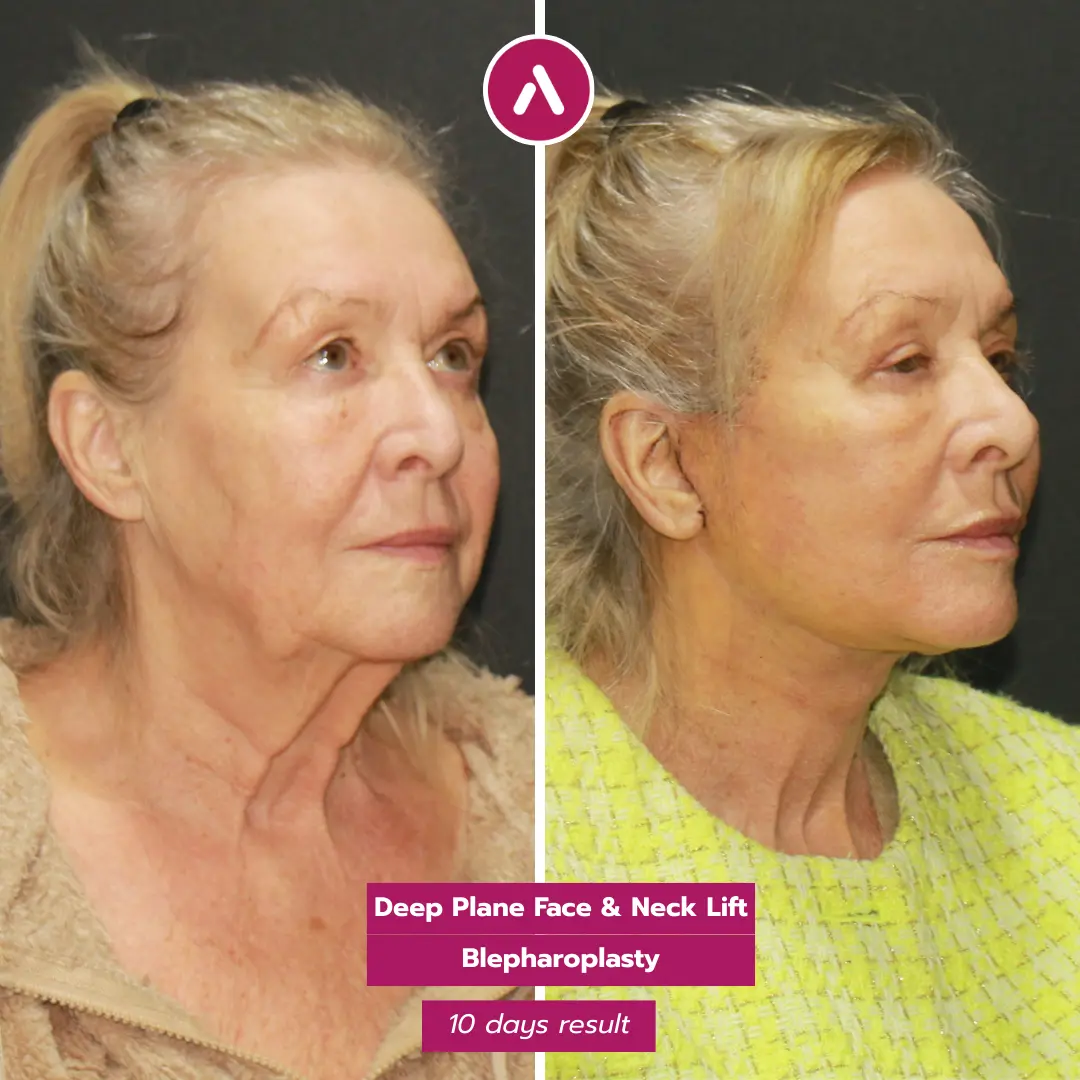
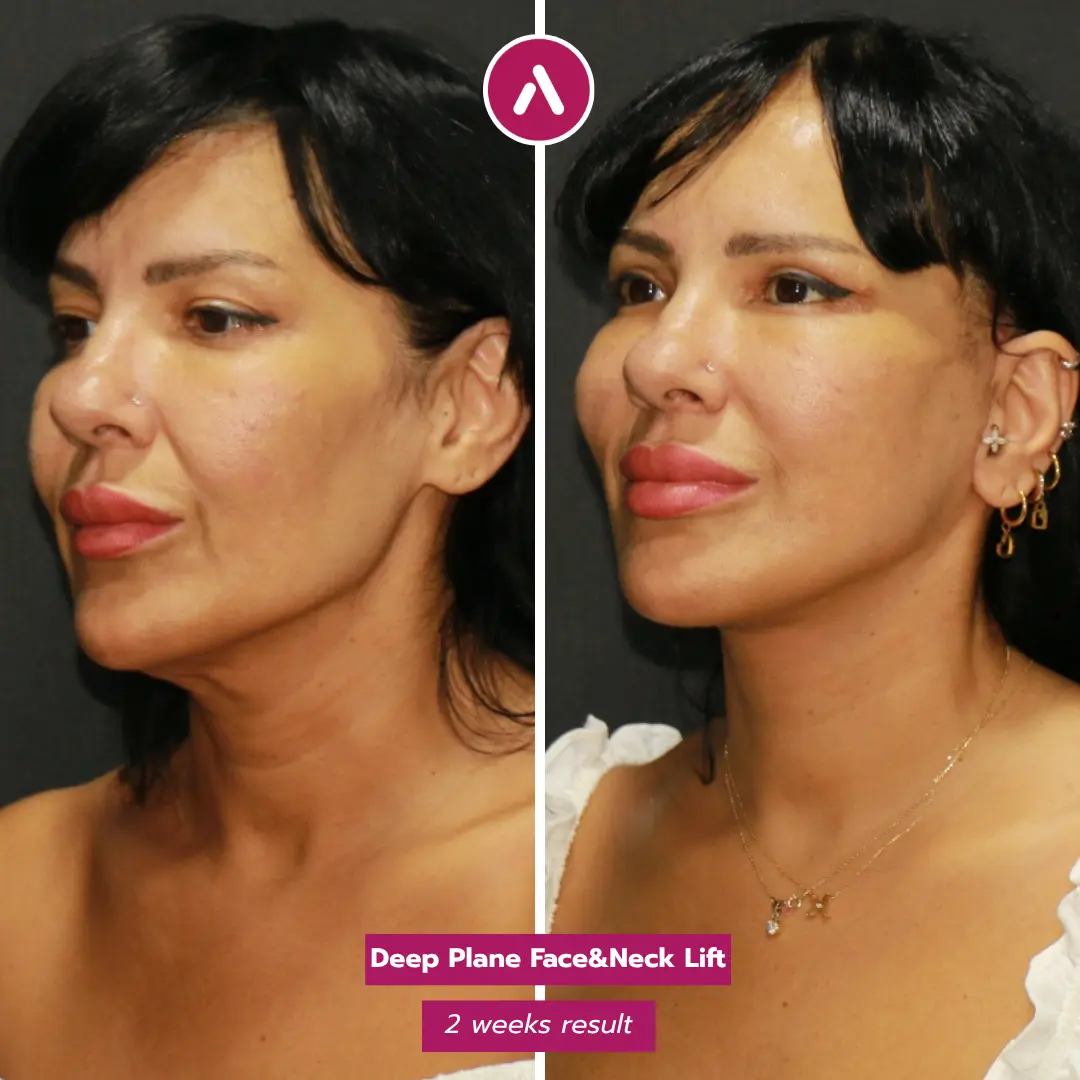
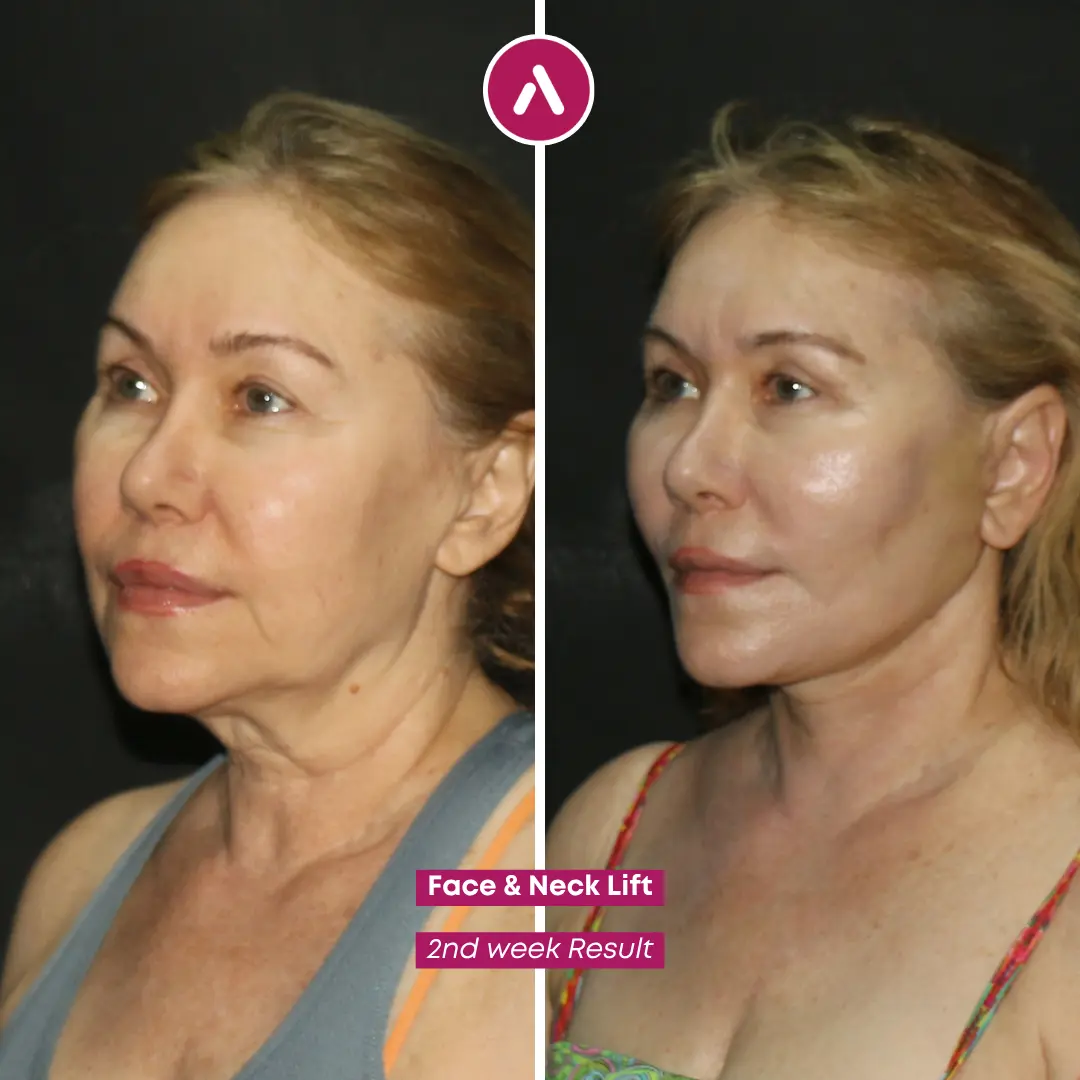
Patient note (Barbara, USA): After her deep plane facelift journey, she described her recovery as “no pain” with minimal bruising—highlighting how individualized recovery can be when the plan is surgeon-led and carefully managed.
What determines when you can fly (high-level):
- Procedure type & extent: a facelift and a tummy tuck stress the body in different ways.
- Anesthesia & immediate recovery course: nausea, dizziness, fatigue, mobility.
- Swelling/bleeding risk window: the early period is the most sensitive.
- Mobility & clot-risk profile: prior clot history, smoking, hormone therapy, long flights.
- Devices & dressings: drains, compression garments, and the ability to manage them while traveling.
At AKM Clinic, clearance to travel is handled as a medical decision plus a logistics plan. Your surgical team may also support recovery with clinic protocols such as HBOT (Hyperbaric Oxygen Therapy) and LLLT (Low-Level Laser Therapy) as part of post-op care pathways—designed to support swelling control and tissue healing—while emphasizing that these are adjuncts, not substitutes for safe timing and proper medical clearance.
Table of Contents
Airline Requirements
Most airlines don’t have a universal “cosmetic surgery rule,” but they do care about whether you’re medically stable, able to sit upright for the flight, and unlikely to need urgent care onboard. The goal is to make your travel day predictable: fewer surprises at check-in, less discomfort in the cabin, and a clear plan if you need assistance.
What airlines typically ask for (and what they don’t)
In practice, airlines may ask about:
- Your ability to travel independently: walking distance, stairs, boarding, sitting tolerance.
- Medical devices: drains, bulky dressings, or oxygen requirements (rare for most cosmetic patients).
- Special assistance needs: wheelchair service, early boarding, seating accommodations.
They typically do not ask for details like “what technique was used,” but they can delay boarding if you look unwell, faint, are actively bleeding, or cannot safely move through the airport.
Fit-to-fly letter: what it should include (procedure date, mobility, meds, risks)
A simple fit-to-fly letter can prevent last-minute stress. If you’re flying after a facelift or flying after tummy tuck surgery, your letter should be clear and practical—not overly technical.
Recommended inclusions:
- Date of surgery and current post-op day
- Confirmation you are stable to travel by air (as assessed by your surgeon)
- Mobility status (e.g., “able to ambulate with minimal assistance”)
- Medication list (especially if carrying prescription pain relief or anti-nausea meds)
- Notes on dressings/compression garments (if visible or bulky)
- Contact details for the clinic/surgical coordinator (for verification if needed)
Important: A fit-to-fly letter is not a “permission slip” to ignore symptoms. If something feels wrong on travel day, the safest decision may be to delay your flight—even if paperwork is ready.
Choosing the right flight setup: aisle seat, wheelchair assist, early boarding, layovers
How you fly matters almost as much as when you fly. These small choices reduce strain and improve comfort:
- Aisle seat: easier bathroom access and short walking breaks.
- Wheelchair assistance: reduces long terminal walks and fatigue, especially after a tummy tuck.
- Early boarding: avoids crowd pressure and rushed movements.
- Thoughtful layovers: enough time to move slowly and hydrate; avoid sprint-style connections.
If you’re recovering from a tummy tuck, assume your core will be tight and your posture may be slightly flexed—so minimizing long walks and heavy lifting is key.
Carry-on rules for post-op travelers: liquids/meds, dressings, cold packs, documentation
Your carry-on is your “recovery kit.” You want essentials within reach, and you want them packed in a way that won’t trigger security problems.
| Carry-on essential | Why it matters | Practical tip |
|---|---|---|
| Prescription medications | Pain, nausea, antibiotics (if prescribed) | Keep in original packaging + bring a medication list |
| Compression socks | Supports circulation during long sitting | Put them on before boarding (not mid-aisle) |
| Facial/tummy support items | Comfort and swelling management | Pack gently; avoid tight, improvised wraps |
| Dressings & skin-safe wipes | Hygiene and quick clean-ups | Use travel-size liquids to avoid security delays |
| Fit-to-fly letter + clinic contacts | Smoother check-in if questions arise | Print + digital copy on your phone |
| Neck pillow / small lumbar support | Reduces strain and improves comfort | Choose supportive, not overly bulky |
Avoid packing: sharp tools (scissors/razors), oversized liquid containers, or anything that would force you to check a bag you may not be able to lift.
Planning Your Return Flight After Surgery: Turkey to USA Travel Logistics
Once your surgeon clears you to travel, the next step is the itinerary itself. After an abdominoplasty the priority is fewer seated hours and no lifting; after a facelift it is avoiding blood pressure spikes from rushing and keeping the head supported. Both point to the same booking logic: direct where possible, generous connection times, assistance pre-booked. Our full step-by-step international patient journey at AKM Clinic documents exactly how this travel-day handover works — from the in-clinic clearance check, to driver-assisted hotel-to-airport transfer, to the WhatsApp follow-up channel that stays open after you land in the US.
Choose the right route: direct vs. layover (and why it matters)
Direct flights reduce walking, transfers, and rush-related blood pressure spikes. If a layover is unavoidable, choose a longer connection so you can move slowly, hydrate, and use the restroom without stress. Avoid “tight connections” that force fast walking, lifting, or sudden exertion—common triggers for swelling after facial surgery and discomfort after abdominoplasty. The “no-rush” principle starts before you even reach the airport: our 5-star hotel and private VIP transfer arrangements in Istanbul details how AKM coordinates ground logistics so the day you fly home, you go from hotel room to private driver to airport gate without lifting a single bag yourself.
Seat, assistance, and movement strategy for long flights
An aisle seat makes it easier to stand briefly and walk when safe—an important part of Flight Safety After Surgery. If you’re flying after tummy tuck surgery, wheelchair assistance can prevent fatigue and reduce the risk of accidental strain through terminals.
Carry-on essentials that prevent setbacks
- Fit-to-fly letter, clinic contacts, and your medication list
- Prescribed medications (original packaging) and backup doses for delays
- Compression socks if recommended, plus comfortable walking shoes
- Neck support (facelift) and a small comfort pillow (tummy tuck)
- Wipes, spare dressings (if needed), and hydration-friendly snacks
Surgical Risk Window
The first days after surgery are called the surgical risk window for a reason: your body is actively healing, your mobility is reduced, and your risk profile is temporarily different than “normal life.” This is the section that answers the real question behind how soon can you fly after a facelift or flying after tummy tuck—because flying is not just sitting in a seat. It’s airports, stress, lifting, long walking distances, dehydration, and hours of immobility. A 2025 systematic review and meta-analysis published in the National Library of Medicine analyzing venous thromboembolism risk across 24,975 surgical patients with recent air travel reported a measurable post-operative VTE odds ratio of 1.31 — confirming that even mid-range flights add a quantifiable clot-risk layer that must be managed deliberately, not assumed away.
Why timing matters: clot risk, swelling, bleeding, pressure changes, fatigue
When patients ask, can you fly after a facelift (or any procedure), we look at a few predictable factors:
- Circulation + immobility: Long periods of sitting can increase clot risk—especially after surgery. The risk doesn’t disappear the day you leave the hospital.
- Dehydration: Cabin air is dry; dehydration can worsen fatigue, constipation, and swelling, and it doesn’t help circulation.
- Swelling and inflammation: Travel days often increase swelling simply because you’re upright longer, moving more, and sleeping less.
- Bleeding/hematoma risk (especially after facial surgery): Blood pressure spikes from stress, rushing, or lifting luggage can raise risk early on.
- Pain control and nausea: If you still need strong pain meds, you may be too early for travel—because dizziness, constipation, and nausea make flying harder and less safe.
Important nuance: “Cabin pressure” is usually not the main danger after facelift or tummy tuck the way it can be after certain ENT or sinus surgeries. For most cosmetic patients, the bigger issues are immobility, dehydration, swelling, and physical strain (stairs, bags, long walks). For a procedure-specific breakdown — including how the post-op clot window varies between BBL, liposuction, breast surgery, and rhinoplasty — see our complementary guide on flight safety timelines across plastic surgery procedures, which covers procedure-by-procedure recommended waiting periods and the DVT-risk factors specific to long-haul travel from Istanbul to North America.
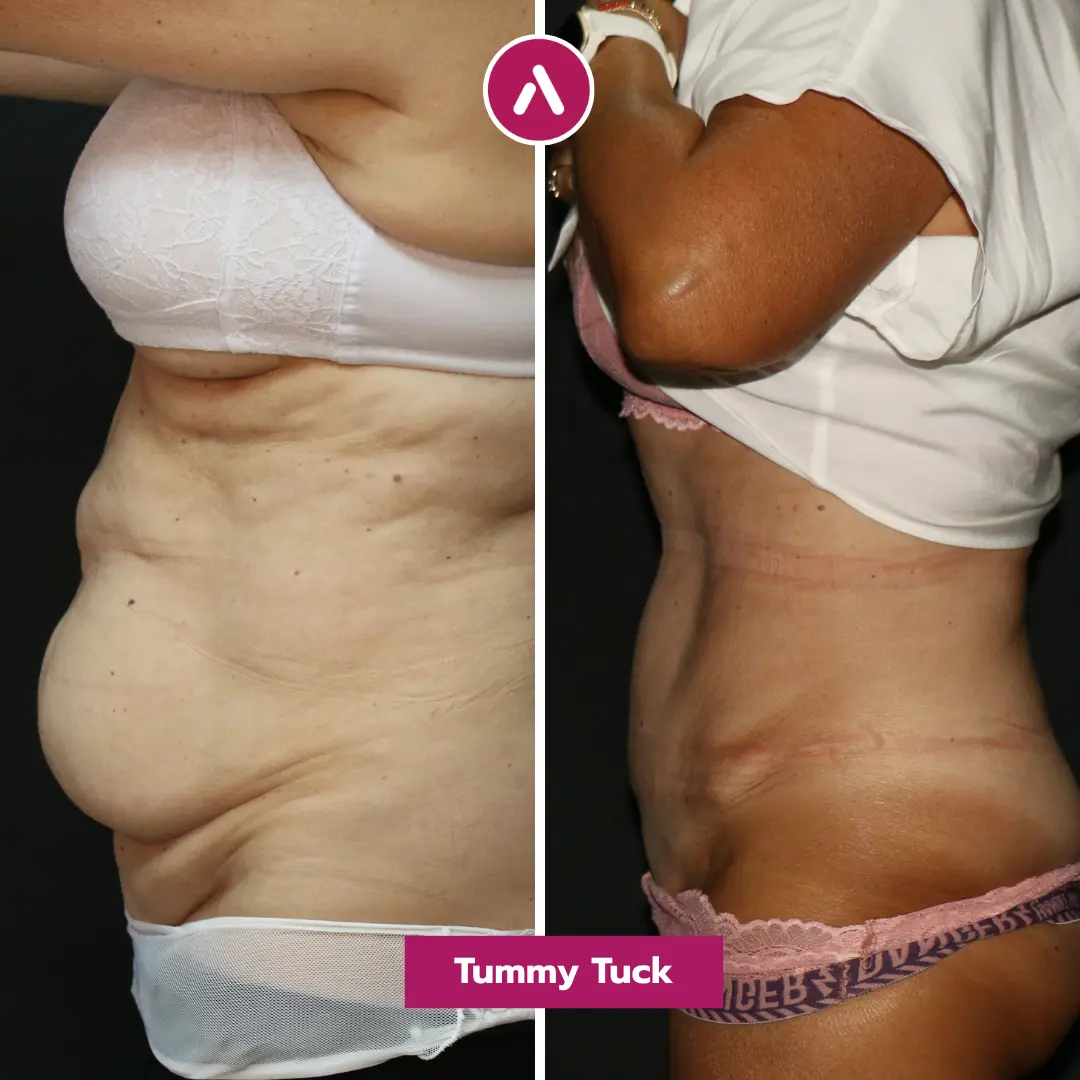
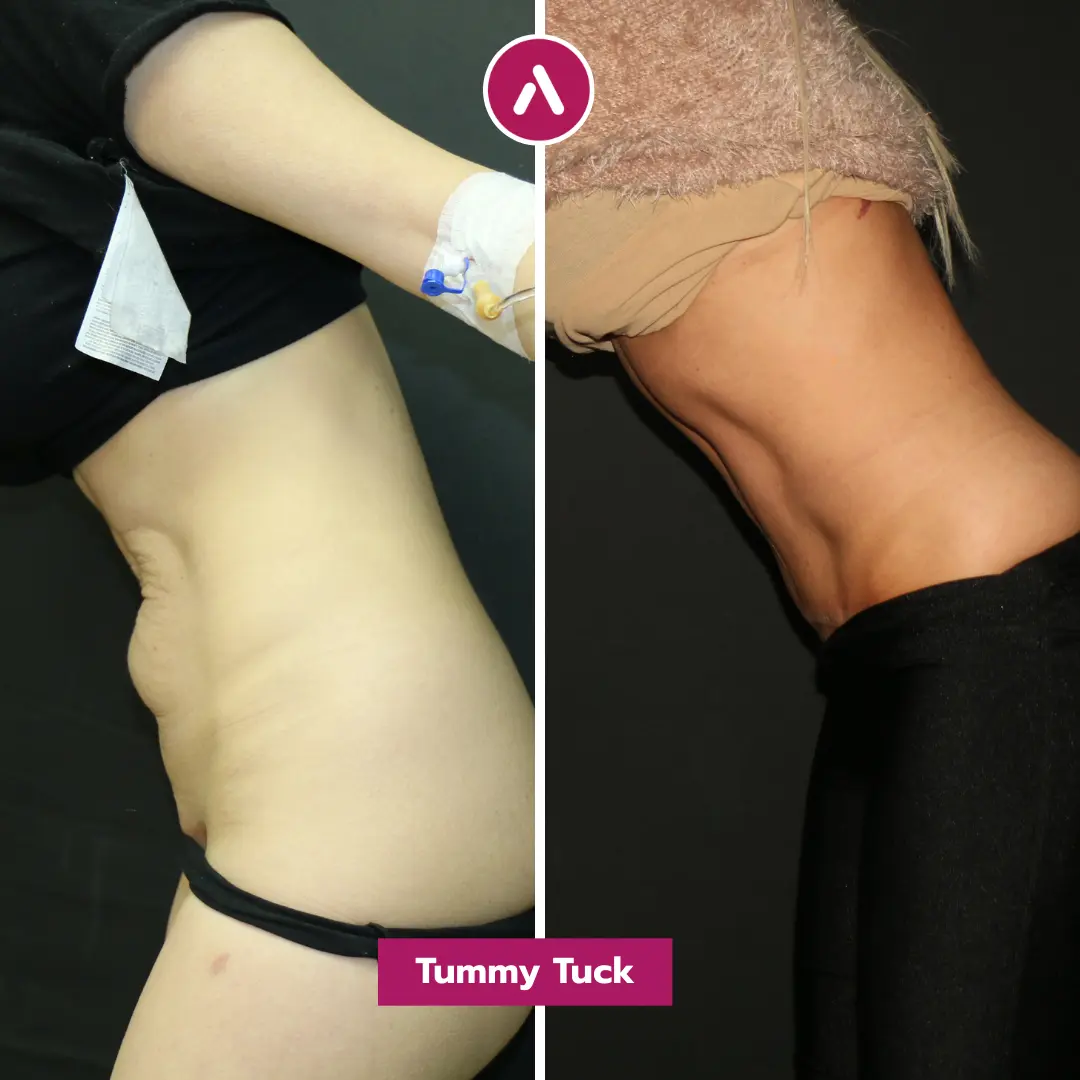
Facelift vs. Tummy Tuck: how the risk profile differs (and what that changes for travel timing)
Both are major surgeries, but they challenge the body differently:
- Flying after a facelift: early concerns are typically swelling, bruising, blood pressure spikes, and the risk of hematoma. Comfort matters too—keeping your head supported, minimizing strain, and avoiding crowded, rushed situations.
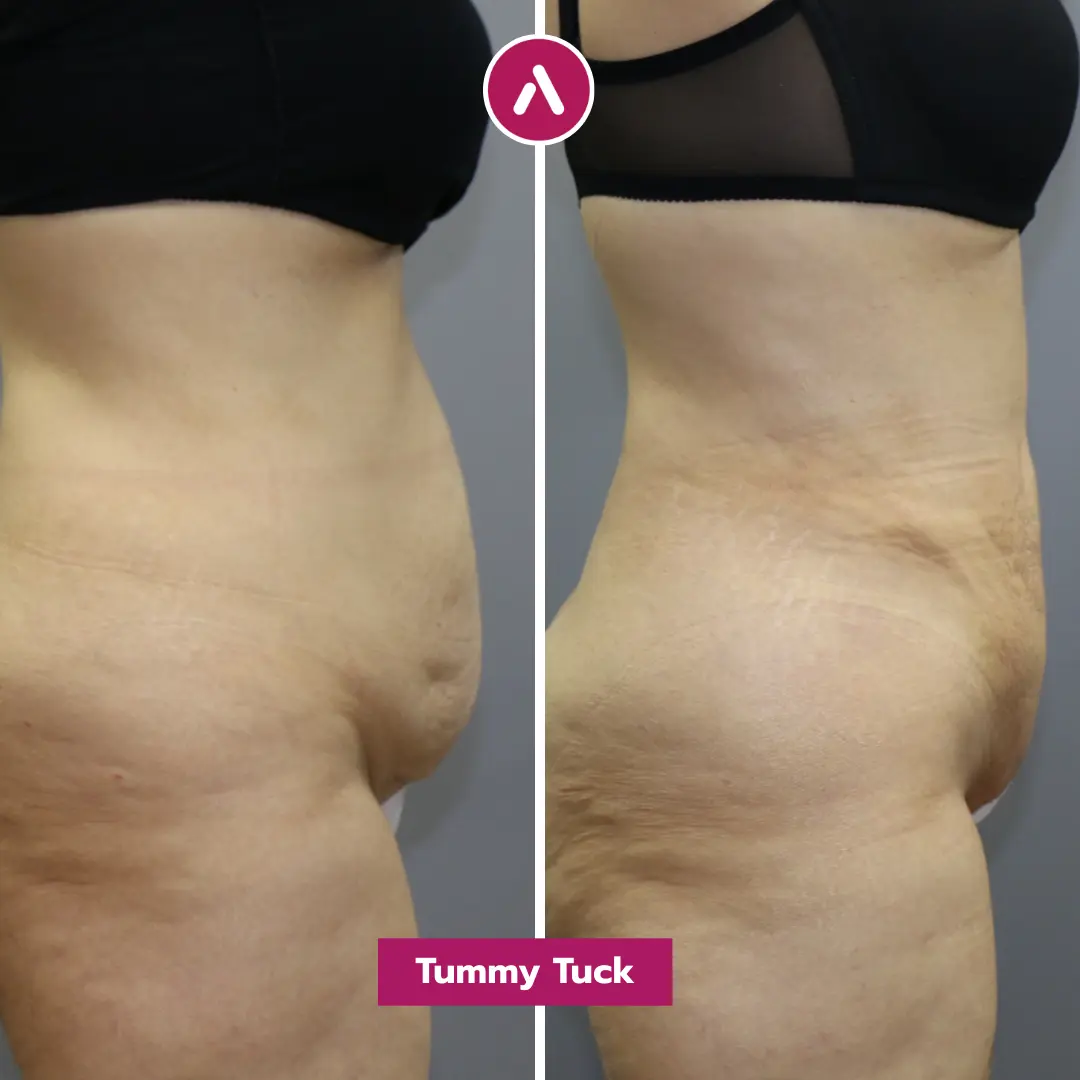
- Flying after tummy tuck surgery: you’re usually dealing with tighter movement, slower walking, and more discomfort with sitting upright for long periods. Because mobility is reduced, clot-prevention planning becomes even more important.
If your facelift is performed under local/tumescent anesthesia with light sedation (often called “awake” or “twilight”), many patients experience fewer classic general-anesthesia side effects like intense nausea, sore throat, or heavy fatigue. That can make the travel day feel easier—without changing the fact that your surgeon still needs to medically clear you for flying. The full sedation protocol, candidacy criteria, and travel-day advantages are explained on our awake deep plane facelift program in Istanbul, including why some patients are cleared for shorter return-flight timelines than general-anesthesia counterparts.
A realistic range: short-haul vs. long-haul timing (and why “7 days” isn’t the same for everyone)
Online answers tend to be extreme (“fly in 48 hours” vs. “never fly for a month”). In real life, surgeons often think in ranges, and the range depends on:
- your procedure details (extent, combined procedures, operative time)
- your healing progress (swelling, bruising, drainage, pain control)
- your clot-risk factors (smoking, hormone therapy, previous clots, BMI, limited mobility)
- your flight profile (short-haul vs. long-haul, layovers, total hours seated)
| Scenario | What many surgeon-led guidelines commonly suggest (general range) | Why it may be longer |
|---|---|---|
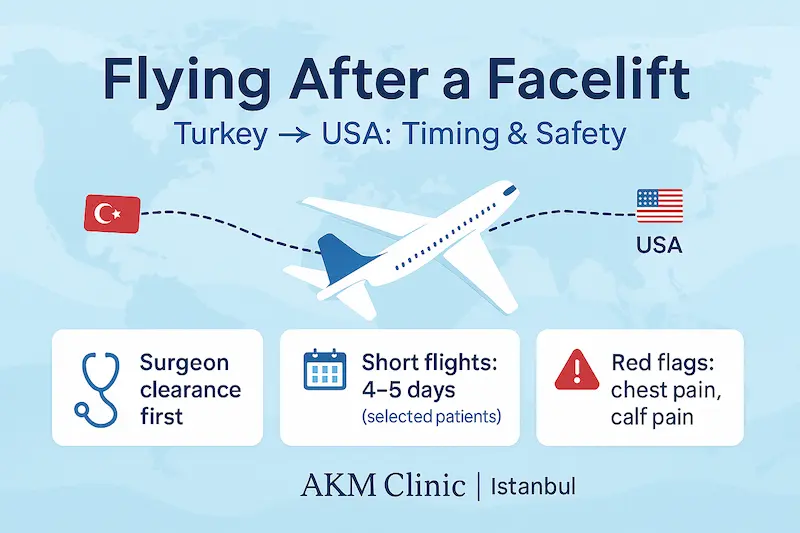
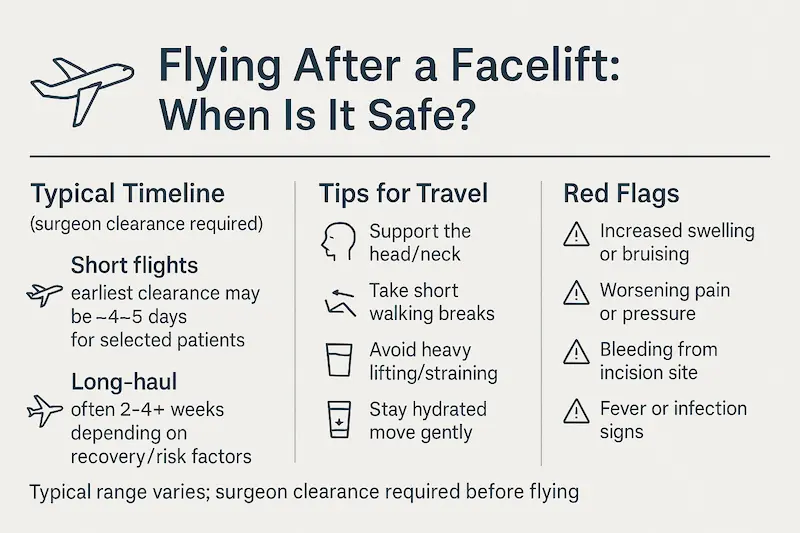
| Facelift (short-haul) | Often around 4–5 days for stable patients with surgeon clearance | High swelling/bruise burden, blood pressure issues, revision/complex cases |
| Tummy tuck (short-haul) | Often around 5–7 days minimum in uncomplicated cases | Reduced mobility, higher discomfort sitting, drains, combined procedures |
| Long-haul flights after plastic surgery | Many hospitals advise avoiding long-haul travel for several weeks, commonly cited as ~4 weeks around major surgery | Higher clot-risk exposure due to prolonged sitting + post-op hypercoagulability |
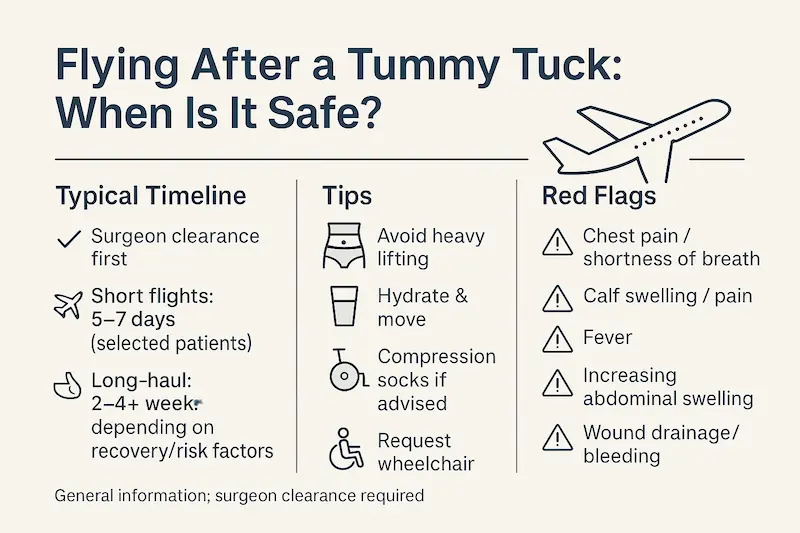
About “flying 7 days after tummy tuck”: some patients do receive clearance for a short flight around that point—if they’re walking well, pain is controlled with mild meds, there are no wound concerns, and a clot-prevention plan is in place. But for long-haul travel, many surgeons and hospitals recommend a more conservative timeline.
Red flags that should delay flying (symptoms you should never ignore)
If any of the following occur, treat it as a medical priority—not a travel inconvenience:
- Shortness of breath, chest pain, fainting, coughing blood
- One-sided calf pain, warmth, redness, or swelling
- Sudden increasing swelling or tightness (for facelift, especially if rapid or painful)
- Active bleeding or expanding bruising
- Fever, worsening redness, foul drainage, or severe chills
- Uncontrolled pain, repeated vomiting, or inability to walk safely
These symptoms can indicate serious complications. If they happen on travel day, the correct decision is usually to delay the flight and be medically evaluated.
Building a safer plan: extra nights, in-person clearance, and remote follow-up schedule
The safest travel plans are designed before you book your return flight. If you’re traveling for surgery, your plan should include:
- Buffer days: don’t schedule your flight on the earliest possible day—give your body room for normal variability.
- In-person clearance: a final check before you leave (incisions, swelling pattern, vitals, mobility).
- Clot-prevention strategy: walking schedule, hydration plan, compression socks, and medication guidance only if your surgeon recommends it.
- Assisted travel logistics: wheelchair service, early boarding, and a no-lifting rule for luggage.
- Aftercare communication: a clear plan for who you contact if symptoms appear after you land.
If you’re traveling alone, this planning becomes even more important — solo medical travelers absorb every airport delay, lost-bag complication, and post-op swelling spike without a companion to help carry the load. Our dedicated guide on traveling solo for surgery in Istanbul walks through AKM’s 24/7 patient host system, hotel safety protocols for unaccompanied patients, and the specific airport-assistance bookings that should be confirmed before you leave the US.
Expert-patient mindset: The best question isn’t only “When can I fly?” It’s “What would make flying safer for my specific procedure, my flight length, and my risk profile?”
Compression, Drains & Swelling Guidelines
Even when your surgeon clears you to fly, the “comfort details” can make or break travel day—especially if you’re thinking about flying after tummy tuck or flying after a facelift. Compression garments, drains, and swelling aren’t just inconveniences. They affect circulation, mobility, hygiene, and how safely you can get through an airport without rushing or straining.
Surgeon-led rule of thumb: Don’t plan your flight around the calendar—plan it around clearance, mobility, and stability. If you can’t walk comfortably, manage your dressings, and avoid lifting/straining, it’s usually too soon for flying after plastic surgery.
Compression garments for tummy tuck: fit, comfort, and airport/security tips
If you’re flying after tummy tuck surgery, a properly fitted compression garment can help you feel more supported during long periods of sitting—but only if it’s comfortable and not creating pressure points.
- Fit matters more than “tightness.” A garment that’s too tight can dig in, roll, or irritate incisions.
- Plan for bathroom breaks. Choose a garment design you can manage calmly in an airport restroom.
- Dress for security screening. Compression garments and surgical dressings can look unusual on scanners—stay calm, allow extra time, and avoid last-minute rushing.
- Bring a “backup plan” in your carry-on. Spare pads/dressings and skin-safe wipes can be a lifesaver if swelling shifts or you need a quick clean-up.
| Moment | What to do | Why it helps |
|---|---|---|
| Before leaving your hotel | Put on compression slowly; check for rolling, pinching, or numbness | Prevents pressure spots and reduces friction on incisions |
| At the airport | Request wheelchair assistance if walking long distances is hard | Reduces fatigue and the temptation to “push through” pain |
| During the flight | Do gentle ankle pumps; stand/walk briefly when safe | Supports circulation during prolonged sitting |
| After landing | Prioritize a smooth transfer; avoid lifting luggage | Protects your core and helps keep swelling controlled |
If you’re flying after tummy tuck surgery, swelling management isn’t just about the in-flight hours — it’s about the days surrounding your flight. The most evidence-based adjunct for early swelling reduction is manual lymphatic drainage (MLD), and our deep-dive on lymphatic drainage massage after liposuction and abdominoplasty explains the timing protocol (which day to start, how often per week), how MLD differs from regular massage, and how to find a certified therapist in your home city for continued sessions after you fly back to the US.
Traveling with drains: practical management, leakage prevention, and when it’s a “no”
Patients often ask if they can travel with drains still in place. In most cases, drains add complexity—because they can snag, leak, increase infection risk, and are hard to manage in transit. If you still have drains, your decision should be made directly with your surgeon, based on output, incision status, and your ability to keep everything clean and secure.
If drains are still present, plan as if you’re carrying a fragile medical device:
- Secure drains under clothing so they cannot pull during walking or sitting.
- Pack extra gauze, tape, and a spare drain belt in your carry-on.
- Get a fit-to-fly letter that clearly states what the device is and confirms you’re stable to travel.
| Travel status | What it usually means in real life | Safer decision |
|---|---|---|
| Green light | No drains; incisions dry; pain controlled with mild meds; walking comfortably | Flying is often reasonable if your surgeon clears you |
| Caution | Drain present but stable; low output; secure dressings; you can manage hygiene calmly | Only fly with explicit surgeon clearance + a conservative travel plan |
| Red flag | High drain output, leakage, fever, increasing redness, wound separation, or severe pain | Delay flying and get assessed in person |
Facelift swelling/bruising on travel day: head elevation, movement, minimizing strain
If you’re wondering how soon can you fly after a facelift, remember that facial recovery is often “socially visible” (swelling/bruising) and physically sensitive (tightness, pressure, fatigue). Travel can intensify swelling simply because you’ll be upright longer and sleeping less.
- Keep your head supported. A supportive neck pillow can help you avoid awkward neck angles.
- Avoid straining and heavy lifting. Lifting luggage is one of the easiest ways to spike blood pressure and worsen swelling.
- Stay calm and slow. Rushing through terminals is the enemy of stable recovery.
- Plan your seat. An aisle seat makes short walking breaks easier.
At AKM Clinic, facial procedures are guided by a dual-focus approach: deep structural expertise plus skin-quality expertise, including dermatosurgery—because natural-looking outcomes depend on both the underlying lift and the way the skin heals.
Some patients also benefit from clinic-based recovery support such as Hyperbaric Oxygen Therapy (HBOT) and Low-Level Laser Therapy (LLLT) — particularly relevant when a tight return-flight window means swelling needs to settle faster than the natural healing curve allows. Our practical breakdown of accelerating facelift recovery with HBOT before fit-to-fly clearance details the session schedule (typically Day 1, Day 3, Day 5–7), how oxygenation supports edema resolution and tissue oxygenation, and how AKM sequences these sessions to support patients on a 7–10 day in-country stay.
In-flight swelling control: hydration, walking schedule, ankle pumps, compression socks
Whether it’s flying after a facelift or flying after tummy tuck, the in-flight basics are similar: move, hydrate, and avoid anything that increases swelling or slows circulation.
- Hydrate steadily. Sip water consistently; avoid dehydration triggers like excess alcohol.
- Move on a schedule. Do ankle pumps and gentle leg movements in your seat, and take short walks when it’s safe to do so.
- Consider compression socks if recommended by your surgeon. They’re commonly used after surgery to support circulation during long sitting.
- Keep the “feet area” clear. Don’t trap your legs under bags where you can’t move them easily.
A travel plan that depends on you pushing through discomfort usually ends with more swelling and an exhausting arrival. Build the day around assistance, movement and hydration instead.
Safe Flight Checklist
If you’re asking how soon can you fly after a facelift or whether flying after tummy tuck is safe, this checklist helps you turn “general advice” into a travel plan you can actually follow. Think of it as a practical recovery logistics tool—especially useful if you’re flying after plastic surgery internationally or on a long-haul route.
Key takeaway: The safest flight is the one you take after your surgeon clears you, with a plan that minimizes strain, maximizes movement, and keeps your essentials within reach.

24–48 hours before: surgeon clearance, vitals, meds plan, documents
- Get explicit clearance to fly (not just “you’re doing fine”).
- Confirm your medication schedule for travel day (pain relief, anti-nausea, antibiotics if prescribed).
- Ask about clot-risk prevention for your specific case (movement plan, compression socks, and any individualized guidance).
- Check incision and dressing status: no new drainage, no spreading redness, no worsening pain.
- Make sure you can walk comfortably (even if slowly) and manage bathroom needs without panic.
- Prepare a fit-to-fly letter + clinic contact info (printed + on your phone).
- Plan your “no lifting” rule: arrange help so you don’t lift or tug heavy luggage.
If you’re traveling solo: pre-book airport assistance and arrange door-to-door transfers. “I’ll figure it out at the airport” is how people end up rushing, straining, and swelling.
Airport + boarding: assistance request, baggage strategy, avoiding heavy lifting
- Request wheelchair assistance (even if you can walk) if long terminal distances are likely.
- Use early boarding to avoid crowd pressure and rushed movements.
- Choose an aisle seat when possible to make walking breaks easy.
- Carry lightweight luggage only. Your core (tummy tuck) and blood pressure/swelling (facelift) both benefit from zero strain.
- Move slowly through security. Compression garments, dressings, or swelling can make screening feel stressful—allow extra time.
| Common travel task | Safer alternative after surgery | Why it matters |
|---|---|---|
| Carrying a heavy backpack | Small crossbody + assistance for anything heavy | Reduces strain and posture stress |
| Lifting a suitcase into overhead bin | Ask crew/family for help; check bag if needed | Avoids abdominal strain and BP spikes |
| Rushing to a tight connection | Book longer layovers or direct flights | Less stress, less swelling, lower risk |
During the flight: movement schedule, hydration, pain/nausea control, hygiene
This is the part most people underestimate. If you’re flying after a facelift, swelling often increases just from being upright and tired. If you’re flying after tummy tuck surgery, sitting stiffly for hours can make you miserable—and immobility is never your friend post-op.
- Hydrate steadily (small sips often). Limit dehydration triggers.
- Move on purpose: ankle pumps and gentle leg movements every 20–30 minutes while seated.
- Stand and walk briefly when safe (e.g., every 60–90 minutes on longer flights).
- Use compression socks if recommended by your surgeon, especially for long-haul travel.
- Keep pain controlled with your approved plan—avoid “waiting until it’s unbearable.”
- Prioritize hygiene: wipes, spare dressings (if needed), and hand sanitizer in your personal item.
- Protect your posture:
- Facelift: neck support, avoid forward head-slump for hours.
- Tummy tuck: small pillow support can reduce pull/tension while seated.
Reality check: If you’re thinking “I’ll just sleep the whole flight,” remember: long, uninterrupted sleep often means zero movement. Set gentle reminders to move and hydrate.
Landing day: transfers, hotel/home setup, sleep position, first check-in plan
- Pre-arrange transfers (no standing in taxi lines, no dragging bags).
- Go straight to a calm recovery setup: water, light food, medications, a comfortable sleeping position.
- Keep the first 24 hours simple: minimal walking, no errands, no “celebration plans.”
- Follow your check-in plan with your surgical team (photo check if requested, symptom review).
The “first 24 hours after landing” sets the tone for the next two weeks of recovery — and most US patients have specific questions about coordinating with their family doctor, what counts as a normal vs. urgent symptom from across the Atlantic, and how to share photo updates efficiently. Our practical follow-up resource on coordinating post-op care after flying home from Istanbul covers the AKM virtual check-in cadence (Day 1, Day 7, Day 14, Day 30), the photo-angle templates for remote review, and how to bridge with a US-based primary care provider.
What to pack in your carry-on (must-have essentials list)
This list is designed specifically for flying after plastic surgery. It reduces discomfort and helps you stay stable if delays happen.
| Category | Pack this | Why it’s essential |
|---|---|---|
| Documents | Fit-to-fly letter, medication list, clinic contacts, passport/insurance info | Smoother check-in and faster help if needed |
| Medications | Prescriptions + backup doses (in original packaging) | Delays happen; you don’t want to miss doses |
| Circulation | Compression socks (if recommended), comfortable walking shoes | Supports movement and circulation |
| Comfort | Neck pillow, small lumbar/pelvic support pillow | Reduces strain and helps posture |
| Hygiene | Skin-safe wipes, hand sanitizer, spare dressings (if needed) | Clean, calm recovery while traveling |
| Swelling support | Approved supportive items (as directed), light layers | Cabins can be cold; swelling is variable |
A note on specific timelines (because people search this directly): If you’re wondering about flying 7 days after tummy tuck or asking how soon can you fly after a facelift, the checklist above is what helps a surgeon make a confident, individualized “yes.” If you can’t meet these checklist basics—especially mobility, stability, and no red-flag symptoms—it’s often safer to delay.
Final planning note: Whether you’re asking can you fly after a facelift or mapping out flying after tummy tuck surgery, the safest approach is to build travel around medical clearance—then layer in logistics that reduce strain (assistance, direct flights when possible, hydration, and movement). The goal is a calm trip home that protects your result and your health.
Fly After a Facelift or Tummy Tuck Frequently Asked Questions (FAQ):
These are the most common “expert patient” questions we hear about flying after plastic surgery. Use them as a planning guide—but always follow the clearance and timing your surgeon gives you based on your procedure details and recovery.
How soon can you fly after a facelift?
Many patients can be cleared for a short flight roughly around 4–5 days after an uncomplicated facelift, but it depends on swelling, bruising, blood pressure stability, and how you’re healing. For long-haul flights, surgeons are often more conservative because you’ll sit for many more hours. If you’re asking how soon can you fly after a facelift, the best answer is: when your surgeon confirms you’re stable, mobile, and past the highest-risk early window.
How soon can you fly after a tummy tuck?
Short flights are often cleared around 5–7 days after an uncomplicated tummy tuck, while international long-haul flights are usually planned for 2–4 weeks or later. The deciding factors are the same each time: can you walk comfortably, is pain controlled with mild medication, are drains out and incisions dry, and how many hours will you spend seated door to door. Flying seven days after a tummy tuck is a “maybe” that needs explicit surgeon clearance plus a clot-prevention plan — not a default.
What’s the biggest risk of flying too early (and how do you reduce it)?
The biggest concerns are:
Blood clot risk from prolonged sitting and reduced post-op mobility
Swelling and inflammation from being upright, stressed, and dehydrated
Bleeding/hematoma risk (more relevant early after facial surgery, especially if you strain or spike blood pressure)
You reduce risk by waiting for surgeon clearance, staying hydrated, moving on a schedule, using airport assistance to avoid overexertion, and avoiding heavy lifting (especially luggage). The institutional safety standards behind your surgeon's clearance also matter: for context on what "hospital-grade" really means in international medical travel, our explainer on JCI accreditation and what it verifies in Turkish hospitals details the surgical, anesthesia, and post-op monitoring standards that earn (and keep) international accreditation.
Do I need compression socks on the plane after surgery?
Many surgeons recommend compression socks for longer flights, particularly after body surgery like a tummy tuck, because they can support circulation during extended sitting. That said, not everyone needs them, and the best choice depends on your clot-risk profile. Ask your surgeon what they recommend for your specific case—especially if you’re flying after tummy tuck or taking a long-haul flight.
Can I fly with drains still in place?
Sometimes it’s possible, but it’s often not ideal. Drains can snag, leak, and increase hygiene challenges in transit. If you still have drains, you should only fly with explicit surgeon clearance and a plan for secure placement, spare dressings, and infection-prevention. If drain output is high, leakage is occurring, or there are signs of infection, it’s usually safer to delay travel.
How long after a mommy makeover can you fly?
A mommy makeover combines abdominoplasty with breast surgery and often liposuction, so operative time is longer and mobility is more limited than after a tummy tuck alone. Clearance for a short flight usually comes later than the 5–7 day abdominoplasty window, and long-haul travel is planned more conservatively. Our mommy makeover programme in Turkey sets out the combined recovery milestones your surgeon reviews before signing off on a flight.
How long after liposuction or Vaser lipo can I fly?
Isolated liposuction is generally the easiest of these procedures to travel after, because there is no muscle repair and mobility returns quickly — but compression, swelling and fluid shifts still matter on a long flight. Treatment area and volume change the picture, which is covered in our liposuction and body sculpting guide.
What if I’m traveling solo—what support should I arrange?
If you’re traveling alone after surgery, plan for “zero strain” logistics:
Wheelchair assistance from check-in to the gate
Early boarding and an aisle seat
Door-to-door transfers (no taxi lines, no dragging bags)
A lightweight luggage plan (ideally, someone else handles lifting)
A clear medication schedule and a carry-on recovery kit
Solo travel is doable for some patients—but it should be planned, not improvised.
When should I contact my surgeon after flying (warning signs checklist)?
Contact your surgeon (or seek urgent medical care) if you develop:
Shortness of breath, chest pain, fainting, or coughing blood
One-sided calf pain, warmth, redness, or swelling
Sudden worsening swelling, tightness, or severe pain (especially after a facelift)
Fever, spreading redness, foul drainage, or wound opening
Uncontrolled vomiting, severe dizziness, or inability to walk safely
These symptoms are not “normal travel fatigue.” They can signal complications that require immediate assessment.
Can I take a connecting flight after a facelift or tummy tuck, or should I choose direct?
If possible, choose a direct flight to reduce walking, stress, and lifting during transfers. If a connection is unavoidable, book a longer layover so you can move slowly, hydrate, and avoid rushing—especially important when planning to fly after facelift or flying after tummy tuck.
Does traveling alone change when I can fly after surgery?
It can. Solo travelers often need more buffer days because airport walking, luggage handling, and unexpected delays add strain. If you’re traveling alone, arrange wheelchair assistance and door-to-door transfers to support Flight Safety After Surgery and reduce swelling triggers.
What should I do if swelling increases during the flight?
Mild swelling is common, but you should focus on hydration, gentle in-seat leg movements, and brief walks when safe. Keep your head supported after facelift and avoid tight clothing that restricts circulation. If swelling is sudden, painful, or paired with bleeding, contact your surgeon and seek medical evaluation.
Is it safe to lift luggage into the overhead bin after a tummy tuck or facelift?
It’s best to avoid it. Lifting can strain the abdominal repair after a tummy tuck and may raise blood pressure after a facelift, increasing swelling risk. Ask cabin crew for help, check your bag, or use a lightweight carry-on to keep
Medical Disclaimer: This page is provided for general educational purposes only and does not replace a face-to-face medical consultation, diagnosis, or personalized treatment plan. All surgery carries risks and outcomes vary between individuals. Suitability for a plastic surgery, procedure selection, and anesthesia choice can only be determined after a full clinical assessment by a qualified surgeon. Always follow your clinician’s instructions and seek urgent medical attention if you develop concerning symptoms during recovery.