



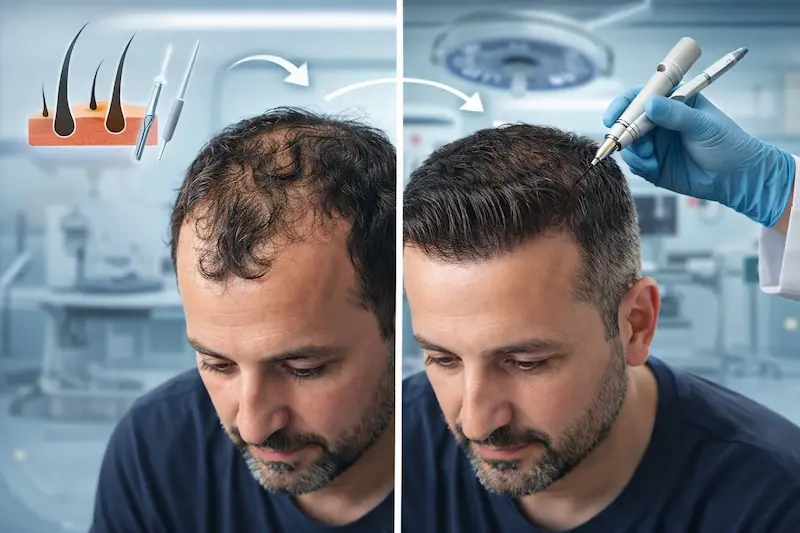
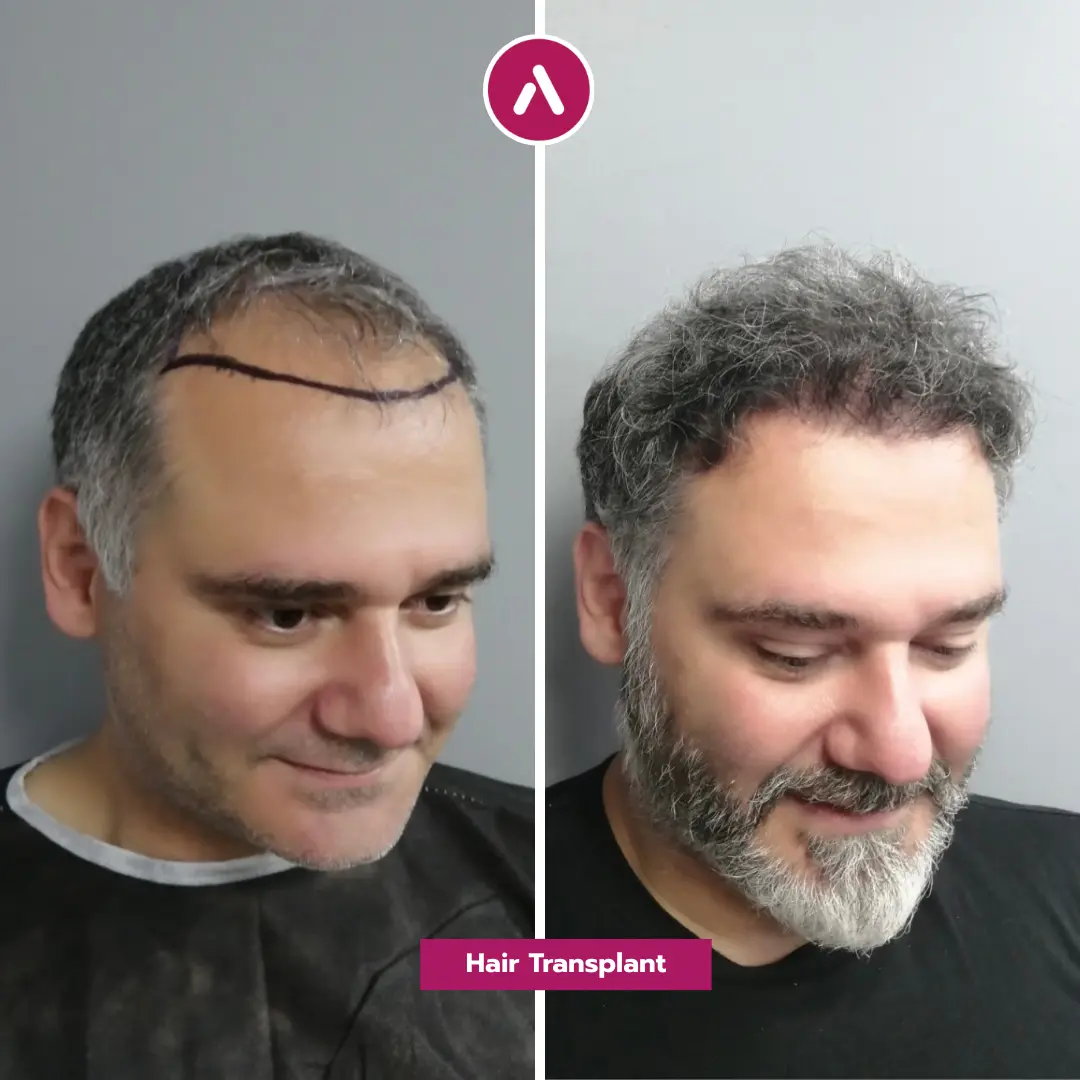
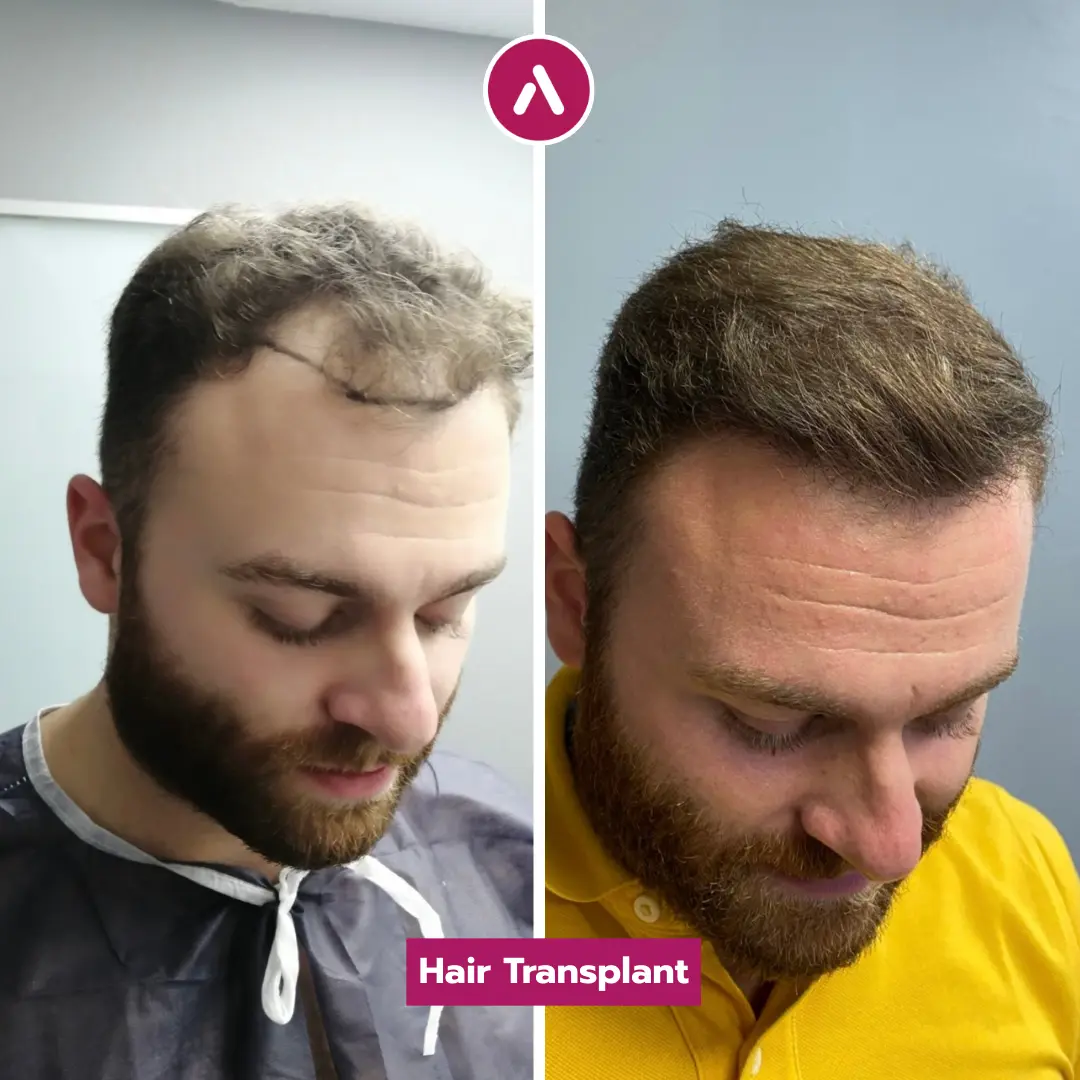
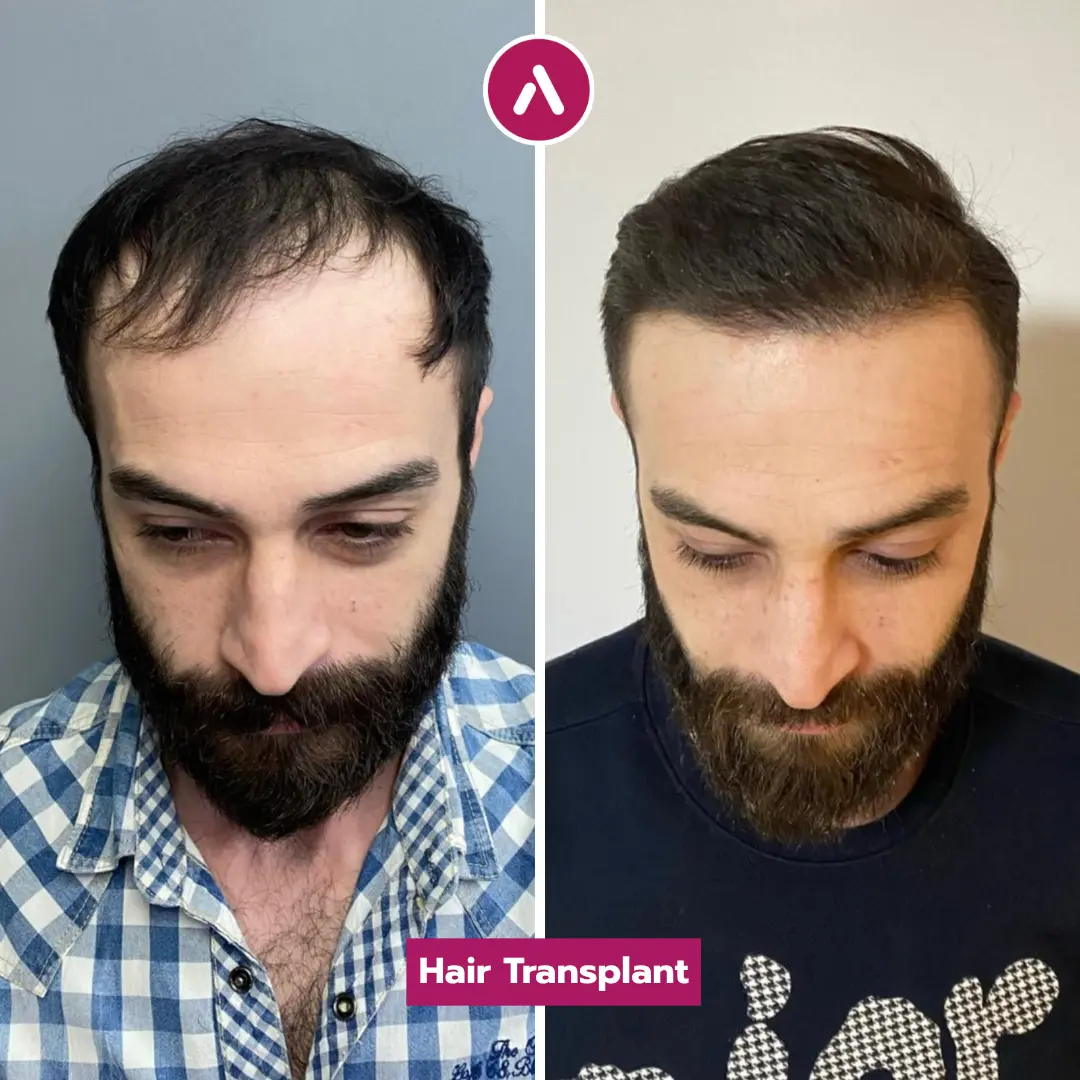
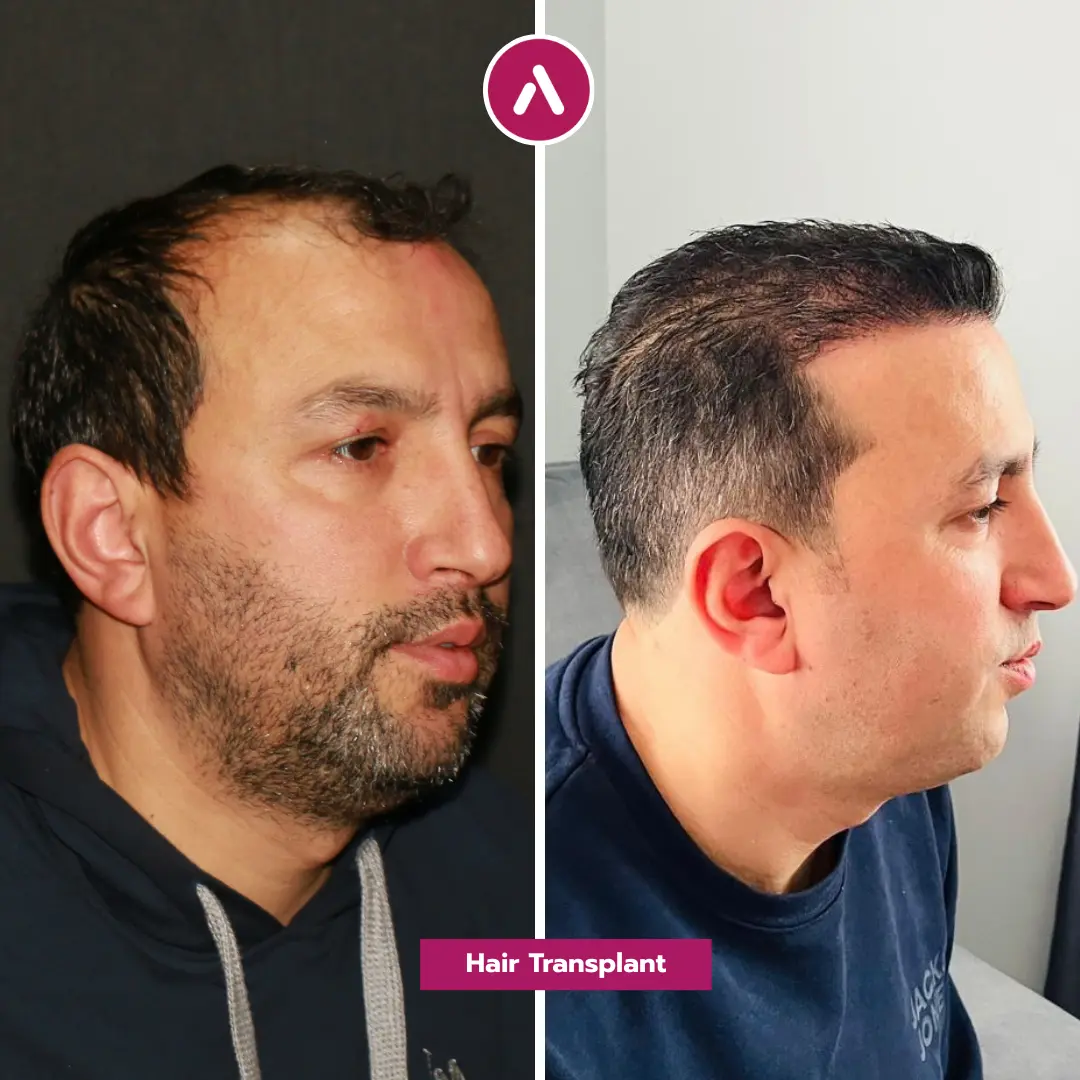
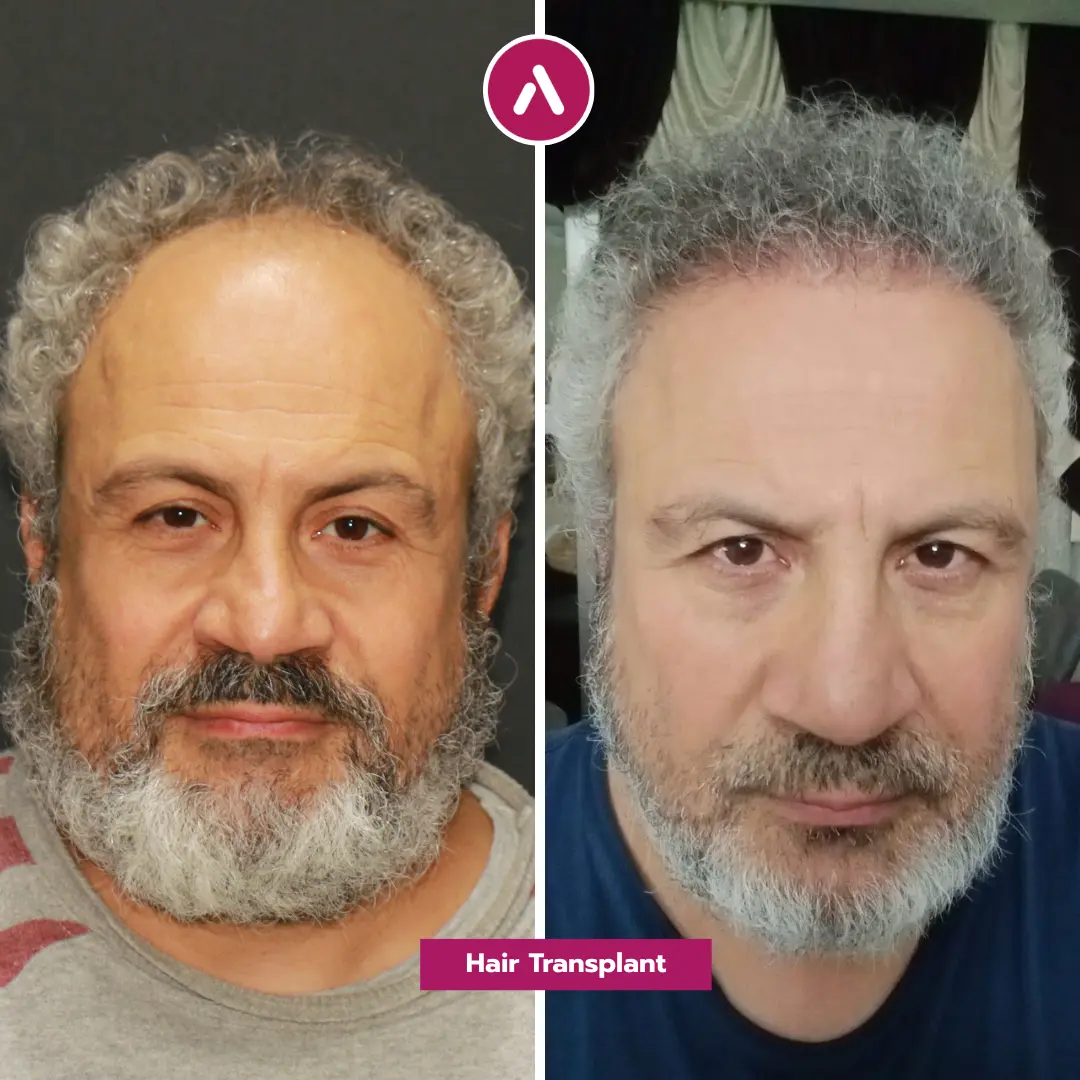
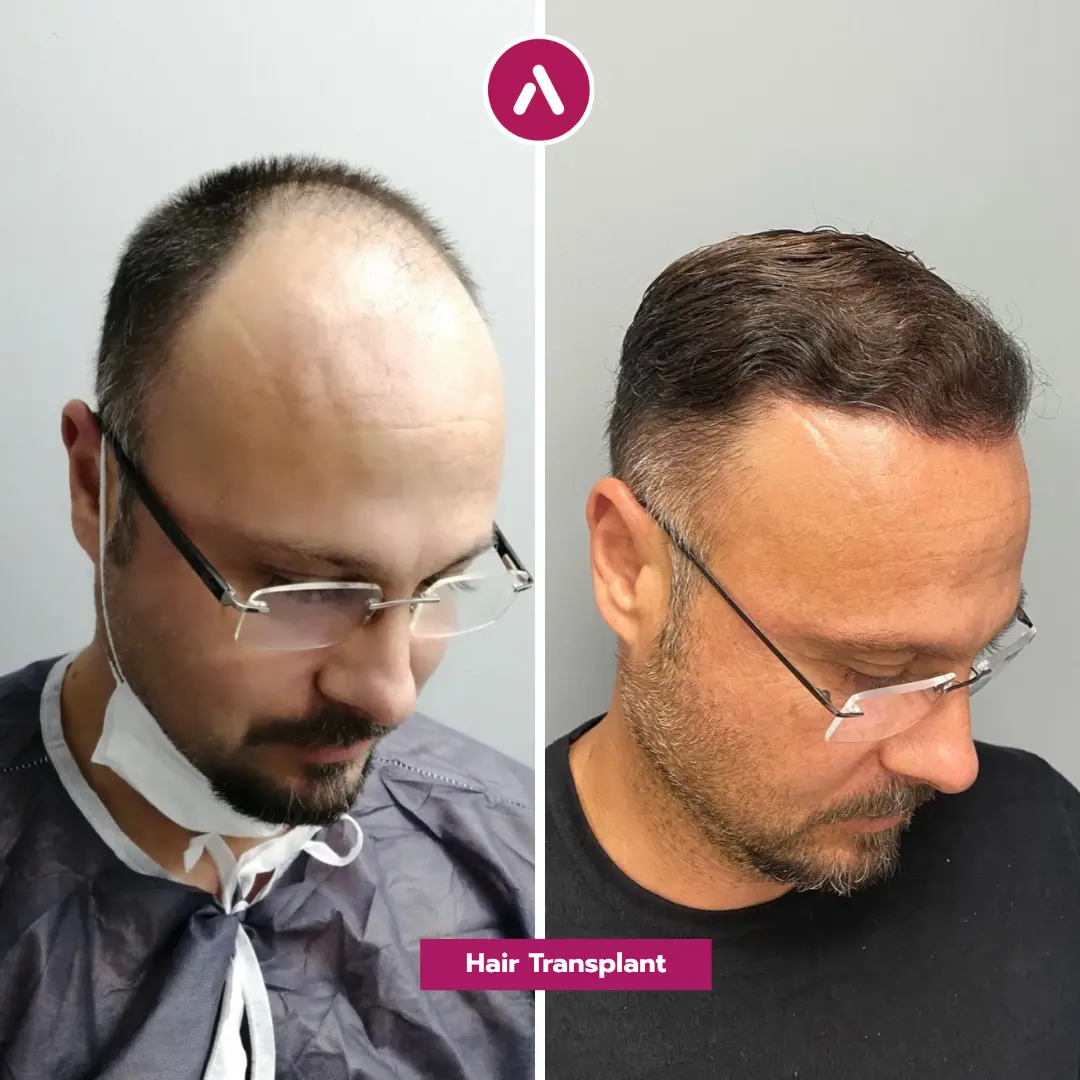
A DHI hair transplant (Direct Hair Implantation) is a modern follicular unit transplant approach designed to restore hair in a way that prioritizes natural direction, realistic density, and long-term planning. For the “Expert Patient,” the key question isn’t whether hair can be moved from one area to another—it’s how reliably grafts can survive, how naturally they can be placed, and how predictable the recovery and final outcome will be.
This guide explains DHI from a procedure-first medical perspective: what it is, how it works, who it’s for, and how it compares to other techniques—before any discussion of destination, pricing, or provider selection.
Table of Contents
What Is a DHI Hair Transplant?
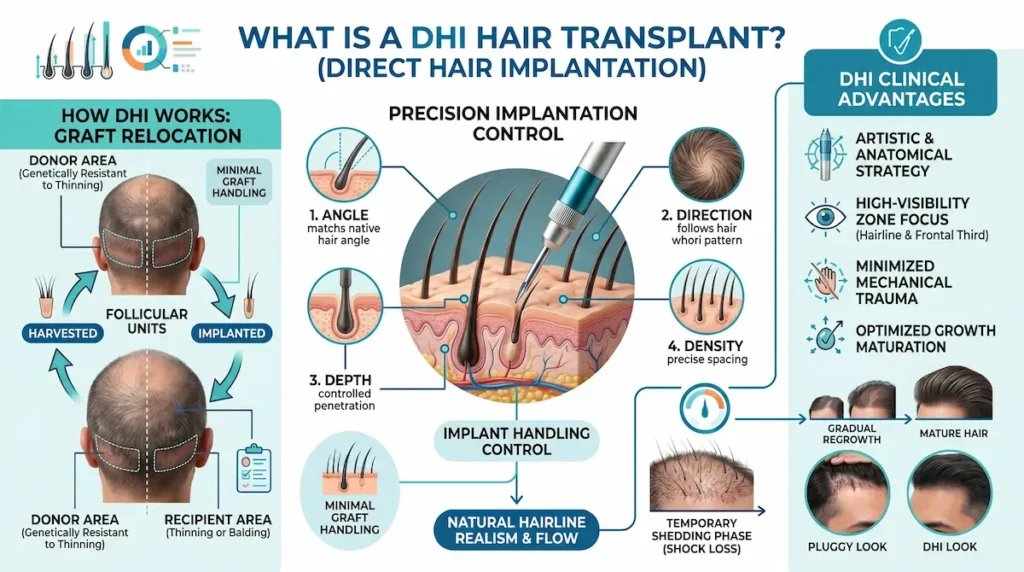
DHI (Direct Hair Implantation) is a hair transplant technique that focuses on precise implantation of follicular units (the naturally occurring 1–4 hair “groupings”) into thinning or balding areas. In practical terms, DHI differs from many classic implantation workflows by emphasizing controlled placement—angle, direction, depth, and spacing—so the result looks natural as the hair grows and matures.
Direct Hair Implantation (DHI) explained
Hair transplantation works by relocating hair follicles that are genetically more resistant to thinning (typically from the back and sides of the scalp) to areas affected by androgenetic alopecia or other forms of hair loss. In DHI, the “implantation” phase is treated as a precision step—not simply placing grafts into openings, but designing the final pattern: how hair exits the scalp, how it transitions across zones, and how density is distributed to avoid an unnatural “pluggy” look.
While marketing often reduces DHI to a single tool or brand name, a clinically accurate view is that DHI is a set of principles and workflow choices: graft protection, efficient handling, and meticulous placement strategy that respects hairline anatomy and the scalp’s vascular supply.
How does a hair transplant work?
A hair transplant is a surgical redistribution procedure. The donor area (commonly the occipital scalp) is selected because follicles there often retain growth characteristics even when the front and crown thin. Follicular units are harvested, protected, and then re-implanted into recipient areas. Over time, the transplanted follicles establish blood supply in the new location and begin cycling through normal growth phases.
Most patients experience a temporary shedding phase after transplantation (often called “shock loss” or early shedding), followed by gradual regrowth and maturation. This is expected physiology: the follicle survives, but the visible hair shaft may shed before new growth emerges.
Why DHI is considered a “precision implantation” technique
For high-intent patients comparing methods, the implantation phase is where outcomes can diverge—especially in the hairline and frontal third, where minor errors in angle or direction are immediately visible. DHI is often chosen when the clinical goal is to maximize naturalness in high-visibility zones and maintain tight control over the artistic and anatomical details of placement.
In a well-planned DHI case, the strategy typically considers:
- Hairline realism: irregularity, micro/macro transitions, and age-appropriate positioning.
- Angle and direction: matching native hair whirl patterns and the natural “flow.”
- Density distribution: prioritizing the frontal frame of the face while protecting donor reserves for future needs.
- Graft integrity: minimizing mechanical trauma and dehydration during handling.
Hair Loss Basics and Candidacy
The best technique on paper can still underdeliver if the candidate selection is wrong or expectations are unrealistic. “Am I a good candidate?” is not only about how much hair you’ve lost—it’s about donor capacity, scalp characteristics, medical history, and the long-term plan (because hair loss is often progressive).
Male pattern vs female pattern hair loss
Androgenetic alopecia is the most common reason people pursue hair transplantation, but its pattern differs by sex and by individual. Many men notice recession at the temples and thinning at the crown, while many women experience diffuse thinning across the top while maintaining a frontal hairline. These differences matter because they influence graft allocation, the density target, and whether medical therapy should be optimized before surgery.
In both men and women, careful planning should consider the probability of ongoing loss in non-transplanted hair. A transplant is not a “one-and-done” cure for future thinning—it’s a redistribution. This is why conservative, long-range design often produces the most natural and durable result.
Ideal candidate criteria
Strong candidacy usually includes a healthy donor zone with adequate follicular unit density and favorable hair characteristics (e.g., thicker hair caliber often creates better visual coverage). Scalp health matters too: uncontrolled dermatitis, active infection, or significant scarring conditions can complicate healing and reduce yield.
Clinically, a strong candidate typically has:
- Stable or understood hair loss pattern (with a long-term plan, not just a short-term fix).
- Adequate donor capacity relative to the size of the recipient area and desired density.
- Realistic expectations about density, timeline, and the possibility of future procedures.
- Healthy scalp and good healing potential (including non-smoking or willingness to stop around surgery).
Who should delay or avoid surgery
Some patients should pause and optimize first. Examples include those with untreated scalp inflammation, certain uncontrolled medical conditions, or unrealistic expectations (for instance, expecting teenage-level density across a large bald area with limited donor supply). Patients with very early hair loss may benefit from medical stabilization before committing donor resources.
Hair transplantation is elective, so the standard should be high: you want the right timing, the right plan, and a decision grounded in long-term outcome—not urgency or fear.
Hair Transplant Techniques: DHI vs FUE vs FUT (And Where Sapphire Fits In)
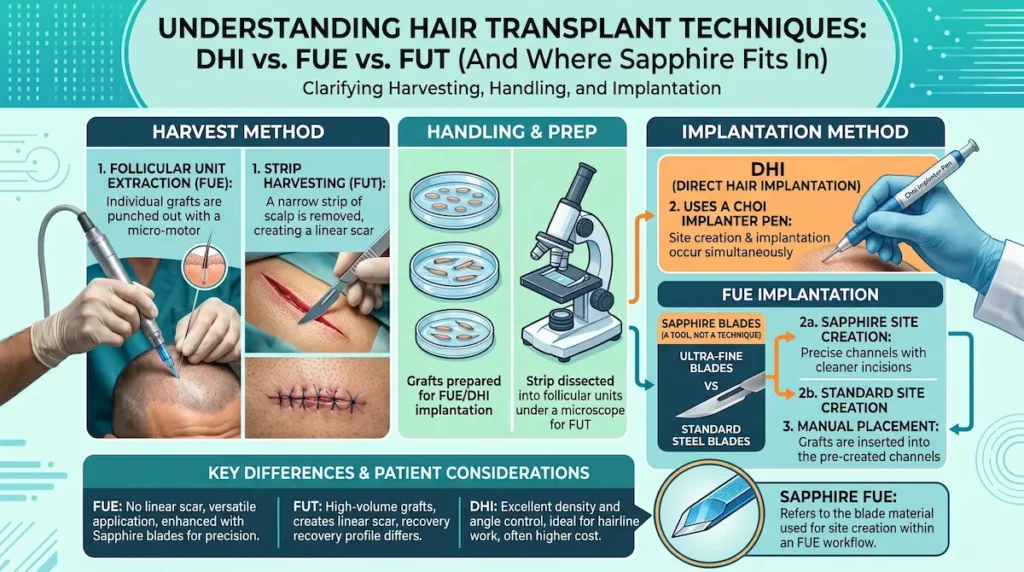
Technique comparisons can get confusing because terms are often mixed: “FUE” usually refers to how grafts are harvested, while “DHI” often describes how grafts are implanted. FUT refers to strip harvesting. Sapphire commonly refers to the material used for blades in certain recipient-site creation steps. A clean comparison separates the procedure into phases—harvest, handling, and implantation—then evaluates how each method approaches those phases.
DHI vs FUE hair transplant: what’s actually being compared?
Many “DHI vs FUE” searches are really asking: what implantation workflow will produce the most natural hairline, the best density in key zones, and the smoothest recovery. In practice, both approaches can use follicular unit extraction for harvesting. The meaningful differences often appear in implantation strategy, precision, and how the team manages graft protection and placement control.
DHI vs FUT (strip method): when does FUT still appear in discussions?
FUT (strip harvesting) removes a linear strip from the donor area and then dissects follicular units. It can be considered in select scenarios, but it creates a linear scar and involves a different recovery profile. Expert patients often evaluate FUT primarily in terms of scar preference, donor management strategy, and their hairstyle plans.
Sapphire hair transplant vs classic FUE: where it fits
“Sapphire” is commonly used to describe recipient-site creation using sapphire blades rather than standard steel. It’s not a separate transplant biology—it’s a tool choice within a broader workflow. For patients, the relevant questions are practical: what does the surgeon use it for, how does it affect incision control, and how does it integrate with the overall plan for hairline naturalness and density distribution?
Not Sure if This Technique is Right for You?
Every hair loss pattern is unique. Compare this method side-by-side with other options in our DHI vs. FUE Comparison Guide to see which technique will give you the best density, recovery, and natural results.
Planning the Hairline and Graft Numbers
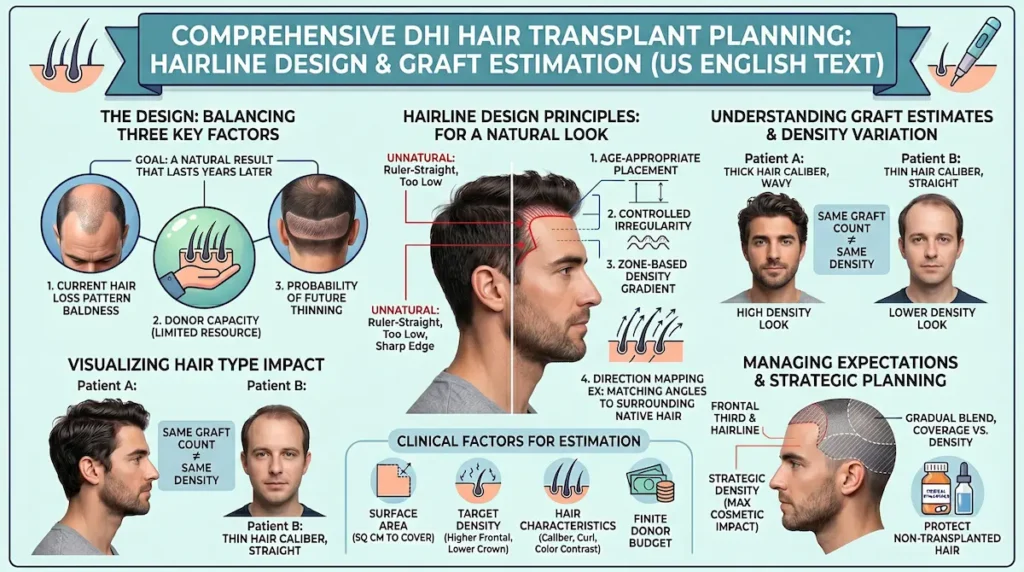
In DHI hair transplant planning, the most important “invisible” step happens before any graft is moved: the design. A high-quality plan balances three things at once—your current hair loss pattern, your donor capacity, and the probability of future thinning. The goal is not simply “more hair,” but a result that still looks natural years later as hair loss continues around transplanted areas.
Hairline design principles: naturalness, age, and facial framing
The hairline is not a straight line. A natural-looking hairline usually has controlled irregularity and a gradual transition in density from the front edge backward. Overly sharp, overly low, or perfectly straight hairlines can look artificial—even if the grafts survive well.
Key planning principles include:
- Age-appropriate placement: A hairline that fits your current age and will still look believable later.
- Micro-irregularity: Subtle, natural variation instead of a ruler-straight edge.
- Zone-based density: A softer, finer “leading edge,” with density increasing behind it for a natural gradient.
- Direction mapping: Hair should exit the scalp with a direction and angle that matches surrounding native hair and typical growth patterns.
For many Expert Patients, the best outcome is not the “lowest” hairline—it’s the hairline that looks like it was never operated on.
How graft counts are estimated (and why the same number can look different)
Graft numbers are not a universal promise of density. Two patients can receive the same graft count and look very different depending on hair caliber, curl, color contrast between hair and scalp, and the size of the recipient area. A credible plan explains the “why” behind a graft range rather than presenting a single number as a guarantee.
Clinically, graft estimation usually considers:
- Surface area: How many square centimeters need coverage.
- Target density: Higher in the frontal frame, often lower in the crown where whorl patterns and surface area can demand many grafts.
- Hair characteristics: Thicker shafts and mild wave can create stronger visual density per graft.
- Donor budget: The finite “bank” of grafts available across a lifetime.
A responsible plan treats donor hair as a limited resource, prioritizing a natural look and long-term sustainability over short-term maximalism.
Expectations management: coverage vs density (and long-term planning)
“Full density everywhere” is rarely realistic if the balding area is large and donor supply is limited. In many cases, the smartest plan is strategic: place stronger density where it creates the biggest cosmetic impact (often the frontal third and hairline), then design a gradual blend into mid-scalp or crown areas.
This is also where medical stabilization can matter. If you are still actively losing native hair, an ethical plan will discuss how to protect non-transplanted hair over time and how a second-stage procedure could be considered in the future if progression continues.
Anesthesia, Comfort, and “Awake” Concepts
Most modern hair transplants are performed with local anesthesia, and many patients are surprised by how manageable the experience is when comfort is planned properly. For the Expert Patient, the question is less “Will I feel anything?” and more “How is comfort maintained for hours, and how is safety protected throughout the day?”
Local anesthesia in hair transplantation: what it does (and what it doesn’t)
Local anesthesia numbs the donor and recipient areas so the surgical steps can be performed with minimal pain. You may feel brief pressure or sensation during injections, then numbness during the procedure. Numbness gradually wears off after the procedure, and this is when post-op soreness or tightness may become more noticeable.
Good anesthesia technique is not just about being numb—it’s about controlling comfort across phases and avoiding “hot spots” where sensation can return during a long session.
Comfort options: what patients typically experience during a long session
Hair transplantation can take many hours depending on graft count and complexity. Comfort planning usually includes positioning, scheduled breaks, hydration, and a calm clinical environment. Some patients prefer additional relaxation support (depending on medical suitability), while others prefer to stay fully alert with local anesthesia alone.
From a safety-first perspective, comfort support should always be individualized and monitored—especially for patients with anxiety, sensitivity to medications, or a history of fainting with needles.
Safety mindset: minimizing systemic exposure while keeping the patient relaxed
Many Expert Patients are specifically concerned about systemic anesthesia exposure. In hair transplantation, the standard approach typically favors local anesthesia because it offers strong pain control while avoiding deeper levels of anesthesia for most cases. The best clinics treat comfort as a protocol: monitoring, consistency, and a plan for managing discomfort without over-escalating medications.
If you are anxious about the procedure day, you should expect a clear explanation of how comfort is maintained, what you should and should not take before surgery, and how the team responds if you feel lightheaded, nauseous, or overwhelmed.
Step-by-Step: The DHI Hair Transplant Procedure
Understanding the procedure step-by-step is one of the fastest ways to filter marketing claims from clinical reality. DHI outcomes depend on disciplined workflow: careful donor harvesting, protection of grafts, and meticulous implantation planning that respects direction, angle, and spacing. Below is a practical walkthrough of what happens on procedure day in a high-standard DHI hair transplant.
Donor area preparation and extraction phase
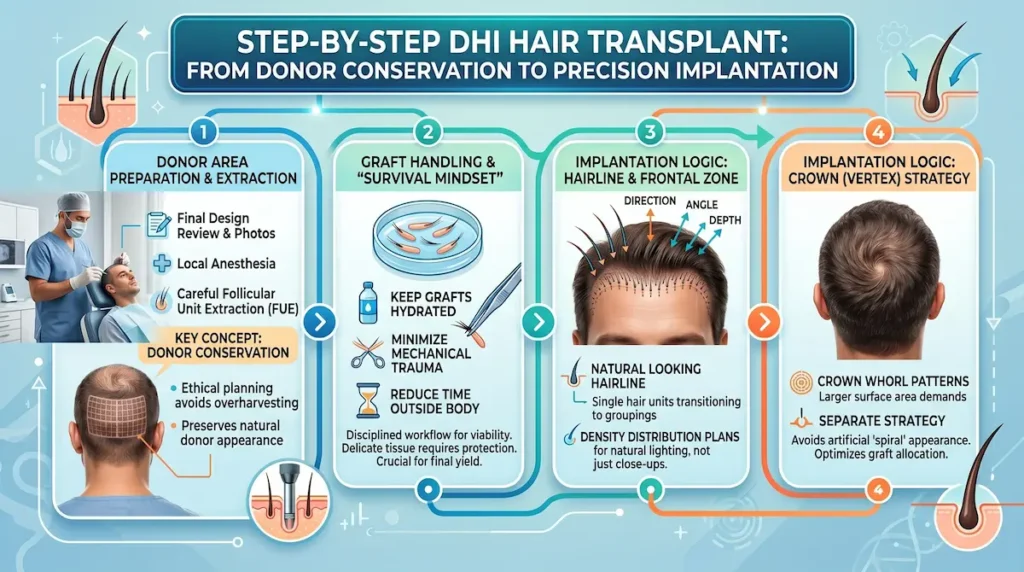
The day typically begins with a final design review (hairline and zones), documentation photos, and donor assessment. The donor area is prepared (often trimmed) to allow accurate harvesting and minimize follicle transection. After local anesthesia, follicular units are extracted from the donor zone in a pattern that avoids overharvesting.
The critical concept here is donor conservation. A safe extraction plan avoids taking too many grafts from a small area, which can create visible thinning in the back or sides—especially if you wear your hair short. Ethical planning spreads extraction across the donor zone while preserving a natural donor appearance.
Graft handling and the “survival mindset”
Once grafts are harvested, they must be protected. Follicular units are delicate living tissue, and survival can be affected by dehydration, excessive mechanical trauma, or prolonged time outside the body. High-standard teams follow a “survival mindset” workflow—keeping grafts hydrated, minimizing unnecessary manipulation, and maintaining a steady pace from harvesting to implantation.
For patients comparing clinics, graft-handling discipline is one of the most important (and most under-discussed) determinants of yield.
Implantation logic: direction, angle, depth, and density distribution
Implantation is where DHI is often chosen for its emphasis on control. In the hairline and frontal third, small differences in angle and direction can change the entire cosmetic effect. A realistic hairline uses finer single-hair units at the very front, transitioning to thicker groupings behind. The team also plans density so it looks natural in normal lighting—not just in close-up photos.
Importantly, the crown (vertex) behaves differently than the hairline: it has whorl patterns, larger surface area demands, and often requires a separate strategy to avoid an unnatural “spiral” appearance. A credible plan will explain what is achievable in each zone and why graft allocation is not the same everywhere.
DHI Hair Transplant Recovery Timeline (Day-by-Day, Week-by-Week)
Hair transplant recovery is highly predictable when aftercare is followed consistently. Most patients can return to non-physical work relatively quickly, but the cosmetic “recovery” (redness, scabbing, and the shedding phase) follows a normal biological schedule. The best outcomes come from protecting grafts early, avoiding inflammation triggers, and understanding what is normal so you don’t overreact to expected changes.
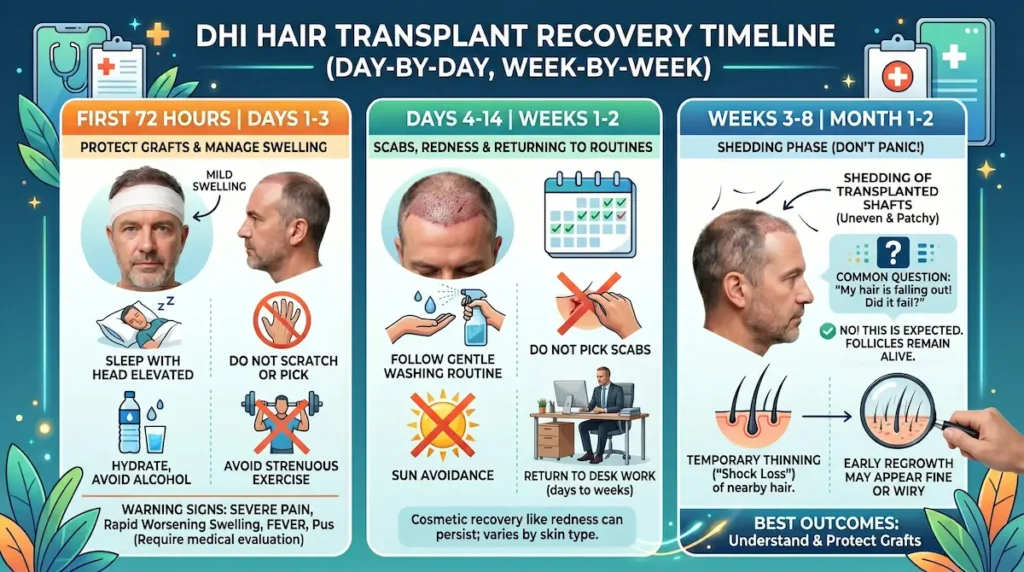
First 72 hours: protecting grafts and managing swelling
The first three days are about graft security. The follicles are newly placed and rely on careful handling to avoid accidental displacement. During this window, you should expect a tight or tender sensation in the donor area and mild swelling that can move toward the forehead. Swelling is generally temporary and varies by individual physiology and graft count.
- Sleeping position: Many clinics recommend sleeping with the head elevated to reduce swelling and avoid rubbing the recipient area.
- Touch discipline: Do not scratch, pick, or rub the recipient area. Itching can occur as healing begins, but mechanical trauma is a risk.
- Hydration and lifestyle: Adequate hydration and avoiding alcohol or smoking around surgery can support healing quality.
- Activity: Avoid strenuous exercise, heavy lifting, and anything that increases sweating or blood pressure spikes in the first days.
If you experience severe pain, rapidly worsening swelling, fever, or drainage that looks like pus, those are not “normal recovery”—they require prompt medical evaluation.
Days 4–14: scabs, redness, and returning to normal routines
Between days 4 and 14, the most visible part of recovery often happens: scabbing and redness in the recipient area. Scabs are a natural part of wound healing. Redness can persist longer in some skin types, and the timeline varies by individual and by the degree of manipulation in the recipient zone.
Key priorities during this stage include:
- Washing routine: Follow the clinic’s instructions precisely. Most protocols gradually transition from gentle rinsing to more thorough washing as the grafts become secure.
- Do not pick scabs: Picking can remove fragile grafts or irritate healing skin.
- Sun avoidance: The scalp can be sensitive; sun exposure can worsen redness and irritation.
- Work and social timeline: Many patients return to desk work within days, but may prefer 7–14 days for cosmetic reasons depending on scabbing and redness.
The donor area typically looks “normal” sooner than the recipient area, though mild tenderness or tightness can persist as tissue settles.
Weeks 3–8: shedding phase and “is this normal?” questions
One of the most common concerns is: “My transplanted hair is falling out—did it fail?” In many cases, this is the expected shedding phase. The transplanted follicles experience stress from relocation; the visible hair shafts can shed while the follicle remains alive beneath the skin.
During weeks 3–8, you may notice:
- Shedding of transplanted shafts: often uneven and patchy.
- Temporary thinning (“shock loss”): sometimes involving nearby native hair.
- Texture changes: early regrowth can appear fine or wiry before it matures.
This phase is psychologically challenging because it looks like you are “going backward.” Clinically, it is often part of the normal progression toward new growth.
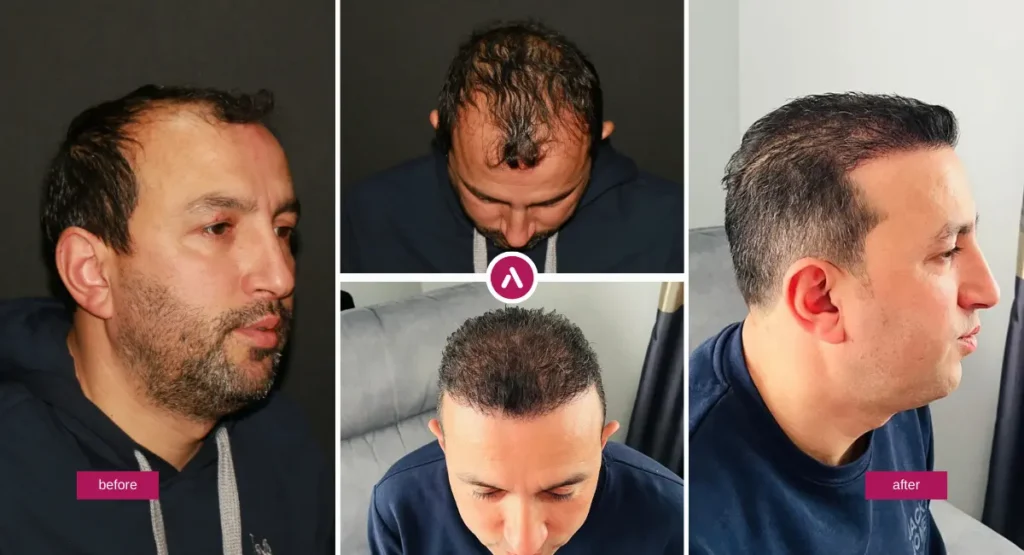
DHI Hair Transplant Before and After: Results Month by Month (What to Expect)
Expert Patients often want a realistic timeline: when does growth begin, when can I evaluate density, and when is the final result visible? While individual biology varies, the month-by-month pattern tends to be consistent: early healing, shedding, gradual regrowth, and then maturation. The best results look increasingly natural over time—not immediately after scabs fall off.
Shedding and “shock loss” explained
After transplantation, follicles can enter a resting phase (telogen) before cycling back into active growth (anagen). The hair shaft may shed, but the follicle can remain viable. This is why early shedding is not a reliable indicator of final outcome.
Shock loss can also occur in surrounding native hairs—particularly if those hairs were already miniaturized and vulnerable. This is typically temporary, but it underscores why long-term planning and proper candidate assessment are essential.
Months 3–6: early growth and texture changes
Early visible growth often begins around the 3–4 month mark for many patients, with gradual thickening through months 5 and 6. New hairs may initially appear fine, lighter in color, or slightly irregular in direction as they emerge. Over time, they typically settle into a more natural pattern with improved texture.
At this stage, it’s normal to see uneven growth. Some zones may “wake up” earlier than others. A realistic expectation is progressive improvement rather than a sudden transformation.
Months 9–12: maturation, density, and final evaluation
By months 9–12, many patients see substantial maturation: hairs thicken, length increases, and the overall look becomes more cohesive. The hairline should look softer and more natural as the leading edge integrates with surrounding hair. This is the window where you can evaluate whether density goals were met and whether any refinement is worth discussing.
For some patients—especially those with larger sessions or slower growth cycles—maturation can continue beyond 12 months. This is why reputable providers schedule follow-ups and advise patience before final judgments.
DHI Hair Transplant Risks, Side Effects, and “Hair Transplant Gone Wrong”
Every surgical procedure has risks, and hair transplantation is no exception. The difference between a safe, satisfying result and a disappointing one often comes down to planning, hygiene standards, graft handling discipline, and aftercare consistency. Transparency matters: understanding what can go wrong helps you choose a safer provider and reduces preventable complications.
Common side effects: what’s typical vs what’s not
Many post-op effects are temporary and part of normal healing. These can include swelling, mild pain or tightness, redness, itching, temporary numbness, and small pimples (folliculitis) as new hairs begin to grow. Most resolve with time and appropriate care.
However, certain symptoms should trigger immediate medical contact:
- Fever or systemic illness symptoms.
- Worsening pain that does not respond to expected measures.
- Spreading redness, warmth, or foul-smelling drainage.
- Sudden, severe swelling or allergic-type reactions.
Complications and failure modes: why outcomes vary
When patients search “hair transplant failure,” they are often describing one of a few distinct issues: low graft survival (poor yield), unnatural hairline design, visible donor overharvesting, or avoidable infection/inflammation. Each has different causes and prevention strategies.
- Low yield: can relate to excessive graft trauma, dehydration, poor handling, or compromised recipient-site conditions.
- Unnatural appearance: typically caused by poor angle/direction planning, overly dense or overly straight hairlines, or incorrect graft selection at the leading edge.
- Donor damage: overharvesting can produce a moth-eaten look, especially with short hairstyles.
- Infection/inflammation: usually preventable with proper sterility and aftercare; can threaten graft survival if severe.
For Expert Patients, the takeaway is not to fear the procedure, but to evaluate the system behind it: planning quality, clinical discipline, and aftercare infrastructure.
“Botched” outcomes: red flags and prevention checklist
“Botched hair transplant” is not a single diagnosis—it’s a category of avoidable failures. Common red flags include clinics that guarantee unrealistic density, cannot explain donor budgeting, or show only curated marketing photos without consistent healing and timeline education.
A prevention checklist for choosing a safer path includes:
- Ask for a long-term plan: What happens if hair loss progresses after the transplant?
- Demand clarity on donor management: How do they avoid overharvesting and preserve future options?
- Evaluate naturalness standards: How are single-hair units used at the hairline? How is direction mapped?
- Aftercare accountability: Who is available if you have concerns at day 3, week 3, or month 6?
When a clinic educates you with specifics—rather than selling you with certainty—that’s often a sign of higher clinical maturity.
The Accelerated Recovery & Safety Protocol (HBOT + LLLT)
Most hair transplant clinics talk about technique. Fewer talk about recovery as a structured, medically grounded protocol. For the Expert Patient, this matters because the early post-op environment influences inflammation control, tissue quality, and the conditions in which grafts settle and begin cycling toward growth. At AKM Clinic, recovery support is approached as a system—combining a sterile, expert-led environment with an integrated technology protocol built around Hyperbaric Oxygen Therapy (HBOT) and Low-Level Laser Therapy (LLLT).
LLLT after hair transplantation: supporting graft healing and growth signals
Low-Level Laser Therapy (LLLT) is commonly discussed in hair restoration because it can support follicle activity and scalp microcirculation. At AKM Clinic, the LLLT system is designed specifically as a medical-grade therapy platform (distinguished from simpler LED-based devices) using high-density laser diodes and a validated therapeutic wavelength (650 nm “soft laser”).
In a post-transplant context, LLLT is positioned as a targeted, cellular-level support tool that can:
- Stimulate dormant follicles: encouraging follicles to move from a resting state into an active growth phase.
- Boost scalp microcirculation: improving delivery of oxygen and nutrients to the hair bulb environment.
- Support graft healing: by accelerating the healing environment around transplanted follicles and supporting subsequent growth behavior.
Important nuance: LLLT is not “magic density.” It is best understood as an adjunct that supports the biology you already built with good surgery—proper graft handling, disciplined implantation, and thoughtful density distribution.
HBOT: systemic oxygenation support for healing tissues
Hyperbaric Oxygen Therapy (HBOT) is a medical intervention that exposes the patient to 100% oxygen in a pressurized environment. This can increase oxygen availability within tissues by saturating blood plasma, supporting healing processes even in areas where circulation is temporarily disrupted after surgery.
From a patient-centric perspective, HBOT is used at AKM Clinic as a recovery and safety lever with benefits that can be especially relevant for post-procedure healing:
- Tissue support: promoting survival and regeneration conditions in healing tissues.
- Inflammation reduction: supporting lymphatic drainage and helping reduce swelling and “social downtime.”
- Scar-quality support: via stimulation of fibroblasts and collagen-related healing activity.
- Infection defense: creating an environment that is hostile to many bacteria while also supporting immune response.
For hair transplant patients, the practical “why” is simple: a calmer, better-supported healing environment can help protect the investment you made in graft placement—especially in the early period where inflammation and irritation can be the enemy of comfort and consistency.
Why protocols matter more than devices: the macro-to-micro sequence
Many clinics advertise a device. Expert Patients evaluate the system of care behind it. At AKM Clinic, HBOT and LLLT are framed as a combined, two-pronged protocol: HBOT first supports systemic oxygenation conditions (macro-level), then LLLT provides targeted cellular stimulation (micro-level). The intent is to support healing at multiple biological levels—while the clinical environment emphasizes strict hygiene standards and disciplined post-op monitoring.
This is also where patients should be skeptical in a healthy way: advanced recovery tools are only as meaningful as the clinical standards around them—sterility, aftercare accountability, and a team that treats recovery as a measurable process, not a marketing slogan.
DHI Hair Transplasnt Cost 2026: USA vs Turkey
Many US patients begin their research with technique—and end it with a hard reality: cost. The goal of cost research should not be “cheap.” It should be “value”: a transparent financial model, high clinical standards, and a plan that protects safety and outcome quality. In Istanbul, the headline advantage is often the ability to access world-class standards within a different economic context—without needing to compromise on core safety expectations.
Why US pricing feels prohibitive (especially in NYC, Miami, and Los Angeles)
Major US metro markets are often associated with higher overhead: staffing costs, facility costs, and the overall cost structure of healthcare delivery. For patients comparing options, this often creates a price barrier that delays treatment—even when the psychological impact of hair loss is significant.
If your search intent includes “hair transplant NYC cost” or “hair transplant Miami cost,” you are likely looking for a reality check: these markets can be among the most expensive environments for elective procedures, and pricing can vary substantially based on graft count, technique, and surgeon demand.
Hair transplant cost USA vs Turkey: why the gap exists
A common and important question is whether the price difference reflects lower quality. The economic explanation is more straightforward: macroeconomic factors (exchange rate dynamics and lower national operational costs such as rent and staffing) can allow a different cost structure without automatically implying a reduction in clinical standards.
For the Expert Patient, the decision framework is not “Turkey is cheaper.” It is:
- Is the environment internationally credible? (accreditation, hygiene protocols, monitoring standards)
- Are materials and systems comparable? (e.g., FDA-approved materials where applicable)
- Is the pricing model transparent? (all-inclusive clarity vs hidden add-ons)
What an all-inclusive model typically covers (and what it doesn’t)
For international patients, cost transparency is part of safety—because hidden fees create rushed decisions and reduce trust. AKM Clinic’s VIP model is structured to remove logistical friction: the package framework typically includes the procedure-related components and coordinated travel support elements (such as hotel accommodation, VIP transfers, post-operative medications/garments, and long-term virtual follow-up), while excluding items like international flights and personal travel insurance.
| Cost Category | Typical USA Model | Typical Istanbul All-Inclusive Model | Why It Matters to the Expert Patient |
|---|---|---|---|
| Procedure & facility fees | Often itemized across multiple line items | Bundled into a transparent package structure | Reduces surprise billing and decision pressure |
| Pre-op tests | May be separate billing depending on setting | Often included in package model | Supports safety screening and candidacy clarity |
| Post-op medications / garments | Often separate pharmacy expense | Often included | Encourages adherence and consistent recovery |
| Hotel & transfers | Patient-managed | Coordinated and included in VIP model | Reduces travel stress and improves logistics |
| International flights / insurance | Not applicable | Typically not included | Sets clear expectations for budgeting |
| Follow-up care | Varies widely by practice | Structured virtual follow-up checkpoints | Addresses “post-op abandonment” fears |
Choosing the Best Hair Transplant Surgeon and Clinic
If you’re comparing “best hair transplant in the USA” versus “best hair transplant in Turkey,” the smartest move is to stop thinking in terms of country and start thinking in terms of standards. The procedure is only as reliable as the system delivering it: surgeon oversight, staff training, sterility discipline, graft-handling consistency, and aftercare continuity. This section gives you a practical checklist to evaluate clinics with a clinical mindset.
Credentials that matter (and what to ask directly)
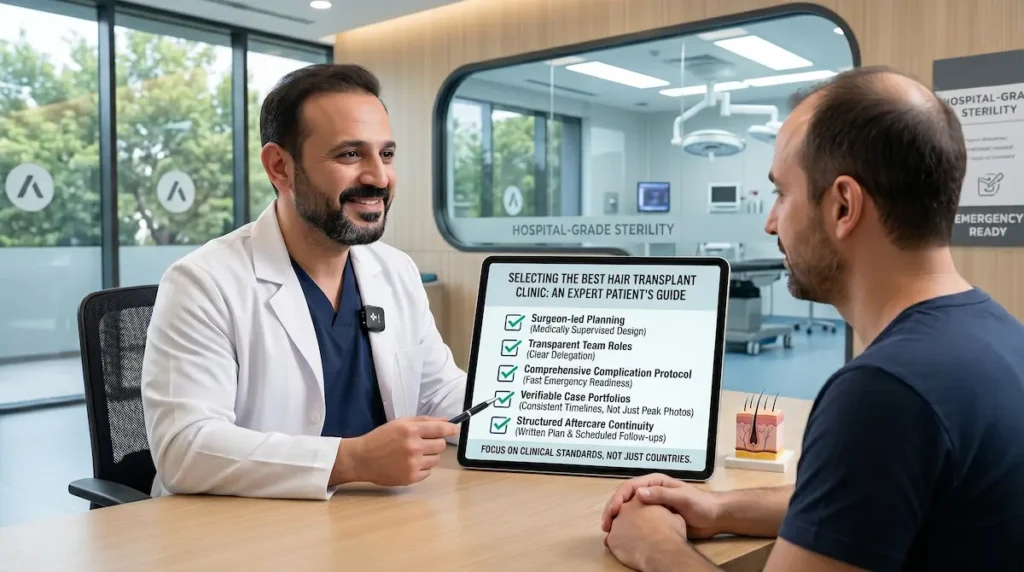
Hair transplantation sits at the intersection of surgical skill and aesthetic design. For the Expert Patient, the key is to verify training, case volume, and accountability—not just marketing titles. A credible provider should be able to explain who designs the hairline, who performs each step, and how quality is controlled across the day.
- Surgeon-led planning: Ask who does the hairline design and graft strategy. You want a medically supervised plan, not a template.
- Clear delegation: It’s appropriate for trained teams to support the procedure, but roles should be transparent (who harvests, who implants, who supervises).
- Complication protocol: Ask what happens if you develop infection signs, severe swelling, or unexpected pain—who responds and how fast.
- Portfolio integrity: Look for consistent timelines (early healing + month-by-month growth), not only peak “after” photos.
A high-standard consultation feels like a medical evaluation plus a long-term plan—not a sales pitch.
Facility standards: safety is a structure, not a claim
Patients often focus on the technique and forget the environment. A safe hair transplant relies on strict hygiene, a controlled clinical setting, and monitoring systems designed to prevent avoidable problems. If you are traveling, this becomes even more important—because you want the same level of professionalism you’d expect from a premium US setting.
When evaluating facility standards, look for signals like:
- Hospital-grade sterility mindset: consistent protocols, not “we’re clean” assurances.
- Medical screening: pre-op assessment that goes beyond quick questions.
- Emergency readiness: a clear escalation pathway if something unexpected occurs.
If a clinic avoids specifics or won’t show how they run the day clinically, that’s a meaningful red flag for Expert Patients.
Aftercare continuity: the hidden differentiator
The procedure day is one chapter. Healing and outcome maturation are the full story. Aftercare continuity is one of the strongest predictors of patient confidence and adherence—especially during weeks 3–8 when shedding and uneven growth can create unnecessary panic.
A strong aftercare system typically includes:
- Written aftercare protocol: washing, activity, sun exposure, and “what’s normal” guidance.
- Scheduled follow-up checkpoints: not only “message us if needed,” but structured follow-up at key points.
- Responsiveness: a defined channel for concerns (photos, symptom questions, reassurance when appropriate).
The Medical Journey in Istanbul (VIP Process for US Patients)
For US patients searching “hair transplant Istanbul” or “hair transplant clinic Istanbul,” the biggest psychological barrier is rarely the procedure itself—it’s logistics and continuity. The ideal international pathway feels medically organized and frictionless: clear scheduling, predictable transportation, comfortable accommodation, and easy communication. A well-run “VIP process” isn’t luxury; it’s risk reduction through structure.
Virtual consult and personalized plan (before you book)
A responsible journey begins before you travel. The clinic should evaluate your donor capacity, hair loss pattern, medical history, and goals to propose a realistic plan. The output of a good virtual consult is not hype—it’s clarity: what zones will be prioritized, what density is realistic, and what timeline you should expect.
Expert Patients should expect the consult to address:
- Zone strategy: hairline framing vs crown expectations.
- Donor budgeting: how grafts will be harvested conservatively to protect the donor area.
- Recovery planning: how many days to stay, when you can fly, and what early aftercare looks like.
Arrival, transfers, and procedure-day flow
International patients benefit from a tightly organized schedule. A well-designed process typically includes airport pickup, hotel coordination, clinic transfers, and a procedure-day timeline that reduces uncertainty. This matters because stress and confusion can reduce adherence and elevate anxiety—two things you don’t want around a surgical day.
On procedure day, a high-standard flow generally includes:
- Design confirmation: final review of hairline and zones before any steps begin.
- Medical check-in: ensuring you are suitable for the day (vitals, screening steps as needed).
- Structured breaks: comfort, hydration, and pacing for a long session.
- Clear discharge instructions: how to sleep, how to protect grafts, and how/when to wash.
Follow-up schedule and long-term accountability
The best international model doesn’t end when you leave the country. Patients need continuity—especially across the shedding phase and early regrowth months. A structured follow-up plan typically involves remote check-ins where you share progress photos and symptoms, receive guidance, and confirm that recovery is tracking normally.
For Expert Patients, long-term accountability is a major trust factor. Clinics that treat follow-up as a core part of the service—rather than an afterthought—tend to reduce patient anxiety and improve adherence to aftercare behaviors.
Real-World Patient Perspectives (Natural Results Without Hype)
Patient stories are most useful when they validate real concerns—fear of safety, worry about travel, uncertainty about recovery, and the emotional impact of hair loss. For the Expert Patient, the most credible stories are specific: what they worried about, what the process felt like, and how the outcome changed over time (not just a single photo).
What US patients commonly worry about (and why it’s rational)
US-based patients tend to share a similar concern hierarchy:
- Safety and standards: “Will the clinic feel as safe as a premium US setting?”
- Naturalness: “Will the hairline look undetectable in real life?”
- Continuity: “What happens after I fly home?”
- Value clarity: “Is the cost difference legitimate, or will quality suffer?”
These are rational concerns—and a strong provider answers them with systems and documentation, not reassurance alone.
How patients describe the recovery emotionally (the part most clinics skip)
Even when healing is medically normal, recovery can be emotionally turbulent. Many patients report a dip in confidence during the shedding phase (weeks 3–8), followed by gradual optimism as early growth appears. The psychological roller coaster is common—and it’s one reason structured follow-up and “what’s normal” education can be as valuable as the procedure day itself.
If you want the most stable experience, choose a clinic that sets expectations early and communicates proactively during the timeline when patients are most likely to worry.
The “Rejuvenation, Not Alteration” philosophy applied to hairlines
Natural results are rarely the most aggressive results. A youthful but believable hairline, appropriate density distribution, and correct angulation can make the transplant disappear into your identity—so you look refreshed rather than “done.” The best hair transplants don’t announce themselves; they simply restore a frame to the face and allow you to stop thinking about your hair in daily life.
DHI Hair Transplant: Frequently Asked Questions
This FAQ is designed for high-intent, voice-style searches. Each answer is written to be medically clear, realistic about timelines, and focused on decision-quality information—so you can compare DHI hair transplant options with confidence.
What is a DHI hair transplant, and how is it different from FUE?
DHI (Direct Hair Implantation) is a hair transplant approach that emphasizes precision implantation—controlling the angle, direction, depth, and spacing of each follicular unit for a natural-looking pattern. “FUE” usually refers to how grafts are harvested (Follicular Unit Extraction). In many modern practices, FUE can be used for harvesting while DHI describes the implantation workflow. The most meaningful difference for patients is the implantation strategy and how the team protects graft integrity and naturalness in high-visibility zones like the hairline.
How does a hair transplant work—do the transplanted hairs last?
Hair transplantation works by relocating follicles from a donor zone that is typically more resistant to androgen-related thinning (usually the back and sides) into thinning or balding areas. Once the transplanted follicles establish blood supply in their new location, they generally follow normal hair growth cycles. Longevity depends on proper candidacy, donor quality, surgical handling, and long-term planning—especially if your native hair continues thinning around transplanted zones.
Is a DHI hair transplant safe?
In medically appropriate candidates and in a high-standard clinical environment, hair transplantation is generally considered a low-risk elective procedure. The most important safety variables are surgeon oversight, sterile technique, disciplined graft handling, and structured aftercare. Risks exist—like infection, inflammation, poor yield, or donor overharvesting—so safety depends more on systems and clinical accountability than on marketing claims.
Does a DHI hair transplant hurt?
Most patients report that the most uncomfortable part is the local anesthesia injections, followed by numbness during the main procedure. Afterward, you may experience soreness or tightness in the donor area and mild tenderness in the recipient area. Pain is usually manageable when aftercare instructions are followed and the clinic provides a clear comfort plan.
What is the typical hair transplant recovery timeline?
Most patients focus on two timelines: medical recovery and cosmetic recovery. Medical recovery (when grafts are stable and you can return to normal routines) typically progresses over the first 7–14 days. Cosmetic recovery (redness, scabbing, and the shedding phase) can last longer. Shedding commonly occurs in weeks 3–8, early growth may begin around months 3–4, and maturation continues through 9–12 months.
What does “results month by month” usually look like?
A typical timeline is: early healing in the first 2 weeks, shedding in weeks 3–8, early growth around months 3–4, visible improvement through months 5–8, and maturation through months 9–12. Some patients continue to see thickening beyond 12 months, especially after larger sessions or if growth cycles are slower.
Why do transplanted hairs fall out after surgery—did the transplant fail?
Early shedding is often normal. The follicles can survive while the visible hair shafts shed due to the stress of relocation. New growth typically follows as follicles re-enter the growth phase. True failure is usually related to issues like poor graft handling, severe inflammation/infection, or poor candidacy—this is why clinic standards and aftercare matter.
What are the most common side effects of a hair transplant?
Common temporary side effects include swelling, redness, itching, scabbing, mild numbness, and occasional folliculitis-like bumps as hair begins to grow. Warning signs that require medical contact include fever, worsening pain, spreading redness/warmth, or foul drainage—those are not typical recovery symptoms.
What causes a “botched hair transplant” or “hair transplant gone wrong”?
Most “gone wrong” outcomes fall into predictable categories: unnatural hairline design (wrong angle/direction or overly straight placement), low graft survival (from trauma/dehydration/poor handling), donor overharvesting (visible thinning in the back/sides), or preventable infection/inflammation. Prevention comes from surgeon-led planning, donor budgeting, strict sterility, disciplined workflow, and strong aftercare continuity.
Is it worth traveling to Istanbul for a DHI hair transplant?
For many US patients, the decision is about value and structure: accessing high clinical standards with a transparent, organized care pathway in a different economic setting. The smartest way to decide is to compare standards (credentials, facility protocols, aftercare accountability) and transparency (written plan, realistic graft range, donor strategy) rather than comparing countries alone. If you choose to travel, prioritize clinics with a clearly structured VIP journey and long-term follow-up.
Medical Disclaimer: This page is for educational purposes only and does not provide medical advice, diagnosis, or treatment. Hair transplant eligibility, results, risks, and recovery vary by individual. Always consult a qualified medical professional for personalized evaluation and guidance. In an emergency, call local emergency services.