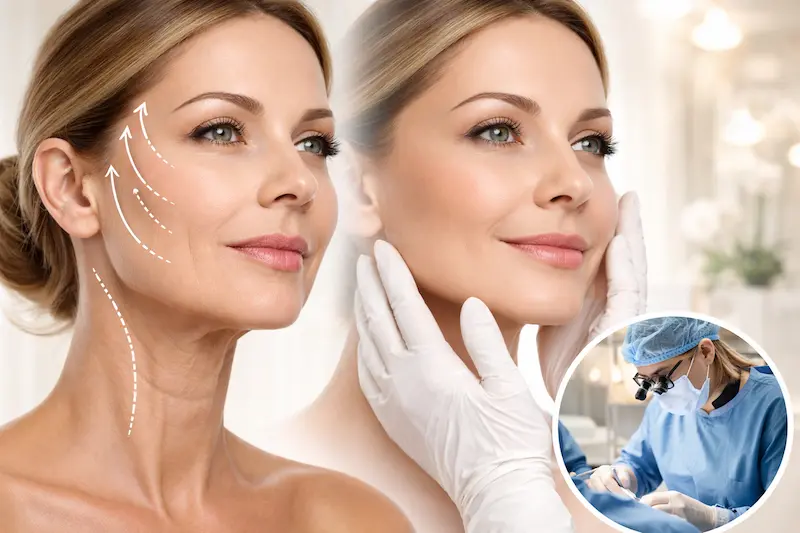
If you are starting to notice jowls, a softer jawline, or midface sagging, you may be looking for a solution that refreshes your face without making you look “done.” The deep plane facelift is a modern technique that targets the deeper supporting layers of the face instead of just pulling the skin, which is why many patients experience subtle, believable rejuvenation rather than an obvious surgical change.
Unlike older facelifts that focused on trimming and tightening the skin or superficially adjusting the SMAS (the fibrous support layer under the skin), the deep plane facelift works in a deeper anatomical plane. By repositioning ligaments, muscles, and fat pads together, it aims to create natural-looking improvement that resembles your own younger face. For a complete walkthrough of our surgical workflow, candidacy criteria, and recovery milestones, visit our comprehensive deep plane facelift guide. This resource serves as the master technical reference for the anatomy-first principles described below — including composite flap strategy and ligament release sequence.
In this article, we will walk through the science behind the deep plane facelift in clear, patient-friendly terms. You will learn how facial anatomy is involved, how deep plane surgery differs technically from traditional facelifts, why scars can be more discreet, what realistic deep plane facelift before and after results look like, and how long results typically last. We will also look at considerations such as having a deep plane facelift in your 40s, extended deep plane techniques, and international treatment options, including surgery in Istanbul, Turkey.
This information is meant to educate and guide you, but it does not replace a personal consultation with a qualified facial plastic surgeon or plastic surgeon. Every facelift, including a deep plane facelift, is a real operation with benefits and risks that must be carefully evaluated for each individual.
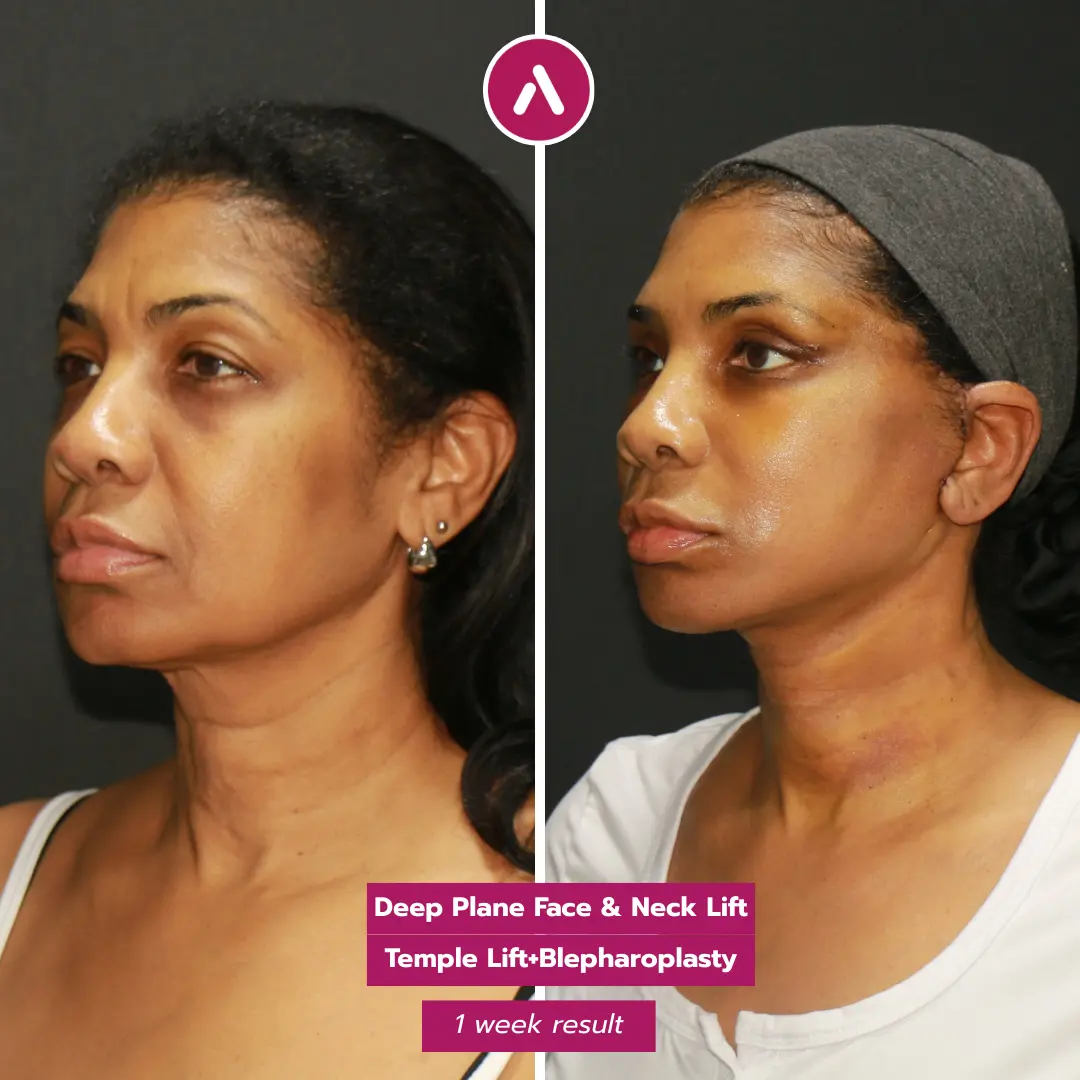
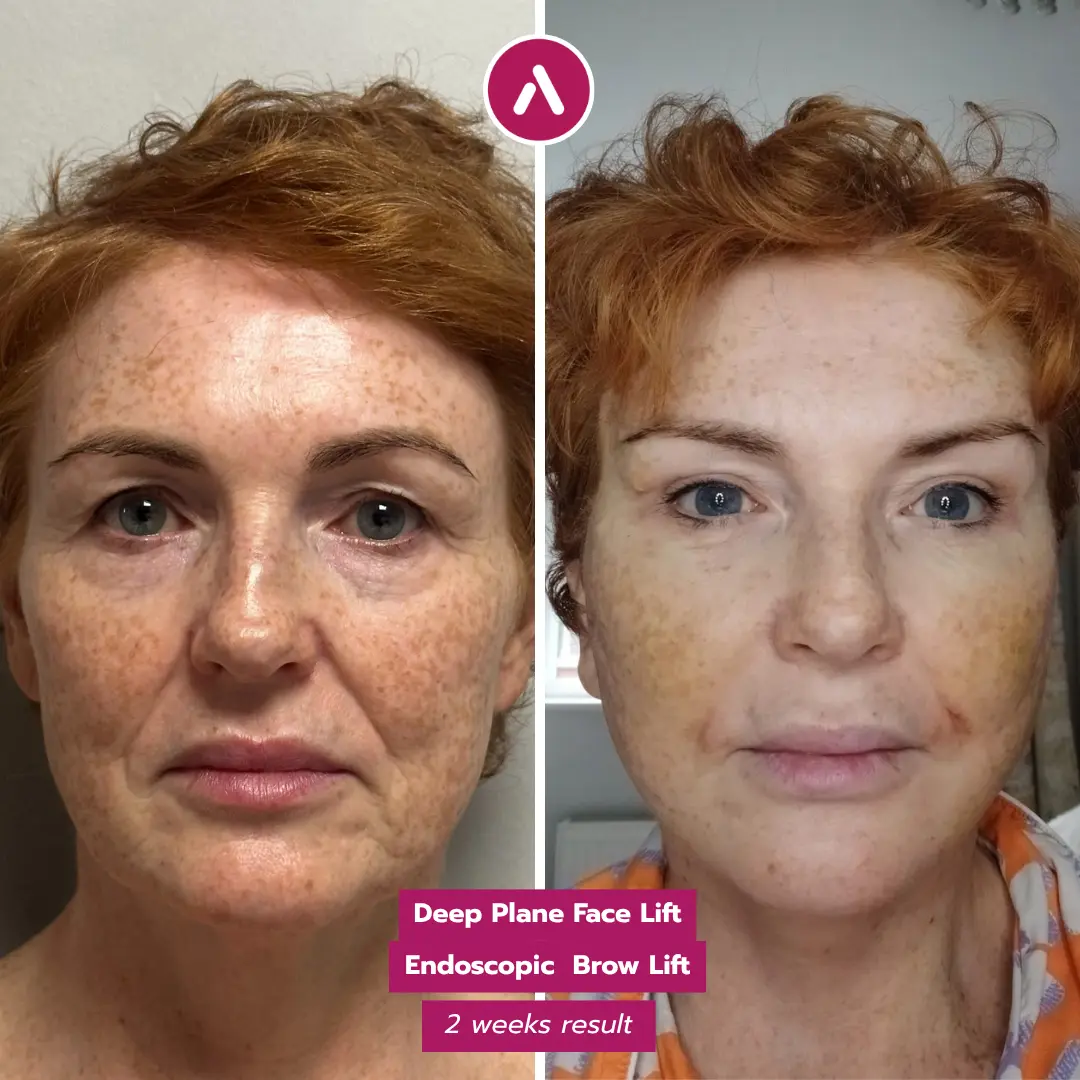
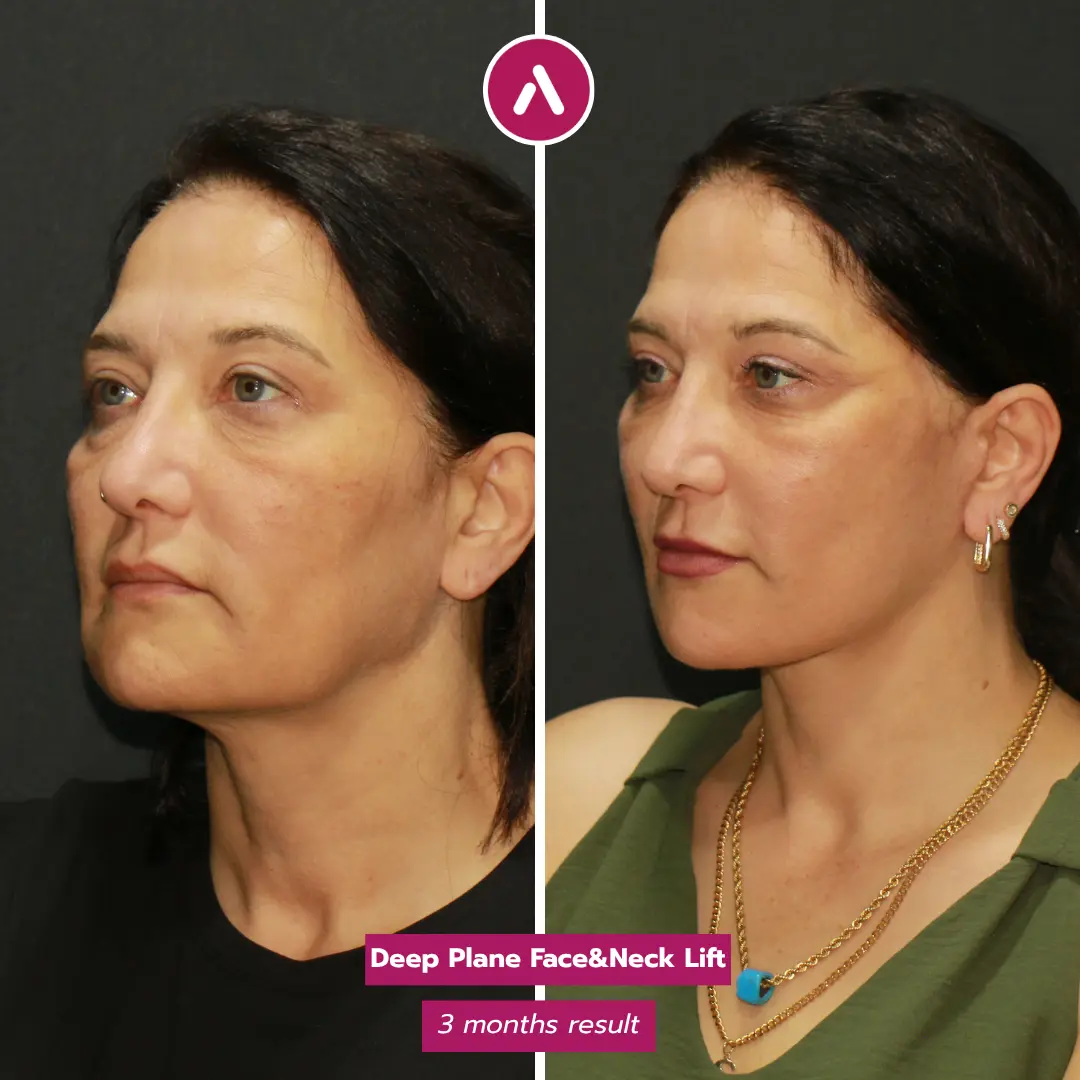
Table of Contents
What Makes Deep Plane Facelift Natural Results So Different?
This section explains why the deep plane facelift often produces more natural-looking results than traditional facelift techniques. By comparing skin-only, SMAS, and deep plane approaches, you will see how working in a deeper anatomical layer allows the surgeon to restore your own facial structure instead of simply pulling the surface. This is the core reason many patients and surgeons describe deep plane facelift natural results as softer, more authentic, and longer lasting.
Skin-only vs SMAS vs deep plane: why technique matters for natural results
Early facelift techniques focused mainly on the skin: extra skin was removed, and the remaining skin was pulled tighter. Because the skin is relatively weak and was carrying most of the tension, this approach often led to a tight, wind-swept, or shiny appearance. The results could look surgical rather than natural, and they tended not to last very long because the underlying sagging structures were never really addressed.
The next step in the evolution of facelift surgery was the SMAS facelift. Instead of pulling only on the skin, surgeons began tightening and folding the SMAS layer, which lies underneath the skin and helps support the facial soft tissues. This did improve both the longevity and the quality of results, but in many techniques, the deeper retaining ligaments and true points of support remained only partially released or repositioned. To understand exactly when SMAS facelift is the more appropriate technique — particularly for patients with predominantly jawline-and-neck concerns rather than midface descent — review our complete SMAS facelift technique guide with candidacy criteria, plication versus imbrication strategy, and recovery comparison, which details where the SMAS approach excels and where the deep plane technique offers superior anatomical mobilization.
A deep plane facelift goes further by entering the “deep plane,” a space beneath the SMAS and some key retaining ligaments. In this plane, the surgeon can carefully release these ligaments and mobilize the midface and jowl tissues as a single, connected unit. This allows the face to be lifted more vertically and naturally, rather than being pulled sideways across the skin. Because the deeper structures are restored to a more youthful position, the improvement comes from within, which is why deep plane facelift natural results often look like a refreshed version of you rather than a different person.
How deep plane facelift natural results keep your facial identity intact
A common concern is, “Will I still look like myself after surgery?” With a properly performed deep plane facelift, the goal is to respect your unique facial identity while reversing the effects of gravity and volume descent. Instead of changing your core features, the surgeon repositions the drooped fat pads of the midface, the descended tissues around the mouth, and the early jowls along the jawline back toward where they were years before.
Because the tissues are lifted as a unit, the natural relationships between your eyes, cheeks, nose, lips, and jawline are preserved. Your cheeks can look fuller and higher, your nasolabial folds softer, and your jawline sharper, but your proportions stay recognizably yours. This is one of the reasons patients who prioritize subtle rejuvenation often prefer deep plane facelift natural results over more superficial or “mini” techniques that can distort expression or facial balance.
Avoiding the “pulled” look: tension-free lifting explained
The “pulled” facelift look is usually a sign that the skin has been over-tightened or that tension was not distributed into the deeper, stronger layers of the face. In a deep plane facelift, the heavy lifting is done by the deeper tissues — the SMAS, ligaments, and attached fat pads — while the skin is simply redraped over this newly supported framework.
By placing the tension on the deeper support system instead of the skin, several advantages are possible:
- The skin can lie smoothly without being stretched, which helps avoid an over-tight or artificial appearance.
- The incision lines, including around the ear and hairline, are under less tension and therefore may heal into finer, more discreet scars.
- The transition between the lower eyelid and cheek can look softer and more youthful, rather than hollow or pulled down.
- The jawline and neck can appear more defined without harsh angles or distortion around the mouth.
This tension-free concept is at the heart of deep plane facelift natural results. Instead of trying to smooth aging by stretching the surface, the surgeon rebuilds support from the inside, allowing the skin to sit where it naturally wants to sit — just on a younger, better-positioned foundation.

Deep Plane Facelift Surgery at the Anatomical Level: The Science Behind the Lift
To understand why deep plane facelift natural results often look so believable, it helps to look beneath the skin. Aging does not start on the surface; it begins in the deeper support structures that hold your cheeks, jawline, and neck in place. The detailed sub-SMAS dissection sequence and ligament-release map used by our team — covering the zygomatic, masseteric, mandibular, and cervical ligaments — is documented step-by-step on our deep plane facelift technique page. In this section, we will break down the key facial layers and explain how careful handling of ligaments and fat pads leads to smoother, more natural rejuvenation.
The facial layers: skin, SMAS, ligaments, and the deep plane
The face is built in layers. From the outside in, you can imagine:
- Skin: The outermost layer that shows wrinkles, sun damage, and fine lines.
- Subcutaneous fat: Fat just under the skin that can thin with age, making the face look more deflated.
- SMAS (Superficial Musculoaponeurotic System): A fibrous layer that connects the facial muscles to the skin and helps support the soft tissues of the face.
- Retaining ligaments: Strong attachments that anchor the soft tissues to the deeper bone and fascia, helping to hold everything in place.
- The “deep plane”: A surgical space beneath part of the SMAS and certain ligaments, where the surgeon can safely lift and mobilize the midface and lower face as a unit.
With aging, the SMAS and ligaments loosen, and fat pads that once sat higher in the midface begin to descend. This leads to deeper nasolabial folds, early jowls, and a heavier jawline. Skin-only approaches try to smooth the surface, but they do not address the deeper problem. By working in the deep plane, the surgeon can reconnect with the true anatomical support structures and reposition them closer to where they were in youth, which is a key reason why deep plane facelift natural results often look so harmonious.
Releasing key retaining ligaments for smoother, more natural repositioning
Retaining ligaments are like tiny internal “guy wires” that tether the soft tissues of the face to deeper structures. Over time, as gravity pulls downward and the ligaments weaken or stretch, folds and sagging develop. In a deep plane facelift, the surgeon does not simply pull on these ligaments; instead, they are carefully released in a controlled way so that the entire facial envelope can be lifted without unnatural tension.
The clinical literature on whether to release versus preserve these structures continues to evolve. A December 2025 narrative review published in PMC examined how various facelift techniques manage facial retaining ligaments, comparing subcutaneous, SMAS, deep plane, composite, subperiosteal, and extended SMAS approaches. The review concluded that ligament-releasing techniques such as the deep plane and extended SMAS facelifts allow greater tissue mobilization and improved repositioning of midfacial and cervical structures, while ligament-preserving approaches like MACS and PRESTO offer less invasive but typically less powerful outcomes — a trade-off that explains why deep plane technique is preferred for moderate-to-advanced midface descent.
Some of the important ligaments that may be addressed in a deep plane facelift include:
- Ligaments around the cheek and midface that contribute to deep smile lines and flattening of the cheeks.
- Attachments near the jawline that play a role in the formation of jowls.
- Certain tethering points that create visible “breaks” between the cheek and the mouth area.
By releasing these ligaments in the deep plane, the surgeon can move the midface and lower face upward and slightly backward in a more natural vector. Instead of the skin being pulled tight over fixed, sagging ligaments, the underlying tissues are mobilized and repositioned in a block. This allows for smoother contours and avoids sharp edges or distortions that can make a facelift look artificial. The result is typically a softer, more youthful shape that supports the overall goal of deep plane facelift natural results.
How preserving fat pads supports youthful, soft deep plane facelift results
Youthful faces are not just tight; they are also full in the right places. Over time, facial fat can both descend and, in some areas, shrink. If a facelift removes too much fat or flattens these natural curves, the result can look hollow, gaunt, or “done,” even if the skin is smoother.
One of the advantages of the deep plane technique is that it often preserves and repositions existing fat pads instead of aggressively removing them. For example, the malar fat pad in the midface — a key structure that contributes to full, high cheeks — can be lifted back to a more youthful position. This helps:
- Restore cheek fullness without overfilling with synthetic fillers.
- Soften deep folds around the mouth by supporting the tissues from underneath.
- Maintain a natural transition between the lower eyelid and cheek, rather than a hollow or skeletonized look.
In some cases, surgeons may combine deep plane facelift surgery with conservative fat grafting to fine-tune volume in specific areas, such as the temples or under the eyes. The donor-site selection logic, microfat versus nanofat fractionation, and recipient-site layered injection sequence used in adjunctive volume restoration are documented on our facial fat transfer page. However, the core idea remains the same: use your own tissue, in its correct layer and position, to recreate a naturally youthful contour. This thoughtful handling of fat pads is another reason why patients seeking subtle, believable rejuvenation often prefer deep plane facelift natural results over more superficial or purely skin-focused techniques.
Deep Plane Facelift Scars and Incisions: From 1 Week Post-Op to 1 Year
Even when patients are excited about tighter jawlines and lifted cheeks, they often worry about scars. A deep plane facelift is designed not only to create structural, natural-looking rejuvenation, but also to keep scars as discreet as possible. This is achieved through careful incision placement around natural curves of the ear and into the hairline, minimal tension on the skin, and a step-by-step healing process that transforms early redness into fine, pale lines over time. Understanding what to expect from 1 week post-op deep plane facelift scars through to one year can help you feel calmer and more prepared for your recovery.
Where deep plane facelift scars are placed and how they are hidden
In a modern deep plane facelift, the incisions are usually designed to blend with natural shadows, folds, and hair-bearing areas so that scars are less noticeable once healed. While exact designs vary by surgeon and patient anatomy, common incision locations include:
- In front of the ear: Starting within or just along the natural creases where the ear meets the cheek, sometimes curving slightly around the tragus (the small cartilage in front of the ear canal).
- Behind the ear: Continuing in the natural groove where the ear meets the head, so the scar is hidden in a shadow when viewed from the side.
- Into the hairline: Extending into the temporal hairline above the ear and sometimes into the lower hairline behind the ear to allow skin to be redraped without bunching.
Because the deep plane technique places most of the tension on the deeper support layers, the skin edges can be closed more gently. Less tension on the skin often means flatter, thinner scars over time, which supports the overall goal of subtle, believable improvement. When deep structural work and discreet scar placement are combined, patients tend to notice the refreshed contour of the face far more than any incision lines in daily life.
1 week post op deep plane facelift scars: what is normal and what is not
The first week after surgery is when scars usually look their worst — and this is completely normal. At around 1 week post op, deep plane facelift scars are typically:
- Red or pink in color, sometimes with mild bruising or yellow-green discoloration nearby.
- Slightly raised or puffy as the tissues swell and the body begins the healing process.
- Surrounded by some numbness, tightness, or tingling sensations as nerves gradually wake up.
At this stage, most patients are still focused on swelling and bruising rather than the final position of their scars. It is normal to feel that everything looks too tight, too swollen, or uneven. As long as your surgeon confirms that healing is on track, these early appearances are not a predictor of your final outcome.
You should contact your surgical team immediately if you notice signs such as spreading redness, significant warmth, pus-like drainage, severe increasing pain on one side, or sudden swelling that feels tense. These may be signs of complications that need medical evaluation. However, the majority of patients follow a steady healing course where scars gradually calm down and the overall facial shape improves week by week.
Scar maturation timeline: when scars fade and how to help them heal
Scars evolve over months, not days. Although every person heals differently, a typical timeline after deep plane facelift surgery might look like this:
- Weeks 1–3: Scars are red, pink, or purple. Swelling is still present, and it is too early to judge the final look. Makeup and hairstyle choices often help camouflage incisions once your surgeon allows.
- Months 1–3: Bruising fades, swelling continues to decrease, and scars may appear darker or more noticeable before they begin to soften. Many patients feel confident in social situations with minimal cover-up by this stage.
- Months 3–6: Scars usually start to flatten and fade. The color becomes lighter, and the lines blend better with surrounding skin. The face itself also looks more natural as residual swelling subsides.
- Months 6–12 (and beyond): Scars often mature into thin, pale lines that are difficult to notice in casual conversation, especially when incisions have been placed along natural creases and in the hairline.
Your surgeon may recommend specific strategies to support scar healing, such as gentle scar massage after a certain point, silicone gels or sheets, sun protection, and avoiding smoking. Good aftercare, combined with a tension-free closure and thoughtful incision planning, is what allows many patients to enjoy a smoother jawline and lifted cheeks without obvious evidence of surgery when fully healed.
When you understand that early redness and swelling are temporary parts of the healing journey, it becomes easier to focus on the long-term goal: a refreshed face with discreet scars that do not draw attention away from your natural expression and features.

Deep Plane Facelift Before and After: What Realistic Results Look Like
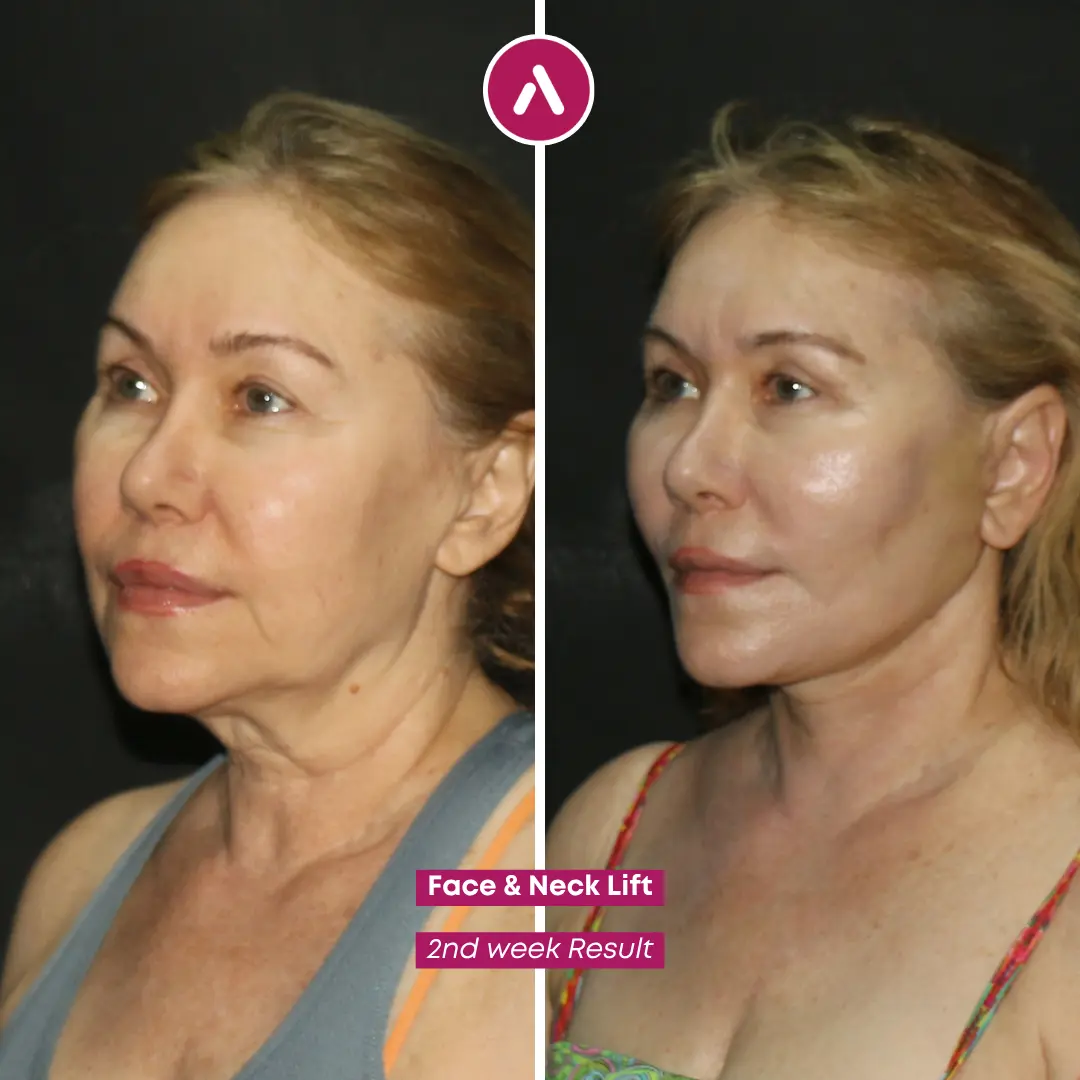
When you look at deep plane facelift before and after photos online, it is easy to be impressed — but also easy to develop unrealistic expectations. A well-performed deep plane facelift does not turn you into a different person or erase every single line. Instead, it aims to restore support where it has been lost, sharpen the jawline, lift the midface, and soften deep folds, all while preserving your expressions and facial identity. Truly natural deep plane facelift natural results look like you on your best, most rested day, consistently — not like a filter or an obviously surgical transformation.
Key changes you can expect in the midface, jawline, and neck
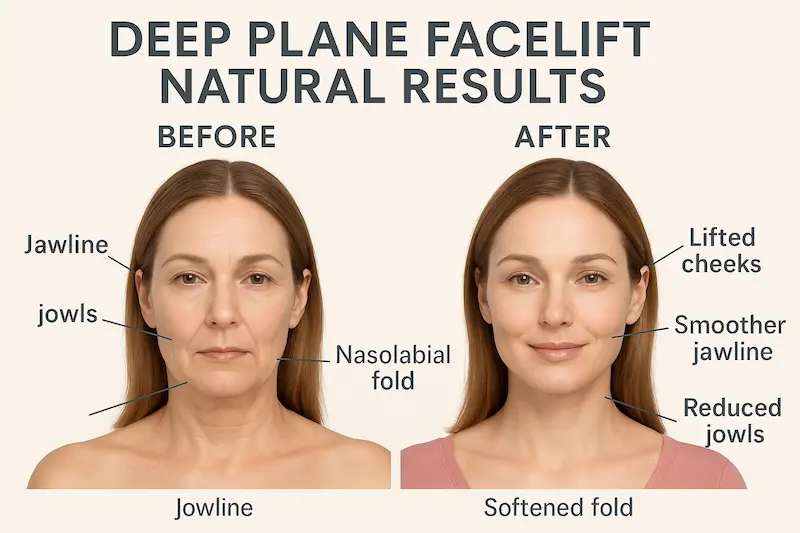
Although every face is unique, certain patterns are very common in deep plane facelift result photos. When you compare before and after images carefully, you will usually notice:
- Midface and cheeks: The cheeks sit slightly higher and look more supported. The transition between the lower eyelid and the cheek becomes smoother, with less hollowing or heaviness under the eyes.
- Nasolabial folds (smile lines): These deep lines from the nose to the corners of the mouth are often softened, not completely erased. This keeps your smile looking human and expressive rather than “frozen.”
- Marionette lines and corners of the mouth: The downturned corners of the mouth and the folds that run toward the chin usually look lighter and less shadowed, giving a less “tired” or “sad” expression.
- Jawline and jowls: One of the most dramatic and satisfying changes is along the jawline. Jowls are reduced, and the jaw contour appears cleaner and more defined.
- Neck and under-chin area: In many patients, especially when combined with a neck lift, the angle between the chin and neck becomes sharper. Loose skin and banding in the neck are significantly improved.
It is important to remember that your starting point matters. A person in their late 40s with good skin quality and mild sagging will have different deep plane facelift natural results than someone in their 60s or 70s with more advanced laxity, sun damage, or weight changes. A skilled surgeon will discuss what is realistically achievable in your case instead of promising an unrealistic “perfect” outcome.
Deep plane facelift result vs traditional facelift result
When you compare a traditional facelift to a deep plane facelift, the differences often show up in subtle but important ways. In older, more superficial facelift techniques, you may notice:
- Skin that appears very tight around the mouth or lower face, sometimes pulling the lips into an unnatural shape.
- A jawline that is improved, but cheeks that still look flat because the midface was not truly lifted.
- A slight “wind-swept” or sideways pull, especially around the outer corners of the eyes or mouth.
In contrast, a well-executed deep plane facelift result usually shows:
- A vertical or slightly upward-backward lift that mimics youthful support rather than sideways tugging.
- Fuller, more elevated cheeks with better support under the eyes, not just a tightened lower face.
- A more natural mouth area, with softer lines but preserved individuality and facial expressions.
- A smoother contour from midface to jawline and neck, thanks to deeper structural work.
Another key difference is durability. Because the deep plane technique repositions the deeper ligaments and soft tissues rather than just pulling skin, many patients experience deep plane facelift long lasting results that stay attractive for years. Aging continues, of course, but the “reset” to a younger baseline can make you look refreshed for a longer period compared with many skin-focused or mini-lift techniques.
Reading deep plane facelift before and after photos critically: lighting, angles, and expectations
Not all deep plane facelift before after photos are equal. To avoid being misled by clever photography or unrealistic editing, it helps to look at them like a professional would. When you review a surgeon’s gallery, pay attention to:
- Consistent angles and expressions: Before and after images should be taken from the same angles, with similar lighting and facial expressions. Smiling in one photo and not in the other can dramatically change how wrinkles and folds look.
- Time since surgery: Very early after photos (for example, 1–2 weeks) may still show swelling and do not represent the final deep plane facelift natural results. Ideally, you want to see results at 3–6 months or later.
- Makeup, hair, and photo retouching: Heavy makeup, different hairstyles, and filters can disguise scars, wrinkles, or skin texture. Look for honest, minimally retouched pictures where you can clearly see the skin and contours.
- Age-matched, realistic examples: Try to find patients who are close to your age and have a similar degree of sagging or skin quality. This will give you a more realistic idea of what deep plane facelift surgery might achieve for you.
- Scars and incision areas: While scars are usually very discreet, a transparent gallery may show subtle incision lines near the ears and hairline. This honesty is a positive sign of a trustworthy surgeon.
Before and after photos are just one part of evaluating a surgeon, but they are a powerful tool when used thoughtfully. Look not only for dramatic changes, but also for consistency: do most patients have smooth jawlines, lifted cheeks, and rested expressions, yet still look like themselves? To apply this critical-reading framework against a real, time-stamped clinical dataset — including 3-month, 6-month, and 12-month healing windows across multiple ages, skin types, and anatomical patterns — explore our complete before and after gallery.
How Long Do Deep Plane Facelift Results Last? Deep Plane Facelift Long Lasting Results Explained
One of the biggest advantages of this technique is its reputation for deep plane facelift long lasting results. Because the surgery works on the deeper support structures of the face instead of just tightening the skin, the improvement tends to age more gracefully. You will still continue to age after surgery — no facelift can stop that completely — but you are usually starting again from a “younger baseline.” In everyday life, this can translate to looking fresher, more lifted, and better supported for many years compared with more superficial facelift methods.
The role of ligament release in long-lasting support
The key to durable results lies in the deeper anatomy. As you age, the facial retaining ligaments and connective tissues loosen, allowing fat pads and soft tissue to slide downward. A deep plane facelift directly addresses this issue by carefully releasing and then repositioning these structures in a more youthful direction. Instead of relying on skin tension alone, the surgery rebuilds support from the inside out.
When ligaments and the SMAS layer are repositioned and anchored in a lifted position, they can act like a stronger internal “sling” for the face. This means:
- The midface and cheeks are less likely to droop again quickly.
- The jawline contour remains sharper for longer, with slower recurrence of jowls.
- The neck and under-chin area maintain a more defined angle over time, especially if a neck lift is performed together.
Because the deeper anatomy is restructured instead of just tightened at the surface, many patients enjoy deep plane facelift long lasting results that stay pleasing for a decade or even longer, depending on genetics, lifestyle, and skin quality.
How aging continues after surgery and what that means for your deep plane facelift result
It is important to understand that no facelift “freezes” time. After a deep plane facelift, the biological processes of aging continue. Skin will still lose collagen and elasticity, bone structure can change with age, and weight gain or loss may affect how the face looks. However, because the underlying support has been improved, you start from a more favorable position.
A simple way to think about it is this: if a deep plane facelift makes you look 10–15 years younger, you continue to age from that point forward. Ten years later, you may still look younger than you would have without surgery. For many patients, this means:
- They feel they look “better than their age” for many years after surgery.
- Even as mild looseness gradually returns, the face typically does not go back to its preoperative state.
- Some patients may choose small non-surgical treatments (like skin resurfacing or volume support) years later instead of a second facelift.
The goal of the deep plane technique is not perfection but a natural, age-appropriate appearance that holds up well over time. When you combine structurally sound surgery with realistic expectations, the satisfaction with deep plane facelift natural results tends to be very high in the long term.
Lifestyle, skin care, and treatments that can extend deep plane facelift long lasting results
Your choices after surgery play a meaningful role in how long your results look their best. Even the most technically perfect deep plane facelift can be compromised more quickly by heavy sun damage, smoking, or major weight fluctuations. On the other hand, a healthy lifestyle and good skin care can support and enhance your outcome.
Strategies that may help maintain or extend your results include sun protection, stable weight, and medical-grade skin care. For patients interested in regenerative adjuncts that complement structural deep plane work — particularly those concerned about long-term volume preservation in the malar fat pad and periorbital region — review our stem cell facelift comparison, which evaluates when adipose-derived stem cell augmentation adds measurable benefit beyond conservative fat grafting and when it does not.
When deep plane surgery is combined with smart maintenance and a healthy lifestyle, patients often find that their deep plane facelift long lasting results continue to look natural and rewarding for many years. The aim is not to chase youth endlessly, but to age in a way that feels more confident, refreshed, and true to yourself.
Deep Plane Facelift in Your 40s: Is a Deep Plane Facelift in the 40s the Right Time?
Many people first hear about the procedure when they are already in their late 40s or early 50s, right at the stage where early jowls, mild neck laxity, and midface descent start to become more noticeable. This raises a common question: is a deep plane facelift in your 40s too early, or is it actually the ideal time to secure more natural, long-term support? The answer depends on your anatomy, genetics, skin quality, and goals, but for the right patient, a deep plane facelift in the 40s can provide subtle, structurally sound rejuvenation that avoids the cycle of repeated short-lived procedures. The key is careful selection and a realistic understanding of what surgery can and cannot do at this age.
Typical aging changes in the 40s and who really needs surgery
In your 40s, facial aging usually becomes more visible but is rarely extreme. Common changes include:
- Mild to moderate deepening of nasolabial folds (the lines from the nose to the corners of the mouth).
- Early jowl formation softening the once-straight jawline.
- Slight heaviness in the lower cheek area as midface fat begins to descend.
- Subtle laxity or early banding in the neck, especially when looking down or in certain lighting.
- Fine lines and texture changes in the skin due to sun exposure and collagen loss.
Not everyone in their 40s is a candidate for deep plane facelift surgery. Some people have minimal sagging and can be well served by non-surgical options such as skin tightening treatments, quality skincare, and very conservative fillers. Others, especially those with strong genetics for early jowling or who have experienced significant weight fluctuation or sun exposure, may show more advanced laxity that non-surgical methods cannot adequately correct. In those cases, a properly planned deep plane facelift in the 40s can restore support to the midface and jawline at a stage when tissues are still relatively elastic and healthy, often contributing to more stable, natural-looking results.
Deep plane facelift 40s vs less invasive options (fillers, threads, mini-lift)
Patients in their 40s are often offered a wide range of “lighter” procedures: fillers, thread lifts, energy-based tightening, and mini-lifts. These can have a place, but they also have limitations:
- Fillers: While fillers can add volume where it has been lost, they do not lift deeper ligaments or reposition sagging structures. Over time, frequent filler use in the lower face can create puffiness or an over-filled look rather than truly youthful contours.
- Thread lifts: Threads provide a temporary, modest lift by grabbing the tissue and pulling it upward. However, they do not release retaining ligaments or access the deep plane, and results are usually short-lived compared with surgery.
- Mini-lifts: A mini-lift may tighten some superficial tissue, but if the deeper anatomy is not fully addressed, the result can be less transformative and less durable than a deep plane approach. To understand exactly which patient profiles, anatomical patterns, and aging stages make a mini-lift a sensible choice — and which signal that a deeper structural lift is the safer long-term decision — review our complete mini facelift guide.
For carefully selected patients, a deep plane facelift 40s strategy can sometimes be more logical in the long run. Instead of chasing small, repeated procedures that may change facial proportions or require constant maintenance, a deep plane lift repositions the deeper structures in a way that can provide more reliable structural support. This does not mean everyone in their 40s should have surgery, but it does mean that “too young” is not always the right assumption if significant laxity is present and the patient understands the risks and benefits.
How surgeons decide if a deep plane facelift in your 40s is appropriate
A responsible surgeon will not recommend a deep plane facelift simply because a patient asks for it. Instead, they will assess a combination of factors:
- Degree of sagging and jowling: Is there true descent of the midface and jawline that cannot be corrected by less invasive methods?
- Skin quality: Is the skin still thick and elastic enough to redrape smoothly after deeper support is repositioned?
- Neck changes: Are early neck bands or laxity present that might benefit from combining a neck lift with the facial work?
- Overall health and lifestyle: Is the patient medically fit for surgery, and do they have realistic expectations and time for proper recovery?
- History of previous treatments: Have fillers, threads, or other procedures already distorted the natural anatomy, or is the face relatively untouched?
If a surgeon feels that your concerns can reasonably be addressed with non-surgical or less invasive options, they may steer you away from a deep plane facelift in your 40s. On the other hand, if you already have clear structural descent — especially in the midface and jawline — and you are looking for longer-term, natural improvement rather than ongoing temporary fixes, a deep plane facelift can be considered. The ultimate goal, regardless of age, is to create balanced, believable deep plane facelift natural results that fit your face, your stage of life, and your long-term goals.
Extended Deep Plane Facelift and Deep Plane Lower Facelift: When to Go Further
Not every face ages in exactly the same way. Some people notice most of their sagging in the midface and cheeks, while others are bothered primarily by their jawline and neck. That is why deep plane techniques can be customized into variations such as the extended deep plane facelift and the deep plane lower facelift. These approaches still rely on the same core principle — working in the deeper anatomical layers — but they focus the surgical effort where you need it most. When chosen correctly, they can help deliver highly tailored, natural-looking improvement that fits your face instead of a one-size-fits-all lift.
What makes an extended deep plane facelift different from the standard approach?
A standard deep plane facelift focuses on lifting the midface, lower face, and often the upper neck by releasing key ligaments and mobilizing the deeper tissues as a unit. An extended deep plane facelift goes one step further by expanding the area of dissection and release. This allows the surgeon to:
- Address more advanced midface descent and deeper folds around the mouth.
- Reach further into the cheek area to lift and support heavier or more descended tissues.
- Create a smoother transition between the lower eyelid, cheek, and nasolabial region.
The extended approach may be especially useful for patients with more pronounced midface drooping, deeper nasolabial folds, or long-standing heaviness around the mouth. Because the deeper tissues are lifted more extensively, the improvement in contour can be very powerful while still aiming for believable, balanced deep plane facelift natural results. It is not about pulling harder, but about releasing and repositioning more thoroughly in the correct anatomical plane.
Who benefits most from a deep plane lower facelift focused on the jawline and neck?
While some patients are most bothered by sagging cheeks, others say, “I like my upper face, but my jawline and neck betray my age.” In these cases, a deep plane lower facelift can be the most logical choice. This variation targets:
- Jowls that soften or break the once-straight jawline.
- Loose skin and banding under the chin and along the upper neck.
- Heaviness in the lower face near the corners of the mouth and chin.
A deep plane lower facelift still uses the deeper surgical plane to reposition the SMAS and associated tissues, but the emphasis is placed on the lower third of the face and neck rather than the entire midface. For someone whose main concern is the jawline and neck — rather than cheeks or under-eye area — this focused approach can provide excellent contouring where it matters most, without overtreating areas that still look good. When performed thoughtfully, the result is a cleaner, tighter jawline and smoother neck that blend naturally with the rest of the face.
Combining Extended Deep Plane Facelift with Neck Lift and Fat Grafting
In real life, many patients benefit from a combination of techniques rather than a single isolated procedure. For example, an extended deep plane facelift or deep plane lower facelift can be combined with:
- Neck lift: To address significant neck banding, excess fat under the chin, and loose neck skin. This helps create a sharper angle between the chin and neck and a smoother overall profile. The platysmal hammock technique, cervical retaining ligament release, and submental contouring strategy used in combined cases are detailed on our neck lift procedure page.
- Submental liposuction or contouring: To remove localized fat beneath the chin when appropriate and enhance the definition created by the deeper lift.
- Fat grafting: To carefully add volume back to areas that have become hollow with age, such as the temples, under-eye region, or cheek hollows, complementing the structural lift of the deep plane surgery.
The goal of combining these procedures is not to make the face look “done,” but to bring different areas into harmony. A beautifully lifted lower face will look even more natural when the neck and volume distribution are matched to the same youthful standard. By tailoring the operation — extended or lower-focused deep plane work, neck refinement, and selective fat grafting — the surgeon can create cohesive, three-dimensional improvement instead of a single, isolated change. This is often how the most convincing and satisfying deep plane facelift natural results are achieved.
Deep Plane Facelift Cost: Turkey vs the USA
When patients research deep plane facelift cost, they often notice huge price differences between countries. It can be confusing to understand why a surgery performed by an experienced surgeon in Istanbul, Turkey may cost significantly less than the same operation in the United States — especially when the technique, equipment, and safety standards are comparable. This section explains what drives pricing, what is typically included in treatment packages for international patients, and why many people find that traveling to Turkey for deep plane facelift surgery is financially and medically attractive, without compromising on quality or deep plane facelift natural results.
What drives deep plane facelift cost in different countries?
Several factors influence the overall cost deep plane facelift from country to country and even between cities and clinics in the same region. These include:
- Surgeon’s experience and reputation: Surgeons with high specialization in facial surgery, extensive deep plane facelift case volumes, and strong before–after portfolios may charge more, regardless of country.
- Clinic and hospital overhead: Operating room fees, nursing staff, anesthesia, and recovery facilities are often more expensive in countries with higher labor and insurance costs, such as the USA.
- Insurance, legal, and regulatory environment: Malpractice insurance and administrative expenses tend to be significantly higher in North America which can raise surgical fees.
- Currency and cost of living: Even when a clinic in Turkey invests in modern equipment and high safety standards, overall living and business costs are lower, which helps keep prices more accessible.
- What’s included in the package: Some clinics offer all-inclusive pricing (consultation, surgery, anesthesia, hospital stay, post-op visits, transfers), while others bill every element separately.
When you compare prices, it is important to look beyond the headline figure. A lower fee that still includes a dedicated facial plastic or plastic surgeon, accredited hospital environment, and structured follow-up may represent excellent value. Conversely, very low pricing without clear information about facility standards or surgeon qualifications should raise questions. The goal is to balance cost with safety, expertise, and the quality of your eventual deep plane facelift natural results.
Cost deep plane facelift in Turkey: currency, hospital fees, and surgeon expertise
Turkey — and especially Istanbul — has become a major hub for cosmetic and reconstructive surgery, including deep plane facelift surgery. One of the reasons is economic: the local currency and lower operating costs allow clinics to offer competitive pricing while still investing in modern technologies, high-quality implants or sutures, and experienced staff.
For international patients, this often means:
- More accessible pricing: The total deep plane facelift cost in Turkey is frequently significantly lower than in major cities in the US cities such as New York City, Los Angeles, Chicago, San Francisco, and Houston.
- Hospital-based care: Many procedures are performed in fully equipped hospitals or advanced surgical centers rather than small office-only environments, which can be reassuring for patients traveling from abroad.
- Focus on specific procedures: Some Turkish surgeons and clinics build a strong reputation in particular areas such as deep plane facelift, neck lift, or facial rejuvenation, treating a high volume of similar cases and refining their techniques accordingly.
Well-organized clinics in Istanbul also understand the needs of international patients: assistance with airport transfers, hotel coordination, translation, and post-operative support is commonly integrated into the treatment pathway. When combined with favorable pricing, this can make traveling to Turkey for deep plane facelift a practical option for patients who want experienced surgeons and convincing, natural outcomes without the extremely high fees common in some Western countries.
Why many patients find deep plane facelift cost in Istanbul more affordable for the same or higher quality
From an international patient’s point of view, the question is not just “Where is it cheapest?” but “Where can I get safe care, good communication, and natural-looking results at a price that makes sense?” Istanbul often sits at the intersection of these priorities. When you factor in:
- Lower base deep plane facelift cost compared with many Western capitals.
- Access to surgeons who regularly perform deep plane facelift and related facial procedures.
- Modern hospitals, private recovery rooms, and structured follow-up protocols.
- Package-style pricing that can include transfers, accommodation advice, and aftercare.
…the overall value can be very strong, even after adding flights and a hotel stay. Many patients report that the total expense for surgery in Istanbul remains below — sometimes far below — what they were quoted for the same operation in their home country, while still achieving deep plane facelift natural results with a high level of comfort and service.
Of course, cost should never be the only deciding factor. It is essential to evaluate the surgeon’s qualifications, real patient reviews, before and after photos, and the clinic’s safety standards. However, once those criteria are met, Turkey’s economic advantages make it possible for many people to access deep plane facelift surgery and enjoy high-quality, natural-looking outcomes that might have been financially out of reach at home.
Best Deep Plane Facelift Surgeons in the World: How to Choose Safely
Choosing the right surgeon for a deep plane facelift requires evaluating credentials, case volume, anatomical training, and verifiable healed-result documentation rather than marketing claims. The complete verification framework — including board certification cross-checks via TPCD, EBOPRAS, and ISAPS public registries, fellowship pedigree review, ghost surgery contractual safeguards, and consultation question matrix — is documented in our companion surgeon evaluation guide, the practical decision filter every research-driven patient should apply before booking any deep plane procedure.
Training, case volume, and before–after photos: signs of the best deep plane facelift surgeons in the world
Deep plane facelift surgery is technically demanding. It requires a detailed understanding of facial anatomy, including nerves, vessels, and ligamentous structures, as well as confidence working in deeper tissue planes. Surgeons who consistently deliver high-quality, natural outcomes usually share several characteristics:
- Specialized training: They are typically board-certified in plastic surgery, facial plastic surgery, or a closely related specialty, with additional focus on facial rejuvenation procedures.
- High case volume: They perform deep plane facelift surgery regularly, not just occasionally. Frequent exposure to this technique helps refine judgment and technical precision.
- Focused expertise: Many of the recognized best deep plane facelift surgeons in the world are known particularly for face and neck work rather than general cosmetic surgery across the entire body.
- Transparent before–after gallery: Their before and after photos are clear, consistent, and show a wide variety of patients, including different ages and facial types. The results look like natural, refreshed versions of the same person.
When reviewing a surgeon’s portfolio, look for consistency more than a few dramatic cases. Do most patients have refreshed eyes, lifted midfaces, and a defined jawline without distortion or a “pulled” look? Are scars discreet? If, case after case, the results appear balanced and believable, it is a strong signal that the surgeon understands how to deliver deep plane facelift natural results safely and reliably.
Questions to ask during your consultation about technique and safety
A consultation is your chance to understand not only what is possible, but also how a surgeon thinks. Patients considering deep plane facelift surgery may find it useful to ask questions such as:
- How often do you perform deep plane facelift surgery? Regular experience with this specific technique is a reassuring sign.
- Do you perform standard, extended, or deep plane lower facelift, and how do you decide which is right for me? A thoughtful surgeon tailors the approach to your anatomy rather than using the same plan for everyone.
- Where will my surgery take place? Operating in an accredited hospital or surgical center with proper monitoring and emergency support is important for safety.
- What type of anesthesia do you use and who will administer it? An experienced anesthesiologist or anesthesia team should be responsible for your comfort and safety during the procedure.
- What is your protocol for managing risks and complications? A transparent surgeon will openly discuss both benefits and risks, including how they handle any unexpected issues.
The tone of the consultation matters too. Surgeons who truly prioritize your well-being will listen carefully, set realistic expectations, and never pressure you into a decision. They will be honest if they think surgery is not the right answer or if a different procedure better matches your goals. This kind of communication is essential when you are trusting someone with your face and long-term appearance.
Why many international patients choose experienced deep plane facelift surgeons in Turkey
In recent years, Turkey — and Istanbul in particular — has become a preferred destination for international patients seeking advanced facial rejuvenation, including deep plane facelift surgery. Patients are often attracted by the combination of:
- Surgeons who specialize in facial procedures: Many Turkish surgeons focus heavily on face and neck surgery, building significant experience with techniques such as deep plane and extended deep plane facelifts.
- Modern hospitals and technology: High-standard facilities equipped with current monitoring systems, operating rooms, and recovery units support safe surgery and careful post-operative care.
- Structured pathways for international patients: Clinics in Istanbul are accustomed to working with patients from the USA.
- Competitive pricing: As discussed earlier, the overall deep plane facelift cost in Turkey is often significantly lower than in many Western countries, even when performed by highly experienced surgeons.
For international patients, the goal is not just to find the “cheapest” option, but to identify surgeons and clinics that combine deep anatomical expertise, experience in deep plane facelift surgery, safe infrastructure, and a high standard of care. When these elements come together, it becomes realistic to achieve natural, structurally sound rejuvenation abroad — often with a more comfortable cost structure — while maintaining the priority of safety and quality.
Why International Patients Choose Turkey for Deep Plane Facelift Recovery and Value
The complete international patient pathway — including video consultation timing, surgeon-led pre-op planning, day-by-day Istanbul recovery touchpoints, written fly-home clearance criteria, and 12-month structured remote follow-up — is documented end-to-end on our patient journey page, which translates the technical principles in this article into a concrete logistical plan for U.S., U.K., and Canadian patients traveling to Istanbul for surgery.
Deep Plane Facelift Istanbul & Turkey: Why location matters
When patients compare options abroad, deep plane facelift istanbul & turkey stands out because Istanbul combines internationally accessible travel routes, advanced private hospitals, and clinics experienced in treating patients from the USA. This makes consultations, surgery planning, hotel arrangements, transfers, and post-operative follow-up more structured and less stressful for patients who want a smoother treatment process.
Turkey Deep Plane Facelift: What patients value most
A turkey deep plane facelift option is often attractive because it can bring together three priorities at once: surgeon expertise, more accessible package pricing, and dedicated recovery support. Patients are not just looking for a lower fee. They are looking for clear communication, discreet scars, natural facial balance, and enough recovery time before flying home. When these elements are managed well, Turkey becomes a practical choice for patients who want high-value care without compromising on safety, professionalism, or natural deep plane facelift results.
Deep Plane Facelift at AKM Clinic in Istanbul: Technology, Safety, and International Patient Experience
Beyond surgeon-skill considerations, the operating environment itself materially affects deep plane facelift safety and outcome quality. The hospital-grade sterilization workflows, JCI-accreditation evaluation criteria, anesthesia monitoring infrastructure, and post-op recovery technology stack (HBOT, LLLT) that protect international deep plane patients during their Istanbul stay are catalogued in our complete facility evaluation guide, the operational complement to the anatomy-first surgical principles described above.
How AKM Clinic applies deep plane facelift science for natural results
At AKM Clinic, deep plane facelift surgery is approached as a precise, anatomy-based procedure rather than a generic “skin tightening” operation. The facial plastic surgeon focuses on the deeper retaining ligaments, SMAS layer, and midface fat pads that are responsible for true sagging. By releasing and repositioning these structures, the surgical plan is built around:
- Restoring midface support to soften deep folds and raise the cheeks without over-filling.
- Sharpening the jawline by addressing jowls and lower facial descent in the deeper planes.
- Smoothing the transition between the neck and jaw, often in combination with a neck lift.
The surgical philosophy emphasizes subtlety: patients are intended to look refreshed and more youthful, but still recognizably themselves. International case studies from the clinic describe outcomes where friends and colleagues simply comment that the patient looks “well-rested” or “younger” rather than “surgically changed.” This matches the core goal of modern deep plane techniques—to achieve believable, long-term rejuvenation instead of an obvious facelift look.
Safety standards, anesthesia approach, and hospital environment in Turkey
Safety is a central part of AKM Clinic’s positioning. The clinic operates within fully licensed facilities that adhere to Turkish Ministry of Health regulations, and its protocols are designed to align with internationally recognized standards for sterilization and patient monitoring. Key elements of the safety model include:
- Strict sterilization and hygiene protocols: Operating rooms and instruments are managed under a “zero-compromise” sterilization policy to minimize infection risk.
- Advanced recovery technologies: Post-operatively, patients may have access to supportive therapies such as Hyperbaric Oxygen Therapy (HBOT) and Low-Level Laser Therapy (LLLT), which are used to promote better wound healing, reduce swelling, and support scar quality after facial surgery.
- Hospital-based surgery: Deep plane procedures are performed in a fully equipped hospital or surgical center environment with professional anesthesia teams and continuous monitoring.
In some carefully selected cases, especially for patients who prefer a less invasive anesthesia plan and meet strict safety criteria, deep plane facelift surgery may be performed under local anesthesia with sedation rather than full general anesthesia. This “awake” or twilight-style approach can reduce certain anesthesia-related risks and may support a smoother, more comfortable early recovery for appropriate candidates. An experienced team evaluates each patient individually to determine the safest and most suitable anesthesia plan.
What to expect from your deep plane facelift journey in Istanbul: from online consult to flying back home
For international patients, the process typically begins long before arriving in Turkey. AKM Clinic has built its service model around a structured, supportive journey that addresses both medical and logistical needs:
- Pre-operative online consultation: Patients usually share photos, medical history, and goals remotely. The surgeon then explains whether a standard, extended, or lower deep plane facelift is appropriate, and discusses realistic expectations and potential combination procedures such as neck lift or eyelid surgery.
- Travel planning and arrival: Once a surgical plan and date are agreed, clinic coordinators can help organize airport transfers and provide guidance on hotel options within easy reach of the hospital and clinic.
- Surgery and early recovery: On the day of surgery, patients are admitted to the hospital, undergo their deep plane facelift under the agreed anesthesia plan, and are monitored closely afterward. Many stay overnight under nursing supervision before returning to their accommodation.
- Post-operative checks and supportive therapies: Follow-up visits, dressing changes, and, when indicated, adjunctive therapies such as HBOT or LLLT are scheduled during the first days after surgery to support healing and comfort.
- Preparing to fly home: Before departure, the surgeon reviews healing progress, provides detailed aftercare instructions, and clarifies what is normal during the following weeks. Patients typically remain in Istanbul for a set number of days—often around 7–10 days, depending on the case—before flying home.
Patients from the USA frequently report that having a clearly organized path—from the first online conversation to the final in-person check before departure—reduces anxiety and makes the decision to travel for surgery more manageable. When combined with a focus on discreet incisions, deep anatomical support, and attentive post-operative care, this structured journey is designed to provide a safe, smooth experience and outcomes that blend naturally into each patient’s life back home.
Frequently Asked Questions About Deep Plane Facelift Natural Results
Patients often have similar concerns when they start researching this procedure: Will it look natural? How long will it last? What about scars, travel, and cost? Below you’ll find clear, realistic answers to some of the most common questions about deep plane facelift surgery, especially for people considering treatment abroad in places like Istanbul, Turkey.
Are deep plane facelift natural results really more natural than SMAS or mini facelifts?
In many patients, yes. Because the deep plane technique works on the deeper ligaments, SMAS, and fat pads rather than just pulling the skin, the lift comes from within the facial structure. This often preserves your natural proportions and expressions better than very superficial or “skin-only” lifts. Instead of a tight, wind-swept effect, you are more likely to see a softer, refreshed version of yourself.
However, the technique alone does not guarantee success. Natural outcomes depend on the surgeon’s skill, your anatomy, and realistic expectations. A deep plane facelift done by an inexperienced surgeon can still look unnatural, so choosing the right specialist is critical.
How soon will I look normal after deep plane facelift surgery?
Most people look noticeably swollen and bruised in the first 1–2 weeks. By around 2–3 weeks, many patients feel comfortable returning to everyday activities with makeup, glasses, or hairstyle tricks to help disguise residual swelling or early scars. The face usually looks “socially acceptable” before it looks fully natural.
It often takes 3–6 months for swelling to settle completely and for the final contours to appear. Scars keep maturing for up to a year or longer. The early healing phase can be emotionally challenging, so it helps to remember that the most natural deep plane facelift results are seen after the tissues have fully relaxed and integrated.
Will people be able to tell I had a deep plane facelift?
People who know you very well may notice that you look fresher, less tired, or more lifted, especially if they see you during the early recovery phase. However, when a deep plane facelift is performed well and you are fully healed, casual acquaintances often cannot tell that you had surgery — they just notice that you look good for your age.
If someone looks obviously “done,” it is usually because of over-tightening, excessive volume, or techniques that do not respect the natural facial anatomy. The aim of modern deep plane surgery is specifically to avoid that outcome by repositioning your own tissues in a natural vector rather than over-pulling the skin.
How visible are deep plane facelift scars long term?
In the first weeks, scars are red or pink and easy to see up close. Over the next months, they typically fade, flatten, and blend with the surrounding skin. When incisions are placed along natural creases around the ear and into the hairline, and when the skin is closed under low tension, long-term scars are usually quite discreet.
Most patients find that, after full healing, their scars are difficult to notice in everyday interactions, especially when hair, glasses, or small accessories are present. Good sun protection, non-smoking, and any scar care recommended by your surgeon can further support fine, pale incision lines over time.
Is a deep plane facelift in my 40s too aggressive?
Not necessarily. For some people in their 40s, mild laxity can be managed with non-surgical options. For others — especially those with strong genetic jowling, early neck laxity, or significant midface descent — a deep plane facelift in the 40s can be a logical, structurally sound solution.
The key is careful evaluation. A responsible surgeon will only recommend surgery if your degree of sagging truly warrants it and if you understand the risks, benefits, and recovery. For the right candidate, a deep plane facelift in the 40s can deliver subtle, long-lasting support and help avoid a cycle of repeated short-term fixes.
How long do deep plane facelift long lasting results truly last on average?
A common estimate is that a deep plane facelift can make you look around 10–15 years younger than you did before surgery. You then continue to age from that “reset” point. Many patients feel that they still look younger than they would have without surgery even 8–10 years later.
Exactly how long your results look their best depends on genetics, skin quality, lifestyle (sun exposure, smoking, weight changes), and whether you maintain your skin with good care and occasional non-surgical treatments. The deeper structural changes from a deep plane facelift tend to age more gracefully than very superficial lifts.
What is the difference between extended deep plane facelift and deep plane lower facelift?
An extended deep plane facelift typically involves a wider area of dissection and ligament release, especially in the midface and around the mouth. It is often chosen for patients with more advanced cheek descent and deeper folds who need more extensive midface lifting.
A deep plane lower facelift focuses more on the lower third of the face and upper neck — jowls, jawline, and under-chin area. It is usually selected for people whose main concern is the jawline and neck, rather than the upper cheek or under-eye area. Both are based on the same deep plane principles but targeted to different zones.
Is it safe to travel to Turkey for deep plane facelift surgery?
Thousands of international patients travel to Turkey every year for cosmetic and reconstructive procedures, including deep plane facelift surgery. Safety depends less on the country itself and more on the specific clinic, hospital, and surgical team you choose. Important factors include accreditation, anesthesia standards, infection control, and postoperative follow-up.
If you are considering Istanbul, look for a clinic that operates in fully equipped hospital environments, is experienced with international patients, and offers clear communication about risks, benefits, and logistics. When these criteria are met, having surgery in Turkey can be both medically safe and financially attractive.
What is included in the deep plane facelift cost package for international patients?
This varies by clinic, but packages for international patients in Turkey often include: pre-operative consultation, surgeon and anesthesia fees, hospital or operating room costs, one or more nights of inpatient care if needed, post-operative check-ups, and sometimes airport transfers or local transport support.
Accommodation (hotel or apartment) and flights are usually arranged and paid for by the patient, though the clinic may offer recommendations or partner hotels. Always request a clear, written breakdown of what is included in your deep plane facelift cost so there are no surprises.
How do I know if a surgeon is among the best deep plane facelift surgeons in the world?
There is no official global ranking, but you can look for consistent signs of excellence: board certification in an appropriate specialty, high volume of facial and deep plane facelift cases, clear and honest before–after photos, a strong safety record, and positive, verifiable patient reviews.
During consultation, top surgeons will listen carefully, offer realistic advice, and be transparent about both risks and benefits. They will not pressure you to decide quickly. Ultimately, you are looking for a combination of technical expertise, artistic sense, and communication style that makes you feel informed and safe. When these elements align, you are more likely to achieve the kind of deep plane facelift natural results you are hoping for.
Can a deep plane facelift help if weight loss has made my face look older?
Yes, in many cases it can. After weight loss, the face may look more hollow, the cheeks may drop, and the jawline can appear looser. A deep plane facelift can reposition descended tissues and improve support in the midface and lower face, creating a firmer yet still natural look. If volume loss is significant, your surgeon may also recommend fat grafting to keep the result balanced and not overly tight.
How long should international patients stay in Istanbul after deep plane facelift surgery?
Most international patients are advised to stay around 4 to 5 days, depending on the extent of surgery and how recovery is progressing. This allows time for early healing, follow-up checks, dressing changes, and clearance before flying home. Patients researching deep plane facelift istanbul turkey often value this structured recovery period because it helps make travel, aftercare, and the first post-operative days more manageable.
Can a deep plane facelift be combined with other facial rejuvenation procedures?
Yes. It is commonly combined with procedures such as a neck lift, eyelid surgery, brow lift, or fat grafting when needed. Combining procedures can create a more harmonious result because the face is treated as a whole rather than correcting only one area. The right plan depends on your anatomy, age-related changes, and whether your main concerns involve the cheeks, jawline, neck, or skin quality.
Why do many patients compare Turkey with other countries for deep plane facelift surgery?
Patients often compare surgeon experience, hospital standards, travel convenience, and total treatment value. Those searching for the best country for deep plane facelift usually want more than a lower price—they want natural results, safe care, and a clinic that understands international patient needs from consultation through recovery.
Medical Disclaimer: This content is for informational purposes only and does not constitute medical advice, diagnosis, or treatment. Deep plane facelift suitability, risks, recovery, and results vary by individual. Always consult a qualified plastic or facial plastic surgeon for a personalized evaluation. In a medical emergency, seek immediate professional care.