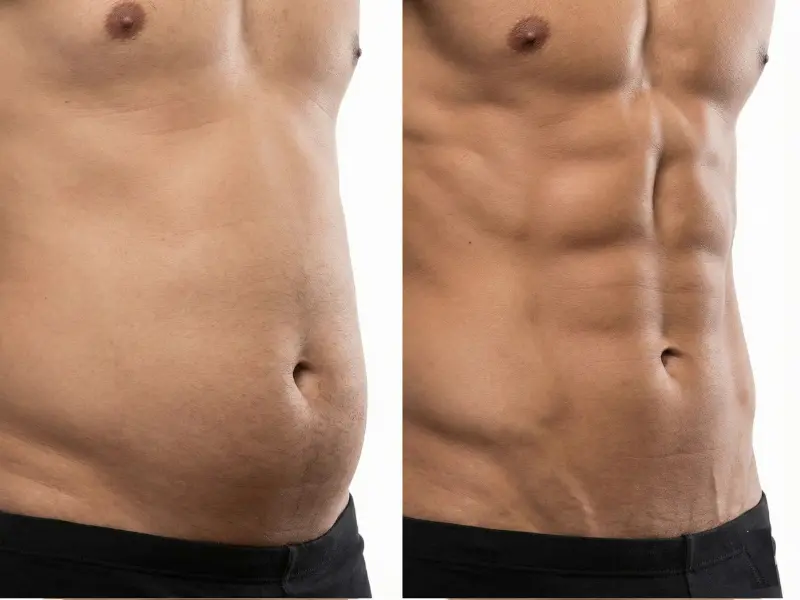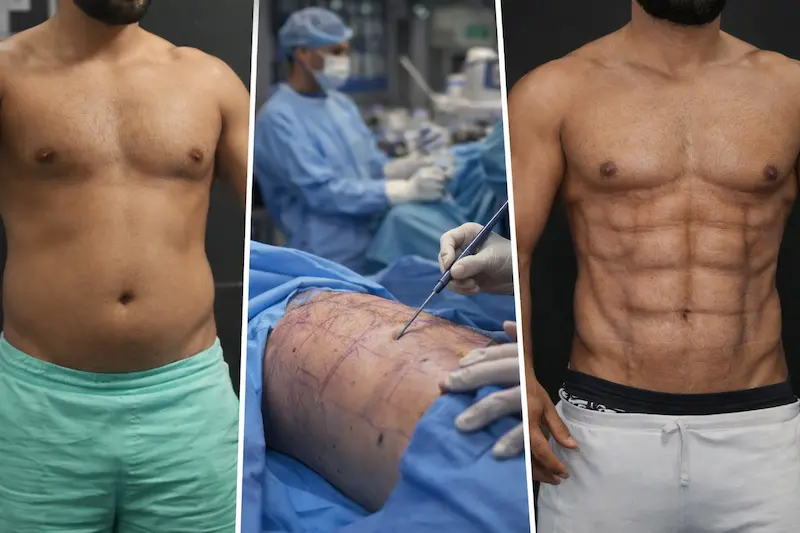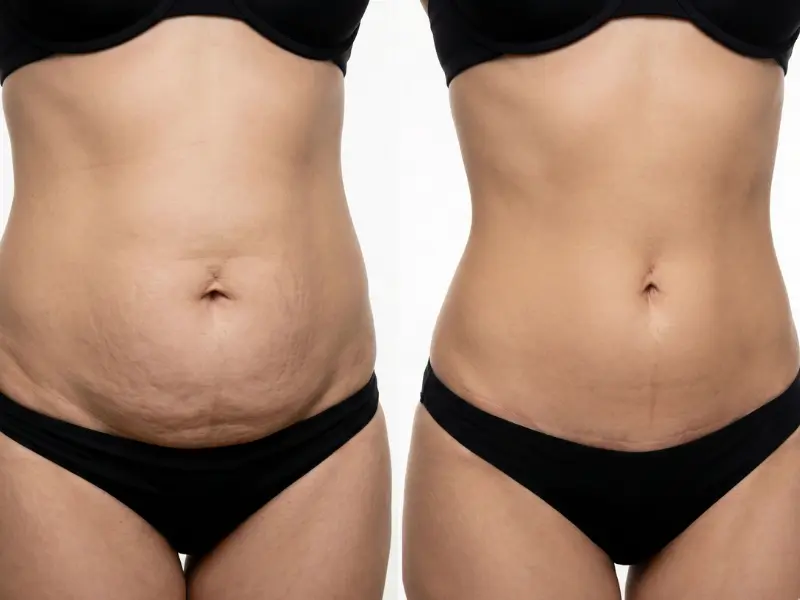
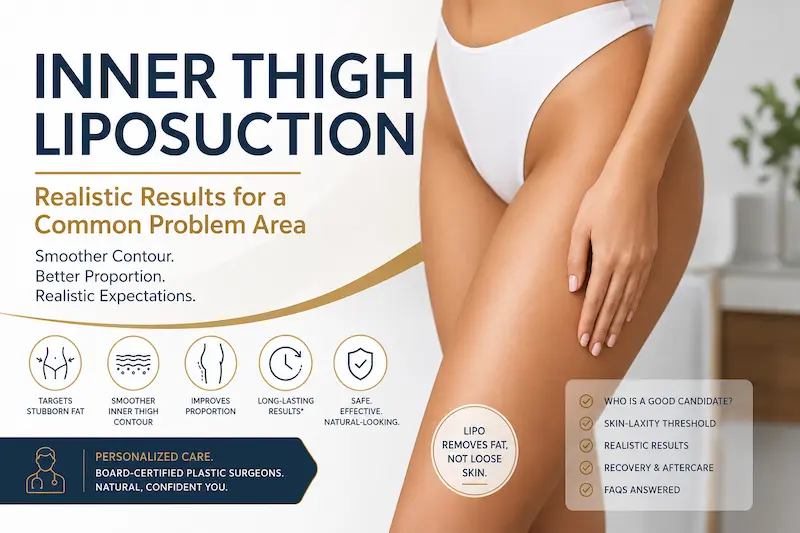
Answer-first: Inner thigh liposuction can smooth and slim stubborn inner-thigh fat, but it works best when the skin has enough elasticity to shrink back after fat removal. If the skin is loose, stretched, or already sagging, liposuction alone may make the area look deflated rather than tighter.
For many patients, the inner thighs are frustrating because they can stay soft or bulky even when the rest of the body responds to diet and exercise. The goal of inner thigh liposuction is not to create an artificial “thigh gap” or dramatically change the leg shape. The realistic goal is better proportion, less rubbing in selected cases, and a smoother transition from the groin to the upper leg.
At AKM Clinic, the first question is not simply “Can we remove fat?” It is “Will the skin behave well after fat is removed?” That distinction matters. A patient with localized fat and firm skin may do very well with how liposuction is performed, while a patient with significant skin laxity may need a different body-contouring plan.
This guide explains who is a strong candidate, when inner thigh lipo is limited, how skin laxity changes the result, and what a realistic recovery timeline looks like.
Table of Contents
Why the Inner Thigh Is Such a Common Problem Area?
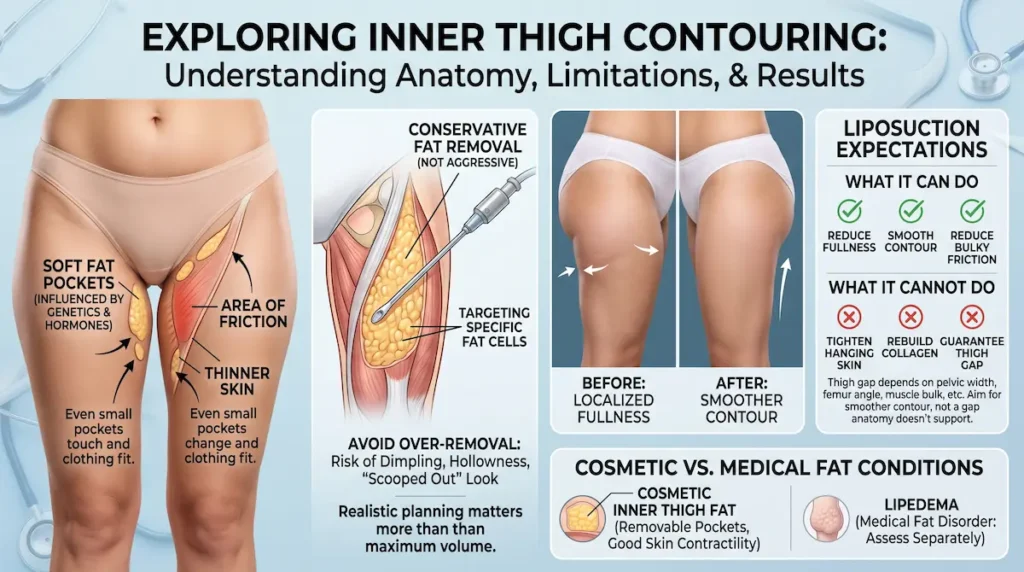
The inner thigh is a common concern because it combines soft fat, frequent friction, and skin that can be thinner than patients expect. Even small pockets of fat in this area can change how the legs touch, how clothing fits, and how smooth the upper-leg contour appears.
Unlike the abdomen or flanks, the inner thigh has less room for aggressive fat removal. The area needs a conservative, even approach. Removing too much fat can create dimpling, hollowness, or an uneven “scooped out” look. This is why realistic planning matters more than chasing maximum volume removal.
Why inner-thigh fat can resist diet and exercise
Inner-thigh fat is often influenced by genetics, hormones, and overall fat distribution. A person can be active, maintain a stable weight, and still carry a soft pocket of fat high on the inner thigh. That does not mean diet or training failed. It means this area may be one of the body’s natural fat-storage zones.
Liposuction targets fat cells in a specific area. It does not change muscle tone, bone structure, cellulite biology, or natural leg spacing. That is why the best results come from matching the procedure to the right problem: localized fat, not loose skin or broad leg heaviness.
What liposuction can actually do in this area
In the right candidate, inner thigh liposuction can reduce fullness along the upper inner thigh and create a smoother line between the groin and mid-thigh. It can also reduce bulky friction in selected patients, although medical symptoms should always be assessed individually.
What it cannot do is tighten hanging skin, rebuild collagen, or guarantee a thigh gap. A thigh gap depends on pelvic width, femur angle, muscle bulk, fat distribution, and posture. For many patients, aiming for smoother contour is safer and more natural than trying to force a gap that the anatomy does not support.
How this differs from medical fat conditions
Cosmetic inner thigh fat is different from conditions such as lipedema, where abnormal fat distribution, discomfort, easy bruising, or heaviness may be part of a broader medical picture. Patients who suspect a medical fat disorder should be assessed differently from someone seeking localized contouring. You can read more about liposuction used for lipedema if your concern is not purely cosmetic.
For cosmetic inner thigh contouring, the key question is simple: is there a removable fat pocket, and will the skin contract smoothly afterward?
Are You a Good Candidate? The Skin-Laxity Threshold
The best candidates for inner thigh liposuction usually have localized fat, stable weight, and skin that still feels firm and elastic. The most limited candidates are those with significant loose skin, stretch-damaged tissue, or major weight-loss changes. This is the threshold that decides whether liposuction is likely to look smooth or disappointing.
For an expert patient, this is often the make-or-break part of the consultation. The desire may be “slimmer inner thighs,” but the real surgical question is whether the skin can follow the new contour after fat is removed.
The practical “pinch test” idea
A surgeon assesses skin laxity by looking at how the tissue behaves, not just how much fat can be pinched. If the inner thigh skin is firm and springs back quickly, liposuction is more likely to create a smoother contour. If the skin hangs, wrinkles, or folds when lifted, fat removal may reduce volume but leave lax skin behind.
This is why thigh liposuction skin laxity is such an important concept. Two patients can have the same amount of inner-thigh fullness but very different outcomes because their skin quality is different.
| Candidate Signal | What It Usually Means | Likely Best Direction |
|---|---|---|
| Localized inner-thigh fat with firm skin | The skin is more likely to retract after fat removal | Inner thigh liposuction may be appropriate |
| Stable weight and no major skin folds | The result is more predictable and easier to maintain | Liposuction can be considered if anatomy fits |
| Loose, hanging, or crepey inner-thigh skin | Fat removal may make sagging more visible | A thigh lift evaluation may be more honest |
| Massive weight loss with excess skin | The main issue is skin, not just fat | Skin-excision surgery may be needed |
| Expectation of a guaranteed thigh gap | The goal may not match the anatomy | Expectation-setting is needed before surgery |
When liposuction alone can create a smooth result
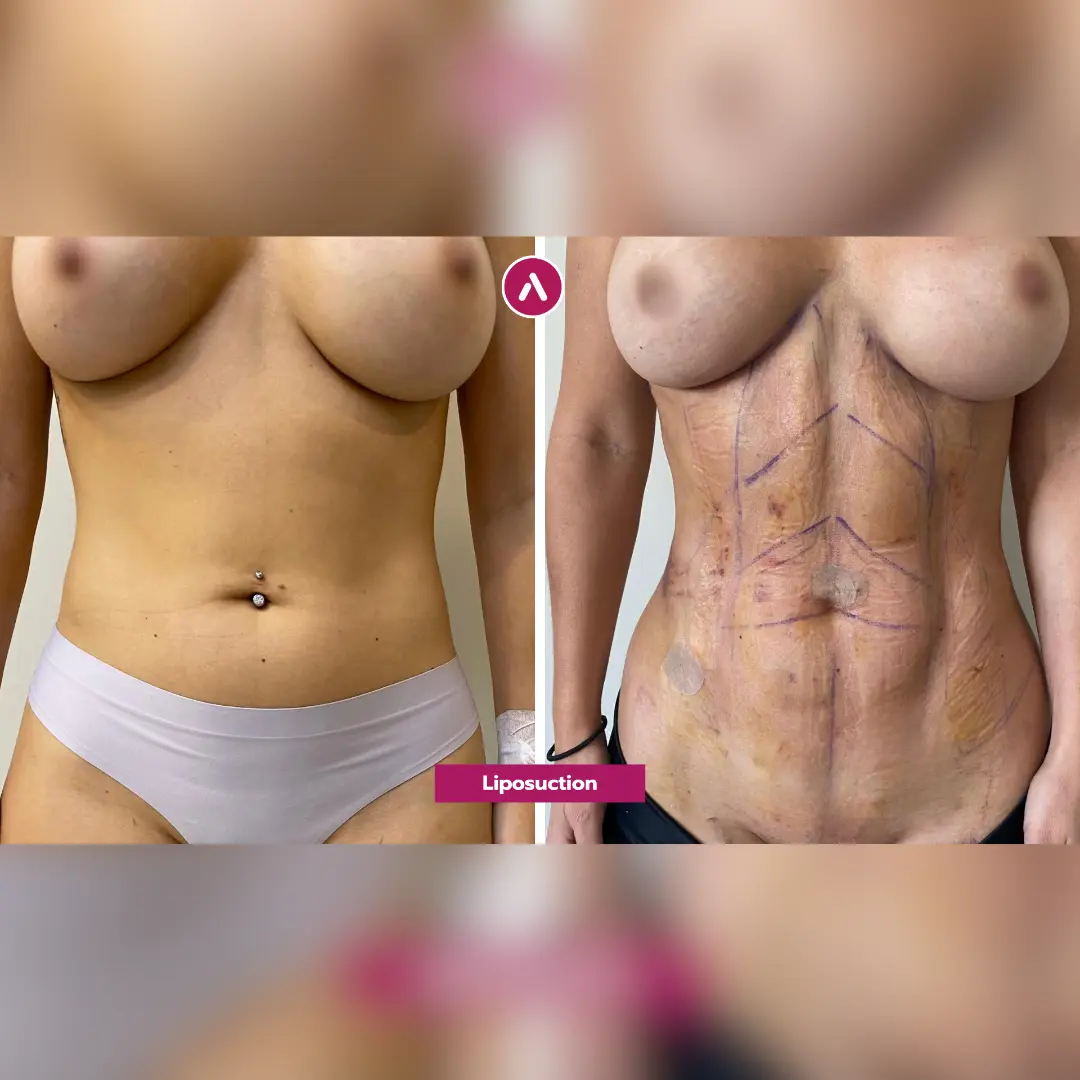
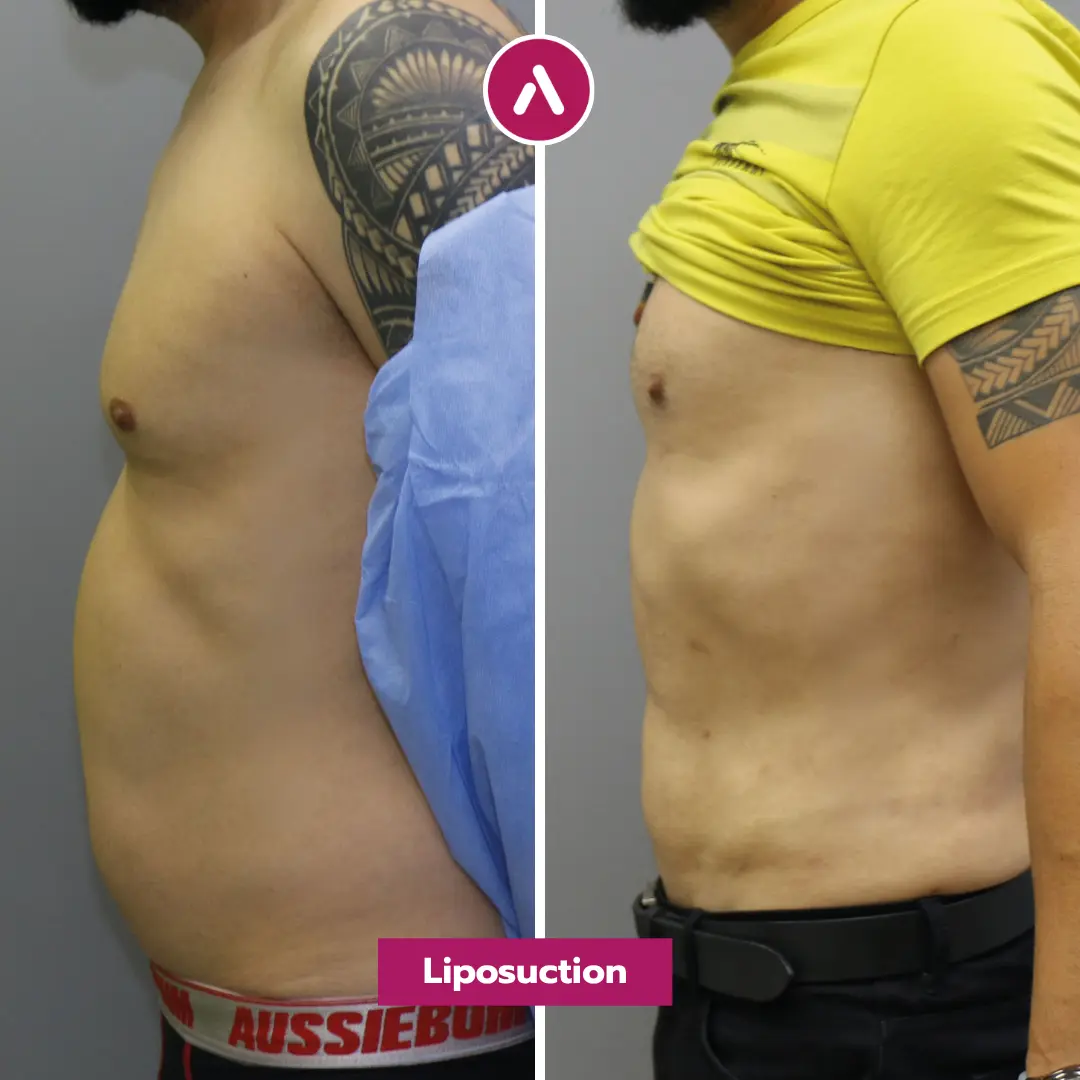
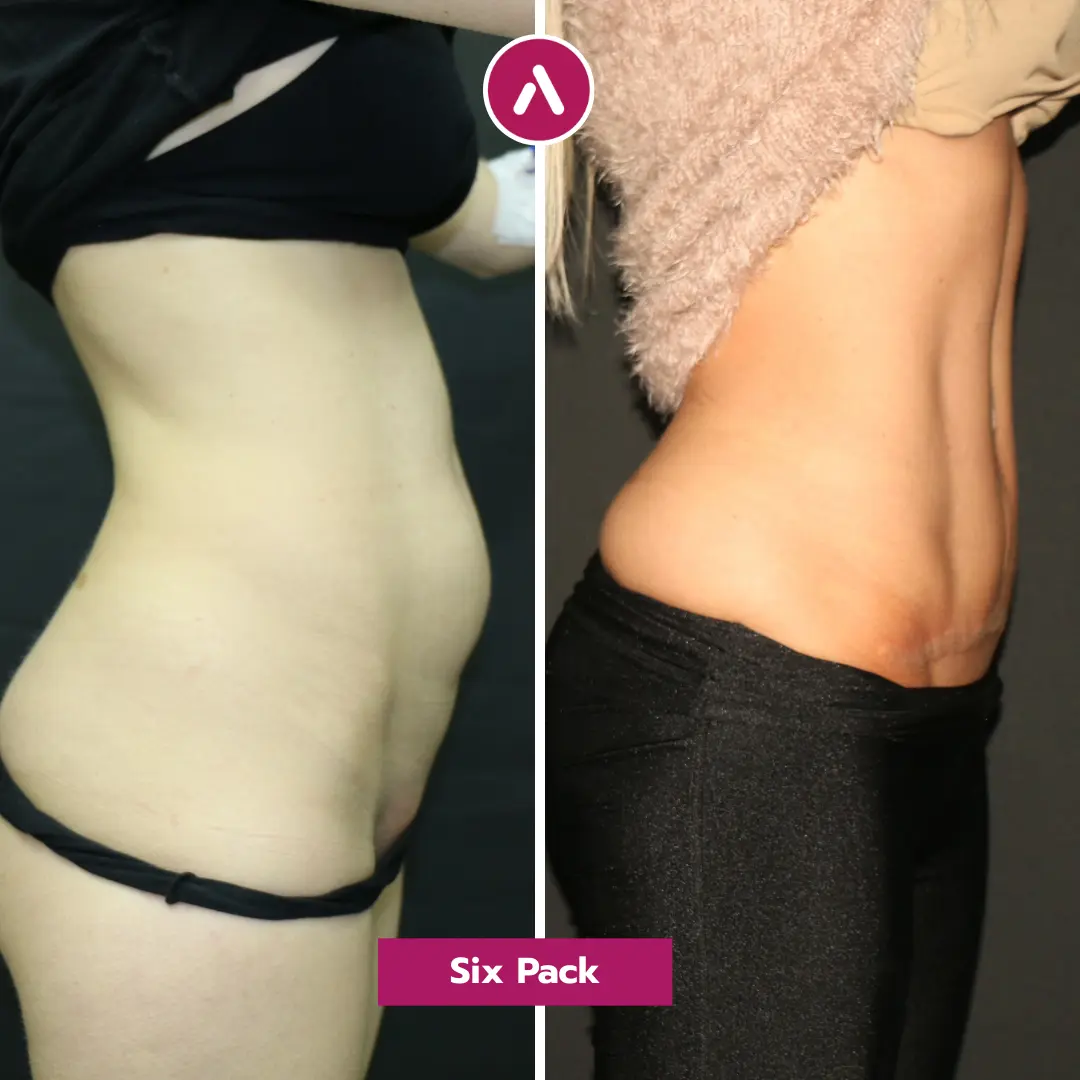
Liposuction works best when the inner thigh fullness is soft, localized, and surrounded by skin that can contract. In these cases, removing fat carefully can make the upper leg look lighter without creating an operated-on contour.
Technique matters here. Conservative, even fat removal helps avoid grooves and shadows. The inner thigh is not a place for aggressive sculpting. It is a place for restraint.
When loose skin can turn lipo into disappointment
If the inner thigh already has loose folds, liposuction may reduce bulk but leave the skin looking flatter, softer, or more wrinkled. This can feel disappointing because the area may be smaller, but not smoother.
Energy-based devices are sometimes discussed for mild tightening, but they do not replace skin removal when laxity is significant. If you are researching whether laser lipo tightens skin, the key point is that mild contraction is different from lifting loose tissue.
Surgeon-led perspective: Liposuction removes fat; it does not remove loose skin. If skin laxity is high, the honest recommendation may be a thigh lift rather than more aggressive liposuction.
That honesty protects the result. A smaller thigh is not automatically a better thigh if the remaining skin cannot sit smoothly.
When Liposuction Isn’t Enough?
Inner thigh liposuction is not always the right answer. If the main problem is loose skin rather than fat, removing more fat can make the thigh look less supported. The area may become smaller, but it may also look wrinkled, hollow, or uneven.
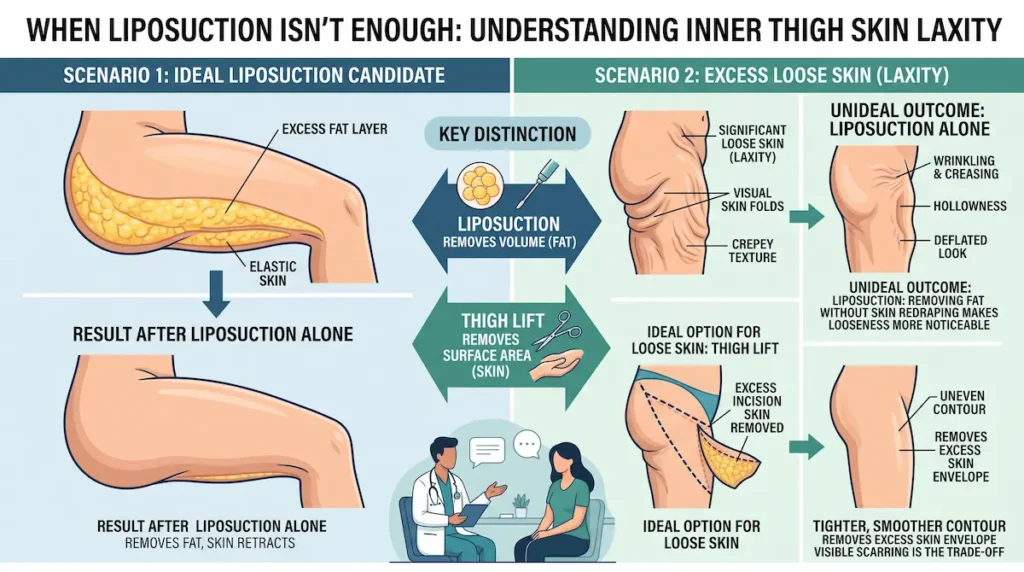
This is where a careful consultation protects the patient. A good plan does not force liposuction onto every inner-thigh concern. It separates fat, skin, muscle, and natural anatomy before recommending surgery.
Signs that skin removal may be needed
Patients who have lost a large amount of weight, have visible inner-thigh folds, or see skin hanging when standing may be outside the ideal range for liposuction alone. Stretch marks, crepey texture, and skin that does not spring back can also suggest reduced elasticity.
None of these signs automatically rule out liposuction. They simply change the conversation. The surgeon may recommend a lift, staged treatment, or a more conservative fat-removal plan to avoid making looseness more noticeable.
The risk of a deflated or saggy lipo-only result
When too much fat is removed from skin that cannot retract, the inner thigh can look deflated. This is different from normal swelling. It is a mismatch between the amount of volume removed and the skin’s ability to redrape.
This is one reason patients should be cautious with promises of dramatic before-and-after changes in a delicate area. The inner thigh is not the abdomen. It does not tolerate aggressive contouring in the same way. If you want to understand the risk side more clearly, read about what over-aggressive liposuction can cause.
When a thigh lift is the better option
If loose skin is the dominant issue, when a thigh lift is the better option becomes the more honest discussion. A thigh lift removes excess skin; liposuction removes fat. They solve different problems.
The trade-off is scarring. A lift can create a smoother, tighter contour in patients with significant laxity, but it requires skin excision and therefore a visible incision pattern. Liposuction has much smaller entry points, but it cannot remove hanging skin.
For patients after major weight loss, the same principle appears across body-contouring procedures: when the skin envelope is too loose, skin excision may be necessary. That is why it can help to understand how skin-excision body surgery works, even though the procedure itself is different.
Peer-reviewed liposuction literature also recognizes that residual skin laxity can affect outcomes, especially when the skin envelope does not contract well after fat removal. For a technical overview of liposuction outcome issues, see this review of liposuction outcomes and skin-laxity issues.
What Realistic Results Look Like?
Realistic inner thigh liposuction results are usually subtle-to-moderate, not extreme. The goal is a cleaner inner-thigh line, smoother contour, and better proportion with the rest of the leg. Patients who understand this before surgery are more likely to be satisfied afterward.
The result should look like your leg, refined. It should not look carved out, sharply hollowed, or disconnected from the knee, hip, or outer thigh. Natural contour matters.
Contour change vs. the “thigh gap” myth
A thigh gap is not a reliable surgical goal. Some people have one because of pelvic width, femur angle, muscle shape, and fat distribution. Others will not have one even at a low body-fat percentage.
Inner thigh liposuction can reduce fat where the thighs touch, but it cannot change bone structure. In some patients, the legs may separate more after swelling settles. In others, the main improvement is smoother upper-leg contour rather than visible space between the thighs.
A safer goal is proportion: less heaviness, less bulging, and a softer transition between the inner thigh and the groin. This goal respects anatomy instead of forcing a trend onto every body type.
How results settle over weeks and months
Early results can be misleading. The inner thighs often swell, feel firm, or look uneven during the first weeks. This does not mean the final result has failed. It means the tissue is healing.
Most patients see a clearer shape as swelling improves over the first several weeks, but the final contour can continue refining for months. Compression, walking, hydration, and following post-op instructions all support a smoother recovery.
The American Society of Plastic Surgeons has also emphasized that skin quality plays a major role in body-contouring outcomes after liposuction. Their patient guidance on why skin quality drives liposuction results is useful context for patients comparing fat removal with tightening procedures.
How to protect your result long-term
Liposuction permanently removes treated fat cells, but it does not prevent future weight gain. Remaining fat cells can still enlarge if weight increases. That means the result is long-lasting only when it is supported by stable habits.
For inner thighs, weight stability matters because even modest changes can affect how the legs touch and how clothing fits. Strength training may improve muscle tone, but it will not replace the contour change from fat removal. The two work best together.
The best long-term result usually comes from three things: conservative surgical planning, realistic expectations, and a stable weight after recovery.
Recovery & Protecting Your Result
Inner thigh lipo recovery is usually manageable, but this area can feel tender because the thighs move, touch, and swell with daily activity. Recovery is not just about waiting for bruising to fade. It is about helping the tissue settle smoothly while avoiding friction, excess swelling, and early overactivity.
Your surgeon’s post-op plan should be specific to the amount of fat removed, the quality of your skin, and whether other areas were treated at the same time. A small, conservative inner-thigh case can feel very different from a larger body-contouring plan.

Compression and swelling
Compression garments are commonly used after thigh liposuction to help control swelling and support the new contour. They do not “create” the result, but they help the tissue heal in a more controlled way.
Swelling can move downward with gravity, so the thighs may feel firm, puffy, or uneven for several weeks. This is expected. Bruising, mild numbness, and tightness can also occur early on. The important pattern is gradual improvement, not day-by-day perfection.
Activity timeline after inner thigh lipo
Most patients are encouraged to walk gently soon after surgery to support circulation. Desk work may be possible within several days for some patients, depending on the extent of treatment and the surgeon’s instructions. Strenuous lower-body workouts, running, and heavy leg training usually wait longer.
The inner thighs are exposed to friction, so rushing exercise can increase swelling or irritation. A patient who feels “fine” too early can still irritate the healing tissue. Slow progress is safer.
| Recovery Stage | Typical Experience | What Helps |
|---|---|---|
| Days 1–3 | Swelling, soreness, tightness, and light drainage may occur | Rest, short walks, compression, and following wound-care instructions |
| Week 1 | Bruising and swelling are still visible; walking becomes easier | Gentle movement, hydration, and avoiding thigh friction |
| Weeks 2–4 | Shape begins to show, but firmness and uneven swelling can remain | Continued compression if advised, gradual activity, and patience |
| Months 2–3 | Contour looks smoother as swelling reduces | Stable weight, progressive exercise, and scar protection |
| Months 3–6+ | Final refinement continues; subtle swelling may resolve slowly | Long-term weight stability and follow-up with your surgical team |
When the final shape becomes visible
Early improvement can appear within weeks, but the final result takes longer. The inner thighs may look uneven before they look smooth. One side may swell more than the other. That can be normal.
Most patients judge their result too early. A better approach is to follow the recovery plan, attend follow-ups, and allow the tissue enough time to soften. If firmness, contour irregularity, or worsening asymmetry persists, your surgeon can assess whether it is normal healing or something that needs treatment.
Planning cost without turning the decision into a price hunt
Cost matters, but inner thigh liposuction should not be chosen by price alone. The surgeon’s judgment, skin-laxity assessment, facility safety, and aftercare plan all shape the result.
If you are comparing options, review the cost of liposuction separately. This article stays focused on candidacy, results, and recovery rather than opening a full pricing discussion.
Frequently Asked Questions: Inner Thigh Liposuction
These answers address the most common concerns patients have before deciding whether inner thigh liposuction fits their anatomy and expectations. They are general educational answers, not a substitute for a personal examination.
Will inner thigh lipo leave loose skin?
It can if your skin already has poor elasticity. Liposuction removes fat, not skin. If the skin is firm and elastic, it may retract well. If it is loose, stretched, or crepey, fat removal may reveal more laxity.
Does inner thigh liposuction create a thigh gap?
Not reliably. A thigh gap depends on bone structure, muscle shape, pelvic width, posture, and fat distribution. Liposuction can reduce inner-thigh fat, but it should not be planned around guaranteeing a gap.
How long is inner thigh lipo recovery?
Many patients resume light daily activities within several days, but swelling and firmness can last for weeks. More strenuous exercise usually returns gradually after your surgeon clears you. Final contour refinement can take several months.
Can liposuction cause dimpling on the thigh?
Yes, especially if fat is removed too aggressively or unevenly, or if the skin has poor elasticity. Conservative technique is important because the inner thigh is a delicate area with a high risk of visible irregularity when overtreated.
Do I need a thigh lift instead?
You may need a thigh lift if loose skin is the main issue. Liposuction is best for localized fat with good skin tone. A thigh lift is considered when skin removal is necessary to create a smoother contour.
Are inner thigh liposuction results permanent?
The removed fat cells do not grow back in the same way, but remaining fat cells can enlarge with weight gain. Results are long-lasting when your weight stays stable and your expectations match your anatomy.
Is Inner Thigh Liposuction Right for You?
Inner thigh liposuction can be a strong option when the problem is localized fat and the skin has enough elasticity to contract. It can create a cleaner upper-leg contour and a smoother shape in clothing. It can also be disappointing when loose skin is the real concern.
The safest plan starts with honesty: fat can be removed, but skin behavior must be respected. For some patients, that means liposuction. For others, it means a lift, staged treatment, or no surgery at all.
AKM Clinic’s approach is built around natural-first body contouring, careful patient selection, and realistic planning in a JCI-accredited surgical setting. For liposuction and body-contouring cases, the team evaluates the skin, fat layer, and long-term contour rather than treating fat removal as a one-size-fits-all procedure.
Medical disclaimer: This article is for educational purposes only and is not medical advice, diagnosis, or a treatment plan. Results vary by anatomy, skin quality, healing response, and surgical plan. Always consult a qualified surgeon for personalized guidance.