If you’re researching piezo rhinoplasty Turkey, you’re likely looking for one thing: more control. Ultrasonic (Piezo) technology is designed to shape nasal bone with a level of precision that many patients associate with smoother contours and, in some cases, a gentler recovery experience.
This guide is written for the “expert patient” who wants specifics—how Piezo works, what benefits are realistic, what recovery typically looks like, and how to evaluate surgeon experience and clinic standards when considering piezo rhinoplasty in Turkey.
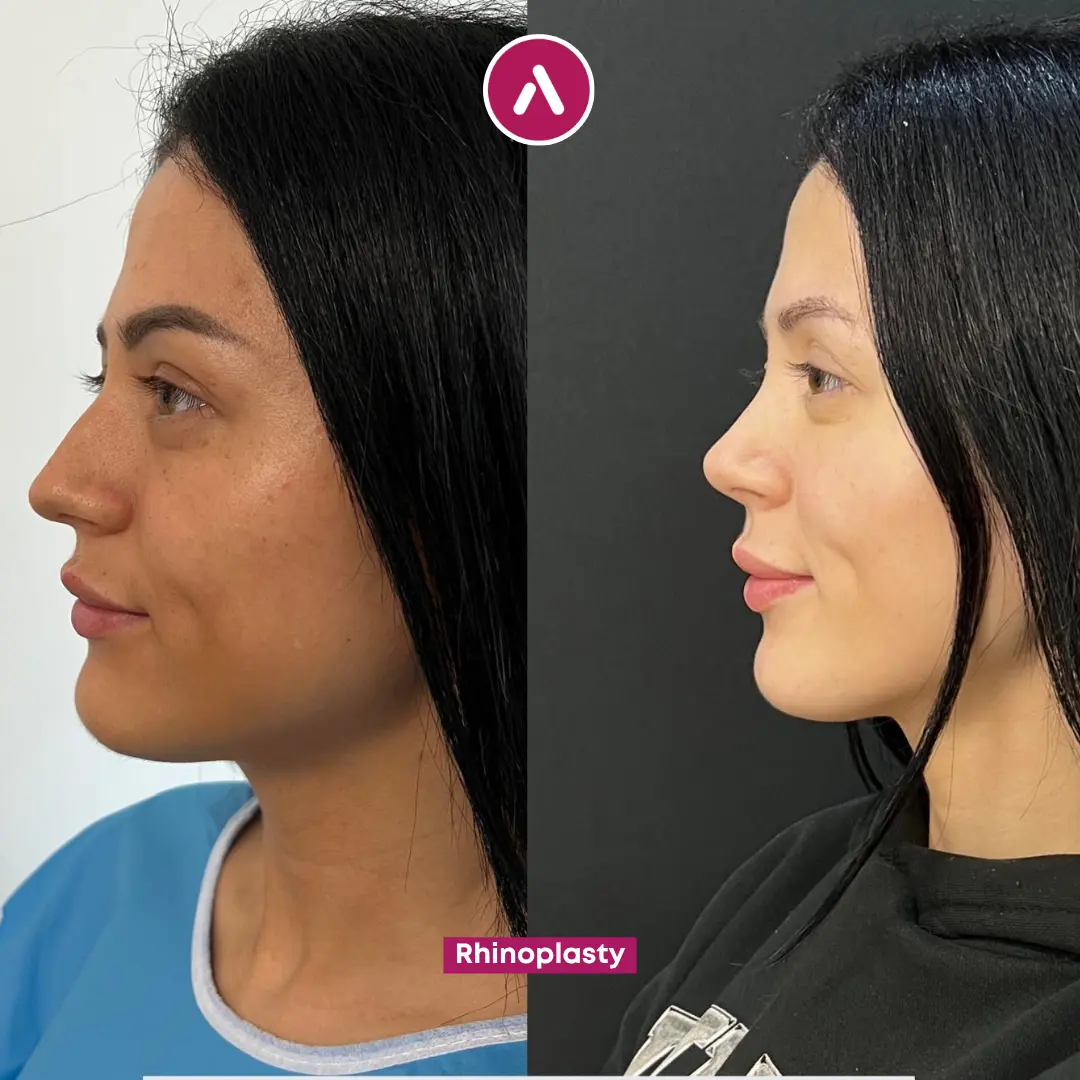
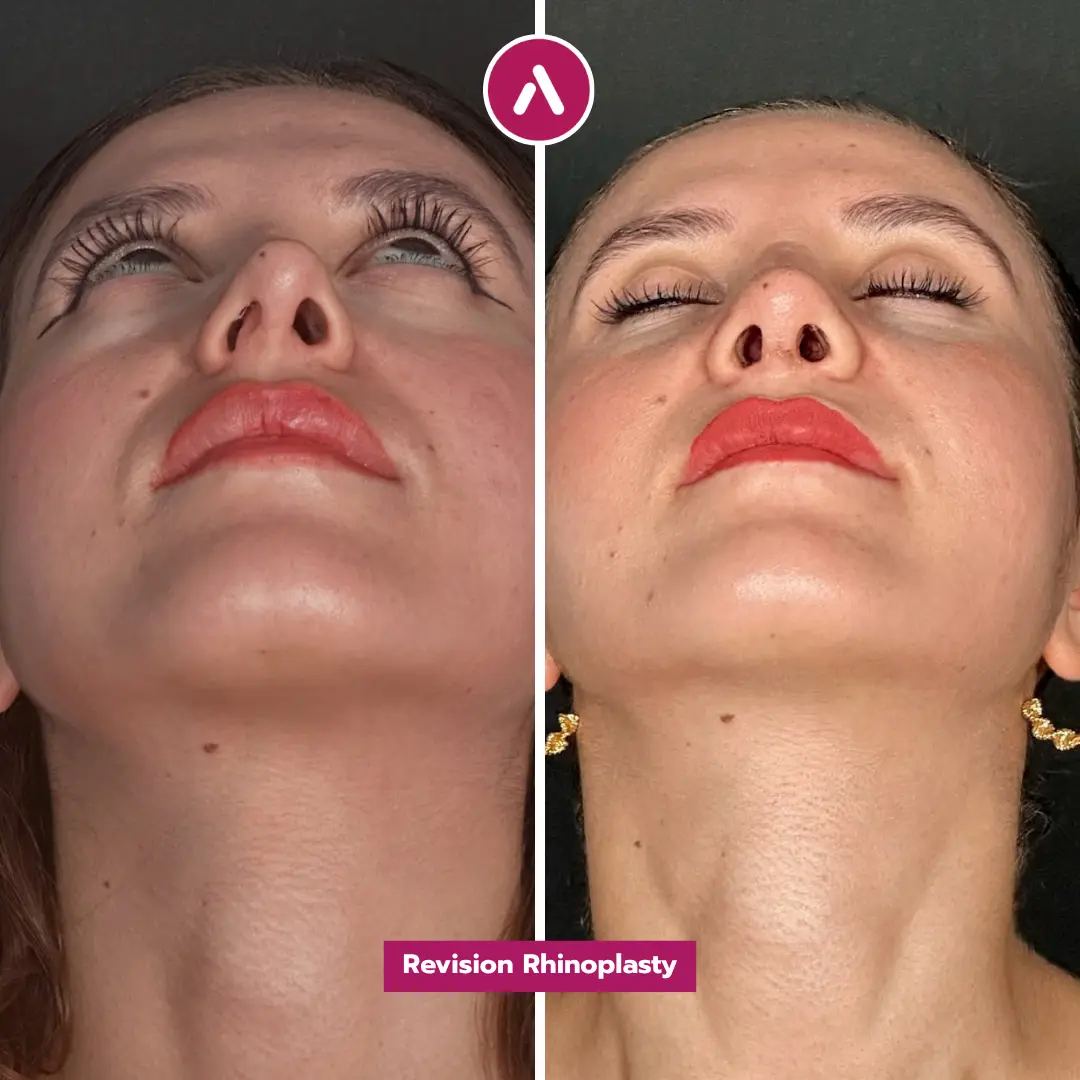
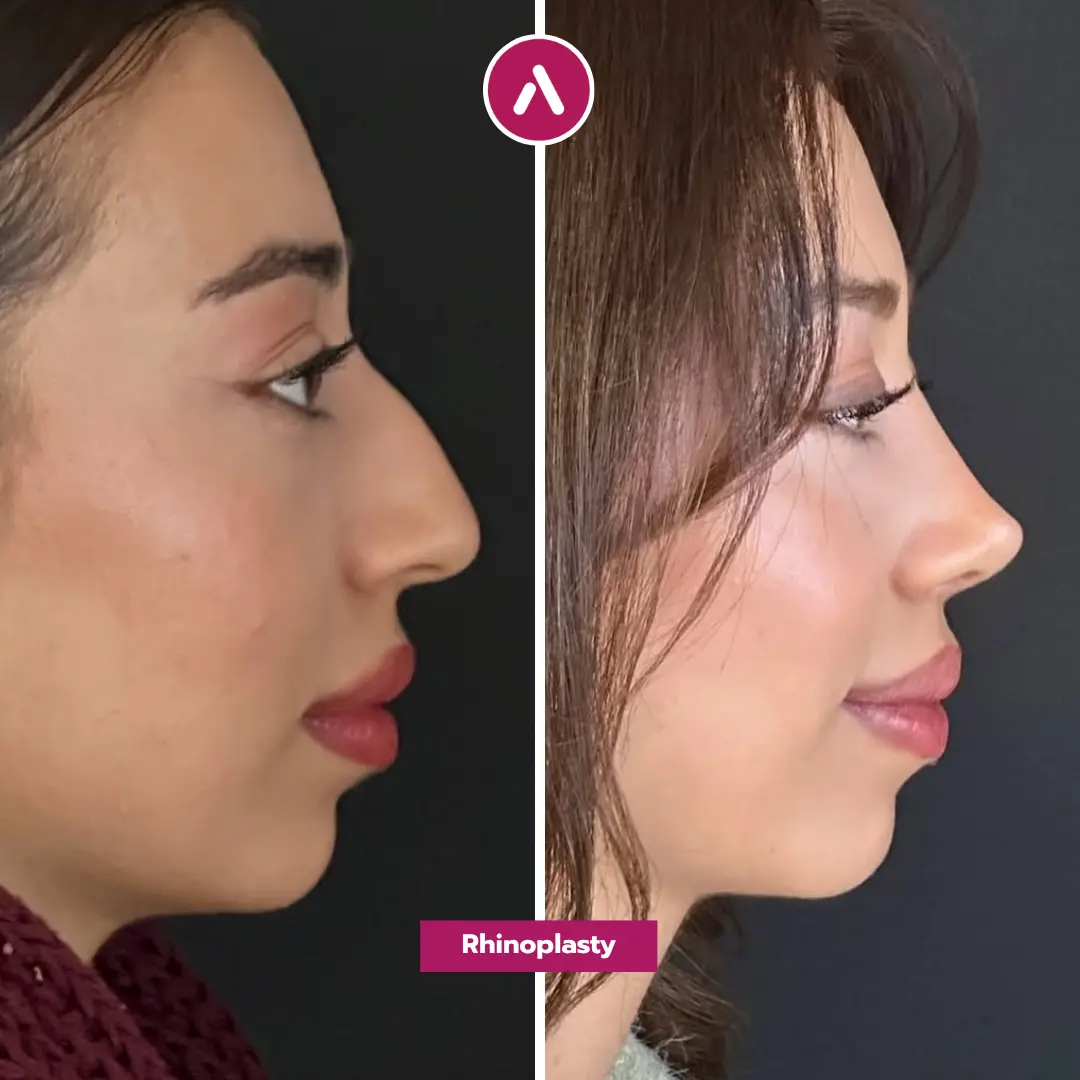
Importantly, while the technology is promising, outcomes still depend on surgeon planning, technique, and anatomy. We’ll keep this evidence-based and aligned with medical science—highlighting what scientific research suggests, where data is limited, and what questions to ask before you book a trip.
At AKM Clinic, rhinoplasty is approached as both an aesthetic and functional procedure—especially when breathing is part of the goal. For complex nasal surgery, this dual focus is typically led by a facial plastic surgery team with dedicated rhinoplasty expertise (including European Board-certified otolaryngology & facial plastic surgery credentials, where applicable).
Table of Contents
What Is Piezo (Ultrasonic) Rhinoplasty?
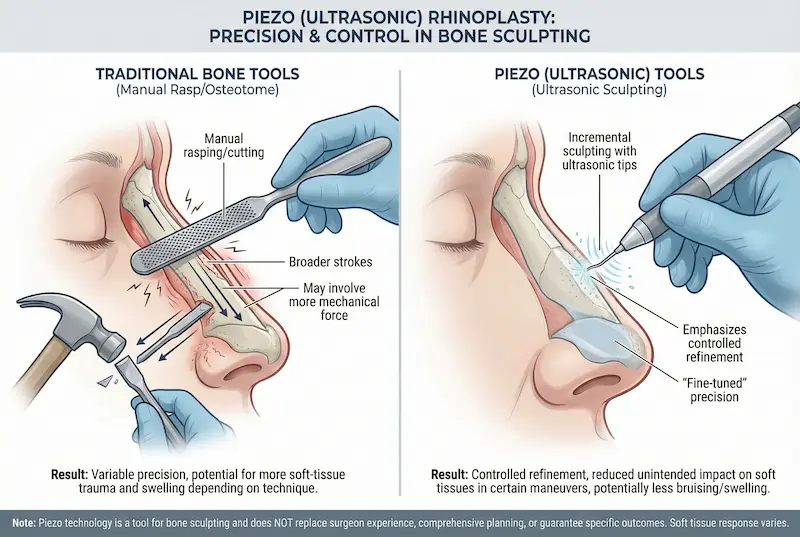
Piezo rhinoplasty (also called ultrasonic rhinoplasty) uses ultrasonic energy to sculpt nasal bone with specialized tips. Instead of relying solely on manual bone-cutting instruments, the surgeon can refine the bony vault in a more controlled way—especially helpful when the goal is a smoother bridge line or carefully planned narrowing.
How ultrasonic bone sculpting works (the “Piezo” concept)
In simple terms, Piezo devices vibrate at ultrasonic frequencies. The tips are designed to work on mineralized tissue (bone) with high control. In practice, this can help a surgeon:
- Refine bone in small, incremental steps
- Create smoother transitions along the nasal bridge
- Reduce “overcorrection” risk by allowing more measured sculpting
Piezo vs. traditional tools (rasps, osteotomes): what actually changes?
Traditional rhinoplasty tools (rasps, osteotomes) can be highly effective in experienced hands. The difference with Piezo is not “better surgery” by default—it’s a different way to execute the bony work. Here’s a practical comparison patients usually care about:
| Topic | Traditional Bone Tools | Piezo (Ultrasonic) Tools |
|---|---|---|
| Bone shaping style | Manual rasping/cutting; can be faster for certain steps | Incremental sculpting with ultrasonic tips; emphasizes controlled refinement |
| Precision feel | High in expert hands; broader strokes for some maneuvers | Often perceived as more “fine-tuned,” especially for smoothing and contouring |
| Soft-tissue trauma (general concept) | May involve more mechanical force depending on step | May reduce unintended impact on surrounding tissues in certain bone maneuvers |
| Patient-facing recovery expectations | Variable; bruising/swelling depend on anatomy + technique | Some patients report less bruising/swelling—but it’s not guaranteed |
What Piezo does not do (realistic expectations)
Piezo doesn’t “auto-guarantee” a perfect nose, a pain-free recovery, or zero bruising. It also doesn’t replace the most important parts of rhinoplasty:
- Diagnosis & planning: facial analysis, nasal function assessment, and structural strategy
- Surgeon experience: especially in primary vs. revision cases
- Soft tissue behavior: skin thickness, tip support, and healing biology
Key Benefits of Ultrasonic Precision in Nose Surgery
When patients search “Turkey piezo rhinoplasty,” they’re usually trying to understand whether ultrasonic precision translates into a visible difference. The benefits most often discussed are related to control in bone shaping and potentially gentler handling of tissues during specific steps.
More controlled bone shaping and smoother contours
Ultrasonic tools can allow more measured sculpting of the nasal bones. In practical aesthetic terms, this may help with:
- Smoother dorsal lines (bridge contours) after hump reduction
- More predictable narrowing of the bony vault in suitable candidates
- Fine refinement when symmetry and micro-contours matter
Potential for less trauma to surrounding soft tissue
In certain maneuvers, Piezo technology may reduce the need for forceful bone manipulation. From a patient perspective, this is often discussed in relation to bruising and swelling. However, honest counseling matters: individual anatomy, surgical plan, and technique still drive most recovery variability.
What patients typically notice: bruising, swelling, comfort
In clinic discussions, the most common patient questions are:
- “Will I bruise less?”
- “How swollen will I be at day 7–10?”
- “When will I look presentable for travel or work calls?”
We’ll answer these with a clear timeline in the next section—because recovery planning is often the deciding factor for patients comparing a Turkey piezo rhinoplasty package with options closer to home.
Recovery Timeline: Bruising, Swelling, and When You Look “Normal”
For most patients considering piezo rhinoplasty in Turkey, recovery planning is the “make-or-break” factor—especially if you’re traveling. While ultrasonic tools may reduce tissue trauma in certain bone steps, recovery still varies based on your anatomy (skin thickness, bone structure), whether the procedure includes functional breathing work, and the surgeon’s approach. In medical science, the most honest answer is: there are typical patterns, but your timeline is personal.
Key takeaway: Piezo may support more controlled bony work, but your swelling and bruising depend on the full surgical plan—not a single device.
First 72 hours: what’s normal vs. what’s not
During the first 3 days, expect swelling and congestion (especially if internal support or functional work is done). Many patients feel “blocked,” which is normal early on.
- Normal: swelling around the nose/eyes, mild bruising, congestion, pressure sensation, fatigue
- Also common: watery/blood-tinged drainage for a short period, dry mouth from mouth-breathing
- Not normal (seek medical advice): severe one-sided pain with rapidly increasing swelling, persistent heavy bleeding, fever, chest pain, shortness of breath
1–2 weeks: splint removal, public-facing timeline, travel readiness
This is the window most traveling patients care about. The external splint is often removed around day 6–8 (varies by technique). Many patients look “presentable” in video calls after the first week, but you may still have visible swelling—especially at the tip.
| Timepoint | What You May See/Feel | Planning Tips (Travel & Work) |
|---|---|---|
| Days 1–3 | Peak swelling; possible bruising; congestion | Rest, elevate head, gentle walking; avoid heavy activity |
| Days 4–7 | Bruising often begins fading; swelling starts shifting | Plan quiet days; avoid crowded schedules |
| Days 6–10 | Splint removal often happens in this range; appearance improves | Many patients can fly in this window if cleared by the surgeon |
| Weeks 2–4 | Most bruising resolved; swelling remains (especially tip) | Work/social life usually easier; avoid contact sports |
If you’re booking a Turkey piezo rhinoplasty package, a practical travel plan is typically built around safe follow-up checkpoints (splint removal + early assessment). A common approach is scheduling your stay to cover those milestones, then continuing structured remote follow-up once you’re home.
3–12 months: tip refinement, final result, patience checklist
The bridge may look “settled” sooner than the tip. Tip swelling can be the slowest part—especially in thick-skinned patients. This is where expectations matter. The nose you see at week 2 is not your final nose.
- Months 1–3: noticeable improvement, but lingering swelling is expected
- Months 3–6: progressive refinement; tip definition becomes more apparent
- Months 6–12: final details continue to emerge, especially at the tip
From a scientific research perspective, the concept is simple: swelling resolves gradually because soft tissue adapts and remodels over time. Your surgeon should explain your anatomy-based timeline—not just generic averages.

Who Is a Good Candidate for Piezo Rhinoplasty?
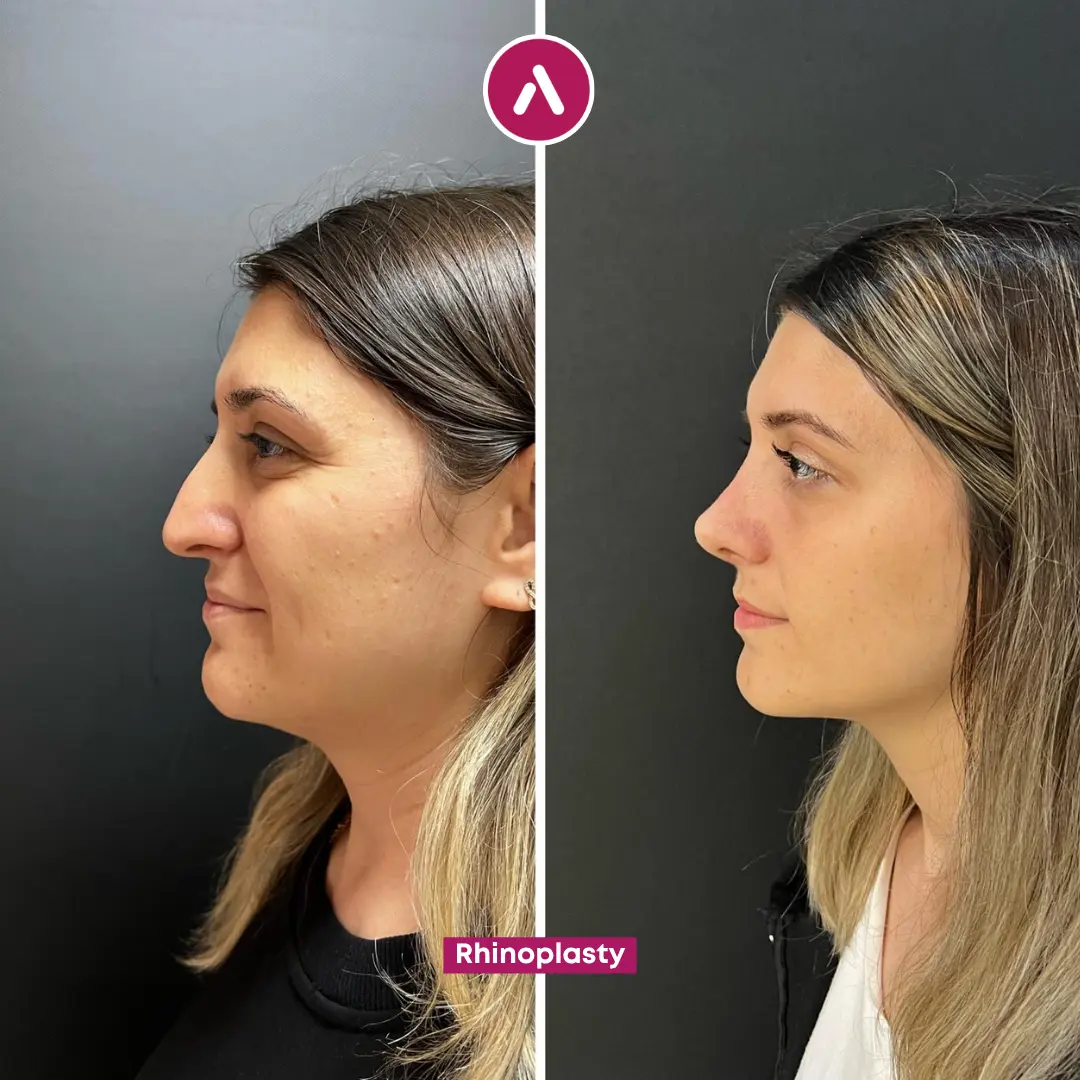
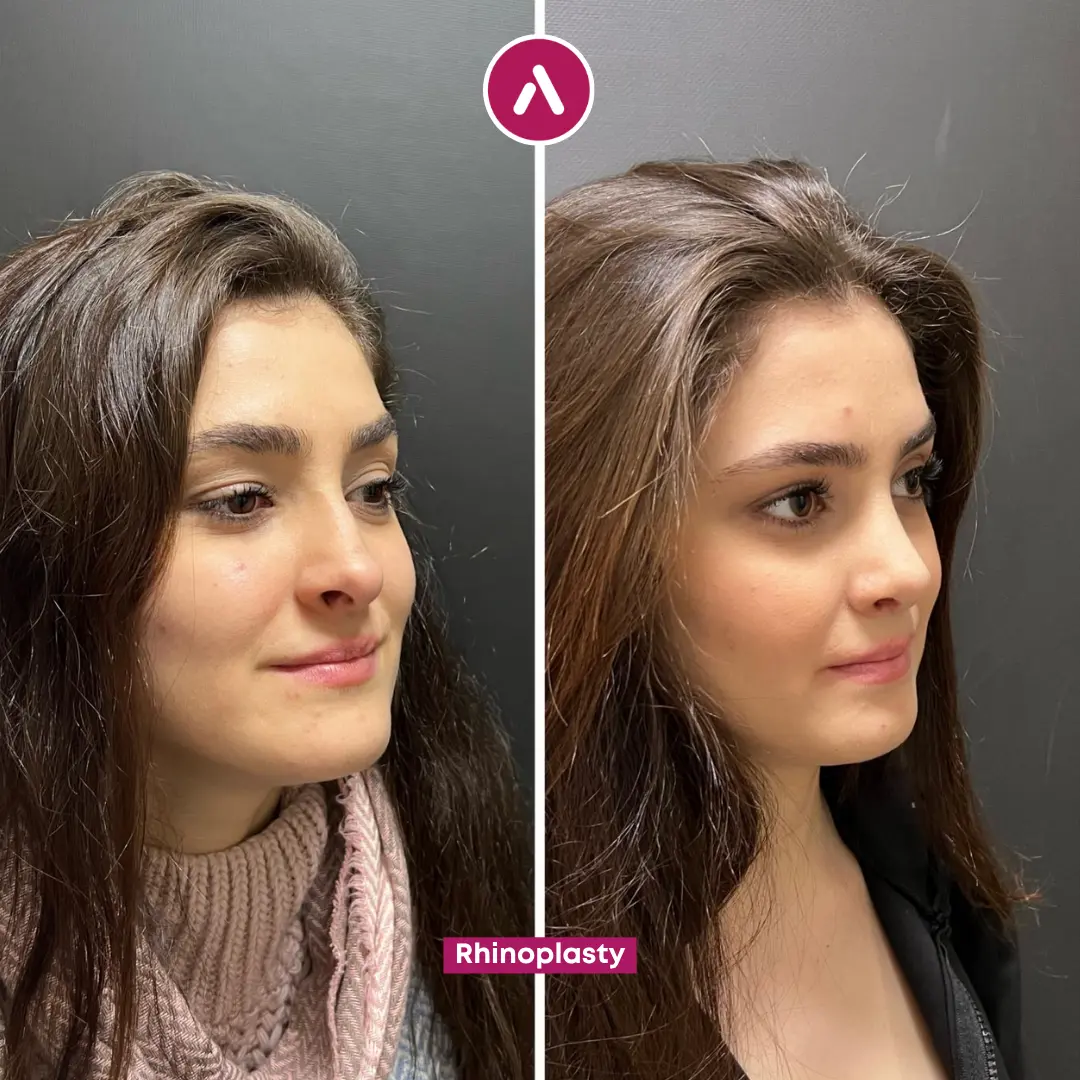
Not every rhinoplasty requires ultrasonic tools—and that’s a good thing. Piezo is most meaningful when the plan involves precise bony vault work (bridge shaping, narrowing, asymmetry correction). The best approach is individualized: the device should serve the plan, not replace it.
Primary rhinoplasty: when Piezo is most useful
In a first-time (primary) rhinoplasty, Piezo can be particularly helpful when goals include:
- Carefully smoothing the nasal bridge after hump reduction
- Controlled narrowing of wide nasal bones
- Refining bony irregularities where micro-contours matter
Patients searching Turkey piezo rhinoplasty are often focused on “precision.” The right consultation will clarify whether your anatomy truly benefits from ultrasonic bone sculpting—or whether standard methods are equally appropriate.
Revision cases: when ultrasonic tools may help (and limits)
Revision rhinoplasty can involve irregular bony edges or asymmetry from prior surgery. Ultrasonic tools may assist with controlled bone refinement in select situations. But revision outcomes depend heavily on:
- Scar tissue and skin envelope quality
- Structural support needs (cartilage grafting, tip support strategy)
- Whether breathing function is compromised
Bottom line: Piezo can be a helpful tool, but it cannot “erase” the complexity of revision surgery. This is one reason choosing the best piezo rhinoplasty surgeon Turkey (meaning: proven rhinoplasty expertise + transparent case strategy) matters far more than the device itself.
Thick skin / strong bone structure / “hard-to-refine” noses
Thick skin and strong bone structure can influence both technique selection and recovery. Piezo may help with controlled bone work, but thick skin can still slow tip definition. A high-integrity plan includes:
- Clear explanation of how skin thickness affects “sharpness” of definition
- Strategy for structural support (tip stability and long-term shape)
- Realistic timeline for refinement (often closer to 9–12 months)
Reality check: If a clinic promises “no swelling” or “final results in 2 weeks,” treat that as a red flag—regardless of the technology used.
Step-by-Step: What a Piezo Rhinoplasty Journey in Turkey Looks Like
If you’re traveling for surgery, the best experience isn’t “mysterious” or improvised—it’s structured. A reputable Turkey piezo rhinoplasty package should feel like a medically guided pathway: clear planning, documented safety steps, predictable follow-ups, and realistic instructions for flying home.
Pre-op planning: consultation, imaging, measurements, goal alignment
High-quality planning is where outcomes are protected. Before committing, you should expect a consultation process that includes:
- Facial and nasal analysis: proportions, symmetry, and what is realistically achievable with your skin and structure
- Functional assessment: if you have breathing concerns, a plan for septum/turbinates (when needed)
- Goal alignment: bridge height, tip rotation/projection, nostril shape—mapped to your anatomy
- Risk discussion: what can go wrong, what’s common, what’s rare, and how it’s managed
For “expert patients,” the important question is not “Do you use Piezo?” but “How does Piezo fit into my plan?” That’s the level of detail you should get from the surgeon.
Surgery day: technique overview, anesthesia basics, safety steps
On surgery day, a professional workflow typically includes identity checks, pre-op markings, a final review of the plan, and an anesthesia safety checklist. Piezo technology mainly affects bony work—for example, bridge refinement and controlled shaping—while other parts of rhinoplasty (tip support, cartilage work, breathing structures) rely on classic surgical principles.
If you’re comparing options for piezo rhinoplasty in Turkey, look for transparency around:
- Who is operating (named surgeon, not a “team you’ll meet later”)
- Where surgery happens (hospital-grade environment, anesthesia team present)
- How emergencies are handled (clear protocols, not vague assurances)
Aftercare in Istanbul: check-ups, medications, remote follow-up plan
Your early follow-up is not optional—especially when you’re flying internationally. A responsible plan usually covers:
- Early clinical checks (swelling/bruising assessment, splint care, hygiene guidance)
- Medication plan (pain control, antibiotics when indicated, nasal care)
- Splint removal timing and next-step instructions
- Remote follow-up (photo/video check-ins after you return home)
Some clinics also use supportive recovery technologies as part of patient care standards. At AKM Clinic, post-op recovery can be supported with technologies like HBOT (Hyperbaric Oxygen Therapy) and LLLT (Low-Level Laser Therapy) in appropriate cases, aiming to support tissue recovery and patient comfort as part of a structured aftercare pathway.
Now, about pricing: patients often search piezo rhinoplasty cost Turkey or piezo rhinoplasty Turkey price because they want to compare value without sacrificing safety. The right approach is to compare what is included—not just the headline number.
| What to Clarify | Why It Matters | What a Transparent Answer Sounds Like |
|---|---|---|
| Surgeon + anesthesia fees | Defines who is responsible for your care | Named surgeon, named anesthesia team, included in written quote |
| Hospital/facility costs | Safety infrastructure and standards | Clearly stated facility level and what monitoring is included |
| Follow-ups in Istanbul | Critical checkpoints before flying home | Splint removal + scheduled visits included |
| Transfers / accommodation | Travel risk management and comfort | Exact number of nights, transfers, companion policy explained |
| Revision policy (if needed) | Sets expectations for worst-case planning | Written criteria and timeline, not verbal promises |
Safety, Risks, and How Piezo Impacts Complication Rates
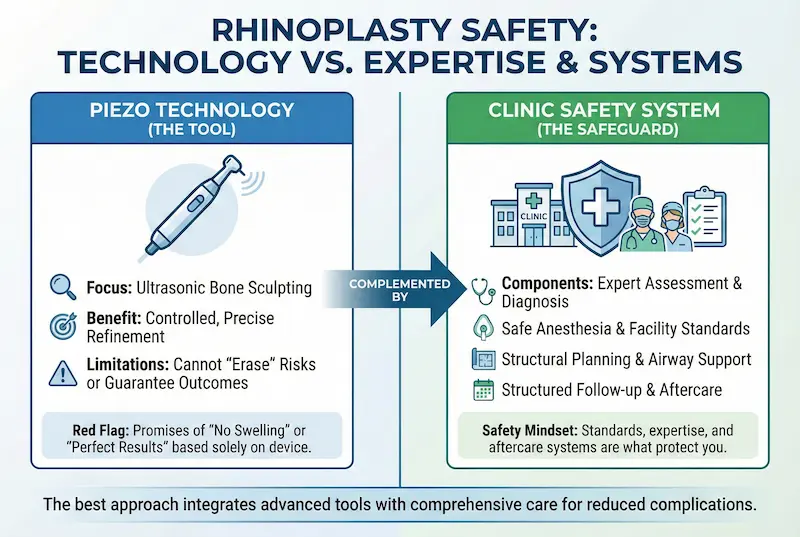
Safety is where serious clinics differentiate themselves. The question isn’t only “Is Turkey piezo rhinoplasty safe?”—it’s “What safeguards exist around assessment, anesthesia, surgical technique, and follow-up?” In science and medical science, devices can improve precision, but systems and expertise reduce complications.
Common rhinoplasty risks (bleeding, asymmetry, breathing issues)
All rhinoplasty—Piezo or not—carries risks. Responsible surgeons discuss these clearly, including:
- Bleeding and prolonged swelling
- Asymmetry or contour irregularities (especially during healing)
- Breathing issues if structural support or septal problems are not properly addressed
- Infection (uncommon but important)
- Need for revision in a minority of cases, depending on complexity and healing
Does Piezo reduce risks or just change the “how”? (evidence-based view)
Ultrasonic tools primarily change how bone is shaped. In some contexts, surgeons argue it may reduce unintended trauma during certain bony steps, which could influence bruising/swelling patterns. However, scientific research does not support treating Piezo as a “risk eraser.” Complication risk is still driven by:
- Correct diagnosis and surgical plan
- Structural stability (especially tip and airway)
- Surgeon skill and experience (primary vs revision)
- Facility standards and anesthesia safety
Red flags to avoid: unrealistic promises, vague technique explanations
If you’re trying to find the best piezo rhinoplasty surgeon Turkey, focus on signals of integrity. Red flags include:
- Guaranteed outcomes (“no swelling,” “perfect symmetry,” “final results in 2 weeks”)
- Device-first marketing with no explanation of planning, airway, and structural support
- Unclear surgeon identity (you can’t confirm who operates)
- Vague pricing (no written breakdown; pressure to pay quickly)
- No structured follow-up (especially concerning for international travel)
Safety mindset: Technology is a tool. Standards, expertise, and aftercare systems are what protect you—especially when traveling.
Choosing the Right Clinic in Istanbul: What “Discerning” Patients Should Check
If you’re comparing piezo rhinoplasty Turkey price quotes, it’s easy to get pulled into a “cheapest wins” mindset. But rhinoplasty is a structural surgery with long-term consequences—your decision should be grounded in verifiable standards: surgeon identity, proven case experience, facility level, anesthesia safety, and a clear follow-up plan. This section is designed for the patient who wants to make a decision the way an evidence-based professional would—consistent with medical science and the logic of risk management.
Surgeon credentials, case experience, revision policy, transparency
Start with the essentials: who is operating and how you can verify their rhinoplasty focus. For a surgeon claiming expertise in Turkey piezo rhinoplasty, look for:
- Clear surgeon identity: full name, credentials, and a consistent professional presence
- Demonstrated rhinoplasty experience: not just a handful of highlight cases
- Ability to explain “your plan”: bony work (Piezo), tip strategy, and airway considerations
- Transparent revision policy: written criteria and timelines—not vague promises
- Ethical communication: no guarantees; honest discussion of limits and risks
If you’re searching for the best piezo rhinoplasty surgeon Turkey, the “best” is often the surgeon who can explain your anatomy-driven plan with clarity—and shows consistent outcomes across multiple nose types (not only one aesthetic style).
Facility standards: hospital environment, anesthesia team, emergency readiness
For international patients, facility quality and anesthesia safety are non-negotiable. A trustworthy clinic pathway typically includes:
- Hospital-grade operating environment (not an ambiguous “clinic room”)
- Named anesthesia team and pre-anesthesia evaluation
- Monitoring standards during and after surgery
- Emergency readiness (clear protocols, not generic reassurance)
In practical terms, this is why comparing piezo rhinoplasty cost Turkey should always include asking: “What is the facility level and what safety infrastructure is included in the package?”
Travel-planning details: itinerary, companion, hotel, transfers, timing
For the “Travel Planner” mindset, safety is also logistical: the right schedule reduces stress and reduces risk. When evaluating a Turkey piezo rhinoplasty package, confirm:
- How many nights are included and whether it covers your key follow-ups
- Airport-hotel-clinic transfers and who coordinates them
- Companion policy (recommended for the first 24–48 hours)
- Flight timing guidance based on your surgical plan and early recovery
- Remote follow-up schedule once you return home
| Decision Checkpoint | What to Ask | Why It Matters |
|---|---|---|
| Surgeon & plan | “Can you explain my bone + tip + breathing plan in simple terms?” | Shows real planning vs device-only marketing |
| Safety | “Where will surgery take place and who is the anesthesia provider?” | Facility + anesthesia are core risk controls |
| Follow-up | “What are the in-person check-ups before I fly home?” | Protects early healing and travel safety |
| Pricing clarity | “What exactly is included in the written quote?” | Prevents surprise costs and vague packages |
| Revision policy | “Do you have written criteria and a timeline for revision?” | Signals accountability and transparency |
Frequently Asked Questions (FAQ): Piezo Rhinoplasty Turkey
Below are concise answers to the most common questions patients ask when researching piezo rhinoplasty in Turkey, pricing, packages, and surgeon selection.
Is Piezo rhinoplasty less painful than traditional rhinoplasty?
Pain levels vary by individual and by the full surgical plan. Some patients report more comfort when bony work is handled with controlled techniques, but discomfort is still expected in early recovery. Proper aftercare matters more than the device.
Does Piezo mean less bruising and swelling for everyone?
No. Piezo may reduce trauma in certain bony steps, which can influence bruising/swelling in some cases, but it’s not guaranteed. Skin thickness, extent of surgery, and individual healing biology are major factors.
Can Piezo improve breathing (functional rhinoplasty) too?
Piezo mainly affects bone sculpting. Breathing improvement depends on diagnosing and correcting functional issues (such as septal deviation or internal valve collapse). If breathing is a concern, ensure your plan explicitly addresses airway structure.
Is Piezo better for revision rhinoplasty?
It can be helpful for controlled refinement of certain bony irregularities, but revision outcomes depend on scar tissue, skin envelope, and structural support strategy. Revision rhinoplasty should be planned with high caution and transparency.
How long should I stay in Istanbul after surgery?
Many international patients plan to stay long enough for early follow-ups and splint removal (often around the first week). Your surgeon’s protocol and your surgical plan determine the safest schedule.
When can I fly home safely after rhinoplasty?
Flight timing varies by case. Many patients fly after key early assessments and when cleared by the surgeon. Always follow your surgeon’s guidance, especially if you had functional work or have increased swelling risk.
How do I verify a clinic’s safety standards and surgeon expertise?
Ask for written details: surgeon identity and credentials, facility level, anesthesia team, emergency protocols, and a clear follow-up plan. Reputable clinics provide transparent answers without pressure tactics.
If you’d like, you can also explore additional guides beyond this topic, including Thick Skin Rhinoplasty (managing swelling and definition in thicker skin), Tip Plasty Turkey (tip-only refinement), and Septorhinoplasty Turkey (combining aesthetic goals with breathing improvement). For a clearer understanding of what’s typically included when traveling for treatment, our Plastic Surgery Packages Turkey resource may help. We also recommend reviewing Questions to Ask Plastic Surgeon to feel confident about your choices, and using an Online Plastic Surgery Consultation to discuss goals, anatomy, and planning before you travel.
Medical Disclaimer: This page is provided for general educational purposes only and does not replace a face-to-face medical consultation, diagnosis, or personalised treatment plan. All surgery carries risks and outcomes vary between individuals. Suitability for a piezo rhinoplasty, procedure selection, and anaesthesia choice can only be determined after a full clinical assessment by a qualified surgeon. Always follow your clinician’s instructions and seek urgent medical attention if you develop concerning symptoms during recovery.