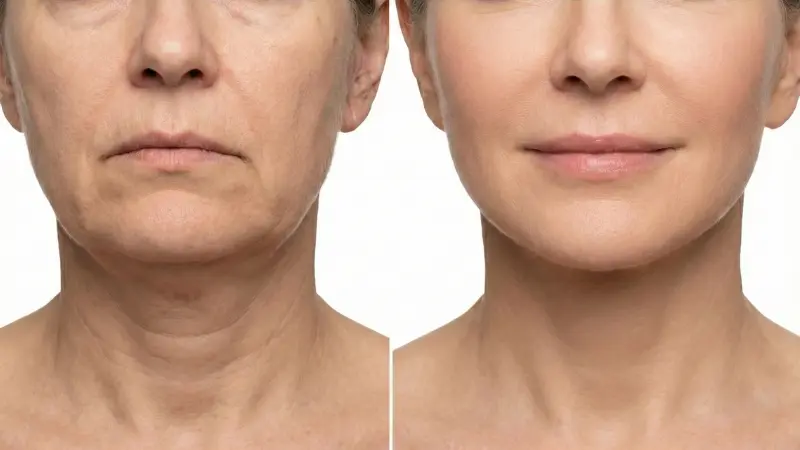
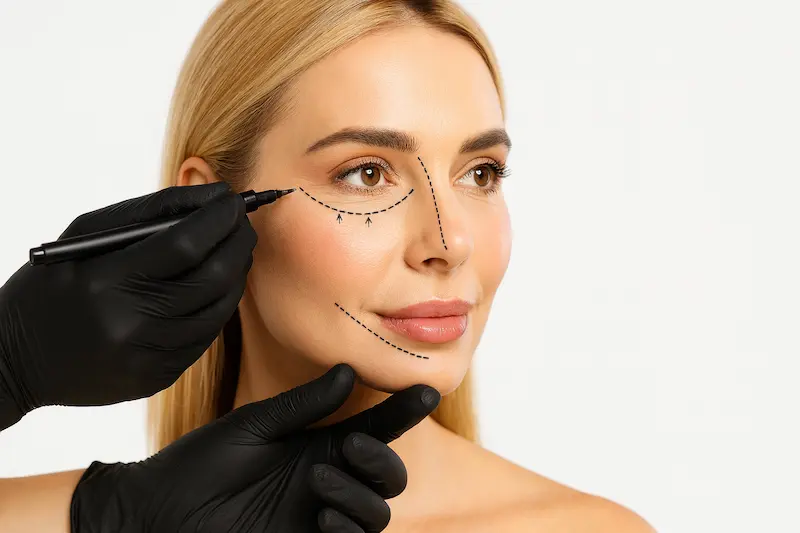
Turning 60 or 70 no longer means giving up on how you look. Many people in this age group are active, social and still very visible in their personal and professional lives. A facelift can help your face match the way you feel inside – but the key safety question is often: “Is a local vs general anesthesia facelift safer for someone my age?”
At AKM Clinic in Istanbul, we treat safety as the first decision point, not the last. That means we don’t only look at your age; we look at your overall health, medications, and the complexity of your facelift plan. When health status is optimized (for example ASA class under 3), older facelift patients can achieve complication rates similar to those of middle-aged patients.
In this guide, we explain the differences between a facelift with local anesthesia and a facelift under general anesthesia, how being over 60 changes risk, and when options like a deep plane facelift under local anesthesia or mini facelift under local anesthesia might be appropriate.
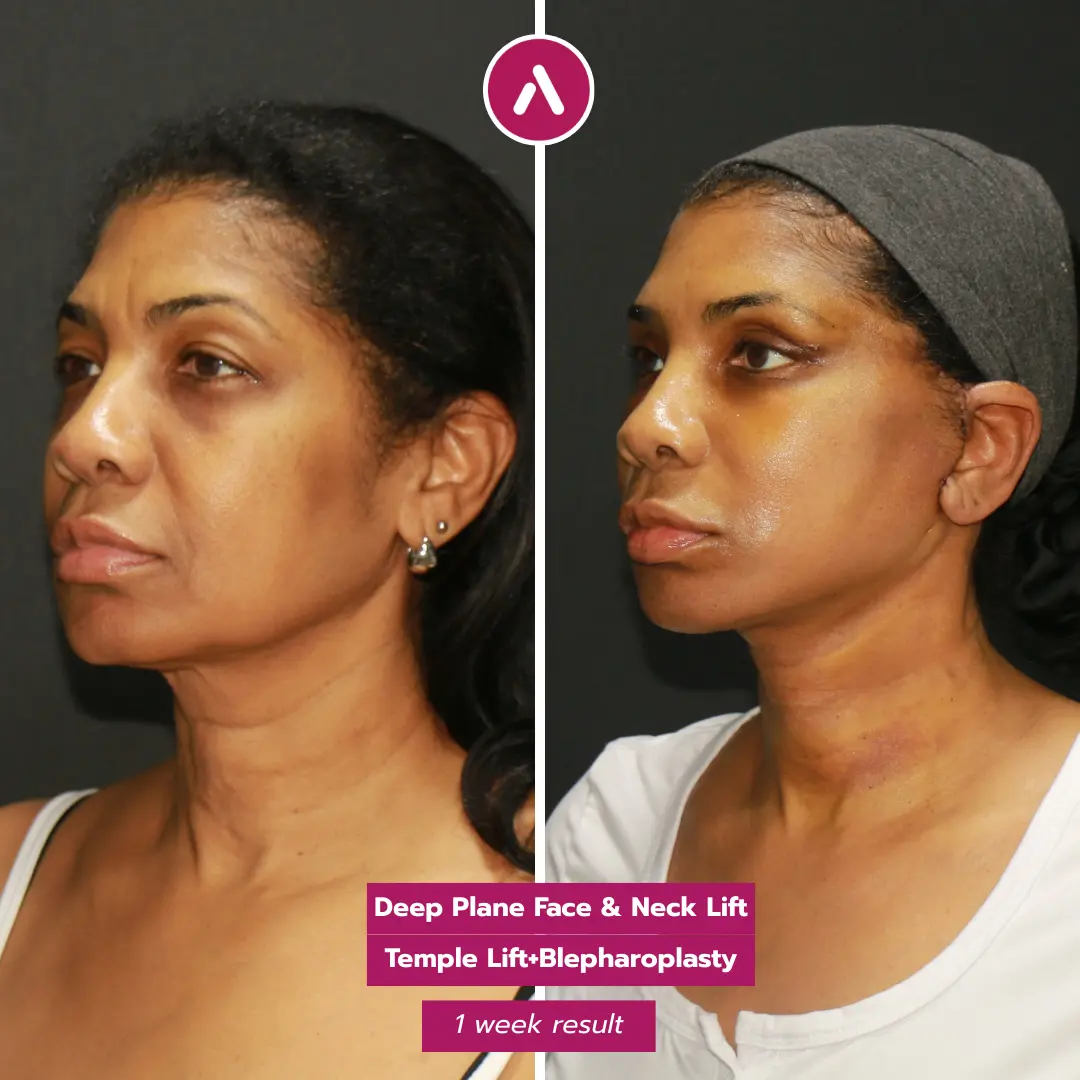
Table of Contents
Understanding a Local vs General Anesthesia Facelift for Patients Over 60
Before you decide on a local vs general anesthesia facelift, it is important to understand how each option works. Both can be safe in well selected over-60 patients, but they feel very different, and they place different kinds of stress on your body. This is why your individual health, not just your age, should drive the anesthesia plan.
What is a facelift with local anesthesia vs a facelift with general anesthesia?
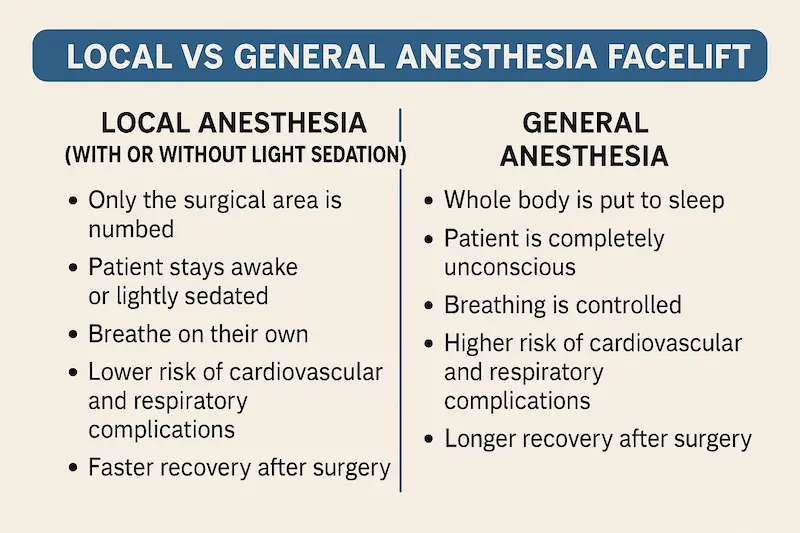
In simple terms, a facelift with local anesthesia means only the surgical area is numbed, while a general anesthesia facelift means your entire body and brain are put to sleep.
Facelift under local anesthesia (with or without light sedation):
- Your surgeon injects numbing medication into the face and neck so you don’t feel pain in that region.
- You stay awake or lightly sedated (“twilight”), able to breathe on your own and sometimes even talk during the procedure.
- This approach is common for facelift under local anesthesia, mini facelift local anesthesia, and, in experienced hands, even certain deep plane facelift local anesthesia cases combined with tumescent solution and sedation.
Facelift under general anesthesia:
- You are fully asleep and unconscious throughout the surgery.
- Your breathing is controlled with a breathing tube or mask, and an anesthesia team actively manages your airway.
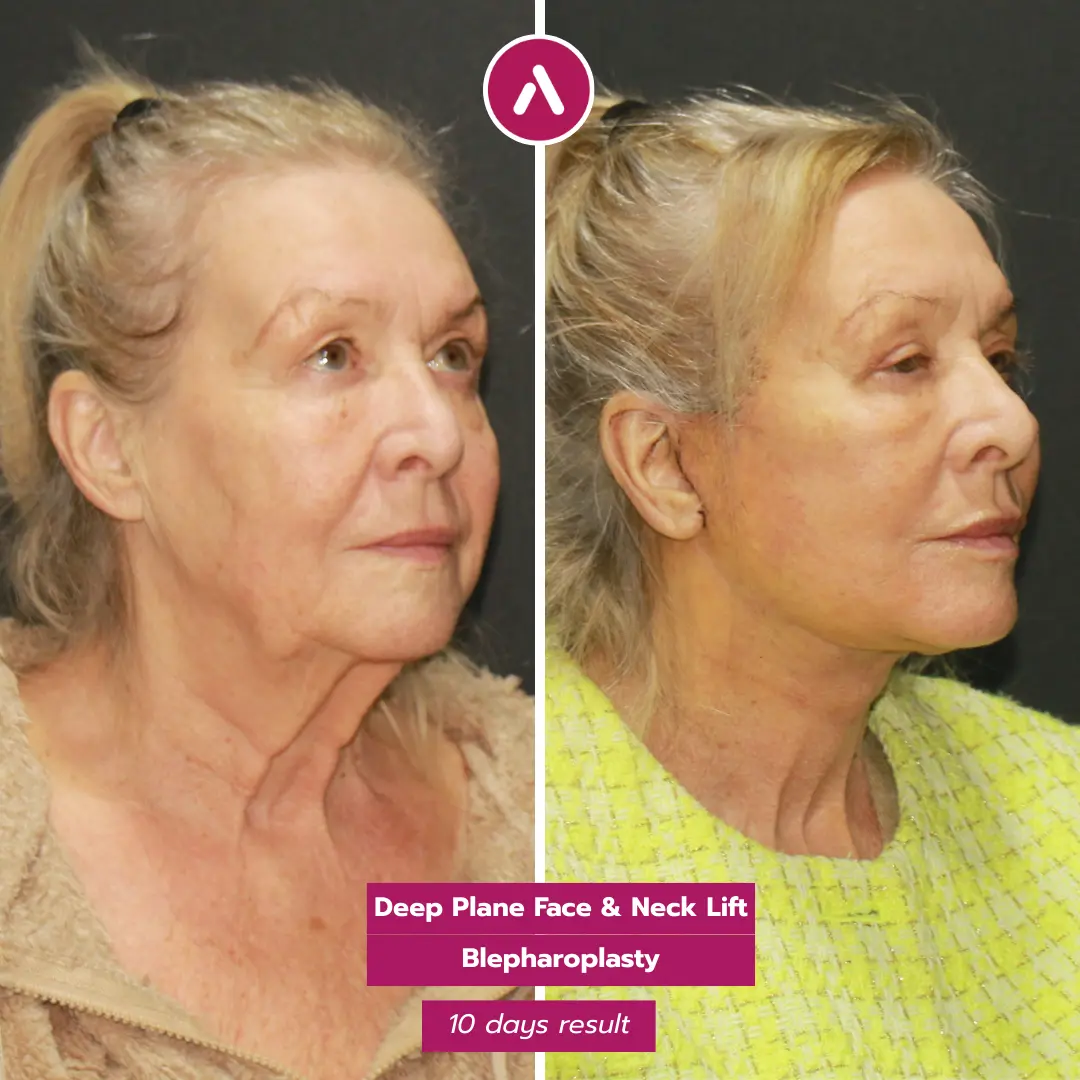
- General anesthesia is still widely used for full and deep plane facelift surgeries, especially when combined with additional procedures like eyelid surgery or fat transfer.
In both cases, your surgeon will also use local anesthetic injections to control pain during and after surgery. The main difference is how much of your body is affected by anesthetic drugs and how much support your breathing needs.
How does age over 60 change anesthesia planning for facelifts?
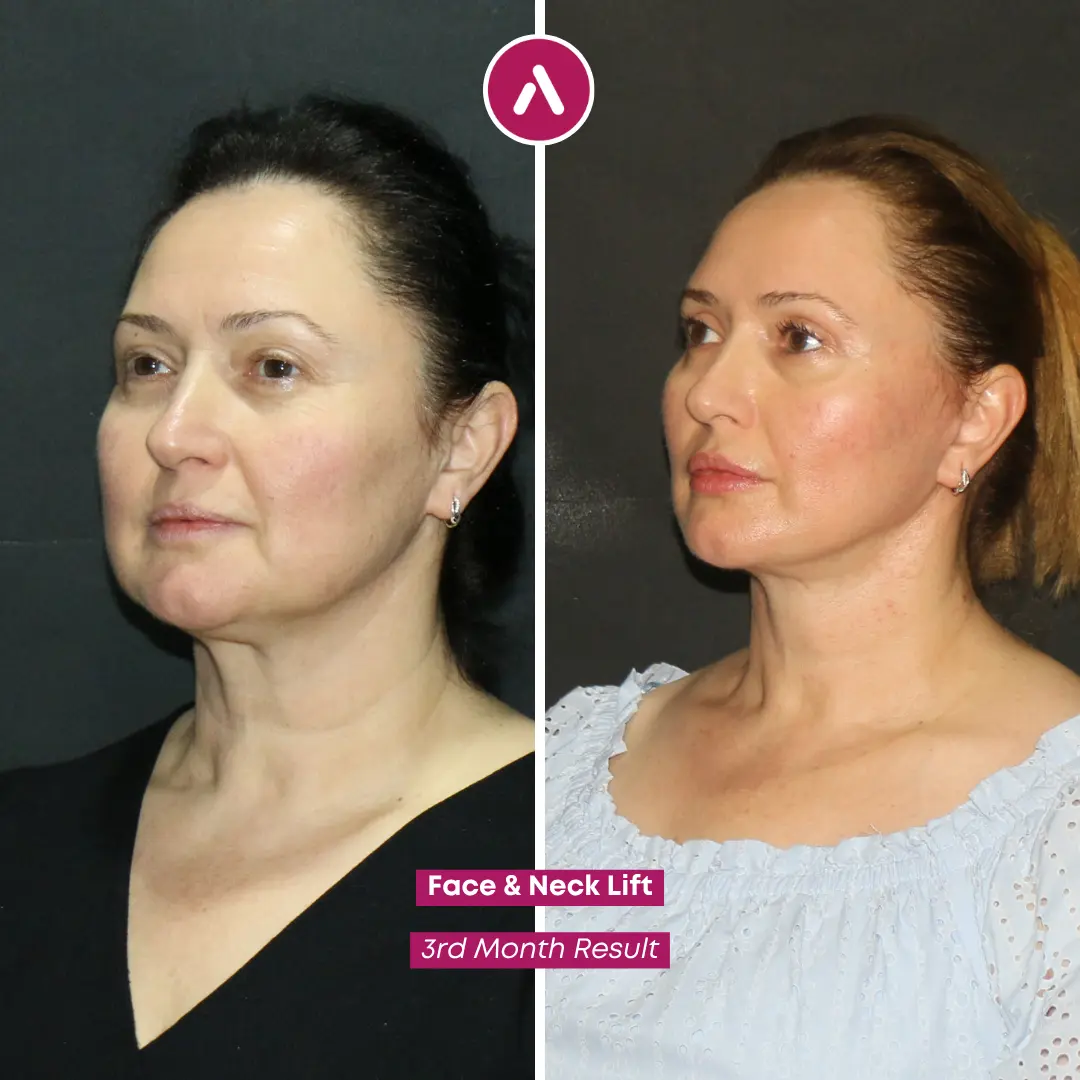
Being over 60 does not automatically make a facelift dangerous. What matters is how “fit” you are for your age. When older facelift patients are thoroughly evaluated and optimized beforehand, their complication rates can be comparable to younger groups with similar health status.
For this reason, your surgeon and anesthesiologist will look closely at:
- Heart and circulation – history of heart attack, stents, arrhythmias, or uncontrolled high blood pressure
- Lung function – COPD, asthma, smoking history, or sleep apnea
- Medication profile – blood thinners, diabetes drugs, blood pressure pills, antidepressants and others
- Weight and mobility – which affect blood clot risk and recovery speed
- Previous anesthesia experiences – slow wake-up, severe nausea, confusion, or breathing problems after surgery
At AKM Clinic, every over-60 patient considering a facelift in Turkey goes through structured pre-operative screening. This helps us decide if a local anesthesia facelift, a local vs general anesthesia facelift combination (local plus sedation), or full general anesthesia is the safer path for your situation.
Key differences in monitoring and safety between local and general anesthesia facelifts
Regardless of whether you choose local or general anesthesia, your vital signs should be continuously monitored: heart rate, blood pressure, oxygen levels, and breathing. The difference lies in how your body is affected and what complications we are trying to avoid.
With facelift with local anesthesia (with or without sedation):
- You breathe on your own without a breathing tube.
- We typically use fewer systemic anesthetic drugs, which can mean less effect on blood pressure and heart function.
- Long-acting numbing medication can reduce the need for strong painkillers afterward.
- Patients often experience less nausea and a faster “clear-headed” recovery compared with deeper general anesthesia.
With general anesthesia facelift:
- Your airway is fully secured, which may be helpful in patients with severe reflux or very high aspiration risk.
- Anesthesia depth and breathing are entirely controlled by the anesthesia team.
- General anesthesia can carry higher risks of cardiovascular and respiratory issues, as well as postoperative confusion in some older adults, so these risks must be balanced against the benefits of a controlled airway.
For many healthy seniors, a carefully planned local vs general anesthesia facelift strategy – often local anesthesia plus light sedation – can offer a good balance of comfort and safety. For others, especially those undergoing longer or more complex surgery, general anesthesia may still be the safer option.
Safety Comparison: Local vs General Anesthesia Facelift in Seniors
When we compare a local vs general anesthesia facelift in patients over 60, we are really comparing risk patterns. Local anesthesia tends to limit systemic drug exposure, while general anesthesia offers maximum control of breathing and depth of sleep. The “safer” choice depends on your heart, lungs, and the length and complexity of your facelift.
Cardiovascular and lung risks over 60: local vs general anesthesia facelift
Older patients are more likely to have heart disease, rhythm disorders, or reduced lung function. Any anesthesia technique can stress these systems, but they do so in different ways:
- Local anesthesia facelift usually uses small doses of sedatives plus numbing injections, which may be gentler on blood pressure and breathing in some seniors.
- General anesthesia uses stronger IV and inhaled drugs that can depress heart function and breathing, so they require closer intraoperative management.
The choice between a local vs general anesthesia facelift should be made after a detailed assessment of your cardiac and respiratory status, and in some cases with input from a cardiologist or pulmonologist.
Blood clot, breathing and heart complication rates in older facelift patients
In facelift surgery specifically, age alone is not the main driver of complications like hematoma, infection, or cardiopulmonary problems. Instead, factors like ASA class, smoking, obesity, untreated high blood pressure, and other uncontrolled medical conditions are more important.
The practical takeaway for over-60 patients:
- A short, focused facelift under local anesthesia may be advantageous if you have stable but fragile heart or lung disease and your surgeon is experienced with office-based local anesthesia techniques.
- A longer deep plane facelift with multiple combined procedures may still be safer under general anesthesia in a fully equipped hospital setting.
Who should not have a facelift under local anesthesia after 60?
While many seniors are good candidates for a facelift local anesthesia approach, some situations may push us toward general anesthesia or toward postponing surgery:
- Unstable heart disease (recent heart attack, uncontrolled arrhythmias)
- Severe, symptomatic lung disease or oxygen dependence
- Very high anxiety or inability to remain still, even with sedation
- Complex combined surgeries expected to last many hours
In these cases, a purely local anesthesia facelift could be stressful or unsafe. Your AKM Clinic surgeon and anesthesiologist will recommend the approach that protects your health first – even if that means changing the surgical plan or staging procedures.
Benefits of a Facelift with Local Anesthesia for Over-60 Patients
For the right patient, a facelift with local anesthesia can offer several meaningful benefits: less systemic drug exposure, quicker recovery, and a lower chance of classic “hangover” feelings after surgery. These advantages are particularly attractive to many people in their 60s and 70s who want a rejuvenated look but are cautious about general anesthesia.
Why many seniors choose a local anesthesia facelift instead of general
Common reasons over-60 patients prefer a local anesthesia facelift include:
- Fear of being “fully put under” or not waking up
- Previous bad experiences with general anesthesia (nausea, confusion, slow wake-up)
- Wanting to minimize impact on heart, lungs and brain
- Interest in office-based or shorter recovery procedures such as mini facelift local anesthesia
Modern protocols using local anesthesia with oral or IV sedation have shown good safety profiles in facelift patients, with complication rates comparable to traditional approaches but without some of the specific risks of general anesthesia.
Comfort, awareness and “twilight” options during a facelift under local anesthesia
Many patients are surprised by how comfortable a facelift under local anesthesia can be. Sedation plus numbing injections typically mean:
- You feel pressure and movement, but not sharp pain.
- You may doze or drift in and out of light sleep.
- You can communicate if something feels uncomfortable.
This “awake but relaxed” approach is also used in many other areas of medicine, especially for older or higher-risk patients, because it can reduce the need for deep general anesthesia while keeping the experience tolerable.
Recovery speed and side effects after a facelift with local anesthesia
Because sedation and local anesthesia usually involve fewer strong systemic drugs than general anesthesia, many over-60 patients report:
- Less nausea and vomiting after surgery
- Feeling “clear” faster after the procedure
- Earlier resumption of light activities
Keep in mind that bruising, swelling and healing time in the tissues are similar whether you have a local vs general anesthesia facelift – the skin and deeper layers still need time to recover. The main difference is how your whole body feels in the first hours and days after surgery.
Deep Plane Facelift Under Local Anesthesia: Is It Safe for Over 60s?
A deep plane facelift is a more advanced technique that repositions deeper facial structures and can create very natural long-lasting results. The question many seniors ask is whether a deep plane facelift under local anesthesia is realistic and safe, or whether general anesthesia is always required.
What makes a deep plane facelift different from a standard facelift?
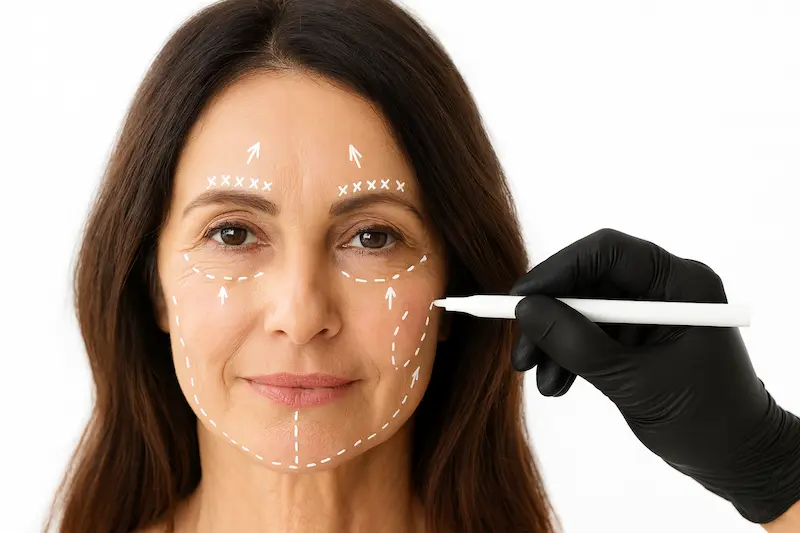
In a deep plane facelift, the surgeon works under the SMAS (the strong connective layer) and facial muscles, releasing deeper ligaments and lifting tissues as a single unit. This can:
- Better restore midface volume and cheek position
- Improve nasolabial folds and jowls
- Offer more long-lasting, natural-looking results in experienced hands
Because of the deeper work, deep plane procedures are usually longer and technically more demanding than simpler skin-only or mini facelifts.
Deep plane facelift under local anesthesia vs general anesthesia: pros and cons
In selected patients, a deep plane facelift local anesthesia protocol (local anesthesia plus sedation) can be considered. Potential advantages include:
- Less exposure to general anesthetic drugs
- Reduced risk of postoperative nausea and some cardiopulmonary issues
- Possibility of office-based surgery if local regulations and equipment allow
However, for many patients — especially those over 60 — the duration and intensity of a full deep plane facelift push us toward general anesthesia to keep the experience completely controlled and comfortable. The choice again comes down to your health, your anxiety level, and your surgeon’s specific protocol.
When a deep plane facelift with local anesthesia is a good option for seniors
A deep plane facelift under local anesthesia may be considered in:
- Healthy, motivated patients with well-controlled medical conditions
- Non-smokers with realistic expectations about time in the operating room
- Patients who strongly prefer to avoid general anesthesia and are comfortable with an “awake but relaxed” experience
At AKM Clinic, we will only propose a local-anesthesia deep plane approach if it clearly meets safety criteria and aligns with modern best practices. If not, we recommend general anesthesia or a more limited procedure for your safety.
SMAS Facelift Under Local Anesthesia for Patients in Their 60s and Beyond
For many patients in their 60s, a full deep plane facelift can feel “too much,” while a simple skin-only lift may not be enough. In this middle ground, a SMAS facelift under local anesthesia offers a powerful yet controlled option. SMAS (superficial musculoaponeurotic system) techniques tighten the deeper support layer of the face instead of just pulling the skin, giving a more natural and longer-lasting result for jowls, midface descent and early neck laxity.
When we compare a SMAS approach within the broader local vs general anesthesia facelift discussion, it often sits in a sweet spot for well-selected 60+ patients. The dissection is more limited than some deep plane facelift techniques, but still much more effective than a mini skin-only lift. This means that, in experienced hands, a SMAS facelift can frequently be performed as a facelift under local anesthesia with light IV or oral sedation, especially when the surgery time and planned corrections are moderate.
Why Choose SMAS Facelift Local Anesthesia in Your 60s?
For seniors who are medically stable but cautious about general anesthesia, a facelift local anesthesia plan built around SMAS tightening can reduce systemic drug exposure, support more stable blood pressure, and allow a clearer, faster wake-up. You remain comfortably sedated, the face and neck are numbed, and you continue to breathe on your own. Compared with a deep plane facelift under local anesthesia, SMAS techniques may require a shorter operative time, which is an additional safety advantage in patients over 60.
At AKM Clinic in Istanbul, SMAS lifts are tailored to your anatomy and goals. Some patients combine a SMAS facelift with a mini facelift local anesthesia concept, focusing on the jawline and lower face while keeping scars and downtime as limited as possible. Whether you are considering a SMAS, mini, or more advanced technique, your surgeon will explain how each option fits into the overall local vs general anesthesia facelift strategy and which approach best matches your health profile, travel plans, and expectations for rejuvenation.
Mini Facelift Under Local Anesthesia for Patients in Their 60s and Beyond
Not every patient over 60 needs a full deep plane facelift. For many, a mini facelift under local anesthesia offers a more subtle but very satisfying refresh, with shorter surgery time and a gentler recovery. This is often an attractive option for international patients visiting Turkey for a shorter stay.
Mini facelift local anesthesia vs full facelift: who is a good candidate?
You may be a good candidate for a mini facelift local anesthesia if:
- Your main concerns are early jowls, mild to moderate jawline sagging, or limited neck laxity.
- You prefer a shorter surgery with less extensive dissection.
- You are comfortable having the procedure done as a facelift under local anesthesia with light sedation.
Patients with very heavy neck bands, significant skin excess, or strong deep tissue descent may need a more comprehensive technique such as a deep plane facelift instead.
How mini facelift under local anesthesia can “refresh” the face after 60
A mini facelift typically involves shorter incisions and more limited lifting of the SMAS layer. For over-60 patients, this can:
- Sharpen the jawline
- Reduce early jowls
- Give a fresher, less tired overall look
Because it is less extensive, a mini facelift combines very well with a local vs general anesthesia facelift strategy that favors local anesthesia plus sedation.
Downtime, bruising and return to daily life after a mini facelift local anesthesia
Recovery after a mini facelift under local anesthesia is usually faster than after a full deep plane facelift. Many patients:
- Feel comfortable going out with light makeup after about 10–14 days
- Return to desk work after 7–10 days, depending on bruising and swelling
- Resume more intense exercise after clearance from the surgeon
However, the exact timeline varies from person to person, regardless of whether you choose a local vs general anesthesia facelift. Your tissues still need time to heal.

Planning Your Facelift Local Anesthesia Experience at AKM Clinic in Istanbul
For international patients, choosing a facelift local anesthesia or general anesthesia in Istanbul is not only a medical decision, but also a travel and budgeting decision. AKM Clinic treats many patients from the major US cities such as New York City, Los Angeles, Chicago, San Francisco, Houston, Miami and we plan your surgical and travel timeline together so you can feel safe and supported from airport to follow-up.
How AKM Clinic evaluates if facelift under local anesthesia is right for you
Your journey toward a local vs general anesthesia facelift at AKM Clinic usually starts online. We review:
- Medical history and medications (including any heart or lung issues)
- Photos or videos of your face and neck
- Your expectations (subtle refresh vs significant rejuvenation)
Based on this, our surgeons outline whether a facelift under local anesthesia, a mini facelift, or a full deep plane facelift is more suitable — and which anesthesia plan protects your health best.
Pre-op tests, medications and safety protocols for over-60 facelift patients
When you arrive in Istanbul, we complete your pre-operative work-up, which may include:
- Blood tests and ECG
- Specialist clearance (e.g., cardiologist) if needed
- Review of blood thinners and other medications with clear instructions on when to stop or adjust them
AKM Clinic follows strict protocols for both local and general anesthesia, aligned with modern guidelines for elderly surgical patients.
Travel, accommodation and budgeting for a facelift with local anesthesia in Turkey
One of the reasons many over-60 patients choose Turkey for a facelift with local anesthesia is cost. Even when you add flights and hotel, total expenses in Istanbul are often significantly lower than in the US for equivalent surgeon experience and facility standards.
Typical packages for a mini facelift local anesthesia or limited facelift under local anesthesia in Turkey may include:
- Surgical fees and anesthesia
- Hospital or clinic costs
- Post-operative garments and routine follow-up
Exact prices depend on the complexity of your surgery and whether you choose a mini, standard, or deep plane facelift, but many patients find that they can access high-level care at a fraction of the cost of major Western cities.
Frequently Asked Questions About Local vs General Anesthesia Facelift Over 60
Here are answers to the questions we hear most often from patients in their 60s and 70s who are trying to choose between a local vs general anesthesia facelift.
Is a local anesthesia facelift really safer than general anesthesia after 60?
Not always. For some patients, a facelift local anesthesia approach reduces systemic drug exposure and may be gentler on the heart and lungs. For others, especially with complex procedures or very high anxiety, general anesthesia is safer. The “best” option is the one that fits your health, your surgery, and your surgeon’s experience.
Can I have a deep plane facelift local anesthesia if I have heart or blood pressure problems?
If your heart and blood pressure are well controlled and your cardiologist agrees, a deep plane facelift under local anesthesia may be possible in carefully selected cases. However, sometimes general anesthesia in a monitored setting is the safer choice. This decision must be made jointly by your surgeon, anesthesiologist and cardiologist.
Will I feel pain or remember the surgery with facelift under local anesthesia?
During a facelift under local anesthesia, you should not feel sharp pain, but you may feel pressure or tugging. Many patients doze and remember very little due to sedation. Your comfort is continuously monitored, and medication can be adjusted during surgery.
Is a mini facelift under local anesthesia enough for sagging jowls and neck in my 60s?
A mini facelift under local anesthesia can work very well for mild to moderate jowls and early neck laxity. If your neck bands or skin excess are severe, your surgeon may recommend a more comprehensive technique or a combination of procedures instead.
How should I choose between local vs general anesthesia facelift for my situation?
Think of it as a shared decision. You, your surgeon and your anesthesiologist should weigh your health, your anxiety level, the length of surgery, and your previous experiences with anesthesia. Ask your team to explain clearly why they recommend local or general anesthesia for your facelift.
Are facelift with local anesthesia prices in Turkey lower than in the US?
In general, yes. Even when you include flights and accommodation, total costs for a facelift with local anesthesia or mini facelift in Istanbul are often significantly lower than in many US cities, while still offering high standards of care and technology.
Why do international patients over 60 choose AKM Clinic for local anesthesia facelift?
International patients often choose AKM Clinic for a local vs general anesthesia facelift because of our experience with awake and twilight facelift techniques, our structured pre-op assessment for seniors, and the combination of high clinical standards with the cost advantages of Turkey. Most importantly, we individualize the anesthesia plan to you — not to your passport age.
How does recovery time differ between local vs general anesthesia facelift?
After a facelift with local anesthesia, many patients feel clear-headed sooner, walk earlier, and experience less nausea. With general anesthesia, early recovery can be slower because the whole body needs more time to eliminate anesthetic drugs, even though overall facelift healing in the tissues takes a similar number of days.
Is a local vs general anesthesia facelift safe if I use blood thinners or have diabetes?
Patients on blood thinners or with diabetes may still be candidates for a local vs general anesthesia facelift, but medication management and blood sugar control are critical. At AKM Clinic, your surgeon and anesthesiologist review your blood tests, consult your medical specialists when needed, and then decide whether facelift local anesthesia or general anesthesia is the safer option.
When can I fly home after a facelift local anesthesia procedure in Turkey?
Most international patients who choose a facelift under local anesthesia or mini facelift local anesthesia stay in Istanbul about 7–10 days for checks and early healing. Your surgeon confirms your exact flight date, but using facelift with local anesthesia often allows you to feel well enough for travel sooner than with deeper general anesthesia.
Which techniques are most commonly performed with facelift local anesthesia?
At AKM Clinic, shorter procedures such as mini facelift local anesthesia are the most frequent, while deep plane facelift local anesthesia is reserved for carefully selected patients. For very complex or combined facial surgeries, your team may recommend general anesthesia instead of a purely facelift local anesthesia approach.