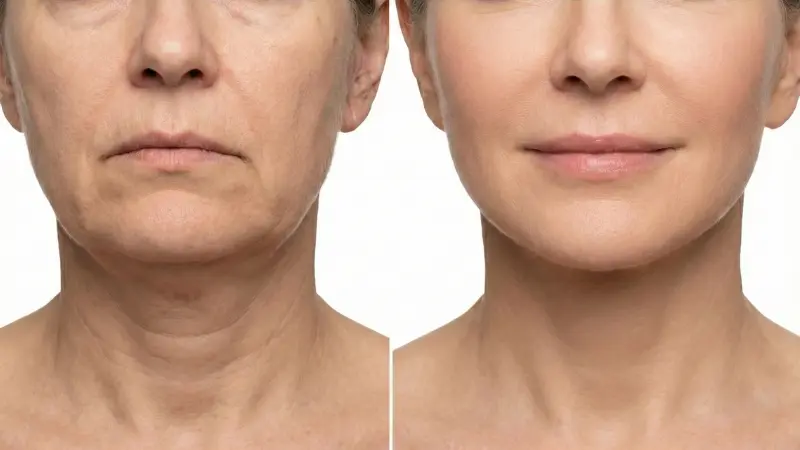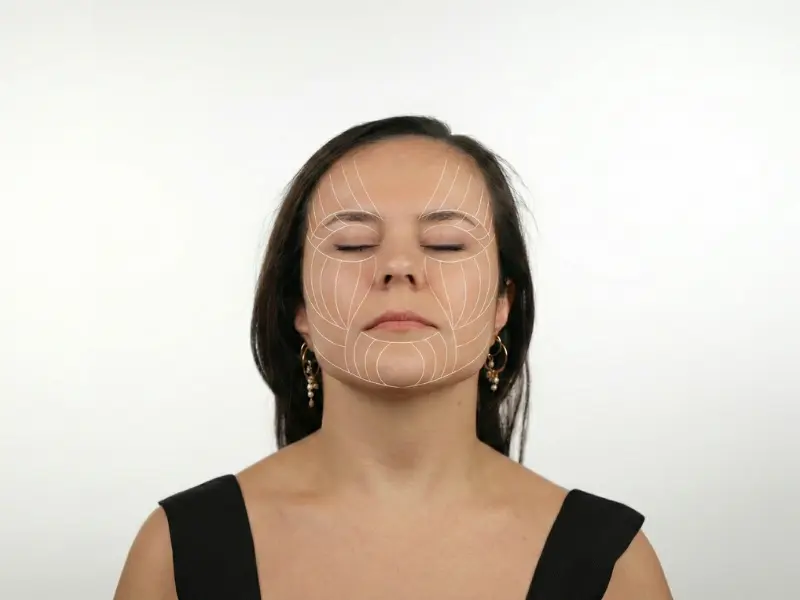

If you’re thinking about facial rejuvenation but feel nervous about pain, you’re not alone. One of the most common questions patients ask is: is an awake facelift painful?
Social media clips, dramatic makeover stories, and outdated information can make any facelift sound frightening. Terms like facelift under local anesthesia, facelift under tumescent anesthesia, deep plane facelift under local anesthesia, or even awake and painless facelift can be confusing and sometimes feel too good to be true.
In modern facial surgery, however, a carefully planned anesthetic strategy, gentle surgical technique, and attentive aftercare mean that most patients describe their experience as pressure and tightness rather than sharp pain. Many say they were surprised by how quickly they stopped pain medication and how manageable the whole process was.
In this guide, we’ll walk through:
- How painful is a facelift, really, when you are not under full general anesthesia?
- What it feels like to have a facelift under local or tumescent anesthesia.
- Whether an “awake and painless facelift” is realistic in everyday practice.
- How patients describe a painless deep plane facelift from surgery day through recovery.
Our focus is on what real patients commonly report, not just what is written in theory. By the end, you should have a clearer, more realistic answer to the question “is an awake facelift painful?” and understand how technique and anesthesia choices affect your comfort.
Table of Contents
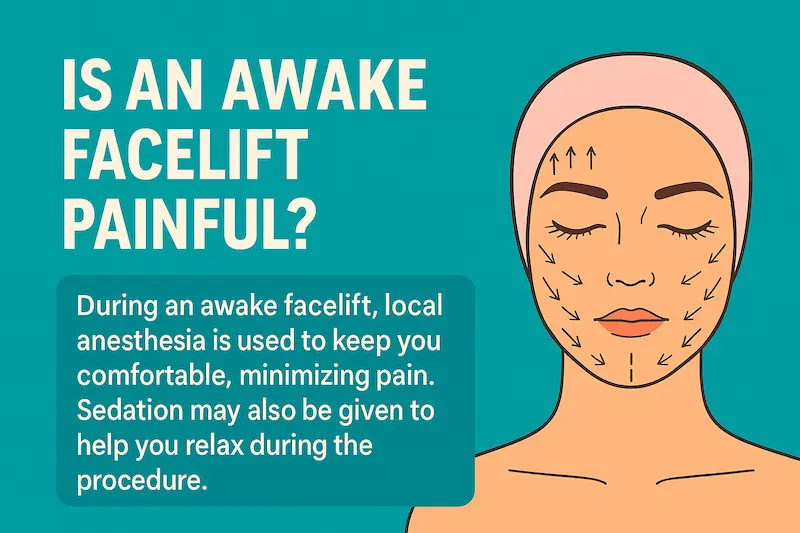
Understanding the Awake Facelift: What “Awake and Painless Facelift” Really Means
To understand whether an awake facelift is painful, it helps to get clear on what this approach actually involves. An awake facelift is not a “no anesthesia” surgery. Instead, it is a carefully controlled combination of local or tumescent anesthesia and, in many cases, light sedation that aims to keep you safe, relaxed, and as pain-free as possible while your surgeon works on the deeper structures of your face.
What is a facelift under local anesthesia or tumescent anesthesia?
When people ask is an awake facelift painful, they are usually trying to understand how they will be numbed. In an awake procedure, your surgeon typically uses local anesthesia, sometimes combined with tumescent anesthesia.
Local anesthesia involves small injections of numbing medication in the planned treatment areas. Once it takes effect, you should not feel sharp pain, but you may still notice touch, vibration, or gentle pressure. Tumescent anesthesia uses a diluted numbing solution that is slowly infused into the tissues, making them firm (“tumescent”), swollen in a controlled way, and thoroughly numb.
The only moment that may sting briefly is the initial numbing phase. Patients often describe this as a short burning or pressure sensation that fades quickly as the area becomes numb. After that, most say the experience feels strange but not truly painful.
How a deep plane facelift under local anesthesia is different
A deep plane facelift under local anesthesia works on the deeper support layers of the face rather than just tightening the skin. This advanced approach often creates more natural, longer-lasting results, especially in the midface and jawline.
Some patients assume that going deeper must mean more pain. In reality, the key factor is not the depth of the lift, but how precisely anesthesia is delivered and monitored. With a well-planned deep plane technique:
- The deeper tissues are carefully numbed before any work is done.
- Sedation can be added so you feel drowsy and relaxed throughout the procedure.
- Any early signs of discomfort can be quickly controlled by your surgical team.
For this reason, many patients describe a deep plane facelift under local or tumescent anesthesia as surprisingly manageable—often less intimidating than they expected when they first asked how painful is a facelift.
Are you really awake during surgery — and what does it feel like?
The word “awake” can sound alarming. It makes some people picture being fully alert while the surgeon works on their face. In practice, an awake facelift does not mean you are left anxious or unsupported on the operating table.
In most modern protocols:
- You receive strong local or tumescent anesthesia to block pain in the surgical area.
- You often receive light IV sedation, so you feel calm, sleepy, and detached from the details.
- You can respond to simple questions if needed, but many patients remember very little afterward.
Patients frequently describe the experience as:
- “I knew I was there, but I didn’t feel worried or afraid.”
- “I felt some pressure and movement, but no sharp pain.”
- “It went by faster than I expected.”
When the technique and anesthesia plan are optimized, an awake facelift is better described as odd, tight, and occasionally uncomfortable, rather than truly painful. This is why many people who once feared surgery now specifically ask for a more controlled, painless facelift approach instead of full general anesthesia.
Is an Awake Facelift Painful During Surgery?
The operating room itself is often the part that worries patients the most. They imagine feeling every step of the procedure. In reality, a combination of local or tumescent anesthesia and sedation is designed to keep you comfortable throughout the operation, so that the answer to “is an awake facelift painful during surgery?” is usually “far less than you think.”
Does numbing with local anesthesia hurt and how long does it last?
Before the operation starts, your surgeon and anesthesia team focus on one main goal: making sure you are as comfortable as possible. The first step is usually local anesthesia or tumescent anesthesia to numb the face.
Most patients say the only noticeably sharp sensation happens during the first few minutes, when the numbing medication is injected. This can cause a short burning or pressure feeling. It is similar to dental numbing: not pleasant, but over quickly. Once the local or tumescent solution spreads through the tissue, the area becomes numb and that stinging stops.
After this phase, people who were very worried about how painful is a facelift under local anesthesia are often surprised. They usually report:
- A feeling of warmth or fullness in the face as the tumescent solution works.
- Reduced sensitivity to touch in the treated areas.
- No sharp pain when the actual facelift steps begin.
The numbing effect typically lasts through the entire operation, and even into the first hours of recovery. So while there can be brief discomfort at the beginning, it does not match the long, dramatic pain that many people imagine when they first ask is an awake facelift painful.
What most patients feel during tightening and suturing
Once the face is fully numb, the surgeon begins lifting and repositioning the tissues. At this stage, patients often feel pressure, pulling, or tightness, but still report little to no sharp pain.
During a facelift under local anesthesia or a facelift under tumescent anesthesia, common sensations include:
- Gentle tugging as the deeper layers are adjusted.
- Vibration from instruments working under the skin.
- A progressive feeling of tightness along the jawline or cheeks.
These sensations can feel strange or “odd,” but they are usually described as pressure rather than pain. If someone feels more than mild discomfort, the team can add extra local anesthesia while the surgery is in progress. That is one of the advantages of staying awake and responsive: you can speak up if you need more numbing.
Patients who undergo a painless deep plane facelift or deep plane facelift under local anesthesia often say the experience was much easier than the scary image they had in their mind before surgery.
Twilight sedation vs. general anesthesia: how your comfort is protected
Many awake procedures combine local or tumescent anesthesia with twilight sedation. This is different from full general anesthesia. Instead of being completely unconscious, you are in a light, dream-like state. You breathe on your own and can respond if someone calls your name, but you are deeply relaxed.
For anxious patients who still wonder how painful is a facelift or who cannot imagine watching anything surgical, twilight sedation is often the key to a truly awake and painless facelift. With this approach:
- You are less aware of time passing during surgery.
- You care less about the sounds and movements in the room.
- You may remember only fragments—or sometimes almost nothing—afterward.
In experienced hands, this combination of sedation and local anesthesia creates conditions for a genuinely painless facelift experience for most patients. Instead of fighting fear and tension, you spend the operation in a calm, drowsy state while your surgeon focuses on technique and detail.
This is why, for many people, the honest answer to the question “is an awake facelift painful?” is: it is usually far more manageable, and often far less painful, than they expected.
How Painful Is Recovery After an Awake Facelift?
Recovery is the second big concern after the surgery itself. Patients worry about sleeping, swelling, and when they can return to work or travel. Understanding what normal discomfort looks like in the first days and weeks can make the whole process feel less intimidating and give a more realistic answer to “how painful is a facelift after surgery?”
First 24–48 hours: what level of pain is normal?
The first one to two days after surgery are when patients expect the worst. They picture intense pain, but that is not what most people actually report. Thanks to the lingering effects of anesthesia, prescribed medication, and gentle surgical handling, the first 24–48 hours are more often described as:
- Heavy tightness in the cheeks and neck.
- A feeling of fullness or pressure where swelling is greatest.
- Mild to moderate aching that responds well to pain medication.
In other words, for many patients, the question is less “how painful is a facelift?” and more “how tight and swollen will I feel?” The answer is that tightness and swelling are normal, but true high-level pain is not expected and should be discussed with your surgeon if it occurs.
Awake facelift recovery pain day by day in the first two weeks
During the first week, soreness and tightness are usually at their peak and then gradually decline. A typical day-by-day description from patients who had a facelift under local anesthesia or a painless deep plane facelift might look like this:
- Days 1–3: Noticeable tightness, pressure, and swelling. Pain controlled with regular medication.
- Days 4–7: Less aching, more stiffness or pulling when turning the head or smiling.
- Days 8–14: Discomfort fades to mild tenderness; many movements feel normal again, though the face can still look swollen or bruised.
Bruising and swelling can last longer than discomfort. It is common for patients to say they look more uncomfortable than they actually feel. This can be surprising to someone who came into the process very afraid and asking over and over, is an awake facelift painful?
When most patients stop taking painkillers after surgery
One of the most reassuring points for prospective patients is how quickly many people reduce or stop pain medication. While everyone is different, a common pattern after an awake facelift is:
- Stronger prescription painkillers only for the first few days.
- Switching to over-the-counter pain relief by the end of week one.
- No regular pain medication at all by the second week for many patients.
This timeline may be even smoother when the surgery has been done as a carefully planned painless facelift or painless deep plane facelift, with minimal tissue trauma and precise closure techniques.
While individual experiences vary, the overall trend is clear: for the majority of patients, the recovery discomfort is very manageable. The original fear behind the question “is an awake facelift painful?” rarely matches what they actually live through once the procedure and healing are complete.

What Real Patients Say About Awake Facelift Pain
Statistics and theory are helpful, but what truly reassures most people is hearing what real patients say about their experience. When you read or listen to stories from people who were once asking the same question—is an awake facelift painful—you start to see clear patterns. While every body is unique, most patients describe the process as surprisingly tolerable, with more tightness and pressure than intense pain, especially when the surgery is performed as a carefully planned awake and painless facelift.
“No pain, just tightness”: patient stories from the USA and beyond
Many patients who choose an awake facelift worry that they will feel everything. Yet, after surgery, a very common phrase surgeons hear is, “It was no pain, just tightness.” Patients often explain that they:
- Felt drowsy and relaxed thanks to sedation.
- Did not feel cutting or stitching because of local or tumescent anesthesia.
- Mostly remember a sense of pressure or pulling, not sharp pain.
People who chose a facelift under local anesthesia or facelift under tumescent anesthesia frequently say the fear beforehand was worse than the actual experience. Many were motivated by the idea of a more controlled, painless facelift with a quicker, smoother recovery.
How often do patients describe their awake facelift as “painless”?
No ethical surgeon can promise a completely pain-free experience for every single person—but there is a reason phrases like painless facelift, painless deep plane facelift, and awake and painless facelift appear so often in patient reviews and testimonials. With modern techniques:
- Many patients say their pain stayed in the “mild” range after surgery.
- Others describe discomfort that was easily managed with prescribed medication.
- A significant number are surprised by how quickly they return to basic daily activities.
When people look back weeks or months later, the emotional memory is often less about pain and more about the satisfaction of seeing their jawline, neck, and midface rejuvenated. The big, dramatic fear around “how painful is a facelift?” tends to fade once the healing is complete and the final result is visible.
Why experienced patients choose a deep plane facelift under local anesthesia
Interestingly, many people who have already had aesthetic procedures in the past become some of the strongest supporters of an awake approach. They compare full general anesthesia with an awake or deep plane facelift under local anesthesia and report that:
- They appreciated waking up more gently, without the grogginess of deep general anesthesia.
- They liked feeling that their body was under less overall stress during surgery.
- They felt more in control, knowing they could communicate if something felt off.
For these experienced patients, the question “is an awake facelift painful?” often shifts to, “Is it the right technique for the results I want?” When the right candidates choose a well-executed, modern awake facelift—especially a thoughtfully planned deep plane technique—the balance of comfort, safety, and outcome can be very appealing.
Taken together, real patient stories suggest a clear message: an awake facelift can feel intense at moments, but for most people, it is far from the unbearable pain they once imagined. With the right team and technique, the experience lines up much more closely with the idea of an awake and painless facelift than with the scary scenarios people picture before they learn the facts.
Why Awake Facelift in Turkey Feels Safer Than You Expect
When people first hear about traveling for surgery, they often worry about safety and standards. It is natural to wonder whether clinics abroad use the same level of monitoring, technology, and hygiene you would expect at home. The good news is that in reputable centers in Istanbul, an awake facelift is performed in fully equipped hospitals or surgical facilities, with systems in place to keep you comfortable and safe from the moment you arrive.
High medical standards and specialized facial surgeons
A key factor in whether an awake and painless facelift feels truly manageable is not just the anesthesia—it is the surgeon’s experience. In Turkey, especially in Istanbul, you will find surgeons who focus heavily on facial rejuvenation and perform facelifts, including deep plane facelift under local anesthesia, on a regular basis.
High-volume facial surgeons tend to:
- Be very familiar with nerve anatomy and ways to minimize trauma.
- Refine their technique over hundreds or even thousands of procedures.
- Develop reliable, step-by-step protocols for patient comfort and safety.
When these surgeons work within accredited hospitals and modern operating rooms, the combination of expertise and infrastructure helps keep the true answer to “is an awake facelift painful?” closer to “manageable and controlled” than “risky and unpredictable.”
Advanced monitoring and anesthesia support during awake surgery
Another reason awake surgery in Turkey feels safer than some patients expect is the presence of a dedicated anesthesia team. Even though you are not under full general anesthesia, you are still continuously monitored. Your heart rate, oxygen level, blood pressure, and comfort are carefully tracked from start to finish.
During a facelift under local anesthesia or facelift under tumescent anesthesia, the anesthesia team can:
- Adjust sedation to keep you relaxed but breathing on your own.
- Add more local anesthesia if you feel any discomfort.
- Respond quickly to any changes in how you feel.
This level of attention means you are not simply “awake and alone” in the operating room. Instead, you are continuously supported, which is one of the reasons many international patients later say their awake facelift felt safe, organized, and far less frightening than they imagined.
Why international patients choose Turkey for value and comfort
For many people, the decision to travel to Turkey is a mix of medical quality, personal comfort, and budget. Compared with prices in the United States, a modern, carefully performed facelift in Turkey—especially an awake or deep plane technique—often costs significantly less while still being carried out in a high-standard hospital setting.
When patients combine this value with attentive care, private transfers, and help with hotel and follow-up arrangements, they frequently report feeling more looked after than they expected from a trip abroad. As a result, their main memory is not “how painful is a facelift in another country?” but rather how smooth the whole journey felt—from consultation, to surgery, to the flight home.
How AKM Clinic Keeps Awake Facelift Pain Under Control
While general information is helpful, it also matters how a specific clinic plans and performs an awake facelift. At AKM Clinic in Istanbul, the entire process—from your first online assessment to your last in-person check before flying home—is designed to keep discomfort as low as possible and to answer your core question, “is an awake facelift painful?”, with calm, evidence-based reassurance.
Pre-operative planning tailored to your pain tolerance and anxiety
Pain control starts long before surgery day. During your consultation, you are asked about your medical history, previous procedures, and any concerns you have about pain or anesthesia. This information helps create a customized plan for a more awake and painless facelift experience.
Depending on your needs, your plan may include:
- A clear explanation of what to expect at each stage of surgery and recovery.
- Options for sedation level, so highly anxious patients feel calmer.
- Adjustments to medication if you have a history of strong or weak pain responses.
By the time surgery day arrives, many patients already feel more relaxed because they understand the process—this alone can reduce how intensely they experience discomfort.
Combining local anesthesia, tumescent technique, and gentle deep plane lifting
During the operation itself, AKM Clinic’s approach focuses on combining effective numbing with refined surgical technique. This is particularly important for anyone considering a deep plane facelift under local anesthesia.
The surgical team:
- Carefully administers local or tumescent anesthesia to thoroughly numb the tissues.
- Uses gentle dissection techniques to respect natural anatomy and minimize trauma.
- Works methodically rather than rushing, which can reduce swelling and post-operative soreness.
When numbing is effective and tissue handling is delicate, the procedure aligns more closely with what patients describe as a painless facelift or painless deep plane facelift. You may still feel pressure or tightness, but sharp, uncontrolled pain should not be part of the experience.
Modern recovery support: from pain medication to advanced therapies
After surgery, the focus shifts to keeping you comfortable while your body heals. Standard pain medication protocols are combined with detailed aftercare instructions, such as how to sleep, how to keep your head elevated, and how to protect your incisions.
In addition, modern clinics like AKM often use supportive technologies—such as advanced wound care methods and therapies aimed at reducing swelling—to help your tissues recover more smoothly. While these are not magic “off switches” for pain, they can make the normal tightness and pressure of healing feel more manageable.
When you put all of this together—individualized planning, precise anesthesia, refined surgical technique, and structured aftercare—the practical answer to “how painful is a facelift under local anesthesia?” becomes much more reassuring. Most patients describe some degree of tightness, pressure, and temporary soreness, but not the intense, uncontrollable pain they once feared. For many, the overall journey truly fits the description of an awake and painless facelift far better than they expected when they first started their research.

Awake vs. Traditional Facelift: Pain, Safety, and Recovery Compared
When you compare an awake facelift with a traditional facelift under full general anesthesia, you are really comparing two different approaches to comfort and safety. Both can be effective and both can be safe in the right hands, but they feel different during surgery and recovery. Understanding these differences can help you decide which option fits your body, your lifestyle, and your personal answer to the question “is an awake facelift painful?”
Is a facelift under local anesthesia really less painful?
On paper, a traditional facelift under general anesthesia sounds easier because you “sleep” through the entire operation. However, pain is mostly felt after you wake up, not during the surgery. With an awake facelift under local anesthesia or facelift under tumescent anesthesia, you benefit from:
- Very effective numbing of the tissues during the entire procedure.
- Less overall impact on your body compared with deep general anesthesia.
- Often a smoother, gentler wake-up and early recovery period.
Many patients who were nervous at first later say that the combination of local or tumescent anesthesia plus sedation created a comfortable, controlled experience that matched their idea of a painless facelift much more closely than expected.
Recovery and bruising: awake and painless facelift vs. traditional
Recovery after a facelift is influenced by surgical technique, anesthesia, and your own healing capacity. People often find that an awake and painless facelift approach with a gentle deep plane technique can lead to:
- Less nausea and grogginess in the first hours after surgery.
- A quicker return to eating, walking, and basic daily movements.
- Bruising and swelling that feel more like pressure and tightness than intense pain.
A traditional facelift under full general anesthesia can still be a good choice for some patients, especially in complex combined procedures. But many people who focus on comfort, control, and a smoother early recovery prefer the idea of an awake or painless deep plane facelift under local anesthesia instead.
Who is a good candidate for an awake facelift approach?
Not everyone is an ideal candidate for an awake technique. A thorough consultation will look at your anatomy, your medical history, and your personal tolerance for medical procedures. You may be a good candidate if you:
- Prefer to avoid full general anesthesia when possible.
- Understand that you will feel some pressure and tightness, even if pain is well controlled.
Patients with extreme anxiety, complex medical issues, or very extensive combination surgeries may still be better served by a traditional facelift under general anesthesia. Your surgeon’s goal is to match the technique—awake or traditional—to the safest, most comfortable option for you. In both cases, the aim is the same: a natural result with the least possible discomfort, so that the phrase “how painful is a facelift?” becomes less important than your final outcome and long-term confidence.
Frequently Asked Questions About Awake Facelift Pain
Even after reading detailed information, most people still have a few specific questions about pain, safety, and everyday life before and after surgery. Here are some of the most common questions patients ask when they are trying to decide if an awake facelift is right for them.
Is an awake facelift more or less painful than a regular facelift?
For many patients, an awake facelift is not more painful than a traditional facelift and can even feel easier. During surgery, local or tumescent anesthesia keeps the tissues numb, while sedation helps you stay relaxed. After surgery, the level of soreness and tightness is similar to a regular facelift, but many patients feel they recover faster because their body has not gone through full general anesthesia.
Will I feel anything during my awake facelift?
You should not feel sharp pain during the procedure. Instead, you may notice pressure, tugging, or vibration as your surgeon works. If at any point you feel more than mild discomfort, you can say so; additional local anesthesia or adjustments to sedation can usually solve the problem quickly.
How long does pain last after an awake facelift?
Most patients experience their strongest tightness and soreness in the first few days, with gradual improvement over the first two weeks. Many switch from prescription to over-the-counter medication within a week and stop regular painkillers entirely by the second week. Swelling and bruising may last longer than pain, but they also fade with time.
How painful is a facelift under local anesthesia compared to general anesthesia?
The amount of pain after surgery is influenced more by surgical technique and your body’s healing than by the type of anesthesia alone. A well-performed facelift under local anesthesia with sedation can offer similar or even better comfort than a facelift under general anesthesia, especially in the first hours after surgery. Many patients appreciate waking up gently and feeling in control sooner.
Can I ask for stronger medication if I feel pain during surgery?
Yes. One advantage of being awake and monitored is that you can speak up. If you feel discomfort, the team can add more local anesthesia, adjust your sedation, or pause to let medication take full effect. You are not expected to “tough it out”—your comfort is an active part of the procedure.
Does a deep plane facelift under local anesthesia hurt more?
A deep plane facelift under local anesthesia goes deeper in the facial layers but does not have to hurt more. When the deeper tissues are thoroughly numbed and the surgeon uses gentle technique, many patients describe the experience as similar in terms of discomfort, with the added benefit of more natural, longer-lasting results.
Is a neck lift under local anesthesia more uncomfortable than a facelift?
Neck work can feel tight and full during recovery because of swelling and the way we move our head. However, with good numbing and careful technique, a neck lift performed alongside an awake facelift should still fall into the “tight and sore” category rather than “severely painful” for most patients. Your surgeon will explain what to expect based on your individual plan.
Is flying after an awake facelift painful?
Flying home after surgery can feel tiring, but it is usually manageable with proper timing and planning. Most patients travel once their surgeon confirms that swelling and bruising are at a safe stage and that they can sit upright comfortably for the duration of the flight. Wearing comfortable clothing, staying hydrated, and following all post-operative instructions helps keep discomfort low.
Will I still need pain medication if the facelift is “painless”?
Even in a painless facelift or painless deep plane facelift approach, some level of medication is usually recommended. “Painless” in real life means “pain is kept mild and manageable,” not that you feel nothing at all. You will receive a tailored plan so that any soreness or tightness is controlled as you heal.
How can I prepare myself mentally to feel calmer about an awake facelift?
Ask detailed questions during your consultation, read through your pre- and post-op instructions, and be honest about your fears. Knowing what to expect at each step makes the process feel more predictable and less scary. Many patients say that once they understand how anesthesia, sedation, and gentle technique work together, their anxiety about “is an awake facelift painful?” drops dramatically.