
Whether you type best plastic surgery clinic in Turkey, Turkey best plastic surgery clinic, or even best Turkish plastic surgery clinic into Google, the decision should come down to a structured evaluation: legitimacy, surgeon credentials, safety systems, proof of results, transparent pricing, and aftercare accountability. And if your search narrows to Istanbul—best plastic surgery clinic in Istanbul—the same standards apply, just with more options to compare.
Key idea: “Best” in plastic surgery is not a title. It’s a system—one you can audit with the right checklist.
Table of Contents
What “Best” Actually Means in Plastic Surgery (And Why It’s Not Instagram Followers)
When patients say “best,” they often mean: natural results, low complication risk, high ethical standards, and real accountability. A truly best clinic for plastic surgery in Turkey is not defined by viral reels or celebrity-style branding. It’s defined by the consistency of outcomes, the quality of clinical decision-making, and the strength of the safety infrastructure around you—before, during, and after surgery.
To choose the best Turkey plastic surgery clinic for your goals, you’ll want a framework that filters out marketing noise and highlights what’s measurable: who the surgeons are, where the surgery is performed, what protocols exist for risk reduction, and how the clinic handles follow-up care for international patients.
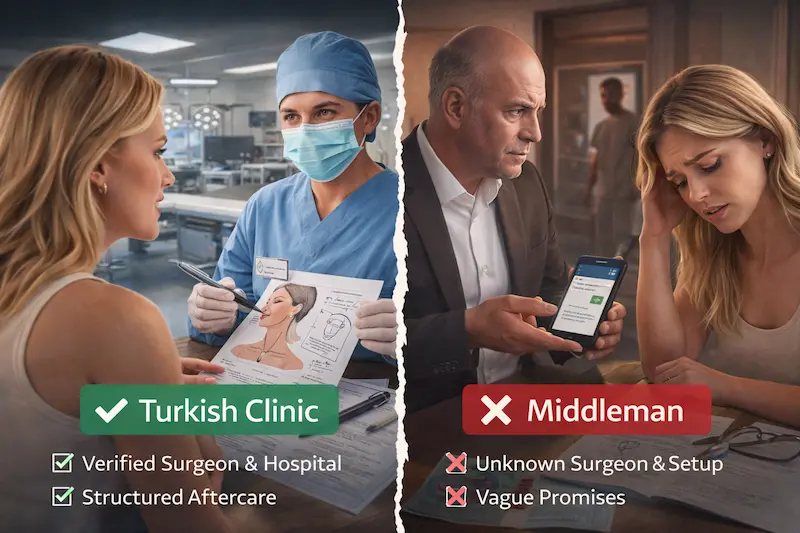
Outcomes vs. marketing: what you can verify
Marketing can look impressive while hiding critical gaps. Verification is the opposite: it’s evidence that holds up under scrutiny. Instead of “beautiful photos,” look for:
- Consistent photographic standards (same angles, lighting, neutral expressions, comparable timing).
- Procedure-specific outcomes (not generic “transformations” that don’t match your surgery type).
- Medical documentation readiness (pre-op plan, risk assessment, and follow-up protocols explained clearly).
In scientific research terms, you’re looking for reproducibility: results that appear consistently across multiple patients, not a single “hero” case.
The hardest part of clinic selection isn’t gathering information — it’s distinguishing the clinics that publish their entire operating logic from the ones that publish only marketing surface. What you’re looking for is a clinic that documents how it makes decisions, not just the decisions themselves. Surgeon-led versus broker-led, hospital-grade versus office-grade, structured aftercare versus loose follow-up — these aren’t preferences, they’re filterable variables when a clinic publishes them.
How we structure those variables and why patients come specifically for that structure is laid out on our clinic identity page.
“Natural result” standards: how to define it for yourself
“Natural” can mean different things depending on your anatomy and goals. Define your standard before consultations so you can evaluate clinics objectively. For example:
- Facial surgery: preserved identity, harmony, and no “operated look” (telltale tightness, distorted hairline, pulled mouth corners).
- Body surgery: balanced proportions, smooth contours, and scars placed strategically for concealment.
- Skin quality & healing: realistic expectations about swelling, scar maturation, and timelines based on medical science—not social media timelines.
This is also where a multi-disciplinary perspective matters—especially for facial work—because results depend on both structure and skin behavior during healing.
The real risk in medical tourism: choosing a broker vs. a medical team
One of the biggest hidden risks isn’t “Turkey” itself—it’s not knowing who is medically responsible. Some patients think they’re choosing a clinic, but they’re actually dealing with a broker or agency that does not control the operating environment, team consistency, or aftercare decisions.
To identify a true clinic (not a посредник-style middle layer), make sure you can clearly answer:
- Who is the operating surgeon? (Full name, credentials, and role in your specific procedure.)
- Where is the surgery performed? (Hospital standards and anesthesia setup, not just a “clinic address.”)
- Who follows you after surgery? (A defined aftercare pathway, not “message us anytime” with no structure.)
Step 1 — Verify Legitimacy: Clinic Licensing, Hospital Standards, and Accreditation
When you’re trying to identify the best plastic surgery clinic in Turkey, legitimacy is the first non-negotiable filter. “Legitimate” doesn’t mean “has a website” or “has a coordinator.” It means the clinic and surgical setting can demonstrate legal authorization, traceable accountability, and appropriate infrastructure for elective surgery—especially if you’re traveling internationally and need predictable standards.
Patients searching for the best Turkish plastic surgery clinic should approach this like an audit: request documents, confirm where the operation takes place, and verify what “accreditation” actually covers. In medical science, safety outcomes improve when systems are standardized—and legitimacy is the foundation of standardization.
Clinic licensing and legal accountability (what to request, what to check)
A trustworthy clinic can clearly explain its legal status and who holds medical responsibility. Ask for:
- Clinic/company registration details (who owns the practice and where it is registered).
- Medical facility licensing (the authorization that permits the facility to provide healthcare services).
- Named physician responsibility (the surgeon and medical team who will manage your care).
Why it matters: if something goes wrong, accountability must be clear. If answers feel vague—“don’t worry, we handle everything”—that’s not a safety signal; it’s a risk signal.
Hospital-based surgery: why the operating environment matters
Many patients assume “a clinic is a clinic,” but the operating environment is a major differentiator when comparing the best plastic surgery clinic in Istanbul versus a low-standard setup. Ask specifically:
- Is the surgery performed in a hospital operating theater?
- Who provides anesthesia? (Anesthesiologist-led care and monitoring protocols.)
- What emergency resources are available? (ICU access, rapid response protocols, blood supply, specialist backup.)
Even for “routine” procedures, reputable medical systems plan for the rare event. That’s a core principle in scientific research on patient safety: you don’t judge systems by the average day—you judge them by how they handle the worst day.
“Hospital-based” is a phrase that gets misused — sometimes it means “we have privileges at a hospital” rather than “the operating theater your case actually uses is hospital-grade.” The honest version is: which operating theater, what anesthesia setup, what emergency infrastructure sits within reach if something deviates from plan. Patients almost never inspect this layer pre-decision, and it’s the layer that explains most adverse-event differences between centers.
The specific facility and operating environment we use — anesthesia setup, ICU adjacency, monitoring protocols — is documented on our Istanbul facility walkthrough.
Accreditation signals (e.g., JCI / ISO) and what they do and don’t guarantee
Clinic accreditations and quality certifications can be meaningful, but they’re not magic. They may reflect that a facility follows certain quality management standards, documentation practices, and safety protocols. However:
- They don’t replace surgeon skill or procedure-specific expertise.
- They don’t guarantee aesthetic taste or “natural result” judgment.
- They don’t eliminate risk; they help reduce preventable risk through systems.
Use accreditation as a positive signal—then verify the clinical reality: where surgery occurs, who is responsible, and how aftercare is structured. The best clinics publish their patient journey process publicly — including surgical setting, medical team roles, and aftercare flow — so prospective patients can audit the pathway before consultation.
Practical rule: If a clinic cannot clearly confirm the surgical setting and responsible physician, it cannot reasonably be called the best clinic for plastic surgery in Turkey—no matter how attractive the package appears.
Step 2 — Surgeon Credentials: Training, Specialization, and Who Actually Operates
The surgeon is the single most important variable in your outcome—and yet it’s the easiest detail for marketing to blur. If you’re looking for the Turkey best plastic surgery clinic, you should be able to confirm: the surgeon’s identity, their scope of practice, their experience with your exact procedure, and whether the consultation is surgeon-led.
In medical science, outcomes are strongly linked to appropriate specialization, careful patient selection, and refined technique. Credentials aren’t about status—they’re about whether the person operating has the right training for what you’re asking their hands to do.
One question patients rarely ask but really should: who specifically will be operating, and is their training scope aligned with your specific procedure? Practice volume on the procedure you came for matters more than career length. A surgeon with 25 years of mixed practice can have less procedure-specific experience than a more focused surgeon with 10 — that’s not intuitive, but it’s what the outcomes literature consistently shows.
Background, board certification, and specific procedure focus for our lead surgeon are detailed on the lead surgeon profile.
Board certification equivalents and why specialty matters
Ask what the surgeon is trained and accredited to do—specifically. Many places use broad titles in advertising, but your evaluation should be procedure-specific:
- What is the surgeon’s primary specialty? (Plastic surgery, facial surgery focus, body contouring focus, etc.)
- How many years have they practiced this procedure?
- What is their approach to minimizing risk? (Pre-op assessment, anesthesia planning, complication protocols.)
Specialty matters because “cosmetic” is not a specialty by itself — safe aesthetic surgery is built on rigorous surgical training and systems-based patient care.
Case volume + case complexity: how to read experience the right way
High volume alone is not enough; it can even be a red flag if it implies “factory style” care. What you want is:
- Relevant volume (your procedure, your anatomy type, your age group).
- Complexity readiness (revision cases, asymmetry correction, combined procedures managed safely).
- Documented follow-up (proof that patients are tracked beyond “day 1 photos”).
Ask to see results across different timelines (early swelling vs. later healing). This aligns with how scientific research evaluates outcomes: timing matters, and “final” results aren’t immediate.
The “dual-specialty” advantage for facial work (structure + skin quality perspective)
For facial surgery (facelift variations, neck lift, eyelid surgery, facial contour refinements), “natural” results depend on more than tightening. A strong approach considers:
- Structural support (underlying tissue repositioning and facial harmony).
- Skin quality (texture, elasticity, healing behavior, scar management).
- Longevity (results that age gracefully rather than looking “pulled”).
This is where a dermatosurgical perspective can elevate outcomes—because it bridges aesthetic structure and skin-focused healing principles. If you’re comparing the best Turkish plastic surgery clinic options for facial work, ask whether skin quality strategy is integrated into planning (not treated as an afterthought).
Step 3 — Safety System: Anesthesia, Emergency Readiness, and Patient Selection
Many patients focus on before/after photos and price, but the “best” clinics are often defined by what you don’t see: the safety system. When you search best plastic surgery clinic Turkey, you’re essentially searching for a low-risk pathway to an aesthetic goal. That requires careful anesthesia planning, emergency readiness, and ethical patient selection.
A robust safety system reflects a science-based mindset: reduce predictable risk, prepare for rare events, and make decisions based on clinical evidence—not pressure.

Anesthesia planning: who evaluates you and how risk is reduced
Ask how anesthesia is chosen and who is responsible. Key safety indicators include:
- Pre-anesthesia evaluation (medical history, medications, labs, risk assessment).
- Clear anesthesia plan aligned with procedure length and patient health.
- Monitoring standards and post-op observation protocols.
If the clinic treats anesthesia like a “detail,” that’s a concern. Anesthesia is not a commodity; it’s a core safety component.
The honest reference point on outpatient cosmetic surgery safety — what actually drives adverse-event rates — isn’t marketing copy, it’s the TOPS registry analysis. A January 2024 Plastic and Reconstructive Surgery paper by Chopan and colleagues analyzed 286,826 outpatient plastic surgery procedures: outpatient surgery safety benchmark. The overall adverse-event rate was 5.7%, with smoking history, ASA class, BMI, general anesthesia use, operative duration, and certified registered nurse anesthetist involvement among the variables independently associated with complications — and no significant difference between office-based facilities and ambulatory surgical centers when the safety infrastructure was equivalent.
Worth flagging: this is U.S. registry data, not international medical tourism, so the operating-environment variables transfer better than the geographic ones. The actionable takeaway for clinic-shopping is which patient and facility variables actually predict complications versus which ones are marketing surface.
Emergency readiness: ICU access, protocols, and “what if something goes wrong?”
Even in top-tier settings, complications can happen. The difference between a safe clinic and an unsafe clinic is how prepared they are. Ask:
- Where would I be transferred in an emergency? (Same facility vs. external transfer.)
- Is ICU available? (On-site access is a strong safety signal.)
- What is the protocol for bleeding, infection, or anesthesia-related events?
Responsible clinics will answer directly. Vague reassurance is not a protocol.
“Emergency readiness” sounds like generic safety language until you ask what equipment specifically needs to be on hand within reach of the operating theater, calibrated, logged, and trained-on. Defibrillators with verified test cycles, anesthesia machines with documented service intervals, blood storage protocols, sterile-field instruments tracked through individual case logs — these aren’t optional infrastructure, they’re the invisible layer that explains why some adverse events resolve and others escalate.
Our equipment governance and verification protocols are documented on the facility technology standards.
Ethical patient selection: when a good clinic says “no” (and why that’s a green flag)
One of the strongest signs you’re dealing with the best clinic for plastic surgery in Turkey is that they may refuse or postpone surgery when it’s not safe or not likely to meet your expectations. Green flags include:
- They request medical records and ask detailed health questions.
- They discuss realistic outcomes and limitations for your anatomy.
- They recommend staged procedures instead of “doing everything at once.”
Clinics that approve everyone immediately often prioritize volume over safety—an approach inconsistent with medical science principles.
Step 4 — Proof of Results: How to Evaluate Before/After Photos Like an Expert
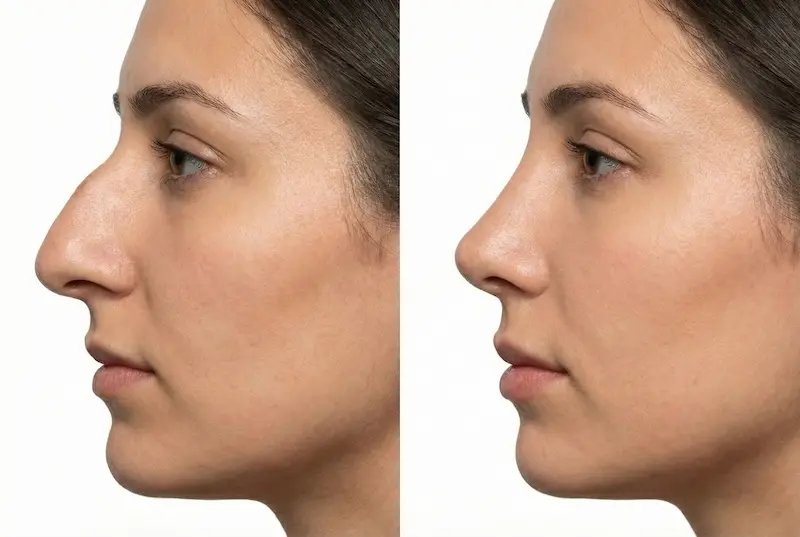
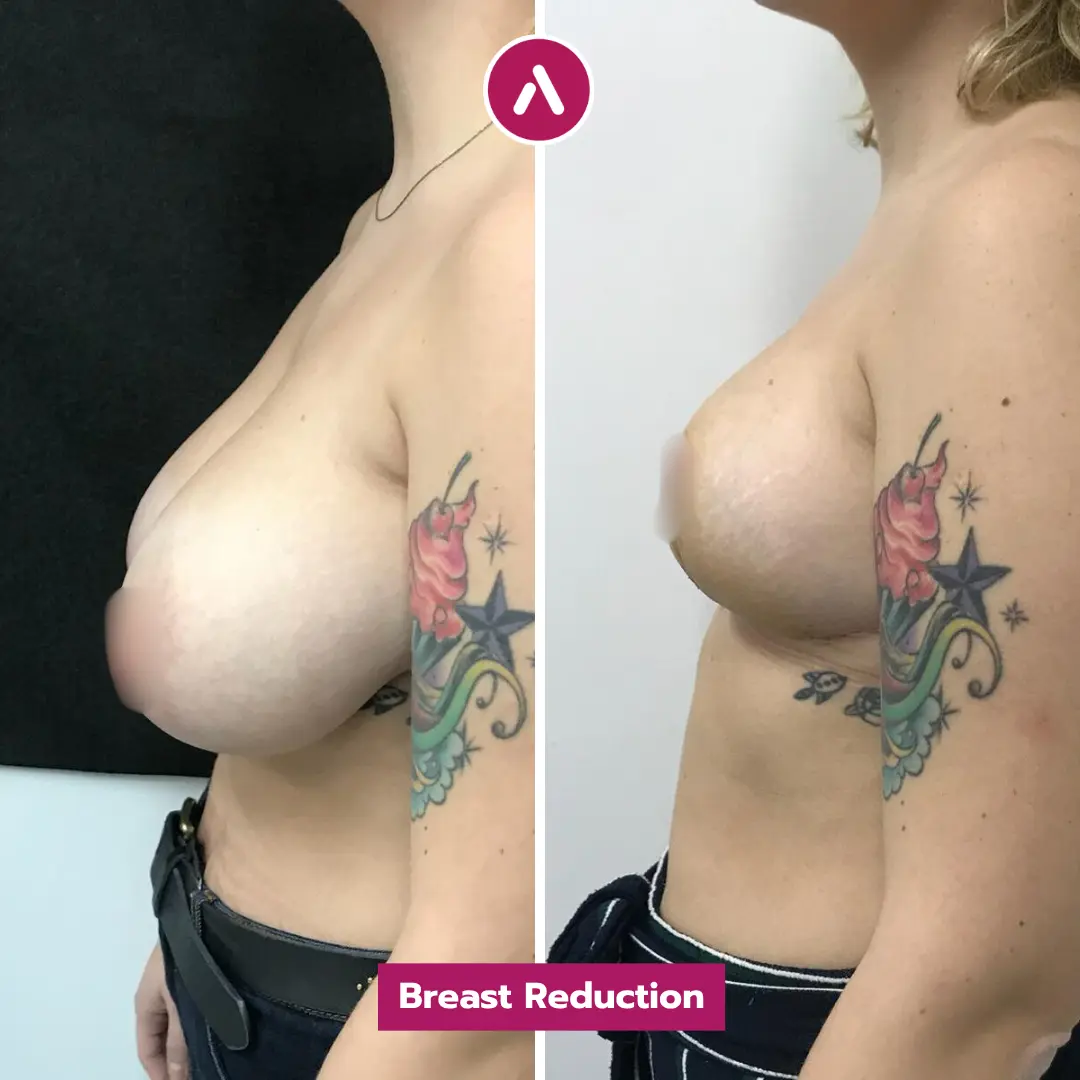
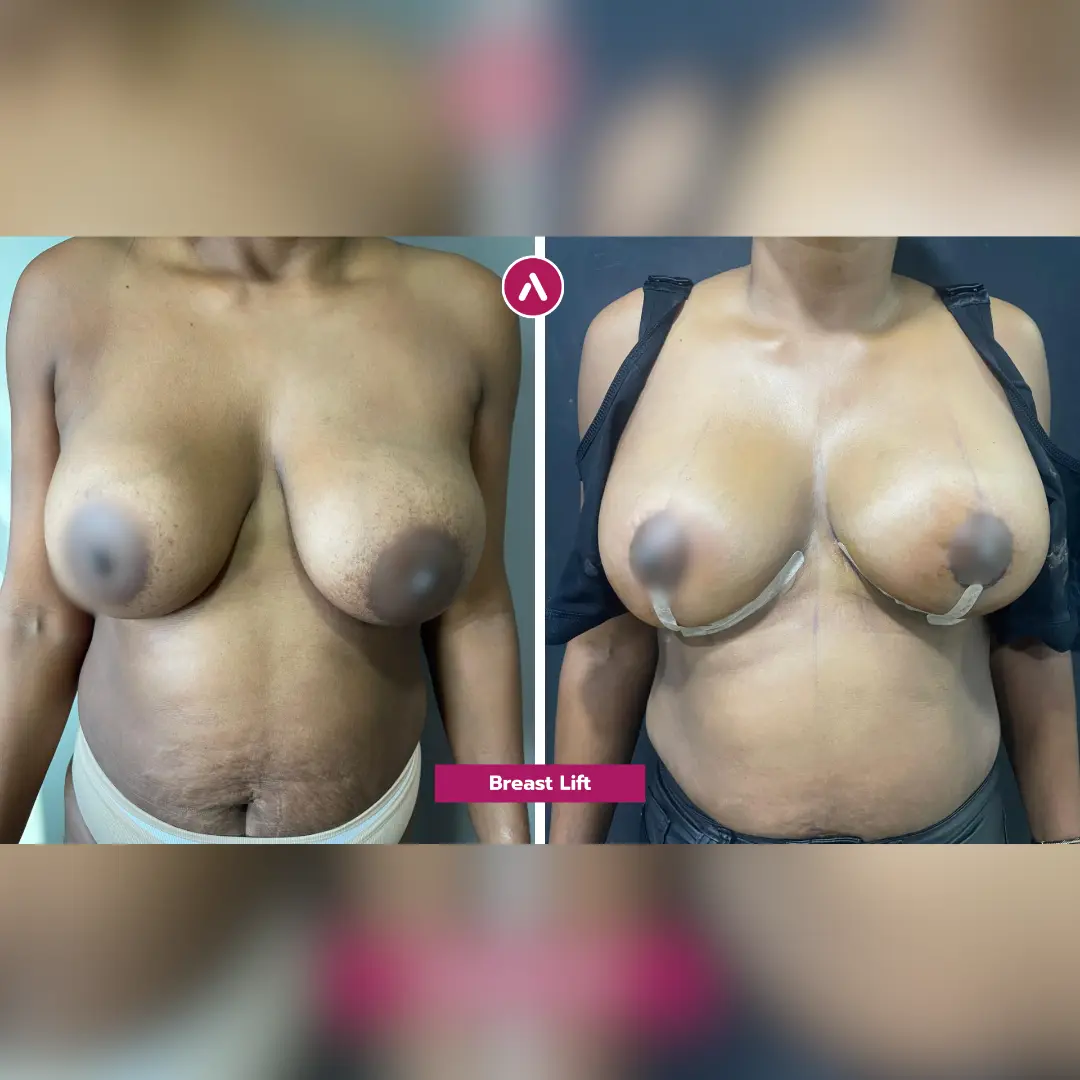
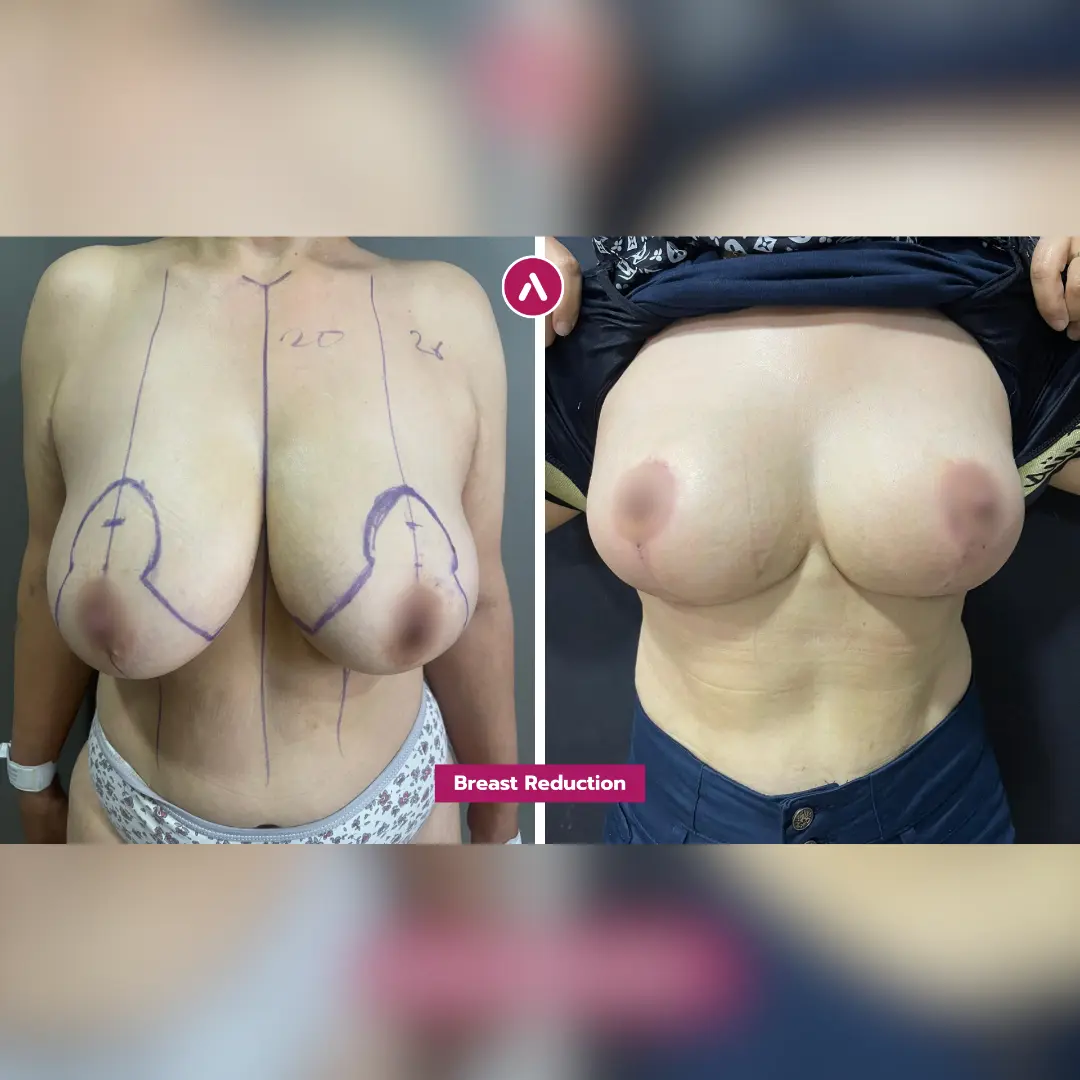
When patients search for the best plastic surgery clinic in Turkey, they often start by scrolling through before/after photos. That’s understandable—but it’s also where marketing can mislead. The goal is not to find the most “dramatic” transformation; the goal is to find consistent, honest, medically plausible outcomes supported by proper documentation and standardized presentation.
In scientific research, evidence has value only when the method is reliable. The same logic applies here: a photo is meaningful only if the clinic follows consistent standards that reduce bias and manipulation. If you want to identify the best Turkish plastic surgery clinic, learn to evaluate results like an expert—not like a casual viewer.
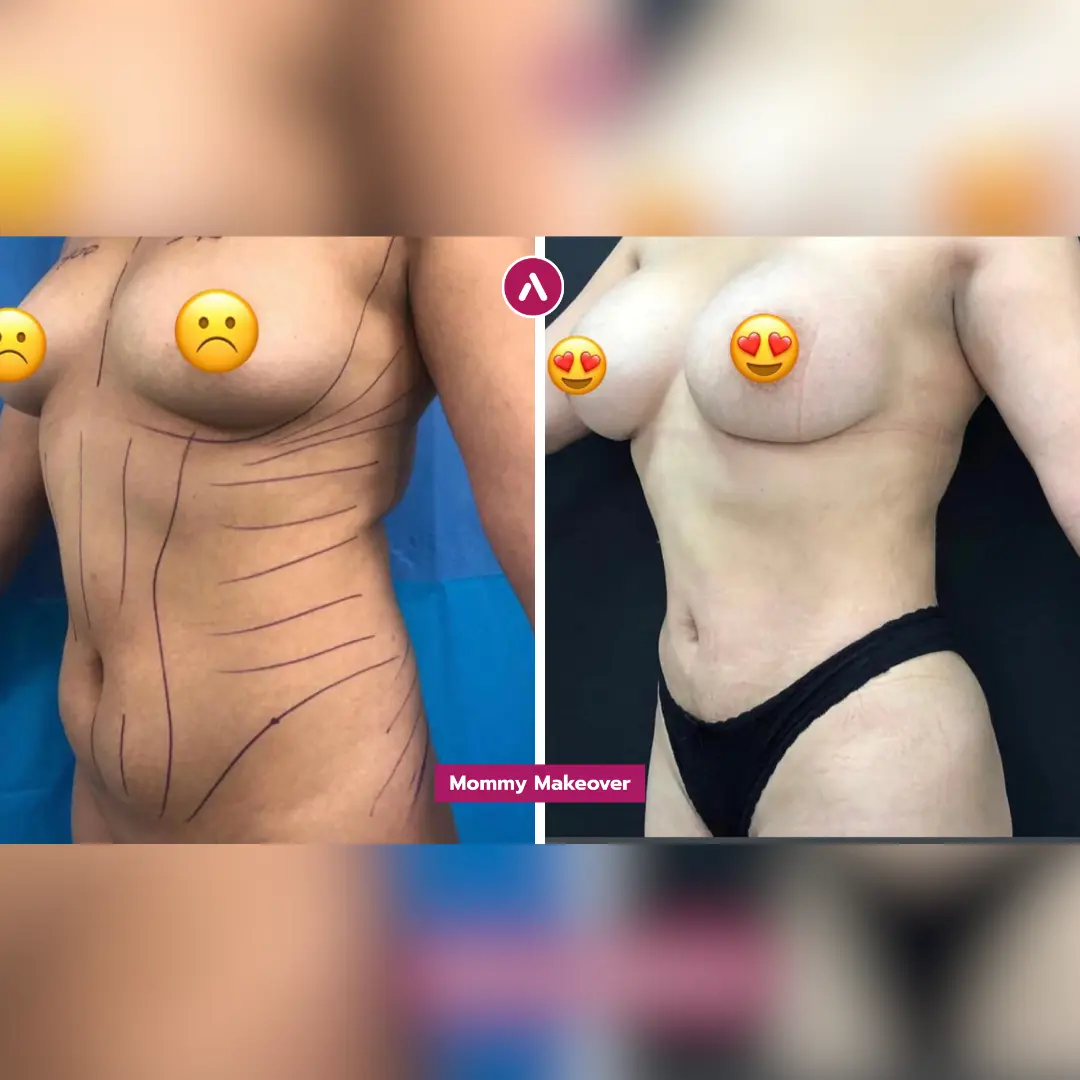
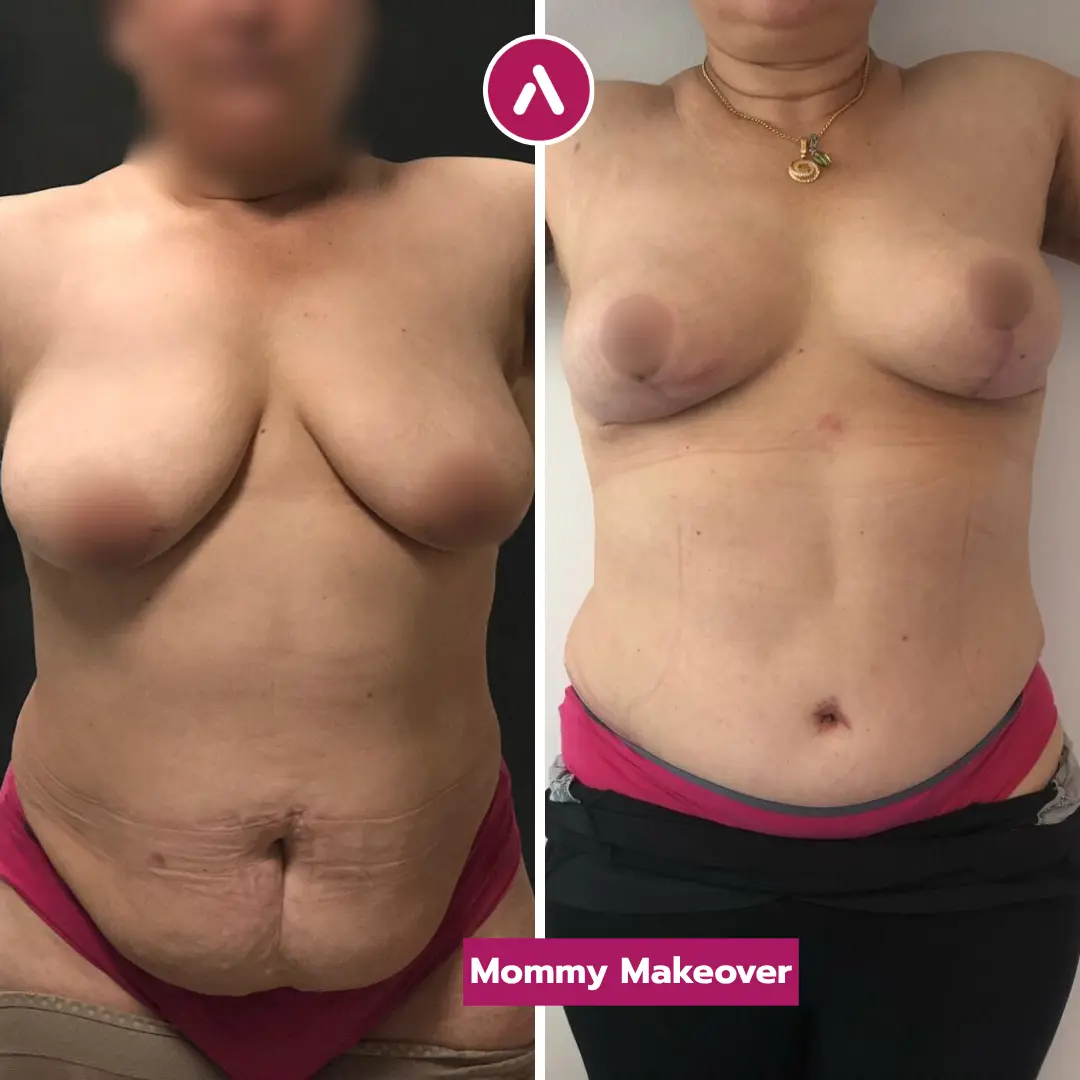
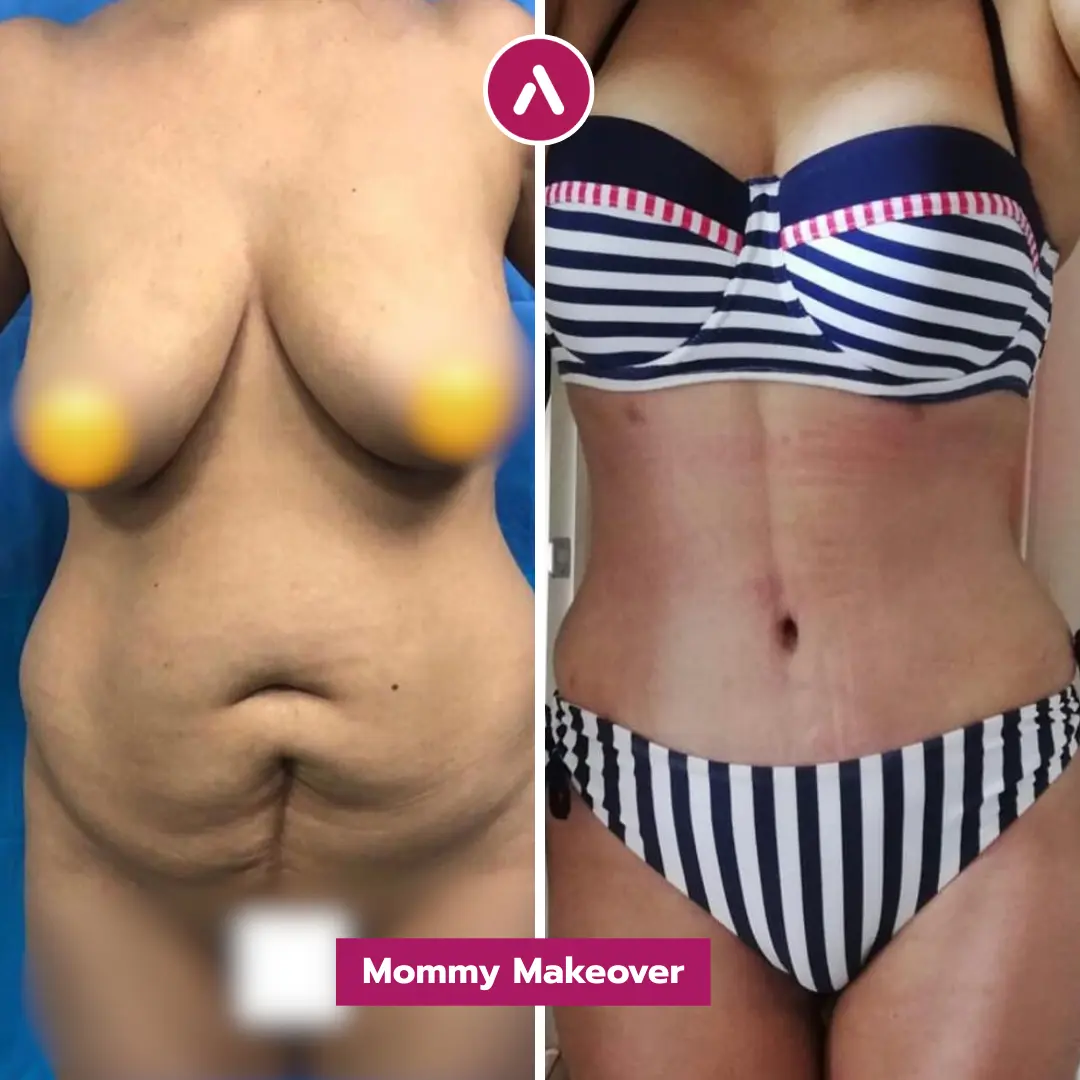
Before/after evaluation is a skill, not a vibe. Most patients scroll through transformation galleries looking for “wow,” when the right reading is the opposite: looking for consistency. Same camera distance across two photos. Same lighting. Same expression. Same time interval listed honestly (12 weeks reads very differently from 12 months). Photos that fail those tests are unreadable as outcome evidence regardless of how dramatic the transformation looks.
Our outcomes archive — organized by procedure with the photographic standards held consistent — sits in the patient transformation gallery.
Photo standards: lighting, angles, timing, consistency (spotting manipulation)
Ask whether the clinic follows a standardized photography protocol. Inconsistent photos can hide weaknesses and exaggerate positives. Watch for:
- Different lighting (harsh vs. soft) changing skin texture and contour visibility.
- Different angles (slight head tilts can “improve” jawlines or hide asymmetry).
- Different facial expressions (smiling vs. neutral alters cheeks and neck appearance).
- Unclear timelines (a 2-week “after” is not comparable to a 6-month “after”).
If a clinic’s photos don’t list approximate timelines, ask. A clinic positioned as the Turkey best plastic surgery clinic should be comfortable discussing healing phases and realistic progression.
“Natural” vs. “overdone”: objective indicators in facial and body results
Natural results are not “subtle at any cost”—they’re about balance and anatomical harmony. Objective signals include:
- Facial work: preserved identity, smooth transitions, no obvious tension points, and a neck/jawline that looks refined but not “pulled.”
- Rhinoplasty (if relevant): stable nasal tip support, no pinching, and a profile that fits facial proportions.
- Body contouring: smooth contour lines without “step-offs,” dents, or unnatural sharpness.
Remember: some results look “amazing” at first glance but don’t age well. A truly best plastic surgery clinic in Istanbul will show results that look believable and stable over time.
Revision capability: what it says if a clinic handles complex/revision cases
Revision and corrective cases are harder than primary procedures. Clinics that can safely handle complex cases often have stronger systems and more advanced surgical judgment. You can ask:
- Do you treat revision cases? If yes, what types and how often?
- How do you plan scar tissue management? (especially for revision body or facial procedures)
- Can you show standardized revision examples? (with consistent photos and realistic timelines)
This doesn’t mean you should choose a clinic solely because they do revisions—but if you’re comparing the best clinic for plastic surgery in Turkey, revision capability is a meaningful indicator of clinical depth.
Expert patient tip: Ask for “average” results, not only the best ones. A best practice clinic will have nothing to hide.
Step 5 — Transparency: Pricing, Inclusions, and Avoiding Hidden Fees
Price is a valid part of decision-making—but only when you compare like-for-like. Many patients searching best plastic surgery clinic Turkey also search best Turkey plastic surgery clinic expecting “all-inclusive” pricing. The risk is that packages can hide exclusions that matter most: anesthesia, hospital fees, lab work, garments, medications, extra nights, complication care, or follow-up support.
Transparency is a safety marker. A clinic that is truly among the best plastic surgery clinic in Turkey options will provide a quote that reads like a medical plan, not a travel brochure.
Pricing transparency is where the marketing-versus-substance gap is widest, because “all-inclusive” is a word that gets attached to packages with very different actual inclusions. Surgeon fee separately or bundled, hospital and anesthesia clearly itemized, aftercare touchpoints specified, revision policy in writing, complication-coverage scope defined — these are line items, not vibes. A clinic that hands you a single number without that breakdown isn’t giving you a price; it’s giving you a placeholder.
The fully itemized procedure-by-procedure pricing reference sits in the transparent pricing breakdown.
What a trustworthy quote includes (surgery, hospital, anesthesia, aftercare)
Request a written, itemized quote. At minimum, it should clarify:
- Surgeon fee (and whether the surgeon you consulted is the one operating)
- Hospital/OR fee (where the surgery happens and for how long)
- Anesthesia fee (and anesthesiologist involvement)
- Pre-op tests (labs, imaging if needed, medical clearance)
- Post-op care (dressings, follow-up visits, nurse support)
- Compression garments (for body procedures) and scar care basics
If the clinic is positioning itself as the best Turkish plastic surgery clinic, you should not have to chase these details.
“All-inclusive” gets used as a marketing label and a structural framework, and most patients don’t see the difference until they’re invoiced. A real package structure lists: surgeon fee, hospital facility fee, anesthesia fee, pre-op assessments, post-op visits, garments and supplies, hotel nights with specified room category, transfers with specified vehicle class, complication coverage scope. Those are the line items a clinic should publish before quoting.
Our procedure-specific package configurations and what’s bundled in each are mapped out in the treatment package directory.
Common hidden-cost traps (tests, garments, meds, extra nights, complication care)
Hidden fees often appear in these areas:
- Extra hospital nights if your recovery needs more observation.
- Medications (pain control, antibiotics) not included in the package.
- Compression garments or replacement garments for longer recovery.
- Additional lab work if results require repeats.
- Complication-related costs (this is the most important one to clarify).
Ask a direct question: “If a complication requires additional medical care, what is covered, and what is not?” A best clinic for plastic surgery in Turkey should answer this without defensiveness.
Comparing like-for-like: how to evaluate packages across clinics without being misled
To compare the best plastic surgery clinic in Istanbul choices fairly, create a simple comparison sheet. Score each clinic on clarity (not just cost). For example:
| Quote Item | Clinic A | Clinic B | Clinic C |
|---|---|---|---|
| Named surgeon in writing | Yes / No | Yes / No | Yes / No |
| Hospital + OR details included | Yes / No | Yes / No | Yes / No |
| Anesthesiologist fee included | Yes / No | Yes / No | Yes / No |
| Follow-up plan documented | Yes / No | Yes / No | Yes / No |
| Complication policy explained | Clear / Vague | Clear / Vague | Clear / Vague |
This method protects you from being seduced by a low headline price. The best plastic surgery clinic in Turkey isn’t the cheapest—it’s the clearest, safest, and most accountable option.
Step 6 — Aftercare and Accountability: The Most Overlooked “Best Clinic” Criterion
Many patients spend weeks comparing photos and prices, but the most important question often gets the least attention: what happens after surgery? For international patients, aftercare is where “good marketing” and “good medicine” clearly separate. If you’re aiming to choose the best plastic surgery clinic in Turkey, you should treat aftercare as a primary selection criterion—not a bonus.
A clinic can produce beautiful results on day 7 and still fail you if there’s no structured follow-up, no clear complication pathway, or no accountability once you’ve flown home. The best Turkish plastic surgery clinic will have an aftercare system that is predictable, documented, and patient-centered.
“Aftercare” is the most overlooked variable in clinic selection — not because patients don’t care about it, but because clinics rarely make it inspectable before the deposit is paid. Day-of-discharge expectations, who’s on call the first night, photo-review touchpoints at week one and week two, in-person versus telemedicine follow-ups at month one and month three, escalation protocols if something looks off — these need to be specified in writing, not promised verbally.
Our structured arrival-to-departure-to-follow-up pathway sits in the patient care pathway.
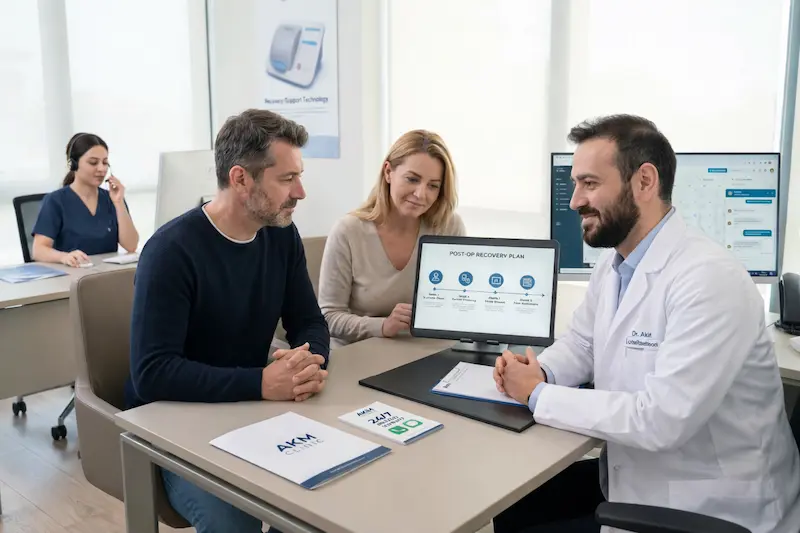
Post-op follow-up schedule: what “real aftercare” looks like for international patients
Ask for a written follow-up plan before you pay a deposit. A strong aftercare pathway typically includes:
- Immediate post-op monitoring (first 24 hours with appropriate observation).
- Planned in-person checkups during your stay (not just “if you need us”).
- Clear milestones: wound checks, dressing changes, drain removal (if applicable), swelling guidance.
- Remote follow-up schedule after you return home (week-by-week or milestone-based).
In terms of medical science, structured follow-up improves early detection of issues like infection, seroma, delayed healing, and scar problems—especially when patients are traveling and managing recovery across time zones. A transparent clinic will walk you through your full patient journey step-by-step before you commit, so you know exactly what to expect from consultation to discharge.
Communication standards: who answers you at 2am and what happens after you fly home
“24/7 support” can be a meaningless phrase unless it’s defined. Ask:
- Who is your point of contact? (nurse, medical coordinator, surgeon’s assistant)
- What channels are used? (WhatsApp, phone line, secure messaging)
- When does the surgeon step in? (clear escalation rules)
- What happens if you’re back in the US? (time-window expectations and documentation)
If a clinic is positioning itself as the best clinic for plastic surgery in Turkey, it should offer a clear protocol for aftercare communication—not just friendly responsiveness.
Recovery-support technology as a safety signal (HBOT, LLLT) and what benefits to expect
Some clinics strengthen recovery using supportive modalities that align with modern postoperative care principles. When properly indicated, recovery-support technology can help reduce swelling, support tissue recovery, and improve patient comfort.
- LLLT (Low-Level Laser Therapy): commonly used in postoperative care settings to support healing and reduce inflammation.
- HBOT (Hyperbaric Oxygen Therapy): used in select cases to support tissue oxygenation and recovery, particularly when healing support is clinically appropriate.
These technologies are not “magic,” and they don’t replace surgical skill—but they can reflect a clinic culture that invests in recovery science. If you’re comparing the best plastic surgery clinic in Istanbul, ask whether postoperative protocols are standardized and whether supportive modalities are used based on patient need (not as a generic upsell).
Accountability test: A clinic that truly deserves “best” status can explain exactly how they support you from day 1 to month 3—and what they do if recovery doesn’t follow the textbook path.
Step 7 — Your Decision Toolkit: A Clinic Comparison Checklist (Scorecard)
At this stage, you’re no longer guessing—you’re verifying. This is where you turn your research into a practical scorecard. Whether you’re comparing best plastic surgery clinic in Turkey candidates nationwide or narrowing down to the best plastic surgery clinic in Istanbul, you need a consistent checklist so emotion doesn’t override evidence.
The goal is not to find “zero risk” (that doesn’t exist). The goal is to choose the clinic with the strongest safety system, the clearest accountability, and the most convincing proof of stable, natural outcomes—the real signature of the Turkey best plastic surgery clinic.
The “10-point verification checklist” (documents + questions to ask)
- 1) Named operating surgeon confirmed in writing.
- 2) Surgical location (hospital/OR details) clearly stated.
- 3) Anesthesia provider and monitoring standards explained.
- 4) Pre-op evaluation process (medical history, labs, clearance).
- 5) Emergency readiness (ICU access, protocols, escalation).
- 6) Standardized before/after photos with timelines.
- 7) Procedure-specific experience demonstrated with comparable cases.
- 8) Itemized quote with inclusions/exclusions and complication policy.
- 9) Written aftercare plan including remote follow-up after you return home.
- 10) Ethical communication (no pressure, realistic outcomes, willingness to say no).
The consultation test: how to spot honesty vs. sales scripting
A surgeon-led consultation should feel like a clinical evaluation—not a pitch. Green flags include:
- They ask detailed questions about health, medications, and your goals.
- They explain trade-offs (scar placement, swelling, revision risk, recovery length).
- They set realistic expectations based on your anatomy and healing profile.
Red flags include: rushing you to pay, avoiding “what if” questions, and overpromising perfect outcomes. The best Turkish plastic surgery clinic will welcome your skepticism.
Shortlisting process: how to compare 3 clinics in 30 minutes (simple scoring method)
Take your top 3 clinics and score each category from 1 to 5. This keeps the decision evidence-based:
| Category | Score (1–5) | Notes (Proof / Gaps) |
|---|---|---|
| Legitimacy + Surgical Setting | __ | __ |
| Surgeon Credentials + Experience | __ | __ |
| Safety System (Anesthesia + Emergency) | __ | __ |
| Proof of Results (Standards + Timelines) | __ | __ |
| Transparency (Quote + Complication Policy) | __ | __ |
| Aftercare + Remote Follow-up | __ | __ |
If you do this honestly, the “best plastic surgery clinic Turkey” choice often becomes obvious—not because one clinic is perfect, but because one clinic is clearly more accountable, consistent, and evidence-driven.
Reviews tell two stories simultaneously — what patients experienced, and what the clinic did when something went unexpected. The signal worth reading isn’t the five-star ratio; it’s how detailed reviews handle the rough edges. A four-star review explaining a swelling issue that the clinic addressed proactively reads differently than a five-star review with no specifics. The first is verifiable evidence of accountability. The second could be a template.
Our patient reviews archive, including the detailed accounts that demonstrate accountability mechanics, is in the verified patient reviews.
Step 8 — Red Flags: When to Walk Away Immediately
Even if a clinic looks impressive online, certain red flags should stop the process immediately. Patients searching for the best plastic surgery clinic in Turkey sometimes overlook these because they’re excited, price-focused, or reassured by quick responses. But safety requires discipline.
If you want the best Turkey plastic surgery clinic outcome, you must be willing to walk away from anything that feels unclear, rushed, or unverifiable.
“Too cheap, too fast” pressure tactics and non-medical coordinators
- Pressure to pay quickly (“today-only price,” “limited slots,” “deposit now”).
- Medical advice given by non-medical staff who can’t explain clinical reasoning.
- Dismissive responses when you ask about risks, anesthesia, or emergency readiness.
Fast responsiveness is nice—but it does not equal clinical safety.
Vague surgeon identity, vague hospital info, vague aftercare promises
- No named surgeon confirmed in writing.
- Unclear surgery location (“our clinic OR” with no hospital-level specifics).
- Aftercare described as “we’re always here” without a schedule or protocol.
The best clinic for plastic surgery in Turkey should be able to answer these questions with clarity and documentation.
Refusal to share verifiable evidence (credentials, facility details, real results)
- They avoid providing credentials or use only generic titles.
- They won’t share standardized before/after examples with timelines.
- They won’t explain complication policies or what happens if recovery is not smooth.
Refusal to provide evidence is not “privacy”—it’s a credibility issue.
Step 9 — The VIP All-Inclusive Experience: What a True 5-Star Pathway Looks Like
After you’ve verified credentials, safety systems, and aftercare, one final layer separates the best plastic surgery clinic in Turkey from a merely competent one: the VIP all-inclusive experience. This is not about luxury for its own sake — it’s about reducing stress, protecting your energy, and removing friction at a moment when your body and mind are already adjusting to international travel, surgery, and recovery.
The best Turkish plastic surgery clinic options treat hotel stay, airport transfers, and concierge support as part of the clinical recovery system — not a marketing add-on. Below is what to expect (and what to ask) from a true 5-star cosmetic surgery Turkey pathway. For a full view of how each element connects — from your first virtual consultation to your flight home — see your complete patient journey at AKM Clinic.
Arrival in Istanbul: private VIP transfer, not just a taxi
The “5-star” feeling often begins before you even reach your hotel. A true VIP transfer is not just a nice car — it’s a coordinated chain of timing, communication, and contingency planning (flight delays, luggage issues, late-night arrivals) so you never feel stranded or rushed.
On arrival, your driver should meet you at a clear, pre-arranged point, helping you transition smoothly without having to negotiate taxis, language barriers, or unfamiliar pickup zones — especially important when you’re traveling solo or arriving after a long-haul flight. A private transfer also prioritizes privacy, comfort, and predictability: no extra stops, no shared space with strangers, and no lost time.
What to ask the clinic before booking:
- Is airport pickup tracked to my actual flight (including delays)?
- Will I have the driver’s name and contact before arrival?
- What happens if my flight is rerouted or I arrive at a different airport?
“5-star” gets thrown around so often it stops meaning anything, but in surgical recovery context it has a specific operational definition that’s worth verifying before booking. Distance from clinic measured in minutes-during-rush-hour rather than kilometers, room category with the right pillow/sleep-position support for early recovery, private transfer vehicles with the right shock absorption for post-op transit, on-call English-speaking concierge actually English-fluent — these are the variables that separate marketed hospitality from operational recovery support.
The pre-arranged accommodation network and transfer flow we use is mapped on the VIP recovery hospitality setup.

Flight delay coordination and solo-patient safety
Delays are common — and the VIP experience is measured by what happens when plans change. Your pickup should be adjusted automatically so you’re not forced into last-minute “plan B” problem-solving. This is where medical tourism concierge services matter most: one point of contact, proactive updates, and a seamless reset of timings.
If you’re traveling alone, the transfer also becomes a safety and reassurance layer — you don’t have to navigate a new city while fatigued. If you’re with a companion, it should still feel simple: enough space for luggage, clear coordination, and a calm ride that helps you both settle in before the next day’s consultations.
First 24 hours in Istanbul: a carry-on checklist
For the most comfortable arrival, keep these items accessible in your carry-on:
- Hydration basics: empty bottle to refill after security, electrolytes if you use them
- Essentials: passport, phone charger, any required medical documents
- Comfort: light layers, travel pillow, lip balm (cabin air is drying)
- Medical items: your routine medications in original packaging, a simple pain reliever if appropriate
- Communication: your concierge/host contact saved and accessible offline
Accommodation: 5-star hotel as part of your recovery infrastructure
A premium experience is not only about staying in a five-star hotel — it’s about whether the hotel environment actually supports recovery. The best all-inclusive plastic surgery packages Turkey offers will choose partner hotels for proximity and practicality, not just brand name.
What a recovery-friendly hotel setup looks like:
- Room layout: quiet floors, reliable heating/cooling, and pillows available for post-op head elevation
- Service access: flexible room service timing so you don’t have to navigate busy lobbies when your energy is low
- Mobility: short walking distance from car drop-off to reception to room, reliable elevators
- Privacy: discreet check-in and minimal exposure during the first recovery days
Small details matter after surgery. Sleep quality, temperature control, and effortless meal access directly affect how well your body rests — and rest is central to healing in medical science.
Hospital experience: A-class environment and English-speaking staff
Luxury is meaningless without medical rigor. A true 5-star cosmetic surgery Turkey pathway includes a hospital environment built for monitoring, privacy, and rapid response — not just a beautiful lobby.
Signals of an A-class hospital experience:
- English-speaking nurses available 24/7 (communication is a safety feature — you should never guess what a medication instruction means)
- Private suites for you and your companion (rest, privacy, and reduced stress — your companion stays close without logistical complications)
- Structured pre-op testing and paperwork flow (identity checks, labs, anesthesia assessment, surgical plan review — without rushing between stations)
- Clear discharge criteria (stable vitals, pain and nausea control, mobility guidance, medication instructions, wound care plan, and a defined follow-up schedule)
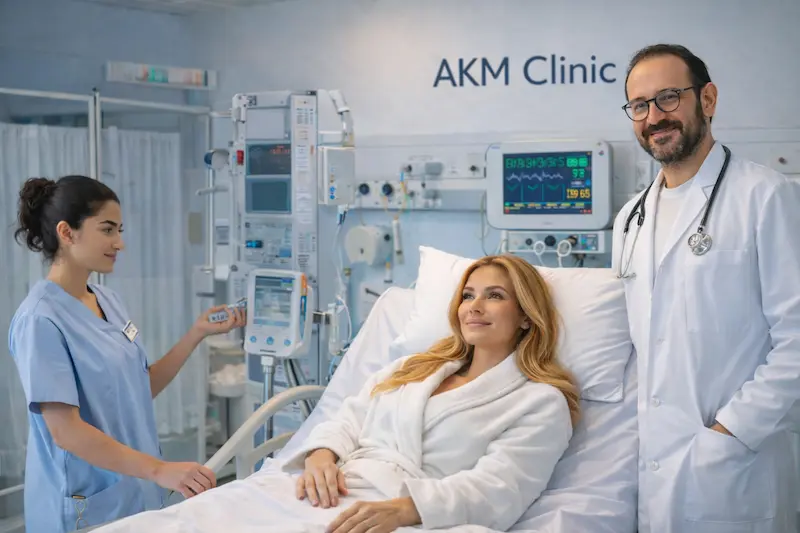
Patient Host: your daily point of contact during recovery
What most international patients actually want is simple: “If I feel weak, anxious, or unsure — who helps me?” A well-run VIP pathway includes a supportive Patient Host or medical tourism concierge who can help with practical items (appointment timings, transportation, pharmacy needs, scheduling adjustments) and keep communication clear.
This is one of the clearest differences between a standard booking and a true concierge-style experience in premium packages. Ask directly: “Who is my Patient Host, and what can they actually handle for me?” To see how a Patient Host supports you across every stage of your journey, review the full AKM Clinic process before booking.
Pre-op “soft tourism”: enjoying Istanbul without draining your energy
One of the biggest mistakes patients make is treating pre-op days like a full vacation. The smarter approach is “soft tourism” — low-effort experiences that help you relax without draining energy or increasing swelling risk.
Good pre-op choices:
- A seated Bosphorus-view café stop
- A short cultural moment near iconic areas (without long queues)
- Gentle shopping for comfort items (not marathon browsing)
Avoid before surgery:
- Long walks or late nights
- Alcohol (dehydration and bleeding considerations)
- Intense sun exposure (can affect certain procedures)
- Heavy, salty meals late at night
Focus on simple, nourishing meals and steady hydration. Your clinic’s specific pre-op instructions always come first.

Why a managed VIP journey feels “vacation-like” (and why that matters clinically)
When done well, medical travel doesn’t feel chaotic — it feels curated. The reason patients describe the best plastic surgery clinic in Turkey experiences as “vacation-like” is not because surgery is a holiday, but because logistics are simplified: one coordinated pathway, fewer decisions, and a calm environment.
In unfamiliar environments, small decisions pile up — transport, timing, directions, payment confusion, language barriers. VIP coordination reduces that cognitive load. Less stress supports better sleep and steadier routines, which are closely tied to recovery in medical science.
This is also where privacy becomes clinically relevant. For many patients, luxury equals discretion: private transfers, private recovery spaces, and minimized exposure reduce anxiety — especially for those who are nervous about being recognized. Premium care creates a structure where you can focus on healing, not problem-solving.
The final test: The best Turkish plastic surgery clinic won’t just offer a VIP package as a perk. It will explain how each element — the transfer, the hotel, the Patient Host, the hospital stay — actively supports your recovery and reduces risk. If it sounds like a travel brochure instead of a medical plan, keep looking.
Frequently Asked Questions (FAQ): Best Plastic Surgery Clinic Turkey
Below are concise answers to the most common questions patients ask when comparing the best plastic surgery clinic in Turkey options—especially when deciding between Istanbul-based clinics and package-style providers.
Most pre-decision questions live in a layer the marketing pages don’t reach — the operational specifics about consultations, medical history forms, payment scheduling, complication coverage details, and what happens if your travel dates need to shift. These aren’t sales objections to be deflected; they’re the variables that determine whether the trip actually works in real-life logistics. A clinic that publishes the answers transparently is auditing itself; a clinic that handles them only on phone calls is keeping the variables in the dark.
The operational answers most international patients need before deciding are catalogued in the international patient FAQ.
How can I verify if a clinic is legitimate in Turkey?
Ask for the clinic’s legal registration/licensing details, confirm the named operating surgeon in writing, and verify the surgical setting (hospital OR details). Legitimate providers are transparent and consistent in documentation.
Is it safer to have plastic surgery in a hospital rather than a clinic?
In general, hospital-based OR standards and emergency readiness can offer stronger safety infrastructure (monitoring, specialist backup, ICU access). Ask where surgery is performed and what emergency pathways exist.
What questions should I ask about anesthesia and emergency readiness?
Ask who provides anesthesia (anesthesiologist involvement), what monitoring standards are used, and what the protocol is for rare events (bleeding, infection, anesthesia complications). Clear answers are a safety signal.
How do I know before/after photos are real and not edited?
Look for standardized photo conditions: consistent angles, lighting, expression, and disclosed timelines. Ask to see average outcomes and longer-term results, not only “best-case” transformations.
What should an all-inclusive quote include to avoid hidden fees?
An itemized quote should include surgeon fee, hospital/OR fee, anesthesia fee, tests, garments (if needed), meds guidance, aftercare visits, and a clear complication-care policy.
What aftercare should I expect once I return to the US?
You should receive a written follow-up schedule, remote check-in milestones, clear escalation rules (when the surgeon gets involved), and guidance for local care if needed. Aftercare is part of safety—not an extra.
What are the biggest red flags that a “clinic” is actually a broker/agency?
Unclear surgeon identity, vague surgical setting, pressure to pay, and refusal to provide verifiable documentation are common red flags. A true best clinic for plastic surgery in Turkey is transparent and accountable.
How many days should I plan to stay in Istanbul for plastic surgery?
It depends on the procedure and your surgeon's follow-up protocol. Most patients plan enough time for pre-op evaluation, surgery, early recovery, and at least one in-person post-op check before flying home. The best plastic surgery clinic in Turkey will give you a personalized day-by-day itinerary — not a generic timeline. You can see a sample day-by-day flow in the AKM Clinic patient journey guide.
Can I travel alone for surgery in Turkey?
Many patients do, and it's safe when you have strong concierge coordination, clear daily support from a Patient Host, and an organized transfer-and-visit schedule. If the clinic offers true 24/7 support with a named point of contact, solo travel becomes comfortable rather than stressful.
What is included in a VIP all-inclusive package, and what isn't?
A genuine VIP package typically includes private airport transfers, 5-star hotel accommodation, coordinated appointment scheduling, Patient Host support, and all core medical fees (surgeon, anesthesia, hospital/OR, core aftercare). Always confirm in writing what is included (hospital fees, medications, compression garments, follow-up visits) versus optional (extra hotel nights, additional procedures, airfare).
Will I have English-speaking support throughout my entire trip?
At a true best Turkish plastic surgery clinic, yes — especially during clinical steps where clarity is critical (consultations, pre-op testing, anesthesia discussion, discharge instructions, aftercare calls). Communication is a safety feature, not a convenience.
How do you handle airport pickup if my flight is delayed or rerouted?
Premium providers track your flight in real time and adjust pickup automatically — no last-minute phone calls required on your end. Ask specifically how the clinic handles rerouted flights or late-night arrivals before you book.
Can I keep my plastic surgery discreet during travel and hotel recovery?
Yes. A well-run VIP pathway prioritizes privacy with private transfers, discreet hotel check-ins, and minimal exposure during clinic visits and recovery. If discretion is important to you, tell your Patient Host — they can coordinate timings and routes to protect your privacy throughout.