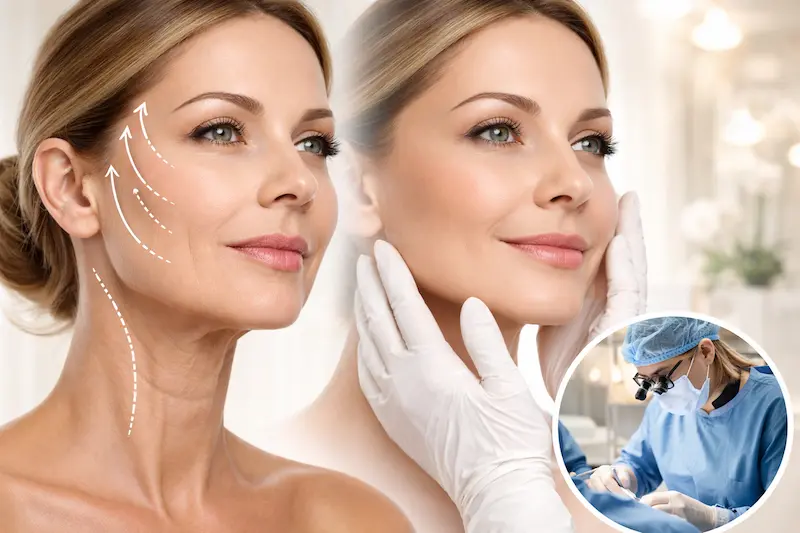

If you’re researching stem cell facelift longevity, you’re probably not looking for hype—you’re looking for timelines, variables, and what the best available science can (and can’t) promise. This guide is written for the “expert patient”: someone who wants natural-looking rejuvenation, but also wants to de-risk the decision with clear expectations, transparent trade-offs, and realistic longevity planning. To anchor those expectations to a surgical baseline, our definitive facelift surgical resource at AKM Clinic documents the technique families (deep plane, SMAS, mini) and the long-term outcome data that determines whether “stem cell” branding adds meaningful durability or is mostly cosmetic packaging.
We’ll break down what “stem cell facelift” actually means in modern aesthetic surgery, how long results tend to last, and why technique (including deep plane facelift longevity) often matters more than the marketing term “stem cell.”
When investing in your appearance, the most common question is: “How long will this last?” While a facelift in Turkey at AKM Clinic offers transformative structural changes, adding a regenerative component shifts the focus from just “looking younger” to “aging better.” In this guide, we break down the science of longevity and what you can realistically expect over the next decade.
Table of Contents
What a “Stem Cell Facelift” Really Is (and What It Isn’t)
The phrase “stem cell facelift” is used inconsistently online. In clinical practice, it usually refers to a surgical facelift combined with a regenerative fat-based approach (often described as stem-cell–enriched fat grafting). In other contexts, it’s used to describe non-surgical injections or vague “stem cell” claims that may not match what medical science would define as a true facelift. Understanding the definition is the first step to judging stem cell facelift longevity results fairly.
Need a deeper dive into the technique? Before we talk about how many years your results will last, you might want to know exactly how the fat is harvested and why autologous cells are used. Our complete walkthrough of how stem cell assisted facelift surgery actually works at the cellular level covers the SVF processing pipeline, candidacy criteria, and the surgical step sequence that this longevity discussion assumes you understand as a baseline.
Stem Cell Facelift Longevity—Typical Ranges and Realistic Expectations
Patients often ask for a single number—“How many years will it last?” The honest answer is that longevity is a range, not a guarantee. Your final durability depends on baseline anatomy, tissue quality, the surgical plane used (including deep plane facelift longevity considerations), and post-op lifestyle factors. Also, “lasting” can mean different things: the structural lift may remain while aging continues and skin quality evolves.
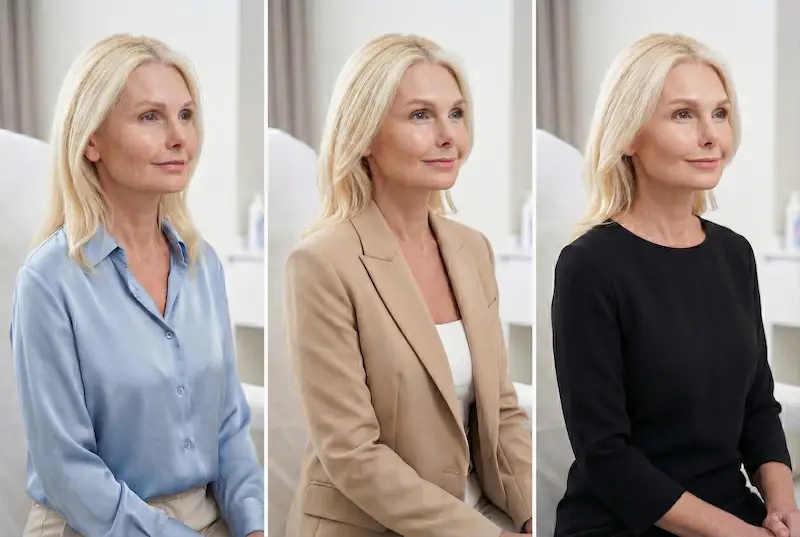
“Lift” longevity vs. “skin quality” longevity: two different clocks
Most people experience longevity in two layers:
- Structural support (lift/contour): how long the jawline, midface, and neck stay improved
- Surface quality (texture/glow): how long skin looks smoother, brighter, or more even
This is why people can be thrilled with their shape for years, yet still notice gradual changes in skin texture sooner. Evaluating stem cell facelift longevity results means judging both layers separately.
The collagen remodeling timeline (what changes at 3, 6, 12 months)
From a scientific research perspective, collagen remodeling and tissue maturation take time. Many patients look “presentable” early, but refinement continues for months:
- 0–6 weeks: swelling and firmness can mask the final definition
- 3 months: contours typically become clearer and more natural
- 6–12 months: scar maturation and tissue settling continue; skin quality improvements may become more noticeable in some patients
Because of this timeline, “early impressions” are not the same as final longevity.
It is important to remember that longevity is built during the healing phase. How you manage your skin and tissues in the first few weeks directly impacts the stability of your long-term results. Our day-by-day breakdown of healing milestones during stem cell-augmented facelift recovery maps swelling resolution, scar maturation checkpoints, and the early-phase tissue behaviors that determine whether the longevity range you read about today actually applies to your specific case.
What “touch-ups” really mean (and when they’re common)
Touch-ups don’t always mean “the facelift failed.” They may involve small refinements (e.g., minor volume balancing, skincare/energy-based maintenance, or targeted injectable support). A high-quality surgical foundation can still benefit from thoughtful maintenance—especially if your goal is to maximize facelift longevity without looking overdone.
The Biggest Factors That Determine How Long Results Last
When patients compare stem cell facelift results longevity, the biggest mistake is assuming the “stem cell” component is the primary driver of durability. In reality, longevity is a blend of (1) your baseline tissues, (2) the surgical method used to reposition and support them, and (3) how well any transferred fat survives. These factors also determine how strong your long-term facelift longevity will be—regardless of branding.
Patient factors: age, skin quality, genetics, smoking, weight fluctuations
Your tissues set the playing field. Two people can have the same technique performed, yet experience different stem cell facelift longevity results because their biology and lifestyle differ.
- Age & baseline laxity: more laxity typically means you benefit more from structural lifting, but the aging process continues.
- Skin quality: sun damage, thinner dermis, and reduced elasticity can shorten the “surface” improvements even if structural support remains strong.
- Genetics: influences collagen architecture, scarring behavior, and how quickly you re-age.
- Smoking/vaping: compromises microcirculation, which can impact healing and fat survival.
- Weight changes: significant gain/loss can alter facial volume and definition, affecting perceived longevity.
Technique factors: deep plane/SMAS approach, fixation, and volume strategy
Technique is often the “silent hero” behind long-term outcomes. If you’re comparing outcomes across clinics, ask what structural plane is used and why. A well-executed structural facelift (often discussed in terms of SMAS or deep-plane approaches) can be a major contributor to deep plane facelift longevity and overall facelift longevity. The technique-specific durability profile — including why composite-flap dissection in the deep plane tends to outlast SMAS-only repositioning — is documented on our deep plane facelift technique and 10-year outcome data page, which catalogs the midface ligament release sequence and the longevity studies that inform AKM’s planning protocol.
- Vector & repositioning: the direction and precision of tissue repositioning influences naturalness and durability.
- Support/fixation: secure, anatomy-respecting fixation helps maintain definition as tissues heal.
- Balanced volume plan: overfilling can look unnatural; under-volumizing can leave you looking “tight but tired.”
For the cautious, detail-oriented patient, the key takeaway is simple: if the foundation is strong, longevity usually improves.
Graft survival factors: harvesting, processing, injection technique, and blood supply
If your “stem cell facelift” includes fat transfer, longevity depends on how much of that fat survives long-term. This is not just an artistry issue—it is heavily influenced by technique and physiology.
- Harvesting: gentle technique can help preserve viable fat cells.
- Processing: how the fat is prepared can affect consistency and survivability.
- Placement: injecting in small parcels can support oxygen diffusion and reduce necrosis risk.
- Recipient bed blood supply: well-vascularized tissues improve integration and long-term retention.
This is why some patients describe stable volume for years, while others notice partial resorption. It’s also why clinics should explain their protocol transparently if they claim superior stem cell facelift longevity results.
Beyond the Lift: How Regenerative Cells Slow Down the Visible Aging Clock
Traditional facelifts are mechanical—they move tissues back to where they were 10 years ago. However, they don’t stop the biological clock. This is where the “longevity” of a stem-cell-assisted approach differs.
By introducing your own regenerative cells into the dermal layers, we aren’t just stretching skin; we are revitalizing the soil. These cells communicate with your fibroblasts to encourage ongoing collagen production and improve microcirculation. This biological “bio-hacking” means that as the years pass, your skin maintains its thickness and elasticity better than it would have with surgery alone. You aren’t just looking younger today; you are setting a slower pace for how you will age over the next 5 to 10 years.
The Stem Cell Component—What Science Suggests (and What It Can’t Promise)
It’s reasonable to ask whether the “stem cell” aspect actually changes longevity. Based on current scientific research, regenerative fat-based approaches may support skin quality and healing in some contexts, but they are not a magic switch that stops aging. Responsible clinics should be careful about absolute claims and instead explain what outcomes are plausible, measurable, and safe.
Proposed mechanisms: growth factors, angiogenesis support, collagen signaling
Fat tissue contains regenerative cells and signaling molecules that may influence tissue quality. A peer-reviewed analysis published in the National Library of Medicine examining adipose-derived stem cells for facial rejuvenation: mechanisms and clinical outcomes describes how mesenchymal stromal cells secrete growth factors and anti-inflammatory cytokines, stimulate extracellular protein secretion, and have been documented to improve skin density, hydration, and capillary vessel formation when injected into dermis. Proposed mechanisms often discussed in medical literature include:
- Growth factor signaling: may support tissue repair pathways.
- Angiogenesis support: may encourage microvascular integration that helps graft take.
- Collagen signaling: may contribute to texture and firmness improvements in some patients.
These mechanisms are biologically plausible, but real-world results vary—especially across different protocols.
Evidence quality: what we know vs. what’s still limited in studies
The most important “expert patient” point: not all evidence is equal. Some studies suggest benefits in skin quality and healing-related endpoints, but:
- Protocols differ widely (harvest methods, processing, injection planes, volumes).
- Outcome measures aren’t always standardized (photos vs. validated scales).
- Long follow-up is harder to obtain, which affects longevity conclusions.
So, while medical science supports that regenerative approaches may be helpful, it does not support blanket promises like “it lasts twice as long.” A clinic earns trust by describing limits, not by ignoring them.
Safety considerations: infection, nodules, fat necrosis, scarring, asymmetry
Longevity matters—but safety comes first. Any combined approach must be evaluated for complication risks and how the clinic prevents and manages them. Key considerations include:
- Infection control: sterile technique and clear post-op monitoring.
- Nodules/irregularities: can occur with fat transfer if placement is uneven or too superficial.
- Fat necrosis: risk rises with larger volumes or compromised blood supply.
- Scarring & tissue healing: depends on incision planning and patient biology.
- Asymmetry: can occur in any facelift; refined planning and follow-up matter.
When clinics talk about stem cell facelift longevity results, they should also explain how they reduce risk and what their revision/management philosophy is if issues arise.
Longevity Compared—Stem Cell Facelift vs. Other Rejuvenation Options
Patients often consider alternatives before committing to surgery. Comparing options helps you decide whether you want “maintenance” (non-surgical) or “structural correction” (surgical). If your primary concern is laxity and contour, a surgical approach usually offers stronger facelift longevity. If your concern is early texture change, some non-surgical treatments can complement—but rarely replace—structural lifting.
While non-surgical treatments like fillers and threads offer temporary maintenance, they cannot match the structural and biological longevity of a surgical approach. If you are struggling to decide which specific method aligns with your anatomical needs and aging pattern, our side-by-side analysis of stem cell facelift versus traditional surgical facelift outcomes covers the mechanism-by-mechanism breakdown, candidacy decision tree, and risk profile differences that this longevity guide alone doesn’t address.
How to Make Results Last Longer (Pre-Op + Long-Term Maintenance)
The goal isn’t just to “get a good result”—it’s to protect it. Maximizing facelift longevity (and the perceived durability of stem cell facelift longevity results) comes down to reducing inflammation, supporting healing biology, avoiding behaviors that accelerate collagen breakdown, and using a realistic maintenance plan that doesn’t distort your features. Think of surgery as the structural reset, and maintenance as protecting your investment in healthy tissue over time.
Pre-op optimization: smoking cessation, nutrition, skincare, medical clearance
Pre-op choices can meaningfully influence healing quality, scar maturation, and (if fat transfer is part of your plan) the stability of volume retention—factors that feed into stem cell facelift results longevity.
- Stop smoking/vaping early: Nicotine impairs microcirculation and can negatively affect healing and fat graft survival.
- Stabilize your weight: Large weight swings are one of the fastest ways to change facial volume after surgery.
- Medical clearance: Control blood pressure, blood sugar, and any chronic conditions that impact wound healing.
- Skincare prep: A surgeon-guided plan (not aggressive DIY peels) can help improve baseline skin resilience.
Post-op behaviors that protect longevity: sun, sleep, activity, scar care
Once healing begins, your daily habits either protect collagen—or break it down. Patients who want the best long-term facelift longevity typically treat the first 6–12 months as a “tissue maturation phase,” not just a downtime period.
- Sun protection: UV exposure accelerates collagen degradation and pigment changes, shortening the “skin quality” side of longevity.
- Sleep and inflammation control: Consistent sleep supports recovery biology. Persistent swelling/inflammation can delay refinement.
- Return to activity gradually: Follow your surgeon’s protocol; rushing high-intensity activity can increase swelling and prolong healing.
- Scar care: Scar management is not cosmetic fluff—it’s part of creating a refined, natural-looking result.
Maintenance plan: skincare + energy devices + injectables (timing and priorities)
Maintenance should be subtle, not “additive” in a way that changes your identity. The most respected approach is staged: protect skin first, then consider targeted treatments only where they help you preserve a natural look. This is where many patients see the difference between “still looks like me” and “looks obviously done.”
| Timeframe | Primary Goal | What Helps Longevity (Examples) |
|---|---|---|
| Pre-op | Optimize healing capacity | Stop nicotine, stabilize weight, medical clearance, surgeon-guided skincare |
| Weeks 1–6 | Reduce swelling, protect incisions | Sun avoidance, gentle mobility, incision/scar protocol, sleep and nutrition support |
| Months 2–6 | Refinement and tissue maturation | Strict SPF, collagen-supportive skincare, surgeon-approved energy-based options if indicated |
| Long-term | Slow visible re-aging | Consistent SPF, skin-quality maintenance, conservative injectables where appropriate |
What to Ask in Your Consultation (Especially as an International Patient)
If you’re traveling for surgery, your consultation questions should be even sharper. The best predictor of satisfaction isn’t the clinic’s marketing—it’s whether they can clearly explain technique, safety protocols, and aftercare. These questions also help you compare claims about stem cell facelift longevity results across providers in a meaningful way.
Exactly which facelift plane/technique is used—and why it impacts longevity
Ask the surgeon to explain their preferred method (for example, SMAS-based or deep-plane strategies) and the rationale for your anatomy. “Which plane do you operate in, and why?” is a reasonable question for any expert patient focused on deep plane facelift longevity and natural contours.
- What areas are being repositioned (midface, jawline, neck)?
- What creates the long-term support in your case?
- How do they avoid an over-pulled look?
How “stem cells” are obtained/processed (and what safety standards matter)
If the plan includes regenerative fat-based treatment, ask for specifics. A trustworthy team will clearly explain what is done—and what is not done. This matters for both safety and realistic expectations about stem cell facelift results longevity.
- Is the material autologous (your own)?
- How is it harvested and processed?
- Where is it placed (depth/planes), and how do they minimize nodules or irregularities?
- What is the clinic’s protocol if partial resorption occurs?
How to evaluate before-after photos for natural, long-lasting outcomes
Before-after galleries can mislead if you don’t know what to look for. Ask for:
- Consistent angles and lighting (not flattering “after” lighting).
- Multiple time points (not just 2–6 weeks). Look for 3–6 months and beyond when possible.
- Neck and jawline views (often the most honest indicator of true structural improvement and facelift longevity).
For a structured walkthrough of how surgeons audit before-after sets across timepoints — including the 6–12 month benchmark, the structural markers that signal durable lifting, and the red flags that suggest results will fade quickly — our case study on evaluating natural facelift outcomes across the 6–12 month timeline turns this checklist into a practical photo-reading framework.
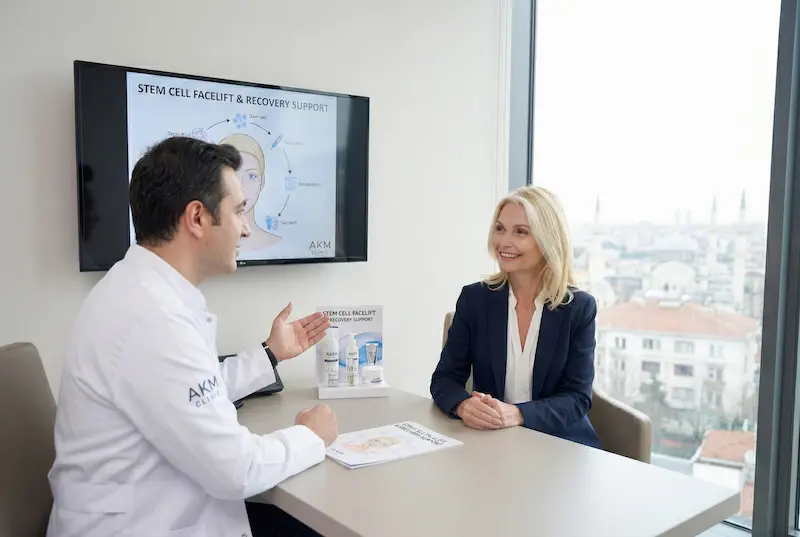
AKM Clinic Approach to Durability and Recovery Support
For patients focused on longevity and safety, the “extras” should never replace fundamentals. AKM Clinic’s positioning emphasizes (1) surgeon-led planning, (2) structural technique choice to support long-term contours, and (3) recovery-support technologies designed to reduce swelling and support healing. The full equipment specifications, treatment session protocols, and safety certifications behind these recovery technologies are catalogued on our clinical technology and accreditation standards page, including the HBOT chamber pressure parameters and LLLT wavelength specifications used in post-facelift care.
Surgeon-led planning: structure + skin quality (Dermatosurgeon involvement)
AKM Clinic’s approach highlights the advantage of combining dermatosurgeon-level skin expertise with a plastic surgery skill set for facial rejuvenation. The underlying logic is straightforward: facial aging is not only about sagging structure, but also about skin quality—texture, elasticity, and how tissue heals. Addressing both layers supports more natural-looking outcomes and can influence how patients perceive stem cell facelift longevity results over time.
Recovery optimization: HBOT & LLLT—where they may help in healing
AKM Clinic describes two post-operative support technologies used in its care model:
- HBOT (Hyperbaric Oxygen Therapy): positioned as a recovery-support tool aimed at enhancing oxygen delivery to tissues, with the goal of supporting healing, reducing swelling, and assisting scar quality.
- LLLT (Low-Level Laser Therapy): described as a non-thermal light-based therapy used to support cellular repair, collagen support, and inflammation reduction during recovery.
For the cellular-mechanism breakdown — including how pressurized oxygen influences fibroblast activity, neovascularization, and collagen cross-linking that directly affects long-term scar quality — our deep-dive on how HBOT supports surgical healing and long-term tissue quality covers the science behind why this adjunct may indirectly contribute to perceived longevity outcomes.
Follow-up protocol for US patients: remote checks, timelines, red flags
International patients should ask exactly how follow-up is handled after they fly home. A serious clinic should provide a clear plan for remote check-ins, what symptoms are normal, and what signs require urgent evaluation. This isn’t just convenience—it’s a safety layer that protects both your outcome and your peace of mind. Our complete post-surgery follow-up protocol for international patients documents the AKM virtual check-in cadence (Week 1, Month 1, Month 3, Month 6, Year 1) and the photo-protocol templates that allow longitudinal tracking of your result’s stability — the actual mechanism behind making longevity claims verifiable rather than assumed.
- Remote follow-ups: scheduled photo/video check-ins during the early healing window.
- Clear timelines: what swelling, numbness, and tightness typically look like at each stage.
- Red flags: sudden asymmetry, escalating pain, fever, drainage, or rapidly worsening swelling should trigger immediate medical contact.
Real patient perspectives: what longevity-minded patients tend to value most
For many “expert patients,” satisfaction isn’t just about looking younger—it’s about looking naturally refreshed, healing predictably, and feeling supported through the entire process. In AKM Clinic’s patient testimonial library, several themes repeat: comfort, trust, and natural-looking outcomes—factors that often influence how patients judge facelift longevity and overall value.
Barbara (USA), who had a Deep Plane Facelift + Neck Lift + Upper Eyelid Surgery, described her surgery as “fabulous,” with “no pain” and minimal bruising.
Dilek (Germany) gave a “100 percent” recommendation and said she was “super, super, super satisfied.”
These experiences don’t replace clinical evaluation, but they do highlight what skeptical, research-driven patients prioritize: a clear plan, credible technique, and a recovery pathway that supports confidence—especially when traveling internationally. To watch Barbara, Dilek, and other long-term patients describe how their results held up at 1, 3, and 6+ year marks on camera, see our long-term patient interview library at AKM Clinic, where each testimonial is documented with surgery date and follow-up timestamps so you can evaluate longevity claims against real, time-stamped patient evidence.
Plan Your Long-Term Rejuvenation
True longevity comes from a combination of world-class surgical technique and personalized biological support. If you are ready to stop researching and start planning, visit our central Facelift in Turkey hub. There, you can explore our complete care packages, meet our medical team, and see how AKM Clinic ensures your results stand the test of time.
Look for long-term proof: Before-after sets at meaningful time points (not only early post-op). For an organized aggregator of time-stamped reviews — Trustpilot, Google, and structured AKM patient feedback filterable by years-since-surgery — see our third-party verified review hub with multi-year follow-up entries, which lets you read what patients said at 1 year, 3 years, and 5 years post-op rather than only the immediate “I love it” honeymoon period.
Frequently Asked Questions (FAQ): Stem Cell Facelift Longevity
This FAQ focuses on the most common high-stakes questions patients ask when comparing stem cell facelift longevity results, stem cell facelift results longevity, deep plane facelift longevity, and overall facelift longevity. The goal is clarity—no exaggerated promises, no vague marketing.
Is a stem cell facelift permanent?
No facelift stops aging permanently. A well-performed facelift can offer long-lasting structural improvement, but your face will continue to age naturally. If “stem cell” refers to regenerative fat-based treatment, it may support skin quality and volume stability in some patients, but it still isn’t a guarantee of permanence. Think “long-term improvement,” not “permanent freeze.”
When will I see the final result?
Most patients look socially presentable relatively early, but refinement takes longer. Swelling, tissue settling, and scar maturation can continue for months. Many surgeons consider the result significantly clearer around 3 months, with further refinement up to 6–12 months—especially for subtle contour definition and scar quality.
How long does the “stem cell glow” last?
Patients often use “glow” to describe improvements in skin texture, hydration, or overall vitality. If your plan includes regenerative fat-based treatment, those skin-quality changes may evolve gradually and can be influenced by skincare, sun exposure, and overall health. The most honest answer is: it varies—and maintenance (SPF, medical-grade skincare, and surgeon-guided treatments) often matters more than a one-time add-on.
Does fat grafting always survive?
No. Fat graft survival is variable and depends on harvesting, processing, placement technique, and your tissue blood supply. Partial resorption is common, and many reputable surgeons plan conservatively with this in mind. What matters most is whether the clinic can explain its protocol clearly—and what the adjustment plan is if resorption occurs.
Can I repeat stem cell treatment later without another facelift?
In some cases, patients may do future regenerative/volume-focused treatments without repeating a facelift—especially if the structural lift remains strong and the main concern becomes skin quality or mild volume changes. However, if laxity returns significantly, non-surgical approaches generally won’t recreate the structural benefits of a facelift. This is where understanding your baseline and your long-term aging pattern is important.
What makes results fade faster?
The most common “longevity killers” are high UV exposure (collagen breakdown), smoking/vaping (microcirculation impairment), significant weight fluctuations (volume changes), and inconsistent maintenance. Technique also matters: durable support and natural vectors are major contributors to deep plane facelift longevity and overall facelift longevity.
How can I verify a clinic is doing “real” stem cell-assisted work safely?
Use a checklist approach:
Define the protocol: Is it facelift + fat-based regenerative support, or just “injections” with unclear sourcing?
Ask what’s autologous: Are the materials from your own body?
Request technical transparency: How is fat harvested, processed, and placed?
Check surgeon credentials and roles: Who performs the key steps, and who is responsible for safety decisions?
Look for long-term proof: Before-after sets at meaningful time points (not only early post-op).
Ask about complication management: What happens if nodules, asymmetry, or resorption occurs?
If a clinic can’t answer these clearly—or relies on guaranteed longevity claims—treat that as a red flag.