IIf you’re researching facelift recovery with stem cells, you’re probably not looking for vague promises—you want a realistic timeline you can plan around: swelling, bruising, social downtime, and when your face will look “normal” again.
This guide is written for the detail-oriented patient who wants clarity grounded in medical science and what scientific research can (and cannot) support. I’ll also point out the variables that change timelines—like procedure depth (including deep plane facelift recovery), whether a neck lift is added, and how your tissues typically heal.
Key idea: “Stem cells” in facelift recovery usually refers to your own fat-derived regenerative cell components used to support healing and skin quality—not a magic shortcut that eliminates swelling overnight.
While recovery is a highly personal phase, having your procedure done with the right surgical foundation makes all the difference. Before we dive into your day-by-day healing timeline, you can review our AKM Clinic’s facelift surgical and aftercare framework to see the world-class technique selection, recovery technologies, and dedicated international patient teams that determine what your healing timeline actually looks like.
| Timeframe | What Most Patients Notice | What You Can Usually Do |
|---|---|---|
| Days 1–3 | Peak swelling/bruising, tightness, fatigue | Rest, short walks, strict head elevation |
| Days 4–7 | Swelling starts to soften; bruising shifts color | Gentle routines; careful hygiene; light activity |
| Weeks 2–3 | “Socially presentable” for many patients | Return to desk work; light outings |
| Weeks 4–6 | Residual swelling lingers; scars still maturing | More normal life; gradual exercise progression |
| Months 2–12 | Collagen remodeling; refinement in contour/skin | Long-term result settling; scar maturation |
Table of Contents
What “Stem Cells” Mean in Facelift Recovery (and What They Don’t)
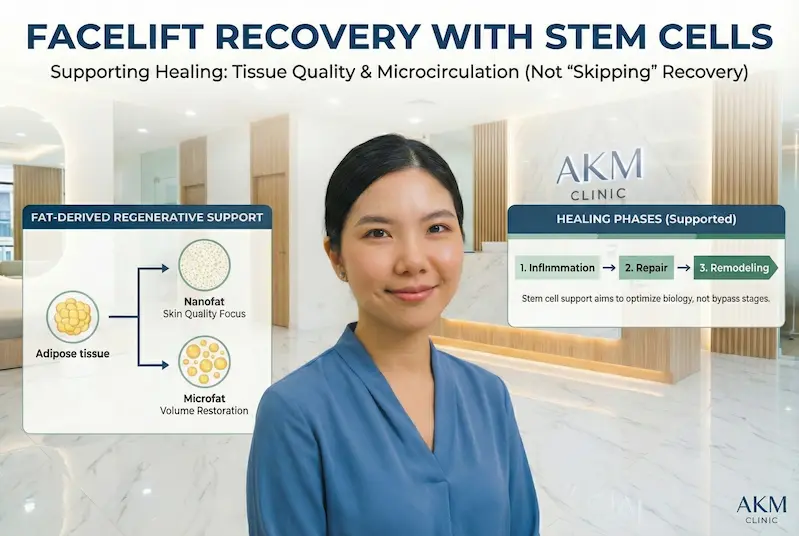
The phrase “stem cells” is often used loosely in aesthetic medicine. In the context of facelift healing, it most commonly points to autologous fat-derived regenerative components—meaning material obtained from your own body, processed and applied to support tissue quality. In practical terms, this is usually discussed alongside fat grafting methods (microfat, nanofat) rather than lab-expanded stem cell therapies.
Why this matters: expectations. Even with regenerative support, your body still goes through the same core healing phases (inflammation → repair → remodeling). The goal is usually to support healing biology (microcirculation, tissue quality, scar behavior), not to “skip” recovery.
Curious about the science? This guide focuses strictly on your healing timeline. If you want to understand the exact difference between nanofat, PRP, and traditional fat grafting, or how the cells are actually harvested in the operating room, our complete walkthrough of the cellular biology and surgical sequence of stem cell assisted facelift surgery covers the SVF processing pipeline, autologous tissue harvesting, and the candidacy criteria that determine whether the recovery dynamics described here apply to your specific plan.
The Biology in Plain English: Inflammation, Microcirculation, Collagen Signaling
After a facelift, your body immediately initiates an inflammatory response. That’s not “bad”—it’s how healing begins. Recovery speed is influenced by:
- Inflammation control: swelling and bruising are normal, but excessive inflammation can prolong downtime.
- Microcirculation: blood flow to healing tissue affects comfort, color changes, and tissue “settling.”
- Collagen remodeling: the long game—months of refinement in firmness, scar behavior, and skin texture.
Regenerative approaches are often discussed as supportive because they may influence these processes—especially the microenvironment where tissue repair and collagen organization happen.
What the Evidence Can (and Cannot) Promise About Faster Healing
Here’s the honest, science-forward framing: scientific research around fat-derived regenerative techniques and post-surgical healing is evolving. A 2025 narrative review published in PMC analyzing the mechanistic basis and clinical applications of hyperbaric oxygen therapy across surgical specialties documented that HBOT decreases edema, supports fibroblast activity, collagen cross-linking, and angiogenesis — and specifically reported that “in combination with autologous regenerative techniques such as PRP, HBOT enhances fibroblast activation, matrix deposition, and angiogenic signaling, creating an oxygen-enriched environment that promotes tissue repair.” However, real-world results vary because:
- Results vary widely between individuals.
- Techniques are not standardized across clinics (processing, placement depth, dose).
- “Faster recovery” is hard to measure consistently (swelling is subjective and influenced by many factors).
Bottom line: regenerative support may help some patients with aspects of healing and skin quality, but it should be viewed as an adjunct to excellent surgical technique—not a replacement for it.
Safety Basics: Sterility, Processing, and Why “Same-Day, Same-Patient” Matters
Safety in any fat-derived or regenerative approach depends on fundamentals:
- Strict sterility: closed systems and meticulous handling reduce contamination risk.
- Same-patient use: material is obtained and used for the same individual during the same treatment pathway.
- Appropriate processing: avoiding overheating or traumatic handling that can compromise tissue.
- Clear indication: using regenerative support for a defined purpose (skin quality, tissue support), not as a vague “upgrade.”
Also note: your baseline health matters. Smoking, uncontrolled diabetes, and certain medications can meaningfully slow healing—often more than any add-on can compensate for.
Facelift Recovery with Stem Cells — Day-by-Day (Days 1–7)
This is the “most intense” week for most patients—and the week that generates the most searches for facelift recovery with stem cells day by day. Even with regenerative support, your body still goes through predictable healing phases: swelling rises, bruising appears and changes color, and tightness gradually eases. The goal here is to give you a practical, realistic timeline you can plan around—especially if you’re also researching deep plane facelift recovery, which can come with a similar overall arc but sometimes a different “feel” of tightness and swelling depending on the extent of dissection and any added neck work.
Reality check: In Days 1–7, “faster healing” usually means better-managed swelling and bruising, more comfortable mobility, and cleaner incision care—not an instant return to normal.
Still on the fence? If you haven’t fully committed to the regenerative add-on and are wondering if a standard deep-plane lift might be an easier route for you, our detailed technique-by-technique comparison of stem cell-assisted versus standard facelift options weighs the recovery trade-offs, cost differences, and which patient profiles benefit more from each approach.
| Day | What You Might See (Pictures & Visual Changes) | What It Usually Feels Like | What Helps Most |
|---|---|---|---|
| Day 1 | Moderate swelling begins; dressings in place; bruising may be minimal initially | Tightness, grogginess/fatigue, mild-to-moderate discomfort | Head elevation, hydration, short assisted walks, cold compress if approved |
| Days 2–3 | Peak swelling; bruising becomes obvious (purple/blue tones) | Pressure, fullness, stiffness; sleep may be awkward | Strict head elevation, gentle walking, prescribed meds, avoid bending/straining |
| Days 4–5 | Bruising spreads then starts shifting color (green/yellow edges) | Less “pressure,” more itchiness or mild zinging sensations | Gentle hygiene, incision care, protein-rich meals, continued elevation |
| Days 6–7 | Swelling softens; bruising continues to fade; face looks less “puffy” | Tightness persists but feels more manageable | Consistent routine, light activity, avoid heat/sun, follow-up checks |
If you’ve searched for facelift recovery with stem cells pictures or facelift recovery with stem cells pictures day by day, here’s how to interpret what you’re seeing online: photos vary wildly based on lighting, makeup, camera angle, swelling patterns, skin tone, and whether neck work was done. A “good” day-by-day photo series usually shows the color shift of bruising and the softening of swelling rather than a sudden transformation.
Day 1: First 24 Hours (Swelling, Dressings, Mobility, Sleep Position)
Day 1 is about stabilization and protecting the surgical work. Swelling begins quickly as your body launches its inflammatory healing phase—this is basic medical science, and it’s normal. Many patients feel “tight” rather than sharp pain, particularly around the ears and jawline.
- What you may see: dressings, mild swelling, little bruising at first.
- What you may feel: tightness, fatigue, mild nausea (often anesthesia-related), dryness.
- Most helpful habits: sleep on your back with head elevated; take short, gentle walks as advised; keep activity low and controlled.
Planning note: If you’re traveling, Day 1 is not a “tourist day.” Build in true rest time.
Days 2–3: Peak Swelling & Bruising (What’s Normal, What’s Not)
For most patients, Days 2–3 are the peak of visible swelling and bruising. This is the point where many people worry something is “wrong” because they look worse before they look better. That pattern is expected: inflammatory fluid accumulation increases before it resolves.
- Normal: swelling that feels firm; bruising that deepens in color; mild asymmetry (one side often swells more).
- Common sensations: pressure, heaviness, “helmet-like” tightness; numb patches near incisions.
- What supports comfort: head elevation; hydration; gentle walking; avoiding bending, heavy lifting, coughing fits, or straining.
When to contact your surgeon urgently: rapidly increasing one-sided swelling, severe pain not improving with medication, sudden expanding bruising, fever, or significant drainage with a foul smell.
Days 4–7: Turning the Corner (Hygiene, Short Walks, Swelling Changes)
By Days 4–7, many patients feel they’ve “turned a corner.” Swelling often begins to soften, bruising starts to migrate downward (gravity) and shift colors. If regenerative support is part of your plan, this is also when patients often hope to see a smoother trend—however, individual biology still dominates outcomes.
- What you may see: bruising changing from purple/blue to green/yellow; less puffiness around midface.
- What you may feel: itching, mild tingling, occasional sharp “zaps” as nerves wake up.
- Routine that matters: consistent incision care (exactly as instructed), gentle hygiene, and protecting the face from heat and sun.
Travel planner tip: If you must schedule activities, choose short, low-stress outings and keep your “recovery rituals” non-negotiable (elevation, hydration, meals, rest).
Pain, Tightness, Numbness: What Patients Typically Feel This Week
Most patients describe discomfort in this week as tightness and pressure rather than sharp pain. Numbness near the ears and along the incision lines is extremely common early on. In deep plane facelift recovery, the “tight” sensation can feel more pronounced to some patients—yet that doesn’t automatically mean something is wrong; it can reflect the deeper tissue repositioning and swelling response. The technique-specific dissection sequence that creates this distinct early-recovery sensation is documented on our deep plane facelift technique with sub-SMAS dissection and ligament release page, which explains why this depth of repositioning produces the firmness pattern you may be feeling and how it differs from SMAS-only recovery dynamics.
- Tightness: common, often worse in the morning or after activity.
- Numbness: expected near incision areas; sensation often returns gradually over weeks to months.
- Swelling fluctuations: normal—healing is not linear.
From a scientific research perspective, swelling is influenced by many variables: individual inflammatory response, surgical extent, blood pressure control, smoking history, sleep quality, and how strictly you protect the healing tissues in the first week.
Week-by-Week Healing Milestones (Weeks 2–6)
Weeks 2–6 are where most patients feel the biggest “quality of life” shift. Swelling is still present (often more than you think), but it becomes easier to manage—and your face starts looking less “post-op” and more like you. If you’ve been reading about facelift recovery with stem cells, this phase is also when patients hope to notice steadier improvements in skin comfort and softness. Still, from a medical science standpoint, recovery is driven primarily by your body’s repair and collagen remodeling cycles—regenerative support may help the tissue environment, but it doesn’t override biology.
Planning-friendly milestone: Many patients feel “socially presentable” somewhere between 10–21 days, but this depends on bruising tendency, neck work, and how quickly swelling settles.
| Week | What’s Common Visually | What’s Common Sensation-wise | Typical Lifestyle Return |
|---|---|---|---|
| Week 2 | Bruising mostly fading; swelling still noticeable in jaw/neck | Tightness, numb patches, occasional tingling | Desk work often possible; short outings |
| Weeks 3–4 | More defined contours; residual puffiness fluctuates | Firmness along jawline; itching; sensitivity changes | Light exercise may restart (surgeon-dependent) |
| Weeks 4–6 | Swelling gradually “deflates”; scars still pink | Decreasing tightness; nerve sensations may come/go | Gradual return to normal routines |
Week 2: “Social Downtime” and When You Can Look Presentable
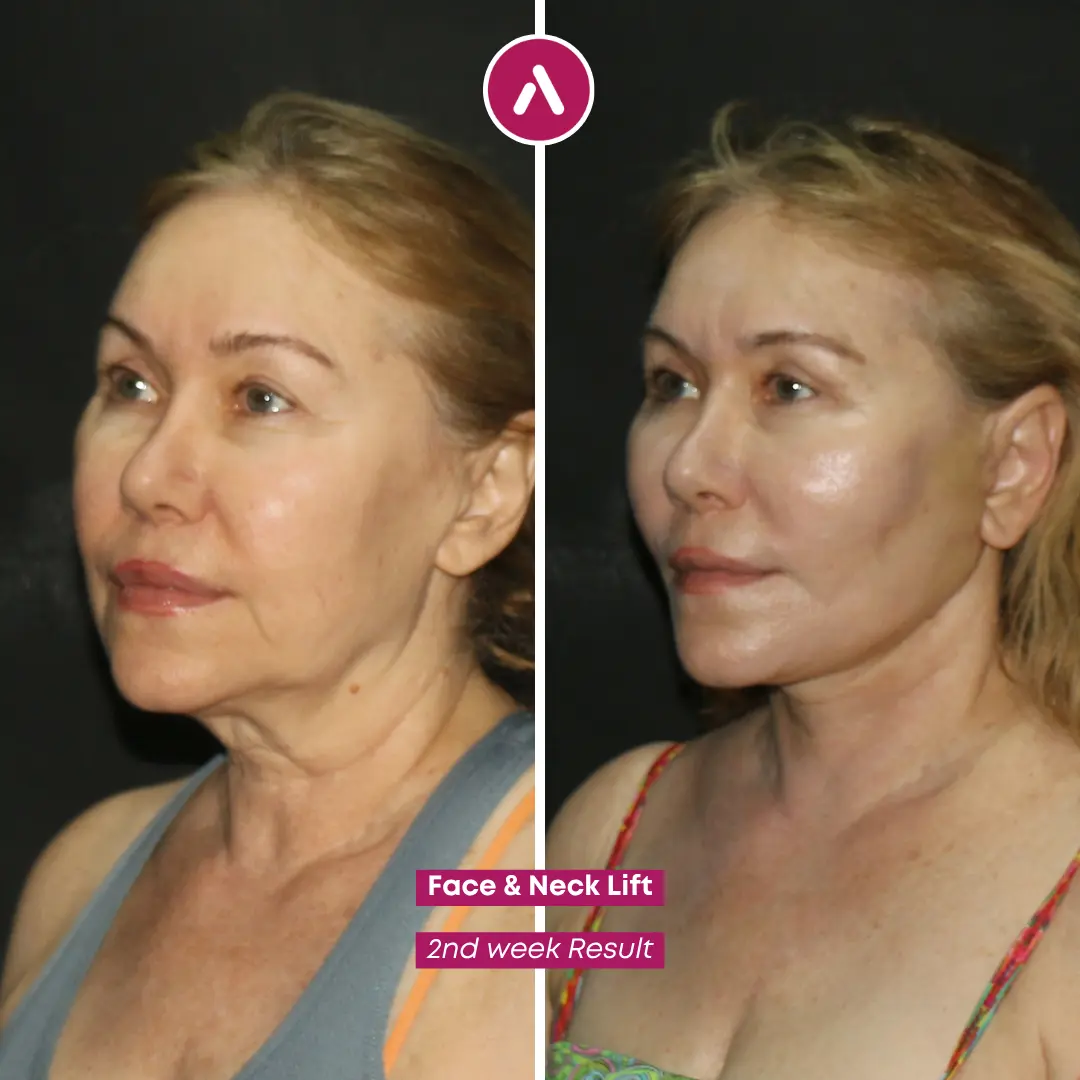
Week 2 is where many patients begin to feel human again—sleep improves, bruising fades, and the face looks less “puffy.” If you search facelift recovery with stem cells pictures, Week 2 photos often show a clear bruising color shift (yellowing) and less swelling around the midface, while the jawline/neck may still look fuller than expected.
- What’s normal: lingering swelling at the jawline/neck; mild asymmetry; pink incision lines.
- What’s common: “tight mask” feeling, especially when smiling or turning the neck.
- What helps: consistent head elevation at night, hydration, walking, and strict sun/heat avoidance.
If you’re comparing techniques: In deep plane facelift recovery, patients sometimes report a strong sense of internal tightness early on, even when the surface bruising looks mild. That’s not inherently negative—deeper structural work can change how swelling “feels,” even if the calendar timeline looks similar.
Weeks 3–4: Return to Work, Light Exercise, and Managing Residual Swelling
Weeks 3–4 are typically the “transition” period: you may look fine to others, but you can still see swelling in certain mirrors or lighting. Many patients can return to desk work earlier, while physically demanding jobs often require longer. If you’re tracking facelift recovery with stem cells day by day, this is where progress becomes less dramatic day-to-day and more noticeable week-to-week.
- Work: many return to desk work in this window; on-camera meetings may be comfortable with strategic lighting/hairstyling.
- Exercise: walking is usually encouraged; “light exercise” may be cleared depending on your surgeon’s protocol.
- Swelling reality: swelling often fluctuates with salt intake, sleep, stress, and increased activity.
Practical rule: If swelling spikes after activity, scale back for 48 hours and prioritize elevation, hydration, and rest—then reassess.
Weeks 4–6: Scar Care, Lumps/Hardness, and Sensation Changes
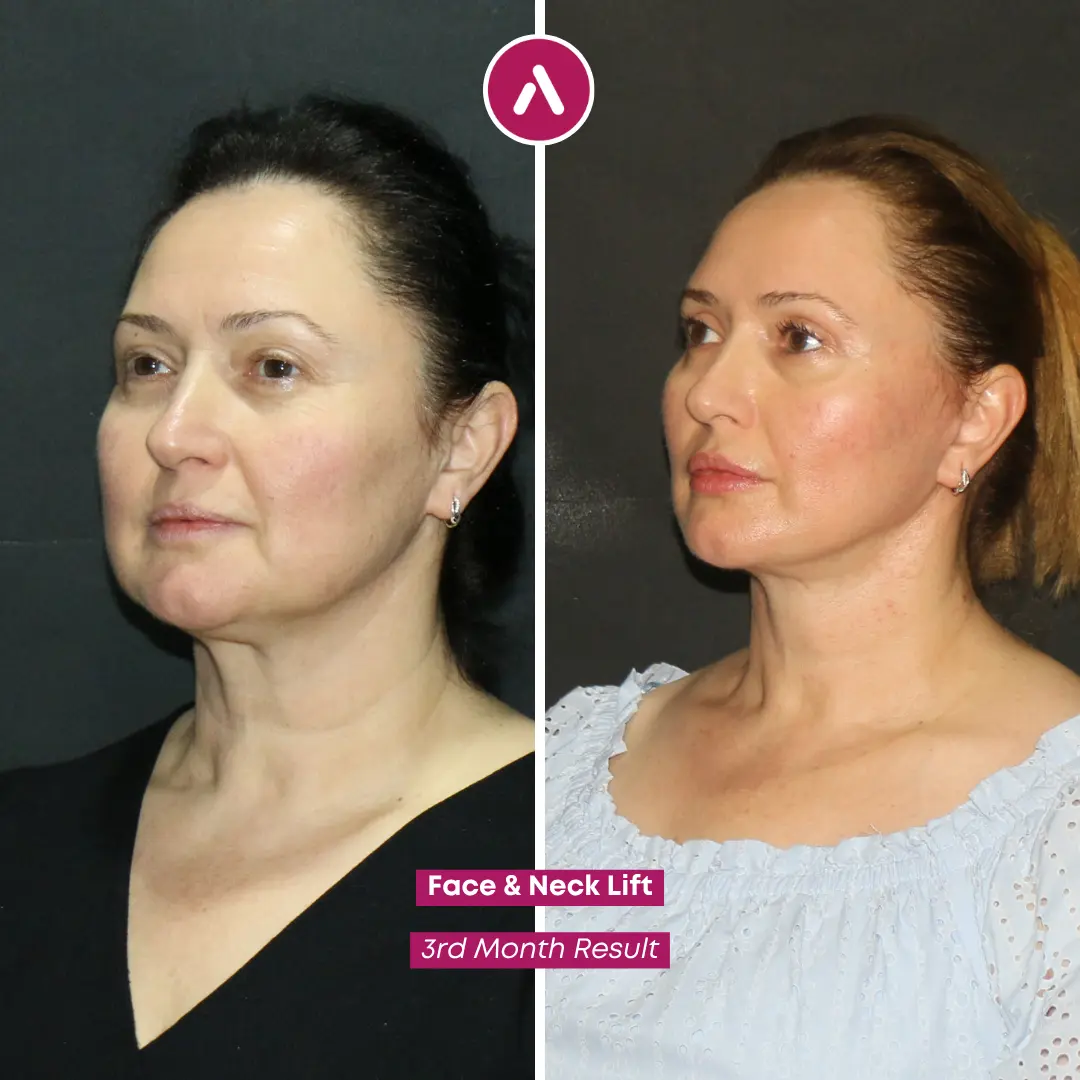
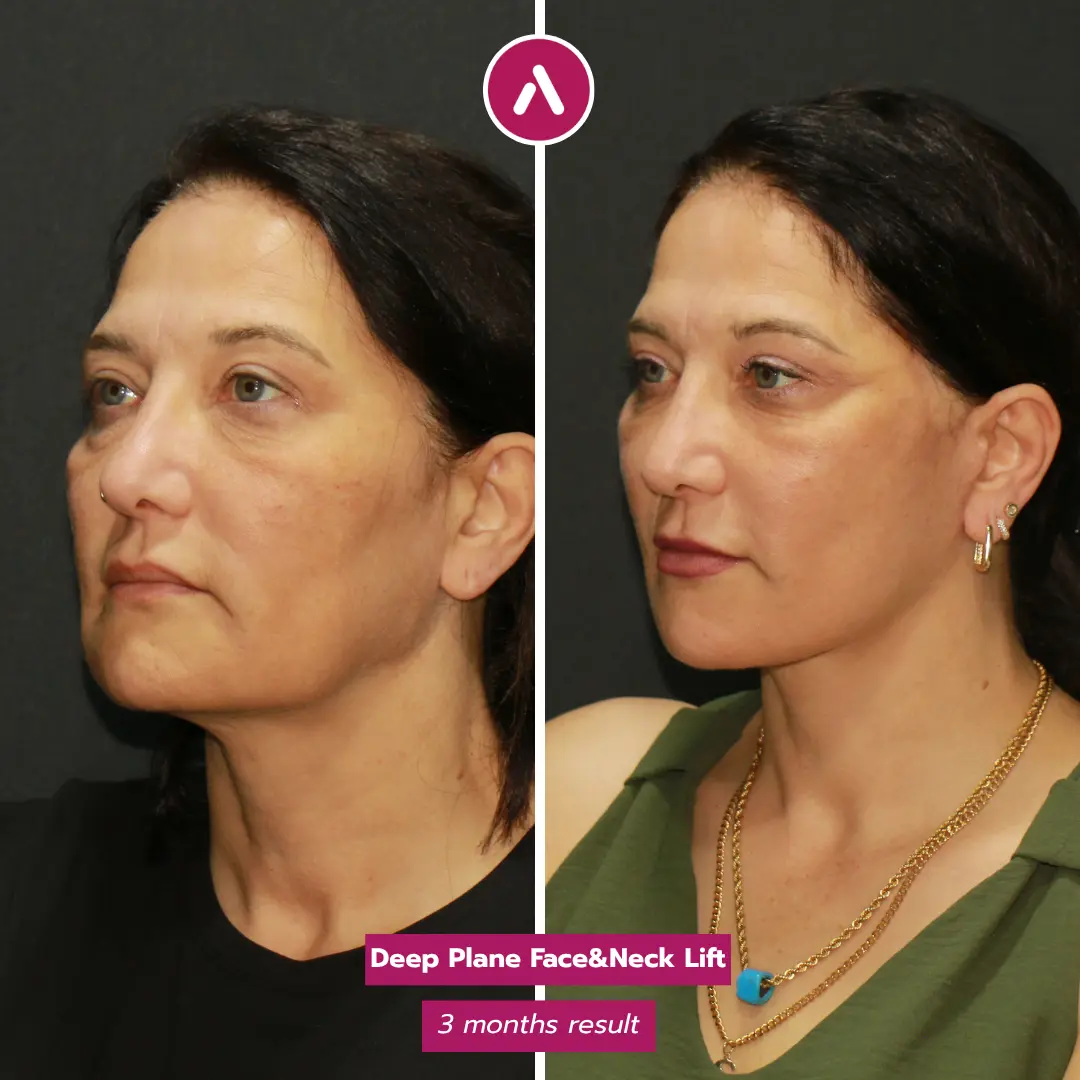
By Weeks 4–6, most patients feel more stable: swelling reduces, contours refine, and routines normalize. However, it’s common to feel firmness or small “lumps” along the jawline or around incision areas. This is often related to internal healing, suture lines, or tissue settling—not necessarily a complication.
- Scars: often look pink/red and a bit firm; maturation takes months.
- Firmness: can persist as tissues remodel; softens gradually.
- Sensation: numbness may still be present; tingling “zaps” can appear as nerves recover.
In terms of scientific research, collagen remodeling is a long process. The “visible healing” of bruises is fast, but deeper tissue organization and scar maturation continue well beyond Week 6.
When You Can Safely Resume: Gym, Alcohol, Sauna, and Sun Exposure
This is where many patients accidentally slow their own recovery. Heat, heavy exertion, and sun can increase swelling and prolong redness. Clearance always depends on your surgeon’s instructions and your specific healing trajectory, but the principles are consistent:
- Gym/weights: usually reintroduced gradually; heavy lifting too early can worsen swelling and discomfort.
- Alcohol: can increase swelling and dehydration—many surgeons advise waiting until swelling is stable.
- Sauna/steam/hot baths: heat dilates vessels and can intensify swelling—often delayed until later healing.
- Sun exposure: can darken scars and prolong redness; strict protection is essential.
Beyond 6 Weeks: The Shift from “Recovery” to “Longevity”
By the 6-week mark, the visible “recovery” chapter starts closing — but the biological story is far from over. Collagen remodeling continues for 12+ months, scar maturation advances steadily, and the long-term durability of both your structural lift and your skin-quality gains begins to crystallize. Our dedicated guide on the long-term durability profile of stem cell-augmented facelift outcomes separates the structural-lift clock from the skin-quality clock and documents the 5, 10, and 15-year horizons that determine whether your investment holds — picking up exactly where this recovery roadmap leaves off.
Faster, Safer Healing at AKM Clinic: HBOT + LLLT Support
AKM Clinic’s recovery model integrates two evidence-aligned adjunct technologies — Hyperbaric Oxygen Therapy (HBOT) and Low-Level Laser Therapy (LLLT) — designed to support healing dynamics rather than replace them. The chamber pressure parameters, treatment session protocols, accreditation certifications, and clinical safety standards behind these recovery technologies are catalogued on our clinical technology infrastructure and accreditation page, including the specific HBOT atmospheres absolute (ATA) and LLLT wavelengths used in post-facelift recovery sessions.
HBOT works by exposing tissues to 100% oxygen at increased atmospheric pressure, which dissolves more oxygen into the plasma and supports the healing microenvironment. For the cellular-level breakdown of how this translates into faster post-facelift bruise resolution and edema reduction — including the documented 35% bruising reduction at postoperative day 7 reported in rhytidectomy studies — our deep-dive on accelerating facelift bruise resolution and swelling reduction with HBOT protocols details the pre-op and post-op session schedules, the science behind perioperative timing, and how AKM integrates HBOT into the stem cell-assisted recovery pathway.
Think of it this way: stem-cell-adjacent approaches aim to support the biology of repair, while HBOT + LLLT aim to optimize the recovery environment—oxygen delivery, cellular energy, inflammation control, and collagen activity.
HBOT Explained: Oxygen-Rich Plasma to Support Tissue Recovery
Hyperbaric Oxygen Therapy (HBOT) involves breathing 100% oxygen inside a specialized, pressurized chamber. The goal is to increase oxygen availability in the body in a way that supports healing tissues—especially in the early period after facial surgery, when swelling and temporary changes in circulation can make recovery feel slow.
AKM Clinic frames HBOT as a core recovery strategy because oxygen is fundamental to wound repair. In practical patient terms, the clinic positions HBOT as supportive of:
- Tissue support: helping vulnerable post-surgical tissues through the early healing window.
- Swelling reduction: lowering inflammation and supporting lymphatic “drainage” so puffiness resolves more efficiently.
- Scar quality: supporting the cells involved in collagen production (a key factor in scar maturation).
- Infection risk mitigation: supporting the immune response while creating an environment that is less favorable for bacterial growth.
LLLT Explained: 650nm “Soft Laser” to Boost Cellular Repair & Collagen
Low-Level Laser Therapy (LLLT) is a non-heating, non-damaging light-based therapy designed to stimulate cellular activity. AKM Clinic describes its system as a medical-grade “soft laser” approach using a therapeutic 650nm wavelength and a dense array of laser diodes (not simple LED light).
From a medical science lens, the clinic highlights three recovery-relevant goals:
- Accelerated cellular repair: supporting cellular energy production (often discussed as ATP support) during tissue repair.
- Enhanced collagen support: stimulating fibroblast activity—the cells that help build and organize collagen.
- Reduced inflammation: working alongside HBOT to help calm swelling and redness.
This matters if you’re comparing recovery narratives online—especially facelift recovery with stem cells pictures—because the “best-looking” early recovery photos typically reflect better-controlled swelling, faster color normalization, and cleaner scar behavior over time.
What a Session Feels Like + Practical Scheduling During Your Stay
Both therapies are designed to be non-invasive and low-effort from the patient perspective—important when your energy is limited in the first week.
- HBOT: you rest in a pressurized chamber while breathing pure oxygen. Most patients describe it as calm and passive—no exertion required.
- LLLT: light exposure over the targeted areas. It’s designed to be non-thermal (no “burning” heat sensation).
From a travel-planning standpoint, the benefit is predictability: you can structure your day around short appointments while keeping the rest of your schedule recovery-focused (sleep, hydration, gentle walking, incision care).
Why These Therapies Target Swelling, Scar Quality, and Infection Risk
In the first 2–6 weeks, the factors that most influence how fast you “look normal” are the ones that control inflammation, oxygen delivery, and collagen behavior. That’s why clinics that build a recovery protocol around these targets may see smoother healing trajectories—especially for patients who want to minimize social downtime.
And this is where realistic expectations help: even with an optimized protocol, your recovery is still governed by biology. The role of these therapies is to support your healing capacity—reducing obstacles like excessive inflammation or sluggish tissue recovery—so that your natural repair process can do its job efficiently.

How to Prepare for a Smoother Facelift Recovery Before Surgery
Preparation plays an important role in facelift recovery with stem cells, especially for UK patients travelling to Istanbul for surgery. While regenerative support, HBOT and LLLT may help create a more favourable healing environment, recovery often begins before you enter the operating theatre. The more organised you are before surgery, the easier it is to manage swelling, bruising, travel and day-to-day comfort afterwards.
Plan Your First Two Weeks Around Rest, Not Optimism
One of the biggest mistakes patients make is underestimating stem cell facelift healing time. Even if you are hoping for faster healing after facelift surgery, the first fortnight should still be protected. Arrange help at home, avoid major social events, and give yourself enough time before returning to work or family commitments.
Prepare for Swelling, Bruising and Practical Aftercare
Good preparation makes healing after stem cell facelift feel more manageable. Have comfortable pillows ready for head elevation, loose clothing that does not need pulling over the face, and a clear plan for hydration, meals and medication. Thoughtful post-op care after facelift often supports a calmer recovery and may help with reduced oedema after facelift during the early stages.
Think About Travel and Recovery as One Plan
For UK patients, recovery is not only medical but logistical. If you are also researching deep plane facelift recovery, it is wise to plan your stay, follow-up reviews and fit-to-fly timing in advance. A well-structured schedule reduces stress and makes the overall recovery journey feel safer, smoother and more predictable.
Travel Planner Section: How Long to Stay in Istanbul and When You Can Fly Home
For international patients, the recovery timeline doesn’t end at the airport. Most patients are cleared to fly home around the 10-14 day mark — but managing residual swelling, scar care, suture removal coordination, and red-flag monitoring after you land is its own protocol. Our complete post-flight recovery management protocol for international facelift patients covers the first 72 hours after landing, the symptom triage flowchart for delayed-onset swelling, suture removal options at your home country, and the AKM remote follow-up cadence (Week 2, Week 4, Month 3) that protects your outcome from across the ocean.
Planning principle: Build your travel around clinical checkpoints (follow-ups, incision checks), not around a fixed calendar day.
| Planning Question | Conservative Answer | Why It Matters |
|---|---|---|
| How long should I stay in Istanbul? | Often around 3–4 days depending on technique and combined procedures | Allows early monitoring, wound checks, and stable “turning the corner” period |
| When can I fly? | After your surgeon confirms stability and swelling is manageable | Flying can temporarily increase facial swelling and discomfort |
| When will I look presentable in public? | Commonly 10–14 days for many patients (variable) | This is the main “social downtime” window patients care about |
| When can I return to work? | Desk work often in 1–2 weeks; physical jobs may need longer | Stress and exertion can prolong swelling and fatigue |
The Typical Istanbul Stay Plan: Key Checkpoints Before You Leave
A practical stay plan focuses on the essentials: safety, predictable healing, and making sure you’re comfortable enough to travel. A typical framework includes:
- Early follow-up: incision assessment, dressing guidance, and swelling evaluation.
- Hygiene confidence: knowing exactly how to clean, moisturize, and protect incision areas.
- Swelling control plan: understanding what’s normal for you and what changes would be concerning.
- Travel-readiness: walking comfortably, maintaining hydration, and managing sleep position without help.
Deep plane note: With deep plane facelift recovery, your surgeon may emphasize specific movement restrictions and swelling management early on—because deeper structural work deserves extra respect during the first 1–2 weeks.
The standard recommended Istanbul stay for a stem cell-assisted facelift recovery is 7-14 days, depending on whether neck lift, blepharoplasty, or HBOT/LLLT sessions extend your protocol. During this window, your accommodation needs shift from “tourist comfort” to “post-op recovery essentials” — head-elevated sleeping setup, reliable air conditioning, room service for soft foods, and proximity to AKM for follow-up checks. The properties pre-vetted for these specific recovery requirements are documented on our recovery-grade hotel partnerships and door-to-clinic VIP transfer service, which lists the post-op suite configurations and the chauffeur protocols designed for swollen, sensitive post-facelift travel between hotel and follow-up appointments.
Flying After a Facelift: Swelling Management and Comfort Tips
Flying doesn’t “ruin” results, but it can make swelling feel worse temporarily because of prolonged sitting, dehydration, and cabin conditions. If you want your travel day to look and feel smoother (especially if you’re tracking facelift recovery with stem cells day by day and aiming for discretion), use a recovery-first strategy:
- Hydration: drink water consistently; avoid alcohol before and during travel.
- Salt awareness: minimize salty foods the day before and day of travel.
- Movement: short walks during layovers; gentle ankle/calf movement while seated.
- Sleep position: keep your head supported and slightly elevated when possible.
- Sun protection: protect incisions and scar areas—UV can prolong redness and pigment changes.
What to expect: mild swelling increase for 24–48 hours after flying is common. If swelling increases dramatically or comes with severe pain, contact your surgical team.
Packing Checklist: Compression, Scar Care, and “Just-in-Case” Items
Packing well reduces stress, and lower stress supports healing. Consider a simple, surgeon-approved kit:
- Button-up tops: avoid pulling clothing over your head.
- Scar/sun protection essentials: wide-brim hat, sunscreen (as permitted), sunglasses.
- Gentle hygiene items: mild cleanser, clean gauze/cotton pads (only if instructed).
- Comfort supports: travel neck pillow, extra pillows for elevation, ice packs if approved.
- Medication organization: labeled pouch for prescriptions and a simple schedule.
These are small details, but they reduce the “friction” that can derail a smooth recovery week.
Aftercare Once You’re Back Home: Remote Follow-Up and What to Track
Once you return home, the main risks are not doing “too little”—they’re doing too much too soon and ignoring early warning signs. A remote follow-up structure works best when you track clear variables and share consistent photos.
- Track daily: swelling pattern (morning vs. evening), pain level, temperature, incision appearance.
- Photo consistency: same lighting, same angles, no heavy makeup when documenting healing.
- Activity diary: note when swelling spikes after exercise, salty meals, long screen time, or poor sleep.
This is also where “pictures day by day” become useful—less as social media proof and more as structured monitoring. From a scientific research lens, consistent documentation helps your surgeon identify patterns early and reduce risk.
Red Flags vs. Normal Healing: When to Contact Your Surgeon
Recovery progresses on a predictable arc — but a small percentage of complications require urgent medical evaluation, and knowing the difference protects your outcome. Beyond your surgeon’s emergency line, international patients should also know which Istanbul hospital their facelift was performed in and what its accreditation level means for emergency response capacity. Our complete breakdown of how Joint Commission International accreditation translates to facelift safety standards explains the JCI emergency response chain, the ICU availability standards, and the hospital infrastructure layers that determine how quickly hematomas, infections, or other rare complications can be managed if they occur.
Safety first: If something feels suddenly “wrong” (rapid swelling, severe pain, fever, breathing issues), don’t wait for your next check-in—contact your surgical team immediately or seek emergency care.
| Symptom | Often Normal | Potential Red Flag | Best Action |
|---|---|---|---|
| Swelling | Peaks Days 2–3; fluctuates with activity/salt/sleep | Rapid one-sided expansion, increasing firmness + escalating pain | Message/call your surgeon urgently |
| Bruising | Color shifts purple → green → yellow; may migrate downward | Sudden expanding bruise with severe pressure | Urgent clinical assessment |
| Pain | Tightness/pressure improves gradually week-by-week | Severe pain not controlled by meds or worsening daily | Call your surgeon |
| Incision drainage | Minimal spotting early on (if your surgeon says it’s expected) | Foul odor, pus-like discharge, spreading redness | Same-day evaluation |
| Fever | Low-grade temp can happen briefly after surgery | Persistent fever or chills + worsening redness/pain | Contact your surgeon immediately |
| Breathing/chest symptoms | Not expected | Shortness of breath, chest pain, fainting | Emergency care |
Urgent Warning Signs: Hematoma, Infection, Breathing/Chest Symptoms
These are the “don’t wait” signs. While uncommon, they matter because early intervention can prevent bigger complications:
- Hematoma concern: rapidly increasing swelling (often one-sided), significant pressure, and escalating pain.
- Infection concern: fever with worsening redness, warmth, increasing tenderness, and abnormal discharge.
- Systemic symptoms: shortness of breath, chest pain, confusion, fainting—seek emergency care.
Skin & Incision Concerns: Color Changes, Unusual Drainage, Bad Odor
Early incisions often look pink and feel firm—this can be normal as collagen forms. What’s concerning is a trend toward worsening inflammation:
- Concerning pattern: redness that spreads, becomes increasingly warm/painful, or is paired with foul-smelling drainage.
- What to do: take a clear photo in good light and contact your team the same day.
Because AKM Clinic is surgeon-led and emphasizes strict post-op protocols, the correct move is simple: communicate early so your surgeon can differentiate normal healing from a true issue.
Normal-but-Annoying: Asymmetry, Firmness, Itching, Numb Patches
These are the symptoms most patients notice in “pictures day by day” progress photos—and they are usually normal:
- Mild asymmetry: one side swells more or resolves slower.
- Firmness/lumps: internal healing, suture lines, or tissue settling (often softens over time).
- Itching: can occur as nerves wake up and the skin barrier recovers.
- Numbness: common around incisions; sensation typically returns gradually.
If you’ve had deep plane facelift recovery, internal tightness and firmness can feel more pronounced early on—not necessarily worse, just different in sensation because deeper tissues were repositioned.
A Simple “Decision Tree” for Patients: Wait, Message, or Go to ER
- WAIT & TRACK (24–48 hours): mild swelling fluctuation, itching, mild asymmetry, stable bruising color shift.
- MESSAGE YOUR TEAM TODAY: increasing redness, new drainage, worsening pain, new hard swelling, fever.
- GO TO ER / EMERGENCY CARE: chest pain, shortness of breath, fainting, severe rapidly expanding swelling.
Pro tip: If you’re documenting facelift recovery with stem cells pictures day by day, take photos in the same lighting and angles—this makes changes easier for your surgeon to interpret remotely.
Ready for a Seamless Recovery in Istanbul?
Healing doesn’t happen by chance; it is the result of meticulous surgical planning and dedicated aftercare. If you are ready to experience a structured, VIP recovery process equipped with the latest healing technologies, head over to our Facelift in Turkey page. Let’s plan your journey, your surgery, and your safe return home, step-by-step.
The recovery roadmap above is the inside view; the outside view — how every recovery touchpoint integrates into your full international patient experience — is documented step-by-step on our end-to-end international patient journey from consultation to one-year follow-up, which catalogs the pre-op virtual consultation, arrival logistics, daily recovery touchpoints in Istanbul, the fly-home protocol, and the structured 12-month remote follow-up cadence. For patients planning a stem cell-assisted facelift trip, this is the operational blueprint that turns a recovery timeline into a logistics plan.
Frequently Asked Questions (FAQ): Nanofat Grafting Turkey
These are the most common questions patients ask when researching facelift recovery with stem cells, including what to expect visually, how long “social downtime” really is, and how recovery compares when a deeper technique is used.
Does stem cell support actually reduce bruising and swelling after a facelift?
It can support the healing environment, but it isn’t a guaranteed shortcut. In the first week, swelling and bruising still follow normal biological stages. Many variables—your baseline inflammation, surgical extent, and aftercare discipline—often influence results more than any single add-on.
Is “stem cell” recovery support safe, and what are the most common side effects?
When “stem cells” refers to autologous (your own) fat-derived regenerative components used in a controlled clinical setting, it’s generally discussed as a supportive technique. The most common “side effects” are still the usual recovery realities: swelling, bruising, tightness, and temporary numbness. Safety depends on sterile processing and appropriate technique.
When can I return to work (Zoom vs. in-person) after a facelift with stem cells?
Many patients feel comfortable with Zoom earlier than in-person. A practical planning range is:
Zoom / camera-ready: often around 10–21 days (variable)
In-person professional settings: often 2–4 weeks, depending on bruising and neck swelling
If your job is physically demanding, plan longer downtime.
How long should I stay in Istanbul, and when is it safe to fly home?
Plan your stay around follow-up checkpoints and your surgeon’s clearance. Many international patients stay roughly 7–10 days, but the right duration depends on whether you combined a neck lift or other procedures. Flying can temporarily increase swelling, so hydration, movement, and salt control matter.
When can I exercise again—walking, Pilates, weights, and cardio?
Walking is usually encouraged early. Beyond that, timing depends on your surgeon’s protocol and how stable your swelling is:
Walking: early, gentle, consistent
Light exercise: often reintroduced gradually after early healing (surgeon-dependent)
Weights / high-intensity cardio: usually delayed until swelling is stable and tissues feel secure
When can I wash my hair, wear makeup, and color my hair?
These depend on incision locations and your surgeon’s instructions. Typically, patients reintroduce gentle hair washing first, and makeup only after incisions are appropriately protected and cleared. Hair coloring is often delayed longer to avoid irritation near healing incisions.
Can I combine facelift + neck lift + eyelids and still have a predictable recovery timeline?
Yes, but predictability comes from proper planning, not optimism. Combining procedures can increase swelling and extend “public-ready” time. Your surgeon should map out a realistic recovery plan—especially if you’re also comparing deep plane facelift recovery timelines.
Is it normal for stem cell facelift recovery to feel uneven from one side to the other?
Yes, mild side-to-side differences can be normal during stem cell facelift recovery. One side may show more swelling, bruising or tightness before the tissues settle evenly. This does not usually mean there is a problem, but any sudden increase in pain, swelling or redness should be reviewed by your surgeon.
When can I wear make-up after facelift recovery with stem cells has started?
Most patients can use light make-up once the incision areas are sufficiently healed and the surgeon has approved it. During facelift recovery with stem cells, it is important not to apply products too early, especially near healing scars. Safe timing depends on how your skin and incision lines are progressing.
What should I avoid during healing after stem cell facelift surgery?
During healing after stem cell facelift, avoid smoking, alcohol excess, heavy lifting, strenuous exercise, and any skincare products not approved by your clinic. These can worsen swelling, delay healing, and make bruising more noticeable. A calm, disciplined routine usually supports a smoother and more predictable recovery.
How far in advance should I plan surgery before an important event?
If you want the best appearance for a wedding, holiday or family occasion, allow several weeks rather than only a few days. Even with a well-managed facelift recovery timeline UK patients can follow, residual swelling and firmness may still be present early on. More time usually means more confidence and a more natural-looking result.
Medical Disclaimer: This is educational content, not individualized medical advice. Always follow your surgeon’s exact instructions, because your plan may differ based on technique, anatomy, and any combined procedures.