
Answer-first: Neck lift scars usually sit in two discreet places: a small crease under the chin and, for a full neck lift, behind the ears near the hairline. A mini neck lift leaves fewer scars, but it also corrects less. Most scars soften, flatten, and fade noticeably over 6–12 months.
If you are researching neck lift scars, you are probably not asking whether surgery can improve a loose neck. You are asking a more practical question: will people see the scars?
The honest answer is that every surgical neck lift creates an incision. The goal is not to pretend otherwise. The goal is to place those incisions where the face and neck already create shadows, folds, and hairline cover.
At AKM Clinic, scar planning is treated as part of the aesthetic result, not an afterthought. To understand why scar placement differs from patient to patient, it helps to first understand how a neck lift is performed and which neck structures need correction.
This guide focuses only on neck lift scar placement, healing, and visibility. It does not compare neck lift with neck liposuction, explain the full procedure step by step, or review poor surgical outcomes in depth. Those are separate questions.
Table of Contents
Where Neck Lift Scars Actually Sit?
Neck lift scars are planned around access. A surgeon needs enough access to tighten loose skin, refine the jaw-neck angle, and, in many cases, address the platysma muscle under the skin. The visible scar pattern depends on whether the neck needs a limited correction under the chin, a fuller redraping behind the ears, or both.
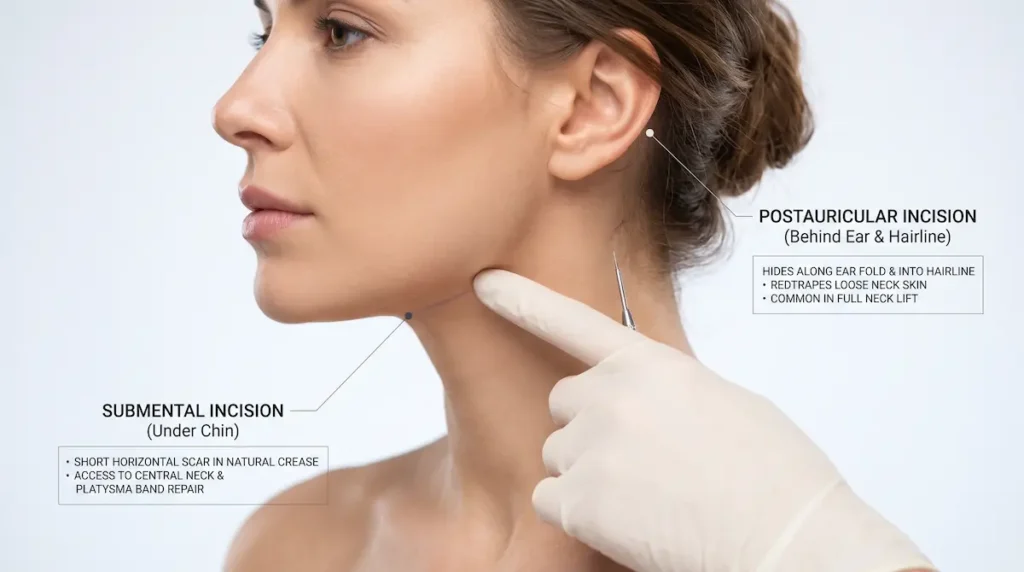
In most patients, the scar map is built from two possible zones: the submental crease under the chin and the postauricular area behind the ears. These are not random spots. They are chosen because they already hide light, shadow, and skin folds better than the open front of the neck.
Submental incision under the chin
The submental incision sits in the natural fold just beneath the chin. It is usually short and horizontal, which means it is hidden when the head is in a neutral position. People rarely look directly upward into this crease during normal conversation.
This incision gives the surgeon access to the center of the neck. Through it, the surgical team can refine submental fullness, work on central neck laxity, and evaluate the platysma bands that create vertical cords in the neck.
Clinical references on neck rejuvenation describe a transverse incision in the submental crease as a common access point for neck contouring and platysmal work. You can review this in the NIH Bookshelf clinical overview on how neck lift incisions are placed.
For many patients, this under-chin scar is the one they worry about most before surgery. In practice, it is often the least noticeable once healed because it sits in a crease rather than across a flat, exposed surface.
Postauricular incision behind the ears
The postauricular incision sits behind the ear and may extend into or along the hairline. This is the access point that allows the surgeon to redrape loose neck skin more effectively. It matters most when laxity is not just under the chin but also along the sides of the neck.
A well-planned behind-ear incision follows natural contours. It may curve around the ear, tuck into the crease where the ear meets the head, and continue into the hairline where the scar can be disguised by hair growth and shadow.
This scar is usually more relevant in a full neck lift than in a limited or mini approach. It gives the surgeon more control over loose skin, but it also creates more incision length. That is the trade-off.
Why a full lift may need both
A full neck lift often needs both the under-chin and behind-ear access points because the neck ages in more than one layer. The skin can sag. The platysma muscle can separate or band. Fat can sit above or below that muscle.
The under-chin incision helps with central work. The behind-ear incisions help with lateral skin redraping. Used together, they allow more complete correction than an under-chin-only approach.
This is also why scar length should not be judged in isolation. A shorter scar is not automatically better if it leaves loose skin behind. A longer, better-hidden scar can sometimes create a more natural neck contour than a shorter incision used beyond its limits.
The platysma is a key reason scar planning varies. If the muscle needs tightening, the access plan changes. For a deeper explanation of this muscle layer, see the role of the platysma muscle.
Surgeon perspective: A refined neck lift scar is not only about making the incision short. It is about placing it in a crease, keeping closure tension low, and choosing an access pattern that actually matches the amount of correction needed.
Mini vs Full Neck Lift — The Scar Difference
The phrase “mini neck lift” sounds appealing because it suggests fewer scars and a smaller recovery. Sometimes that is true. But a mini approach is not simply a better version of a full lift; it is a different tool for a different level of aging.
The scar difference matters because the incision pattern controls what the surgeon can correct. Less access usually means less ability to remove or redrape loose skin. More access may mean more scar length, but also more control over the final neck shape.
Mini or short-scar neck lift
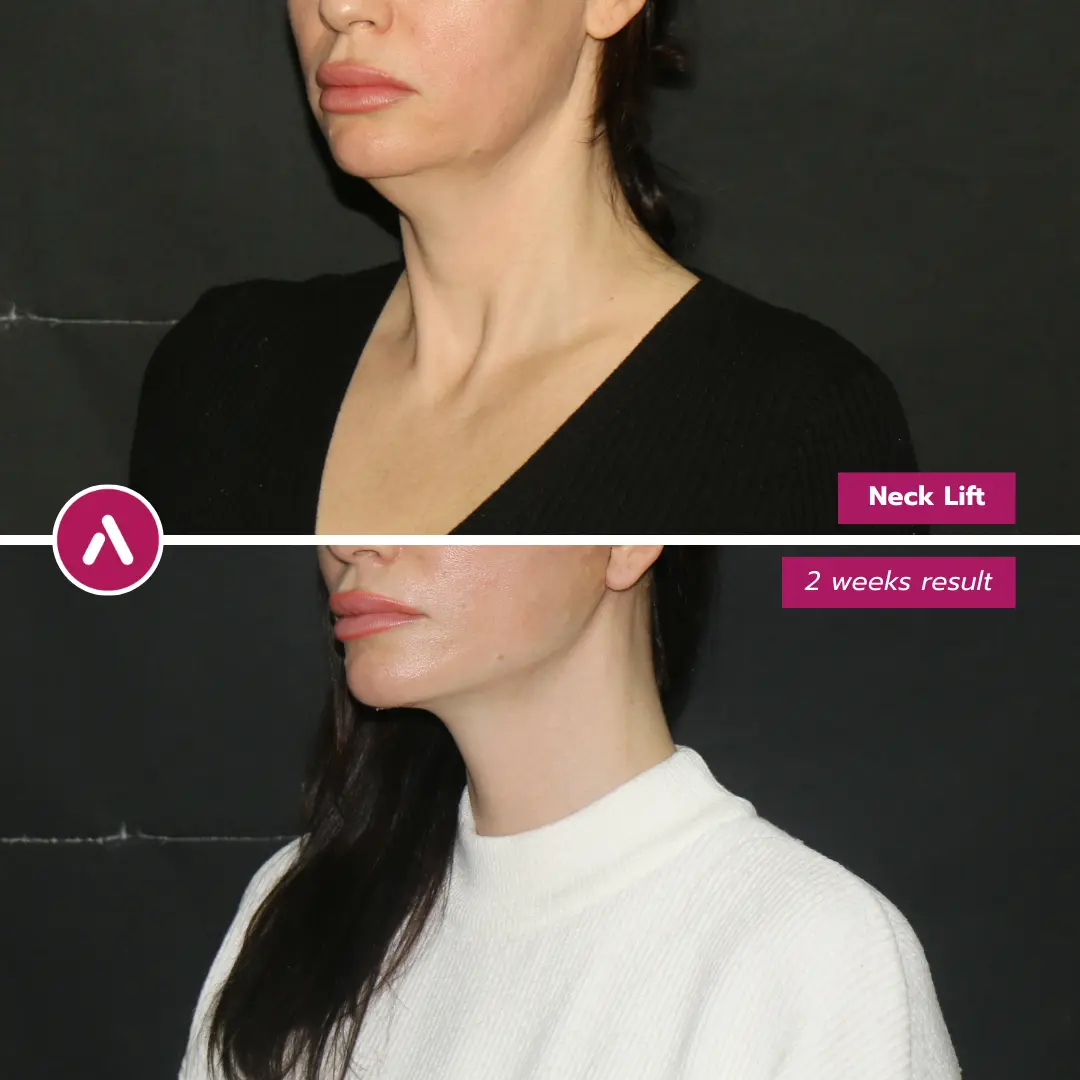
A mini neck lift usually uses fewer or shorter incisions. In some patients, the main scar may sit under the chin. In others, short incisions around or behind the ears may be used, depending on the anatomy and the surgeon’s plan.
This approach can work well when the main concern is mild fullness, early banding, or limited laxity. It is less suitable when there is significant hanging skin, heavy jowling, or broad looseness from the jawline down toward the lower neck.
The benefit is obvious: less visible incision length. The limitation is just as important: less access means less correction. For a deeper comparison, read how a mini neck lift differs.
Full neck lift scars
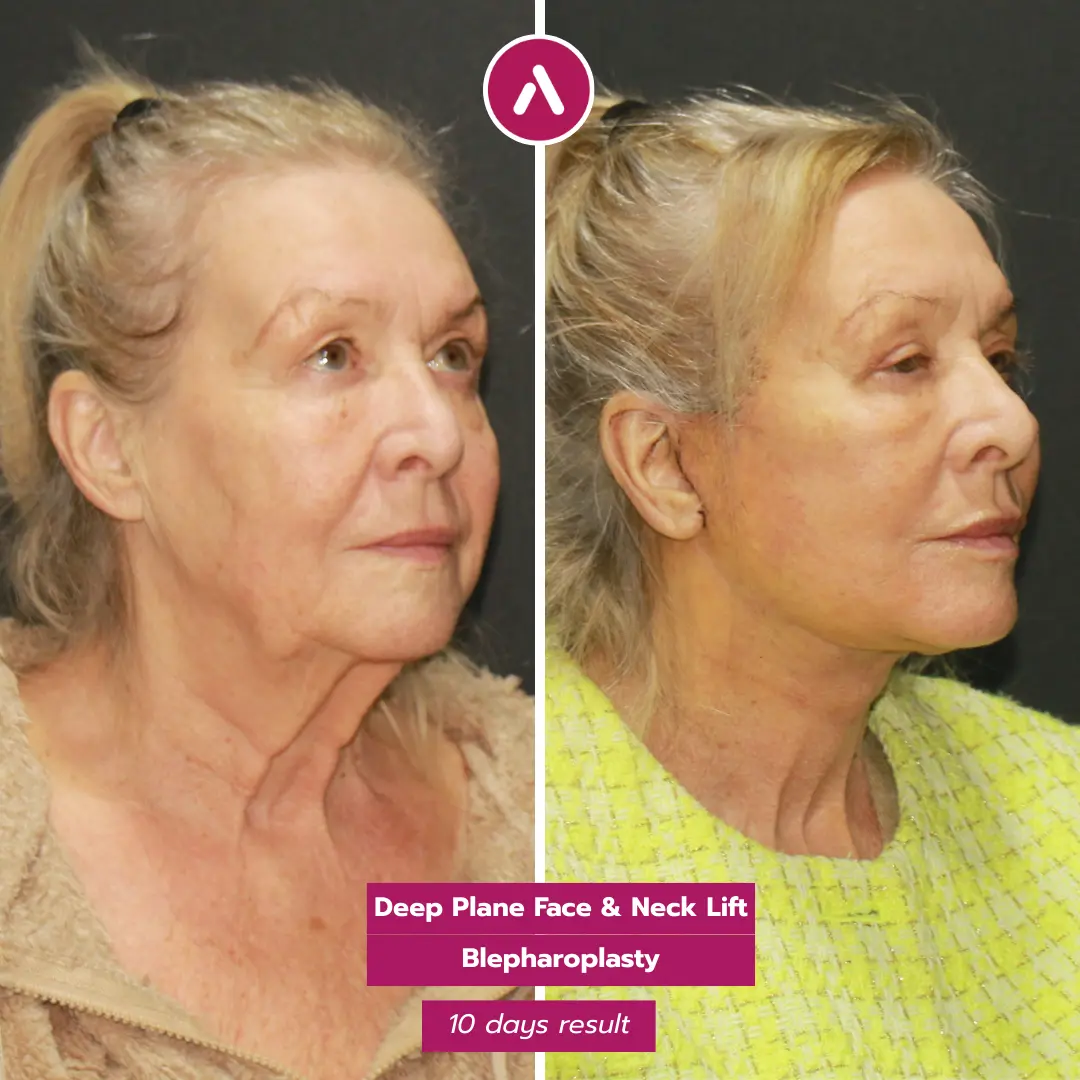
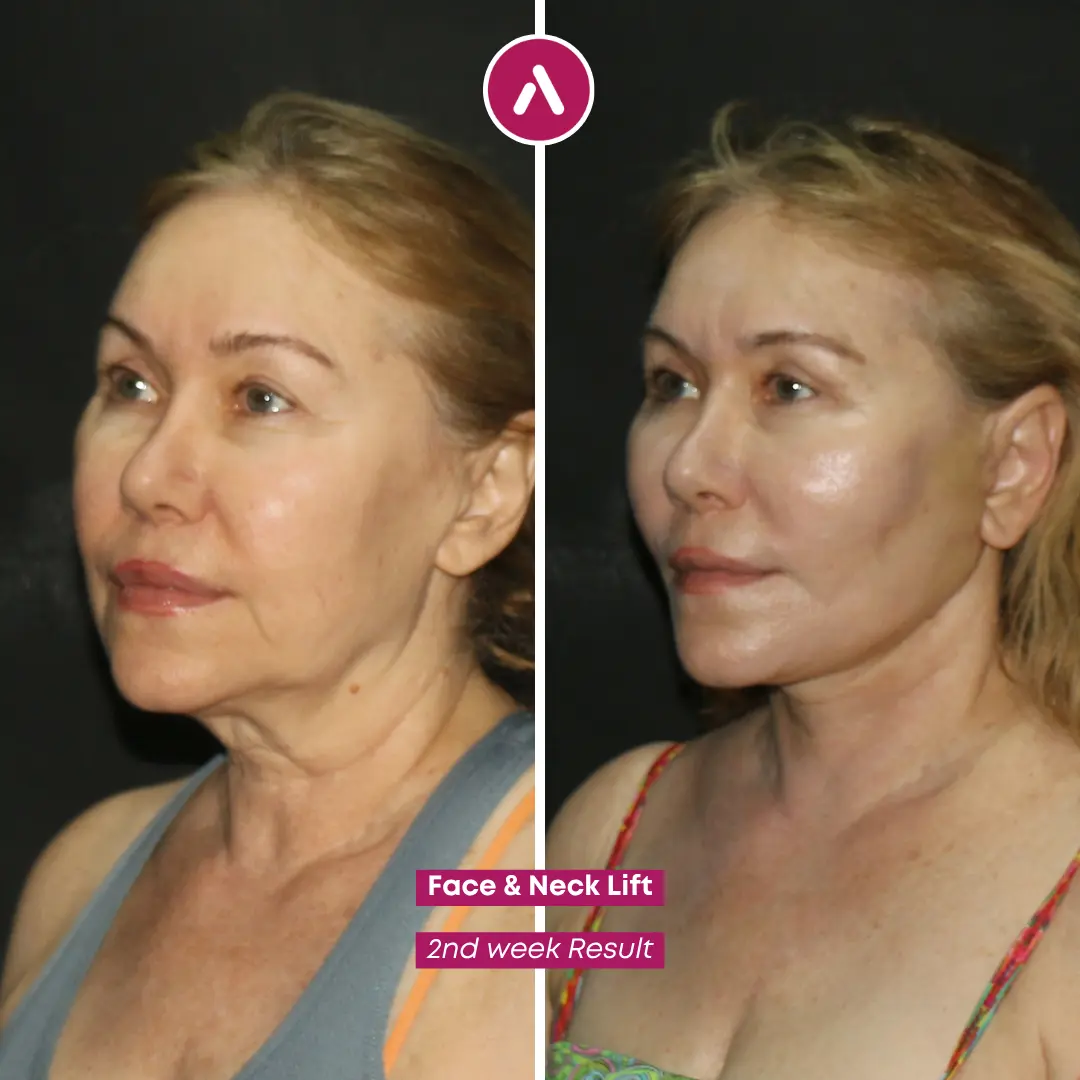
A full neck lift usually involves a submental incision plus incisions behind the ears. This allows the surgeon to address the central neck, tighten or reshape the platysma when needed, and redrape skin more comprehensively.
For patients with moderate to significant laxity, this broader access can be the difference between a subtle improvement and a well-defined neck contour. The scars are longer, but they are placed where they are harder to notice after healing.
Peer-reviewed discussions of neck lift technique describe the need for different access points depending on the degree of correction required. This is why why a full neck lift needs both incisions becomes an important planning question, not just a scar question.
Less scarring vs less correction
Many patients ask for the smallest possible scar. That is understandable. But the better question is: what is the smallest incision pattern that can still correct my anatomy properly?
If a patient has only mild under-chin laxity, a limited incision may be enough. If the skin is loose behind the jawline and toward the side of the neck, a mini approach may leave visible laxity behind.
That is where honest preoperative assessment matters. A good scar is not useful if the result looks undercorrected. A more complete correction can still look discreet when the incisions are placed in the right folds and closed without excessive tension.
| Approach | Typical Scar Location | Number of Scar Zones | Typical Visibility | Correction Capacity |
|---|---|---|---|---|
| Mini neck lift | Often under the chin, sometimes limited around the ear | Usually fewer | Often very discreet when anatomy is suitable | Best for mild to moderate concerns |
| Full neck lift | Under the chin and behind the ears, often into the hairline | Usually two main zones | More incision length, but hidden in creases and hairline | Better for loose skin, stronger bands, and broader laxity |
| Under-chin-only approach | Submental crease | One central zone | Usually hidden under the chin | Limited if side-neck skin needs redraping |
For an expert patient, the takeaway is simple: scar visibility cannot be separated from anatomy. The same incision plan that looks conservative for one patient may be insufficient for another.
At AKM Clinic, the incision plan is discussed during consultation using photos, skin laxity assessment, neck muscle evaluation, and the patient’s hairstyle and scar concerns. The target is not the shortest scar at any cost. It is the most discreet scar that still allows a natural, durable correction.
The Neck Lift Scar Healing Timeline
Neck lift scars do not fade in a straight line. They usually look neat but fresh at first, then become firmer, pinker, or slightly raised before they begin to soften. This middle phase can feel discouraging because the scar may look more noticeable before it looks better.
That pattern is normal scar biology. A surgical incision heals first by sealing the skin, then by building collagen, then by remodeling that collagen into a flatter, paler line. The final scar is not judged at two weeks. It is judged over months.
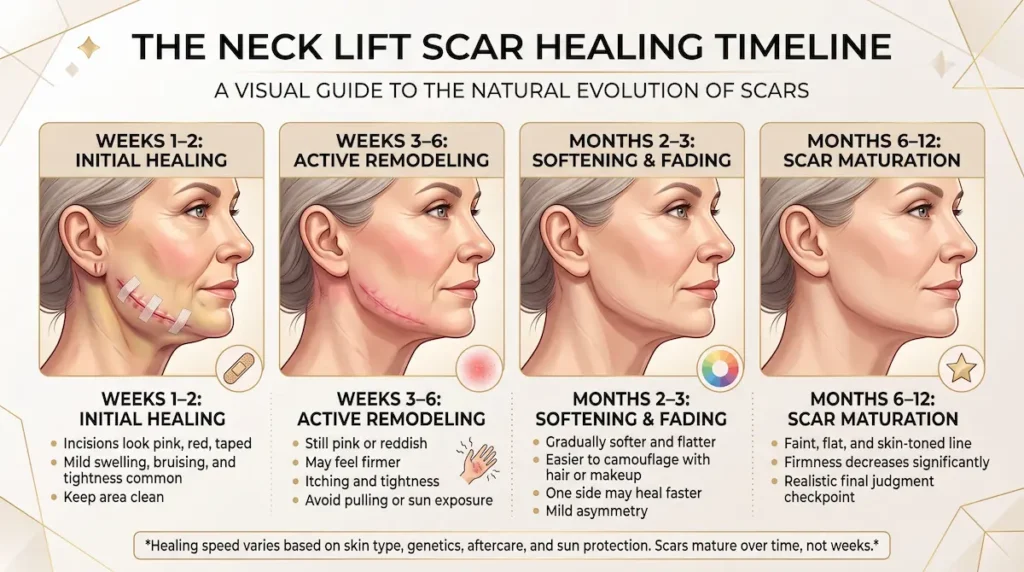
First weeks — redness, firmness, and swelling
During the first one to two weeks, neck lift scars are usually covered with dressings, small tapes, or ointment according to the surgeon’s instructions. The incision lines may look pink, red, slightly raised, or tight. Mild swelling around the neck and jawline can make the scars seem more obvious than they will be later.
The under-chin incision may feel firm when you swallow, turn your head, or touch the area gently. Behind the ears, the skin can feel tight because the surgeon has redraped loose neck skin upward and backward. That tight feeling usually reflects early healing, not the final result.
Bruising may sit near the incision or drift downward with gravity. This can make the neck look more “surgical” at first, even when the incision itself is healing well.
At this stage, the goal is not to fade the scar quickly. The goal is to let the incision close securely. That means keeping the area clean, avoiding unnecessary friction, and following activity limits so the healing skin is not pulled too early.
1–3 months — fading and softening
Between one and three months, many neck lift scars enter the active remodeling phase. This is when they may still look pink or reddish, but the texture starts to soften. A raised edge can flatten. A tight scar can begin to move more naturally with the neck.
This is also when patients often become more aware of small differences between sides. One side may look flatter. The other may stay pink longer. Behind one ear, the scar may feel firmer than the other. Mild asymmetry in scar maturation is common because the two sides rarely heal at the same speed.
Sun exposure matters during this phase. Fresh scars can darken if they receive too much UV exposure, especially on the under-chin area when the head is tilted back outdoors. Scar lines that darken early can take longer to settle.
Most patients can camouflage a healing neck lift scar more easily by this stage. Hair covers the postauricular area. The under-chin scar sits in a shadowed fold. Still, close-up inspection may show a line.
6–12 months — scar maturation
By six months, many neck lift scars are much flatter and lighter. Some are already difficult to see unless someone knows where to look. Others still hold a faint pink or tan tone, especially in patients who naturally scar darker or redder.
Between six and twelve months, the scar continues to mature. Collagen fibers reorganize. Firmness decreases. The line often becomes thinner, paler, and less reflective in bright light.
A year is a realistic checkpoint for judging scar quality. Not every scar disappears, and “invisible” is not a responsible promise. But a well-placed, well-healed neck lift scar is usually discreet enough that it does not draw attention in normal social settings.
| Healing Stage | Typical Scar Appearance | What Is Usually Normal | Supportive Action |
|---|---|---|---|
| Weeks 1–2 | Pink, red, taped, slightly raised, or tight | Mild swelling, bruising, tenderness, and firmness | Keep incisions clean and follow surgeon-directed wound care |
| Weeks 3–6 | Still pink, sometimes firmer or more noticeable | Itching, tightness, and uneven fading between sides | Avoid pulling, rubbing, smoking, and sun exposure |
| Months 2–3 | Gradually softer, flatter, and easier to hide | One side healing faster than the other | Begin scar-care steps only when cleared by your surgeon |
| Months 6–12 | Faint, flat, and more skin-toned | Slow residual color changes or mild firmness | Continue sun protection and review persistent concerns |
Healing speed varies. Skin thickness, genetics, closure tension, smoking history, sun exposure, and aftercare all influence how a neck lift scar matures.
How Visible Are They, Really?
Scar visibility is not only about scar length. It is also about direction, placement, lighting, hairstyle, skin tone, and how much tension was placed on the incision during closure. A short scar in the wrong place can be more visible than a longer scar hidden in a crease.
For most patients, healed neck lift scars are easiest to see in bright bathroom lighting, close-up photographs, or when the hair is pulled tightly away from the ears. They are much harder to notice during normal face-to-face conversation.
Why the under-chin scar hides in the crease
The under-chin scar is helped by anatomy. The submental crease naturally casts a shadow. When your head is level, the chin partly shields the area from direct view. That makes the scar less exposed than a line across the front of the neck.
Visibility increases when the head is tilted far back, during shaving, during close skincare, or in photos taken from below. Early in healing, redness and swelling may also make the line easier to spot.
Once healed, the under-chin scar often looks like a fine line in a natural fold. Many patients notice it because they know where it is. Others do not.
Why the behind-ear scar hides in the hairline
The behind-ear scar is hidden by contour. The ear itself creates a crease and shadow. Hair growth adds another layer of cover. For patients who wear their hair down, the scar may be difficult to see even during the early months.
Visibility can change with hairstyle. A tight ponytail, very short haircut, or wet hair can expose the postauricular area. For that reason, incision planning should consider how you actually wear your hair, not just how the scar looks on a surgical diagram.
The best behind-ear scars follow natural curves rather than cutting across flat skin. They should not pull the earlobe downward or create obvious tension. This is one reason meticulous closure matters.
Skin type, tension, and sun exposure
Some patients simply scar more noticeably. A history of hypertrophic scars, keloids, or dark post-inflammatory pigmentation should be discussed before surgery. This does not always rule out a neck lift, but it changes the scar-care plan.
Tension is another major factor. If the incision is used to hold too much pull, the scar may widen. Modern facial rejuvenation aims to support deeper tissues rather than relying on skin tension alone, which helps protect both the scar and the natural look of the result.
Sun exposure can darken healing scars. Even an under-chin scar can receive UV exposure when driving, walking outside, or sitting near a window. Daily sun protection is simple, but it matters.
It can help to compare scar behavior across facial procedures. For example, brow lift incisions also depend heavily on placement, hairline cover, and skin tension. You can see a related discussion in how scars heal on other facial procedures.
Board-certified team note: A neck lift scar should be planned before the first incision is made. The most discreet scars come from correct placement, low-tension closure, careful aftercare, and a surgical plan that does not force the skin to do the work of deeper support.
For US patients, this is where surgeon selection becomes practical. Ask where each incision would sit on your anatomy, how your hairstyle affects scar visibility, and what the plan is if you have a history of thicker or darker scars.
Helping Your Scars Heal Well
Good scar healing starts in the operating room, but it continues for months after surgery. Closure tension, incision placement, skin quality, and aftercare all work together. You cannot control every part of scar biology, but you can avoid the habits that make scars darker, wider, or slower to mature.
The most useful approach is steady and boring: protect the incisions, avoid early pulling, keep follow-up appointments, and start scar care only when the skin is fully closed and your surgeon clears it. Rushing scar treatment too early can irritate healing skin.

Silicone, sun protection, and scar care
Silicone gel or silicone sheets are commonly used once the incision is sealed. They may help flatten and soften scars during the remodeling phase. Timing matters. Silicone should not be placed on an open or irritated incision unless your surgical team specifically instructs you to do so.
Sun protection is just as important. Fresh scars are pigment-sensitive. UV exposure can turn a pink or pale scar into a darker line that takes longer to fade. For under-chin scars, this means using sunscreen when cleared, wearing shade when practical, and avoiding deliberate sun exposure during early healing.
Massage is sometimes recommended later, once the incision is strong enough. It is not a universal rule for every patient. Some scars benefit from gentle movement; others become irritated if manipulated too soon. Your post-op plan should be individualized.
Normal healing vs concerning signs
Normal scar healing can include mild redness, tightness, itching, firmness, or tenderness. These signs should gradually improve. The direction matters more than a single day’s appearance.
Signs that deserve prompt review include spreading redness, increasing warmth, worsening pain, drainage that smells bad, opening of the incision, sudden swelling, or a scar that becomes increasingly raised, thick, or painful. These do not automatically mean something serious is happening, but they should not be ignored.
If you are trying to separate ordinary scar maturation from a poor healing pattern, review signs of a poorly healed neck lift. That article covers warning signs and outcome concerns in more detail. This guide stays focused on normal scar placement and healing.
When to ask about scar revision
Scar revision is usually not considered early. Most surgeons prefer to wait until the scar has matured, often close to a year, unless there is a functional problem or wound issue that needs earlier care.
A revision may be discussed if the scar is widened, raised, tethered, poorly positioned, or exposed by hairline changes. Some patients may need laser treatment, steroid injections, careful excision, or camouflage strategies. The right option depends on the scar type.
Cost questions also come up at this stage, especially when patients are comparing surgery at home with treatment abroad. This scar-focused guide will not list prices or build a cost table; that belongs on the cost of a neck lift page.
For US patients considering AKM Clinic, consultation should include a scar-specific discussion: where the under-chin incision would sit, whether behind-ear incisions are needed, how your hairstyle affects scar visibility, and how long virtual follow-up continues after you return home.
AKM’s facial rejuvenation philosophy is Natural-First: rejuvenation over alteration. The goal is not a pulled or wind-swept look. Scar planning supports that philosophy because an obvious incision can make even a technically strong lift look surgical.
AKM works with European Board-Certified Surgeons, framed for US readers as ABPS-equivalent credentials rather than US board certification. Surgery is performed in a JCI-accredited facility in Istanbul, with long-term virtual follow-up at 1, 3, 6, and 12 months.
Scar-planning principle: The incision should fit the correction. If a patient needs a full neck lift, the surgical plan should hide the necessary access points well rather than forcing a mini incision to do a full-lift job.
Frequently Asked Questions: Neck Lift Scars
These are the questions most patients ask once they understand that neck lift scars are real but usually discreet. The answers below are general and cannot replace a personal surgical assessment.
Where are neck lift scars?
Neck lift scars usually sit under the chin, behind the ears, or both. The under-chin scar hides in the submental crease. The behind-ear scar is placed in the crease around the ear and may extend into the hairline.
Are neck lift scars visible?
Early scars can be visible because they are pink, firm, or slightly raised. Once healed, they are usually difficult to notice in normal conversation because they sit in shadowed folds and hairline areas. Visibility depends on skin type, tension, incision placement, and aftercare.
How long until they fade?
Most neck lift scars improve noticeably over 6–12 months. They usually flatten and soften before they fully fade. Some patients continue to see subtle improvement beyond one year.
Does a mini neck lift leave less scarring?
Usually, yes. A mini neck lift often uses fewer or shorter incisions than a full neck lift. The trade-off is that it corrects less. If there is significant loose skin, a mini approach may leave undercorrection even though it creates fewer scars.
Can neck lift scars be hidden?
Yes, in most cases. The under-chin scar is hidden by the chin crease, while behind-ear scars are disguised by the ear contour and hairline. Hairstyle, short hair, and bright lighting can make behind-ear scars easier to see, especially during early healing.
When should I worry about a scar?
Contact your surgeon if the scar becomes increasingly painful, red, warm, swollen, open, draining, or raised in a way that worsens instead of gradually settling. Also ask for review if one area feels unusually tight, tethered, or thick after the early healing period.
Do neck lift scars ever disappear completely?
No responsible surgeon should promise that a surgical scar will disappear completely. The realistic goal is a thin, flat, well-placed scar that becomes hard to notice. Many healed neck lift scars are subtle, but they are still scars.
Can a neck lift scar be revised?
Sometimes. Scar revision may help if a scar is wide, raised, poorly positioned, or tethered. Surgeons usually wait until the scar has matured unless there is an earlier wound-healing problem that needs attention.
Does skin tone affect neck lift scar visibility?
Yes. Some patients develop darker pigmentation, redness, or thicker scars more easily than others. If you have a history of keloids, hypertrophic scars, or dark marks after cuts, tell your surgeon before surgery so aftercare can be adjusted.
Will people see the scars when my hair is up?
Possibly, especially early in healing or with very short hair. A mature behind-ear scar is often discreet, but a tight ponytail, wet hair, or bright overhead lighting can expose the area more than loose hair does.
Medical disclaimer: This article is for educational purposes only and is not medical advice, diagnosis, or a substitute for an in-person evaluation. Healing varies by patient. If you notice worsening pain, spreading redness, drainage, wound opening, fever, or any symptom that concerns you after surgery, contact your surgeon or seek appropriate medical care promptly.