

Vaser High-Def Liposuction in Turkey




VASER High-Def Liposuction: Quick Facts
Procedure Time
Anesthesia
Recovery Time
Hospital Stay
Back to Work
VASER High-Def Liposuction Results: Before and After
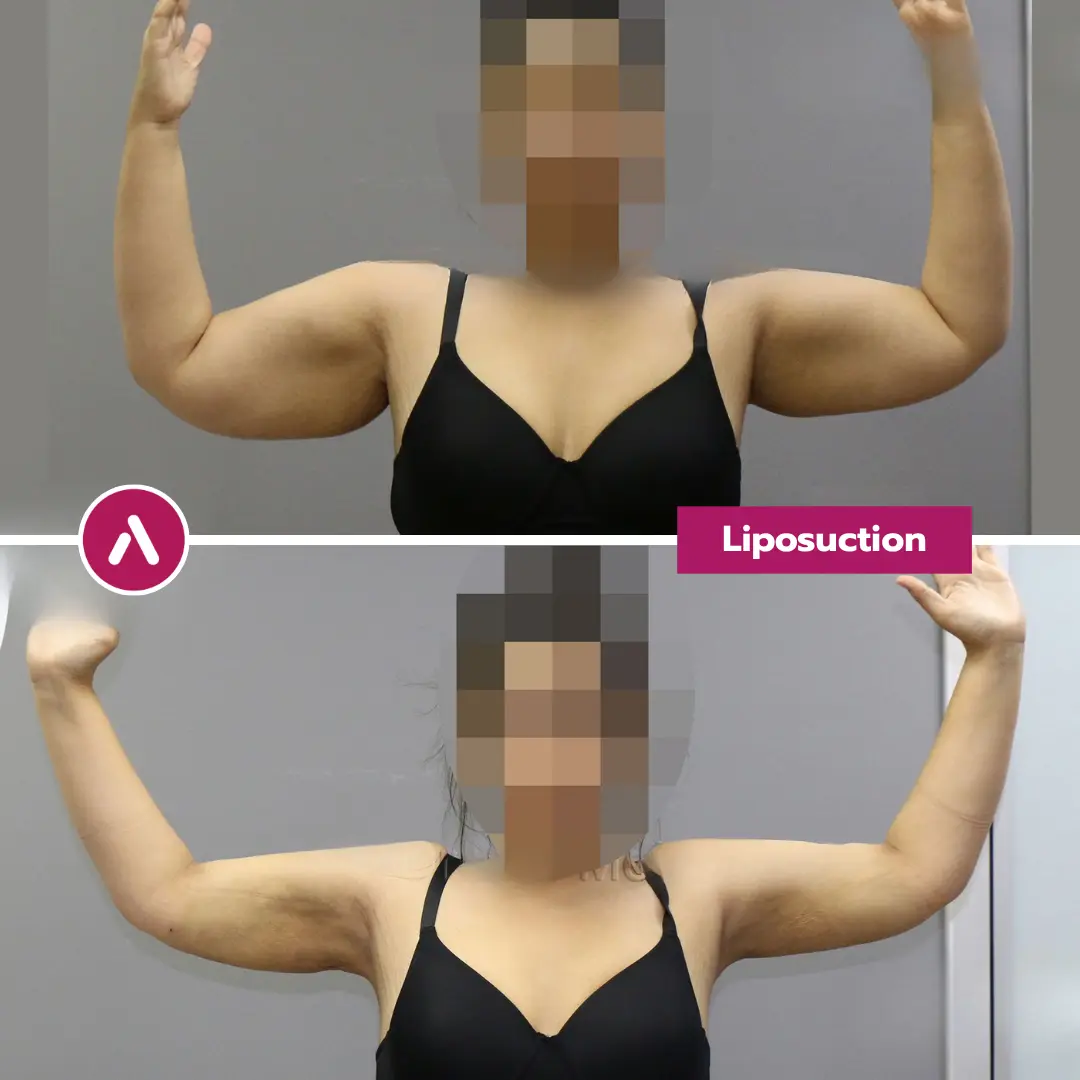
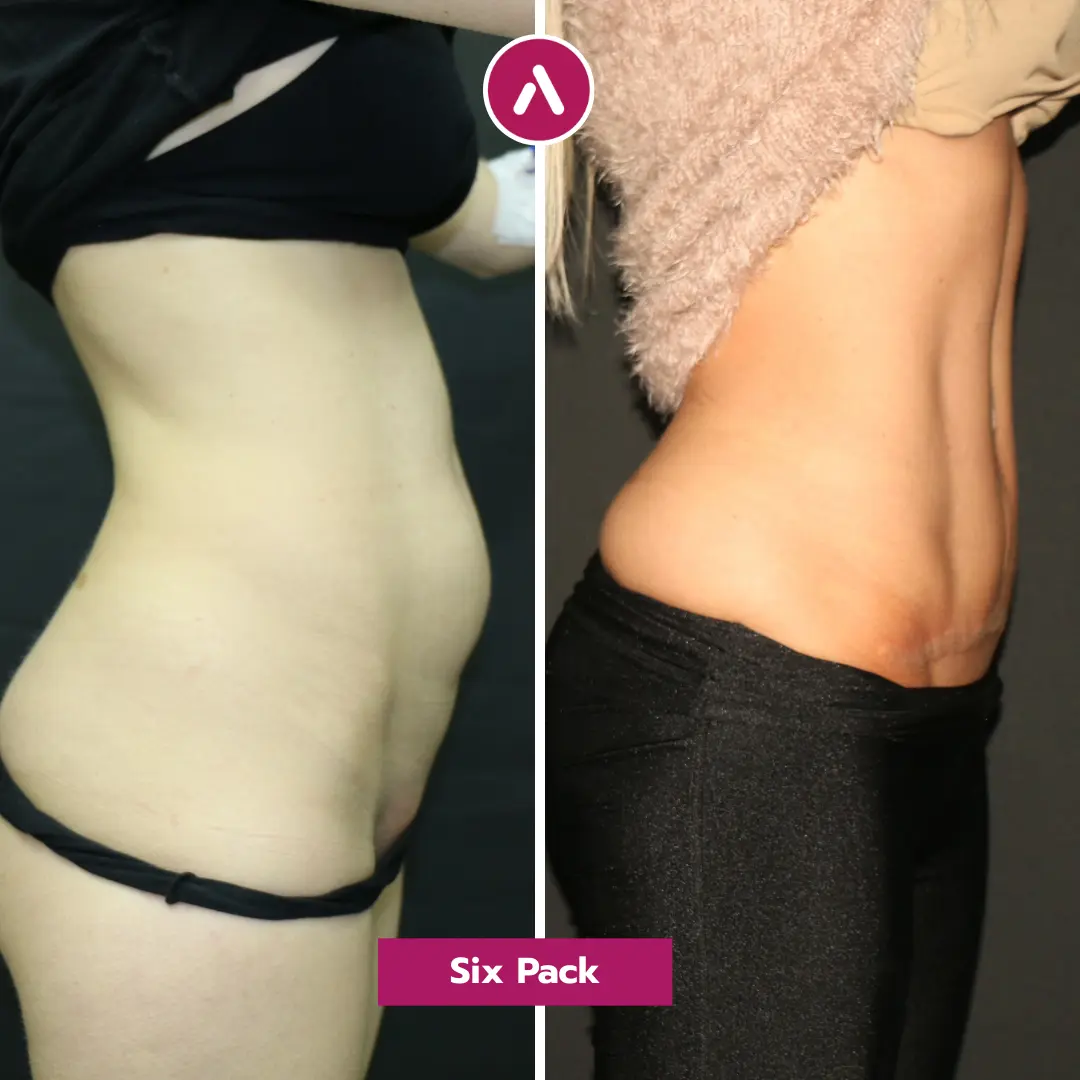

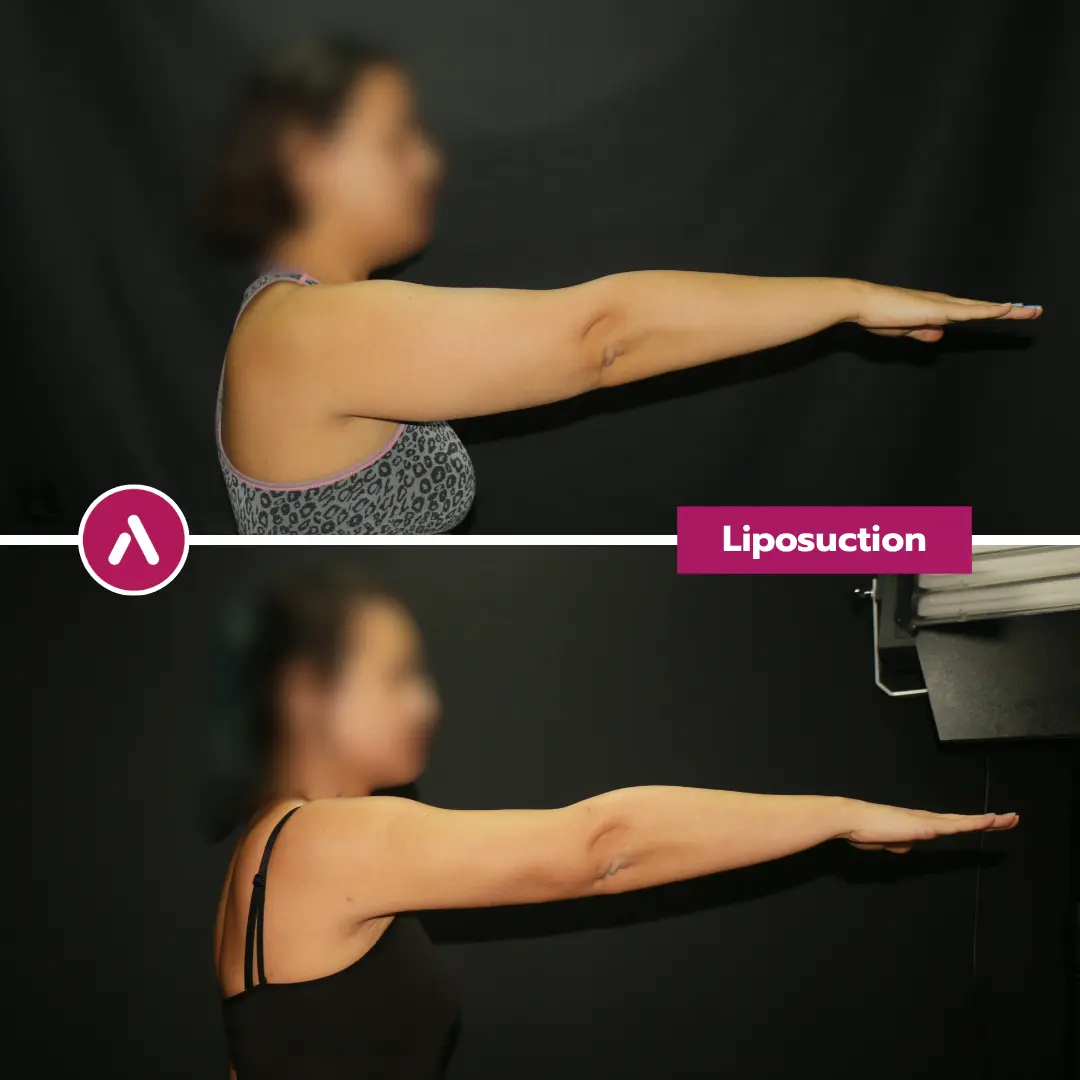
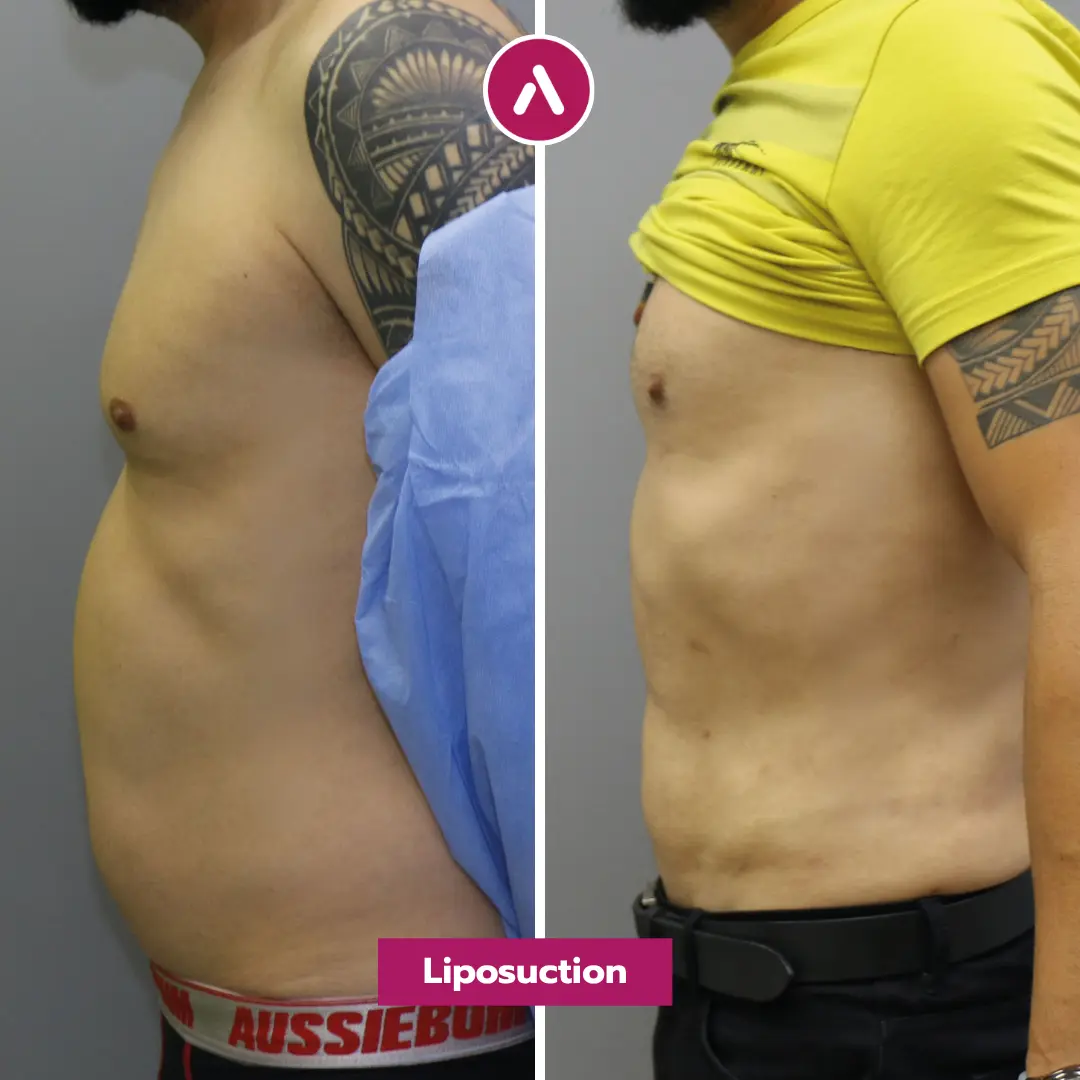
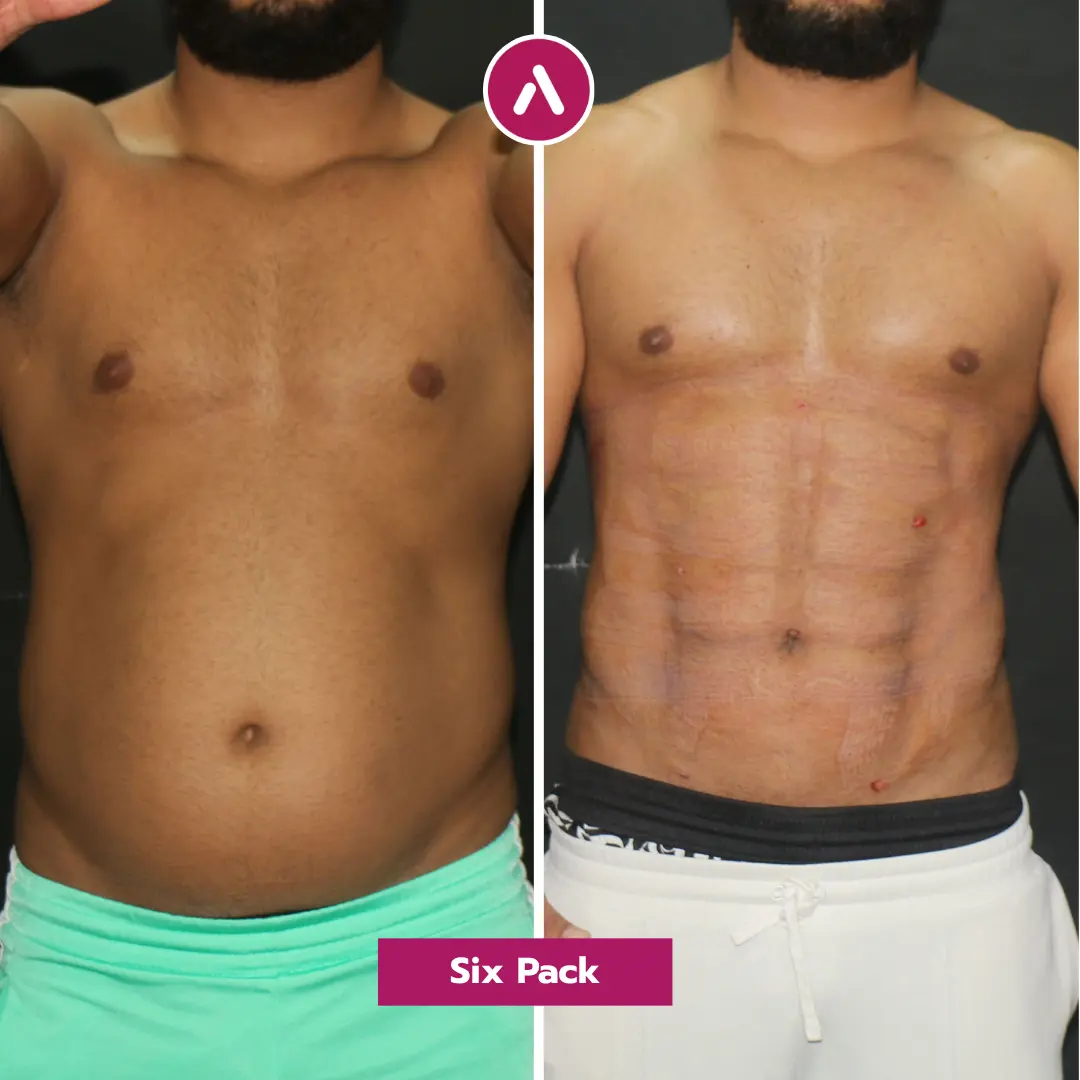
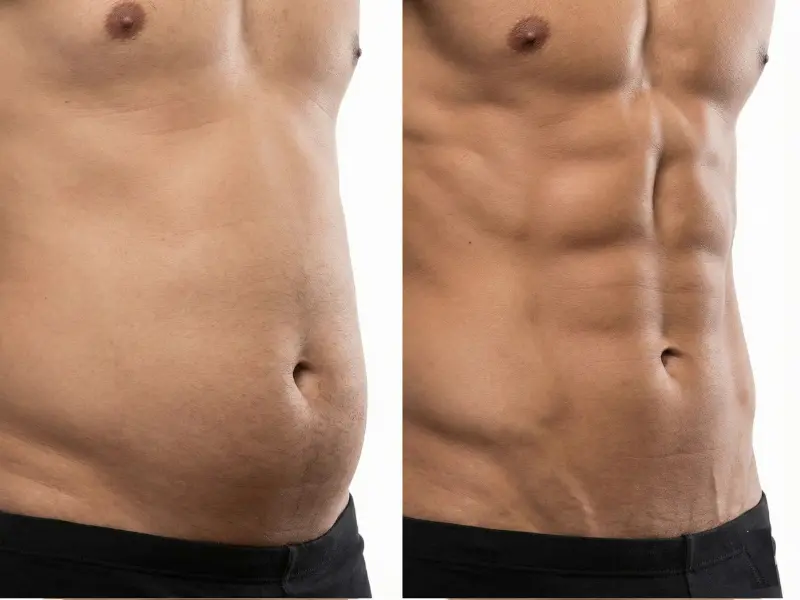
Vaser high-def liposuction (sometimes called “VASER hi-def lipo” or “high-definition body sculpting”) is an advanced form of liposuction designed not only to reduce unwanted fat, but to sculpt visible definition by enhancing the natural contours created by underlying muscle anatomy. Instead of treating the body like a single “volume reduction” project, high-definition (HD) planning treats it like topography—creating smoother transitions, sharper lines in the right places, and a more athletic silhouette.
This matters because most patients researching high-definition lipo are not asking, “How much fat can you remove?” They’re asking, “Can you shape me in a controlled, predictable way—and will it look natural?” At AKM Clinic, that question is framed through a guiding philosophy: Rejuvenation, Not Alteration. The goal is to make you look like a fitter, more refined version of yourself—not an over-etched, artificial result.
- Best for: localized fat + good skin elasticity + stable weight + specific contour goals
- Core difference: HD lipo emphasizes definition and transitions, not just fat reduction
- What sets outcomes apart: surgeon-led artistic planning, anatomy knowledge, and disciplined aftercare
Important: This page is educational and cannot replace an in-person evaluation. Your best plan depends on skin quality, distribution of fat, prior procedures, and medical history.
Surgeon’s insight: The most successful aesthetic work is the kind people can’t “detect”—they just notice you look healthier, more confident, and more like yourself.
Table of Contents
Share your photos and medical history to receive a personalized assessment from our European board-certified facial surgery team.
What Is Vaser High-Def Liposuction?
VASER is a technology platform used to assist fat removal and contouring. In practical terms, it helps a surgical team target unwanted fat with a level of control that supports more detailed sculpting. “High-definition” describes the planning and finishing strategy—how the body is shaped after fat is reduced—so that definition looks intentional, symmetrical, and compatible with your anatomy. Clinical overview: While outcomes vary by individual anatomy and skin quality, ultrasound-assisted approaches like VASER are commonly used in body contouring to support controlled fat removal and refined shaping when performed by an experienced surgical team.
How VASER Works (In Plain English)
Traditional liposuction relies primarily on mechanical movement to loosen and remove fat. VASER-assisted techniques add an energy-based step designed to help prepare fat for removal. The intent is to support more controlled contouring, especially in areas where refined transitions matter (such as the abdominal lines, the waist, and the flanks). For the patient, what typically matters is not the device name—it’s what the technique enables: smoother surfaces, improved precision, and more consistent contour shaping when done by an experienced team.
What “High-Definition” Actually Means
High-definition liposuction is not about creating a “fake six-pack.” It is about strategic fat reduction that highlights your natural muscle anatomy—most commonly the abdominal midline (linea alba), the lateral abdominal borders, and the transition from the waist into the hips and lower back. A true HD plan considers:
- Light and shadow: where natural definition should appear under real-life lighting
- Proportions: torso-to-waist ratio, symmetry, and balanced contours from front to back
- Gender-specific aesthetics: a more squared, athletic torso for many men vs. softer, curvier transitions for many women
- Skin behavior: how your skin is likely to drape and contract during healing
VASER High-Def vs Standard Liposuction
Standard liposuction typically aims to reduce fullness in a region (for example, lower abdomen or love handles). HD lipo aims to create a finished silhouette—a controlled shape with deliberate transitions. In the right candidate, HD planning can refine:
- Waist definition (especially with a 360-degree approach)
- Abdominal contour (including natural midline definition)
- Flank-to-back transitions (a major contributor to an athletic look)
However, HD lipo is also more “operator-dependent.” A clinic can own the same technology, but outcomes differ dramatically based on planning accuracy, restraint, symmetry control, and postoperative guidance.
Our surgery dates fill up quickly due to high international demand. Secure your consultation today to plan your ideal travel dates.
Who Is a Good Candidate? (And Who Isn’t)
Candidate selection is one of the biggest predictors of satisfaction. Vaser high-def liposuction is best viewed as a contouring tool, not a weight-loss method. When the procedure is matched to the right anatomy and goals, results look refined and natural. When it’s used to compensate for issues it cannot solve (such as significant skin laxity), results can look uneven or incomplete.
Best Candidates for VASER High-Def
You are more likely to be a strong candidate if you have:
- Localized fat deposits that persist despite stable habits
- Good skin elasticity (skin that rebounds well after pinching and release)
- Relatively stable weight for several months
- Realistic goals (definition and contour refinement rather than dramatic weight reduction)
In consultation, strong candidates usually describe a clear target: “I want sharper waist definition,” “I want my abdomen flatter with more natural lines,” or “I want my torso to look more athletic without looking ‘done.’”
When High-Def Lipo May Not Be the Right Tool
HD liposuction has limits. It may not be ideal as a standalone solution when:
- Skin laxity is significant (for example after major weight loss or pregnancy)
- BMI is high and the primary goal is broad size reduction
- There are complex contour issues from prior liposuction (irregularities, scar tissue, or fibrosis)
In these situations, a different strategy may be required—such as a tummy tuck or body lift for excess skin, or a staged approach where contouring and tightening are planned deliberately. At AKM Clinic, strict pre-operative health screenings are used to confirm candidacy and reduce avoidable risk.
Male vs Female Aesthetic Planning
High-definition sculpting is not “one template fits all.” Many men want a more rectangular, athletic torso with clearer abdominal borders and a stronger flank-to-back transition. Many women prioritize a narrower waist, smoother abdominal contour, and natural curves. The most natural results come from matching definition intensity to your anatomy and lifestyle—so you still look like yourself, just more refined.
Answer a few quick questions about your concerns, health, and goals to learn which treatment options may suit you best.
Areas That Can Be Sculpted With High-Def VASER
High-definition VASER liposuction is most powerful when it’s used to refine the “transition zones” that define an athletic silhouette—where the torso narrows, where the waist flows into the hips, and where the abdomen blends into the flanks and lower back. In other words, the best results usually come from treating the body in 3D rather than focusing on a single isolated pocket of fat.
Abdomen: Flattening vs Definition
The abdomen is the most common request for high-def planning. But the goal should be individualized. Some patients want a flatter midsection with smoother lines (a “fit” look), while others want sharper definition that highlights natural anatomy. A responsible HD plan considers:
- Midline refinement: subtle definition along the center line for a natural look
- Lateral borders: improving the transition from abdomen to obliques without over-etching
- Upper vs lower abdomen balance: avoiding an “unnatural shelf” appearance
In high-quality HD work, the abdomen should look proportionate in everyday life—not only in a flexed pose under studio lighting.
Waist & Flanks: The “High-Value” Zone for Shape
For many patients, the most dramatic change comes from reshaping the waist and flanks (“love handles”). Even modest reductions here can significantly improve the waist-to-hip ratio and create a more athletic torso. This is also where a 360-degree approach can matter, because the front view is strongly influenced by what is happening around the sides and lower back.
Back Sculpting: Definition Comes from the Rear View Too
Back contouring can refine:
- Lower back fullness that blurs the waist
- “Bra roll” regions in women (when appropriate)
- Posterior flank transitions that influence the silhouette from every angle
Many “before and after” galleries focus on the front. Expert patients should always evaluate back and oblique angles, because they reveal whether the contour was managed consistently.
Chest, Arms, and Other Regions
Depending on anatomy and goals, VASER-assisted sculpting may be applied to areas such as:
- Male chest (as part of a gynecomastia plan): when contour refinement is needed
- Arms: for localized fullness, especially when skin elasticity is adequate
- Thighs: for contour balance, typically prioritizing smoothness over sharp definition
In regions where skin laxity is common (for example, upper arms in some patients), the plan must be conservative and honest. “More removal” does not always produce a better-looking result.
You are never alone. Our 24/7 Patient Hosts and English-speaking staff will be by your side from arrival to departure.
Technique Options: VASER vs Traditional, HD vs Standard
“VASER” and “high-definition” are often used interchangeably online, but they describe different things. VASER refers to the technology-assisted method of preparing fat for removal, while “high-definition” describes the sculpting strategy—how the surgeon shapes the final contour. Understanding the difference helps you ask better questions during consultation and compare providers more intelligently.
VASER vs Traditional Liposuction
Traditional liposuction is primarily mechanical: fat is loosened and removed through controlled cannula movement. VASER-assisted approaches add an energy-based preparation step intended to support controlled removal and refined contouring. In experienced hands, this can translate into:
- Greater precision in contour shaping
- More controlled transitions between treated and untreated areas
- Potentially smoother finishing in areas that require detail
That said, no technology can replace judgment. Precision comes from surgical planning, symmetry control, and restraint—especially in high-definition work where “too much definition” can look unnatural.
High-Def vs Standard Lipo: Different Goals, Different Planning
Standard liposuction typically aims to reduce fullness. High-definition lipo aims to create a more athletic look by refining contours and, in select areas, enhancing natural anatomical lines. Differences often include:
- Marking complexity: HD planning requires more detailed pre-op mapping
- Selective removal: HD emphasizes where not to remove fat as much as where to remove it
- Finishing discipline: smoothing and symmetry checks are crucial to avoid irregularities
If your primary goal is “smaller,” standard contouring may be sufficient. If your goal is “shaped,” a high-definition approach may be more appropriate—provided your anatomy supports it.
360 Lipo, Etching, and Combination Planning
Many high-satisfaction results come from a torso plan that treats the body circumferentially: abdomen, flanks, and lower back in a single integrated design. “Etching” refers to more deliberate highlighting of anatomical lines. Because etching can look overdone when pushed too far, an expert-level approach usually prioritizes:
- Natural light behavior (definition that appears subtle and realistic)
- Balanced proportions across front, side, and back
- Personalized intensity based on gender, build, and preference
Technique Comparison Table
| Feature | Traditional Liposuction | VASER-Assisted Liposuction | VASER High-Def Liposuction |
|---|---|---|---|
| Primary Goal | Reduce localized fat volume | Support controlled fat removal and contouring | Create refined contours and visible definition (when appropriate) |
| Planning Complexity | Moderate | Moderate–High | High (anatomy-based mapping and symmetry control) |
| Best Use Cases | General debulking and smoothing | Detail-oriented contour areas (case-dependent) | Patients seeking athletic sculpting + strong skin quality |
| Risk if Overdone | Contour unevenness | Contour unevenness if technique is inconsistent | “Over-etched” or unnatural appearance, irregularities |
| Operator Dependence | High | Very high | Extremely high (results vary widely by surgeon skill) |
From VIP airport transfers to 5-star hotel accommodations, we handle every detail. Enjoy a seamless medical travel experience in Istanbul.
Anesthesia Choices: Awake / Twilight vs General Anesthesia
Anesthesia is a major decision point for many expert patients—especially those who are safety-focused or anxious about general anesthesia. High-definition liposuction can be performed under different anesthesia approaches depending on the extent of the plan, your medical profile, and the standards of the surgical setting. The safest option is not universal; it is the option that matches your procedure scope and health status while maintaining appropriate monitoring.
What Patients Mean by “Awake Liposuction”
“Awake liposuction” usually refers to liposuction performed with local anesthesia combined with sedation (often called twilight sedation). Patients are typically relaxed and comfortable, with reduced awareness of the procedure, while breathing on their own. The exact protocol varies by provider and should be clearly explained in consultation—especially what monitoring is used, who administers sedation, and what criteria determine eligibility.
Who May Benefit From Twilight / Local Approaches
For appropriate candidates and procedure scopes, twilight-style approaches can be appealing because they may reduce certain concerns associated with full general anesthesia. Patients often consider this option when they:
- Feel anxious about general anesthesia
- Prefer a lighter anesthesia plan for a smaller treatment area
- Want a recovery experience that feels “less heavy” in the first hours post-op
At AKM Clinic, “awake” and twilight approaches are positioned as part of a patient-comfort and safety-centered pathway for suitable cases—always with proper monitoring and pre-operative screening.
When General Anesthesia May Be the Better Fit
General anesthesia may be recommended when the treatment plan is extensive (for example, multi-area 360 sculpting with longer operative time), or when it provides the best combination of comfort, control, and safety for your specific case. The key is not choosing based on fear or internet trends—it’s choosing based on a medically sound plan backed by rigorous protocols.
Safety Checklist: Questions to Ask Any Provider
- Who administers anesthesia or sedation? (credentials and role)
- What monitoring is used throughout the procedure?
- How is eligibility determined? (screening, labs, medical history)
- What is the emergency preparedness plan?
High-definition lipo is elective, which means you have the power—and responsibility—to choose the setting that prioritizes safety systems, not just marketing language.
Step-by-Step: What Happens on Procedure Day
For many expert patients, the most reassuring thing is understanding the procedure workflow in detail—what happens first, what happens next, and where the “high-definition” part actually occurs. While exact steps vary by surgeon and case complexity, a high-quality VASER high-def liposuction plan follows a disciplined sequence: pre-op mapping, controlled fat removal, meticulous contour finishing, and structured early aftercare. The goal is not speed—it is precision and predictability.
1) Pre-Op Marking: Where the Result Is Designed
High-definition outcomes are largely determined before the first incision. Pre-operative marking maps the body in standing position (and often from multiple angles), focusing on:
- Transition zones: where the waist should narrow and how the abdomen blends into the flanks
- Symmetry checkpoints: landmarks used to keep the contour balanced
- Definition strategy: whether the plan emphasizes subtle athletic refinement or more visible lines
This stage is also where a responsible surgeon discusses what “natural” means for your anatomy. A patient with thicker skin and strong baseline structure may tolerate more definition than a patient with borderline skin laxity, where aggressive etching can look unnatural or uneven.
2) Anesthesia and Comfort Setup
Your anesthesia plan (twilight/awake-style sedation with local anesthesia vs general anesthesia) is confirmed based on the scope of your treatment and your medical profile. Regardless of the approach, a safe surgical setting prioritizes continuous monitoring, careful positioning, and temperature and fluid management—details that may not show up on a marketing page but meaningfully influence safety and recovery.
3) Tumescent Infiltration: Preparing the Tissue
A specialized fluid is introduced into the treatment area to support comfort, reduce bleeding, and create the conditions needed for controlled fat removal. Patients often read about this step online; what matters is that the infiltration is done evenly and thoughtfully, because inconsistent preparation can contribute to uneven contouring later.
4) VASER-Assisted Fat Preparation and Removal
After preparation, the surgeon proceeds with controlled fat removal and contour refinement. In a high-definition plan, the “removal” is only part of the story—the surgeon’s decision-making about how much to remove, where to leave structural support, and how to keep transitions smooth is what protects the final look from appearing overdone or irregular.
Expert-level finishing typically includes multiple checks for:
- Surface smoothness (avoiding dips or ridges)
- Balanced transitions (treated to untreated zones)
- Proportion consistency (front-to-side-to-back harmony)
5) Closure, Garments, and Immediate Post-Op Instructions
Incisions for liposuction are intentionally small and placed strategically. After the procedure, compression garments are applied to help manage swelling and support tissue adaptation during early healing. You should receive a clear aftercare plan that outlines:
- How long to wear compression
- When and how to walk safely
- How to manage swelling and discomfort
- When you can shower and what to avoid
Patients often underestimate how much results depend on postoperative discipline. High-definition work is more sensitive to early swelling and tissue behavior, which is why a structured recovery plan matters.
Combined Procedures: When VASER High-Def Is (and Isn’t) Enough
Many patients researching VASER high-def liposuction also ask about combining procedures for a more complete transformation. Combination planning can be appropriate—but it must be medically rational. The safest, best-looking results come from matching the tool to the problem. Liposuction refines contour by removing fat. It does not remove significant excess skin or repair separated abdominal muscles after pregnancy.
High-Def Lipo + Tummy Tuck: Different Problems, Complementary Solutions
If your primary concern is loose lower abdominal skin or muscle separation (diastasis), a tummy tuck may be the foundational procedure, with liposuction used to refine the waist and flanks. In these cases, liposuction alone can improve size, but it may not deliver the smooth, tight contour many patients expect.
High-Def Lipo + 360 Sculpting for Full Torso Harmony
For patients focused on an athletic torso, treating the abdomen without addressing the flanks and lower back can create an incomplete result. A 360-degree plan often produces a more natural silhouette because it improves the waist from every angle, not just from the front.
High-Def Lipo + Male Chest Contouring
In some male patients, chest contouring may be combined with torso sculpting to create a more consistent athletic look. If gynecomastia (glandular tissue) is part of the diagnosis, surgical planning must be specific—fat removal and gland management are not the same thing, and the best approach depends on anatomy.
Recovery Timeline: Day 1 to Month 6 (Realistic Milestones)
Recovery after VASER high-def liposuction is best understood as a progression, not a single moment when you “feel normal.” Swelling, tissue firmness, and shifting contour are expected during healing—especially in high-definition cases where the result relies on subtle transitions. Your job during recovery is to protect the work while your tissues settle into their new shape.
First 72 Hours: Swelling, Fluid Shifts, and Early Mobility
The first few days are typically characterized by swelling, drainage (in some cases), and tightness. Many patients feel most “restricted” during this period, largely because compression garments and early inflammation change how the body moves. Typical priorities include:
- Short, frequent walking to support circulation (as advised by your team)
- Consistent compression to manage swelling and support tissue adaptation
- Hydration and nutrition to support healing
Discomfort is expected, but severe or escalating pain, fever, or rapidly expanding swelling should always be treated as urgent—your provider should give clear instructions on what requires immediate contact.
Week 1: “Functional” Recovery vs Visible Results
Most patients begin to feel more functional during the first week, but the visible contour is still heavily influenced by swelling. This is a common mental trap: patients may look in the mirror and worry the result is not “sharp enough.” At this stage, sharp definition is not the goal. The goal is stable healing and controlled swelling.
Weeks 2–4: Returning to Work, Controlled Activity, and Tissue Firmness
As bruising fades and mobility improves, many patients return to desk-based work (timing varies by individual and scope). During this stage, it’s common to notice:
- Firmness in treated areas as tissues remodel
- Asymmetry that gradually normalizes as swelling resolves
- Contour changes week-to-week (sometimes day-to-day)
Your provider’s aftercare plan should explain compression duration and when it’s safe to increase activity. Pushing too hard too soon can increase swelling and delay refinement.
Months 2–3: Definition Starts to “Reveal”
For many patients, this is when the result becomes more encouraging. Swelling is typically reduced, garments may be tapered, and the silhouette begins to look more consistent. In high-definition cases, subtle lines may start to appear—especially if your baseline muscle structure is strong and your skin quality supports definition.
Months 4–6: Refinement and Long-Term Outcome
Final results can continue to improve for several months. The body is still remodeling internally, which is why reputable clinics emphasize patience and structured follow-up. By this stage, the focus is on:
- Long-term contour stability (weight stability matters)
- Skin adaptation (how well the skin drapes)
- Natural-looking definition rather than “etched” sharpness
We use advanced Hyperbaric Oxygen Therapy (HBOT) to minimize downtime and supercharge your healing process. Safety is our #1 promise.
Scars and Skin Quality: What to Expect
One reason VASER high-def is attractive is that it can produce significant contour changes with small incisions. However, scarring and skin behavior should be discussed honestly. Liposuction incisions are small, but how scars mature depends on your skin type, genetics, aftercare discipline, and whether you have a history of thickened or darkened scars.
Where Incisions Are Typically Placed
Incisions are placed strategically to access the target region while minimizing visibility. Common locations include natural creases or less conspicuous areas. Your surgeon should be able to explain incision placement choices and how they support symmetry and contour quality.
Will Skin Tighten After VASER?
Some patients experience a degree of skin contraction after liposuction—especially when skin elasticity is strong. But liposuction is not a skin-excision procedure. If significant laxity is present, a tightening or excisional procedure may be necessary to achieve a smooth contour.
How to Support Better Scar and Skin Outcomes
Most scar and skin-quality advice comes down to consistency: follow garment instructions, avoid early strain, and stick to your provider’s aftercare pathway. Your clinic should give guidance on when to resume exercise, how to manage swelling, and what signs suggest you need an evaluation.
Get a clear, day-by-day itinerary covering arrival, surgery, recovery, and fit-to-fly clearance tailored to your schedule.
The Accelerated Recovery & Safety Protocol: HBOT + LLLT
Recovery is not just “time passing.” It’s biology: inflammation, oxygen delivery, microcirculation, collagen remodeling, and lymphatic drainage. In high-definition liposuction—where the final result depends on subtle transitions—reducing prolonged swelling and supporting predictable tissue healing can meaningfully improve the overall experience. At AKM Clinic, two technologies are integrated into a structured post-operative pathway: Hyperbaric Oxygen Therapy (HBOT) and Low-Level Laser Therapy (LLLT). These are positioned as supportive recovery tools within a broader system of care, not as a replacement for surgical skill or proper aftercare.
HBOT: Why Oxygenation Matters After Body Contouring
HBOT involves breathing oxygen in a pressurized environment. The clinical concept behind it is straightforward: surgical tissues can temporarily experience stress and inflammation, and oxygen is a critical ingredient for repair processes. In a recovery-support context, HBOT is used with the intention to:
- Support tissue recovery by improving oxygen availability during the early healing phase
- Help manage inflammation-related swelling and bruising as the body stabilizes after surgery
- Promote a smoother “settling period” so contour transitions are easier to evaluate over time
While every patient heals differently, the consistent value of HBOT is that it fits the needs of the “Expert Patient”: it’s a tangible, protocol-driven recovery step designed to reduce uncertainty and support predictability.
LLLT: Cellular-Level Support for Healing Quality
Low-Level Laser Therapy (LLLT) is used as a non-invasive adjunct aimed at supporting cellular activity in healing tissues. In practical, patient-relevant terms, LLLT is included to help:
- Encourage cellular repair processes during the post-operative period
- Support collagen-related remodeling (important for skin quality and overall finish)
- Reduce visible redness and swelling as part of a staged recovery plan
In AKM Clinic’s framework, HBOT is described as a “macro-level” recovery support (systemic oxygenation), while LLLT is used as a “micro-level” support (cellular stimulation). Combined, they form a deliberate recovery pathway designed to support both comfort and aesthetic outcome quality.
What This Protocol Can (and Can’t) Do
Recovery technologies should be discussed with realistic expectations. HBOT and LLLT are not magic switches, and they cannot eliminate all swelling, guarantee a specific timeline, or compensate for poor candidate selection. What they can do is support a recovery environment that aims to reduce common barriers to satisfaction:
- Prolonged swelling that delays visible definition
- Uneven tissue firmness that can temporarily distort contours
- “Social downtime” uncertainty for patients who need predictable milestones
Risks, Side Effects, and How Complications Are Managed
No honest guide should minimize risk—especially for elective surgery. VASER high-def liposuction is generally considered safe when performed in an appropriate setting, on the right candidate, by a qualified surgical team with strong protocols. But “safe” does not mean “risk-free.” Understanding what is common, what is rare, and what is preventable helps you make a rational decision and compare providers beyond marketing language.
Common and Expected Short-Term Effects
Most patients should expect some combination of the following during early healing:
- Swelling and bruising (often most pronounced in the first 1–2 weeks)
- Soreness, tightness, and fatigue as tissues settle
- Numbness or altered sensation that gradually improves over time
- Temporary firmness in treated areas as internal remodeling occurs
These effects are not signs of failure—they are typical stages of recovery. The key is whether they follow a normal pattern: gradually improving, not escalating.
Complications to Know (and How They’re Addressed)
Potential complications can include:
- Seroma (fluid collection): may require drainage or monitoring
- Contour irregularities: unevenness, dips, or ridges; often reduced with time, sometimes requiring targeted correction
- Infection: uncommon but serious; requires prompt evaluation
- Excessive swelling or hematoma: requires medical assessment
- Fibrosis (firm scar-like tissue): can affect “smoothness” and requires structured aftercare
- Skin laxity or dissatisfaction with definition intensity: usually a planning/candidacy issue rather than a device issue
High-definition work adds a unique risk category: over-definition. Over-etching can look unnatural, especially when lighting changes or the body relaxes. Expert surgical planning is defined as much by restraint as by technique.
Risk-Reduction Systems: What “Good Medicine” Looks Like
Many risks are reduced not by branding, but by systems:
- Strict pre-operative screening to confirm candidacy and reduce avoidable complications
- Rigorous sterilization standards and disciplined operating room protocols
- Continuous monitoring throughout anesthesia/sedation and the immediate post-op period
- Clear aftercare structure (compression, mobility, follow-up checkpoints)
When comparing clinics, ask to see the protocol—not the promises. A reputable team will be comfortable explaining how risks are managed before they become problems.
Fibrosis After Liposuction: Why It Happens and How It’s Managed
Fibrosis is a common topic among highly researched patients because it can affect “smoothness” during the healing months. It refers to firm, scar-like internal tissue that can develop as part of the body’s repair process. In many cases, it softens naturally with time. In some cases, it requires structured management. The best approach is proactive: understand what increases risk, follow the plan, and avoid panic during normal phases of firmness.
What Fibrosis Feels Like (and When It’s Concerning)
Fibrosis often feels like firmness or small “bands” under the skin. It may be more noticeable in areas that hold swelling longer. It becomes more concerning if it is associated with escalating pain, progressive asymmetry, or signs of infection—those scenarios require medical evaluation.
Prevention: The Role of Technique and Aftercare
Fibrosis is influenced by both surgical technique and recovery behavior. Gentle, precise tissue handling, even fat removal, and smooth transitions reduce the risk of uneven healing. Aftercare discipline matters too—especially consistent compression and following activity restrictions during early healing.
Management: Patience + Structured Follow-Up
Management typically revolves around time, monitoring, and guided supportive strategies recommended by your clinical team. The goal is to help tissues soften and settle while protecting the contour work. A clinic that takes high-definition outcomes seriously will set expectations for this stage and provide a clear pathway if firmness persists longer than expected.
From VIP airport transfers to 5-star hotel accommodations, we handle every detail. Enjoy a seamless medical travel experience in Istanbul.
Before & After Results: What “Natural Definition” Looks Like
Before-and-after photos are one of the most valuable research tools—if you know how to evaluate them. The problem is that photos can be misleading through lighting, posture, flexing, and timing. High-definition results should not require extreme posing to look good. The most credible results look balanced, proportional, and natural in relaxed, everyday posture.
How to Evaluate Before & After Photos Like an Expert
- Look for multiple angles: front, oblique, and back—especially for 360 contour quality
- Check timing: early photos can show swelling; later photos show true refinement
- Watch for consistency: is the waist definition supported from side and back views?
- Beware of “over-etching”: definition should complement anatomy, not look stamped on
- Assess transitions: the best work is often seen in smooth blends, not just sharp lines
The Natural-First Standard (Why “More Definition” Isn’t Always Better)
AKM Clinic’s guiding principle—Rejuvenation, Not Alteration—applies directly to HD body sculpting. The aim is an athletic contour that still looks like you. A high-integrity plan avoids creating lines that appear unnatural when you’re seated, relaxed, or under different lighting. Many patients feel happiest with a result that friends describe as “you look fitter” rather than “you had something done.”
Real Patient Perspective: Overcoming Anesthesia Fear
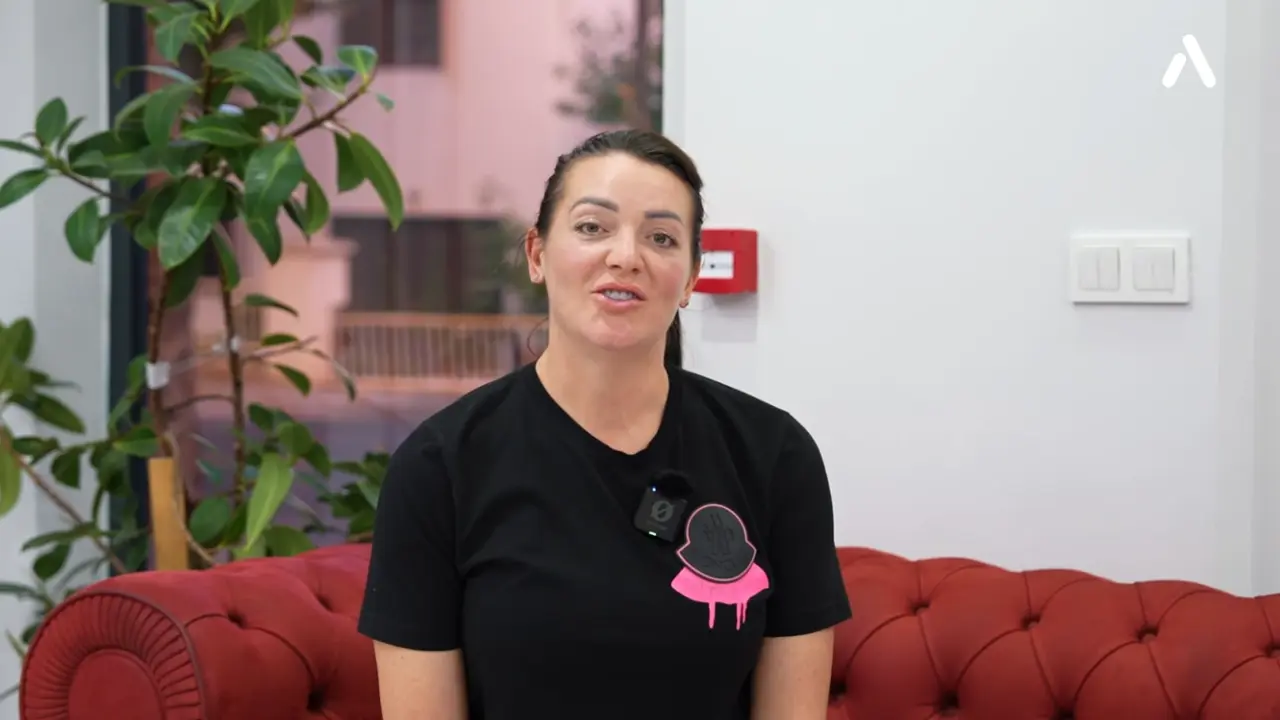
For some patients, the biggest barrier isn’t the contouring—it’s anesthesia anxiety. In AKM Clinic’s international patient testimonials, one U.S. patient described being deeply fearful of general anesthesia and found reassurance in a local/twilight-style “awake” pathway that allowed her to finally proceed with a long-considered aesthetic goal. This is a reminder that the “best” plan is not only about technique, but about matching the surgical strategy to the patient’s medical comfort and psychological safety.
Our philosophy is “Rejuvenation, Not Alteration.” Discover how our surgeons achieve subtle, revitalized results that honor your unique beauty.
VASER Liposuction Cost Analysis 2026: US vs Turkey
For the “Expert Patient,” cost is not just a number—it’s a risk-and-value equation. The meaningful question is: What is included, what standards are verifiable, and what support exists if you need follow-up? VASER high-def liposuction pricing varies widely because “HD” is not a single standardized procedure. It can mean a small-area refinement under local anesthesia, or a full 360-degree sculpting plan with longer OR time, anesthesia fees, garments, and extended follow-up.
What Drives the Cost of VASER High-Def Liposuction?
- Number of areas treated: single-zone vs multi-zone vs full 360
- Definition intensity: subtle athletic refinement vs more advanced etching
- Anesthesia plan: local/twilight vs general anesthesia
- Facility standards: accredited OR, monitoring, sterility protocols
- Aftercare included: garments, medications, recovery support, structured follow-ups
- Geographic overhead: major metro pricing (NYC/LA/Miami) is typically higher
Cost Comparison Table (Typical Ranges + What’s Included)
The figures below are meant to help you compare markets logically. Your final quote will depend on your anatomy, number of areas, and anesthesia plan. Always confirm whether a quote includes anesthesia, facility fees, garments, and post-op visits.
| Market | Typical Range (VASER / HD Lipo) | What Often Adds Cost | What to Confirm in Writing |
|---|---|---|---|
| New York City (NYC) | $4,000–$10,000+ (per area is common); HD/360 plans can be higher | Anesthesia + facility fees, multi-area sculpting, revisions, “add-on” aftercare | Accredited OR, anesthesia credentials, garment/meds, follow-up schedule |
| Miami | $3,000–$10,000+ (varies by scope and provider) | Multiple zones, upgraded anesthesia, extended aftercare packages | Total “all-in” figure, not just a starting rate |
| Los Angeles (LA) | $4,500–$10,000 for VASER; HD plans can reach $8,000–$20,000+ | High-demand surgeons, facility overhead, larger multi-zone contouring | What’s included vs billed separately |
| Istanbul (AKM Clinic – All-Inclusive Model) | Personalized quote after photo review and surgical plan | Usually fewer “hidden fees” because the package is structured | Inclusions: procedure, anesthesia/OR fees, pre-op tests, hotel, transfers, garments/meds, long-term follow-up |
Why Istanbul Can Be Lower Cost Without Lower Standards
Many patients assume lower price automatically means lower quality. That is not necessarily true. In AKM Clinic’s model, the price differential is explained as a macroeconomic effect—exchange rates and lower national operational costs—rather than a “cut corners” strategy. The goal is to deliver a predictable, premium experience with fewer unpleasant surprises and a clearer path from consultation to follow-up.
Get a 100% transparent, all-inclusive quote tailored to your needs. No hidden fees—just world-class care at an accessible price.
Choosing the Best Surgeon for VASER Liposuction
High-definition results are not “device-dependent”—they are operator-dependent. Two clinics can use the same technology and produce completely different outcomes. Your goal as an expert patient is to evaluate the provider’s planning discipline, safety system, and honesty about what your anatomy can realistically achieve.
Credentials and Training: What Actually Matters
When you’re comparing providers, prioritize verifiable credentials and a track record of consistent outcomes. Look for:
- Board certification (and relevant surgical specialty alignment)
- High-volume body contouring experience with HD planning
- Before/after consistency across multiple angles (front, oblique, back)
- Clear complication planning (seroma protocols, contour management, follow-up structure)
At AKM Clinic, surgeon authority is positioned around internationally comparable standards (including European-equivalent board pathways) and structured pre-operative screening designed to protect candidacy and safety.
How to Judge High-Def Skill from Photos and Consultations
- Look for natural transitions: the best work is smooth, not “carved”
- Check symmetry: waist lines, abdominal borders, and flank transitions should match
- Ask about the plan, not the device: where will fat be removed, where will support be preserved?
- Ask what happens if swelling or firmness persists: a real plan includes follow-up checkpoints
Safety Infrastructure: Non-Negotiables
High-definition outcomes are elective, so safety should be non-negotiable. A serious clinic should be comfortable explaining:
- Pre-op screening: medical history review, labs, candidacy criteria
- Operating standards: sterilization protocols, accredited environment, continuous monitoring
- Anesthesia discipline: eligibility rules for twilight vs general anesthesia
- Aftercare system: garments, medication plan, follow-up access, escalation pathways
Perform your surgery with confidence. Meet our European Board Certified surgeons with over 2,000 successful facial surgeries.
The Medical Journey in Istanbul: A Step-by-Step Guide (AKM Clinic)
International care should not feel like “medical tourism.” It should feel like a structured medical pathway with clear checkpoints, predictable logistics, and a continuum of support after you return home. AKM Clinic’s process is designed to remove travel friction so you can focus on preparation and recovery.
Step 1: Free Virtual Consultation and Personalized Plan
Your journey begins with a no-obligation video consultation and photo review. This step is where your goals are clarified, candidacy is assessed, and you receive a transparent, all-inclusive quote based on your procedure scope (single zone vs multi-zone vs 360 planning).
Step 2: VIP Planning (Hotel + Transfers + Scheduling)
Once you proceed, a dedicated patient host coordinates logistics: booking a partner 5-star hotel, scheduling VIP airport and clinic transfers, and organizing your in-person consultation and procedure day flow. The key principle is simplicity: you manage your flight, and the clinic coordinates the rest.
Step 3: Arrival, In-Person Evaluation, and Procedure Day
On arrival, you’re welcomed by a private driver and transferred to your hotel. On procedure day, you have an in-person consultation to confirm the surgical plan, followed by pre-operative tests and surgery in a fully accredited environment with appropriate monitoring. Afterward, you’re closely monitored, and your host remains available via WhatsApp for real-time support.
Step 4: Clearance to Fly + Long-Term Follow-Up Back Home
Before you return, you’ll have a final in-person check-up to confirm you’re cleared to fly. Follow-up does not “end” when you leave Istanbul. A structured virtual follow-up schedule supports healing checkpoints at 1, 3, 6, and 12 months—an important trust signal for expert patients who worry about being “on their own” after returning home.
What’s Typically Included in an All-Inclusive VIP Package (AKM Clinic)
- Your complete surgical procedure
- Anesthesia & operating room fees
- All pre-operative tests
- 5-star hotel accommodation
- VIP airport & clinic transfers
- 24/7 dedicated patient host support
- Post-operative medications & garments
- First post-op meal
- Long-term virtual follow-up care
What’s Not Typically Included
- International flight tickets
- Personal travel insurance
- Personal expenses (meals beyond what is provided, etc.)
- Additional hotel nights (if you extend your stay)
- Visa fees (if applicable)
From VIP airport transfers to 5-star hotel accommodations, we handle every detail. Enjoy a seamless medical travel experience in Istanbul.
FAQ: Vaser High-Def Liposuction
These are the most common questions expert patients ask while researching VASER high-def liposuction. Keep in mind that the most accurate answer depends on your anatomy, skin quality, and procedure scope (single area vs multi-area vs 360). A qualified evaluation should confirm what applies to you.
Does VASER high-def liposuction tighten skin?
It can improve contour and may be followed by some degree of natural skin contraction in patients with good elasticity, but it is not a skin-excision procedure. If significant laxity is present (often after pregnancy or major weight loss), liposuction alone may not create a smooth result—and a tummy tuck or other tightening strategy may be more appropriate.
How long does swelling last after VASER lipo?
Swelling is expected and usually changes in phases. Many patients see the biggest improvement in the first 2–4 weeks, but refinement can continue for several months. High-definition results often “reveal” gradually as swelling resolves and tissues remodel, which is why final definition is typically judged later rather than early.
Is awake liposuction painful?
“Awake” liposuction typically means local anesthesia plus sedation (twilight). The goal is comfort while you remain breathing on your own. You should not feel sharp pain during the procedure, but you may feel pressure or movement sensations. Candidacy depends on procedure scope, anxiety level, and medical factors—so it’s not a universal option for every patient or every 360 plan.
What are VASER lipo scars like?
Liposuction incisions are small and placed strategically to minimize visibility. Most scars fade over time, but scar quality varies based on skin type, genetics, and aftercare. If you have a history of thickened scars or post-inflammatory hyperpigmentation, mention it in consultation so incision planning and scar support can be individualized.
When can I work out again after VASER high-def?
Light walking is commonly encouraged early (as directed by your surgical team), but more intense workouts typically return in stages. The right timeline depends on how many areas were treated and how your swelling and comfort evolve. Returning to heavy training too soon can increase swelling and delay refinement—so follow the plan rather than a generic internet timeline.
How do I reduce fibrosis after liposuction?
Fibrosis (firmness or internal scar-like tissue) can be part of normal healing. It often improves with time, consistent compression use, and structured follow-up. The best prevention is good technique and disciplined aftercare. If firmness feels progressively worse, becomes painful, or causes marked asymmetry, you should be evaluated. Some clinics also integrate supportive recovery modalities—at AKM Clinic, HBOT and LLLT are used within a broader recovery pathway to support tissue healing.
How much fat can be removed safely?
Safe removal is not defined by a single number online—it depends on your body size, medical profile, fluid balance, and procedure setting. A responsible surgeon plans within medically appropriate limits and prioritizes safety systems (screening, monitoring, sterile protocols) over aggressive volume removal.
Are VASER lipo results permanent if I gain weight later?
Fat cells removed do not return in the same way, but remaining fat cells can expand if you gain weight. That means results are best preserved with weight stability. Think of liposuction as a contour reset—not a guarantee against future weight change.
Can VASER high-def be combined with other procedures?
Yes, but combinations should be medically rational. A common example is pairing torso sculpting with a tummy tuck when loose skin or muscle separation is the main issue. Another example is combining torso contouring with male chest shaping when appropriate. The safest plan depends on your procedure scope, operative time, and health screening.
How do I choose the best VASER high-def surgeon?
Focus on operator skill, safety systems, and honesty—not just the device name. Look for consistent before/after results across multiple angles, a clear explanation of the sculpting plan (including what they will not do), transparent risk discussion, and a structured follow-up pathway. High-definition results depend heavily on planning discipline, symmetry control, and restraint.
VASER High-Def Liposuction: Patient Stories

Angelika



Lisa

VASER High-Def Liposuction Surgeons

VASER High-Def Liposuction Cost in Turkey
Starting from $4000
* There are no hidden fees or unexpected charges.
- Your Personalised VASER High-Def Liposuction Procedure
- All Specialist Surgeon & Anesthesia Fees
- All Pre-Op Tests & Post-Op Check-ups
- 5-Star Hotel Accommodation (incl. breakfast)
- All Private VIP Airport & Clinic Transfers
- 24/7 Dedicated Patient Coordinator & Translation Services
VASER High-Def Liposuction: A Cost Comparison
| City | Cost |
|---|---|
| Miami, FL | ~$10,200 |
| Los Angeles, CA | ~$16,500 |
| New York, NY | ~$14,800 |
| Houston, TX | ~$11,400 |
VASER High-Def Liposuction: Patient Reviews
Jammal Canada
I have had face and neck lift with AKM Clinic they have been so good to me and my operation went so smoothly🥰 i would like to thank my doctor here and also to the team 💐
Ava Canada
Thank you AKM Clinic for giving me my confidence back! Had facelift + temporal lift 3 months ago and the outcome is already stunning. Special thanks to Hande!

Jakayla USA
Had a deep plane facelift and lower eyelid procedure at AKM Clinic 7 months ago. The results are fantastic - very subtle and natural. I didn’t expect the entire experience to be so comfortable. Hande managed everything and kept in contact even after I returned to USA. I’m beyond pleased with the outcome and the care I received. Would do it again in a heartbeat!
Barbara United Kingdom
It has been 4 months since my surgery. Everything is great, The most important thing is l love the way l look, l look exactly how l wanted. Meaning l look natural, just almost 40 years younger. I pulled Facebook - majority voted 37ys. I also had face, neck, chest, and hands CO2 laser. My skin is flawless.
Lisa Canada
I had a face, neck and arm lift at AKM. I’m just over 4 weeks post and couldn’t be happier with the results. The entire experience was wonderful! My coordinator, Khadija made me feel comfortable from beginning to end! I highly recommend AKM and will definitely go back for other procedures!
Julie USA
I am beyond grateful I went with AKM Clinic for my deep plane face and neck lift, upper eyelid, and co2 laser. Dr. Akif has magic hands and my results are truly incredible! I came from the US and assistant Emine was the best in assuring every detail was coordinated and communicated with me beyond my expectations every step of the way. 10 out of 10 to the entire team! I couldn’t be more pleased!
Ready to Start Your Own Transformation Journey?
Join the 2,000+ patients who trusted Dr. Akif Mehmetoğlu and the AKM Clinic team. Your journey to a more confident, revitalized you begins with a simple, no-obligation conversation. Contact us today from the USA for your free virtual consultation.
#1: Get Your Free Personalised Quote
Start with a free, no-obligation online consultation. Share your photos, and our surgical team will provide a fully personalised treatment plan and a transparent, all-inclusive price package. No hidden fees.
#2: Secure Your Date & VIP Booking
Once you're ready, our dedicated patient coordinators will help you secure your procedure date. We'll handle all your bookings, including your 5-star hotel and private VIP airport transfers.
#3: Arrive in Istanbul & Meet Your Surgeon
Arrive at Istanbul Airport (IST) and be greeted by your private driver. Settle into your hotel and prepare for your in-person consultation, where you'll meet your specialist surgeon to finalise the details for your "natural, subtle, and revitalized" new look.
