





A thigh lift—also called thighplasty—is a body contouring procedure designed to tighten loose skin and refine the shape of the thighs. For many people, the real issue isn’t “fat,” but skin quality: when the skin loses elasticity after weight loss, pregnancy, or natural aging, it may not retract no matter how consistent your workouts are. A well-planned thigh lift focuses on a natural, proportional result—often best described as rejuvenation, not alteration.
Table of Contents
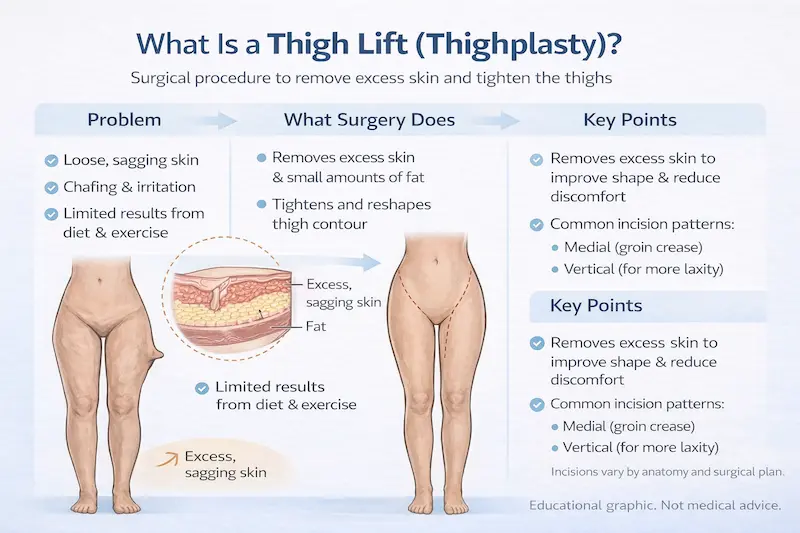
What Is a Thigh Lift (Thighplasty)?
A thigh lift is a surgical reshaping of the thigh area that removes excess skin (and, when appropriate, small amounts of underlying fat) to create a smoother, firmer contour. It’s not a weight-loss operation—and it’s not meant to replace liposuction. Think of it as a procedure that targets the “skin envelope” when the envelope has become too loose to match the frame beneath it.
Thigh Lift vs. Thighplasty: Two Terms, One Core Procedure
“Thigh lift” is the most common patient-facing term, while “thighplasty” is frequently used in clinical settings. In practice, they refer to the same operation: reshaping the thigh by removing redundant tissue and improving the contour. Where confusion can happen is when people use “thigh lift” to describe any tightening approach, including non-surgical treatments. In this guide, thigh lift and thighplasty mean surgical tightening with strategically placed incisions and a structured closure.
What a Thigh Lift Actually Changes (Skin, Fat, and Support Layers)
From an anatomical perspective, the thigh’s appearance is shaped by three main factors:
- Skin and dermis: elasticity determines how well skin “snaps back” after changes in weight or volume.
- Subcutaneous fat: contributes to fullness and contour; sometimes it is stable while the skin becomes lax, and sometimes both change together.
- Underlying support: the way tissues are repositioned and closed affects long-term smoothness and scar behavior.
A well-executed thigh lift is not simply “pulling skin tight.” It is planned tissue removal and reshaping with a closure strategy designed to reduce tension on the skin surface, because excessive tension is a common driver of wide or migrating scars and an “over-tightened” look. The goal is a thigh contour that looks like your anatomy—just more refined.
Why Thigh Skin Becomes Loose (And Why Exercise Can’t Fix It)
Skin laxity happens when collagen and elastin fibers have been stretched beyond their ability to recover. The most common reasons include:
- Significant weight loss: volume decreases, but the skin envelope remains oversized.
- Aging: gradual loss of collagen and elasticity makes laxity more noticeable over time.
- Genetics and skin quality: some people naturally have thinner or less elastic skin.
- Hormonal and life-stage changes: shifts in fat distribution and tissue tone can change thigh shape.
Strength training can improve the underlying muscle tone, but it does not remove excess skin. When the primary problem is skin redundancy—especially on the inner thigh—surgery is often the only option that can meaningfully tighten and reshape the area.
Concerns a Thigh Lift Commonly Addresses
People pursue a thigh lift for a range of reasons that are both aesthetic and functional. Common concerns include:
- Inner thigh sagging that creates a “hanging” or crepey appearance.
- Skin-on-skin rubbing (chafing) that can lead to irritation, rash, or discomfort with walking and exercise.
- Difficulty with clothing fit, especially with shorts, swimsuits, or fitted pants.
- Loss of definition in the thigh contour after weight loss or pregnancy.
Benefits of Thigh Lift (Aesthetic Goals and Functional Improvements)
A high-quality thigh lift should deliver an outcome that looks intentional but not obvious. The best results are typically described as “smooth,” “refreshed,” or “more athletic,” rather than “tight.” That distinction matters because the thigh area is highly visible in motion. A natural result depends on appropriate technique selection, incision planning, and realistic expectations about scars and recovery.
Aesthetic Improvements: Smoother Contour Without an “Over-Tightened” Look
A thigh lift can create a more tapered, harmonious silhouette by removing loose skin that blurs the natural line of the inner thigh or front thigh. Instead of chasing extreme tightness, the goal is usually a cleaner contour that matches your proportions. When performed with a “natural-first” mindset, the thigh should look like it belongs to you—just more refined and consistent with the rest of your body shape.
Functional Improvements: Less Chafing, More Comfort in Daily Movement
For many patients, the day-to-day benefit is just as important as the cosmetic one. Reducing excess inner thigh skin can decrease friction during walking, running, or long periods of standing—especially in warm climates or during workouts. Patients often report that activities feel more comfortable, and clothing choices become less limited by irritation or rubbing.
Confidence and Clothing Fit: What People Often Notice First
While long-term results evolve over months, early changes often show up in how clothing fits. Shorts and fitted pants may sit more smoothly, and the thigh area can feel less “heavy” or less prone to bunching. Many patients describe the benefit as getting their body to “match the work they’ve put in,” especially after major weight loss where the scale number improved but skin laxity remained.
Is a Thigh Lift “Worth It”? A Practical Way to Frame the Decision
The “worth it” question is valid—and the answer depends on your priorities. A useful way to think about it is a three-part trade-off:
- Outcome: meaningful tightening and reshaping that non-surgical options typically can’t match for true excess skin.
- Downtime: a real recovery period with swelling, activity limits, and gradual settling.
- Scars: permanent, but designed to be placed as discreetly as anatomy and technique allow, and expected to mature over time.
If the primary issue is loose skin (not just mild texture), and you’re comfortable accepting scars in exchange for contour improvement, a thigh lift can be a very high-impact procedure. If avoiding scars is the top priority, non-surgical tightening may be explored—but expectations must be conservative, especially for post–weight loss skin.
Related procedures to explore (depending on your goals): If thigh laxity is part of a broader transformation—such as post-pregnancy or post–weight loss contouring—patients often evaluate the thigh lift alongside procedures like a tummy tuck, arm lift, body lift, or liposuction-based contouring. The right plan depends on where the dominant laxity exists and how your skin behaves across multiple areas.
Ideal Candidates (Medical Criteria and Who Is NOT a Candidate)
A thigh lift is most effective when the core problem is excess skin—not just localized fat or mild texture changes. The “best” candidate isn’t defined by a specific clothing size; it’s defined by a predictable combination of skin laxity, stable weight, healthy healing capacity, and realistic expectations. Because thighplasty involves incisions and a real recovery timeline, candidacy is ultimately a safety decision as much as an aesthetic one.
Who Typically Benefits Most from a Thigh Lift
You may be a strong candidate for a thigh lift if you have noticeable looseness that does not improve with exercise, especially along the inner thigh. Common candidate profiles include:
- Post–weight loss patients with persistent sagging skin after reaching a stable goal weight.
- Patients with age-related laxity and thinning skin that has gradually lost elasticity.
- Individuals with functional discomfort such as inner thigh rubbing (chafing), irritation, or a “pulling” sensation during movement.
- Patients with realistic priorities who understand the trade-off: improved contour in exchange for scars that mature over time.
In consultation, your surgeon typically evaluates skin quality (elasticity and thickness), distribution of laxity (upper inner thigh vs. full-length), and how the thigh contour integrates with the hips, buttocks, and abdomen. This is especially important for patients planning a broader body contouring journey.
Why Stable Weight Matters (Especially After Major Weight Loss)
If your thigh lift is performed while your weight is still changing significantly, the result becomes harder to predict. Additional weight loss may create new laxity, while weight gain can stress the closure and affect long-term smoothness. For many patients considering a thigh lift after weight loss, the ideal window is when:
- Weight has stabilized for a sustained period.
- Nutrition is optimized (adequate protein and micronutrients support wound healing).
- Activity level is consistent so recovery can be planned around realistic downtime.
This isn’t about perfection—it’s about creating conditions where the surgeon can design an incision pattern that matches the true, “final” skin excess.
Medical Criteria That Help Predict a Safe Recovery
For the expert patient, the most important question is often: “How do I reduce risk?” The answer starts with candidacy. A thorough pre-operative review may include:
- General health optimization: stable chronic conditions (if present), well-managed blood pressure, and appropriate clearance when needed.
- Medication and supplement review: certain agents can increase bleeding risk and may need adjustment under medical guidance.
- Mobility and support at home: early walking is important, but you’ll need help with daily tasks during the first days.
- Skin integrity: chronic irritation from chafing, rashes, or prior scarring may influence incision planning and aftercare.
A high-quality plan also includes a frank conversation about your “scar tolerance”—because thigh lift scars are real, permanent, and must be accepted as part of the decision.
Who Is NOT a Candidate (Or Should Delay Surgery)
Not every patient is a good candidate right now—and that’s a good thing. The safest clinics are the ones that tell you when to wait. A thigh lift may be delayed or discouraged if:
- You smoke or use nicotine (including vaping or nicotine replacement), because it can significantly impair healing and increase complication risk.
- Your weight is fluctuating or you plan major weight changes soon.
- You have uncontrolled medical conditions that increase surgical risk or compromise wound healing.
- You are unable to follow recovery restrictions (time off work, limited activity, consistent garment use when indicated).
- Scars are unacceptable to you—because the best scar is still a scar, even when it fades and becomes less noticeable.
If you’re unsure, a responsible approach is a candid risk-benefit discussion: what you want to improve, what you’re willing to accept, and what can realistically be delivered.
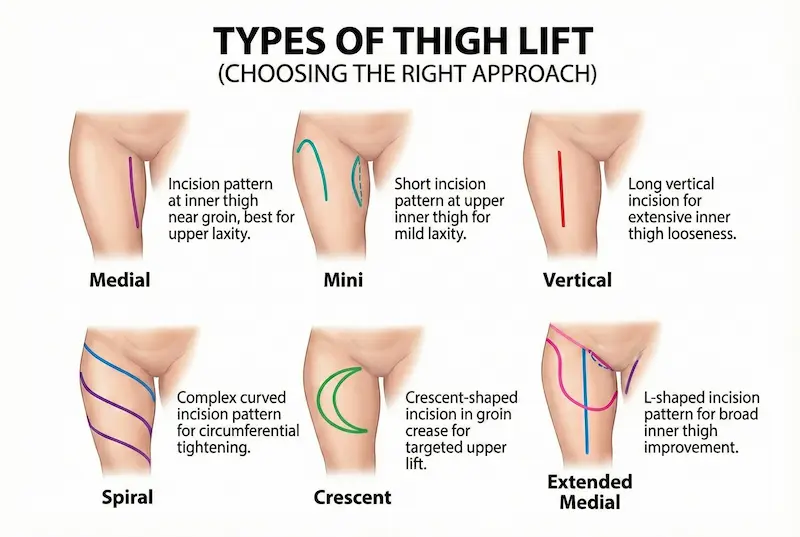
Types of Thigh Lift (Choosing the Right Approach for Your Anatomy)
There isn’t one universal “thigh lift.” Thighplasty is a family of techniques, and the right approach depends on where the excess skin is located and how much tightening is needed. The key concept is the trade-off between scar placement and degree of contour improvement. A conservative approach can keep scars shorter but may not address full-length laxity. A more comprehensive approach can reshape the entire inner thigh, but typically requires a longer incision.
Medial (Inner) Thigh Lift
A medial thigh lift primarily targets laxity in the upper inner thigh near the groin crease. It’s often chosen when the main concern is “upper inner thigh droop” rather than loose skin running down the full length of the leg.
- Best for: upper inner thigh laxity, mild-to-moderate redundancy.
- Common goal: a smoother inner thigh contour with a scar placed high in the groin crease.
- Key limitation: may not fully correct laxity closer to the knee if the skin excess extends downward.
Mini Thigh Lift
A mini thigh lift is a smaller-scope option for patients with limited skin excess, typically focused near the top of the inner thigh. It can be appealing to patients who want improvement but are not candidates for (or not ready for) a more extensive incision pattern.
- Best for: mild laxity and a relatively good baseline skin quality.
- Common goal: subtle tightening with a shorter scar.
- Key limitation: less dramatic reshaping—especially for post–weight loss skin that is truly redundant.
Vertical Thigh Lift
A vertical thigh lift is designed for patients whose excess skin extends along the length of the inner thigh. Because the laxity is distributed more broadly, a vertical component allows more comprehensive tightening.
- Best for: moderate-to-severe laxity that runs down the inner thigh.
- Common goal: meaningful contour refinement when a groin-only incision would be insufficient.
- Key consideration: scars are longer and require a more deliberate scar-management plan.
Spiral Thigh Lift
A spiral thigh lift is generally discussed in the context of more complex reshaping, sometimes involving multiple vectors of tightening. It may be considered when laxity is not limited to the inner thigh alone and the goal is a more circumferential improvement in the upper thigh region.
- Best for: patients with multi-directional laxity patterns, often after significant weight loss.
- Common goal: improved contour around the upper thigh rather than a single “pull” direction.
- Key consideration: technique selection is highly individualized, and scar placement must be planned precisely.
Crescent (Upper) Thigh Lift
A crescent thigh lift typically focuses on tightening near the upper thigh/groin area using a crescent-shaped excision pattern. It can be useful for select patients with upper laxity who benefit from a targeted, upper-thigh correction.
- Best for: localized upper thigh looseness.
- Common goal: modest lift and smoothing with strategically placed upper scars.
- Key limitation: not designed for full-length inner thigh sagging.
Extended Medial Thigh Lift
An extended medial thigh lift expands on the traditional medial approach to address broader laxity—often extending beyond the most limited upper-thigh zone. It can be an excellent “middle ground” for some patients: more correction than a mini approach, but not always as extensive as a full vertical lift.
- Best for: patients with laxity that extends beyond the upper inner thigh, but may not require full-length vertical correction.
- Common goal: balanced improvement with a scar strategy that aligns with the distribution of excess skin.
- Key consideration: the surgeon’s incision design and closure strategy strongly influence long-term scar quality.
Practical takeaway: If your main issue is upper inner thigh looseness, a medial or mini thigh lift may be sufficient. If the laxity extends downward, a vertical component often becomes necessary to achieve a result that looks “complete,” rather than tightened only at the top.
Procedures to Combine With Thigh Lift
A thigh lift is often the “finishing step” for patients whose main concern is loose skin that doesn’t improve with exercise—especially after weight loss or aging. But thigh laxity is rarely isolated. Many patients notice that when the thighs are addressed, nearby regions (abdomen, arms, upper back) may still feel out of balance. That’s why surgeons sometimes recommend combining procedures to create a more proportional, natural-looking result—while keeping safety, operative time, and recovery planning front and center.
Thigh Lift + Liposuction (Refine the Contour, Not Replace Skin Removal)
Liposuction 360 can be a smart add-on when there is persistent fullness that blurs the thigh’s shape, or when contour transitions need refinement (for example, along the inner thigh or upper thigh). It’s important to understand the roles: liposuction improves volume, while a thigh lift improves skin laxity. In the right candidate, combining them can create smoother lines and better definition than either procedure alone. However, overly aggressive liposuction in the same area being lifted can increase swelling and may affect tissue quality—so most surgeons approach it conservatively and selectively.
Thigh Lift + Tummy Tuck (Lower-Body Harmony)
A tummy tuck is one of the most common pairings for patients who have lower abdominal skin laxity and want a unified contour across the abdomen, hips, and thighs. This combination can be especially relevant after pregnancy or significant weight loss, where the body changes are not limited to one zone. The advantage is a more balanced silhouette with one coordinated plan. The trade-off is a greater “recovery load”—more swelling, more mobility limitations early on, and a longer overall healing job for your body.
Thigh Lift as Part of a Mommy Makeover
For post-pregnancy patients, a mommy makeover approach may include abdominal contouring (often a tummy tuck), breast procedures, and—when thigh laxity is a major concern—a thigh lift. The benefit is efficiency: one comprehensive plan and a single downtime window. The key is proper candidacy and realistic scheduling. Your surgeon should clearly explain what can be safely combined, what should be staged, and how recovery will be supported so you’re not overwhelmed.
Arm Lift and Upper Back Lift (Post–Weight Loss “Skin Envelope” Strategy)
Patients after major weight loss frequently experience loose skin in multiple regions. An arm lift can address hanging upper-arm skin that affects clothing fit, while an upper back lift targets laxity across the bra line and upper back that can persist even at a stable weight. When these concerns coexist with thigh laxity, combining procedures may improve overall proportionality. Because multi-area skin-tightening increases operative time, surgeon teams often tailor the plan carefully—sometimes combining two areas, and staging others for maximum safety and predictability.
Combine vs. Stage: How to Decide
A practical rule: combine procedures when you’re a strong candidate, the total scope remains reasonable, and you have the support and time needed for recovery. Stage procedures when risk factors exist, operative time becomes extensive, or you prefer a simpler healing pathway per procedure. The best plan is always individualized—based on anatomy, goals, and a safety-first strategy designed for predictable healing and scar quality.
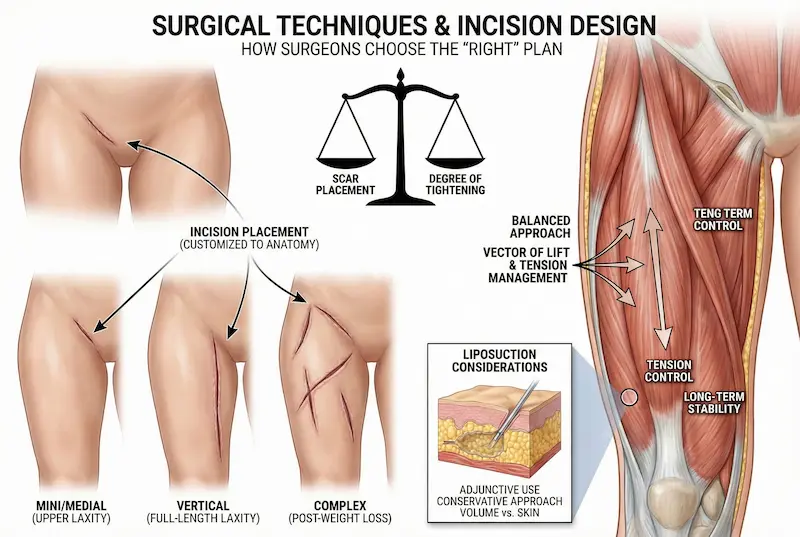
Surgical Techniques & Incision Design (How Surgeons Choose the “Right” Plan)
The defining decision in thighplasty is not “how tight can we make it,” but where the looseness lives and what incision pattern can correct it with the most predictable scar placement. In other words, a thigh lift is a scar–contour trade-off that must be customized to your anatomy, skin quality, and priorities. A good plan aims to deliver meaningful improvement without creating avoidable problems like scar migration, irregular contour, or an “over-pulled” look.
Incision Design: The Core Trade-Off (Scar Placement vs. Degree of Tightening)
Incision placement is dictated by the distribution of excess skin:
- Upper inner thigh laxity (near the groin): can often be addressed with higher, groin-crease incisions (mini/medial patterns).
- Full-length inner thigh laxity: frequently requires a vertical component to remove redundant skin down the leg.
- Multi-directional laxity (often post–weight loss): may require more complex vectors of tightening and a broader scar strategy.
A common misunderstanding is believing that a shorter scar always equals a “better” procedure. In reality, when laxity extends beyond the reach of a short incision, under-treating the problem can lead to a result that looks incomplete—tight at the top and loose below. For many expert patients, the best approach is the one that matches the true pattern of skin redundancy.
Vector of Lift: Why “Pulling Up” Isn’t the Whole Story
Thigh tissue doesn’t behave like a simple curtain that can be pulled upward. The thigh has unique movement dynamics: walking, sitting, and hip flexion create forces that can influence how scars heal and where tension concentrates. A thoughtful thigh lift plan considers:
- Direction of tightening: lifting solely upward can increase groin tension; sometimes a balanced approach creates a more stable result.
- Tension management: excessive surface tension can contribute to widened scars or scar migration.
- Long-term stability: the closure strategy matters as much as the skin removal.
Liposuction With a Thigh Lift: When It Helps—and When It Can Hurt
Liposuction and thigh lift can be complementary, but they are not interchangeable. Liposuction addresses volume; thighplasty addresses skin redundancy. In some patients, conservative liposuction can improve contour transitions and reduce bulky areas that would otherwise distort the final result.
However, aggressive liposuction in the same zone as a lift can increase swelling and may affect the quality of the soft tissue envelope. That’s why skilled surgeons often approach combined liposuction thoughtfully—sometimes conservatively in one stage, or selectively in areas that will not compromise the planned closure. The “right” decision is highly individualized.
Technique Comparison Table (A Practical Guide)
The table below summarizes the most commonly discussed thigh lift types. Keep in mind: real surgical planning is more nuanced than a label, and scar placement can vary based on your anatomy, existing scars, and distribution of laxity.
| Technique | Typical Incision Pattern | Best For | Key Benefits | Trade-Offs | Scar Expectation | Recovery Notes |
|---|---|---|---|---|---|---|
| Mini Thigh Lift | Short, high incision near the groin crease | Mild upper inner thigh laxity | Subtle tightening with shorter scar | Limited correction for lower-thigh looseness | Shorter scar; still permanent | Often faster early mobility; swelling still expected |
| Medial (Inner) Thigh Lift | Groin-crease incision, sometimes extended slightly | Mild-to-moderate upper inner thigh laxity | Targets the classic “upper inner droop” area | May not fully address laxity toward the knee | High placement can be discreet; risk of migration if over-tensioned | Careful movement guidance helps protect the groin area |
| Extended Medial Thigh Lift | Groin-crease incision extended to address broader laxity | Moderate laxity beyond the upper inner thigh | More correction than medial alone | Longer scar than medial/mini | Moderate-length scar; maturation takes months | Compression strategy and scar care become more important |
| Vertical Thigh Lift | Vertical inner-thigh incision (often combined with a groin component) | Moderate-to-severe laxity down the inner thigh | Comprehensive tightening along the thigh length | Longest scars; requires strong scar-management plan | Long scar on inner thigh; typically fades over time but remains | Swelling may persist longer; return to intense exercise is delayed |
| Spiral Thigh Lift | Multi-vector scar strategy (pattern varies) | Complex laxity patterns (often post–weight loss) | Addresses multi-directional looseness | More complex planning; scar placement must be precise | Varies; depends on the correction needed | Recovery is individualized to the extent of correction |
| Crescent (Upper) Thigh Lift | Crescent-shaped excision high in the groin region | Localized upper-thigh laxity | Targeted improvement near the top of the thigh | Not designed for full-length sagging | Upper scar; generally shorter than vertical patterns | Often suitable for select patients seeking modest change |
Surgeon’s Insight: The most natural-looking thigh lift is rarely the most aggressive one. The best plans prioritize stable closure and tension control, because long-term aesthetics depend on how tissues heal—not how tight they look on day one.
Non-Surgical and “Scarless Thigh Lift” Claims: What’s Realistic?
Search results are full of terms like non surgical thigh lift, scarless thigh lift, J-Plasma thigh lift / Renuvion thigh lift, PDO thread thigh lift, and even quick fixes like thigh lift tape. These options can play a role for select patients, but they must be understood honestly:
- Energy-based tightening (e.g., Renuvion/J-Plasma): may improve mild laxity and texture by stimulating tissue contraction, but it cannot remove true excess skin.
- Threads (PDO thread “lift”): can create temporary tightening in some areas, but results are typically modest and not comparable to surgical excision.
- “Scarless” claims: if there is significant redundant skin, meaningful correction without a scar is unlikely—because removing skin requires an incision.
- Tape solutions: may provide a temporary cosmetic effect for photos or clothing, but they do not change anatomy.
A practical way to decide is to look at the problem in the mirror: if you can pinch and lift a true “sheet” of redundant skin that hangs or folds, surgery is usually the only option that can reliably remove it. If your concern is mild looseness or texture, non-surgical modalities may be considered—with conservative expectations.
Anesthesia Options (General vs. Sedation) and What Influences the Choice
Anesthesia planning is a safety decision tailored to the extent of your thigh lift, your medical profile, and your comfort needs. While many thigh lifts are performed under general anesthesia, some limited-scope cases may be candidates for deep sedation with local anesthesia—depending on surgeon preference and facility protocols. The goal is a controlled, safe experience with stable vital signs and appropriate pain management.
General Anesthesia: Why It’s Common in Thighplasty
General anesthesia is often selected because thigh lifts can involve longer operative time, multiple incision areas, and careful reshaping that benefits from a completely still and comfortable patient. It can be especially appropriate for:
- More extensive patterns (extended medial, vertical, spiral techniques)
- Combination procedures (e.g., thigh lift plus additional contouring)
- Patients who prefer to be fully asleep during surgery
Deep Sedation (Twilight) With Local Anesthesia: When It May Be Considered
In a subset of cases—typically smaller-scope tightening—some teams may consider deep sedation with local anesthetic. The decision depends on the procedure’s complexity, anticipated discomfort, and patient factors. For the expert patient, the most important point is that anesthesia selection should be based on:
- Safety profile (medical history, airway considerations, risk stratification)
- Procedure scope (incision length, expected operative time)
- Patient comfort and the ability to maintain a controlled surgical field
What to Ask About Anesthesia (Expert-Patient Checklist)
- Who will administer anesthesia (anesthesiologist vs. nurse anesthetist) and what monitoring is standard?
- How is nausea prevented and managed, especially if you are prone to it?
- What is the pain-control plan for the first 24–72 hours?
- How is DVT (blood clot) risk assessed and minimized?
Surgeon’s Insight: The “best” anesthesia is the one that matches the procedure and your risk profile. Comfort matters, but predictability and safety matter more—especially for longer or more comprehensive thighplasty plans.
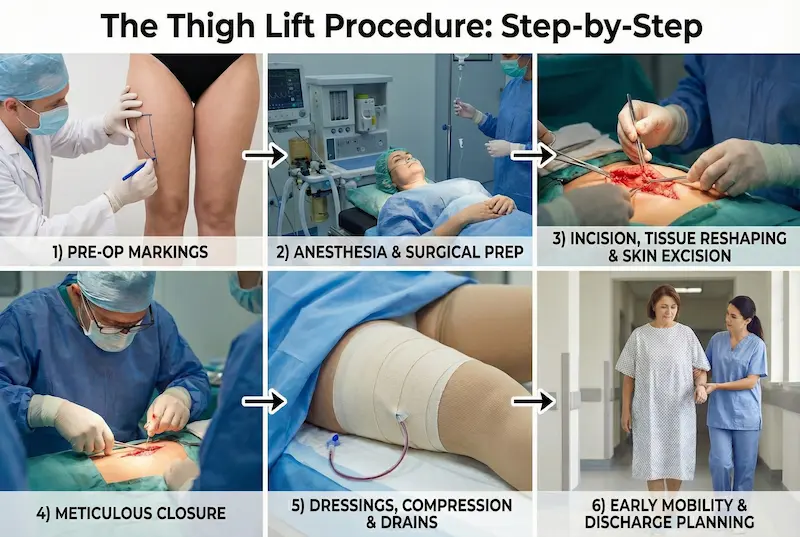
The Thigh Lift Procedure: Step-by-Step (What Happens on Surgery Day)
Understanding the sequence of a thigh lift helps reduce anxiety and improves decision-making. While details vary by technique, most thighplasty procedures follow a structured workflow designed to improve contour while protecting tissue health.
1) Pre-Op Markings: Planning the Exact Skin Removal
Thigh lift planning typically begins with surgical markings while you are standing, because gravity reveals the true pattern of skin descent. These markings guide where skin will be removed, how symmetry will be refined, and where scars are most logically concealed along natural creases or inner-thigh lines.
2) Anesthesia and Surgical Prep
After anesthesia is initiated, the surgical area is prepped and draped in a sterile fashion. If compression devices are used to reduce clot risk, they are applied early. Your team will confirm the operative plan and ensure all safety checkpoints are complete.
3) Incision, Tissue Reshaping, and Skin Excision
The surgeon performs the incision pattern selected for your anatomy (mini, medial, extended medial, vertical, spiral, or crescent). Excess skin is removed in a controlled way. If liposuction is used, it is typically performed thoughtfully to avoid compromising the planned closure. The key is shaping: the objective is not only “less skin,” but a smoother, more natural contour that moves well.
4) Meticulous Closure: Layered Support and Tension Control
Closure is not just cosmetic—it influences scar quality and long-term stability. Many surgeons use layered closure strategies to distribute tension away from the skin surface. This helps minimize widening scars and reduces the risk of tension-related issues in high-movement areas like the groin and inner thigh.
5) Dressings, Compression Garments, and (When Needed) Drains
At the end of the procedure, dressings are placed and a compression garment may be used to help manage swelling. In some cases, drains may be utilized temporarily to reduce fluid accumulation (seroma risk). Your surgeon will explain the rationale and timeline if drains are part of your plan.
6) Early Mobility and Discharge Planning
Most patients are encouraged to walk gently as soon as it is safe to do so. Early, light movement supports circulation and can reduce certain risks, while still respecting the fact that swelling and tightness are normal early on. Discharge timing depends on the extent of surgery, anesthesia choice, and your individual recovery needs.
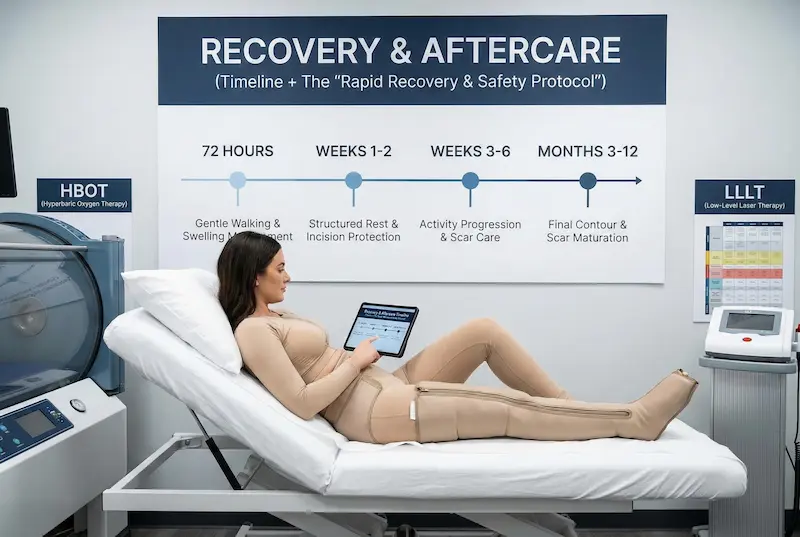
Recovery & Aftercare (Timeline + the “Rapid Recovery & Safety Protocol”)
Thigh lift recovery is a process—not a single milestone. The first few weeks are primarily about swelling control, incision protection, and safe mobility, while the final contour and scar maturation unfold over months. A predictable recovery depends on a clear timeline, disciplined aftercare, and realistic expectations: you’ll feel “more normal” long before you look fully settled.
Thigh Lift Recovery Timeline: What to Expect (First 72 Hours)
The first 2–3 days are typically the most intense in terms of tightness, swelling, and limited mobility. Most patients describe the feeling as “firm” or “restricted” rather than sharp pain. Key priorities during this window include:
- Gentle walking: short, frequent walks (as advised) to support circulation and reduce clot risk.
- Swelling management: compression when recommended, hydration, and elevation strategies as instructed.
- Incision protection: keeping dressings clean/dry and avoiding friction across the inner thigh.
- Comfort positioning: minimizing strain on the groin crease and inner-thigh closure.
Week 1–2: Returning to Daily Basics (Without Overdoing It)
During the first two weeks, swelling and bruising are still prominent, and your thighs may feel “different” in sensation (temporary numbness or hypersensitivity can occur). This is also the period where patients can accidentally sabotage healing by feeling better and doing too much. Common guidance often includes:
- Structured rest + short walks: consistent, controlled mobility beats sporadic activity.
- Compression garments: if prescribed, they help manage swelling and support the healing tissues.
- Hygiene and friction control: inner thigh skin is sensitive—rubbing is a common irritation trigger.
- Follow-ups: incision checks are essential to catch early issues (like fluid buildup) before they escalate.
If drains are used, they’re typically short-term and removed based on output and surgeon preference. The goal is to reduce seroma risk and support cleaner healing.
Weeks 3–6: Swelling Improves, Strength Returns (But Healing Is Still Active)
By weeks 3–6, most patients feel significantly more functional. Swelling often becomes more “selective,” meaning it may pool in certain areas or fluctuate with activity. This is also when many patients want to restart exercise—yet the internal healing process is still ongoing.
- Activity progression: walking usually increases first; higher-impact training is typically delayed until your surgeon clears you.
- Skin quality changes: the thighs can feel firm or lumpy before becoming smoother as swelling resolves.
- Scar care starts to matter: consistent scar management helps guide maturation and appearance.
Months 3–12: Final Contour + “Scars After 1 Year” Reality
The thighs continue to refine over many months. The contour becomes more natural as swelling subsides and tissues soften. Scars also evolve: they typically look most noticeable early on, then gradually fade and flatten as they mature. By around the one-year mark, most patients see a more stable “final” scar appearance, though some individuals continue improving beyond that point.
The “Rapid Recovery & Safety Protocol”: HBOT + LLLT (How It’s Framed at AKM Clinic)
At AKM Clinic, advanced recovery support is positioned as a structured, two-part protocol: Hyperbaric Oxygen Therapy (HBOT) followed by Low-Level Laser Therapy (LLLT). The logic is “macro-to-micro” recovery support—HBOT addresses systemic tissue oxygenation first, then LLLT targets cellular metabolism and collagen activity within that oxygen-rich environment.
- HBOT (systemic support): described as exposure to 100% oxygen in a pressurized environment to super-saturate plasma with oxygen, supporting tissue survival, reducing inflammation, and promoting stronger healing—including scar quality support via fibroblast activation.
- LLLT (cellular acceleration): framed as a non-thermal “soft laser” approach that supports ATP production (cellular energy), collagen synthesis via fibroblast stimulation, and can further reduce swelling/redness as an adjunct to HBOT.
Surgeon’s Insight: A smooth recovery isn’t about “rushing” the process—it’s about guiding it. The goal is predictable healing with disciplined aftercare, controlled swelling, and a closure strategy that protects your scar quality over time.
Scars & Scar Management (Placement, Maturation, and Concealment Options)
Scar anxiety is one of the most common reasons patients hesitate about a thigh lift—and it’s a valid concern. The correct way to approach it is not by promising “invisible scars,” but by planning scars strategically, setting accurate expectations about how scars mature, and following a disciplined scar-management protocol. The expert-patient mindset here is simple: better contour requires incisions, and the real question becomes how those incisions are designed and how well they heal.
Where Thigh Lift Scars Are Typically Placed (By Technique)
Scar placement depends on the thigh lift type and where the excess skin is located:
- Mini / medial thigh lift: scars are typically placed high near the groin crease to hide within natural folds and underwear lines.
- Extended medial thigh lift: scars may extend beyond the shortest pattern to address more widespread laxity while still prioritizing concealment.
- Vertical thigh lift: a longer scar runs along the inner thigh to address full-length redundancy. This is often the most effective option for significant post–weight loss skin excess, but the trade-off is a more visible scar.
A key concept: the most discreet scar is the one placed where friction is minimized and tension is controlled. This is why incision design and closure strategy matter as much as the “type” of lift you choose.
What Thigh Lift Scars Look Like Over Time (Including “After 1 Year”)
Most surgical scars follow a predictable maturation pattern:
- Early phase (weeks): scars can look red, raised, or firm while swelling is still present.
- Intermediate phase (months): color begins to soften; texture can fluctuate with activity and swelling.
- Later phase (~1 year): scars are often flatter and lighter than the early months, though final appearance varies with genetics, skin type, and aftercare.
This is why “thigh lift scars after 1 year” is such a common search: patients want to know what is temporary and what is permanent. The honest answer is that scars are permanent, but they are also dynamic—most look noticeably better with time when managed correctly.
Scar-Care Protocol: Practical Habits That Influence Scar Quality
A thoughtful scar-management plan typically focuses on consistency rather than “miracle” treatments. Your surgeon may advise a combination of:
- Silicone-based therapy: commonly used to support a flatter, calmer scar environment.
- Scar massage (when cleared): helps soften firmness and improve mobility of the tissue.
- Friction control: inner thigh rubbing can irritate healing scars, especially early on.
- Sun protection: UV exposure can worsen pigmentation in scars, making them more noticeable.
- Patience with swelling: scars can look “worse” before they look better—especially when swelling is still evolving.
Camouflage and Concealment: When Tattooing May Be Considered
For select patients, scar camouflage tattooing is an option after the scar has matured and stabilized. The timing matters: attempting camouflage too early can be counterproductive because scars continue changing in color and texture for many months. If a patient is considering this path, the decision should be based on scar maturity, skin tone stability, and a realistic understanding of what camouflage can—and cannot—accomplish.

Risks, Complications & Safety (Including: “Is a Thigh Lift Safe in Turkey?”)
A thigh lift can be transformative, but it is still surgery—and the “expert patient” approach is to evaluate it through two lenses at the same time: (1) what can go wrong, and (2) what a high-standard team does to reduce those risks. This section is intentionally direct. The goal is not to scare you away, but to replace uncertainty with clarity—because informed patients make better decisions and recover more predictably.
Common Thigh Lift Complications (What Patients Should Actually Know)
Complications can range from minor, temporary issues to more serious problems that require medical attention. The most commonly discussed thigh lift complications include:
- Seroma (fluid collection): a pocket of fluid that may require drainage or additional monitoring.
- Infection: typically managed with early detection and appropriate treatment; prevention starts with sterile technique and aftercare discipline.
- Bleeding or hematoma: uncommon but important; surgeons plan meticulously to reduce risk.
- Delayed wound healing: risk rises with nicotine use, poor nutrition, uncontrolled medical conditions, or excessive tension on the closure.
- Scar concerns: widening, thickening (hypertrophic scarring), pigment changes, or scar migration—especially in high-movement areas.
- Contour irregularity or asymmetry: swelling can mimic asymmetry early; true asymmetry may require time or, rarely, revision planning.
- Sensation changes: temporary numbness or hypersensitivity can occur and often improves over time.
It’s also important to understand that “regrets” are not always about the result—many regrets come from underestimating recovery: discomfort from swelling, frustration with slow scar maturation, or expecting an instant “final” look in the first few weeks.
Blood Clot (DVT) Awareness: The Risk People Under-Discuss
Any surgery that reduces mobility temporarily can increase the risk of blood clots. This is why reputable practices treat DVT prevention as a core safety priority. Risk reduction strategies typically include:
- Pre-operative screening: identifying risk factors like clotting history, certain medications, or medical conditions.
- Early mobilization: safe walking as soon as appropriate (and continuing regularly), rather than prolonged bed rest.
- Compression strategies: as directed by your surgeon and care team.
- Clear instructions: what symptoms to watch for and when to seek urgent care.
Your personal DVT risk is not a guess—it should be discussed in consultation, based on your profile, surgical scope, and expected downtime.
How High-Standard Teams Reduce Risk (Candidacy + Systems, Not “Promises”)
The most reliable way to lower risk is a high-quality system that begins before surgery. In practice, risk mitigation is built on:
- Strict candidacy standards: especially around nicotine use, weight stability, and medical optimization.
- Structured pre-op screening: to confirm you’re a safe candidate and to catch red flags early.
- Modern monitoring: continuous vitals monitoring throughout the procedure and in immediate recovery.
- Aftercare discipline: predictable instructions, close follow-up, and early intervention if something looks “off.”
This is also where recovery technologies can be positioned as part of a broader safety system. At AKM Clinic, the post-operative approach is framed as a mandatory Rapid Recovery & Safety Protocol—a macro-to-micro sequence using HBOT (systemic oxygenation support) followed by LLLT (targeted cellular acceleration) to support healing quality and reduce common post-surgical recovery burdens.
Is a Thigh Lift Safe in Turkey? A Practical, Evidence-Based Way to Evaluate It
“Safe” is not a country label—it’s a standards label. The safety question becomes: what standards, what facility, what credentials, and what systems? A credible way to evaluate safety in Turkey (or anywhere) is to look for:
- Accredited surgical environments: procedures performed in facilities aligned with internationally recognized standards (e.g., JCI-accredited hospital settings).
- Board-level surgeon credibility: surgeons described with verifiable markers like European Board Certified Surgeons and US-trained specialists.
- Non-negotiable sterilization and monitoring protocols: rigorous sterilization standards and modern patient vitals monitoring.
- Transparent, structured pre-operative screening: a system that prioritizes candidacy and risk reduction over “yes to everyone.”
If a clinic cannot explain these points clearly—or avoids discussing risks—you should treat that as a red flag. Safety is demonstrated by process, not marketing language.
Surgeon’s Insight: The safest surgery is the one you’re genuinely a candidate for. Great outcomes come from a disciplined system—honest screening, the right technique, tension-controlled closure, and recovery protocols that treat risk reduction as a priority, not an afterthought.
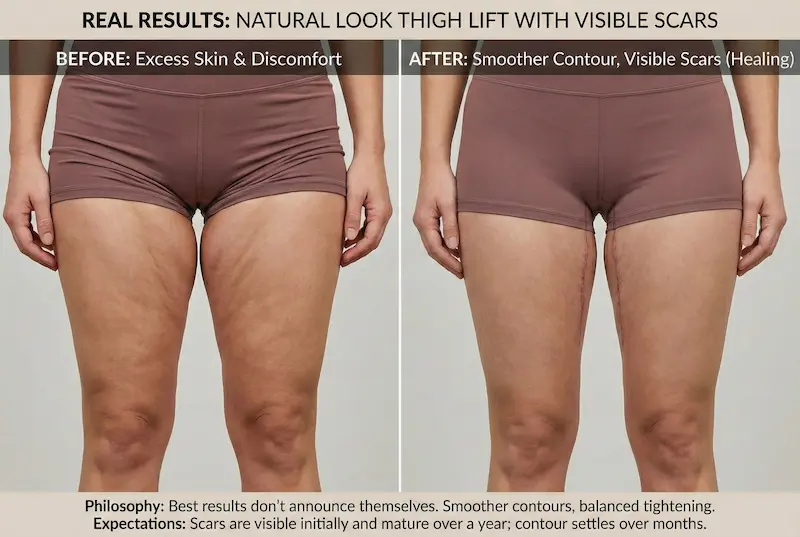
Real Results (Natural Look Philosophy + What “Success” Actually Means)
The best thigh lift results don’t announce themselves. They look like you—just smoother, more proportional, and more comfortable in your body. That philosophy aligns with a “natural-first” approach: the goal is not to create an unnatural tightness, but to restore harmony between the skin envelope and the underlying contour. To evaluate results realistically, you need to understand what changes quickly, what changes slowly, and what remains a permanent trade-off (scars).
What a “Natural” Thigh Lift Result Looks Like (And What It Doesn’t)
A natural result typically has these characteristics:
- Smoother inner-thigh contour: less creasing, less hanging skin, and a cleaner line in motion.
- Balanced tightening: the thigh doesn’t look “strangled” at the top or artificially pulled; it blends with your hips and lower body.
- Improved comfort: less rubbing and irritation, especially for patients who had functional symptoms before surgery.
What it should not look like is just as important: excessive tension can create an unnatural shape, contribute to scar migration, and make the result look surgical. A high-quality thighplasty plan protects natural movement and long-term stability.
Setting Realistic Expectations: The “Two Timelines” Rule (Contour vs. Scar)
Most patients benefit from thinking in two timelines:
- Contour timeline: you’ll see visible change early, but swelling can mask details for weeks. The thigh continues to soften and settle over months.
- Scar timeline: scars typically look most noticeable early on and improve gradually as they mature. This is why “scars after 1 year” is a meaningful benchmark.
If you judge a thigh lift too early, you may misread normal swelling and scar immaturity as a “bad outcome.” A more accurate evaluation happens later, when swelling has stabilized and scar care has had time to work.
Why Some Patients Experience “Thigh Lift Regrets” (And How to Prevent Them)
When patients report thigh lift regrets, the causes are often predictable—and preventable with honest education:
- Underestimating recovery: expecting to move normally within days, or assuming swelling will resolve immediately.
- Scar surprise: choosing a technique for a shorter scar that cannot fully treat the laxity—then feeling disappointed by residual looseness.
- Over-focusing on “perfect symmetry”: bodies are naturally asymmetric, and swelling can exaggerate small differences early.
- Choosing price over systems: selecting a provider without clear safety protocols, structured follow-up, and credible surgeon-level planning.
The most powerful “regret prevention” tool is a consultation that treats you like an expert patient: clear technique rationale, scar placement honesty, a written recovery plan, and a realistic discussion of trade-offs.
Patient Mindsets We See Often: The Expert Patient and the “I Want My Body to Match My Effort” Motivation
Many patients who pursue a thigh lift—especially after weight loss—describe a similar frustration: “I did the hard part, but my skin didn’t catch up.” This is where the procedure can feel emotionally validating, because it aligns the outer shape with the work already done. In the broader AKM patient community, a recurring theme across international patients is a preference for results that feel authentic—subtle, natural, and not “obvious” to others. That “rejuvenation, not alteration” mindset is often what experienced, research-driven patients are ultimately searching for.
Thigh Lift Cost Analysis (USA vs. Turkey) 2026: “Price” vs. “Value”
“How much does a thigh lift cost?” is one of the most searched questions in body contouring—and for good reason. Thighplasty is a surgeon-skill–dependent procedure performed in a high-movement area where incision planning, tension control, and aftercare systems make a measurable difference in outcomes. That’s why the most useful cost conversation isn’t “What’s the cheapest option?” but: What am I paying for—and what lowers my risk while improving my result?
What Determines Thigh Lift Cost in the U.S. (Why NYC/Miami/LA Tend to Be Higher)
In the U.S., thigh lift pricing varies widely because it is influenced by both clinical variables and local economics. High-demand markets (like NYC, Miami, and Los Angeles) often carry higher costs due to overhead and competitive demand for operating room time. Common cost drivers include:
- Surgeon expertise and case complexity: vertical/extended/spiral thighplasty patterns typically require more surgical planning and operative time.
- Operating facility and anesthesia fees: accredited facilities and comprehensive monitoring increase safety but also increase cost.
- Geographic overhead: major U.S. cities can be significantly higher than smaller markets.
- Post-op support: follow-up structure, wound care access, and complication management protocols may or may not be built into the fee.
- Combination procedures: adding liposuction or additional body contouring changes operative time, recovery logistics, and pricing.
A practical takeaway: if you compare “thigh lift cost NYC” to “thigh lift cost in smaller U.S. cities,” the difference is often driven as much by local economics as by the procedure itself. That’s why expert patients evaluate cost in context—what’s included, what’s excluded, and how the clinic supports recovery.
Why Thigh Lift Cost in Turkey Can Be Lower (Without Reducing the Question to “Cheap”)
International searches like “thigh lift cost Turkey” and “thigh lift in Istanbul” are often motivated by value. In many cases, Turkey is less expensive due to:
- Currency and operating costs: staffing and facility overhead can be lower compared to major U.S. markets.
- All-inclusive models: international clinics may package accommodations, transfers, and coordinated logistics into a single plan.
- High patient volume: specialized centers may operate with optimized workflows for international patients.
However, “lower price” should never be the end of the analysis. The expert-patient question is: Are safety standards, surgeon credibility, facility quality, and follow-up systems clear and verifiable? If the answer is yes, the value equation becomes compelling—especially for patients comparing high-cost U.S. hubs to an internationally organized medical journey.
All-Inclusive Pricing: What It Usually Includes (And What You Should Verify)
All-inclusive offerings can reduce friction for travel patients by simplifying the journey. In many models, a package may include:
- Pre-op planning and tests (as required by facility protocols)
- Hospital/surgical facility fees and anesthesia services
- Medications and compression garments (when prescribed)
- VIP transfers (airport–hotel–hospital coordination)
- Hotel accommodation as part of the organized recovery plan
- Structured follow-up during the local stay and continued remote check-ins
When comparing packages, the most important detail is clarity: a reputable provider should specify exactly what’s included, what isn’t, and how unexpected needs are handled. That transparency is a value signal.
Cost Comparison Table (U.S. Cities vs. Istanbul): A Value-First Lens
Instead of listing volatile price numbers (which can change quickly), the table below compares the cost structure and what typically drives the total investment in each market. Use it as a framework for evaluating “average cost of a thigh lift” discussions in a way that supports safer decision-making.
| Cost Component | U.S. (NYC / Miami / LA) | Turkey (Istanbul) | Value Notes (What to Verify) |
|---|---|---|---|
| Surgeon Fee | Often higher in major metro markets | Often lower due to market economics | Verify surgeon credentials, case variety, and revision strategy |
| Facility / OR Fees | High; varies by accreditation and city overhead | Often included in all-inclusive models | Confirm accredited environment, monitoring standards, emergency readiness |
| Anesthesia | Separate line item in many quotes | Often bundled in package models | Ask who administers anesthesia and what monitoring is standard |
| Aftercare & Follow-Up | May be itemized; varies by practice | Often integrated into structured medical travel plans | Confirm follow-up schedule, wound care access, and remote support post-return |
| Compression Garments / Meds | Sometimes extra | Often included in all-inclusive models | Ask what brands/types are used and how replacements are handled |
| Travel & Accommodation | Typically your responsibility | Often included (hotel + VIP transfers) | Verify hotel standard, distance to hospital, and transport coordination |
| Total “True Cost” | Can rise as items are added | Often more predictable if packaged | Compare apples-to-apples by listing everything included/excluded |
Does Insurance Cover Thighplasty?
In the U.S., thigh lift surgery is typically categorized as cosmetic and therefore is not routinely covered by insurance. In some situations, insurance may consider coverage if there is documented medical necessity (for example, chronic skin irritation or recurrent infections that have not improved with conservative treatment). Coverage decisions vary by insurer and policy, so the safest approach is to:
- Ask your provider what documentation would be required if you want to explore coverage.
- Confirm criteria directly with your insurer—before making assumptions based on online anecdotes.
Choosing the Right Surgeon (What “Best Thigh Lift Surgeon” Really Means)
Search terms like “best thigh lift surgeon in USA” or “best thighplasty surgeons” reflect a truth: thigh lifts are not commodity procedures. The thigh is a high-movement area with unique scar and tension dynamics, and outcomes are strongly influenced by incision design, closure strategy, and aftercare systems. A smart selection process focuses on proof of expertise, not just marketing.
Credentials and Credibility Signals That Matter
- Board-level training and specialization: look for verifiable credentials, not vague claims.
- Case diversity: the surgeon should be experienced with post–weight loss laxity, different skin types, and various technique patterns.
- Before-and-after consistency: stable results across multiple patient anatomies, not just “best-case” photos.
- Complication literacy: a surgeon who can explain risks clearly usually has systems to manage them.
Consultation Questions That Reveal Expertise (Expert-Patient Checklist)
- Which thigh lift type do you recommend for my laxity pattern—and why?
- Where will my scars sit, and what is your plan to control tension and reduce scar migration?
- What is your DVT prevention strategy and recovery timeline for my procedure scope?
- If I dislike the scar or have residual looseness, what is your revision philosophy?
How to Read Reviews Without Getting Misled
“Thigh lift reviews” can be helpful, but they’re best used to evaluate patterns rather than one-off stories. Look for consistency in: communication quality, follow-up support, realistic education about swelling/scars, and patient feelings about being guided through recovery (not just surgery day).

The Medical Journey (Logistics for International Patients)
For many “expert patients,” choosing a surgeon is only part of the decision—logistics matter too. When you’re traveling for surgery, the safest and least stressful experience is usually the one that is structured end-to-end: clear pre-op screening, coordinated transportation, predictable follow-ups, and a defined plan for what happens after you return home.
1) Virtual Consultation (Clarity Before You Travel)
The process typically begins with a video consultation so you can share your goals, ask direct questions, and provide photos for review. The objective is to confirm candidacy, discuss the likely technique pattern (and scar strategy), and map out your expected recovery timeline in a way that’s realistic—not optimistic.
2) Secure Your Date & VIP Planning (Hotel + Transfers Coordinated)
Once you decide to proceed, planning becomes about reducing friction: coordinating procedure timing, recovery-friendly accommodations, and seamless transfers so you can focus on preparation and healing rather than logistics. For many international patients, this “handled-for-you” planning is what reduces travel anxiety the most.
3) Airport Welcome & Private Transfer (Arrival Without Stress)
A structured arrival plan typically includes being met at the airport and transferred by private vehicle directly to the hotel. This matters more than it sounds: the first day is often when patients feel most vulnerable in a new country, and a predictable welcome process removes uncertainty.
4) In-Person Consultation & Pre-Op Tests (Final Safety Check)
Before surgery, you should have an in-person assessment to confirm the plan and complete pre-operative testing. This is the “final safety gate”: it ensures the surgical strategy matches your anatomy in real time and that you’re medically cleared to proceed.
5) Surgery Day & Post-Op Monitoring (Systems Matter)
Immediately after surgery, monitoring protocols and clear recovery instructions become the priority. This is also where “expert patient” expectations matter: you want a team that provides precise, written guidance, predictable check-ins, and early intervention if swelling or wound healing looks atypical.
6) Clearance to Fly + Long-Term Follow-Up (Continuity After You Return)
International surgery should never end at the airport. A robust model includes a final in-person check before you fly and structured virtual follow-ups after you return home (e.g., checkpoints at 1, 3, 6, and 12 months). This continuity is a core trust signal—especially for patients who worry about post-op abandonment.
FAQ: Thigh Lift Surgery (Thighplasty)
What is a thigh lift (thighplasty)?
A thigh lift (thighplasty) is a surgical body contouring procedure that removes excess skin (and, when appropriate, small amounts of underlying tissue) to tighten and reshape the thigh contour. It’s primarily a solution for loose skin that does not improve with exercise—especially after weight loss or aging.
What’s the difference between thighplasty vs thigh lift?
They generally refer to the same surgical procedure. “Thigh lift” is the most common patient-facing term, while “thighplasty” is a clinical term. In both cases, the core concept is removing redundant skin and reshaping the thigh with a planned incision and structured closure.
What are the different types of thigh lift?
Common types include mini thigh lift, medial (inner) thigh lift, extended medial thigh lift, vertical thigh lift, and (in select cases) more complex multi-vector approaches often described as spiral techniques. The right type depends on where the skin excess is located—upper inner thigh only vs full-length laxity down the inner thigh.
How long is thigh lift recovery time?
Most patients can walk gently early, but swelling and tightness are common for weeks. Many people return to basic daily routines within a couple of weeks, while higher-impact exercise usually requires a longer pause and surgeon clearance. Final contour refinement typically takes months as swelling resolves and tissues soften.
What do thigh lift scars look like after 1 year?
Scars are permanent, but they typically mature: early redness and firmness gradually soften and fade over time. By about one year, many patients see a more stable scar appearance, though individual outcomes vary based on genetics, skin type, incision pattern, tension control, and scar-care consistency.
Is a thigh lift worth it?
It can be “worth it” when the primary problem is true excess skin—especially if the looseness causes friction, irritation, or limits clothing and confidence. The trade-off is accepting scars and a real recovery period. A strong consultation should help you decide whether that trade fits your priorities.
What are common thigh lift complications?
Commonly discussed risks include fluid collection (seroma), infection, delayed wound healing, scar widening or migration, temporary sensation changes, and contour irregularity or asymmetry (often influenced by swelling early on). Risk reduction starts with candidacy (especially nicotine avoidance), tension-controlled closure, and disciplined aftercare.
How much does a thigh lift cost in NYC/Miami vs Turkey?
Costs in major U.S. cities are often higher due to facility overhead, OR/anesthesia fees, and local market economics. Turkey is frequently searched for value because pricing can be lower due to macroeconomic factors and all-inclusive packaging. The safest way to compare is apples-to-apples: surgeon credentials, facility standards, what’s included, and how follow-up is handled after you return home.
Does insurance cover thighplasty?
Most thigh lifts are categorized as cosmetic and are not routinely covered. In rare cases, coverage may be explored when there is documented medical necessity (such as persistent skin issues that do not respond to conservative treatment). Coverage criteria depend on the specific insurer and policy.
Are there non-surgical alternatives (J-Plasma/Renuvion/threads), and do they really work?
Non-surgical tightening can sometimes help mild laxity or texture, but it typically cannot remove true excess skin. Energy-based options may offer modest contraction in select patients; threads may provide temporary, limited tightening. If you have significant redundant skin that folds or hangs, surgical thighplasty is usually the only option that can reliably remove it.