

Six Pack Surgery in Turkey




Six Pack Surgery: Quick Facts
Procedure Time
Anesthesia
Recovery Time
Hospital Stay
Back to Work
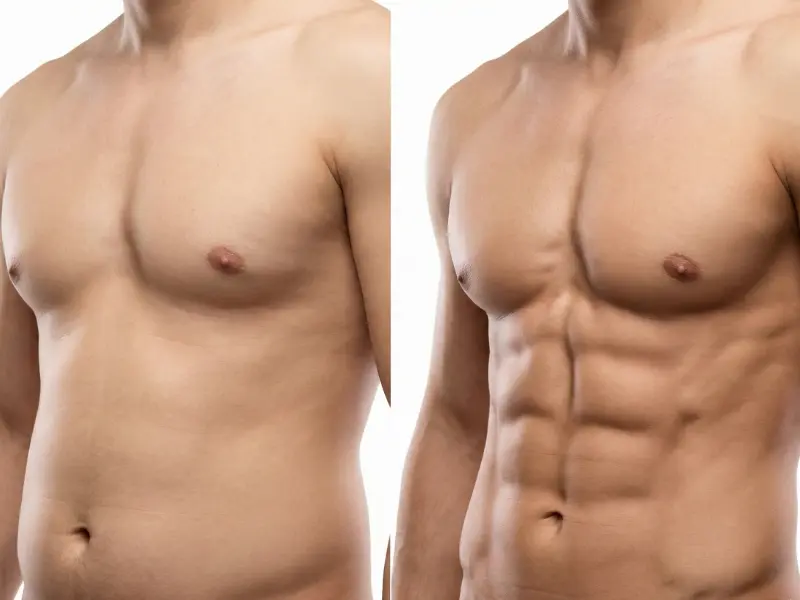
Six Pack Surgery Results: Before and After

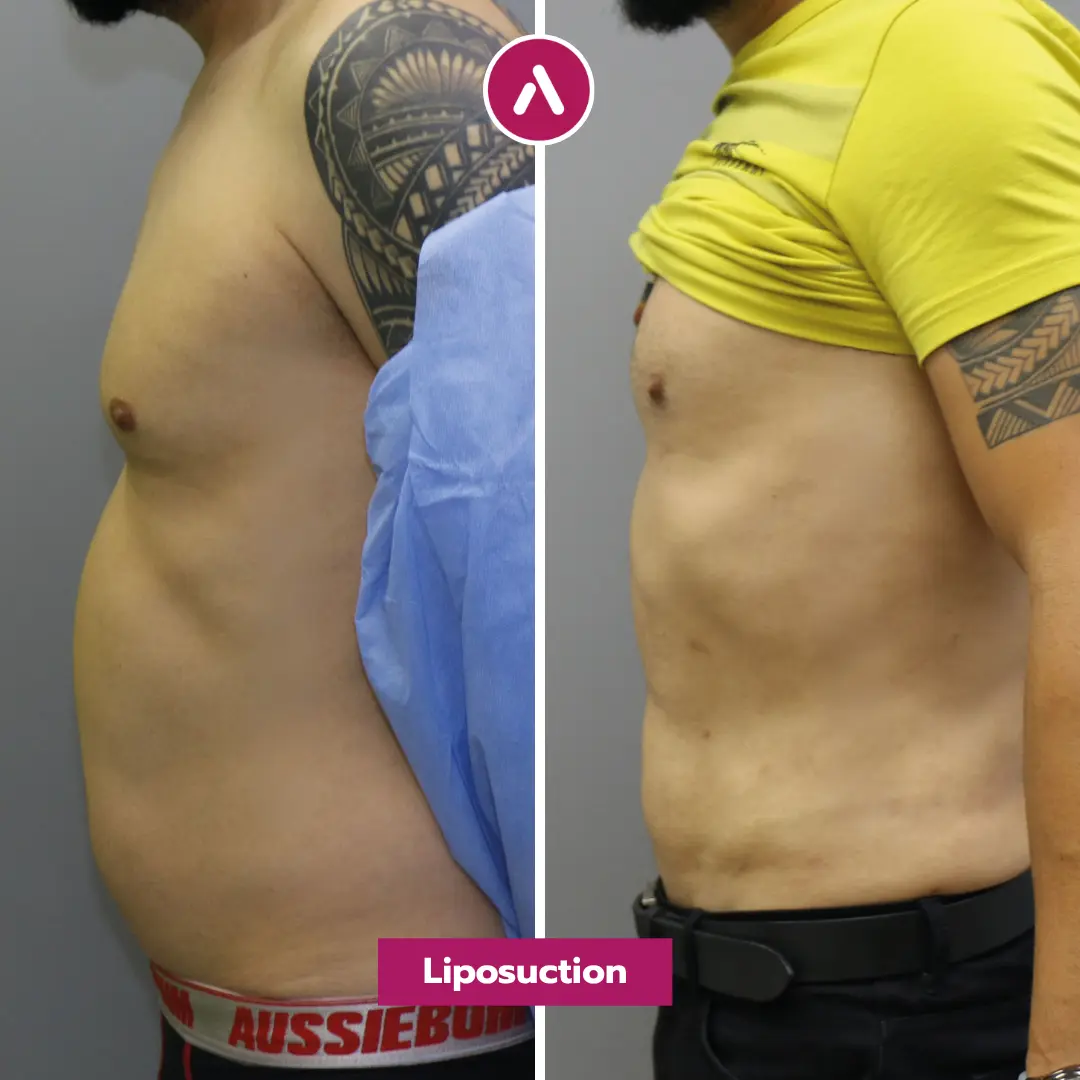
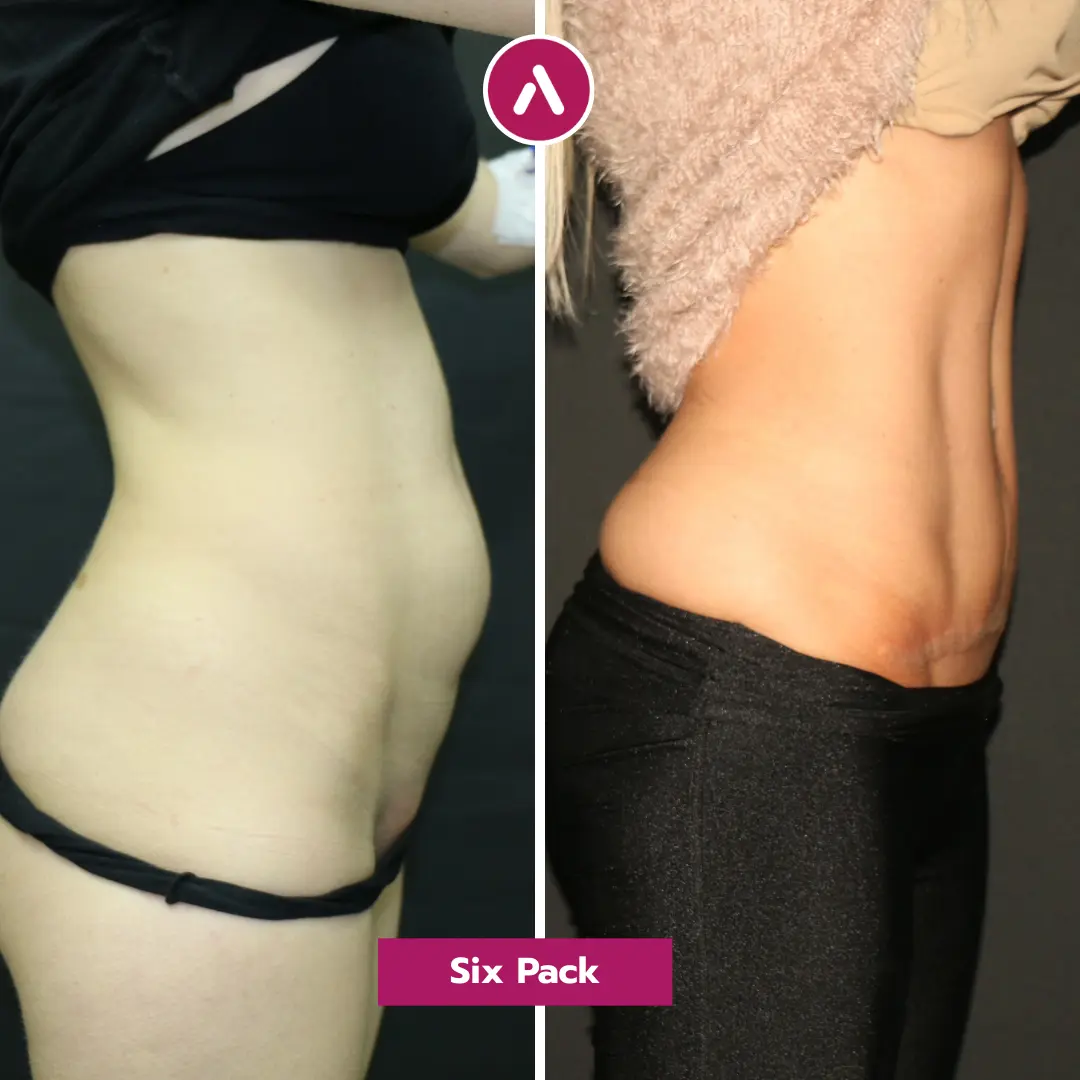
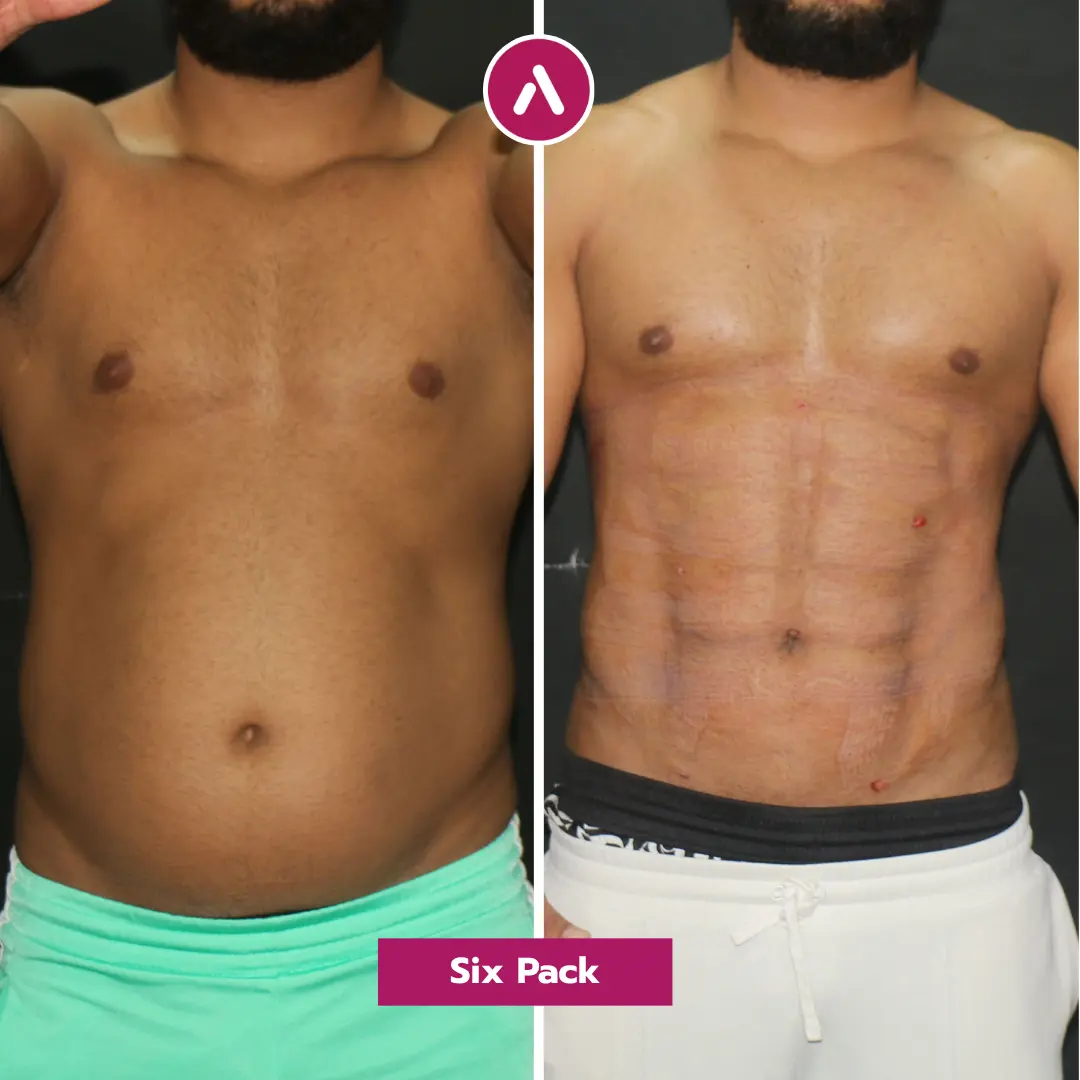
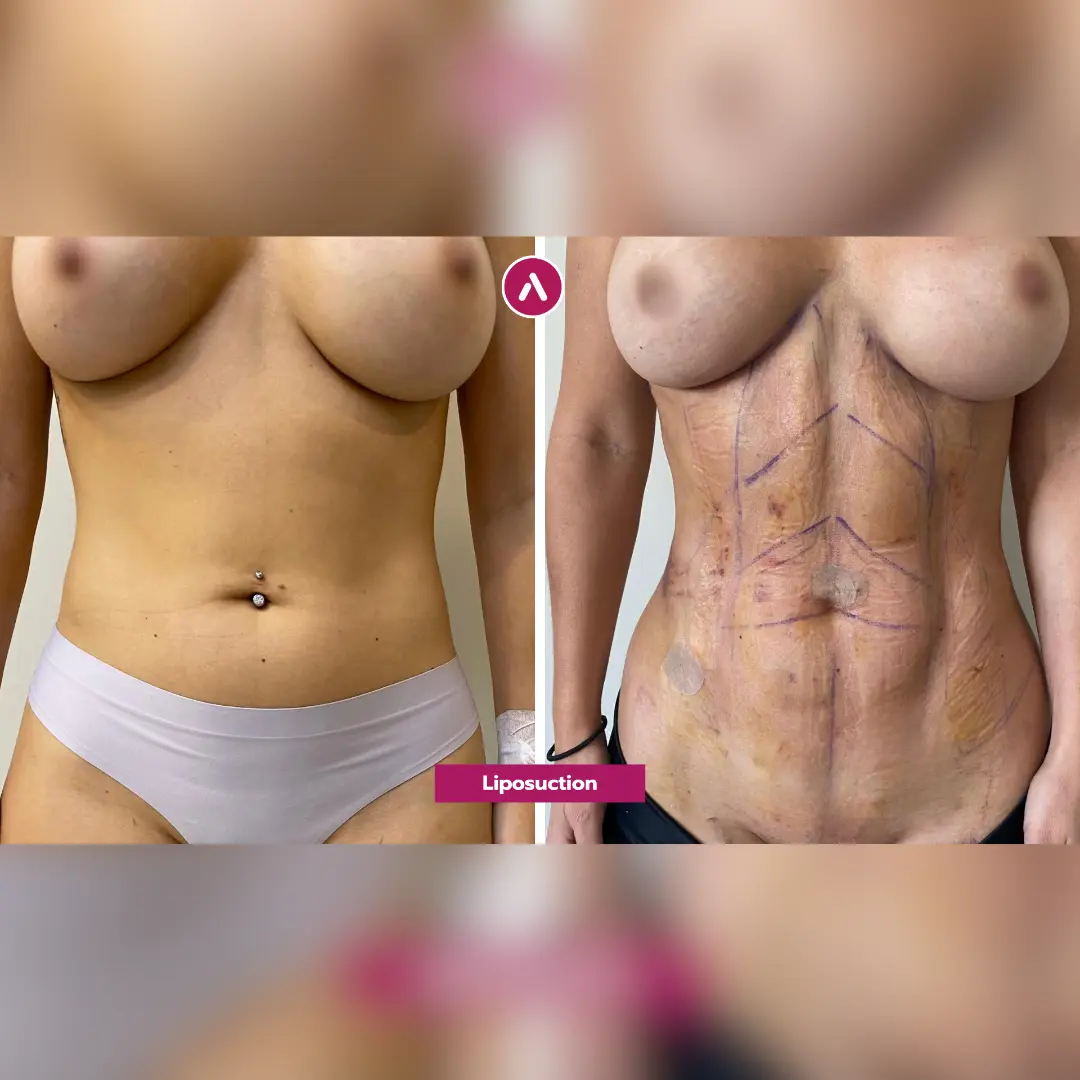
Six pack surgery—often called abdominal etching or high-definition abdominal liposuction—is a body-contouring procedure designed to enhance visible definition of the abdominal wall by selectively reducing fat in strategic zones. Rather than “creating” new muscles, the goal is to reveal and sharpen the natural topography that already exists: the vertical midline, the horizontal tendinous intersections, and the subtle transitions between muscle segments.
Because it relies on anatomy, lighting, skin quality, and fat distribution, six pack surgery is best understood as a form of precision sculpting. The most natural outcomes respect how a real abdomen looks in motion—when sitting, bending, twisting, and breathing. That’s why credible planning focuses on proportion, symmetry, and realistic definition—not exaggerated grooves that look artificial or become irregular as swelling resolves.
This guide explains what six pack surgery is, how abdominal anatomy influences results, and the core concepts you should understand before considering any technique—whether your goal is athletic definition, a subtle “toned” look, or a sharper contour after weight loss.
Table of Contents
Share your photos and medical history to receive a personalized assessment from our European board-certified facial surgery team.
What Is Six Pack Surgery?
At its core, six pack surgery is a refinement procedure. From a clinical overview perspective, it is best understood as precision body contouring rather than muscle creation. It uses liposuction-based sculpting—often in a high-definition approach—to reduce fat in specific patterns that enhance shadows and highlights over the rectus abdominis (“six-pack”) region. A well-planned result should look like your abdomen, just more defined, not like a template.
Definition: Abdominal Etching vs. Traditional Liposuction
Traditional abdominal liposuction focuses on reducing overall fat volume to slim the waist and flatten the stomach. Abdominal etching (a common reference for six pack surgery) goes further by using controlled, selective fat reduction in carefully mapped areas to emphasize natural anatomical landmarks—particularly the vertical midline (linea alba) and the horizontal intersections that create the appearance of “blocks.”
Many modern “six pack liposuction” approaches fall under a broader category called high-definition (HD) liposuction, where the surgeon treats the abdomen like a three-dimensional landscape. The aim is not just less fat, but a more athletic contour through intentional transitions—removing fat in some areas, preserving it in others—so definition looks believable and smooth as healing progresses.
What It Can and Cannot Do
What six pack surgery can do:
- Improve visible abdominal definition by reducing superficial fat that softens muscle outlines.
- Enhance the appearance of the midline and intersections for a more “cut” look.
- Create a more athletic contour when paired with waist/oblique sculpting in appropriate candidates.
What it cannot do:
- Build or strengthen abdominal muscles (it is not a substitute for training).
- Correct significant loose skin on its own—skin quality is a major limiting factor.
- Fix major abdominal wall separation (diastasis recti) unless combined with an appropriate tightening procedure.
In practical terms, six pack surgery is most effective when there is enough underlying muscle tone and good skin recoil to “drape” smoothly over the sculpted surface. When those conditions are not present, a different plan—such as skin tightening or a tummy tuck—may be more appropriate than etching alone.
Who Typically Requests It (Goals, Patterns, and Expectations)
People exploring six pack surgery usually fall into one of these goal patterns:
- Fitness-forward patients who train consistently but struggle with localized fat that hides definition.
- Post-weight-loss patients who want improved contour but may also have skin laxity that needs to be addressed.
- Male patients seeking sharper rectus definition and a more angular silhouette.
- Female patients often seeking a toned, athletic look that blends naturally with the waist and hip proportions.
For any of these groups, the most important expectation is this: six pack surgery is definition enhancement, not a dramatic reinvention. The best outcomes look natural at rest and in motion, without harsh lines that appear “carved.”
Our surgery dates fill up quickly due to high international demand. Secure your consultation today to plan your ideal travel dates.
Six Pack Anatomy: Understanding the “Abs”
The “six pack” is not a single structure—it’s the visible expression of multiple anatomical components working together: muscle shape, fibrous intersections, connective tissue, fat thickness, and skin quality. If you understand what creates natural abdominal definition, you can better evaluate whether a proposed surgical plan is realistic and likely to look natural.
Rectus Abdominis and Tendinous Intersections
The rectus abdominis is the paired vertical muscle group running along the front of the abdomen. The familiar “blocks” are influenced by tendinous intersections—horizontal fibrous bands that segment the muscle. These intersections vary from person to person in number, spacing, and symmetry, which is one reason why no two “six packs” look identical.
In surgical planning, the goal is to respect these natural segment boundaries rather than impose an artificial pattern. Overemphasis of grooves where a patient’s anatomy doesn’t support them can lead to an unnatural appearance—especially as swelling resolves and tissues soften over time.
Linea Alba, Obliques, and Natural Shadowing
The linea alba is the fibrous midline that separates the left and right rectus muscles. In many athletic abdomens, subtle central definition comes from how light falls along this vertical plane. The external obliques contribute to the “V-line” and the taper from ribs to hips, which can be just as important as the central blocks for an overall athletic look.
High-quality six pack surgery planning treats the abdomen as a full unit—central rectus definition, lateral transitions, and waist contour—so the result looks proportional from multiple angles, not just in a straight-on photo.
How Fat Distribution and Skin Quality Affect Definition
Even with strong muscles, visible definition depends heavily on:
- Fat thickness and depth: A thin layer can blur contours; a thicker layer can hide them entirely.
- Distribution pattern: Some people store fat centrally; others store it more evenly across the abdomen and flanks.
- Skin elasticity: Skin that recoils smoothly will showcase refined contour better than skin with significant laxity or stretch.
This is why “six pack surgery before and after” photos should be interpreted carefully. A dramatic visual change often reflects ideal baseline factors (good tone, favorable fat distribution, strong elasticity), consistent lighting and posture, and sufficient healing time—not just the technique itself.
In the sections ahead, we’ll translate these anatomical fundamentals into practical decision-making: who is an ideal candidate, how different techniques compare (including six pack liposuction vs implants), and what recovery and risk management should look like when the plan is built for natural definition.
From VIP airport transfers to 5-star hotel accommodations, we handle every detail. Enjoy a seamless medical travel experience in Istanbul.
Ideal Candidates: Who Gets the Best Results?
Six pack surgery is highly technique-dependent, but even the best technique can’t overcome the wrong anatomy or unrealistic expectations. In practice, results are driven by a combination of baseline fitness, fat distribution, skin elasticity, and a patient’s willingness to follow recovery and maintenance guidance. The ideal candidate isn’t necessarily the “leanest”—it’s the person whose tissues can heal smoothly and whose goals match what etching can realistically deliver.
Body Fat %, Muscle Tone, and Why They Matter
The visibility of abdominal definition is tightly linked to how much fat sits between the skin and the abdominal wall. Six pack surgery works by refining that layer—not by changing the muscles themselves. That means:
- Lower-to-moderate body fat generally shows definition more predictably after sculpting.
- Strong baseline muscle tone helps the etched contours look anatomical rather than “drawn on.”
- Extreme leanness is not always ideal if skin quality is compromised or if there’s a higher risk of contour irregularity due to limited fat “buffer.”
Many patients who search “six pack liposuction” are already training and dieting—but are genetically prone to holding a small pocket of fat centrally or around the lower abdomen. For these patients, carefully planned sculpting can sharpen definition in a way that lifestyle changes alone can’t always achieve.
Skin Elasticity, Age, and Previous Weight Changes
Skin is the “final layer” that displays the result. If the skin cannot contract and re-drape evenly after fat reduction, the outcome can look soft, uneven, or crepey. Factors that typically influence skin performance include:
- Elasticity: more elastic skin generally re-drapes more smoothly.
- Age: elasticity can decline with time, but varies widely.
- History of weight fluctuations: large gains/losses can stretch skin and weaken its recoil.
- Pregnancy: may contribute to laxity and can be associated with abdominal wall separation.
If laxity is mild, etching may still be reasonable with appropriate expectations. If laxity is significant—especially with lower abdominal overhang—an approach that addresses skin and the abdominal wall may be safer and more satisfying than etching alone (we’ll cover this in the “male tummy tuck vs etching” section).
Contraindications and Red Flags (When to Pause)
Any elective body contouring procedure should start with a risk-first mindset. Common “pause and reassess” factors include:
- Smoking or nicotine use (including vaping): increases risk of poor wound healing and skin complications.
- Uncontrolled medical conditions (e.g., uncontrolled diabetes, significant cardiovascular disease).
- Bleeding/clotting risks or history of thromboembolic events without careful clearance planning.
- Unrealistic expectations (e.g., expecting surgery to replace exercise or guarantee a body-fat-level appearance).
- Severe skin laxity without willingness to consider skin-tightening surgery when indicated.
Also important: if a plan involves aggressive “carving” without discussing skin behavior, swelling, asymmetry, and healing timelines, that’s a red flag. A responsible plan should include a conservative design that looks natural in real life—not just in a perfectly lit photo.
Answer a few quick questions about your concerns, health, and goals to learn which treatment options may suit you best.
Techniques & “Types”: Etching, HD Lipo, and Implants
“Six pack surgery” is an umbrella term. In reality, it may refer to abdominal etching, high-definition liposuction approaches, or—more rarely—six pack implants. These options are not interchangeable. The right choice depends on anatomy, skin quality, and your goal: subtle toning vs high-definition athletic contour vs reconstruction in special cases.
Abdominal Etching (Selective Fat Sculpting)
Abdominal etching is best described as intentional, selective fat reduction to highlight natural landmarks. Instead of evenly thinning the entire abdomen, the surgeon designs a pattern that creates gentle transitions—subtle grooves where shadows naturally occur and smoother planes where the abdomen should look soft and believable.
Key concepts in etching planning include:
- Pre-op marking while standing: mapping midline, intersections, and natural asymmetries.
- Selective reduction: removing more fat in “shadow zones” and preserving enough fat to avoid a harsh, unnatural look.
- Symmetry management: aiming for balance while respecting that perfect symmetry is uncommon in real anatomy.
When patients search “female six pack surgery,” they often want definition without an overly “cut” appearance. Etching can be tailored for that: more emphasis on waist taper and gentle central definition, less emphasis on deep grooves.
High-Definition Liposuction (The HD Concept)
High-definition (HD) liposuction expands the idea of etching into a more comprehensive body-sculpting strategy. Rather than focusing only on the “six pack blocks,” HD planning looks at the abdomen, flanks, and sometimes the lower chest and back as a single aesthetic unit. The objective is a consistent athletic silhouette from multiple angles.
HD approaches often prioritize:
- Waist and flank contour to support the appearance of abdominal definition.
- Layer control: working in the correct fat planes to reduce irregularities and preserve smoothness.
- Proportions: aligning abdominal definition with rib cage width, hip shape, and overall frame.
For many patients, the most “dramatic” improvement in photos doesn’t come only from the central abdomen—it comes from the combination of a tighter waist, improved flank contour, and more refined transitions across the full torso.
Six Pack Implants: When They’re Considered (and Why They’re Less Common)
Six pack implants are far less common than liposuction-based sculpting. They may be considered in niche situations—typically when a patient has very limited baseline definition potential and is not a candidate for predictable etching outcomes. However, implants introduce different trade-offs:
- Pros: immediate “structured” contour regardless of fat distribution, potential option in select reconstructive contexts.
- Cons: higher risk of an unnatural look, visibility/palpability, implant-related complications, and results that can look less dynamic in motion.
In most cosmetic scenarios, if someone is searching “six pack implants,” it’s worth first evaluating whether the real issue is skin laxity, body fat level, or muscle tone—because those factors often guide a more natural and lower-risk plan than an implant-based solution.
Next, we’ll address a common point of confusion: when the problem isn’t “definition,” but skin—and why a tummy tuck (sometimes combined with etching) may be the right answer for certain patients, especially after weight loss or when there’s significant laxity.
Six-Pack Male Tummy Tuck vs Etching: When Skin Needs Surgery
Some patients search for “six pack surgery” when the real limiting factor isn’t fat—it’s skin and/or the abdominal wall. In those cases, abdominal etching alone can produce a disappointing result because definition requires a smooth, well-supported surface. If the skin can’t re-drape tightly, or if the abdominal wall is lax (for example with diastasis), the best-looking, safest plan may involve a tummy tuck, sometimes combined with selective definition techniques.
When a Tummy Tuck Is Needed (Skin Laxity and Abdominal Wall Issues)
A tummy tuck (abdominoplasty) is primarily a skin and structural procedure. It removes excess skin, can tighten the abdominal wall (when indicated), and repositions tissues for a flatter, firmer contour. You may be a better candidate for a tummy tuck than etching alone if you have:
- Significant loose skin (especially below the navel) that does not tighten with weight stability or exercise.
- Lower abdominal overhang or “apron” skin after weight loss.
- Stretch-related laxity (common after pregnancy) that affects skin recoil.
- Abdominal wall separation (diastasis) or a “rounded” contour from weakened fascia.
When these issues are present, liposuction-based definition alone may accentuate irregularities—because the skin can appear uneven over the newly sculpted planes. A tummy tuck, by contrast, creates a tighter foundation that can make the result look cleaner and more stable over time.
Combining with Etching: The “Definition + Tightening” Logic
In select patients, combining approaches can be logical: a tummy tuck addresses skin excess and structural laxity, while carefully planned contouring enhances definition. The key is that “etching” in a tummy-tuck context must be conservative and anatomy-respecting. Overly aggressive sculpting on tightened skin can increase the risk of contour irregularities, prolonged firmness, or an unnatural “carved” look.
A responsible combined plan typically focuses on:
- Flattening first (skin removal and abdominal wall support when needed).
- Contour second (waist/flank transitions, gentle central definition if appropriate).
- Long-term stability (designing definition that still looks natural when sitting, bending, and moving).
If you see the term “six-pack male tummy tuck,” it usually refers to this combined concept: the structural benefits of abdominoplasty plus athletic contour refinement—chosen because skin quality, not fat alone, is the limiting factor.
Male vs Female Planning Differences (Definition Priorities and Proportion)
While every plan is individualized, aesthetic priorities often differ:
- Male planning may emphasize stronger rectus “block” definition, a sharper midline, and more angular transitions—balanced with natural movement so the abdomen doesn’t look artificially segmented.
- Female planning often prioritizes a toned look with smoother transitions, a defined but not harsh midline, and a waist-to-hip balance that looks athletic rather than overly etched.
For both, the most natural outcomes come from proportion: definition should match frame size, rib cage width, and overall body composition. An aggressive template that ignores these factors is one of the most common reasons for results that look “done.”
From VIP airport transfers to 5-star hotel accommodations, we handle every detail. Enjoy a seamless medical travel experience in Istanbul.
Anesthesia Options: Awake / Twilight Sedation / General
When people research six pack surgery, they often focus on the aesthetic plan but underestimate how anesthesia and peri-operative management affect the overall experience—comfort, nausea risk, recovery pace, and safety profile. The “best” anesthesia is not universal; it depends on your health history, the extent of sculpting, procedure combinations, and how your body responds to sedation. The right approach is the one that balances patient comfort with predictable safety.
Local/Tumescent Concepts and Patient Comfort
Many liposuction-based abdominal contouring procedures rely on tumescent technique, where a fluid mixture is introduced into fatty tissue to improve comfort, reduce bleeding, and facilitate fat removal. In appropriately selected patients, this can support procedures under:
- Local anesthesia (numbing) with additional comfort measures, or
- Twilight sedation (a relaxed, drowsy state), while maintaining spontaneous breathing.
From a patient standpoint, comfort is influenced by more than medication alone: thoughtful staging, gentle technique, temperature control, and consistent monitoring all matter. A high-quality anesthesia plan should be discussed in advance—especially if you have prior nausea with anesthesia, anxiety, or a history of medication sensitivity.
Twilight Sedation vs General Anesthesia (Recovery Experience and Risk Profile)
Twilight sedation (often described as “conscious sedation”) is designed to keep you relaxed and comfortable without the depth of full general anesthesia. In many patients, this can mean:
- Less grogginess after the procedure,
- Potentially lower rates of severe postoperative nausea (varies by patient),
- A recovery experience that may feel “lighter” compared to general anesthesia.
General anesthesia may be chosen when procedures are more extensive, combined, or when patient-specific factors make deep sedation or airway management the safer option. It can also be preferred when surgical time is longer or when a complete lack of awareness is desired. Importantly, “safer” is not synonymous with “lighter”—the safest plan is the one that fits your medical profile and the procedure’s demands, delivered by an experienced team with appropriate monitoring.
At AKM Clinic, patients who are appropriate candidates may have access to an awake liposuction approach (listed as a signature procedure option). In practice, this is best viewed as an anesthesia strategy—selected case-by-case—rather than a marketing label. The priority remains comfort, stable vitals, and controlled technique in an accredited surgical environment.
Who May Not Be a Candidate for Awake/Twilight Approaches
Even if someone prefers to avoid general anesthesia, not every patient is an ideal candidate for awake or twilight approaches. Situations that may require a different plan include:
- Significant procedure complexity (large-volume contouring, multiple combined procedures, or longer operative time).
- Medical factors that require deeper airway control or more controlled anesthesia conditions (determined by clinical evaluation).
- Severe anxiety or inability to tolerate the operative setting even with sedation.
- Safety-first adjustments based on pre-op findings, labs, or specialist clearance.
A credible provider should explain anesthesia recommendations transparently—what is proposed, why it fits your case, and what monitoring and safety protocols support that choice. This conversation should also include your past experiences with anesthesia, current medications, and personal comfort priorities.
Next, we’ll walk through what the procedure typically looks like step-by-step—how surgical marking is done, how definition is created safely, and what immediate postoperative care is designed to achieve in the first days of healing.
Step-by-Step: How Six Pack Surgery Is Performed
While technique details vary by surgeon and by patient anatomy, most six pack surgery procedures follow the same core logic: design the pattern first (based on your natural anatomy), then sculpt fat strategically to enhance definition, and finally protect the result during healing with compression, mobility guidance, and structured follow-up. Understanding the sequence helps you evaluate whether a proposed plan is thoughtful, safe, and realistic.
Pre-Op Planning and Standing Marking (The “Shadow Map”)
Six pack surgery is a “design-dependent” procedure. Marking is typically done while you’re standing because gravity and posture change abdominal shape. A careful plan generally includes:
- Midline mapping (linea alba) and the natural left-right asymmetries almost everyone has.
- Intersection planning (where your tendinous intersections naturally sit), so definition aligns with your real anatomy.
- Transition zones to avoid harsh grooves—especially important for a natural look in motion.
- Waist and flank contour design, because abdominal definition often looks “better” when the waist is refined.
For patients who want a subtle, athletic look (a common goal in “female six pack surgery” searches), the plan typically emphasizes smooth transitions and proportion rather than deep segment lines.
Fat Sculpting Strategy (What Gets Removed vs Preserved)
The “secret” of natural-looking definition is not removing as much fat as possible. It’s removing fat in the right places and preserving enough smoothness so the abdomen doesn’t look carved or uneven as swelling resolves. A high-quality sculpting strategy typically aims for:
- Layer control: working in the correct fat plane to reduce the chance of contour irregularities.
- Selective reduction: emphasizing shadow zones and midline definition without over-deepening grooves.
- Symmetry refinement: balancing the look while respecting natural anatomical differences.
Because the abdomen changes shape with breathing and sitting, the most believable results come from a conservative, anatomy-respecting approach that prioritizes smoothness and proportion over extreme “etched” lines.
Finishing, Compression, and Immediate Post-Op Priorities
At the end of the procedure, the goal shifts from sculpting to stabilizing the contour as tissues begin healing. Immediate post-op priorities usually include:
- Compression garment placement to reduce swelling and support re-draping.
- Early mobility guidance (light walking) to support circulation and lower clot risk.
- Clear aftercare instructions on hydration, activity limits, and warning signs.
- Follow-up schedule to monitor swelling patterns and early contour development.
From a patient perspective, the first few days are less about “seeing abs” and more about managing swelling, comfort, and safe early healing. Visible definition typically emerges progressively as tissues settle over weeks to months.
Recovery Timeline & Aftercare (Day-by-Day)
Recovery from six pack surgery is not a single moment—it’s a process. Early swelling can temporarily blur definition, and minor asymmetries are common while tissues settle. A structured recovery plan should prioritize comfort, safe mobility, swelling control, and tissue support so the final contour develops smoothly. Below is a realistic timeline that matches how healing typically unfolds.
The First 72 Hours: Swelling Control and Safe Mobility
In the first 1–3 days, most patients experience swelling, bruising, and a feeling of tightness or soreness across the abdomen and flanks. What matters most during this phase is consistent aftercare:
- Compression as directed (too loose can increase swelling; too tight can increase discomfort).
- Light walking several times per day to support circulation.
- Hydration and nutrition to support tissue repair.
- Sleep positioning that reduces tension across the abdomen and improves comfort.
It’s normal for definition to look “hidden” at this stage. Early swelling can make the abdomen appear fuller before it looks refined.
Weeks 1–6: Definition Begins to “Reveal”
As bruising fades and swelling gradually decreases, the contour becomes clearer. This is the stage where patients often start noticing emerging definition—especially in the midline and upper abdomen—while the lower abdomen may take longer to settle. Typical priorities in this phase include:
- Continuing compression according to your surgeon’s plan.
- Gradual activity progression (walking first, then controlled return to training as cleared).
- Consistency with follow-ups to monitor healing patterns and address concerns early.
Many “six-pack surgery before and after” images are taken too early. The most honest comparisons are usually at later milestones, when swelling has stabilized and tissues have softened.
Months 3–6+: Final Contour Maturation and Long-Term Maintenance
By around 3 months, many patients see a more reliable “true” result, though refinement can continue. By 6 months and beyond, the abdomen typically looks more natural in motion as residual firmness softens. Long-term result stability depends on:
- Weight stability (significant weight gain can soften definition).
- Strength training (to support athletic tone and proportions).
- Healthy lifestyle consistency rather than extreme dieting cycles.
Six pack surgery can enhance definition, but the best long-term look comes from pairing the surgical contour with sustainable training and nutrition habits.
AKM Clinic’s Accelerated Recovery Protocol: HBOT (Hyperbaric Oxygen Therapy)
At AKM Clinic, Hyperbaric Oxygen Therapy (HBOT) is positioned as part of a structured Rapid Recovery & Safety Protocol to support postoperative healing. The clinical intent is to increase oxygen availability in tissues during recovery, which can support multiple healing priorities—particularly swelling control and tissue repair.
- Recovery support focus: tissue oxygenation, swelling/inflammation management, and healing optimization.
- Why it matters for body contouring: smoother healing can help definition settle more predictably as the skin re-drapes.
AKM Clinic’s Accelerated Recovery Protocol: LLLT (Low-Level Laser Therapy)
AKM Clinic also integrates Low-Level Laser Therapy (LLLT) into its recovery technology approach. LLLT is used as an adjunct method to support comfort and recovery quality during the postoperative period.
- Recovery support focus: postoperative comfort support, swelling management, and tissue recovery assistance.
- Why it matters for aesthetics: when swelling reduces in a controlled way, abdominal contours can “read” more clearly and evenly over time.
We use advanced Hyperbaric Oxygen Therapy (HBOT) to minimize downtime and supercharge your healing process. Safety is our #1 promise.
Risks, Complications, and How to Reduce Them
Six pack surgery is generally considered a body-contouring procedure, but “cosmetic” does not mean risk-free. The most reliable outcomes come from a plan that prioritizes tissue safety, conservative sculpting, and structured postoperative monitoring. A responsible provider should be direct about what can happen, how often it happens in their hands, and what systems they use to reduce avoidable risk.
Common Risks: What Patients Most Often Notice During Healing
Most recovery concerns after abdominal etching or HD lipo fall into the “common but manageable” category. These typically improve as swelling resolves and tissues soften:
- Swelling and bruising: expected early; definition is often hidden before it appears.
- Temporary numbness or altered sensation: can occur where fat was treated; often gradually improves.
- Contour irregularity: small unevenness or asymmetry can appear while tissues settle.
- Firmness: areas may feel tight or “lumpy” during early healing, then soften over time.
- Hyperpigmentation or discoloration: more noticeable in some skin types; usually fades.
One of the most important “expectation resets” is this: early healing rarely looks like the final result. Most meaningful evaluation happens later, once swelling patterns stabilize.
Serious but Rare Risks: Why Safety Protocols Matter
While uncommon, more serious complications are possible and must be addressed proactively:
- Infection: risk varies with technique, aftercare, and patient factors.
- Seroma (fluid collection): can require monitoring or drainage.
- Skin compromise: higher risk if there is aggressive superficial sculpting, smoking/nicotine exposure, or poor vascular supply.
- Thrombosis (blood clots): rare but serious; risk management includes early mobilization and individualized assessment.
- Over-resection (“over-etching”): can lead to an unnatural carved look and long-term irregularities.
A credible plan should include a clear discussion of these risks, the specific measures used to reduce them, and what follow-up looks like if something doesn’t progress as expected.
Risk Reduction: What a High-Standard Clinic Should Do
Risk reduction is not one action—it’s a system. At AKM Clinic, the safety framework is structured around thorough pre-operative evaluation, close monitoring, and international sterilization standards, with procedures performed in a world-class medical environment. Postoperatively, the goal is to support predictable healing and address concerns early rather than “waiting it out.”
- Thorough pre-op screening: identifying medical risk factors early and planning around them.
- Advanced vital monitoring: continuous, modern monitoring practices for patient safety during procedures.
- International sterilization standards: minimizing avoidable infection risk through strict protocols.
- Accredited hospital partnerships: options connected to JCI-accredited hospitals for complex care pathways.
- Continuity of care: structured follow-up that extends beyond the immediate postoperative window.
Safety should never be framed as a “feature.” It should feel like a baseline requirement—something you can see in the clinic’s process, documentation, and follow-up structure.
Results: What “Natural Definition” Really Means
The best six pack surgery outcomes don’t look “surgical.” They look like a realistic extension of your anatomy—an abdomen that appears leaner, stronger, and more defined without harsh lines that look unnatural when you sit, twist, or breathe. This is where planning philosophy matters: the goal is refinement, not alteration.
Surgeon’s Insight: The most credible abdominal definition is the kind people notice as “you look fitter,” not “you had something done.” The aim is a refined, natural result—rejuvenation and definition enhancement rather than an artificial redesign.
Technique Comparison: What Each Option Is Best For
Because “six pack surgery” can refer to several approaches, it helps to compare them side-by-side. The table below summarizes the practical differences in goals, best candidates, and limitations.
| Option | Best For | Key Strength | Primary Limitation |
|---|---|---|---|
| Abdominal Etching | Patients with decent tone and good skin recoil seeking visible definition | Enhances natural landmarks with selective sculpting | Limited by skin laxity and body fat thickness |
| High-Definition (HD) Liposuction | Patients wanting a comprehensive athletic torso (abdomen + waist/flanks) | Improves overall silhouette and transitions from multiple angles | Requires meticulous planning to avoid unevenness |
| Six Pack Implants | Niche cases where definition cannot be reliably revealed with sculpting | Provides structured contour independent of fat distribution | Higher risk of an unnatural look; implant-related trade-offs |
| Tummy Tuck + Conservative Definition | Patients with significant loose skin and/or abdominal wall laxity | Creates a tighter foundation; can refine contour when appropriate | Scar trade-off; definition must be conservative and anatomy-led |
How to Evaluate “Before and After” Photos Honestly
Patients frequently search “six-pack surgery before and after,” but photos can mislead if you don’t know what to look for. When evaluating results, consider:
- Timing: early photos can exaggerate sharpness or hide swelling; later photos (months) are more meaningful.
- Lighting and posture: overhead lighting, flexing, and posture changes can dramatically alter definition.
- Consistency: same distance, same angle, relaxed posture—otherwise comparisons aren’t reliable.
- Movement realism: ask whether the result looks natural when sitting and bending, not only in a single “hero shot.”
The most trustworthy photo sets include multiple angles and timepoints, showing how definition settles as tissues soften and swelling stabilizes.
What Makes Results Last (and What Can Change Them)
Six pack surgery can be long-lasting, but it is not immune to lifestyle changes. The contour reflects your current body composition. Factors that influence longevity include:
- Weight stability: significant weight gain can soften definition; major loss can change skin behavior.
- Training consistency: maintaining core strength supports an athletic look.
- Nutrition patterns: sustainable habits tend to preserve results better than extreme cycles.
- Skin health: hydration, sun protection, and avoiding nicotine support better tissue quality.
Think of surgery as a contour foundation. Your daily habits determine how that foundation reads over time.
Our philosophy is “Rejuvenation, Not Alteration.” Discover how our surgeons achieve subtle, revitalized results that honor your unique beauty.
Six Pack Surgery Cost Analysis 2026: (US vs Turkey)
When patients search “six pack surgery cost,” they’re usually trying to answer two questions at once: (1) what the procedure realistically costs in the US, and (2) whether an international option can deliver the same level of safety, predictability, and outcomes at a lower total spend. The most useful way to compare is to break down cost drivers, then evaluate what’s included (and what isn’t) in each model.
What Drives Cost in the US (Why Prices Vary So Much)
In the US, six pack surgery is typically priced as a premium body-contouring procedure because it is planning-intensive and often performed as high-definition sculpting. Final cost can vary based on:
- Surgeon fee (experience, specialization, demand, and regional market).
- Facility fees (accredited surgery center vs hospital setting).
- Anesthesia fees (type of anesthesia and duration of surgery).
- Extent of treatment (abdomen only vs abdomen + flanks/waist + additional zones).
- Post-op care (compression garments, medications, follow-up structure, and adjunct recovery support).
It’s also common for initial quotes to exclude items that materially affect the total spend—such as compression supplies, certain medications, or extended follow-up support. This is why “headline price” comparisons can be misleading.
Why Turkey Can Cost Less Without “Lower Quality”
The key question is not “Is it cheaper?”—it’s why it can be cheaper. In Turkey, costs can be lower due to broader economic and operational factors, which can allow patients to access premium care at a lower total price. The important part is verifying that the medical standards are comparable to what an expert patient expects.
AKM Clinic frames its model around US-level expectations in a different cost environment—positioning the price difference as a function of operational economics, not reduced medical ambition. In this model, the value proposition is built on transparent inclusions and the ability to combine high-standard surgery with structured postoperative support.
Value Proof Points: What to Look For (Beyond the Price)
For an expert patient, “value” should be measurable. In the AKM Clinic framework, the value case is anchored by:
- All-inclusive planning (a structured patient journey that consolidates key components into one pathway).
- Accreditation pathway through partnerships with JCI-accredited hospitals for appropriate cases.
- Quality signaling through use of internationally recognized materials (e.g., FDA-approved materials where relevant to procedures).
- Continuity of care via long-term virtual follow-up checkpoints after you return home.
| Cost Element | Typical US Model | AKM “All-Inclusive” Model (Istanbul) |
|---|---|---|
| Surgeon + facility + anesthesia | Often itemized separately | Structured as a consolidated package |
| Pre-op evaluation | Varies by practice; may be separate | Built into a protocol-driven pathway |
| Hotel + transfers | Patient-arranged | Included as part of VIP journey logistics |
| Post-op support & follow-up | Typically local, time-limited | Structured follow-ups including virtual checkpoints (1/3/6/12 months) |
| Recovery tech (adjunct support) | Often extra or not offered | Optional structured recovery technologies (HBOT/LLLT) as part of recovery protocol |
Get a 100% transparent, all-inclusive quote tailored to your needs. No hidden fees—just world-class care at an accessible price.
Choosing the Best Six Pack Surgeon & Facility
Six pack surgery is an outcomes-sensitive procedure: small planning decisions can change how natural the abdomen looks when swelling resolves. That makes surgeon selection and facility standards more important than “best price.” The safest way to choose is to evaluate credentials, planning philosophy, and the clinic’s safety systems—then verify that follow-up care is structured and consistent.
Credentials That Matter (What Expert Patients Should Verify)
Because terminology can vary across countries, focus on what signals advanced training and accountability:
- Board-level credentialing (European Board-equivalent or comparable standards).
- Specialization in body contouring (not just general cosmetic offerings).
- Documented safety protocols and a clear anesthesia pathway.
- Access to accredited hospital settings when clinically appropriate.
AKM Clinic highlights European Board-level surgeon credentialing and partnership pathways with JCI-accredited hospitals as part of its safety positioning for international patients.
Consultation Questions That Predict the Quality of the Plan
When you want a natural-looking result, the consultation should sound “anatomy-first,” not sales-first. Strong questions include:
- “What is my limiting factor—fat thickness, skin laxity, or abdominal wall laxity?”
- “Will you design my markings based on my natural intersections, or use a template?”
- “How do you avoid over-etching and contour irregularities?”
- “What does my recovery timeline look like, and what is included in follow-up?”
- “If I have loose skin, would you recommend a tummy tuck instead of etching?”
If the answers are vague—especially about skin behavior, swelling, and time-to-final-result—that’s usually a warning sign.
What “USA-Level Standards” Should Look Like in Real Life
High standards are visible in process, not just in marketing. Look for:
- Privacy and data security protocols, especially for international consultations and photo sharing.
- Structured pre-op evaluation rather than “quick clearance.”
- Clear safety communication on monitoring, sterilization, and aftercare escalation.
- Continuity of care after you return home—scheduled checkpoints, not “message us if needed.”
AKM Clinic explicitly frames its care pathway around privacy, discretion, and a high-standard medical environment with structured follow-up and VIP logistics designed for international patients.
Next, we’ll outline what the full medical journey typically looks like for patients traveling to Istanbul—remote consultation, surgery flow, recovery logistics, and long-term virtual follow-up after you return to the US.
Perform your surgery with confidence. Meet our European Board Certified surgeons with over 2,000 successful facial surgeries.
The Medical Journey in Istanbul
For international patients, the biggest concern is rarely the flight—it’s continuity of care: “How does my plan get built, how do you keep me safe during surgery, and what happens after I return home?” A credible medical journey should feel structured, predictable, and clinically guided from the first consultation through long-term follow-up.
Remote Consultation → Personalized Plan (Decision Support)
The journey typically begins with a remote consultation designed to answer the questions expert patients care about most: whether your anatomy is suited for etching, whether HD lipo is more appropriate, or whether loose skin/abdominal wall issues make a tummy tuck-combination the safer and more satisfying option.
In AKM Clinic’s model, the goal of the remote stage is not to “sell” a procedure—it’s to create a clear, individualized plan based on:
- Your anatomy and goals (subtle toning vs high-definition definition).
- Skin quality and elasticity (predictability of re-draping).
- Safety profile (medical history, medications, and risk assessment).
- Anesthesia pathway (including whether an awake/twilight approach is appropriate).
This is also where you should expect a realistic discussion of recovery milestones, time-to-final result, and what “natural definition” means for your frame.
Travel, Transfers, Hotel, and In-Clinic Flow (VIP Logistics)
A well-designed international pathway removes friction without compromising medical seriousness. AKM Clinic structures the experience as an all-inclusive VIP journey that integrates key logistics—such as transfers and hotel—into the broader care plan, so your focus stays on recovery and safety rather than coordination.
- Arrival and transfers coordinated as part of the patient pathway.
- Hotel integration aligned with postoperative comfort and access needs.
- Clinic flow designed to be discreet, private, and structured—supporting a calm patient experience.
- Clear pre-op and post-op checkpoints so you know what happens each day.
For expert patients, logistics are only valuable when they support medical outcomes—reducing stress, improving rest, and keeping follow-up punctual and consistent.
Long-Term Virtual Follow-Up After You Return Home
International care should not end when you board the plane. AKM Clinic formalizes continuity through scheduled virtual follow-up checkpoints after you return to the US—commonly at 1, 3, 6, and 12 months. The intent is to track how swelling resolves, how definition settles, and whether any concerns need proactive management.
- Structured timeline for check-ins rather than ad-hoc messaging only.
- Recovery monitoring focused on contour development, firmness, symmetry, and skin behavior.
- Guidance on activity progression so training return supports results rather than disrupts healing.
From VIP airport transfers to 5-star hotel accommodations, we handle every detail. Enjoy a seamless medical travel experience in Istanbul.
Six Pack Surgery: Frequently Asked Questions
These are the most common expert-level questions patients ask when researching six pack surgery. The answers below are designed to be clear, medically grounded, and aligned with realistic healing timelines.
What is six pack surgery, exactly?
Six pack surgery is a body-contouring approach—usually abdominal etching or high-definition liposuction—designed to enhance visible abdominal definition by selectively reducing fat in patterns that emphasize natural anatomy. It does not build muscle; it reveals and refines existing contours.
Is abdominal etching the same as six pack liposuction?
They’re closely related. “Six pack liposuction” is a broad term. Abdominal etching is a more specific concept: selective sculpting to emphasize natural landmarks. Many modern plans combine both ideas under high-definition (HD) contouring.
How long does it take to see final six pack surgery results?
Early definition may appear within weeks, but swelling can blur detail. A more reliable result is typically assessed around 3 months, with refinement continuing into the 6-month range as tissues soften and settle.
How long do six pack surgery results last?
Results can be long-lasting if your weight stays stable and you maintain healthy habits. Significant weight gain can soften definition, and major weight loss can change skin behavior. Think of surgery as a contour foundation that your lifestyle maintains.
Is six pack surgery safe?
When performed by qualified surgeons in an appropriate medical setting with proper screening and monitoring, it can be performed safely. Like any surgery, it carries risks—such as contour irregularity, seroma, infection, and rare clot risk—so safety systems and follow-up structure matter.
Does six pack surgery work if I have loose skin?
Loose skin is one of the biggest limiting factors. Mild laxity may still allow improvement, but significant laxity often requires a tummy tuck (with or without conservative definition work) for a predictable, smooth result.
What’s the difference between six pack surgery and six pack implants?
Etching/HD lipo uses fat sculpting to reveal anatomy. Implants add structure under the skin and are far less common due to higher risk of an unnatural look and implant-related trade-offs. Most aesthetic cases favor sculpting when anatomy allows.
When can I work out again after six pack surgery?
Light walking is typically encouraged early. More intense training is usually reintroduced gradually based on healing, swelling, and your surgeon’s clearance. Returning too aggressively can prolong swelling and disrupt settling, so phased progression is important.
Is six pack surgery different for men and women?
Yes—primarily in aesthetic planning. Male plans often emphasize sharper rectus definition and angular transitions. Female plans frequently prioritize a toned, athletic look with smoother transitions and proportion-focused waist contouring.
How long should I stay in Istanbul for six pack surgery?
Length of stay depends on the extent of treatment and early follow-up needs. International patients typically plan enough time for immediate postoperative monitoring and early checkups before flying home, followed by structured virtual follow-ups after returning to the US.
Six Pack Surgery: Patient Stories

Lisa




Mrs. Giordano

Six Pack Surgery Surgeons

Six Pack Surgery Cost in Turkey
Starting from $4800
* There are no hidden fees or unexpected charges.
- Your Personalised Six Pack Surgery Procedure
- All Specialist Surgeon & Anesthesia Fees
- All Pre-Op Tests & Post-Op Check-ups
- 5-Star Hotel Accommodation (incl. breakfast)
- All Private VIP Airport & Clinic Transfers
- 24/7 Dedicated Patient Coordinator & Translation Services
Six Pack Surgery: A Cost Comparison
| City | Cost |
|---|---|
| Miami, FL | $10,000 |
| Los Angeles, CA | $20,000 |
| New York, NY | $22,000 |
| Houston, TX | $13,000 |
Six Pack Surgery: Patient Reviews
Jammal Canada
I have had face and neck lift with AKM Clinic they have been so good to me and my operation went so smoothly🥰 i would like to thank my doctor here and also to the team 💐
Ava Canada
Thank you AKM Clinic for giving me my confidence back! Had facelift + temporal lift 3 months ago and the outcome is already stunning. Special thanks to Hande!
Jakayla USA
Had a deep plane facelift and lower eyelid procedure at AKM Clinic 7 months ago. The results are fantastic - very subtle and natural. I didn’t expect the entire experience to be so comfortable. Hande managed everything and kept in contact even after I returned to USA. I’m beyond pleased with the outcome and the care I received. Would do it again in a heartbeat!
Barbara United Kingdom
It has been 4 months since my surgery. Everything is great, The most important thing is l love the way l look, l look exactly how l wanted. Meaning l look natural, just almost 40 years younger. I pulled Facebook - majority voted 37ys. I also had face, neck, chest, and hands CO2 laser. My skin is flawless.
Lisa Canada
I had a face, neck and arm lift at AKM. I’m just over 4 weeks post and couldn’t be happier with the results. The entire experience was wonderful! My coordinator, Khadija made me feel comfortable from beginning to end! I highly recommend AKM and will definitely go back for other procedures!
Julie USA
I am beyond grateful I went with AKM Clinic for my deep plane face and neck lift, upper eyelid, and co2 laser. Dr. Akif has magic hands and my results are truly incredible! I came from the US and assistant Emine was the best in assuring every detail was coordinated and communicated with me beyond my expectations every step of the way. 10 out of 10 to the entire team! I couldn’t be more pleased!
Ready to Start Your Own Transformation Journey?
Join the 2,000+ patients who trusted Dr. Akif Mehmetoğlu and the AKM Clinic team. Your journey to a more confident, revitalized you begins with a simple, no-obligation conversation. Contact us today from the USA for your free virtual consultation.
#1: Get Your Free Personalised Quote
Start with a free, no-obligation online consultation. Share your photos, and our surgical team will provide a fully personalised treatment plan and a transparent, all-inclusive price package. No hidden fees.
#2: Secure Your Date & VIP Booking
Once you're ready, our dedicated patient coordinators will help you secure your procedure date. We'll handle all your bookings, including your 5-star hotel and private VIP airport transfers.
#3: Arrive in Istanbul & Meet Your Surgeon
Arrive at Istanbul Airport (IST) and be greeted by your private driver. Settle into your hotel and prepare for your in-person consultation, where you'll meet your specialist surgeon to finalise the details for your "natural, subtle, and revitalized" new look.
