



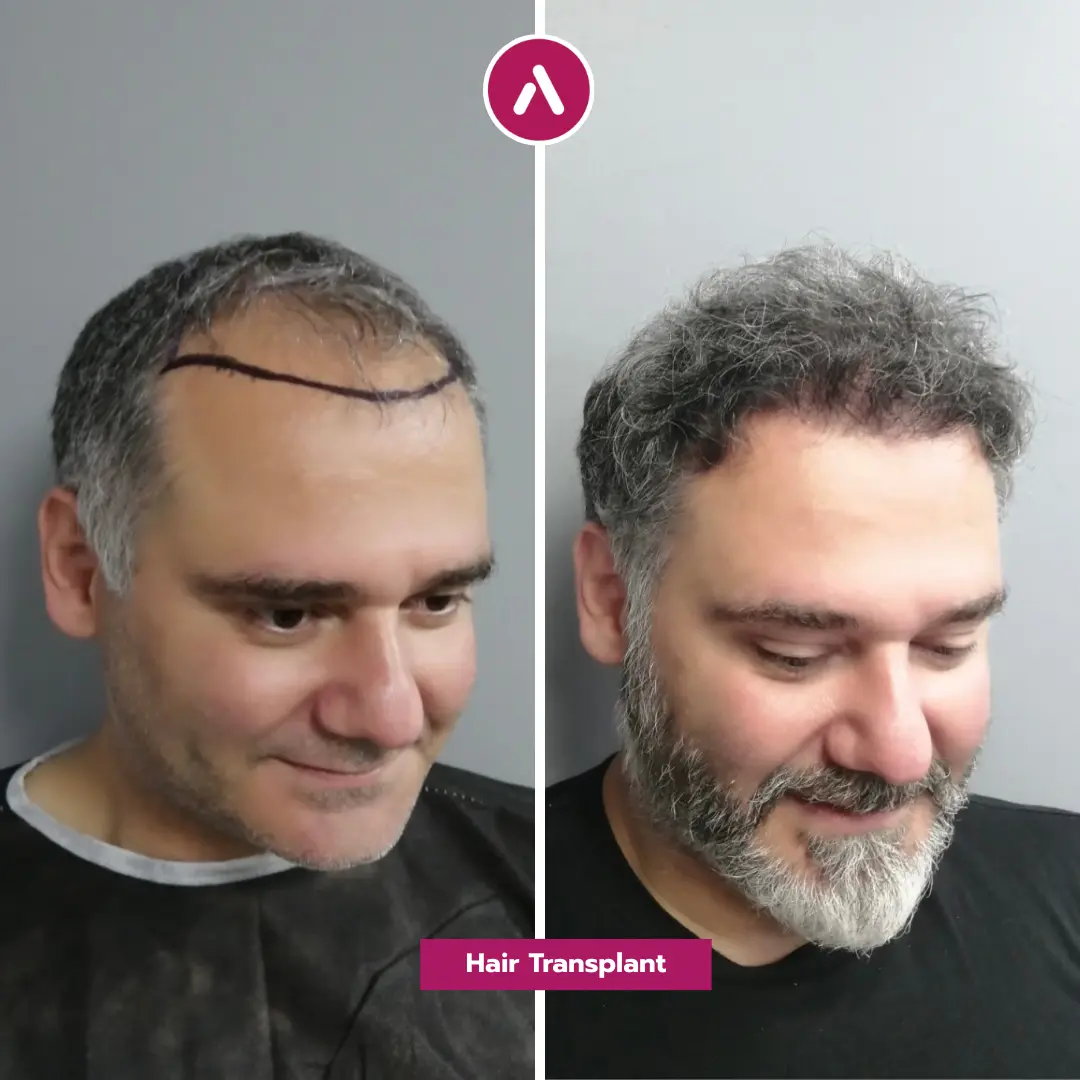
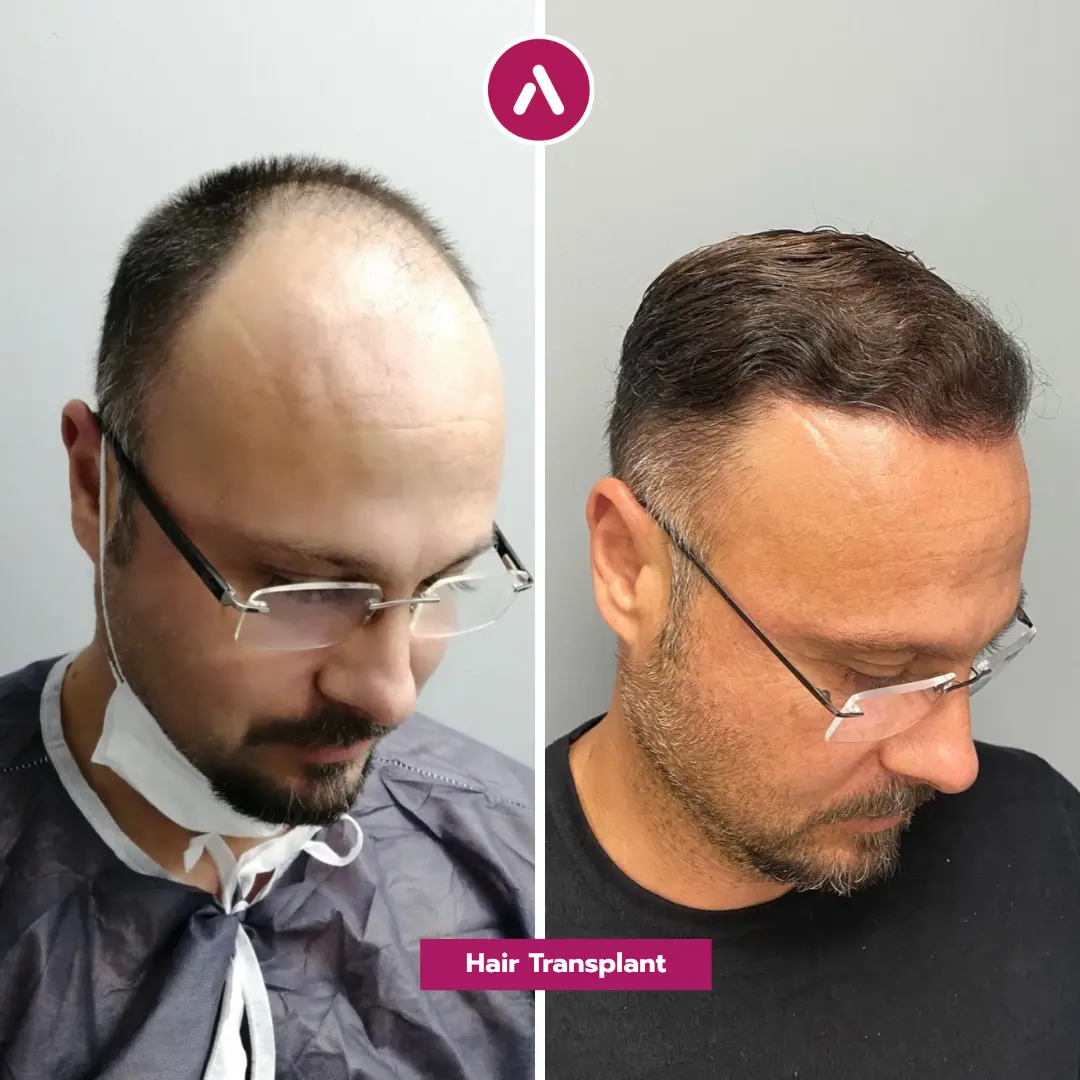
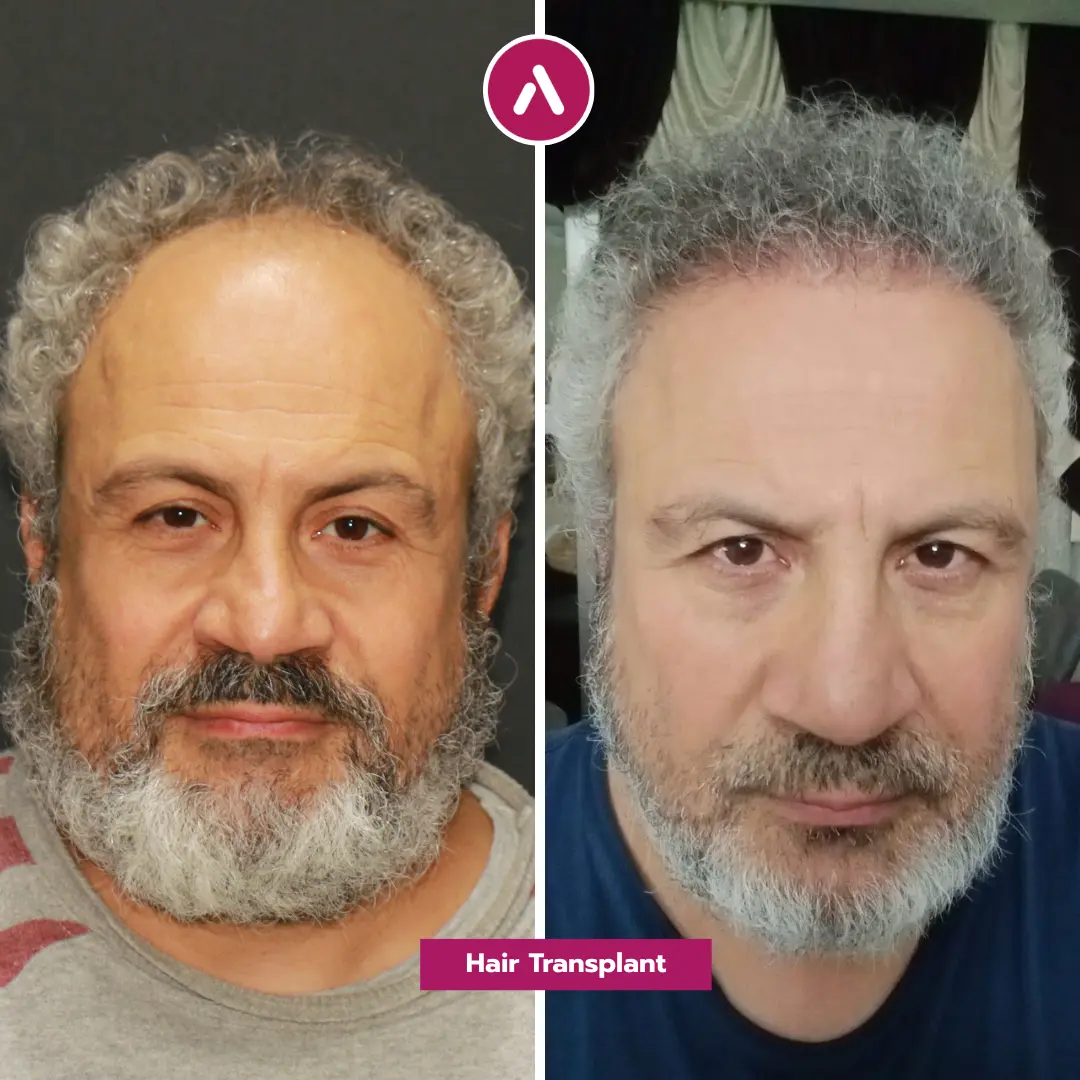
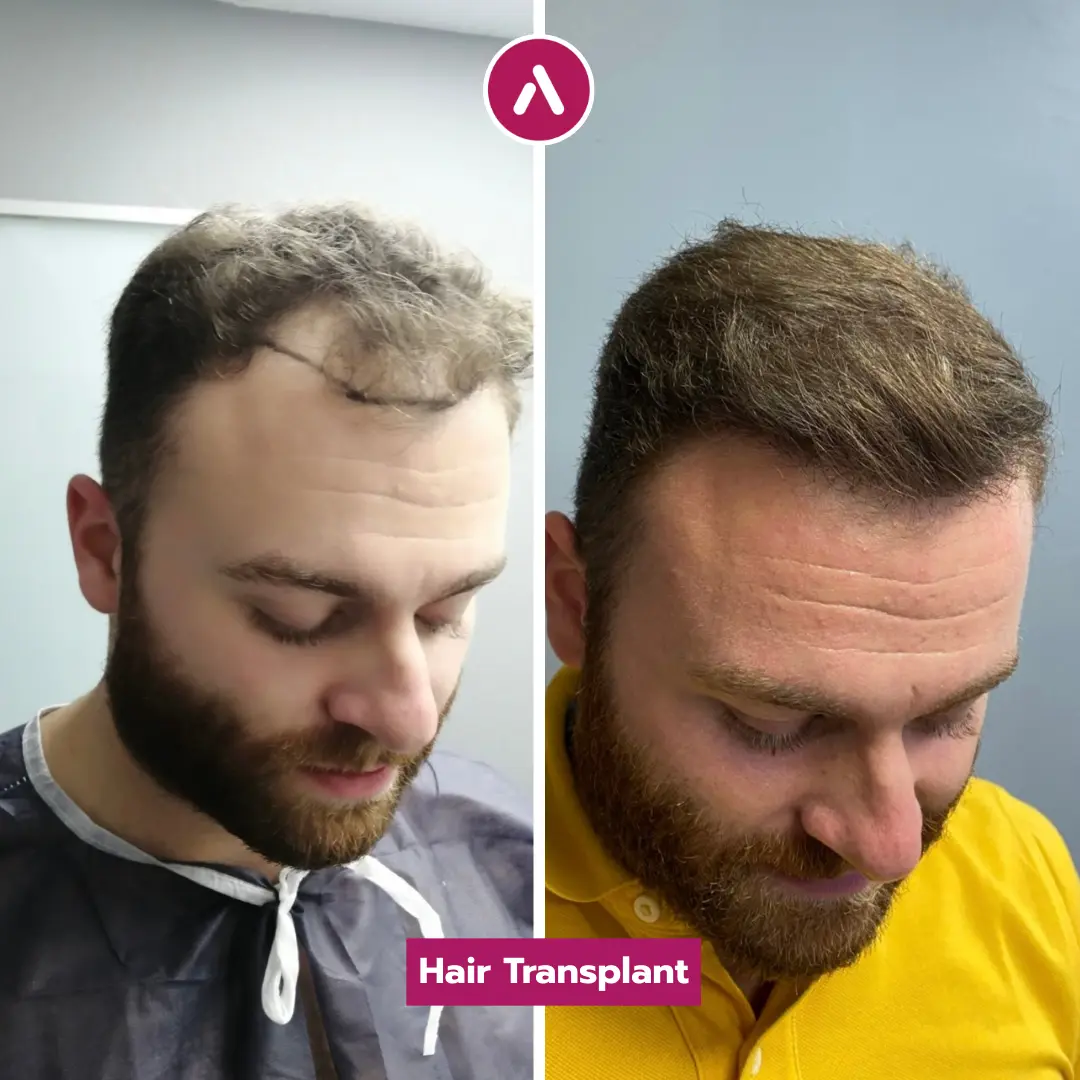
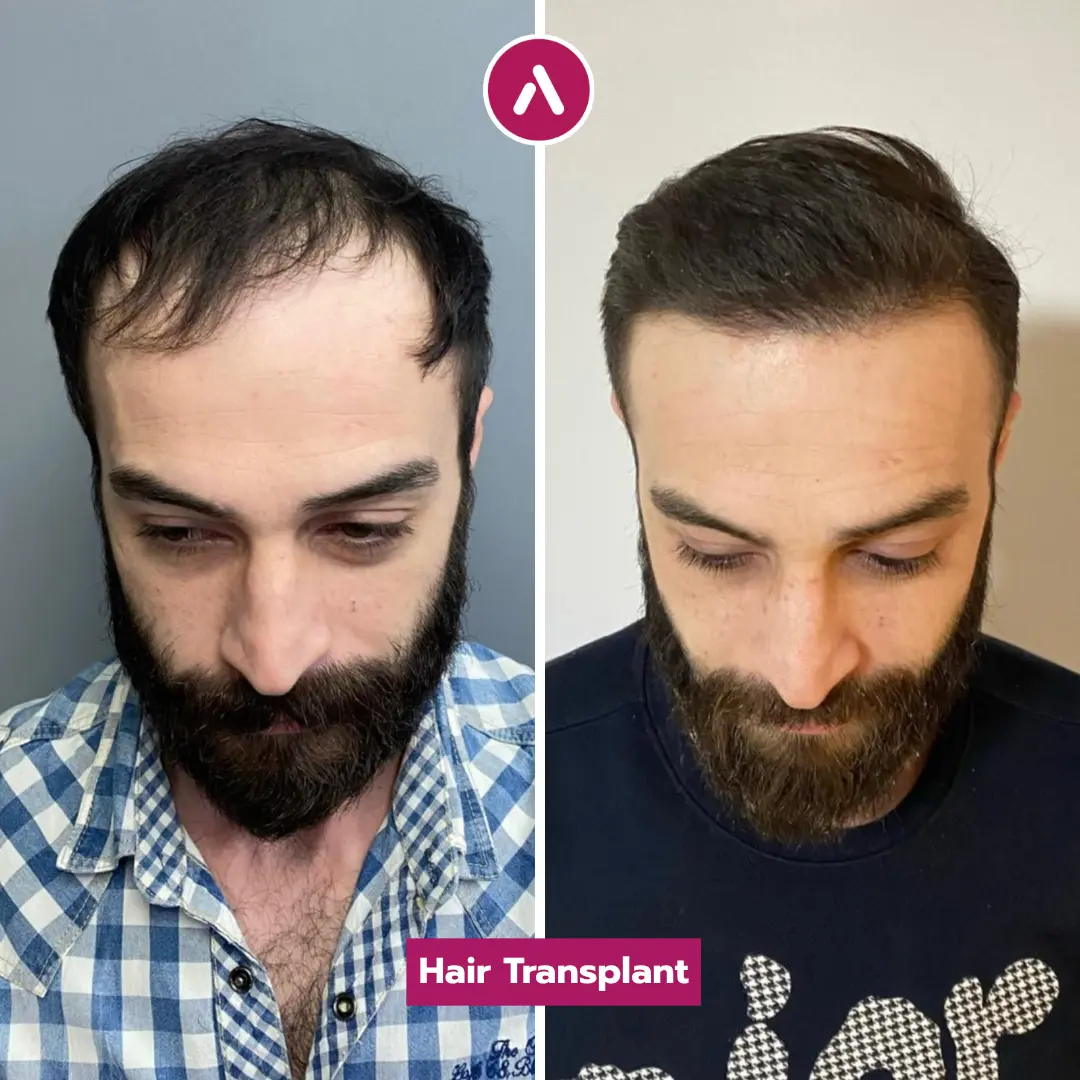
Sapphire Hair Transplant is a modern refinement of FUE hair restoration that focuses on one critical step: how recipient sites (the tiny channels where grafts are placed) are created.
When those sites are made with a sapphire blade, the goal is cleaner incisions, more precise angle control, and a recovery experience that feels more predictable.
We built this guide for the “expert patient”—the person who wants to understand the method first, then decide who can execute it safely and consistently.
- Best for: Men and women seeking natural-looking density and a carefully engineered hairline.
- Core difference: Sapphire blades create recipient channels with a focus on precision and tissue respect.
- Big idea: Natural results come from design, direction, and disciplined execution—not hype.
Table of Contents
What Is Sapphire Hair Transplant?
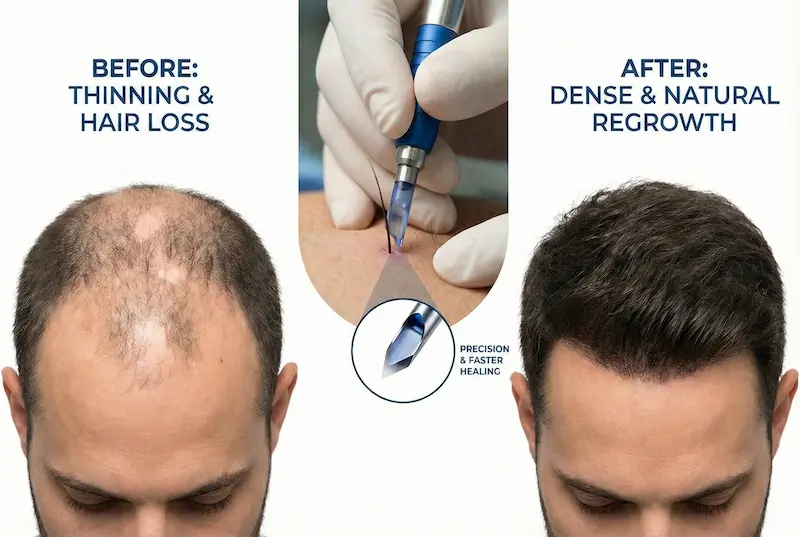
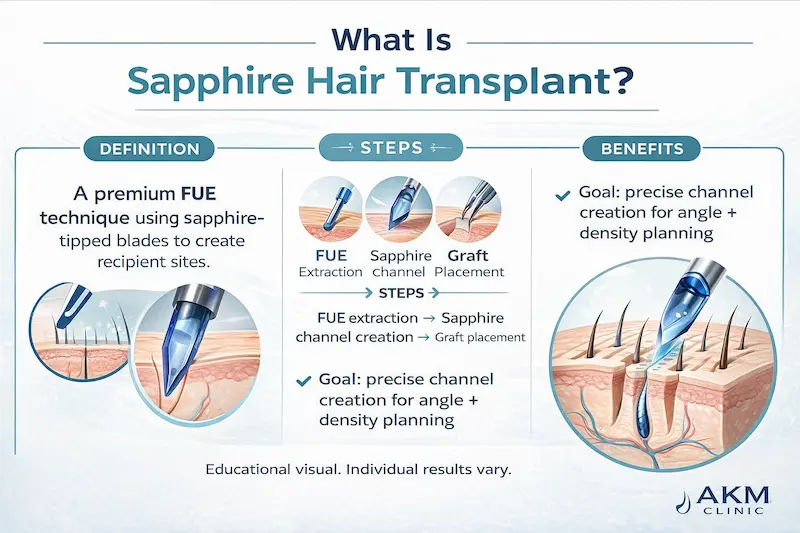
If you’ve searched what is sapphire hair transplant, here’s the clean definition: it’s an FUE-based procedure where follicles are harvested individually from the donor area and then implanted into channels created with a sapphire-tipped blade.
In other words, “sapphire” describes the incision tool used during the recipient-site creation step—often the most design-sensitive part of the surgery.
Is Sapphire the Same as FUE?
Most patients are actually asking what is sapphire fue hair transplant. Sapphire is not a separate category from FUE—it’s a premium variation within FUE.
Extraction is still FUE (follicles removed one by one). The difference is how the channels are created before placement.
What Does the “Sapphire Blade” Really Mean?
People often look up sapphire blade for hair transplant because “sapphire” sounds like branding. The blade is real—and it matters because it touches living tissue.
Compared with conventional steel blades, sapphire blades are associated with a sharper, smoother cut profile, which can support cleaner channel geometry and consistent spacing when used correctly.
- Angle control: Helps guide the direction your hair will grow.
- Channel consistency: Supports a more uniform pattern for density planning.
- Tissue respect: The goal is less unnecessary trauma in the recipient area.
How the Technique Works (Without the Fluff)
If your query is sapphire fue hair transplant technique, here’s the mechanism in plain language: we design the hairline, harvest grafts with FUE, then create recipient channels using sapphire blades, and finally place grafts into those channels.
Each step influences the final look, but channel creation is where hair direction, spacing, and “undetectable work” are won or lost.
Procedure Basics: What Happens on the Day
When someone searches sapphire fue hair transplant procedure, they usually want the sequence. While every plan is personalized, the core flow is consistent:
- Design: Hairline and density mapping based on facial balance and future-proofing.
- Extraction (FUE): Follicles are harvested from the donor area.
- Channel creation: Sapphire blades are used to create recipient sites with planned angles and spacing.
- Placement: Grafts are placed into the sites, matching direction and distribution goals.
In patient-friendly terms: sapphire is about precision where precision matters most.
Why Patients Choose the Sapphire Hair Transplant Technique
Most people don’t choose sapphire because it sounds premium. They choose it because they want a method that supports natural angles, stable density planning, and a recovery process that feels structured.
That aligns with our philosophy: Rejuvenation, Not Alteration. The best result looks like you—just restored.
1) Precision That Supports Natural Hair Direction
Hair doesn’t grow straight out. It exits the scalp at angles that change across the hairline, mid-scalp, and crown.
Sapphire channel creation is designed to help surgeons control those angles with more consistency—so the hairline doesn’t look “pluggy,” and density doesn’t look artificial.
Surgeon’s Insight: Natural results are engineered. Angle, direction, and distribution have to agree with each other.
2) Cleaner Channel Geometry for Density Planning
Density is not only “how many grafts.” It’s where they’re placed, how they’re spaced, and how they’re angled.
When channels are created in a controlled, uniform way, it becomes easier to execute a density plan that looks full without sacrificing realism.
3) A Method Built for Patients Who Care About Recovery
Expert patients think ahead. They ask how the scalp will look in week one, how fast redness settles, and when they can return to social life.
Sapphire is often chosen because its incision approach is intended to be tissue-respectful, which can support a smoother early healing phase when paired with disciplined post-op care.
4) It’s Not Magic—It’s Execution
Here’s the honest part: a sapphire blade doesn’t replace surgical skill. It amplifies it.
That’s why we focus on European Board Certified surgical leadership, strict pre-operative screening, and a protocol-driven approach designed for predictable outcomes—especially for international patients who want clarity, not uncertainty.
- Best use-case: Patients prioritizing natural design and structured planning.
- Key expectation: The technique supports precision—but your plan and execution define the outcome.
Am I a Good Candidate for a Sapphire Hair Transplant?
Most people considering a Sapphire Hair Transplant aren’t looking for “more hair at any cost”—they want a natural result that still looks right years from now. Candidate selection is where that long-term thinking begins.
In general, the best candidates have a stable donor area, realistic expectations, and a hair-loss pattern that can be restored with a well-distributed graft plan.
Who Typically Benefits Most
- Men with patterned hair loss (and a stable donor zone) who want a hairline that looks unforced and age-appropriate.
- Women with thinning (depending on the pattern and donor strength) who want strategic density without over-harvesting.
- Patients who prioritize design, angle control, and predictability over shortcuts or hype—often the same people comparing premium methods like sapphire vs DHI.
What We Evaluate Before Recommending Surgery
A high-quality outcome is rarely about a single factor. We assess the full “engineering” picture—what we can safely move, where it should go, and how it should be placed so the result looks real.
- Donor capacity: density, hair caliber, scalp laxity, and safe extraction planning.
- Recipient area needs: hairline design, mid-scalp density strategy, crown expectations (often the most demanding zone).
- Hair characteristics: curl pattern, color contrast with scalp, and shaft thickness (all influence perceived density).
- Medical suitability: medications, scalp conditions, and factors that may affect healing or growth cycles.
When We May Recommend Waiting (or an Alternative Plan)
Being transparent about timing is part of safety. Some patients are better served by stabilizing hair loss first, adjusting lifestyle factors, treating scalp inflammation, or planning a staged approach rather than forcing density too early.
- Unstable hair loss: when ongoing shedding suggests the pattern is still rapidly progressing.
- Inflamed scalp conditions: when the scalp needs treatment before surgery is considered.
- Unrealistic density goals: when expectations exceed what the donor can safely support.
Surgeon’s Insight: The “best” transplant is the one that still looks natural when you’re older—because the plan respected your donor supply from day one.
Setting Expectations (The Part That Protects Your Outcome)
Even with the most advanced tools—whether you call it a sapphire method hair transplant or a sapphire technique hair transplant—your result is shaped by planning, placement discipline, and biology. That’s why we focus on realistic goals:
- Natural appearance first: especially at the hairline (angles, direction, and distribution).
- Smart density strategy: building the illusion of fullness where it matters most.
- Long-term donor protection: avoiding aggressive extraction that can compromise future options.
Procedures to Combine Sapphire Hair Transplant
Many international patients ask whether they can combine a Sapphire Hair Transplant with other aesthetic procedures during the same trip. In the right patient, strategic “combo planning” can reduce travel time and consolidate recovery—but only when safety, swelling management, and surgical priorities are respected. Our approach is conservative: we prioritize graft survival, minimize unnecessary inflammation, and recommend staging when two procedures would compete for healing resources.
Hair Restoration Pairings with Sapphire Hair Transplant
If you are also considering a dhi hair transplant for targeted areas (such as hairline refinement), we may discuss whether a hybrid plan makes sense. In many cases, it’s smarter to choose one implantation strategy per session to keep execution consistent and recovery simpler. The decision depends on your hair-loss pattern, donor capacity, and density goals.
Facial Procedures with Sapphire Hair Transplant
Facial surgeries like rhinoplasty or blepharoplasty can be compatible with a hair transplant trip, but timing is critical. Swelling pathways and aftercare instructions should not conflict. When combined, we plan to avoid pressure on grafts, minimize head-down positioning, and keep post-op routines straightforward.
Body Procedures with Sapphire Hair Transplant: Best as Staged Add-Ons
Procedures such as gynecomastia surgery or abdominal etching may be possible for suitable candidates, yet they often increase overall inflammation and recovery demands. For many patients, staging these treatments (rather than doing everything at once) supports a smoother healing experience and clearer monitoring of results.
If you want a combination plan, we review your goals, medical history, and timeline first—then recommend the safest sequence for predictable outcomes.
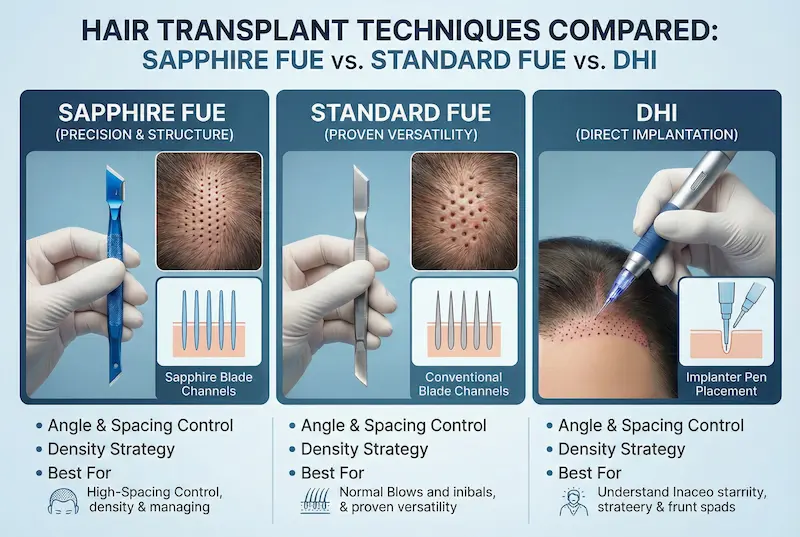
Techniques Compared: Sapphire FUE vs Standard FUE vs DHI
If you’re researching sapphire fue hair transplant vs fue or sapphire fue hair transplant vs dhi, you’re already thinking like an expert patient: “What is the real mechanical difference—and what does it change for me?”
Here’s the clear answer: all three can produce excellent results when executed properly. The differences come down to how recipient sites are created, how grafts are implanted, and what type of patient goals each approach fits best.
| Feature | Sapphire FUE | Standard FUE | DHI |
|---|---|---|---|
| What it is | FUE extraction + channels created with a sapphire blade, then graft placement | FUE extraction + channels created with conventional blades, then graft placement | FUE extraction + direct implantation using an implanter pen (often called a “DHI pen”) |
| Recipient site creation | Sapphire blade channels designed for precise angle and spacing control | Conventional channels (tooling varies) with angle and spacing controlled by surgeon technique | No separate “channel stage” in the same way; implantation is done via pen-based placement |
| Angle & direction control | Very strong when planning and channel design are executed precisely | Strong in experienced hands; depends heavily on the surgeon’s incision discipline | Strong; direction is guided during pen placement (highly technique-dependent) |
| Density strategy | Excellent for structured density planning across hairline and mid-scalp | Excellent; can be highly effective with proper channel planning | Often chosen for targeted work (e.g., hairline refinement) depending on patient goals |
| Healing experience | Designed to be tissue-respectful with clean channel geometry; outcomes depend on aftercare and biology | Can be smooth with disciplined technique and aftercare; outcomes vary by patient | Can be smooth; depends on implantation technique, density, and post-op compliance |
| Best for | Patients prioritizing precision hairline design, consistent recipient site planning, and predictable execution | Patients seeking a proven, versatile method with excellent outcomes in expert hands | Patients comparing a pen-based implantation approach and seeking specific design objectives |
So Which One Is “Better”?
The honest answer: the “better” technique is the one that best matches your scalp, donor supply, and design goals—and is executed by a team that follows a protocol, not shortcuts.
In many real-world cases, the decision is less about branding and more about how the surgical plan is built:
- Hairline artistry: If your top priority is a soft, natural hairline, both sapphire and DHI can do it—provided angles and distribution are meticulously planned.
- Structured density: Sapphire-based channel planning can be ideal when you want a clear, engineered density map (hairline → mid-scalp).
- Targeted refinement: Some patients exploring dhi sapphire hair transplant comparisons are really asking for precision refinement; the right answer is a tailored plan, not a slogan.
What About “Sapphire Pen” and “Micro” Variations?
You may see terms like sapphire pen hair transplant or sapphire micro fue hair transplant online. These often reflect how clinics describe tool size, incision strategy, and density approach—rather than a completely separate medical category.
What matters most is the practical outcome: controlled angles, clean spacing, safe donor management, and a plan designed around you.
Surgeon’s Insight: Tools don’t create natural results—planning does. The tool simply allows the plan to be executed with more control.
Planning the Hairline Like an Engineer
A natural result starts before a single graft is harvested. It starts with geometry.
We plan the hairline to look believable up close, in harsh lighting, and years from now. No “straight line.” No sudden density wall.
The Three Decisions That Shape Everything
- Hairline position: We set it to fit your facial proportions and age. Lower is not always better.
- Direction and angle: We map the exit angle so new growth blends with native hair and looks unforced.
- Density distribution: We design where density matters most (usually hairline + mid-scalp) and where it should stay softer (often the frontal transition zone).
Hairline Design: “Soft Edges” Win
The most natural hairlines have irregularity. Tiny, intentional irregularity.
We build a transition zone using singles first, then gradually increase density behind it. That’s how a hairline avoids the “transplanted” look.
Surgeon’s Insight: A hairline should look like it grew there. That takes restraint, not bravado.
Graft Math: What an Expert Patient Should Know
Graft count is not a trophy. It’s a budgeting exercise.
You have a limited donor supply for a lifetime, so we plan in a way that protects future options.
- Hair caliber: Thicker hair can create the appearance of higher density with fewer grafts.
- Color contrast: High contrast (dark hair, light scalp) often needs more strategic packing to look full.
- Crown reality: The crown can consume grafts fast. We treat it as a separate design decision.
Donor Protection: The Part Most Clinics Don’t Explain
A strong transplant is invisible not only in the front, but also in the back.
We extract in a pattern that avoids patchiness and protects the donor’s visual uniformity.
That means saying “no” to aggressive harvesting when it isn’t safe.
Our Safety Lens Before We Approve Surgery
Planning is medical. Not cosmetic.
We apply strict pre-operative health screenings to confirm candidacy and reduce avoidable risk before you travel or commit.
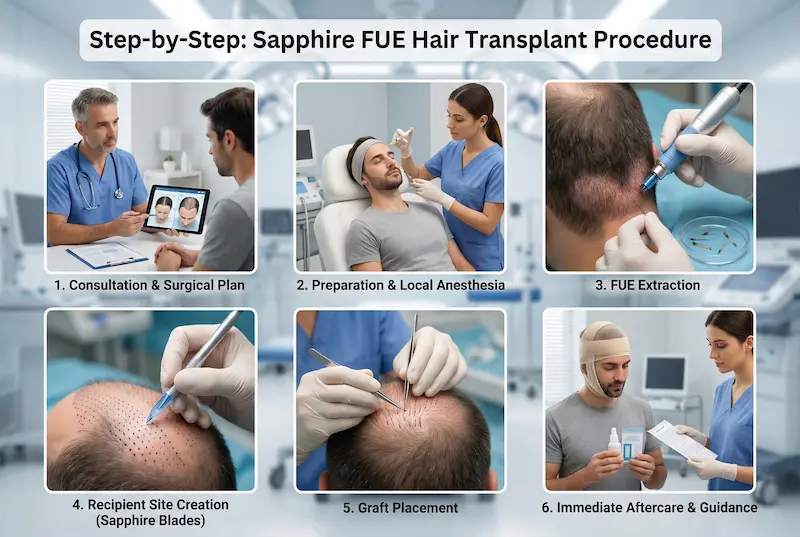
Step-by-Step: Sapphire FUE Hair Transplant Procedure
If you’re researching the sapphire fue hair transplant procedure, you’re usually asking two things: “What happens on the day?” and “What can go wrong?”
We run the process with a protocol mindset—because predictable outcomes come from predictable steps.
1) Consultation and Surgical Plan
We start by confirming your goals, your hair-loss pattern, and your donor capacity.
Then we finalize a plan you can actually understand: hairline design, estimated graft needs, density strategy, and long-term considerations.
2) Preparation, Comfort, and Local Anesthesia
Hair transplantation is typically performed under local anesthesia.
We focus on comfort, pacing, and communication throughout the day, especially for international patients who want clarity at every step.
3) FUE Extraction (Harvesting the Grafts)
We harvest follicles individually from the donor zone using an FUE approach.
Extraction quality matters. So does donor preservation.
- Goal: harvest healthy grafts while keeping the donor area visually balanced.
- What we avoid: uneven over-harvesting and rushed punch work that can compromise healing.
4) Recipient Site Creation With Sapphire Blades
This is where the “sapphire” part matters most.
Our European Board Certified surgical leadership plans and creates recipient sites with angles, spacing, and direction that match the design.
These sites are the blueprint for how your new hair will sit, flow, and look in real life.
5) Graft Placement
We place grafts into the prepared sites according to the plan: singles up front, then carefully layered density behind.
Precision here is not optional. It’s the difference between “full” and “obvious.”
6) Immediate Aftercare and First Wash Guidance
Before you leave, we explain your first days in simple, practical terms.
- How to protect the grafts while sleeping
- What normal redness or crusting looks like
- When you can return to normal activities safely
Surgeon’s Insight: The surgery is one day. The protocol is two weeks. Both matter.
Anesthesia & Comfort: What You’ll Feel During a Sapphire Hair Transplant
Most patients worry about pain more than anything else—especially if they’re traveling internationally. A Sapphire Hair Transplant is typically performed under local anesthesia, which means you are awake, breathing on your own, and able to communicate with the team throughout the day.
Our priority is not “toughing it out.” It’s comfort, clarity, and controlled pacing—because a calm patient experience supports a smoother procedure day.
What the Numbing Process Feels Like
- First minutes: You may feel brief stinging or pressure as local anesthesia is administered.
- During the procedure: Most patients report pressure and movement rather than sharp pain.
- Breaks and pacing: We plan the day with breaks so the experience stays manageable.
Comfort Is a Protocol, Not a Promise
Comfort comes from three things: correct anesthesia technique, patient communication, and a team that doesn’t rush. We proactively check in with you and adjust pacing when needed—especially during longer sessions.
Surgeon’s Insight: A relaxed procedure day is not a luxury—it’s part of quality control.
Safety Monitoring During the Day
Even though this is not “major surgery,” safety still matters. We follow a structured medical workflow that includes pre-operative screening and intra-day monitoring to reduce avoidable risk and support predictable recovery.
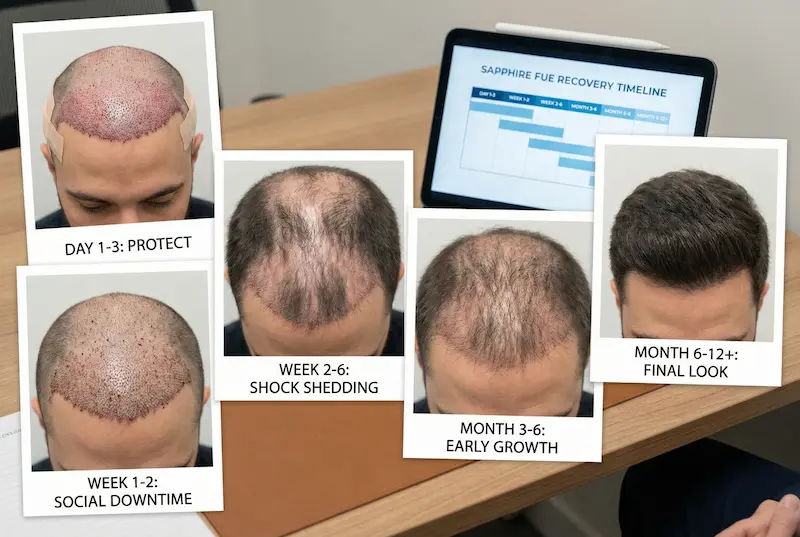
Recovery Timeline: Sapphire FUE Hair Transplant Recovery Time
If you’re searching sapphire fue hair transplant recovery time, you want two things: what you’ll look like in the first days, and when you’ll look normal again in public.
Below is the realistic timeline—what’s common, what’s optional, and what should trigger a check-in.
First 72 Hours: Protect the Grafts
- Swelling: Mild swelling can occur, often peaking around day 2–3.
- Redness: Redness in the recipient area is common early on.
- Sleep positioning: We advise keeping the grafts protected and avoiding direct pressure.
Days 4–14: The “Social Downtime” Window
This is when crusting forms and gradually lifts with proper washing technique. Most patients are significantly more comfortable by the end of week one, but visible signs can last into the second week depending on your skin type and healing pattern.
- Crusting: Expected and temporary—do not pick.
- Itching: Often appears as healing progresses.
- Work and public life: Many patients plan 7–14 days depending on comfort with visible healing.
Weeks 2–6: Shock Shedding (Normal, Not Failure)
This is the phase that surprises first-timers. Transplanted hairs may shed—this is commonly called “shock loss.” It usually reflects the hair cycle resetting, not the grafts “falling out.”
Your scalp can look similar to baseline during this period. That’s normal.
Months 3–6: Early Growth Becomes Noticeable
New growth often starts gradually. Texture may feel fine at first and then thicken over time.
Months 6–12: Maturation and Final Look
Density and texture typically continue improving. Many patients consider 12 months a meaningful milestone—especially for the crown, which can mature more slowly.
Our “Rapid Recovery & Safety” Support Options
Recovery is still biology—but supportive protocols can help create a more structured post-op experience. Depending on your case, we may include or recommend supportive therapies as part of a disciplined follow-up plan:
- HBOT (Hyperbaric Oxygen Therapy): Often used in medicine to support tissue oxygenation and recovery environments. When appropriate, it may be used as a supportive element in the early phase.
- LLLT (Low-Level Laser Therapy): A non-invasive approach commonly used in hair restoration settings to support scalp care and the hair growth environment over time.
Surgeon’s Insight: The first two weeks are a protection phase. Consistency beats intensity.
Safety & Risks: What You Should Know (Without Sugarcoating)
A Sapphire Hair Transplant is generally considered a minimally invasive procedure when performed in a proper medical setting. But “minimally invasive” does not mean “risk-free.”
Expert patients want transparency—so here it is.
Common, Temporary Effects
- Redness and tenderness: Usually improves over the first days to weeks.
- Crusting: Expected in the recipient area during early healing.
- Itching: Common as the scalp heals.
- Shock shedding: Often occurs weeks after surgery and is typically temporary.
Less Common Risks (Why Protocol Matters)
- Infection: Rare with proper sterile technique and compliance—but possible.
- Folliculitis: Can occur as new hairs emerge; usually manageable with guidance.
- Uneven growth: Biology varies; planning and aftercare reduce avoidable variables.
- Donor over-harvesting: A preventable risk when clinics chase graft numbers instead of long-term safety.
How We Reduce Avoidable Risk
Our approach is simple: disciplined screening, disciplined surgery, disciplined aftercare.
- Pre-op evaluation: We assess medical suitability and scalp health before approving a plan.
- Controlled extraction: We prioritize donor preservation over aggressive harvesting.
- Design-first placement: Angle, direction, and distribution are treated as quality-control checkpoints.
- Structured aftercare: Clear rules for washing, sleeping, activity, and follow-up.
Is a Sapphire Hair Transplant Safe in Turkey?
“Turkey” is not a quality level—it’s a location. Safety depends on the clinic’s medical standards, surgical leadership, and whether the process is built around protocols or marketing.
What to Verify (The Expert Patient Checklist)
- Medical environment: A clinical setting with proper infection control and monitoring protocols.
- Surgical leadership: Who designs the hairline? Who creates the channels? Who is accountable?
- Ethical graft planning: If the plan ignores donor limits, the risk is long-term and visible.
- Transparent follow-up: You should know exactly how support works after you fly home.
If you’re searching for sapphire hair transplant Istanbul or “best clinics,” use the checklist above to filter options quickly. The goal is not just a great photo result—it’s a safe, repeatable process that holds up over time.
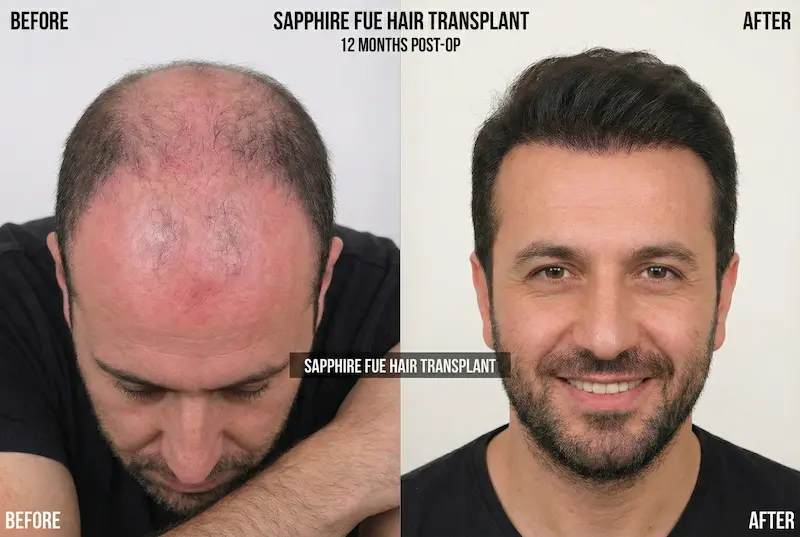
Realistic Expectations & Results: What “Good” Looks Like
Hair transplantation is not instant gratification. It’s biology, design, and time working together.
The most reliable way to judge your likely outcome is to understand what’s normal at each stage—especially when the scalp looks “worse” before it looks better.
We plan for a result that blends with your features and holds up long-term. That’s the core of our “Rejuvenation, Not Alteration” philosophy.
Below is how we set expectations for growth, density, and what you should look for in trustworthy results.
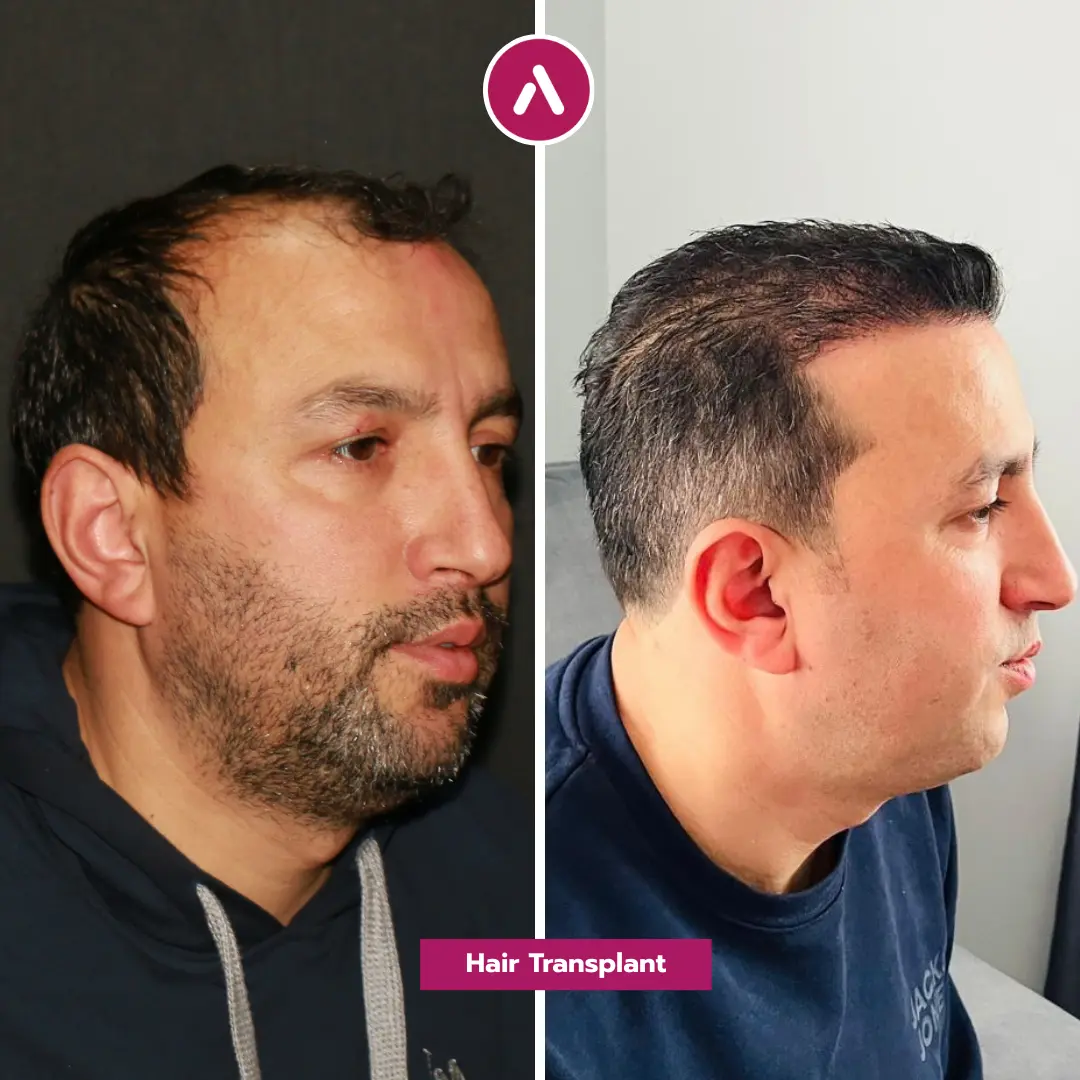
How to Read sapphire fue hair transplant before and after Results Like an Expert
Before-and-after photos can educate—or mislead. Lighting, haircut length, styling product, and camera angle can change perceived density dramatically.
When you review results, focus on consistency. Same angle. Similar lighting. Similar hair length. No heavy styling tricks.
- Hairline quality: Look for a soft transition zone, not a hard “wall” of density.
- Direction and flow: The hair should lie naturally, especially at the corners and temples.
- Donor integrity: The back should remain visually uniform, without patchiness.
Timeline: When You’ll Actually See Change
Growth happens in phases. The early weeks are about healing, not visible improvement.
Most patients see meaningful change between months 3 and 6, with continued thickening through month 12.
- Weeks 2–6: Shock shedding can happen. It’s common. It’s not failure.
- Months 3–6: Early growth becomes noticeable. Texture can feel fine at first.
- Months 6–12: Density and maturation improve. The crown often takes longer.
What “Natural” Really Means (And What It Doesn’t)
Natural results are not about maximum density everywhere. They’re about believable density where the eye expects it.
We build the front with restraint and detail, then layer density behind it. That’s how the work stays invisible.
Surgeon’s Insight: The best compliment is silence. When nobody notices a “procedure,” we did our job.
Typical Feedback We Hear From International Patients
Patients who research deeply tend to value predictability. They want a plan, a timeline, and a team that stays responsive after they fly home.
They also care about comfort and social downtime. That’s why we structure aftercare clearly and keep follow-up organized long-term.
Cost Analysis: Sapphire Fue Hair Transplant Cost 2026 & Value
When patients search sapphire hair transplant cost, they’re usually trying to answer one question: “What am I paying for?”
Price alone doesn’t reflect quality. The real comparison is the total medical experience—planning, surgical leadership, safety standards, and post-op support.
We use an all-inclusive package model for international patients to remove surprises. That means fewer hidden line items and more clarity from day one.
Below is how to think about cost like a rational buyer—not a bargain hunter.
What Determines the Total Price
A transplant is a customized medical plan. Cost changes with complexity.
- Graft requirements: Hairline-only refinement differs from full frontal + mid-scalp restoration.
- Design complexity: Rebuilding corners, temples, or a diffuse pattern takes more precision.
- Donor management: Safe harvesting and uniform donor preservation are non-negotiable.
- Aftercare structure: Medications, garments, and follow-up support matter for the experience.
Turkey vs USA: Why the Cost Gap Exists (Without Compromising Standards)
Many US patients compare sapphire fue hair transplant cost turkey to domestic pricing because the difference can be significant.
The key point: the gap is driven by macroeconomic factors like exchange rate and national operating costs—not a requirement to reduce quality.
We reinforce “USA-level” expectations by operating in fully accredited environments, using FDA-approved materials, and maintaining strict screening and monitoring standards.
What Our All-Inclusive Model Covers
We designed our VIP structure to remove logistical friction for international patients. You should be focused on preparation and recovery, not coordination.
- Your complete surgical procedure
- Anesthesia & operating room fees
- All pre-operative tests
- 5-star hotel accommodation
- All VIP airport & clinic transfers
- Your 24/7 dedicated patient host
- All post-operative medications & garments
- First post-op meal
- Long-term virtual follow-up care
A More Useful Comparison Than “Price”
Instead of comparing one number to another, compare what you’re actually receiving. This is the difference between cost and value.
| Category | Typical USA Model (Often Itemized) | Our All-Inclusive Model (Built for International Patients) |
|---|---|---|
| Medical fees | Procedure fee + facility fees may be separate | Included as one transparent quote |
| Pre-op tests | Often billed separately | Included |
| Recovery support | Varies by provider and region | Structured post-op plan + long-term virtual follow-up |
| Logistics | Patient-managed (hotel, transfers, scheduling) | 5-star hotel + VIP transfers + 24/7 host coordination |
| Cost predictability | Can change with add-ons and line items | Designed for clarity and fewer surprises |
How to Get Your Exact Quote
We don’t guess pricing without a plan. We quote based on your donor capacity, your goals, and a realistic density strategy.
After a free virtual consultation, we provide a transparent, all-inclusive quote built around your case—whether you’re comparing sapphire fue hair transplant turkey cost or planning for a specific timeline.
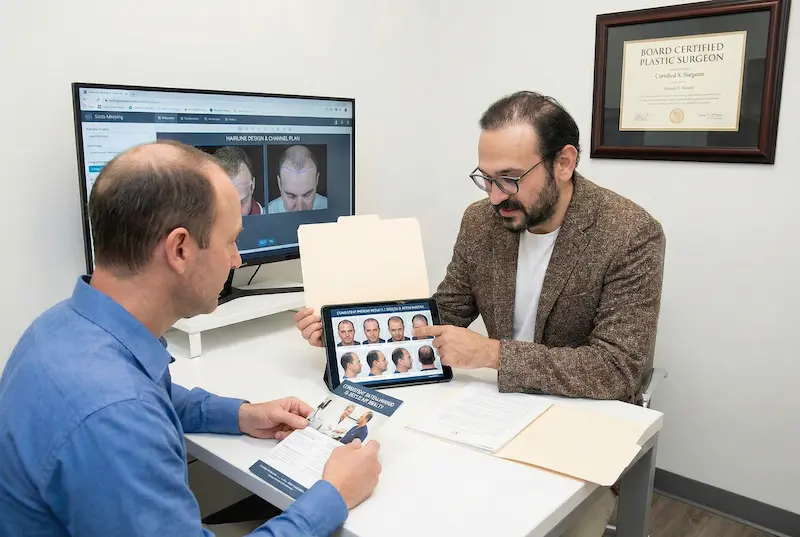
Finding the Right Surgeon: Board Certification, Leadership, and Proof
Choosing a clinic is not about slogans. It’s about accountability.
A transplant can look great in a “best-case” photo and still be built on risky planning. That’s why expert patients filter providers by standards, not marketing.
We recommend a simple framework: verify credentials, confirm surgeon-led planning, and demand consistent evidence.
If a clinic can’t answer those three areas clearly, keep looking.
1) Why Board Certification and Training Matter
Board certification is not a vanity badge. It’s a third-party signal that a physician met structured training and competency standards.
It also matters because it changes how the plan is built. Conservative donor budgeting. Realistic density strategy. Long-term thinking.
- Ask directly: “Who is medically accountable for my plan and outcome?”
- Verify, don’t assume: credentials should be checkable through professional organizations or formal listings.
- Watch for vague language: “Our team is very experienced” is not the same as verifiable credentials.
2) Surgeon-Led Planning: Who Designs, Who Executes, Who Owns the Result?
Hair restoration is design-driven. The hairline and channel plan are the blueprint.
That’s why we keep surgical leadership involved in the steps that determine naturalness: mapping, angle strategy, and recipient-site creation.
When you evaluate any clinic, ask these questions:
- Hairline design: Who designs it, and how do they justify the shape for your age and face?
- Channel creation: Who creates the recipient sites that control direction and flow?
- Safety screening: What checks happen before you’re approved to travel and proceed?
Surgeon’s Insight: Precision is not a device feature. It’s a planning discipline.
3) Proof That Holds Up: Photos, Follow-Up, and Consistency
The internet is full of highlight reels. You want repeatability.
We advise patients to judge results using consistency standards, not dramatic transformations alone.
- Photo standards: similar lighting, similar angles, similar hair length.
- Donor integrity: the back should remain visually even, not “thinned out” in patches.
- Continuity of care: verify how follow-up works after you return home.
Your Medical Journey: What to Expect (Arrival to Departure)
International care should feel structured, not stressful.
Our system is built to reduce uncertainty for patients traveling from the USA: clear planning before you fly, coordinated logistics on arrival, and responsive support after you’re home.
This matters because many patients fear being “left alone” once they leave the clinic. We design our workflow to prevent that.
Below is the typical timeline we follow so you can plan with confidence.
1) Before You Fly: Virtual Planning and Safety Screening
We start with a virtual consultation so you can understand your options before committing to travel.
We review your photos, discuss your goals, and build a realistic plan around donor capacity and long-term safety.
- What we confirm: candidacy, donor strength, target areas, and an ethical graft strategy.
- What you receive: a clear roadmap, not a vague estimate.
- What we avoid: rushing you into surgery without proper screening.
2) Arrival in Istanbul: Comfort, Privacy, and Coordination
When you arrive, we coordinate the practical details so your energy stays focused on the procedure and recovery.
Our all-inclusive model is designed to remove friction—hotel, transfers, and on-the-ground guidance.
- VIP transfers: airport-to-hotel and hotel-to-clinic coordination.
- 5-star accommodation: arranged as part of the plan.
- Privacy-first experience: we maintain USA-standard confidentiality and data security protocols.
3) After Surgery: First Days, Clear Rules, Long-Distance Follow-Up
Recovery goes smoother when instructions are simple and consistent.
We give you a clear plan for washing, sleeping, activity, and what “normal” looks like during early healing.
Then we stay available when you’re home—because questions don’t stop when your flight takes off.
- Early-phase focus: protect grafts, reduce avoidable irritation, and follow a calm routine.
- Support mindset: responsive communication so you don’t feel abandoned post-travel.
- Long-term view: timeline guidance through shock shedding and the growth phase.
Ready for a plan? Share clear photos and your goals. We’ll map a strategy built around natural design, donor safety, and a structured recovery experience.
Sapphire Hair Transplant Frequently Asked Questions (FAQ):
What is a sapphire blade for hair transplant?
A sapphire blade is a surgical tool used to create the recipient sites (the tiny channels) where grafts are placed. In a Sapphire Hair Transplant, the “sapphire” part refers to this channel-creation step—designed to support precise angle control, consistent spacing, and a tissue-respectful incision profile when used correctly.
Is Sapphire FUE different from regular FUE?
Yes—primarily in how the recipient sites are created. With standard FUE, extraction is the same concept (follicles are harvested one by one), but channel creation may use different blades. In Sapphire FUE, channels are created using sapphire blades to support controlled geometry for direction, angle, and distribution planning.
Sapphire FUE vs DHI: which is better?
If you’re comparing sapphire fue hair transplant vs dhi, the “better” choice depends on your goals, scalp characteristics, and the surgical plan. Sapphire FUE is often chosen for structured channel planning and engineered density mapping. DHI is often discussed as a pen-based implantation approach. Both can produce natural results—execution and planning are the deciding factors.
Sapphire FUE vs FUE: what’s the real difference?
When patients search sapphire fue hair transplant vs fue, they’re usually asking about the recipient-site tool and incision style. The extraction principle is still FUE. Sapphire focuses on using sapphire blades for the channel step, with the goal of cleaner, more consistent channel creation and predictable angle control.
How long is sapphire FUE hair transplant recovery time?
Most patients plan 7–14 days for the most visible healing (redness/crusting varies by skin type and aftercare compliance). “Normal-looking in public” often improves significantly after the first week, but full maturation is much longer: early growth commonly appears around months 3–6, with continued thickening through month 12 (especially in the crown).
Is shock shedding normal after Sapphire FUE?
Yes. Shock shedding (temporary shedding of transplanted hairs) can happen in the weeks after surgery and is typically part of the hair cycle resetting—not the grafts “failing.” Your new growth usually begins gradually in the months that follow.
When will I see final results?
Most patients see meaningful improvement between months 6–12, with texture and density continuing to mature over time. The crown often develops more slowly than the frontal area. We set expectations around your pattern, donor capacity, and the density strategy—not generic timelines.
How much does a sapphire hair transplant cost?
If you’re researching sapphire hair transplant cost or sapphire fue hair transplant cost, the most accurate answer is: it depends on graft requirements, design complexity, donor-management strategy, and the overall care model (itemized vs all-inclusive). A reliable quote should be based on your photos, goals, and a realistic donor-safe plan.
Why is sapphire FUE hair transplant cost in Turkey lower than the USA?
Patients commonly compare sapphire fue hair transplant cost turkey or sapphire fue hair transplant turkey cost to domestic pricing. The cost gap is often driven by macroeconomic factors (operating costs and exchange rate), not a requirement to compromise standards. The real question is whether the clinic’s process is surgeon-led, protocol-driven, and transparent about safety and follow-up.
Is a sapphire hair transplant in Istanbul safe?
Sapphire hair transplant Istanbul searches are common because Istanbul is a major destination for hair restoration. Safety depends on the clinic—not the city. We recommend verifying medical standards, who is accountable for planning and key surgical steps, how donor limits are protected, and how follow-up works once you return home.
“Best sapphire hair transplant clinics in Istanbul” — how do I choose?
If you’re searching best sapphire hair transplant clinics in istanbul, use a checklist instead of trusting rankings:
Accountability: Who designs your hairline and who creates the recipient sites?
Ethical planning: Does the plan respect donor limits and long-term options?
Evidence: Consistent before/after standards (same angle, similar lighting, similar hair length).
Safety + follow-up: Clear screening, clear instructions, clear post-op support.
“Best sapphire FUE hair transplant Turkey” — what should I verify?
Patients search phrases like best sapphire fue hair transplant turkey, the best sapphire fue hair transplant in turkey, or top-rated sapphire fue hair transplant turkey. Instead of taking “best” claims at face value, verify what actually predicts outcomes: surgeon-led planning, disciplined execution, standardized documentation, donor protection, and structured long-distance follow-up.
Does Sapphire Hair Transplant work for women?
It can, depending on the pattern of thinning, donor strength, and the overall diagnosis. Women with diffuse thinning may require a different strategy than men with patterned loss. We evaluate candidacy carefully to avoid unrealistic density promises and to protect donor safety.
Will the transplanted hair be permanent?
Transplanted follicles are typically taken from areas more resistant to genetic hair loss, which is why results can be long-lasting. However, native (non-transplanted) hair can continue thinning over time. That’s why we plan with long-term patterns in mind and may discuss stabilization strategies when appropriate.
How do I get an exact plan and quote?
We base planning on your photos, hair-loss pattern, donor capacity, and goals. If you want an individualized plan, share clear images and what you’re hoping to achieve. We’ll map a realistic density strategy and provide a transparent quote aligned with your case.
Medical Disclaimer:
This page is for educational purposes only and does not replace medical advice, diagnosis, or treatment. Every patient’s anatomy, healing response, and hair-growth cycle are different, and outcomes can vary. A qualified clinician must evaluate your medical history and scalp condition to determine candidacy and provide personalized recommendations. If you have concerns or experience unexpected symptoms after any procedure, seek medical care promptly.