




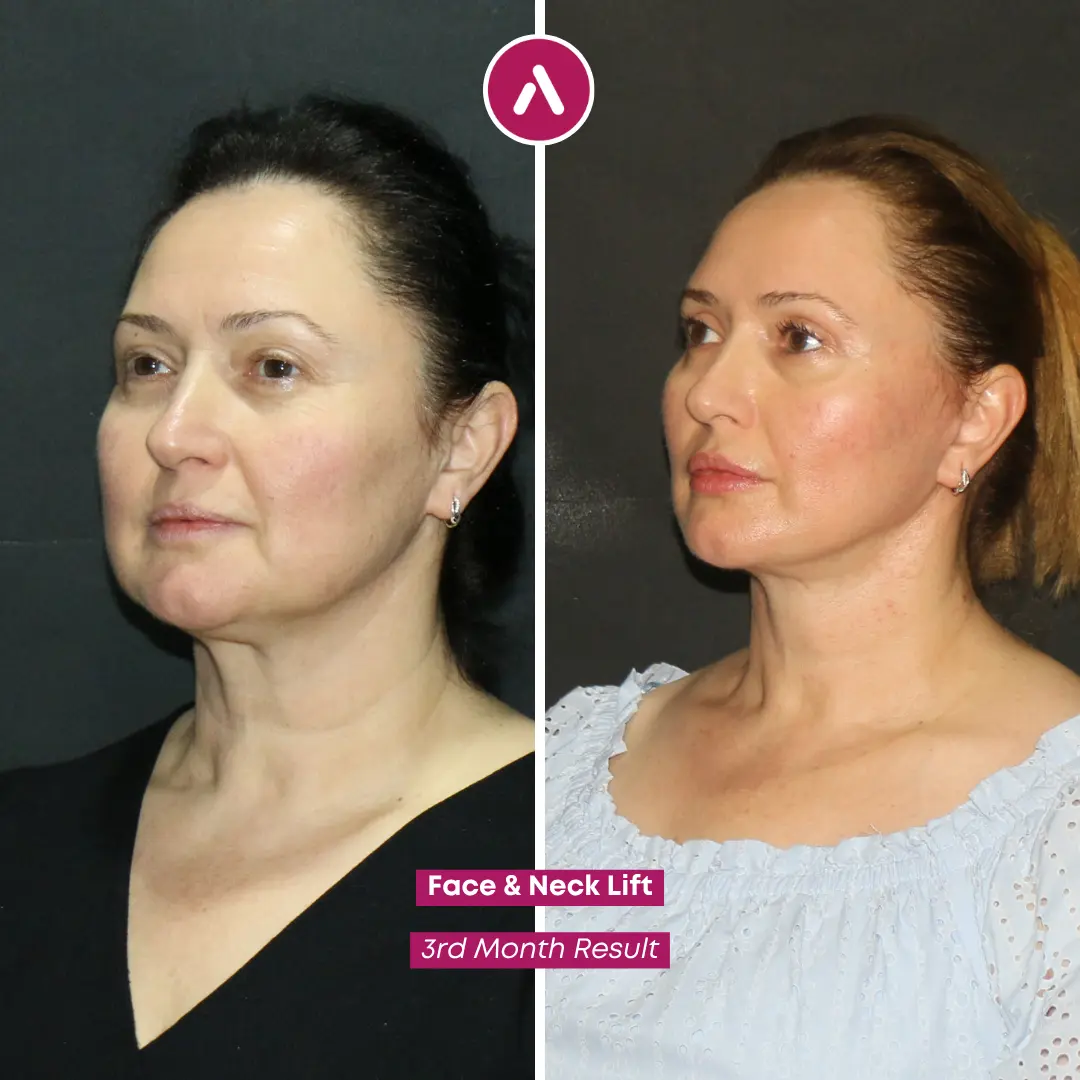
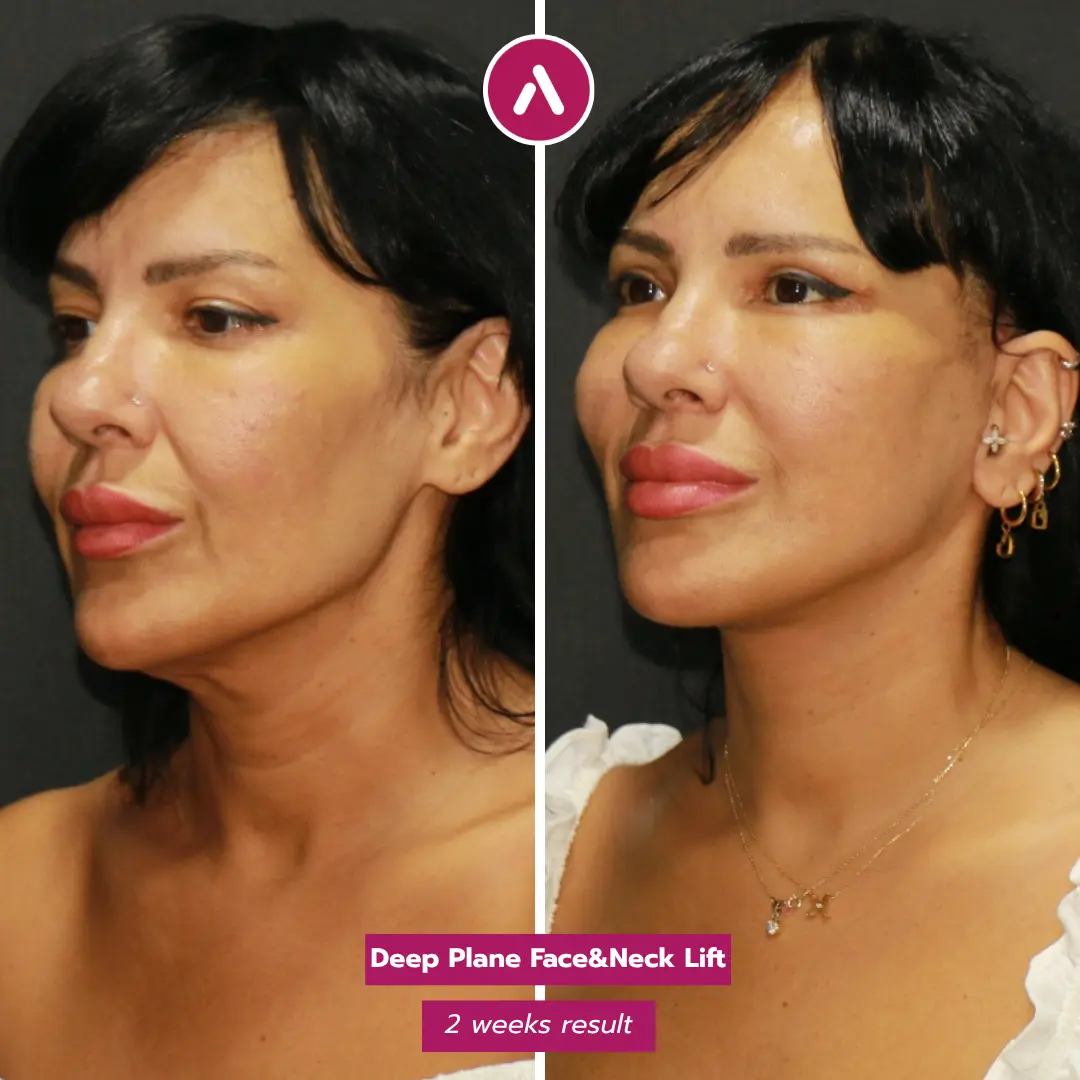
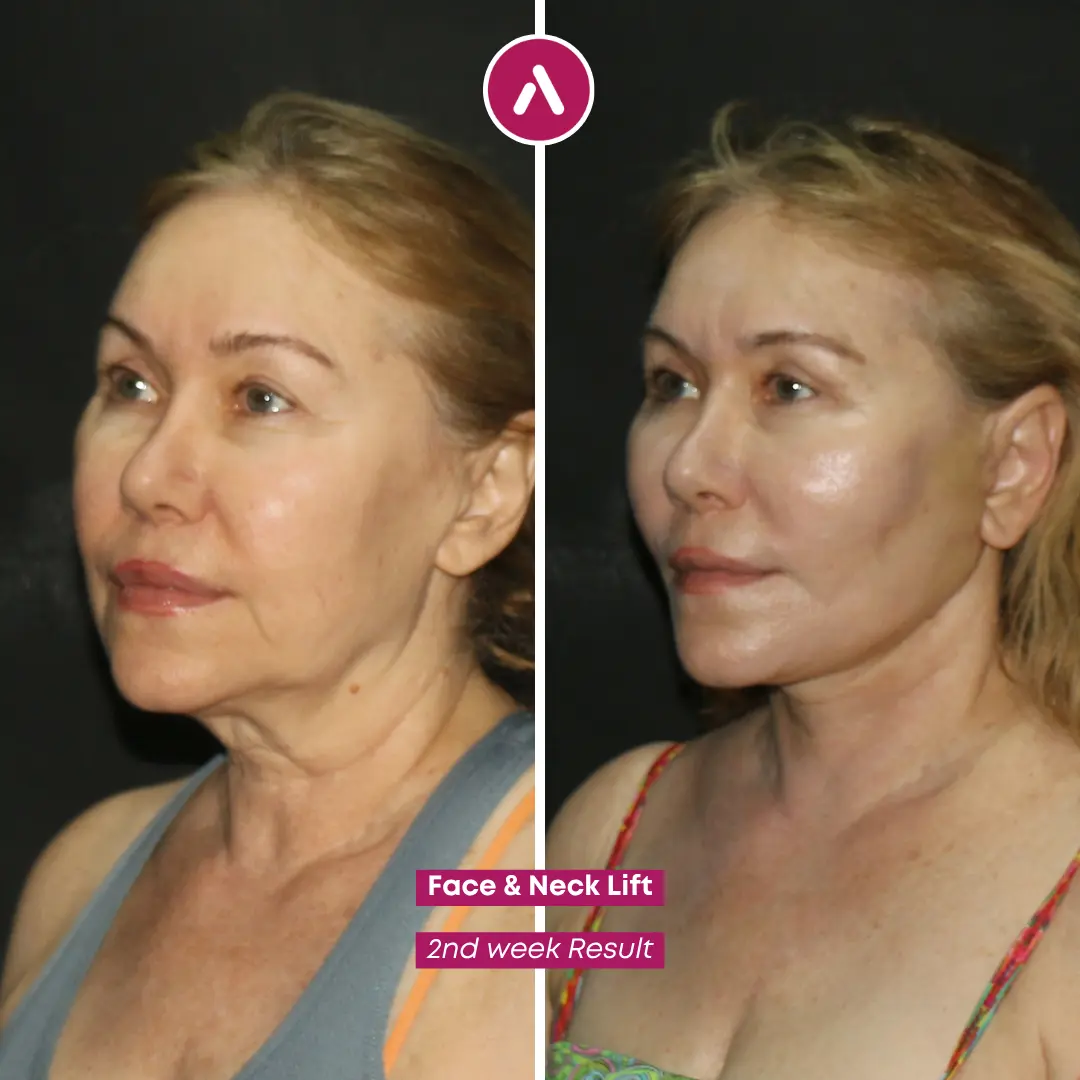
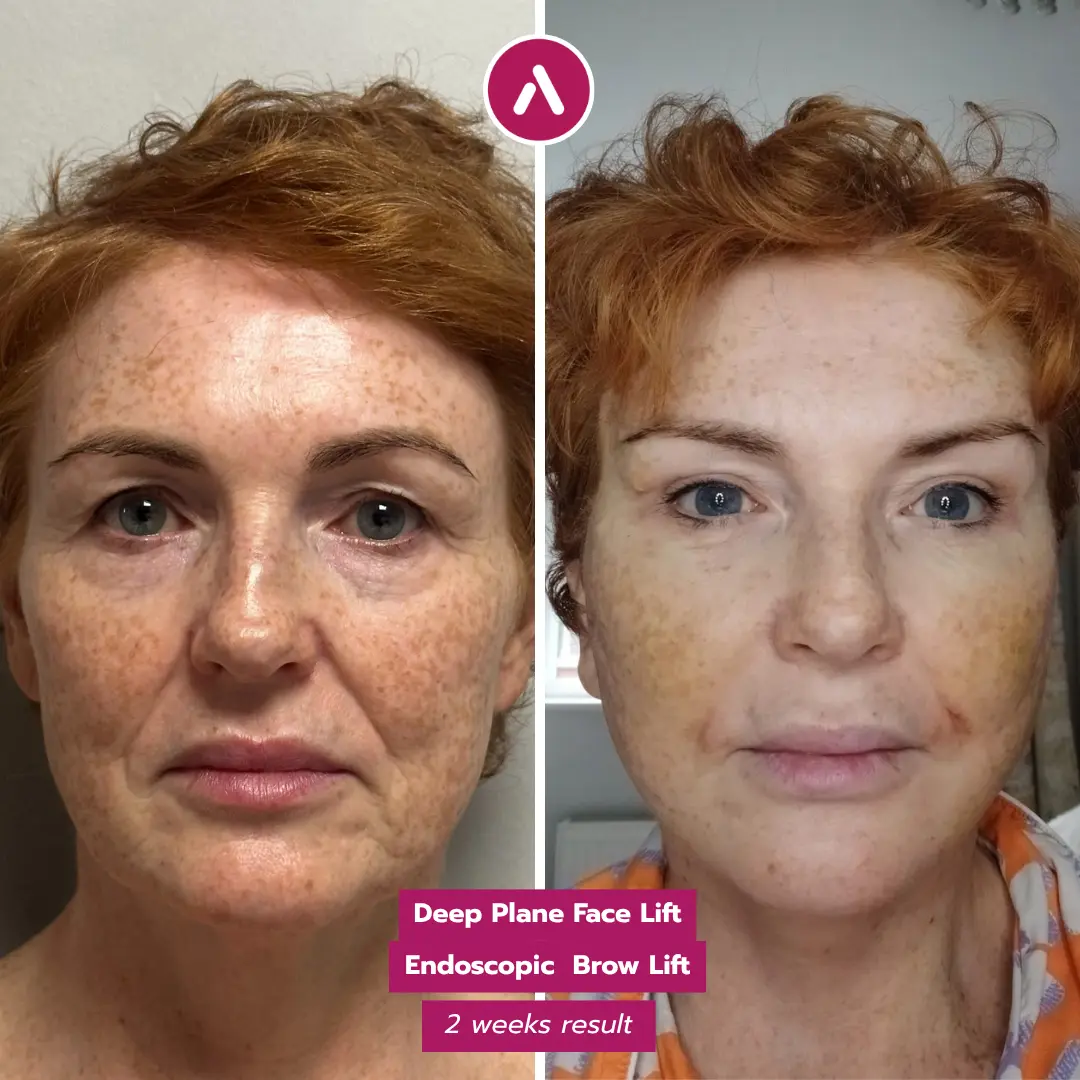
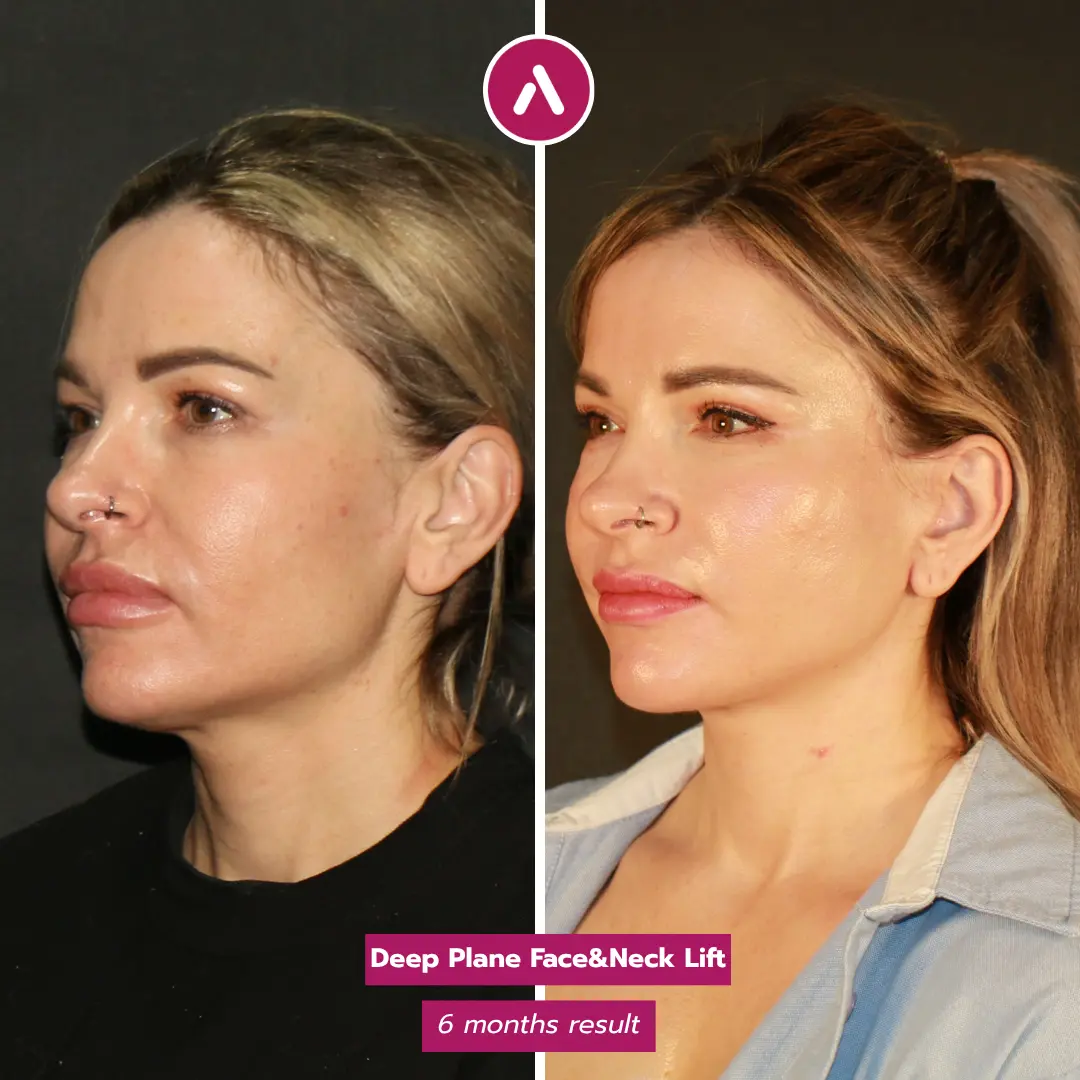
A mini facelift (sometimes called an S-lift or “short-scar facelift”) is a surgical technique designed to refresh the lower face—most commonly the early signs of jowling, jawline softening, and mild laxity around the lower cheeks. It is not a “smaller version of everything” a full facelift can do. Instead, it’s a targeted procedure with a narrower scope, a typically shorter incision pattern, and a recovery profile that can be easier for the right candidate.
This guide is written for the “expert patient” mindset: if you’re the type who compares techniques, searches for scar photos, and wants a realistic answer to “Is it worth it?”, you’re in the right place. We’ll focus on what mini facelift surgery can reliably improve, where it predictably falls short, and how to evaluate technique, anesthesia options (including awake/twilight approaches), and recovery planning.
Important note: a consultation with a qualified facial plastic surgeon is essential. Your anatomy, skin quality, degree of tissue descent, and goals determine whether a mini facelift will look natural—or whether you’d be better served by a more structural technique (such as a SMAS or deep-plane approach) or a different combination of procedures.
Table of Contents
What Is a Mini Facelift?
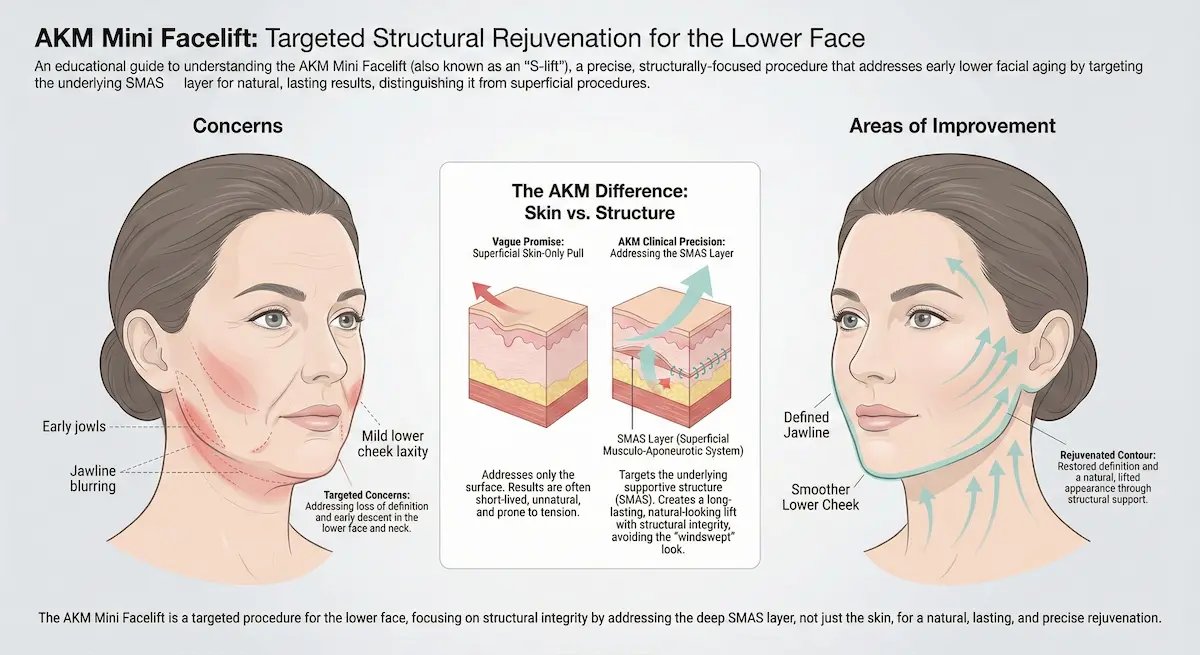
A mini facelift is a lower-face rejuvenation procedure that focuses on improving early-to-moderate sagging along the jawline and lower cheeks. It generally uses shorter, strategically placed incisions (often around the front of the ear) and aims to restore definition without the “over-pulled” appearance patients fear. In clinical overview resources, the emphasis is consistently on matching the technique to the patient’s anatomy and avoiding skin-only tension whenever deeper structural support is needed. The best outcomes come from selecting the right candidate and using a technique that addresses more than the skin alone.
Mini facelift definition: what it targets
Most mini facelift techniques are designed to address:
- Early jowls (the beginnings of heaviness along the jawline)
- Jawline blurring (loss of clean separation between face and neck)
- Mild-to-moderate lower cheek laxity
- Subtle marionette-line softening (in select candidates)
Because the focus is typically the lower third of the face, improvements in the midface (under-eye hollowing, pronounced cheek descent) are usually limited unless the plan includes additional structural lifting or adjunct procedures.
What does a mini facelift consist of?
While details vary by surgeon, a mini facelift commonly includes:
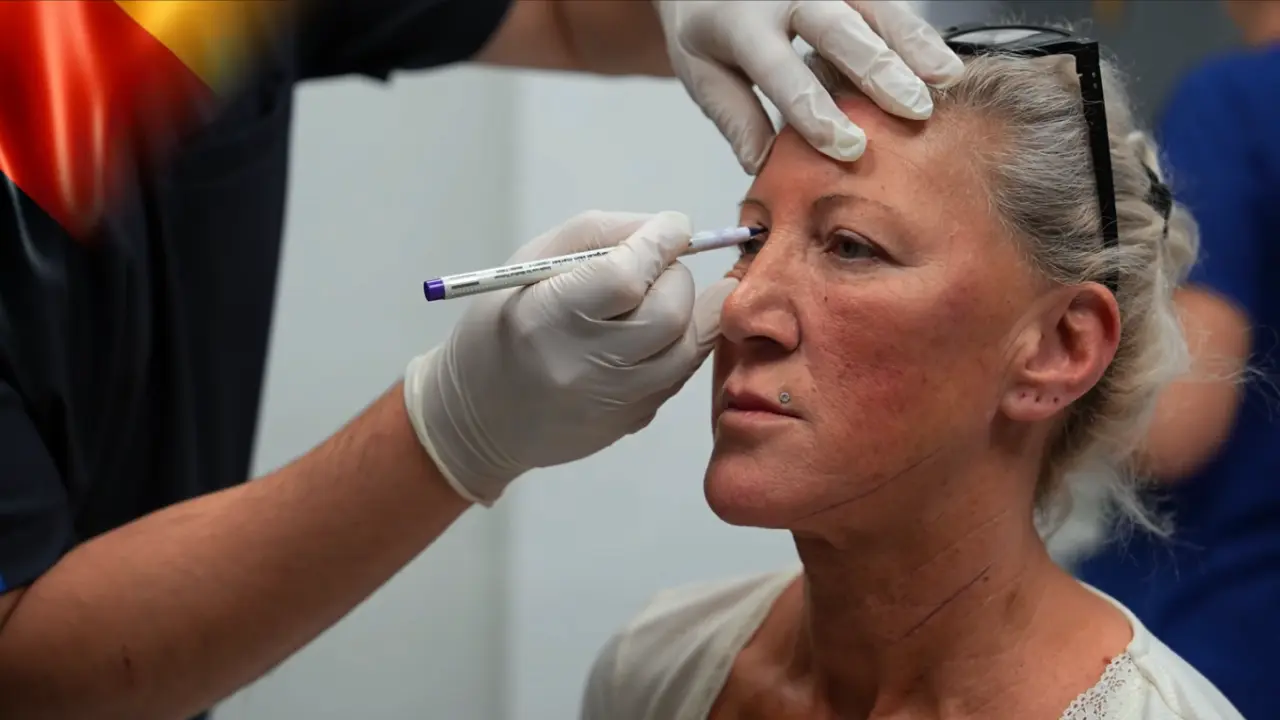
- Preoperative design (mapping your specific vectors of laxity and where the lift should “re-anchor” tissues)
- Incisions placed to minimize visibility and allow access to the tissues that need repositioning
- Tissue tightening/repositioning (the key difference between “skin-only” vs deeper-layer approaches)
- Excess skin refinement to reduce bunching and improve contour
- Meticulous closure aimed at minimizing tension on the skin edges (important for scar quality)
The phrase “mini” does not automatically mean “minor.” It’s still surgery—performed for an aesthetic result—so sterility, monitoring, candidacy screening, and careful aftercare matter just as much as they do for larger procedures.
Mini facelift vs full facelift: the real difference
A full facelift typically addresses a broader set of concerns across the lower face and often the neck more comprehensively, with wider tissue release and repositioning. A mini facelift, by contrast, is best viewed as a precision intervention for:
- Earlier-stage changes
- Less neck involvement (unless paired with a neck lift or targeted neck refinement)
- Patients prioritizing less downtime and a shorter incision pattern—when anatomically appropriate
If you have significant platysmal banding (vertical neck bands), substantial neck laxity, or pronounced midface descent, a mini facelift alone may under-deliver. In those cases, the “worth it” answer often depends on whether you’re willing to accept a partial improvement—or whether you want the more structural reset of a different lift.
Facial Aging 101 — The Anatomy Behind Jowls and Lower-Face Sagging
The most common misconception about facial aging is that it’s just “extra skin.” In reality, the face ages as a layered system: skin changes, fat compartments shift, retaining ligaments lose their supportive role, and deeper structural layers descend. Understanding this matters because mini facelift results depend on whether the technique corrects the cause of your change—or only the visible surface.
Skin vs structure: why “skin-only” lifting can look unnatural
Skin can be redraped, but if the deeper tissues (including the SMAS layer) remain descended, the lift may rely on surface tension. Over time, that can translate into:
- Less durable correction
- Higher risk of “pulled” or “tight” appearance in motion
- Scar strain (because tension concentrates on the skin closure)
More modern mini facelift plans often incorporate deeper support (for example, variations of SMAS tightening), because a natural result is usually built on repositioning tissues closer to where they sat before gravity and time shifted them.
Why jowls happen (and why the jawline blurs)
Jowling is rarely a single-factor problem. It often reflects a combination of:
- Lower cheek tissue descent and heaviness along the mandibular border
- Changes in fat compartments that create shadowing and fullness in new places
- Skin quality changes (elasticity loss) that amplify the appearance of sagging
- Neck-lower face interaction (a small amount of neck laxity can make the jawline look less defined)
This is why two patients the same age can need different solutions: one may be an ideal mini facelift candidate; another may need a combined approach to truly restore a clean jawline-to-neck transition.
Mini facelift limitations: what it can’t reliably fix
A mini facelift is typically not designed to fully correct:
- Significant neck laxity or strong platysmal banding (often better addressed with a neck lift/platysmaplasty)
- Major midface descent (cheek droop, deep nasolabial folds driven by deeper ptosis)
- Pronounced volume loss (which may require fat transfer or other volumization strategies)
That doesn’t mean a mini facelift is “lesser.” It means it’s specific. The key is matching the procedure to the anatomy so the result looks refreshed—without signaling “surgery.”
Ideal Candidates — Who Is a Good Fit?
The single biggest driver of satisfaction after a mini facelift is not the marketing name of the lift—it’s proper candidacy. When a mini facelift is matched to the right anatomy and goals, it can create a clean, rested jawline with scars that are typically well-concealed and downtime that feels manageable. When it’s mismatched (for example, used to “force” a correction that really requires deeper or broader lifting), patients are more likely to feel underwhelmed or to worry that their result looks tight, temporary, or uneven.
Who tends to do best with a mini facelift
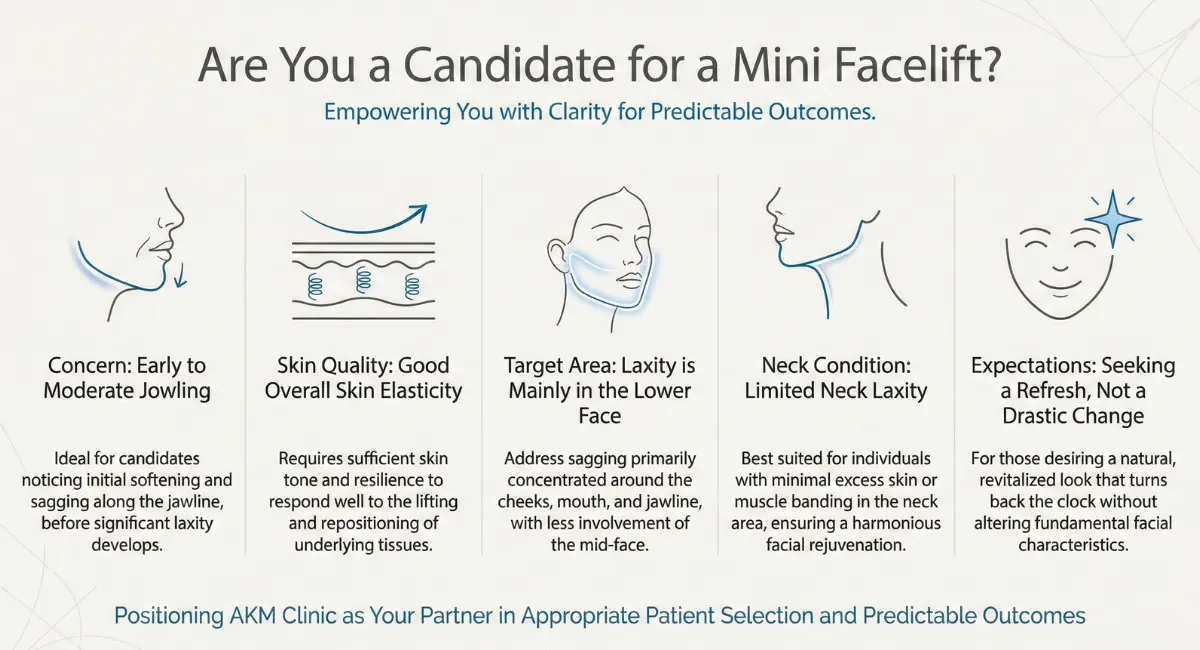
Most strong mini facelift candidates share a similar pattern: they have early to moderate lower-face laxity with concerns concentrated around the jawline rather than the midface or neck. You may be a good fit if you recognize several of the following:
- Early jowling or jawline blur that shows in photos, especially in 3/4 view
- Mild lower-cheek sagging that makes the face look heavier at the sides
- Good overall skin quality (enough elasticity to redrape smoothly)
- Relatively limited neck laxity (or neck concerns that could be addressed with a small add-on refinement)
- Preference for a targeted approach rather than a full face/neck reset
- Realistic expectations—you want to look refreshed, not drastically different
Age alone does not determine candidacy. Some patients in their early 40s have structural descent that calls for a different plan, while some patients in their late 50s have localized lower-face laxity that responds beautifully to a mini lift plus thoughtful adjuncts (for example, conservative volume support).
Who may be disappointed (and what might work better)
A mini facelift can be the wrong tool when the main issue is outside its typical scope. You may not be an ideal candidate if your primary concerns include:
- Significant neck laxity or prominent platysmal bands (often better treated with a neck lift and/or platysma work)
- Substantial midface descent (cheek droop, deep fold patterns driven by deeper tissue movement)
- Very heavy tissues where a limited-dissection approach may not provide stable support
- Marked skin quality limitations (severe sun damage, very poor elasticity), where redraping alone may not look smooth
- Expectation mismatch—wanting a “10–15 year reset” from a procedure designed to provide a targeted refresh
In these scenarios, a surgeon may recommend one of the following directions instead:
- SMAS-based lifting (when deeper support is needed to avoid relying on skin tension)
- Deep-plane style lifting (when more structural release and repositioning is required for a natural, durable correction)
- Combined procedures (for example, a mini facelift with a dedicated neck approach, or lifting plus fat transfer when volume loss is a major component)
The goal is not to “upsell” a bigger operation—it’s to choose the smallest procedure that can predictably achieve your goal without creating telltale signs of surgery.
Mini facelift vs fillers and non-surgical tightening
Many expert patients arrive at mini facelift research after cycling through non-surgical options. Here’s a grounded way to think about the decision:
- Fillers can restore volume and camouflage mild contour changes, but they do not reposition descended tissue. Overfilling the lower face can sometimes create heaviness or widen the face.
- Energy-based tightening may provide subtle improvements in carefully selected patients, but results are usually modest when the core issue is true tissue descent.
- Mini facelift surgery is fundamentally a repositioning procedure. If your main problem is sagging along the jawline, surgery often provides the most direct and visible correction.
A common “best of both worlds” plan is to use surgery for position (lift) and reserve volume techniques (fat transfer or conservative filler) for true volume loss—rather than trying to use filler to replace a lift.
The consultation checklist: what a high-level assessment should include
If you want to evaluate a provider and a plan with expert-patient rigor, your consultation should feel structured—not vague. A strong mini facelift assessment typically covers:
- Goal mapping: What bothers you most (jowls, jawline, marionette area), and what “natural” means to you
- Anatomic diagnosis: Is the issue mostly skin laxity, deeper descent, neck contribution, or volume loss?
- Technique rationale: Why this type of mini facelift (and not skin-only, not a different plane, not a combined approach)?
- Scar strategy: Where will incisions sit, how will tension be managed, and what is the scar-care plan?
- Anesthesia plan: Local vs twilight vs general—what is recommended for your comfort and safety profile?
- Recovery planning: Expected bruising/swelling curve, time off work, and key restrictions
- Risk review: Most likely complications, how they’re prevented, and what happens if they occur
- Photo evidence: Consistent before/after photos that match your anatomy and goals (not just “best-case” marketing shots)
If a plan sounds like a one-size-fits-all “mini lift package” without a clear explanation of anatomy, vectors, and what will be done beneath the skin, that’s a cue to slow down and seek a second opinion.
Techniques & Variations — Mini Facelift Types Explained (Including S-Lift)
“Mini facelift” is an umbrella term, not a single standardized operation. Different surgeons use the label to describe different depths of dissection, different ways of supporting the tissues, and different incision patterns. This is why two patients can both claim they had a mini facelift—and have dramatically different outcomes. Understanding the technique spectrum is the fastest way to make your research practical and to avoid disappointment.
S-lift: what the term usually implies
The term S-lift is commonly used to describe a short-scar lift concept that focuses on improving the lower face through an incision that is typically concentrated around the ear, with a design intended to be discreet. Depending on the surgeon, an S-lift may involve:
- A limited access approach aimed at the lower cheek and jawline
- Some form of deeper-layer support (in better-engineered versions)
- Selective skin redraping to refine contour without excessive tension
Because the label is not universally standardized, the most important question is not “Do you do an S-lift?” but rather: Which layer are you lifting and how are you supporting it?
Skin-only mini facelift vs SMAS-support mini facelift
From an outcomes standpoint, this is one of the most meaningful distinctions to clarify.
- Skin-only approaches primarily rely on pulling and redraping the skin. They may offer a short-term improvement in carefully selected patients, but they can place more tension on the incision line and may be less durable for true tissue descent.
- SMAS-support approaches incorporate the deeper supportive layer (often referred to as the SMAS) to help reposition and stabilize the lower-face tissues. When executed well and matched to the right patient, this often improves durability and supports a more natural look in motion.
For the expert patient, a practical way to evaluate this: ask your surgeon to explain how the plan avoids relying on skin tension and how it maintains a natural facial “vector” (the direction tissues are repositioned) without creating a pulled appearance.
Mini facelift vs deep-plane facelift: not “better vs worse,” but “scope vs structure”
Search results often frame this as a competition, but it’s more accurate to see it as a question of anatomy and goals. In general terms:
- A mini facelift is typically designed to address early-to-moderate lower-face laxity with a more limited scope.
- A deep-plane style facelift is usually considered when deeper tissue release and repositioning is necessary to correct more pronounced descent while keeping the result natural and avoiding surface tension.
If your primary complaint is isolated to early jowling and jawline blur, a well-designed mini facelift can be an elegant solution. If you have more advanced descent (especially when the midface and neck contribute strongly), a deeper and/or more comprehensive technique may be more predictable.
Vertical vs lateral vectors: why direction matters for a natural result
One of the subtle reasons results can look “obvious” is the direction in which tissue is tightened. While every face is different, surgeons often describe their plan in terms of vectors—how the lift repositions tissues relative to gravity and facial anatomy. A thoughtful vector strategy can help:
- Restore a clean jawline without a “pulled to the ear” look
- Reduce distortion around the mouth and sideburn/temple area
- Support scar quality by minimizing unnecessary tension on the skin
This is also where surgical experience matters: natural results tend to come from precise repositioning and conservative redraping, not maximal tightening.
Incisions, Scars, and Aesthetic Planning
Scarring is one of the most searched—and most emotionally loaded—topics in mini facelift research. The good news is that mini facelift incision designs are typically intended to be well-hidden around natural ear contours. The more nuanced truth is that scars don’t become “invisible” because an incision is short; they become discreet because the plan minimizes tension, respects anatomy, and follows a disciplined aftercare strategy during the months it takes a scar to mature.
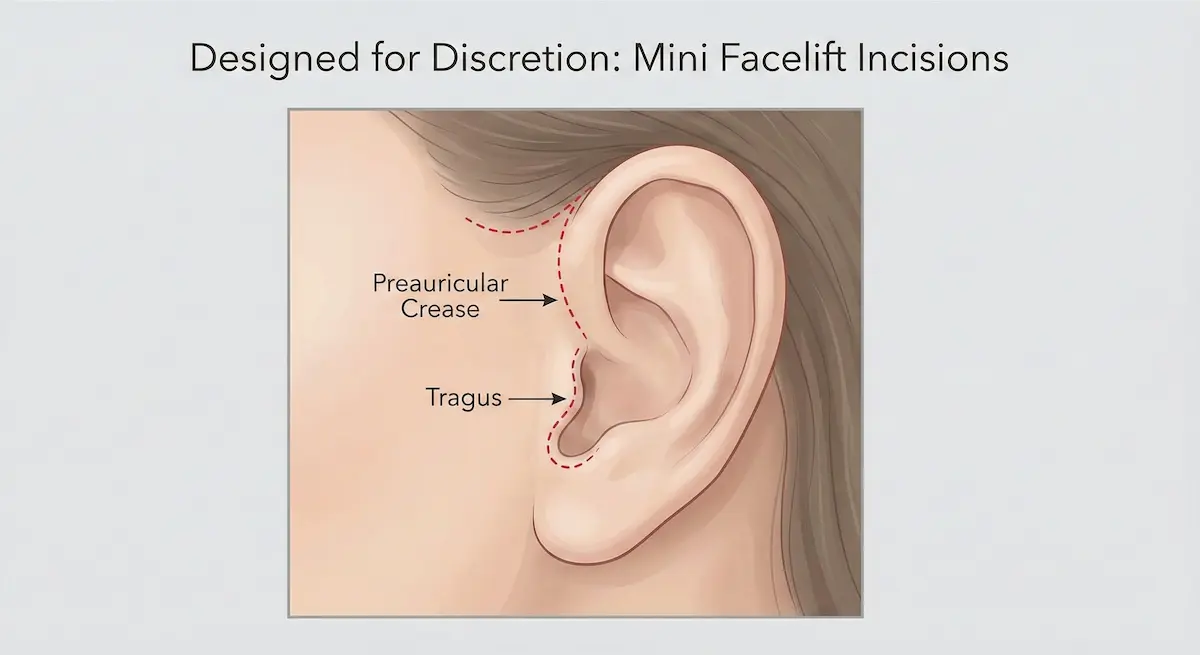
Where are the incisions for a mini facelift?
While exact placement varies by technique and anatomy, mini facelift incisions are commonly positioned:
- Along the natural crease in front of the ear (preauricular crease)
- Curving around the tragus (the small cartilage in front of the ear canal) in a way designed to camouflage the line
- Potentially extending slightly behind the ear in select cases—especially if additional skin redraping is needed
The surgeon’s goal is to place incisions where they blend into shadow lines and natural folds, while still allowing enough access to reposition tissues safely. In well-selected candidates, the incision pattern is often shorter than a full facelift, but incision length is always secondary to creating a stable, natural-looking lift.
Mini facelift scars: what’s normal, what’s not
Scar healing is a process, not an event. Early scars can look red, slightly raised, or feel firm—this is common in the first weeks to months. A realistic scar timeline often looks like this:
- Weeks 1–4: incision lines may look pink/red; mild crusting and tenderness can be normal as the skin seals and stabilizes
- Months 1–3: scars can appear more noticeable before they improve; firmness can increase as collagen reorganizes
- Months 3–12: gradual softening and fading; in many patients scars become far less visible with time and proper care
Red flags worth discussing promptly with your surgical team include: expanding redness, increasing warmth, drainage with odor, persistent opening, or rapidly worsening pain (especially if accompanied by fever). While uncommon, early recognition of infection or wound-healing issues can protect both safety and scar quality.
How surgeons reduce scar visibility: the “tension” principle
The most important concept for expert patients is this: great scars are engineered. They depend heavily on controlling how much tension is placed on the skin closure. If the lift relies on pulling skin tightly, the incision line absorbs stress—and scars are more likely to widen, look shiny, or become more visible.
In contrast, when the deeper tissues are supported appropriately and the skin is redraped conservatively, the closure can be more relaxed—often translating into:
- Finer incision lines over time
- Less distortion around the ear and hairline
- A more natural look in motion
This is also why the “mini facelift scars” conversation can’t be separated from technique. The best scar strategy starts in the operating room, not with a topical cream afterward.
Scar optimization after surgery: aftercare + recovery technologies
Post-operative scar quality is influenced by genetics, skin type, sun exposure, and adherence to aftercare. Typical scar-support principles include sun avoidance/protection, gentle scar care as directed, and avoiding nicotine (which impairs circulation).
Some surgical centers also incorporate advanced recovery support designed to improve tissue healing conditions during the early phase—when scars are being biologically “built.” For example, AKM Clinic integrates an accelerated recovery pathway using Hyperbaric Oxygen Therapy (HBOT) and Low-Level Laser Therapy (LLLT) as a structured protocol for selected patients who prioritize minimized downtime and optimized healing quality. HBOT is described as improving tissue oxygenation, reducing inflammation, supporting lymphatic drainage, and stimulating fibroblasts to promote smoother, less visible scarring.
LLLT is used as a complementary, cellular-level intervention: the system described utilizes medical-grade laser diodes delivering a validated therapeutic wavelength (650nm) and is positioned to accelerate cellular repair by boosting ATP (cellular energy) while supporting collagen synthesis through fibroblast stimulation—an approach intended to further reduce post-operative redness and swelling as tissues recover.
Anesthesia Options — Awake Mini Facelift, Local Anesthesia, Twilight Sedation
For many expert patients, anesthesia is not a side detail—it’s a deciding factor. Searches like “awake mini facelift” and “mini facelift local anesthesia” reflect a real fear: the desire to avoid general anesthesia when possible, without compromising safety or comfort. The most important point is that anesthesia should be individualized based on your medical profile, procedure complexity, and anxiety level—not chosen based on a trend.
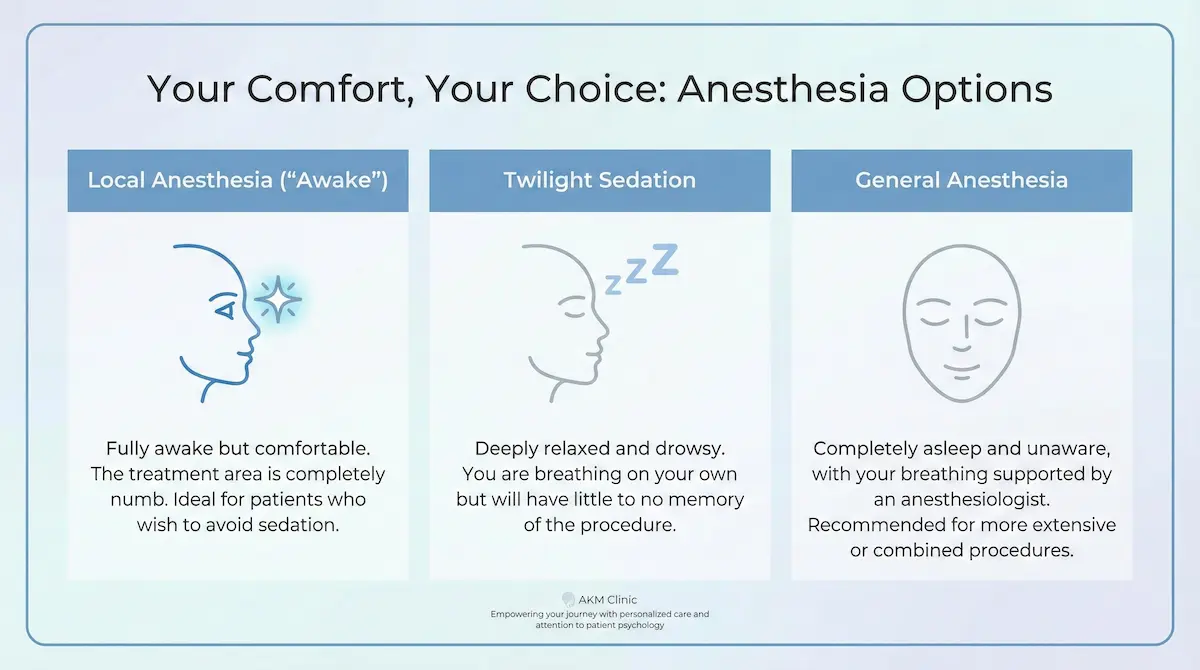
Local anesthesia: what “awake mini facelift” usually means
A truly “awake” approach typically means the procedure is performed under local anesthesia (numbing medication) with the patient breathing on their own. Depending on the plan, patients may be fully awake or lightly relaxed. This option can be appealing if you:
- Have significant anxiety about general anesthesia
- Prefer a faster post-op “wake up” period
- Want to avoid certain side effects some people associate with deeper anesthesia
From a patient-psychology standpoint, the availability of local-anesthesia facial surgery can remove a major barrier to action. In AKM Clinic’s testimonial analysis, “Awake Surgery” is highlighted as a meaningful differentiator because it directly addresses fear of general anesthesia and is repeatedly associated with a smoother recovery experience in patient narratives.
Twilight sedation: the middle ground many patients prefer
“Twilight sedation” generally refers to a monitored sedation level where you are deeply relaxed and may have limited memory of the procedure, while still maintaining spontaneous breathing. For many mini facelift candidates, this can be a practical balance—especially for patients who want:
- Less awareness of the operating environment
- More comfort for longer procedures or combined treatments
- A calmer experience without necessarily requiring full general anesthesia
AKM Clinic specifically positions its capability in twilight and awake facelifts as a key clinical advantage—emphasizing experience performing complex facial lifting without general anesthesia in appropriate cases.
General anesthesia: when it may be recommended
General anesthesia can be the right choice when procedure scope expands (for example, when multiple surgical areas are addressed), when patient comfort would otherwise be difficult to maintain, or when the safest airway and monitoring plan is best achieved under full anesthesia. The expert way to approach this decision is not “Which option is best?” but:
- Which option is safest for my medical profile?
- Which option supports the surgical plan without rushing or compromising precision?
- What monitoring and screening standards are in place regardless of anesthesia type?
Who is a candidate for an awake or local-anesthesia mini facelift?
Candidacy for awake/local approaches depends on more than preference. It includes medical history, baseline anxiety, procedure complexity, and the surgeon-anesthesia team’s protocols. In AKM Clinic’s patient stories, one USA patient (Lisa) described local-anesthesia facial surgery as the decisive factor that allowed her to proceed despite a paralyzing fear of general anesthesia—paired with a notably smooth early recovery experience.
Other testimonials in the same analysis describe local-anesthesia facial procedures as associated with minimal pain and fast early improvement, reinforcing that for selected patients in experienced hands, local-based strategies can be both psychologically and physically advantageous.
Safety framing: what to look for (regardless of anesthesia type)
Whether your mini facelift is performed under local anesthesia, twilight sedation, or general anesthesia, safety depends on systems—not slogans. High-quality care typically includes:
- Strict pre-operative health screening to confirm candidacy and reduce preventable risk
- Continuous vitals monitoring throughout the procedure (not only “spot checks”)
- Rigorous sterilization standards and facility protocols designed around infection prevention
As an expert patient, you’re allowed to ask direct questions: Who is monitoring me? What standards does the facility follow? What is the contingency plan if nausea, bleeding, anxiety, or blood pressure changes occur? Clear answers are a sign you’re being treated with the seriousness cosmetic surgery deserves.
Step-by-Step — What Happens During a Mini Facelift?
If you’ve ever read five different explanations of a mini facelift and felt like they described five different surgeries, you’re not imagining it. “Mini facelift” is a category, and surgeons may differ in how deep they work, how they support tissues, and what they consider “mini.” Still, most high-quality mini facelift procedures follow a consistent logic: diagnose the true cause of lower-face aging, reposition tissues with a plan that avoids skin-only tension, then refine the skin envelope and close with meticulous scar strategy.
Pre-op planning: how a good mini facelift is engineered
The operation starts long before the first incision. The preoperative phase is where the surgeon decides what you actually need—and what you don’t. A structured plan typically includes:
- Facial analysis in multiple views (front, 3/4, profile), often with standardized photography
- Problem mapping: jowls vs lower cheek descent vs neck contribution vs volume loss
- Vector planning: the intended direction of lift that restores a natural jawline without a “pulled to the ear” appearance
- Scar planning: where incisions sit relative to your ear anatomy, hairline, and skin quality
- Risk screening: bleeding tendency, blood pressure control, smoking/nicotine exposure, and any conditions that affect healing
- Medication review: a plan for blood thinners/NSAIDs/supplements that can increase bruising (only under medical guidance)
For the expert patient, one of the most important pre-op questions is: Will the plan support the deeper tissues, or will it rely primarily on skin tightening? A natural result usually depends on strategic support beneath the skin, with conservative redraping of the skin itself.
Step 1: anesthesia, comfort, and sterile setup
On the day of surgery, your anesthesia plan (local/awake, twilight sedation, or general anesthesia) is confirmed, and your team establishes monitoring for safety. Even when a mini facelift is performed under local anesthesia, high-level surgical environments prioritize:
- Comfort control (so you don’t tense, move unexpectedly, or experience distress)
- Stable blood pressure management (important for reducing bleeding and bruising)
- Sterile technique to minimize infection risk
From a results standpoint, the operative environment matters: bleeding control and calm tissue handling can meaningfully influence swelling, bruising, and the final refinement of contours.
Step 2: incisions and access (the “short-scar” concept)
Incisions are placed in natural contours around the ear to keep them discreet. The surgeon’s priority is not to make the incision as short as possible at all costs; it’s to make it as short as possible while still allowing safe, precise tissue work. If access is too limited, the surgeon may be forced into shortcuts that can compromise either the lift’s natural vector or its durability.
Once the incision is made, the surgeon creates controlled access to the tissue layers that will be repositioned or supported (the exact depth depends on technique). This is where mini facelift methods diverge most—some are essentially skin redraping, while others incorporate deeper support.
Step 3: tissue repositioning (the part that determines durability)
This phase is the “core” of the lift. In modern mini facelift planning, the aim is typically to reduce dependence on skin tension by stabilizing deeper tissues. Depending on the surgeon’s approach and your anatomy, this may involve:
- Selective release of tethering points contributing to jowl formation
- SMAS support (or a comparable supportive strategy) to reposition lower-face tissues
- Vector-specific tightening to restore jawline definition while avoiding distortion around the mouth and ear
Expert-level nuance: a mini facelift can look “obvious” if tissues are tightened laterally without respecting natural facial movement. The best results usually come from precision repositioning rather than aggressive pulling.
Step 4: skin redraping and refinement (without over-tightening)
After deeper support is addressed, the skin is redraped and refined. The goal is a smooth contour with minimal surface tension. This stage may include trimming small amounts of redundant skin. The difference between a natural result and a “tight” result often comes down to how the surgeon manages the skin envelope:
- Natural: the skin drapes smoothly, the ear and hairline look undistorted, expression remains effortless
- Overdone: visible traction near the ear, shiny tension lines, hairline distortion, or a “pulled” look in motion
Because mini facelift candidates often have less excess skin than full facelift candidates, skin handling should be conservative and tailored—especially in thinner skin types.
Step 5: closure and dressing (where scar quality is protected)
Closure is not a formality—it’s a protective step for long-term scar quality. Surgeons often use layered closure and techniques designed to keep tension off the skin edge. After closure, dressings or light compression may be applied depending on protocol and whether additional areas (like the neck) were treated.
Many teams provide specific instructions for sleeping position, activity limits, and early swelling control. Following these details closely is one of the simplest ways to protect your outcome.
Common “combined procedures” with a mini facelift
A mini facelift is frequently paired with other targeted treatments to improve harmony. Combination planning should be logical: if a mini facelift corrects position in the lower face, adjuncts can address neck definition, volume, or skin quality. Common add-ons include:
- Neck refinement (from small contour adjustments to a more defined neck lift when indicated)
- Fat transfer (when true volume loss contributes to an aged look)
- Eyelid surgery (upper and/or lower blepharoplasty) when the eyes are a dominant aging feature
- Skin resurfacing (for texture/sun damage), typically timed carefully around surgical healing
Combination surgery can improve overall facial balance, but it may also influence downtime, swelling, and anesthesia choice. The right combination is the one that matches your anatomy—not the longest list of procedures.
How long does the surgery take?
Time varies based on technique and whether additional procedures are included. A mini facelift performed as a standalone procedure often requires less operative time than a full facelift, but it is still a meticulous operation. The expert-patient mindset here is helpful: the goal is not a “fast surgery,” it’s a precise surgery. Rushed lifting can increase asymmetry risk, compromise hemostasis (bleeding control), and worsen bruising or swelling.
What you should ask your surgeon about the operative plan
If you want to validate that the procedure is truly designed for a natural, durable result, consider asking:
- “Which layer are you lifting/supporting, and why is that the right choice for my anatomy?”
- “How do you avoid relying on skin tension?”
- “What vector are you using, and how does that prevent a pulled look?”
- “How do you protect the scar and avoid ear/hairline distortion?”
- “What is your plan for bruising/swelling control and recovery monitoring?”
Clear, structured answers usually signal a structured plan—one of the strongest predictors of a result that looks refreshed rather than operated on.
Mini Facelift Recovery Timeline — Accelerated Recovery Protocol
Searches like “mini facelift recovery pictures day by day” are common for a reason: most patients don’t just want a vague “two weeks of downtime” estimate—they want to know what they’ll look and feel like at each stage, when swelling typically peaks, and when they can safely return to work, travel, exercise, and social events. While every recovery is individual, mini facelift healing follows predictable patterns when surgery is well-executed and aftercare is consistent.
Below is a practical recovery timeline you can use for planning. Keep in mind that combined procedures (for example, adding a neck lift or eyelid surgery) can extend swelling and bruising, and your anesthesia choice can influence the first 24–48 hours of how “clear-headed” you feel.
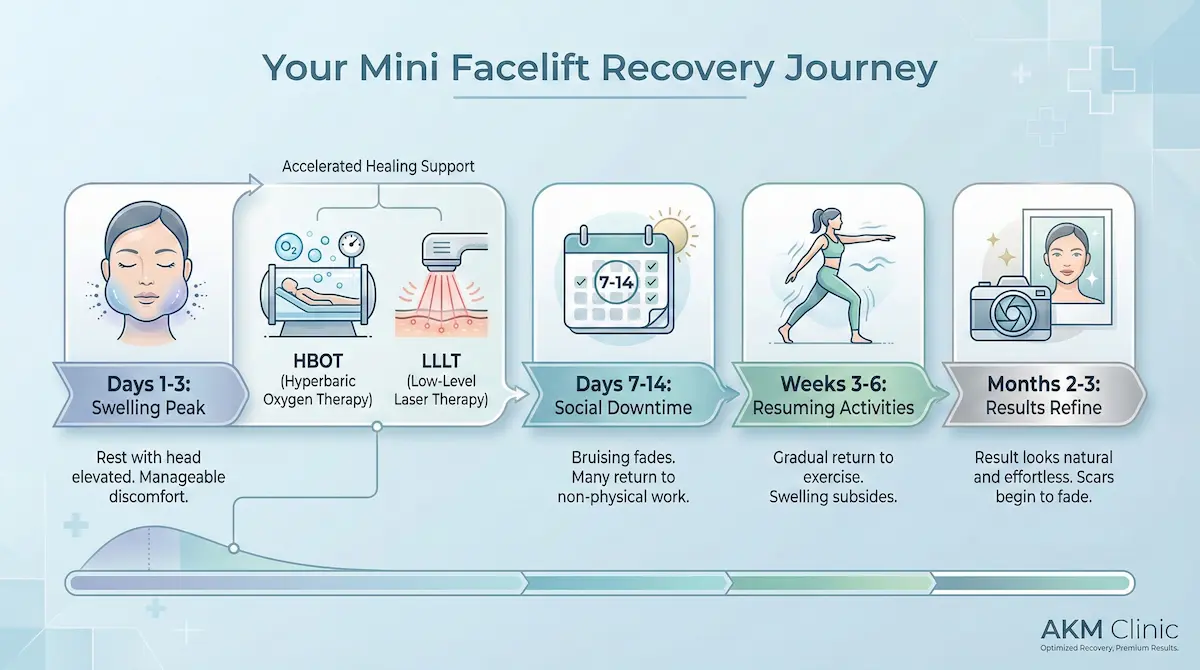
Day 0 (Surgery Day): what to expect
- Immediate appearance: you’ll likely have dressings and some degree of swelling. Bruising may be minimal at first and then develop more visibly over the next 24–72 hours.
- Sensation: tightness and mild-to-moderate discomfort are common; sharp pain is not typical and should be addressed promptly.
- Activity: rest, short assisted walks, head elevated. No bending, heavy lifting, or straining.
- Hydration & nutrition: focus on fluids and softer foods if jaw motion feels tight.
In the first night, the priority is stable, calm healing conditions: head elevation, low exertion, and strict adherence to your prescribed medications and wound-care instructions.
Days 1–3: swelling peak window
This is typically when swelling and bruising become more noticeable. Many patients describe a “tight” feeling along the jawline and around the ear. Mild numbness near incision zones can be normal.
- Swelling/bruising: often increases through day 2–3, then begins to stabilize.
- Comfort: manageable with prescribed pain control; avoid unapproved anti-inflammatory or supplement use unless your surgeon okays it.
- Sleep: on your back, head elevated; avoid turning your face into the pillow.
- What not to do: strenuous activity, sauna/steam room, alcohol excess, nicotine.
Watch-outs: rapidly increasing swelling on one side, severe pain, significant bleeding, or sudden firmness can be warning signs and should be evaluated immediately.
Days 4–7: early “turning the corner” phase
For many patients, day 4–7 is the first time they feel they’re improving day by day. Bruising often shifts color (purple/blue to green/yellow) as it resolves. Swelling can remain, but it’s typically less dramatic.
- Social downtime: many patients still prefer privacy, but some feel comfortable with limited outings using strategic hair styling or makeup (only if approved around incision areas).
- Incision care: follow instructions precisely; this is where scar quality is protected.
- Mobility: gentle walks are encouraged; avoid elevated heart rate that increases swelling.
It’s normal to still feel “not yourself” in this window—most people are not camera-ready yet, even if they’re healing well.
Days 7–14: return-to-work planning and “visible recovery”
This is a common decision point for scheduling time off. Many mini facelift patients can return to non-physical work somewhere in the 7–14 day range, depending on bruising, swelling, and your comfort with residual signs of surgery.
- Bruising: often significantly improved by the end of week 2, though small residual areas can persist.
- Swelling: still present, often more obvious to you than to others.
- Stitches: removal timing varies by surgeon and closure method.
- Hair washing/styling: typically returns gradually as directed, with attention to incision protection.
If your job is public-facing and you want to look “completely normal,” you may prefer closer to two weeks—even if you physically feel capable earlier.
Weeks 3–6: refinement, scar softening begins
In weeks 3–6, most patients feel socially comfortable and begin to see a more natural facial movement return. Residual swelling can linger—especially along the jawline—often showing more in the morning and settling during the day.
- Exercise: many patients are cleared to gradually resume workouts, starting light and building back slowly.
- Skin sensation: numbness and tingling can occur as nerves recover; this can come and go.
- Scars: may look pinker before they fade; firmness can increase temporarily as collagen reorganizes.
This phase is about patience: the face is transitioning from “healing” to “settling.”
Months 2–3: your result starts to look “effortless”
By months 2–3, many patients feel their mini facelift looks less like a post-op change and more like their face “belongs” again—just refreshed. Scar maturation continues, and jawline refinement becomes more stable.
- Photos: many patients feel confident for events and close-up pictures.
- Scars: usually becoming softer and less noticeable, though still maturing.
- Final contours: increasingly consistent, with subtle improvements continuing.
Months 3–12: scar maturation and long-term settling
Most incision scars continue to fade and soften over 6–12 months. The jawline result typically stabilizes well before that, but scar maturation is its own timeline. Sun protection is critical during this period, as UV exposure can darken scars and slow cosmetic improvement.
Accelerated Recovery Protocol: HBOT + LLLT as structured healing support
While mini facelift recovery is generally favorable in the right candidate, some patients want to reduce downtime and optimize healing conditions as much as possible—especially those traveling for surgery or returning to demanding work schedules.
One approach used in advanced postoperative care pathways is to incorporate recovery technologies as part of a protocol rather than an optional add-on. At AKM Clinic, the recovery pathway includes:
- Hyperbaric Oxygen Therapy (HBOT): positioned as a method to support early healing by improving tissue oxygen availability and helping reduce inflammation and swelling. For safety best practices—especially when considering any hyperbaric chamber—see the FDA guidance on the safe use of hyperbaric oxygen therapy (HBOT) devices. In practical terms, the goal is to create a more favorable environment for tissue repair and potentially support a smoother bruising/swelling curve for selected patients.
- Low-Level Laser Therapy (LLLT): used as a cellular-support modality intended to encourage repair processes by stimulating cellular energy pathways and supporting collagen-related healing dynamics—aimed at reducing redness and promoting tissue recovery.
As an expert patient, it’s reasonable to ask how a clinic structures these therapies: timing, number of sessions, candidacy criteria, and how the protocol integrates with the fundamentals that matter most (safe surgery, careful tissue handling, bleeding control, and disciplined aftercare). Technology should complement the surgical plan—not substitute for it.
Practical recovery planning tips (the details that matter)
- Plan your calendar realistically: if you have a major event, schedule surgery far enough in advance to allow for unpredictable bruising variability.
- Protect your sleep position: head elevation and back-sleeping can significantly affect swelling in the first 1–2 weeks.
- Avoid nicotine: it is one of the most reliable predictors of compromised healing and poor scar quality.
- Do not “self-medicate” supplements: some over-the-counter products can increase bruising—follow your surgeon’s list.
- Follow incision instructions exactly: scar quality is built in the early weeks.
Risks, Complications, and How to Reduce Them
Every surgical procedure carries risk—including a mini facelift. “Mini” describes scope, not a guarantee of zero complications. The expert way to approach risk isn’t to search for a surgeon who claims “no risk,” but to understand (1) what can happen, (2) how often and why it happens, (3) what prevention systems are in place, and (4) what the response plan is if a complication occurs. This section is designed to be transparent—because transparency is what allows you to make an intelligent decision.
Most common risks after a mini facelift
Complications range from minor and temporary to more significant but uncommon events. The most frequently discussed risks include:
- Bruising and swelling: expected to some degree; can be prolonged in some patients
- Hematoma (blood collection under the skin): one of the more urgent early risks; may require prompt evaluation and sometimes surgical drainage
- Infection: uncommon but possible; typically managed with appropriate medical treatment and close follow-up
- Wound healing problems: delayed healing, small wound separations, or thicker scars (more likely with tension, nicotine use, or compromised circulation)
- Scar visibility or widening: influenced by genetics, tension, aftercare, and sun exposure during healing
- Temporary numbness or altered sensation: common around incision areas and along the jawline; usually improves gradually
- Asymmetry: mild asymmetry is part of natural human anatomy; noticeable asymmetry may require observation, minor correction, or rarely revision
- Contour irregularities: firmness, small lumps, or “tight” areas during healing that often soften over weeks to months
When patients search for “botched mini facelift,” they’re often worried about two outcomes: an unnatural “pulled” appearance or visible scars/distortion around the ear. Those are not random events—they are usually linked to technique, tension management, candidacy mismatch, or poor healing conditions (especially nicotine exposure).
Less common but serious risks (and why they matter)
Serious complications are less common, but they deserve clear discussion:
- Nerve injury: temporary weakness can occur due to swelling or traction. Permanent injury is uncommon but possible and should be part of informed consent.
- Skin compromise (ischemia/necrosis): rare in well-selected patients, but risk increases with smoking/nicotine, vascular disease, excessive tension, or aggressive dissection.
- Thromboembolic events: rare in facial surgery but part of general surgical risk considerations; prevention includes appropriate screening and mobility planning.
- Anesthesia-related complications: depend on anesthesia type and medical history; this is why pre-op screening and proper monitoring are non-negotiable.
Expert patients often feel calmer when they understand that reputable teams have protocols for early recognition and intervention—because early response is one of the biggest factors in preventing a small issue from becoming a larger one.
What increases risk: the predictable factors
Many mini facelift complications are linked to known risk amplifiers. These include:
- Nicotine exposure (smoking, vaping, nicotine gum/patches): strongly associated with compromised healing and poorer scar outcomes
- Uncontrolled blood pressure: can increase bleeding risk and bruising
- Blood-thinning medications/supplements: if not managed properly pre-op (always under medical guidance)
- Diabetes or other conditions affecting microcirculation: may slow healing
- Revision surgery history: can make tissue planes more complex
- Overly aggressive “tightening” goals: increases tension and the risk of distortion or widened scars
- Mismatch between anatomy and procedure: trying to “force” a mini facelift to correct advanced neck/midface issues
One of the simplest “expert” moves you can make is to be fully honest during your medical history review and follow pre-op instructions exactly—especially regarding nicotine cessation and medication changes.
How experienced teams reduce risk: systems, not slogans
Complication prevention is largely a systems question. High-quality mini facelift care typically includes:
- Structured pre-op screening to ensure you are medically optimized for surgery
- Clear anesthesia planning matched to your medical profile and procedure complexity
- Meticulous hemostasis (bleeding control) during surgery to reduce bruising and hematoma risk
- Technique choices that avoid skin-only tension to protect scars and natural appearance
- Strict sterile protocols to minimize infection risk
- Planned follow-up so issues are recognized early rather than “waited out”
For patients who choose an “awake” or twilight approach, the safety conversation shifts slightly toward monitoring standards and comfort control: the goal is a calm, stable operative environment so the surgeon can work precisely while the patient remains comfortable and safe.
How to spot a problem early: practical red flags
Most healing concerns are minor and resolve. Still, it’s helpful to know what warrants immediate contact with your surgical team. Red flags can include:
- Sudden, rapidly increasing swelling (especially on one side)
- Severe pain that escalates rather than improves
- Active bleeding soaking dressings
- Fever, spreading redness, warmth, or foul-smelling drainage
- New facial weakness or asymmetry that appears suddenly
- Shortness of breath, chest pain, severe calf pain (urgent medical evaluation required)
Having a clear, responsive follow-up pathway is part of safety. Before committing to surgery, ask what the clinic’s after-hours policy is and how urgent concerns are handled.
Revision and “botched” mini facelift: what’s actually possible?
Not every unsatisfying result is truly “botched.” Many concerns fall into one of these categories:
- Normal early healing (swelling, firmness, temporary asymmetry) mistaken for a final result
- Under-correction from overly conservative technique or candidacy mismatch
- Over-tension leading to visible traction or unnatural contour
- Scar concerns (widening, pigmentation) that may improve with time and focused scar care
Revision planning depends on the cause, the timing (how long since surgery), and the tissue condition. In many cases, surgeons prefer to let tissues fully settle before making a revision decision—unless there is an urgent complication such as hematoma or infection that requires immediate intervention.
Takeaway: risk in mini facelift surgery is real, but it is not random. It is strongly influenced by candidacy selection, technique, operative systems, and postoperative follow-through. If a provider cannot explain their risk-reduction approach in clear, practical terms, that’s a sign to seek a more rigorous surgical team.
Results & “Natural Look” Philosophy — Rejuvenation, Not Alteration
The best mini facelift results don’t announce themselves. They register as: “You look rested,” “Your jawline looks sharper,” or “Something’s different—but I can’t tell what.” That outcome depends on two things: (1) choosing the right procedure for your anatomy, and (2) executing the lift with a plan that prioritizes tissue repositioning and scar discretion—rather than aggressive tightening.
What “natural” looks like clinically
In practical terms, a natural mini facelift result means:
- Jawline definition improves without a “pulled to the ear” look
- Mouth corners and smile remain relaxed (no traction distortion)
- Ear and hairline anatomy remains undistorted
- Movement looks normal—especially in photos and video
- Scars are discreet and not widened by tension
Unnatural outcomes typically come from mismatched scope (trying to fix advanced issues with a limited lift) or from techniques that depend too heavily on skin tension. Expert surgeons aim to build the result from structure, then refine the skin.
Surgeon’s insight: The most persuasive facelift is the one nobody can detect. The goal is rejuvenation—not alteration—by restoring natural contours and preserving identity.
How long does a mini facelift last?
Longevity depends on the biology of aging and the engineering of the lift. A mini facelift does not “stop time,” but it can reset the lower-face contour in a way that many patients experience as a meaningful multi-year improvement. The variables that most influence how long your result holds include:
- How advanced the laxity was at the time of surgery (earlier-stage candidates often feel the improvement holds more predictably)
- Technique depth/support (structural support tends to age more gracefully than skin-only tension)
- Skin quality and genetics
- Lifestyle factors (nicotine exposure, major weight fluctuation, unprotected sun exposure)
A helpful way to frame this as an expert patient: the more the procedure corrects structure (not just surface), the more likely it is to remain natural-looking as you continue to age.
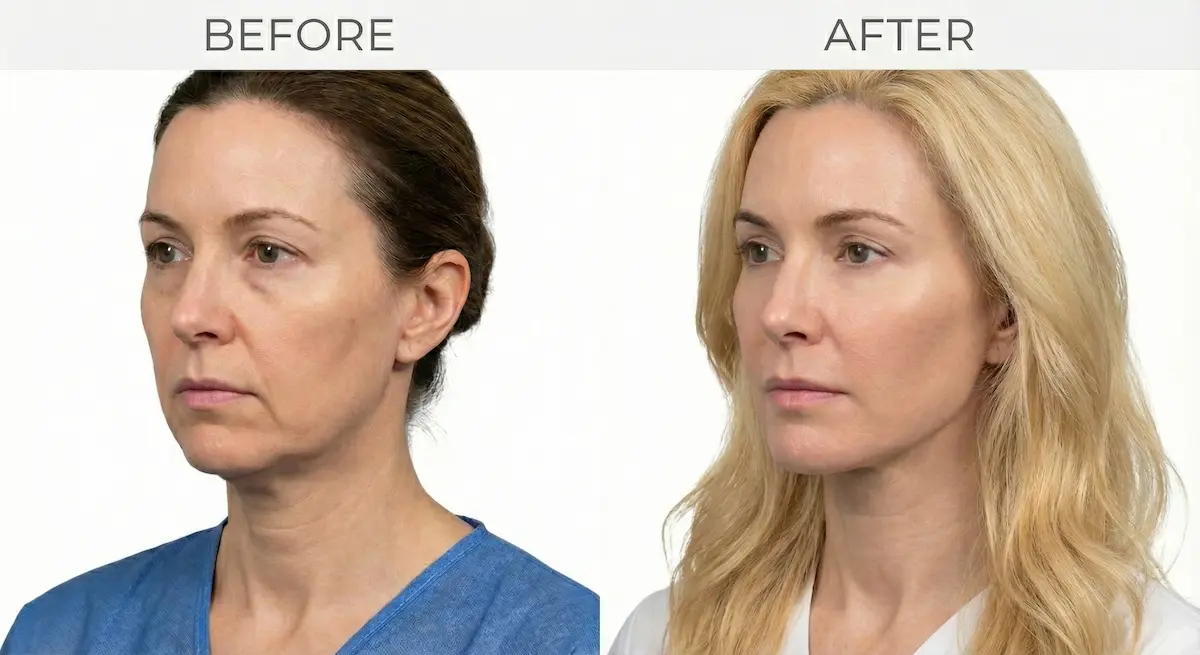
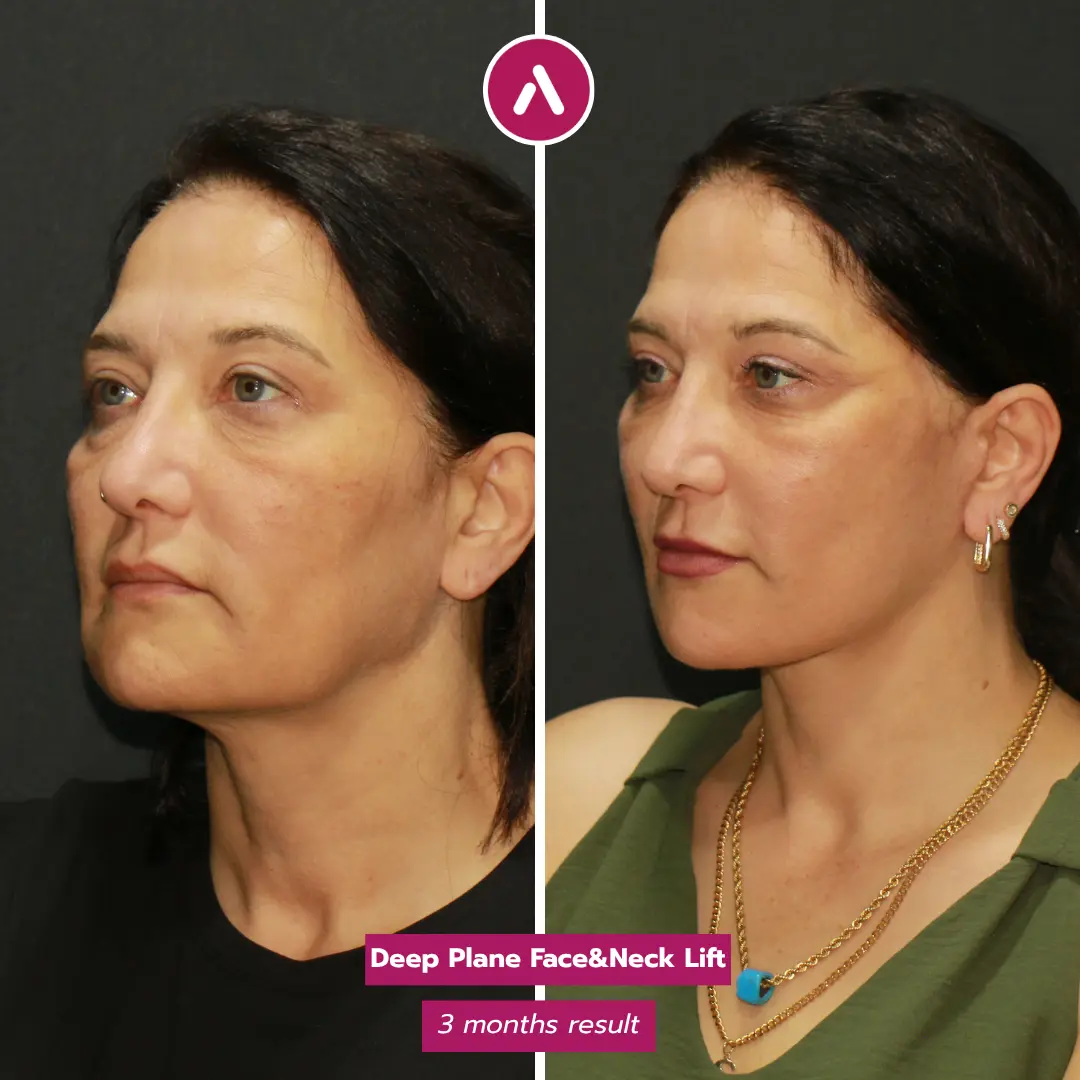
Before/after expectations: what changes most (and what may not)
In the right candidate, the most noticeable improvements usually include:
- Cleaner jawline and reduced jowling
- Less heaviness in the lower cheeks
- Better lower-face balance in profile and 3/4 view
What may change only subtly (or require add-ons) includes:
- Neck bands and significant neck laxity (often needs neck-specific work)
- Midface descent (may require a different lift plane or additional lifting strategy)
- Volume loss (often best treated with fat transfer or conservative volumization)
If you want a result that looks like “you,” just more refreshed, the most important step is aligning the surgical scope with your anatomy—then letting the technique deliver a refined correction rather than an aggressive pull.
Real-world patient mindset: why anesthesia preference can shape the decision
For some patients, the deciding factor isn’t only the lift—it’s how the procedure is performed. We often see expert patients who delay surgery for years due to fear of general anesthesia. In those cases, having an option for local anesthesia or twilight sedation can make the entire process feel emotionally manageable, without changing the goal: a safe, natural-looking lower-face refresh.
Cost Analysis — NYC vs LA vs Miami vs Turkey (Value, Not “Cheap”)
Cost research is where the expert patient becomes highly analytical—and rightly so. The price of a mini facelift varies widely based on the surgeon’s expertise, the facility, anesthesia type, what’s included (or excluded), and whether you’re combining procedures. The smartest way to compare cost is to compare total value: safety systems, surgical planning, anesthesia quality, facility standards, aftercare, and recovery support—not just the headline number.
Typical mini facelift cost ranges in the United States
In the U.S., mini facelift pricing commonly sits below full facelift pricing, but it can still be substantial—especially in premium markets. In many practices, mini facelift-only quotes may fall into mid-to-high four figures or low-to-mid five figures, and major metro areas can price higher due to overhead, demand, and surgeon concentration.
Also note: public “average” figures can be misleading if they represent surgeon fees only. Total cost may increase once you include anesthesia, operating room fees, medications, garments, and follow-up care.
Turkey pricing: why it can be lower without being lower-standard
For value-focused expert patients, Turkey becomes relevant not because it’s “cheap,” but because operational costs and currency dynamics can allow international patients to access premium, safety-forward care at a lower overall price point compared with top U.S. cities.
The key is selecting a provider that treats international surgery as a medical process—proper screening, accredited hospital standards, board-level surgical expertise, and a structured recovery and follow-up pathway—rather than treating it as a “tourism product.”
What should be included in a serious quote?
When comparing NYC/LA/Miami pricing to international options, ask whether each quote clearly lists:
- Surgeon fee and what technique is planned
- Anesthesia (local vs twilight vs general) and who monitors you
- Facility/hospital fees
- Medications and postoperative supplies
- Follow-up schedule (including virtual follow-ups if traveling)
- Recovery support (and whether advanced recovery modalities are structured as a protocol)
Mini facelift cost comparison table (planning-level guidance)
| Market | Typical Pricing Pattern | What Often Drives the Total | Expert-Patient Tip |
|---|---|---|---|
| New York City (NYC) | Often higher than national averages due to demand and overhead | Surgeon experience, facility fees, anesthesia model, add-ons (neck refinement, fat transfer) | Ask for an itemized quote and confirm whether it’s surgeon-fee only or total package |
| Los Angeles (LA) | Wide range; premium surgeons and full-service facilities push totals upward | Operating room time, anesthesia, combined procedures, recovery support | Compare like-for-like: technique depth, aftercare, and who provides anesthesia monitoring |
| Miami | Variable; can range from competitive pricing to premium boutique pricing | Technique type, anesthesia, facility model, added recovery services | Don’t compare “starting at” prices—compare your actual plan and inclusions |
| Turkey (Istanbul) | Often lower overall totals, sometimes offered as all-inclusive models | Hospital standard, surgeon credentials, anesthesia approach, included logistics, structured aftercare | Prioritize safety systems, accredited hospital pathways, and clear follow-up timelines |
AKM Clinic value framing: the “smart choice” criteria
If you are considering an international option, a rational checklist can help you decide whether it’s a smart medical choice:
- Board-level surgical expertise with a portfolio that matches your anatomy and goals
- Safety-first anesthesia options, including the ability to perform selected cases under local/twilight approaches when appropriate
- Hospital-level standards and strict infection prevention systems
- Accelerated recovery pathway that is structured (not improvised), especially if you’re traveling
- Transparent inclusions so you know exactly what you’re paying for
Choosing the Right Surgeon — Credentials That Matter
If you’re searching for “best mini facelift surgeon,” you’re really searching for predictability: predictable safety, predictable scar quality, and a result that reads as “refreshed,” not “operated.” Mini facelift outcomes are especially sensitive to surgeon decision-making because the scope is intentionally limited. The wrong plan can lead to under-correction; the wrong vector or tension strategy can lead to distortion; and the wrong aftercare system can turn a minor healing issue into a visible scar problem.
What to look for in mini facelift expertise
Mini facelift is not a beginner procedure. Because the goal is subtle improvement with minimal visible trade-offs, expertise shows up in how the surgeon explains:
- Layer strategy: whether the plan includes deeper support (not just skin tightening)
- Vector rationale: how tissues will be repositioned to avoid a “pulled toward the ear” look
- Scar engineering: how tension is managed and how the ear/hairline are protected
- Patient selection: how they decide mini facelift vs a more structural lift, and why
In high-demand international settings, surgeon-led honesty is a key trust signal: patients consistently value transparent expectation-setting and a clear plan over vague reassurances.
Board credentials and “US-level” signals (what they actually mean)
For an expert patient, credentials are not about prestige—they’re about verification. When evaluating international options, look for a combination of:
- Board-level qualification pathways and documented continuing education
- European Board Certifications in relevant fields (a high-trust signal for many global patients)
- Evidence of exposure to U.S. aesthetic standards (training pathways, conferences, or clinical experience that align with U.S. patient expectations)
AKM Clinic frames this for international patients by emphasizing that many top Turkish surgeons hold rigorous board credentials, including European Board-level certifications considered comparable markers of training standards for U.S.-accustomed patients.
Anesthesia capability is part of surgeon capability
If “awake mini facelift” is important to you, don’t treat it as a checkbox. The real question is whether the team can safely and comfortably perform complex facial lifting without general anesthesia in selected candidates—supported by appropriate monitoring and a calm operative environment.
AKM Clinic highlights mastery in twilight and awake facelift approaches as a differentiator for suitable patients, positioning this capability as meaningful for comfort and recovery while addressing a common barrier: fear of general anesthesia.
Facility standards, sterilization systems, and why they matter
Even the best surgical plan depends on a safe clinical environment. Expert-level evaluation includes asking about:
- Pre-operative screenings (how candidacy is validated medically)
- Continuous vitals monitoring during the procedure
- Sterilization protocols and external licensure/oversight for international patient care
AKM Clinic describes a “zero-compromise” hygiene posture, with multi-stage sterilization protocols aligned with major public health standards and formal licensure to serve international health tourism patients.
International quality assurance: “value” without hidden compromises
When expert patients compare the U.S. to Turkey, the rational concern is not only price—it’s whether the lower total is masking lower standards. AKM Clinic addresses this by attributing the price differential to macroeconomic factors (exchange rate and operational costs) while emphasizing Western-aligned quality markers such as FDA-approved materials and operating in JCI-accredited hospitals.
Contextual next step: A high-quality surgeon consult should end with a clear mini facelift plan (technique depth, vector, scar strategy), an anesthesia recommendation tailored to you, and a recovery calendar that matches your lifestyle and travel constraints.
The Medical Journey for International Patients — What to Expect
If you’re traveling for a mini facelift, logistics are not “extras”—they’re part of safety and recovery. A well-designed international pathway reduces stress, protects your downtime, and ensures follow-up does not end when you board your flight home. The most reassuring systems are the ones that feel structured: clear steps, transparent inclusions, and scheduled long-term check-ins.
Step 1: Free virtual consultation and treatment planning
A serious international process starts at home. AKM Clinic describes a virtual consultation model where patients share photos, discuss goals, and receive a personalized treatment plan with transparent, all-inclusive pricing before committing.
Step 2: VIP planning and scheduling support
Once a date is chosen, the planning phase should remove friction rather than add it. AKM Clinic’s described model includes a dedicated patient host who coordinates timing, hotel arrangements, and VIP transfers—leaving the patient to handle only their international flight booking.
Step 3: Arrival, airport welcome, and hotel transfer
After a long-haul flight, small details matter. AKM Clinic outlines a personal airport greeting and private transfer to the hotel in a dedicated vehicle, designed to make arrival predictable and low-stress.
Step 4: In-person consultation, pre-op tests, and procedure day
On procedure day, the in-person consult confirms the plan (vector, incision placement, anesthesia choice), and pre-operative tests validate safety. The clinic describes performing surgery in a fully accredited facility with structured medical oversight.
Step 5: Recovery in Istanbul with high-touch support
Early recovery is when patients most want immediate answers. AKM Clinic describes close monitoring after surgery and 24/7 access to a patient host via WhatsApp during the Istanbul recovery window, including a final in-person check before flying.
Step 6: Long-term follow-up after you return home
Expert patients often worry about being “on their own” after returning to the U.S. AKM Clinic addresses this by describing scheduled virtual follow-ups at 1, 3, 6, and 12 months to monitor healing and satisfaction.
What’s typically included in an all-inclusive model (and what isn’t)
Comparisons only make sense when you compare complete totals. AKM Clinic’s outline of “included” items emphasizes procedural fees, anesthesia/OR fees, pre-op tests, hotel, transfers, post-op medications/garments, and long-term virtual follow-up—while noting that international flights and personal travel insurance are not included.
FAQ — 10 Answers to Common Mini Facelift Questions
These are the most common questions expert patients ask while researching mini facelift surgery. The goal here is clarity: what’s predictable, what’s variable, and what decisions actually change your outcome.
What is a mini facelift?
A mini facelift is a targeted surgical procedure designed to improve early-to-moderate lower-face sagging—most commonly jowls and jawline blur—using a shorter incision pattern than many traditional full facelift approaches.
What does a mini facelift consist of?
Most mini facelifts include incision placement around the ear, controlled access to the tissues that need repositioning/support, refinement of excess skin, and meticulous closure to protect scar quality. The biggest variability is whether the technique includes deeper support (rather than skin-only tightening).
How long does a mini facelift last?
Longevity depends on your starting anatomy, tissue quality, and technique choice. In general, mini facelift results can be meaningful for years, but the most durable outcomes tend to come from plans that stabilize deeper tissues and avoid relying on skin tension alone.
Is a mini facelift worth it?
It’s usually “worth it” when your concerns are truly in the mini facelift zone: early jowls, mild-to-moderate lower cheek laxity, and limited neck involvement. If your main issues are significant neck bands or major midface descent, you may be happier with a different or combined approach.
Can a mini facelift be done awake or under local anesthesia?
In selected patients, yes. Awake/local or twilight approaches can be appropriate when the surgical plan and patient comfort profile align. Some clinics emphasize experience performing facelift procedures without general anesthesia as a meaningful option for patients with anesthesia-related fears.
What is the downtime for a mini facelift?
Many patients plan for 7–14 days of social downtime, depending on bruising/swelling and whether additional procedures were done. Refinement continues for weeks, and scars mature over months.
Will I have visible scars?
Incisions are typically designed to sit in natural ear creases and shadow lines, so they are well-concealed. Scar visibility is most influenced by tension management, healing conditions (especially nicotine avoidance), and sun protection during scar maturation.
Mini facelift vs full facelift: which one do I need?
If your concerns are mainly jawline and early jowls, a mini facelift may be enough. If you have significant neck laxity, stronger banding, or broader facial descent, a fuller or more structural lift may be more predictable.
Mini facelift vs deep plane facelift: which is better?
Neither is “better” for everyone. Mini facelift is about targeted scope. Deep-plane techniques are typically used when deeper release and repositioning are needed for more advanced descent while staying natural-looking.
What should be included in a mini facelift quote?
At minimum: surgeon fee, anesthesia plan, facility fees, pre-op tests, medications, follow-up schedule, and clear “what’s not included.” If traveling, transparent logistics and scheduled long-term follow-up can be an important part of medical confidence.