

FUE Hair Transplant in Turkey





FUE Hair Transplant: Quick Facts
Procedure Time
Anesthesia
Recovery Time
Hospital Stay
Back to Work
FUE Hair Transplant Results: Before and After
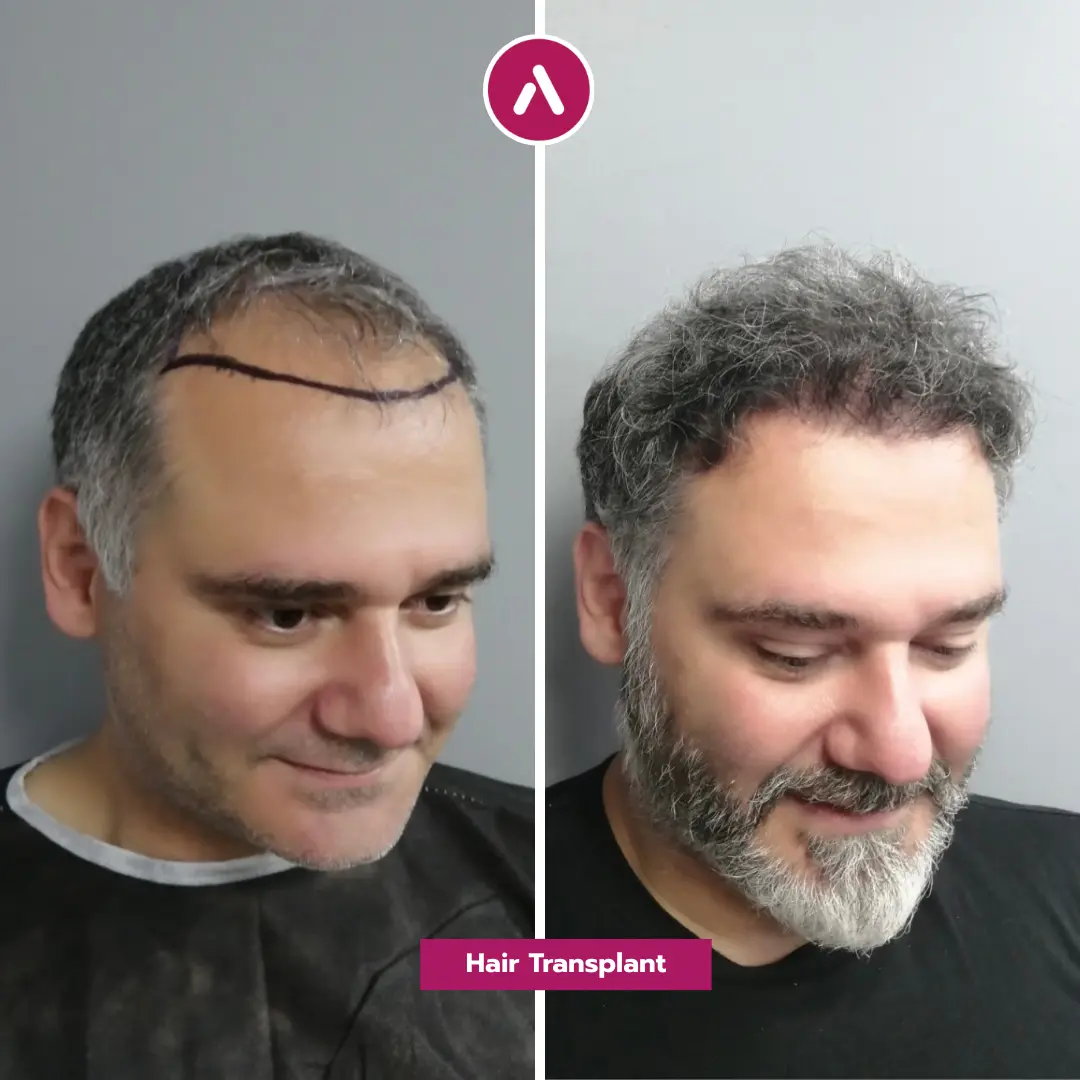
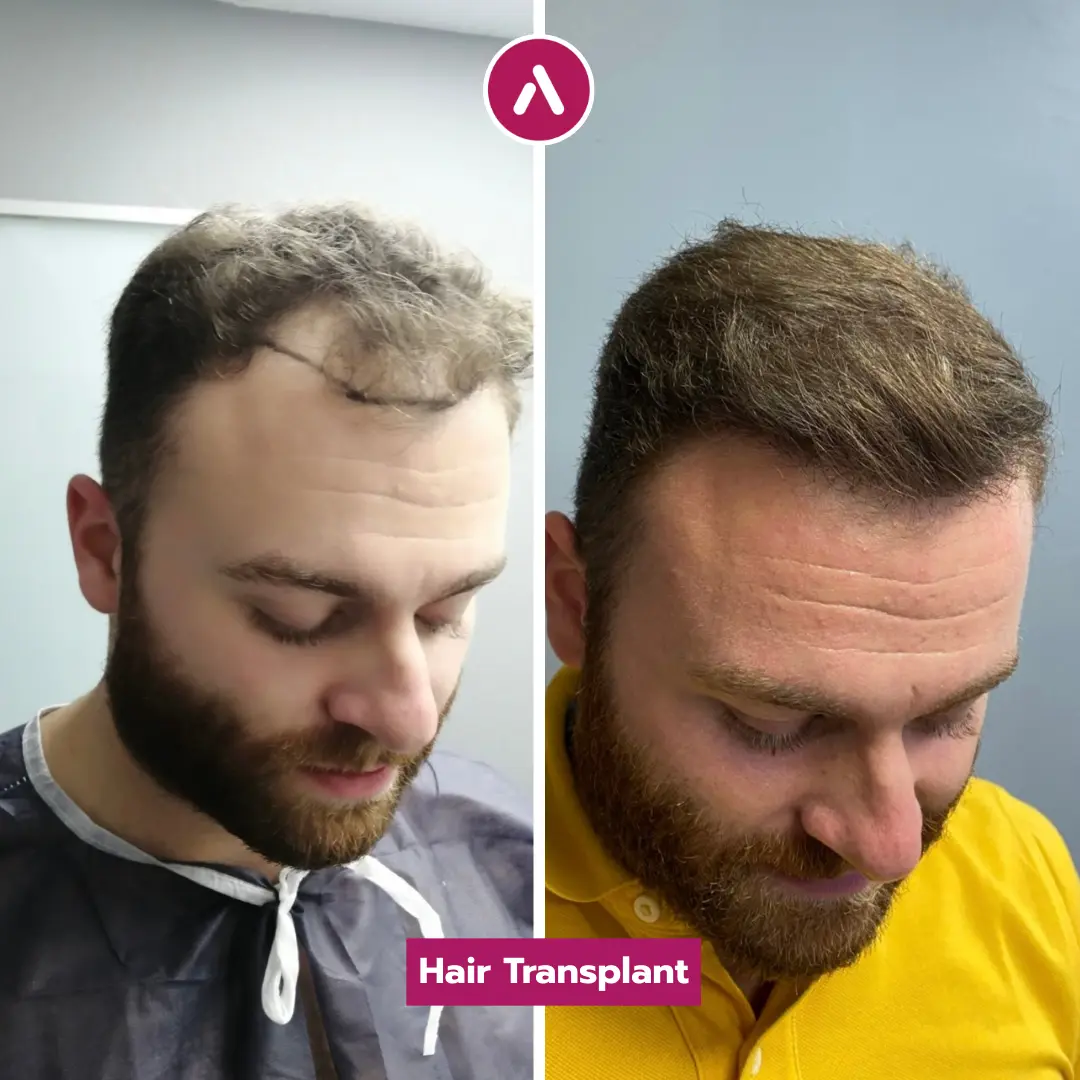
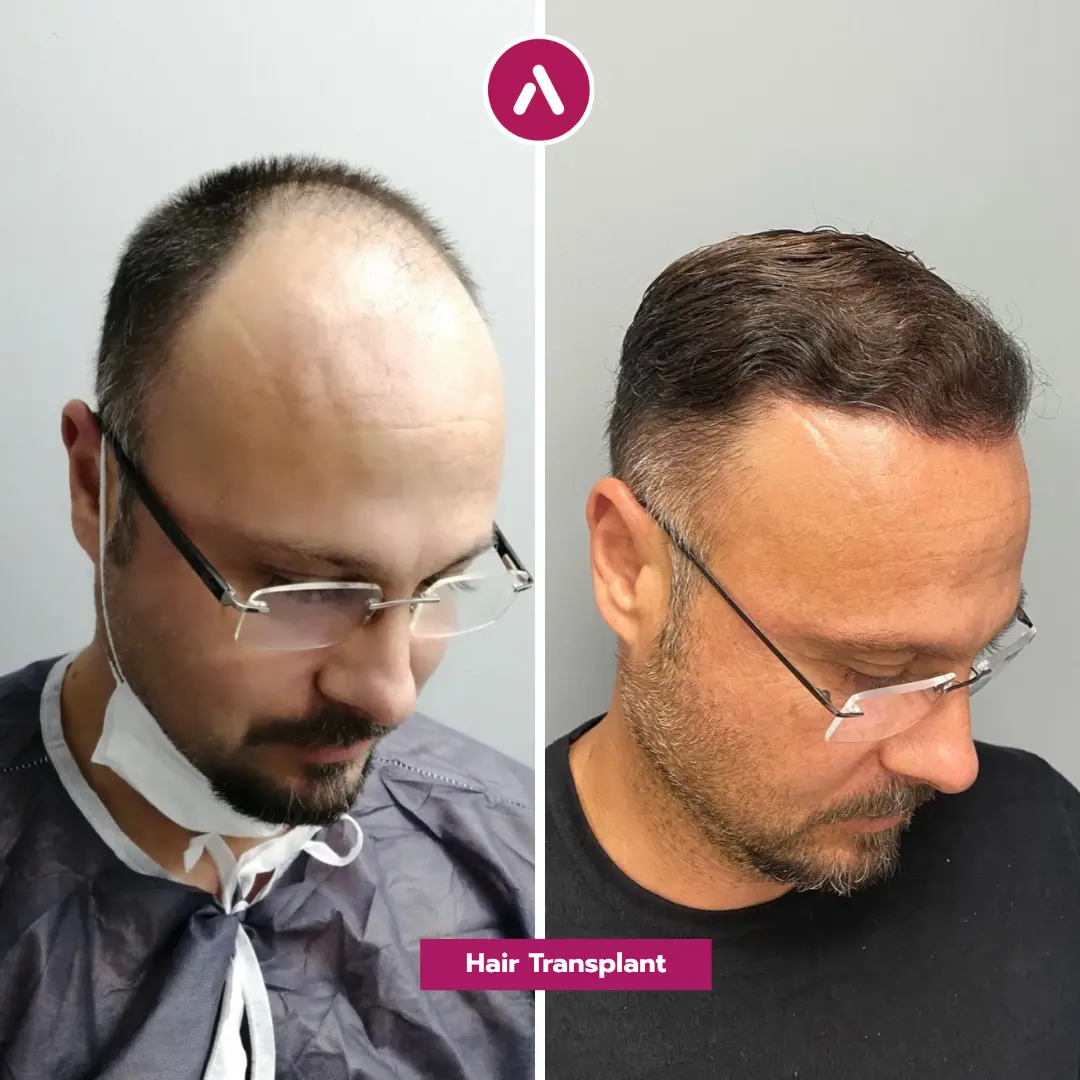
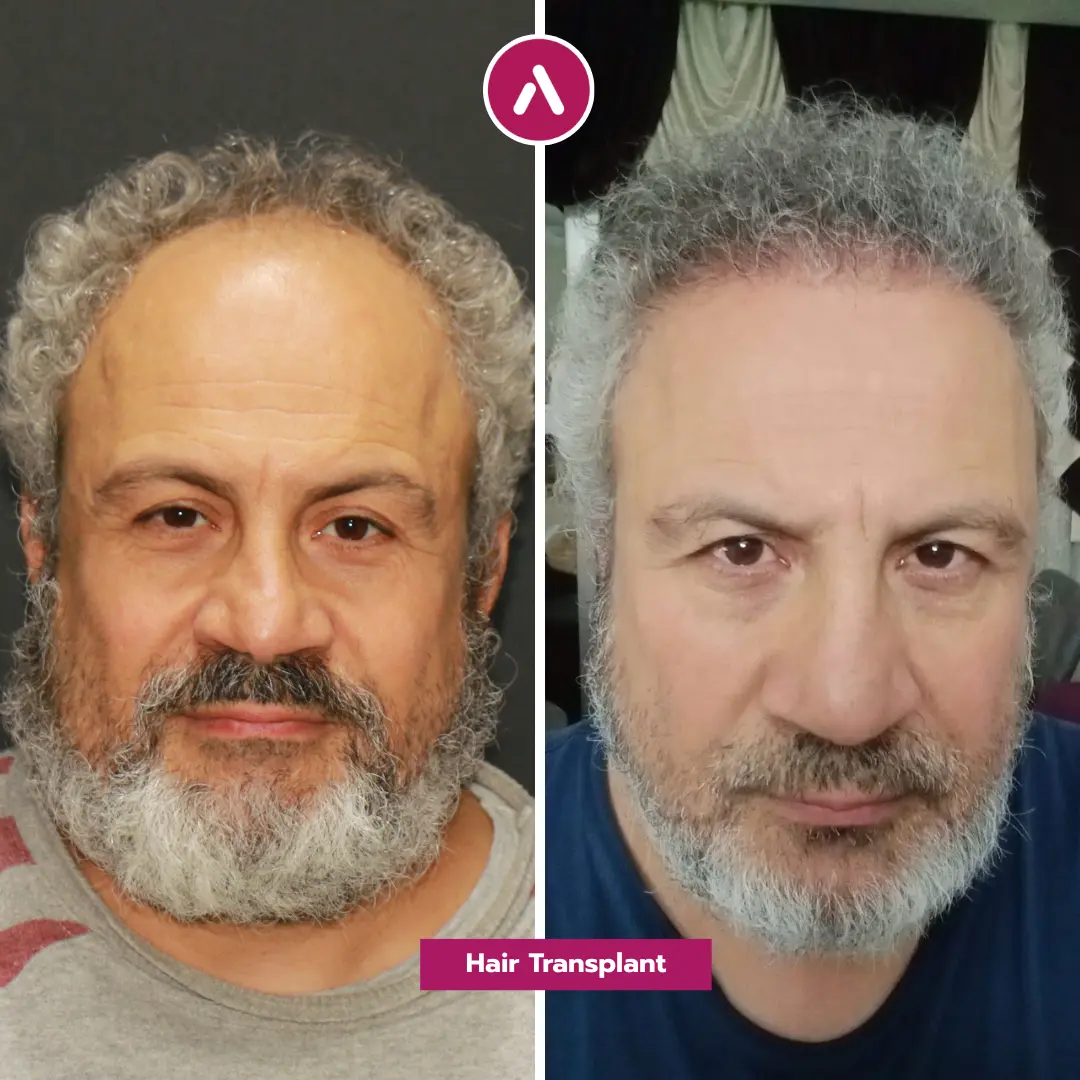
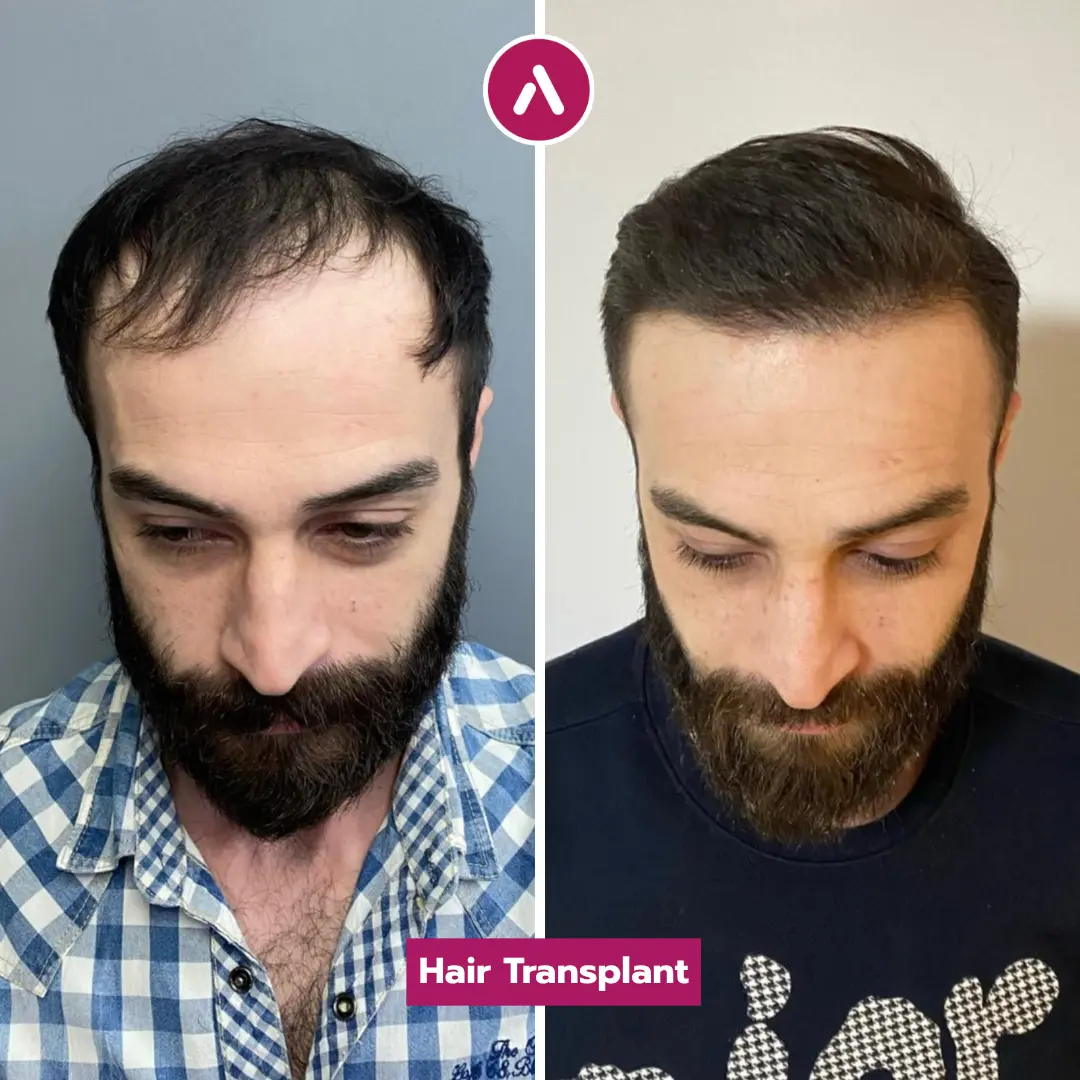
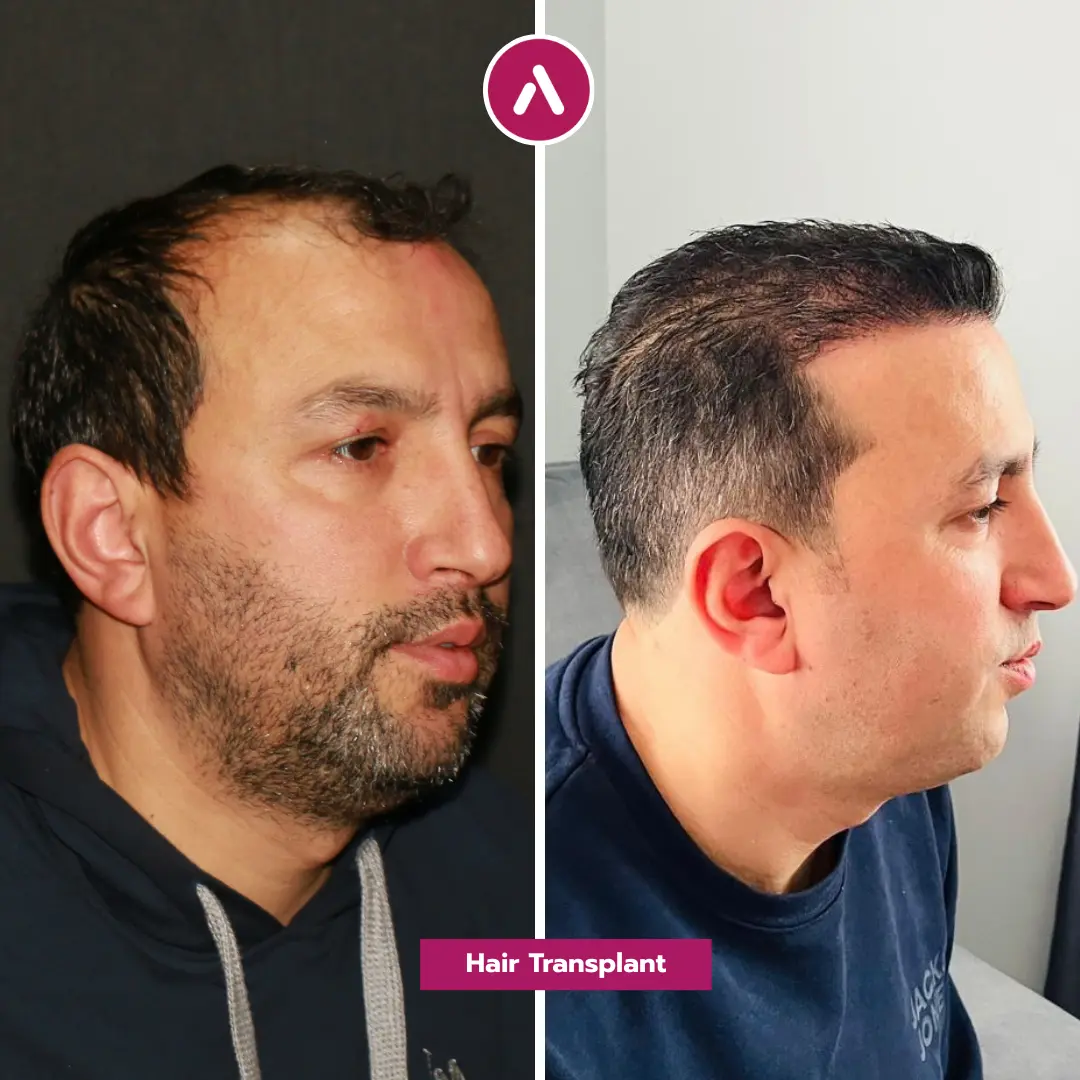
A Follicular Unit Extraction (FUE) hair transplant is a microsurgical hair restoration procedure that relocates genetically resilient hair follicles from a donor area (usually the back and sides of the scalp) into areas affected by thinning or baldness. For the “expert patient,” the decision is rarely about a single headline claim—like “no scar” or “quick recovery.” It’s about how follicles are selected and handled, how the recipient sites are engineered for natural direction and density, and how post-operative care supports predictable healing.
This guide is designed to explain FUE with the level of procedural clarity you would expect from a high-authority medical resource: the anatomy behind hair loss, the mechanics of modern FUE, the trade-offs versus other techniques, and the variables that determine whether a result looks convincingly natural at 12 months.
Clinical principle: “Rejuvenation, Not Alteration.” In hair restoration, that translates to restoring a believable hair pattern and density without creating a “transplanted” look.
Important: This content is educational and does not replace an in-person medical evaluation. Candidacy, graft counts, and risks must be individualized.
Table of Contents
Share your photos and medical history to receive a personalized assessment from our European board-certified facial surgery team.
Understanding Hair Loss and the Goal of Hair Restoration
Before comparing techniques, it helps to define the actual “problem” a hair transplant solves. Hair loss is not simply a lack of hair on the scalp—it’s a progressive shift in follicle behavior (miniaturization), density distribution, and cosmetic coverage. A well-planned FUE procedure is less about “moving hair” and more about rebalancing limited donor resources to create the appearance of stable, age-appropriate density where it matters most.
Hair follicle anatomy and the growth cycle (why timing matters)
Each hair follicle cycles through phases of growth and rest. In simplified terms, hair spends time actively growing (anagen), transitions (catagen), and rests before shedding (telogen). A transplant does not “freeze” follicles in a growth phase. Instead, it relocates follicular units that can continue cycling in their new location. This is why post-transplant shedding can be normal—follicles may reset and later re-enter active growth over the following months.
Why hair loss happens (androgenetic alopecia and beyond)
The most common indication for FUE is androgenetic alopecia (male or female pattern hair loss). In this condition, follicles in susceptible areas respond to androgens by gradually miniaturizing—producing thinner, shorter hairs over time until coverage becomes visibly sparse. However, not all hair loss is androgenetic. Diffuse shedding, scarring alopecias, autoimmune conditions, and certain dermatologic scalp diseases require different diagnostic and treatment pathways. In these cases, rushing into transplantation can lead to poor yield, progression around transplanted zones, or unnatural density “islands.”
What hair restoration can realistically achieve
Hair restoration is a game of perception. The goal is typically:
- Natural framing of the face via an age-appropriate hairline (not an artificially low one).
- Strategic density in the frontal and mid-scalp where it creates the most visible impact.
- Conservative planning for the crown/vertex, which often requires more grafts for less visible benefit.
Because donor hair is finite, the most reliable long-term plans treat donor supply like a budget: invest it where it produces the highest aesthetic return and preserves options for the future.
The donor area is your limiting factor
FUE depends on harvesting follicular units from a donor region that is relatively resistant to pattern hair loss. If the donor is overharvested, the donor can thin visibly and limit future procedures. This is why reputable planning emphasizes donor mapping, conservative extraction patterns, and realistic expectations—especially in younger patients with progressive hair loss.
Our surgery dates fill up quickly due to high international demand. Secure your consultation today to plan your ideal travel dates.
What Is an FUE Hair Transplant?
FUE (Follicular Unit Extraction) is a technique of harvesting hair follicles one-by-one using a tiny punch instrument. Unlike FUT (strip surgery), FUE does not remove a linear strip of scalp. Instead, it creates hundreds to thousands of micro-extraction sites that typically heal as small, scattered dots. FUE is best understood as a harvesting method; the final outcome depends just as much on recipient site design, implantation strategy, and post-operative healing.
From a clinical overview standpoint, FUE should be evaluated less by marketing labels and more by measurable fundamentals—donor preservation, follicle transection control, graft handling time, and recipient-site angulation—since these variables most directly influence graft survival and naturalness.
Definition: follicular unit extraction in plain English
Hair naturally grows in small groupings called follicular units (often 1–4 hairs per unit). In FUE, these units are extracted individually from the donor area. They are then placed into tiny recipient sites in thinning/bald areas. Because the units are kept intact, the transplanted hair can grow in a way that mimics natural density patterns—if the design is anatomically correct.
How FUE works: extraction → site creation → implantation
- Extraction: A micro-punch scores the skin around each follicular unit and the graft is gently removed. Key variables include punch size, angle control, and minimizing transection (damage to follicles).
- Graft handling: Follicles are living tissue. They are vulnerable to dehydration, mechanical trauma, and prolonged time outside the body. High-quality protocols prioritize careful counting, hydration, and time efficiency.
- Recipient site creation: This is where “natural” is engineered. Site angle, direction, distribution, and density determine whether hair lies properly, transitions softly at the hairline, and avoids an obvious “plugged” appearance.
- Implantation: Grafts are placed into the sites with attention to matching the hair’s natural orientation and creating a gradual density gradient from hairline to deeper zones.
Scarring: micro-dots vs a linear scar
FUE is often described as “scarless,” but that’s a simplification. Any time skin is cut, some scarring is possible. The advantage of FUE is that scarring is typically dispersed as small dot-like marks that may be less noticeable than a single linear scar—especially for patients who prefer shorter hairstyles. However, visibility can still depend on skin type, punch size, extraction pattern, healing biology, and how closely the hair is shaved.
Is a hair transplant permanent?
Transplanted follicles are usually taken from areas that are more resistant to androgen-driven miniaturization, which is why results can be long-lasting. But “permanent” does not mean immune to all change. Natural aging continues, and non-transplanted native hair can keep thinning. This is why expert planning avoids creating a hairline that will look unnatural if surrounding hair thins later. Many patients also choose medical therapies to stabilize native hair (when appropriate) so the transplant blends naturally over time.
Why post-transplant healing is part of the outcome
Even technically perfect placement can underperform if post-operative healing is compromised by inflammation, infection, or poor aftercare. Advanced recovery protocols in surgical settings may focus on supporting tissue oxygenation and cellular repair. For example, some clinics integrate a combined recovery approach that uses Hyperbaric Oxygen Therapy (HBOT) and Low-Level Laser Therapy (LLLT) as a structured “rapid recovery and safety protocol,” aiming to support faster healing and reduce common recovery burdens—while LLLT is also positioned as an essential adjunct for hair restoration by supporting graft healing and encouraging subsequent growth.
Next: We’ll move from “what it is” to “who it’s for,” including donor adequacy, pattern stability, and the decision logic that separates a good candidate from a high-risk candidate.
Am I a Good Candidate for FUE Hair Transplant?
FUE is not a “one-size-fits-all” solution. A strong candidate is someone with a stable enough pattern of hair loss, a donor area that can safely supply grafts without creating visible thinning, and realistic expectations about density and timeline. For expert patients, candidacy also means understanding the long game: how today’s design will look if you lose additional native hair over the next 5–15 years, and whether you’re preserving donor resources for potential future sessions.
Donor area adequacy: density, caliber, and safe extraction
The donor area—typically the occipital and parietal scalp (back and sides)—is the “inventory” for FUE. Two people can have the same bald pattern but very different donor capacity. Key donor variables include:
- Hair density: how many follicular units exist per square centimeter.
- Hair caliber (thickness): thicker hairs often create better visual density per graft.
- Hair-to-skin contrast and curl: higher contrast can require more grafts for the same cosmetic effect, while wave/curl can increase apparent fullness.
- Scalp laxity and skin characteristics: can influence healing and the visibility of micro-dot scarring.
Equally important is the clinic’s extraction philosophy. Overharvesting—taking too many grafts from a limited zone—can create a “moth-eaten” appearance in the donor area, especially if you wear your hair short. High-quality FUE planning typically uses a distributed extraction pattern and respects a donor “safe zone” to keep the donor looking natural over time.
Hair loss pattern and stability: planning for the future, not just today
FUE can restore coverage in the frontal hairline, mid-scalp, and crown, but pattern hair loss is often progressive. This is why candidacy is not just “how bald you are today,” but “how likely your loss is to progress.” A well-designed plan considers:
- Age and rate of progression: younger patients with rapidly progressing loss may need a more conservative hairline to avoid an unnatural look later.
- Family history: can offer clues about likely future pattern.
- Miniaturization mapping: identifying areas where hairs are thinning but not yet gone helps predict future density shifts.
For many patients, the most natural long-term strategy is to prioritize the frontal zone first (where facial framing matters most) and treat the crown more conservatively unless donor supply is robust.
Scalp health and medical screening: when to pause and investigate
A scalp that looks “fine” to the naked eye can still have inflammation or disease that compromises graft survival. Good candidates typically have:
- No active scalp infection or uncontrolled dermatitis.
- No untreated scarring alopecia (certain scarring conditions can reduce yield and require specialist management).
- Stable overall health and the ability to follow aftercare instructions.
Medications and lifestyle can also matter. Smoking and nicotine can impair microcirculation and wound healing. Some supplements and medications may increase bleeding risk. A careful pre-op evaluation is designed to reduce preventable complications—especially for patients who prioritize safety and predictable healing.
Expectation alignment: what FUE can and cannot do
FUE can create a dramatic visual improvement, but it cannot replicate childhood density across every region of a large bald scalp. Expectation alignment includes:
- Density reality: the goal is often “looks full” under normal conditions, not “maximum density” under bright overhead lighting or wet hair.
- Timeline reality: visible growth typically evolves over months, and final maturation can take up to a year or longer.
- One session vs. staged plan: some patients benefit from a phased approach to preserve donor resources and refine density strategically.
Expert patients often appreciate a plan that is conservative, anatomically consistent, and designed to age well—rather than aggressively lowering a hairline or chasing density that is not supportable by donor supply.
Who should be cautious (or consider alternatives)
FUE may still be possible in some of the scenarios below, but they require heightened caution, deeper evaluation, or alternative strategies:
- Diffuse unpatterned alopecia (DUPA) or very poor donor density: may not support safe extraction.
- Active inflammatory scalp disease: can reduce graft survival if not controlled.
- Unrealistic expectations: such as demanding extremely low hairlines or dense coverage of extensive baldness in a single session.
- Unstable hair loss without a long-term plan: can lead to unnatural “islands” of transplanted hair as native hair continues to thin.
| Candidate Factor | Strong Candidate | Needs Caution / Further Evaluation |
|---|---|---|
| Donor Density & Caliber | Robust donor supply, good caliber | Low density, fine caliber, patchy donor |
| Hair Loss Stability | Predictable pattern, stable progression | Rapidly progressing loss, unclear pattern |
| Scalp Health | Healthy scalp, no active inflammation | Dermatitis, folliculitis, scarring conditions |
| Expectations | Realistic density and timeline goals | Wants “teenage density” everywhere quickly |
| Aftercare Commitment | Can follow wash, activity, and hygiene rules | High risk of non-adherence (work/travel constraints) |
Once candidacy is confirmed, the next decision is which technical approach within modern FUE best matches your goals: manual vs motorized extraction, robotic-assisted systems, and how FUE compares with FUT and other implantation workflows. That comparison is where many “expert patient” decisions are won or lost—because it clarifies trade-offs in scarring, graft handling, efficiency, and long-term donor management.
Answer a few quick questions about your concerns, health, and goals to learn which treatment options may suit you best.
FUE Techniques and Modern Variations
“FUE” is often treated like a single standardized procedure, but in real clinical practice it’s a family of workflows that differ in how grafts are harvested, how recipient sites are created, and how implantation is performed. This is where many expert patients get stuck—terms like “robotic hair transplant,” “NeoGraft,” “DHI,” or “sapphire blades” are frequently marketed as if they guarantee superior outcomes. In reality, the most meaningful quality markers are the ones that affect follicle survival: angle control during extraction, minimal graft trauma, disciplined out-of-body time, and anatomically correct recipient-site engineering.
Manual FUE vs motorized FUE: what changes and what doesn’t
At the core, both manual and motorized FUE use a circular punch to isolate follicular units. The difference is the source of motion:
- Manual FUE: the surgeon advances the punch by hand (often with a subtle rotational or oscillating motion). This can provide excellent tactile feedback and fine control, especially in complex donor characteristics (variable hair angles, curly hair, or tight scalps).
- Motorized FUE: the punch is driven by a motorized handpiece that rotates or oscillates at controlled speeds. When used well, this can improve efficiency and consistency—particularly for larger sessions—while still relying on the operator’s skill to match the follicle’s exit angle and minimize transection.
Key takeaway: A motor does not replace judgment. The real clinical question is whether the operator can consistently align to follicle angulation and preserve graft integrity under time pressure.
Robotic-assisted FUE: what “robotic hair transplant” usually means
In most settings, “robotic hair transplant” refers to robotic-assisted FUE systems that can help with aspects of harvesting (identifying follicular units, guiding punch alignment, and standardizing certain extraction parameters). Potential upsides include speed and consistency for appropriate candidates. Limitations include:
- Patient selection constraints: certain hair types, scalp characteristics, or angulation patterns can reduce robotic accuracy.
- Still requires expert oversight: robotics may assist, but clinical outcomes remain dependent on planning, graft handling, and implantation quality.
- Not a guarantee of naturalness: the most visible part of the result—hairline and recipient site design—is a human surgical design problem, not an automation feature.
NeoGraft and similar systems: where they fit in the landscape
“NeoGraft hair transplant” is commonly used as a category label for a motorized FUE workflow that may incorporate assisted suction or specialized handpieces to streamline extraction and graft handling. In practice, the value (or drawback) depends on the protocol and operator technique. Expert patients should evaluate:
- Extraction philosophy: conservative, distributed harvesting to preserve donor appearance.
- Graft handling: consistent hydration and gentle handling to avoid mechanical trauma.
- Implantation method: whether implantation is performed with careful angle/direction control and density planning.
Practical lens: When a clinic leads with a device name, your job is to bring the conversation back to fundamentals: graft survival, donor preservation, and natural design.
FUE vs FUT (strip surgery): a decision framework, not a debate
FUE and FUT are both legitimate harvesting methods. FUT removes a linear strip of scalp from the donor region, then dissects follicular units under magnification. FUE extracts units individually. The best choice depends on your goals, donor characteristics, scarring preferences, and long-term donor strategy.
| Comparison Point | FUE | FUT (Strip) |
|---|---|---|
| Donor Scarring | Dispersed micro-dot scars | Single linear scar |
| Hairstyle Flexibility | Often better for short hairstyles (varies by healing) | Linear scar may be visible with very short cuts |
| Donor Management | Requires disciplined extraction distribution to avoid overharvest | Preserves surrounding donor density; scar management is key |
| Session Efficiency | Can be efficient, especially with motorized workflows | Can be efficient for high graft numbers in select cases |
| Patient Preference | Often preferred due to no linear incision | Preferred by some for specific graft-yield or donor strategies |
Clinical reality: Many high-quality hair restoration practices offer both techniques and choose based on individualized donor economics and scarring tolerance—rather than treating one as universally “best.”
FUE vs DHI vs “Sapphire”: clarifying common terminology
Marketing terms often blur differences between harvesting and implantation. A useful way to simplify:
- FUE primarily describes how grafts are harvested (individual extraction).
- DHI is commonly used to describe an implantation workflow that may use an implanter pen, potentially allowing direct placement with certain advantages in handling and angle control (depending on operator skill).
- Sapphire often refers to the material of blades used for creating recipient sites. Blade material alone does not guarantee a better outcome; site geometry, spacing, and surgical planning matter more.
For the expert patient, the priority is to understand how each workflow affects the variables that actually drive results: graft survival, natural direction, and the ability to create a soft, undetectable hairline transition.
“Stem cell hair transplant”: what patients should know
The phrase “stem cell hair transplant” is frequently used online but can mean very different things in practice—from legitimate regenerative medicine research to loosely defined “add-on” therapies. Currently, the most reliable, predictable method for restoring hair density in established balding areas remains transplantation of viable follicular units. If a clinic offers “stem cell” adjuncts, expert patients should ask:
- What exactly is being used? (source, processing method, regulatory context)
- What is the intended goal? (healing support vs hair growth in non-transplanted areas)
- What evidence supports it for my situation? (and what outcomes are realistic)
Balanced perspective: Adjunctive therapies may be positioned as supportive for healing or hair quality, but they should not replace careful surgical planning or be presented as a substitute for graft-based restoration.
How to evaluate “latest hair transplant techniques” without getting misled
Instead of chasing the newest label, evaluate the technique through questions that map directly to outcomes:
- Who performs each critical step? (extraction, site creation, implantation)
- How is transection minimized? (angle control, punch strategy, operator experience)
- How are grafts protected? (hydration, sorting, time outside the body)
- How is the donor preserved for the future? (extraction distribution, long-term planning)
- How is hairline design individualized? (age, facial proportions, temporal recession patterns)
These are the “non-negotiables” that separate a device-centered pitch from a true surgical plan.
Next: Once the technique is selected, the most visible success factor is the design—hairline architecture, density distribution, and graft strategy. We’ll cover how natural results are engineered and how graft counts are estimated in a way that protects your donor and looks believable over time.
Planning the Result: Hairline Design & Graft Strategy
For most patients, the “success” of an FUE hair transplant is judged in the mirror long before anyone asks how many grafts were used. Naturalness is engineered—primarily through hairline architecture, a realistic density plan, and disciplined donor budgeting. The most experienced surgical teams treat design as anatomy plus aesthetics: how hair naturally frames the face, how density gradients look in different lighting, and how the plan will age if native hair continues to thin.
Natural hairline principles: age, facial proportions, and soft transitions
A natural hairline is rarely a straight line. It is an irregular, feathered transition zone that looks believable at conversational distance and under bright lighting. Key design principles typically include:
- Age-appropriate height: A very low hairline can look “off” as a patient ages, especially if future thinning occurs behind it.
- Micro- and macro-irregularity: A natural hairline has small, intentional irregularities—never a ruler-straight edge.
- Temporal recession realism: Many adult male hairlines include subtle temporal recession; over-correcting it can create an unnatural “helmet” effect.
- Transition zone strategy: Single-hair follicular units are often prioritized at the leading edge for softness, with multi-hair units placed behind for density.
Surgeon’s insight: The most convincing hair restoration is the one that doesn’t announce itself. A conservative, anatomically consistent hairline usually ages better than an aggressive design.
Density vs coverage: why “fuller” is not always “better”
Patients often ask for maximum density everywhere. But scalp coverage is not linear: the crown can require a high graft count to achieve modest visual improvement, while the frontal zone can deliver dramatic change with fewer grafts because it frames the face. Most strategic plans prioritize:
- Frontal hairline + frontal third: Highest cosmetic impact; benefits most from precise angulation and density gradients.
- Mid-scalp: Often treated next to create continuity behind the hairline.
- Crown/vertex: Variable priority; can be staged depending on donor supply and expectations.
Expert perspective: A result can look natural and “full” when it’s planned to match your hair characteristics (caliber, curl, contrast) and your pattern of loss—without trying to recreate teenage density across every zone.
Estimating graft needs: a practical, transparent framework
Accurate graft planning requires a hands-on evaluation, but expert patients benefit from understanding the logic behind estimates. Clinics typically map the scalp into zones, estimate the surface area to be covered, and assign a target graft density (grafts per cm²) that fits your donor budget and hair characteristics.
| Region | Typical Priority | Design Goal | Why It Matters |
|---|---|---|---|
| Hairline / Frontal Edge | High | Soft, irregular transition | Most visible “tell” of a transplant if done poorly |
| Frontal Third | High | Cosmetic density | Frames the face; best ROI per graft |
| Mid-Scalp | Medium | Continuity | Blends front to back; prevents “island” look |
| Crown / Vertex | Variable | Swirl pattern + coverage | High graft demand; can be staged |
In counseling, a high-quality plan explains not only “how many grafts,” but also where they go and why. This helps you evaluate whether a proposal is realistic or overly aggressive for your donor capacity.
Direction, angle, and “hair behavior”: the invisible engineering
Even with adequate graft numbers, hair can look unnatural if it does not lie correctly. Recipient sites must be created to match native hair direction and angulation. This is especially critical in:
- The hairline: where hair naturally exits the scalp at a shallow angle.
- The temples: where direction changes and irregularity is essential.
- The crown: where a swirl pattern must be respected or the result can look chaotic.
Expert patients should listen for design language that reflects anatomy (angle, direction, gradients, swirl patterns) rather than vague promises like “high density” or “perfect results.”
Donor budgeting: preserving options for the future
Donor hair is finite. The strongest long-term outcomes treat donor preservation as a primary endpoint—equal in importance to the recipient appearance. A donor-aware plan typically includes:
- Conservative extraction percentages from any single donor zone to avoid patchiness.
- Distributed harvesting to keep the donor looking even.
- Future-proofing for progression of hair loss, especially in younger patients.
This is also why “mega-session” marketing can be misleading for some candidates. Larger sessions can be appropriate in select cases, but the decision should be driven by donor economics and long-term planning—not by a promotional number.
Single session vs staged plan: when less is more
Some patients benefit from a staged approach—particularly those with extensive loss, evolving patterns, or limited donor supply. A staged plan can:
- Establish a natural hairline and frontal framework first.
- Allow healing and growth to declare itself before “stacking” density.
- Preserve donor resources and refine design based on real-world hair behavior.
For expert patients who value predictability, a staged strategy can be a rational choice that trades speed for long-term naturalness and donor safety.
How to evaluate a proposed plan (quick checklist)
- Is the hairline age-appropriate? (or does it look artificially low?)
- Is there a clear density gradient? (soft edge → denser behind)
- Are crown expectations realistic? (high graft demand for modest payoff)
- Is donor preservation discussed? (distribution, future options, extraction limits)
- Is aftercare and healing strategy defined? (not just the day-of procedure)
Next: After design and graft planning, the most important variable for comfort and safety is anesthesia strategy—local anesthesia versus optional sedation, and why many expert patients prefer approaches that minimize systemic risk while maintaining a controlled, comfortable experience.
Anesthesia and Comfort Options
Most FUE hair transplants are performed under local anesthesia, and for many patients this is one of the procedure’s biggest advantages: you can remain comfortable without the physiologic load and recovery profile associated with general anesthesia. For the expert patient, the anesthesia decision is less about “sleep vs awake” and more about risk management, comfort, and how reliably the clinical team can maintain a calm, controlled operative environment for several hours.
Local anesthesia (the standard for FUE): what it does and what you feel
Local anesthesia numbs the donor and recipient areas so that harvesting and implantation can be performed without pain. You may feel:
- Brief pinches and pressure during injection (typically the most noticeable part).
- Pressure or vibration sensations during extraction (without sharp pain).
- Positional discomfort from lying in one posture for extended periods, which can be managed with breaks.
From a safety standpoint, local anesthesia is widely favored because it avoids airway instrumentation and reduces systemic exposure compared with general anesthesia. That said, the experience can vary. A meticulous anesthesia technique, pacing, and communication throughout the procedure often determine whether the day feels “long but manageable” or unnecessarily stressful.
Twilight sedation and “awake surgery”: who it’s for and why it’s used
Some patients do well with local anesthesia alone. Others benefit from twilight sedation—a monitored, light-to-moderate sedative approach designed to reduce anxiety, improve comfort, and make longer sessions feel easier, while still avoiding the depth and recovery profile of full general anesthesia.
Twilight sedation can be especially appropriate if you:
- Have significant procedure-related anxiety or a strong fear of medical settings.
- Are sensitive to prolonged stimulation (sound, vibration, sustained positioning).
- Prefer a calmer experience but still want to avoid general anesthesia when possible.
In high-standard surgical settings, twilight sedation is typically paired with continuous monitoring and a structured safety protocol. The goal is not simply comfort—it’s also maintaining stable physiology so the clinical team can work precisely and efficiently for the duration of the session.
General anesthesia: when it may be considered (and why many patients avoid it)
General anesthesia can be used for hair restoration in select cases, but it is less common for routine FUE. Reasons a team might consider general anesthesia include:
- Complex cases requiring extensive operating time where patient immobility is critical.
- Specific medical or psychological considerations (rare in straightforward FUE).
- Institutional or workflow preferences in certain surgical centers.
Many expert patients, however, prefer to avoid general anesthesia when it is not medically necessary—primarily because it can involve deeper physiologic impact, longer recovery, and a different risk profile. The right choice is individualized: your medical history, anxiety level, and procedure scope should guide the plan.
Pain control strategy: comfort is planned, not improvised
A well-run FUE day has a deliberate comfort strategy rather than a “tough it out” attitude. Key components often include:
- Thoughtful injection technique: pacing and buffering approaches can make local anesthetic delivery more tolerable.
- Scheduled breaks: short movement breaks can reduce neck/back discomfort and help patients reset mentally.
- Clear expectations: knowing what you’ll feel—pressure vs pain—reduces anxiety and improves tolerance.
- Post-procedure analgesia plan: a defined plan for discomfort in the first 24–72 hours supports better sleep and recovery.
For many patients, the most challenging part of the day is not pain—it’s sustained positioning. Clinics that proactively manage positioning and pacing often provide a noticeably better experience.
Safety monitoring and standards: what expert patients should confirm
Anesthesia safety is not only about the medication chosen; it’s about the infrastructure supporting it. If any sedation is used, expert patients should confirm:
- Continuous monitoring: vital sign monitoring throughout the procedure.
- Trained anesthesia support: appropriate personnel and protocols for sedation oversight.
- Emergency readiness: a clear plan for escalation if a patient becomes unstable or uncomfortable.
- Medical screening: pre-op evaluation that identifies risks (blood pressure control, medication review, relevant medical history).
These are the practical “quality signals” that matter more than brand names of devices or generic claims of being “comfortable.”
Anxiety management: the hidden variable that influences the whole day
Anxiety has real physiologic effects—heart rate, blood pressure, muscle tension, and the ability to stay still. That can matter during a procedure where precision and stability are important. High-quality teams treat anxiety as a clinical variable, not a personality flaw. Helpful approaches can include:
- Pre-procedure counseling: a clear, step-by-step explanation of what will happen and when.
- Choice of sedation level: individualized to your comfort needs and medical profile.
- Calm communication: frequent check-ins and predictable pacing to reduce uncertainty.
If fear of general anesthesia is a major concern for you, it’s reasonable to seek a clinic with deep experience in local anesthesia workflows and optional twilight sedation—so your plan is designed around both safety and comfort, rather than forcing you into a one-size-fits-all model.
Next: We’ll walk through the FUE procedure step-by-step—what happens on the day of surgery, how grafts are harvested and protected, and what quality checkpoints should be built into each stage.
You are never alone. Our 24/7 Patient Hosts and English-speaking staff will be by your side from arrival to departure.
The FUE Hair Transplant Procedure Step-by-Step
Understanding exactly what happens on the day of an FUE hair transplant helps expert patients evaluate quality, not marketing. The procedure can take several hours, and outcomes are heavily influenced by process discipline: how the donor is mapped, how grafts are extracted and protected, how recipient sites are engineered, and how implantation is executed without unnecessary trauma. Below is a practical walkthrough of the full workflow, including the quality checkpoints that distinguish a meticulous surgical plan from an assembly-line approach.
Step 1: Pre-op consultation and medical planning
A high-quality FUE plan begins well before the procedure day. A thorough consultation typically includes:
- Hair loss pattern assessment: identifying stable vs actively miniaturizing zones to avoid creating density “islands.”
- Donor evaluation: mapping the donor area and estimating safe donor capacity (not just “maximum grafts”).
- Design planning: hairline height and shape, density priorities by region (frontal vs mid-scalp vs crown), and future-proofing.
- Medical screening: medication review, bleeding risk, scalp condition, and lifestyle factors that affect healing.
Quality checkpoint: You should leave the consultation understanding where grafts will go, why that distribution was chosen, and how the plan accounts for future progression.
Step 2: Pre-op preparation (the days before)
Pre-op instructions vary by provider, but the goal is consistent: optimize scalp health, reduce bleeding risk, and support predictable healing. Typical guidance may address:
- Medication and supplement management: which agents to pause (as medically appropriate) and which to continue.
- Smoking/nicotine considerations: nicotine can compromise microcirculation and wound healing, so abstinence can materially improve recovery.
- Scalp hygiene: reducing bacterial load and inflammation before surgery.
- Logistics planning: arranging time off work, transportation, and aftercare supplies.
Quality checkpoint: A credible clinic provides written instructions and a clear plan for the first 7–14 days, not just “don’t touch your head.”
Step 3: Day-of setup, photography, and mapping
On the procedure day, standardized documentation and mapping are a sign of process maturity. This stage often includes:
- Baseline photos: consistent angles and lighting for objective comparison.
- Final design confirmation: hairline, temple points (if planned), and zone boundaries.
- Donor area preparation: trimming/shaving to visualize angulation and enable precise extraction.
Quality checkpoint: You should see a deliberate plan for donor harvesting (distribution) rather than “we’ll take from wherever looks thick.”
Step 4: Local anesthesia (and optional sedation, if planned)
The donor and recipient regions are numbed with local anesthesia so extraction and implantation can proceed comfortably. If twilight sedation is used, it is generally introduced in a controlled, monitored way to reduce anxiety and improve tolerance for longer sessions.
Quality checkpoint: Comfort is managed with technique, pacing, and breaks—especially if the case is long. A calm environment is not a luxury; it helps maintain precision.
Step 5: Donor harvesting (FUE extraction)
This is the “extraction” phase: follicular units are removed one by one using a micro-punch. While patients often focus on punch size, the most critical variables are:
- Angle alignment: matching the hair’s exit angle reduces transection (follicle damage).
- Extraction pattern: distributed harvesting protects the donor from looking patchy.
- Graft selection: balancing single-hair and multi-hair units to match the design plan.
Quality checkpoint: Overharvesting is one of the most preventable long-term regrets. A careful plan preserves donor aesthetics and future options.
Step 6: Graft handling (the part patients don’t see)
After extraction, grafts are living tissue outside the body. Their survival depends on careful handling and minimizing stressors. High-quality protocols typically emphasize:
- Hydration: grafts are kept appropriately hydrated to prevent desiccation.
- Gentle sorting: avoiding crush injury while organizing grafts by hair count and quality.
- Time efficiency: reducing “out-of-body time” supports graft viability.
- Temperature and environment control: consistent conditions help maintain graft integrity.
Quality checkpoint: If a clinic can’t explain how it protects grafts between extraction and implantation, that’s a meaningful gap—because this interval strongly influences yield.
Step 7: Recipient site creation (where naturalness is engineered)
Recipient sites are tiny openings created in the thinning/bald area to accept grafts. This stage is one of the most outcome-defining parts of the entire procedure because it controls:
- Direction: the way hair flows and blends with existing hair.
- Angle: especially critical at the hairline and temples to avoid an upright, unnatural “brush” look.
- Spacing and density gradients: creating a soft transition zone at the front and increasing density behind it.
- Crown swirl pattern: if the crown is treated, sites must respect the native whirl pattern.
Quality checkpoint: “High density” is meaningless without correct angle/direction and a realistic gradient. Poor site engineering is a common reason transplants look detectable.
Step 8: Implantation (placing grafts without trauma)
Implantation places grafts into recipient sites with consistent orientation and minimal handling trauma. Depending on the clinic’s workflow, implantation may be performed with forceps or implanter devices. Regardless of tools, the essentials remain:
- Atraumatic placement: avoiding compression or twisting of the follicle.
- Correct graft selection by zone: single-hair units at the leading edge, multi-hair units behind for density.
- Uniform distribution: to avoid clumping and unnatural density patches.
Quality checkpoint: Implantation speed should never compromise delicacy. The goal is consistent, careful placement—especially in the hairline transition zone.
Step 9: Immediate post-op care and discharge instructions
At the end of the procedure, the scalp is inspected and aftercare begins immediately. Patients typically receive:
- Wound and scalp care guidance: how to protect grafts during the first days, including sleeping position and touch precautions.
- Hygiene instructions: when and how to begin washing to reduce crusting while protecting grafts.
- Activity restrictions: when to return to work, exercise, and sun exposure.
- Medication plan: as clinically indicated for discomfort and infection risk reduction.
- Follow-up plan: check-in timing and what normal healing looks like vs warning signs.
Quality checkpoint: The most trustworthy programs define what is “normal” (swelling, redness, shedding) and what requires urgent contact (increasing pain, spreading redness, fever, drainage).
Combined procedures: when they’re considered and why caution matters
Some patients ask about combining hair transplantation with other cosmetic procedures to “save time.” While combinations can be medically feasible in select situations, expert patients should be cautious: the scalp’s healing demands and the need for precise intraoperative conditions often make a focused, staged plan the more predictable option. Any combination strategy should be individualized and justified by risk-benefit reasoning—not convenience marketing.
Next: We’ll move into the recovery timeline and aftercare in detail—what to expect day by day, what shedding really means, how to return to normal life safely, and how advanced recovery protocols can support predictable healing.
Hair Transplant Recovery Timeline (Day-by-Day)
Recovery after an FUE hair transplant is not just “waiting for hair to grow.” It’s a controlled healing process where protecting fragile grafts early, minimizing inflammation, and following a consistent hygiene routine can materially influence comfort and cosmetic yield. Most patients feel well quickly, but the visual timeline (shedding, dormant period, regrowth, maturation) is longer. The goal of aftercare is to keep the scalp calm, clean, and well-perfused—so follicles can settle, revascularize, and cycle back into growth.
Day 0–3: Protect the grafts (the highest-risk window)
The first 72 hours are when grafts are most vulnerable to mechanical disruption. Your priorities are protection, cleanliness, and swelling control.
- Sleeping position: Sleep with your head elevated to help reduce swelling. Avoid any friction against the recipient area.
- Hands-off rule: No scratching, rubbing, or picking at scabs. If itching occurs, treat it as a healing signal—not a cue to touch.
- Swelling expectations: Mild swelling can occur, sometimes migrating toward the forehead. This is often temporary.
- Hydration and nutrition: Adequate fluids and protein support tissue repair.
Practical tip: Many patients underestimate “micro-trauma” (accidentally brushing the grafts with a towel, hoodie, or pillow). Treat your scalp like a delicate surgical site—even if you feel fine.
Days 4–10: Washing, crust management, and early normalization
As the initial tenderness decreases, attention shifts toward proper washing and controlling crusting. Crusts are normal in the early phase; the goal is to soften and remove them safely over time—without aggressive picking.
- Gentle washing: Follow a clinic-specific wash protocol (timing, technique, and products matter).
- Scab control: Progressive softening is typically preferred over forceful removal.
- Sun and heat: Avoid direct sun exposure and excessive heat; inflammation can worsen redness and itching.
Return to work: Many patients can return to desk work relatively soon, but “social downtime” varies based on redness, swelling, and personal comfort.
Weeks 2–6: Shedding and “shock loss” (often normal, frequently misunderstood)
One of the most anxiety-provoking phases is the shedding window. Many patients see transplanted hairs fall out after the first couple of weeks. In most cases, this is expected: the follicle remains under the skin while the hair shaft sheds, and growth resumes later as the follicle cycles back into an active phase.
- Shedding of transplanted hairs: Often occurs during weeks 2–6.
- Shock loss: Some patients may notice temporary shedding of existing native hairs around the transplant zone, especially where follicles were already miniaturizing.
- Scalp appearance: Redness can linger and gradually fades (timing varies by skin type and healing biology).
What to avoid: Panicking and “over-treating” the scalp with multiple products or harsh routines. Calm, consistent care usually wins.
Months 2–4: The quiet phase (patience required)
This is when many patients feel like “nothing is happening.” The follicles are settling and preparing to re-enter growth. Some early sprouts can appear, but density is not meaningful yet.
- Early growth can be uneven: Patchiness early on is not automatically a failure.
- Hair texture may be different at first: New hair can look wiry or fine initially and often improves with maturation.
Months 4–8: Visible growth and cosmetic momentum
Most patients start to see more noticeable growth and coverage improvement. Styling becomes easier, and the hairline begins to look more coherent.
- Density builds gradually: You’re looking for trend, not perfection.
- Blend improvement: As length increases, the transplant integrates better with existing hair.
Months 9–12+ (and sometimes beyond): Maturation and final refinement
Final results are typically judged around 12 months, though some patients—especially those with slower cycling or certain hair characteristics—continue to see refinement beyond that point. Maturation includes improved texture, thickness, and overall “naturalness.”
| Timeframe | What You May Notice | What Matters Most |
|---|---|---|
| Days 0–3 | Tenderness, swelling risk | Protect grafts, avoid friction/trauma |
| Days 4–10 | Crusting, early redness | Gentle wash protocol, no picking |
| Weeks 2–6 | Shedding / possible shock loss | Stay consistent; don’t overreact |
| Months 2–4 | “Quiet” phase, minimal visible change | Patience; scalp calm and healthy |
| Months 4–8 | Meaningful regrowth | Track progress; avoid scalp irritation |
| Months 9–12+ | Maturation and refinement | Assess final density, texture, and naturalness |
Red flags: when to contact your clinic urgently
Most healing changes are normal, but certain symptoms should be treated as warning signs rather than “part of recovery.” Contact your clinic promptly if you experience:
- Increasing pain instead of gradual improvement
- Spreading redness, warmth, or swelling that worsens after the first days
- Fever or flu-like symptoms
- Pus-like drainage or a strong foul odor from the scalp
- Sudden, severe swelling or significant bleeding
Accelerated Recovery & Safety Protocol: HBOT + LLLT (how some clinics support healing)
Beyond standard aftercare, some high-standard surgical programs integrate structured recovery technologies to support predictable healing and reduce visible downtime. At AKM Clinic, this is positioned as a cohesive “Rapid Recovery & Safety Protocol” built around two complementary systems:
- Hyperbaric Oxygen Therapy (HBOT): A pressurized environment with 100% oxygen designed to enhance tissue oxygenation, support regeneration, reduce inflammation, and provide an additional layer of infection control.
- Low-Level Laser Therapy (LLLT): A non-thermal “soft laser” approach designed to stimulate cellular activity. In hair restoration specifically, it’s framed as an essential post-transplant support tool—helping boost scalp microcirculation, accelerate graft healing, and encourage subsequent growth.
Why expert patients care: Not because the devices sound impressive, but because the intended effect is practical—less inflammation, smoother healing, and a more comfortable, confidence-preserving recovery window.
Next: We’ll cover risks and side effects in a transparent, clinical way—including why “hair transplant gone wrong” scenarios happen and the specific safeguards that reduce those risks.
We use advanced Hyperbaric Oxygen Therapy (HBOT) to minimize downtime and supercharge your healing process. Safety is our #1 promise.
Hair Transplant Risks, Side Effects, and How to Reduce Them
Every surgical procedure has risks, and FUE is no exception. The expert patient approach is not to look for “zero risk,” but to understand the risk profile, identify what is truly common versus rare, and choose protocols that reduce preventable complications. Most FUE side effects are temporary and manageable, but poor planning, inadequate sterility, aggressive extraction, or weak aftercare systems can turn a routine recovery into a prolonged problem. This section explains risks transparently—then outlines practical, evidence-based mitigation strategies.
Common short-term side effects (usually temporary)
These effects are frequently seen in the early recovery period and typically improve with time and proper aftercare:
- Swelling (edema): often most noticeable in the first week, sometimes moving toward the forehead.
- Redness (erythema): can persist for days to weeks depending on skin type and inflammatory response.
- Itching: a common healing symptom; scratching can damage grafts or increase infection risk.
- Crusting/scabbing: expected around recipient sites; should be managed with gentle wash protocols.
- Temporary numbness or altered sensation: may occur in donor or recipient areas and usually improves over time.
- Folliculitis-like bumps: small inflamed spots can appear as hair begins to regrow; mild cases often resolve with appropriate care.
Expert patient mindset: Short-term symptoms are not automatically “complications.” They are part of tissue healing—unless they worsen progressively or come with systemic signs (fever, expanding redness, drainage).
Shedding, “shock loss,” and why it happens
Two patterns can worry patients:
- Transplanted hair shedding: the hair shafts from transplanted follicles commonly shed within the first weeks. The follicle generally remains in place and can regrow later as it re-enters the growth cycle.
- Shock loss of native hair: temporary shedding of existing hair around the recipient zone can occur—especially if those hairs were already miniaturizing. In many cases, these hairs can return, but outcomes depend on baseline follicle health.
Clinically, the best prevention is proper candidate selection, conservative recipient-site planning, and minimizing unnecessary trauma and inflammation.
Infection: uncommon, but important to take seriously
True infection after FUE is not common in well-run settings, but it is one of the most consequential risks because it can compromise graft survival and prolong healing. Risk increases with:
- Poor hygiene or early touching/picking of the recipient area
- Excessive sweating too soon (returning to intense exercise early)
- Uncontrolled scalp conditions (active dermatitis, untreated folliculitis)
- Weak sterility protocols during the procedure
Warning signs: increasing pain, warmth, expanding redness, fever, pus-like drainage, or a rapidly worsening scalp appearance. These symptoms deserve immediate medical contact.
Graft failure or poor growth: the “outcome” complication
For many expert patients, the feared complication is not swelling or itching—it’s poor yield. “Poor growth” is usually multifactorial and can involve:
- Transection during extraction: follicles are damaged and cannot grow normally.
- Dehydration or trauma during handling: grafts are living tissue; rough or prolonged handling can reduce survival.
- Recipient-site issues: improper angle, density overpacking, or excess bleeding can compromise placement quality and healing.
- Post-op disruption: early friction, scratching, or accidental knocks can dislodge vulnerable grafts.
- Biologic variability: healing response and hair cycle timing differ across individuals.
How to interpret “success rates”: A clinic’s success is not a single number. Ask how they define success (coverage? density? patient satisfaction?) and what protocols they use to protect graft viability at every stage.
Donor-related risks: overharvesting and visible thinning
FUE’s hallmark advantage—individual follicle harvesting—comes with a donor-specific risk: taking too many units or harvesting too densely from a narrow zone can create visible donor thinning or patchiness. This is one of the most preventable long-term issues in FUE.
Expert-level donor management typically emphasizes:
- Distributed extraction patterns rather than clustering harvest sites
- Respecting donor “safe zones” that are most resistant to future thinning
- Conservative extraction percentages tailored to donor density and hair caliber
Unnatural appearance: what causes the “transplanted look”
When patients search “hair transplant gone wrong,” many images show a recognizable set of aesthetic failures. The most common causes include:
- Hairline errors: too straight, too low, or too dense at the very front without a soft transition zone.
- Incorrect angles: hair exits too upright, especially at the hairline and temples.
- Clumping: grafts placed in a way that creates uneven density patches.
- Ignoring future hair loss: a strong hairline with thinning behind it creates an unnatural “wall” effect over time.
Preventive strategy: Naturalness is a design discipline. A believable result is built with gradients, irregularity, and conservative, age-appropriate architecture.
Serious complications (rare, but part of informed consent)
Rare complications are still worth discussing so you can recognize warning signs early and choose safer protocols:
- Significant bleeding/hematoma: uncommon; risk influenced by medications and blood pressure control.
- Necrosis (skin compromise): rare; more likely with excessive trauma, compromised circulation, or over-dense packing in high-risk scalps.
- Severe infection: rare; requires urgent treatment to protect tissue and grafts.
- Persistent numbness or sensitivity changes: usually improves but can persist longer in some individuals.
Risk reduction: the expert patient checklist (before, during, after)
Below is a practical checklist you can use to evaluate safety and reduce preventable issues.
| Phase | What You Should Confirm | Why It Matters |
|---|---|---|
| Before Surgery | Clear candidacy assessment, donor mapping, scalp health evaluation, medication review | Prevents avoidable complications and unrealistic plans |
| During Surgery | Disciplined sterility, controlled extraction strategy, protective graft handling, anatomically correct site creation | Directly influences graft survival and naturalness |
| After Surgery | Written aftercare plan, wash protocol, activity timeline, clear red-flag guidance, structured follow-up | Reduces infection risk and supports consistent healing |
How advanced recovery protocols may support safer healing (HBOT + LLLT)
While standard aftercare is the foundation, some surgical programs add structured recovery modalities designed to support tissue repair and reduce recovery burden. In AKM Clinic’s model, this is framed as an “Accelerated Recovery & Safety Protocol” that can include:
- HBOT (Hyperbaric Oxygen Therapy): intended to support tissue oxygenation, regeneration, inflammation control, and infection defense in the healing phase.
- LLLT (Low-Level Laser Therapy): positioned as a non-thermal supportive modality in hair restoration—intended to improve microcirculation, support graft healing, and encourage subsequent growth.
How to think about this as an expert patient: These tools are not “magic.” Their value depends on proper indication, protocol consistency, and integration into a broader surgical safety system (screening, sterile technique, and disciplined aftercare).
Next: We’ll focus on results and longevity—what “permanent” really means, what influences cosmetic density at 12 months, and how to evaluate reviews and before/after outcomes with an expert eye.
Results, Longevity, and “Is a Hair Transplant Permanent?”
Most expert patients judge an FUE hair transplant on three outcomes: (1) whether it looks natural in real life (not just in staged photos), (2) whether the density and hairline “hold up” over time, and (3) whether the overall journey—comfort, healing, follow-up—feels predictable and safe. The best way to think about permanence is nuanced: transplanted follicles are typically long-lasting, but the scalp around them can continue to change. A high-quality plan builds a result that stays believable as you age.
What “permanent” really means in hair restoration
Transplanted grafts are usually harvested from donor regions that are more resistant to androgen-driven miniaturization. That’s why these follicles often continue to grow long-term after relocation. However, “permanent” does not mean:
- Zero future change: aging continues and hair characteristics can evolve over time.
- No further hair loss: your native (non-transplanted) hair may keep thinning, especially if your pattern is still progressing.
- One procedure for everyone: some patients ultimately choose a staged strategy or a second session to refine density or address progression.
Expert planning principle: The most durable results come from conservative, age-appropriate hairline design and donor-aware graft allocation—so you don’t “spend” your donor in a way that looks unnatural later.
What affects FUE success rate and graft survival
Patients commonly ask for a single “success rate,” but the truth is that outcomes depend on a chain of variables—many of them under the clinic’s control. The most influential factors typically include:
- Extraction quality: minimizing transection and mechanical trauma by controlling angle and punch technique.
- Graft handling: protecting follicles from dehydration, crush injury, and prolonged time outside the body.
- Recipient site engineering: correct angle/direction, spacing, and density gradients to avoid compromised healing and unnatural appearance.
- Donor strategy: distributed harvesting that protects donor aesthetics and preserves future options.
- Patient factors: scalp health, inflammation tendency, smoking/nicotine exposure, and adherence to aftercare.
How to interpret “success” clinically: A mature program can describe its protocols and quality checkpoints at each stage. If a clinic can only say “we have great results” without explaining process controls, you don’t have enough information to evaluate risk.
What “natural results” look like (and what looks suspicious)
Naturalness is often the deciding factor in whether a transplant appears “undetectable.” In real life, a natural result typically shows:
- A soft transition zone at the hairline: no hard edge, no uniform density at the very front.
- Correct hair direction: hair lies flat and blends, rather than standing upright.
- Density gradients: lighter density at the leading edge, gradually increasing behind it.
- Age-consistent architecture: a hairline that fits your facial proportions and likely future pattern.
Results tend to look suspicious when the hairline is too straight, too low, too dense at the edge, or when angles are incorrect—especially at the temples. Expert patients should evaluate design quality as seriously as graft count.
How to evaluate before-and-after photos with an expert eye
Before-and-after images can be useful—but only if you know what to look for. Use the following checks to avoid being misled:
- Consistent lighting and angles: changes in lighting can exaggerate density improvements.
- Wet vs dry hair: wet hair reveals scalp more; a reliable portfolio shows multiple conditions.
- Comparable hair length: longer styling can make hair appear thicker regardless of graft count.
- Timepoint transparency: results at 3–6 months are not final; 9–12+ months matter most.
- Hairline close-ups: naturalness is proven at the transition zone, not just in wide shots.
Pro tip: Ask to see outcomes for patients with similar hair caliber, contrast, and pattern to yours. A clinic’s best-case examples may not represent your likely outcome if your hair characteristics differ.
Reviews and patient stories: how to use them without over-weighting them
Reviews and testimonials can reveal important quality signals—especially around communication, follow-up support, and the patient’s lived experience of comfort and recovery. But they’re not a substitute for a clinical plan. Use reviews to confirm:
- Process reliability: Was planning organized? Were instructions clear?
- Responsiveness: Did the team answer questions quickly and consistently?
- Aftercare continuity: Was there structured support after the patient returned home?
At AKM Clinic, patient narratives frequently highlight two decision drivers that match the “expert patient” mindset: (1) seeking high value when domestic pricing feels prohibitive, without compromising quality, and (2) prioritizing outcomes that look natural and remain believable over time. One international patient story emphasizes long-term naturalness—years later, others reportedly cannot tell a transplant was done—an outcome that typically reflects conservative design, correct angulation, and disciplined donor management rather than aggressive, detectable hairline choices.
Longevity planning: protecting the result as native hair changes
Because native hair can keep thinning, longevity often depends on how well your plan anticipates future change. A durable strategy typically includes:
- Conservative hairline placement: designed to remain believable even if the mid-scalp thins later.
- Smart distribution: prioritizing frontal framing and mid-scalp continuity before “chasing” crown density.
- Donor preservation: keeping options open for future refinement if needed.
- Scalp health and maintenance: addressing inflammation triggers and considering medical stabilization options when appropriate.
For many expert patients, the best outcome is not the most dramatic “day one” transformation—it’s the result that looks natural at 12 months and still makes sense at year five.
Next: We’ll address cost and value transparently—what drives pricing in the USA, why Turkey (Istanbul) can be meaningfully lower without automatically implying lower standards, and what should be included in a truly comparable quote.
Our philosophy is “Rejuvenation, Not Alteration.” Discover how our surgeons achieve subtle, revitalized results that honor your unique beauty.
FUE Hair Transplant Cost 2026: US vs Turkey
For expert patients, “cost” is not a standalone number—it’s the sum of surgical quality, safety infrastructure, graft survival controls, aftercare continuity, and the likelihood of a believable long-term result. The right comparison is rarely “cheapest vs most expensive.” It’s standard of care vs standard of care. This section explains what typically drives pricing in the United States, why Istanbul can be lower without automatically implying a lower standard, and how to evaluate quotes so you’re comparing like-for-like.
Why FUE pricing in the USA can be high (what you’re actually paying for)
In the US market, FUE pricing is often driven by a combination of clinical resources, staffing models, facility overhead, insurance/regulatory costs, and time intensity. While every clinic is different, the higher end of pricing usually reflects some mix of:
- Operating time and staffing: large sessions require extended clinical time and a trained team.
- Facility and compliance costs: maintaining surgical-grade standards, monitoring infrastructure, and documentation.
- Physician-led planning and execution: when key steps (design, site creation, quality oversight) are surgeon-driven.
- Post-op support: structured follow-ups and longer-term monitoring that reduce “lost in the system” risk.
From a value perspective, the highest-quality US programs tend to justify cost through predictability: transparent planning, disciplined graft handling, and consistent outcomes across different hair types and patterns.
Why Istanbul/Turkey can be lower cost without being lower standard
Lower pricing in Istanbul is often explained by macro factors rather than a universal reduction in quality—such as operational costs, labor economics, and market structure. However, the expert-patient conclusion should never be: “lower cost equals better deal.” The conclusion should be: “lower cost can be a high-value option if the clinical standard is verifiable.”
In premium-tier programs, the value proposition is typically framed as: access to a comprehensive surgical experience—including technology, facility standards, and structured aftercare—at a cost that may be significantly lower than major US metros due to operating cost differences, not because safety is optional.
How to compare quotes: the “full-value” checklist
Two quotes can look incomparable because one includes essentials and the other hides them in small print. Use this checklist to compare providers on a true value basis:
- Who performs the critical steps? (hairline design, recipient site creation, implantation oversight)
- What is the donor strategy? (distribution, safe-zone approach, long-term planning)
- What is included in the day-of care? (monitoring, anesthesia plan, comfort strategy)
- What is included in the aftercare plan? (wash protocol, activity timeline, red-flag guidance)
- What follow-up structure exists? (1, 3, 6, 12-month checkpoints; remote support if you travel)
- What is the revision policy? (how issues are handled if yield is lower than expected)
- What recovery support exists? (if offered, is it protocolized or just a “nice add-on”?)
Cost comparison: interpret ranges carefully (apples-to-apples matters)
Prices vary widely by city, surgeon, graft count, and how the clinic defines “included.” Instead of treating any number as a guarantee, use this table as a framework for how expert patients typically structure comparisons. The goal is to compare what’s included and what standard of care is verifiable, not to chase the lowest sticker price.
| Comparison Category | USA (Major Metro) — Typical Pattern | Istanbul (Premium Program) — Typical Pattern |
|---|---|---|
| Pricing Model | Often per-graft or tiered packages; higher overhead | Often package-based; operational costs may be lower |
| What “Included” Means | Variable: sometimes procedure only; aftercare can be separate | Often more bundled: logistics + aftercare may be packaged |
| Facility Standards | Typically strong, but varies by setting | Can be high-standard when tied to accredited hospital environments |
| Aftercare & Follow-up | Usually local follow-up is simpler | Requires clear remote follow-up structure for international patients |
| Value Risk | High cost doesn’t guarantee naturalness | Low cost without verifiable standards increases risk |
Where “cheap” becomes expensive: the hidden cost of preventable mistakes
The most expensive hair transplant is often the one you have to “fix.” Expert patients evaluating international options should be especially alert to factors that can increase revision risk:
- Overharvesting: donor depletion is difficult to reverse and can permanently limit options.
- Detectable hairline: correcting a too-low, too-straight hairline is complex and may require multiple sessions.
- Weak aftercare: infections, inflammation, or poor guidance can reduce yield and extend recovery.
- Unclear accountability: if problems arise, who owns the solution?
This is why expert patients often accept a slightly higher quote from a provider that can clearly demonstrate process controls, safety infrastructure, and long-term follow-up commitments.
How AKM Clinic frames value for the expert patient
AKM Clinic positions its model around premium safety and accelerated recovery—without framing the choice as “medical tourism.” The emphasis is on a structured surgical system: physician-led planning, verifiable standards, and an integrated recovery protocol designed to reduce inflammation and support predictable healing.
- Safety and comfort approach: local anesthesia workflows with optional twilight sedation (when appropriate), paired with monitoring and pre-op screening.
- Technology as protocol (not decoration): HBOT and LLLT integrated as an accelerated recovery and safety pathway to support healing and hair restoration outcomes.
- International-patient readiness: a defined logistical pathway and remote follow-up structure so care doesn’t end when you fly home.
For the expert patient, the decision logic becomes clear: if you can verify standards and outcomes, cost differences can represent value—not compromise.
Next: We’ll cover how to choose the right surgeon and clinic—what credentials and safety signals matter, what questions to ask, and how to identify a process-driven program that prioritizes natural results and long-term donor health.
Get a 100% transparent, all-inclusive quote tailored to your needs. No hidden fees—just world-class care at an accessible price.
Choosing the Best Hair Transplant Surgeon and Clinic
When outcomes vary so widely across the market, the safest decision framework is to judge a clinic by its process controls—not by slogans, device names, or a single “wow” photo. Expert patients typically look for verifiable credentials, a disciplined surgical workflow, and a safety infrastructure that makes complications less likely and follow-up more predictable. This section gives you a practical, provider-agnostic checklist you can use to evaluate any clinic offering FUE—whether in the USA or abroad.
Credentials that matter: training, board certification, and procedural ownership
Hair transplantation is technical microsurgery. The questions that matter are not “How many grafts can you do?” but:
- Who designs the hairline? (and how do they justify it for your age and pattern?)
- Who creates recipient sites? (this is where direction, angle, and density gradients are engineered)
- Who is accountable for the result? (the plan, the execution, and the follow-up)
In premium standards of care, you want to see evidence of clinician-led planning and oversight, supported by a trained team for efficiency—rather than a production-line model with unclear accountability.
At AKM Clinic, surgeon authority is positioned around a “verified credentials” narrative—highlighting board-certified training pathways and European Board equivalency signals—so expert patients can evaluate qualifications using internationally recognizable standards rather than relying on marketing claims alone.
Safety signals: sterility standards, monitoring, and candidacy screening
For FUE, safety is built from fundamentals: a controlled environment, rigorous hygiene, and appropriate monitoring. Expert patients should look for explicit answers to these questions:
- What sterilization standards are followed? (and can they explain the protocol clearly?)
- Is patient vitals monitoring used throughout the procedure?
- How strict is candidacy screening? (scalp health, bleeding risks, medical history, realistic planning)
- What is the infection prevention approach? (pre-op prep, intra-op sterility, post-op guidance)
AKM Clinic frames safety as “non-negotiable,” emphasizing rigorous sterilization standards, continuous vitals monitoring, and strict pre-operative health screening as part of a structured international-patient care model.
Technical quality signals: donor strategy, graft handling, and recipient-site engineering
If you want a natural result at 12 months, there are three “make-or-break” technical areas to evaluate:
- Donor management: A clinic should explain how it avoids overharvesting and preserves the donor for future options. Expect language like “distributed extraction,” “safe zones,” and “long-term donor budgeting.”
- Graft protection: Ask how grafts are protected from dehydration and trauma between extraction and implantation, and how out-of-body time is minimized. These are direct drivers of yield.
- Recipient-site design: The clinic should speak precisely about angle, direction, swirl patterns (crown), and density gradients—especially at the hairline.
Expert patient insight: Many “bad” outcomes are not because FUE is a flawed technique; they happen because the clinic lacks discipline in one of these three areas.
Aftercare continuity: the difference between a smooth journey and a stressful one
Post-op guidance is where many patients realize whether they chose a system or a single-day service. A strong provider offers:
- Written protocols for washing, sleeping, and activity return (not just verbal advice).
- Clear red-flag guidance (what’s normal vs urgent).
- Structured follow-up checkpoints that match the hair growth timeline (not just a 1-week check).
For international patients, continuity matters even more. AKM Clinic’s model emphasizes long-term virtual follow-up and high-touch communication to reduce the common fear that support ends after the patient returns home.
Privacy, communication, and the “expert patient” experience
Expert patients often value the experience because it reflects clinical maturity: clear communication, consistent instructions, and privacy standards that feel “US-level.” Practical questions to ask include:
- Who is your point of contact? (and are they reachable when you have a question?)
- How is data handled? (privacy expectations, photos, medical information)
- Do you receive a complete plan? (graft strategy + timeline + aftercare + follow-up)
AKM Clinic explicitly positions its environment and patient coordination as a “VIP-grade” experience designed for comfort, privacy, and predictable communication—features that tend to matter most when you’re the type of patient who researches first and commits only when the system looks reliable.
Consultation questions you should ask any clinic (copy/paste list)
- How do you determine candidacy and donor capacity for my case?
- How do you design an age-appropriate hairline for my facial proportions and future loss risk?
- Who creates the recipient sites and how do you control angle/direction?
- How do you protect grafts (hydration, handling, out-of-body time)?
- How do you prevent overharvesting and preserve my donor long-term?
- What is the day-by-day aftercare plan for the first 14 days?
- What follow-up schedule do you provide at 1, 3, 6, and 12 months?
- If I’m traveling, how do you support me once I’m back home?
Next: We’ll outline the medical journey for international patients in a practical, non-salesy way—what the process looks like from virtual consultation to airport pickup, procedure day, and structured long-term follow-up.
Perform your surgery with confidence. Meet our European Board Certified surgeons with over 2,000 successful facial surgeries.
The Medical Journey in Istanbul
For international patients, the medical journey should feel like a structured clinical pathway—not a travel package. The practical goal is to reduce friction (planning, transport, timing) so you can focus on the procedure, healing, and follow-up. The best international programs make logistics predictable, privacy-respecting, and medically aligned with your recovery timeline.
Step 1: Virtual consultation and candidacy verification
Your patient journey typically begins with a remote evaluation designed to answer three expert-level questions:
- Am I a good candidate? (pattern stability, donor adequacy, scalp health)
- What is the surgical plan? (hairline design principles, graft distribution, long-term strategy)
- What is the realistic outcome? (density expectations, timeline, and limitations)
A high-quality virtual consult should include clear photo/video requirements and produce a plan you can understand—rather than a generic graft number without context.
Step 2: Pre-op coordination and travel timing (aligned to recovery)
Once you’re approved, coordination should focus on matching your schedule to the highest-safety, lowest-stress timeline. Practical planning typically includes:
- Arrival timing: arriving with enough buffer to avoid procedure-day fatigue.
- Medication and prep guidance: what to stop/continue, scalp preparation, smoking/nicotine guidance.
- Downtime planning: ensuring you have a realistic post-op window before long flights and normal work obligations.
Expert patients should also confirm how the clinic handles medical questions that arise before travel—clear communication channels reduce uncertainty and improve adherence.
Step 3: VIP transfers and accommodation (supporting a calm recovery)
Logistics matter clinically: minimizing stress and unnecessary exertion can improve the early recovery experience. Many premium international programs provide coordinated:
- Airport pickup and transfers: reducing navigation stress immediately before and after surgery.
- Hotel coordination: optimizing comfort and proximity for follow-up visits.
- Privacy-conscious scheduling: designed for patients who value discretion.
At AKM Clinic, this is framed as a “VIP-grade” structure—intended to streamline the process and maintain comfort and privacy throughout the stay.
Step 4: Procedure day and immediate post-op support
On the day of FUE, the operational goal is a controlled environment: standardized documentation, confirmed design, comfort planning, and a disciplined surgical workflow. After the procedure, the immediate support should include:
- Clear aftercare instructions: wash protocol, sleeping, activity restrictions, and red flags.
- Early recovery support: practical guidance for swelling control and protecting grafts in the first days.
- Structured check-ins: so minor concerns don’t turn into avoidable complications.
Step 5: Recovery technologies and a protocolized plan (HBOT + LLLT)
In AKM Clinic’s model, recovery is not treated as “go back to the hotel and wait.” The clinic positions recovery technologies as part of a defined protocol:
- HBOT: intended to support tissue oxygenation, regeneration, inflammation reduction, and infection defense during healing.
- LLLT: positioned as essential in hair restoration to support microcirculation, accelerate graft healing, and encourage growth.
The expert patient advantage is not the existence of devices, but the presence of a structured recovery pathway with consistent application and follow-up.
Step 6: Departure planning and “back home” continuity
International care fails when follow-up becomes ambiguous after the flight home. A mature program defines:
- When it’s safe to fly: based on early healing milestones and comfort.
- Remote follow-up schedule: check-ins aligned with the biological timeline (1, 3, 6, 12 months).
- What to do if issues appear: clear escalation steps and clinical guidance.
AKM Clinic emphasizes long-term follow-up and high-touch communication to reduce the common fear that support ends after travel.
What to pack and plan for (practical checklist)
- Button-up shirts or zip hoodies (avoid pulling clothing over the scalp)
- A travel-friendly neck pillow (helps protect grafts while resting)
- Loose-fitting hat (only if approved by your clinic and worn without friction)
- Plan for light activity only during the first days
- Work schedule buffer for social downtime (redness/swelling varies)
Next: We’ll finish with the FAQ — 10 voice-search optimized questions covering candidacy, scarring, recovery, success rates, and a USA vs Turkey cost/value comparison.
From VIP airport transfers to 5-star hotel accommodations, we handle every detail. Enjoy a seamless medical travel experience in Istanbul.
FUE Hair Transplant: Frequently Asked Questions
This FAQ is designed for fast, high-clarity answers to the questions expert patients most often ask while evaluating FUE. Use it as a checklist during consultations to confirm candidacy, safety standards, and whether the proposed plan is realistic for your donor capacity and long-term goals.
What is an FUE hair transplant, and how is it different from FUT?
FUE (Follicular Unit Extraction) harvests follicular units one-by-one using a micro-punch, leaving dispersed micro-dot scars. FUT (strip surgery) removes a thin strip of scalp and leaves a linear scar. Both can produce excellent results when performed well. The best option depends on your scarring tolerance, donor characteristics, hairstyle preferences, and long-term donor strategy—not on marketing claims.
How many grafts do I need for my hair loss pattern?
Graft needs depend on (a) the size of the thinning/bald area, (b) your hair caliber, curl, and hair-to-skin contrast, and (c) your target density and priorities (hairline vs crown). High-quality plans explain the “why” behind the number—how grafts will be distributed across regions and how the plan preserves donor resources for the future.
Does FUE leave scars, and will they be visible if I shave my head?
FUE is not truly scarless; it typically leaves small dot-like scars in the donor area. Visibility depends on punch size, extraction pattern, healing biology, and how closely you shave. Many patients find FUE scarring less noticeable than a linear FUT scar, but if you shave extremely close, any donor scarring can become more apparent.
Is an FUE hair transplant permanent?
Transplanted follicles are usually harvested from regions more resistant to androgen-driven thinning, so the transplanted hair is often long-lasting. However, native (non-transplanted) hair can continue to thin with time. This is why conservative hairline design and long-term planning matter—and why some patients consider medical stabilization strategies to support native hair when appropriate.
How painful is the procedure, and what anesthesia options are typical?
Most FUE procedures are done under local anesthesia. You may feel brief pinches during injections and pressure/vibration during extraction, but sharp pain should be controlled. Some patients choose optional twilight sedation to reduce anxiety and improve comfort during longer sessions, while general anesthesia is less common for routine FUE and is usually reserved for select cases.
What is the recovery timeline—when can I return to work and exercise?
Many patients can return to non-physical work relatively soon, but social downtime varies (redness and swelling can be visible early). Exercise is typically restricted longer because sweating, increased blood pressure, and friction can increase risk during early healing. A credible clinic gives you a day-by-day plan for the first 10–14 days and a staged timeline for returning to workouts.
When does shedding happen, and is “shock loss” normal?
Shedding of transplanted hair shafts often occurs within weeks after the procedure and is commonly normal—follicles remain under the skin and later regrow. “Shock loss” refers to temporary shedding of nearby native hair, especially if it was already miniaturizing. In many cases, it improves, but outcomes depend on baseline hair health and how much inflammation/trauma occurred.
What are the most common side effects, and which complications are red flags?
Common short-term effects include swelling, redness, itching, crusting, and temporary numbness. Red flags include increasing pain (instead of gradual improvement), expanding redness/warmth, fever, pus-like drainage, or rapid worsening swelling. Those symptoms warrant immediate contact with the clinic to protect healing and graft survival.
What is the FUE hair transplant success rate, and what affects graft survival?
“Success rate” is not one number; it depends on extraction quality (minimizing transection), graft handling (hydration and minimal trauma), recipient-site engineering (angle/direction/density planning), donor strategy (avoiding overharvest), and patient factors (scalp health, nicotine exposure, aftercare adherence). The safest clinics can explain their quality controls across the entire chain—from harvesting to follow-up.
How much does an FUE hair transplant cost in the USA vs Turkey, and what should be included in a “full value” quote?
Costs vary widely by city, graft count, and what a clinic includes. A “full value” quote should clearly specify: who performs critical steps (design and recipient sites), the donor strategy, anesthesia/monitoring standards, the aftercare protocol, and the follow-up schedule (especially if you’re traveling). In premium-tier Istanbul programs, pricing can be lower due to operating-cost differences, but expert patients should only treat it as “value” if standards and outcomes are verifiable—especially around sterility, accountability, and long-term follow-up.


FUE Hair Transplant Surgeons
FUE Hair Transplant Cost in Turkey
Starting from $2200
* There are no hidden fees or unexpected charges.
- Your Personalised FUE Hair Transplant Procedure
- All Specialist Surgeon & Anesthesia Fees
- All Pre-Op Tests & Post-Op Check-ups
- 5-Star Hotel Accommodation (incl. breakfast)
- All Private VIP Airport & Clinic Transfers
- 24/7 Dedicated Patient Coordinator & Translation Services
FUE Hair Transplant: A Cost Comparison
| City | Cost |
|---|---|
| New York (NYC) | ~$15,500 |
| Los Angeles | ~$14,000 |
| Miami | ~$10,500 |
| Houston | ~$12,000 |
FUE Hair Transplant: Patient Reviews
Jammal Canada
I have had face and neck lift with AKM Clinic they have been so good to me and my operation went so smoothly🥰 i would like to thank my doctor here and also to the team 💐
Ava Canada
Thank you AKM Clinic for giving me my confidence back! Had facelift + temporal lift 3 months ago and the outcome is already stunning. Special thanks to Hande!

Jakayla USA
Had a deep plane facelift and lower eyelid procedure at AKM Clinic 7 months ago. The results are fantastic - very subtle and natural. I didn’t expect the entire experience to be so comfortable. Hande managed everything and kept in contact even after I returned to USA. I’m beyond pleased with the outcome and the care I received. Would do it again in a heartbeat!
Barbara United Kingdom
It has been 4 months since my surgery. Everything is great, The most important thing is l love the way l look, l look exactly how l wanted. Meaning l look natural, just almost 40 years younger. I pulled Facebook - majority voted 37ys. I also had face, neck, chest, and hands CO2 laser. My skin is flawless.
Lisa Canada
I had a face, neck and arm lift at AKM. I’m just over 4 weeks post and couldn’t be happier with the results. The entire experience was wonderful! My coordinator, Khadija made me feel comfortable from beginning to end! I highly recommend AKM and will definitely go back for other procedures!
Julie USA
I am beyond grateful I went with AKM Clinic for my deep plane face and neck lift, upper eyelid, and co2 laser. Dr. Akif has magic hands and my results are truly incredible! I came from the US and assistant Emine was the best in assuring every detail was coordinated and communicated with me beyond my expectations every step of the way. 10 out of 10 to the entire team! I couldn’t be more pleased!
Ready to Start Your Own Transformation Journey?
Join the 2,000+ patients who trusted Dr. Akif Mehmetoğlu and the AKM Clinic team. Your journey to a more confident, revitalized you begins with a simple, no-obligation conversation. Contact us today from the USA for your free virtual consultation.
#1: Get Your Free Personalised Quote
Start with a free, no-obligation online consultation. Share your photos, and our surgical team will provide a fully personalised treatment plan and a transparent, all-inclusive price package. No hidden fees.
#2: Secure Your Date & VIP Booking
Once you're ready, our dedicated patient coordinators will help you secure your procedure date. We'll handle all your bookings, including your 5-star hotel and private VIP airport transfers.
#3: Arrive in Istanbul & Meet Your Surgeon
Arrive at Istanbul Airport (IST) and be greeted by your private driver. Settle into your hotel and prepare for your in-person consultation, where you'll meet your specialist surgeon to finalise the details for your "natural, subtle, and revitalized" new look.
