

Endoscopic Temporal & Brow Lift in Turkey





Endoscopic Temporal & Brow Lift: Quick Facts
Procedure Time
Anesthesia
Recovery Time
Hospital Stay
Back to Work
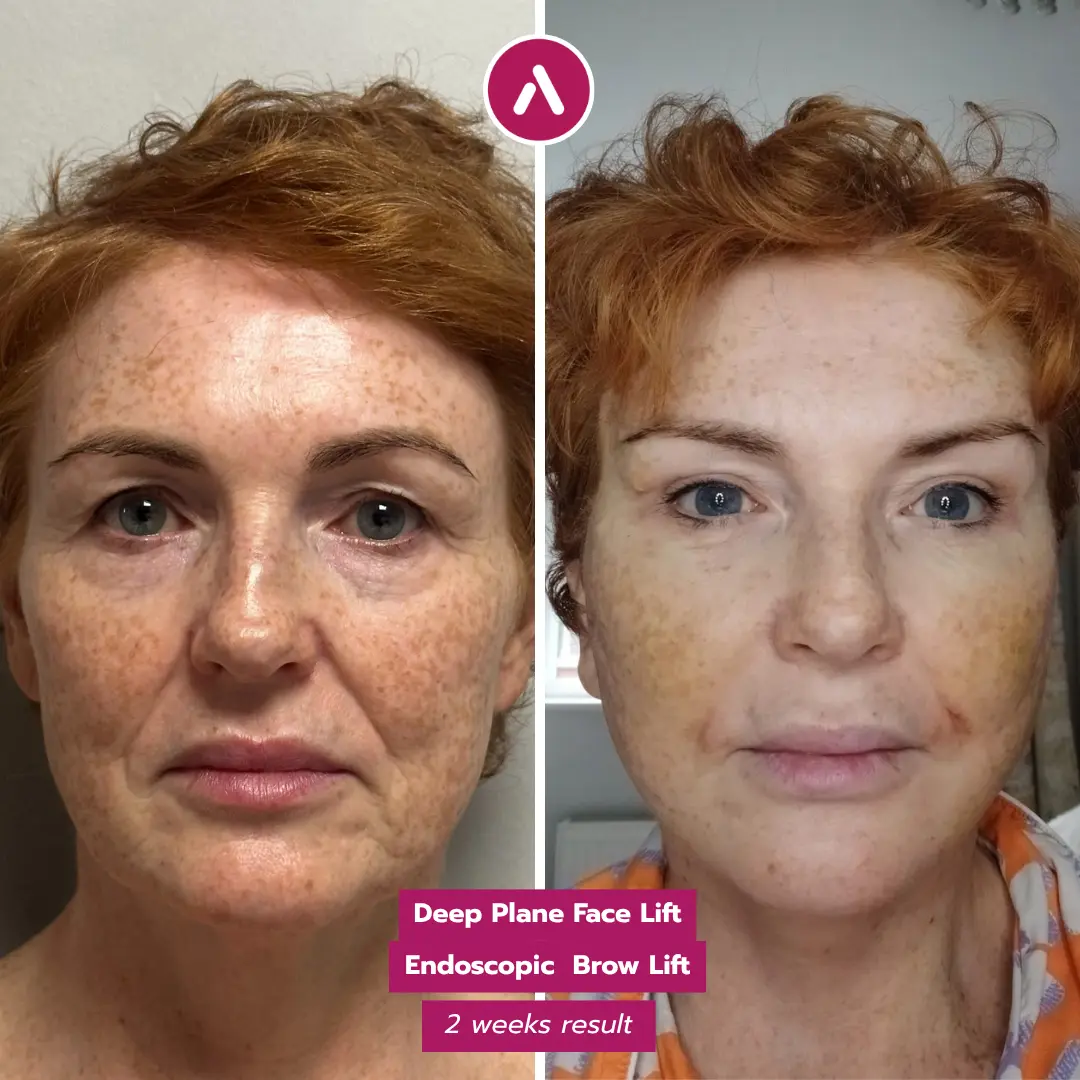
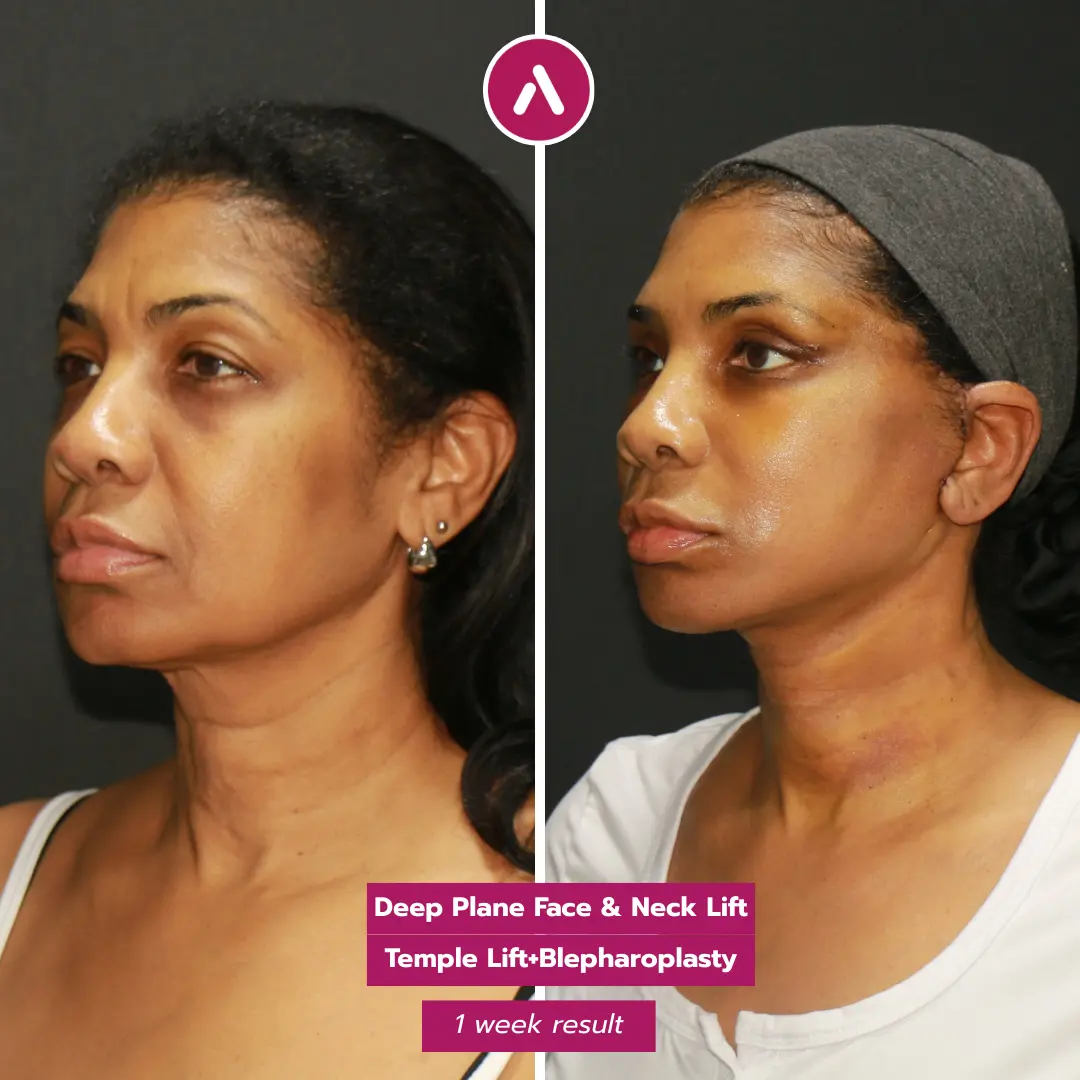
When your eyes look “heavy,” the issue is not always your eyelids. In many faces, the real culprit is a subtle drop of the outer brow (the brow tail) that creates hooding and a tired expression. Our goal is simple: restore a rested look without changing your identity.
Rejuvenation, Not Alteration. We plan every lift to look like you slept well—not like you had surgery.
Table of Contents
Share your photos and medical history to receive a personalized assessment from our European board-certified facial surgery team.
What is an Endoscopic Temporal & Brow Lift?
An endoscopic temporal & brow lift is a minimally invasive surgical technique that elevates the outer portion of the eyebrows using tiny scalp incisions and a small camera (endoscope). It focuses on the temple region to reduce lateral hooding and refresh the eye area while keeping scars well-hidden in the hair. In clinical overviews and peer-reviewed surgical literature, endoscopic brow techniques are commonly described as a way to achieve controlled tissue release and repositioning through smaller scalp incisions—supporting a more conservative, natural-looking lift with reduced visible scarring compared with longer open approaches.
If you searched ‘what is a temporal brow lift‘, this is the refined, modern version many “Expert Patients” ask about. It targets the lateral brow rather than lifting the entire forehead. That difference matters. It’s how we protect natural expression and avoid an over-elevated “surprised” look.
The anatomy: brow tail, temple, and the lateral orbital area
The eyebrow is not one uniform structure. The inner brow often stays relatively stable over time, while the outer brow tends to descend. That descent creates a specific pattern of aging around the upper outer eyelid and temple.
- Brow tail descent can create lateral hooding (the “curtain” effect over the outer upper lid).
- Temple hollowing can make the upper face look harsher or more fatigued.
- Lateral orbital changes can make the eyes look smaller, even when eyelid skin is not the primary issue.
That is why a temporal-focused approach can be powerful. It addresses the zone that most often drives a “tired” look. It also keeps the lift conservative where it needs to be conservative.
What makes it “endoscopic” (camera-assisted, small incisions)
Endoscopic means we use a small camera to see key tissue layers through limited access points. Think of it as precision work through small openings, instead of long open incisions. Visibility improves. Tissue trauma can decrease when performed in the correct plane.
This is the core of the endoscopic brow lift procedure: controlled release, careful elevation, stable fixation, then meticulous closure. The goal is not “more lift.” The goal is the right lift, in the right vector, for your anatomy.
How incision placement supports scar-minimized healing
For many candidates, the incisions are placed within the scalp where hair can camouflage them. This is one reason patients researching endoscopic brow lift incisions often prefer endoscopic approaches over older open techniques. Scar quality still depends on planning, technique, and your biology, but incision strategy sets the foundation.
In our consultations, we map incision placement around your hairline pattern and styling habits. Small details matter. They change how “invisible” a result feels day to day.
Our surgery dates fill up quickly due to high international demand. Secure your consultation today to plan your ideal travel dates.
What Problems Does an Endoscopic Temporal & Brow Lift Solve?
This procedure is best for a specific problem: outer brow descent that makes the eyes look hooded, tired, or slightly downturned. It can also improve upper-face balance when the brow tail sits lower than the inner brow. The result should look like your features are back where they belong. Not like you adopted a new face.
It’s also a diagnostic shortcut for many self-assessments. People often assume they “need eyelid surgery,” when the brow is the true driver of heaviness. Lifting the brow tail can restore the frame of the eyes, and the eyelids may look lighter without removing much skin.
Lifting the outer brow for a rested, not “surprised” look
The aesthetic target is subtle. The outer brow should look supported, not arched. A good result reads as calm, awake, and well-rested.
- Softens the “tired” or “concerned” appearance created by lateral hooding
- Improves the eye frame without pushing the inner brow too high
- Can create a smoother transition from brow to temple
When “heavy eyes” are actually brow descent
If your upper eyelid skin feels excessive mostly on the outer half, the brow tail may be the root cause. If your brows sit lower in photos than they used to, same story. This is why we evaluate brow position first, then decide whether eyelid work is truly necessary.
Many Expert Patients appreciate this approach because it avoids over-treatment. You fix the driver, not just the symptom. That is how results stay believable.
Natural-first goals: matching the lift to your face
A temporal lift is not a “one-size” procedure. Brow shape, eye shape, forehead height, and facial asymmetry all change the plan. We decide the lift vector and the degree of elevation based on harmony, not trends.
Our standard is simple: people should notice you look refreshed. They should not be able to name the procedure.
In the next section, we’ll define candidacy in detail—who benefits most, who should avoid surgery, and how we plan for asymmetry and long-term stability.
Am I a good candidate?
A temporal brow lift works best when the problem is specific: the outer brow has drifted down, and your eyes look heavier than they should. The goal is not to “raise the eyebrows.” It’s to restore balance around the lateral eye area so you look rested and lighter. Candidacy is a mix of anatomy, skin quality, healing capacity, and what you consider a “natural” result.
In our practice, we treat candidacy as a safety decision first. That is why we build every plan around strict pre-operative screening and realistic outcome mapping. If the procedure does not match your anatomy, we will tell you. A great result starts with the right match.
Ideal candidates: early-to-moderate lateral brow descent
You are often a strong candidate if the heaviness is mainly on the outer half of the upper eyelid. Many patients notice it in photos first. The eyes can look slightly downturned, even if you feel energetic.
- Outer brow (brow tail) sits lower than it used to
- Lateral hooding is the main concern, not the full forehead
- You want a subtle, believable refresh (not a style change)
- You care about hidden scarring and a conservative lift vector
If you are still asking what is an endoscopic brow lift, you may be early in your research. That’s normal. Your best next step is to identify whether your issue is brow position, eyelid skin, or both.
Who should avoid or postpone surgery
Some situations call for a pause. Not because the procedure is “bad.” Because timing and biology matter. Healing capacity, bleeding risk, and anesthesia tolerance shape the safest plan.
- Uncontrolled medical conditions that raise surgical or anesthesia risk
- Active infection or untreated skin/scalp conditions near incision zones
- High-risk bleeding or clotting issues (requires clearance and planning)
- Nicotine use that can impair healing and scar quality
We do not treat screening as paperwork. We treat it as a non-negotiable safety protocol. That mindset protects outcomes and protects you.
What to expect if you have asymmetry
Most faces have asymmetry. Brows are no exception. One brow can sit higher. One eye can look heavier. Surgery can improve symmetry, but it cannot create mathematical perfection.
We plan for this in two ways. First, we document baseline asymmetry clearly. Second, we design the lift vector and fixation to restore balance without forcing the brows into an artificial match. Natural wins.
Answer a few quick questions about your concerns, health, and goals to learn which treatment options may suit you best.
Endoscopic vs temporal brow lift—how do they compare?
This is where many Expert Patients slow down. They are not choosing a “brow lift.” They are choosing a philosophy of correction: how much to lift, where to lift, and what to leave alone. The words can be confusing because clinics use them differently. The safest way to compare is to focus on scope, incision strategy, and the risk of an unnatural look.
Our guiding principle stays consistent: diagnose the driver, then choose the smallest effective solution. If the outer brow is the main problem, a temporal approach can be the most elegant option. If the entire brow complex has descended, a broader plan may be smarter.
Endoscopic brow lift vs temporal brow lift: scope and goals
In everyday language, “endoscopic brow lift” often implies a broader lift of the brow complex using endoscopic visualization. A temporal brow lift is more targeted. It focuses on the outer brow and temple.
- Endoscopic brow lift (broader): addresses a larger forehead/brow area when descent is more global
- Temporal brow lift (targeted): focuses on lateral brow descent and outer eyelid hooding
- Shared concept: small scalp incisions, tissue release, elevation, stable fixation
Many people searching endoscopic vs temporal brow lift are really asking one question: “Will this look natural?” The answer depends on choosing the right scope. Too much lift looks obvious. Too little lift looks like nothing happened.
Temporal lift vs brow lift: why “more” is not always better
A full brow lift can help when the inner brow and glabella area are also descending. It can also shift the entire brow position. That is not always what you want.
A temporal lift can be the better choice when your inner brow already looks appropriate. You keep the identity of your expression. You refresh the part that is aging fastest. The result can feel surprisingly “quiet.”
The temporal brow lift technique: choosing the right vector
Vector is everything. Lift in the wrong direction and the face can look pulled. Lift in the right direction and people just think you look well-rested.
- We aim for a conservative lateral elevation to protect natural expression.
- We prioritize hidden incision placement within the scalp to support scar-minimized healing.
- We focus on stable fixation so the brow settles into a believable position as swelling resolves.
Technique is not about chasing the highest brow. It’s about restoring the brow to where it used to be—without announcing it to the world.
Next, we’ll go deeper into incision planning, scar quality, and how we reduce the risk of visible surgical “tells.”
Where are the incisions? Scars, hairline, and scar control
If you are researching a temporal lift, you are already thinking like an Expert Patient: the result is not just “lifted” or “not lifted.” The quality markers are subtle—scar placement, scar maturation, hairline preservation, and how natural the brow looks when you speak and smile.
Our priority is to place incisions where they can be reliably concealed, then close them in a way that supports clean healing. A good incision plan doesn’t just reduce visibility. It reduces anxiety—because you can wear your hair normally without feeling like you need to “hide” something.
Temporal brow lift incisions: what they usually look like
In a modern temporal approach, incisions are typically short and placed within the hair-bearing scalp in the temple region. This allows access to the tissue planes we need while keeping scars away from the visible facial skin.
- Location: typically within the scalp at the temple (hair-bearing zone)
- Length: small incisions designed for endoscopic access and precise work
- Goal: concealment within hair + minimal disruption to the hairline
During planning, we consider your hair density, styling habits, and hairline shape. We do not treat incision placement as a generic template. The “best” incision is the one that fits your anatomy and your lifestyle.
Temporal brow lift scars: what good scarring looks like
All surgery leaves scars. The difference is whether those scars are strategically hidden and whether they mature cleanly. With scalp-based incisions, scars typically blend into the hair as healing progresses—especially when closure is meticulous and aftercare is consistent.
Scar quality depends on:
- Surgical technique: gentle tissue handling, precise closure, tension management
- Your biology: genetics, skin type, inflammation response
- Aftercare: keeping the area clean, avoiding trauma, following scar guidance
We also set expectations honestly. Early scars can look pink and feel firm. That does not mean the scar will stay that way. The scar maturation process takes time, and most patients notice meaningful improvement as the months pass.
“Gone wrong” searches: what usually causes visible scars or distortion
It’s common to see fear-based queries like gone wrong endoscopic brow lift scars. The intent is not drama—it’s self-protection. Patients want to understand what can go wrong and how to avoid it.
In our clinical experience, visible scarring or an unnatural look is most often linked to one (or a combination) of these factors:
- Poor vector planning: lifting in the wrong direction can create a pulled or “startled” appearance
- Overcorrection: too much elevation, especially in patients who only need subtle support
- Inadequate fixation: unstable support can lead to irregular settling
- Hairline disruption: poor incision strategy or closure can create visible changes in the temple hairline
- Healing sabotage: nicotine exposure, aggressive early activity, or ignoring aftercare can compromise scar quality
Our approach is conservative by design. When the plan is anatomically correct and the lift is measured, the outcome looks effortless—and the scars stay where they belong: out of sight.
We don’t promise “no scars.” We promise a scar strategy: intelligent placement, meticulous closure, and a recovery plan designed to protect the result you came for.
Our surgery dates fill up quickly due to high international demand. Secure your consultation today to plan your ideal travel dates.
Surgical technique explained: what we actually lift and secure
A temporal brow lift is not about pulling skin. It’s about working in the correct tissue plane, releasing what is tethering the brow tail downward, then supporting the brow in a stable and natural position.
Endoscopic visualization helps us perform this with precision. We see what we’re doing. That matters for safety, symmetry, and the fine-tuned control needed to avoid an over-lifted look.
Tissue layers and release: what moves, what shouldn’t
The forehead and temple region are made of multiple layers that glide differently. The technique involves controlled release so the brow tail can elevate smoothly without creating harsh tension lines or an artificial “pulled” effect.
We focus on:
- Controlled release to free the brow tail from downward tethering
- Measured elevation that restores position rather than “re-designing” the brow
- Respecting expression so the face still moves like you
Fixation and stability: how long results last conceptually
After elevation, stable fixation helps the brow settle into its new position while swelling resolves and tissues heal. The goal is a predictable “settling curve”—not a dramatic early change followed by disappointment.
We also emphasize that longevity is influenced by biology and lifestyle. Aging continues. Gravity continues. The aim is to turn the clock back in a natural way and create a stable baseline that ages well.
Technical nuance that protects natural expression
Two patients can undergo the same named procedure and look completely different afterward—because the nuance is everything. The lift vector, the degree of elevation, and how fixation is balanced across the temple region are what separate “refreshed” from “obvious.”
We plan the lift to look invisible in motion. A natural result isn’t just a still photo—it’s how your face looks while talking, laughing, and living.
Next, we’ll cover combined procedures—especially the most common confusion point: brow lift vs blepharoplasty—and how to choose the smallest effective solution for your specific “heavy eye” concern.
You are never alone. Our 24/7 Patient Hosts and English-speaking staff will be by your side from arrival to departure.
Combined procedures: maximizing results with one recovery window
A temporal brow lift can be transformative on its own—when the driver is lateral brow descent. But many patients don’t have a single isolated issue. They have a combined pattern: brow tail descent plus upper eyelid skin changes, or brow descent plus early midface changes. The smartest plan is not always “more surgery.” It’s the most efficient combination that delivers a natural result with one cohesive recovery.
This is where Expert Patients tend to make the best decisions: they choose the plan that corrects the cause, not just the symptom. And they choose combinations that reduce the risk of over-treatment.
Brow lift vs blepharoplasty: which one do you really need?
This is one of the most common confusion points. Patients often assume they need eyelid surgery because the eyelids look heavy. In reality, the brow tail may be contributing significantly to the hooded look.
- If the brow tail is low, the upper eyelid can look heavy even when there is not much true excess eyelid skin.
- If the brow position is good, then upper eyelid skin (dermatochalasis) may be the main issue, and blepharoplasty may be more appropriate.
- If both are present, a combined approach can deliver the most natural “open” look without aggressive eyelid skin removal.
Our decision framework is straightforward: we assess brow position first, then evaluate the eyelid skin and eyelid crease anatomy. This protects you from a common mistake—removing too much eyelid skin to compensate for a low brow.
Pairing with eyelid surgery for “heavy eyes” (upper lid focus)
When brow tail descent and eyelid skin redundancy are both present, combining a temporal brow lift with upper blepharoplasty can create a balanced refresh. The brow lift restores the frame. The blepharoplasty refines the lid itself.
Strategic benefits of a combined plan:
- More natural eyelid contour with less aggressive skin removal
- Better lateral opening of the outer eye area when hooding is brow-driven
- One recovery period with a cohesive swelling/bruising timeline
In consultation, we typically show the “brow-first” impact using anatomical assessment and photo review, then discuss whether eyelid surgery would enhance the result or simply add unnecessary risk and downtime.
Pairing with broader facial rejuvenation pathways
Some patients want a full upper-face refresh, not just the brow tail. In those cases, the temporal brow lift can be part of a larger strategy—designed to keep the final result harmonious.
- Endoscopic brow approaches (when the brow complex descent is more global)
- Upper lid refinement (when eyelid skin change is truly contributing)
- Midface support (in selected patients with early descent that affects the eye-cheek transition)
The key is sequencing and restraint. The more you combine, the more important it becomes to keep each component conservative—so the final outcome looks like you, only better rested.
Anesthesia choices: why we prefer Awake/Twilight sedation for safety
Anesthesia is not just about comfort. It is a major safety variable. The Expert Patient often asks two questions: “Is it safe?” and “How do you reduce risk?” Our answer is to use the most appropriate anesthesia plan for your procedure and your health profile—while prioritizing safety and controlled recovery.
In many facial procedures, Awake/Twilight sedation can be an excellent option. It allows a controlled, comfortable experience without the full physiological load of general anesthesia for selected candidates.
Awake/Twilight vs general anesthesia: the risk logic
General anesthesia is sometimes necessary and can be appropriate. But for the right candidate and the right procedure, Twilight sedation can reduce certain risks and simplify recovery. The focus is not “one is always better.” The focus is choosing the safest match.
- Twilight sedation: typically supports faster immediate recovery and can be gentler on the body in suitable patients
- General anesthesia: may be required for longer or more complex combinations, or based on patient factors
- Safety priority: individualized planning based on medical history, procedure scope, and expected operative time
We discuss anesthesia transparently during consultation. If general anesthesia is recommended, we explain why. If Awake/Twilight is appropriate, we explain how it supports both comfort and safety.
Who benefits most from non-general options
Awake/Twilight sedation can be especially appealing to patients who want a safety-first approach and prefer a smoother immediate recovery. It may be considered when:
- The procedure scope is focused (e.g., targeted temporal lift)
- Medical screening supports suitability for sedation-based approaches
- The patient values reduced post-anesthesia “fog” and a controlled recovery experience
We never “force” an anesthesia type. We recommend. You decide—with full clarity on risk and comfort expectations.
What you feel during Awake/Twilight (expectation management)
This is a practical question—and it deserves a practical answer. Under Twilight sedation, most patients feel relaxed and drowsy. The aim is comfort, not awareness of surgical steps. You may have limited memory of the experience. You should not feel pain. You may perceive brief pressure sensations, but comfort is actively managed throughout.
Safety is not an add-on. We treat anesthesia planning as part of the surgical technique—because it directly shapes risk, recovery, and overall experience.
Next, we’ll walk through what happens on surgery day—step by step—and then we’ll map your recovery timeline so you can plan work, travel, and social downtime with confidence.
From VIP airport transfers to 5-star hotel accommodations, we handle every detail. Enjoy a seamless medical travel experience in Istanbul.
Step-by-step: what happens on surgery day?
Expert Patients tend to feel calmer when they understand the flow. A temporal lift is not “mysterious”—it’s a structured sequence with clear safety checkpoints. Our aim is to make your experience predictable: you know what happens, when it happens, and why.
Pre-op planning: assessment, markings, consent, photos
On the day of surgery, we confirm your plan in real time. That includes:
- Final medical review: medications, allergies, last-minute health changes
- Photography: consistent angles to document baseline and track healing objectively
- Markings: incision zones and lift vector mapped to your anatomy (not a template)
- Safety checks: sterile prep, anesthesia plan confirmation, monitoring setup
This “final mapping” stage matters because small differences in brow asymmetry or hairline shape can change the ideal lift vector. The more precise the plan, the more natural the result tends to be.
The procedure flow: endoscopic access → release → elevation → fixation
While exact steps vary by anatomy and combination procedures, the core logic stays the same:
- Comfort + monitoring: we begin with your individualized anesthesia plan and continuous monitoring.
- Small scalp incisions: placed within the hair-bearing scalp in the temple region.
- Endoscopic visualization: a camera-assisted view helps us work precisely in the correct tissue planes.
- Controlled release: the structures tethering the brow tail downward are released in a measured way.
- Conservative elevation: the brow tail is elevated to a natural, believable position.
- Stable fixation: we secure the tissues so healing occurs in a predictable “settling curve.”
- Meticulous closure: designed to protect scar quality and hairline integrity.
The key concept is restraint. We’re not chasing maximum lift. We’re creating the smallest effective correction that looks invisible in motion.
Immediate post-op: monitoring, instructions, first-night plan
Right after surgery, we prioritize comfort, safety, and clarity. You’ll receive structured instructions covering:
- Swelling control: cold therapy guidance and head elevation strategy
- Activity limits: what to avoid in the first 72 hours to protect fixation
- Incision care: cleaning, what “normal” looks like, and what is not normal
- Sleep positioning: how to sleep to reduce swelling and avoid pressure on the temples
Most importantly: you will know exactly what to do if something worries you. Expert Patients don’t want generic reassurance—they want a clear plan and access to their surgical team.
Recovery timeline: what healing looks like day by day
Recovery is not one moment. It’s a timeline. And the timeline has patterns. When patients search endoscopic brow lift recovery day by day, they’re usually trying to answer two practical questions: “How will I look?” and “When can I resume normal life?”
Below is a realistic overview. Your experience will vary based on biology, how conservative your lift is, and whether you combined procedures.
Endoscopic brow lift recovery day-by-day: Days 1–7 milestones
- Day 1: tightness, swelling, and mild discomfort are expected. You may feel pressure rather than sharp pain. Rest, head elevation, and adherence to instructions matter most today.
- Day 2–3: swelling often peaks. Some patients notice bruising tracking downward due to gravity. Continue cold therapy as directed and avoid bending, heavy lifting, and high blood pressure spikes.
- Day 4–5: swelling begins to soften. You may feel intermittent tingling or mild numbness near the scalp—often temporary as nerves recover.
- Day 6–7: you typically look more “presentable,” though not fully settled. Many patients feel comfortable with light social activity (with realistic expectations).
If your work involves public-facing meetings or filming, we usually advise planning a buffer. Expert Patients prefer control—and a buffer buys you control.
Weeks 2–6: swelling resolution & “settling”
In week 2, bruising and swelling usually continue to improve. The brow position may look slightly “higher” early on, then soften into its natural endpoint as tissues settle. This settling phase is normal and expected.
- Weeks 2–3: many patients return to normal routines, excluding intense workouts.
- Weeks 4–6: the result looks increasingly natural; incision sites continue maturing.
We also emphasize that final refinement continues beyond 6 weeks. Scar maturation and tissue remodeling can take months, even when you look “normal” much earlier.
Bruising and camouflage: endoscopic brow lift bruising + social timing
Bruising is variable. Some patients bruise lightly. Others bruise more visibly, especially if they are naturally prone to bruising or combined eyelid surgery. If you searched brow lift recovery day by day, your real concern is probably your calendar.
Practical planning guidance:
- Work-from-home: many patients feel comfortable within the first week.
- Office / meetings: often 7–14 days is a reasonable planning range.
- Events / photos: plan 3–6 weeks when possible for maximum confidence.
Healing is not just biology—it’s logistics. We help you plan recovery around real life, not ideal scenarios.
We use advanced Hyperbaric Oxygen Therapy (HBOT) to minimize downtime and supercharge your healing process. Safety is our #1 promise.
Our Rapid Recovery & Safety Protocol: HBOT + LLLT
For the Expert Patient, “value” is not a discount. Value is what reduces risk, protects scar quality, and shortens the disruption to your life. That is why we integrate advanced recovery support when appropriate—especially for patients traveling internationally and planning a structured return timeline.
Why oxygen matters after facial surgery (HBOT rationale)
Healing is energy-intensive. Oxygen is a core resource your tissues use to repair. Hyperbaric oxygen therapy (HBOT) is designed to support oxygen delivery at the tissue level—an approach many patients choose to optimize recovery quality and comfort.
In a facial procedure where swelling control and incision healing matter, HBOT can be part of a recovery strategy that aligns with the Expert Patient mindset: proactive, evidence-aware, and outcome-protective.
Cellular-level healing support (LLLT rationale)
Low-level laser therapy (LLLT) is used in many medical contexts to support tissue recovery. When integrated appropriately, it can complement a broader plan focused on reducing inflammation, supporting comfort, and helping patients move through the visible recovery phase more smoothly.
What this can change for downtime, swelling, and scar quality
Our goal with advanced recovery is not to “promise a miracle.” It’s to stack advantages in your favor: calmer swelling curves, better comfort, and a recovery experience that feels more controlled.
We build recovery into the surgical plan. Because the best results come from what we do in surgery—and what we protect after surgery.
Next, we’ll cover safety and risks with full transparency—what can happen, how we reduce risk, and what red flags should never be ignored.
Safety & risks: is a temporal brow lift dangerous?
Every surgical procedure carries risk. A temporal brow lift is no exception. The safest way to think about risk is not “Will something happen?” but “How do we reduce the probability, and how do we respond if it happens?”
We approach safety in layers. First, we screen carefully before we ever schedule surgery. Then we control the variables we can control: anesthesia planning, sterile technique, surgical precision, and structured follow-up. This is how you protect both your health and your final aesthetic outcome.
The honest list: what can happen
Most patients heal uneventfully. Still, you deserve the complete picture. The most discussed risks after a temporal brow lift include:
- Swelling and bruising that can be uneven side to side
- Asymmetry during early healing as tissues settle
- Temporary numbness or tingling near the scalp incisions
- Hematoma or bleeding (rare, but important)
- Infection (uncommon when protocols are strict)
- Scar concerns such as firmness, redness, or delayed maturation
- Hairline sensitivity or temporary shedding around incision sites
- Under-correction or overcorrection if vector planning is not conservative
Some concerns look dramatic online because photos are taken too early. Early swelling can mimic “overdone.” Time matters. So does technique.
How we reduce risk before surgery
Safety starts before you arrive. We use strict pre-operative health screening to confirm candidacy and reduce preventable complications. That includes reviewing medical history, medications, and risk factors that impact bleeding and healing.
- Medical screening to confirm you are an appropriate candidate
- Medication guidance to reduce bleeding risk when medically appropriate
- Procedure planning that matches your anatomy and keeps the lift conservative
This pre-op structure protects outcomes. It also protects trust. Expert Patients want predictability.
How we reduce risk during and after surgery
In the operating environment, small details become big safety variables. We monitor continuously. We work with precision. We keep tissue trauma low by staying in the correct planes and avoiding unnecessary tension.
- Advanced vitals monitoring throughout the procedure
- Multi-stage sterilization protocols aligned with international standards
- Endoscopic visualization to support precision and symmetry
- Stable fixation to support a predictable settling curve
After surgery, we protect you with structure. You receive clear instructions, direct access to guidance, and a follow-up pathway designed to prevent “guessing” during recovery.
Safety is not optimism. It’s preparation, precision, and a clear response plan.
Red flags you should never ignore
Most post-op symptoms are expected. Some are not. We tell you exactly what requires immediate contact.
- Rapid, expanding swelling on one side
- Severe pain that does not respond to prescribed medication
- Fever or increasing warmth/redness at incision sites
- Vision changes or intense eye pain
- Drainage that is foul-smelling or worsening over time
Is an endoscopic brow lift safe in Turkey?
This question is rational. It’s also common. Most patients who search endoscopic brow lift in turkey are not looking for a bargain. They are benchmarking standards. They want to know if the clinical environment, surgeon credentials, and safety protocols match what they expect at home.
Our answer is built on systems, not slogans. We operate with a zero-compromise approach to hygiene, patient screening, and monitoring. We also protect the “non-medical” side of safety: privacy, logistics, and continuity of care after you return home. These factors shape the total risk profile of international care.
Standards first: facility, sterility, and monitoring
A safe outcome depends on where and how the procedure is performed. We align the surgical environment with international expectations by emphasizing validated sterilization processes, strict screening, and continuous monitoring.
- Rigorous hygiene standards with multi-stage sterilization protocols
- Ministry-licensed international patient framework (health tourism compliance)
- Continuous vitals monitoring during your procedure
This is the foundation. Technology and technique only matter if the environment is safe enough to support them.
Surgeon expertise: credentials without “celebrity marketing”
The Expert Patient does not need hype. They need verifiable training and consistent outcomes. Our surgical team is built around highly specialized facial expertise, with credentials and training that align with European standards and US-level expectations.
We also keep the surgical plan conservative. That is how we avoid the “pulled” or “startled” look that international patients fear most. Natural results come from anatomy-first planning.
Advanced recovery as risk reduction: our HBOT + LLLT protocol
International patients often worry about two things: complications and downtime. Our “Rapid Recovery & Safety Protocol” is designed to de-risk both. We integrate Hyperbaric Oxygen Therapy (HBOT) and Low-Level Laser Therapy (LLLT) to support tissue recovery at multiple biological levels.
- HBOT supports oxygen delivery to healing tissues and is used as a safety-focused recovery tool
- LLLT supports cellular repair and complements HBOT for swelling and redness management
- Goal: smoother recovery, better scar quality, and reduced “social downtime” when appropriate
Continuity of care: support after you return home
One of the biggest fears in medical travel is abandonment after you fly back. We remove that uncertainty with long-term virtual follow-up and high-touch communication. You are not left to self-diagnose.
- Structured virtual follow-ups to monitor healing over time
- Clear escalation pathway if anything feels “off”
- VIP logistics support that reduces travel stress so you can focus on recovery
“Safe in Turkey” is not about geography. It’s about standards, systems, and how well the entire journey is engineered.
Next, we’ll define realistic results: what “natural” looks like, how long it takes to see the final outcome, and how to evaluate before-and-after photos without being misled by early swelling.
Get a clear, day-by-day itinerary covering arrival, surgery, recovery, and fit-to-fly clearance tailored to your schedule.
Realistic results: what “good” looks like (and what it doesn’t)
The best temporal brow lift results are often the least “detectable.” A good outcome doesn’t announce itself as surgery—it reads as improved balance around the outer eye. The brow tail looks supported, the lateral hooding softens, and your expression stays yours.
What a natural outcome should look like
- Refreshed, not surprised: the outer brow is gently elevated without an exaggerated arch.
- Better eye frame: the outer upper lid looks lighter because the brow tail is no longer weighing it down.
- Believable in motion: your face still looks normal when you talk, smile, and raise your brows.
- Quiet scarring: incisions stay where they belong—within the hair-bearing scalp—and mature over time.
What “not ideal” can look like (and why it happens)
Unnatural outcomes typically come from the wrong scope or the wrong vector—especially in patients who needed a targeted lift but received an overcorrection. Common “tells” include:
- Over-elevation that creates a constant “alert” expression
- Incorrect vector that pulls the temples laterally rather than restoring natural brow position
- Asymmetry that persists beyond normal healing because the plan did not account for baseline differences
- Visible scarring or hairline changes due to incision strategy and closure quality
Our goal is not to give you someone else’s brow. It’s to restore your best version—naturally.
How to interpret before-and-after photos like an Expert Patient
Online galleries can be misleading if you don’t know what to look for. We recommend evaluating results with these rules:
- Timing matters: early photos can show swelling that mimics an “overdone” look.
- Look at expression: a natural result should still look natural when the patient smiles.
- Check the brow tail: the improvement should be focused on the lateral brow and outer eye frame.
- Assess scar placement: you should see that incisions are designed to be hidden in hair-bearing scalp.
Celebrity endoscopic brow lift searches: using inspiration safely
It’s normal to look for a “gold standard” reference. But celebrity outcomes are not a reliable surgical blueprint. Lighting, styling, and photo editing can distort expectations. The safest way to use celebrity inspiration is to define a vibe—rested, lifted, open—without trying to copy a specific brow shape.
Our philosophy is “Rejuvenation, Not Alteration.” Discover how our surgeons achieve subtle, revitalized results that honor your unique beauty.
Endoscopic Temporal & Brow Lift Cost Analysis 2026: US vs Turkey
Cost is a practical question—and it’s a legitimate one. When patients search how much is a brow lift, they’re often trying to estimate total investment, not just the surgeon’s fee. The Expert Patient is typically comparing “value systems,” not bargain-hunting.
If you are searching endoscopic brow lift cost or cost of temporal brow lift, the most important thing to understand is this: the same procedure name can represent very different levels of safety, technology, and aftercare.
What drives the price (and what should be included)
High-quality care usually includes more than the operating room time. A fair comparison should account for:
- Surgeon expertise and facial specialization
- Anesthesia plan and monitoring standards
- Facility quality and sterile protocol systems
- Fixation method and technical approach (precision vs “quick lift”)
- Aftercare and follow-up structure (especially for international patients)
- Recovery optimization options (for example HBOT/LLLT when appropriate)
Benchmarking premium US markets: NYC, Los Angeles, Miami
Many patients compare premium domestic markets to understand what “top-tier” looks like. Searches like brow lift nyc, brow lift los angeles, and brow lift miami often reflect a desire for quality and reputation—then patients evaluate whether traveling can deliver comparable standards with a stronger value equation.
The key is to compare like-for-like:
- Are you comparing the same technique (targeted temporal vs broader lift)?
- Are anesthesia and monitoring protocols equivalent?
- Is the aftercare pathway equally structured?
- Are you paying for “brand” or for verifiable systems and expertise?
Why Turkey can be a high-value choice for the Expert Patient
When a patient searches temporal brow lift in turkey or endoscopic brow lift in turkey, the intent is often high-conviction: they’ve already seen premium US pricing and are now looking for the best risk-to-value balance.
In Istanbul, the value proposition becomes compelling when the care model is engineered end-to-end: specialist surgeons, advanced anesthesia planning (including Awake/Twilight options for suitable candidates), and recovery support technologies.
| What to Compare | Premium US Clinics (Typical Focus) | High-Standard Turkey Care Model (What to Verify) |
|---|---|---|
| Technique transparency | Varies by provider | Clear incision plan, vector, fixation strategy |
| Anesthesia & monitoring | Often strong, confirm details | Equivalent monitoring + individualized sedation options |
| Aftercare structure | Local follow-ups are easy | In-person + virtual follow-up pathway after you fly home |
| Recovery optimization | Sometimes offered | Often integrated (e.g., HBOT/LLLT when appropriate) |
| Total “journey” support | Patient manages logistics | VIP logistics reduce stress and protect recovery |
How to avoid “cheap surgery” traps
We recommend treating unusually low quotes as a red flag until proven otherwise. Low cost can reflect shortcuts in anesthesia standards, facility quality, or aftercare—variables that directly affect risk and scar quality.
Value is not the lowest number. Value is the highest safety and outcome confidence for your investment.
Next, we’ll show you how to choose the right surgeon—what to verify, what questions to ask, and how to compare clinics without falling for marketing.
Get a 100% transparent, all-inclusive quote tailored to your needs. No hidden fees—just world-class care at an accessible price.
Finding the best surgeon for endoscopic brow lift
For an Expert Patient, the “right surgeon” is not the loudest brand or the most polished ad. It’s the provider who can explain your anatomy, justify the technique, and show consistent, natural outcomes—without shortcuts.
When you compare clinics for an endoscopic temporal & brow lift, use a verification mindset. You are not buying a product. You are selecting a risk-management system led by surgical expertise.
Credentials and specialization: what actually matters
Start with surgeon credibility that can be verified—not implied. In consultation, you should be able to understand the surgeon’s core specialty and how often they perform upper-face procedures.
- Procedure focus: how frequently they perform temporal/endoscopic brow work
- Facial anatomy expertise: ability to explain planes, vectors, fixation, and why
- Outcome consistency: before/after photos that look natural across different ages and face types
- Safety systems: screening, anesthesia planning, monitoring, and a structured follow-up pathway
We encourage patients to avoid “celebrity” framing and instead focus on consistency: results that still look like the patient, only more refreshed.
Technique transparency: incision plan, vector, and fixation
The easiest way to spot quality is to see whether a clinic can explain the plan in plain language. For a temporal lift, technique transparency should include:
- Incision placement strategy and how the hairline is protected
- Lift vector (direction of elevation) and why it matches your anatomy
- Fixation approach and how stability is maintained during healing
- Conservative endpoint to avoid an over-arched or “startled” look
If a provider cannot describe these fundamentals, you are not getting enough information to make a safe decision.
Expert Patients don’t choose a clinic because it feels exciting. They choose it because the plan is clear, the systems are strong, and the results look believable.
Questions to ask in consultation (copy/paste)
- “Am I a better candidate for a temporal lift or a broader endoscopic brow lift—and why?”
- “Where will my incisions be placed, and how will you protect my hairline?”
- “What lift vector are you planning for me, and what does a ‘natural’ endpoint mean in your hands?”
- “How do you manage asymmetry—what is realistic, and what is not?”
- “What does your day-by-day recovery guidance look like, and who do I contact if I’m worried?”
- “If I’m traveling, how do you handle follow-up after I return home?”
Perform your surgery with confidence. Meet our European Board Certified surgeons with over 2,000 successful facial surgeries.
Your medical journey in Istanbul: what to expect (VIP flow)
International care should feel organized, not stressful. The “hidden risk” of traveling is not just the procedure itself—it’s confusion, rushed scheduling, and poor continuity. We eliminate those variables with a structured VIP journey designed to protect your recovery.
Virtual consultation → personalized plan → scheduling
We begin with a detailed remote assessment. The purpose is not to “sell” you a procedure. The purpose is to confirm whether your goals match a temporal approach, a broader endoscopic lift, or a different solution entirely.
- Photo/video review for brow position, asymmetry, and eyelid contribution
- Procedure design with an anatomy-first plan (scope, vector, incision strategy)
- Safety screening to confirm candidacy and minimize preventable risks
By the time you travel, you should already understand the logic of your plan.
Arrival, transfers, and clinic visits
We structure your schedule to protect healing—not to pack appointments. A calm timeline supports better recovery behavior: good sleep, lower stress, and consistent aftercare.
- VIP transfers coordinated to reduce fatigue and logistical friction
- In-person pre-op visit for final assessment, markings, and anesthesia planning
- Post-op check-ins aligned with swelling patterns and incision care needs
Medical travel is safe when the journey is engineered like a system—before, during, and after surgery.
Long-term follow-up after you return home
Continuity is a core safety feature. We provide structured virtual follow-up so you’re never left to interpret healing alone—especially during the “gray zone” when swelling changes day to day.
- Scheduled remote follow-ups to track swelling, symmetry, and scar maturation
- Clear escalation pathway if anything feels abnormal
- Recovery guidance designed around real life (work, travel, exercise timing)
You are never alone. Our 24/7 Patient Hosts and English-speaking staff will be by your side from arrival to departure.
Frequently Asked Questions: Endoscopic Temporal & Brow Lift
“Temporal brow lift near me” — should I stay local or travel?
Local convenience is valuable, but it is not the same as specialized expertise. If your priority is the highest confidence in technique, scar strategy, and natural aesthetics, traveling can make sense—especially when the clinic provides strong continuity of care after you return home.
We advise comparing two things: (1) the surgeon’s specific experience with temporal/endoscopic techniques, and (2) the clinic’s full safety system (screening, anesthesia planning, follow-up). If the best match is local, that’s a win. If the best match is international, your decision can still be rational—when the pathway is structured.
“Brow lift beverly hills” — what should I compare beyond prestige?
Prestige markets often set a high bar for branding and pricing. But “premium” should be defined by systems, not zip codes. Compare:
- Technique transparency (vector, fixation, incision strategy)
- Anesthesia planning and monitoring standards
- Before/after consistency (natural in motion, not just posed photos)
- Aftercare structure and access to the team during recovery
When these standards are met, your decision becomes a true value comparison—not a status comparison.
Will I look “overdone” after an endoscopic temporal & brow lift?
A natural result is primarily a planning decision. Overdone outcomes usually come from excessive elevation, the wrong lift vector, or choosing a broader scope than necessary. Our approach is conservative by design: we aim for support, not exaggeration.
How long do results last?
Results are designed to be long-lasting, but longevity varies by biology, skin quality, and lifestyle. Aging continues. The realistic goal is to restore a more youthful baseline that continues to age naturally.
Can this be combined with eyelid surgery?
Yes. If eyelid skin redundancy is truly present, combining a temporal lift with upper blepharoplasty can deliver a balanced refresh with one recovery window. The best plans often start by correcting brow position first, then refining the eyelid if needed.
Medical Disclaimer: This page provides general educational information and does not replace a medical consultation. Every surgical plan is individualized based on anatomy, health history, and clinical evaluation.
Endoscopic Temporal & Brow Lift: Patient Stories



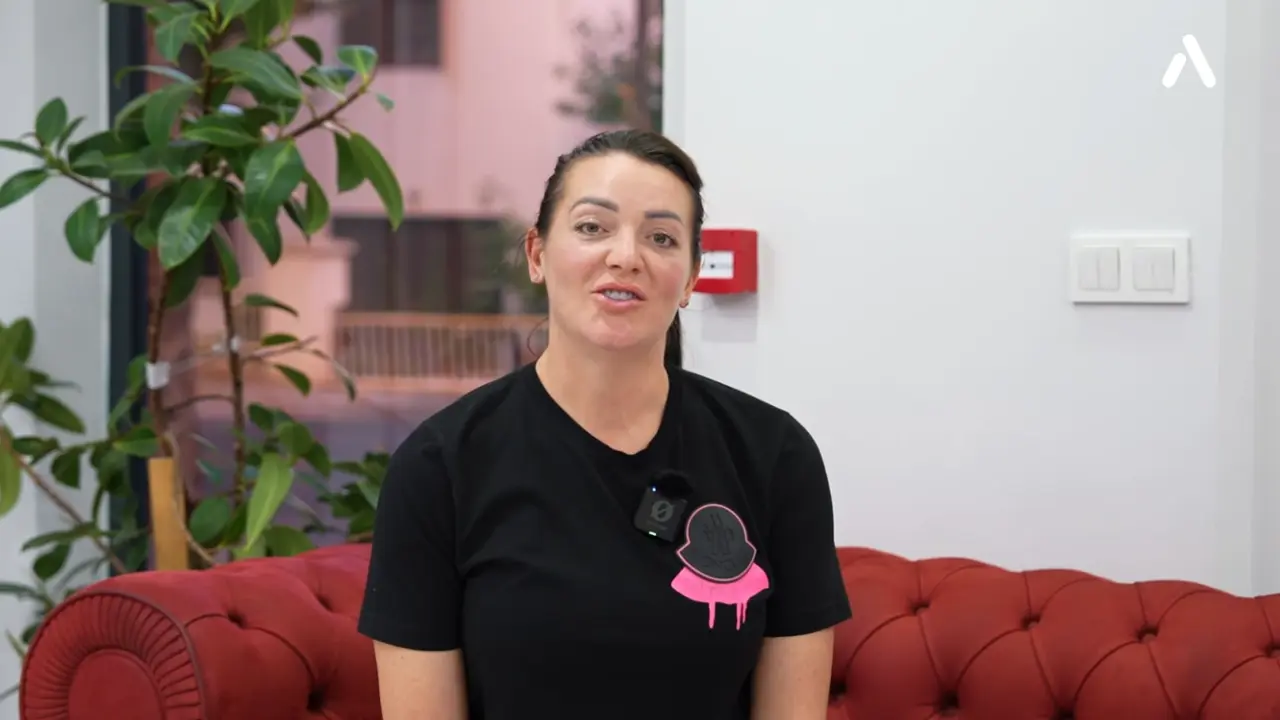
Angelika


Endoscopic Temporal & Brow Lift Surgeons

Endoscopic Temporal & Brow Lift Cost in Turkey
Starting from $4500
* There are no hidden fees or unexpected charges.
- Your Personalised Endoscopic Temporal & Brow Lift Procedure
- All Specialist Surgeon & Anesthesia Fees
- All Pre-Op Tests & Post-Op Check-ups
- 5-Star Hotel Accommodation (incl. breakfast)
- All Private VIP Airport & Clinic Transfers
- 24/7 Dedicated Patient Coordinator & Translation Services
Endoscopic Temporal & Brow Lift: A Cost Comparison
| City | Cost |
|---|---|
| Los Angeles, CA | ~$13,500 |
| New York, NY | ~$11,500 |
| Miami, FL | ~$9,500 |
| Houston, TX | ~$8,500 |
Endoscopic Temporal & Brow Lift: Patient Reviews
Jammal Canada
I have had face and neck lift with AKM Clinic they have been so good to me and my operation went so smoothly🥰 i would like to thank my doctor here and also to the team 💐
Ava Canada
Thank you AKM Clinic for giving me my confidence back! Had facelift + temporal lift 3 months ago and the outcome is already stunning. Special thanks to Hande!
Jakayla USA
Had a deep plane facelift and lower eyelid procedure at AKM Clinic 7 months ago. The results are fantastic - very subtle and natural. I didn’t expect the entire experience to be so comfortable. Hande managed everything and kept in contact even after I returned to USA. I’m beyond pleased with the outcome and the care I received. Would do it again in a heartbeat!
Barbara United Kingdom
It has been 4 months since my surgery. Everything is great, The most important thing is l love the way l look, l look exactly how l wanted. Meaning l look natural, just almost 40 years younger. I pulled Facebook - majority voted 37ys. I also had face, neck, chest, and hands CO2 laser. My skin is flawless.
Lisa Canada
I had a face, neck and arm lift at AKM. I’m just over 4 weeks post and couldn’t be happier with the results. The entire experience was wonderful! My coordinator, Khadija made me feel comfortable from beginning to end! I highly recommend AKM and will definitely go back for other procedures!
Julie USA
I am beyond grateful I went with AKM Clinic for my deep plane face and neck lift, upper eyelid, and co2 laser. Dr. Akif has magic hands and my results are truly incredible! I came from the US and assistant Emine was the best in assuring every detail was coordinated and communicated with me beyond my expectations every step of the way. 10 out of 10 to the entire team! I couldn’t be more pleased!
Ready to Start Your Own Transformation Journey?
Join the 2,000+ patients who trusted Dr. Akif Mehmetoğlu and the AKM Clinic team. Your journey to a more confident, revitalized you begins with a simple, no-obligation conversation. Contact us today from the USA for your free virtual consultation.
#1: Get Your Free Personalised Quote
Start with a free, no-obligation online consultation. Share your photos, and our surgical team will provide a fully personalised treatment plan and a transparent, all-inclusive price package. No hidden fees.
#2: Secure Your Date & VIP Booking
Once you're ready, our dedicated patient coordinators will help you secure your procedure date. We'll handle all your bookings, including your 5-star hotel and private VIP airport transfers.
#3: Arrive in Istanbul & Meet Your Surgeon
Arrive at Istanbul Airport (IST) and be greeted by your private driver. Settle into your hotel and prepare for your in-person consultation, where you'll meet your specialist surgeon to finalise the details for your "natural, subtle, and revitalized" new look.
