



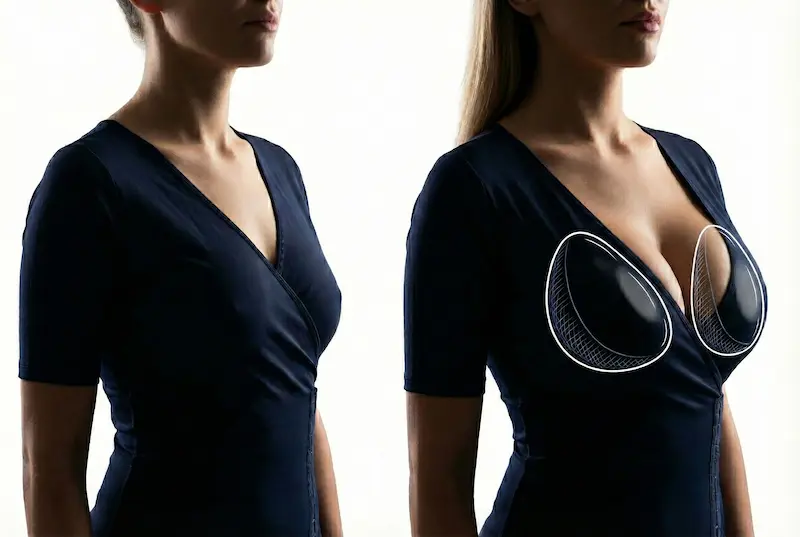
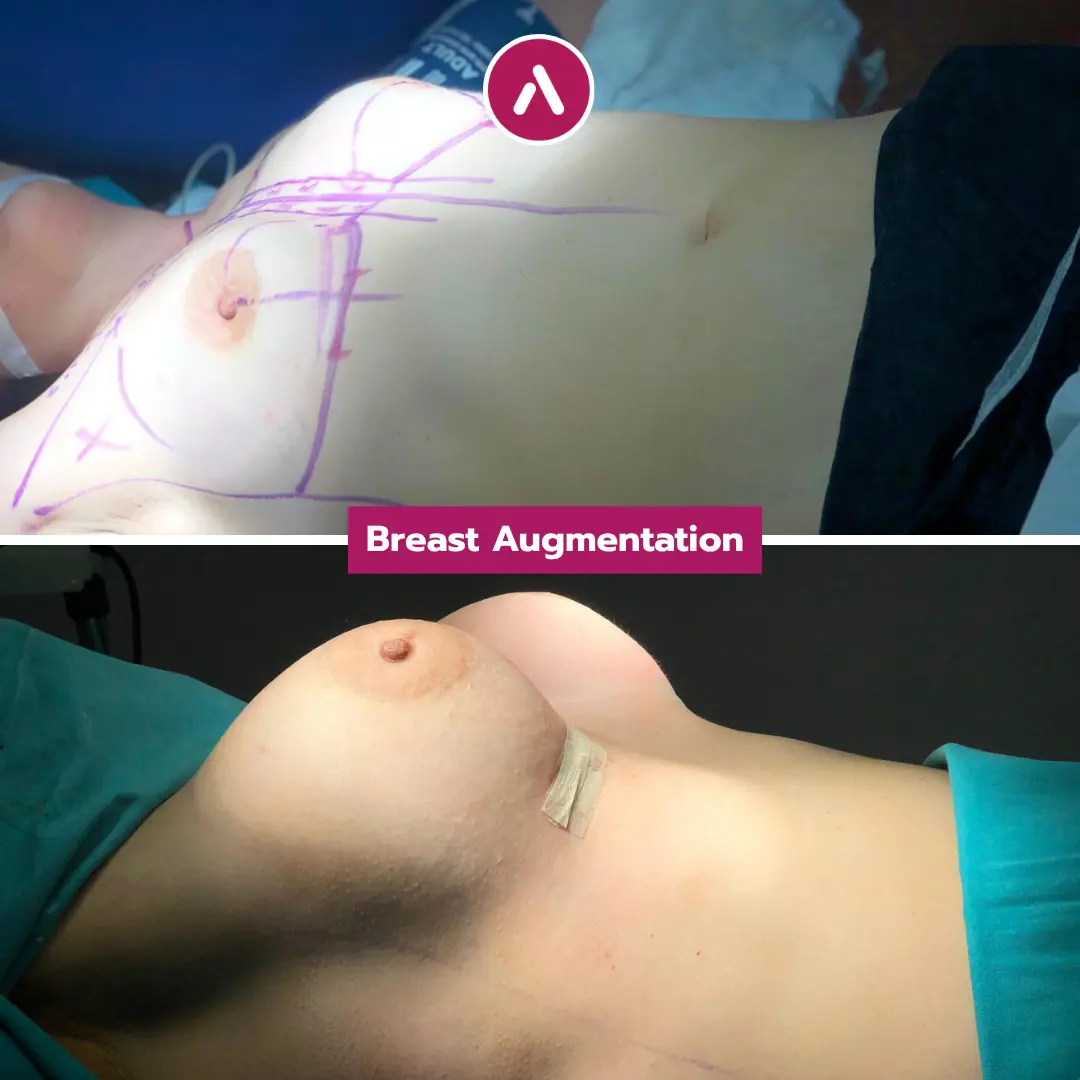
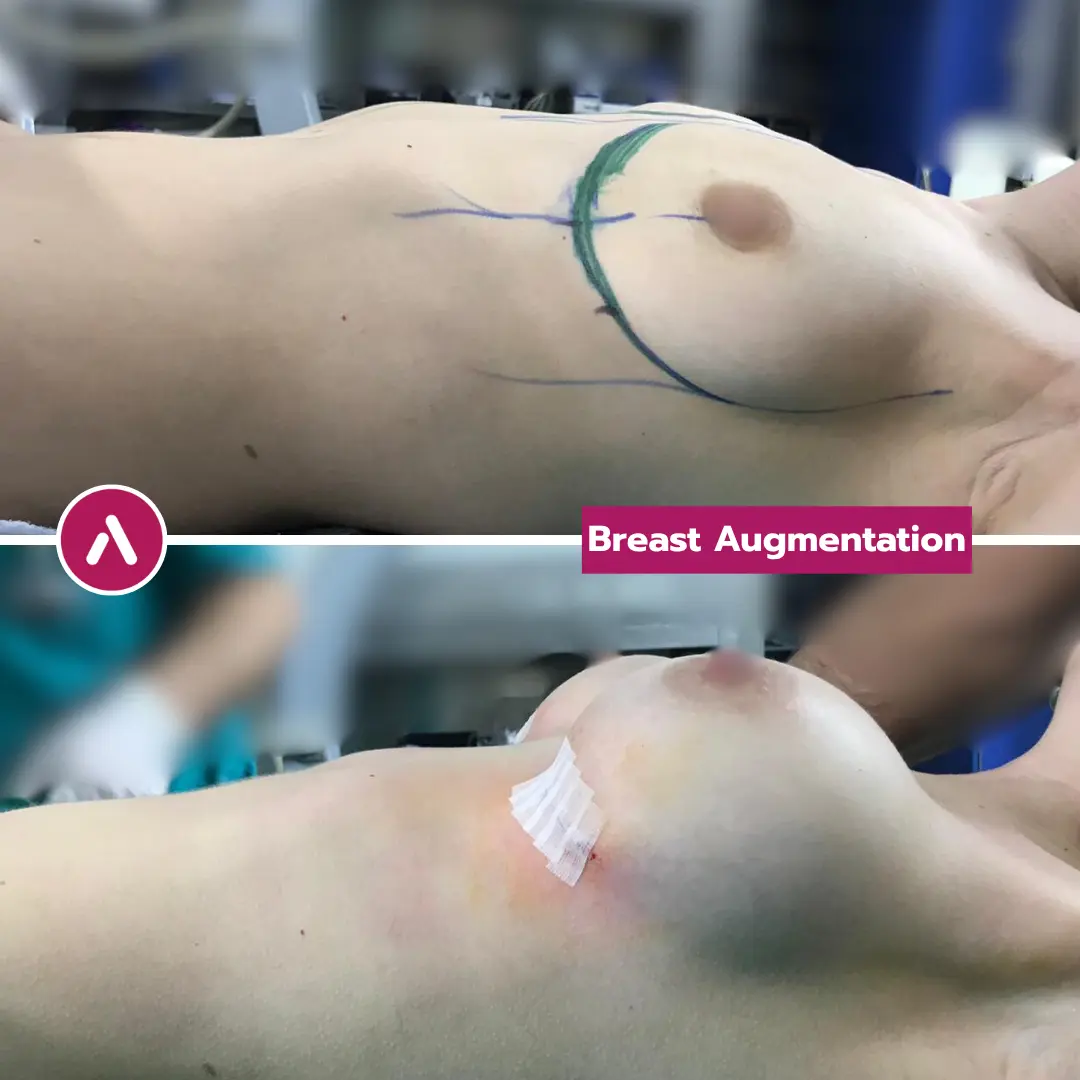
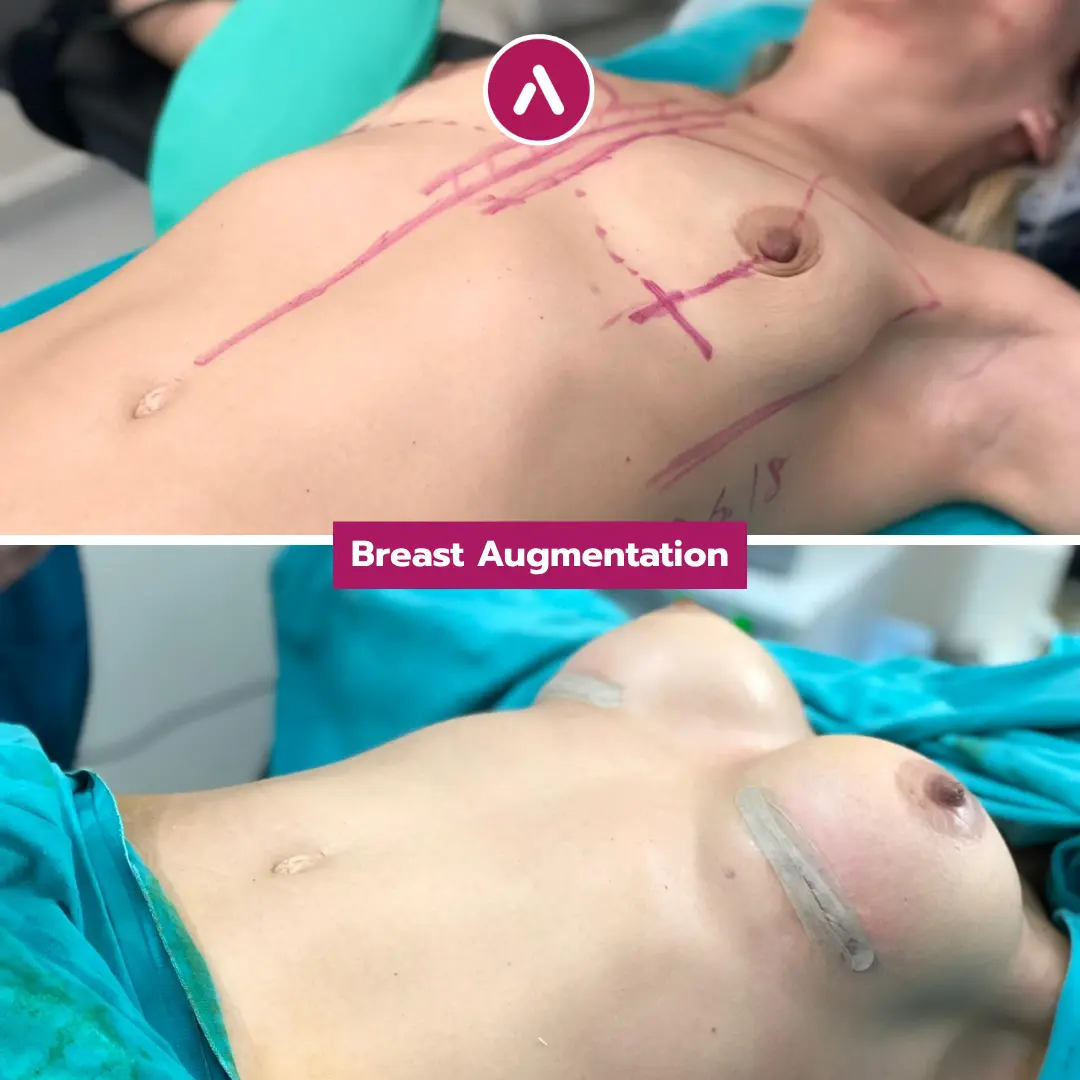
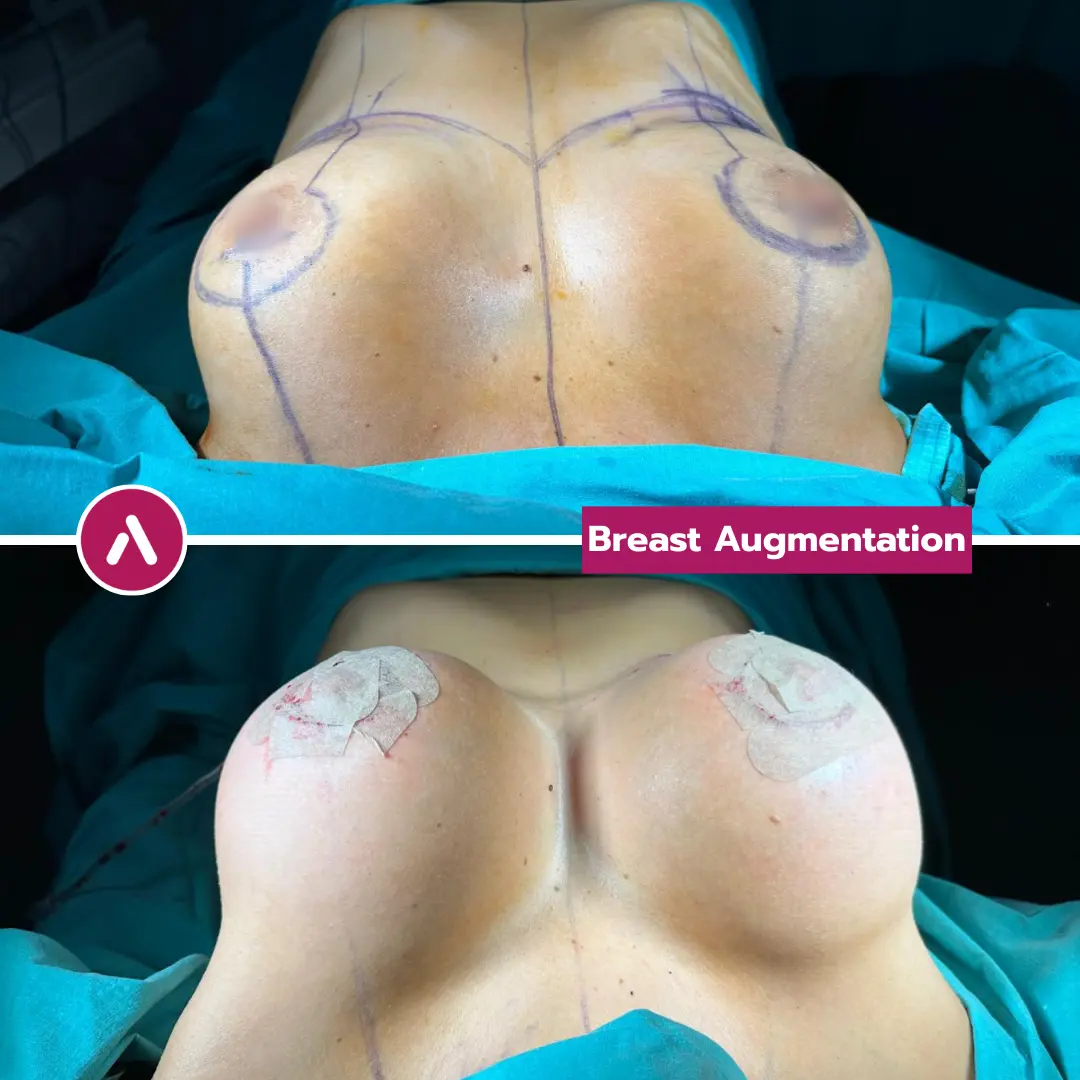
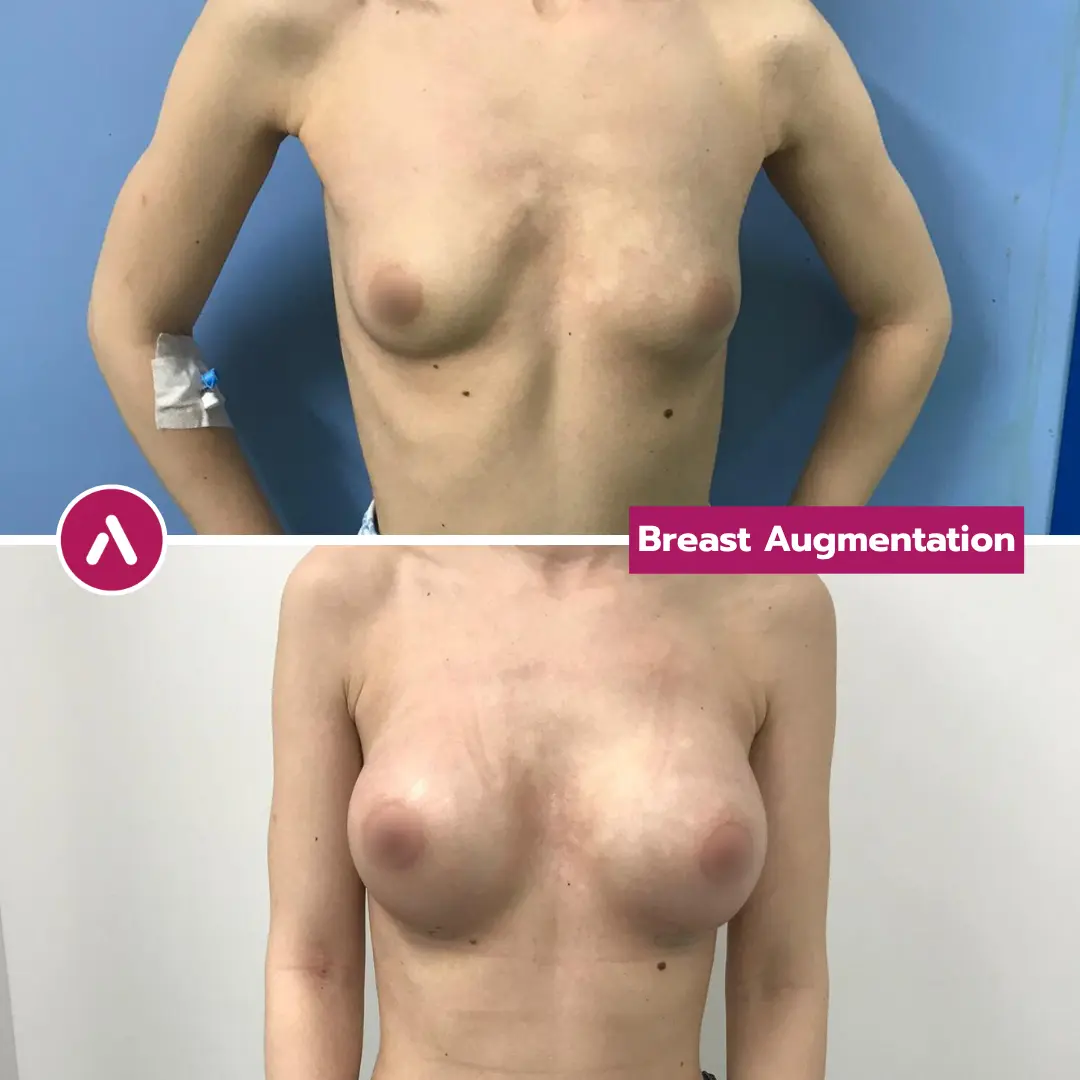
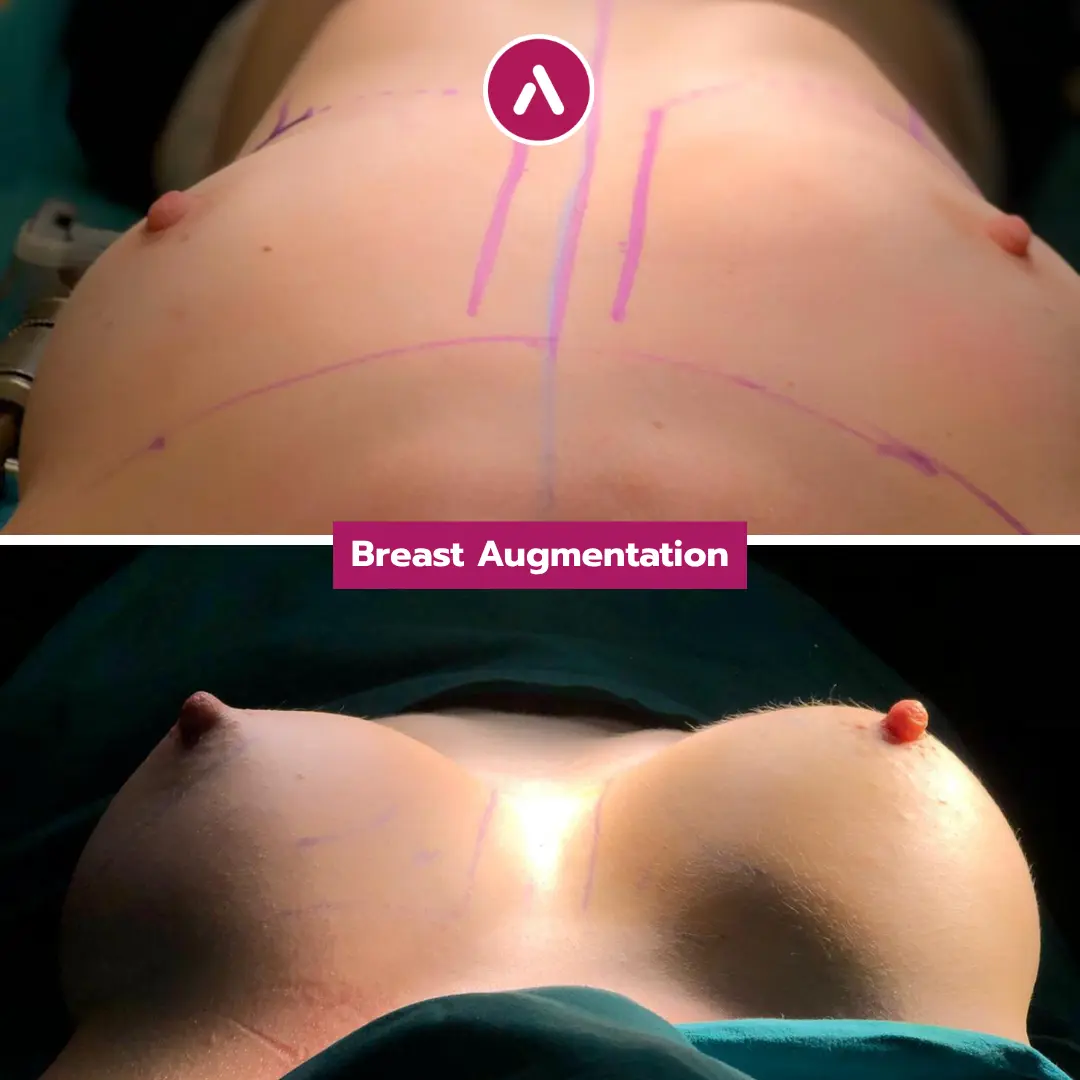
Planning Breast Augmentation in Turkey can feel overwhelming for US patients, especially when safety, implant choice, and long-term follow-up are non-negotiable. This definitive guide breaks down the procedure from first principles—how implants change volume and shape, what placement options mean, and which implant types support a natural look on your anatomy.
Beyond the basics, you’ll find clear recovery milestones, honest risk discussion, and a practical checklist for evaluating clinics and surgeons. We explain how all-inclusive planning works, what’s typically included, and how continuity of care continues after you return home. If you’re comparing NYC, Miami, or LA pricing to Turkey, this page helps you judge value by standards—not hype—so you can book a consultation with confidence and ask smarter questions.
Table of Contents
What is Breast Augmentation?
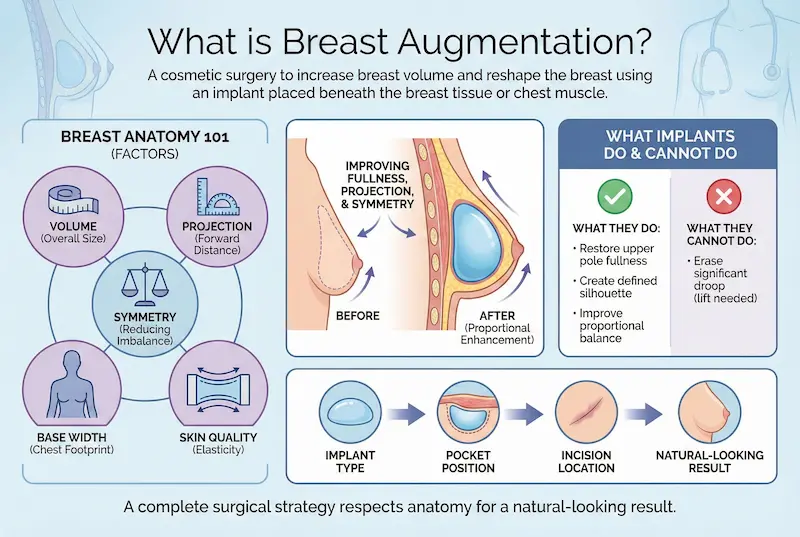
Breast Augmentation is a cosmetic surgery that increases breast volume and reshapes the breast using an implant placed beneath the breast tissue or chest muscle. The goal is proportional enhancement—improving fullness, projection, and symmetry—while keeping the result aligned with your natural anatomy and lifestyle.
For an “expert patient,” the procedure isn’t just about going bigger. It’s about choosing the right plan: implant type, pocket position, and incision location. Those choices influence how the result looks, how it feels, and how predictable healing will be.
Breast anatomy 101 (volume, projection, symmetry)
Breast shape is a mix of tissue, skin quality, and chest wall structure. Two people can choose the same implant size and still end up with different results because their anatomy is different.
- Volume: overall size and fullness.
- Projection: how far the breast sits forward from the chest.
- Base width: the “footprint” on the chest; it guides implant width.
- Skin quality: stretch, thickness, and elasticity affect how implants settle.
- Symmetry: natural differences are common; planning aims to reduce imbalance.
What breast implants do (shape vs. size vs. proportion)
Breast implants don’t just add volume. They change where volume sits. That’s why the same cup-size goal can be achieved with different implant profiles and placements.
In practical terms, implants can:
- Restore upper pole fullness (often desired after pregnancy or weight loss).
- Create a more defined silhouette under clothing.
- Improve proportional balance between hips, waist, and bust.
What implants cannot do is “erase” every limitation of the skin envelope. When the breast has significant droop, a lift may be needed to reposition the nipple and tighten excess skin.
The difference between “breast augmentation” vs. “breast implants” intent
People search in two different modes. “Breast augmentatioN” is procedure-focused. It signals questions about surgery, recovery, scars, and surgeon selection. “Breast implants” is device-focused. It signals questions about materials, types of implants, longevity, and safety.
A strong plan respects both. We treat the implant as one part of a complete surgical strategy—designed around your anatomy, your risk tolerance, and your definition of a natural-looking result.

Benefits of Breast Augmentation: The “WHY” Behind the Decision
Most patients don’t wake up wanting an “implant.” They want a specific change: more fullness in certain clothing, better balance in their proportions, or a way to feel like themselves again after major body changes.
The most satisfying outcomes come from clarity. You define the goal in real terms, we translate that goal into surgical decisions, and we keep the plan realistic from day one.
Natural-looking enhancement (our “Rejuvenation, Not Alteration” approach)
A natural result is rarely about a single number of cc. It’s about choosing an implant that matches chest width, respects skin limits, and fits your lifestyle—so you don’t look “done.”
Surgeon’s Insight: Our philosophy is “Rejuvenation, Not Alteration.” The best breast augmentation is the one that looks like it belongs to you—balanced, proportionate, and quietly confident.
- Soft transitions (not a sharp, obvious “implant edge”).
- Harmony with your frame (shoulders, hips, waist, posture).
- Stable positioning over time (planning matters as much as the implant choice).
Post-pregnancy / weight-loss changes (restoring upper pole fullness)
Pregnancy, breastfeeding, and weight loss can change breast volume and skin elasticity. Many patients describe the same issue: “The top of my breasts looks empty,” even if overall size hasn’t changed dramatically.
Implants can restore that upper fullness and improve the way the breast sits in a bra. If sagging is significant, a lift may be the safer path to a predictable shape.
Confidence & wardrobe fit (practical outcomes)
Confidence is personal, but the “day-to-day wins” are often concrete. Patients frequently describe feeling more comfortable in fitted tops, swimwear, and bras that finally sit correctly.
- Improved bra fit and cleavage control (without excessive padding).
- More consistent proportions across outfits.
- A silhouette that matches how you feel inside.
Am I a Good Candidate for Breast Augmentation?
The best outcomes start with the right candidacy. Breast augmentation isn’t a “one-size-fits-all” surgery—your anatomy, health profile, and goals all influence the safest approach and the most natural-looking result.
During a consultation, we focus on two things at the same time: (1) what you want to change aesthetically, and (2) what your tissues can safely support. When those two align, results tend to look better and feel more stable long-term.
Health & lifestyle criteria (screening, smoking, BMI mindset)
Most healthy adults can be candidates, but “healthy” in surgery terms means your body can heal predictably and handle anesthesia safely. Key candidacy factors include:
- Stable health status: chronic conditions should be well-controlled (your surgeon may request clearance from your physician).
- Non-smoking (or willing to pause): nicotine can reduce blood flow and slow healing. If you smoke or vape, you’ll be asked to stop for a period before and after surgery.
- Stable weight: large weight changes can alter breast shape after surgery.
- Realistic goals: “natural,” “athletic,” or “dramatic” looks are all possible—when they match your chest width, skin quality, and tissue support.
We also consider your daily life: job demands, sports, lifting, and travel plans. Those details shape timing, implant placement strategy, and recovery planning.
Who should postpone or avoid surgery?
Sometimes the safest decision is to wait. We may recommend postponing breast augmentation if any of the following apply:
- Pregnancy or active breastfeeding (your breast tissue and volume can change significantly).
- Active infection anywhere in the body.
- Uncontrolled medical conditions (for example, uncontrolled diabetes or blood pressure issues).
- Blood clotting disorders or medications that cannot be safely managed around surgery.
- Unrealistic expectations (e.g., wanting a specific celebrity result without matching anatomy).
Also important: if you’re seeking a large size increase but your skin/tissue support is limited, we’ll talk openly about safer alternatives—such as a more proportional size, a staged approach, or combining augmentation with a lift when needed.
Special situations (breastfeeding, future pregnancy, mammograms)
“Expert patients” often plan ahead. If you’re thinking about future pregnancies, breastfeeding, or routine breast screening, bring that up early. It doesn’t necessarily rule out implants—but it can influence timing and surgical choices.
- Breastfeeding: many patients with implants can breastfeed, but it depends on anatomy, incision choice, and individual factors.
- Future pregnancy: implants don’t prevent pregnancy, but pregnancy can change breast shape; you may prefer to wait if major changes are expected.
- Mammograms: screening is still possible; imaging centers may use implant-displacement techniques. We advise planning your baseline screening strategy with your healthcare team.
If you have a family history of breast disease or prior breast surgery, we’ll incorporate that into your surgical plan and follow-up approach.
Surgical Techniques Explained: How the Operation Is Planned
Breast augmentation results are shaped by a small set of decisions that matter a lot: incision location, implant pocket placement, and how the pocket is created to support symmetry. These decisions are chosen to match your anatomy—not trends.
In the next section of this guide, we’ll go deep into breast implant types (silicone vs saline, smooth vs textured, round vs teardrop). Here, we focus on the surgical framework that determines how those implants sit and settle.
Incision options (inframammary, periareolar, transaxillary)
Incisions are chosen based on access, scar preferences, and how precisely the implant pocket needs to be created.
- Inframammary fold (under-breast crease): commonly used for precise pocket control and predictable access. The scar is usually hidden in the fold.
- Periareolar (around the areola): may reduce visible scarring in some patients, but candidacy depends on areola size and tissue factors.
- Transaxillary (armpit): places the scar away from the breast; not ideal for every implant type or revision scenario.
Your surgeon will recommend the incision that best supports your goals while respecting your anatomy and long-term monitoring needs.
Placement options (over vs under the muscle, dual plane logic)
Implants can be placed:
- Over the muscle (subglandular): above the pectoral muscle, under the breast tissue.
- Under the muscle (submuscular): partially or fully under the pectoral muscle.
- Dual plane: a tailored approach combining elements of both, often used to balance a natural slope with good support.
Surgeon’s Insight: There isn’t one “best” placement. The right pocket is the one that fits your tissue thickness, chest anatomy, and aesthetic goal—while keeping the plan stable as your body heals and changes over time.
Placement choice can influence cleavage behavior, implant edge visibility, how the implant feels during movement, and the recovery “tightness” sensation in the first weeks.
Pocket creation & symmetry strategy (what makes results stable)
High-quality outcomes come from precise measurements and controlled pocket creation. That includes breast base width, nipple position, fold height, and existing asymmetry. The goal isn’t “perfectly identical”—it’s balanced, natural symmetry that looks right in real life (standing, moving, wearing normal clothes).
When asymmetry exists (which is common), your plan may include subtle differences in implant size, profile, or pocket adjustment to create a more even final result.
| Placement option | Often best for | Potential advantages | Key considerations |
|---|---|---|---|
| Over the muscle (subglandular) | Patients with sufficient tissue coverage; certain aesthetic goals | May feel less “tight” early; can offer pronounced fullness | Edge visibility/rippling risk can be higher with thin tissue; candidacy matters |
| Under the muscle (submuscular) | Thinner patients; those seeking smoother upper-pole transition | Often better tissue coverage; may look more natural in some body types | Early recovery can feel tighter; movement of the muscle may affect appearance in some cases |
| Dual plane | Patients needing a balance of natural slope + support | Customized positioning to match anatomy; versatile approach | Technique is individualized; requires careful planning and execution |
Breast Implant Types: Understanding Your Options
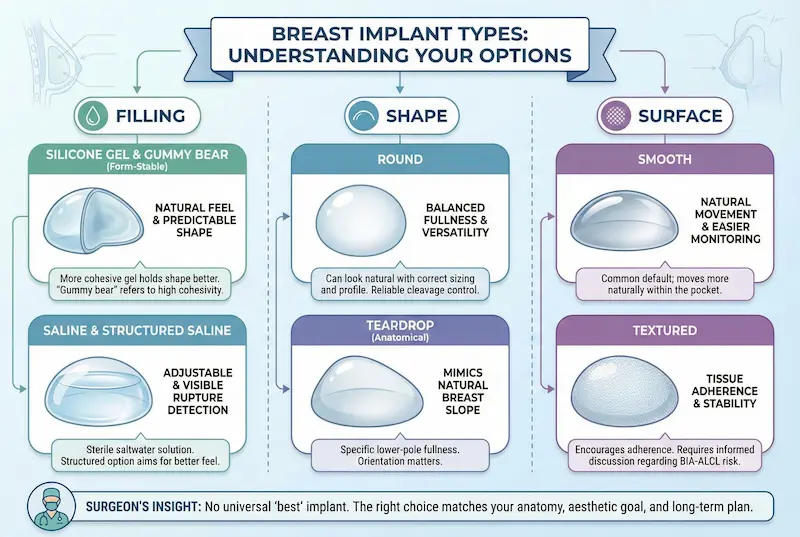
When “expert patients” research breast implant types, they’re usually trying to answer one core question: Which implant will look natural on my body and still feel like a smart, safe long-term decision? The easiest way to compare implants is to group them by filling (what’s inside), shape (round vs teardrop), and surface (smooth vs textured). “Form-stable” and “gummy bear” describe how the silicone gel behaves—important for predictability and feel.
In real planning, we don’t choose an implant in isolation. We choose an implant with a surgical strategy (incision + pocket placement + sizing rules) so the final result matches your anatomy and lifestyle.
Surgeon’s Insight: There is no universal “best” breast implant. The right choice is the one that matches your tissue thickness, chest width, skin quality, and aesthetic goal—while keeping long-term monitoring and revision risk in mind.
Gummy bear breast implants
“Gummy bear” is a popular term for highly cohesive silicone gel implants. The idea is simple: the gel holds its shape better than less cohesive gels, which can help maintain a stable contour—especially in patients prioritizing a controlled, natural slope.
- Often chosen for: patients who want predictable shape and a structured feel.
- What to know: “More cohesive” can sometimes feel firmer; the best choice depends on your preference and tissue coverage.
Round breast implants
Round implants are widely used because they can create attractive fullness while remaining versatile across many body types. Contrary to a common myth, round implants can still look natural—especially when sizing, profile, and placement are chosen correctly.
- Often chosen for: balanced fullness, reliable cleavage control, flexible aesthetic outcomes.
- What to know: “Natural” depends more on proportions and pocket planning than on “round vs teardrop” alone.
Smooth breast implants
Smooth implants have a sleek outer shell. In many practices, smooth implants are a common default because they can move more naturally within the pocket and are broadly familiar in follow-up imaging and monitoring protocols.
- Often chosen for: patients who want a natural feel and straightforward long-term monitoring.
- What to know: The pocket must be created precisely to support stable positioning.
Textured breast implants
Textured implants have a rougher surface designed to encourage tissue adherence in certain scenarios. They have historically been considered for specific anatomical goals, but they also require an informed discussion because some textured implants have been associated with a rare lymphoma known as BIA-ALCL. That doesn’t mean “textured is always wrong”—it means the decision must be individualized and transparent.
- Often considered for: selected cases where implant stability is a priority.
- What to know: We discuss surface choice in the context of your goals, your risk tolerance, and contemporary safety guidance.
Silicone Breast Implants
Silicone gel implants are often chosen for their natural feel and soft tissue behavior. They come in different gel cohesivities (including “gummy bear”/form-stable options), and the best match depends on your tissue thickness and the look you want.
- Often chosen for: natural feel, smooth upper-pole transition, broader aesthetic flexibility.
- What to know: Long-term monitoring matters; your follow-up plan should be clear before surgery.
Saline Breast Implants
Saline implants are filled with sterile saltwater solution. They can be placed through smaller incisions (since they can be filled after placement) and may offer different monitoring considerations because deflation tends to be more noticeable.
- Often chosen for: certain incision preferences and patients who prioritize visible rupture detection.
- What to know: In thinner tissue, some patients report more rippling or a firmer feel—planning and candidacy are key.
Structured Saline Implants
Structured saline implants are a variation designed to improve the feel and shape behavior of saline by adding internal structures. They aim to bridge the gap between classic saline and silicone-like softness.
- Often chosen for: patients interested in saline filling but wanting a more “controlled” feel.
- What to know: Availability and suitability depend on your anatomy and the implant options appropriate for your plan.
Teardrop Shaped Implants
Teardrop (anatomical) implants are designed with more volume in the lower portion to mimic a natural breast slope. They can be a fit for specific aesthetic goals, but they also require careful planning because orientation matters.
- Often chosen for: patients seeking a specific lower-pole fullness pattern.
- What to know: Because shape is directional, pocket precision is critical to maintain intended alignment.
Form-Stable Implants
Form-stable typically refers to implants with a more cohesive silicone gel that holds shape reliably (often overlapping with the “gummy bear” category). They are frequently discussed by patients who want predictable contour and long-term shape retention.
- Often chosen for: structured contour goals and patients wanting a “holds-its-shape” implant behavior.
- What to know: “Stability” is a benefit, but feel and tissue compatibility must be considered.
Mia Femtech
MIA Femtech is a minimally invasive approach to breast harmonization designed for women seeking subtle, natural enhancement. If you’re researching what is mia femtech, think of a technique that uses specialized implants and a streamlined procedure plan, aiming to reduce visible breast scarring and shorten downtime. When comparing mia femtech breast augmentation options, review candidacy, implant sizing, and follow-up. Always ask to see mia femtech before after examples and discuss realistic expectations with a qualified surgeon.
Choosing the Right Breast Implants
Choosing the right implant is a decision framework—not a guess. We typically anchor selection around:
- Chest width & breast base: determines safe implant width.
- Skin quality & tissue thickness: influences whether edges/rippling are likely and what placement is safest.
- Goal aesthetic: “subtle and natural” vs “more projected and fuller.”
- Lifestyle: athletics, upper-body training, and recovery expectations.
- Long-term mindset: monitoring preferences and your comfort with trade-offs.
| Category | Common options | Often feels like | Typical advantages | Key considerations |
|---|---|---|---|---|
| Filling | Silicone / Saline / Structured saline | Silicone often softer; saline can feel firmer depending on tissue | Silicone: natural feel; Saline: visible deflation detection; Structured saline: hybrid intent | Monitoring plan, tissue coverage, rippling risk, incision preferences |
| Shape | Round / Teardrop (anatomical) | Depends on size, profile, placement | Round: versatile fullness; Teardrop: targeted slope pattern | Directional implants require precise pocket control; “natural” depends on proportional planning |
| Surface | Smooth / Textured | Smooth may move more naturally | Smooth: widely used baseline; Textured: selected stability scenarios | Surface choice must include a transparent safety discussion (including BIA-ALCL considerations) |
| Form behavior | Form-stable / “Gummy bear” cohesive gel | Often more structured | Shape predictability, contour stability | May feel firmer; must match tissue thickness and desired softness |
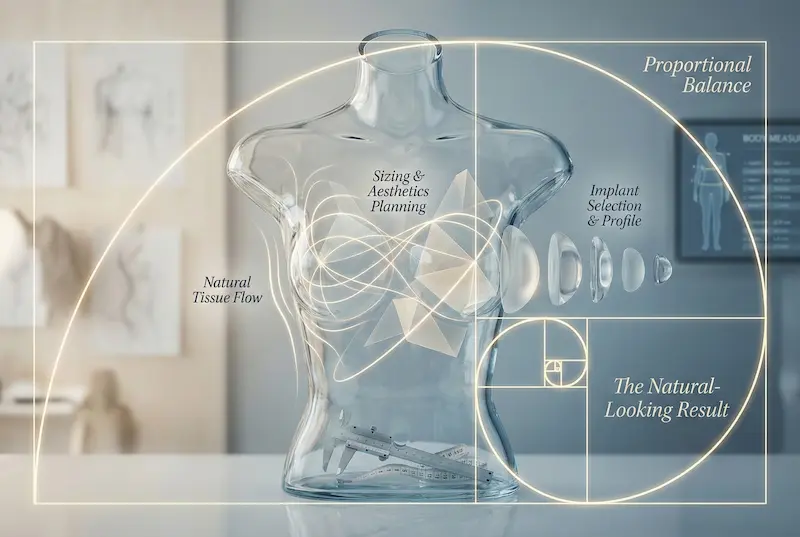
Sizing & Aesthetics: How We Plan The Most Natural-Looking Result
If you’re aiming for the most natural-looking breast implants, the planning phase matters more than any single “best implant” claim. Size is not just a number in cc—it’s a proportional decision that must match your chest width, tissue thickness, and how you want the result to look in real life (standing, moving, wearing everyday clothing).
Our approach is structured: we translate your goals into measurements, then into an implant selection and pocket strategy that supports predictable settling and long-term balance.
How sizing works (cc concept; example: 400cc breast implants)
“CC” describes volume, not the final cup size. A commonly searched example is 400cc breast implants, but that number can look dramatically different on two different bodies. Why?
- Chest width: a wider chest may “distribute” volume more subtly.
- Tissue thickness: thinner tissue may show implant edges more easily at the same cc.
- Current breast volume: starting size changes the final look.
- Implant profile: projection changes how prominent the result appears.
Instead of anchoring to a single cc, we aim for an outcome description: “subtle enhancement,” “balanced fullness,” or “more projected look,” and then choose a safe volume range that fits your anatomy.
Profile & proportion (high vs moderate; chest width logic)
Profile describes how much the implant projects forward relative to its width. This is where terms like high profile breast implants appear in research. A higher profile can create more projection with a narrower base, while moderate profiles typically spread volume over a wider base for a softer transition.
We plan profile based on:
- Breast base width: the implant must fit your “footprint” safely.
- Desired silhouette: natural slope vs more upper fullness.
- Soft tissue behavior: how your skin and tissue support projection.
- Lifestyle: athletic movement, comfort preferences, and how you want the breasts to feel.
Symmetry strategy (asymmetry, cleavage goals, upper pole fullness)
Perfect symmetry is uncommon in nature. The goal is balanced aesthetics that look right in real life, not a “mirror image” that ignores anatomy. If you have asymmetry (size, fold height, nipple position), your plan may include subtle adjustments such as:
- Different implant sizes or profiles (small differences can create a big visual balance).
- Targeted pocket shaping to correct positioning.
- Strategic implant placement (over/under/dual plane) based on tissue coverage needs.
Surgeon’s Insight: The “right size” is the one that fits your frame. When your implant choice respects chest width and tissue limits, the result looks more natural, feels more comfortable, and tends to age better.
If you’re torn between “subtle” and “noticeable,” we’ll often recommend defining your priorities first: do you care more about a natural slope in everyday wear, or maximum projection? Clarity here prevents regret later.
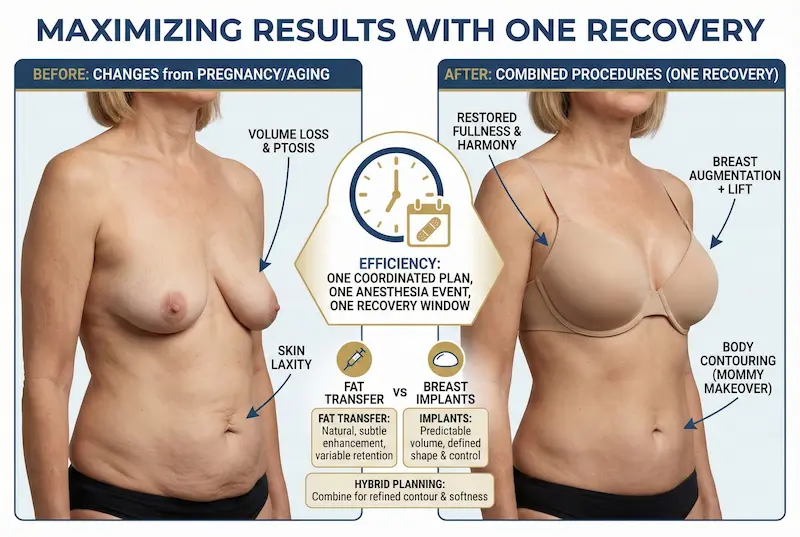
Procedures to Combine Breast Augmentation: Maximizing Results With One Recovery
Many patients aren’t choosing implants just to “add volume.” They’re trying to correct changes from pregnancy, weight loss, or natural aging—like skin laxity, shifted nipple position, or uneven volume distribution. In those cases, combining procedures can be the smarter route because it addresses the real source of dissatisfaction in one coordinated plan, with one anesthesia event and one recovery window (when medically appropriate).
This is also where common comparison intent—such as fat transfer vs breast implants—comes into play. The best option isn’t universal; it depends on anatomy, goals, and how much change you want. A combined plan simply expands what’s possible, while keeping safety and predictability at the center of the decision.
Breast augmentation + breast lift (ptosis + volume together)
If your main issue is sagging (ptosis), implants alone may not deliver the shape you want. An implant can add fullness, but it doesn’t always reposition the nipple or tighten loose skin enough to create a truly lifted contour. That’s why a breast lift is often paired with implants when droop and volume loss happen together.
- Best for: visible droop, stretched skin, low nipple position, “empty” upper pole.
- Goal: reposition + reshape + restore fullness, especially upper pole harmony.
- Planning note: lift pattern and scar placement are tailored to your anatomy, not a template.
Mommy makeover: breast + body contouring in one plan
A mommy makeover is a coordinated combination designed for post-pregnancy changes—typically pairing breast enhancement with abdomen and waist refinement. The benefit is efficiency: one surgical plan, one overall recovery timeline, and results that look harmonious from bust to waist to hips. The key is safety-first decision-making: what can be combined responsibly for your health profile and what should be staged.
Common combinations include breast augmentation with a tummy tuck (to address abdominal skin laxity and muscle separation) and liposuction (to refine the waistline and improve proportional balance). The goal isn’t “more surgery”—it’s one strategic plan that restores overall silhouette harmony.
Fat transfer vs breast implants (and when hybrid planning makes sense)
Fat transfer to breast can be appealing for subtle enhancement using your own tissue, but the achievable size increase is limited and long-term retention varies. Implants offer more predictable volume and shape control. In selected cases, hybrid planning (implant + selective fat transfer) can refine contour and softness—especially when you want a natural slope with tailored shaping.
Anesthesia: Comfort, Control, and a Safety-First Plan
For many US patients, anesthesia is one of the biggest mental hurdles—not the implant decision. We treat anesthesia planning as part of the surgical strategy: your health history, anxiety level, procedure complexity, and monitoring needs all determine the safest and most comfortable approach.
The goal is simple: you feel supported, the team stays in full control, and your recovery starts smoothly. A well-designed anesthesia plan can reduce nausea, minimize grogginess, and help you mobilize sooner after surgery.
Anesthesia options explained (general vs. sedation frameworks)
Breast augmentation is commonly performed under general anesthesia, but there are also sedation-based approaches in selected cases. The right choice depends on your candidacy and the surgical plan.
- General anesthesia: you are fully asleep; it’s widely used and predictable for procedure flow.
- IV sedation (“twilight” / sedation-based): you are deeply relaxed and comfortable; suitability depends on patient factors and the surgical plan.
- Local anesthesia + sedation (selected cases): sometimes used for specific patients or smaller-scope plans, based on medical assessment.
We’ll explain what each option means in practical terms: how you’ll feel, what you’ll remember (if anything), and how recovery may differ in the first hours.
How we reduce anesthesia anxiety (screening + monitoring + protocols)
Anxiety usually comes from uncertainty. We reduce it by making the plan clear and by preparing proactively.
- Pre-op screening: medical history review, current medications/supplements, and anesthesia risk assessment.
- Tailored medication strategy: nausea prevention, pain control planning, and comfort-focused care.
- Continuous monitoring: vital signs, oxygenation, and patient safety checks throughout the procedure.
- Clear post-op plan: what you can eat/drink, how to sleep, what is “normal,” and what is not.
Surgeon’s Insight: Most anesthesia fear is really fear of the unknown. When you understand the plan—and you know the team is monitoring every detail—patients typically feel calm and in control going into surgery.
Who is better suited for which approach?
This is where “expert patient” thinking pays off. The best approach is individualized. Factors that influence suitability include:
- Overall health profile: medical conditions, prior anesthesia experiences, allergies.
- Procedure complexity: incision choice, pocket work, symmetry adjustments, and whether you’re combining procedures.
- Anxiety level and comfort needs: some patients prefer being fully asleep; others prefer a sedation-forward mindset when appropriate.
Whatever the approach, the standard is the same: safety-first, clear expectations, and a recovery plan you can actually follow.
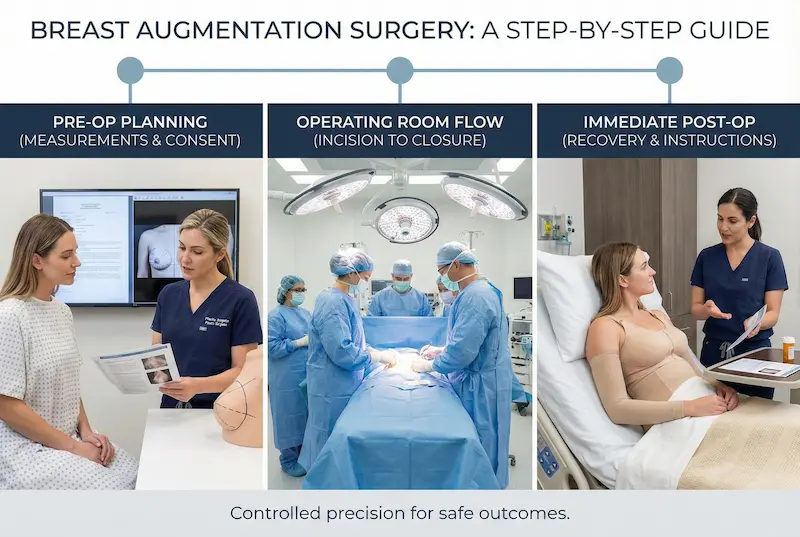
Breast Augmentation Surgery Step-by-step: What Happens on Surgery Day?
Knowing exactly what to expect reduces stress and helps you prepare properly—especially if you’re traveling internationally. Here’s the typical flow, from pre-op to the first hours after surgery.
Pre-op planning (measurements, markings, final consent)
Surgery day starts with confirmation—nothing is rushed. We review your plan, confirm implant choices, and ensure you’re comfortable with the agreed outcome goals.
- Measurements & photos: breast base width, fold position, symmetry notes.
- Skin and tissue check: ensures the plan still matches your anatomy.
- Markings: guide incision placement and pocket strategy.
- Final review: what’s included, what to expect, and your aftercare schedule.
Operating room flow (incision → pocket → implant → closure)
While the technique is individualized, the structure is consistent:
- Incision: placed as planned (inframammary, periareolar, or transaxillary).
- Pocket creation: over/under/dual plane strategy executed precisely for stability.
- Implant placement: alignment and symmetry are checked carefully.
- Closure: layered closure designed to support healing and minimize tension.
Your team’s focus is controlled precision—not speed. That’s what protects outcomes.
Immediate post-op (garments, pain control, first-night expectations)
Right after surgery, you’ll move into monitored recovery. Most patients describe feeling tightness/pressure rather than sharp pain—especially in the first days. You’ll receive clear instructions that cover:
- Support bra/garment rules: what to wear, how long, and what to avoid.
- Movement: why gentle walking matters (circulation, comfort, recovery rhythm).
- Sleep position: typically on your back, upper body slightly elevated early on.
- Medications: pain control and any prescribed supportive medications, with a simple schedule.
- Red flags: what is normal swelling vs what needs a call.
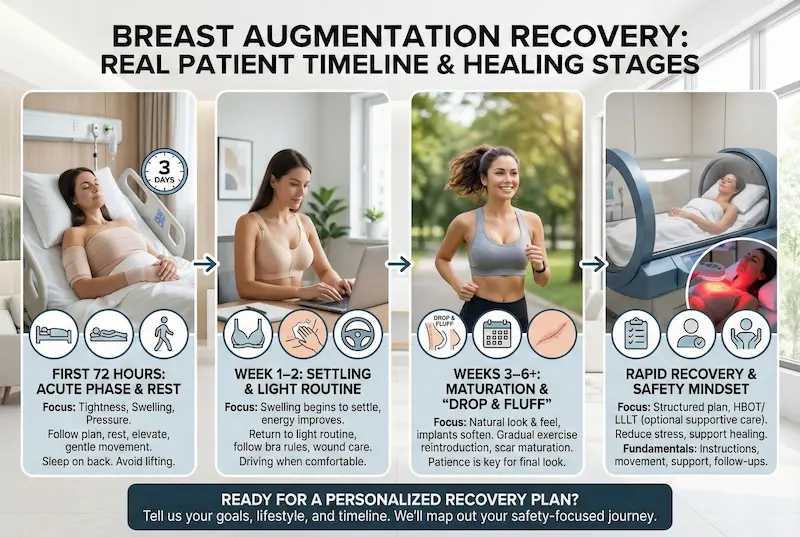
Recovery Timeline: What Healing Looks Like After Breast Augmentation
“Recovery from breast implants” is one of the highest-intent research topics for a reason: most patients don’t worry about the surgery day as much as they worry about the first two weeks afterward. The good news is that recovery is usually predictable when you follow a structured plan.
Below is a realistic timeline. Keep in mind: your exact pace depends on implant placement (over/under/dual plane), implant size, your tissue characteristics, and whether you combined procedures. We’ll give you a personalized plan and a clear checklist—so you’re never guessing.
First 72 hours (pressure, swelling, sleep position, walking)
The first three days are typically about tightness, swelling, and adapting to the new “pressure” sensation in the chest—especially if your implants were placed under the muscle or with a dual-plane approach.
- What you may feel: tightness across the chest, swelling, a “heavy” sensation, and mild to moderate discomfort.
- What helps most: staying ahead of discomfort with your prescribed plan, gentle movement, and consistent sleep positioning.
- Sleep: usually on your back with your upper body slightly elevated to reduce swelling and support comfort.
- Movement: short, gentle walks (even around your room) help circulation and can reduce stiffness.
- Arms: avoid sudden overhead reach and heavy lifting early on; move gently and gradually.
Most patients are surprised by how “normal” they feel when they keep expectations realistic: your job is to rest, hydrate, walk gently, and follow instructions—not to test your limits.
Week 1–2 (return to light routine, wound care, bra rules)
In the first two weeks, swelling typically begins to settle and your energy improves. You may still feel tightness, especially in the mornings, and your implants may sit “high” before they gradually settle.
- Work: many patients return to desk-based work in this window, depending on comfort and travel logistics.
- Driving: typically considered once you’re comfortable turning the wheel and you’re not taking medications that impair alertness—your surgeon will guide you.
- Garments: follow your specific bra/garment instructions; the right support helps swelling control and comfort.
- Incision care: keep the area clean and dry as instructed; don’t “experiment” with creams or tapes unless recommended.
- Exercise: walking is encouraged; strenuous activity and upper-body training are usually paused.
It’s normal for breasts to look “not final” during this phase. Early shape is not the final shape. The goal here is safe healing and stable positioning.
Weeks 3–6+ (exercise, scar maturation, “drop & fluff” expectations)
Over the next several weeks, you’ll typically notice a more natural look and feel as swelling continues to decrease and the implants settle into a softer position. Patients often describe this as the “drop & fluff” phase—where the upper pole softens and the overall silhouette becomes more natural.
- Activity: light exercise is commonly reintroduced gradually; upper-body workouts usually return later, based on your surgeon’s clearance.
- Scars: scars mature over months, not weeks. Early scars can look pink or firm; that is often normal in the short term.
- Sensation: temporary changes in nipple or skin sensation can happen and often improve with time.
- Follow-ups: scheduled check-ins matter—this is where we confirm healing, positioning, and symmetry progress.
At this stage, your “expert patient” advantage is patience. The best-looking results are rarely instant—they’re the outcome of good planning, controlled healing, and consistent aftercare.
Our “Rapid Recovery & Safety Protocol” mindset (HBOT/LLLT logic)
We approach recovery the same way we approach surgery: with a structured plan. In suitable patients, we may recommend supportive, comfort-focused options as part of an overall recovery strategy (for example, techniques commonly discussed in post-op care such as HBOT/LLLT frameworks). These are not magic shortcuts—and they’re not necessary for everyone—but they can be considered as part of a broader goal: reduce stress on the body, support healing behaviors, and improve the recovery experience.
What matters most—regardless of any adjuncts—is the fundamentals:
- Clear medication and aftercare instructions you can actually follow
- Early gentle movement and good sleep positioning
- Proper support garments and incision care
- On-time follow-ups and fast communication if something feels “off”
Ready for a personalized recovery plan? If you tell us your goals, lifestyle, and timeline, we’ll map out a realistic surgery + recovery schedule built around safety and natural-looking outcomes.
Complications, Safety & Risks: Is Breast Augmentation Dangerous?
If you’re searching phrases like “are breast implants safe” or “problems with breast implants”, you’re thinking like an expert patient—and that’s exactly the right mindset. Breast augmentation is a commonly performed procedure, but it is still surgery. The safest outcomes come from transparent risk discussion, good candidacy, precise technique, and a clear follow-up plan.
Below, we break risks into two categories: general surgical risks (shared by many surgeries) and implant-specific risks (unique to breast implants). This isn’t meant to scare you—it’s meant to help you make a confident, informed decision.
Surgeon’s Insight: Safety isn’t a slogan. It’s a system: proper screening, careful planning, sterile technique, controlled surgery, and structured follow-up. When those pieces are in place, risk becomes something we manage proactively—not something we ignore.
General surgical risks (bleeding, infection, anesthesia risks)
Every surgical procedure carries baseline risks, even in healthy patients. The key is reducing risk through preparation and protocols.
- Bleeding / hematoma: bleeding can occur during or after surgery. Sudden swelling, increasing tightness, or one-sided enlargement should be reported immediately.
- Infection: uncommon but important. Risk is reduced with sterile technique and proper aftercare. Early detection matters.
- Seroma (fluid collection): fluid can collect around the implant pocket in some cases and may require monitoring or treatment.
- Anesthesia-related risks: nausea, vomiting, dizziness, rare complications—risk depends on health status and anesthesia plan.
- Delayed healing / wound issues: more likely with nicotine use, uncontrolled medical conditions, or poor aftercare adherence.
Your safest pathway is candidacy-first decision-making: honest medical history, clear medication/supplement disclosure, and following pre-op and post-op instructions exactly.
Implant-specific risks (capsular contracture, rupture, malposition, rippling)
Implants add a second layer of considerations—because you’re not only healing from surgery, you’re also adapting to a medical device placed inside a carefully created pocket.
- Capsular contracture: the body forms a capsule around every implant; in some cases it can tighten excessively, causing firmness or shape change.
- Implant rupture/deflation: any implant can fail over time. Monitoring and follow-up planning are part of responsible long-term care.
- Malposition: implants can sit too high/low or drift to the side if the pocket isn’t ideal or if healing forces shift positioning.
- Rippling/edge visibility: more common with thin tissue coverage or certain implant/tissue combinations; placement strategy and implant selection matter.
- Changes in sensation: temporary numbness or sensitivity changes can occur and often improve over time, but may persist in some cases.
Some patients also ask about rare conditions associated with certain implant surfaces (for example, BIA-ALCL discussions related to some textured implants). The takeaway is not “panic”—it’s informed selection. Implant surface choice should be a transparent discussion based on your anatomy, goals, and risk comfort level.
Red flags & when to contact us (don’t wait)
Most recovery symptoms are normal: swelling, tightness, bruising, and fatigue in the first days. But certain signs should be treated as urgent. If any of the following happen, contact your surgical team promptly:
- Fever or chills, especially with worsening breast pain
- Increasing redness, warmth, or swelling around an incision
- Drainage that is foul-smelling, pus-like, or rapidly increasing
- Sudden one-sided enlargement, severe tightness, or significant asymmetry developing quickly
- Shortness of breath, chest pain, or calf pain/swelling
- Severe, worsening pain that doesn’t respond to the prescribed plan
Important: This page is educational and not a substitute for personalized medical advice. Your risk profile depends on your health history and surgical plan—your consultation is where we tailor safety decisions to you.
Is Breast Augmentation safe in Turkey? (A US patient’s checklist)
Most “Is Turkey safe?” questions aren’t really about geography. They’re about systems. Sterility. Credentials. Aftercare. If you evaluate those factors like an expert patient, you can compare any country—or any clinic—more clearly.
This section gives you a practical framework for decision-making. Then we show how we structure our own standards so you can verify what matters.
Standards & facility expectations (what “safe” actually means)
Safety starts with where the surgery happens and how the system is run. You want a facility that treats sterility, screening, and monitoring as non-negotiables—not optional upgrades.
- Pre-op screening: structured medical clearance and tests before surgery day.
- Intra-op monitoring: continuous vitals monitoring during the procedure.
- Sterilization: rigorous, multi-stage protocols with documented hygiene standards.
- Clear escalation plan: what happens if you have a concern after hours.
Our environment is designed around that logic. We use strict pre-operative screening, advanced patient monitoring, and sterilization standards framed as “zero-compromise.” We build safety into the workflow, not the marketing copy.
Surgeon’s Insight: “Safe surgery” isn’t about one promise. It’s about repeatable protocols—screening, sterility, monitoring, and follow-up—executed the same way every time.
Materials & credential de-risking (how you verify quality)
US patients often ask one direct question: “Are the materials the same?” That’s smart. Implants are medical devices. They should be treated that way.
When you compare providers, verify two things: (1) the implant/material standard, and (2) the surgical credential pathway behind the hands doing the work.
- Materials: ask what brands/material standards are used and how they’re documented.
- Hospitals: confirm where surgery is performed and what accreditations apply.
- Surgeon credentials: look for board-level training and verifiable certifications.
Our positioning is built around removing “unknowns.” We reinforce world-class quality by using FDA-approved materials and operating in JCI-accredited hospitals. We also de-risk the “Turkey question” by putting credentials and standards at the center of the conversation, not price.
One more point expert patients care about: licensing. Our sterile environment is externally validated through full licensure by the Turkish Ministry of Health to serve international health tourism patients, paired with strict hygiene protocols aligned with CDC/WHO-style guidance.
| What to verify (any clinic) | Why it matters | How we handle it |
|---|---|---|
| Implant/material standard | Device quality and long-term monitoring confidence | We use FDA-approved materials as part of our “no compromise” baseline. |
| Accredited hospital setting | OR sterility, emergency readiness, standardized care | We operate in JCI-accredited hospitals that meet or exceed Western expectations. |
| Pre-op screening + vitals monitoring | Reduces avoidable risk; supports predictable recovery | We implement strict pre-op screenings and advanced vitals monitoring. |
| Follow-up plan after you fly home | Prevents “abandonment” fear; catches issues early | We schedule structured virtual follow-ups and keep a direct communication channel open. |
Continuity of care (the part most clinics forget)
The biggest fear US patients don’t always say out loud is simple: “What happens after I leave?” We treat that as a core safety issue.
Our model includes a dedicated Patient Host and a clear long-term plan. You’re monitored after surgery in Istanbul, you have a final in-person check before flying, and you continue with scheduled follow-ups once you’re back in the USA.
- 24/7 access: your Patient Host remains available via WhatsApp for questions.
- Clear-to-fly check: a final in-person check-up before departure.
- Virtual follow-ups: planned check-ins at 1, 3, 6, and 12 months.
Privacy matters too. We maintain USA-standard patient confidentiality and data security protocols as part of how we deliver a premium, low-friction international experience.
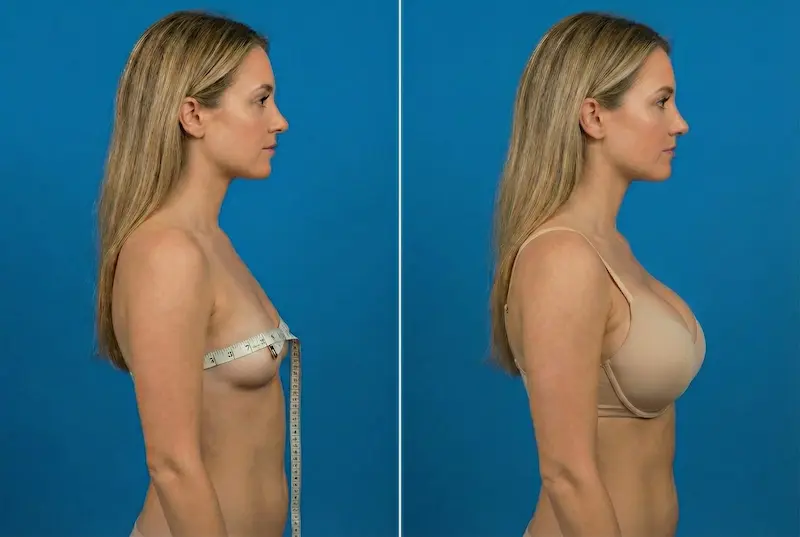
Realistic Expectations & Results: What “good” Really Looks Like
The best breast augmentation results look unremarkable—in the best way. Balanced. Proportionate. Like it belongs to your frame. That mindset is at the center of our philosophy: Rejuvenation, Not Alteration.
Expert patients get better outcomes because they plan for reality. Implants create shape and volume, but they don’t rewrite anatomy. Your skin quality, tissue thickness, and chest structure will always matter.
Below are the three expectation areas that prevent regret: what implants can’t do, how scars behave, and what patients commonly notice during the first months.
What implants can’t do (and when a lift is the smarter move)
Implants add volume. They don’t tighten loose skin the same way a lift does. If your main issue is sagging, an implant alone can sometimes make the breast look heavier rather than higher.
- Implants won’t reposition the nipple when it sits low on the breast.
- Implants won’t “erase” stretch marks or instantly fix very thin skin.
- Implants won’t create perfect symmetry in a naturally asymmetric chest without targeted planning.
This is where surgical honesty matters. If your tissue needs tightening, we’ll recommend a lift (with or without implants) to build a predictable shape. You get a cleaner result. You also get fewer “why does it still look low?” moments after surgery.
Scars: where they are, how they mature, and what affects them
Every breast augmentation involves an incision. The goal is to place it in a location that supports control during surgery and becomes discreet over time. Early scars can look pink, firm, or slightly raised. That phase is normal.
- Early phase: swelling and redness are common while the skin seals and strengthens.
- Mid phase: scars often soften and fade, but this can take months.
- Long-term: most scars continue to mature gradually; patience is part of the process.
Two things influence scarring more than patients expect: tension and aftercare consistency. That’s why we focus on layered closure and give you a clear scar-care plan at the right time—no random creams in the first week, no experimentation.
If you have a history of thick or raised scars, tell us upfront. We’ll factor that into incision planning and aftercare strategy.
Common feedback patterns (what patients notice in the first months)
Even when everything is going perfectly, the first weeks can feel “unfinished.” That’s not a problem. That’s physiology. Swelling needs time. Tissues relax. The implant settles.
- “They’re sitting high.” Common early on, especially with under-the-muscle or dual-plane placement.
- “My chest feels tight.” Also common early; it typically improves as the pocket relaxes.
- “They don’t look final yet.” Correct—final shape is a timeline, not a moment.
We reduce uncertainty with planning tools and clear checkpoints. For example, we use advanced pre-operative visualization tools like the 3D Vectra Imaging System to support meticulous planning and realistic surgical simulation before you commit to a direction.
And we keep social proof honest. Here’s a real US-patient comment that includes breast implants—shared as-is in our internal testimonial documentation:
Patient Note (USA): “My partner and I flew from the States… I had breast implants… We’re both 4 months in and very happy with our results.”
Important: Your outcome will be unique to you. That’s why our consultations focus on anatomy, not trends. We’ll discuss implant type, placement, incision choice, and the recovery behaviors that protect your result—so you know exactly what you’re signing up for.
Cost Analysis: Breast Augmentation Value 2026 (Turkey vs USA)
If you’re comparing breast implants NYC, breast implants Miami, or Los Angeles/Beverly Hills providers with options abroad, the smartest approach is not “What’s the lowest price?” It’s: What am I actually getting, what risks are reduced, and what support exists after I fly home?
That’s why we frame cost as value. For expert patients, value means: verifiable standards, predictable outcomes, a clear follow-up plan, and no surprise line items.
Why prices differ (without compromising standards)
A common and important question is why procedures in Turkey can be more accessible than the USA. The meaningful explanation is structural: the difference is driven by macroeconomic factors such as the USD-to-TRY exchange rate and lower national operational costs (like staffing and facility overhead), not a “quality downgrade.”
Our job is to remove the “unknowns” that make patients nervous: we anchor the experience in internationally aligned standards, use FDA-approved materials, and operate in JCI-accredited hospitals—so your decision is based on systems, not assumptions.
All-inclusive pricing: what it means in real life
In the USA, patients often experience cost as “unbundled.” You may see separate line items for the facility, anesthesia, post-op garments, and follow-ups. That structure can make it harder to compare options fairly.
We use an all-inclusive model designed to deliver clarity from the first conversation. Your journey begins with a free virtual consultation where we review your goals and photos and provide a personalized plan with a transparent, all-inclusive quote.
- Included in our VIP package: your complete surgical procedure, anesthesia & operating room fees, all pre-operative tests, 5-star hotel accommodation, VIP airport & clinic transfers, a 24/7 dedicated Patient Host, post-operative medications & garments, first post-op meal, and long-term virtual follow-up care.
- Not included (so there are no surprises): international flight tickets, personal travel insurance, personal expenses (such as meals beyond the provided first post-op meal), additional hotel nights (if you extend), and visa fees if applicable.
| What you’re comparing | Typical USA model (often unbundled) | Our all-inclusive model (designed for clarity) |
|---|---|---|
| Core surgery costs | Surgeon fee + facility fee + anesthesia billed separately | Complete procedure + anesthesia/OR fees included |
| Pre-op testing | May be billed separately or handled externally | All pre-operative tests included |
| Post-op essentials | Garments/meds may be separate purchases | Post-op medications & garments included |
| Logistics | You coordinate transportation and lodging yourself | 5-star hotel + VIP transfers + 24/7 Patient Host included |
| Follow-up | Follow-ups vary; travel-based continuity can be unclear | Long-term virtual follow-up care built into the plan |
| What you still manage | All logistics and scheduling | Typically only the international flight ticket |
Bottom line: If you’re deciding between “best breast implants near me” and an international option, compare the complete system: standards, implant strategy, recovery protocol, and continuity of care—not just a headline number.
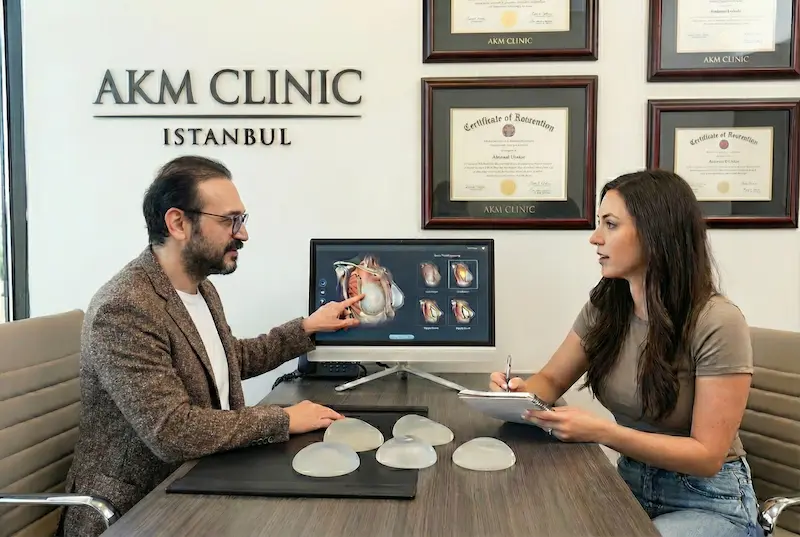
Finding the Best Breast Augmentation Surgeon
When patients search “best breast augmentation surgeons” they’re usually trying to reduce uncertainty. The most reliable way to do that is to evaluate credentials, transparency, and planning quality—then confirm you feel heard and guided (not sold to).
Why board certification matters (and what “verifiable” looks like)
Board certification matters because it signals structured training and accountability. In Turkey, top surgeons are board-certified through a rigorous national system, and many also hold European Board Certifications (EBOPRAS), widely considered equivalent to US board-level standards.
Surgeon’s Insight: Credentials are important, but your outcome depends on the whole system: candidacy screening, surgical planning, sterile execution, and structured follow-up.
In a consultation, ask direct questions: where the surgery is performed, what monitoring is used, how follow-ups are structured, and what happens if you have a concern after you return home.
What to ask in your consultation (expert-patient questions)
- Implant strategy: Which implant type fits my tissue thickness and goal (natural slope vs more projection)?
- Placement plan: Over/under/dual plane—why is that best for me?
- Incision choice: Which incision gives the best control for my anatomy?
- Risk management: What is your plan to reduce infection risk and manage capsular contracture risk?
- Recovery clarity: When can I return to work, drive, exercise, and fly?
- Follow-up structure: What is the schedule for post-op checks and long-term virtual follow-ups?
Red flags checklist (what expert patients avoid)
- Guarantees or “perfect” promises (good surgeons set realistic expectations).
- Vague answers about facility standards, monitoring, or follow-up care.
- Rushed sizing decisions without measurements or planning logic.
- No clear post-op support plan once you’re back in the USA.
Your Medical Journey: What To Expect in Istanbul (step-by-step)
Traveling for breast augmentation should feel organized—not uncertain. Our process is designed to remove friction so you can focus on preparation and recovery. Below is the exact flow most US patients follow, from the first video call to long-term follow-up back home.
Free virtual consultation → personalized plan
Your journey starts from home with a no-obligation video consultation. We discuss your goals, review photos, and outline a personalized surgical plan that includes implant strategy, placement logic, and recovery expectations.
- Goal clarification: subtle vs fuller projection, natural slope preferences, lifestyle considerations.
- Plan building: implant type framework (silicone/saline; smooth/shape; form behavior) + pocket strategy (over/under/dual plane).
- Transparency: you receive a clear, all-inclusive quote so you can compare options without hidden line items.
Expert-patient tip: come with 3 priorities (e.g., “natural in normal clothes,” “comfort for workouts,” “no overly high upper pole”)—we’ll translate those into technical decisions.
Secure your date & VIP planning (we handle logistics)
Once you decide to proceed, your dedicated Patient Host takes over the logistics. We secure your procedure date, book your hotel accommodation from our partner list, and schedule your transfers. In most cases, the only thing you manage directly is your international flight ticket.
- Scheduling: procedure date + required pre-op testing timetable
- Accommodation: hotel arrangements coordinated for comfort and proximity
- Transfers: airport → hotel → clinic → hotel, aligned with your appointment times
If you’re coordinating time off work, we’ll help you plan a realistic “return-to-life” window based on your procedure details and implant placement.
Arrival → surgery → recovery → cleared to fly → long-term follow-up
Your personal VIP airport welcome
When you land in Istanbul (IST or SAW), you’re greeted at arrivals by your private driver holding a sign with your name. You’re escorted to a private luxury vehicle for a comfortable transfer to your hotel, so you can settle in and rest.
In-person consultation & procedure day
On procedure day, your host arranges your transfer to the clinic. You’ll have a final in-person consultation with your surgeon to confirm details: implant selection, incision choice, pocket plan, and symmetry goals. After your pre-operative tests, surgery is performed in a fully accredited clinical setting.
Post-op care & recovery in Istanbul (with 24/7 support)
Immediately after surgery, you’re monitored closely by the medical team. Your Patient Host remains available 24/7 via WhatsApp to help with practical needs and to escalate any medical questions quickly. Before you depart, you’ll have a final in-person check-up to confirm recovery is progressing well and that you’re cleared to fly.
Long-term follow-up (back in the USA)
Support doesn’t end when you board your flight home. We schedule virtual follow-up appointments with your surgeon at structured milestones to monitor healing and answer questions as your body settles into the final result.
- Virtual follow-ups: 1, 3, 6, and 12 months post-procedure
- Focus: scar maturation guidance, implant settling (“drop & fluff”), comfort and activity progression
- Continuity: you keep a direct line of communication for questions between checkpoints
Mini checklist for US patients (so you feel fully prepared)
- Before you fly: finalize time off work, arrange a comfortable return-home setup, pause nicotine as instructed.
- Pack smart: front-zip tops, a light jacket, travel pillow, slip-on shoes, basic toiletries, and any approved medications.
- Plan your return: avoid heavy lifting early; schedule a calm first week back for best comfort and swelling control.
Breast Augmentation Frequently Asked Questions (FAQ):
This FAQ is written for “expert patients”—short, direct answers to the questions people actually search before booking. For personalized guidance (implant type, placement, sizing, and candidacy), a consultation is essential.
How long do breast implants last?
Breast implants are durable medical devices, but they are not considered “lifetime devices.” Some patients keep implants for many years without issues, while others may need revision sooner due to changes in the body, implant wear, or aesthetic goals. The smartest approach is a long-term mindset: routine follow-up, symptom awareness, and a plan for monitoring over time.
Do breast implants need to be replaced?
Not automatically on a fixed schedule. Replacement is usually considered when there is a clear reason—such as rupture/deflation, capsular contracture, malposition, discomfort, or a desire to change size/shape. A good surgeon will explain what monitoring looks like and what signs should trigger evaluation.
Are breast implants safe now?
For appropriate candidates, breast augmentation is widely performed and can be a safe procedure when built on proper screening, sterile protocols, and structured follow-up. “Safe” does not mean “zero risk.” It means risks are discussed transparently, reduced proactively, and managed with a clear plan.
Do breast implants cause cancer?
Patients usually ask this because they’ve heard about rare conditions linked to certain implant surfaces (for example, discussions around BIA-ALCL with some textured implants). The key is informed selection and transparent counseling. In a consultation, we’ll explain what’s known, how surface choice is decided, and what monitoring and red flags look like—without minimizing the question.
Silicone vs saline breast implants: which is better?
Neither is “best” for everyone. Silicone gel implants are often chosen for a natural feel. Saline implants are filled with sterile saltwater and can make deflation more noticeable if it occurs. The right choice depends on your tissue thickness, desired feel, aesthetic goal, and monitoring preferences. We’ll recommend the option that best fits your anatomy and long-term comfort.
What are structured saline implants?
Structured saline implants are designed with internal structures to improve how saline behaves—aiming for a more controlled shape and feel compared to classic saline. Suitability depends on your anatomy and what implant options best match your plan.
Under vs over the muscle breast implants: which placement looks more natural?
“Natural-looking” depends on your tissue coverage and goals. Under-the-muscle or dual-plane strategies can provide smoother upper-pole transitions in thinner patients. Over-the-muscle placement can work well when there is sufficient tissue coverage and a plan for stable positioning. The best placement is the one that matches your anatomy and risk profile—not a trend.
Round vs teardrop implants: which is more natural?
Either can look natural when sized correctly and placed with the right pocket strategy. Teardrop (anatomical) implants are designed for a specific slope pattern, but they require precise alignment. Round implants are highly versatile; with thoughtful planning, they can still look soft and natural on many body types.
Smooth vs textured implants: what should I know?
This decision should be made with a clear safety discussion. Smooth implants are widely used and can move more naturally within the pocket. Textured implants have been used in selected scenarios for stability, but they require an informed conversation because certain textured devices have been associated with rare risks discussed in modern safety guidance. We’ll explain surface choice transparently and align the decision with your goals and comfort level.
Can you get a mammogram with breast implants?
Yes—screening is still possible. Imaging centers can use implant-displacement techniques to improve visualization. If you’re due for routine screening or have a family history of breast disease, bring it up early so your plan and timing can be coordinated responsibly.
Breast implants and breastfeeding: will implants prevent it?
Many patients with implants can breastfeed, but it depends on individual anatomy, incision choice, and other factors. If future breastfeeding is a priority, mention it in consultation so we can plan as conservatively as possible.
How painful is recovery from breast implants?
Most patients describe early recovery as tightness and pressure rather than sharp pain—especially with under-the-muscle or dual-plane placement. Discomfort typically improves over the first 1–2 weeks, with continued softening and settling over several weeks. Your experience depends on implant placement, size, and your body’s healing response.
When can I return to work, exercise, and travel?
Many patients return to desk-based work within the first couple of weeks, while exercise (especially upper-body training) usually returns later and gradually—only after surgeon clearance. For travel, the safest plan includes an in-person check before flying and a structured follow-up schedule once you’re home.
Why do people search “breast implants Istanbul” or “Turkey breast implants”?
Usually for one reason: value. But the right way to evaluate international care is not price—it’s systems. Facility standards, credential transparency, implant planning quality, and continuity of care are what separate “cheap” from “high-value.” If those are verifiable, international care can be a smart decision for quality-conscious patients.
Medical disclaimer: This page is for education only and does not replace medical advice. Your candidacy, risks, and surgical plan must be evaluated by a qualified clinician in a consultation.