If you’ve been searching for fox eye surgery Turkey, you’re likely trying to separate a social-media trend from a real, safe, medically sound outcome. The “fox eye” look (a subtly lifted outer eye corner with a refined brow tail) can be created in different ways—but the right approach depends on your anatomy, eye health, and how much change you actually need.
In this guide, we’ll break down what the fox eye look really means, how it differs from similar trends, and why “celebrity-inspired” requests need careful expectation-setting. We’ll also cover the procedure spectrum often discussed as fox eye surgery in Turkey or Turkey fox eye surgery, including what’s realistic, what’s risky, and how a surgeon-led plan reduces the chance of an unnatural, “pulled” result.
Important note: While photos can communicate a vibe, your final plan must be built on facial balance, eyelid support, and eye-surface safety—principles grounded in medical science, not filters.
Table of Contents

What Is the “Fox Eye” Look—And Why Is It Trending?
Explanation: The fox eye trend usually describes a gentle upward “tilt” at the outer corner of the eye, paired with a slightly elevated tail of the eyebrow. On camera, this can read as more elongated, “awake,” and sculpted—especially when lighting and makeup emphasize the outer corners. But the look is not one single procedure; it’s a result created by changing specific structures (or simulating them temporarily).
The anatomy behind the look (lateral canthal tilt, brow tail position)
The “tilt” people notice typically involves the relationship between the inner and outer corners of the eye (the canthal tilt), plus the position of the brow tail and the support of the lower lid. In surgical planning, the goal is not to “pull the skin,” but to respect eyelid support and the natural curvature of the eye area.
Fox eye vs. cat eye vs. “snatched” brow: what’s actually different?
These terms are often used interchangeably online, but they’re not the same. The differences matter because each term implies a different vector of lift and a different risk profile.
| Term (Popular Name) | What People Usually Mean | What It Often Involves Clinically | Main Risk If Overdone |
|---|---|---|---|
| Fox Eye | Subtle outer-corner lift + refined brow tail | Careful lateral support planning; sometimes brow-tail lift | “Pulled” look, lid tension, dryness if support is ignored |
| Cat Eye | More dramatic outer-corner elongation | May require stronger canthal work + lid shaping | Overcorrection, asymmetry, eyelid malposition |
| “Snatched” Brow | Higher brow tail and temple tightness | Temporal/lateral brow lift vector planning | Temple tightness, unnatural arch, visible tension lines |
What results are realistic (and what social media filters exaggerate)
Filters can simulate a lift without showing trade-offs (like eyelid tightness, dryness, or facial imbalance). A realistic fox eye surgery result is usually subtle: a refreshed outer corner and better harmony between the eye corner and brow tail—without changing your identity or creating constant “tension” in the lids.
Surgeon perspective: The safest “fox eye surgery” result is the one that preserves eyelid function first. Aesthetic changes should never compromise comfort, blinking, or long-term lid support.
The “Bella Hadid” Reference: Setting Realistic Expectations
Explanation: Many people use “Bella Hadid look” as shorthand for a sharp, lifted outer eye corner and a sleek upper-face contour. But it’s crucial to translate that reference into measurable goals—because bone structure, eye spacing, lid laxity, and skin quality determine what’s possible. This is where science and scientific research around eyelid support, healing, and scar behavior informs safer decision-making.
What people usually mean by “Bella Hadid eyes”
Most patients are describing a combination of: (1) a higher brow tail, (2) a refined upper lid/outer lid contour, and (3) a more defined temple-to-cheek transition. That “look” can be influenced by makeup, photography angles, and natural anatomy—so the surgical goal is often a version of that vibe that fits your face.
Genetics, bone structure, and skin quality: why outcomes vary
Two people can request the same outcome and need completely different plans. For example, someone with strong cheekbone support and good lid tone may need only a subtle brow-tail adjustment, while someone with weaker lid support may require a different strategy—or may be advised against aggressive lifting to avoid lid malposition and dryness.
A surgeon-led way to define your goal without copying a celebrity face
A safer consultation approach is to define your target in functional, anatomical terms (lift direction, degree of change, lid support) rather than “make me look like X.” If you’re researching fox eye surgery Turkey, prioritize clinics that map your eyelid support and screen for dry-eye risk before discussing aesthetics.
Fox Eye Surgery Options in Turkey: Which Procedure Does What?
Explanation: “Fox eye surgery” is an umbrella term. In real clinical planning, your surgeon chooses (or combines) techniques based on eyelid support, brow position, and your risk factors (especially dry eye and lid laxity). If you’re researching fox eye surgery in Turkey or Turkey fox eye surgery, the most important question is not “Which trend is popular?”—it’s “Which anatomical problem are we actually correcting?”
At AKM Clinic, this planning is surgeon-led and grounded in function-first aesthetics. The clinic’s surgical leadership includes Dr. Akif Mehmetoğlu (Founder & Lead Doctor, Dermatosurgeon & Face Expert), known for a philosophy of enhancing natural beauty rather than creating an “overdone” look. His dermatosurgical expertise (skin quality, healing behavior, scar planning) complements structural facial planning—an approach aligned with how modern medical science frames safe aesthetic outcomes: structure + skin + function.
Canthopexy vs. canthoplasty: when each is appropriate
Canthopexy is generally a supportive technique—think “reinforcement” rather than dramatic reshaping. It may be considered when there’s mild laxity and the goal is a subtle, stable lift of the outer corner without changing the eye’s identity.
Canthoplasty is more structural and may be reserved for situations where the outer corner needs more significant repositioning. Because it’s more powerful, it also demands more careful candidate selection to avoid complications like lid malposition or persistent irritation.
- Key safety idea: The more aggressive the lift, the more critical eyelid support and dry-eye screening become.
- Red flag goal: “Make my eyes look extremely pulled 24/7.” This often predicts dissatisfaction and higher functional risk.
Temporal/lateral brow lift: lifting the brow tail safely
Many “fox eye” photos are actually more about the brow tail than the eyelid corner. A temporal (lateral) brow lift targets the outer brow, improving the upper-face “sleekness” while keeping the eyelid function stable. This can be especially relevant for patients who feel “heavy” on the outer lid but don’t truly need major canthal work.
Practical takeaway: If your main concern is a droopy outer brow tail, a brow-tail strategy may give a more natural result than chasing aggressive canthal change.
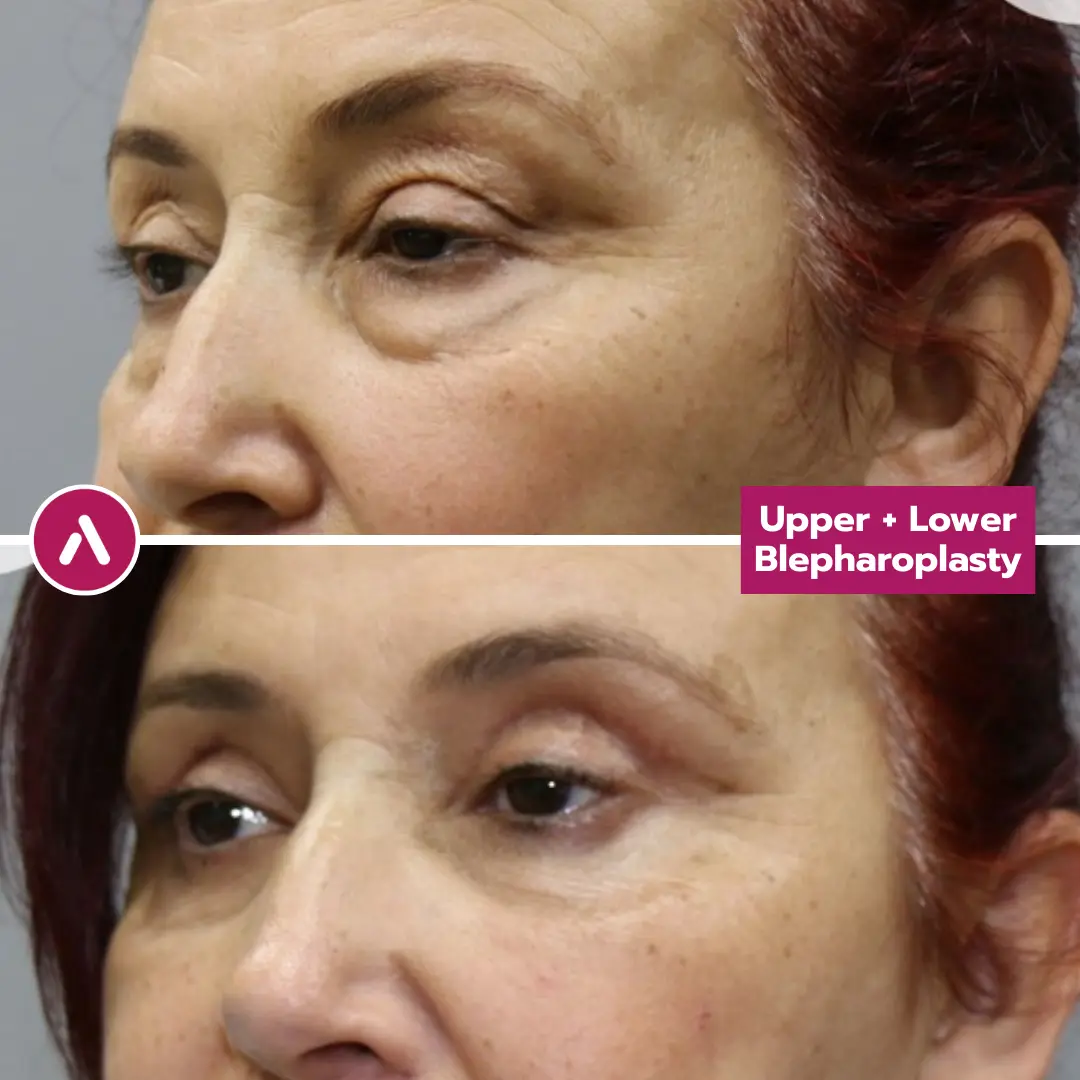
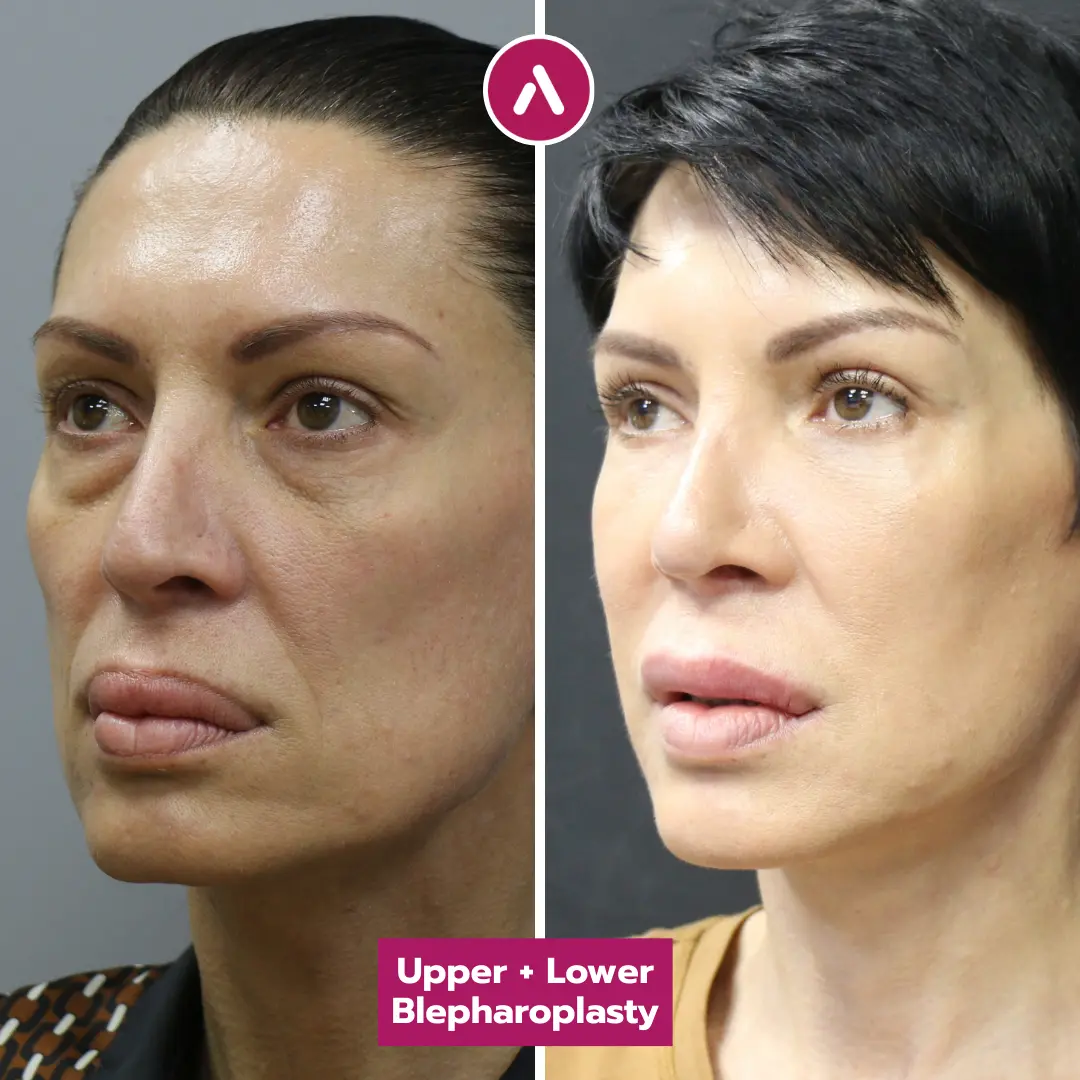
Upper blepharoplasty + fat repositioning: refining the lid without “hollowing”
Upper eyelid surgery (upper blepharoplasty) can be part of a fox-eye plan when excess skin or heaviness is part of the problem. The nuance is to avoid an overly hollow or “operated” look—especially in patients who are already lean in the upper lid.
One reason “expert patients” value surgeon-led planning is the emphasis on natural outcomes. For example, Barbara (USA)—who had upper eyelid surgery as part of her facial work—described her result as: “I actually look like nothing happened… but probably 20 years younger.”
Non-Surgical Alternatives (and When They’re Not Enough)
Explanation: Non-surgical methods can create a temporary “fox eye” effect, but they have limits. They may be suitable when you want a small change, you’re not ready for surgery, or your anatomy makes surgery higher-risk. The key is honest expectation-setting: temporary options can “suggest” a lift, but they do not reliably create the same structural stability as surgery.
PDO threads: temporary lift, limits, and who should avoid it
Threads can create a short-term lift, especially in the brow/temple region. However, results vary widely and longevity is limited. Threads can also create issues like visible irregularities, asymmetry, or tissue tension that doesn’t look natural in motion.
- Better for: mild lift goals; patients who accept temporary outcomes
- Not ideal for: those who want a dramatic or long-lasting “Bella-inspired” change
Botox “chemical brow lift”: subtle, short-term changes
A carefully placed neuromodulator plan can lift the brow tail subtly by relaxing depressor muscles. This is often a good “trial run” to see how your face looks with a slightly elevated brow tail—without committing to surgery.
Fillers around the temple/brow: benefits, risks, and vascular safety
Strategic filler can support brow shape and soften transitions, but it must be approached conservatively—especially around the temple where vascular anatomy matters. The safest approach is individualized planning and clear discussion of risks, not trend-based volume chasing.

Who Is a Good Candidate? A Surgeon’s Pre-Op Assessment Checklist
Explanation: The best candidate is not the person who wants the most dramatic change—it’s the person whose anatomy can safely support the change. A high-trust consultation should include eyelid support assessment, dry-eye screening, and a realistic conversation about what “fox eye” means for your face. This is where scientific thinking matters: define the problem, choose the least risky solution, and plan for stable healing.
Eye shape, lid laxity, and dry-eye risk screening
If you already experience dryness, irritation, or contact lens intolerance, your plan should prioritize comfort and blinking mechanics. In many cases, conservative lifting (or shifting focus to brow-tail support rather than canthal repositioning) can reduce risk while still creating a refreshed look.
Skin quality & healing factors (smoking, medications, previous surgery)
Skin quality influences scarring, swelling, and how “tightness” reads post-op. This is where having dermatosurgical expertise in the team adds value: Dr. Akif Mehmetoğlu’s background includes dermatology and cosmetic dermatology, supporting a more skin-informed strategy for incision planning and recovery guidance.
The consultation process: photos, planning, and individualized vectors
A responsible plan translates your reference photos into measurable goals (vector, degree of lift, symmetry targets). AKM Clinic’s broader patient-care framework emphasizes surgeon-led planning and transparent, structured pathways—from virtual review to in-person finalization—designed to reduce uncertainty for international patients.
Just as importantly, the clinic frames its model around institutional standards and accountability—explicitly positioning care as surgeon-directed rather than broker-led (“We are not an agency; we are the surgeons”), with procedures performed in a fully-equipped hospital environment.
Recovery Timeline, Aftercare, and Scar Management
Explanation: Recovery is where “aesthetic goals” meet real biology. The safest, most natural-looking outcomes come from respecting healing phases—swelling, bruising, tissue settling, and scar maturation. Whether you’re considering fox eye lift surgery Turkey as a stand-alone procedure or as part of a combined plan, you should expect a staged recovery: you’ll look better quickly, but the final refinement takes time. This is not just common sense—it’s rooted in science and what we know about inflammation, collagen remodeling, and scar behavior.
Day-by-day recovery milestones (swelling, bruising, return to work)
Recovery varies based on which techniques are used (e.g., brow-tail lift vs. canthal work vs. upper blepharoplasty). Still, most patients benefit from a realistic timeline. Below is a practical guide you can use when planning fox eye surgery in Turkey travel.
| Timeframe | What You May Feel/See | What’s Normal | What to Prioritize |
|---|---|---|---|
| Days 1–3 | Tightness, swelling, mild discomfort | Bruising and asymmetry can peak early | Rest, cold compress (if advised), head elevation |
| Days 4–7 | Swelling begins to improve | Color changes in bruising (purple → yellow/green) | Gentle hygiene, follow-up checks, avoid rubbing eyes |
| Week 2 | More “socially presentable” | Residual swelling is common | Light activity, careful sun protection |
| Weeks 3–6 | Steadier symmetry, softer feel | Small day-to-day fluctuations | Scar care, avoid intense exercise if restricted |
| Months 2–6 | Refinement phase | Scars continue to mature and fade | Patience + consistent aftercare |
Return to work: Many patients plan 7–14 days depending on bruising tolerance and the exact procedure combination. If your work is public-facing, you may prefer a longer buffer.
Scar placement and how surgeons minimize visible marks
When scars are needed (for example, in certain brow-tail lift approaches), modern planning aims to place incisions in discreet, natural creases or hair-bearing areas when possible. Scar quality depends on technique, tension, and your biology—plus how well you protect the area during the early healing window.
- Sun protection: UV exposure can darken scars and prolong redness.
- No picking or rubbing: It sounds simple, but it’s one of the most common causes of delayed healing.
- Sleep position: Head elevation reduces swelling and decreases pressure on healing tissues.
Natural-result principle: A fox-eye outcome should look refined—not “tight.” The best scar is the one that heals under minimal tension with stable eyelid support.
Post-op support at AKM Clinic: HBOT & LLLT to support healing
Advanced recovery support can be meaningful for international patients who want to reduce downtime and support tissue repair. AKM Clinic is known for integrating supportive modalities such as:
- HBOT (Hyperbaric Oxygen Therapy): commonly used to support oxygen delivery to healing tissues—helpful in managing swelling and supporting recovery in selected patients.
- LLLT (Low-Level Laser Therapy): often used to support healing responses and tissue comfort during recovery phases.
These technologies don’t replace surgical skill, but they can complement aftercare—especially when your goal is to return home feeling more confident and stable after Turkey fox eye surgery.
Risks, Complications, and How to Reduce Them
Explanation: The biggest fear for “expert patients” is not pain—it’s an unnatural result or a long-term functional problem. With fox eye procedures, the key risk categories involve (1) aesthetic overcorrection (“pulled” look), (2) eyelid function (dryness, irritation), and (3) symmetry. Good surgical planning reduces risk by choosing the least aggressive option that still achieves your goal, and by screening for dry-eye risk and lid laxity.
Overcorrection, asymmetry, and “pulled” appearance—why it happens
Overcorrection often comes from chasing a dramatic lift without respecting your baseline anatomy. It can also happen when tension is placed in the wrong layer or direction. A natural fox-eye outcome usually looks like a refined “rested” outer eye—not a constant, tight expression.
- Risk reducer: conservative vector planning + stable support
- Good sign: your surgeon talks about what they will not do as clearly as what they will do
Dry eye, irritation, and lid malposition: prevention strategies
If you’re prone to dry eye, allergies, or sensitive eyes, you need proactive screening and a plan that protects blink mechanics. Prevention is better than correction:
- Dry-eye and lid-laxity assessment before committing to strong canthal change
- Prioritizing support (stability) over dramatic shape change
- Clear post-op guidance on lubrication and what symptoms are not “normal”
Choosing a safe clinic: surgeon credentials, planning, and follow-up protocol
For patients comparing options for fox eye surgery Turkey, safety isn’t a marketing claim—it’s a system: surgeon-led assessment, a fully equipped hospital setting, clear aftercare, and accessible follow-up. The highest-quality consultations are transparent about candidacy, limitations, and risk mitigation.

Planning Your Trip to Istanbul for Fox Eye Surgery
Explanation: Travel planning should match medical reality. Even if you feel “fine,” early follow-ups matter because swelling patterns and symmetry can evolve day-to-day. If you’re budgeting for fox eye surgery cost Turkey or comparing fox eye surgery Turkey price options, make sure you also factor time in Istanbul, follow-up visits, and a safe return-to-flight window.
How long to stay in Turkey and why follow-ups matter
Many patients plan to stay long enough for early check-ups and to ensure healing is progressing as expected. Your exact timeline depends on your procedure type and whether you combine treatments. A responsible plan will align your departure with your surgeon’s comfort level, not just your calendar.
What influences cost (procedure type, complexity, combined procedures)
When people search fox eye surgery Turkey cost, they often expect a single number—but price depends on what you actually need. The procedure spectrum can range from subtle brow-tail strategies to more structural canthal approaches, with or without upper eyelid refinement. Complexity, operating time, and whether procedures are combined all influence the overall plan and pricing structure.
Combining procedures safely (fox eye + blepharoplasty/upper-face rejuvenation)
Combining can be efficient when thoughtfully planned—but it should never be done to “force” a trend. The decision should be based on facial harmony and safety. For example, if upper lid heaviness is a major issue, addressing it conservatively may reduce the urge for aggressive outer-corner pulling.
Fox Eye Surgery Turkey Cost & Price: What You’re Really Paying For
Explanation: Searches like fox eye surgery Turkey cost, fox eye surgery Turkey price, and fox eye surgery cost Turkey usually assume there’s one standard procedure and one standard fee. In reality, “fox eye” can mean anything from a subtle brow-tail lift strategy to more structural canthal work, sometimes combined with upper eyelid refinement. Cost is ultimately driven by what your anatomy needs, the complexity of the plan, and the safety infrastructure behind the surgery (facility standards, anesthesia approach, surgeon time, and follow-up care).
Why “fox eye surgery price” varies so much (even within Turkey)
Two patients can request the same “Bella-inspired” look and end up with very different surgical plans. That’s why any clinic promising a single fixed “fox eye package price” without a proper assessment should raise questions.
- Procedure type: brow-tail lift vs. canthopexy vs. canthoplasty vs. combined approach
- Complexity: eyelid laxity, asymmetry, revision history
- Safety + setting: hospital standards, monitoring, post-op support
- Aftercare: follow-up visits, medications, recovery guidance
Expert-patient mindset: The smartest way to compare cost is to compare what’s included—not just the headline number.
Cost comparison framework: New York / Los Angeles / Miami vs. Istanbul (and vs. Mexico/Thailand)
Instead of a simplistic “USA vs Turkey” comparison, it’s more realistic to compare high-cost US cities (where surgeon fees, facility fees, and overhead are typically higher) with Istanbul—then weigh that against other medical tourism options like Mexico or Thailand.
| Destination | Typical Patient Motivation | Common Trade-Offs to Evaluate | Questions to Ask Any Clinic |
|---|---|---|---|
| New York / Los Angeles / Miami | Proximity + easy follow-up | Higher total cost; scheduling constraints | What is included in surgeon fee? How many follow-ups? Revision policy? |
| Istanbul (Turkey) | Value + access to experienced surgical teams | Travel logistics; need structured aftercare planning | Hospital setting? Surgeon-led planning? Clear timeline for follow-ups before flying? |
| Mexico | Shorter travel for US patients; perceived savings | Standards vary widely by facility; continuity of care depends on provider | Who performs the procedure? Credentials? Emergency protocols? Aftercare support? |
| Thailand | Reputation in some cosmetic segments; bundled tourism | Long-haul travel; swelling management during flights; follow-up timing | How long should you stay? What happens if you need a check after you return? |
Bottom line: Istanbul can offer strong value, but the best value is only “real” if the clinic provides surgeon-led assessment, a safe surgical setting, and a structured post-op plan. This is where medical science matters: your outcome isn’t just the operation—it’s planning + tissue handling + recovery biology.
What to confirm before you accept a quote (your cost-safety checklist)
If you’re comparing Turkey fox eye surgery options, ask for clarity in writing. A good quote should be easy to understand and should reflect a real plan—not a generic menu price.
- Exact procedure plan: What techniques are proposed and why?
- Anesthesia details: What type is used and who monitors you?
- Facility standard: Hospital environment, safety protocols, emergency readiness
- Follow-up schedule: In-person checks before you fly home
- Aftercare support: medication guidance, swelling management, wound/scar care
- Recovery support options: availability of supportive modalities like HBOT and LLLT
A Decision Framework for the “Bella Hadid Look” Request (Without Regret)
Explanation: “I want the Bella Hadid fox eye” is an emotional request—but the safest way to pursue it is to translate that emotion into a practical plan: what change do you want, what are you willing to risk, and what would be unacceptable (dry eye, visible tension, unnatural shape)? The right clinic will help you define your goal in anatomical terms and steer you away from choices that look dramatic online but age poorly in real life.
Step 1: Define your non-negotiables (function first)
Before you choose a technique, decide what you will not trade away:
- Comfortable blinking and eye-surface health
- A natural expression in motion (not “tight” or “pulled”)
- Stable eyelid position from multiple angles, not just in selfies
Step 2: Choose the least aggressive method that achieves your goal
Many patients get better results by shifting the focus from “maximum pull” to “better harmony.” For some, a brow-tail strategy delivers the “lifted” impression with less risk than strong canthal change. For others, supportive canthopexy may be enough. The guiding principle is conservative stability—because subtle, stable improvements often look more expensive and more believable.
Step 3: Validate your plan with “evidence of process,” not promises
In an expert-patient mindset, trust comes from process:
- Does the surgeon explain the why behind the technique?
- Do they screen for dry eye and lid laxity?
- Do they discuss risks and what they will do to reduce them?
- Is there a structured recovery plan (including support options and follow-ups)?
Reality check: A clinic that says “yes” to every dramatic request without caution is not being “patient-focused”—it’s skipping risk communication.
Frequently Asked Questions (FAQ): Fox Eye Surgery Turkey
Explanation: Below are the most common questions people ask when researching fox eye surgery Turkey—especially those who want a “Bella Hadid-inspired” refinement without risking an unnatural, over-pulled look. These answers are intentionally practical and grounded in what patients typically need to know before committing to travel, surgery, and recovery.
How long do fox eye surgery results last?
Longevity depends on which technique is used and your anatomy (skin quality, tissue laxity, healing response). Surgical structural support tends to last longer than temporary options like Botox or threads. A responsible surgeon will explain expected longevity for your plan—rather than giving a one-size-fits-all promise.
Is fox eye surgery painful, and what anesthesia is used?
Discomfort is usually described as tightness and pressure rather than severe pain, especially in the first days. Anesthesia approach depends on the procedure and complexity. What matters most is safe monitoring and a plan tailored to your medical history—not choosing anesthesia solely for convenience.
Will I look “over-pulled” or unnatural?
The “pulled” look usually comes from chasing a dramatic lift that doesn’t match your facial structure or from placing tension in the wrong direction. The best prevention is conservative, support-focused planning: choosing the least aggressive technique that still achieves your goal, and prioritizing eyelid function and natural expression.
What’s the difference between canthopexy and canthoplasty?
Canthopexy is typically a supportive stabilization technique (subtle reinforcement). Canthoplasty is more structural and may create more noticeable change but requires stricter candidate selection because it can carry higher functional risk if overdone. Your surgeon should explain why one is safer for your eyelid support and dry-eye risk profile.
Can I get fox eye results without surgery?
Sometimes, but it’s usually temporary and more subtle. Botox can create a small brow-tail lift, and threads may create a short-term “snatched” impression in selected patients. Non-surgical options are best when you accept limits and prioritize safety—especially around the eye area.
When can I fly back to the US after surgery?
Flight timing depends on swelling, early healing stability, and your surgeon’s follow-up protocol. Many patients plan enough time in Istanbul for early post-op checks before flying. Long-haul travel can add swelling, so it’s wise to plan conservatively and follow your surgeon’s specific guidance.
What are the warning signs after surgery that require urgent review?
Seek urgent medical review if you experience any of the following:
Sudden worsening pain that feels abnormal or one-sided
Vision changes (blur, double vision, loss of vision)
Rapidly increasing swelling, severe asymmetry, or a tense “pressure” sensation
Fever, spreading redness, or pus-like discharge
Severe dryness, inability to close the eye properly, or significant irritation that doesn’t improve
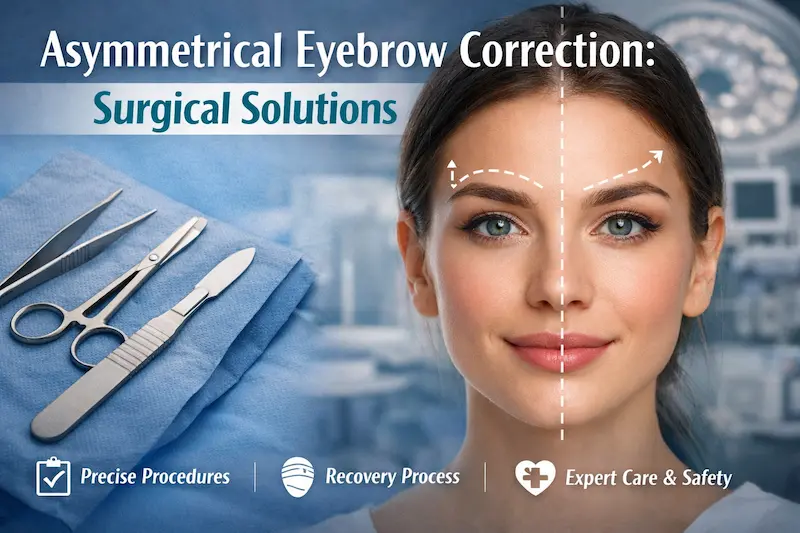
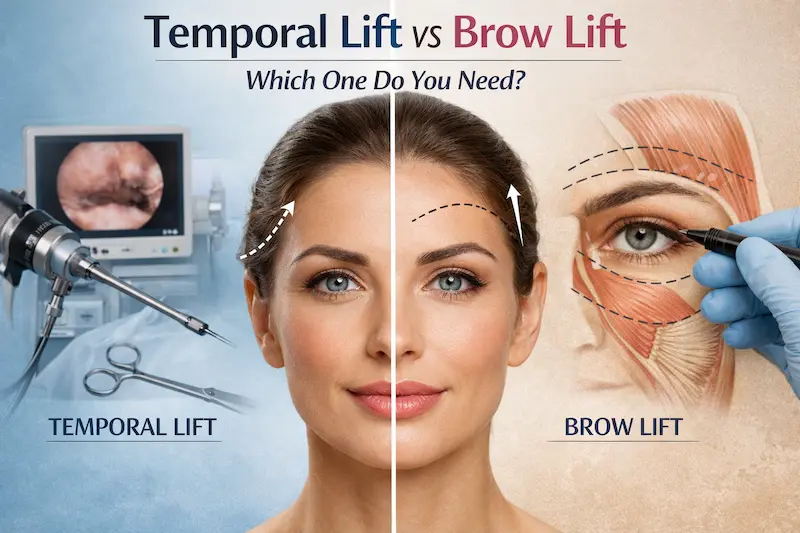
If you’d like, you can also explore related topics beyond this article—such as Temporal Lift vs Brow Lift, Thread Lift Turkey, Asymmetrical Eyebrow Correction, Blepharoplasty Recovery Time, and Plastic Surgery Packages Turkey—to better understand which options align with your goals. These resources can help you compare surgical vs. non-surgical lifting methods, learn how eyebrow asymmetry is corrected, set realistic expectations for eyelid recovery, and see what’s typically included in comprehensive surgery packages.
Medical Disclaimer: This page is provided for general educational purposes only and does not replace a face-to-face medical consultation, diagnosis, or personalised treatment plan. All surgery carries risks and outcomes vary between individuals. Suitability for a fox eye surgery, procedure selection, and anaesthesia choice can only be determined after a full clinical assessment by a qualified surgeon. Always follow your clinician’s instructions and seek urgent medical attention if you develop concerning symptoms during recovery.