
Real Patient Results
Tummy Tuck (Abdominoplasty) Before And After Gallery
- Medically Reviewed by Akif Mehmetoğlu, MD
Key Takeaways:
- Tummy tuck before and after galleries should always include timeline labels — early swelling (1-4 weeks) vs 6-12 month photos tell completely different stories.
- Natural-looking abdominoplasty results respect your anatomical frame: waist shaping, belly button position, and a low, well-placed scar — not a “Photoshop flat” torso.
- Multiple angles matter — a profile and three-quarter view reveals more than a front shot, especially in plus-size, post-weight-loss, and revision cases.
- AKM Clinic cases below include post-op timing, age, procedure type (full, mini, extended, fleur de lis, 360°), combined procedures, patient origin, and BMI range — all the context you need to evaluate realistically.
Summary generated by AI, fact-checked by our medical experts.

What You'll See in This Tummy Tuck Gallery
If you’re researching tummy tuck Turkey before and after results, you’re not looking for marketing — you’re looking for proof that the outcome is realistic for your starting point, your body type, and your goals. This gallery is organized around three principles that protect you from misleading “transformation” photos:
Timeline transparency
Every photo is labeled with specific post-op time — from 1 month to 12+ months. This matters because abdominoplasty healing is a months-long biological process. A Week 2 "after" shows swelling-inflated tissue, a Month 3 "after" shows early contour direction, and a Month 12 "after" shows your stable, long-term result with mature scars. Clinics showing only early post-op images without timeline labels are hiding critical context.
Multiple angles per case
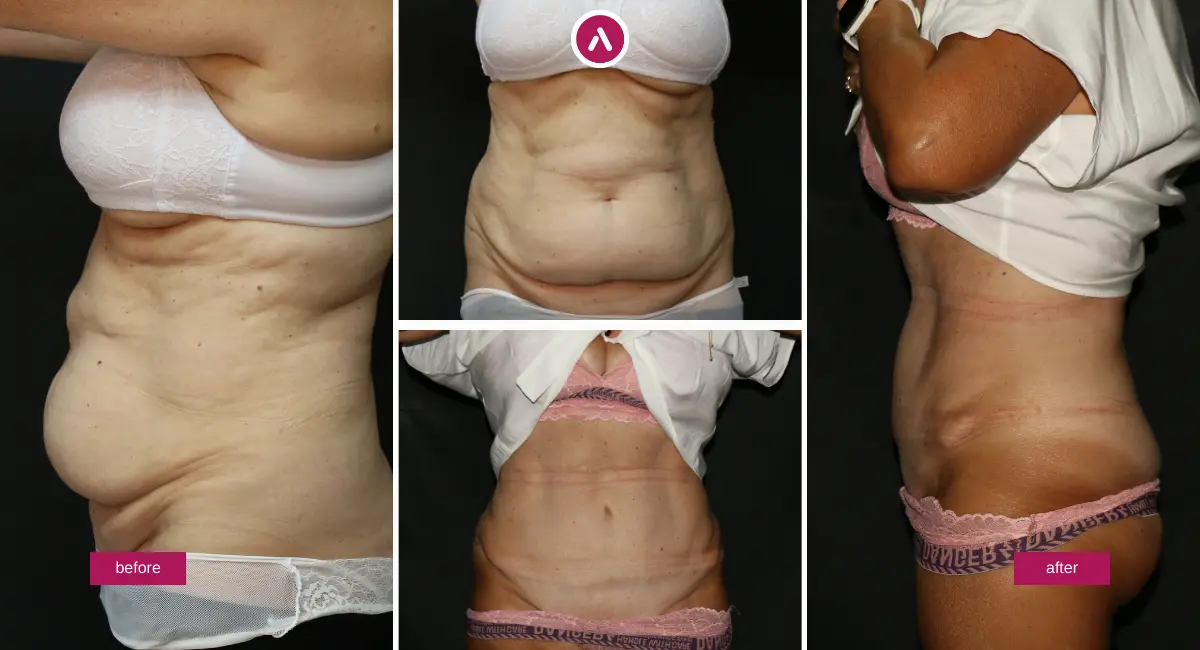
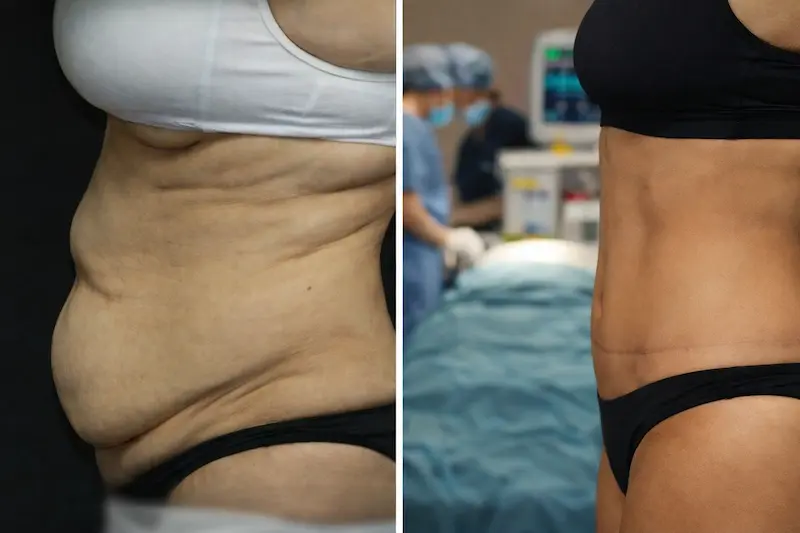
You'll see front, three-quarter, and side views wherever available. A true tummy tuck transformation is revealed in the profile view (lower abdominal projection), the three-quarter view (waist-to-hip transition and scar end points), and the scar detail (low placement, curve symmetry, absence of "dog ears"). Any gallery showing only front-facing shots is likely hiding what happens at the sides — where scar end-points and residual bulges appear.
Starting-point transparency
Cases in this gallery are labeled with the patient's starting context — post-pregnancy, post-weight-loss, higher BMI, or natural body shape. This matters enormously because a c-section mini tummy tuck before and after outcome looks different from an extended tummy tuck before and after for a post-bariatric patient. When you evaluate a photo, compare it to cases whose starting point matches yours — not just cases whose "after" looks attractive.
* Usually responds in ~15 min
Explore Tummy Tuck (Abdominoplasty) Before and After Results
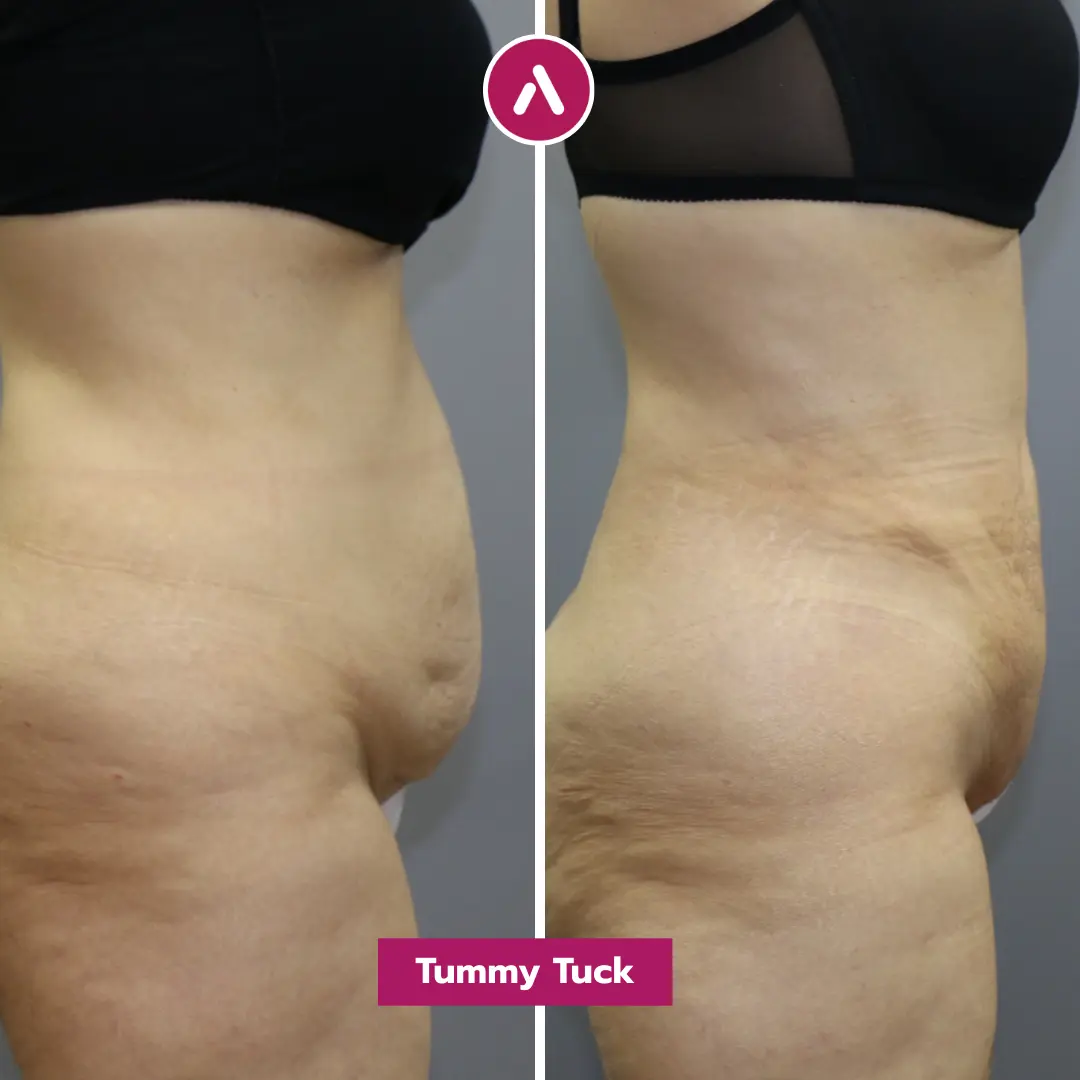
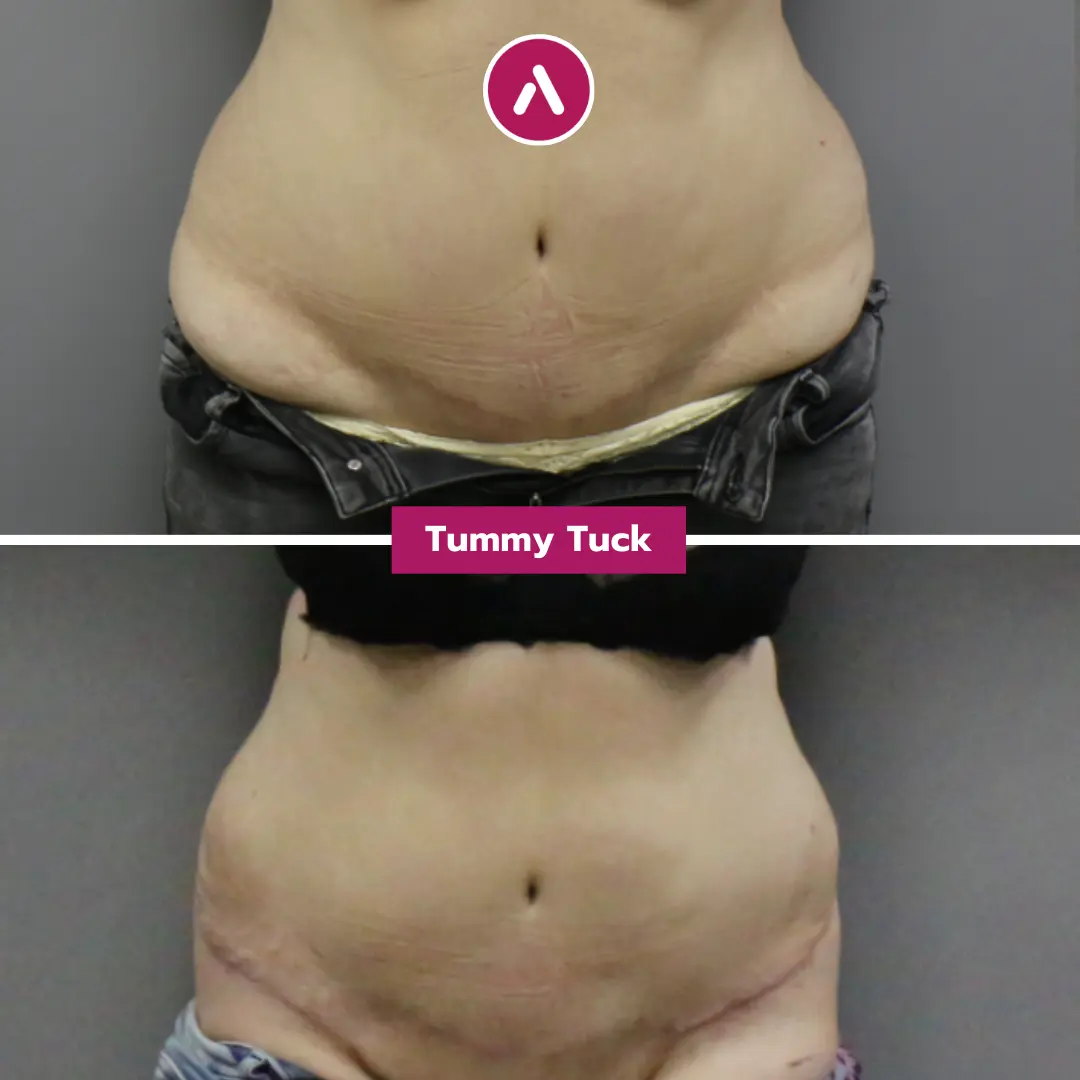
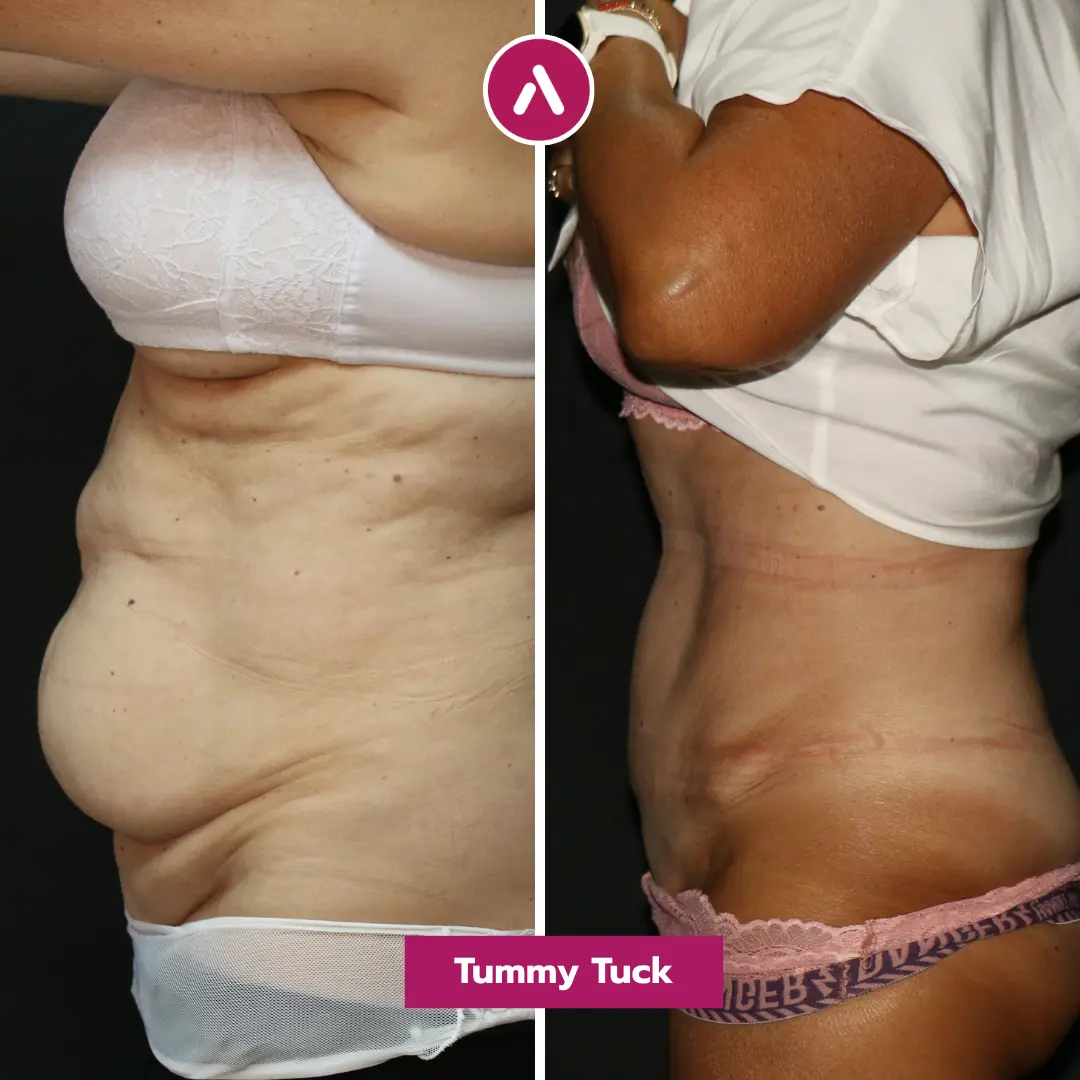
* No cost · No obligation · Surgeon-reviewed response
How to Read These Tummy Tuck Before & After Photos
Abdominoplasty healing is a 6-12 month biological process. Swelling, tissue adaptation, and scar maturation all take time. Use this guide when evaluating any case in the gallery above.
| Post-Op Timing | What You Can Realistically Judge | What’s Still Changing |
|---|---|---|
| Week 1-3 | Incision placement, immediate contour direction | Maximum swelling (can make abdomen look firm/heavy), posture guarded, drains placed |
| Month 1-3 | Waistline emerging, swelling reducing, early shape visible | Scar is red/pink and still firm, residual swelling especially at lower abdomen |
| Month 3-6 | Contour becoming stable, waist definition clearer, scar fading begins | Final refinement continues, sensation normalizing, scar color softening |
| Month 6-12 | True final contour, mature waistline, stable profile | Scar color still fading (takes up to 12-18 months to full maturation) |
| 12+ Months | Complete, stable result with fully matured scar | Very little — this is your honest long-term baseline |
Expert patient rule: If a tummy tuck before/after photo has no timeline label, assume it’s an early post-op swelling photo being marketed as a final result. The clinics that publish 6-12 month photos — and show scars honestly — are the clinics worth trusting.
Pro tip: When comparing any “after” photo, ask: “How many months post-op is this?” A Month 2 “after” and a Month 12 “after” describe completely different stages of the same healing journey.
Green Flags vs Red Flags: What to Look For in Every Tummy Tuck Case
Green Flags (Signs of a Well-Executed Abdominoplasty)
- Low, curved scar — sits at or below the bikini-line, follows a gentle natural curve, hidden by underwear
- No "dog ears" — smooth transitions at the scar ends, no bulges or peaks at hip edges
- Natural belly button — oval or slightly vertical shape, proportional size, soft shadow/depth, no "donut" scar
- Proportional contour — waist shaping fits the patient's skeletal frame (ribs, hips) — not forced flatness
- Preserved skin quality — some stretch marks remaining below the belly button is realistic, not a failure
- Smooth upper-to-lower abdomen transition — no visible "step-off" where tissue was tightened
- Consistent lighting and stance between before and after
Red Flags (Signs of Over-Tightening or Poor Planning)
- High-riding scar — visible above typical underwear line, poorly placed
- Prominent dog ears — noticeable skin bulges at the ends of the scar
- Unnatural belly button — overly round "donut," too small, too low, or with a visible surrounding scar
- "Pulled" or artificial flatness — torso looks over-tightened, distorts natural proportions
- Only early post-op photos (1-4 weeks) — swelling is hiding what the real result will be
- No profile/side view — hiding scar end-points or persistent bulges
- Heavy filtering or smoothing — hides scar texture, skin changes, stretch marks
- Cherry-picked "ideal" patient — only shows very slim patients when most candidates aren't
* Real coordinator · No robot chat · English-speaking
What Makes These Tummy Tuck Results Possible
Every case in this gallery is a real AKM Clinic patient operated on by our surgeon-led team in Istanbul. Four elements drive the quality and safety you see in these before and after photos:
Awake tummy tuck option with twilight sedation
AKM Clinic offers both traditional general-anesthesia abdominoplasty and Awake Tummy Tuck under local anesthesia with twilight sedation. The awake technique is a specialty of our clinic — reducing anesthesia-related risks, accelerating early recovery, and allowing real-time feedback during the procedure. Not every patient is a candidate (BMI range, procedure extent, and overall health all factor in), but for those who are, it's one of the safest and most controlled tummy tuck experiences available. See our dedicated Awake Tummy Tuck page for candidacy details.
Hyperbaric Oxygen Therapy (HBOT) protocol
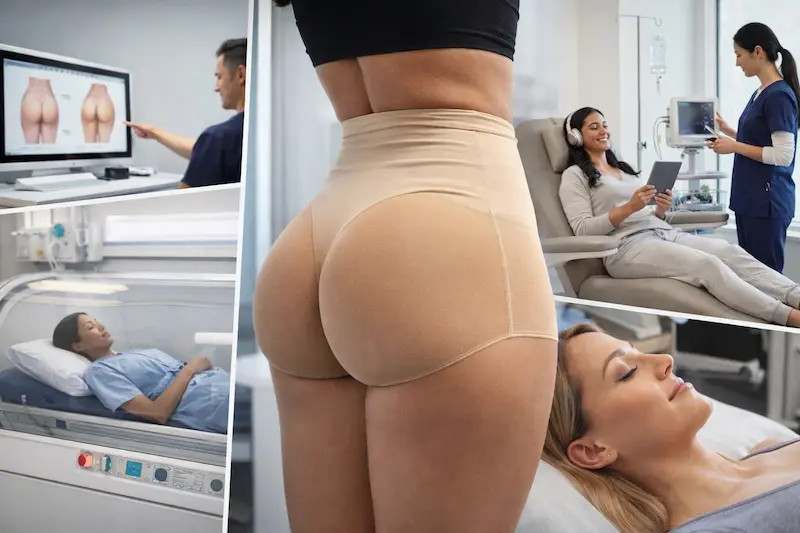
Selected patients undergo HBOT sessions in a pressurized chamber, breathing nearly 100% oxygen. This increases oxygen concentration in the blood and tissues during the critical early healing window (first 2-4 weeks post-op). HBOT supports wound healing, reduces swelling, and helps lower the risk of certain complications — a core part of our safety-first approach, especially for larger-scope procedures like extended tummy tuck or combined tummy tuck + liposuction.
Low-Level Laser Therapy (LLLT) for scar quality
We use a dedicated 650 nm "soft laser" system with multiple diodes, applied over the incision area during the post-operative period. LLLT supports microcirculation and cellular repair, which can help scars mature more evenly. When patients share their own tummy tuck before and after scar photos with us at 6-12 months, the difference in scar quality is often the first thing they mention.
Tummy Tuck Is Often Combined With:
Who Gets the Best Tummy Tuck Results?
The most impressive tummy tuck before and after transformations share common patterns. Ideal candidates typically present with:
- Stable weight — within 10-15 lbs of goal weight for at least 6 months before surgery
- Completed family planning — future pregnancies can stretch repaired muscles and skin
- Good overall health — no uncontrolled diabetes, heart disease, or bleeding disorders
- Non-smoker (or committed to quitting at least 4 weeks pre-op through recovery) — nicotine severely impairs wound healing
- Realistic expectations — understanding that a tummy tuck improves shape and drape, not weight on the scale
- Adequate skin quality — tissue that responds well to repositioning and tension management
- Willingness to commit to scar care — silicone, taping, HBOT/LLLT, and sun protection are non-negotiable
What If You’re Plus-Size or Higher BMI?
Many gallery photos online show very slim patients, which can feel discouraging if your starting point is different. The reality is that plus-size tummy tuck before and after results can still be life-changing — but goals, techniques, and expectations must be tailored.
What’s realistic for higher-BMI patients:
- Significant reduction of the hanging “apron” (even if upper body remains fuller)
- Smoother silhouette with improved clothing fit
- Better hygiene and comfort (eliminating skin folds)
- More dramatic change in profile view than front view
- Improved waist-to-hip transition when combined with liposuction
What’s NOT realistic for higher-BMI patients:
- A “Photoshop flat” abdomen
- Complete elimination of all stretch marks or skin texture
- A dramatically cinched waist that doesn’t match your skeletal frame
- “Weight loss” equivalent to surgical or medical weight management
When a staged approach is safer: If your BMI is elevated or your surgical plan is extensive, your surgeon may recommend staging procedures — performing liposuction first, then a full tummy tuck later, rather than combining everything in one session. This isn’t a sign of “limited capability”; it’s a prioritization of tissue health, wound healing, and safety. Expect longer total timelines but better long-term outcomes.
When Tummy Tuck May Not Be the Right Fit (Yet)
A responsible consultation sometimes means recommending an alternative or delaying surgery:
- Unstable weight — results can be reversed by subsequent weight fluctuations
- Planned future pregnancy — muscles and skin will stretch again
- Active smoker who cannot quit — wound healing will be severely compromised
- Very high BMI — may need to reduce weight first for safer surgery
- Unrealistic expectations — expecting Instagram-filter level flatness without regard to body proportions
Expectation reset that protects you: A natural-looking tummy tuck respects your natural skeletal frame — rib cage width, pelvic structure, height, and muscle insertion points. It creates the healthiest, most functional, and most confident version of your body — not a copy of someone else’s.
* Real coordinator · No robot chat · English-speaking
Frequently Asked Questions: Tummy Tuck Before & After
How long does it take to see my final tummy tuck results?
Most patients see the main contour change by 3 months, but the true final tummy tuck before and after result appears around 9-12 months when swelling is completely resolved and scars start to fade. Early post-op photos (1-4 weeks) show swelling, not final shape — always check the timeline label when evaluating any gallery photo.
Will a tummy tuck remove all of my stretch marks?
A tummy tuck removes the skin that is excised, so stretch marks below the belly button often improve significantly or disappear. However, marks on the upper abdomen usually remain because that skin isn’t removed — it’s just repositioned. Even the best abdominoplasty results don’t eliminate all stretch marks, and honest galleries will show some residual texture.
Can a tummy tuck repair muscle separation (diastasis recti)?
Yes. During abdominoplasty, separated abdominal muscles can be sutured back together (called rectus plication), which flattens the front abdominal wall and often improves posture. This muscle repair is a core part of what creates the “flatter” look in most tummy tuck results. It doesn’t remove deep internal fat or replace core exercise, but it does rebuild the anatomical “internal corset” that pregnancy or significant weight changes often disrupt.
What happens to my results if I gain or lose weight afterward?
Small weight changes (5-10 lbs) usually don’t significantly affect your tummy tuck before and after result. Major weight gain, weight loss, or a new pregnancy can stretch the skin and separated muscles again, potentially reducing the quality of your outcome. This is why maintaining a stable weight after surgery — and ideally completing family planning — is strongly recommended.
What's the difference between a full, mini, extended, and fleur de lis tummy tuck?
Full = standard hip-to-hip scar, addresses lower and upper abdomen + muscle repair. Mini = shorter scar, only lower abdomen below the navel, for limited laxity. Extended = scar continues around flanks, for post-weight-loss patients with circumferential laxity. Fleur de lis = horizontal + vertical scars (inverted T), for post-bariatric patients with extreme skin excess in both directions. Your anatomy and goals — not just preference — determine which type is right for you.
Can I combine my tummy tuck with a breast lift or liposuction (mommy makeover)?
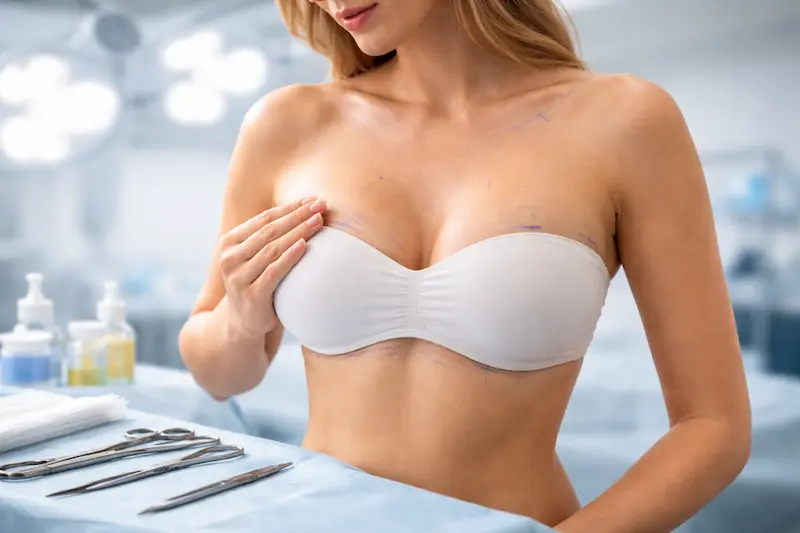
Yes, many patients undergo a tummy tuck with liposuction and/or breast surgery in one session as a mommy makeover. Whether this is safe for you depends on your BMI, overall health, total anticipated surgery time, and surgeon’s assessment. For higher-BMI patients or longer planned procedures, staging (separating surgeries into multiple sessions) is often the safer choice.
How do you ensure the results look natural and not "over-tight"?
Natural-looking tummy tuck results come from respecting your anatomical frame, avoiding over-tightening the skin, paying detailed attention to belly button shape and position, creating a curved natural scar placement, and preserving waist transition points. At AKM Clinic, recovery is supported with HBOT and LLLT when indicated, which helps scars and tissues mature more naturally over time.
What can I expect with a C-section history?
If you’ve had a C-section, your existing scar is often incorporated into the new tummy tuck incision — meaning you may not end up with two separate scars. Post-C-section patients often benefit from tummy tuck surgery because pregnancy has already created diastasis recti and lower abdominal skin laxity that can’t be corrected with exercise alone. A c-section mini tummy tuck may be an option if the laxity is limited, but most post-pregnancy patients benefit more from a full abdominoplasty.
Are tummy tuck results different for men?
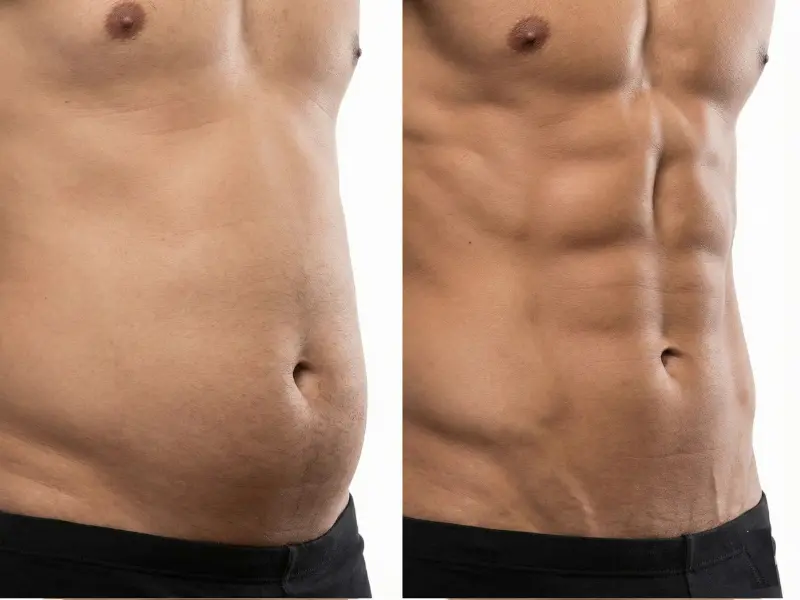
Male tummy tuck before and after results typically focus on reducing the overhang and creating a straighter, more athletic silhouette — rather than a cinched feminine waist. The core surgical principles are identical (skin removal, muscle repair if needed, scar placement), but the aesthetic goals differ. Male tummy tuck patients are often post-weight-loss or have stubborn abdominal fat/skin that doesn’t respond to diet and exercise.
What is an awake tummy tuck, and who is a candidate?
An awake tummy tuck is performed under local anesthesia with twilight sedation, rather than general anesthesia. The surgical technique is the same, but anesthesia risk is reduced, early recovery is more comfortable, and patients can receive real-time feedback during contouring. Candidates typically have a BMI in a safe range, no major health conditions, and a procedure plan that doesn’t require extensive simultaneous work. See our Awake Tummy Tuck page for full candidacy details.
Meet Our Patients Who've Been in Your Position
Lisa

Angelika

Anna

* No cost · No obligation · Surgeon-reviewed response
Transparent, All-Inclusive Tummy Tuck Package Options

* From $5,000 · All-inclusive · No hidden fees
Ready to Start Your Own Transformation Journey?
Join the 2,000+ patients who trusted the AKM Clinic team. Your journey to a more confident, revitalized you begins with a simple, no-obligation conversation. Contact us today from the USA for your free virtual consultation.
#1: Get Your Free Personalised Quote
Start with a free, no-obligation online consultation. Share your photos, and our surgical team will provide a fully personalised treatment plan and a transparent, all-inclusive price package. No hidden fees.
#2: Secure Your Date & VIP Booking
Once you're ready, our dedicated patient coordinators will help you secure your procedure date. We'll handle all your bookings, including your 5-star hotel and private VIP airport transfers.
#3: Arrive in Istanbul & Meet Your Surgeon
Arrive at Istanbul Airport (IST) and be greeted by your private driver. Settle into your hotel and prepare for your in-person consultation, where you'll meet your specialist surgeon to finalise the details for your "natural, subtle, and revitalized" new look.