




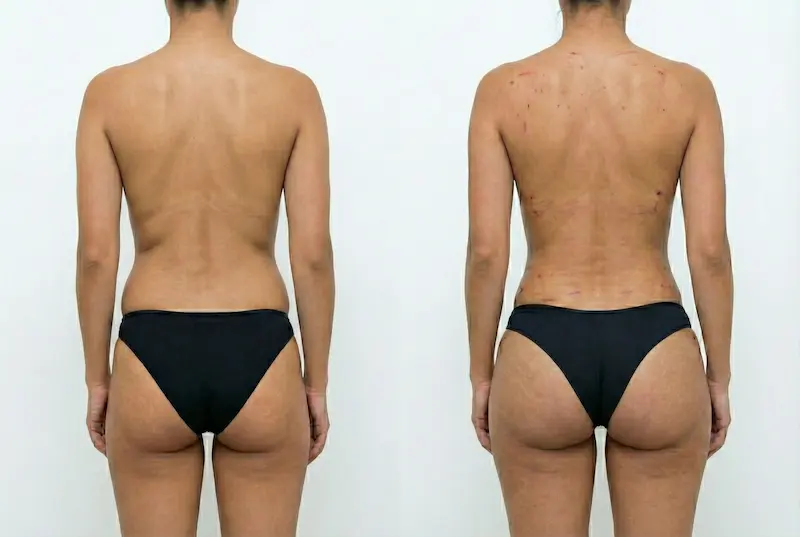
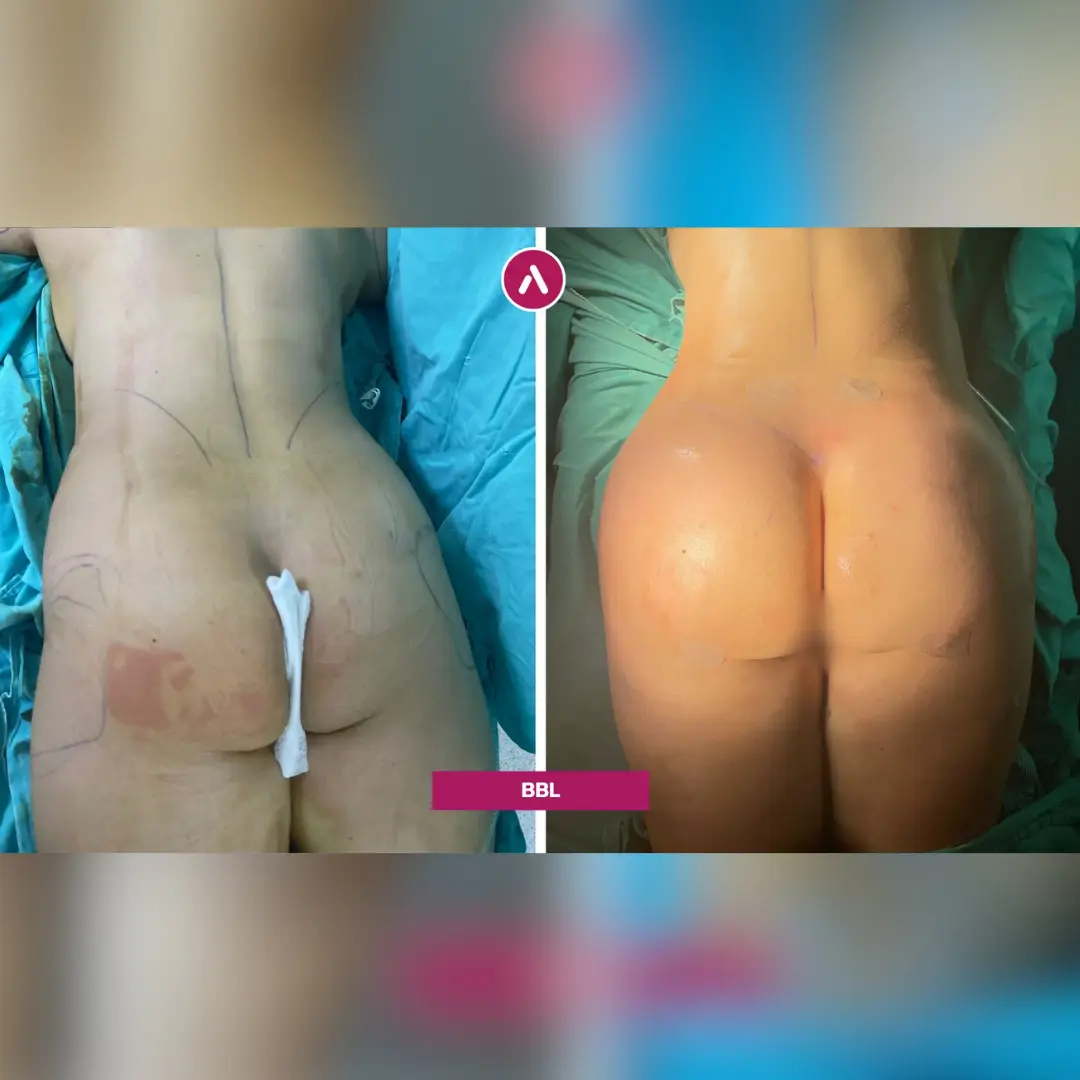
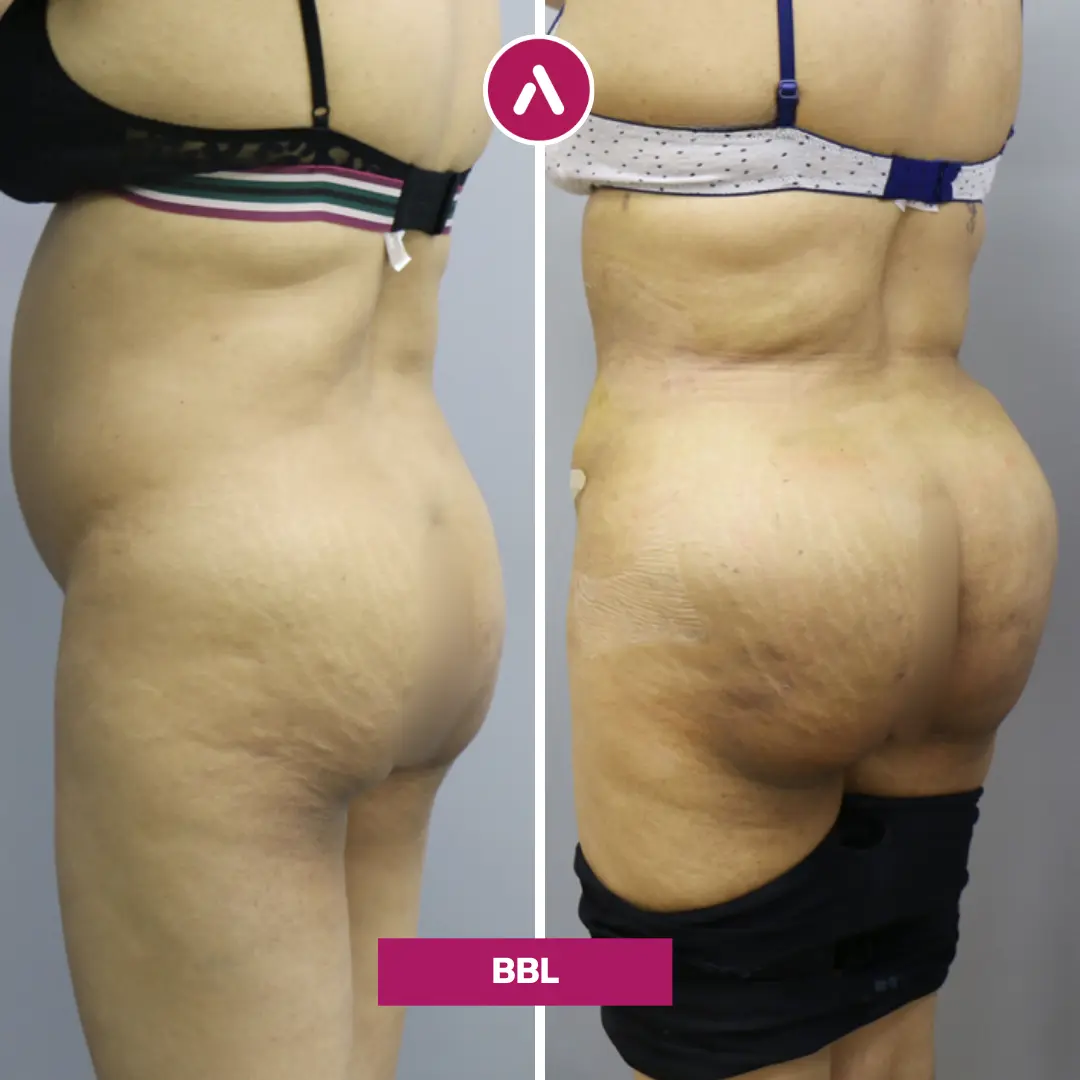
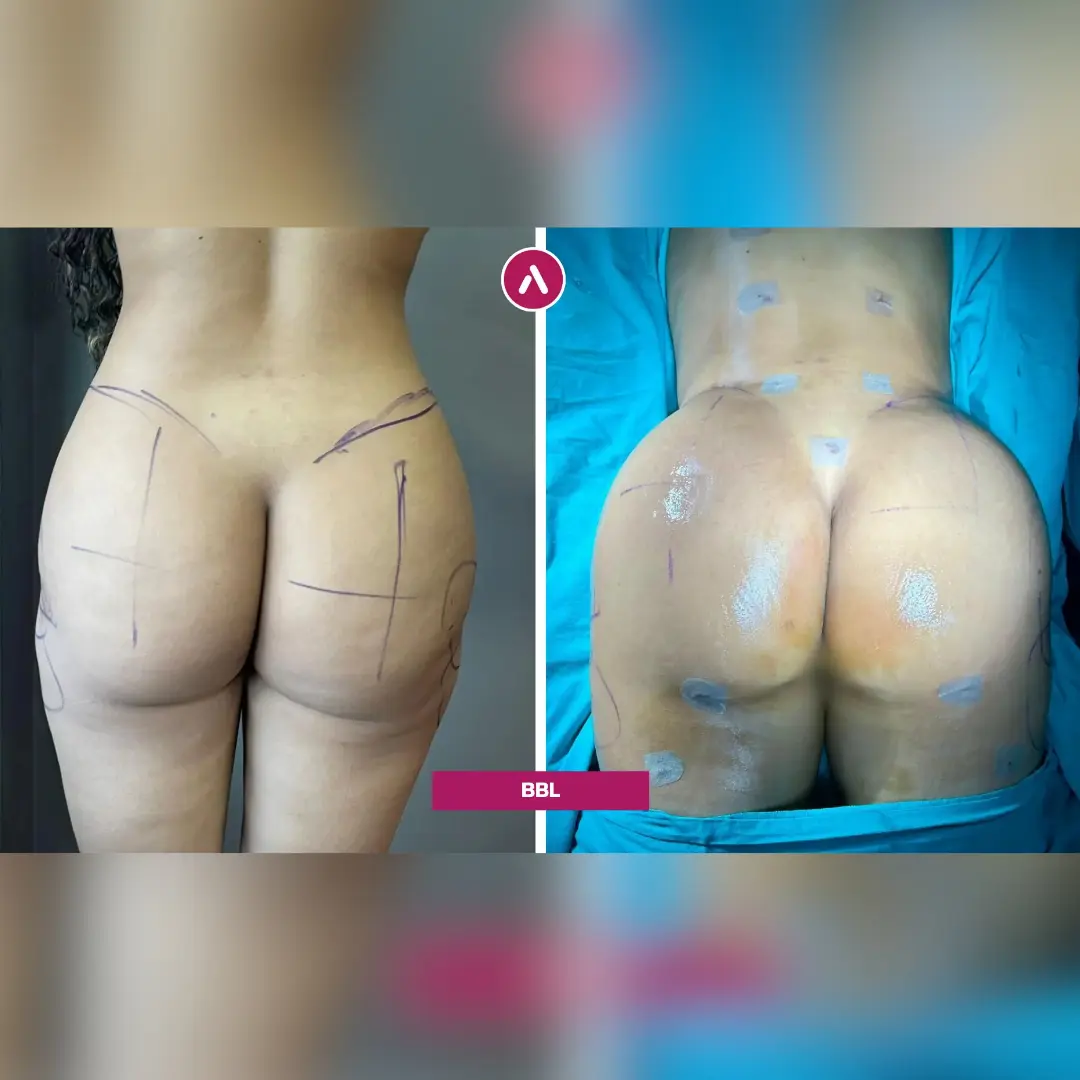
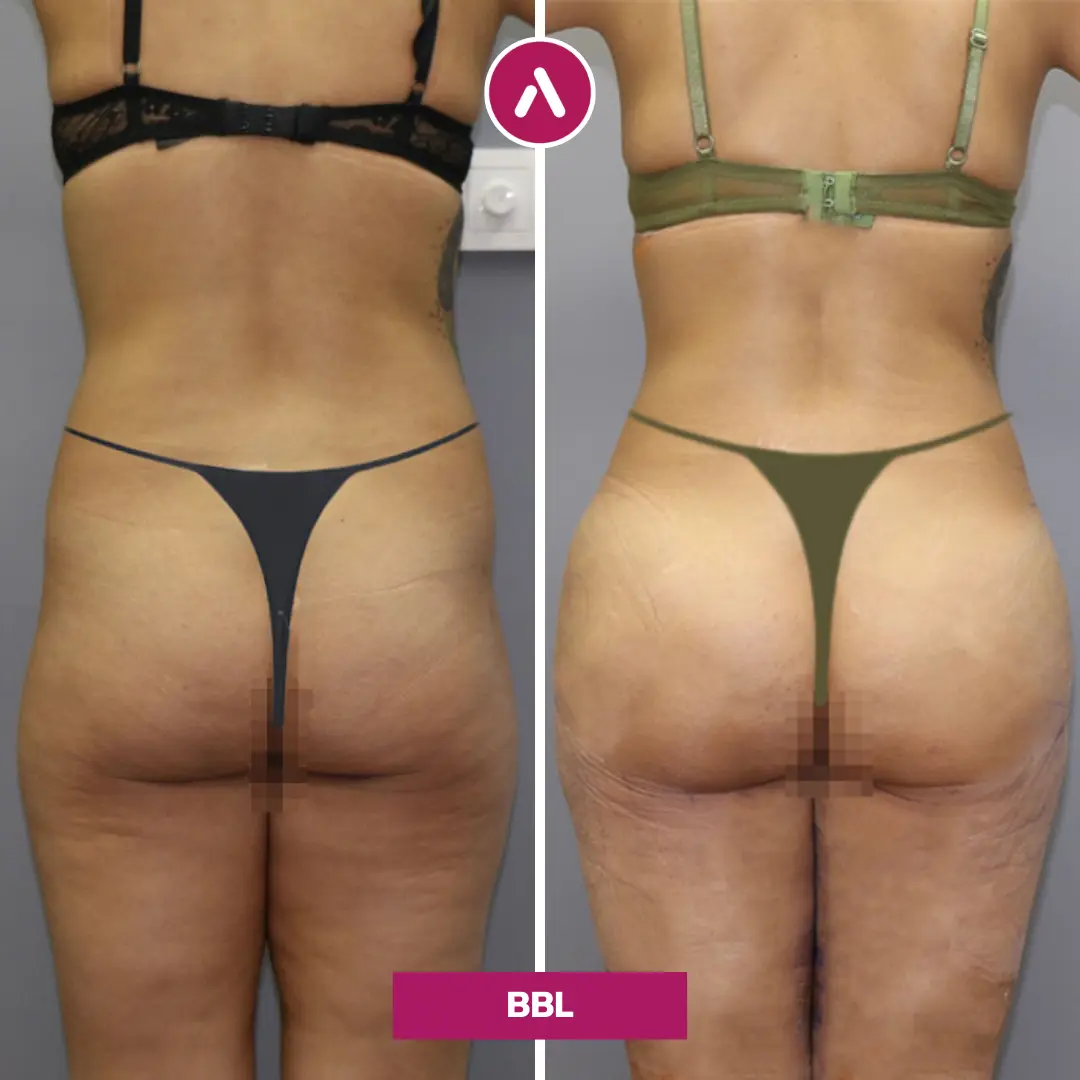
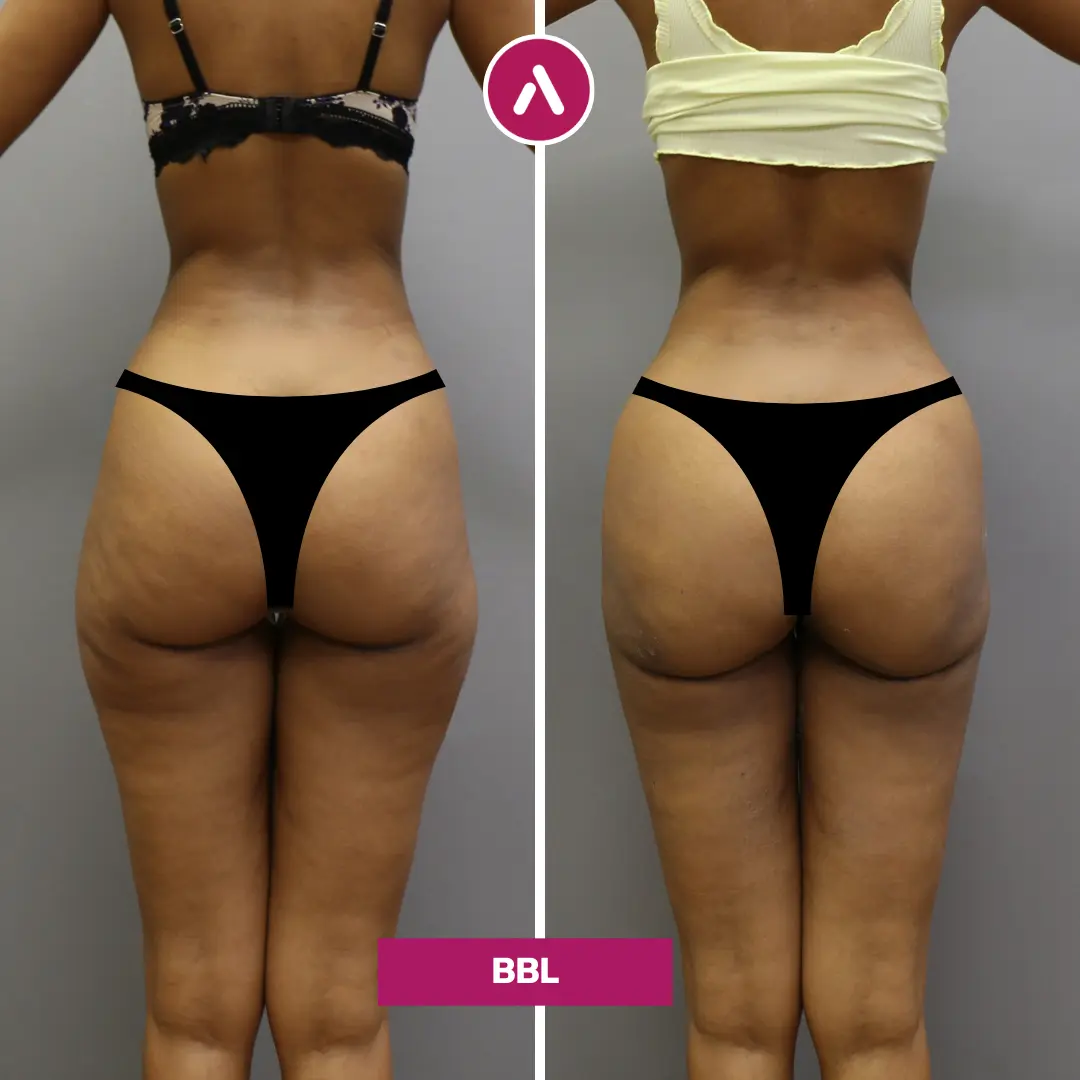
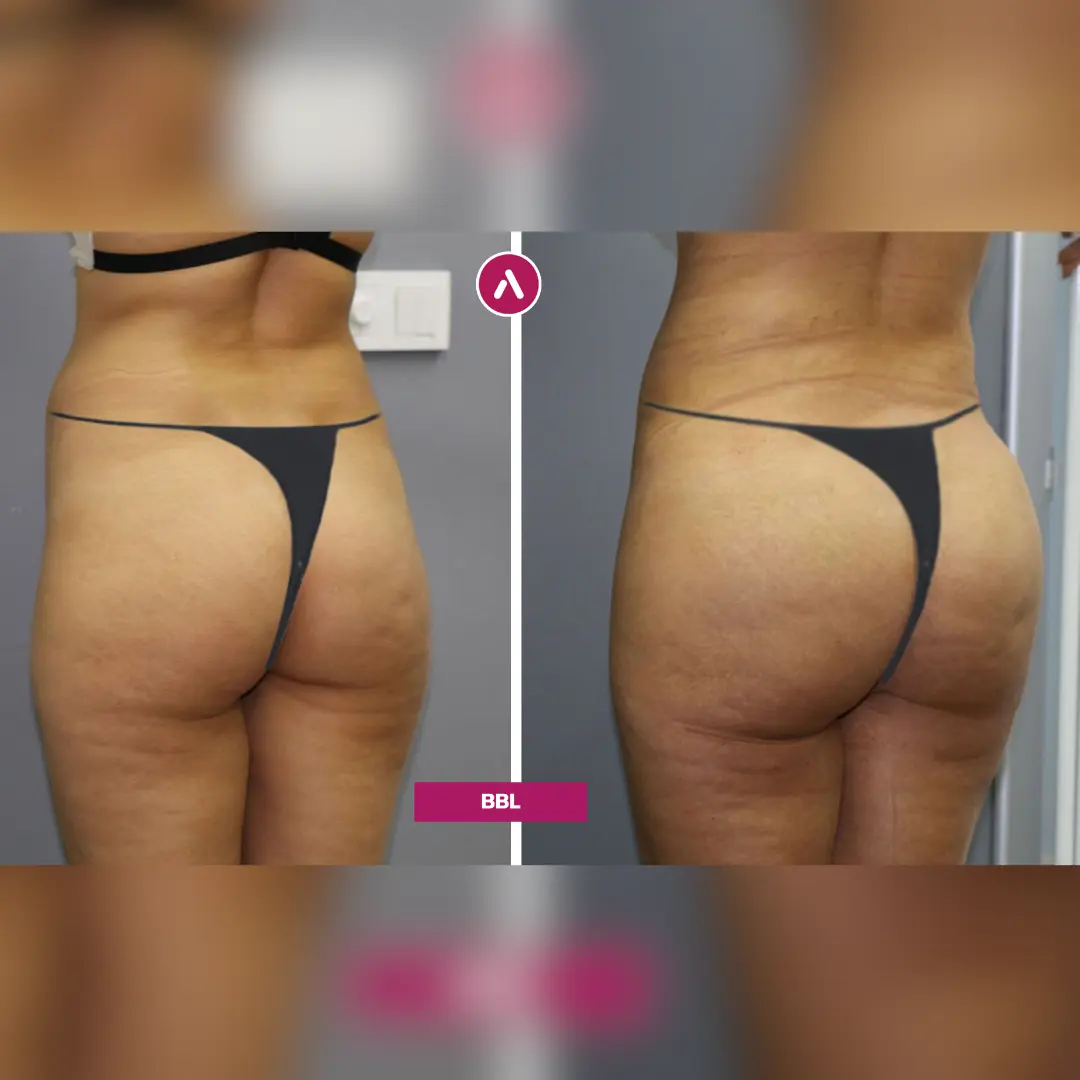
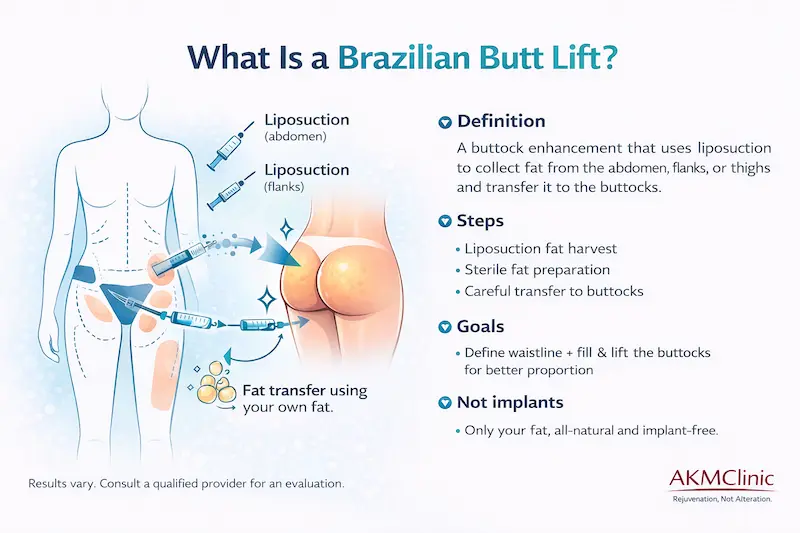
A Brazilian Butt Lift (BBL) is a body contouring procedure that reshapes the buttocks using your own fat—rather than an implant—to improve projection, contour, and overall waist-to-hip proportion. In practical terms, a BBL is a two-part operation: (1) liposuction removes unwanted fat from selected “donor” areas (commonly the abdomen, flanks, lower back, and thighs), and (2) a portion of that fat is carefully processed and transferred to the buttocks to create a fuller, more lifted appearance.
This page is written for the “expert patient”—someone who wants clear, procedure-first explanations about technique, safety, and recovery. You’ll learn how a BBL works, who is (and isn’t) a good candidate, and what actually determines the quality and longevity of results. Educational note: this guide is not a substitute for an in-person medical evaluation; individual risk varies based on anatomy, health status, and surgical plan.
Table of Contents
What Is a Brazilian Butt Lift?
A BBL is best understood as fat transfer buttock augmentation combined with contouring of the surrounding areas. The goal isn’t only “bigger,” but more importantly better proportions: a more defined waist, smoother transitions through the hips, and buttock shape that looks natural in motion and in clothing.
Definition: A BBL Is Fat Transfer, Not an Implant
The defining feature of a Brazilian Butt Lift is that it uses autologous fat (your own tissue). That matters for both aesthetics and feel: fat transfer typically creates a softer, more natural look compared with an implant-based approach. It also means you’re limited by what your body can safely donate and what can be predictably retained after transfer.
- Part 1: Liposuction removes fat and refines contour (e.g., waistline definition).
- Part 2: Fat grafting adds volume and improves shape (e.g., projection, roundness, and upper-pole fullness).
Because the buttocks don’t exist in isolation, a high-quality BBL plan treats the buttocks and the surrounding silhouette (lower back, flanks, hips, thighs) as one aesthetic unit.
Gluteal Anatomy 101: What’s Being Reshaped?
The buttock region is a layered structure made up of skin, superficial fat, deeper fat compartments, connective tissue, and the underlying gluteal muscles (primarily the gluteus maximus). A BBL focuses on reshaping the fat layer and optimizing the transitions around it—without changing your underlying bone structure.
- Skin envelope: Influences how smoothly the new contour “drapes” and how much lift is achievable.
- Fat layer: Determines softness, roundness, and the “blend” into the hips and outer thighs.
- Gluteal muscle foundation: Provides structural support and affects projection and athletic contour.
Understanding this anatomy is key to setting realistic expectations. For example, a BBL can add volume and refine shape, but it cannot “replace” a significant loss of skin elasticity on its own—from a scientific perspective, some patients may benefit from a different or combined approach if laxity is a primary concern.
How Fat “Takes”: Retention, Resorption, and Why Results Evolve
Transferred fat behaves like a graft: it must establish blood supply in its new location to survive long term. Some early volume is expected to decrease as swelling resolves and as a portion of fat is naturally resorbed. This is why early photos can be misleading—your shape may look “bigger” initially, then gradually settle into a more stable result over the following months.
Several factors influence predictability:
- Fat quality and handling: Gentle harvesting and processing support fat cell viability.
- Transfer strategy: Even distribution in small amounts helps graft survival.
- Your physiology: Circulation, healing response, and lifestyle factors (notably nicotine use) affect retention.
- Post-op behavior: Avoiding prolonged pressure on the buttocks during early recovery helps protect the graft.
Clinically, the goal is not maximum injection, but balanced shaping with biologically realistic retention—a principle aligned with the “natural-first” aesthetic philosophy many expert patients prefer.
Ideal Candidates and Who Should Not Get a BBL
BBL candidacy is a safety-first decision that combines anatomy, health status, and realistic goals. The best results happen when the procedure matches the patient—not when the patient is forced into a one-size-fits-all aesthetic trend. A reputable surgical team will screen you carefully, explain what can be achieved with your body type, and recommend alternatives when a BBL is not the safest or most predictable choice.
Who Tends to Be an Ideal Candidate?
- You have adequate donor fat to safely harvest (abdomen, flanks, back, thighs, or a combination).
- Your weight is relatively stable and you can maintain it after surgery (large weight swings can change results).
- You want proportional enhancement—shape, projection, and smoother curves—rather than an extreme “one-look” outcome.
- You’re prepared for recovery rules, including sitting restrictions and garment use.
Many patients also choose a BBL because they want the added benefit of waist and torso contouring from liposuction. In those cases, the “lift” effect is often as much about reshaping the frame as it is about adding volume to the buttocks.
“Skinny BBL” and Low-Donor-Fat Patients: What’s Realistic?
Patients with a lean build sometimes search for a “skinny BBL.” The key limitation is simple: fat transfer requires enough donor fat to harvest while still keeping the procedure within conservative safety boundaries. If donor volume is limited, outcomes may be:
- More subtle (improved contour and definition rather than dramatic enlargement).
- More focused (targeted correction of hip dips or upper-pole shaping).
- Potentially staged (a second session may be discussed for some anatomies, depending on safety and goals).
If your goal requires more volume than your body can safely provide, a high-integrity consultation should discuss alternatives (including implants in select cases) rather than overpromising a fat-only solution.
Who Should Avoid a BBL (or Delay It Until Risk Factors Are Addressed)?
Not everyone is a safe candidate for a Brazilian Butt Lift. The procedure can be high-stakes when performed without strict standards, so proper screening is non-negotiable. Common reasons to avoid or postpone include:
- Uncontrolled medical conditions (e.g., poorly controlled diabetes, significant cardiopulmonary disease) that increase surgical risk or impair healing.
- Nicotine use (including vaping), which compromises circulation and wound healing and can negatively impact fat retention.
- Inability to follow recovery requirements, especially pressure avoidance and activity restrictions.
- High-risk clotting history or other factors that require specialized perioperative planning.
- Unrealistic expectations (seeking a result that is not achievable or not stable for your anatomy).
Ultimately, the best BBL outcome is not just a photo-ready contour—it’s an outcome achieved with conservative planning, meticulous technique, and a recovery strategy you can realistically follow.
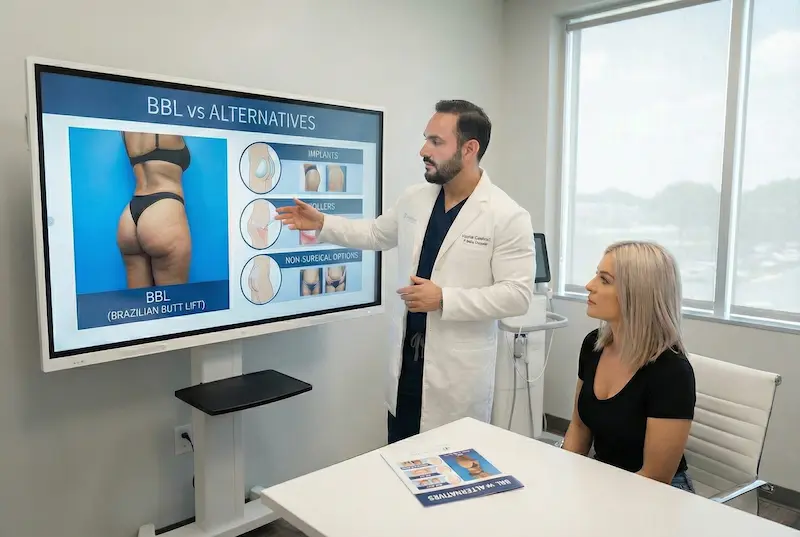
BBL vs Alternatives (Implants, Fillers, Non-Surgical Options)
A Brazilian Butt Lift isn’t the only way to change buttock shape, but it is unique in how it combines silhouette contouring (via liposuction) with volume enhancement (via fat transfer). The “best” option depends on your anatomy (donor fat availability, skin quality), your aesthetic goals (subtle shaping vs dramatic volume), and your risk tolerance. Understanding the tradeoffs helps you choose a method that’s both realistic and medically responsible.
BBL vs Butt Implants: The Core Tradeoffs
Butt implants use a manufactured implant (typically silicone) to increase projection. This option may be discussed when a patient has very limited donor fat but desires a larger volume change than fat transfer can predictably provide. However, implant-based augmentation comes with a different risk and maintenance profile than a BBL.
- Look and feel: Fat generally looks and feels more natural; implants can look excellent in select anatomies but may feel firmer or be more noticeable in very thin patients.
- Incisions and scarring: Implants require incisions (often positioned to be discreet), while a BBL uses small liposuction and injection entry points.
- Infection and revision considerations: Any implanted device carries a device-related infection risk and may require removal or replacement if complications occur.
- Capsule formation: The body forms a capsule around implants; in some cases this can tighten or become uncomfortable and may require treatment.
- Long-term durability: Both options can be long-lasting, but they “age” differently. Fat changes with weight fluctuations; implants may remain stable in size but can shift or cause tissue changes over time.
One of the strongest practical advantages of a BBL is the contouring effect from liposuction (waist and lower back sculpting), which can improve proportions even when the added buttock volume is moderate.
Non-Surgical Butt Lift: What It Can (and Cannot) Do
“Non-surgical BBL” is a broad term and can mean very different things. It’s important to separate marketing language from what’s medically plausible.
- Biostimulatory injectables (off-label): Some patients explore collagen-stimulating injections to improve mild volume deficiency or skin texture. These approaches are typically subtle compared to a true BBL and may require multiple sessions. The safety profile depends on product selection, injection technique, and the provider’s expertise.
- Hyaluronic acid (HA) filler approaches (where available): Large-volume filler use in the buttocks can be expensive and may carry meaningful risks, including vascular complications, infection, and nodules. It is not equivalent to fat transfer in terms of the amount of volume typically achieved with surgery.
- Energy-based tightening (RF/ultrasound): These technologies may tighten mild laxity and improve skin quality for select patients, but they do not reliably create significant, lasting projection.
- Exercise-based “butt lift”: Strength training can improve muscular shape and tone. It’s excellent for overall health and can enhance results, but it cannot replace the structural contour change created by liposuction + fat transfer.
If your primary goal is a meaningful change in volume and contour, a surgical approach (BBL or implants) is typically the only method that can deliver that magnitude of change predictably. If your goal is a modest enhancement, non-surgical options may be considered—ideally after a candid discussion of limitations and risk.
Hybrid Approaches and Combined Contouring (When It Makes Sense)
Many patients aren’t seeking “just a bigger butt.” They want a better overall silhouette—especially a more defined waist and smoother transitions through the hips and outer thighs. This is why BBL planning is often discussed together with broader contouring strategies.
- Lipo 360 + BBL: Circumferential torso liposuction (abdomen, flanks, lower back) can dramatically affect waist definition, which can make the buttocks appear more projected even with moderate fat transfer.
- Hip dip correction: For some anatomies, targeted fat grafting to the lateral hip can improve smoothness and balance (often described as a “rounder” silhouette).
- BBL + tummy tuck (select cases): Some patients consider combining procedures for a comprehensive change. This can be appropriate for the right candidate, but it increases operative complexity and recovery demands, and requires conservative planning.
The guiding principle is to choose combinations that remain compatible with safe operative time, controlled recovery, and realistic healing capacity.
Comparison Table: BBL vs Implants vs Non-Surgical Enhancement
| Option | What It Uses | Best For | Typical Pros | Key Limitations / Considerations |
|---|---|---|---|---|
| Brazilian Butt Lift (BBL) | Your own fat (liposuction + fat transfer) | Patients who want natural contouring + volume and have adequate donor fat | Natural look/feel; improves waist-to-hip proportions; no implant device | Results depend on fat retention; requires sitting/pressure restrictions; not ideal if donor fat is very limited |
| Butt Implants | Silicone implant device | Selected patients needing more volume than fat transfer can provide, especially with low donor fat | Predictable volume; not dependent on fat retention | Device-related risks (infection, displacement, capsule issues); incisions; potential palpability in thinner patients |
| Non-Surgical Enhancement | Injectables / tightening devices / training | Patients seeking subtle changes or skin-quality improvement | No surgery; minimal downtime (varies by method) | Usually subtle vs surgery; cost can accumulate; some injectable approaches carry serious risk if poorly performed |
If you’re deciding between these options, the most productive next step is a consultation that evaluates donor fat, skin quality, and proportion goals—and then explains what can be achieved safely with your anatomy.
Surgical Techniques That Matter (Where Safety and Results Are Won)
In a Brazilian Butt Lift, small technical decisions add up. Two patients can both “get a BBL” and have very different outcomes depending on how fat is harvested, processed, and transferred—and how conservatively the plan is built around anatomy and safety. For the expert patient, it helps to evaluate the procedure as a set of controllable variables rather than a single branded operation.
Fat Harvest (Liposuction) Techniques and Tissue Handling Principles
The fat used for transfer is living tissue. The goal is to harvest it in a way that preserves cell integrity while still achieving smooth contouring in the donor areas. Although the specific approach varies by surgeon, high-quality fat grafting generally depends on careful, low-trauma handling.
- Donor area strategy: The abdomen, flanks, lower back, and thighs are commonly considered because removing fat here can improve waist definition and transitions into the buttocks.
- Gentle tissue technique: Less traumatic harvesting can support fat viability. This typically involves thoughtful instrument selection and controlled suction rather than overly aggressive removal.
- Contour logic: Liposuction is not “vacuuming out fat.” It is sculpting—over-resection can lead to dents or irregularities, while under-resection may reduce the proportional impact of the BBL.
- Symmetry awareness: Most bodies are naturally asymmetric. A surgeon’s plan should anticipate and account for that reality rather than promise perfect mirror-image outcomes.
For patients, the practical takeaway is that you’re evaluating two results at once: the buttock augmentation and the donor-area contour. A technically strong BBL should improve the entire silhouette, not just add volume.
Fat Processing and Purification: Why It Affects Predictability
After harvest, the fat is prepared for transfer. This step matters because the lipo aspirate can contain a mixture of fat, fluid, and other components. Processing aims to isolate usable fat while maintaining a clean, sterile workflow. The goal is not “more fat,” but higher-quality fat for graft survival.
- Purity: Separating excess fluid and unwanted components can improve handling and may reduce inflammation-related issues.
- Consistency: A more uniform graft material can help the surgeon distribute fat evenly and refine shape with better control.
- Sterility and system discipline: A structured, closed or carefully controlled sterile workflow helps reduce contamination risk during preparation and transfer.
As an expert-patient question to ask: “How do you process fat for transfer, and what steps do you take to maintain sterility and graft quality?” A clear, confident answer is a meaningful signal of procedural maturity.
Fat Injection Strategy: Shaping Goals Plus Safety-Critical Principles
Fat transfer is the artistry and the safety core of a BBL. The best outcomes usually come from layered, controlled placement that builds shape gradually and respects anatomy. This is also where safety standards matter most.
- Distribution over “dumping”: Placing fat in a controlled, distributed manner supports smoother contour and can improve survival compared with concentrating large amounts in one spot.
- Shape design: Different patients want different aesthetics—more upper-pole fullness, a rounder profile, or a more athletic shape. The injection plan should match your goals and your frame (pelvic width, hip structure, thigh contour).
- Safety emphasis: Modern safety discussions focus on avoiding deep, high-risk injection behaviors and adhering to conservative anatomical principles. A trustworthy surgeon should be able to explain how their technique prioritizes safety—without vague assurances.
If you are comparing providers, prioritize a team that speaks precisely about technique, patient selection, and safety standards. “Results” should never be separated from “how those results are achieved.”
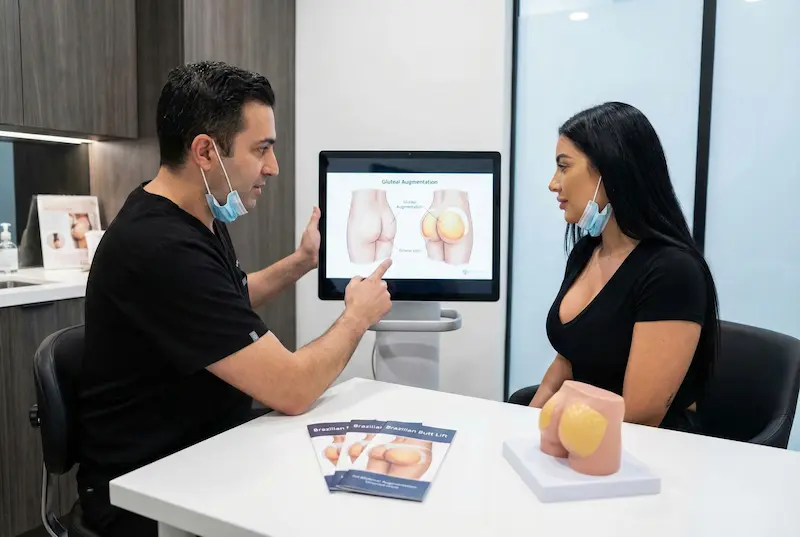
Pre-Op Planning: How a High-Quality BBL Is Designed
Great BBL outcomes begin before surgery. Pre-operative planning is where your surgeon translates goals into a safe, individualized blueprint: where fat will come from, how much contouring is appropriate, how volume will be distributed, and what recovery strategy is realistic for your lifestyle. For the expert patient, this phase is also where you can verify whether a provider is medically rigorous—or simply selling a trend.
Consultation: Measurements, Photo Planning, and Proportion Analysis
A serious BBL consultation should be more than “pick a size.” It should be a structured assessment of proportions and constraints.
- Body measurements and proportion goals: Waist-to-hip balance, torso length, pelvic structure, and thigh shape all influence what will look natural on your frame.
- Baseline asymmetry review: Most patients have differences side-to-side (hip height, fat distribution, muscle prominence). Identifying these early helps set realistic expectations.
- Photo planning: Standardized photos help define goals and support consistent follow-up comparisons during healing.
This is also the right time to discuss whether your primary objective is volume, shape correction (such as hip dip smoothing), or overall contour (often achieved by donor-area sculpting).
Building the Surgical Blueprint: Donor Areas, Volume Strategy, and Constraints
A BBL plan has to respect biological realities. Fat transfer is limited by what can be safely harvested and what can be placed predictably. Over-aggressive plans can increase complications or lead to irregularities.
- Donor area selection: “Where we take from” can be as important as “where we add to.” Thoughtful donor selection improves the overall silhouette.
- Volume realism: The safest and most stable plans are typically those that match your anatomy and tissue capacity rather than chasing a one-size, dramatic target.
- Skin quality considerations: Skin elasticity affects how smooth and lifted the final contour will appear. Poor elasticity may limit the “lift” effect even if volume increases.
Expert-patient prompt: ask for a clear explanation of the plan in terms of proportions (“what changes where and why”), not just total volume numbers.
Setting Expectations: Natural Results, Longevity, and Lifestyle Factors
High satisfaction comes from aligning expectations with how fat transfer actually behaves. A natural-looking BBL is typically one that is proportional, stable with your lifestyle, and consistent with your baseline anatomy.
- Timeline expectations: Early swelling can exaggerate volume; the result settles over weeks to months as swelling resolves and fat retention stabilizes.
- Weight stability: Because transferred fat is living fat, it can shrink or expand with major weight changes. Stable weight supports stable results.
- Recovery compliance: Sitting and pressure restrictions in early recovery are not “optional.” They’re part of protecting grafted fat during the critical healing period.
- Risk honesty: A trustworthy consultation discusses both common and serious risks in a balanced way—then explains how candidacy screening and technique reduce those risks.
In short: the best BBL plan is one that prioritizes a natural proportion outcome, respects safety boundaries, and matches your ability to follow recovery rules.

Anesthesia Options for BBL (Comfort vs Control vs Safety)
Anesthesia is one of the most important (and misunderstood) parts of a Brazilian Butt Lift. The “right” choice isn’t about what’s trendy—it’s about what is medically appropriate for your health profile, the extent of liposuction, whether you’re combining procedures, and the safest way to maintain stable monitoring throughout surgery. In modern body contouring, the best teams treat anesthesia as a tailored plan: reducing risk, optimizing comfort, and supporting a smooth recovery experience.
General Anesthesia: When It’s Chosen and What Monitoring Should Include
General anesthesia is commonly used for BBL because it provides complete unconsciousness, secure airway management, and excellent control for longer or more complex cases (for example, a larger lipo plan or combined procedures). For many patients, it’s the most predictable way to ensure comfort and immobility during the most sculpting-intensive parts of surgery.
- Best fit for: longer procedures, extensive liposuction, or cases where absolute stillness and a secured airway are preferred.
- What to expect: you’re fully asleep; you wake in recovery with monitoring as anesthetic medications wear off.
- Common short-term side effects: grogginess, nausea, sore throat (from airway devices), and generalized soreness from surgery itself.
For the expert patient, it’s reasonable to ask what monitoring is used during anesthesia and what protocols are in place to reduce common post-op issues (like nausea) and to manage pain while allowing early, safe mobilization.
Twilight Sedation / “Awake” Approaches: For Select Patients and Plans
Some clinics have extensive experience with twilight sedation (also called monitored anesthesia care or deep IV sedation in some settings). In appropriately selected cases, this approach can be appealing for patients who are anxious about being fully unconscious. However, it is not a “one-size-fits-all” alternative—its suitability depends on the operative plan, patient physiology, and the anesthesia team’s clinical judgment.
- Potential benefits (patient-experience focused): reduced awareness of the procedure while not necessarily requiring full general anesthesia in select cases; some patients report less immediate grogginess.
- Important limitations: not appropriate for every BBL plan; complex or longer procedures may still be better suited to general anesthesia.
- Safety reality: the safest anesthesia is the one that best matches your case and is delivered by an experienced anesthesia team with robust monitoring and emergency readiness.
If you’re considering a sedation-based approach, an expert-level discussion should include why it’s appropriate for your specific plan, what depth of sedation is intended, how your breathing and oxygenation will be monitored, and what the “conversion plan” is if general anesthesia becomes necessary during the case.
Regional Anesthesia and Local Techniques: How They Support Comfort and Recovery
Even when general anesthesia is used, many BBL plans incorporate local anesthetic techniques to improve comfort, reduce intraoperative bleeding, and support more manageable pain control afterward. Liposuction commonly uses a diluted local anesthetic solution in the treated areas (often referred to as “tumescent” technique in general surgical language).
- Why it matters: better pain control can reduce the need for stronger systemic pain medications and may support earlier, safer movement.
- What to ask: how pain will be managed in the first 72 hours, and whether the plan emphasizes multimodal pain control (a combination approach) rather than relying on a single medication class.
Anesthesia planning should also consider clot-prevention strategy, hydration, and post-op mobilization plans—because these factors affect both comfort and safety.
Pre-Anesthesia Evaluation: The Screening That Protects You
A high-quality BBL program will screen your health status carefully before approving surgery. This typically includes a review of your medical history, medications, prior anesthesia experiences, and risk factors that may change the surgical plan (for example, nicotine exposure, clotting history, or significant cardiopulmonary conditions).
- Medication review: some medications and supplements can increase bleeding risk or interact with anesthesia.
- Nicotine and vaping: these can impair healing and circulation and are typically addressed with a strict pre-op cessation plan.
- Travel and recovery planning: your early recovery schedule should be compatible with safe mobilization, follow-up, and pressure avoidance.
Procedure Day: Step-by-Step Walkthrough
On the day of your BBL, the flow of care is designed to keep the experience predictable: confirm the plan, mark the body strategically, perform liposuction to refine the silhouette, process fat in a sterile workflow, then transfer fat to the buttocks to build the desired shape. While each surgeon has their own precise sequence, most medically structured BBLs follow the same core stages.
Step 1: Final Review, Markings, and Surgical Confirmation
Before anesthesia, your surgeon typically performs preoperative markings while you’re standing. These markings map the contour plan: where fat will be removed, where definition is created, and where volume will be added. This stage is also when last-minute clarifications happen—your primary goals (projection, roundness, hip dip blending, or an athletic shape) should be confirmed.
- Photos and reference points: standardized views help with planning and later comparison.
- Symmetry strategy: your surgeon may plan slightly different donor-area sculpting or transfer distribution to address natural asymmetries.
- Safety check: verification of your identity, procedure plan, allergies, and surgical-site confirmation is part of modern operative discipline.
Step 2: Liposuction (Fat Harvest) and Silhouette Sculpting
Liposuction is not merely a “donor” step—it is a major driver of the final look. Many patients love their BBL result because the waist and lower back contour changes make the buttocks appear more projected and lifted without needing extreme added volume.
- Common donor areas: abdomen, flanks, lower back, and thighs (selection depends on your anatomy and goals).
- Contour priorities: defining the waistline, smoothing the lower back transition, and improving the hip-to-thigh line.
- Precision matters: conservative, even sculpting helps prevent irregularities and supports a natural look in motion.
In expert hands, donor-area sculpting is done with a “whole silhouette” mindset—avoiding over-resection in one area and under-treatment in another, so the final contour looks balanced from all angles.
Step 3: Fat Processing and Preparation for Transfer
After harvest, the fat is prepared for grafting. The aim is to isolate usable fat and achieve a consistent graft material that can be placed smoothly and predictably. This step is also where sterile workflow discipline matters: the transfer process should be controlled and methodical, not rushed.
- Goal: clean, usable fat that can be injected evenly for smooth contour.
- Why it matters: graft quality affects how evenly the result settles and can influence the predictability of retention.
Step 4: Fat Transfer and Sculpting the Buttocks
Fat grafting is where the aesthetic design becomes real. Rather than placing fat as a single “bolus,” the most natural results usually come from layered placement that builds shape gradually and evenly. The surgeon may emphasize different zones depending on your goals—upper pole, central projection, lateral fullness, or hip dip blending.
- Shape customization: rounder versus more athletic contours; subtle versus more projected outcomes.
- Evenness: distributed placement supports smoother transitions and can help the result look natural in clothing and in motion.
- Safety-first execution: expert teams prioritize technique choices that align with modern safety principles and conservative planning.
Step 5: Dressings, Garments, and Immediate Recovery
At the end of surgery, you’ll typically be placed in a compression garment to control swelling and help the donor areas settle smoothly. You’ll be monitored in recovery as anesthesia wears off and your care team ensures you’re stable, comfortable, and safe to transition into the early post-op plan.
- Compression garment: supports donor-area contour and swelling control; your surgeon will guide how long and how tightly it should be worn.
- Mobility plan: early gentle movement is usually encouraged to support circulation (within your surgeon’s guidelines).
- Pressure avoidance: you’ll be coached on how to sit, lie, and move to reduce pressure on the buttocks during the critical early healing window.
For the expert patient, a quality program includes clear written instructions for the first 72 hours and a structured follow-up plan—because recovery compliance is part of the result.
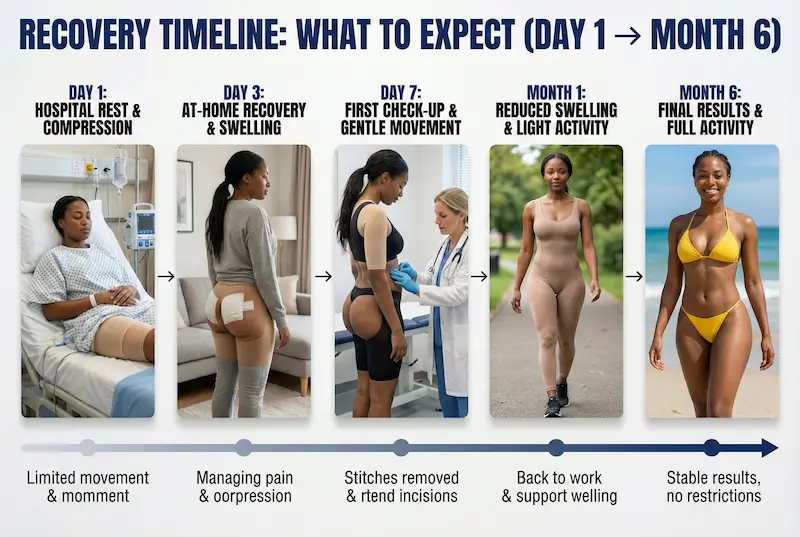
BBL Recovery Timeline: What to Expect (Day 1 → Month 6)
BBL recovery is not only about “resting.” It’s a structured healing process where your behavior directly affects swelling, comfort, donor-area contour, and fat graft retention. The two biggest principles are (1) protecting the transferred fat from prolonged pressure in the early phase and (2) supporting healthy circulation and tissue recovery with safe mobility, hydration, and consistent aftercare. While every surgeon’s protocol varies slightly, the timeline below reflects how most patients experience healing when recovery rules are followed closely.
First 72 Hours: Swelling, Soreness, Drainage, and Safe Movement
The first three days are typically the most intense. Expect full-body soreness (especially in liposuction areas), swelling, and a tight, “bruised” feeling. Some patients experience temporary drainage from small incision sites, depending on the technique and dressings used.
- Positioning: You’ll be guided to avoid direct pressure on the buttocks. Many patients rest on their side or stomach (if approved) and use pillows for support.
- Mobility: Gentle, frequent walking is commonly encouraged to support circulation—without overexertion.
- Compression garment: You’ll typically wear a garment to help reduce swelling and support smooth donor-area contour.
- Hydration and nutrition: Adequate fluids and protein support tissue repair and energy levels.
- What’s “normal”: Bruising, swelling, and firmness in liposuction areas are expected early on. Your team should tell you which signs warrant urgent contact.
Expert tip: many early worries come from the body feeling “uneven” or “lumpy.” Early tissue firmness and swelling can create temporary irregularities that improve as swelling resolves and tissues soften over time.
Weeks 1–2: Sitting Restrictions, the BBL Pillow, and Routine Establishment
Weeks one and two are about protecting the graft and building consistency. You may feel better day by day, but this is still an early healing stage where “doing too much” can amplify swelling.
- Sitting: Most protocols restrict direct sitting on the buttocks early on. If sitting is allowed, it is often done using a BBL pillow (or a similar method) to shift pressure to the thighs rather than the buttocks.
- Sleep positioning: You’ll typically continue avoiding direct pressure on the buttocks. Your surgeon’s guidance matters here because comfort needs to stay aligned with graft protection.
- Garment compliance: Compression is usually continued as directed to support the donor areas as they settle.
- Swelling pattern: Swelling often fluctuates—more swelling after walking, later in the day, or with salt intake is common.
Many patients can do light daily activities during this phase, but the procedure is still actively healing. If your plan includes travel, your care team should provide specific guidance for movement and pressure avoidance during transfers and flights.
Weeks 3–6: Returning to Work, Gradual Exercise, and Contour Refinement
By weeks three through six, many patients feel substantially more functional. This is typically when you start to see more predictable shape changes as swelling gradually decreases and tissues begin to soften.
- Work and daily life: Many desk-based patients return earlier with careful sitting modifications. Physically demanding work may require more time.
- Exercise: Light activity is commonly reintroduced in a staged way. Higher-intensity workouts, heavy lower-body training, and impact activities are typically delayed until your surgeon approves them.
- Garment adjustments: Some patients transition garment use as directed (for example, changes in hours per day).
- What you’ll notice: Liposuction areas often feel firm or “tight” before they soften. The buttocks may look more natural as swelling becomes less dominant.
Expert mindset: this is a “contour refinement” phase, not a finish line. Results continue evolving beyond week six.
Month 3–6: Fat Retention Stabilizes and the Result Becomes More Representative
By the three- to six-month window, many patients see a more stable, representative outcome. This is when swelling is significantly reduced for most people and the buttock shape looks more integrated with the surrounding silhouette.
- Retention reality: Some change from the early post-op look is expected. A realistic goal is a natural-looking result that fits your frame, rather than a permanent “swollen day-10” appearance.
- Weight stability: Because the transferred tissue is living fat, major weight changes can alter your result.
- Scar maturation: Small access-point scars typically continue to fade and soften over time.
- Long-term maintenance: A stable lifestyle and consistent follow-up (including virtual check-ins when traveling) support confidence and predictable healing.
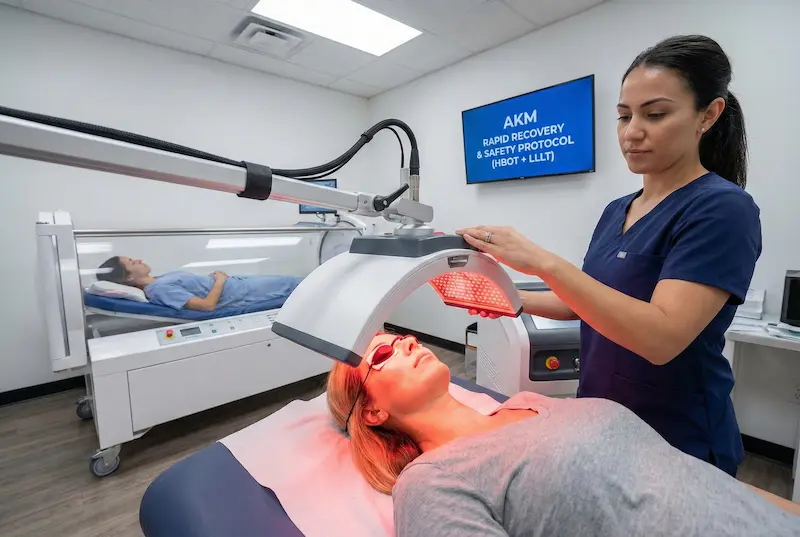
AKM Rapid Recovery & Safety Protocol (HBOT + LLLT)
Recovery is not only about what happens in the operating room—it’s also about what happens in the days immediately after surgery. AKM Clinic integrates a structured Rapid Recovery & Safety Protocol that includes Hyperbaric Oxygen Therapy (HBOT) and Low-Level Laser Therapy (LLLT). These are positioned as part of a system of care designed to support tissue recovery, reduce “social downtime,” and reinforce patient safety through a more proactive post-op plan.
Hyperbaric Oxygen Therapy (HBOT): Oxygenation Support for Healing Tissues
HBOT involves breathing concentrated oxygen in a pressurized environment. In the context of surgical recovery, HBOT is used as a supportive modality that may help the body’s healing response by improving oxygen delivery to recovering tissues. Many recovery-focused programs use HBOT to support inflammation control and overall tissue repair during the early post-op period.
- Why patients consider it: to support recovery comfort and help the body manage swelling and bruising during the early phase.
- How it fits into care: as a structured adjunct to standard post-op instructions—not a replacement for them.
- Expert-patient perspective: recovery modalities are most meaningful when paired with strict surgical technique, careful patient selection, and consistent follow-up.
Low-Level Laser Therapy (LLLT): Cellular Support and Recovery Comfort
LLLT (sometimes referred to as “cold laser”) uses low-level light energy with the goal of supporting cellular activity and tissue recovery. In postoperative settings, LLLT is often used as part of a comfort-and-repair approach that may help reduce visible redness and support a smoother recovery experience.
- Intended role: support recovery in the early weeks when swelling and bruising are most noticeable.
- How it’s used: as a complementary protocol integrated into aftercare, alongside garment use, mobility guidance, and monitoring.
- Why it matters for expert patients: it reflects a “systems approach” to recovery—helping you return to normal life with clearer structure and support.
Why a Protocol (Not a “Machine”) Mindset Changes Recovery
Patients often evaluate technology as if it’s a standalone add-on. A more medically relevant way to think about it is: does the clinic have a coherent recovery protocol that is consistently delivered, supervised, and matched to the realities of healing after fat transfer and liposuction?
- Structure: planned sessions and monitoring create consistency in the early recovery window.
- Accountability: patients are less likely to “guess” what to do when aftercare is organized and reinforced.
- Downtime management: an organized plan can help you navigate swelling, bruising, and comfort more confidently.
Risks, Complications, and the “Mortality Rate” Question (Transparent Safety)
BBL is a procedure where honesty matters. When performed with strict technique and safety discipline, many patients heal well and are satisfied with their results. However, multiple professional societies have publicly emphasized that gluteal fat grafting carries a higher risk profile than many other elective cosmetic surgeries—especially when technique standards, patient selection, and facility safeguards are not rigorous. A safety-minded consultation should never dismiss your questions about risks; it should answer them clearly and specifically.
Common, Usually Treatable Issues (What Most Patients Worry About)
Most BBL recoveries involve some expected “normal” healing challenges—uncomfortable, sometimes stressful, but usually manageable with good guidance and follow-up. Common issues can include:
- Swelling and bruising: especially in donor areas (abdomen/flanks/back/thighs) and can fluctuate day to day.
- Firmness and tightness: liposuction areas can feel hard or “ropey” before softening over weeks to months.
- Temporary asymmetry: swelling is rarely perfectly even; early asymmetry often improves as tissues settle.
- Contour irregularities: small uneven zones can occur in donor areas; the risk is influenced by technique and skin quality.
- Seroma (fluid collection): a pocket of fluid can form after liposuction; it may require monitoring or drainage.
- Fat necrosis (small, firm nodules): can occur when some grafted fat does not survive; mild cases can improve over time.
These are the kinds of issues that a strong aftercare plan is designed to manage. The question isn’t “Can anything happen?” It’s “Is there a structured plan to prevent, detect, and treat problems early?”
Serious Risks: What They Are and Why They Happen
Serious BBL complications are uncommon—but they are real, and they are the reason expert patients should prioritize safety standards above aesthetics alone. Key serious risks include:
- Pulmonary fat embolism (PFE): the most feared complication associated with gluteal fat grafting. In simplified terms, fat can enter blood vessels and travel to the lungs, which can be life-threatening.
- Blood clots (DVT/PE): major surgery and reduced mobility can increase clot risk; prevention planning matters.
- Infection: can range from superficial to deep and serious; sterile technique and early recognition are essential.
- Anesthesia-related complications: risk varies with health status, procedure length, and monitoring quality.
- Excessive bleeding or hematoma: uncommon, but can require urgent evaluation.
It’s also worth acknowledging an important nuance: “BBL safety” is not a single variable. It’s a chain—patient selection, anesthesia planning, technique standards, operative discipline, and post-op monitoring all matter. A weak link anywhere in that chain increases risk.
So What Is the “Mortality Rate” for a BBL?
This question comes up frequently because BBL has received significant attention in professional safety statements and in the media. The most accurate way to approach the topic is:
- Published estimates have varied over time and across settings, reflecting differences in technique, patient selection, and regulatory oversight.
- Professional societies have consistently emphasized that gluteal fat grafting has carried one of the highest known mortality concerns among aesthetic procedures historically, largely linked to fat embolism mechanisms.
- Safety recommendations and technique evolution (including stronger standards around injection planes and newer guidance such as ultrasound-assisted approaches in some settings) are intended to reduce risk.
If you want a provider-quality signal: ask your surgeon to explain (in plain language) what specific steps they use to reduce fat embolism risk, how they approach candidacy screening, and what facility safeguards are in place. A confident, specific answer is far more meaningful than a vague reassurance.
A Safety Checklist: What to Verify Before You Choose a Provider
Expert patients often make the safest decisions by auditing the system—not just the gallery. Here’s a practical checklist to use during consultations:
- Credentials and specialization: choose a surgeon with formal, board-level training in plastic surgery and a focused track record in body contouring.
- Facility standards: confirm the procedure is performed in a properly regulated operating environment with anesthesia professionals and emergency readiness.
- Technique transparency: you should be able to understand where fat is placed (at a high level), how the team avoids high-risk behaviors, and how safety standards are enforced.
- Conservative planning: beware of “maximum volume” promises that ignore donor limitations, skin quality, and biologic reality.
- Post-op monitoring and follow-up: early follow-up is not optional—this is when complications are best caught early.
- Clear written recovery rules: sitting/pressure guidance, garment schedule, mobility plan, and “when to call urgently” instructions should be explicit.
At AKM Clinic, the safety framework is designed around structured screening and hospital-grade standards (including operating within accredited hospital environments and implementing systemized monitoring and recovery support), reflecting a “protocol-first” approach rather than a marketing-first approach.
Red-Flag Symptoms After a BBL (When to Seek Urgent Care)
Any postoperative patient should know what requires urgent evaluation. Seek immediate medical attention if you develop symptoms such as:
- Shortness of breath, chest pain, or sudden dizziness/fainting
- Rapid heart rate, confusion, or bluish lips
- Severe leg swelling or calf pain (possible clot warning signs)
- High fever, worsening redness, or foul drainage
- Severe, rapidly increasing pain not controlled by the prescribed plan
This guidance is general and does not replace personalized medical advice. If something feels wrong, it is always safer to be evaluated promptly.
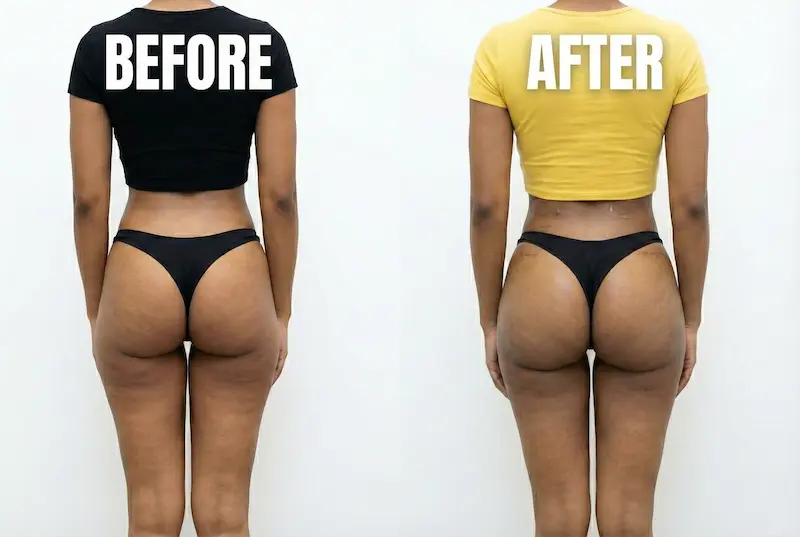
Results: What a “Natural” BBL Looks Like
When patients say they want a “natural” Brazilian Butt Lift, they usually mean two things: (1) the buttocks look proportionate to their frame (not exaggerated or “one-shape-fits-all”), and (2) the result looks believable from every angle—standing, walking, and in fitted clothing. A well-designed BBL should enhance your silhouette in a way that feels like a refined version of you, not a dramatic alteration that draws attention for the wrong reasons.
Surgeon’s Insight: The most durable aesthetic outcomes are built around a “natural-first” philosophy—enhancing shape and proportion while avoiding an “operated” look.
When You’ll See the “True” Result (Swelling vs Settling)
Early post-op photos are often misleading because swelling can temporarily exaggerate volume and blur definition. Most patients notice a steady evolution:
- Weeks 1–2: swelling is prominent; shape can look fuller than it will long term.
- Weeks 3–6: donor areas begin refining; buttock contour starts looking more “integrated.”
- Months 3–6: the result becomes more representative as swelling reduces and fat retention stabilizes.
This is why responsible planning focuses on proportion and tissue behavior over time—not only the immediate post-op look. If a provider only emphasizes early “wow” photos without explaining the settling phase, that’s a signal to ask deeper questions.
Fat Retention Reality: Why Some Volume Change Is Normal
A BBL is a fat grafting procedure, and grafted fat must establish blood supply to survive long term. Some early volume change is expected as swelling resolves and a portion of transferred fat is naturally resorbed. Rather than chasing maximum volume, experienced planning focuses on:
- Even distribution: supports smoother shape and more predictable long-term contour.
- Conservative, anatomy-matched goals: the most stable results typically align with your tissue capacity and frame.
- Recovery compliance: pressure avoidance in early healing is part of protecting the graft.
- Lifestyle stability: major weight changes can alter the outcome because transferred fat behaves like normal fat.
If you’re evaluating before-and-after galleries, look for consistency: balanced waist definition, smooth hip transitions, and results that look proportional across multiple body types—not a single exaggerated template.
Scars: Where They Are, How They Heal, and What Helps
BBL scarring is usually minimal because incisions are small. The most visible healing is often in the liposuction areas (bruising and firmness) rather than the incision sites themselves. Scar outcomes depend on your skin type, genetics, and aftercare consistency.
- Incision size: typically small access points used for liposuction and fat transfer.
- Early appearance: pink/red and slightly raised is common early on; scars usually soften and fade over time.
- What helps: following wound-care instructions, avoiding nicotine, sun protection, and discussing scar support options with your surgical team if you have a history of raised scarring.
A responsible consultation should include a discussion of where access points are typically placed and what your surgeon does to keep scarring discreet—especially if you’re prone to pigmentation changes or hypertrophic scars.
What “Overdone” Looks Like—and How High-Integrity Planning Avoids It
Many expert patients worry about a result that looks artificial: an exaggerated upper pole, unnatural roundness that doesn’t match the hips and thighs, or a silhouette that looks “pasted on” rather than integrated. High-integrity BBL planning avoids this by prioritizing:
- Proportion over trend: designing the buttocks in harmony with waist, hips, and thighs.
- Contour transitions: smoothing the lower back-to-buttock and hip-to-thigh lines so the result reads as natural.
- Technique discipline: emphasizing consistent graft placement and avoiding extreme targets that ignore anatomy.
The goal is not simply more volume—it’s a more refined silhouette that still looks like you.
Cost Analysis: NYC vs Miami vs Los Angeles vs Istanbul (The Value Equation)
Cost is one of the most searched parts of the BBL journey, but the most useful way to think about price is as a value equation: surgeon expertise, safety environment, anesthesia quality, aftercare depth, and recovery support all influence both your outcome and your risk profile. Because pricing varies by city, surgeon demand, facility fees, and procedure complexity, any number you see online should be treated as a rough range—not a guarantee.
What Drives BBL Cost in the USA?
In major markets like New York City, Miami, and Los Angeles, pricing is influenced by a combination of clinical and economic factors:
- Operating facility and anesthesia fees: accredited surgical environments and professional anesthesia teams add substantial cost.
- Surgeon specialization and demand: highly in-demand surgeons often have premium pricing, especially in large metropolitan areas.
- Procedure scope: “lipo 360 + BBL” is typically more complex than a limited-area approach, which can increase total fees.
- Aftercare structure: follow-up intensity, garments, medications, and recovery monitoring can be bundled or billed separately.
When comparing quotes, be cautious about “low” pricing that does not clearly specify facility standards, anesthesia coverage, and post-op support.
Why Turkey Can Be Lower Cost Without Lowering Standards
Many international patients compare Istanbul pricing to US city pricing because the gap can be significant. In a value-first model, the explanation is often macroeconomic rather than clinical: operational costs and currency dynamics can make the total package more accessible while still supporting high standards in facility environment, materials, and structured aftercare.
For expert patients, the key is not where the surgery happens—it’s which standards are verifiable: regulated operating environments, consistent patient screening, transparent safety protocols, and credentialed surgical teams. Those are the variables that should guide a decision more than any headline price.
All-Inclusive Care vs “Quote-Only” Pricing: What Should Be Included?
One reason patients feel confused by BBL pricing is that “the price” can mean very different things. Some quotes include only the surgeon’s fee, while others bundle facility, anesthesia, garments, medications, and aftercare. For an expert patient comparing the USA to international options, it’s more useful to compare apples to apples—a complete episode of care.
- Surgical environment: operating facility standards, anesthesia professionals, and intraoperative monitoring are not “extras”—they are core safety inputs.
- Post-op plan: structured follow-up (in-person and virtual), clear recovery rules, and rapid access to the care team should be part of the package you’re comparing.
- Recovery support: garment guidance, medications, and optional recovery modalities should be transparently listed (what’s included vs optional).
- International logistics (if applicable): transfers, accommodation coordination, and a patient host can reduce friction—but should never replace clinical standards.
At AKM Clinic, the “value equation” is built around hospital-grade operating standards, structured screening, and a systemized recovery plan—supported by an all-inclusive care model that makes costs more predictable for international patients.
| Cost Component | Typical USA Quote Behavior (NYC / LA / Miami) | Typical Istanbul All-Inclusive Model Behavior | What an Expert Patient Should Verify |
|---|---|---|---|
| Surgeon + facility + anesthesia | Often itemized; ranges vary widely by city and facility type | Often bundled into a single package price | Accredited operating environment, anesthesia professional credentials, monitoring standards |
| Garments + medications | Sometimes included, often separate | Often included | Exactly what is included and what brands/specifications are used |
| Follow-up care | Follow-up included, but depth varies | Often structured with patient host + virtual follow-up | Clear post-op schedule, emergency access pathway, long-term check-ins |
| Recovery protocol support | Often patient-directed; optional add-ons vary | May be integrated as a defined recovery protocol | Is it a coherent protocol with supervision—or just “available if you ask”? |
Choosing the Right Surgeon & Facility (What to Verify)
Choosing a BBL provider should be treated like a safety audit. Before-and-after photos matter, but technique transparency, facility standards, and candidacy screening matter more. The safest outcomes usually come from teams that can explain their process clearly, operate within accredited environments, and are willing to say “no” when a patient’s goals exceed safe limits.
Credentials: What “Qualified” Should Look Like in Practice
A trustworthy BBL provider typically demonstrates formal surgical training, board-level credentials, and a focused track record in body contouring. You don’t need a surgeon who sells a “trend.” You need a surgeon who understands anatomy, risk reduction, and proportion design.
- Board-level training: look for surgeons with recognized specialist training and credentialing (e.g., European board-aligned standards) and a documented focus in aesthetic surgery.
- Experience with body contouring systems: a BBL is not just fat transfer; it’s a silhouette operation (lipo design + grafting strategy + recovery plan).
- Consultation quality: an expert provider assesses candidacy, screens health risks, and describes realistic outcomes rather than promising a single “signature” look.
Expert patient prompt: ask how the surgeon approaches candidacy screening and what technical choices they use to reduce serious risk. Precision in answers is a strong signal of maturity and safety culture.
Facility Standards: Why the Operating Environment Matters as Much as the Surgeon
A BBL should be performed in a properly regulated surgical environment with professional anesthesia care and reliable monitoring. Facility quality affects infection prevention, emergency readiness, and post-anesthesia recovery safety.
- Accreditation and governance: verify that the facility meets recognized standards for surgical safety and oversight.
- Sterilization and infection control: ask about sterile protocols and how the clinic reduces infection risk.
- Monitoring and recovery: confirm that vital signs and oxygenation are monitored continuously and that post-op recovery is supervised by trained personnel.
AKM Clinic’s infrastructure is built around hospital-grade standards and a protocol-driven approach to screening, monitoring, and recovery support—designed for patients who prioritize safety and predictability.
Red Flags: Signals That a Provider Is Not Safety-First
Some warning signs are surprisingly consistent across markets. If you encounter these, it’s wise to pause and seek a second opinion:
- “Maximum volume” marketing: guarantees of extreme size without discussion of donor limitations and tissue capacity.
- No screening rigor: minimal medical history review, no discussion of nicotine cessation, or no clear pre-op evaluation process.
- Vague safety answers: unwillingness to explain technique standards at a high level or to discuss serious risks honestly.
- Unclear facility and anesthesia details: no transparency about where surgery occurs and who provides anesthesia care.
- Weak aftercare structure: no written recovery rules, unclear follow-up schedule, and limited access to clinical support after surgery.
The Medical Journey to Istanbul (Logistics Without the “Medical Tourism Ad” Vibe)
If you’re traveling for a Brazilian Butt Lift, the logistics should serve the clinical experience—not overshadow it. The best international care pathways are designed to reduce friction so you can focus on surgical planning, safe recovery, and reliable follow-up. A well-run system typically includes structured virtual evaluation before travel, coordinated scheduling, and a defined aftercare plan with ongoing remote check-ins.
Step 1: Virtual Consultation and a Personalized Surgical Plan
For international patients, the journey often begins with a remote consultation: photos, health history, goal discussion, and candidacy screening. The purpose is to determine whether a BBL is appropriate, outline a safe contour plan, and set expectations about realistic volume, shape, and recovery requirements.
Step 2: Coordinated Stay: Transfers, Accommodation Support, and Patient Hosting
When logistics are coordinated well, you spend less mental energy on transportation and scheduling and more on rest and compliance. In an all-inclusive model, coordination may include:
- Airport-to-hotel and hotel-to-hospital transfers aligned with your procedure schedule
- Accommodation coordination that supports recovery comfort
- A patient host to help you navigate appointments and instructions
This support is most valuable when it remains secondary to clinical standards—meaning the core focus is still safe surgery, safe recovery, and consistent monitoring.
Step 3: Follow-Up: In-Person Checks and Long-Term Virtual Monitoring
Because BBL results evolve over months, follow-up matters. Strong programs plan for early post-op assessments and continue support after you return home through scheduled virtual check-ins. This is especially important for expert patients who want predictability, clear timelines, and fast access to clinical guidance if questions arise.
FAQ: Brazilian Butt Lift (BBL)
Below are the most common Brazilian Butt Lift questions—answered in a voice-search friendly format. Keep in mind that your safest, most accurate answer will always come from your own candidacy evaluation (health status, anatomy, and surgical plan).
What is a Brazilian Butt Lift (BBL)?
A Brazilian Butt Lift is a buttock enhancement procedure that uses your own fat. It combines liposuction (to remove fat from “donor” areas like the abdomen, flanks, back, or thighs) with fat transfer (to add shape and volume to the buttocks). The purpose is usually improved proportion—waist definition plus a fuller, more lifted buttock contour.
How does a Brazilian Butt Lift work?
A BBL works in three main stages: (1) fat is gently harvested with liposuction, (2) the fat is prepared for transfer in a sterile workflow, and (3) the fat is placed in the buttock region in a controlled, layered way to build a natural shape. Some of the transferred fat will not survive long term, so results typically “settle” over the first few months.
How long is Brazilian Butt Lift recovery?
Most patients feel progressively better week by week, but recovery is best thought of in phases: the first 72 hours are the most intense, weeks 1–2 focus on strict pressure avoidance and swelling control, weeks 3–6 are about gradual return to normal function, and months 3–6 are when results tend to look more stable and representative.
When can I sit after a BBL?
It depends on your surgeon’s protocol, but early recovery typically limits direct pressure on the buttocks to protect grafted fat. If sitting is allowed, many patients use a BBL pillow or a pressure-shifting strategy that puts weight onto the thighs rather than the buttocks. Always follow your surgeon’s timing and instructions—this is one of the most important compliance rules in a BBL.
How long do BBL results last?
BBL results can be long-lasting when the transferred fat successfully establishes blood supply and your weight remains relatively stable. Because transferred fat behaves like normal body fat, major weight loss can reduce volume, while major weight gain can increase volume (sometimes unevenly). The most durable outcomes are typically proportional, anatomy-matched results—not extreme “maximum volume” targets.
What are the risks of a Brazilian Butt Lift?
Common risks include bruising, swelling, firmness in liposuction areas, temporary asymmetry, contour irregularities, fluid collection (seroma), and fat necrosis (small firm nodules). More serious risks include infection, blood clots, anesthesia complications, and pulmonary fat embolism. The safest results come from strict patient selection, transparent technique standards, an appropriate operating environment, and structured follow-up.
What is the Brazilian Butt Lift mortality rate?
Published estimates have varied over time and by practice setting. Professional safety advisories historically cited a high risk estimate (often discussed around 1 in 3,000 in older advisories), while other safety reviews and later discussions have suggested the risk may be lower when modern technique standards and safety policies are followed consistently. The expert-patient takeaway is this: the risk is not “the same everywhere,” and it’s strongly influenced by surgeon training, technique discipline, facility standards, and post-op oversight.
Is a BBL safer than butt implants?
They are different procedures with different risk profiles. A BBL avoids a permanent implant device and often looks/feels more natural, but gluteal fat grafting has unique safety concerns that depend heavily on technique and standards. Butt implants can provide predictable volume for low-donor-fat patients, but they introduce device-related risks such as infection, displacement, and capsule issues. The safest choice is individualized: your anatomy, goals, and medical risk factors should guide the recommendation.
How much does a Brazilian Butt Lift cost in NYC, Miami, and Los Angeles vs Istanbul?
BBL pricing varies widely based on surgeon expertise, facility/anesthesia fees, the number of liposuction areas, and how “all-inclusive” a quote is. Using RealSelf’s metro averages as one public benchmark, reported averages include approximately: New York City ~$9,714, Miami ~$6,471, and Los Angeles ~$14,358. In the U.S. overall, RealSelf reports a broad range that can span roughly $4,100 to $18,945 depending on complexity and location.
For Istanbul/Turkey, advertised package ranges commonly appear several thousand dollars lower than major U.S. metros, but the exact number depends on what is included (hospital/facility level, anesthesia, hotel/transfers, garments, follow-up, and recovery support). The expert way to compare is to request an itemized quote and verify the operating environment, anesthesia plan, and aftercare pathway—not only the headline price.
Can I combine a BBL with a tummy tuck (Mommy Makeover)?
Sometimes, yes—but only for appropriately selected patients and with conservative planning. Combining procedures can increase operative time, recovery demands, and risk, and it may change how you position your body during healing (which matters after a BBL). If you’re considering a combination, ask how your surgeon balances safety (time under anesthesia, clot prevention, monitoring) with recovery practicality (mobility, pressure avoidance, and follow-up).