





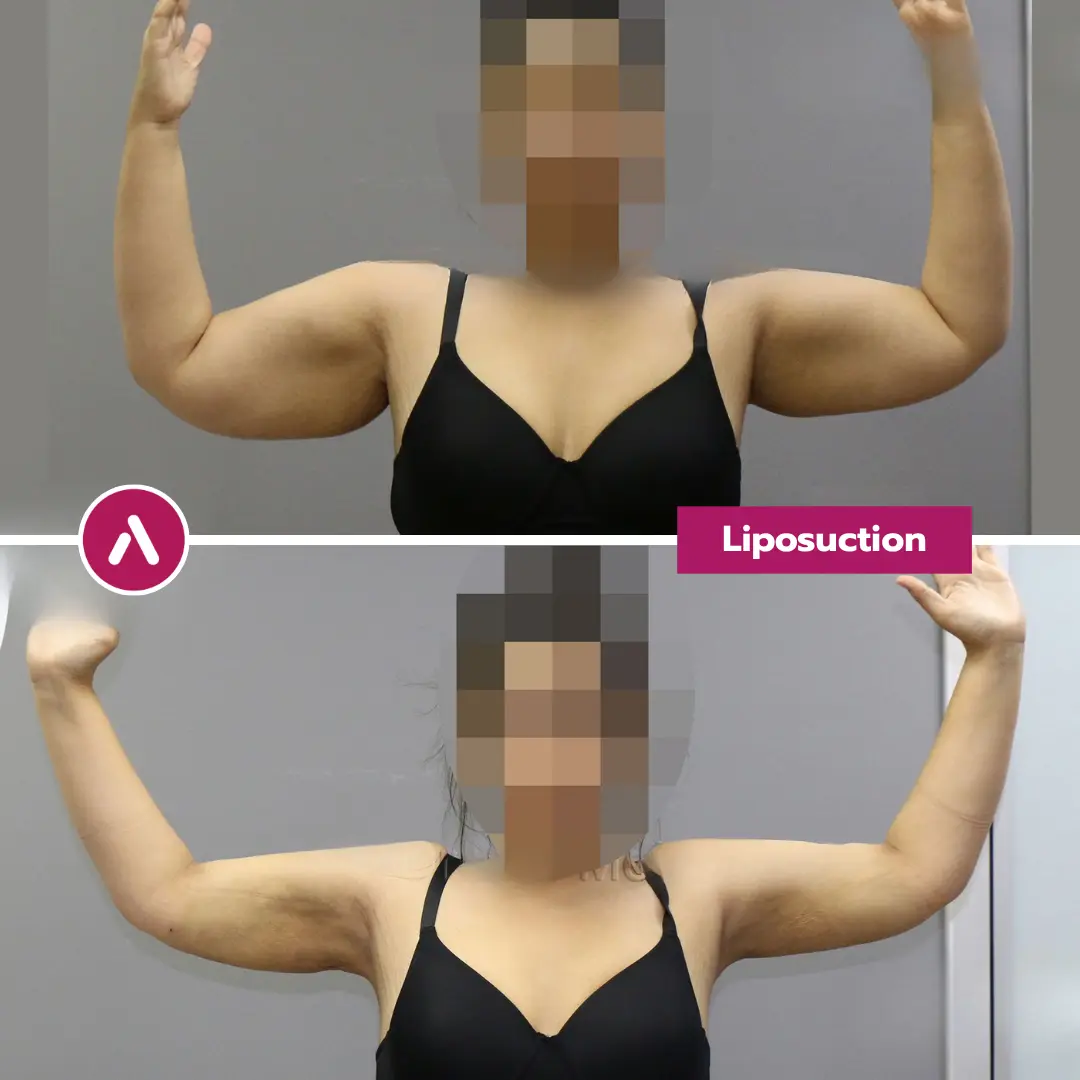
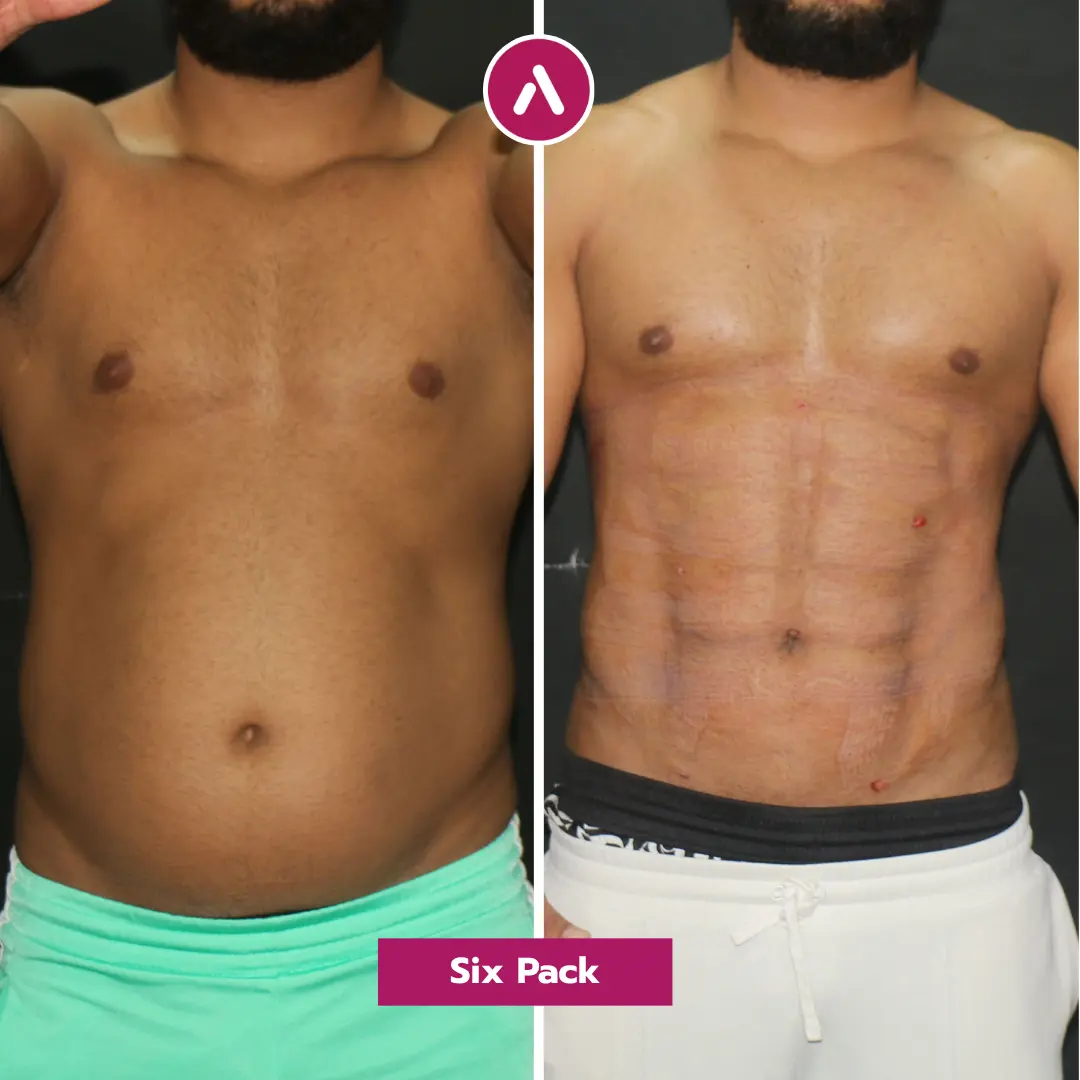
Awake high-definition liposuction is a body-contouring procedure designed to remove targeted fat and enhance muscular definition—while avoiding full general anesthesia in appropriately selected patients. Instead of being “fully asleep,” many patients undergo the procedure using tumescent local anesthesia (and, when appropriate, twilight sedation) to improve comfort while maintaining spontaneous breathing and protective reflexes.
Because “high-definition” (HD) lipo is about sculpting rather than simple volume reduction, it requires careful anatomical planning, precise technique, and realistic expectations. The goal is not to create an unnatural “overdone” look—it is to refine contours and reveal definition where your natural structure already supports it.
Medical note: This page is educational and does not replace individualized medical advice. Candidacy, anesthesia choice, and technique selection should always be determined after a clinician reviews your health history, detailed anatomy, and goals.
Table of Contents
What Is Awake High-Definition Liposuction?
Awake HD liposuction combines modern liposuction methods with an anesthesia approach centered on local numbing (tumescent anesthesia) and, in some cases, light IV sedation. “Awake” does not mean you are expected to tolerate pain—it means the anesthetic plan aims to keep you comfortable without the depth of anesthesia used in fully general anesthesia, when safe and appropriate for your case.
High-Definition Body Sculpting vs Traditional Liposuction
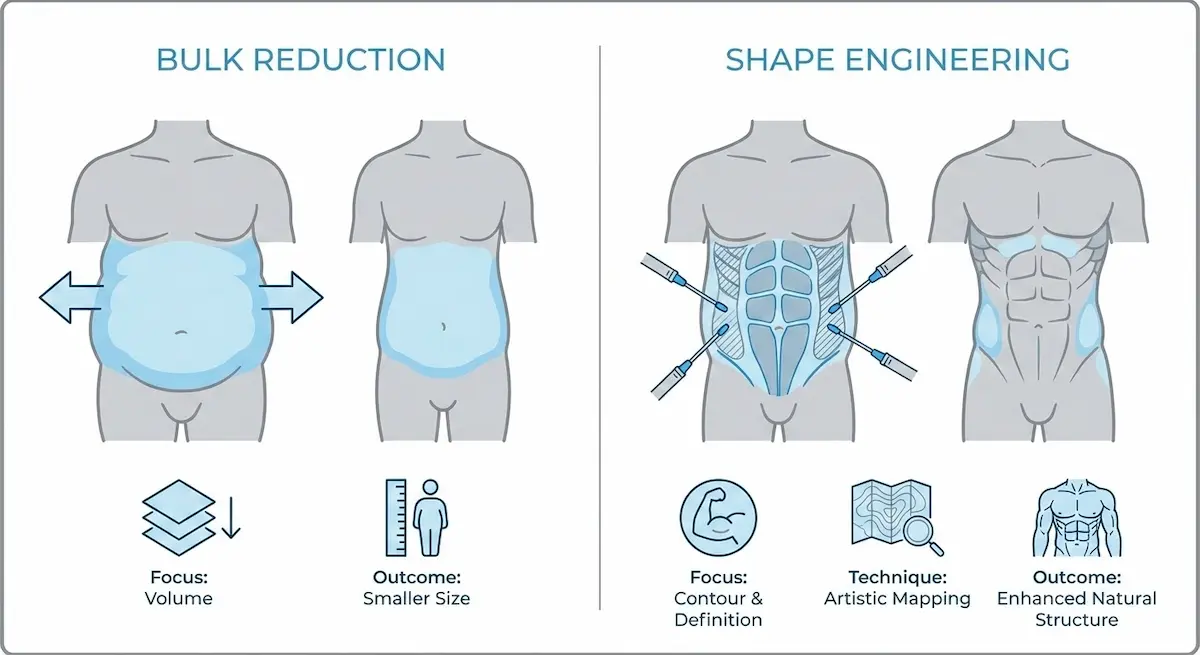
Traditional liposuction is typically focused on bulk reduction: removing fat to make an area smaller. HD liposuction is focused on shape engineering: selectively removing fat in a pattern that improves transitions, enhances shadows, and reveals athletic definition. In practical terms, the difference often shows up in:
- Precision: HD work is more selective—especially around natural muscle borders.
- Contour transitions: The emphasis is on smooth gradients rather than simply “less volume.”
- Artistic mapping: Pre-op markings are essential; the plan is as important as the suctioning.
HD techniques are commonly used for areas like the abdomen (to reveal the linea alba/semilunaris), flanks, lower back, chest, arms, and sometimes thighs—depending on anatomy and skin quality.
What “Awake” Means in Practice
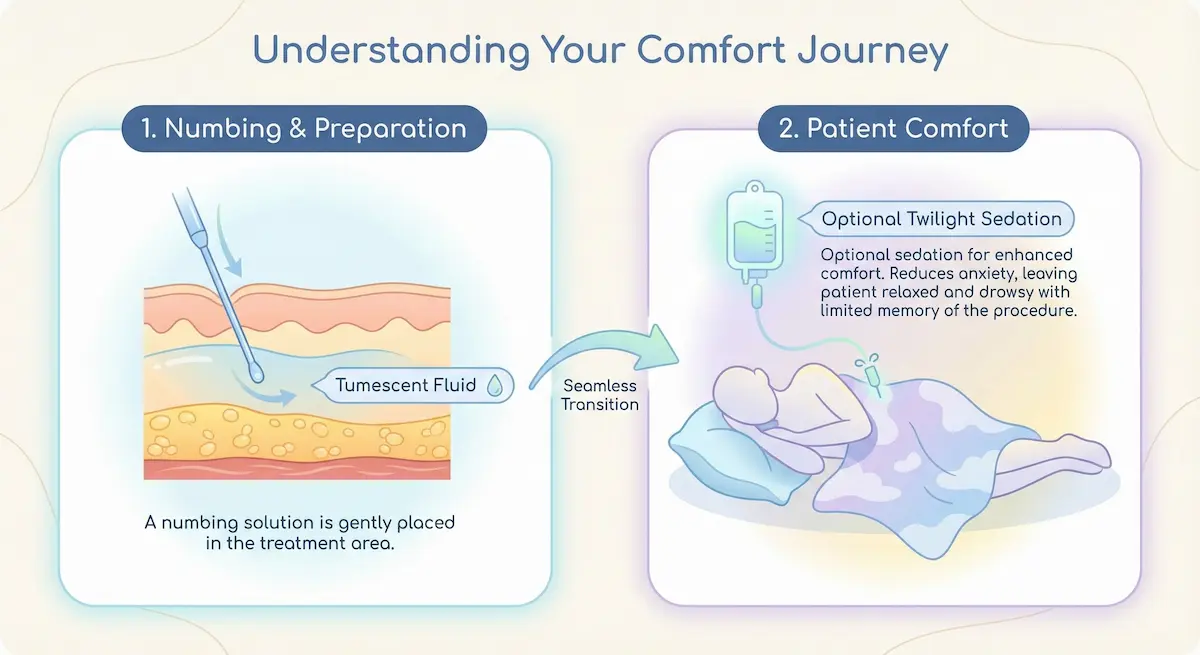
In an “awake” pathway, comfort typically comes from tumescent anesthesia: a large volume of dilute anesthetic solution infused into the fatty layer. This fluid both numbs the tissue and helps create a working plane for fat removal. When anxiety, sensitivity, or procedure complexity warrants it—and when medically appropriate—twilight sedation may be added to reduce stress and improve overall tolerance.
Importantly, “awake” exists on a spectrum. Some patients remain conversational and aware of time passing; others feel drowsy and remember very little. What should not happen is uncontrolled pain. A high-quality awake plan anticipates discomfort triggers (pressure, vibration, positional fatigue) and addresses them with thoughtful technique, pacing, and monitoring.
Common Treatment Zones and Aesthetic Goals
HD liposuction is often chosen by patients who do not want a “smaller” version of the same silhouette—they want clearer structure. Goals commonly fall into one of these categories:
- Definition enhancement: Improving visible lines and shadowing in the abdomen, flanks, back, or chest.
- 360-degree contouring: Harmonizing front, sides, and back so the torso looks balanced from every angle.
- Waist shaping: Emphasizing the waist-to-hip ratio through selective removal around the flanks/lower back.
- Masculine vs feminine contour patterns: Sculpting decisions differ based on frame, fat distribution, and desired aesthetic.
While HD lipo can create dramatic improvements, it is not a substitute for major skin excision procedures when significant laxity is present. The best outcomes come from matching the method to your anatomy—not forcing anatomy to match a trend.
The Anatomy Behind “High-Definition” Results
High-definition outcomes depend on understanding how fat layers, connective tissue, and skin behave together. Liposuction does not directly “tighten” skin in the same way an excisional procedure does; instead, it changes the shape beneath the skin. The final look is a collaboration between what is removed, how evenly it is removed, and how your skin contracts during healing.
Subcutaneous Fat Layers and Contour Dynamics
The fat targeted in liposuction sits primarily in the subcutaneous compartment (the layer between skin and deeper structures). This layer is not uniform—some zones hold fat more densely, others more diffusely. HD liposuction relies on selectively reducing thickness in strategic areas while preserving enough fat to maintain smoothness and a natural feel.
Over-aggressive removal can lead to irregularities, visible waviness, or a “skeletonized” look—especially in patients with thinner skin or limited soft-tissue coverage. Under-treatment, on the other hand, can leave definition muted. The “HD” balance is achieved through careful depth control and an understanding of how light and shadow amplify shape.
Fascial Planes and How “Etching” Creates Definition
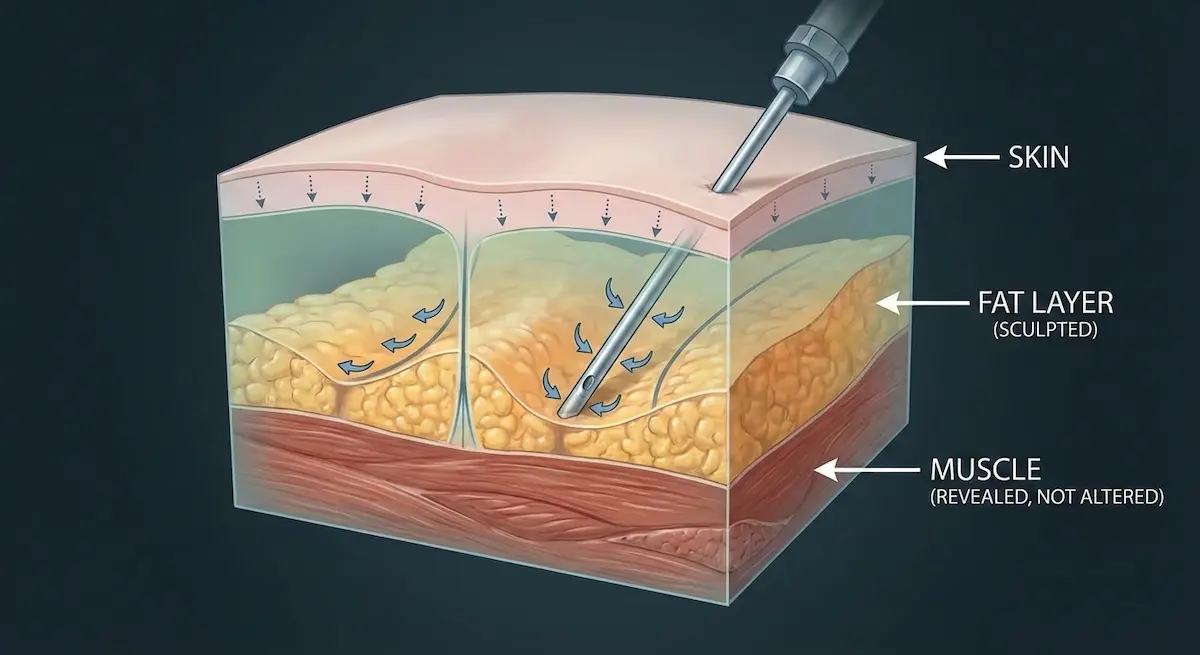
Muscle definition is not created by operating on muscle; it is created by shaping the fat layer above it so natural borders and grooves become more visible. HD sculpting often focuses on:
- Natural lines: Enhancing existing anatomical borders rather than inventing new ones.
- Shadow control: Creating gentle depressions where the body naturally forms contour transitions.
- Symmetry management: Correcting small imbalances that become more noticeable when definition increases.
This is why HD liposuction is sometimes described as “body sculpting.” It is less about the total amount of fat removed and more about where and how it is removed.
Skin Quality, Elasticity, and Why It Controls the Final Outcome
Skin is the final “wrapper.” After fat is reduced, the skin must contract and re-drape smoothly. Factors that influence skin behavior include age, genetics, history of weight fluctuation, pregnancy, sun exposure, and smoking. Patients with strong elasticity tend to see cleaner definition sooner; patients with weaker elasticity may see improvement in size but less crisp definition, and they may be better served by combining liposuction with skin-tightening strategies or, in some cases, excisional surgery.
For the expert patient, this is the key principle: the best procedure is the one that matches your tissue quality. A candid consultation should evaluate skin thickness, laxity patterns, and the likelihood of smooth retraction before committing to an “HD” plan.
Ideal Candidates and Who Should Not Do It
High-definition liposuction is most rewarding when the “starting anatomy” is compatible with definition work. The expert way to think about candidacy is not “Can I get liposuction?” but “Do my tissue quality, fat pattern, and goals align with an HD sculpting plan—under an awake/twilight anesthesia strategy?” The best consultations are blunt, anatomy-based, and focused on safety as much as aesthetics.
Body Composition and Realistic Expectations
Awake high-definition liposuction is generally best for patients who are already relatively close to their goal weight and have localized fat deposits that resist diet and exercise. HD results typically depend on having a foundation that can “read” as athletic once the fat layer is strategically reduced.
Many high-performing candidates share several of the following traits:
- Stable weight: Your weight has been steady for several months, and you can maintain it long-term.
- Localized fat pattern: The issue is contour (waistline, flanks, lower abdomen, back rolls, chest fullness), not generalized adiposity.
- Good baseline muscle structure: You don’t need to be a bodybuilder, but some underlying structure helps definition “translate” visually.
- Skin quality that can re-drape: Elasticity matters as much as how much fat is removed.
- Clear priorities: You understand what HD lipo can and cannot do, and you are aiming for a natural enhancement rather than a stylized “etched” look that ignores anatomy.
It’s also important to set expectations about what “definition” means. HD liposuction can improve the appearance of lines and transitions, but it does not change your muscle anatomy, and it does not replace training. Many patients see their best outcome when surgery and recovery are paired with consistent lifestyle habits (sleep, nutrition, strength training) once cleared to resume activity.
Finally, “awake” is not a badge of toughness. If you are a good candidate medically, the procedure should still be designed around comfort and control. Your care team should explain how your comfort is maintained during positioning, infiltration, and sculpting passes—especially for longer or multi-area cases.
Skin Laxity, Post-Pregnancy Changes, and When Lipo Isn’t Enough
One of the most common reasons patients feel disappointed after any liposuction is a mismatch between the treatment and the skin’s ability to contract. If the skin is significantly loose, removing fat may reduce size but can also leave the “wrapper” looking less supported. That can be true even when the fat removal is technically excellent.
Skin laxity may be more likely if you have:
- History of major weight loss or repeated weight cycling
- Post-pregnancy abdominal stretching (diastasis may also be present)
- Age-related loss of elasticity
- Striae (stretch marks) and thinning skin in the treatment zone
- Loose tissue that “hangs” rather than compresses smoothly
In these situations, an expert consultation may recommend one of three pathways:
- HD lipo alone: When laxity is mild and the skin is expected to retract adequately.
- HD lipo + skin-tightening support: When there is moderate laxity and a tightening adjunct may improve re-drape. This should be explained in concrete terms (what it changes, what it doesn’t, and how it affects recovery).
- Excisional surgery (with or without lipo): When laxity is significant or when abdominal wall issues (like diastasis) need correction that liposuction cannot provide.
For post-pregnancy bodies in particular, the “best” approach is often about priorities. If your main concern is bulging from muscle separation or excess skin that does not retract, an excisional procedure may be more logical. If your main concern is stubborn fat with decent skin tone, HD lipo may be a strong fit. The right recommendation should feel anatomy-driven—not sales-driven.
Medical Contraindications and Risk Factors
Even when aesthetics align, medical factors determine whether an awake pathway is appropriate and how safely the procedure can be performed. A responsible evaluation includes your complete medical history, medications and supplements, prior surgeries, allergies, and an honest discussion of lifestyle factors that affect healing.
Common risk factors that may require modification of the plan—or may make surgery inappropriate—include:
- Nicotine use (smoking/vaping): Nicotine is strongly associated with impaired healing and higher complication risk. Many protocols require complete cessation for a defined period before and after surgery.
- Clotting risk: Personal or family history of DVT/PE, known clotting disorders, certain hormonal therapies, or limited mobility may change candidacy and prophylaxis planning.
- Uncontrolled chronic conditions: Poorly controlled diabetes, significant cardiovascular disease, uncontrolled hypertension, or untreated sleep apnea can increase surgical and anesthesia risk.
- Medication considerations: Blood thinners, certain anti-inflammatories, and supplements that affect bleeding must be disclosed. Your team should provide a clear, individualized hold schedule where medically safe.
- Prior body contouring or scar patterns: Previous liposuction or surgeries can alter tissue planes and increase irregularity risk—important in HD sculpting.
Awake/twilight strategies also require thoughtful patient selection. Anxiety level, tolerance for positioning, and the expected length/complexity of the procedure matter. Some patients do best with a light-to-moderate twilight approach; others may be better served with a different anesthesia plan. The “best” method is the one that maximizes safety and comfort while allowing precise work.
In every case, a high-quality pre-op plan should include:
- Risk stratification: A clear assessment of clot risk, bleeding risk, and anesthesia suitability.
- Physical exam specifics: Skin laxity assessment, pinch thickness mapping, and symmetry evaluation.
- Outcome clarity: A shared understanding of what “HD definition” will look like on your body type.
- Recovery planning: Mobility expectations, compression strategy, and support at home/hotel for the first days.
If a provider cannot clearly explain why you are (or are not) an ideal HD candidate—and how anesthesia choice integrates with safety—the consultation is incomplete. The goal is not simply to qualify you for surgery; it is to build a plan that is predictably safe and aesthetically coherent.
High-Definition Techniques and Technology Options
Not all “HD liposuction” is the same. The term describes an outcome goal—enhanced definition—rather than one single standardized method. The technique used (manual vs energy-assisted, superficial vs deep sculpting strategy, circumferential vs focal work) determines how predictable the definition is, how smooth the transitions look, and how much swelling and recovery time you should realistically expect.
HD Liposuction vs 360 Liposuction vs “Volume Reduction” Liposuction
These approaches often overlap, but they are not interchangeable. Understanding the differences helps you interpret quotes, surgical plans, and before/after photos like an expert.
| Approach | Primary Goal | Best For | Key Trade-Offs |
|---|---|---|---|
| Traditional (Volume Reduction) Lipo | Make an area smaller by removing fat | General contour improvement, moderate reshaping | May not create crisp definition; less “etched” detailing |
| 360 Liposuction | Harmonize the torso circumferentially (front + flanks + back) | Waistline shaping, “balanced from every angle” outcomes | More treatment area can mean more swelling and longer recovery |
| High-Definition (HD) Lipo | Enhance lines/shadows and muscular borders | Patients near goal weight seeking visible definition | Technique-sensitive; higher risk of irregularity if overdone |
Many expert plans combine these: for example, a 360 foundation for overall balance with select HD detailing to refine specific zones (upper abdomen lines, lower abdominal transition, flanks, or back definition). A thoughtful plan prioritizes natural anatomy and symmetry rather than “template etching.”
Energy-Assisted Options (e.g., VASER) and What They Change Clinically
Energy-assisted liposuction technologies are often discussed as if they are automatically “better.” In reality, they are tools—and their value depends on how they are used, in which anatomy, and with what endpoint. In HD work, energy assistance is commonly used to help emulsify fat and improve efficiency in sculpting passes, especially in fibrous areas (certain flanks/back patterns, some male chest cases).
From a clinical standpoint, energy assistance may influence:
- Tissue handling: Facilitating fat disruption before aspiration, potentially allowing more controlled removal in certain tissue types.
- Precision workflow: Supporting incremental sculpting when the plan involves multiple contour “zones” rather than a single bulk reduction area.
- Operative time and fatigue factors: Efficiency can matter, particularly when multiple areas are treated—though efficiency should never come at the expense of smoothness.
However, it does not remove the core constraints of physiology: skin quality still dictates re-drape, and over-aggressive superficial sculpting can still create contour irregularities. If a provider markets technology as the main reason for results without discussing anatomy, depth control, and skin behavior, you are missing the information that truly predicts outcome quality.
Adjunct Procedures and When They Matter
Some patients benefit from pairing HD liposuction with adjuncts that address skin quality, laxity, or contour transitions. The key is matching the adjunct to the problem you are actually trying to solve:
- Skin laxity support: If skin contraction is likely to be limited, a tightening adjunct may improve how smoothly the skin re-drapes over a newly sculpted shape.
- Fibrous or revision cases: Patients with prior liposuction or scarred tissue may require modified techniques to reduce irregularity risk.
- Definition strategy: In some body types, “HD” is less about etching lines and more about creating elegant transitions (for example, refining the waist and lower back to make abdominal definition read naturally).
Adjuncts should be presented with clear endpoints: what improvement is expected, what is unlikely to change, and how recovery may differ. The expert patient should leave the consult understanding why each tool is in the plan—not just hearing a list of add-ons.
Awake / Twilight Sedation vs General Anesthesia
For many expert patients, the anesthesia plan is the most emotionally loaded part of the decision. Concerns typically center on safety, nausea, grogginess, loss of control, and recovery speed. An “awake” pathway—built on tumescent local anesthesia with the option of twilight sedation—can be a strong fit for the right patient and the right scope of work. The most important word there is “right”: anesthesia should be individualized, not marketed as one-size-fits-all.
How Tumescent Anesthesia Works
Tumescent anesthesia involves infusing a large volume of dilute anesthetic solution into the targeted fatty layer. The goals are practical and safety-oriented:
- Numbing: The anesthetic blocks pain signals in the treated tissue so suctioning can be performed comfortably.
- Hydrodissection: The fluid expands the tissue plane, creating a more workable layer for fat removal and contouring.
- Bleeding control: The solution typically includes a vasoconstrictive component that reduces bleeding and bruising in many cases.
For the patient experience, this often translates into feeling pressure and movement rather than sharp pain. The infiltration step (the infusion itself) can be the most uncomfortable moment for some patients, which is one reason some plans incorporate light sedation or careful pacing and technique adjustments.
From an expert standpoint, the tumescent plan should be discussed openly: expected sensations, how discomfort is managed, how long numbing lasts, and how the care team monitors you throughout the procedure.
What Twilight Sedation Feels Like (Patient Experience)
Twilight sedation (also called IV sedation) typically aims to reduce anxiety, lessen awareness of time passing, and improve tolerance—without the depth of anesthesia used in general anesthesia. Patients commonly describe being relaxed, drowsy, and comfortable; many report limited or fragmented memory of the procedure.
What you should expect a high-quality provider to explain in plain language:
- Awareness varies: Some patients remain conversational; others are sleepy and minimally engaged.
- Comfort is the priority: The goal is not to “prove” you can handle an awake procedure; it’s to keep the experience controlled and calm.
- Monitoring is non-negotiable: Vital signs and comfort are continuously assessed; adjustments are made in real time.
Common practical advantages for the right candidate may include less “hangover” compared with deeper anesthesia, earlier ambulation, and a recovery experience that feels more straightforward. That said, twilight sedation can still have side effects (such as nausea or grogginess), and those risks should be discussed honestly before surgery.
Safety Logic for the Expert Patient
When patients ask “Is awake liposuction safer than general anesthesia?” the honest answer is: it depends on the patient, the extent of surgery, and the quality of medical oversight. Avoiding full general anesthesia may reduce certain anesthesia-related risks for appropriately selected patients, but awake procedures still require rigorous standards, careful dosing strategy, and professional monitoring.
A safety-centered consultation should cover:
- Scope control: How many areas are planned, expected duration, and whether an awake/twilight plan is appropriate for that complexity.
- Patient selection: How your medical history affects anesthesia choice (sleep apnea, cardiovascular conditions, medication interactions, anxiety tolerance).
- Monitoring standards: What vitals are tracked, who is responsible for sedation management, and how airway/respiratory safety is protected.
- Comfort safeguards: How pain and anxiety are handled intraoperatively, and what the team does if you are uncomfortable.
If a provider can’t clearly explain why an awake pathway is recommended in your case—and what the backup plan is if comfort or safety thresholds are challenged—that is a gap. Expert care is not about pushing a trend; it’s about choosing the safest method that still allows precise, high-quality sculpting.
Step-by-Step: How Awake High-Def Lipo Is Performed
While techniques vary by surgeon and technology platform, the HD workflow follows a consistent logic: map the anatomy, numb and prepare the tissue safely, remove fat in controlled layers, and finish with smooth transitions that look natural under real-life lighting. In an awake/twilight plan, the procedural choreography also includes comfort management—positioning, pacing, communication, and vigilant monitoring.
Pre-Op Planning, Markings, and Definition Mapping
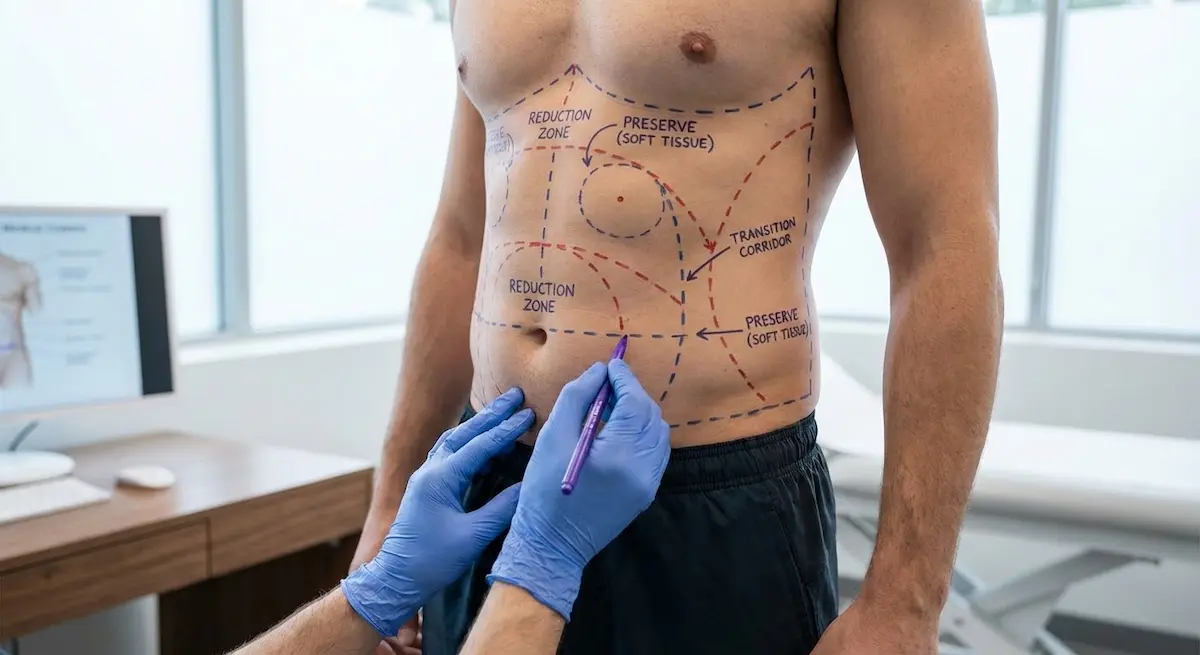
HD outcomes begin before the first incision. Pre-op planning typically includes standardized photographs, a physical exam, and a discussion of what “definition” means on your body type. Then comes standing markings—often the single most important step for HD work—because gravity and muscle tone change contours compared with lying down.
Markings commonly map:
- Zones for reduction: where fullness blunts shape (e.g., lower abdomen, flanks, lower back).
- Zones for preservation: areas where a small amount of fat supports natural softness and avoids an “over-etched” look.
- Transition corridors: where smooth gradients matter most (abdomen-to-flank, flank-to-back, chest-to-axilla).
- Asymmetries: subtle right/left differences that become more visible as definition increases.
For the expert patient, this is where you should ask precision questions: “Where do you plan to sculpt superficially versus deeply?” “How do you prevent contour irregularities?” “What definition is realistic given my skin quality?” A plan that cannot be explained clearly is rarely a plan that can be executed predictably.
Infiltration → Emulsification/Aspiration → Sculpting Passes
Although the details depend on technique, most HD procedures follow a sequence:
- Tumescent infiltration: The numbing solution is infused into the targeted fat layer to create analgesia, reduce bleeding, and prepare the plane for contouring. This step often determines the comfort of the entire procedure.
- Fat disruption (as needed): Depending on the method, fat may be gently disrupted or emulsified prior to suctioning. This can be especially relevant in more fibrous tissue patterns.
- Aspiration (fat removal): Fat is removed in a controlled, layered fashion. In HD work, removal is typically incremental—aiming for smoothness and definition rather than a single aggressive “debulking” pass.
- Refinement passes: The surgeon fine-tunes contour transitions, symmetry, and definition cues (the lines/shadows you want to read naturally).
In an awake/twilight setting, the team’s workflow also includes patient-focused safeguards:
- Positioning breaks: especially in longer cases or when multiple zones are treated.
- Comfort checks: confirming that you feel pressure rather than sharp pain, and adjusting technique or sedation as needed.
- Temperature and hydration management: small details that reduce stress on the body during the procedure.
What you should not expect is “white-knuckling” your way through. A high-quality awake plan is still a medically controlled procedure designed around comfort and safety.
Closure, Compression Garments, and Immediate Post-Op Milestones
Incisions are typically small and placed strategically for access and aesthetics. Some surgeons allow limited drainage from access points in the early period; others use closure strategies based on their preferred protocol and the extent of treatment. You should receive clear guidance on wound care, showering, and what normal drainage (if any) looks like.
Compression garments are a core part of aftercare. Their goals include supporting swelling control, helping tissues re-drape, and improving comfort during movement. Proper fit matters: overly tight compression can be counterproductive, while insufficient compression may worsen swelling and prolong the “puffy” phase.
Common immediate milestones include:
- Same-day ambulation: gentle walking is encouraged as soon as it is safe, because mobility supports recovery and reduces clot risk.
- Managed discomfort: most patients describe soreness/tenderness and pressure sensations rather than sharp pain, especially once tumescent numbing fades.
- Swelling and bruising onset: swelling typically increases in the first days and then gradually improves.
Before discharge, a responsible team ensures you understand medications, garment use, red flags (fever, worsening shortness of breath, one-sided leg swelling, uncontrolled pain), and how follow-up will be handled.
Common Combination Procedures (and Why They’re Chosen)
HD liposuction can be powerful on its own, but it is often combined with complementary procedures to address skin quality, structural changes after pregnancy or weight loss, or specific aesthetic goals (such as a sharper waistline or more athletic chest contour). The “right” combination is not the most extensive one—it’s the one that solves the real anatomical problem with the least trade-off.
HD Lipo + Skin-Tightening Support
When skin elasticity is borderline, pairing liposuction with a tightening strategy may improve how smoothly the skin re-drapes over the newly sculpted shape. This is especially relevant for:
- Patients with mild-to-moderate laxity who still have good overall tissue quality
- Areas prone to looseness after fat reduction (certain abdomen patterns, arms, inner thighs)
- Patients seeking refinement but wanting to avoid (or delay) excisional surgery
The expert way to evaluate this recommendation is to ask: “What is the limiting factor in my case—fat thickness, skin retraction, or both?” Tightening strategies can help with re-drape, but they do not replace the benefits of excision when significant loose skin is present.
HD Lipo as Part of Mommy Makeover / Abdominal Reconstruction Planning
In many mommy makeover plans, high-definition liposuction is used as a precision tool to refine contour—especially around the waistline, flanks, and lower back—while other procedures address the structural and skin-related changes of pregnancy. Post-pregnancy contour goals often involve multiple layers: fat distribution changes, skin stretching, and sometimes abdominal wall separation (diastasis). Liposuction can refine contour, but it does not repair muscle separation or remove excess skin.
If the primary complaint is a persistent abdominal “bulge” or a hanging skin apron, an excisional approach may be more appropriate, with liposuction used selectively to refine flanks or waist transitions. In other words, the most successful Mommy Makeover outcomes come from matching each tool to the specific anatomical problem—rather than expecting one procedure to solve everything.
A well-structured plan typically clarifies:
- What liposuction will improve: localized fullness and contour transitions.
- What liposuction will not fix: significant excess skin or muscle separation.
- Staging vs combining: whether it is safer and more predictable to do procedures together or in sequence.
For the expert patient, the most valuable part of the consult is not the list of procedures—it is the reasoning behind the sequence, safety profile, and expected recovery burden.
Male Contouring Pathways (Including Chest Definition)
Male “HD” goals are often different from female goals. Many male patients want a sharper abdominal pattern, stronger flank-to-back transitions, and a more athletic chest. This is also why high-definition abdominal sculpting is sometimes referred to as “six pack surgery”—a non-medical term patients use when they’re specifically aiming for visible abdominal definition rather than simple fat reduction.
Chest contouring can be particularly nuanced because the issue may involve fat, glandular tissue, skin laxity, or a combination.
Key considerations include:
- Tissue type: fibrous patterns can require modified technique and patience to maintain smoothness.
- Naturalness: overly deep or overly linear etching can look artificial; anatomy-led definition typically ages better and looks better under all lighting.
- Skin response: chest and abdomen skin behavior can vary widely; realistic counseling is essential.
A provider experienced in HD work should be able to explain how their sculpting approach differs for male anatomy, and how they protect against the most common dissatisfaction drivers (irregularities, asymmetry, and unrealistic expectations about “instant abs”).
Recovery Timeline and Aftercare
Recovery after awake high-definition liposuction is best understood as a sequence of predictable phases: early swelling and tenderness, a “puffy” transition period, and then gradual definition as tissues settle and the skin re-drapes. Most patients feel functional relatively quickly, but HD definition is not instant—it emerges as inflammation resolves and the skin contracts over the new contour.
The First 72 Hours: Swelling, Soreness, and Mobility
The first few days are typically defined by swelling, bruising, and a deep “workout soreness” sensation in treated areas. Even though the procedure is performed with tumescent anesthesia (and sometimes twilight sedation), the numbing effect fades after surgery, and tenderness becomes more noticeable.
- Mobility matters: gentle walking is usually encouraged early, as tolerated, because it supports circulation and reduces clot risk.
- Compression is foundational: garments are typically worn consistently to support swelling control and tissue re-drape.
- Fluid shifts are normal: swelling often increases during this period; this does not mean the procedure “didn’t work.”
- Sleep positioning: you may be advised to sleep with support pillows or in a slightly elevated position depending on treated zones.
Common early sensations include tightness, numbness, and hypersensitivity in patches. These are usually temporary and improve gradually. Your provider should give a clear list of warning signs (for example, fever, rapidly worsening redness, one-sided leg swelling, chest pain, or shortness of breath) that require urgent evaluation.
Week 1–2: Returning to Routine and Early Contour Changes
During the first one to two weeks, many patients can return to desk-based work—often within several days to a week—depending on treatment extent, physical demands, and individual healing response. Swelling remains the dominant factor in how you look, and this is the phase where patience prevents unnecessary worry.
- Bruising fades: discoloration typically begins to resolve, though it can persist longer in some patients.
- Garment discipline: consistent compression tends to correlate with smoother early contouring and better comfort.
- Light activity: walking is usually appropriate; strenuous exercise is typically delayed until cleared.
If your care plan includes lymphatic support or massage, timing and technique should be guided carefully. Aggressive or poorly timed massage can irritate tissues. The goal is not to “force swelling out” but to support fluid movement while tissues are healing.
Weeks 3–12: Definition Emerges (and the “Expert Patient” Timeline)
HD liposuction is a sculpting procedure, and definition becomes clearer as inflammation subsides and the skin continues to re-drape. Many patients notice visible improvement by weeks 3–6, with refinement continuing for several months. In HD cases, the “final look” is often best judged around the 3–6 month window, and in some body types even later.
- Swelling becomes more localized: instead of generalized puffiness, you may notice small pockets that resolve gradually.
- Training returns stepwise: strength training and core work are typically reintroduced in phases once your surgeon clears you.
- Skin behavior continues: retraction and re-drape can continue improving as collagen remodeling occurs.
For the expert patient, the most important expectation is this: HD results are not “revealed” by willpower alone. They are revealed by biology. A meticulous plan plus disciplined recovery (compression, mobility, and follow-up) produces the most predictable outcomes.
Accelerated Recovery & Safety Protocol: HBOT + LLLT
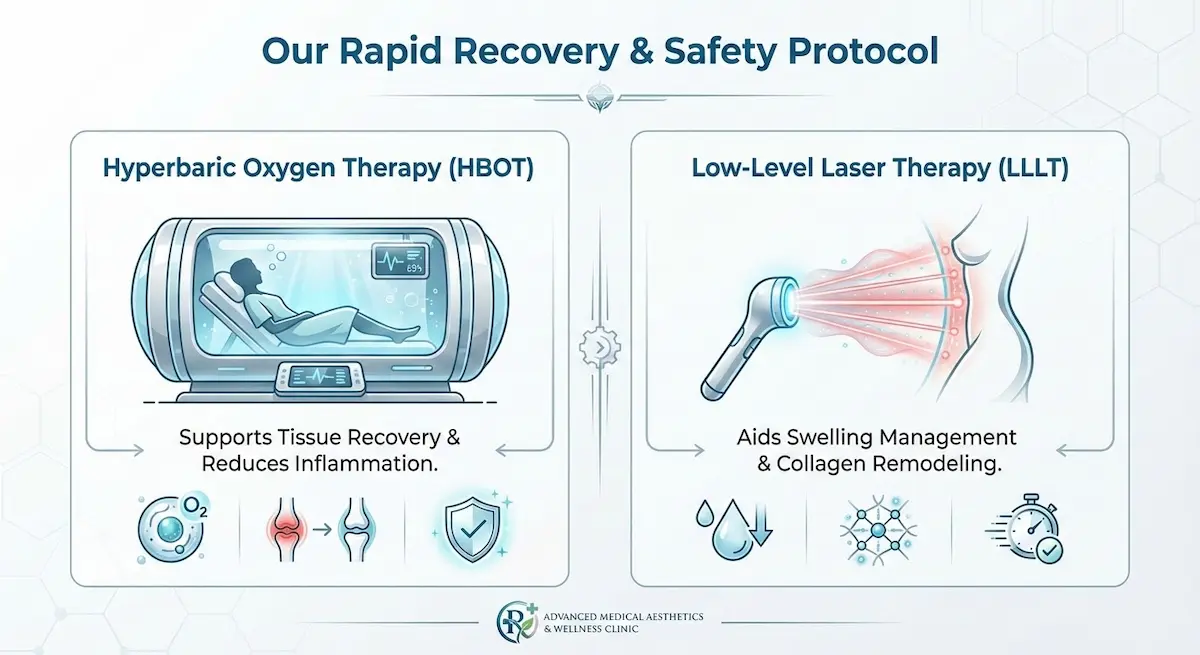
Modern recovery is not just “rest and wait.” In advanced post-op pathways, recovery support is designed to reduce inflammation burden, support tissue repair, and improve the comfort and predictability of healing. At AKM Clinic, two technologies—Hyperbaric Oxygen Therapy (HBOT) and Low-Level Laser Therapy (LLLT)—are positioned as part of a structured Rapid Recovery & Safety Protocol rather than optional add-ons.
HBOT: Why Oxygenation Can Matter After Surgery
HBOT involves breathing oxygen in a pressurized environment, with the goal of increasing oxygen delivery to tissues. In the context of post-surgical recovery, the rationale is straightforward: healing is energy-intensive, and oxygen supports the cellular processes involved in repair.
For body contouring patients, HBOT is often discussed in terms of:
- Supporting tissue recovery: assisting the body’s repair environment after a controlled surgical injury.
- Reducing “recovery drag”: potentially helping patients feel less bogged down by inflammation and fatigue.
- Safety mindset: reinforcing a proactive, monitored recovery plan rather than a passive one.
HBOT should always be implemented with appropriate medical oversight and patient selection. It is not a replacement for surgical technique or safe anesthesia planning; it is a recovery support layer designed to make the overall journey smoother and more predictable.
LLLT: Cellular Repair, Collagen Support, and Swelling Management
LLLT (often called “cold laser”) uses low-energy light with the intent of supporting cellular function during healing. In post-op care, it is commonly positioned to help with swelling management and soft-tissue recovery.
In an HD liposuction pathway, LLLT is often framed around:
- Swelling and bruising support: promoting a recovery environment where inflammation resolves more efficiently.
- Tissue quality: supporting collagen-related remodeling that influences how smooth and refined the final contour looks.
- Comfort: helping patients progress through the “tenderness phase” with less disruption to daily life.
For the expert patient, the right question is not “Do you have a laser?” It is: “What is your protocol—timing, frequency, and goals—and how do you integrate it into medical follow-up?” A protocol without a plan is just equipment.
How the Combined Protocol Works as a System
HBOT and LLLT are most meaningful when used as part of a coordinated recovery pathway—integrated with compression strategy, mobility guidance, wound care, and scheduled follow-ups. This system approach is designed to support:
- Faster return to routine: not by rushing biology, but by supporting it.
- More comfortable healing: reducing the “recovery noise” that can make patients feel uncertain.
- Better aesthetic consistency: helping tissues settle smoothly so HD definition reads natural rather than irregular.
Surgeon’s Insight: The most respected results are the ones that look like you—just sharper, healthier, and more defined. The goal is rejuvenation, not alteration.
Risks, Side Effects, and Honest Safety Counseling
Every liposuction procedure—including awake high-definition liposuction—has risks. The expert-patient approach is to separate expected, temporary side effects (swelling, bruising, numbness) from true complications (infection, seroma, contour deformity, clot events) and then evaluate how a clinic reduces risk through screening, monitoring, sterilization standards, and post-op continuity of care. At AKM Clinic, patient safety is treated as a non-negotiable priority through strict pre-operative screening, continuous vitals monitoring, and rigorous sterilization standards.
Expected Side Effects (What’s “Normal”)
Most patients experience a predictable early recovery pattern that includes:
- Swelling: typically peaks early and then gradually decreases; HD definition emerges as swelling resolves.
- Bruising: varies by individual and treatment extent.
- Tenderness and soreness: often described as deep muscle soreness rather than sharp pain.
- Numbness or altered sensation: can occur in patches and usually improves over time.
- Firmness and temporary lumpiness: part of normal tissue remodeling; the timeline differs by body area and skin quality.
A high-quality aftercare plan clarifies what’s expected in each week and prevents “false alarms” caused by normal swelling transitions.
Potential Complications (What Expert Patients Watch For)
Complications are uncommon in well-selected, well-managed cases, but they are real. Risks to discuss openly include:
- Infection: increasing redness, warmth, fever, worsening pain, or drainage should be evaluated.
- Seroma (fluid collection): may require monitoring or drainage depending on size and symptoms.
- Contour irregularities: waviness, asymmetry, or over-/under-correction—especially relevant in HD sculpting, where depth control is critical.
- Skin healing issues: more likely when skin quality is poor or when nicotine use is present.
- Clot events (DVT/PE): rare but serious; early mobility and risk stratification are essential.
Your consultation should include personalized risk stratification—based on your medical history and the planned extent of treatment—not generic reassurance.
Risk Reduction Checklist: What a High-Standard Clinic Should Do
Risk reduction is not one action; it is a system. Key pillars include:
- Strict pre-operative health screening to confirm candidacy and reduce preventable risk.
- Continuous patient vitals monitoring throughout every procedure, including awake/twilight cases.
- Rigorous sterilization standards aligned with international expectations.
- Clear post-op access (who you contact, response times, what constitutes an emergency) and structured follow-up.
For international patients in particular, the fear is not only “complications”—it’s the fear of being unsupported after going home. AKM Clinic’s model emphasizes long-term virtual follow-ups at set intervals (1, 3, 6, and 12 months) to reduce abandonment anxiety and maintain continuity of care.
Results: What “Natural” Means in Body Sculpting
In high-definition body contouring, the highest-quality result is one that looks like it belongs to your anatomy—defined, athletic, and balanced—without appearing artificially “etched.” AKM Clinic’s guiding principle is “Rejuvenation, Not Alteration,” meaning the goal is to enhance intrinsic features rather than create a different body identity.
What You Can Realistically Expect From HD Sculpting
When anatomy is compatible, awake HD lipo can deliver:
- Cleaner transitions: smoother waistline gradients and a more harmonious 360-degree silhouette.
- More visible definition: improved shadowing and structural “read” in the abdomen, flanks, back, and chest (where appropriate).
- Better proportional balance: definition that looks coherent from multiple angles, not just front-facing photos.
What it cannot do is override core biological constraints. Skin quality remains the gatekeeper of “crispness,” and lifestyle stability is the gatekeeper of longevity.
What Can Make Results Look “Overdone” (and How Experts Avoid It)
Patients who fear looking “operated on” are often reacting to three common problems: over-aggressive superficial suctioning, unnatural line placement, and poor transition blending. In AKM’s broader patient experience research, a consistent fear among international patients is an unnatural, “operated” appearance—described as “pulled” or “wind-swept” in facial contexts—which maps to the same underlying anxiety in body contouring: “Will this look obviously done?”
In HD lipo, natural-looking outcomes are protected by:
- Anatomy-led mapping: enhancing what your structure supports, not forcing template lines.
- Depth discipline: avoiding excessive superficial suction that can create waviness or sharp grooves.
- Transition refinement: prioritizing smooth gradients so definition reads “athletic,” not “carved.”
Patient Perspective: Why “Awake” Can Matter Emotionally
For some patients, the biggest barrier is not the procedure—it is anesthesia anxiety. In AKM Clinic patient narratives, a U.S. patient described a significant fear of general anesthesia and chose an “awake” (local anesthesia) pathway after surgeon-led guidance, reporting a remarkably easy recovery experience.
While each procedure is different and candidacy is individualized, this illustrates a consistent expert-patient theme: when the anesthesia plan fits the medical profile and the team communicates clearly, it can remove a major psychological barrier and improve the overall treatment experience.
Awake High-Def Liposuction Cost 2026: USA vs Turkey
Expert patients don’t shop on the lowest number—they evaluate risk, credentials, standards, transparency, and total journey cost. For international care, the most important distinction is whether lower pricing reflects lower standards or simply different economics. AKM Clinic explicitly frames the Turkey–USA price gap as a result of macroeconomic factors (exchange rate and lower national operating costs), not a compromise on quality.
What Actually Drives the Price Gap
For patients comparing NYC / Los Angeles / Miami pricing against Istanbul, the primary drivers are structural:
- Operational costs: staffing, facility costs, and overhead differ significantly.
- Currency dynamics: USD-to-TRY exchange rate affects pricing structures.
- Packaging model: all-inclusive care can reduce surprise expenses that commonly appear as add-ons.
In value terms, the question becomes: “What is included, what standards are verifiable, and what follow-up is guaranteed?”
All-Inclusive Model: What’s Typically Included
AKM Clinic’s VIP package model is structured for clarity and to remove logistical stressors that commonly increase perceived risk in medical travel.
| Included in VIP Package | Not Included |
|---|---|
| Your complete surgical procedure | International flight tickets |
| Anesthesia & operating room fees | Personal travel insurance |
| All pre-operative tests | Personal expenses (e.g., meals, beyond the provided first post-op meal) |
| 5-star hotel accommodation | Additional hotel nights (if extending) |
| VIP airport & clinic transfers | Visa fees (if applicable) |
| 24/7 dedicated Patient Host | |
| Post-op medications & garments | |
| Long-term virtual follow-up care |
How to Compare Quotes Like an Expert (Avoiding Hidden Costs)
When comparing a “base quote” in the U.S. with an “all-inclusive” quote abroad, ask for an apples-to-apples breakdown:
- Anesthesia level and fees: local/twilight vs general anesthesia and who provides monitoring.
- Facility standards: what accreditation and monitoring protocols are used.
- Compression garments + medications: included or added later.
- Follow-up structure: who manages concerns after you return home.
AKM Clinic’s stated quality framework includes operating in JCI-accredited hospitals and using FDA-approved materials, alongside surgeons with European Board credentials—positioned as comparable to U.S. board standards for international patients.
Choosing the Best Awake Hif-Liposuction Surgeon
For awake high-definition liposuction, provider selection is not a branding exercise—it is risk management. HD work is technique-sensitive, and “awake/twilight” pathways require a team that can execute comfort, dosing strategy, monitoring, and contingency planning with the same seriousness as any operating-room case. The most reliable way to choose well is to evaluate credentials, process, and transparency—then confirm those qualities during a consult.
Credentials to Look For (Beyond Marketing)
Expert patients look for qualifications that correlate with consistent outcomes and responsible decision-making. While credential structures vary by country, high-level signals typically include:
- Board-level training and formal certification: look for recognized board certification and clear documentation of training history.
- Procedure-specific experience: HD liposuction is not “standard lipo with a new label.” Ask how often the surgeon performs HD cases and which body types they treat most.
- Before/after consistency: look for results across multiple angles (front/oblique/back) and across different body types—not just one “ideal” patient profile.
- Ethical candidacy standards: a surgeon should be comfortable recommending an alternative (skin excision, staged approach, or no surgery) when anatomy does not support an HD endpoint.
At AKM Clinic, the surgical team is positioned as European Board–certified and internationally trained specialists, with an emphasis on natural-looking outcomes aligned with a “Rejuvenation, Not Alteration” philosophy.
Facility Standards and Why They Matter for Awake/Twilight Cases
Even when a procedure is performed “awake,” it is still surgery. The facility and peri-operative protocol directly influence safety, infection risk, and the quality of monitoring. High-standard facilities typically demonstrate:
- Continuous monitoring: vitals are monitored throughout the case, not intermittently.
- Emergency readiness: clear escalation protocols if comfort, blood pressure, oxygenation, or other parameters change.
- Sterilization discipline: consistent, documented sterile technique and infection-prevention standards.
- Team-based accountability: clearly defined roles for sedation management, patient monitoring, and intraoperative assistance.
For international patients, verification matters. Ask exactly where the procedure will take place (clinic vs hospital setting), what monitoring is standard, and what follow-up access looks like after discharge.
Consultation Questions Checklist (Use This to Compare Providers)
If you want to evaluate providers like an expert, go into your consult with a checklist. Strong providers answer these questions directly and specifically:
- Technique & plan: “Which areas are you treating, and what is the contour goal for each zone?”
- HD strategy: “How do you decide where to sculpt for definition vs where to preserve softness for a natural look?”
- Anesthesia choice: “Am I a candidate for tumescent + twilight? Why or why not?”
- Comfort protocol: “What do patients typically feel during infiltration and sculpting, and how do you keep it comfortable?”
- Safety: “What monitoring is used throughout the procedure, and who manages sedation?”
- Complication planning: “If swelling, seroma, or irregularity occurs, what is your protocol and timeline?”
- Recovery protocol: “What is the structured recovery pathway (compression, mobility, follow-ups), and what is included?”
A quality consult should feel like a clinical plan review—not a sales pitch.
The Medical Journey for International Patients
For expert patients traveling internationally, the “medical journey” is part of clinical safety. Logistics influence stress levels, sleep, hydration, mobility, and follow-up reliability—each of which affects recovery. The goal of a well-designed international pathway is to remove friction points so you can focus on healing, not coordination.
Free Virtual Consultation and Personalized Surgical Planning
The process typically starts with a remote assessment. Patients share health history, goal photos, and targeted-area images so the team can discuss:
- Candidacy: whether your anatomy supports an HD endpoint and whether an awake/twilight plan is appropriate.
- Scope: which areas are prioritized and whether combining procedures is sensible or excessive.
- Safety planning: medication holds, nicotine cessation guidance, clot-risk considerations, and pre-op testing requirements.
- Recovery structure: garment strategy, activity timeline, and what support is provided in the first days.
The best virtual consults are explicit about what can be promised (contour goals) and what cannot (exact “abs” appearance regardless of skin quality or muscle structure).
VIP Transfers, Hotel, and On-the-Ground Support
International care becomes safer and calmer when logistics are centralized. A typical VIP pathway is designed to reduce avoidable stressors in the peri-operative window, which can include:
- Airport pickup and clinic transfers: minimizing navigation burden and preserving energy for recovery.
- Hotel accommodation planning: supporting rest, sleep, and a controlled environment for early recovery.
- Dedicated patient coordination: someone responsible for timing, check-ins, and practical needs, so medical decisions aren’t diluted by travel friction.
In an awake/twilight pathway, early recovery comfort is often excellent when sleep, hydration, and mobility are handled thoughtfully. Logistics may sound non-medical, but they directly influence how well patients follow the recovery plan.
Long-Term Follow-Up After You Return Home
The most common fear for traveling patients is, “What happens after I go home?” A structured program should define follow-up checkpoints and access routes for questions or concerns. Strong follow-up includes:
- Scheduled check-ins: rather than “message us if needed,” follow-up should be proactive.
- Clear red-flag triage: guidance on what is normal vs what requires urgent in-person evaluation.
- Continuity in recovery protocols: compression timeline, activity progression, and any supportive therapies (such as recovery technologies) are tracked and adjusted over time.
For HD cases, long-term follow-up is especially valuable because definition evolves over months, and expert guidance helps patients interpret swelling phases without unnecessary anxiety.
Awake High-Def Liposuction: Frequently Asked Questions
These are the most common high-intent questions expert patients ask when researching awake high-definition liposuction. Keep in mind that the most accurate answers depend on your anatomy, medical history, and the scope of treatment planned.
Are you awake during liposuction?
With an “awake” approach, you are not fully under general anesthesia. Most patients are comfortable using tumescent local anesthesia, and some also receive twilight sedation to reduce anxiety and awareness. “Awake” can range from conversational and alert to relaxed and drowsy—what matters is that pain is controlled and monitoring is continuous.
Is awake liposuction painful?
It should not be “painful” in the sense of sharp, uncontrolled pain. Most patients feel pressure, movement, and vibration rather than sharp sensations. The most challenging moment for some patients is the tumescent infiltration step (the numbing fluid infusion). A careful team manages this with pacing, technique, comfort checks, and sedation when appropriate.
What does twilight sedation feel like?
Twilight sedation (IV sedation) commonly feels like deep relaxation. Many patients feel drowsy and less aware of time passing; some remember parts of the procedure, while others have limited recall. Side effects can include grogginess or nausea, which should be discussed during your pre-op planning so expectations and prevention strategies are clear.
How does tumescent anesthesia work?
Tumescent anesthesia uses a dilute anesthetic solution infused into the fat layer to numb the area, expand the tissue plane for safer sculpting, and typically reduce bleeding by constricting small vessels. It is central to many awake liposuction protocols because it enables comfort and controlled fat removal without full general anesthesia in selected patients.
Is awake liposuction safer than general anesthesia?
It depends. For appropriately selected patients and the right procedure scope, avoiding full general anesthesia may reduce certain anesthesia-related risks. However, awake/twilight cases still require professional monitoring, careful medication planning, and clear safety protocols. The safest choice is always the one that fits your medical profile and the complexity of your surgery.
How long is recovery for awake high-definition liposuction?
Most patients feel functional within days, but HD definition develops over weeks to months. Early swelling typically peaks in the first days, then improves gradually. Many patients return to desk-based work within about a week (sometimes sooner, sometimes later depending on extent). The refined HD contour is often best judged around 3–6 months, with continued subtle improvement beyond that in some cases.
When can I work out again after HD liposuction?
Light walking is usually encouraged early, as tolerated. Strenuous exercise and heavy lifting are typically delayed until your surgeon clears you—often several weeks depending on how many areas were treated, swelling, and your healing response. A stepwise return (mobility → light cardio → progressive resistance) usually produces the most predictable contour and comfort.
How long do high-definition liposuction results last?
The fat cells removed do not return, but remaining fat cells can enlarge with weight gain. Long-term results are best maintained with stable weight, strength training, and consistent nutrition. HD results tend to “read” best when overall body composition remains steady—because definition depends on a relatively thin, stable fat layer and good skin behavior.
Am I a candidate if I have loose skin?
Possibly, but it depends on severity and location. Mild laxity may still allow a great HD outcome, especially if your skin has some elasticity. Moderate laxity may benefit from a tightening strategy paired with liposuction. Significant loose skin—especially if it hangs or folds—may require an excisional procedure (with or without lipo) for the most predictable result. A high-quality consult should be honest about skin as the “final wrapper.”
What should I ask in a consultation for awake HD liposuction?
Ask questions that force specificity:
- Plan clarity: “Which areas are you treating and what is the contour goal for each zone?”
- HD strategy: “Where will you sculpt for definition, and where will you preserve softness for a natural look?”
- Anesthesia choice: “Why am I a candidate (or not) for tumescent + twilight versus general anesthesia?”
- Safety: “What monitoring is used continuously, and who manages sedation?”
- Recovery protocol: “What is your compression, mobility, and follow-up schedule—and what’s included?”
- Contingency plan: “If swelling, seroma, or irregularity occurs, what is your protocol and typical timeline?”
A strong consult should feel like a medical plan review with clear endpoints—not a generic promise of “great abs.”