



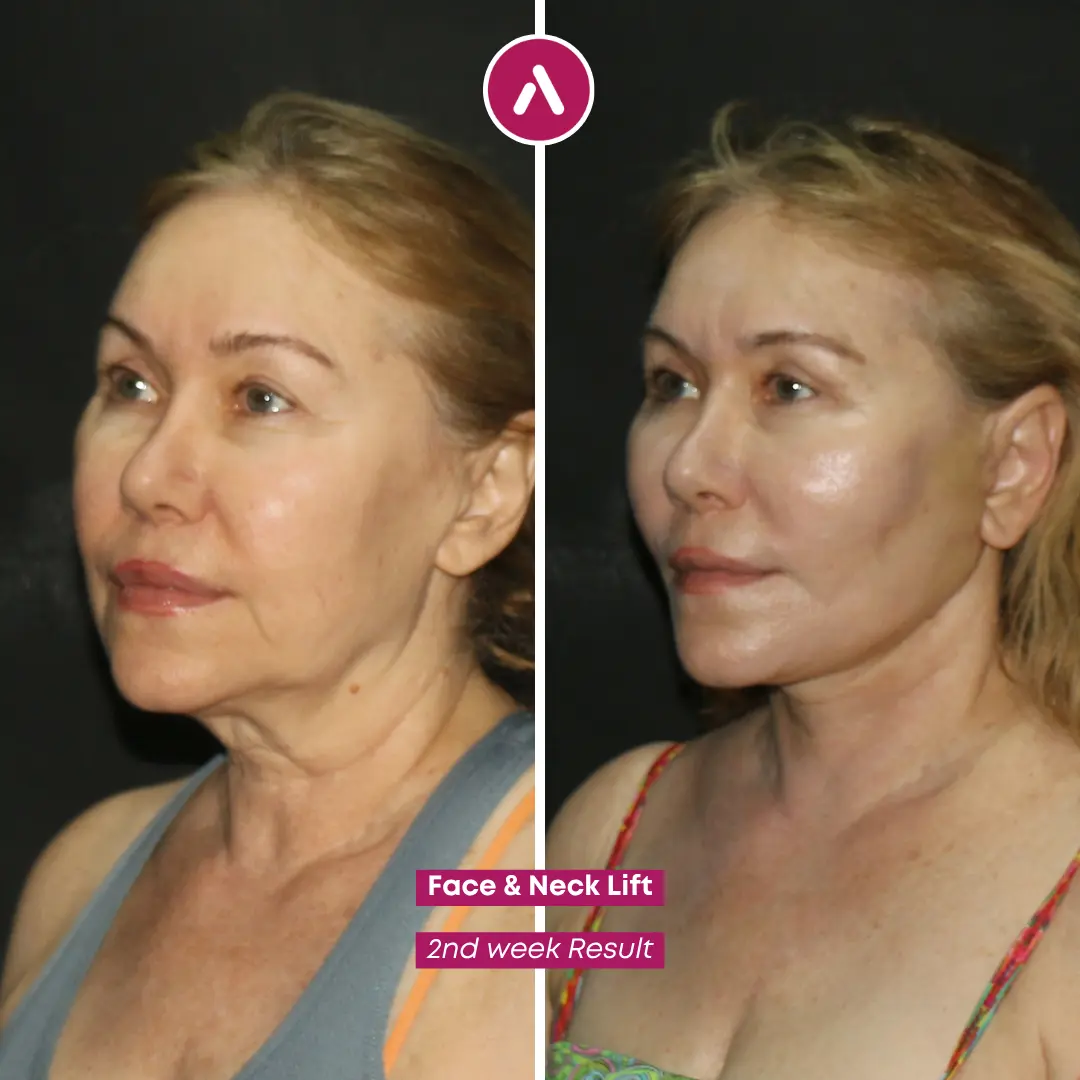
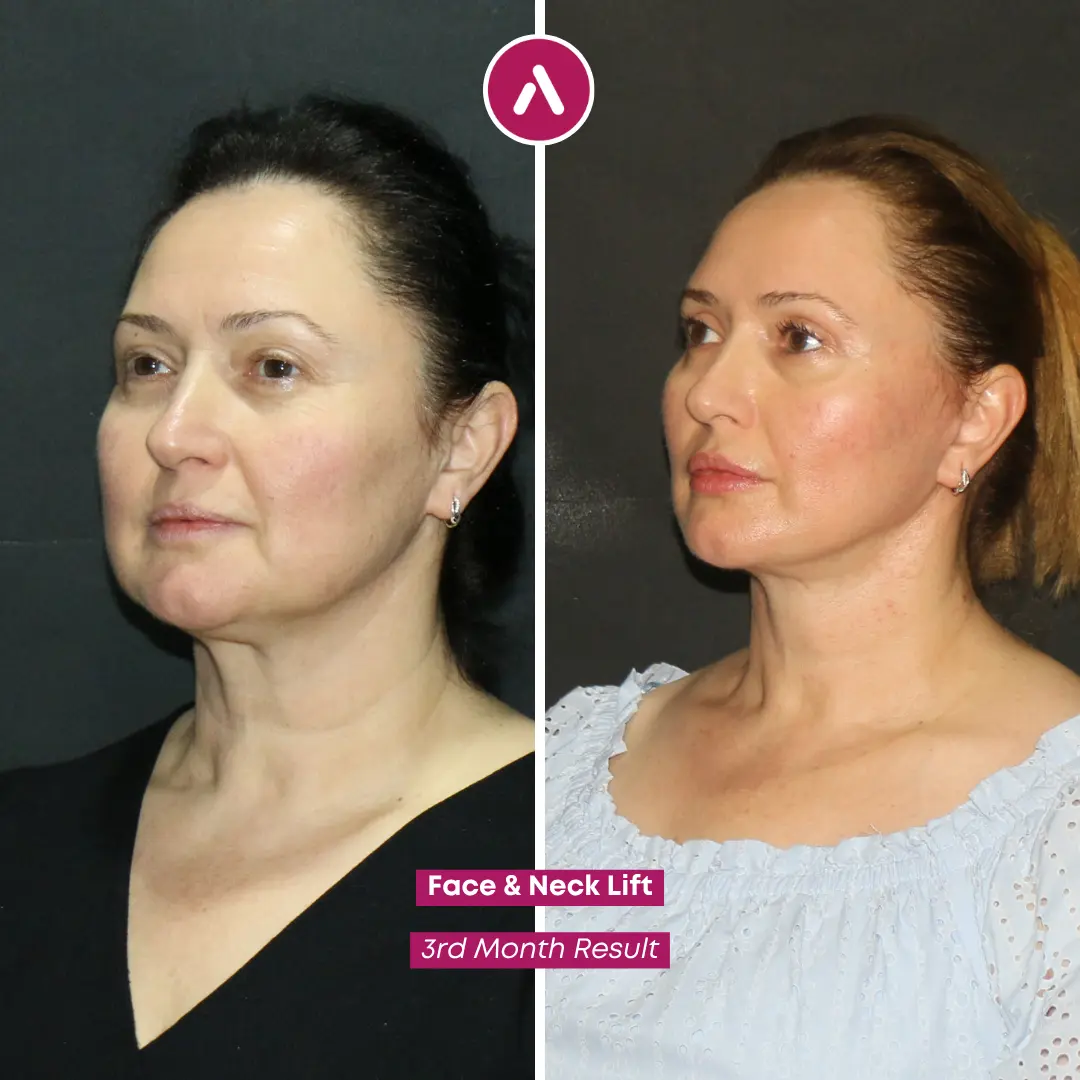
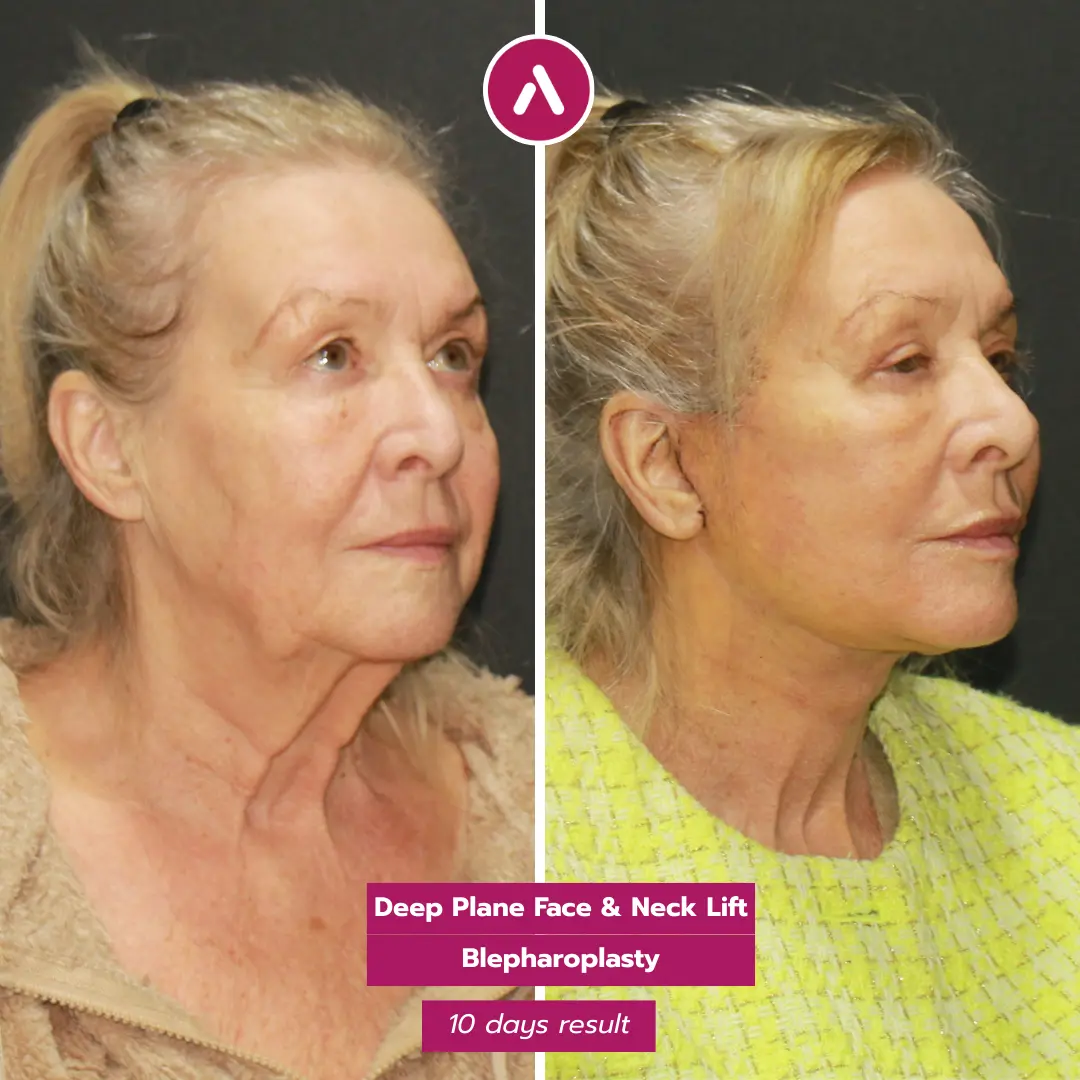
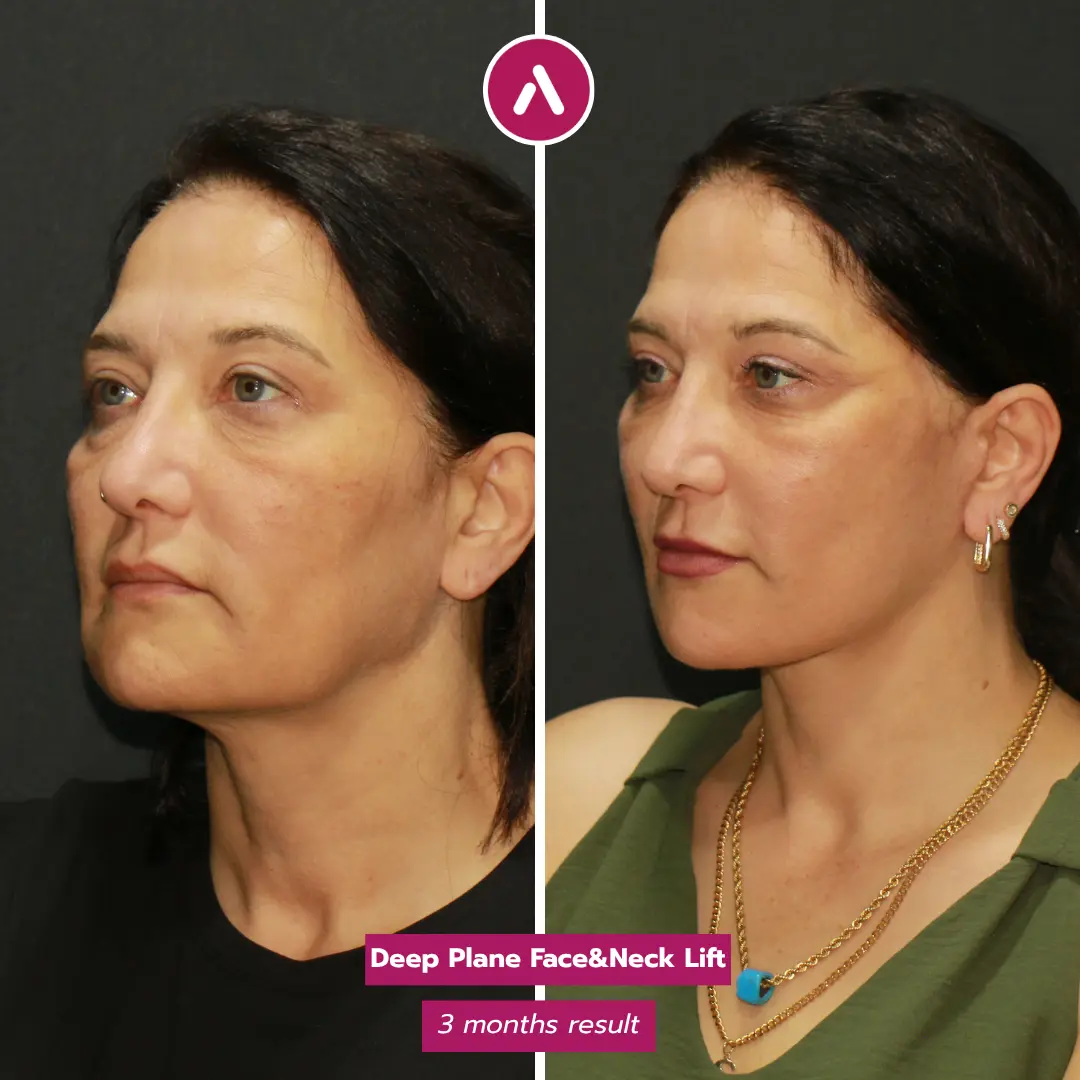
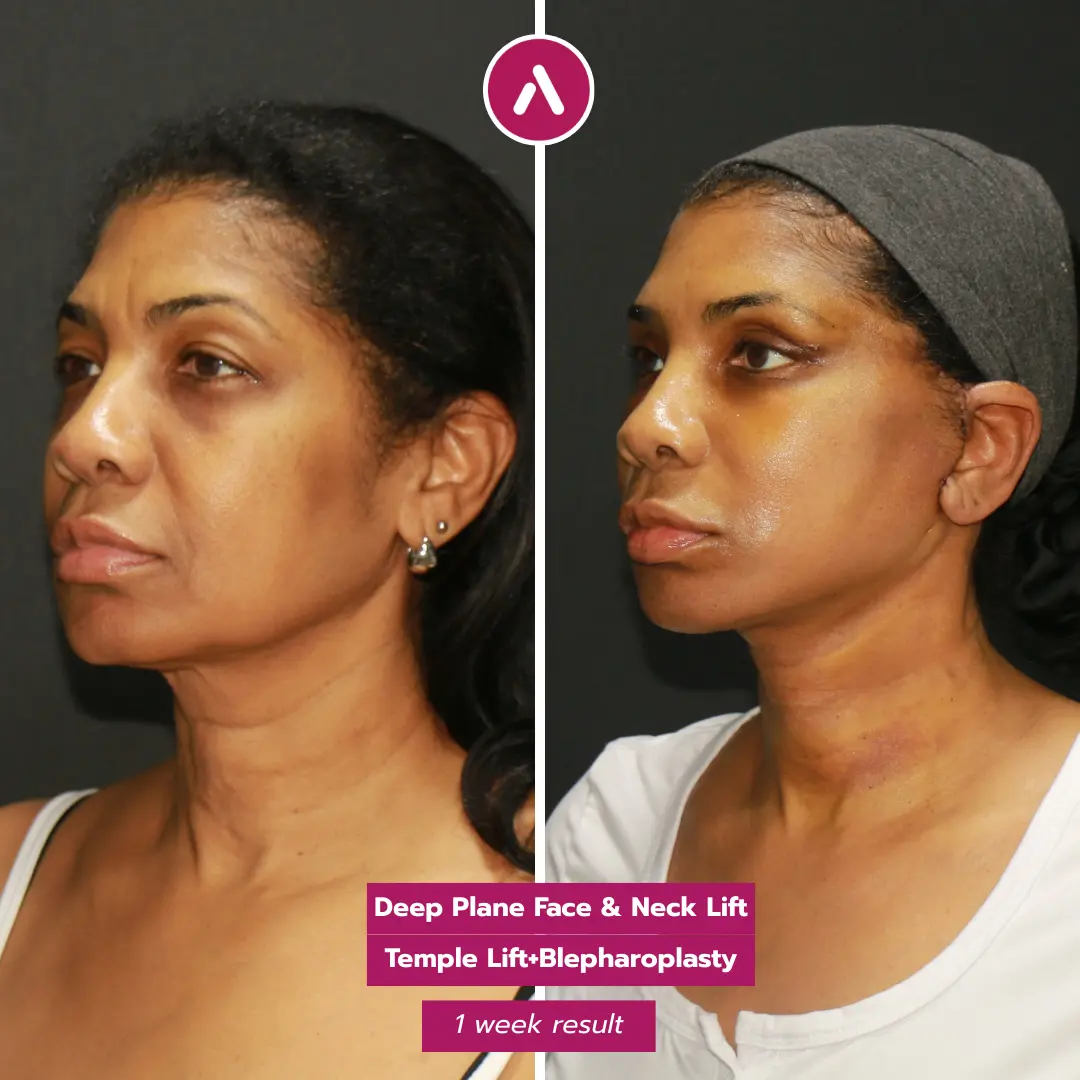
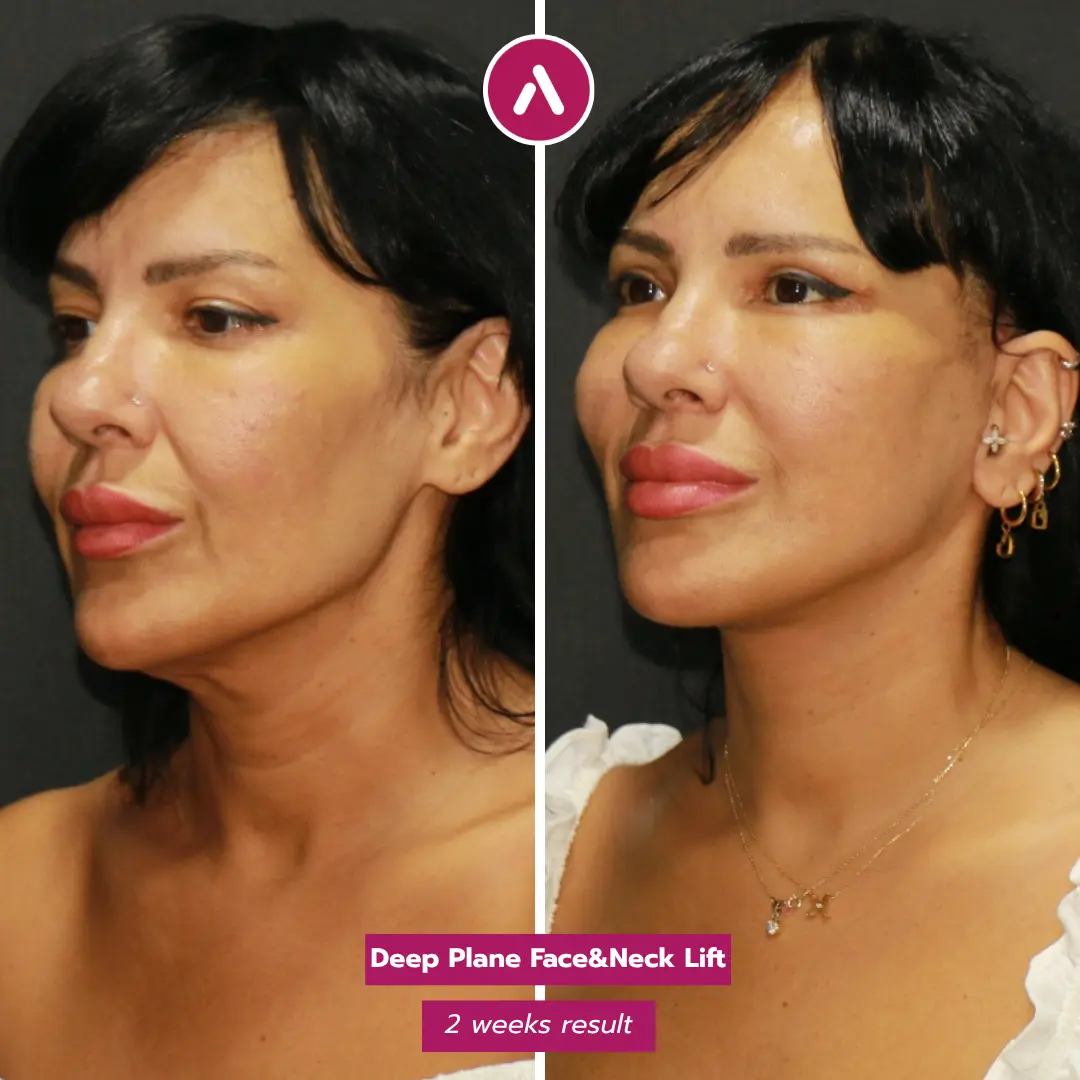
An awake deep plane facelift is a modern facial rejuvenation procedure designed to restore youthful facial contours by repositioning deeper facial structures—rather than simply tightening the skin—while using local anesthesia, often paired with twilight sedation for comfort. In practical terms, it aims to improve concerns like jowling, midface descent, and neck laxity by addressing the structural “gravity shift” that happens with age, while keeping the overall outcome natural-looking and undetectable.
For many highly informed patients, the appeal is twofold: (1) the deep plane concept—fixing the true anatomic problem instead of “pulling skin,” and (2) the awake component—reducing reliance on general anesthesia in appropriate candidates. At AKM Clinic, this approach aligns with a “Natural-First” philosophy summarized as The goal is rejuvenation, not alteration.
Surgeon’s Insight: The most convincing facelift result is the one that looks like you—just more rested, brighter, and subtly revitalized. This “Natural-First” mindset is explicitly framed as rejuvenation, not alteration.
Table of Contents
What Is an Awake Deep Plane Facelift?
The term can sound intimidating if you picture being “fully awake” through an operation. In reality, an awake deep plane facelift refers to a carefully controlled anesthesia plan where the surgical area is fully numbed with local anesthesia, and the patient may also receive twilight sedation (a deeply relaxed, calm state) depending on the plan and candidacy. The “deep plane” portion describes the layer where the lift is performed and the structures being repositioned for a more natural and longer-lasting correction.
What “Awake Facelift” Actually Means (Local Anesthesia ± Twilight Sedation)
An awake facelift is best understood as local anesthesia-driven surgery. The face and neck tissues involved in the procedure are numbed so that pain is controlled at the source. When twilight sedation is included, the goal is comfort and reduced anxiety—without the full physiologic “system load” of general anesthesia in selected patients. At AKM Clinic, patient stories repeatedly show that anesthesia-related fear can be a major barrier—and that offering major facial procedures under local anesthesia can remove that barrier for the right candidate.
For example, one US patient seeking rejuvenation described being “paralyzed” by anxiety over general anesthesia, and was specifically guided toward local anesthesia as the safest and most suitable option for her combination procedures.
What “Deep Plane” Means (It’s Not a Skin-Tightening Procedure)
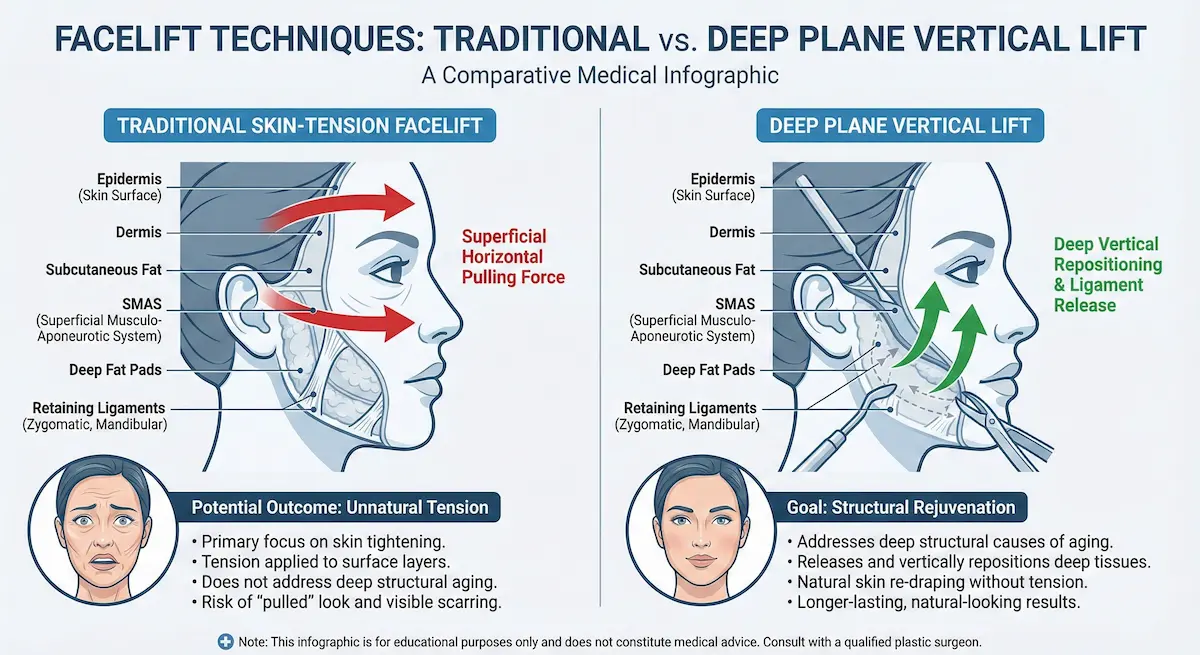
A deep plane facelift is repeatedly described in AKM Clinic’s case analyses as a technique that treats the root cause of facial aging: the descent of deeper structures (not just loose skin). The core logic is structural: by working beneath the SMAS layer and releasing retaining ligaments, the surgeon can lift descended tissues vertically, restoring midface shape and correcting jowls without placing tension on the skin—an approach explicitly linked to avoiding the “wind-swept” look patients fear.
In other words, rather than pulling the skin tighter to camouflage sagging, deep plane techniques focus on repositioning the underlying facial framework so the skin can re-drape more naturally. This is why it is consistently positioned as a cornerstone technique for patients prioritizing naturalism and longevity.
Why Combine “Awake” + “Deep Plane”?
Patients exploring an awake deep plane facelift are usually motivated by a specific set of priorities:
- Natural-looking correction (avoiding pulled, obvious results)
- Structural improvement (jawline, jowls, midface, and often neck) rather than surface tightening
- Greater anesthesia control for patients concerned about general anesthesia, when medically appropriate
From a provider standpoint, there’s also an important practical point: performing a complex deep plane facelift without general anesthesia is a capability that requires experience and a well-designed surgical workflow. AKM Clinic explicitly positions its mastery of performing the complex deep plane technique without general anesthesia as a key differentiator for comfort and recovery.
Facial Aging Anatomy: Why “Deep Plane” Works
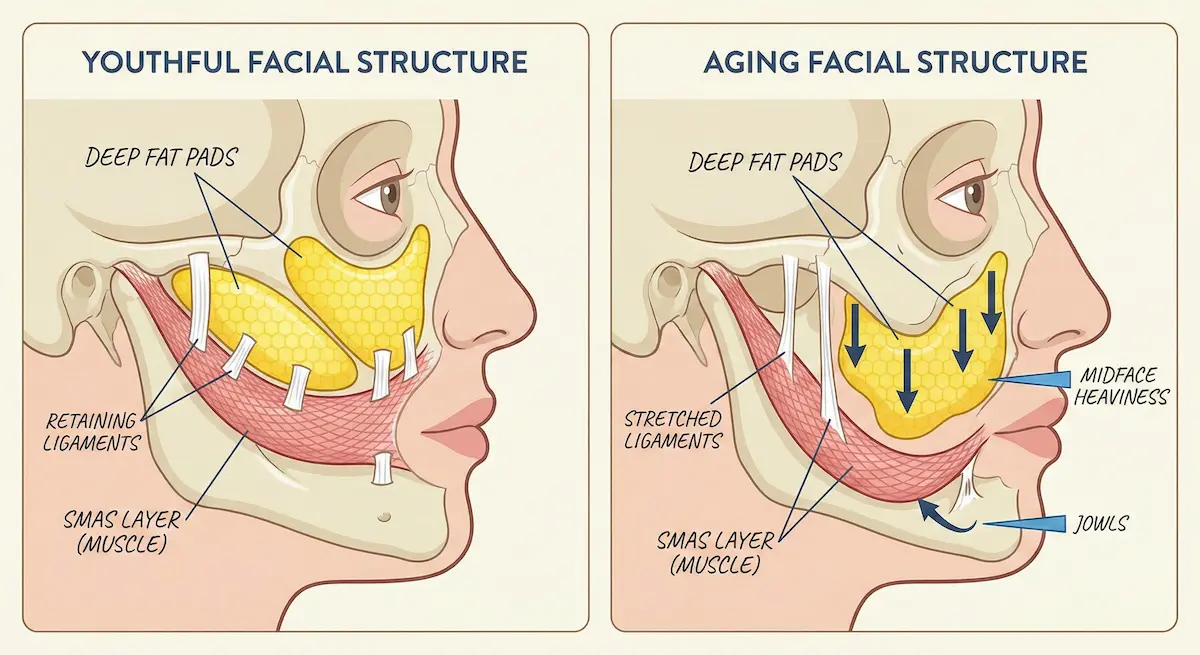
To understand why deep plane techniques are so often associated with natural outcomes, it helps to understand what actually “ages” in the face. The most important concept is that facial aging is not only skin laxity—it is the downward shift of deeper structures. When those deeper layers descend, the face can look heavier, tired, and less defined even if the skin quality is still good.
The Root Cause: Descent of Deep Structures (SMAS, Retaining Ligaments, Fat Pads)
Across AKM Clinic’s own surgical case synthesis, the aging mechanism is described as a structural problem: the descent of SMAS, retaining ligaments, and fat pads, rather than superficial skin laxity alone. This matters because it changes what an “effective” lift must do—if the foundation has dropped, pulling the surface may not correct the cause (and can create distortion).
Why Skin-Tension Facelifts Can Look “Pulled”
A consistent fear among international facelift patients is looking unnatural—described as “wind-swept,” “pulled,” or otherwise “operated.” AKM’s case analysis directly contrasts deep plane vertical repositioning with traditional approaches that rely on horizontal skin tension, framing skin tension as the mechanism behind the distortion patients fear.
Deep plane strategies emphasize a tension-minimized skin closure by correcting the deeper ptosis first—so the skin can lay smoothly rather than being used as the “lifting tool.”
What Deep Plane Correction Targets (Jowls, Midface, and Often the Neck)
In the clinic’s case strategy descriptions, deep plane work is repeatedly linked to:
- Midface restoration by lifting descended cheek fat pads vertically
- Jowl correction and jawline redefinition without pulling on skin
- Neck rejuvenation when paired with a neck lift/platysmaplasty to address the muscular component of neck aging
This “structure-first” approach is why deep plane face-and-neck strategies are often described as producing a more comprehensive reset of facial architecture—improving definition while keeping the result looking like the same person.
Ideal Candidates: Who Benefits Most (and Who Should Wait)
The best candidates for an awake deep plane facelift are typically people who can clearly describe a “structure problem,” not just a “skin problem.” In AKM Clinic’s own case-based analyses, recurring motivations include wanting to look well-rested and refreshed while explicitly avoiding an unnatural, “operated” appearance.
Signs You’re a Strong Candidate
Although every face ages differently, deep plane strategies are consistently positioned for patients whose concerns reflect deeper tissue descent—especially in the lower face, midface, and neck. In the clinic’s case studies, the most common “I see it in the mirror” concerns include:
- Loss of jawline definition due to jowl formation
- Midface descent creating a heavier lower face or a “tired/sad” resting expression
- Neck laxity and early-to-significant platysmal banding (often described as “turkey neck”)
- A goal to look refreshed and sculpted, not pulled or over-tightened
For many “Expert Patients,” candidacy is as much about priorities as anatomy: natural-looking improvement, long-lasting structural correction, and (when appropriate) avoiding general anesthesia. The “awake surgery” option is repeatedly described by patients as a decisive factor—especially for those with significant anxiety around general anesthesia.
Who May Not Be a Good Candidate (or May Need a Different Plan)
Not everyone should be treated with the same “one-size” facelift approach, and not every patient is an ideal candidate for an awake plan. In general, a qualified facial plastic surgery team will evaluate your health, medications, lifestyle factors, and surgical goals before confirming whether local anesthesia ± twilight sedation is appropriate. The key point is that candidacy should be determined through strict pre-operative screening and a surgeon-led plan—not through assumptions made from photos alone.
At AKM Clinic, safety infrastructure is framed as non-negotiable, including strict pre-operative health screenings and advanced patient vitals monitoring throughout every procedure.
What to Expect During a High-Quality Consultation
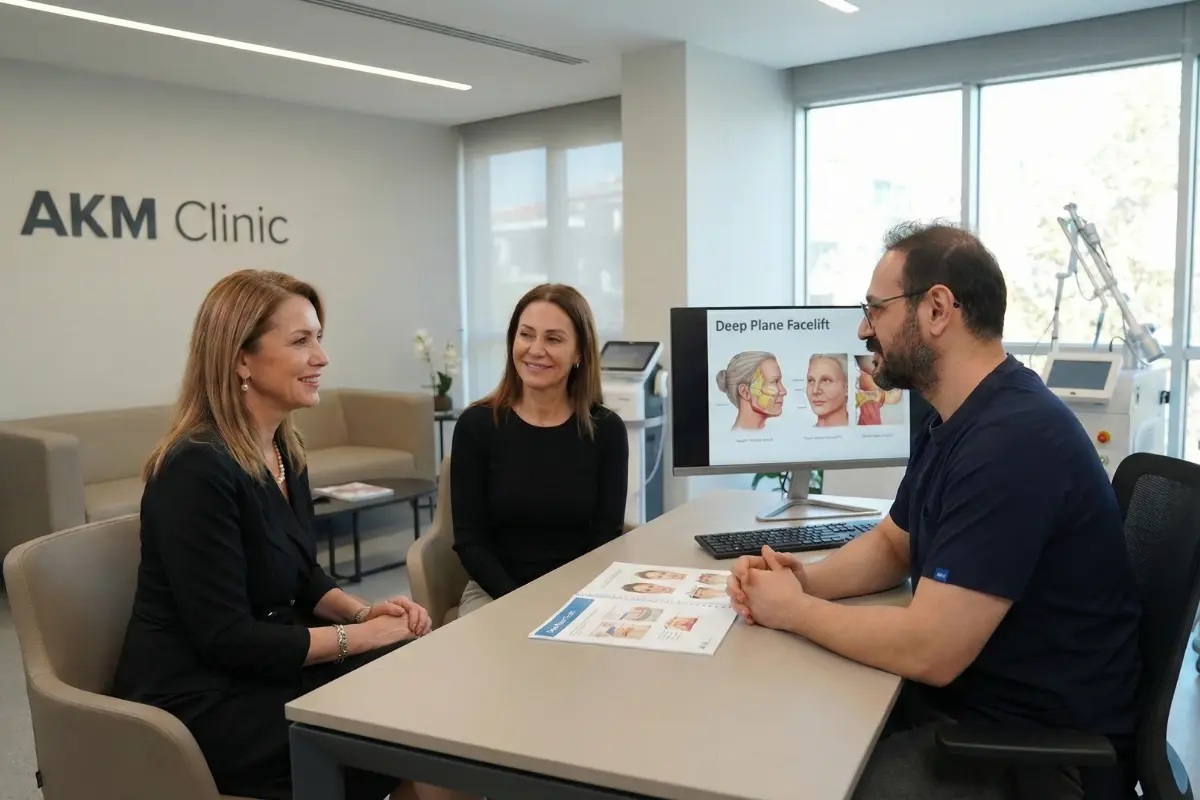
A meaningful consultation should feel specific, not generic. For the expert patient, the consultation is where a surgeon translates your goals (“I look tired” / “I don’t want to look pulled”) into anatomic targets and a staged plan. In AKM Clinic’s patient journey model, the process is designed to be transparent and personalized from the earliest stages—so you understand what is being recommended and why.
When available, advanced planning tools can also support precision and expectation-setting. AKM Clinic describes investing in pre-operative planning and simulation technology (including 3D imaging) as part of meticulous planning for natural results.
Technique Options: Deep Plane vs SMAS and Other Approaches
Facelift terminology can be confusing because different techniques may share the same external incision patterns but differ drastically in what is lifted, how it’s lifted, and where tension is placed. In AKM Clinic’s own surgical analyses, the deep plane method is repeatedly positioned as the cornerstone approach specifically because it corrects the deep structural descent driving jowls, midface heaviness, and neck aging—while aiming to avoid the unnatural distortion patients fear.
Deep Plane Facelift: Vertical Structural Repositioning (Not Skin Pulling)
The deep plane approach is described as working below the SMAS layer and releasing retaining ligaments so descended tissues can be lifted vertically—a direct countermeasure to gravity’s downward pull. This strategy is repeatedly linked to three goals:
- Structural correction by releasing retaining ligaments and lifting deep tissues vertically
- Jowl and midface restoration by repositioning descended cheek fat pads, softening folds, and restoring youthful contour
- Neck rejuvenation when paired with platysmaplasty to address the muscular component of neck aging
Importantly, the clinic’s case analyses explicitly contrast deep plane vertical lift with traditional approaches that rely on horizontal skin tension—describing skin-tension strategies as a pathway to “wind-swept” distortion that patients actively want to avoid.
SMAS, Extended SMAS, MACS: Where They Fit Conceptually
There isn’t a single “best” facelift technique for every face—there are frameworks used to match anatomy, goals, and risk tolerance. AKM Clinic’s own procedure taxonomy includes SMAS facelift, extended SMAS, and MACS facelift among the facelift categories that should be covered in treatment pages.
From a patient-education standpoint, a practical way to think about these is not as “brands,” but as different ways of handling:
- Vector and depth of lift (how the tissues are repositioned and at what layer)
- Where tension is placed (deeper support vs surface-level skin tension)
- Which facial zones are prioritized (midface, jowls, neck)
If your primary concern is strong midface descent and jowl formation—and your priority is avoiding a pulled look—AKM’s internal case logic repeatedly favors a deep plane structural approach to avoid skin-tension outcomes.
When a Neck Lift (Platysmaplasty) Is Added
Many patients searching for a facelift are actually describing a combined face-and-neck aging pattern: jawline blur plus neck bands or laxity. In AKM Clinic’s before/after strategy documentation, deep plane facial work is “consistently paired” with platysmaplasty as the method to correct banding and create a crisp neck angle.
Case descriptions detail the logic clearly: tightening the platysma muscles addresses the muscular component of neck aging, while deep tissue repositioning restores jawline definition—working as a single integrated correction rather than two separate cosmetic tweaks.
| Approach | Core Concept | Primary Strength (Patient-Facing) | Key Trade-Off to Discuss |
|---|---|---|---|
| Deep Plane | Release retaining ligaments under the SMAS to enable a vertical lift of descended deep tissues. | Structural correction of jowls/midface with reduced reliance on skin tension; positioned to avoid “wind-swept/pulled” outcomes. | More technically demanding; requires an expert team and careful planning, especially when done without general anesthesia. |
| SMAS Variants (incl. extended SMAS) | SMAS-based lifting and repositioning strategies, with variations in extent and vector. | Can be effective for certain patterns of lower-face aging; technique selection is individualized. | Must be planned to avoid over-reliance on skin tension if a patient’s top priority is “undetectable” rejuvenation. |
| MACS and Other Short-Scar Concepts | Selective lifting strategies often emphasizing shorter scar patterns and targeted correction. | May appeal to patients prioritizing limited correction or specific zones. | May not address heavier neck/midface descent as comprehensively as deep structural approaches in advanced cases. |
| Face + Neck Lift (with platysmaplasty) | Combines facial repositioning with structural neck sculpting (platysma tightening). | Addresses jawline blur + neck banding together for a continuous contour from jaw to neck. | Recovery planning matters; patient selection and post-op protocol strongly influence downtime experience. |
Anesthesia Choices: Awake (Local/Tumescent) vs General Anesthesia
For many “Expert Patients,” anesthesia is not a footnote—it’s a deciding factor. Searches like “are you awake during a facelift?” and “twilight sedation vs general anesthesia” reflect a real concern: how safe and comfortable will this feel, and what does the recovery look like afterward? An awake deep plane facelift is designed to answer those questions with a controlled plan built around local anesthesia, often paired with twilight sedation when appropriate, instead of defaulting to general anesthesia for every patient.
“Are You Awake During a Facelift?” What Patients Actually Experience
“Awake” does not mean fully alert in a stressful way. In an awake facelift workflow, the surgical area is numbed with local anesthesia, and twilight sedation may be used to create a calm, drowsy, deeply relaxed state. Patient narratives show that anesthesia-related anxiety can be intense—and that having a local-anesthesia option can remove a major barrier to treatment. One US patient (Lisa) specifically pursued an awake approach because she was extremely fearful of general anesthesia, and her care team guided her toward local anesthesia as the safest and most suitable option for her combination procedures.
When awake surgery is performed well, the “headline” is often what patients don’t experience: panic, uncontrolled discomfort, or a sense of losing control. Instead, the goal is a serene environment where comfort is engineered through a combination of numbness, relaxation, and a tightly managed perioperative protocol.
How Local (and Tumescent) Anesthesia Works in a Deep Plane Facelift
Local anesthesia works by blocking pain transmission in the targeted tissues—meaning the surgical area becomes numb at the source. In facelift workflows, you may also hear the term tumescent anesthesia, which refers to a specific technique of delivering anesthetic solution into tissues to provide numbness, support hemostasis, and improve the surgical field. Within AKM Clinic’s procedure taxonomy, variants such as Deep Plane Facelift Under Tumescent Anesthesia and Facelift Under Local Anesthesia are explicitly recognized as distinct types that should be covered on treatment pages—underscoring that “awake” is not an afterthought, but a defined clinical pathway.
For the expert patient, the key takeaway is that local/tumescent strategies aim to provide profound pain control without requiring a full-body “sleep” state. Whether you are a candidate depends on the complexity of your plan, your medical history, and the surgeon’s protocol.
Local + Twilight Sedation vs General Anesthesia: A Practical Safety Conversation
General anesthesia can be appropriate and necessary in certain situations. However, many patients explore awake surgery because they want to minimize systemic exposure when it’s medically reasonable. This is where candidacy and monitoring matter more than marketing language. AKM Clinic frames safety as a non-negotiable priority, highlighting strict pre-operative health screenings and advanced patient vitals monitoring throughout every procedure as part of its baseline safety infrastructure.
Just as important: an awake plan should never be positioned as “better for everyone.” It should be positioned as a premium option for the right patient—selected carefully and managed with an experienced surgical and anesthesia team.
| Option | What It Typically Involves | Why Patients Consider It | What Must Be True for It to Be a Good Fit |
|---|---|---|---|
| Awake (Local ± Twilight Sedation) | Local numbing of surgical areas, with optional twilight sedation for calm and comfort. | Often preferred by patients who want more control and who are concerned about general anesthesia exposure. | Appropriate candidacy, strict pre-op screening, and continuous vitals monitoring. |
| General Anesthesia | Full anesthesia in an operating environment, typically with airway support and deeper physiologic management. | May be selected for certain medical profiles, surgical complexity, or patient preference. | A full anesthesia plan, robust monitoring, and a facility equipped for comprehensive perioperative care. |
Why Surgeon Skill Matters More Than the Anesthesia Label
From a patient-safety perspective, the question isn’t only “local vs general”—it’s whether the surgical team has true expertise in performing complex deep plane lifting under an awake protocol. AKM Clinic’s surgical positioning explicitly states mastery of performing the complex deep plane facelift technique without general anesthesia as a key differentiator—implying a specialized workflow rather than a generic facelift adapted at the last minute.
This distinction matters because deep plane work is structurally sophisticated and technique-sensitive. When performed correctly, the deep plane approach aims to deliver natural, tension-minimized outcomes—while the awake pathway adds an additional layer of planning around comfort, monitoring, and patient experience.
The Awake Deep Plane Facelift Procedure: Step by Step
For the “Expert Patient,” confidence often comes from clarity. An awake deep plane facelift isn’t defined only by the technique (deep plane) or only by the anesthesia plan (local ± twilight sedation). It’s defined by a structured surgical pathway—from pre-op safety screening, to intra-op monitoring, to a recovery plan designed to protect both safety and aesthetics. AKM Clinic frames this foundation explicitly as a non-negotiable safety standard: rigorous sterilization, continuous vitals monitoring, and strict pre-operative screening to confirm candidacy.
Step 1: Pre-Op Screening and Surgical Planning (Before You Ever Enter the OR)
Before surgery day, a high-quality team confirms that you are a good candidate for (1) deep plane lifting and (2) an awake/local anesthesia pathway. Safety begins with selection. AKM Clinic specifically emphasizes strict pre-operative health screenings as part of its safety pillar—because anesthesia choice, bleeding risk, healing capacity, and recovery experience all depend on the right match between patient and plan.
Planning is also where “natural results” are engineered. The clinic describes investing in advanced diagnostic/planning tools (including 3D imaging for meticulous pre-operative planning and simulation) as part of its “technology for natural results” pillar. While the specific plan varies, the goal is consistent: restore definition and youthfulness without changing identity.
Step 2: Arrival, Marking, and Creating a Calm “Awake” Environment
On surgery day, patients are prepared in a controlled, step-by-step workflow. For awake pathways, comfort is not left to chance—it’s intentionally built into the environment and the sequence of care. Patient testimonials repeatedly highlight calm, supportive coordination as part of what reduces anxiety for international patients, including those with deep anesthesia fears.
Before anesthesia begins, the surgeon typically performs facial analysis and surgical markings to map vectors and zones of correction—especially important in deep plane work where the objective is structural repositioning rather than surface tightening.
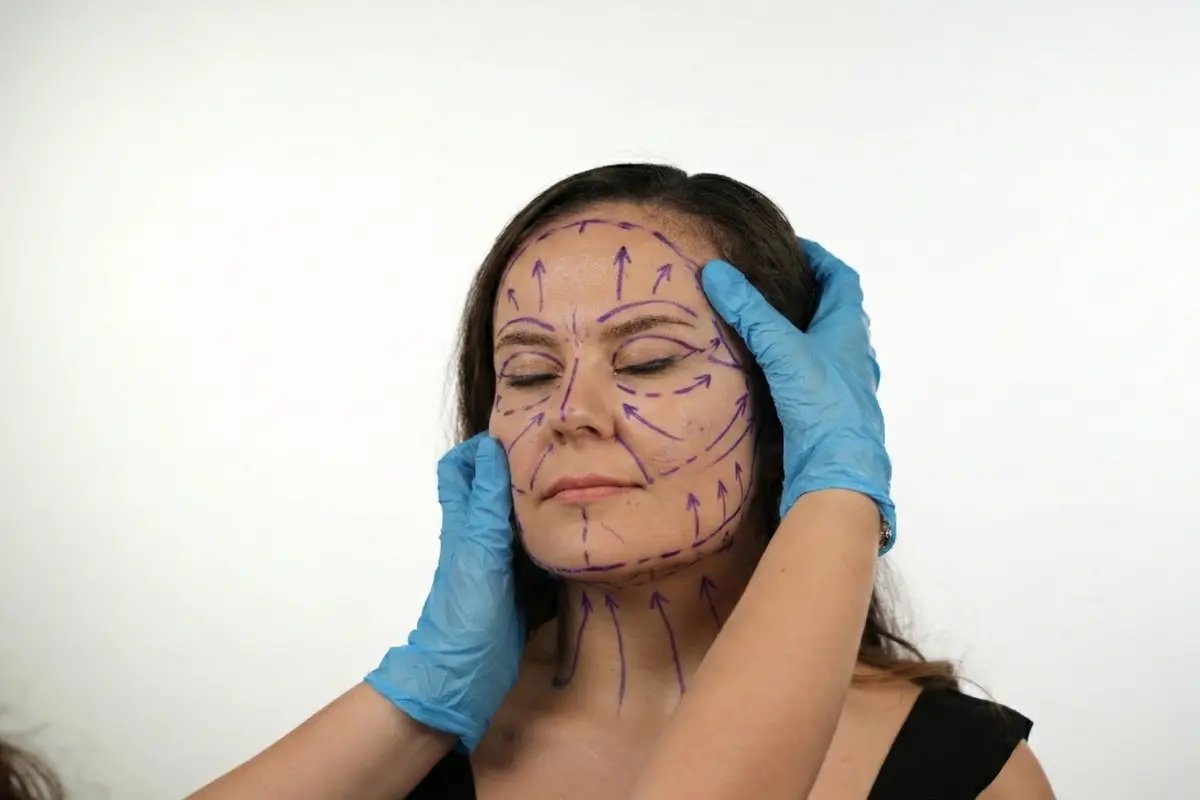
Step 3: Local/Tumescent Anesthesia ± Twilight Sedation (The “Awake” Phase)
The core of the awake approach is that the operative areas are thoroughly numbed using a local/tumescent strategy, and twilight sedation may be added to maintain a deeply relaxed state. Within AKM Clinic’s own procedure taxonomy, multiple variants are explicitly named—such as Awake Deep Plane Facelift, Deep Plane Facelift Under Tumescent Anesthesia, and Twilight Deep Plane Facelift—which reinforces that this is treated as a defined clinical pathway, not a casual label.
From a safety standpoint, the most important point is not the label—it’s the protocol. AKM Clinic’s summary emphasizes advanced patient vitals monitoring throughout every procedure, positioning continuous monitoring as a foundational pillar of safety.
Step 4: Incisions and Access (Designed for Concealment and Healing)
While incision patterns vary by anatomy and needs, facelift incisions are typically designed around natural creases and hair-bearing areas to conceal scars. This is where the “natural-first” mindset becomes practical: careful placement, gentle handling of tissue, and closure strategies that avoid relying on the skin for lifting strength—because skin tension is a major driver of unnatural-looking outcomes in classic “pulled” facelifts.
Step 5: Deep Plane Release and Structural Repositioning (The Core Surgical Correction)
This is the defining step of the procedure. AKM Clinic’s before/after analysis describes the root cause of aging as descent of deep structures (SMAS layer, retaining ligaments, fat pads), and positions the deep plane’s vertical vector lift as the direct countermeasure to gravity’s pull—contrasted with traditional horizontal skin-tension approaches that can create “wind-swept” distortion.
In practical terms, deep plane work involves releasing the retaining ligaments and repositioning descended tissues vertically to restore youthful architecture. The same analysis outlines the main advantages in patient-facing outcomes: true structural correction, jowl and midface restoration without skin pulling, and the ability to integrate neck rejuvenation with platysmaplasty for a sharper neck angle.
Step 6: Neck Refinement When Indicated (Face + Neck as One Contour)
Many patients don’t just want a better jawline—they want a continuous, clean contour from the midface to the neck. In AKM Clinic’s deep plane framework, deep plane lifting is “consistently paired” with platysmaplasty when neck banding and muscular laxity are part of the aging pattern. This is why “face and neck lift” variants are specifically listed as categories that must be covered, including “Deep Plane Face and Neck lift.”
Step 7: Hemostasis, Closure, and Dressing (Where Natural Results Are Protected)
After repositioning, meticulous hemostasis (bleeding control) and careful closure are essential to reduce complication risk and support clean scar healing. While the exact dressing/compression approach varies, the goal is consistent: protect the work, control swelling, and support predictable healing.
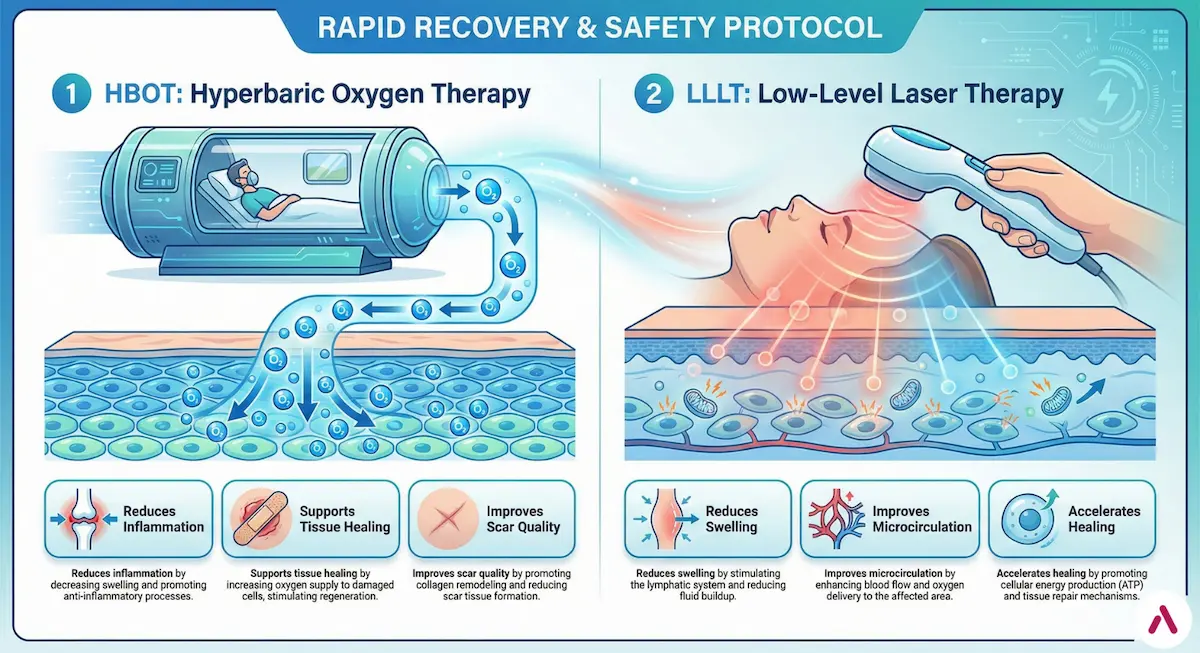
AKM Clinic’s technology documentation frames recovery and risk reduction as an engineered system rather than “hope and wait.” HBOT is positioned to address temporary disruption in blood flow by exposing patients to 100% oxygen in a pressurized environment—supporting tissue survival, inflammation reduction, scar quality, and infection control.
Step 8: Immediate Recovery and Early Aftercare (First Hours)
Once surgery is complete, patients are monitored and transitioned into early recovery. The awake pathway often appeals to patients who want a more controlled experience, but it still requires real clinical infrastructure and follow-up discipline.
Patient narratives provide insight into what “early recovery” can look like with an awake protocol. For example, one patient (Mehtap) describes an efficient 3–4 hour procedure under local anesthesia, followed by frequent hotel check-ins—highlighting the importance of structured early aftercare even after leaving the clinic environment.
Commonly Combined Procedures (When It Makes Sense)
Combination plans are common in facial rejuvenation because aging rarely affects only one area. The key is that combination surgery should be guided by safety and strategy, not “maximizing a checklist.” AKM Clinic’s testimonials include patients who underwent an awake deep plane facelift with complementary procedures such as a neck lift and upper blepharoplasty, reflecting the integrated nature of facial aging correction.
In the next sections, we’ll translate this surgical day overview into the part patients care about most: how recovery unfolds day-by-day, and how an accelerated protocol (HBOT + LLLT) is used as a structured “Rapid Recovery & Safety” pathway—especially for those prioritizing minimal social downtime.
Accelerated Recovery & Safety Protocol: HBOT + LLLT
Recovery is not only about “waiting for swelling to go down.” For many patients—especially those traveling internationally or planning a quicker return to work—recovery is a strategic part of the treatment plan. At AKM Clinic, Hyperbaric Oxygen Therapy (HBOT) and Low-Level Laser Therapy (LLLT) are positioned not as optional add-ons, but as an integrated Rapid Recovery & Safety Protocol designed to support tissue health, reduce inflammation, and improve the quality of healing after complex facial surgery.
Why Recovery Support Matters After a Deep Plane Lift
A deep plane facelift is a structural procedure. That means the surgical work is performed in deeper tissue planes to correct the true mechanics of aging—ligament release and vertical repositioning—rather than relying on skin tension. While this approach is engineered for natural-looking outcomes, it still involves a normal post-op phase of swelling, bruising, and tissue remodeling. The goal of an accelerated recovery protocol is not to “skip healing,” but to support the biology of healing so patients can progress through the early recovery window more predictably.
HBOT (Hyperbaric Oxygen Therapy): Tissue Oxygenation, Inflammation Control, and Wound Support
HBOT exposes the body to 100% oxygen in a pressurized environment, increasing oxygen delivery to tissues. AKM Clinic frames HBOT as especially valuable after surgery because it can support recovery when blood flow is temporarily disrupted by swelling and tissue manipulation. In its clinical positioning document, HBOT is associated with:
- Supporting tissue survival and overall healing quality
- Reducing inflammation and supporting more comfortable recovery
- Improving scar quality as healing progresses
- Helping reduce infection risk through enhanced tissue oxygenation
For the safety-minded patient, the most important concept is that tissue oxygenation is not cosmetic—it’s physiologic. Supporting oxygen delivery can be a meaningful part of building a “recovery environment” that protects results and reduces avoidable setbacks.
LLLT (Low-Level Laser Therapy): Swelling/Redness Support and Cellular Recovery Logic
LLLT is described as a non-invasive soft laser therapy (not a heat-based laser) used to support post-op recovery by improving microcirculation and cellular activity. The clinic’s document outlines that LLLT is used in the recovery window to help:
- Reduce swelling and inflammation
- Improve microcirculation (supporting nutrient/oxygen delivery)
- Accelerate wound healing and support scar quality
- Stimulate collagen production in a controlled recovery setting
In the clinic’s technical description, LLLT is also connected to cell-level energy support (ATP) and tissue regeneration logic, positioning it as a recovery tool rather than a purely aesthetic treatment.
How the Protocol Fits Into the First Two Weeks (What Patients Can Expect)
Patients don’t just ask, “Does it work?” They ask, “When will I look presentable?” In AKM Clinic’s case-based content, accelerated recovery is described as part of the reason many patients see visible improvement within the early recovery window, with references to results that can look significantly improved by around two weeks (with continued refinement over months).
It’s essential to set expectations honestly: you will still have swelling, and healing is not instant. But a structured recovery protocol can help you progress through the “social downtime” phase more comfortably and predictably—especially when combined with meticulous aftercare and follow-up.
Recovery as a System: Monitoring, Follow-Up, and Staying Supported After You Fly Home
Technology is only one piece of recovery. The other piece is ongoing support and structured follow-up—particularly important for international patients. AKM Clinic explicitly emphasizes that it provides support even after the patient has returned home, framing this as part of its “VIP experience” and continuity of care. Patient testimonials also reinforce the value of not feeling “left alone” after surgery once back in their home country.
Recovery Timeline & Aftercare (Day-by-Day / Week-by-Week)
Recovery after an awake deep plane facelift is best understood as a phased process: the early phase is about comfort, swelling/bruising control, and protecting the surgical work; the middle phase is about “social readiness”; and the later phase is about scar maturation and refinement of contour. Patient experiences consistently emphasize two themes: (1) the first days can be the most demanding, and (2) improvement can accelerate quickly—especially when a structured recovery pathway and close aftercare are in place.
Phase 1: The First 72 Hours (Protect the Work, Control Swelling, Stay Supported)
The first 2–3 days are typically the most “intense” part of the experience, not because the goal is to endure severe pain, but because swelling, tightness, and the unfamiliar feeling of early healing can create stress. One patient narrative describes the first two days as “tough,” followed by rapid improvement—an honest pattern that many patients find reassuring because it sets a realistic expectation:
In this window, the priorities are practical:
- Follow your surgeon’s written aftercare plan exactly (wound care, activity restrictions, medications).
- Minimize swelling triggers and protect the surgical areas from accidental pressure or friction.
- Keep communication open so questions don’t become anxiety.
For international patients, support access is part of recovery. AKM Clinic’s model includes a 24/7 Patient Host available via WhatsApp during recovery in Istanbul, and a final in-person check-up before you are cleared to fly home.
Phase 2: Days 4–7 (Visible Changes Start, Confidence Returns)
Many patients report that they begin to “feel like themselves again” surprisingly early. Testimonials commonly describe remarkably low pain (sometimes requiring minimal pain medication) and a smooth improvement curve. In one case, a patient described feeling “fantastic” just four days after a major combination surgery performed under local anesthesia—highlighting why the awake pathway is positioned as a meaningful differentiator for the right candidate.
During this phase, aftercare is usually about consistency rather than intensity: keeping routines steady, avoiding premature activity, and staying focused on healing rather than judging the final aesthetic outcome too early.
Phase 3: Week 2 (The “Social Downtime” Milestone)
Week 2 is a key milestone for expert patients because it often determines when they can comfortably appear on camera or return to professional/social environments. In AKM Clinic’s before/after analysis, the HBOT + LLLT protocol is directly linked to “supercharged” recovery outcomes—described as drastically reduced inflammation and bruising and enabling patients on the accelerated track to be “camera-ready” in about 14 days.
It’s important to interpret this correctly: “camera-ready” does not mean fully healed. It means swelling and bruising are often reduced enough for many patients to look presentable—while deeper tissue remodeling continues for months.
Weeks 3–6 (Refinement Phase: Contour Improves, Scars Mature)
As the weeks pass, swelling typically continues to subside and contours become more defined. This is the phase where the deep plane’s structural repositioning begins to look increasingly “effortless”—not tight, not pulled, but like a more rested version of you. That natural, undetectable quality is consistently described as the highest priority across patient narratives.
For patients who traveled, continuity matters. AKM Clinic describes long-term virtual follow-up appointments scheduled at 1, 3, 6, and 12 months post-procedure to monitor healing and long-term satisfaction.
Months 3–12 (Long-Term Healing and Final Outcome)
By this stage, most of the visible swelling has resolved for many patients, and scar maturation continues. Long-term satisfaction is often tied to two factors: (1) the surgical strategy (structural correction rather than skin tension), and (2) how well recovery is managed over time—especially once the patient is back home.
Patient narratives repeatedly highlight the value of accessible aftercare. For example, one patient described frequent check-ins in the hotel right after surgery, and then emphasized that after returning home she could call “again and again” and still receive support—directly addressing the common fear of being “left alone” after international surgery.
What’s Included in a Structured Aftercare Model (Why It Matters for Travelers)
Aftercare is not only advice—it’s logistics and execution. AKM Clinic’s VIP package model explicitly includes all post-operative medications & garments and long-term virtual follow-up care, alongside the operational support that reduces friction during the recovery window.
| Recovery Need | What “Good Support” Looks Like | Why It Changes the Experience |
|---|---|---|
| Early reassurance and fast answers | 24/7 access to a patient host during the Istanbul recovery phase | Reduces anxiety, prevents small questions from becoming big problems |
| Medication and garment compliance | Post-op medications and garments included in an organized system | Fewer gaps, fewer delays, smoother early healing |
| Continuity once you’re home | Scheduled virtual follow-ups at 1, 3, 6, and 12 months | Maintains clinical oversight through the refinement phase |
Risks, Side Effects, and Safety: A Transparent Guide
No facelift—awake or under general anesthesia—is “risk-free.” A responsible medical guide should explain what can happen, what is common versus uncommon, and how serious risks are reduced through patient selection, surgical technique, and facility standards. For the expert patient, the most valuable framing is this: the question isn’t whether risk exists; it’s whether your provider has a system to identify risks early and reduce them before they become complications. AKM Clinic frames safety as a structured model built on strict pre-op screening, rigorous sterilization protocols, and continuous vitals monitoring during every procedure.
Expected “Normal” Effects vs Red Flags (What’s Typical, What Needs a Call)
After an awake deep plane facelift, several temporary effects are expected as part of healing. These may include swelling, bruising, tightness, numbness or altered sensation, fatigue, and a sense of “firmness” in the lifted areas. These effects typically improve over time as swelling resolves and tissues remodel.
However, it’s equally important to know what is not typical. In general, you should promptly contact your surgical team if you experience worsening one-sided swelling, rapidly increasing pain that doesn’t respond to the plan, signs of infection, breathing concerns, or sudden changes that feel alarming. Expert recovery is not about being “tough”—it’s about having rapid access to guidance so issues are addressed early rather than late.
For international patients, this is where communication and structured follow-up matter. AKM Clinic’s care model emphasizes ongoing support and continuity even after returning home, which addresses a common fear: being left without help once you leave the country.
Potential Complications (Honest List, Real Context)
While most patients recover uneventfully, every facelift carries potential complications. The major ones typically discussed in high-quality consent and education include:
- Hematoma (a collection of blood under the skin)
- Infection
- Wound-healing issues and delayed healing
- Nerve-related issues (temporary weakness or sensory changes, rarely longer-lasting)
- Skin perfusion issues (rare, but important—especially in higher-risk profiles)
- Scar concerns (hypertrophic scars, widened scars, or visible scar placement concerns)
- Asymmetry or under/over-correction requiring revision planning
The awake pathway does not magically eliminate these risks; it changes the anesthesia strategy and can be appealing for patients who are anxious about general anesthesia. Patient stories show that anesthesia fear alone can be significant enough to delay or prevent surgery—so having a local anesthesia pathway can be meaningful for the right candidate.
How Risk Is Reduced: Selection, Sterility, Monitoring, and Protocol
Risk reduction starts before the procedure. AKM Clinic explicitly emphasizes strict pre-operative health screenings to confirm candidacy, and it highlights rigorous sterilization protocols and advanced patient vitals monitoring throughout every procedure as baseline safety infrastructure.
This matters because many facelift complications are “time-sensitive.” A structured environment and continuous monitoring help the team identify changes early, respond appropriately, and keep recovery on track.
Safety is also a facility and systems question, not just a surgeon question. AKM Clinic describes operating within a framework designed to meet international expectations, including reference to JCI-accredited hospitals and FDA-approved materials as part of its standards positioning. For the expert patient, this is the kind of detail that helps you compare providers beyond marketing claims.
Where the “Awake” Component Fits Into Safety (Without Overpromising)
Many patients researching awake facelifts are fundamentally asking: “Can I reduce my exposure to general anesthesia?” The best answer is nuanced: for certain candidates, an awake plan built around local anesthesia and optional twilight sedation can be an appropriate alternative—particularly when it is delivered by a team experienced in the workflow and supported by continuous monitoring and screening.
AKM Clinic explicitly positions its ability to perform complex deep plane facelift techniques without general anesthesia as a key differentiator—suggesting that awake surgery is treated as a dedicated pathway rather than an improvised variation. The practical patient takeaway is that “awake” should be paired with the same seriousness you’d expect from any major surgery: standardized monitoring, clear emergency readiness, and a surgeon-led selection process.
Recovery Safety as an Extension of Surgery (HBOT + LLLT as a Structured Support System)
Safety doesn’t end when the last stitch is placed. AKM Clinic’s recovery technologies are described as part of an engineered approach to healing support. HBOT is positioned to help address temporary blood-flow disruption by increasing tissue oxygen delivery and supporting inflammation reduction, scar quality, and infection control. LLLT is described as a non-invasive therapy used to support microcirculation and help reduce swelling/inflammation while supporting healing and collagen production.
This framing is important: the goal is not to claim that technology eliminates risk, but to show that recovery is treated as a clinical phase with tools and protocols—especially relevant to patients who want a smoother early healing window and more predictable “social downtime.”
Awake Deep Plane Facelift Results: “Rejuvenation, Not Alteration”
When patients search for an awake deep plane facelift, they’re usually not chasing a dramatic “new face.” They’re trying to correct the specific structural changes that make them look tired, heavy, or older than they feel—without looking surgically altered. AKM Clinic explicitly frames this goal as a “Natural-First” approach: rejuvenation, not alteration.
What “Natural” Means in Deep Plane Terms (Not Marketing Terms)
In the clinic’s surgical analysis, the “natural” look is tied to mechanics. International patients repeatedly fear an “operated” appearance—described as “wind-swept,” “pulled,” or “startled.” The deep plane technique is positioned as the logical response because it treats the root cause of aging as deep structural descent (SMAS, retaining ligaments, fat pads) rather than superficial skin laxity.
That diagnosis drives the strategy: a vertical vector lift (countering gravity) instead of horizontal skin tension, specifically to avoid the distortion patients fear.
What Improvements You Can Expect (Lower Face, Midface, and Neck)
From a patient-facing perspective, the deep plane goals are typically visible in three zones:
- Midface restoration: lifting descended cheek fat pads vertically to restore youthful contour and reduce heaviness.
- Jawline definition: correcting jowls by repositioning deeper tissues instead of pulling on skin.
- Neck refinement: when needed, pairing with platysmaplasty to tighten the underlying muscles and sculpt a sharper neck angle.
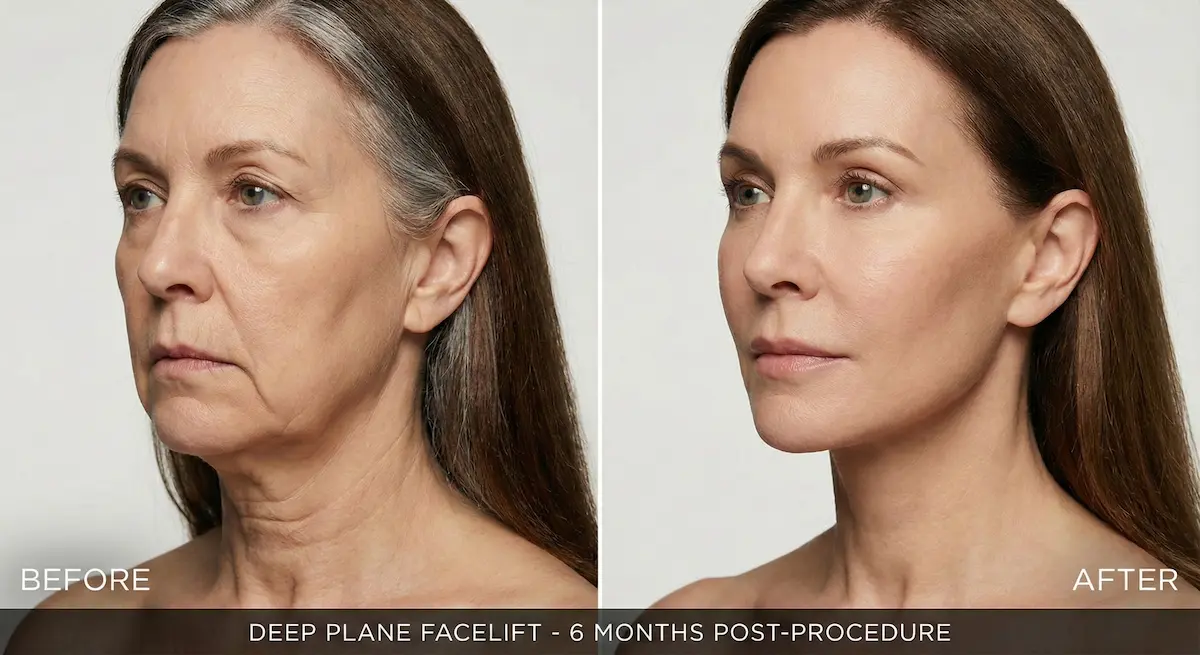
One case study summary highlights that by diagnosing the problem as “deep descent” and selecting a deep plane face-and-neck lift, the patient reclaimed a sharper jawline and a brighter, more rested expression—without a surgically obvious look.
What to Expect Over Time (2 Weeks, 3 Months, 6 Months)
Deep plane results evolve. Early improvements can be impressive, but refinement continues as swelling resolves and tissues stabilize. In the clinic’s case analysis, the accelerated recovery pathway (HBOT + LLLT) is associated with markedly reduced inflammation and bruising in the “minimal downtime” track—helping structural improvements show clearly at around the two-week mark in selected cases.
Longer-term, the outcome quality is repeatedly tied to a tension-minimized closure and precision technique. One case summary notes that at six months, the result reflected a tension-free closure intended to support “invisible” scarring and sharp, youthful, natural features—along with improved texture described as a “deep plane glow.”
Surgeon’s Insight: The most successful facelift is the one that goes unnoticed—where people see you as rested and revitalized, not “done.” This philosophy is summarized as rejuvenation, not alteration.
Longevity and Maintenance (The Honest Frame)
A facelift does not stop time. It repositions tissues to a more youthful architecture; then aging continues from that new baseline. Longevity depends on your starting anatomy, technique selection, skin quality, and lifestyle factors. For expert patients, the most rational way to evaluate longevity is to focus on whether the method restores architecture (deep descent) rather than stretching the surface—because the clinic’s analysis repeatedly frames deep structural correction as the key to a natural and long-lasting result.
Real Patient Experiences (What “Awake” and “Natural” Feel Like in Real Life)
Technical explanations matter, but the expert patient also wants lived reality: How calm is the awake experience? How painful is recovery? Do results look obvious? In AKM Clinic’s testimonial synthesis, recurring themes include minimal-to-no pain, rapid recovery, and natural-looking aesthetics—paired with a strong “awake surgery” advantage for patients who fear general anesthesia.
Lisa (USA): Choosing Awake Because General Anesthesia Felt Like the Biggest Risk
For some patients, the primary barrier isn’t the facelift—it’s anesthesia fear. In Lisa’s story, her goal was to fulfill a “lifelong dream” of rejuvenation but she was “paralyzed” by anxiety about general anesthesia. Her decisive factor was the team’s guidance that her combination procedures could be safely performed under local anesthesia, and she describes an “easy, smooth” recovery—feeling “fantastic” just four days after major surgery.
This kind of narrative matters because it directly addresses the intent behind common searches like “are you awake during a facelift” and “is local anesthesia safe”: patients aren’t asking out of curiosity—they’re asking because fear is real, and they need a credible pathway through it.
Barbara (USA): The “Expert Patient” Benchmark for Natural Results
Barbara’s testimonial is valuable because she’s described as an experienced “expert patient” who spent four years researching globally. Her recovery description emphasizes comfort (no pain, minimal bruising), and her outcome statement captures exactly what most deep plane patients want: “I actually look like nothing happened but probably 20 years younger.”
That phrasing is not about hype—it’s a concise definition of “natural”: a visible improvement that does not read as surgery.
Mehtap (Germany): Aftercare as a Safety Feature, Not a Convenience
For traveling patients, a common fear is being left unsupported after you return home. Mehtap’s story addresses that directly: she describes frequent check-ins during early recovery, and after returning home she could call repeatedly and still get answers—calling that ongoing support a “lifeline.” Four months later, she reports feeling extremely well and receiving “unbelievable feedback” on natural results.
What These Stories Have in Common (A Practical Takeaway)
If you strip away the emotional details, the shared practical drivers across testimonials and case analyses are consistent:
- Naturalism is the top aesthetic demand—avoiding “pulled/wind-swept” outcomes.
- Awake surgery meaningfully reduces a major barrier for patients with anesthesia fear.
- Recovery is treated as a protocol (including advanced recovery technologies for minimal downtime cases).
Cost & Value: US (NYC/Miami) vs Istanbul (A Transparent Comparison)
For most expert patients, cost is not just a number—it’s a way to evaluate risk management, provider quality, and what’s actually included (anesthesia, facility, follow-up, and recovery support). That’s why the most honest comparison is not “cheap vs expensive,” but “quote vs total,” and “price vs standards.”
US Baseline: What “Average Cost” Usually Means (and What It Excludes)
The American Society of Plastic Surgeons (ASPS) reports that the average cost of a facelift (rhytidectomy) is $11,395. ASPS also makes an important clarification: this average is only part of the total price and does not include anesthesia, operating room facilities, or other related expenses.
Why NYC and Miami Often Price Higher (Major-City Premiums)
In major cosmetic markets, facelift pricing can be dramatically higher than national averages. A 2024 facelift cost breakdown notes that in major cities such as New York City, facelift costs can run anywhere from $30,000 to $100,000 depending on technique, surgeon experience, and facility factors.
Miami pricing is also frequently reported as a wide range, influenced by surgeon positioning, demand, and surgical scope. One Florida-focused cost guide (2025) cites a typical Miami range of approximately $17,000 to $38,000.
What to Compare Beyond Price (Standards, Safety, and Recovery Systems)
High-trust comparisons examine standards and systems—not just the headline number. AKM Clinic positions its framework around internationally aligned infrastructure such as JCI-accredited hospitals and FDA-approved materials. It also emphasizes safety fundamentals including strict pre-operative health screenings and advanced patient vitals monitoring throughout every procedure.
All-Inclusive Clarity: What AKM’s VIP Model Typically Covers
Instead of “à la carte” line items, AKM Clinic describes a VIP structure that can reduce unknowns for traveling patients by including coordinated logistics and core care elements—such as pre-operative tests, post-operative medications & garments, and long-term virtual follow-up care.
| What Expert Patients Compare | Why It Matters | AKM Clinic Positioning |
|---|---|---|
| Accreditation & materials | Signals standards beyond marketing | JCI hospitals + FDA-approved materials |
| Safety infrastructure | Reduces avoidable risk | Strict screening + continuous vitals monitoring |
| Recovery protocol | Improves early healing experience | HBOT + LLLT as a structured recovery pathway |
| Continuity after travel | Prevents feeling “left alone” | Long-term virtual follow-up care |
Choosing the Right Surgeon for an Awake Deep Plane Facelift
If you’ve researched deep plane facelifts for more than a few hours, you already know the uncomfortable truth: the “same” facelift label can produce radically different outcomes depending on surgeon skill, tissue handling, vector control, and postoperative systems. When you add the word awake, surgeon selection becomes even more important—because performing a structurally complex lift under a local/twilight pathway requires a mature workflow, not just confidence.
The Credential Checklist That Actually Matters (Beyond a Website Bio)
For the expert patient, credentials are not about prestige—they are about predictability and complication readiness. When you compare surgeons, prioritize the standards that correlate with safer, more consistent outcomes:
- Board-level credentials and formal training in facial plastic surgery (look for surgeons described as European Board Certified and/or US-trained specialists).
- High case volume in facelift surgery, with an emphasis on deep plane work if that is the technique you’re pursuing.
- Documented philosophy of natural outcomes—the goal should be “rejuvenation, not alteration,” with techniques that minimize skin tension and avoid distortion.
- Facility standards (hospital accreditation, emergency readiness, continuous monitoring protocols).
- Transparent pre-op screening that treats you like an individual—not a template.
As a rule: if a clinic can’t clearly explain how it reduces the risk of a pulled look, or how it manages the safety details of an awake pathway, it’s not the right place for an “awake deep plane” plan.
Awake Deep Plane Requires a Specific Skillset (It’s Not Interchangeable)
Many surgeons can perform facelifts. Fewer can perform deep plane lifting consistently. Fewer still have a refined system for performing complex lifting under a local anesthesia pathway. The difference is not only technical—it’s operational:
- Comfort engineering: local anesthesia delivery must be optimized so patients remain comfortable throughout a longer, more technical procedure.
- Workflow discipline: an awake patient pathway requires a calm environment, predictable sequencing, and continuous feedback loops.
- Monitoring and selection: awake surgery should be offered to appropriate candidates, with strict pre-op screening and continuous intra-op vitals monitoring.
This is why “awake facelift” should not be treated as a marketing adjective. It should be treated as a defined clinical pathway—supported by experience, team training, and a safety infrastructure that holds up even in the rare case something deviates from the expected recovery curve.
Facility Standards and Safety Infrastructure: What to Verify
Facelift outcomes are not decided only by the surgeon’s hands—they are also influenced by the safety and systems around the surgery. Use this checklist when comparing providers:
- Accredited operating environment: ask whether the procedure is performed in an accredited hospital setting and what the accreditation standard is (for example, JCI accreditation is often cited as a high benchmark).
- Continuous vitals monitoring: ask how monitoring is handled from start to finish, regardless of anesthesia choice.
- Sterilization and infection prevention protocols: what is their process, not just their promise?
- Materials and quality controls: what implantables, sutures, and devices are used and whether they meet internationally recognized standards.
- Structured follow-up: what happens after you leave the clinic—especially if you’re traveling?
At AKM Clinic, the “safety story” is intentionally built around strict pre-op screening, continuous intraoperative monitoring, and hospital standards aligned with international expectations—paired with a protocol-based recovery model (HBOT + LLLT) that treats healing as a clinical phase, not downtime.
Questions to Ask in Consultation:
- “How do you decide whether I’m a candidate for an awake pathway versus general anesthesia?”
- “How often do you perform deep plane facelifts, and what facial problems do you think deep plane best solves in my case?”
- “What is your strategy for avoiding a pulled or wind-swept look?”
- “How do you manage bleeding risk and hematoma prevention in the first 24 hours?”
- “What is your follow-up schedule for the first 2 weeks, then 1–12 months?”
- “What recovery technologies or protocols do you use to support swelling and tissue healing?”
The Medical Journey for International Patients (VIP Logistics, Simplified)
For US-based patients considering Istanbul, the main barrier is rarely curiosity—it’s logistics and safety confidence. The goal of a good international pathway is to reduce friction and uncertainty: you should know what happens when you land, how pre-op testing works, what the early recovery phase looks like, and how you’re supported once you return home. AKM Clinic frames this as a “VIP” structure designed to keep the experience organized, private, and clinically controlled.
Step 1: Virtual Assessment and Candidacy Confirmation
The journey starts with a remote evaluation designed to answer two questions: (1) Are you a good candidate for deep plane lifting based on your anatomy and goals? and (2) Are you a candidate for an awake/local pathway based on your health profile and surgical plan? This is also where realistic expectations are set—especially around what the procedure can and cannot change, and how “natural” is defined in your case.
Step 2: Arrival and Pre-Operative Testing in Istanbul
A safe surgical plan begins with pre-op testing and medical clearance—not assumptions. In a structured international model, pre-operative tests are arranged efficiently so there is no guesswork, and the surgical plan is finalized with real data. This is also the stage where the team confirms anesthesia planning and confirms your early recovery schedule (including any recovery therapies).
Step 3: Surgery Day and Early Recovery Support
On surgery day, the awake pathway is designed to feel controlled and calm. After surgery, early recovery is managed with close monitoring, clear aftercare instructions, and easy access to the team for questions. For many international patients, the “support layer” is what determines how safe and manageable the experience feels—especially during the first few nights when swelling and tightness peak.
AKM Clinic’s international patient model includes coordinated transfers and recovery logistics so patients can focus on healing rather than navigating a new city while post-op.
Step 4: Accelerated Recovery Week (HBOT + LLLT) and “Social Readiness”
If your plan includes the Accelerated Recovery & Safety Protocol, this is the window where HBOT and LLLT are used to support tissue oxygenation, help reduce inflammation, and promote more predictable healing. The point is not to promise “instant results,” but to help many patients progress through the early bruising/swelling phase with less disruption—particularly valuable for travelers who want to return home with confidence.
Step 5: Clearance to Fly and Returning to the US
Before flying, a final check-up is essential. A structured pathway includes in-person evaluation and clear instructions for travel, positioning, activity, and warning signs. Travel after facial surgery should never feel like “good luck”—it should feel like a planned transition.
Step 6: Long-Term Follow-Up After You’re Home
The refinement phase lasts months, not days. This is why long-term follow-up matters: scar maturation, residual swelling, and contour refinement should be monitored over time. A well-run international program keeps communication easy and structured after you return home—so you remain supported and questions are answered quickly.
FAQ: Questions About Awake Deep Plane Facelift
These are the most common “ask-out-loud” questions expert patients search before booking an evaluation. Answers are written to be clear, realistic, and safety-forward—without overselling or minimizing surgical recovery.
Are you awake during an awake deep plane facelift?
You are not “wide awake” in a stressful sense. “Awake” typically means the surgical areas are fully numbed with local anesthesia, and many patients also receive twilight sedation to feel calm and deeply relaxed. AKM Clinic specifically recognizes pathways like “Awake Deep Plane Facelift” and “Twilight Deep Plane Facelift” as defined procedure categories.
What does twilight sedation feel like?
Most patients describe twilight sedation as a state of profound calm—drowsy, relaxed, and comfortable. The goal is not to test your tolerance; it’s to create a controlled experience while the local anesthesia does the pain control in the tissues.
Is local anesthesia safe for a facelift?
Local anesthesia can be a safe option for appropriate candidates, but candidacy matters. AKM Clinic emphasizes strict pre-operative health screenings and advanced patient vitals monitoring throughout every procedure as baseline safety infrastructure.
What are common side effects of local anesthesia and sedation?
Common short-term effects can include numbness in treated areas, swelling, bruising, and fatigue. If twilight sedation is used, you may feel groggy afterward. Your surgical team should explain what’s expected versus what’s urgent, and provide a clear contact pathway for concerns.
How long does it take to recover from twilight sedation?
Recovery varies, but many patients feel progressively clearer as the day passes. Safety-wise, you should plan to rest, avoid important decisions, and follow your team’s instructions closely. A structured aftercare model with easy access to support (especially for travelers) can reduce anxiety during this phase.
Can I drive after local anesthesia (or sedation)?
If you received any sedating medication, most surgical teams advise not driving and having a responsible adult assist you. Exact timing depends on your anesthesia plan and your surgeon’s protocol—follow your written discharge instructions.
How long is recovery after an awake deep plane facelift?
Think in phases: the first days focus on swelling/bruising and protecting the work; week 2 is often the “social readiness” milestone; and months 1–3 are contour refinement. AKM Clinic’s case analysis links its accelerated recovery track (HBOT + LLLT) to markedly reduced inflammation/bruising and being “camera-ready” around ~14 days in selected cases.
How much does an awake deep plane facelift cost?
In the US, pricing varies widely by surgeon, technique, anesthesia/facility fees, and whether a neck lift or other procedures are added. ASPS reports an average facelift cost of $11,395 (surgeon’s fee only; anesthesia and facility are excluded). A meaningful comparison looks at total cost and included standards, not just the base quote.
NYC/Miami vs traveling: how should I compare value?
Compare beyond price: accreditation standards, monitoring protocols, surgeon experience with deep plane lifting, and recovery systems. NYC pricing is often reported in the $30k–$100k range in major-city breakdowns, while Miami ranges can also be broad. If you travel, demand clear inclusion lists (tests, meds/garments, and follow-up). AKM Clinic describes an all-inclusive model that includes pre-op tests, post-op medications/garments, and long-term virtual follow-up care.
Can a neck lift be done under local anesthesia too?
In some cases, yes—especially when the plan is designed as a combined face-and-neck strategy under a local/twilight pathway. AKM Clinic’s facelift taxonomy includes face-and-neck variants (including deep plane face and neck lift), and patient stories describe combination procedures that included neck work under local anesthesia.