

Awake Brow Lift in Turkey





Awake Brow Lift: Quick Facts
Procedure Time
Anesthesia
Recovery Time
Hospital Stay
Back to Work
Awake Brow Lift Results: Before and After
An awake brow lift is a modern approach to brow repositioning that uses local anesthesia, often paired with twilight sedation, to improve brow position and restore a more rested, open look—without the “overdone” appearance patients fear. Instead of treating the brow as a purely cosmetic feature, the procedure addresses structural descent in the forehead-brow unit, which can contribute to a tired, heavy, or even angry expression over time.
This guide explains what an awake brow lift is, how it works, who it helps most, and how it compares with other brow lift approaches. The goal is to give you the kind of clear, technical, safety-focused information an expert patient needs to make a confident decision—especially if anesthesia risk, control, and recovery predictability are top priorities.
Table of Contents
What Is an Awake Brow Lift?
An awake brow lift is a brow lift performed using local anesthesia with or without twilight sedation, rather than full general anesthesia. “Awake” does not mean you are fully alert and uncomfortable—it means you typically continue breathing on your own, your physiology is easier to monitor, and the anesthetic plan can be tailored for comfort while preserving a greater degree of procedural control.
Brow lift definition: what it treats
A brow lift (also called a forehead lift) is designed to elevate and stabilize the brow position. It can address concerns such as:
- Brow ptosis (drooping brows that sit lower than they used to)
- “Heavy” upper eyelids caused by brow descent, not just eyelid skin excess
- A tired, sad, or angry appearance when the brow shape and position distort facial expression
- Asymmetry (one brow lower than the other)
Because brow position influences eyelid “hooding,” a brow lift is often part of a structural plan—especially when patients are considering upper eyelid surgery and want to avoid an under-correction (or an unnatural look) by addressing the wrong primary problem.
What “awake” actually means
In the context of facial surgery, “awake” typically refers to an anesthesia plan centered on local anesthesia plus a sedation strategy that ranges from minimal to moderate (often called twilight sedation). The intent is to prioritize:
- Comfort (pain control and anxiety reduction)
- Safety (avoiding or reducing the need for full general anesthesia in appropriate candidates)
- Control (a responsive, adjustable anesthesia experience—especially valued by safety-conscious patients)
Some patients are attracted to awake techniques because they feel more in control; others prefer them because they want to minimize the intensity of anesthesia and the “hangover” feeling that can follow deeper anesthetic plans.
Key advantages vs traditional approaches
The awake approach can be particularly appealing when your priorities include predictability, comfort, and a lower-anxiety experience. Potential advantages may include:
- Reduced anesthesia burden for appropriately screened patients
- Often smoother early recovery experience for some patients, depending on sedation depth
- Shorter time to feeling “like yourself” for many patients compared with deeper anesthesia plans
- A modern, patient-centered safety mindset when performed by teams experienced in awake/twilight facial surgery
Important: anesthesia choices are not “one-size-fits-all.” A high-quality plan is the one that matches your anatomy, medical history, procedure complexity, and risk profile—not simply the one labeled “awake.”
Understanding Brow and Forehead Anatomy
To understand why a brow lift works—and why technique matters—you need a basic map of what actually changes with age. The brow is not an isolated strip of hair-bearing skin; it’s part of a dynamic forehead-brow-eyelid unit shaped by soft tissue support, muscle activity, and gravity. A good brow lift corrects position while keeping expression natural.
The forehead–brow unit: structure and movement
The brow’s position is influenced by the balance between muscles that elevate and muscles that depress. Over time, repeated facial expression, tissue changes, and loss of structural support can allow the brow to settle lower. This is why some people notice that they look “more tired” even when well-rested—because the architecture has shifted.
Why brows drop with age
Aging involves more than skin laxity. Structural descent can occur as the support system weakens and the soft tissues reposition. Patients often describe this as:
- Needing to raise the eyebrows to see or to feel “open”
- Noticing deeper forehead lines from compensatory eyebrow lifting
- Feeling that the upper eyelid looks heavier even when eyelid skin hasn’t dramatically changed
This is a key concept: in some patients, the eyelid is not the primary issue—brow descent is.
How brow position affects eyelid hooding
Upper eyelid hooding can be caused by eyelid skin excess, brow descent, or both. If brow descent is a major driver and it’s not addressed, upper eyelid surgery alone may not deliver the clarity and openness patients expect. In a well-planned rejuvenation strategy, brow position is evaluated first, and eyelid correction is considered in that context.
Ideal Candidates (and Who Should Avoid It)
An awake brow lift can be an excellent option for the right candidate—especially someone who wants a sophisticated, controlled approach and prefers to avoid full general anesthesia when appropriate. The most important step is candidacy screening: both for aesthetic goals and for medical safety.
Who is a strong candidate?
You may be a strong candidate if you have one or more of the following:
- Brow descent that makes the eyes look smaller, heavier, or more fatigued
- Asymmetry that affects expression or confidence
- Compensatory forehead tension (raising the brows all day to feel “open”)
- Realistic goals: refreshed and rested, not dramatically “different”
Many expert patients are also drawn to awake techniques because they value a meticulous, safety-centered approach and want to reduce uncertainty around anesthesia when they are appropriate candidates.
When a brow lift may not be the best first step
Not every “heavy eye” concern is solved by lifting the brow. Alternatives or complementary options may be more appropriate when:
- The primary issue is eyelid skin excess with minimal brow descent
- The concern is mainly upper eyelid puffiness or fat prominence
- You have a brow shape that is already high, and lifting could look unnatural
A strong consultation focuses on diagnosing the source of the concern (brow position vs eyelid anatomy vs both) and building a plan that protects natural expression.
Who should avoid an awake approach?
“Awake” is not automatically safer for everyone. You may not be a candidate for an awake/twilight plan if you have factors that make sedation or procedure tolerance challenging. Examples can include significant medical complexity, airway concerns, high procedure complexity, or severe anxiety that cannot be managed safely with the planned sedation depth. The safest approach is always the one selected after a thorough medical review by an experienced surgical and anesthesia team.
In high-standard programs, candidacy decisions are supported by structured pre-operative screening and clear safety protocols—because the goal is not to fit every patient into an “awake” label, but to match the right patient to the right plan.
Types of Brow Lift Surgery (Technique Comparison)
“Brow lift” is not one single operation. There are multiple techniques, and the right choice depends on what needs to move (lateral tail vs the entire brow), how much lift you need, your hairline/forehead anatomy, and how you feel about scar placement. For many patients—especially those who want a natural, non-operated look—the best technique is the one that restores structure without creating excessive skin tension or an over-elevated brow shape.
Endoscopic brow lift (minimally invasive, hairline-hidden)
An endoscopic brow lift uses a small camera (endoscope) and a series of short incisions placed in the hair-bearing scalp. Through these hidden access points, the brow tissues are released and repositioned, then stabilized. In AKM’s case-based analysis, the endoscopic approach is described as a way to correct the root cause of “heavy eyes” by elevating the brow through small, hidden incisions in the hairline.
- Best for: mild to moderate brow descent, “tired” expression, upper eyelid hooding driven by brow drop, and patients who want discreet scars.
- Scar pattern: small incisions within the hairline (not on the forehead skin).
- Core advantage: structural lift with minimal visible scarring and a modern, tissue-sparing approach.
Clinically, this technique is often chosen when the goal is “rejuvenation, not alteration”—a reset to a natural brow position rather than a dramatic shape change.
Temporal (lateral) brow lift (outer brow focus)
A temporal brow lift (sometimes called a lateral brow lift) targets the outer third of the brow—the area that commonly drops first and contributes to a heavier, less open eye shape. It can be performed alone or as a refinement alongside other facial rejuvenation procedures.
- Best for: lateral brow drop (tail of brow), mild asymmetry, and patients who primarily want a more open outer eye.
- Scar pattern: typically placed in the hairline/temple region to stay hidden.
- Core advantage: precision improvement in the “outer eye” without over-lifting the entire brow.
At AKM Clinic, “Endoscopic Brow & Temporal Lift” appears as a defined facial procedure offering, reflecting that these are distinct tools used based on anatomy and goals.
Direct brow lift (powerful lift with visible-scar trade-off)
A direct brow lift involves an incision placed very close to the brow hairs. It can be highly effective for significant brow descent or certain functional concerns, but the trade-off is that the scar is not hidden in the scalp. This technique is therefore selected carefully—often in patients for whom the functional benefit is worth the scar location.
- Best for: more pronounced brow ptosis, some cases of strong asymmetry, and specific functional needs.
- Scar pattern: near the brow; may be visible depending on skin type and healing.
- Core advantage: strong, direct mechanical lift.
Coronal brow lift (traditional, wider access, larger incision)
A coronal brow lift is a more traditional approach using a longer incision across the scalp (often behind the hairline). It can provide broad access and significant lift in selected cases, but it is typically less favored today when minimally invasive methods can achieve the goal with smaller incisions and faster social recovery.
- Best for: select anatomy where broader access is beneficial and the patient accepts the incision trade-off.
- Scar pattern: longer scalp incision; scar is usually hidden by hair but can be a consideration in certain hairline types.
- Core advantage: wide exposure and comprehensive repositioning in specific situations.
Quick comparison table (at-a-glance)
| Technique | Primary Target | Incisions / Scars | Typical Strengths | Main Trade-Offs |
|---|---|---|---|---|
| Endoscopic Brow Lift | Whole brow repositioning (often subtle, structural) | Small, hairline-hidden incisions | Minimally invasive logic, discreet scars, natural restoration | Not ideal for every anatomy; requires experienced technique selection |
| Temporal (Lateral) Lift | Outer third of the brow | Temple/hairline-based, typically hidden | Refines “outer eye,” reduces lateral heaviness | Does not address central brow as much as full techniques |
| Direct Brow Lift | Significant brow descent / asymmetry | Near-brow incision (potentially visible) | Powerful mechanical lift | Scar visibility trade-off |
| Coronal Lift | Broad lift and access | Longer scalp incision (hair-hidden) | Comprehensive access | More invasive footprint vs modern minimally invasive options |
Awake vs General Anesthesia (Twilight Sedation Explained)
For many expert patients, the anesthesia plan is not a side detail—it is a core part of the decision. An “awake brow lift” typically refers to a local anesthesia approach that may be paired with twilight sedation. This is especially relevant for patients who feel anxious about general anesthesia or who want a more controlled, closely monitored peri-operative experience.
What is twilight sedation?
Twilight sedation generally describes a sedation level designed to reduce anxiety and discomfort while avoiding (or minimizing the need for) full general anesthesia. In practical terms, many patients experience it as a comfortable, drowsy state with reduced awareness of time and procedure details—while the surgical area is numbed with local anesthesia.
In AKM Clinic’s patient narratives, the option to perform major facial procedures under local anesthesia (“awake surgery”) is repeatedly described as a differentiator because it directly addresses a primary fear: anxiety about general anesthesia.
Are you awake during twilight sedation?
People often use “awake” and “asleep” as binary categories, but sedation exists on a spectrum. With twilight sedation, you may be technically responsive at moments (for example, to gentle instructions), yet you are typically relaxed and comfortable, and many patients report limited memory of the experience. Your exact level of responsiveness depends on the individualized plan created by the clinical team.
Twilight sedation vs general anesthesia: how the experience can differ
While the best anesthesia choice depends on your health status and the complexity of the surgical plan, expert patients often compare the options through the lens of control, recovery feel, and risk tolerance. In the AKM testimonial synthesis, “awake surgery” is framed as helping patients overcome anesthesia fear while also supporting a smoother recovery experience for some individuals.
- General anesthesia can be appropriate for longer or more complex surgical plans, but some patients want to avoid it when a safe alternative fits their case.
- Awake/twilight approaches may appeal to patients seeking a lighter anesthesia experience and a more gradual return to baseline.
Safety-first selection: who decides and what standards matter
The most important point is that anesthesia is chosen after structured screening—not marketing preference. High-standard programs emphasize strict pre-operative health screening, advanced patient monitoring throughout procedures, and rigorous sterilization standards to reduce preventable risk.
In AKM’s care model, the clinic describes operating within a world-class environment that includes these “non-negotiable” pillars: sterilization standards, vitals monitoring, and pre-op screening—elements that matter regardless of whether your plan is awake/twilight or general anesthesia.
A note on surgeon experience with awake/twilight facial surgery
If you are actively seeking an awake brow lift, it’s reasonable to ask your provider how frequently their team performs awake or twilight-based facial procedures. In AKM’s surgeon profile documentation, the clinic highlights mastery of twilight and awake techniques in complex facial surgery as a differentiator—reflecting an institutional emphasis on anesthesia strategy as part of the overall safety and recovery experience.
Step-by-Step: How an Awake Brow Lift Is Done
An awake brow lift is best understood as a sequence of carefully controlled steps: diagnosis and planning, comfort-focused anesthesia, strategic tissue release, repositioning, stabilization, and a recovery protocol designed to minimize swelling and protect natural expression. While exact details vary by technique (endoscopic vs temporal vs other approaches), the core objective remains consistent: elevate the brow to a natural position without relying on skin tension or creating a “surprised” look.
1) Pre-op planning and “measurable” goals
In a high-standard consult, planning starts with a clear diagnosis: how much brow descent is present, where it’s concentrated (lateral tail vs central brow), and how that brow position influences upper eyelid hooding. The goal is not simply “higher brows,” but an anatomically appropriate brow position that matches your facial structure and preserves identity.
Some clinics incorporate advanced imaging tools to improve predictability in planning. AKM Clinic specifically references the 3D Vectra Imaging System as part of meticulous pre-operative planning and surgical simulation.
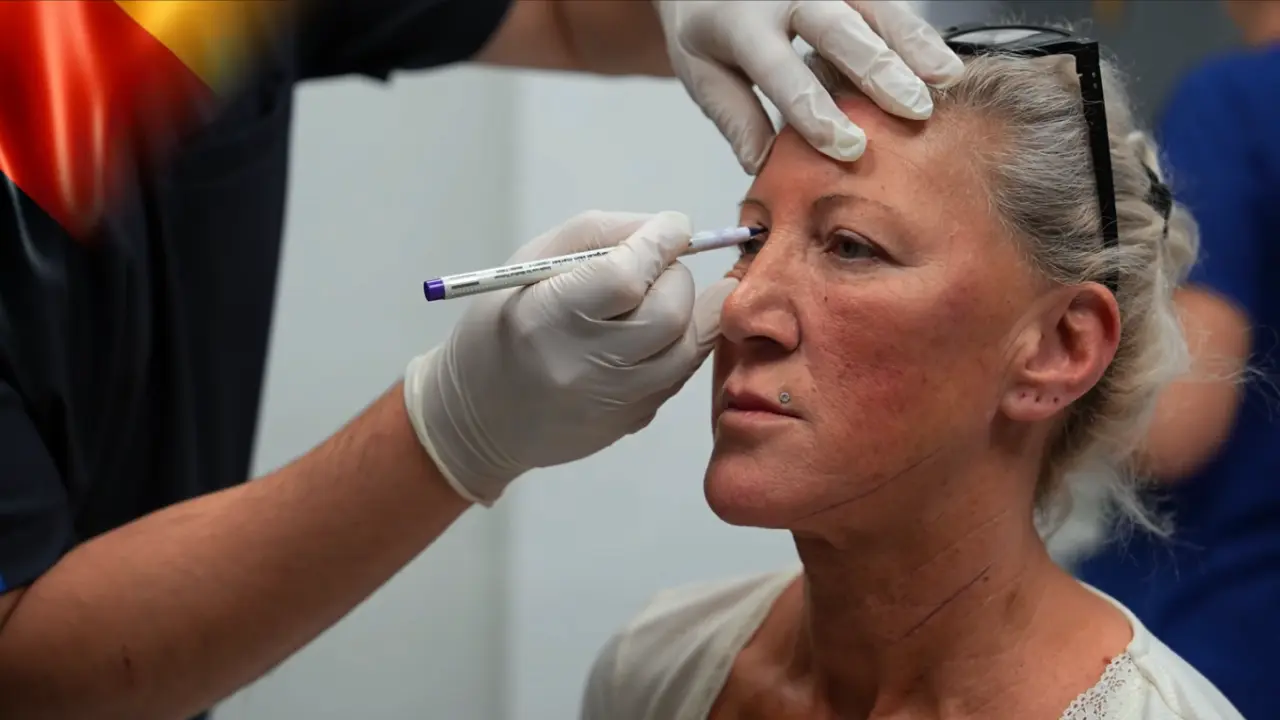
2) Markings: symmetry planning before any anesthesia begins
Markings are the “road map” for the procedure. They help the surgical team plan vectors of lift and set symmetry targets. Importantly, perfect symmetry is not a realistic human baseline; the aim is natural harmony. Markings also help avoid an over-lifted brow shape, which is a major concern among expert patients who want to look refreshed, not surgically altered.
3) Comfort and control: local anesthesia with or without twilight sedation
For an awake approach, the procedure area is numbed with local anesthesia. Twilight sedation may be added to reduce anxiety and improve comfort while preserving a controlled physiologic profile. The sedation depth is individualized, and the purpose is not to “prove you can tolerate it awake,” but to create the right comfort-safety balance for your case.
Regardless of the anesthesia plan, rigorous screening and monitoring matter. AKM describes a safety framework built on strict pre-operative health screenings and advanced vitals monitoring.
4) Access and incisions: endoscopic vs temporal placement
The specific incision pattern depends on the technique selected:
- Endoscopic brow lift: small incisions hidden in the hairline that allow endoscopic visualization and tissue release. The case analysis describes “small, hidden incisions in the hairline” as key to discreet correction.
- Temporal (lateral) brow lift: incisions typically placed in the temple/hairline region to focus on the outer brow.
The point of modern, hairline-hidden access is to correct structure while keeping scars difficult to detect in daily life.
5) Tissue release and repositioning: correcting the structural cause
Once access is established, the surgeon releases tissues in a controlled manner and repositions the brow complex to a more youthful, natural alignment. The endoscopic approach is often chosen because it enables correction at a structural level while minimizing visible scarring and avoiding excessive skin tension.
6) Fixation and closure: stabilizing the new brow position
After repositioning, the brow is stabilized using technique-specific fixation methods. The purpose is to support the new position during early healing, when tissues are settling and swelling is resolving. Closure is done with attention to minimizing scar visibility and supporting predictable healing.
7) Immediate post-op: monitoring, discharge, and early care instructions
Awake brow lift procedures are commonly performed as outpatient surgeries, meaning many patients go home the same day after appropriate monitoring. You’ll typically receive structured instructions for swelling control, sleeping position, incision care, and activity restrictions. In AKM’s care model, immediate post-operative monitoring is emphasized as part of the broader safety framework.
Surgeon’s Insight: The goal is “rejuvenation, not alteration”—a refreshed, authentic look that doesn’t advertise surgery.
Combining Procedures (Creating Natural Harmony)
A brow lift is often one part of a bigger “facial harmony” plan. Expert patients tend to think in systems: if brow position, eyelids, and midface are aging together, it can be more logical to address them in a coordinated way rather than in disconnected steps. The key is a conservative, anatomy-led strategy that protects your identity and avoids overcorrection.
Awake brow lift + upper eyelid surgery (when hooding is multi-factorial)
In many patients, upper eyelid hooding is a mix of brow descent and eyelid tissue changes. When both are present, combining a brow lift with upper eyelid surgery can create a cleaner, more rested eye area. AKM’s procedure menu explicitly includes Upper & Lower Eyelid Surgery, indicating this is a standard complementary procedure within their facial planning framework.
Clinically, the safest, most natural-looking plan usually begins with diagnosing whether the brow or the eyelid is the primary driver—then choosing a combined approach only when it’s structurally justified.
Awake brow lift + temporal lift (outer brow refinement)
Some patients want targeted improvement in the outer brow tail while keeping the central brow subtle. In these cases, a lateral/temporal lift approach may be used as a standalone refinement or as part of an integrated plan. AKM lists “Endoscopic Brow & Temporal Lift” as a defined offering, reinforcing that temporal lift is treated as a distinct tool rather than a one-size-fits-all add-on.
Awake brow lift + facial fat transfer (restoring balance, not exaggeration)
In some faces, “tiredness” is not only about descent—it’s also about volume shifts. When appropriate, fat transfer can be used to restore subtle contour support. AKM’s procedure list includes Fat Transfer to Face, which can be integrated into a broader rejuvenation strategy when it supports natural structure.
Awake brow lift + facelift/neck lift (global rejuvenation planning)
For patients experiencing both upper-face descent (brow/forehead) and lower-face aging (jowls/neck), a combined plan may be considered. In AKM’s case analysis, an endoscopic brow lift is shown as part of a dual-procedure strategy used to create a “harmonious and balanced result,” pairing structural brow correction with deeper lower-face repositioning.
Because combined procedures increase complexity, expert-level screening and a high-standard operative environment become even more important than the procedure label itself.
Recovery Timeline (Day-by-Day) and Aftercare
Recovery after an awake brow lift is usually described in phases: the first 72 hours (swelling control), the first 1–2 weeks (social downtime and incision healing), and the following weeks (tissue settling and scar maturation). Your exact timeline depends on the technique used (endoscopic vs temporal vs other), your skin biology, bruising tendency, and whether you combined the brow lift with other procedures (like eyelid surgery).
The first 24–72 hours: swelling management is the priority
The first few days are primarily about keeping swelling and bruising controlled while protecting the repositioned brow tissues. Common experiences include tightness, forehead heaviness, mild headache pressure, and temporary numbness. These are usually expected and improve as swelling resolves.
- Positioning: sleep elevated and avoid face-down or side-sleeping that puts pressure on the temples/forehead.
- Cold compress strategy: use carefully (as instructed) to minimize swelling; avoid direct pressure on incisions.
- Activity: short walks are encouraged, but no bending, heavy lifting, or vigorous exercise.
- Incision care: keep incisions clean and dry as advised; do not “scrub” the hairline.
Days 4–7: bruising and swelling peak, then begin to turn
Many patients notice swelling and bruising peak around this period, then begin to improve. If you had an endoscopic approach, the incisions are typically small and hidden in the hairline, but you may feel scalp tenderness or a tight sensation as tissues settle. If you combined procedures (such as eyelids), bruising may look more pronounced around the eyes than the forehead itself.
- What looks normal: uneven swelling, minor asymmetry, tightness, temporary numbness or tingling.
- What you should avoid: heat exposure (saunas/hot yoga), alcohol excess, and strenuous activity that increases blood pressure.
- Work: desk-based work may be possible for some patients toward the end of week one, but many prefer social downtime.
Weeks 2–3: social recovery improves; swelling becomes more subtle
By weeks two to three, many patients feel more presentable in normal social settings. Residual swelling can linger—especially in the forehead and temple region—but it becomes less noticeable to others. If you’re an “expert patient” who wants to plan life events, this period is usually where social confidence returns, even if healing is not fully complete.
- Makeup/hair styling: often becomes easier as scalp sensitivity decreases.
- Exercise: light exercise may resume with clearance; heavy lifting is usually delayed until your surgeon approves.
- Photos: early photos can look “too tight” or slightly elevated; avoid judging final results too soon.
Weeks 4–6: tissue settling and “natural expression” returns
At this stage, the brow position typically looks more integrated with your facial expression. The goal is not a permanently “raised” look, but a restored brow position that reduces heaviness and improves eye openness. The healing process continues beneath the surface even if you feel normal day-to-day.
Months 3–6+: scar maturation and long-term refinement
Hairline incisions continue to mature over months. Scar quality is influenced by genetics, skin type, sun exposure, smoking status, and how carefully you protect the area during healing. A high-quality surgical plan favors hidden scars, minimal tension, and structured aftercare to support predictable scar maturation.
Scar expectations: what “normal” looks like
Scar location depends on the technique:
- Endoscopic brow lift: typically small incisions hidden in the hairline; early redness fades as healing progresses.
- Temporal lift: incisions usually concealed in the temple/hairline region.
- Direct brow lift: scar is closer to the brow and requires more deliberate scar management strategies.
Scar care often includes sun protection, surgeon-approved topical regimens, and avoiding trauma to the incision area during early healing.
Red flags: when to contact your surgical team
While most recovery symptoms are normal and improve steadily, you should contact your provider urgently if you notice:
- Rapidly expanding swelling or severe one-sided swelling
- Persistent bleeding that does not slow with instructed measures
- Fever, worsening redness, warmth, or drainage suggesting infection
- Sudden severe pain, vision changes, or concerning neurologic symptoms
Practical timeline table (planning-friendly)
| Time Point | What You Might Feel/See | What You Typically Do |
|---|---|---|
| Days 1–3 | Swelling starts, tightness, tenderness, mild headache pressure | Elevate, rest, careful icing (as advised), incision care, short walks |
| Days 4–7 | Swelling/bruising often peak, sensitivity in scalp/temples | Continue swelling protocol; avoid heat, alcohol excess, heavy activity |
| Weeks 2–3 | Visible bruising fades; swelling becomes subtle; confidence improves | Return to routine gradually; light exercise with clearance |
| Weeks 4–6 | More natural expression; continued internal healing | Resume more activities; protect scars from sun |
| Months 3–6+ | Scar maturation and final refinement | Long-term skincare, sun protection, follow-ups as scheduled |
Accelerated Recovery Protocol (HBOT + LLLT)
Recovery is not only about “waiting it out.” Many advanced programs now treat recovery as a clinical phase with active interventions to support tissue healing, reduce inflammation, and improve patient comfort. At AKM Clinic, Hyperbaric Oxygen Therapy (HBOT) and Low-Level Laser Therapy (LLLT) are presented not as optional add-ons, but as part of a structured “Rapid Recovery & Safety” protocol.
HBOT: why oxygen delivery matters in surgical healing
HBOT involves breathing oxygen in a pressurized environment to increase oxygen availability in tissues. From a recovery perspective, the logic is straightforward: oxygen is foundational for tissue repair. In AKM’s technology documentation, HBOT is positioned to reduce swelling and bruising and to support faster healing by enhancing oxygen delivery.
- Potential recovery benefits: reduced swelling, improved tissue recovery, and support for overall healing quality.
- When it matters most: early post-op phase when inflammation is highest and tissues are actively repairing.
LLLT: cellular energy support and inflammation control
LLLT (also called low-level laser or “cold laser”) is used to support tissue regeneration by encouraging cellular repair pathways. In AKM’s description, LLLT is associated with reducing inflammation and swelling and supporting collagen production—factors that can influence both comfort and scar quality in the long run.
- Potential recovery benefits: reduced inflammation, improved comfort, and support for scar maturation biology.
- Why expert patients care: it’s a proactive recovery plan rather than passive waiting.
How HBOT + LLLT fit into a brow lift timeline
The best protocol is personalized, but conceptually it tends to cluster around the early healing window (first 1–2 weeks), when swelling/bruising and tissue repair demands are highest. In AKM’s case-based analysis, recovery support is described as helping some patients appear “presentable” faster—especially those who value social downtime predictability.
Who may benefit most from an accelerated recovery protocol?
Patients who often prioritize active recovery support include:
- Those with an important return-to-work or event timeline
- Patients who bruise easily or swell significantly after procedures
- Patients combining procedures (where inflammation burden can be higher)
- Expert patients who want structured, measurable recovery planning
Clinical note: Even with the best protocols, healing varies. A high-quality team sets expectations honestly and uses recovery technologies to improve the odds of a smoother course—not to promise a guaranteed timeline.
Risks, Complications, and How They’re Managed
No responsible surgical guide should talk about benefits without clearly addressing risk. A brow lift—awake or under general anesthesia—is still surgery. The right way to think about risk is not “can it happen,” but “how likely is it in my situation, and what systems are in place to prevent it, detect it early, and manage it correctly?” High-standard programs treat safety as an integrated system that starts before surgery and extends through recovery.
Common side effects (expected and temporary)
Most patients experience some degree of temporary side effects, which typically improve steadily over days to weeks:
- Swelling in the forehead and temples
- Bruising (often mild with isolated brow lifts, potentially more noticeable if combined with eyelid surgery)
- Tightness or “heaviness” in the forehead/scalp
- Temporary numbness or altered sensation along the scalp
- Mild headache pressure early on
Uneven swelling and mild asymmetry can be normal early in recovery. This is one reason expert teams caution against “judging the result” too soon.
Less common complications (important to understand)
While uncommon in well-screened patients under experienced teams, complications can occur. These may include:
- Hematoma (a collection of blood that may require urgent evaluation)
- Infection (rare, but possible with any incision)
- Delayed healing or widened scars (more relevant in higher-risk biology, smokers, or higher-tension closures)
- Persistent asymmetry (some pre-existing asymmetry is normal; the aim is improvement, not “perfect mirroring”)
- Nerve irritation leading to prolonged numbness or tingling (typically improves but can take time)
- Overcorrection (a brow that looks too elevated) or undercorrection (insufficient lift)
Many of these risks are technique-sensitive and surgeon-dependent—meaning prevention is heavily influenced by appropriate candidacy selection, technique choice, and meticulous execution.
Anesthesia-related considerations (awake/twilight vs general)
When patients choose an “awake” approach, a major motivation is reducing anxiety around general anesthesia. In AKM’s testimonial synthesis, “awake surgery” is described as a meaningful differentiator because it helped at least one patient overcome a paralyzing fear of general anesthesia and proceed with surgery.
That said, awake/twilight techniques also need the right candidacy. The safest anesthesia plan is individualized—based on medical history, airway considerations, anxiety tolerance, procedure complexity, and your team’s protocols.
How risk is reduced: screening, monitoring, and sterile standards
Risk reduction is primarily a systems issue. The most important “safety features” are not marketing terms—they are standard-of-care fundamentals executed at a high level:
- Strict pre-operative health screening to confirm candidacy and identify avoidable risk factors
- Advanced vitals monitoring throughout every procedure
- Rigorous sterilization standards designed to reduce preventable infection risk
AKM Clinic explicitly frames these elements as “non-negotiable” pillars of its environment—highlighting international sterilization standards, continuous vitals monitoring, and strict screening as core safeguards.
Where recovery technology fits into safety and predictability
Recovery support does not replace good surgery—but it can improve the early healing experience and reduce the visible impact of swelling and bruising for patients who want predictable downtime. AKM’s technology documentation describes HBOT as improving tissue oxygenation, reducing inflammation, supporting scar quality, and helping with infection defense—positioning it as a safety-centered intervention in the post-surgical window.
Similarly, LLLT is presented as a targeted cellular-support therapy that boosts ATP (cellular energy), supports collagen synthesis, and helps reduce post-operative swelling and redness—framed as an adjunct to HBOT in a coordinated recovery pathway.
Realistic Results (Natural, Not “Operated”)
The most sophisticated brow lift result is usually the one other people can’t identify as surgery. Expert patients consistently fear looking “pulled,” “startled,” or artificially elevated. In AKM’s before/after analysis, this concern is described as a powerful and consistent fear—specifically the desire to avoid a “wind-swept,” “pulled,” or “startled” appearance.
What a natural brow lift result actually looks like
A natural result typically means:
- Improved eye openness without an obvious “arched” or over-lifted brow
- Softer resting expression (less tired, less angry-looking)
- Better brow symmetry while preserving your natural facial identity
- Harmony with the eyelids—especially when brow descent was driving hooding
The goal is alignment: restoring brow position to where it naturally belongs on your facial structure—rather than chasing a trendy shape or a dramatic “lifted” look.
Before/after logic: why structural correction matters
When brow descent is the root cause of “heavy eyes,” lifting the brow can produce a more meaningful change than treating eyelid skin alone. In AKM’s case-based analysis, an endoscopic brow lift is described as addressing the root cause of “heavy” eyes by elevating the brow to its natural position through small, hidden incisions in the hairline.
That concept matters even if you choose a different surgeon or clinic: the best outcome usually comes from correcting the correct driver of the aesthetic problem.
How long do results last?
Brow lift longevity depends on your anatomy, tissue quality, aging pattern, and the technique used. A well-executed structural repositioning is generally designed to be durable, but no procedure “stops” aging. Most expert teams frame this as a reset: you continue aging, but from a more refreshed baseline.
Surgeon’s Insight: The objective is a result that looks rested and authentic—never “wind-swept,” “pulled,” or “startled.”
How expert-patient planning supports predictability
Predictable results are not only about technique—they’re also about planning. AKM’s clinic summary highlights the use of the 3D Vectra Imaging System for meticulous pre-operative planning and simulation, which can support clearer communication and better expectation alignment.
Equally important: expectation management. High-trust programs treat this as part of the clinical product—helping patients choose the right technique, understand trade-offs, and avoid unrealistic “perfect symmetry” expectations.
Cost Analysis (US Benchmarks vs Turkey Value)
Cost is a legitimate part of decision-making, but expert patients know “price” and “value” are not the same thing. A proper comparison starts by understanding what typical quotes include (and exclude), then mapping those costs against what you’re actually buying: surgeon expertise, technique selection, anesthesia strategy, facility standards, and recovery support.
What drives the price of a brow lift?
A brow lift quote can vary widely based on:
- Technique (endoscopic vs temporal vs other approaches)
- Provider experience and demand (high-volume, highly requested surgeons often cost more)
- Anesthesia plan (local/twilight vs general anesthesia) and anesthesia provider fees
- Facility and operating room fees
- Combined procedures (for example, adding upper eyelid surgery)
- Post-op support (medications, garments, follow-ups, recovery protocol)
The American Society of Plastic Surgeons notes that the “average cost” statistics often represent the surgeon’s fee only, and do not include anesthesia, facility fees, or other related expenses.
US benchmarks: why totals can feel “prohibitive”
To anchor expectations, it helps to look at both professional-society averages and patient-reported totals:
- ASPS (surgeon fee average): $5,460 (does not include anesthesia/facility/other expenses).
- RealSelf (patient-reported average total): $8,928, with a reported range of $3,000 to $20,000.
RealSelf’s data also shows higher patient-reported averages in some major metro markets (example: Los Angeles listed at $11,500 in their metro table).
A planning-friendly comparison table (what the numbers mean)
| Reference Point | Typical Figure | What It Represents | Important Caveat |
|---|---|---|---|
| ASPS “average cost” | $5,460 | Average surgeon’s fee | Excludes anesthesia, facility, tests, meds, follow-ups |
| RealSelf “average cost” | $8,928 | Patient-reported totals | Wide range ($3,000–$20,000) based on technique/market/provider |
| RealSelf Metro Example | $11,500 (Los Angeles) | Patient-reported metro average | Not every city has enough data to list |
Why Turkey can cost less without “quality compromise” (the value logic)
For international patients, the cost difference is often driven by macroeconomic factors—not automatically by lower standards. AKM Clinic explicitly frames the US–Turkey price differential as driven by exchange rate and national operational costs (such as salaries and rent), rather than compromised quality.
To address the “is it the same standard?” question, AKM also states its commitment to using FDA-approved materials and operating in JCI-accredited hospitals that meet or exceed Western standards.
All-inclusive pricing: reducing hidden-cost uncertainty
Another major value lever is clarity. AKM describes an all-inclusive model that bundles key cost components (procedure, anesthesia/OR fees, tests, hotel, transfers, medications/garments, and long-term follow-up), while clearly listing what is not included (international flights, insurance, personal expenses, etc.).
Choosing the Right Surgeon (Credentials Checklist)
When your goal is a natural-looking brow position—and you’re specifically considering an awake/twilight approach—surgeon selection matters as much as the technique itself. Expert patients should look for verifiable credentials, transparent communication, and a team that can explain why a specific brow lift method fits your anatomy.
Credentials that are meaningful (and verifiable)
- Board certification in a relevant surgical specialty, with credentials you can verify independently
- Demonstrated facial focus (brow/eyelid/face anatomy, not “everything for everyone”)
- Experience with awake/twilight facial surgery if you prioritize local/twilight anesthesia planning
AKM’s value-positioning notes that many top Turkish surgeons hold European Board Certifications (EBOPRAS), described as the direct equivalent of US boards.
Why “awake” requires specific team experience
“Awake” is not just a patient preference—it’s a workflow. In AKM’s surgical profile, the clinic highlights mastery of performing complex facial procedures without general anesthesia as a differentiator, framed as an advantage for comfort and recovery.
For your own consultation—at any clinic—ask how frequently the team performs facial procedures under local/twilight, and how they decide when general anesthesia is safer for a specific patient.
Questions to ask in consultation (expert-patient level)
- Which brow lift technique fits my anatomy, and why?
- Is my upper eyelid hooding driven by brow descent, eyelid skin excess, or both?
- What is the plan to avoid an over-lifted or “startled” brow shape?
- What is your anesthesia recommendation for my case, and what would change that plan?
- How do you manage asymmetry (pre-existing and post-op swelling-related)?
- What does my recovery protocol include, and what is the expected downtime?
The Medical Journey for International Patients (VIP Process)
If you’re traveling for an awake brow lift, the logistics should feel clinical and predictable—not improvised. A structured process reduces the “anxiety of the unknown,” supports safer planning, and helps you focus on healing rather than coordination.
Step 1: Free virtual consultation
AKM describes a no-obligation video call where you discuss goals, share photos, and receive a personalized plan with an all-inclusive quote.
Step 2: Secure your date and VIP planning
Once you proceed, the patient host coordinates hotel partners and VIP transfers, with the only major item left for you being your international flight booking.
Step 3: Airport welcome and private transfer
AKM outlines an airport meet-and-greet at IST/SAW with private transfer to the hotel (example vehicle: Mercedes-Benz Vito).
Step 4: In-person consult, pre-op tests, and procedure day
On procedure day, the plan is reviewed in-person, pre-op tests are completed, and surgery is performed in a fully accredited facility.
Step 5: Recovery in Istanbul + clearance to fly
AKM describes close post-op monitoring, 24/7 WhatsApp availability via the patient host, and a final check-up prior to travel clearance.
Step 6: Long-term follow-up back home
Follow-ups are scheduled virtually at 1, 3, 6, and 12 months to monitor healing progress and long-term satisfaction.
Frequently Asked Questions
These are the most common questions expert patients ask when researching an awake brow lift—especially when they’re weighing technique, anesthesia safety, downtime, scars, and how to choose the right surgical team.
Are you awake during twilight sedation?
“Awake” and “asleep” aren’t truly binary in medicine—sedation exists on a spectrum. With twilight sedation, many patients feel deeply relaxed and drowsy, and some have limited memory of the procedure. You may still be able to respond to simple instructions, but discomfort is controlled with local anesthesia, and anxiety is reduced by the sedation plan.
What you experience depends on the sedation depth, your anxiety baseline, and the team’s protocol. The safest plan is individualized—your surgeon and anesthesia team should be able to explain what level of awareness is expected for your case and why.
Does an awake brow lift hurt?
An awake brow lift should not be painful during the procedure because the surgical area is numbed with local anesthesia. You may feel pressure, movement, or mild tugging sensations, but sharp pain should be addressed immediately if it occurs. A well-run awake program includes continuous comfort checks and a plan to adjust local anesthesia or sedation as needed.
After surgery, it’s common to feel tightness, scalp tenderness, and a “heavy” forehead sensation for several days. Most patients describe the first week as more “tight and sore” than truly painful. Your team should provide a clear pain-control plan and realistic expectations for day-by-day recovery.
How long does swelling last after a brow lift?
Most noticeable swelling is typically concentrated in the first 1–2 weeks, with a peak in the first week for many patients. By week two or three, you often look socially presentable, even though subtle swelling can continue to resolve for several weeks.
First week: swelling/tightness is most noticeable
Weeks 2–3: visible swelling improves; residual puffiness can linger
Weeks 4–6: tissues settle and expression looks more “natural”
Months 3–6+: final refinement and scar maturation continue
If you’re planning around an event, ask your team for a conservative downtime estimate—especially if you’re combining the brow lift with eyelid surgery.
When can I return to work, exercise, and normal life?
This depends on your job, your healing biology, and whether the procedure was isolated or combined. Many patients with desk-based work plan for about 7–14 days before feeling confident in public. If your work is physically demanding, your downtime may be longer.
Work (desk-based): often 7–14 days
Light walking: usually right away
Strenuous exercise/heavy lifting: typically delayed until cleared (often several weeks)
Social events/photos: many plan 2–3+ weeks for comfort and confidence
Expert tip: schedule conservatively. It’s easier to be pleasantly surprised by faster healing than to feel stressed if you’re still bruised at a key moment.
Will I have visible scars?
Scar visibility depends primarily on the technique. Endoscopic and temporal approaches are often favored because incisions can be placed within the hair-bearing scalp, making scars easier to conceal. Direct brow lifts can be highly effective in selected cases, but the scar sits closer to the brow and may be more visible.
Even with hidden incisions, scar quality is influenced by genetics, skin type, sun exposure, smoking status, and aftercare. A strong program should give you a scar strategy (sun protection, approved topicals, and practical guidance for hairline care) and set honest expectations about what “normal” healing looks like.
Can a brow lift fix hooded upper eyelids?
Sometimes—especially when hooding is driven by brow descent rather than eyelid skin excess alone. If the brow has dropped, it can push tissue downward and create a heavier eyelid look. In those cases, lifting the brow to a natural position can open the eye area meaningfully.
However, many patients have a combination of brow descent and eyelid skin excess. The most natural plan often comes from diagnosing the main driver first, then deciding whether you need:
- a brow lift alone,
- upper eyelid surgery alone, or
- a combined approach for structural harmony.
How long do awake brow lift results last?
A brow lift is designed to be durable, but it does not “freeze” aging. Think of it as resetting the baseline: your brows are repositioned to a more youthful, anatomically appropriate level, and then you continue to age naturally from that improved starting point.
Longevity depends on factors like tissue quality, genetics, facial movement patterns, sun exposure, and the technique used. A technically sound structural lift generally lasts longer than a skin-tension strategy, which is why technique selection and surgeon experience matter.
Is twilight sedation safe? What are side effects?
Twilight sedation can be safe when performed by an experienced team with appropriate patient screening and continuous monitoring. Safety is not just about the medication—it’s about the entire system: candidacy evaluation, standardized protocols, vitals monitoring, and a team trained to respond to changes quickly.
Possible side effects can include grogginess, nausea, dizziness, or temporary confusion—often short-lived and influenced by the exact medications used and the depth of sedation. Your team should review your medical history and explain your personalized sedation plan, including what would prompt a shift to a different anesthesia approach if needed.
Can I combine an awake brow lift with other procedures?
Yes—depending on your goals, anatomy, and medical suitability. Common combinations include upper eyelid surgery, temporal refinement, and (for some patients) broader facial rejuvenation planning. Combining can be efficient and can create more harmonious results, but it increases complexity and may extend downtime.
If your plan includes multiple procedures, ask specifically:
- which procedure is solving which problem,
- how the combination affects swelling/bruising expectations, and
- how the anesthesia strategy is chosen for the combined surgical scope.
How do I choose the right surgeon for an awake brow lift?
Look for verifiable credentials, strong facial specialization, and a surgeon who can clearly explain technique selection for your anatomy—not just show attractive photos. For awake/twilight approaches, it’s also reasonable to ask how often the team performs facial procedures under local/twilight and what safety protocols they consider non-negotiable.
High-quality consults feel educational. The surgeon should explain trade-offs (endoscopic vs temporal vs other approaches), set realistic expectations about symmetry and swelling, and give you a structured recovery plan—including what happens if your healing timeline is slower than average.
Awake Brow Lift: Patient Stories
Laura

Lisa

Awake Brow Lift Surgeons

Awake Brow Lift Cost in Turkey
Starting from $4500
* There are no hidden fees or unexpected charges.
- Your Personalised Awake Brow Lift Procedure
- All Specialist Surgeon & Anesthesia Fees
- All Pre-Op Tests & Post-Op Check-ups
- 5-Star Hotel Accommodation (incl. breakfast)
- All Private VIP Airport & Clinic Transfers
- 24/7 Dedicated Patient Coordinator & Translation Services
Awake Brow Lift: A Cost Comparison
Awake Brow Lift: Patient Reviews
Jammal Canada
I have had face and neck lift with AKM Clinic they have been so good to me and my operation went so smoothly🥰 i would like to thank my doctor here and also to the team 💐
Ava Canada
Thank you AKM Clinic for giving me my confidence back! Had facelift + temporal lift 3 months ago and the outcome is already stunning. Special thanks to Hande!
Jakayla USA
Had a deep plane facelift and lower eyelid procedure at AKM Clinic 7 months ago. The results are fantastic - very subtle and natural. I didn’t expect the entire experience to be so comfortable. Hande managed everything and kept in contact even after I returned to USA. I’m beyond pleased with the outcome and the care I received. Would do it again in a heartbeat!
Barbara United Kingdom
It has been 4 months since my surgery. Everything is great, The most important thing is l love the way l look, l look exactly how l wanted. Meaning l look natural, just almost 40 years younger. I pulled Facebook - majority voted 37ys. I also had face, neck, chest, and hands CO2 laser. My skin is flawless.
Lisa Canada
I had a face, neck and arm lift at AKM. I’m just over 4 weeks post and couldn’t be happier with the results. The entire experience was wonderful! My coordinator, Khadija made me feel comfortable from beginning to end! I highly recommend AKM and will definitely go back for other procedures!
Julie USA
I am beyond grateful I went with AKM Clinic for my deep plane face and neck lift, upper eyelid, and co2 laser. Dr. Akif has magic hands and my results are truly incredible! I came from the US and assistant Emine was the best in assuring every detail was coordinated and communicated with me beyond my expectations every step of the way. 10 out of 10 to the entire team! I couldn’t be more pleased!
Ready to Start Your Own Transformation Journey?
Join the 2,000+ patients who trusted Dr. Akif Mehmetoğlu and the AKM Clinic team. Your journey to a more confident, revitalized you begins with a simple, no-obligation conversation. Contact us today from the USA for your free virtual consultation.
#1: Get Your Free Personalised Quote
Start with a free, no-obligation online consultation. Share your photos, and our surgical team will provide a fully personalised treatment plan and a transparent, all-inclusive price package. No hidden fees.
#2: Secure Your Date & VIP Booking
Once you're ready, our dedicated patient coordinators will help you secure your procedure date. We'll handle all your bookings, including your 5-star hotel and private VIP airport transfers.
#3: Arrive in Istanbul & Meet Your Surgeon
Arrive at Istanbul Airport (IST) and be greeted by your private driver. Settle into your hotel and prepare for your in-person consultation, where you'll meet your specialist surgeon to finalise the details for your "natural, subtle, and revitalized" new look.
