




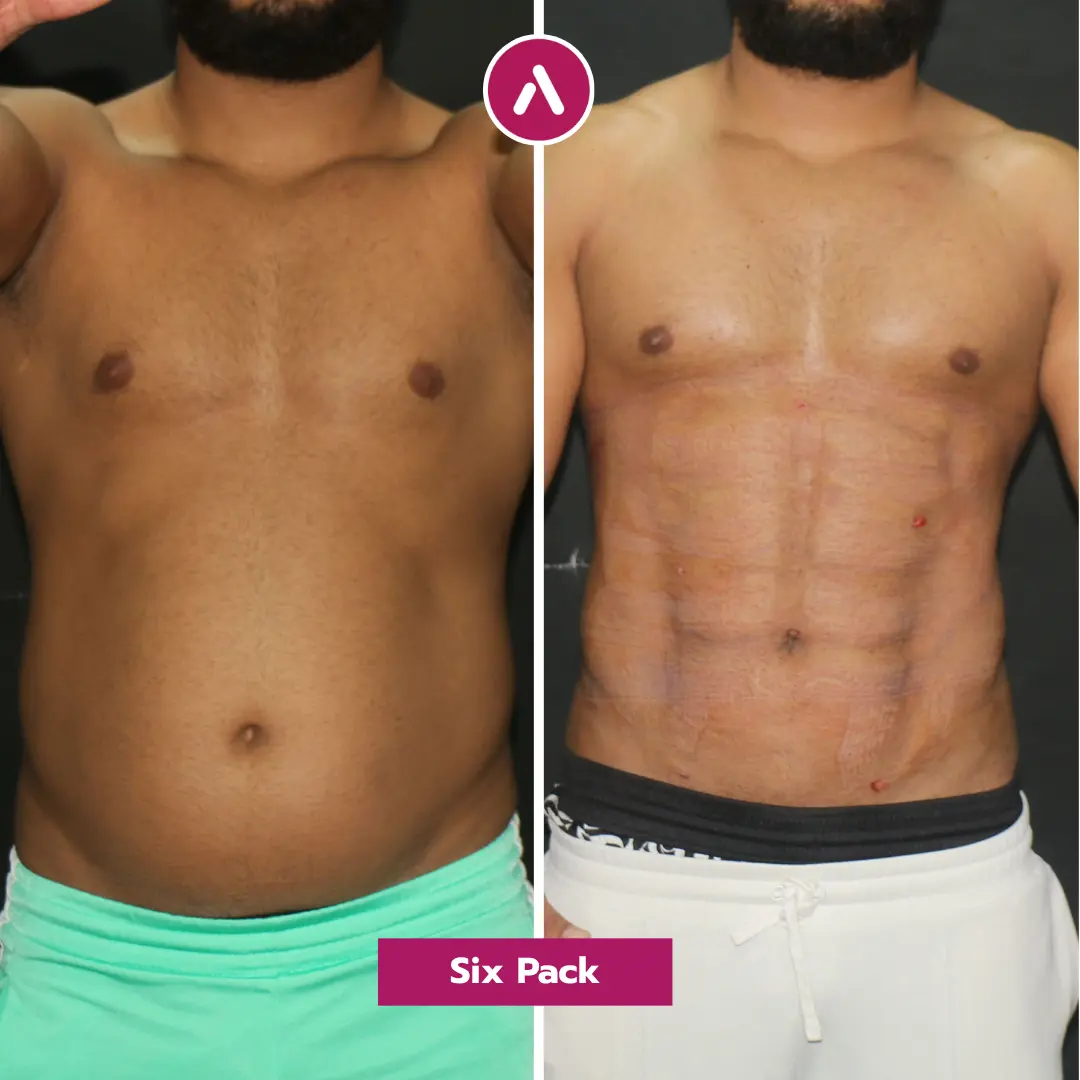
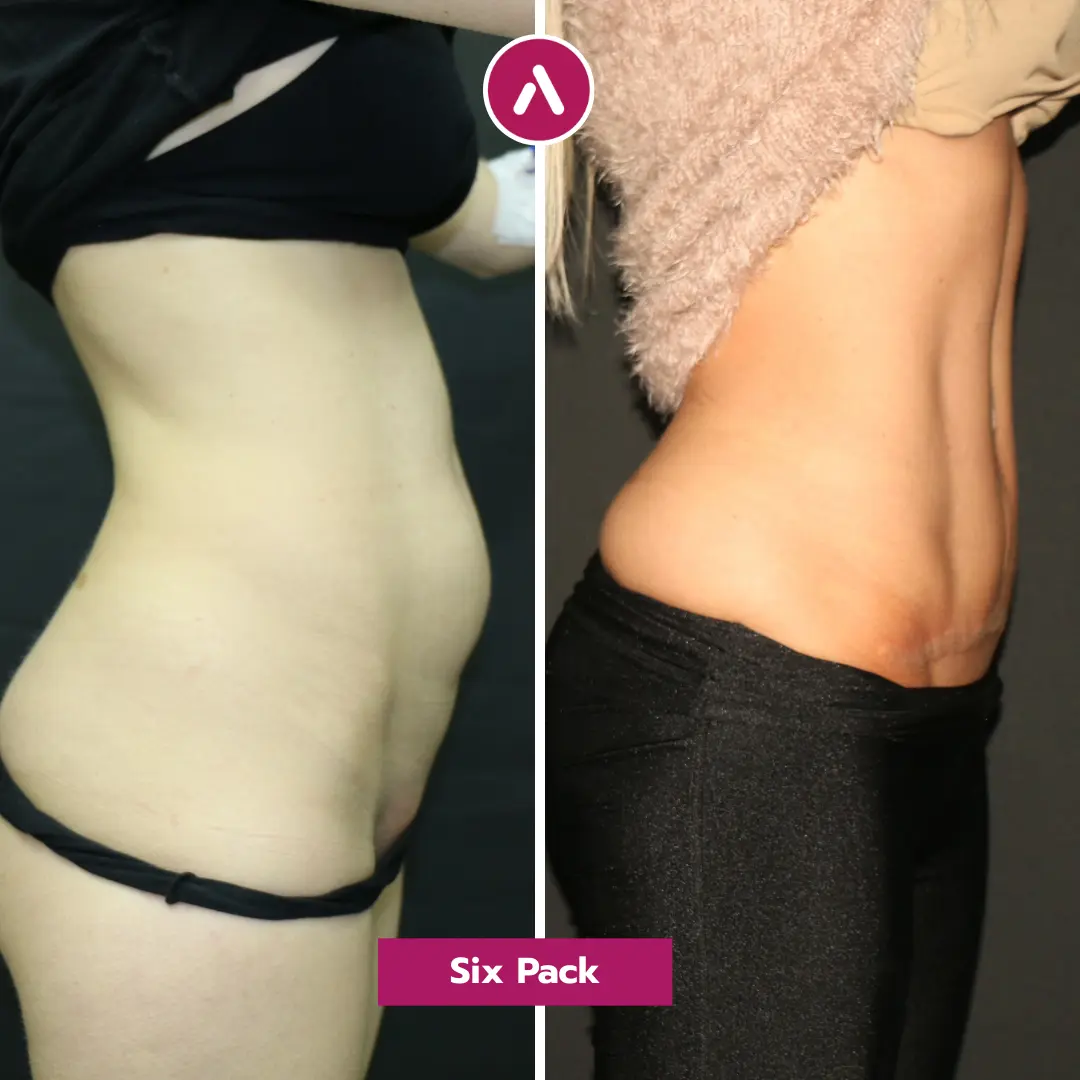

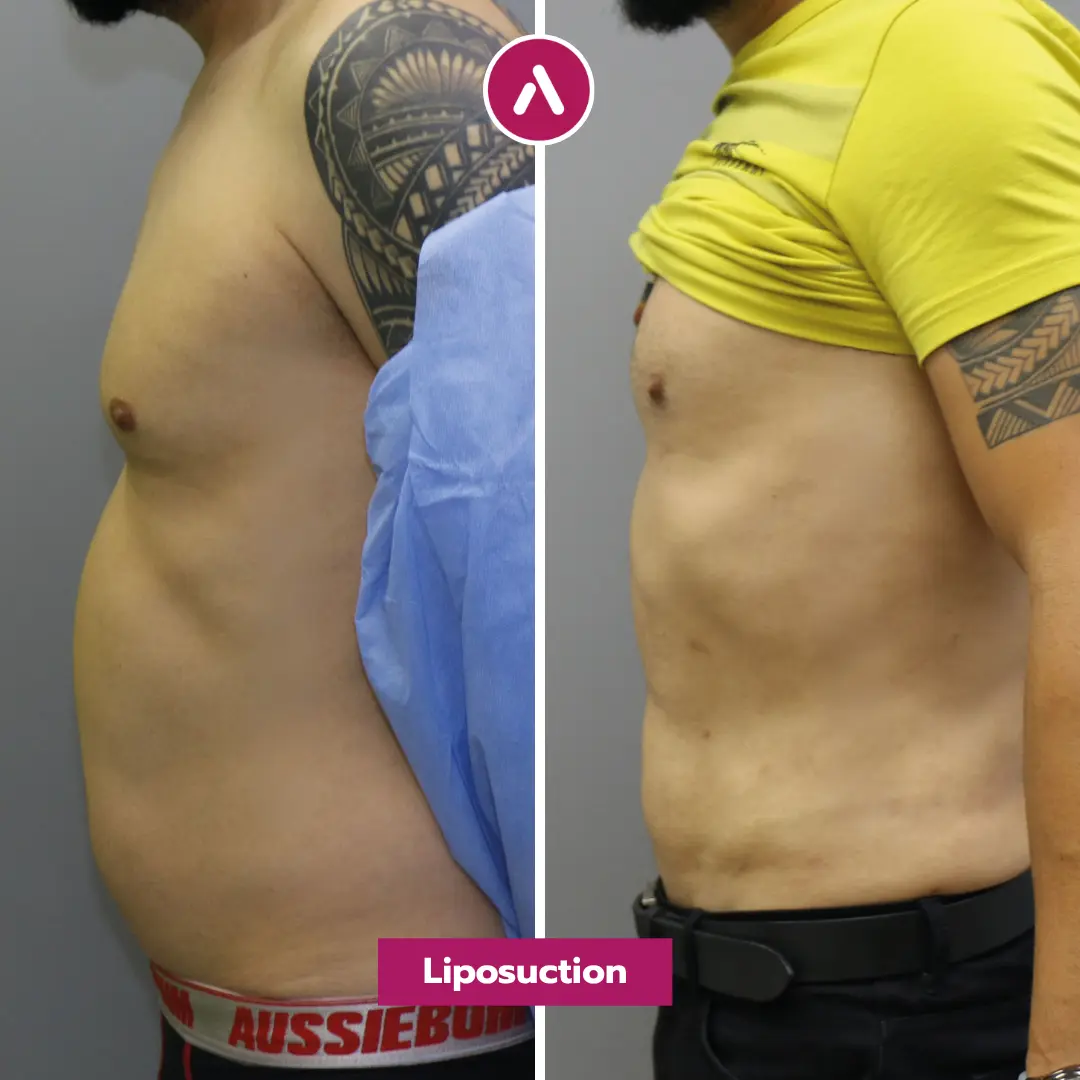
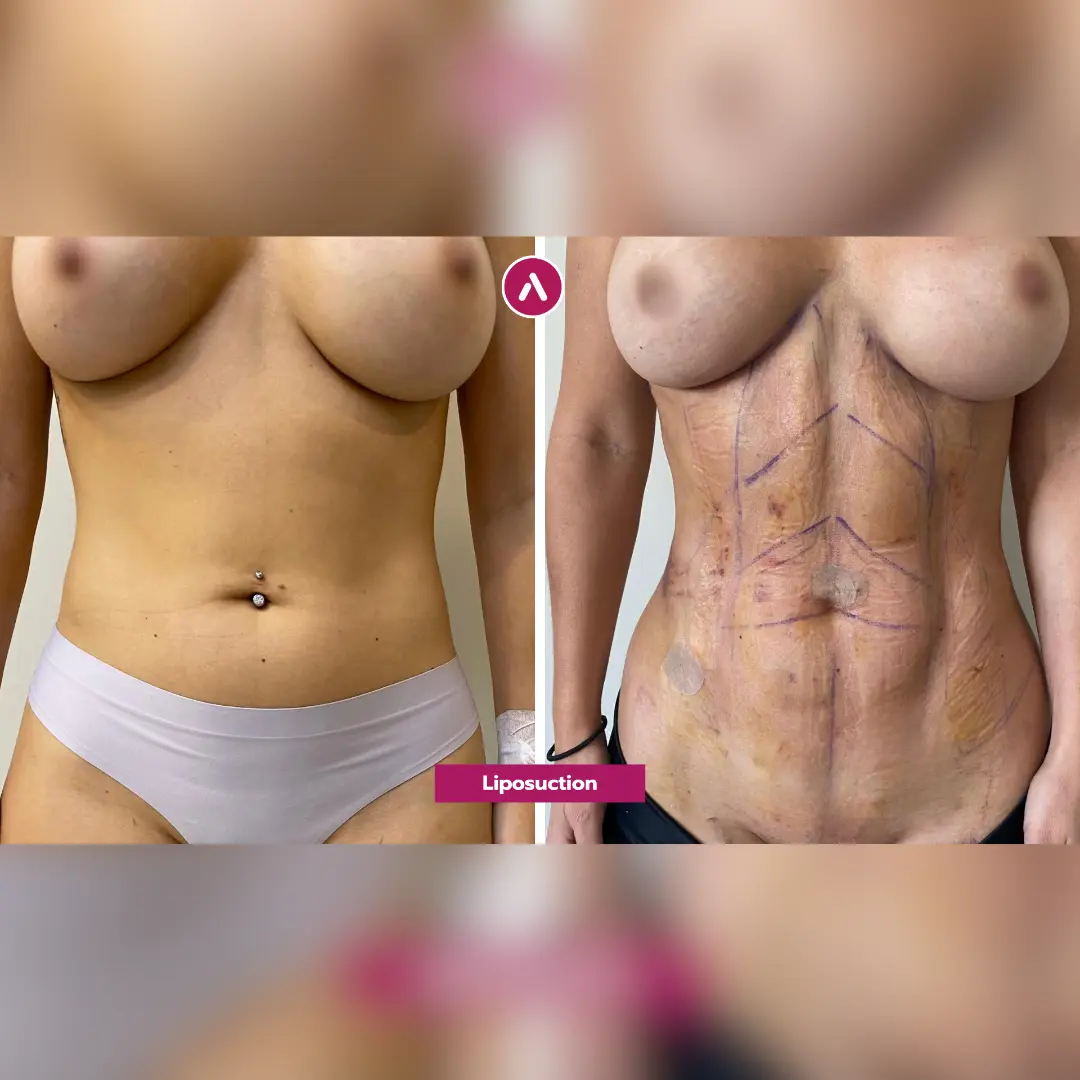
Awake abdominal etching is a high-definition body contouring procedure designed to create a more athletic, “etched” abdominal appearance by selectively reducing fat and shaping natural lines across the midsection. Instead of simply making the abdomen smaller, the goal is to make the anatomy read more clearly—highlighting the natural intersections where the rectus abdominis (“six-pack” muscle) and tendinous inscriptions create shadows and definition.
Because many online descriptions blur together “ab etching,” “high-definition liposuction,” and “six-pack surgery,” this guide focuses on clear, clinical explanations—what the procedure can and cannot do, who benefits most, and why the concept of “awake” surgery matters for patients who prioritize safety, comfort, and a more controlled recovery experience.
Throughout, you’ll see a consistent philosophy: the best aesthetic result is one that looks believable. In other words, the goal is definition that fits your frame—not a “carved” look that appears artificial when you sit, twist, or gain a few pounds.
Table of Contents
What Is Awake Abdominal Etching?
Abdominal etching is a sculpting-focused approach to fat reduction in which a surgeon uses advanced liposuction principles to shape light and shadow across the abdomen. The “awake” component refers to performing the procedure without general anesthesia—typically using a local anesthetic strategy often paired with twilight-style sedation—so you can avoid being fully asleep while still remaining comfortable. Not every patient is a candidate for an awake approach, and the best anesthesia plan depends on your health profile, surgical plan, and anxiety threshold. (A full anesthesia comparison appears later in this guide.)
Abdominal Etching Meaning: What It Actually Changes
When patients ask for “ab etching meaning,” they’re usually trying to understand whether this procedure builds muscle. It does not. Abdominal etching does not strengthen the abdominal wall or create new muscle. Instead, it reshapes the fat layer above the muscle to reveal natural contours more clearly.
- It can: reduce localized fat, sharpen existing lines, improve waist-to-abdomen transitions, and create a more athletic silhouette.
- It cannot: replace fitness, correct significant loose skin, repair separated abdominal muscles (diastasis), or deliver a stable “six-pack” look if body fat remains high.
Think of it as precision contouring. If the underlying anatomy and skin quality are favorable, etching can emphasize what’s already there—like turning up the contrast on a photo. If the “photo” is blurry (higher body fat, low muscle tone, poor skin elasticity), the same contrast adjustment won’t produce clean lines.
Ab Etching vs Real Abs: What’s the Difference?
“Real abs” are the result of muscle development plus low enough body fat for the muscle contours to show. Abdominal etching can create the appearance of more definition, but it’s still dependent on your baseline anatomy and long-term habits.
Here’s a practical way to compare:
- Fitness-defined abs are dynamic and usually look more natural across different positions (standing, bending, twisting) because the definition comes from muscle thickness and tone.
- Etched abs can look excellent—especially in the early “reveal” phase—when swelling resolves and contour lines sharpen. However, overly aggressive etching can look unnatural when posture changes, which is why surgical restraint and anatomical planning matter.
The most consistent, “expert patient” approach is to view etching as a finishing procedure: you’re already close to your goal, and you want refinement that is hard to achieve with diet and training alone.
Liposuction vs Abdominal Etching: The Core Distinction
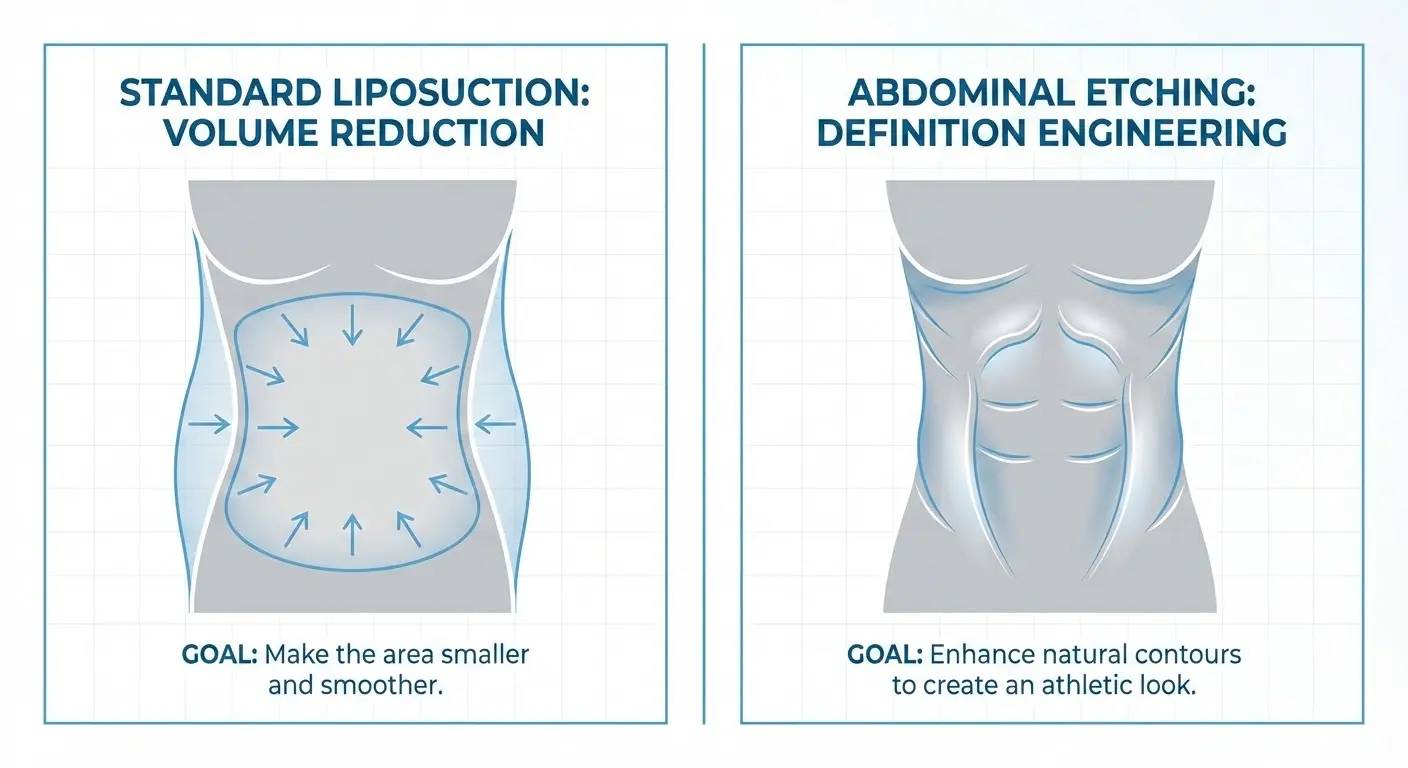
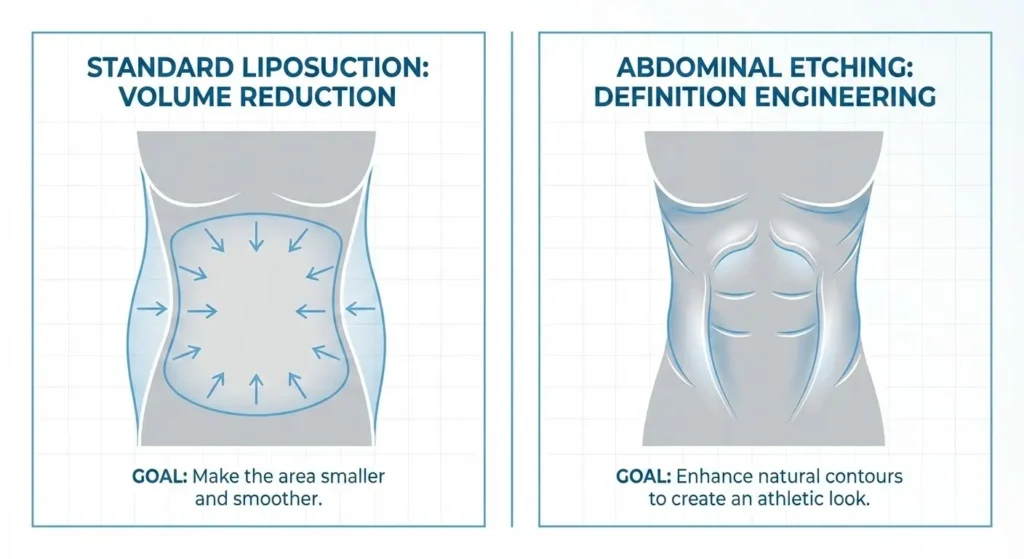
Standard liposuction is primarily about volume reduction. Abdominal etching is about definition engineering. The difference is not just the tool; it’s the intent and the mapping strategy.
- Standard lipo: “Make this area smaller and smoother.”
- Ab etching: “Make this area read more athletic by shaping transitions and preserving/creating anatomical highlights and shadows.”
This is why surgeon selection and pre-operative planning are so critical. Etching is less forgiving than smoothing: small asymmetries can become more visible when the goal is definition, not softness.
Anatomy of a “Six-Pack” Look
To understand why abdominal etching works well for some patients and disappoints others, you need a quick anatomy and aesthetics primer. The abdomen is not a flat canvas—it’s a layered structure where skin quality, fat thickness, connective tissue, and underlying muscle shape determine how definition appears. A responsible plan respects these layers instead of forcing a one-size-fits-all “template.”
Fat Layers: Why Superficial vs Deep Matters
Abdominal contour is influenced by the thickness and distribution of fat between the skin and the muscle. Even among athletic patients, fat isn’t perfectly uniform—some areas hold more easily (lower abdomen, flanks) while others lean out faster. The surgeon’s job in etching is not to remove “as much as possible,” but to create a deliberate pattern of reduction that enhances the natural topography of the abdomen.
In general:
- Too much residual fat can blur definition and reduce the “etched” effect.
- Too little superficial fat can increase the risk of surface irregularities and a less natural look, especially as swelling resolves and scar tissue matures.
This balance—between reduction and preservation—is one of the biggest differences between a smooth lipo result and a high-definition result.
Natural Landmarks: Rectus Abdominis and Tendinous Inscriptions
The “six-pack” appearance comes from the rectus abdominis muscle segments separated by tendinous inscriptions. These inscriptions create natural grooves and highlights. Abdominal etching aims to emphasize these landmarks in a way that matches your body structure—your ribcage width, waist shape, and symmetry patterns.
Importantly, not everyone’s inscriptions are identical. Some people have more pronounced horizontal segmentation; others have subtler lines or asymmetry. A realistic surgical plan works with your anatomy rather than trying to impose a perfectly symmetrical “stencil.”
Skin Quality and Elasticity: The Hidden Driver of Natural Results
Skin is the outer “screen” that displays the result. If skin elasticity is strong, it can re-drape smoothly after sculpting. If elasticity is poor—due to significant weight loss, pregnancy-related stretching, or age-related collagen changes—definition can be harder to achieve, and skin laxity may become the limiting factor.
When skin laxity is the primary issue, the right solution may not be aggressive etching. In some cases, a tummy tuck (abdominoplasty) or a combined strategy is more appropriate. The goal is not to “sell” a technique—it’s to choose the approach that can predictably deliver a natural-looking outcome.
Who Is a Good Candidate?
The best candidates for awake abdominal etching are typically patients who are already close to an athletic look and want sharper refinement—especially in the lower abdomen and along the natural “six-pack” lines. Because etching is a definition-first procedure, it is far more dependent on baseline anatomy, skin quality, and realistic expectations than standard liposuction. A strong candidacy assessment is not just about aesthetics; it’s also one of the most important safety steps in any surgical plan.
Ideal Body Type and “Close-to-Goal” Anatomy
In practical terms, abdominal etching tends to perform best when:
- Your abdominal muscles are already reasonably developed (you have a “foundation” to reveal).
- Your body fat is not too high, so definition can show without over-aggressive sculpting.
- Your fat distribution is localized (for example, stubborn lower-abdominal fat that persists despite training).
- Your skin has enough elasticity to re-drape smoothly over the new contour.
If your primary barrier is overall weight or general deconditioning, the best medical guidance is usually to treat etching as a later-stage refinement. The most natural outcomes are achieved when surgery enhances your existing shape rather than trying to create an entirely new body aesthetic from scratch.
Surgeon’s Insight: The most successful aesthetic surgery is the kind that looks “unoperated-on.” The goal is refinement and rejuvenation—not an artificial, over-sculpted appearance.
Men vs Women: Different Patterns of “Athletic Definition”
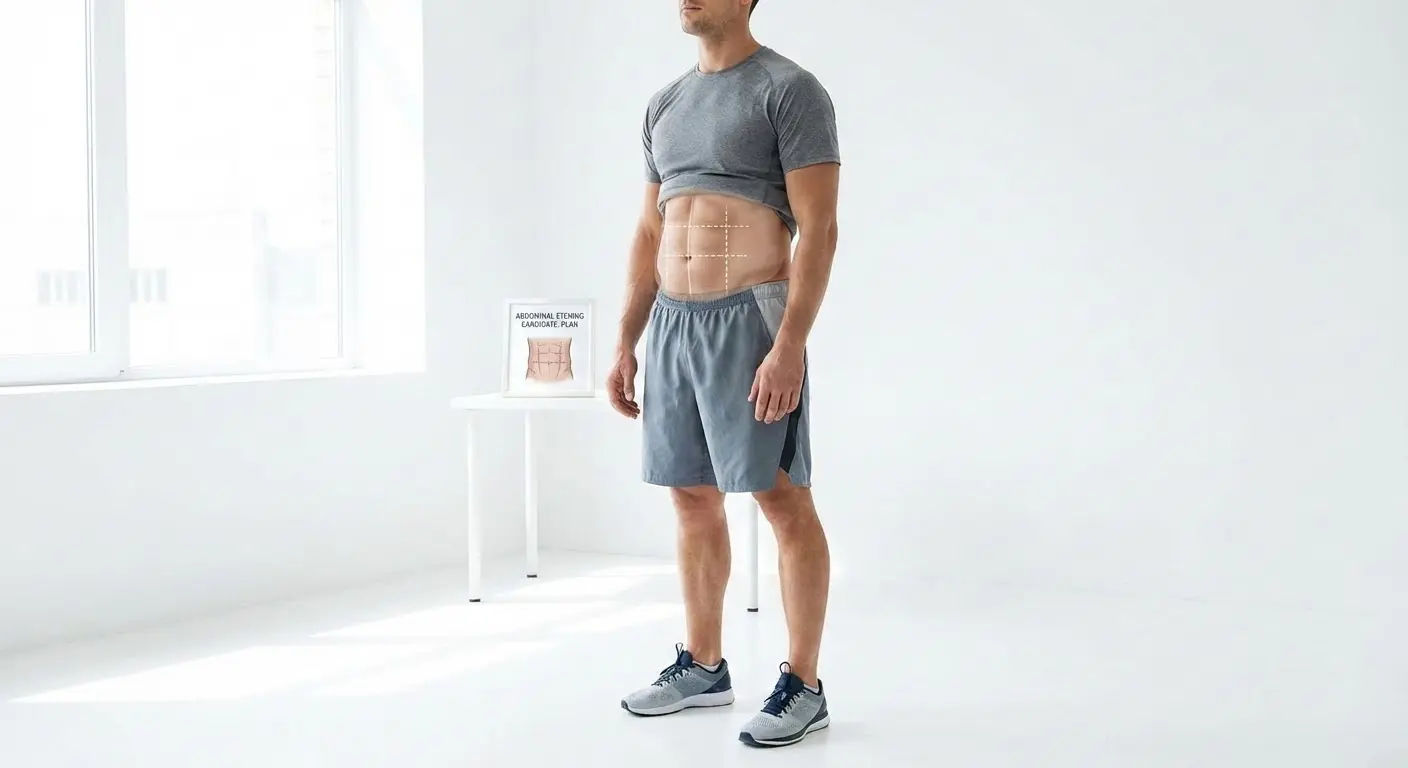
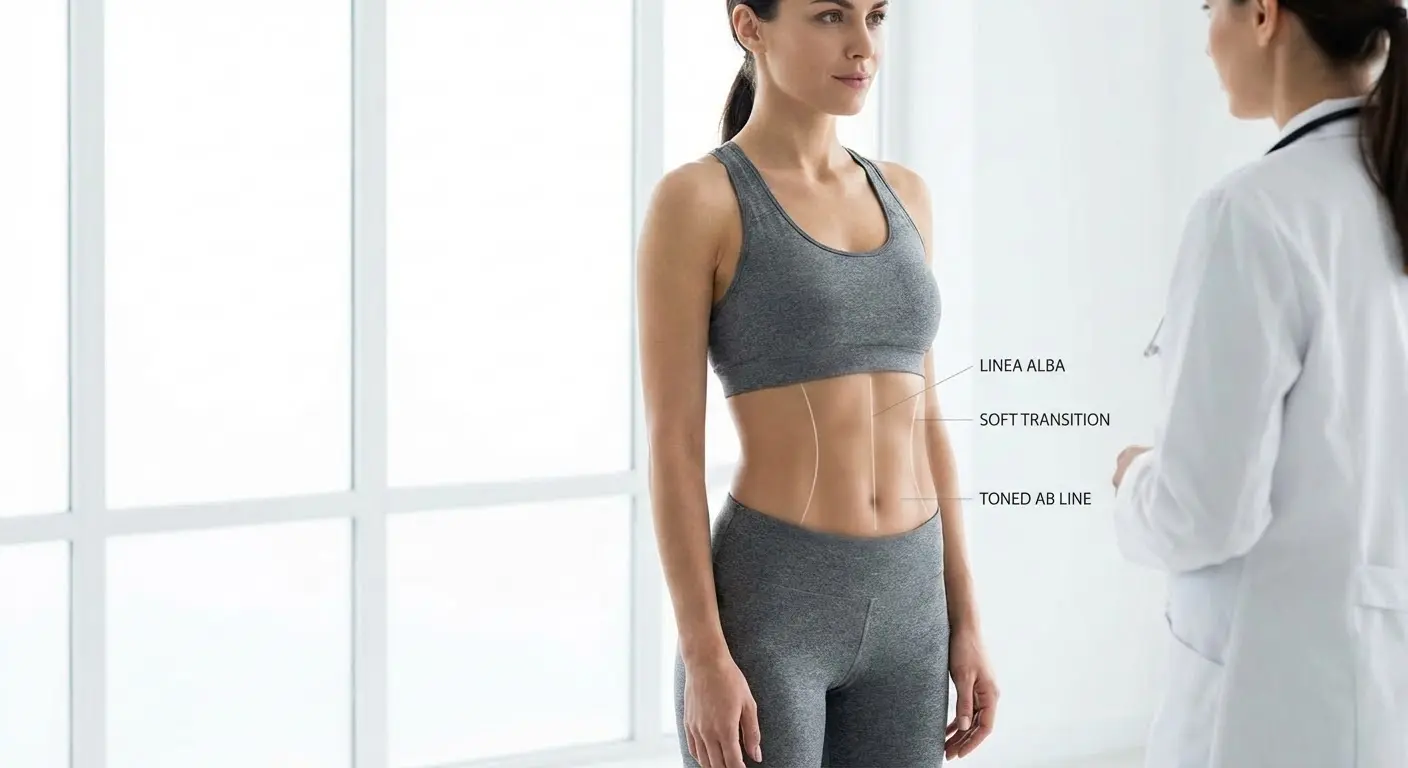
Men and women often describe different goals, even when they use the same “six-pack” language. The safest and most natural approach is to sculpt in a way that respects sex-specific anatomy, fat distribution patterns, and personal preference.
- Many men want clearer vertical and horizontal segmentation and a stronger transition from abdomen to obliques.
- Many women prefer softer, athletic definition—more of a toned “ab line” effect than sharply carved segments.
Neither approach is inherently “better.” The right result is the one that looks believable on your frame and matches your lifestyle and aesthetic taste.
Who Should Avoid It (or Consider a Different Procedure)
Awake abdominal etching may not be the best choice if any of the following are true:
- Significant loose skin (from major weight loss or pregnancy) is the primary concern.
- Abdominal wall laxity or muscle separation is the main driver of a protruding belly.
- You’re seeking a dramatic transformation but are not currently close to your goal body composition.
- You are uncomfortable with the idea of “awake/twilight” surgery or have medical factors that make a different anesthesia plan safer.
In these cases, a tummy tuck (abdominoplasty), a broader body-contouring strategy, or a staged plan may be more predictable and more natural-looking long-term.
Techniques and “Types” of Ab Etching
Patients often search for “how is ab etching done” and assume there is one standardized method. In reality, abdominal etching is a category of technique—defined by its intention (definition and highlights) rather than a single tool. Different surgeons may use different energy-based technologies, cannula strategies, and mapping approaches, but the highest-level principle remains the same: sculpt with restraint, preserve natural transitions, and prioritize symmetry that looks normal in real life (standing, sitting, bending, and twisting).
High-Definition Liposuction as the Conceptual Foundation
High-definition (HD) liposuction is the broader category that includes abdominal etching. HD thinking focuses on:
- Strategic reduction (not uniform fat removal)
- Enhancing transitions (for example, upper abdomen to lower abdomen, abdomen to flanks)
- Creating controlled shadowing so the abdomen reads more athletic under normal lighting
Where standard liposuction aims for “smoothness,” HD approaches aim for “shape.” Abdominal etching is the most abdomen-specific expression of that HD concept.
VASER / Ultrasound-Assisted Pathway: Why Patients Ask for It
Many expert patients specifically look for “VASER ab etching” or “high-def VASER lipo” because ultrasound-assisted fat removal is commonly associated with precision contouring. In simple terms, these technologies are designed to support controlled fat disruption and removal so the surgeon can shape more selectively.
It’s important to understand the nuance: the device does not create great results on its own. The outcome still depends on the surgeon’s anatomy-based planning, their restraint (to avoid an artificial look), and the aftercare strategy that supports clean healing.
“4D” Ab Etching and the Reality of Dynamic Definition
“4D ab etching” is often used to describe a result that looks good not only in a posed, upright stance, but also through movement—when your body changes shape during breathing, sitting, and twisting. From a clinical standpoint, achieving this “dynamic” naturalism comes down to:
- Respecting your unique landmarks rather than applying a generic “six-pack template.”
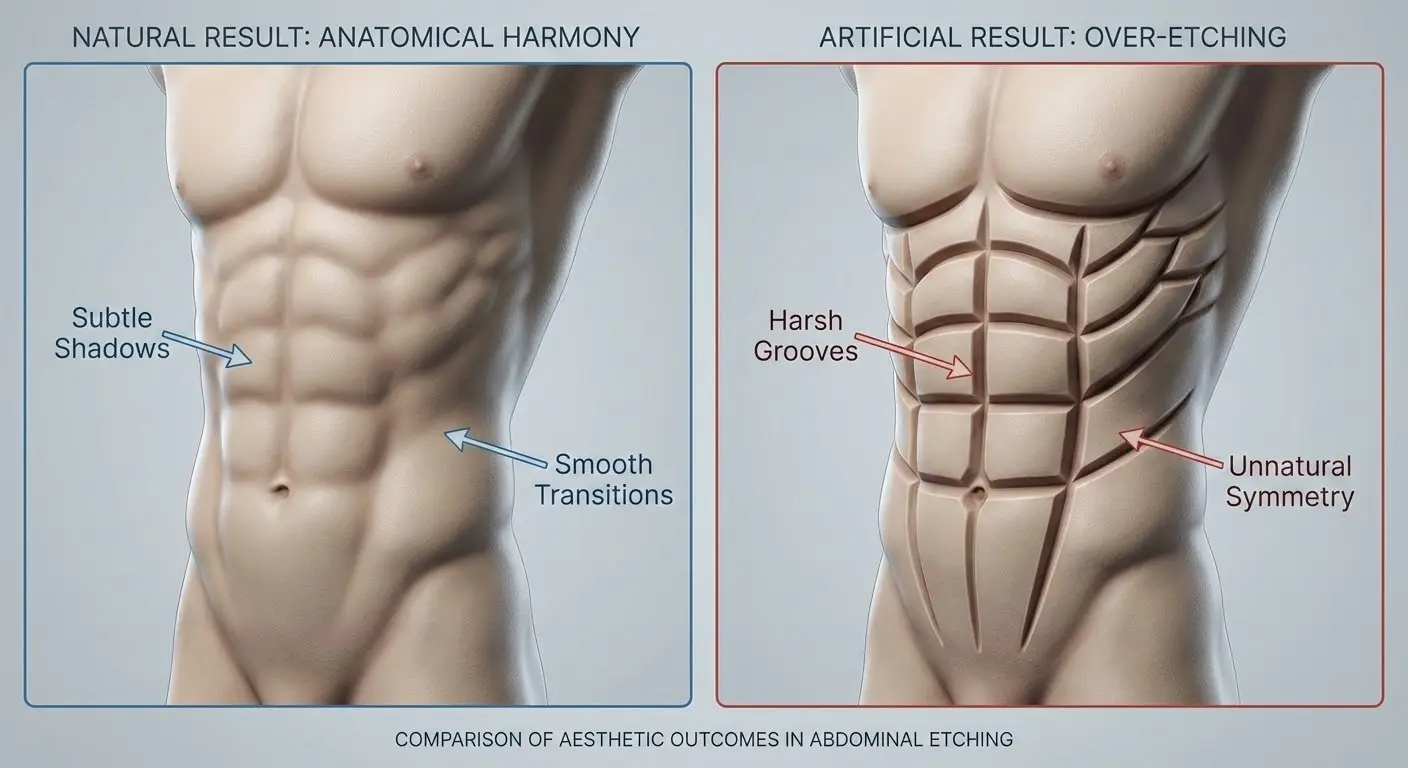
- Avoiding over-etching that can look unnatural when posture changes.
- Balancing reduction and preservation so the surface remains smooth while still defined.
If you’ve ever seen “botched ab etching” stories online, the most common theme is an overly aggressive approach that prioritizes visible grooves over natural anatomy. A sophisticated plan aims for definition that still looks like you.
| Approach | Primary Goal | Best For | Key Trade-Off / Risk if Overdone |
|---|---|---|---|
| Standard Liposuction | Reduce volume and smooth bulges | Patients who want a flatter abdomen/waistline without “etched” definition | Can look smooth but not athletic; limited definition if anatomy/skin aren’t optimal |
| High-Definition (HD) Sculpting | Enhance shape and transitions | Patients close to goal who want a more athletic silhouette | Requires precise planning; small asymmetries can be more noticeable |
| Abdominal Etching | Create visible abdominal highlights/shadows (“definition engineering”) | Lean-to-moderately lean patients with good skin quality and realistic expectations | Over-etching can look artificial; surface irregularities more likely if not balanced |
In an expert-level consultation, the most important decision is not “which buzzword technique,” but which approach matches your anatomy and skin quality while keeping the result natural in everyday life.
What Does “Awake” Mean in This Procedure?
In the context of awake abdominal etching, “awake” generally refers to performing the procedure without general anesthesia, using a local anesthesia strategy and (when appropriate) a twilight-style sedation plan. The intent is not to make surgery feel “casual,” but to offer a controlled, comfort-focused option for patients who are especially concerned about being fully asleep. In AKM Clinic’s treatment philosophy, “Awake Surgery” is positioned as a meaningful differentiator because it directly addresses one of the most common barriers for expert patients: anxiety about general anesthesia and the desire for a smoother recovery experience.
Local / Tumescent Logic: Why It’s Used
Local anesthesia (including tumescent approaches in relevant liposuction-based procedures) aims to numb the surgical area effectively while helping manage comfort during the procedure. For patients, the “awake” concept typically means:
- You are not fully unconscious as in general anesthesia.
- The plan is designed so you remain comfortable and monitored, with the surgical area well anesthetized.
- The experience can feel “lighter” for some patients—particularly those who fear general anesthesia.
At AKM Clinic, the broader “Awake Surgery” advantage is repeatedly tied to patient anxiety reduction and recovery comfort in real patient accounts and testimonial analysis.
Twilight Sedation vs General Anesthesia: How Patients Compare Them
Many patients search “twilight sedation vs general anesthesia” because they want to understand the lived experience and safety trade-offs. While the exact anesthesia plan must be individualized, the practical comparison patients care about usually includes:
- Level of unconsciousness: general anesthesia = fully asleep; twilight-style sedation = typically more “lightly asleep” or deeply relaxed, depending on dosing and the plan.
- Fear and control: some patients feel more comfortable avoiding a fully unconscious state.
- Recovery feel: some patients report an easier overall experience when they avoid general anesthesia (this can vary by individual and procedure complexity).
AKM Clinic’s positioning of the awake approach is grounded in patient motivation patterns—specifically, a “paralyzing anxiety about general anesthesia” being the decisive factor for proceeding with surgery.
Why Some Patients Prefer Avoiding General Anesthesia
The most direct reason is psychological safety: many high-consideration patients are willing to invest in surgery, but anesthesia fear becomes the final “no.” In AKM’s testimonial analysis, this is described as a critical procedural barrier—and “Awake Surgery” is framed as the solution that helped patients move forward confidently.
For example, one USA patient’s case highlights that avoiding general anesthesia was central to fulfilling a “lifelong dream,” and the team’s guidance focused on local anesthesia as the safest and most suitable option for her situation. While that example is facial surgery, the same decision logic is highly relevant to expert patients considering awake body contouring options.
Important: “Awake” is not automatically “better” for everyone. The safest anesthesia approach depends on your medical history, the scope of surgery, and your surgeon/anesthesia team’s protocol.
Step-by-Step: How Awake Ab Etching Is Done
This section answers the practical question “how is ab etching done?” at a high level. Exact surgical details vary by surgeon and technique, but an expert-level plan is always built around three pillars: precise mapping, controlled sculpting (not aggressive removal), and aftercare designed to protect the definition while healing. At AKM Clinic, abdominal definition procedures sit within a broader body contouring offering that includes high-definition liposuction and “six pack surgery,” alongside awake/twilight surgical capabilities as part of its overall clinical identity.
Pre-Op Mapping and “Definition Planning”
Before any sculpting begins, the surgeon determines:
- Your natural landmarks: where your abdominal segments and transitional lines are likely to read best.
- Your definition style: a stronger segmented look vs a more subtle athletic contour.
- Risk boundaries: areas where over-sculpting could produce surface irregularities or an unnatural look.
This planning phase is where “natural-first” principles matter most: definition should enhance your individual features rather than impose an artificial template. AKM Clinic explicitly frames its philosophy as “rejuvenation, not alteration,” emphasizing subtle, authentic outcomes rather than obvious surgical-looking changes.
Precision Sculpting: Creating Highlights and Shadows Responsibly
During the procedure, the surgeon’s technical goal is to create controlled contour changes that form believable shadow lines under normal lighting. Conceptually, this involves:
- Reducing fat strategically to reveal athletic transitions.
- Maintaining smoothness so the surface does not look “etched into the skin.”
- Symmetry checks to prevent one-sided grooves or uneven definition.
The “expert patient” takeaway is simple: the best ab etching looks good in motion. That usually comes from restraint, not maximal removal.
Finishing Steps: Garments, Monitoring, and a Clear Discharge Plan
Etching results are not “made” only in the operating room; they are protected during recovery. A quality protocol includes garments and structured follow-up. AKM Clinic’s operational model is designed to remove friction for international patients through an all-inclusive VIP package that explicitly includes post-operative medications and garments, along with long-term virtual follow-up care.
For patients traveling internationally, the continuity of care can be as important as the surgery itself. AKM’s VIP journey model includes coordinated planning, in-person checks, and structured virtual follow-ups after returning home (notably at 1, 3, 6, and 12 months).
Combination Procedures and “Body Plan” Thinking
Abdominal etching is often discussed as a stand-alone “six-pack” procedure, but the most natural-looking outcomes are frequently achieved when it’s planned as part of a bigger, anatomy-driven contour strategy. Expert patients tend to get the best value when the surgical plan matches their real limiting factor—whether that’s localized fat, waist/oblique transitions, skin quality, or abdominal wall changes after weight loss or pregnancy. In AKM Clinic’s body contouring scope, abdominal definition procedures are positioned alongside broader sculpting options (including high-definition lipo and “six pack surgery”), which supports a more customized plan rather than a one-size-fits-all approach.
When It Pairs Well With 360 Lipo or Waistline Sculpting
If your primary goal is an athletic torso—not just a sharper abdomen—then the waist and flanks matter as much as the “front.” Many patients who dislike their midsection are actually responding to the overall frame: the transition from abdomen to obliques, the contour of the lower back, and the way the waist tapers.
- Why it can help: improving the “frame” makes abdominal definition read more naturally and often more dramatically, even with conservative etching.
- Who benefits most: patients with stubborn flank fat, a boxier waistline, or a desire for a more athletic V-taper (common in men) or defined waistline (common in women).
From an outcomes standpoint, a balanced approach is usually the most believable: a naturally defined abdomen paired with refined waist transitions tends to look more “earned” and less surgically obvious.
When a Tummy Tuck May Make More Sense Than Etching
One of the most important “expert patient” decisions is knowing when etching is the wrong tool. If your main issue is skin laxity (loose skin) or abdominal wall changes (like muscle separation), sculpting fat alone may not produce a clean, confident result—and in many cases a tummy tuck (abdominoplasty) or a combined plan delivers a more predictable outcome.
A different procedure (or a staged approach) may be more appropriate when:
- Loose skin is significant and won’t re-drape smoothly after fat reduction.
- The abdomen protrudes primarily due to muscle laxity rather than fat thickness.
- Stretch marks and overall skin quality are the core concern and your priority is a tighter, flatter abdomen rather than “definition lines.”
The most ethical and predictable plan is the one that matches your anatomy. A consultation should clarify whether your goal is best served by definition-first sculpting, tightening-focused surgery, a tummy tuck, or a thoughtfully combined strategy.
“Athletic” vs “Carved”: Defining the Target Result
Many patients use the phrase “six-pack surgery,” but they don’t always mean a sharply segmented look. A high-quality plan starts with translating your goal into a realistic and natural endpoint:
- Athletic definition: subtle central line, gentle upper/lower abdominal transitions, smooth surface that looks natural in motion.
- More visible segmentation: more pronounced highlights and shadows—best suited for patients with strong baseline anatomy and excellent skin quality.
AKM Clinic’s core aesthetic philosophy centers on refinement rather than obvious alteration, which aligns well with the more “athletic, believable” end of the spectrum for many expert patients.
Recovery Timeline (Day 1 to Month 6+)
Recovery is one of the most searched topics (“ab etching recovery time”) because it affects everything—work schedules, travel planning, gym routines, and social comfort. While individual experiences vary, abdominal etching recovery can be thought of in phases: the early swelling/bruising phase, the “settling” phase where definition begins to appear, and the longer-term maturation phase where tissues soften and the final contour stabilizes.
The First 72 Hours: Swelling, Mobility, and Comfort
In the first few days, your main job is to support your body’s healing process. It’s normal to experience swelling, bruising, and a tight or sore feeling across the abdomen and waist. The abdomen can look “worse before it looks better” because swelling may temporarily obscure definition.
- Typical focus: rest, gentle mobility, hydration, and following garment and medication instructions.
- What matters most: protecting the contour while your tissues begin to settle.
For expert patients, a key mindset shift helps: early post-op visuals are not your final result. The goal is safe healing first, definition second.
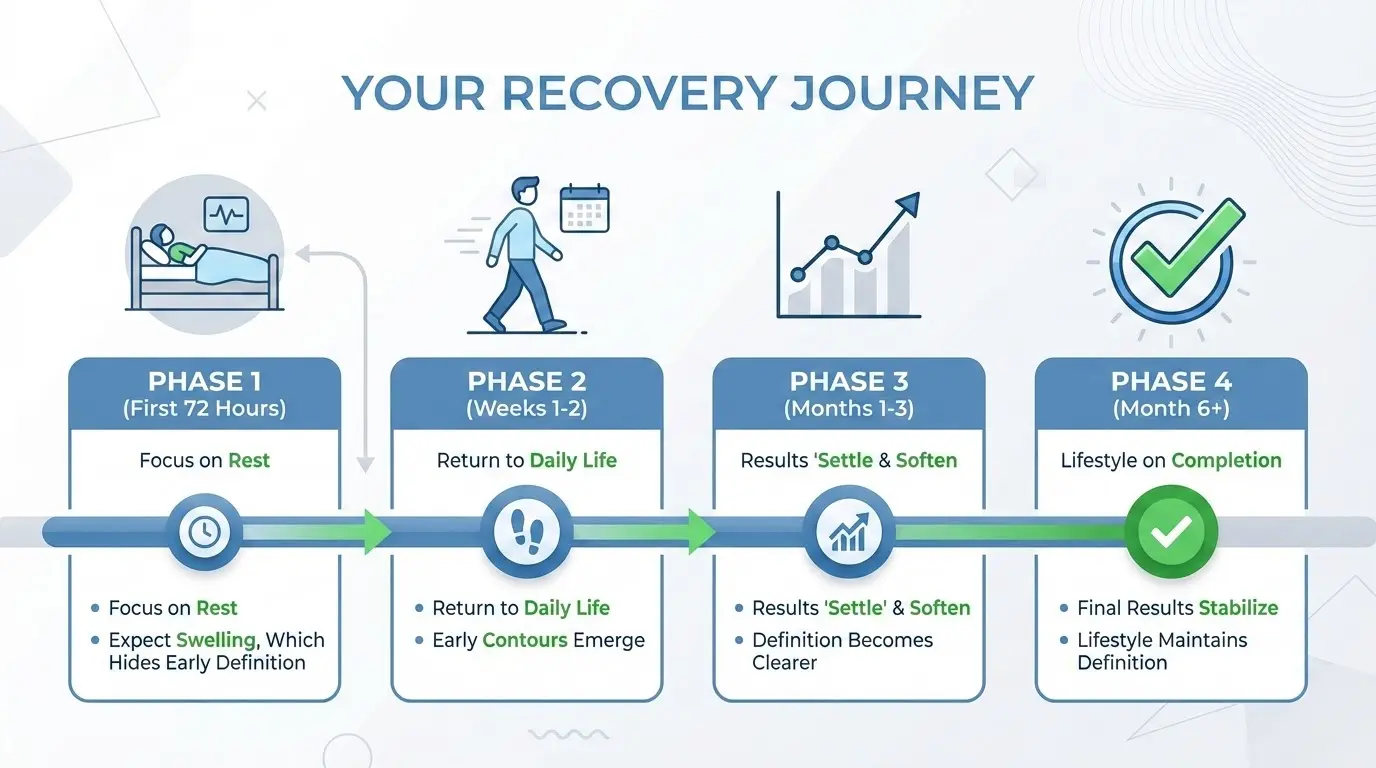
Weeks 1–2: Returning to Daily Life and Early “Reveal”
As bruising fades and swelling begins to reduce, you may notice early changes in shape and transitional lines. This is often when patients feel more functional and start thinking about returning to normal routines.
- Daily life: many patients can resume light, non-strenuous activities as advised.
- Appearance: definition may start to show, but swelling can still shift day to day.
- Support: consistent garment use and structured follow-up help protect the result.
If you’re traveling internationally, this is also the window where a well-coordinated post-op plan matters—clear instructions, easy access to check-ins, and a structured follow-up schedule once you return home.
Months 1–6: Refinement, Softening, and Final Definition
The most meaningful visual improvement often happens gradually. Over weeks and months, swelling continues to resolve and internal healing progresses, which can reveal a more natural-looking definition and smoother transitions.
- Month 1–3: improved contour clarity; ongoing tissue remodeling.
- Month 3–6+: continued refinement; the result typically looks more “yours” as tissues soften and settle.
Long-term results depend heavily on lifestyle stability. Significant weight changes can alter definition, which is why the best outcomes are usually seen in patients whose weight and fitness routine are relatively consistent.
Accelerated Recovery & Safety Protocol
For patients who are highly risk-aware, the most reassuring clinics are the ones that treat recovery as a structured medical phase—not an afterthought. At AKM Clinic, advanced recovery technologies are positioned as a Rapid Recovery & Safety Protocol rather than “optional add-ons,” with a focus on supporting healing, comfort, and a more predictable post-operative experience. Two core components highlighted in AKM’s medical technology framework are Hyperbaric Oxygen Therapy (HBOT) and Low-Level Laser Therapy (LLLT).
HBOT: Supporting Healing Through Enhanced Oxygenation
Hyperbaric Oxygen Therapy (HBOT) is used in AKM Clinic’s recovery pathway as part of a structured approach to post-operative support. Conceptually, HBOT focuses on increasing oxygen availability in the body during a controlled medical session. In a recovery context, the intent is to support tissue healing and resilience—especially during the early phase when swelling and bruising can be most disruptive.
For the expert patient, the key point is not the “tech” itself, but the recovery philosophy: building a protocol that supports the body’s natural healing capacity in a proactive, medically oriented way.
LLLT: Cellular Support, Comfort, and Skin-Quality-Oriented Recovery
Low-Level Laser Therapy (LLLT) is another component of AKM Clinic’s recovery technology framework. In a post-operative context, LLLT is positioned to support recovery at the cellular level—often discussed in terms of comfort, inflammation management, and tissue support. In definition-focused procedures like abdominal etching, the quality of healing matters because the goal is a smooth surface with natural-looking transitions.
When patients are concerned about prolonged downtime, stiffness, or uneven healing, structured adjunctive recovery protocols can be a meaningful part of the overall safety and outcomes strategy.
“Rapid Recovery” as a System, Not a Promise
It’s important to set expectations correctly: no technology eliminates normal healing biology. However, what a strong clinic can do is create a system that reduces uncertainty and helps you navigate recovery with clearer milestones and support.
- Before surgery: planning that prioritizes natural contours and minimizes over-aggressive sculpting.
- Immediately after surgery: structured guidance, garment protocols, and comfort-oriented care.
- Ongoing follow-up: consistent check-ins—including virtual continuity for international patients—so concerns are addressed early, not late.
Risks, Side Effects, and How to Reduce Them
Any procedure designed to create visible definition must be approached with an “honest risk” mindset. Abdominal etching is not inherently unsafe, but it is less forgiving than standard smoothing liposuction because the goal is to create highlights and shadows—meaning small irregularities can become more noticeable. A responsible plan addresses risks in three phases: selecting the right candidate, executing a conservative anatomy-based technique, and supporting a structured recovery.
Common Side Effects (What Most Patients Experience)
Most patients should expect temporary, recovery-phase effects that improve over time. The exact intensity varies by individual biology, the scope of contouring, and aftercare adherence.
- Swelling and bruising: common early on and can temporarily blur definition.
- Soreness and tightness: especially across the abdomen and waistline during the first phase of healing.
- Numbness or altered sensation: can occur as tissues recover and remodel.
- Firmness or lumpiness: can appear during healing as internal tissues settle and soften over weeks to months.
For definition-focused procedures, patience matters: early swelling can make results look uneven or “not yet defined,” even when the plan is progressing normally.
Aesthetic Risks (The Ones Expert Patients Worry About Most)
When patients search for “botched ab etching” or “abdominal etching gone wrong,” the fear is usually not the surgery itself—it’s the fear of an unnatural look. The most relevant aesthetic risks include:
- Over-etching: grooves that look too sharp or artificial, especially when sitting or twisting.
- Contour irregularities: surface waviness or uneven transitions, which can be more visible in lean patients.
- Asymmetry: mild natural asymmetry exists in most bodies, but overly aggressive sculpting can exaggerate it.
- “Sticker abs” effect: a templated look that doesn’t match the patient’s natural anatomy.
The best prevention strategy is a “natural-first” plan: definition that fits your frame and remains believable in motion, rather than maximal carving.
Safety Levers: How Clinics Reduce Risk in Real Life
From an expert-patient perspective, safety is not a slogan—it’s a set of verifiable systems. AKM Clinic’s documented safety framework emphasizes strict pre-operative screening, continuous vitals monitoring, and rigorous sterilization protocols aligned with international expectations. The clinic environment is described as operating under internationally recognized sterilization standards (ISO/TÜV) and maintaining advanced patient vitals monitoring throughout procedures, with strict pre-op health screenings used to ensure candidacy and safety.
For international patients, another major safety reassurance is infrastructure: AKM Clinic states that it uses FDA-approved materials and performs surgeries in JCI-accredited hospitals that meet or exceed Western standards. The “value” argument is explicitly positioned as macroeconomic (exchange rate and operational costs), not a compromise in quality.
Finally, expert patients often want credential clarity. AKM’s documentation highlights that many top Turkish surgeons hold European Board Certifications (EBOPRAS), positioned as the equivalent of US board standards—an objective marker meant to reduce perceived risk when choosing care abroad.
Results: How Long Does Ab Etching Last?
One of the most important long-term questions is: “How long does abdominal etching last?” The most accurate answer is that the contour can be long-lasting, but the visibility of “definition” is lifestyle-dependent. Surgery can reshape the canvas; your weight stability, training habits, and skin quality determine how clearly the picture stays visible over time.
Longevity Depends on Weight Stability and Body Composition
Abdominal etching does not “expire,” but changes in body composition can change the look. If you gain a significant amount of weight after surgery, fat can accumulate and soften definition. If you maintain a stable weight and stay physically active, the sculpted transitions typically remain easier to see.
- Best-case scenario: stable weight + consistent training = definition remains crisp and natural.
- Common scenario: small fluctuations = definition may come and go slightly depending on hydration, diet, and fitness cycles.
- Risk scenario: major weight gain or loss = changes in fat distribution and skin quality can alter the result.
For many expert patients, the most satisfying results occur when etching is treated as a refinement step—not a substitute for fitness.
Surgeon’s Insight: The goal of high-definition contouring isn’t to create a “template.” It’s to reveal your anatomy in a way that looks natural in real life—standing, sitting, and moving.
Scars and Incision Points: What to Expect
Because abdominal etching is typically performed using liposuction-style access points, incisions are usually small and strategically placed to be as discreet as possible. However, scar visibility can vary based on individual healing biology, skin tone, and aftercare. A high-quality protocol focuses on clean healing, minimized inflammation, and structured follow-up—because the aesthetic finish is strongly influenced by how well tissues recover.
When patients are particularly concerned about scar quality, it’s reasonable to ask how the clinic supports healing beyond the operating room. AKM Clinic’s technology framework positions post-operative recovery systems (including HBOT and LLLT) as part of a structured protocol designed to reduce inflammation, support tissue repair, and improve the overall quality of the final aesthetic result.
The “Natural Look” Standard: Rejuvenation, Not Alteration
A great abdominal etching result should not look like a separate “feature” pasted onto the abdomen. It should look consistent with the patient’s overall frame and movement. AKM Clinic’s brand philosophy is explicitly built around the concept of “Rejuvenation, Not Alteration”—a natural-first standard that aligns strongly with what expert patients want most: a result that looks refreshed, athletic, and believable rather than artificial or overdone.
Awake Abdominal Etching Cost Analysis 2026: USA vs Turkey
When patients research awake abdominal etching, cost is rarely just about the number. For the “expert patient,” the real question is: Why is there such a difference between major US aesthetic hubs and Istanbul—and does that difference imply a quality trade-off? AKM Clinic’s stated position is direct: the price differential is driven by macroeconomic factors (exchange rate and lower national operating costs), not by compromising on quality standards. The value proposition is further supported by the use of FDA-approved materials and surgery performed in JCI-accredited hospitals aligned with Western expectations, with many leading Turkish surgeons holding European Board Certifications (EBOPRAS), positioned as equivalent to US board standards.
NYC / Miami / Los Angeles: Why US Pricing Often Stacks Up Quickly
In large US markets, pricing is often built from multiple separate line items that can add up fast. Even before you account for time off work and logistics, a single procedure may include distinct charges for anesthesia, operating room/facility, pre-op labs, garments, medications, and follow-ups. This is one of the core reasons international patients explore all-inclusive models: it simplifies financial planning and reduces uncertainty.
Why Turkey Can Be Lower Without Being “Lower Quality”
AKM Clinic addresses the cost gap with a clear explanation: the difference is primarily driven by the USD-to-TRY exchange rate and lower operational costs such as staffing and rent. The clinic explicitly frames this as a value equation—accessing USA-level standards at a lower macroeconomic cost base, rather than “cheap surgery.”
All-Inclusive Model: What’s Included vs What’s Not
For international patients, a transparent package model matters because it reduces hidden-cost anxiety and makes planning easier. AKM Clinic outlines a VIP package structure that includes core medical and logistical components designed to remove friction from the process.
| Category | Included in AKM VIP Package | Commonly Not Included |
|---|---|---|
| Medical Fees | Surgical procedure; anesthesia & operating room fees; all pre-operative tests | — |
| Recovery Essentials | Post-operative medications & garments; first post-op meal | Personal expenses (e.g., meals beyond the provided first post-op meal) |
| Logistics | 5-star hotel accommodation; VIP airport & clinic transfers; 24/7 dedicated patient host | International flight tickets; visa fees (if applicable); additional hotel nights (if extending) |
| Continuity of Care | Long-term virtual follow-up care | Personal travel insurance |
Choosing the Best Abdominal Etching Surgeon
Search terms like “best ab etching doctor” usually reflect one thing: a desire for predictability. Because abdominal etching is definition-focused, outcomes rely heavily on planning, restraint, symmetry awareness, and a clinic’s safety systems. The most important “provider signals” are not marketing claims—they are verifiable credentials, clear protocols, and a consultation process that manages expectations with clinical honesty.
Credentials That Matter to Expert Patients
AKM Clinic’s documentation emphasizes objective quality markers that resonate with international patients: operating in JCI-accredited hospitals, using FDA-approved materials, and highlighting that many top Turkish surgeons hold European Board Certifications (EBOPRAS) positioned as equivalent to US boards.
Beyond paperwork, the “expert patient” should look for a clinic culture built around:
- Strict pre-operative health screenings to confirm candidacy and reduce preventable risks.
- Advanced vitals monitoring and rigorous sterilization standards described as ISO/TÜV-level adherence.
- Surgeon-led authority—a consult process where the surgeon is directly involved in evaluating goals and boundaries (not only sales coordinators).
What to Ask in a Consultation (A Practical Checklist)
Whether you’re consulting in the US or internationally, these are high-signal questions for abdominal etching:
- “What is my limiting factor—fat, skin laxity, or abdominal wall?” (This determines whether etching is appropriate or whether a tummy tuck/combined plan is safer.)
- “How do you prevent an unnatural ‘carved’ look?” (Listen for anatomy-based planning and conservative strategy.)
- “What is your recovery protocol and follow-up cadence?” (Structured follow-up reduces uncertainty.)
- “What’s included in the quote?” (Transparency prevents mid-journey surprises.)
How to Evaluate Before/After Photos Like an Expert
Many galleries show only ideal angles and ideal lighting. A more sophisticated evaluation looks for:
- Consistency across frames: does the abdomen look natural in multiple views, not just one?
- Believable shadowing: are lines subtle and anatomical, or do they look “drawn on”?
- Harmony with the waist: does the waistline look refined so the abdomen reads athletic, not isolated?
AKM Clinic’s core philosophy is explicitly “Natural-First”—rejuvenation, not alteration—which is the right conceptual anchor for evaluating definition outcomes: the best result should look like you, just more athletic and refined.
The Medical Journey for International Patients (Istanbul)
Travel is often the final friction point in the decision. The concern is rarely “Can I fly?”—it’s “Will I feel supported and safe in a foreign country for a major procedure?” AKM Clinic’s model is built around a structured VIP journey designed to eliminate complexity: coordinated logistics, a dedicated patient host, and long-term follow-up after you return home.
Free Virtual Consultation and Personalized Treatment Plan
The journey begins with a no-obligation video consultation. You discuss your goals, share photos for review, and receive a personalized treatment plan with a transparent, all-inclusive quote—an important trust signal for expert patients who want clarity before committing to travel.
VIP Planning, Airport Welcome, and Procedure Day Flow
Once you decide to proceed, your dedicated patient host coordinates the core logistics: securing the date, booking a 5-star partner hotel, and scheduling VIP transfers—leaving only your international flight booking as your responsibility. The documented journey includes a personal airport welcome and private transfer to your hotel, followed by an in-person consultation on procedure day to confirm the plan before pre-op tests and surgery in a fully accredited setting.
Post-Op Monitoring and Long-Term Follow-Up Back Home
After surgery, the medical team monitors you closely, your host remains available 24/7 via WhatsApp, and a final in-person check-up is completed before you’re cleared to fly home. Importantly, continuity of care continues after you return: virtual follow-ups are scheduled at 1, 3, 6, and 12 months to monitor healing and long-term satisfaction.
Awake Abdominal Etching: Frequently Asked Questions
This FAQ section answers the most common “voice search” questions patients ask when deciding whether awake abdominal etching is right for them—especially around comfort, safety, recovery timing, scars, travel, and long-term results. These are general educational answers; your exact plan should always be individualized based on anatomy, medical history, and the scope of sculpting.
Does awake abdominal etching hurt?
Most patients describe the experience as manageable when an appropriate local anesthesia strategy and sedation plan are used. The surgical area is numbed, and twilight-style sedation (when used) is designed to keep you relaxed and comfortable. You may still feel pressure, movement, or positioning changes—so the key is choosing a plan that matches your anxiety level, medical profile, and the complexity of the procedure.
What does twilight sedation feel like?
Patients commonly describe twilight sedation as a “deeply relaxed” state—often drowsy and calm, with reduced awareness of time. Experiences vary: some people remember very little, while others remember brief moments. The goal is comfort while avoiding being fully unconscious like with general anesthesia.
Is awake abdominal etching safe?
Safety depends less on the buzzword “awake” and more on systems: proper medical screening, appropriate monitoring, a conservative technique, and structured aftercare. An awake approach can be appealing for patients who strongly prefer avoiding general anesthesia, but the safest anesthesia plan is always the one that fits your individual health status and surgical scope.
How long is the recovery time for ab etching?
Recovery happens in phases. Many patients feel meaningfully better within the first 1–2 weeks, but visible definition often continues to refine over several months as swelling resolves and tissues remodel. If your goal is a natural, athletic look, it’s normal for the result to “settle” gradually rather than appear instantly.
When can I go back to work after abdominal etching?
It depends on your job. If your work is desk-based and you can take it easy, you may be able to return sooner than someone with a physically demanding role. The most important factors are comfort level, swelling, your surgeon’s mobility guidance, and whether your job requires lifting, bending, or extended standing.
When can I work out again after ab etching?
Light walking is commonly encouraged early for circulation, but returning to gym training—especially core exercises and heavy lifting—should be gradual and guided by your surgeon. A conservative, phased return helps protect healing tissues and supports a smoother final contour.
Will I have scars from abdominal etching?
Abdominal etching typically uses small access points rather than a long incision, so scarring is usually limited and intended to be discreet. That said, scar appearance varies by individual biology and aftercare. If scars are a major concern, ask where access points will be placed and how scar healing is supported.
Can ab etching look fake?
Yes—if the sculpting is too aggressive or follows a “template” instead of your natural anatomy. The most natural results come from restraint: shaping transitions, preserving smoothness, and aiming for definition that looks believable in motion (sitting, twisting, normal lighting), not just in a posed photo.
How long does abdominal etching last?
The contour can be long-lasting, but the visibility of definition depends on weight stability, lifestyle, and skin quality. Significant weight gain can soften lines, while stable habits tend to preserve the sculpted look. Many patients see the best long-term satisfaction when surgery is treated as a refinement step rather than a substitute for fitness.
How soon can I fly after awake abdominal etching?
Flight timing should be decided by your surgeon based on your procedure scope, swelling, and overall recovery progress. If you’re traveling internationally, you’ll want a plan that includes appropriate post-op monitoring and a clear clearance checkpoint before flying.