




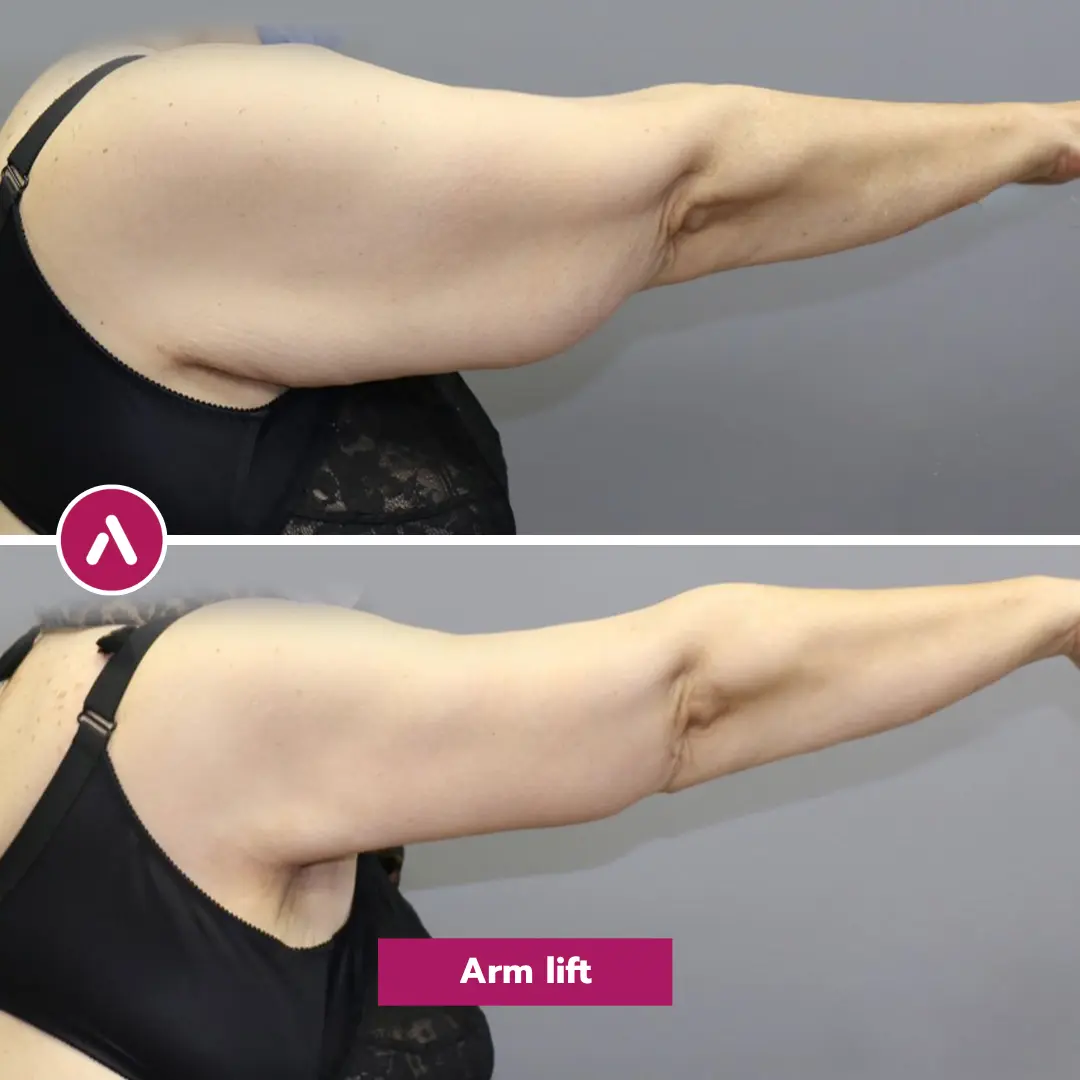
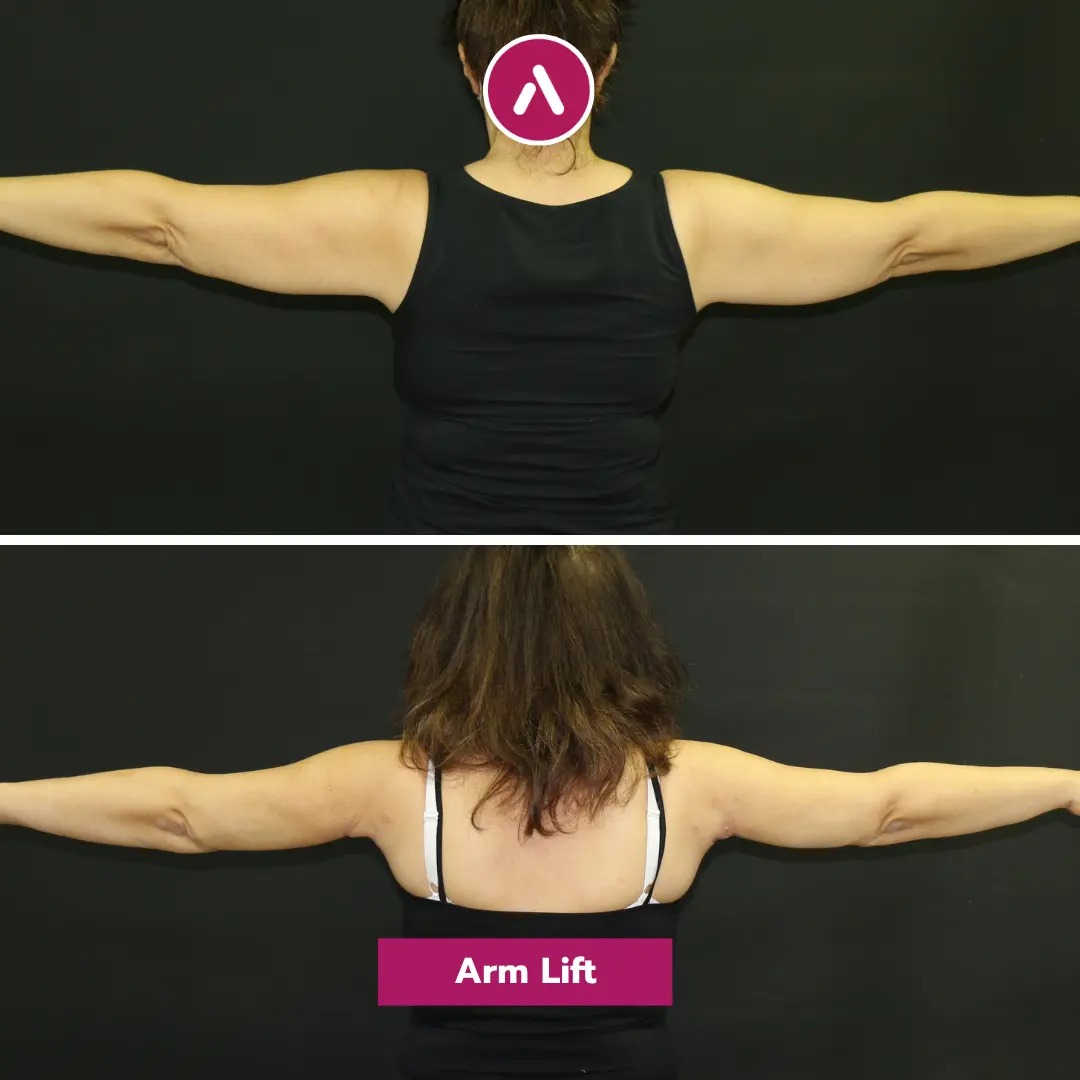
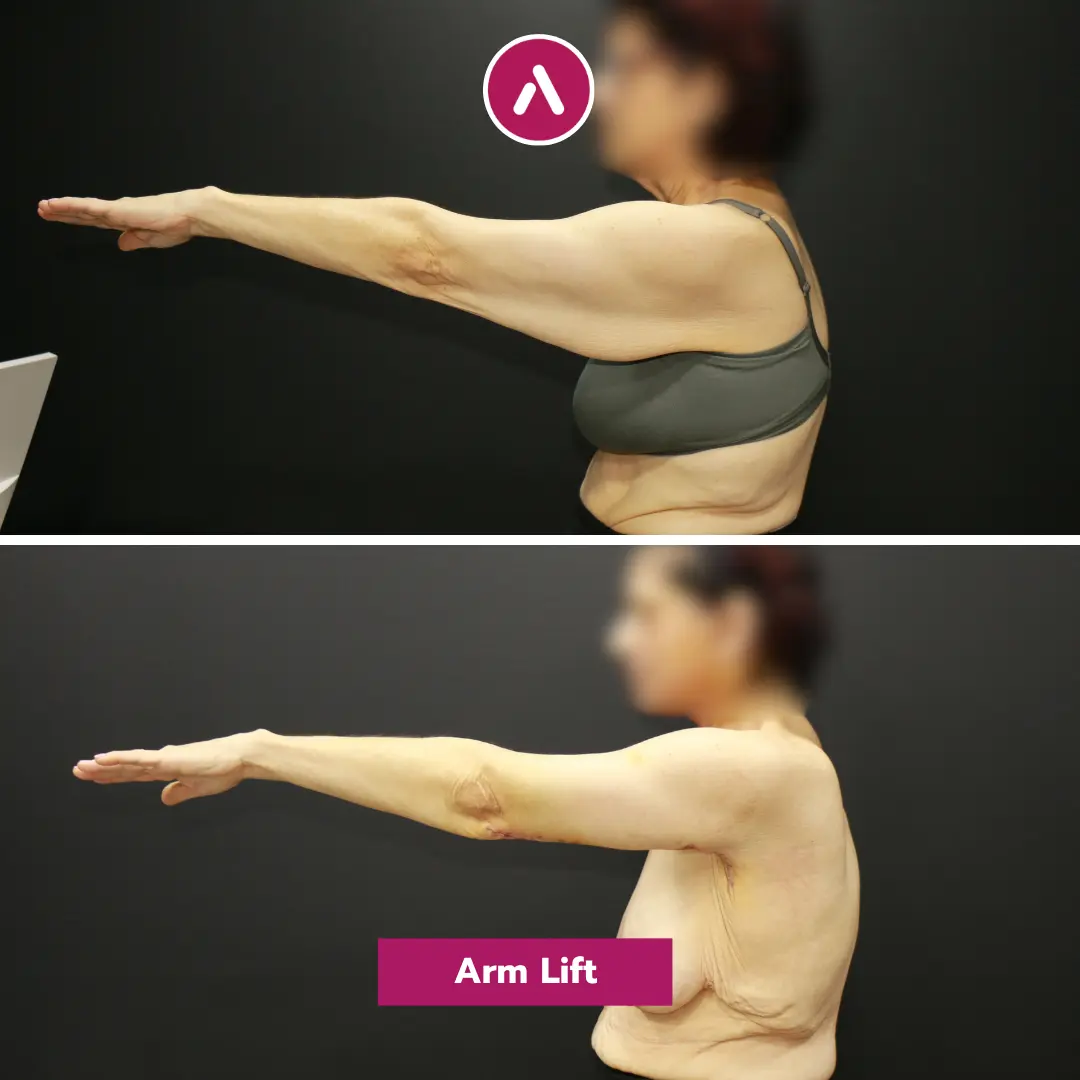
An arm lift—medically known as brachioplasty—is a body-contouring procedure designed to improve the shape of the upper arms by addressing loose skin (and, when needed, localized fat). It’s most often considered when the skin’s elasticity can’t “snap back” after major weight changes or natural aging, leaving a drooping, heavier look along the inner or back portion of the upper arm.
If your main search is “what is an arm lift,” the practical answer is simple: it’s a surgical reshaping of the upper arm that focuses on contour, proportion, and skin tightness. The more important clinical question is: what exactly is driving the problem—skin, fat, or both? That distinction determines whether a patient benefits more from skin excision, liposuction, or a combination approach (covered later in the techniques section).
Surgeon’s Insight: The goal is rejuvenation, not alteration—a refined arm contour that looks like your natural anatomy at a healthier, more youthful baseline, not an “operated-on” result.
Table of Contents
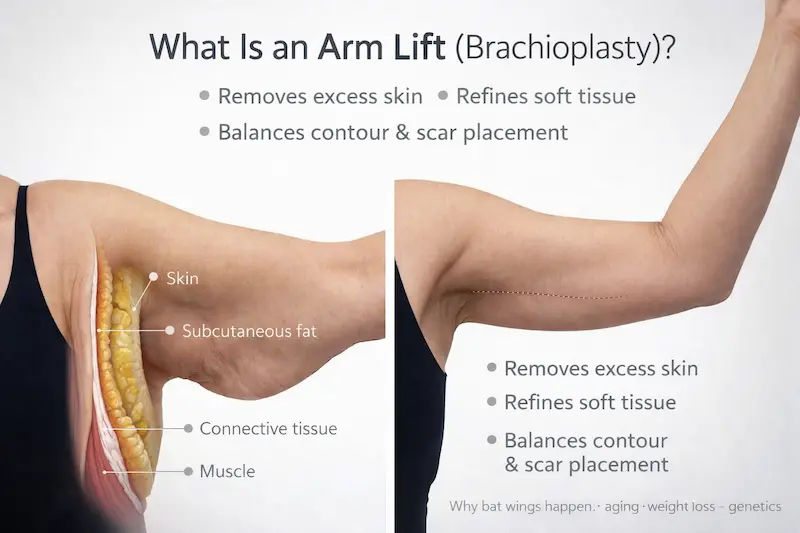
What Is an Arm Lift? (Brachioplasty)
An arm lift is a contouring surgery that improves the upper arm by removing excess skin and refining the underlying soft tissue. Depending on your anatomy, it may involve strategic skin removal alone, or skin removal combined with liposuction for better definition. While the aim is a tighter, smoother silhouette, the procedure is always a balance between shape improvement and scar placement—two topics that, in line with medical science, should be discussed transparently from the start.
Upper-arm anatomy: what surgeons are working with
The upper arm’s appearance is shaped by layered structures. Understanding these layers clarifies why some arms respond to workouts and weight loss, while others don’t:
- Skin: The outer envelope. When elasticity is reduced, it can hang even if fat decreases.
- Subcutaneous fat: The layer under the skin that can create fullness or a “soft” contour.
- Supportive connective tissue: The internal framework that influences how smoothly the skin drapes.
- Muscle: Toning the triceps improves firmness, but it cannot remove excess skin.
A skilled brachioplasty plan accounts for how these layers interact—especially the skin’s quality and how it will heal after reshaping.
Why “bat wings” happen (aging vs. weight loss vs. genetics)
Upper-arm laxity is not a single problem with a single cause. In most patients, it’s a combination of:
- Aging: Gradual collagen and elastin changes can reduce skin recoil over time.
- Weight fluctuations: Repeated stretching and shrinking can weaken the skin envelope.
- Major weight loss: After significant loss, the arm may deflate while excess skin remains.
- Genetics: Some people store fat in the upper arm or have naturally thinner, less elastic skin.
This is why two patients at the same weight can have very different arms. Your “before” anatomy determines the most appropriate technique (mini, full, or extended arm lift—covered later).
What an arm lift can and cannot do (realistic expectations)
An arm lift can significantly improve upper-arm contour by tightening the skin envelope and reducing the “draped” appearance. It can also create a cleaner transition from the upper arm into the armpit area when laxity is moderate to severe.
What it cannot do is equally important. It does not replace strength training, it does not guarantee “airbrushed” skin texture, and it does not eliminate the normal reality of scarring. If you’re asking “is arm lift surgery worth it,” the best framework is to compare: (1) how much loose skin is limiting your desired contour, (2) whether non-surgical tightening is realistically enough for your laxity level, and (3) whether the trade-off of a scar for a more defined arm shape aligns with your priorities.
Later sections will cover incision patterns and long-term scar appearance in detail (including what many patients see at the one-year mark), so you can make a genuinely informed decision.
Who Is a Good Candidate for Arm Lift Surgery?
The best candidates are people who have a clear, anatomy-based reason for brachioplasty: the arm’s shape is being dominated by loose skin, and lifestyle efforts can’t correct it. A good consultation does not simply “sell” a procedure—it confirms that your goals, anatomy, and risk profile match the surgical plan.
Best candidates: the checklist that predicts a smooth course
While every patient is individual, strong candidacy typically includes:
- Stable weight: Your results are more predictable when your weight is not actively changing.
- Noticeable skin laxity: Particularly along the inner arm or back of the arm where the skin hangs.
- Good overall health: You can safely undergo elective surgery and heal normally.
- Realistic expectations: You understand that improved contour comes with a scar trade-off.
- Commitment to aftercare: Following wound care, activity restrictions, and compression guidance impacts outcomes.
In practice, your surgeon’s exam focuses on how much skin needs removal, how much fat contributes to fullness, and how your skin quality is likely to behave during healing.
Arm lift after weight loss: when skin is the main problem
“Arm lift after weight loss” is one of the most common reasons patients consider brachioplasty. After major weight loss, the upper arm can lose volume quickly, but the skin envelope often remains oversized. In this scenario, tightening devices and exercise may improve muscle tone, but they usually can’t correct the extra skin itself.
Weight-loss patients may also notice that laxity extends beyond the mid-arm—toward the armpit and side-chest area. That pattern matters, because the best technique is determined by the true extent of skin excess (a topic we’ll map clearly in the technique comparison section).
When to delay surgery: timing matters as much as technique
Even if you are motivated, there are times when it’s smarter—and safer—to pause and optimize first. Common reasons to delay include:
- Active weight loss or frequent fluctuations that could change the amount of loose skin after surgery.
- Uncontrolled medical conditions that can increase surgical risk or slow healing.
- Nicotine use (including vaping), which is widely known to compromise circulation and wound healing.
- Unclear priorities about scarring versus contour improvement—this needs clarity before proceeding.
A high-quality consultation should include a candid discussion of your timeline, your recovery constraints, and the specific outcomes you consider “worth it,” so that the procedure matches your real-life needs—not just a generic ideal.
Benefits of Arm Lift
An arm lift (brachioplasty) is designed to improve upper-arm contour when loose skin and soft-tissue laxity can’t be corrected with exercise alone. By reshaping the skin envelope—and, when appropriate, refining underlying tissue—patients often see a smoother silhouette and a more balanced transition from the upper arm toward the armpit area. The goal is not an “over-tight” look, but a result that supports natural proportion and movement.
More defined contour with realistic anatomy-based change
For many patients, the primary benefit is a visible reduction in the “draped” appearance of the arm. This can be especially meaningful after major weight loss, when the arm may deflate but excess skin remains.
Wardrobe comfort and everyday confidence
Patients often report feeling more comfortable in sleeveless clothing and less distracted by upper-arm skin movement during daily activities. While confidence is personal, a more refined contour can reduce a common source of self-consciousness.
Long-lasting improvement with stable weight and good aftercare
Results are intended to be durable, especially when weight remains stable and scar care guidance is followed. Your surgeon should explain the expected trade-off between contour improvement and scar placement so the benefits align with your priorities.
Non-Surgical Arm Lift Options (and Their Limits)
Searches for “non surgical arm lift” are common—especially for patients who want improvement without scars or downtime. Non-surgical treatments can help in select cases, but they have a ceiling. If the primary issue is significant loose skin, no device can remove that extra envelope the way surgery can. The key is matching the solution to the anatomy: mild laxity may tighten; excess skin must be removed.
Skin-tightening devices: what they may improve
Non-surgical options generally aim to stimulate collagen or contract tissue modestly. In the right patient—typically with mild laxity and decent baseline elasticity—these treatments may improve:
- Skin firmness: A subtle tightening effect over time, depending on skin quality.
- Texture: Some patients notice smoother-looking skin as collagen remodeling occurs.
- Early laxity: Mild “softness” may respond better than true hanging skin.
What they typically do not do is create a dramatic contour change when the arm has a clear “draped” look. If you can lift the loose skin and see a meaningful fold, surgery is usually the only predictable way to remove it.
Why significant loose skin usually needs excision
Think of the skin as an envelope. If the envelope becomes too large, shrinking it back to a tight fit is difficult once elasticity is lost. Exercise improves the muscle underneath, and non-surgical devices may create incremental tightening—but neither can reliably eliminate an oversized skin envelope.
In brachioplasty, the surgeon reshapes the arm by removing the extra skin and refining the soft tissue beneath it. This is why patients who have had major weight loss (or long-standing laxity) often see surgery as the “missing step” after they’ve already done everything right in the gym.
A decision guide: when surgery becomes the rational option
If you’re trying to decide between non-surgical treatments and an arm lift, these checkpoints can help frame a productive consultation:
- If the issue is mostly fat: Liposuction may help, but only if your skin has enough elasticity to retract.
- If the issue is mostly skin: An arm lift is typically the most predictable solution.
- If it’s both: A combined plan (skin excision + targeted liposuction) may give the cleanest contour.
A qualified exam should identify your dominant limiting factor—skin, fat, or both—and recommend the least-invasive option that can realistically achieve your goal.
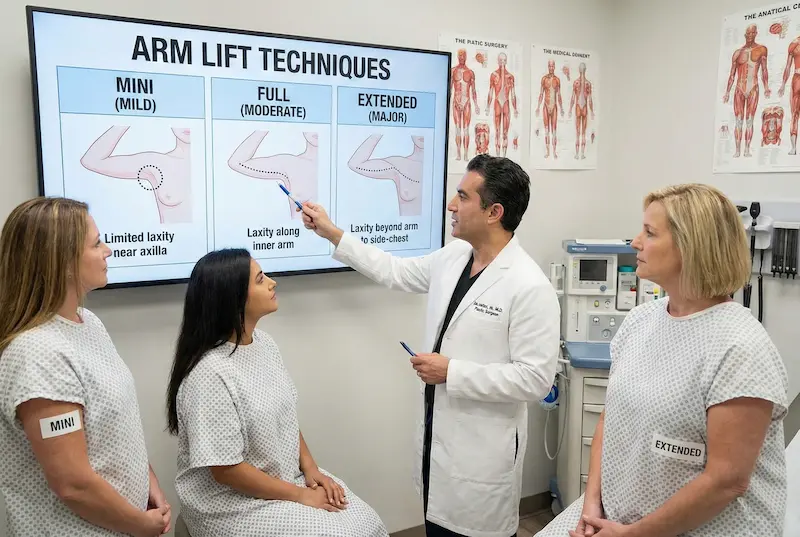
Arm Lift Techniques: Mini vs. Full vs. Extended
A major “expert patient” question is the difference between a mini arm lift and a standard (full) arm lift—and whether an extended arm lift is necessary. The best technique is not chosen by preference alone; it’s chosen by the true pattern of laxity. In other words, the incision is designed to match where the excess skin actually lives.
Mini arm lift: for limited laxity near the armpit
A mini arm lift is typically considered when laxity is mild and concentrated close to the armpit (axilla), rather than along the full length of the upper arm. The goal is a modest contour improvement using a more limited incision pattern.
- Best for: mild upper-arm skin looseness, usually near the armpit.
- Trade-off: less reach—can’t correct significant hanging skin down the arm.
- Often paired with: selective liposuction when appropriate for fat distribution and skin quality.
Full (standard) arm lift: for moderate to significant laxity along the inner arm
A full arm lift addresses laxity that extends along the length of the upper arm. The incision is commonly designed so the resulting scar sits in a location that can be less visible with the arms at rest—while still allowing enough access to remove the excess skin responsibly.
- Best for: moderate to significant loose skin running along the inner upper arm.
- Trade-off: a longer scar in exchange for a more comprehensive contour improvement.
- Key concept: scar planning and tension management are central to a refined result.
Extended arm lift: when laxity continues beyond the arm
An extended arm lift is used when skin excess continues past the arm into the armpit area and toward the side chest. This pattern is commonly seen after major weight loss. If only the arm is treated when the laxity extends beyond it, the result can look incomplete—so the plan must match the full “map” of excess skin.
- Best for: laxity that extends from the arm into the armpit/side-chest region.
- Trade-off: a broader incision design to correct a broader laxity pattern.
- Goal: smoother transitions from upper arm to torso for a more natural contour.
What about a “short-scar” or “scarless” arm lift?
Terms like short scar arm lift and scarless arm lift are popular online, but they can be misleading if they imply “no scar.” Any procedure that removes skin creates a scar. Some patients may be candidates for a more limited incision (a “shorter” scar), but the limitation is always the same: a smaller incision can only correct a smaller problem.
The safest way to evaluate these options is to ask your surgeon to explain: (1) where your excess skin is, (2) how much needs removal for your goal, and (3) what incision pattern best achieves that result with the most discreet scar placement feasible. Technique comparison (general guidance; your anatomy determines the final plan)
| Technique | Typical Laxity Pattern | Incision Concept | Main Advantage | Primary Trade-Off |
|---|---|---|---|---|
| Mini Arm Lift | Mild laxity, mostly near the armpit | More limited incision pattern | Smaller scar footprint | Limited correction for hanging skin down the arm |
| Full (Standard) Arm Lift | Moderate to significant laxity along the inner arm | Incision designed to access longer skin excess | Comprehensive contour improvement | Longer scar in exchange for stronger reshaping |
| Extended Arm Lift | Laxity extends into the armpit/side-chest area | Incision extends beyond the arm to match laxity | More complete, natural transition arm-to-torso | Wider incision design to address wider laxity |
If your main question is “mini arm lift vs full arm lift,” the most reliable answer comes from a physical exam: the more your laxity extends down the arm (and/or beyond it), the more you benefit from a technique that can actually address that full distribution.
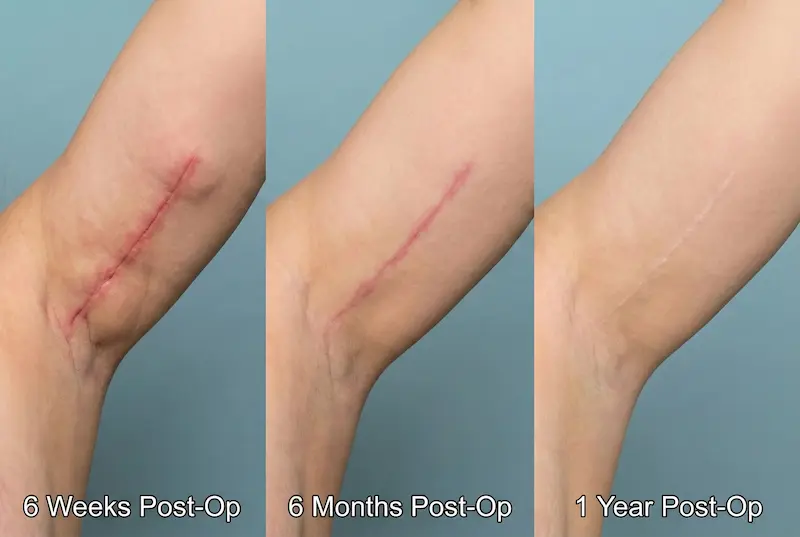
Incisions & Scars: What to Expect at 1 Year
Scarring is the #1 long-term concern for many arm lift patients—and it’s a valid concern. An arm lift improves contour by reshaping the skin envelope, which means a scar is part of the trade-off. The practical goal is not “no scar,” but a scar that is planned, well-closed, and well-managed so it can mature as favorably as your biology allows. If you’re researching “arm lift scars after 1 year,” the most honest answer is: scars usually soften and fade significantly, but they remain variable from person to person.
Where scars are placed (and why placement matters)
Scar placement is guided by where your loose skin actually sits and which technique (mini, full, extended) is needed to correct it. In most standard brachioplasty cases, the incision is designed along the inner arm (or slightly posterior) so the final scar is less noticeable when your arms rest naturally at your sides. When laxity extends into the armpit and side-chest region, an extended design may be required to avoid an incomplete correction.
- Mini patterns: aim to address mild laxity closer to the armpit with a more limited scar footprint.
- Standard/full patterns: address laxity that runs down the inner arm and require a longer scar to match the problem.
- Extended patterns: treat laxity that continues beyond the arm to create a smoother arm-to-torso transition.
The key concept is proportion: a smaller incision can only correct a smaller laxity pattern. Over-promising “tiny scars” for a larger problem can lead to under-correction—or tension that makes scarring less favorable.
“Scarless arm lift”: what it really means (and what it doesn’t)
Terms like “scarless arm lift” are popular online, but they can be confusing. Removing skin creates a scar. Some patients may be candidates for a shorter scar approach if laxity is limited, and some patients with mostly fat (and good elasticity) may see improvement with liposuction alone. However, when loose skin is the dominant issue, the predictable solution is skin excision—which necessarily leaves a scar.
A high-quality consultation should clarify three things: (1) whether your limitation is skin, fat, or both, (2) what incision pattern is required to achieve your goal, and (3) how the closure and aftercare plan is designed to help the scar mature well.
Arm lift scars after 1 year: a realistic scar-maturation timeline
Scar healing is a process, not an event. Many patients judge scars too early (in the first weeks to months), when redness and firmness are normal. In general, “healed arm lift surgery scars” at the one-year point typically look flatter and less noticeable than early healing—yet outcomes depend on genetics, tension, skin type, and aftercare.
- Weeks 1–6: incisions are fresh; redness and swelling are expected; the scar may look “louder” than you anticipated.
- Months 2–6: scars often feel firm and can remain pink/red; gradual softening begins.
- Months 6–12: many scars lighten and flatten; the “final” look continues evolving beyond 12 months in some patients.
If your research includes “pictures of scars after arm lift surgery,” compare images taken in consistent lighting and at comparable time points (for example: 3 months vs. 1 year). That makes the comparison more meaningful than before/after photos taken under different angles, filters, or lighting.
Surgeon’s Insight: A natural-looking arm result comes from smart tension management. The skin should look refined and proportional—without “over-tightening” that can compromise comfort or make scarring more unpredictable.
Anesthesia Options: Awake/Twilight Sedation vs. General Anesthesia
Anesthesia is a core part of safety planning—and it’s also a major emotional barrier for many patients. If you’re searching for “awake arm lift,” you’re not alone. Some patients want to avoid general anesthesia, while others prioritize maximum comfort and prefer to be fully asleep. The right choice depends on your health profile, anxiety level, the extent of the procedure, and the surgical plan (mini vs. full vs. extended and whether liposuction is combined).
General anesthesia: when it’s commonly used
General anesthesia is widely used for arm lift surgery—especially when the procedure is longer, more extensive, or combined with other surgeries. Many patients like the predictability: you are fully asleep, completely unaware during the operation, and the surgical team can work without patient movement. For complex contouring cases, this can be the most practical approach.
A responsible plan includes pre-op evaluation, monitoring during surgery, and careful post-op instructions. If general anesthesia is the recommendation, it’s typically because it best matches the length or complexity of the case—not because it’s the default without thought.
Twilight sedation / local anesthesia: what “awake” really means
“Awake” is often a shorthand term. In many real-world settings it refers to a spectrum: local anesthesia to numb the surgical area, combined with sedation that keeps you relaxed and comfortable. Patients may be drowsy and calm, and some remember little of the procedure—yet they are not under full general anesthesia.
- Potential benefits for the right patient: avoiding full general anesthesia, faster alertness after surgery for some patients, and a comfort-focused experience.
- Common limitations: not ideal for every patient, and not appropriate for every surgical extent or anxiety profile.
- Key requirement: technique selection must be based on what is safest and most suitable for the individual case.
Who may be a candidate for an awake arm lift (and who may not)
Candidacy for an “awake arm lift” depends on clinical and practical factors. In general, a surgeon evaluates:
- Procedure extent: limited vs. comprehensive skin excision and whether multiple regions are being treated.
- Comfort and anxiety level: the ability to stay calm and still for the duration of surgery.
- Medical history: individual anesthesia risk factors and overall health profile.
- Combination plans: combined procedures may push the case toward general anesthesia for practicality and safety.
The goal is a plan that protects both your outcome and your experience—because stress, movement, or inadequate comfort can compromise the quality of surgery, regardless of technique.
Patient perspective: overcoming anesthesia fear with an “awake” option
For some expert patients, the option to avoid general anesthesia is the decision-maker. In AKM Clinic’s patient stories, one US patient (Lisa) described a long-standing fear of general anesthesia and chose an “awake” approach under local anesthesia as part of a combination plan that included an arm lift. She reported an “easy, smooth” recovery and feeling “fantastic” within days—highlighting how a carefully selected anesthesia approach can remove a major psychological barrier for the right patient.
Surgeon’s Insight: The safest anesthesia plan is the one that matches the real procedure plan—your anatomy, your comfort needs, and the time required to do precise work without rushing.
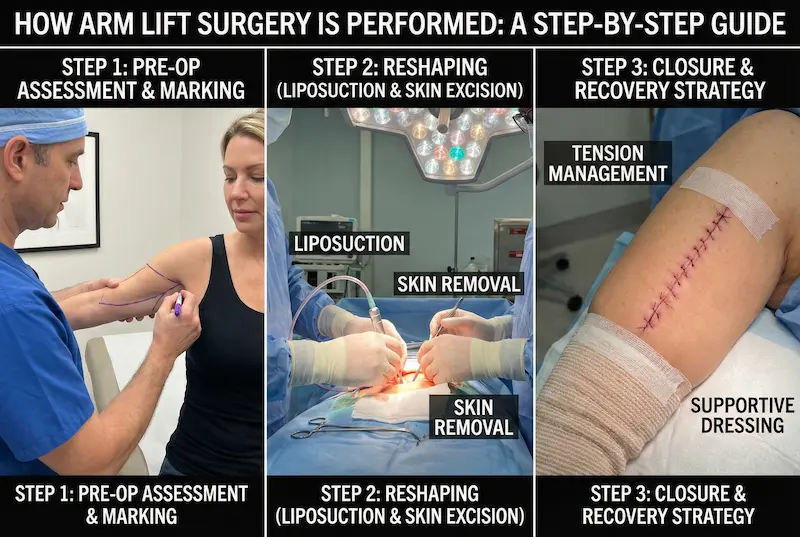
Step-by-Step: How Arm Lift Surgery Is Performed
An arm lift is not a single “one-size-fits-all” operation—it’s a structured plan that’s tailored to your laxity pattern (mini, full, or extended) and whether excess fat also contributes to the arm’s shape. Understanding the steps helps you evaluate technique, safety priorities, and whether the plan matches your anatomy rather than a trend.
Pre-op assessment & surgical marking (the blueprint phase)
The most important technical decisions often happen before the first incision. Your surgeon evaluates skin quality, the distribution of laxity, and the relative role of fat. Then the arm is marked in an upright position to map where skin truly drapes in daily life. This planning step determines:
- Which technique fits your laxity pattern: mini vs full vs extended.
- Where the incision must be to remove the right amount of skin without over-tension.
- Whether liposuction is appropriate as a contour tool (and whether your skin can retract).
A thoughtful marking plan protects two outcomes at once: the arm’s final contour and the predictability of scarring.
Reshaping the arm: liposuction, skin excision, and contour refinement
The “core work” of brachioplasty is shaping. Depending on your needs, a surgeon may:
- Perform targeted liposuction to reduce localized fullness (when skin elasticity and anatomy allow).
- Excise excess skin to correct draping that cannot be tightened by non-surgical means.
- Refine the contour so the arm looks proportional and natural—especially in the transition near the armpit.
The goal is a smoother silhouette without creating unnatural tightness. Technique selection is about doing enough correction to meet your goal while avoiding unnecessary tissue stress that can affect comfort and scar behavior.
Closure strategy (tension management is the scar strategy)
Closure is not just “stitching.” It’s a stability and scar-quality strategy. A careful closure approach aims to:
- Distribute tension so the incision line isn’t bearing excessive stress during healing.
- Align tissue layers to support smoother scar maturation over time.
- Support early recovery with appropriate dressings and compression guidance.
After surgery, you’ll typically leave with instructions for mobility, wound care, and compression. A detailed recovery timeline and scar support plan are covered in the recovery section.
Combining Arm Lift with Other Procedures
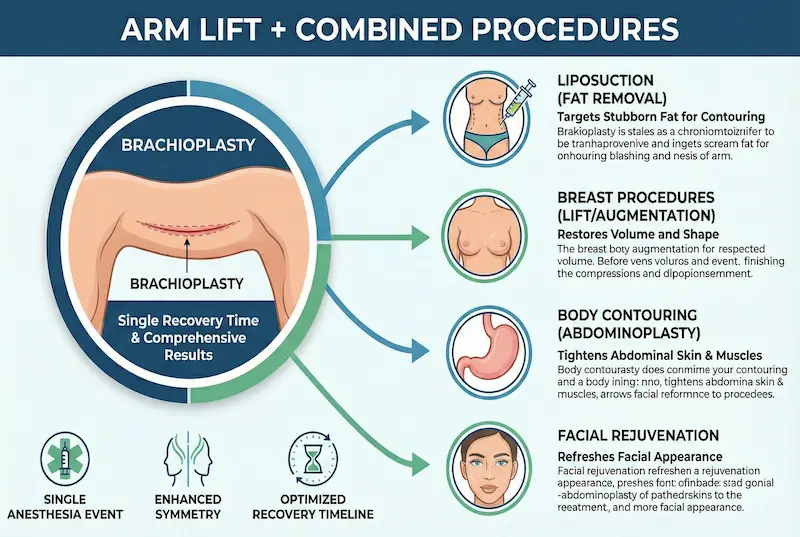
Many patients—especially after significant weight loss—prefer a comprehensive plan rather than treating one area in isolation. Combining an arm lift with other procedures can improve proportional balance and reduce the feeling of “one area improved, others left behind.” The key is to combine responsibly: the plan should be guided by safety, surgical time, and recovery practicality.
Arm lift + liposuction: when definition needs a two-part plan
In select patients, adding liposuction can refine the upper arm contour by addressing localized fullness. This combination works best when:
- Fat contributes meaningfully to shape, and
- Skin elasticity is adequate (or skin excision is planned to manage laxity), and
- The surgeon can sculpt without creating irregularities or unnecessary tissue trauma.
Liposuction alone can be appropriate for some patients, but it’s not a substitute for removing excess skin when laxity is significant.
Arm lift + body contouring after weight loss (tummy tuck/body lift)
After major weight loss, upper-arm laxity often appears alongside laxity in the abdomen, flanks, thighs, or breasts. Combining procedures can make sense when the recovery overlaps and the patient wants a more harmonized result. Common combinations include:
- Arm lift + tummy tuck for a stronger overall upper-body contour strategy.
- Arm lift + lower body lift in advanced post-weight-loss contouring plans.
- Arm lift + breast surgery when upper-body rejuvenation is the priority.
The decision is individualized. A reputable plan weighs total surgical time, healing demands, and the patient’s ability to follow a realistic recovery schedule.
Arm lift + skin quality treatments: supporting texture and long-term refinement
Some patients care not only about laxity, but also about skin texture and overall “finish.” Depending on your plan and timing, your surgeon may discuss complementary options that support skin quality (not as a replacement for skin removal, but as an adjunct for refinement).
If your goals include both contour and skin quality, it’s worth asking how the plan addresses each goal—what is corrected surgically, what is improved with supportive treatments, and what is realistically limited by baseline skin biology.
Arm Lift Recovery Timeline & Aftercare
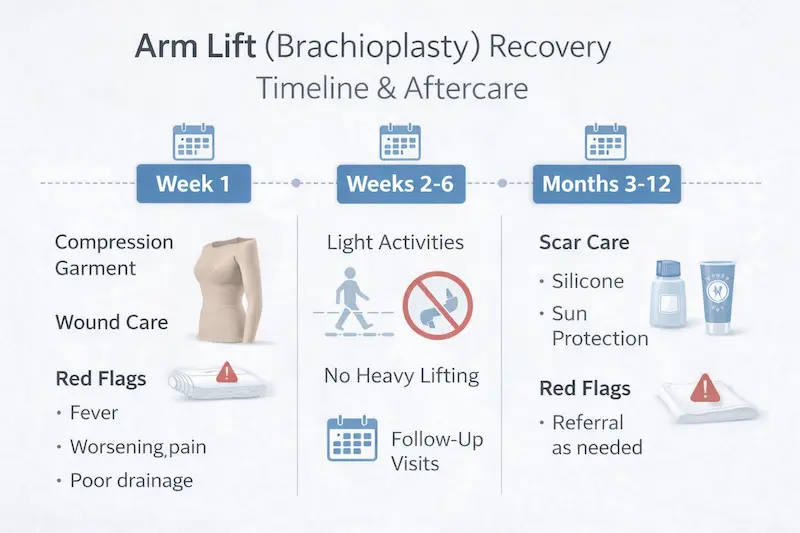
“Arm lift recovery time” depends on the extent of the procedure (mini vs full vs extended), whether liposuction was added, and your individual healing biology. Most patients experience swelling, tightness, and limited arm mobility early on, followed by a gradual return to work and exercise. A good recovery plan is not just about “getting through downtime”—it’s about protecting the incision, supporting scar maturation, and keeping your result looking natural long-term.
Week 1: swelling, mobility limits, and wound care basics
The first week is usually the most “hands-on” phase of recovery. Expect swelling and a sense of tightness along the incision line. Your instructions will typically focus on keeping the area clean and protected, controlling swelling, and avoiding movements that place stress on the incision.
- Mobility: gentle, purposeful movement is encouraged, but avoid reaching overhead or heavy lifting.
- Comfort: soreness and tightness are common; your care team will guide safe pain control.
- Incision care: follow wound-care instructions precisely—this is foundational for scar quality.
- Swelling management: compression (when prescribed), hydration, and rest all matter.
If you notice worsening redness, unusual drainage, fever, or increasing pain rather than gradual improvement, contact your surgical team promptly for guidance.
Weeks 2–6: returning to work, daily life, and exercise progression
By week two, many patients feel more comfortable and begin easing back into routine activities—especially for desk-based work. Physical activity returns more gradually and should be guided by your surgeon’s rules, not willpower.
- Work: many patients can return earlier to light work; physically demanding jobs may require more time.
- Exercise: walking is usually encouraged early; upper-body training and heavy lifting are typically delayed.
- Swelling: it often improves steadily, but can fluctuate (especially after more activity).
- Scar evolution: scars can look pink/red and feel firm during this phase—this is often normal.
A practical recovery mindset is “steady and protected.” Rushing strength training or stretching too early can increase tension on the incision and make healing less predictable.
Arm lift compression garment: why it matters and how long you may need it
Patients frequently ask about the arm lift compression garment because it can feel inconvenient—but it’s often an important tool. Compression is commonly recommended to support the tissues as swelling resolves and the new contour stabilizes.
- Why it’s used: helps manage swelling, supports soft tissues, and can improve comfort for many patients.
- How long: many patients are advised to wear compression for several weeks, but your plan should be individualized.
- Fit matters: it should be supportive but not painfully tight (overly tight garments can irritate tissues).
Your surgeon will tell you when to wear it (all day vs part of the day) and when it’s safe to transition out. Following those instructions is one of the simplest ways to support a smoother recovery.
Scar support and long-term aftercare (weeks to months)
Even when the incision is closed, scar maturation continues for months. A structured plan can make the process more predictable. Depending on your surgeon’s protocol and your skin type, aftercare may include:
- Silicone-based scar care (once approved by your surgeon)
- Sun protection to reduce long-lasting discoloration
- Massage guidance (only when safe and recommended)
- Follow-up schedule to monitor healing and address early concerns
If your priority is how scars look at “one year,” consistency matters: patients who follow wound-care and activity rules early tend to give their scars the best environment to mature well.
AKM Rapid Recovery & Safety Protocol: HBOT + Low-Level Laser Therapy (LLLT)
Some patients prefer a recovery plan that goes beyond basic instructions. When appropriate, supportive modalities such as Hyperbaric Oxygen Therapy (HBOT) and Low-Level Laser Therapy (LLLT) can be integrated as part of a structured recovery protocol. These are not “magic fixes” and they don’t replace surgical technique or proper aftercare—but they can be positioned as supportive tools within a safety-first system.
- HBOT (support concept): aims to support oxygen delivery to tissues during healing, which may be relevant in recovery-focused protocols where tissue support is prioritized.
- LLLT (support concept): often positioned to support cellular recovery processes and comfort as the body repairs surgical tissues.
- Important: eligibility and timing should be individualized and guided by your clinical picture and surgeon’s plan.
Want a recovery plan tailored to your anatomy and schedule?
If you’re comparing options and want a surgeon-led plan that maps your likely arm lift recovery timeline, incision strategy, and aftercare—including compression guidance—request a personalized assessment.
Risks, Complications & Safety Standards
Every surgical procedure carries risk, and an arm lift is no exception. The goal of a high-quality surgical plan is not to pretend risk doesn’t exist—it’s to identify risks early, reduce them with strict protocols, and ensure you know what “normal healing” looks like versus what requires immediate medical attention. Transparent risk counseling is part of informed consent and a key marker of a safety-first clinic.
Common risks after an arm lift (what patients should understand)
Most complications are uncommon when the right patient is selected and aftercare is followed, but it’s important to be aware of the possibilities. Commonly discussed risks and concerns include:
- Bleeding / hematoma: a collection of blood that may require intervention.
- Infection: typically managed with prompt evaluation and appropriate treatment.
- Delayed wound healing: more likely with high incision tension, poor circulation, or certain health factors.
- Scarring concerns: widening, thickening, hyperpigmentation, or prolonged redness in some patients.
- Fluid collection (seroma): can occur as swelling evolves and tissues settle.
- Contour irregularity: asymmetry or unevenness that may improve as swelling resolves.
A responsible consultation explains how your personal factors (skin quality, weight stability, healing history) may influence these risks, and how the plan is adjusted accordingly.
How risks are reduced: screening, monitoring, and sterile technique
Risk reduction begins before surgery and continues through recovery. High-standard centers typically focus on three pillars:
- Pre-operative screening: confirming candidacy, identifying medical red flags, and planning anesthesia safely.
- Intra-operative monitoring: continuous vitals monitoring and a team setup designed to respond quickly to changes.
- Infection control: rigorous sterilization standards and strict operating room protocols.
In AKM’s documented standards, these elements are positioned as “non-negotiable” priorities, including strict pre-op screenings, advanced vitals monitoring, and adherence to international sterilization standards (ISO/TÜV). Procedures are described as being performed in JCI-accredited hospitals, with the use of FDA-approved materials as part of a US-level quality framework.
Why credentials and accredited environments matter
For the expert patient, “Who is doing the surgery, and where?” is not a minor detail—it’s the foundation. A surgeon’s training, certification, and experience influence judgment, technique selection, and complication management. Facility standards influence sterility, anesthesia safety, and emergency readiness.
AKM’s brand documentation emphasizes surgeon credentials (including European Board Certification equivalency references) alongside internationally recognized hospital accreditation (JCI) and materials standards (FDA-approved materials) as objective signals designed to reassure risk-conscious patients.
When to contact your surgical team (red flags, not “normal healing”)
While swelling and tightness are expected early on, you should seek guidance promptly if you experience worsening redness, unusual drainage, fever, shortness of breath, rapidly increasing pain, or a sudden change in arm color/temperature. Early assessment can prevent a small issue from becoming a larger one.
Surgeon’s Insight: Safety isn’t a single moment—it’s a chain. The strongest results come from a plan that respects anatomy, sets realistic expectations, and follows disciplined protocols before, during, and after surgery.
Results: What Looks “Natural” After an Arm Lift
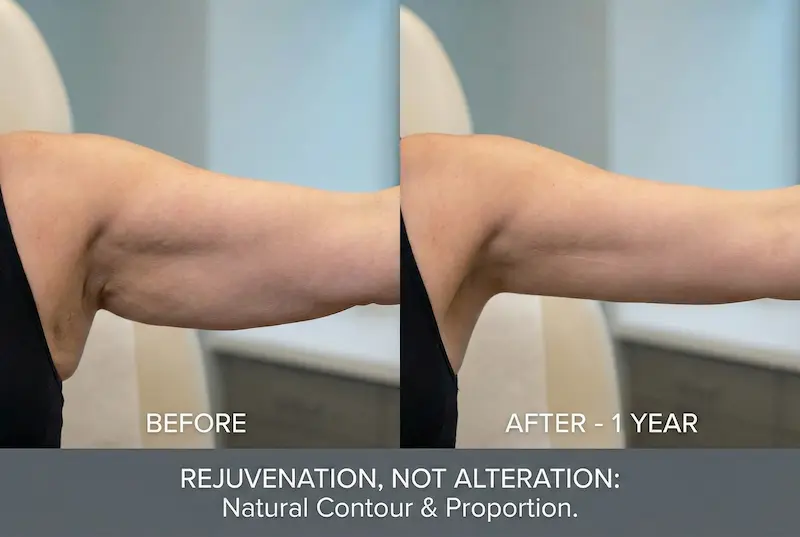
A successful arm lift doesn’t look “tight” or unnatural—it looks proportionate. The goal is a refined contour that matches your frame and moves naturally, with scar placement that is planned and predictable. This is the practical expression of the philosophy often described as “rejuvenation, not alteration”: you should look like yourself, just with a cleaner upper-arm silhouette.
What “natural” means for the upper arms (proportion, contour, discretion)
Natural-looking brachioplasty results typically share a few characteristics:
- Proportion: the arm matches the shoulder and torso, without an over-pulled look.
- Smooth contour transitions: especially near the armpit region where irregularities can stand out.
- Discreet scar strategy: scar placement and tension management aligned with your laxity pattern.
This is why technique selection matters: an incision pattern that matches the true distribution of laxity is often the most direct path to a result that looks “unoperated.”
When you’ll see results (and when to judge them)
You may notice a shape improvement early, but swelling can mask definition and scars are still maturing. Many patients benefit from viewing results in phases:
- Early phase (weeks): swelling and tightness are normal; scars look fresh and can appear more prominent.
- Mid phase (months): contour becomes clearer; scars often remain pink/red and firm as remodeling continues.
- Late phase (6–12+ months): scar and tissue maturation progress; results usually look more “settled.”
Longevity: how long do arm lift results last?
Arm lift results are designed to be long-lasting, but the arms still age over time. The most important factors that protect longevity are stable weight, consistent fitness, and realistic expectations about natural skin changes. Major weight fluctuations can re-stretch tissues and alter the result.
How to evaluate before-and-after photos responsibly
If you’re reviewing before-and-after images, look for consistency: the same arm position, similar lighting, and similar camera angles. Strong results tend to show improved contour without unnatural flattening or distortion. Also look for honest scar discussions—because scar planning is part of the result, not a footnote.
Arm Lift Cost: NYC vs Miami vs Los Angeles vs Turkey 2026 (Istanbul)
Cost research is a normal part of deciding on surgery—especially for “expert patients” who want to understand what they’re paying for. Searches like “arm lift cost nyc,” “arm lift miami cost,” “arm lift los angeles,” and “arm lift cost in turkey” reflect a reality: pricing can vary dramatically by location, surgeon, facility, and what’s included. The smartest way to compare is to separate price from value—and to insist on transparent line items.
What drives arm lift pricing in the US (the real cost structure)
When patients ask “how much does an arm lift cost” or search “average cost of arm lift,” they often see broad ranges because US pricing is influenced by multiple components—many of which are higher in major metro markets:
- Surgeon’s fee: experience level, demand, case complexity.
- Facility/operating room fees: especially high in premium urban centers.
- Anesthesia fees: length of surgery and anesthesia type.
- Pre-op testing and post-op visits: varies widely by practice model.
- Compression garments, medications, scar care: may or may not be bundled.
For a fair comparison, ask any provider to clarify what is included and what is billed separately. “Lower” can become “higher” when key items are not included up front.
Why Turkey can be a value option (without framing it as “cheap”)
International destinations—especially Turkey—are often compared against premium US markets. The key is to avoid a simplistic “cheap vs expensive” mindset and instead evaluate whether the model offers exceptional value: high standards, experienced surgeons, an accredited hospital environment, and a clear recovery pathway—without the same metro overhead costs seen in cities like NYC, Miami, or LA.
If you’re considering an arm lift in Turkey, the most rational due diligence is to confirm: where the procedure is performed (hospital accreditation), what materials and protocols are used, and how follow-up is structured after you return home.
All-inclusive vs itemized: what “included” should actually mean
A common reason patients compare Turkey to US metro markets is the difference between an all-inclusive model and a highly itemized billing structure. The goal is clarity: you should know exactly what’s covered and what isn’t before committing. Cost comparison framework (use this to compare quotes transparently)
| Category | Common in US Major Markets (NYC / Miami / LA) | Common in All-Inclusive International Models (Turkey / Istanbul) |
|---|---|---|
| Surgeon + OR Fees | Often itemized; varies significantly by market and facility | Often bundled into a package price |
| Anesthesia | Frequently billed separately | May be included (confirm anesthesia type and duration coverage) |
| Hospital / Facility Standards | Varies; confirm accreditation and emergency readiness | Confirm JCI-accredited hospital environment and safety protocols |
| Pre-op Testing | Often separate or insurance-dependent | May be bundled as part of surgical clearance |
| Post-op Follow-ups | Varies by practice | Often structured (in-person + remote follow-up checkpoints) |
| Logistics (transfers / hotel) | Usually not included | Often included in “medical travel” packages (confirm details) |
| Compression / Aftercare Items | May be separate | May be included (confirm garment + aftercare plan) |
Want a transparent quote that matches your exact anatomy?
If you’re comparing providers and want a clear, line-by-line plan—technique (mini/full/extended), anesthesia approach, and what’s included in aftercare—request a personalized assessment.
How to Choose the Right Arm Lift Surgeon
Queries like “arm lift surgery near me” or “best arm lift surgeon in us” usually come from patients who are ready to move from research to decision. The safest way to choose is not by marketing claims, but by verifying objective signals: credentials, technique transparency, facility standards, and a mature approach to scars and complication management.
Credentials and experience: what to verify (not just what to read)
A strong surgeon profile typically includes formal board recognition, consistent experience with brachioplasty, and a portfolio that matches your anatomy type (especially post-weight-loss cases). Look for:
- Board certification / recognized surgical training (and clarity on what that means in that country)
- Case relevance: before/after examples that resemble your laxity pattern (mini vs full vs extended)
- Scar transparency: honest discussion of scar placement, maturation, and management
- Revision planning: willingness to discuss “what if healing isn’t perfect?”
Facility standards and aftercare system (the part patients underestimate)
The operating environment matters as much as the surgeon’s hands. A high-standard center can clearly explain where surgery is performed, what safety monitoring is used, and how recovery is supported. Ask about:
- Accredited hospital environment and emergency readiness
- Anesthesia team and monitoring during surgery
- Structured follow-up (in-person early, then remote checkpoints)
- Clear instructions for compression, activity, and scar care
Consultation questions that reveal real expertise
These questions quickly clarify whether the plan is personalized and realistic:
- Which technique do I need and why? (mini vs full vs extended—based on my laxity map)
- Will liposuction be added? If yes, how will you prevent irregularities?
- Where will my scar sit? What will it look like at 3 months vs 1 year?
- What is the recovery timeline for my job and lifestyle?
- What are the top risks in my specific case and how are they reduced?
Surgeon’s Insight: The “right” plan is the one that matches your anatomy and priorities—contour, scar discretion, and safety— without overpromising what biology can’t deliver.
The International Patient Journey to Istanbul (AKM Model)
For US-based patients comparing premium domestic markets to international options, the practical question is: can the experience be safe, organized, and properly followed up after returning home? A well-designed medical travel pathway reduces logistical stress so you can focus on recovery—especially in the first week, when comfort and clarity matter most.
Step 1: Free virtual consultation and a personalized surgical plan
The process typically starts with a remote assessment to identify your laxity pattern, discuss technique options (mini/full/extended), and outline anesthesia preferences (where appropriate). This phase should also set expectations on scars, recovery time, and what is realistically achievable for your anatomy.
Step 2: VIP planning (airport welcome, transfers, and coordinated schedule)
International care works best when the schedule is structured: airport pickup, hotel planning, clinic visits, and surgery day logistics are coordinated so you aren’t navigating details while recovering. The aim is a smoother experience, especially for patients arriving from long flights and managing early post-op comfort needs.
Step 3: Early recovery support in Istanbul (the critical first phase)
The first days after an arm lift are where aftercare matters most: wound checks, compression guidance, mobility rules, and monitoring for early warning signs. A strong plan includes clear instructions and access to the care team if questions arise.
Step 4: Returning to the USA with structured follow-up
A serious international model does not end when you board a flight home. Follow-up checkpoints matter for scar monitoring, swelling progression, and recovery milestones. A structured schedule—often at 1, 3, 6, and 12 months—helps patients stay supported long after surgery.
Travel considerations (comfort and safety planning)
If you’re traveling internationally for surgery, ask for clear guidance on timing, mobility, compression, and any travel precautions relevant to your health profile. A responsible provider will discuss what to do before flying, how to move safely, and how to recognize issues that require immediate medical attention after returning home.
FAQ: Arm Lift (Brachioplasty)
These are the most common, high-intent questions patients ask while researching an arm lift (brachioplasty)—especially about recovery time, scarring, technique choice, and anesthesia options.
How long is arm lift recovery time?
Most patients can resume light daily activities within the first 1–2 weeks, with a gradual return to fuller activity over the next several weeks. The exact timeline depends on whether your surgery was mini/full/extended and whether liposuction was added.
When can I go back to work after an arm lift?
Many desk-based patients return earlier, while physically demanding jobs often require more time. Your surgeon should give a plan based on your job demands and your specific incision design.
When can I exercise after an arm lift?
Walking is usually encouraged early, but upper-body training and heavy lifting are typically delayed until your surgeon clears you. Returning too early can increase tension on the incision and affect healing.
Do I need an arm lift compression garment?
Many patients are advised to wear a compression garment for several weeks to help manage swelling and support tissue settling. The exact schedule (all day vs part-time) should be personalized to your recovery.
What do arm lift scars look like after 1 year?
At around one year, many scars appear flatter and lighter than in the early months, but results vary by skin type, genetics, incision tension, and aftercare. Scar maturation can continue beyond 12 months.
Where is the scar placed in an arm lift?
Scar placement depends on where your excess skin is. Many standard arm lifts place the scar along the inner (or slightly back) portion of the upper arm so it’s less visible with the arms at rest. Extended techniques may continue toward the armpit/side-chest region when needed.
Mini arm lift vs full arm lift: which one do I need?
A mini arm lift is usually for mild laxity near the armpit, while a full arm lift addresses laxity running down the inner arm. If laxity extends beyond the arm toward the side chest, an extended approach may be more appropriate. The correct answer comes from an in-person exam.
Can liposuction replace an arm lift?
Sometimes—if fullness is mostly fat and your skin has enough elasticity to retract. If your main issue is loose skin that drapes, liposuction alone usually won’t deliver a tight result, and skin excision (arm lift) is often the predictable solution.
Is a non-surgical arm lift effective?
Non-surgical tightening can help mild laxity in select patients, but it has limits. When there is significant excess skin, non-surgical treatments typically cannot remove the extra envelope the way surgery can.
Can an arm lift be done awake?
In some cases, yes—depending on procedure extent, comfort/anxiety level, and medical factors. “Awake” often means local anesthesia plus sedation rather than full general anesthesia. The safest plan is the one that matches your case and the time needed for precise work.
How much does an arm lift cost?
Pricing varies widely by city, surgeon, facility fees, anesthesia, and what’s included (garments, follow-ups, aftercare). For fair comparisons, ask for a transparent quote that clearly separates what’s bundled versus billed separately—especially when comparing major US markets to international all-inclusive models.
Still deciding?
If you want a plan that matches your anatomy—technique (mini/full/extended), scar strategy, anesthesia approach, and a realistic recovery timeline—request a personalized assessment.