





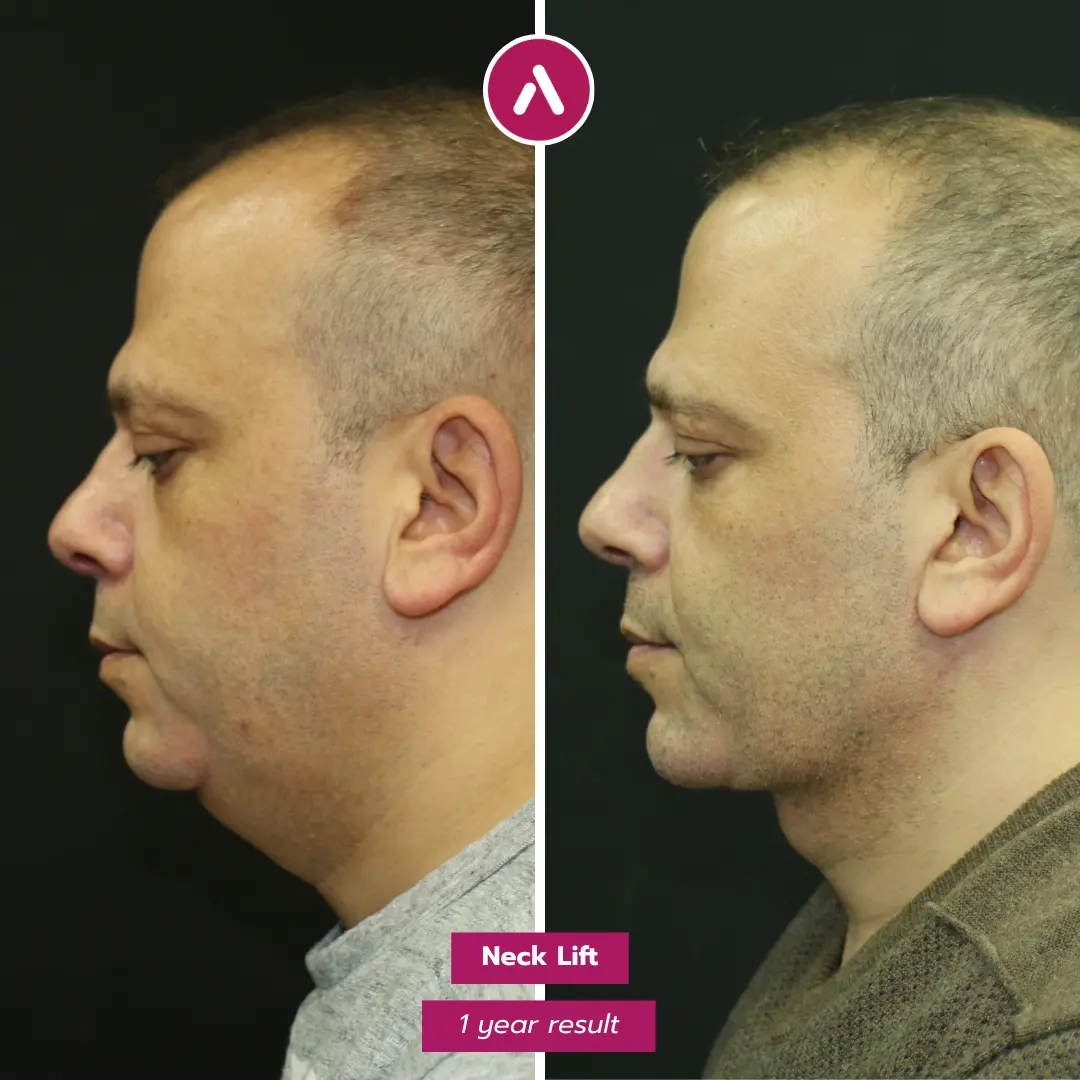
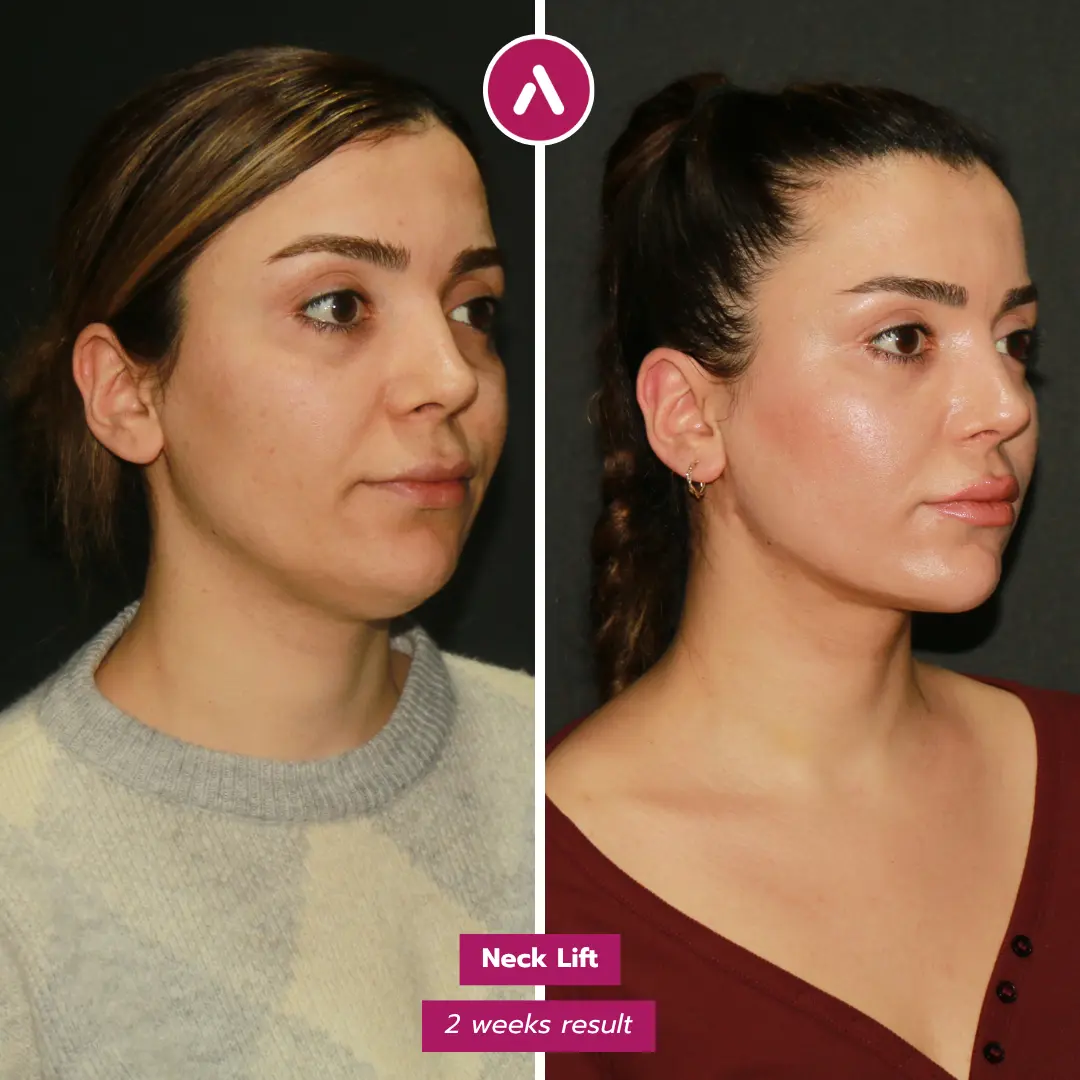
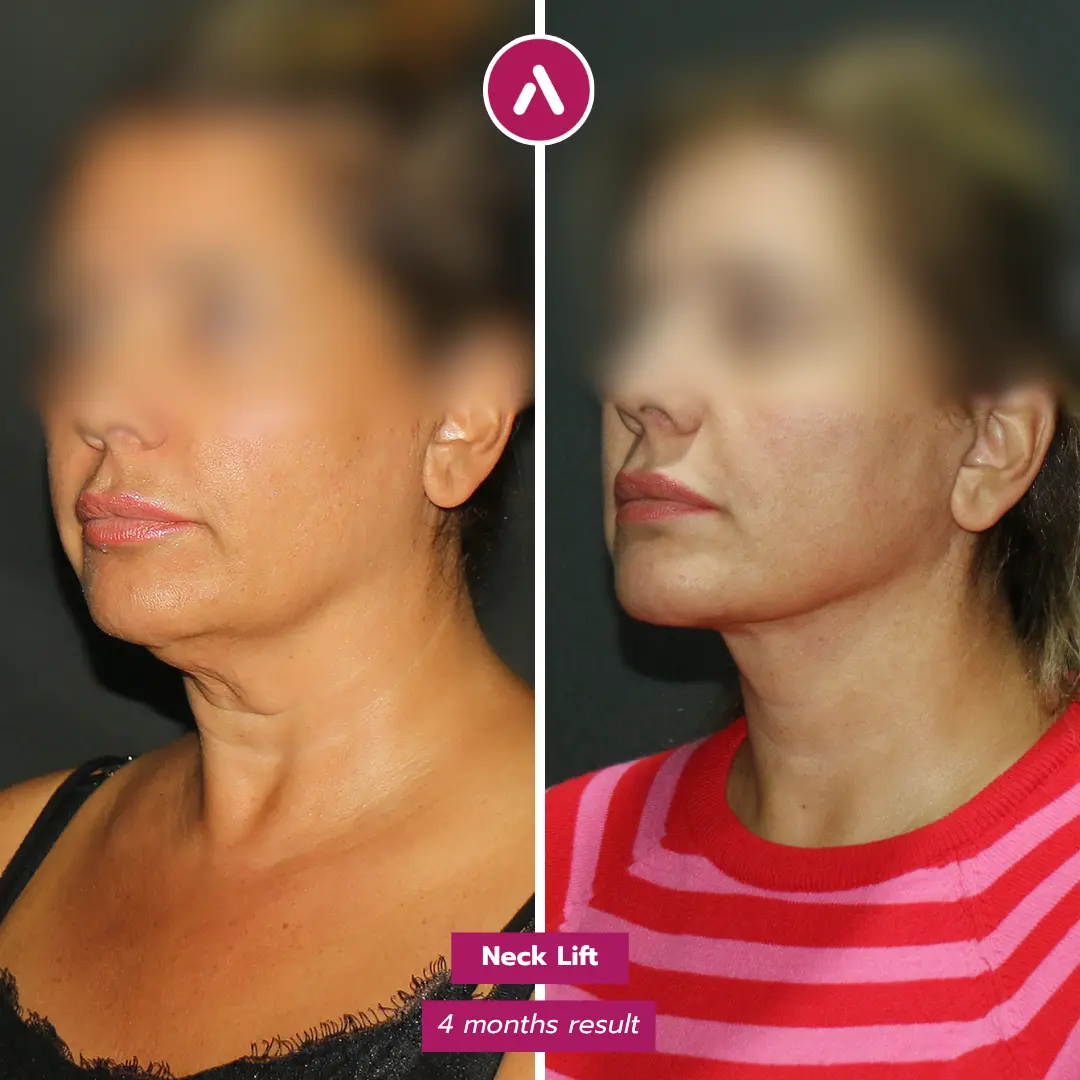
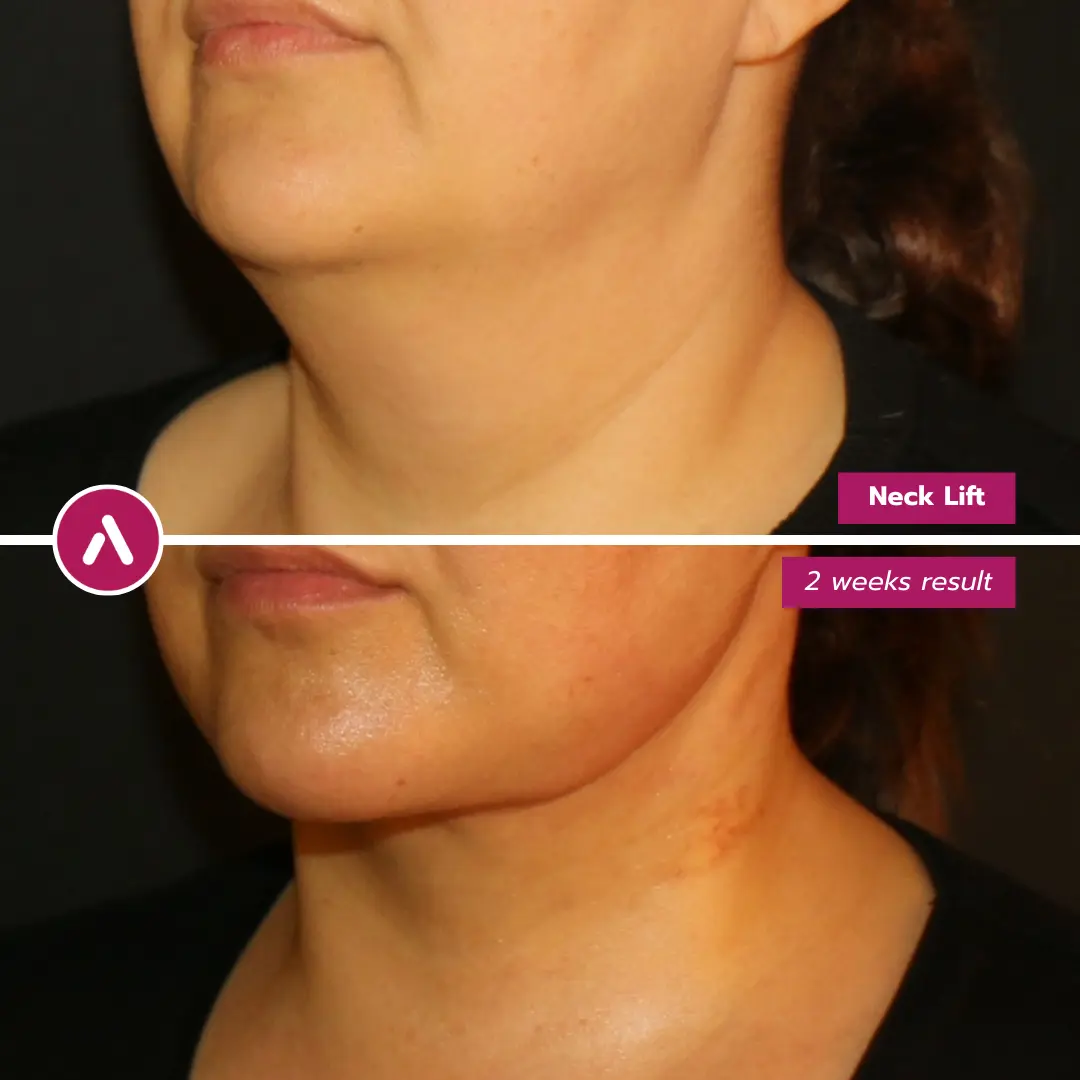
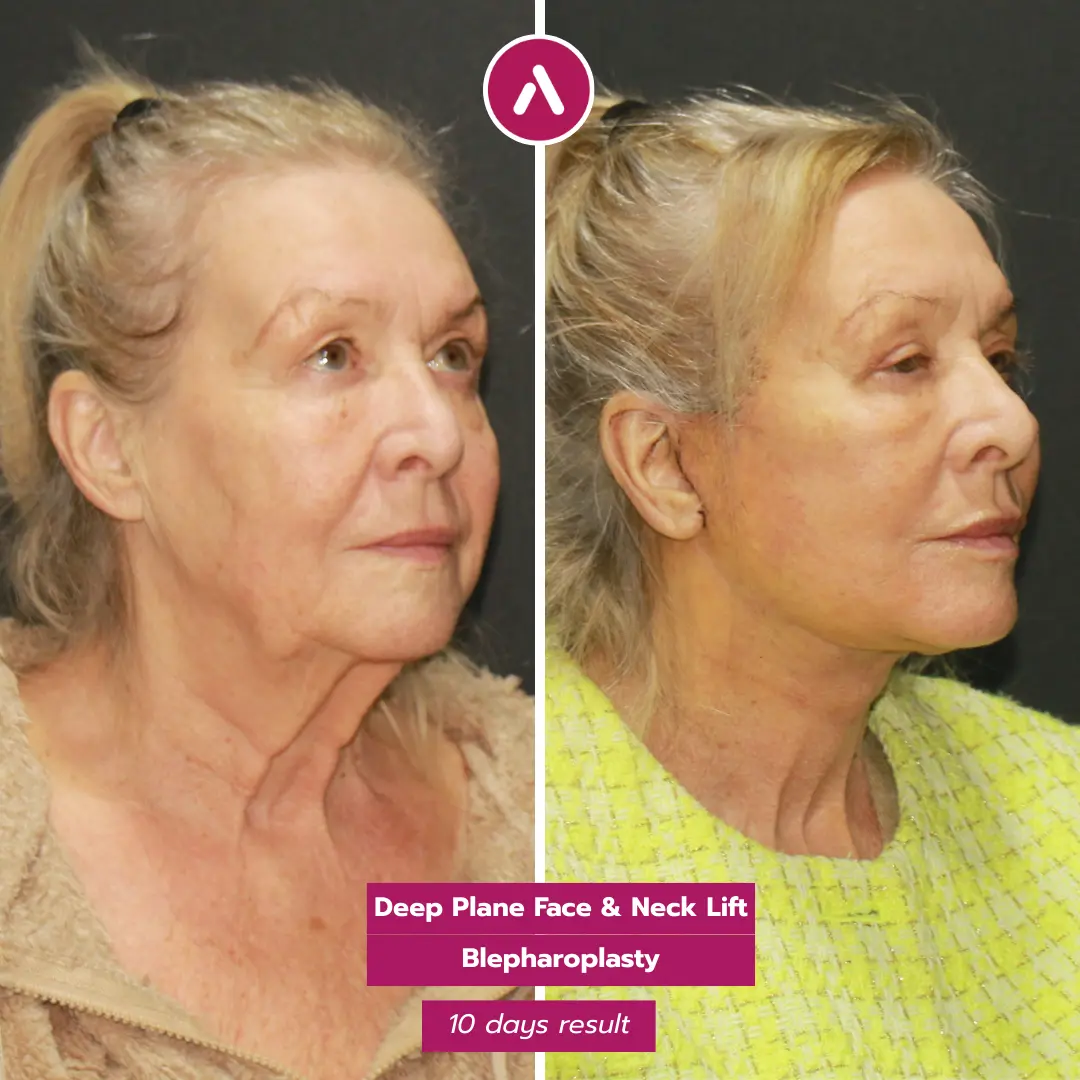
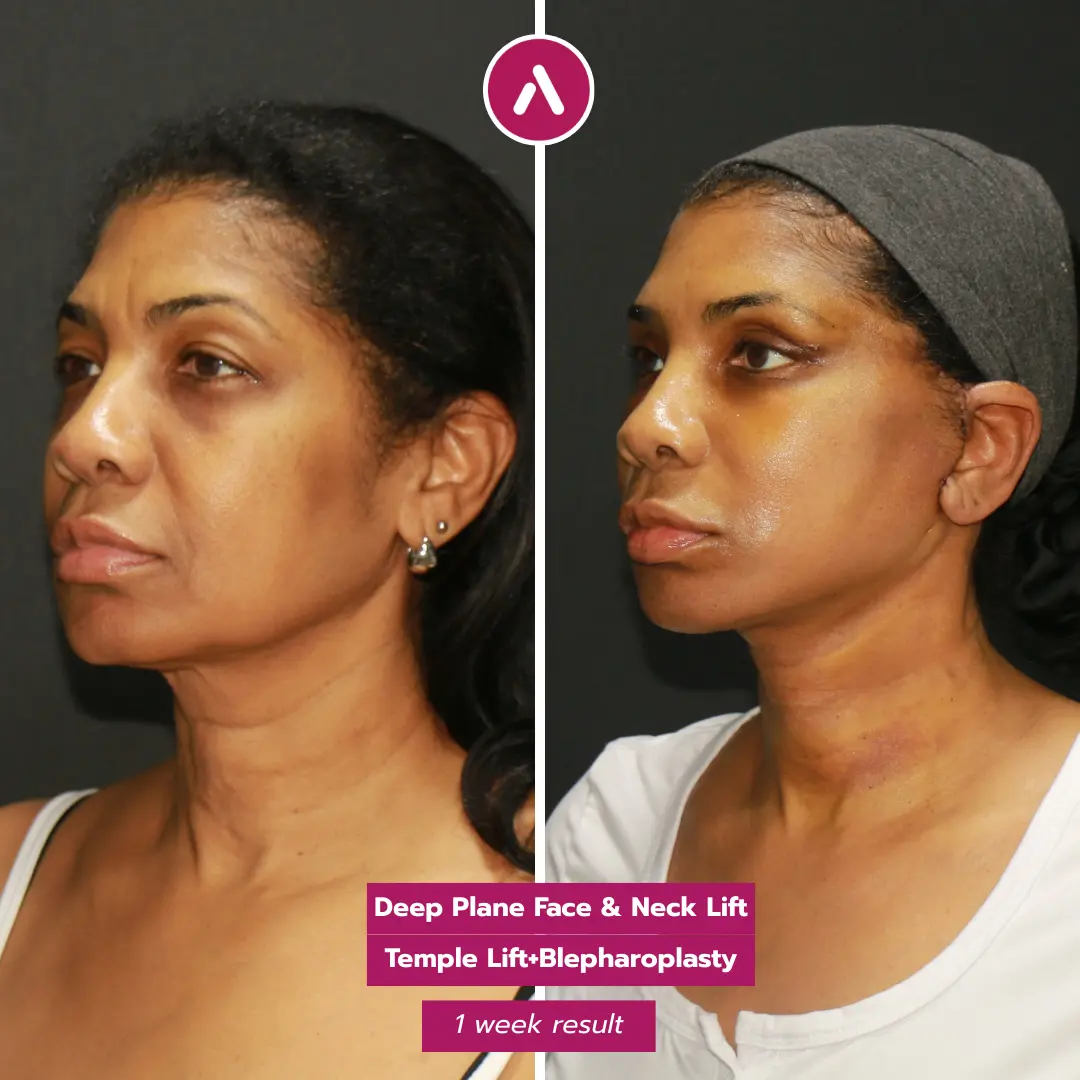
An “awake neck lift” is a modern approach to neck rejuvenation performed with local anesthesia (often paired with light, “twilight” sedation when appropriate) rather than full general anesthesia. The surgical goal is straightforward: restore a cleaner, sharper transition from jawline to neck by addressing the true drivers of neck aging—skin laxity, underlying muscle banding, and/or excess fat under the chin—without creating an over-tight, artificial look.
For many patients, the neck is where facial aging becomes most obvious first. The lower face can look “fine,” yet the profile and jawline lose definition due to early jowling, a heavier submental area (“double chin”), or visible vertical neck bands. Because these concerns can be caused by different layers of anatomy, successful neck rejuvenation is not a one-size-fits-all procedure. A high-quality plan starts with diagnosis: what is changing, in which layer, and what technique corrects it with the most natural vector and the least trade-off.
This guide is written for the “expert patient”—someone who wants the mechanics, the rationale behind technique choices, a realistic recovery timeline, and a clear understanding of risks and prevention. You’ll see where chin liposuction (chin lipo) can be a strategic add-on and where it cannot replace a true lift. You’ll also learn how “awake” surgery fits into safety, comfort, and recovery—without oversimplifying what it can and can’t do.
Table of Contents
The Neck Aging Problem (Anatomy + Why It Happens)
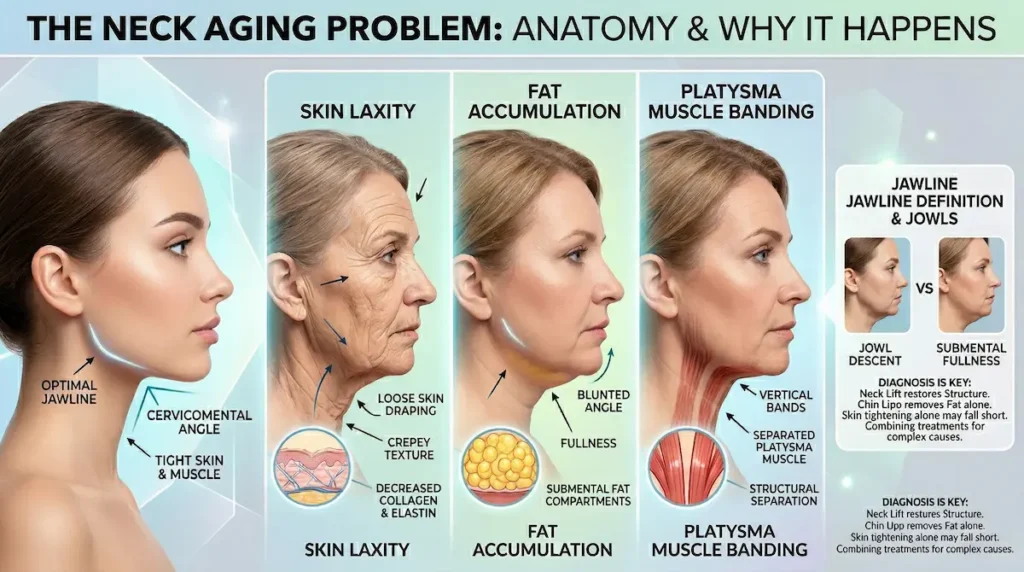
Neck aging is rarely about one issue. Most patients have a combination of skin looseness, changes in fat distribution, and alterations in the platysma muscle (the thin sheet-like muscle that spans the front of the neck). Understanding which factor is dominant is the key to choosing the right solution—especially when you’re comparing an awake neck lift, a mini neck lift, deep plane techniques, or chin lipo alone.
Skin Laxity vs. Fat vs. Muscle Banding (Platysma)
Think of the neck as a layered structure:
- Skin (outer layer): Over time, collagen and elastin support decline. The skin can drape, wrinkle, and form “crepey” texture, particularly after weight changes or sun exposure.
- Fat (subcutaneous and deeper compartments): Some people have genetically fuller submental fat even at a healthy weight. Others develop fat prominence with age due to compartment shifts. Excess fat can blunt the cervicomental angle (the clean angle between chin and neck).
- Platysma muscle (structural layer): As the platysma separates and weakens, it can create visible vertical bands. This is a mechanical issue, not a “fat” issue—and it often requires muscle-focused correction (platysmaplasty) rather than liposuction alone.
Why this matters: each layer requires a different intervention. Liposuction can reduce fat, but it does not tighten a separated platysma. Skin-only tightening can improve laxity but may fall short if the deeper structure is the primary problem. A surgical neck lift plan aims to restore the structure first, then refine contour and skin drape as needed.
Submental Fat Compartments & Jawline Definition
“Double chin” is a common phrase, but anatomically it can mean different things. For some patients, the dominant issue is a true accumulation of submental fat. For others, the appearance of fullness is created by a softer jawline, a less projected chin, early jowling, or a low/hyoid position that reduces the apparent cervicomental definition. In practical terms, the same complaint (“I hate my profile”) can have multiple causes.
Chin lipo is most powerful when:
- The fullness is primarily fat-dominant (rather than loose skin or platysma bands).
- The skin has enough elastic recoil to re-drape smoothly after fat reduction.
- The goal is to sharpen contour rather than lift loose tissue.
When skin laxity is moderate-to-severe, removing fat alone can sometimes worsen the appearance by revealing more looseness. That’s why a combined approach—awake neck lift with chin lipo—can be more precise than either option alone when multiple layers contribute to the problem.
Does a Neck Lift Help Jowls? What It Can—and Can’t—Do
Jowls form when tissues along the jawline descend and bunch, creating a “pouch” at the mandibular border. A neck lift can improve the jawline in certain cases—especially when the jowl is partly driven by neck laxity, platysma changes, and loss of definition beneath the jaw. However, it’s important to be realistic: a neck lift is not the same as a facelift, and the extent of jowl correction depends on where the descent originates.
In general:
- Mild jowling can improve with a well-planned neck lift that restores under-jaw definition and improves the neck-to-jaw transition.
- Moderate-to-significant jowling may require a procedure that addresses the lower face more directly (e.g., a facelift approach), sometimes combined with neck rejuvenation for a unified result.
- Fat vs. laxity distinction matters: If what looks like a “jowl” is actually under-chin fullness spilling into the jawline, chin lipo can make the jawline appear crisper—but it won’t lift descended facial tissues.
The most reliable path is a layered diagnosis during consultation: identify whether the jowl is primarily facial descent, neck tissue laxity, submental fat prominence, or a blend. Then the plan becomes less about “a popular procedure name” and more about correcting the exact anatomical cause of what you see in the mirror.
What Is an Awake Neck Lift?
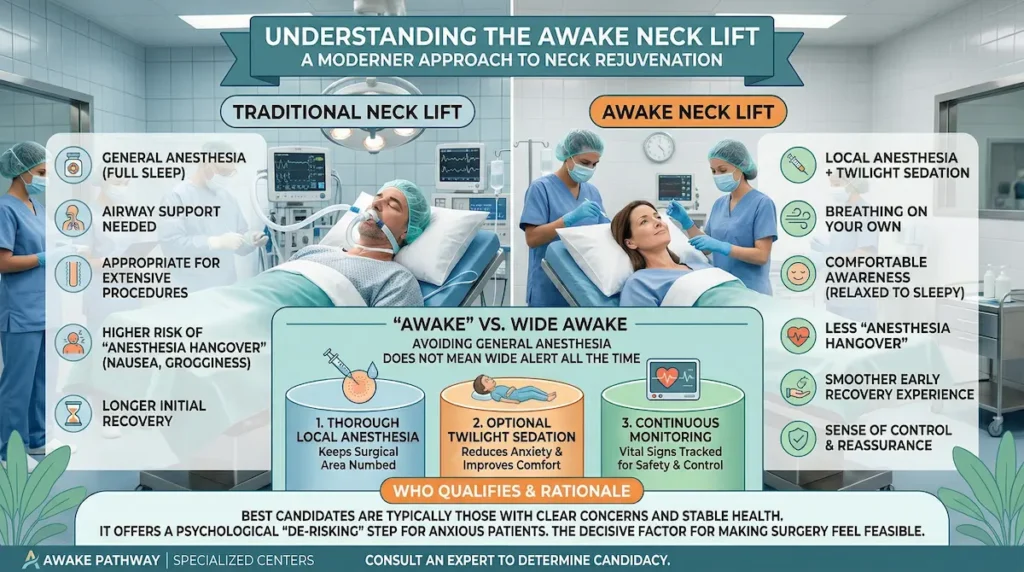
An awake neck lift is a surgical neck rejuvenation performed under local anesthesia (often using a tumescent technique) with the option of twilight sedation for comfort—rather than full general anesthesia. The term “awake” can be misleading: it does not mean you are wide awake and fully alert the entire time. It means the surgical plan is designed so you can avoid general anesthesia while still staying comfortable, monitored, and pain-controlled.
Awake vs. Traditional Neck Lift (General Anesthesia)
The biggest difference is the anesthesia strategy—and what that implies for patient experience and recovery.
- Traditional neck lift (general anesthesia): You are fully asleep with airway support. This is common and appropriate for many patients, especially when procedures are extensive or when a patient prefers complete unconsciousness.
- Awake neck lift (local anesthesia ± twilight sedation): The surgical area is numbed thoroughly. You remain breathing on your own, and your level of awareness can range from relaxed and conversational to sleepy and minimally aware, depending on the sedation plan.
From a technique standpoint, avoiding general anesthesia does not automatically mean the surgery is “less real” or “not surgical enough.” The quality of the outcome still depends on correct diagnosis (fat vs. skin vs. platysma), the chosen technique, and surgeon-level execution. An awake approach is best viewed as an anesthesia pathway that can be paired with appropriate surgical methods in the right candidate.
Neck Lift Under Local Anesthesia: Who Qualifies?
When patients search “neck lift under local anesthesia,” they’re usually looking for one (or more) of these outcomes:
- Lower perceived anesthesia risk
- Less post-anesthesia “hangover” (nausea, grogginess)
- A smoother early recovery experience
- A sense of control and reassurance—especially if they’ve had a difficult experience with general anesthesia in the past
However, candidacy is not determined by preference alone. A safe awake neck lift requires that the surgeon can execute the plan predictably within the bounds of what is reasonable under local anesthesia. The best candidates are typically those whose anatomy and procedure plan align with:
- Clear, correctable neck concerns that can be addressed without requiring extremely prolonged operative time.
- Stable general health and the ability to tolerate a procedure while breathing independently.
- Psychological comfort with the idea of being relaxed but not fully asleep (even if you’ll be drowsy).
It’s also important to recognize a practical reality: the awake pathway is most successful in centers that treat it as a specialized system—with strict pre-op screening, meticulous planning, and continuous vital monitoring throughout the procedure.
Comfort, Monitoring, and the Safety Rationale
“Awake” should never imply “casual.” A modern awake neck lift is typically built around three pillars:
- Thorough local anesthesia: The numbing strategy is designed to keep you comfortable during tissue work. Patients often feel pressure and movement but should not feel sharp pain.
- Optional twilight sedation: When used appropriately, twilight sedation helps reduce anxiety and improves comfort without the depth of general anesthesia.
- Continuous monitoring: Vital signs are monitored throughout the procedure, and the care team’s job is to keep your experience steady, safe, and controlled.
For the expert patient, the key question isn’t “Is awake always better?” It’s: Is awake the best balance of safety, comfort, and predictability for my specific anatomy and plan? For many patients—especially those with significant anxiety about general anesthesia—the awake pathway can be the decisive factor that makes surgery feel feasible. In those cases, the awake approach can function as both a medical strategy and a psychological “de-risking” step that supports a smoother overall journey.
Ideal Candidate for Awake Neck Lift (Who It’s For—and Who It Isn’t)
Neck rejuvenation looks deceptively simple in photos: a sharper jawline, a cleaner neck angle, fewer bands. But the “right” procedure is determined by anatomy, not trend. The goal of this section is to help you self-triage—so you can walk into a consultation asking the right questions, and you can understand why a responsible surgeon may recommend a lift, chin lipo, a combined plan, or an alternative altogether.
Mini Neck Lift vs. Full Neck Lift: Candidate Profiles
A useful way to think about neck lift planning is by severity and layer dominance:
- Mini neck lift (early laxity): Often considered when looseness is mild, banding is minimal, and the goal is subtle refinement rather than a full structural reset. Recovery is typically easier, but the improvement may be more limited.
- Full neck lift (structural correction): More appropriate when there is moderate-to-significant laxity, visible platysmal banding, or a blunted cervicomental angle that won’t meaningfully improve with fat reduction alone. A full approach is more likely to address the muscle layer (platysma) when needed.
Whether a mini or full lift can be done “awake” depends on how extensive the plan is and how well it can be performed under local anesthesia while maintaining patient comfort and surgical precision.
When Chin Lipo Makes the Biggest Difference
Chin lipo is most impactful when submental fullness is a major contributor to the neck’s appearance. You may be a strong candidate for chin lipo (alone or as an add-on) if:
- You have a persistent “double chin” even at a stable, healthy weight.
- Your skin still has enough elasticity to re-drape after fat reduction.
- Your primary complaint is bulk under the chin, not hanging skin or strong vertical bands.
Chin lipo becomes especially strategic when combined with a neck lift: the lift restores the structural framework (and can address platysma banding), while liposuction refines the contour and under-chin definition. In expert hands, the combination can look less “operated” than over-relying on skin-tightening alone—because it treats the problem at the correct anatomical level.
Contraindications & Setting Realistic Expectations
Not everyone is an ideal candidate for an awake neck lift—or even for surgery at all—without addressing underlying variables. A high-integrity plan starts with honest expectations and candidacy screening.
- If your main issue is skin quality: Very thin, sun-damaged, or crepey skin may require an integrated plan that addresses skin quality in addition to structure. Surgery can reposition and tighten, but it cannot “rewrite” skin biology on its own.
- If your anatomy suggests limited improvement: Certain skeletal and neck structure factors can limit how sharp the cervicomental angle can realistically become. A precise surgeon will explain what is achievable for your anatomy.
- If anxiety would make the awake pathway intolerable: Some patients feel calmer knowing they will be completely asleep. In that case, general anesthesia may be the better fit—because a calm, stable patient experience supports a safer, more controlled procedure.
The most common cause of “neck lift regrets” is not the procedure itself—it’s a mismatch between anatomy, technique, and expectations. The antidote is a consultation that is structured like a diagnostic appointment: photographs, a physical exam, and a plan that explicitly states what will be addressed (skin, fat, platysma), what will not change, and why.
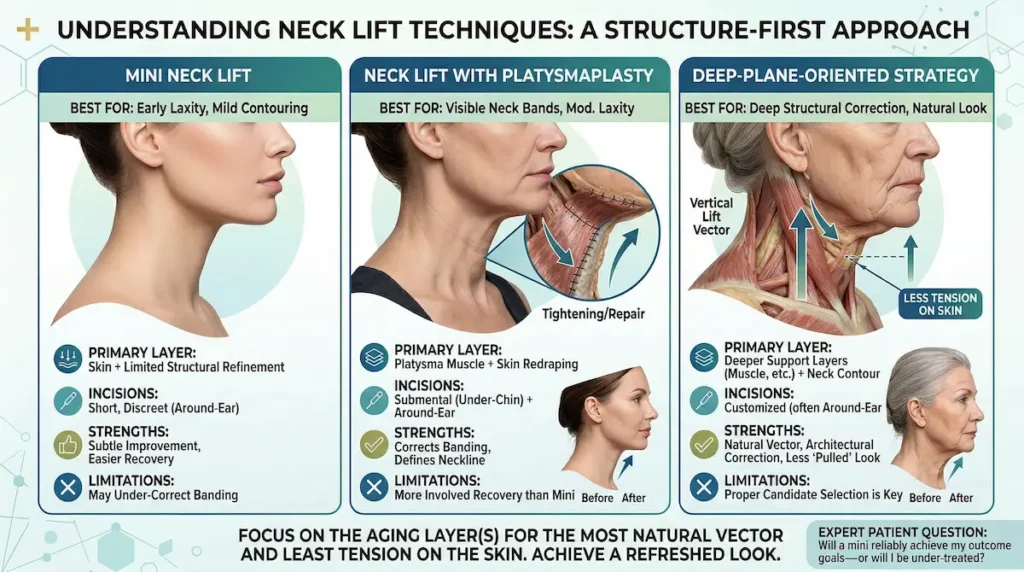
Awake Neck Lift Techniques (Deep Plane, Platysmaplasty, Mini)
If you’re researching an awake neck lift, you’re likely also comparing technique names—deep plane, platysmaplasty, mini neck lift—and trying to understand what they actually mean in anatomical terms. The most useful framework is not “Which technique is trending?” but “Which layer is driving my neck aging, and which method corrects that layer with the most natural vector and the least tension on the skin?” When a plan is structure-first (not skin-first), the result is more likely to look refreshed rather than “pulled.”
Deep Plane Neck Rejuvenation: When It’s Indicated
In modern facial rejuvenation planning, “deep plane” principles are used when the root cause is not superficial skin laxity alone, but descent of deeper support structures. The deep plane concept is designed to reposition tissues in a more anatomically logical direction (often a vertical vector), which helps avoid the over-tight, windswept look patients fear.
In the neck, deep-plane-oriented planning commonly pairs deep structural correction with targeted neck work, because the most visible “aging flags” often include:
- Neck laxity with a blunted cervicomental angle
- Platysmal banding (muscle separation/bowing)
- Loss of jawline definition (sometimes associated with early jowling)
For the right candidate, deep-plane concepts can be part of a broader strategy to correct what gravity has changed—without relying on pulling the skin to do the heavy lifting.
Platysmaplasty for Neck Bands and Structural Definition
Platysmaplasty refers to surgical tightening/repair of the platysma muscle to improve neck banding and restore a smoother, more defined neckline. This is the key distinction many patients miss: if the dominant issue is muscle banding, fat removal alone (chin lipo) will not fully correct it. Platysmaplasty directly targets the structural layer that creates bands and contributes to the loss of clean under-chin definition.
In practical terms, a neck rejuvenation plan that includes platysmaplasty is often chosen when you see:
- Vertical neck bands that show more clearly when speaking or expressing
- A “turkey neck” look driven by muscular laxity and excess skin
- A neck contour that needs structural reshaping—not just defatting
Platysmaplasty can be performed through a small submental (under-chin) access point for midline work, and/or paired with discreet incisions around the ear depending on what must be lifted and redraped. The decision is anatomy-driven.
Awake Mini Neck Lift for Early Laxity
A awake mini neck lift is generally considered when changes are earlier and more limited—mild skin looseness, minimal banding, and modest loss of definition. It can be an excellent option for the right patient, especially if your goal is subtle refinement and you want a shorter recovery footprint. However, it has a ceiling: if your concern is primarily structural (significant bands, heavy laxity, major angle blunting), a mini approach may not deliver the “why did I even do this?” level of change you’re hoping for.
The best “expert patient” question to ask isn’t “Can I do a mini?” It’s: Will a mini procedure reliably achieve my stated outcome goals—or will I be under-treated?
Technique Comparison Table (Incisions, Recovery, Longevity)
| Approach | Best For | Primary Target Layer | Common Incision Strategy | Strengths | Limitations |
|---|---|---|---|---|---|
| Mini Neck Lift | Early laxity, mild contour softening | Skin + limited structural refinement | Often short, discreet periauricular (around-ear) incisions | Subtle improvement, typically easier recovery | May under-correct banding or deeper laxity |
| Neck Lift with Platysmaplasty | Visible neck bands, blunted neck angle, moderate laxity | Platysma muscle + skin redraping (as needed) | May include a small submental incision for midline work + around-ear incisions for redraping | Addresses structural “banding” and improves definition in motion (not just photos) | Recovery can be more involved than mini approaches |
| Deep-Plane-Oriented Strategy | Patients needing a structure-first correction to avoid a pulled look | Deeper support layers (structure-first) + neck contouring plan | Customized to anatomy; often paired with neck muscle correction when indicated | Natural vector, less reliance on skin tension, more “architectural” correction | Not every patient needs (or benefits from) maximal depth—proper selection matters |
Chin Lipo as a Strategic Add-On (Not a Separate Thing)
Chin liposuction is one of the most misunderstood procedures in neck rejuvenation. Patients often search “chin lipo” as if it’s a stand-alone fix for every under-chin concern. In reality, chin lipo is best understood as a contouring tool—highly effective when the problem is excess submental fat, and far less effective when the problem is loose skin or platysmal banding. The most refined outcomes often come from combining chin lipo with a lift strategy when multiple anatomical layers contribute to the final contour.
What Chin Lipo Fixes—and What It Doesn’t
Chin lipo is designed to reduce excess submental fat and sharpen the under-chin contour. It is most effective when:
- The fullness is primarily fat-dominant
- Skin quality and elasticity are good enough to re-drape
- The goal is a cleaner cervicomental angle and more jawline definition
Chin lipo does not reliably fix:
- Significant skin laxity (it can reveal looseness if skin is already lax)
- Platysmal banding (a muscle/structural issue)
- Lower face descent that creates true jowling (a facelift/lower-face issue)
This is where many “regret” stories are born: a patient chooses chin lipo when they actually needed structural lifting and muscle tightening. The solution is diagnostic planning, not a more aggressive fat removal.
The Logic of Tumescent Liposuction for Neck Contouring
Most modern chin lipo is performed using a tumescent technique, which allows precise fat removal and helps with comfort and bleeding control. The surgeon’s job is not to “remove the most fat,” but to sculpt the contour so the neck looks natural in multiple positions—front view, 45-degree, and profile—and remains consistent in motion.
In combined cases, chin lipo often serves as a refinement step: once the structural framework (neck lift/platysma correction) is restored, liposuction can fine-tune the under-chin area so the jawline reads sharper and lighter.
Chin Lipo vs. Kybella: Permanence, Predictability, Value
Patients often compare chin lipo vs. Kybella because both target submental fullness. The key differentiators are predictability and structural control.
- Kybella (injectable fat-dissolving): Can be useful for carefully selected fat-dominant cases, but results can be variable, often require multiple sessions, and do not address skin laxity or platysma banding.
- Chin lipo (surgical): Provides a more direct, controllable contouring result in the appropriate candidate, and integrates seamlessly with a lift plan when skin/muscle also need correction.
For the expert patient, the decision is not just “Which reduces fat?” but “Which approach gives the most predictable improvement for my anatomy—without introducing a new problem (like increased skin laxity)?”
When Combination Surgery Is the Most “Natural” Choice
It may sound counterintuitive, but combining procedures can sometimes look less “operated” than trying to force one procedure to do everything. For example, if you need structural definition (platysma/skin redraping) and also have true submental fat, an awake neck lift plus chin lipo can create a cleaner jawline without excessive skin tension. That structure-first approach aligns with the goal most patients state explicitly: to look well-rested, not surgically altered.
Combined Procedures with Awake Neck Lift
An awake neck lift is often paired with complementary procedures to create a balanced, natural-looking lower-face and profile result—especially when multiple anatomic layers contribute to aging. The key is “structure-first” planning: restore neck definition, then refine adjacent areas only when it improves harmony and long-term stability.
Common Pairings for Comprehensive Facial Balance
Depending on your anatomy and goals, your plan may combine an awake neck lift with a facelift for jowls, chin aesthetics to support jawline projection, rhinoplasty to optimize profile balance, or an endoscopic brow lift to lift the upper face without over-tightening the neck. Combining procedures can reduce total downtime versus staging, but candidacy, safety, and recovery logistics should always guide the
Anesthesia Options (Awake/Twilight vs. General)
For many “expert patients,” anesthesia is not a footnote—it’s the decision-driver. Searches like “neck lift under local anesthesia” and “awake neck lift” reflect a desire to reduce perceived risk, avoid post-anesthesia side effects, and feel more in control of the surgical experience. The most helpful way to approach this is not “local is always better” or “general is always safer,” but a practical question: Which anesthesia pathway creates the best balance of safety, comfort, and predictability for my exact surgical plan?
The Awake Experience: What You Actually Feel
In an awake neck lift, the surgical field is numbed thoroughly with local anesthesia. Most patients describe the experience as feeling:
- Pressure and movement (normal and expected)
- Minimal awareness of detail if light sedation is used
- No sharp pain when anesthesia is properly planned and administered
“Awake” does not mean you are forced to stay tense or fully alert. It means your procedure is performed without the depth of general anesthesia. Many patients are calm, drowsy, and comfortable—breathing on their own—while the team monitors vital signs throughout the procedure.
When Twilight Sedation Is the Better Choice
Twilight sedation can be a smart middle path for patients who want to avoid full general anesthesia but also don’t want to feel overly aware during the procedure. It may be recommended when:
- You’re naturally anxious (even if you “want to be brave”)
- Your procedure plan is longer or more detailed, and comfort consistency matters
- You’ve had difficult medical experiences and want a softer psychological experience
The goal is not to “knock you out,” but to lower stress, keep the experience steady, and support surgical precision. For outcomes, stability matters: calm patient + controlled anesthesia environment supports better, more predictable execution.
Decision Framework for Patients Who Fear General Anesthesia
If general anesthesia is your biggest barrier, you’re not alone. One recurring theme in patient narratives is that the option of major facial procedures under local anesthesia can help patients move forward with a long-delayed goal. In one US patient story, fear of general anesthesia was described as paralyzing, and the ability to perform a combined procedure under local anesthesia was framed as the safest and most suitable option—followed by a notably smooth early recovery experience.
Here’s a practical decision framework to discuss in consultation:
- Scope: How extensive is your plan (skin, platysma, contouring, add-ons)?
- Duration: Can the plan be executed efficiently under local anesthesia while maintaining comfort?
- Medical profile: Do your health factors favor one pathway over another?
- Anxiety profile: Would being “not fully asleep” increase stress, or reduce it?
- System readiness: Does the center have strict pre-op screening and continuous monitoring built into every case?
When the awake pathway is selected for the right candidate—and supported by a strict screening + monitoring system—it becomes more than a preference. It becomes a structured strategy to de-risk the experience, especially for patients whose main fear is anesthesia rather than surgery itself.
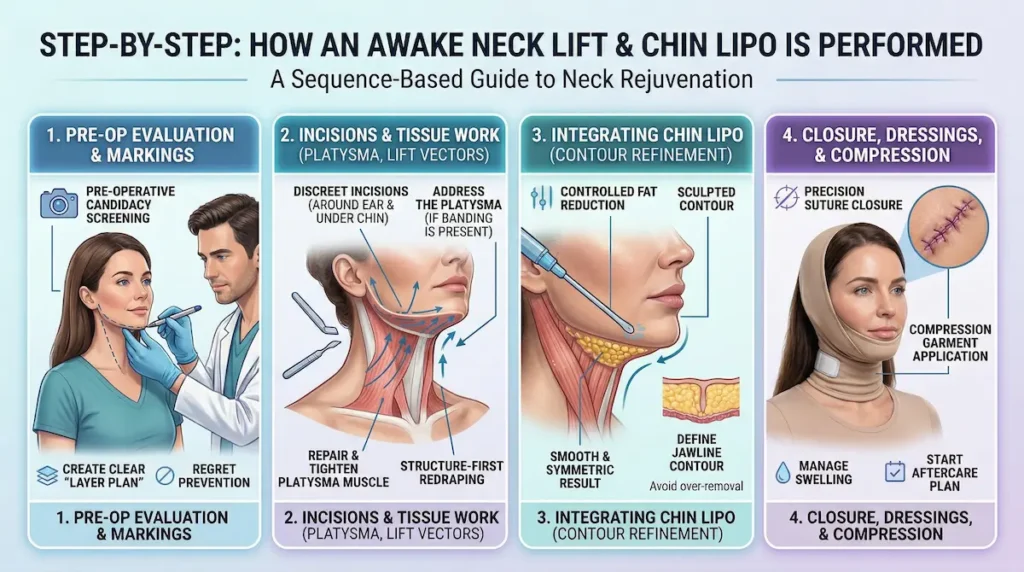
Awake Neck Lift Surgery Step-by-Step: How an Awake Neck Lift & Chin Lipo Is Performed
Patients often ask “how is a neck lift performed?” because they want more than a marketing description—they want the actual sequence. While the exact details vary by anatomy and technique choice, the overall workflow follows a consistent logic: diagnose the dominant layer (fat vs. platysma vs. skin), correct structure first, refine contour second, then allow skin to re-drape naturally with minimal tension. Below is a realistic, expert-patient-friendly walkthrough of how an awake neck lift with chin lipo is typically executed.
Awake Neck Lift Pre-Op Evaluation, Markings, and Surgical Planning
The procedure begins long before the operating room. A responsible plan includes:
- Pre-operative health screening to confirm candidacy and reduce risk
- Photographic analysis to map where laxity, bands, and fat dominance actually exist
- Precise markings to define incision placement and contour boundaries
- A clear “layer plan”: what will be addressed (fat / platysma / skin) and what is not expected to change
For the expert patient, the pre-op step is also where “regret prevention” happens: the plan should state explicitly whether platysmaplasty is needed, whether chin lipo adds value, and whether your jawline goals require any lower-face strategy beyond the neck.
Awake Neck Lift Incisions & Tissue Work (Platysma, Lift Vectors, Redraping)
Incision strategy is chosen to balance access, discretion, and scar quality. In many neck rejuvenation plans, access points may include:
- Discreet around-ear incisions to allow controlled lifting and redraping
- A small under-chin access point when midline platysma work (platysmaplasty) or direct contour work is required
Once access is established, the surgeon addresses the anatomical driver(s):
- If platysmal banding is present: the platysma is repaired/tightened to reduce banding and restore a cleaner neck framework.
- If laxity is dominant: tissues are repositioned with a structure-first logic, aiming to avoid over-relying on skin tension.
- If skin is loose: skin is redraped smoothly after the deeper corrections are completed.
The goal is a neck that looks consistent in real life—front view, profile, and during speech and expression—not just a one-angle photo improvement.
Integrating Chin Lipo + Closure, Dressings, Compression
When chin lipo is part of the plan, it is typically used as a contour refinement step rather than a substitute for structural correction. In practical terms, this means:
- Fat is reduced in a controlled, sculpted manner (not “maximally removed”).
- The contour is checked for smoothness and symmetry.
- The goal is definition without hollowness or an over-skeletonized look.
After the structural work and contour refinement are complete, the incisions are closed with attention to scar quality. Dressings and a compression garment are applied to support early healing and help manage swelling. Immediately after, the team monitors you closely, and you leave with a clear aftercare plan—because the first week is where recovery quality is won or lost.
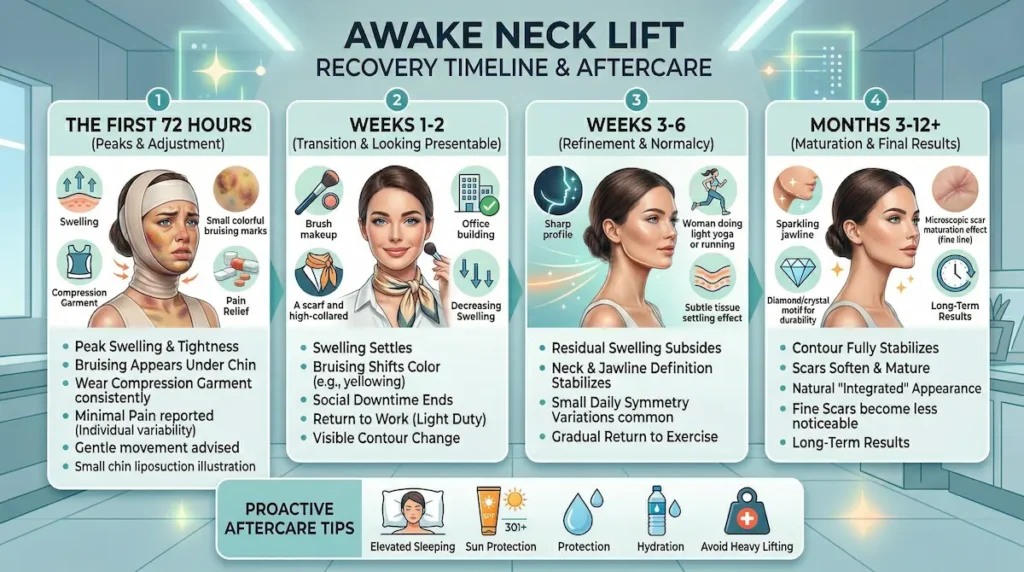
Awake Neck Lift Recovery Timeline (Day-by-Day) + Aftercare
Most patients researching an awake neck lift are trying to answer one practical question: “How long until I look normal again?” The honest answer is that recovery is predictable in phases but not identical for everyone. Your baseline skin quality, the amount of structural work performed (e.g., platysmaplasty), whether chin lipo is added, and your individual tendency toward swelling/bruising all influence the visible timeline. That said, there is a reliable “day-by-day” pattern you can plan around—especially if your aftercare is structured and proactive.
The First 72 Hours: Swelling, Bruising, Comfort
The first three days are usually the most intense phase—not because it is typically “severe pain,” but because swelling, tightness, and discomfort can feel unfamiliar. Compression garments and careful positioning are used to support contour and manage early swelling.
- Swelling and tightness: Peak swelling commonly occurs early and can make the neck feel firm and “tight.”
- Bruising: Bruising can appear under the chin and along the neck, and may extend depending on how your body processes blood products.
- Comfort and pain control: Patient experiences commonly describe minimal-to-no pain and relatively light painkiller needs in many cases, but individual variability exists (especially when multiple procedures are combined).
- Movement and rest: You’ll want gentle movement (as advised) but generally avoid heavy activity, bending, or anything that increases pressure in the head/neck region.
If chin lipo is included, early swelling under the chin can temporarily make the neck look “fuller” before it looks better. That temporary fullness is normal and not an indicator of a poor outcome.
Week 1–2: Social Downtime & Return to Work
Week 1 is usually when patients transition from “healing mode” into “looking presentable.” Most people can be seen in public with discretion (makeup, hair styling, scarf/high collar if desired) depending on bruising patterns and swelling rate. By the end of week 2, many patients see a meaningful contour change—even though results are still evolving.
- Day 5–7: Swelling typically begins to settle. Bruising often shifts in color (e.g., darker to yellowish tones) as it resolves.
- Day 7–14: Many patients can return to work and normal routines, with restrictions on strenuous exercise per surgeon guidance.
- Visible improvement: Case-based analysis highlights an “accelerated pathway” where specific recovery technologies are credited with reducing inflammation/bruising and enabling some patients to be “camera-ready” around the 14-day mark.
Important perspective: two weeks is often the point where you look “better,” not the point where you look “finished.” Neck contour continues to refine for months as deeper tissues settle and skin re-drapes.
Weeks 3–6 and Months 3–12: Scar Maturation & Final Definition
This is the refinement phase. Swelling continues to decrease gradually, and the neck/jawline definition becomes more stable. If you’re the type of patient who examines symmetry closely, this phase can feel psychologically challenging because small differences can appear day-to-day as tissues settle. That is typically part of normal healing.
- Weeks 3–6: Most residual bruising is gone. Swelling becomes subtler and more localized (often under the chin).
- Months 3–6: Contour stabilizes further; scars soften and become less noticeable as they mature.
- Months 6–12: Scar maturation continues. The neck often looks more “integrated” and natural—less like a recent procedure and more like your baseline anatomy, upgraded.
In case-series analysis, a key point is that structure-first lifting (paired with platysmaplasty when indicated) aims to create definition without over-tensioning the skin—supporting a more natural long-term appearance and more invisible scarring over time.
Accelerated Recovery Protocol: HBOT + LLLT
For expert patients, “recovery” isn’t just about comfort—it’s about minimizing complications, shortening social downtime, and improving scar quality. At AKM Clinic, two technologies are positioned as an integrated Rapid Recovery & Safety Protocol: Hyperbaric Oxygen Therapy (HBOT) and Low-Level Laser Therapy (LLLT). These are framed not as “nice-to-have devices,” but as a system designed to support healing biology from macro to micro levels.
HBOT (Hyperbaric Oxygen Therapy): HBOT exposes the patient to 100% oxygen in a pressurized environment to increase oxygen delivery to surgical tissues—even when circulation is temporarily compromised after procedures. Documented patient-centric benefits include tissue survival/regeneration, accelerated recovery via reduced inflammation and lymphatic support, enhanced scar healing through fibroblast/collagen stimulation, and infection prevention via an oxygen-rich environment plus immune support.
LLLT (Low-Level Laser Therapy): LLLT is described as a “soft laser” system using a validated 650nm wavelength to stimulate cellular activity without heat damage. In post-surgical healing applications, it is credited with boosting ATP (cellular energy), stimulating fibroblasts/collagen synthesis, and acting as an adjunct to HBOT to reduce swelling and redness for a smoother recovery.
What does this mean in real-life terms? In documented case analysis, HBOT + LLLT are specifically linked to “supercharged” recovery outcomes—drastically reduced inflammation and bruising and the ability to achieve a strong 2-week post-op appearance in select patients. The protocol is also framed as particularly relevant for patients who require minimal social downtime (e.g., professionals returning to a public-facing schedule).
Aftercare Structure: The Hidden Variable That Prevents Regrets
Even the best surgery can feel stressful without a structured aftercare plan—especially for international patients. The clinic’s model emphasizes continuity: close monitoring immediately after surgery, a 24/7 patient host for questions, and long-term virtual follow-ups scheduled at 1, 3, 6, and 12 months after you return home. One patient story frames this ongoing responsiveness as a “lifeline,” directly countering the fear of post-op abandonment after traveling for surgery.
For patients planning travel, the aftercare system is also supported operationally with post-operative medications and garments included in the VIP package, helping reduce logistical friction during the first week of healing.
Awake Neck Lift Risks, Complications, and “Botched” Prevention
Searches like “botched neck lift,” “neck lift regrets,” and “signs of a bad neck lift” aren’t negative intent—they’re a form of due diligence. The expert patient is trying to control downside risk before committing. The right way to read this section is not “what can go wrong,” but “what are the known risks, what are the early warning signs, and what system-level decisions reduce the probability of preventable complications?”
Common Risks: Hematoma, Infection, Nerve Issues, Asymmetry, Scarring
Every surgical procedure has risks. The most responsible clinics and surgeons address them directly, not with vague reassurance. While the exact probability of each complication varies based on anatomy, medical history, technique, and post-op compliance, the most commonly discussed risks after neck lift and/or chin lipo include:
- Hematoma (bleeding under the skin): Typically an early post-op risk. It may present as rapidly increasing swelling, firmness, pain, or asymmetry. This can be time-sensitive.
- Infection: Uncommon but important. Signs can include worsening redness, warmth, drainage, fever, or increasing localized pain after an initial improvement period.
- Nerve-related issues: Temporary numbness is common and expected as tissues heal. More significant nerve irritation can occur and usually improves over time, but it must be monitored by your surgical team.
- Seroma (fluid collection): A pocket of fluid that can develop during healing and may require drainage.
- Contour irregularities: More relevant when chin lipo is included. Early swelling can mimic irregularity; true contour issues are judged after swelling settles.
- Asymmetry: Mild asymmetry during healing is common; meaningful asymmetry must be evaluated once swelling is down.
- Scarring: All surgery leaves scars, but incision placement and closure technique are designed to keep them discreet and to promote a smooth maturation process over months.
Important perspective: some early “weirdness” (tightness, numbness, transient asymmetry) is often part of normal healing. “Botched” outcomes typically involve either a preventable complication that was not managed promptly, or a technique/expectation mismatch where the chosen procedure simply could not deliver the promised result for that anatomy.
Signs of a Bad Neck Lift: What’s Normal vs. What’s Urgent
One reason expert patients experience less anxiety is that they know what to watch for—and when to escalate. While you should always follow your surgeon’s specific instructions, here is a practical framework:
- Usually normal (but should still be monitored):
- Swelling that gradually improves (even if it fluctuates during the day)
- Bruising that changes color and fades over 1–3 weeks
- Temporary numbness, tingling, or tightness
- Mild asymmetry early on due to uneven swelling
- Call your surgical team promptly:
- Increasing redness, warmth, or drainage at an incision site
- New or worsening pain after you were improving
- Fever, chills, or feeling systemically unwell
- Swelling that becomes more localized, tense, or asymmetric
- Seek urgent/emergency evaluation:
- Rapidly expanding swelling, severe pain, or sudden asymmetry (possible hematoma)
- Breathing difficulty, chest pain, fainting, or any severe systemic symptoms
“Regrets” can also be non-medical: dissatisfaction due to unrealistic expectations, choosing the wrong procedure (e.g., chin lipo when platysma/skin laxity was dominant), or selecting a provider without a robust follow-up system—especially for medical travel patients.
How to Reduce Risk: Surgeon Credentials, Facility Standards, and Follow-Up Systems
There are two parts to complication prevention: clinical execution and system design. The best outcomes happen when both are strong.
1) Facility and protocol standards (system design): A high-integrity clinic environment is built on non-negotiables: international sterilization standards, continuous vital monitoring during procedures, and strict pre-operative screenings to confirm candidacy and safety. These are not “marketing points”—they are the basics that reduce preventable risk.
2) De-risking through credentials and surgeon-led planning: Expert patients consistently look for verifiable qualifications (e.g., “board certified”) as objective reassurance. The consultation itself matters: surgeon involvement in consultation is positioned as a trust-builder that supports honest expectation management and appropriate procedure selection.
3) Infection prevention and healing support as part of the recovery strategy: In AKM’s technology framework, HBOT is presented as a dual defense against infection—creating an oxygen-rich environment that is hostile to many bacteria while also supporting the immune response. When combined with LLLT’s cellular-level support (ATP/collagen pathways) and its role in reducing post-operative swelling/redness, the intent is not only comfort, but risk reduction and improved recovery quality.
4) Continuity of care (especially for international patients): A frequent fear among traveling patients is “abandonment” once they return home; in testimonial analysis, robust long-distance support is framed as a critical differentiator in patient confidence and recovery experience. AKM’s structured pathway includes immediate post-op monitoring, 24/7 WhatsApp access via a patient host, and scheduled virtual follow-ups at 1, 3, 6, and 12 months.
Practical “Botched Prevention” Checklist (bring to any consultation):
- Which layer is my primary issue: fat, skin, or platysma—and what exactly will you correct?
- Where will my incisions be, and how do you manage scar quality long-term?
- If I’m considering “awake”: am I a strong candidate for local anesthesia ± twilight sedation, and why?
- What facility standards do you use (sterilization protocols, monitoring during procedures, pre-op screening)?
- What does your follow-up schedule look like for 1–12 months, and how do you handle concerns after I’m home?
When you treat these questions as “must-answer,” you dramatically reduce the chance of choosing the wrong procedure or the wrong system—two of the biggest drivers behind avoidable dissatisfaction.
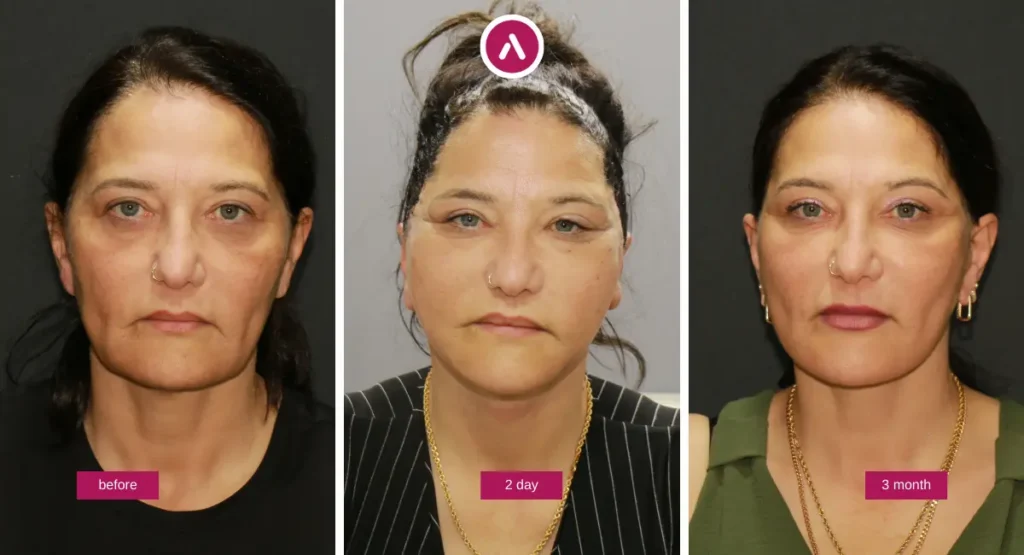
Awake Neck Lift Before and After: Results & the “Natural-First” Philosophy
For an expert patient, the goal is rarely to look “tight.” It’s to look rested, lighter, and more structurally defined—especially along the jawline and under the chin—without broadcasting that you had surgery. Across both case analysis and patient narratives, a consistent pattern emerges: patients want a natural, sculpted, defined look and are specifically trying to avoid a “pulled,” “wind-swept,” or “operated” appearance.
What “Natural” Looks Like in Neck Rejuvenation
Natural neck rejuvenation is not “no change.” It’s a change that looks anatomically believable—as if you simply have better structure and fresher tissue quality. This is why structure-first planning matters: if deeper layers are corrected (instead of over-tensioning skin), the result tends to look calmer, less tight, and more integrated over time. In synthesis analysis, the overarching objective is described as a “comprehensive structural reset” that supports a natural, defined result.
AKM Clinic explicitly frames its guiding philosophy as “Rejuvenation, Not Alteration,” emphasizing subtle, authentic outcomes rather than making patients look like a different person.
“We believe the most successful aesthetic surgery is one that goes unnoticed.”
This philosophy statement is presented as the clinic’s core promise for natural-looking outcomes.
Scar Evolution: What to Expect Over Time
Patients often search “neck lift incisions” because they want to predict whether scarring will be visible in real life. The key point is that scar visibility is not only about incision placement—it’s about tissue tension, closure quality, skin biology, and time. In case analysis, a tension-minimizing strategy is directly linked to “invisible scarring” at longer follow-up, reinforcing the idea that scar outcomes are influenced by how tissues are repositioned and closed—not just where the incision sits.
What most expert patients should plan for:
- Early phase (Weeks 1–4): Incisions can look pink/red as the skin seals and remodels.
- Mid phase (Months 2–6): Scars typically soften and fade; texture becomes smoother.
- Late phase (Months 6–12): Maturation continues, and scars usually become less noticeable and more “background.”
The most protective mindset is to judge scars at months—not days—and to evaluate scar quality alongside the naturalness of contour and the absence of over-tension.
Patient Stories: Natural Results, Honest Planning, and Real-World Priorities
Real patient narratives are valuable because they reveal what “success” means to patients in plain language—especially those who have done extensive research and have high expectations.
- Barbara (USA) — the “expert patient” validation: After years of global research, her outcome was described as a natural rejuvenation: “I actually look like nothing happened but probably 20 years younger.”
- Hakan (Germany) — precision through honest combination planning: His journey highlights a key expert-patient principle: true definition sometimes requires a combined approach (neck lift + double chin liposuction), and clinical honesty in recommending the more effective plan can be decisive.
- Mehtap (Germany) — natural results + aftercare as a “lifeline”: Her story connects two expert-patient fears: avoiding a visibly operated look and avoiding post-op abandonment after medical travel. She describes ongoing responsiveness after returning home as critical—“again and again, and they answered me”—and reports “beautiful and natural results.”
When you combine these narratives with case-based analysis, a consistent model appears: patients prioritize naturalism, want structure-first correction to avoid distortion, and value a system that supports recovery beyond the operating room.
How Long Do Results Last—and What Actually “Lasts”?
Longevity is a common unspoken concern. A neck lift cannot stop aging, but it can restore architecture. What “lasts” is typically the structural repositioning and improved definition—while skin quality continues to evolve with time, lifestyle, and genetics. In analysis, structural correction is framed as the logical countermeasure to gravity-driven descent, specifically to avoid surface-level tension that can look unnatural.
The most realistic expectation is this: if your plan addresses the correct layer (fat vs. platysma vs. skin) and avoids over-tensioning, your result is more likely to age gracefully—still looking like you, just more defined and refreshed.
Awake Neck Lift Cost 2026 (USA vs. Turkey)
If you’re searching “awake neck lift cost” (or benchmarking “neck lift cost NYC / Los Angeles / Miami”), you’re doing what expert patients do: you’re not only price-checking—you’re auditing value. The most useful way to evaluate cost is to break the procedure down into its real clinical components: surgeon expertise, facility standards, anesthesia pathway, the scope of surgical work (platysma vs. skin vs. fat), and the recovery system that protects your outcome.
What Drives Awake Neck Lift Pricing?
Two patients can request the same “awake neck lift,” but the actual surgical plan—and therefore the real cost—can be very different. Pricing is typically driven by:
- Scope of correction: mini vs. full neck lift, need for platysmaplasty, degree of skin laxity, and whether jowl/lower-face support is required.
- Combination planning: adding chin lipo can increase value when fat is a major contributor, but it also adds operative steps and post-op management.
- Anesthesia pathway: awake (local ± twilight) vs. general anesthesia, and the monitoring/team required for safe execution.
- Facility standards: accredited hospital environment, sterile protocols, and the operating team infrastructure.
- Recovery system: how structured the follow-up is, and whether there is a dedicated recovery protocol designed to reduce swelling, bruising, and infection risk.
- Revision vs. primary surgery: revision planning often requires more time, more complexity, and more conservative execution to protect tissues.
For expert patients, the most meaningful “cost question” is this: What exactly is included—and what risks are you assuming because something is not included?
Benchmarking NYC vs. Los Angeles vs. Miami
Major US aesthetic markets (NYC, LA, Miami) tend to have wide price variance because the market itself is heterogeneous. You’ll see different pricing based on:
- Overhead differences: facility costs, staffing, and malpractice environment
- Surgeon branding vs. surgical depth: marketing presence doesn’t always correlate with technique sophistication
- “Base price” vs. complete price: the advertised number may not include anesthesia, facility fees, garments, follow-up visits, or contingency care
- Patient logistics: time off work, travel, and support needs can add substantial “hidden cost” even for local surgery
So while it’s normal to benchmark these cities, don’t compare quotes unless you’re comparing the same scope of surgery and the same safety/recovery infrastructure.
Turkey as a High-Value Destination (Not “Cheap”)
When patients search “neck lift cost Turkey,” they’re often asking a bigger question: Can I access premium standards—with a more comprehensive care model—for a more rational overall investment? The “high-value” narrative is not about cutting corners. It’s about how differences in operational costs can make an all-inclusive model more feasible, where multiple elements that are often à la carte in the US are integrated into one coordinated care pathway.
In a premium, expert-patient-aligned model, the value proposition often includes:
- Advanced anesthesia pathways: awake/local anesthesia ± twilight sedation as a core capability (when you’re a candidate), designed for comfort and reduced “general anesthesia fear” friction.
- Accelerated recovery systems: structured healing support (e.g., HBOT + LLLT as a recovery protocol) to reduce swelling/bruising burden and support tissue quality.
- High-standard surgical environment: hospital-level care pathways and standardized safety infrastructure.
- Continuity of care: coordinated follow-up and accessible communication after you return home.
| Value Component | Common US Experience (Often Separate) | All-Inclusive Medical Travel Model (Often Integrated) |
|---|---|---|
| Surgeon planning + candidacy | Consultation may be brief; planning depth varies by practice | Often structured as a full “layer diagnosis” (fat/platysma/skin) with a consolidated plan |
| Anesthesia pathway | General anesthesia common; awake options vary widely by provider | Awake/local ± twilight sedation offered as a defined pathway for appropriate candidates |
| Facility + monitoring | Facility/anesthesia fees frequently itemized separately | Often bundled in a single surgical package with standardized monitoring |
| Recovery support | Garments/meds/follow-ups may be add-ons; recovery tech rarely included | Compression/meds + structured follow-up and optional recovery protocol can be integrated |
| Logistics | Patient arranges travel/support independently | VIP transfers, hotel coordination, and a patient host may be included |
Smart next step for cost clarity: request an itemized, anatomy-based plan that states (1) what layers will be corrected, (2) what’s included in the price, and (3) what your follow-up system looks like for the first 2 weeks and the first 12 months.
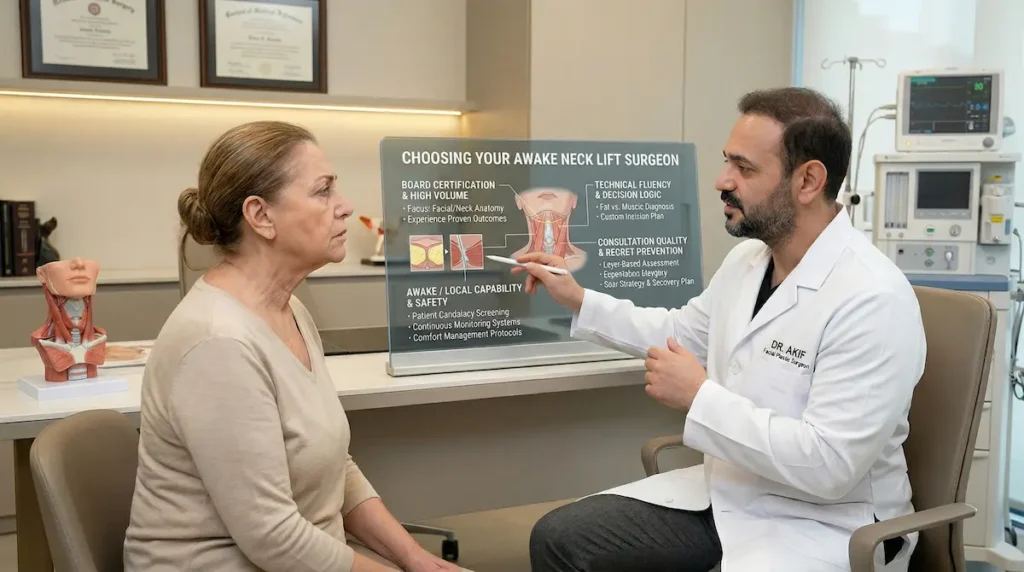
How to Choose the Best Awake Neck Lift Surgeon & Facility
If you search “best neck lift surgeon,” you’re not really searching for a celebrity name—you’re searching for a predictable system and a high-skill operator. Neck outcomes are unforgiving because they’re visible in motion, in profile, and in real-world lighting. Choosing the right provider is how expert patients minimize the risk of “regrets” more than any single product, machine, or aftercare hack.
Board Certification, Specialization, and Why It Matters
Look for a surgeon whose credentials and focus match the anatomy you’re correcting. In neck rejuvenation, the best signals are not vague “cosmetic experience,” but:
- Board certification in a relevant specialty and a practice focus that includes facial/neck surgery.
- High-volume experience in neck and lower-face rejuvenation (not an occasional add-on procedure).
- Technique fluency: the ability to explain why your case needs (or does not need) platysmaplasty, and how incision strategy is chosen to protect scar quality.
Also ask for “decision logic,” not just a recommendation. A strong surgeon can explain, in plain language, which layer is driving your concern and how the plan addresses it.
Awake / Local Anesthesia Capability: Questions to Ask
If “awake” is a core requirement for you, treat it as a competency—not a marketing label. In consultation, ask:
- How do you determine candidacy for local anesthesia ± twilight sedation?
- How do you manage comfort so patients do not experience sharp pain?
- What continuous monitoring is used during the procedure?
- How do you structure the plan to keep the procedure efficient, controlled, and predictable?
Awake surgery can be an excellent pathway for the right patient, but it should be delivered by a team that treats it as a system with strict screening, monitoring, and consistency.
Consultation Quality, Ethics, and “Regret Prevention”
The consultation is where poor outcomes begin—or are prevented. A high-quality consult should include:
- Layer-based diagnosis: explicit assessment of fat vs. platysma vs. skin
- Expectation mapping: what will change, what won’t, and what “natural” means in your case
- Scar strategy: incision placement rationale + how scars mature over 3–12 months
- Recovery structure: your day-by-day plan for the first two weeks and how concerns are handled after you return home
If you feel rushed, if the surgeon can’t explain their rationale, or if your “fear questions” are brushed aside, that’s a signal to keep looking. Expert patients choose providers who are comfortable being transparent.
The Medical Journey for International Patients (Istanbul Logistics)
For many US patients, the procedure decision is only half the equation—the other half is the logistics. Concerns like “Will I be alone?” “What happens if I have a question at 2 a.m.?” and “Who coordinates everything?” are legitimate. A high-quality medical travel model should feel less like improvisation and more like a clinical pathway: clear steps, clear inclusions, and clear continuity of care after you fly home.
Step 1–2: Virtual Consultation → A Surgeon-Reviewed Plan + Transparent Quote
The journey typically begins with a no-obligation virtual consultation where you share photos, discuss goals, and receive a personalized plan with an all-inclusive price quote. Once you decide to proceed, a dedicated Patient Host coordinates the logistics—securing your date, arranging a 5-star hotel from partner options, and scheduling VIP transfers, leaving only your flight booking as your responsibility.
For the expert patient, this phase should also include “layer clarity”: what will be corrected (fat vs. platysma vs. skin), whether chin lipo is an add-on or a core component, and which anesthesia pathway (awake/local ± twilight vs. general) is appropriate for your candidacy.
Step 3–5: VIP Airport Welcome → In-Person Confirmation → Post-Op Support in Istanbul
On arrival, the VIP pathway is designed to reduce uncertainty: you are met at the airport by a private driver and transferred to your hotel in a private vehicle. On procedure day, your host coordinates transfers to the clinic for a final in-person consultation with your surgeon to confirm and refine the plan, followed by pre-operative tests and the procedure in an accredited facility.
Immediately after surgery, you are monitored by the medical team, and your Patient Host remains available 24/7 via WhatsApp to handle questions and needs during the first phase of recovery. Before departure, a final in-person check-up is completed to ensure recovery is on track and you are cleared to fly home.
This “logistics remove anxiety” theme is echoed in US patient narratives, where an all-inclusive model is described as eliminating stress because “transportation, the hotel, the surgery, the nurses, the doctors, the medications—everything is included.”
Step 6: Long-Term Follow-Up Back in the USA (1, 3, 6, 12 Months)
One of the biggest fears in medical travel is abandonment after returning home. A structured model should explicitly address this with scheduled follow-ups and real access to the team. In AKM’s published journey framework, long-term virtual follow-up appointments are scheduled at 1, 3, 6, and 12 months post-procedure to monitor healing and long-term satisfaction.
This matters because real patient accounts describe ongoing remote responsiveness as the difference between anxiety and confidence—being able to contact the team repeatedly and still receive answers after returning home.
What’s Included: A Clarity Checklist (So You Can Compare Apples to Apples)
All-inclusive pricing only helps if it’s explicit. In AKM’s package outline, core inclusions include your complete surgical procedure, anesthesia and operating room fees, all pre-operative tests, 5-star hotel accommodation, VIP airport/clinic transfers, a 24/7 dedicated Patient Host, post-operative medications and garments, the first post-op meal, and long-term virtual follow-up care.
For the expert patient, this list is also your comparison tool: when a quote looks “lower” or “higher,” the real question is what is bundled versus itemized—and whether follow-up continuity is a true system or a vague promise.
Awake Neck Lift Surgery Frequently Asked Questions (FAQ):
These are the most common “expert patient” questions around awake neck lift and chin lipo—answered in a practical, no-fluff format. Keep in mind: the most accurate answers come from a surgeon-led exam, because neck concerns can be driven by different anatomical layers (fat vs. platysma vs. skin).
Is an awake neck lift safer than general anesthesia?
“Safer” depends on your medical profile and the exact scope of your procedure. The awake pathway (local anesthesia with optional twilight sedation) is often chosen by patients who want to avoid full general anesthesia and its common side effects, and who feel more comfortable breathing on their own. However, general anesthesia remains appropriate and safe for many patients when delivered in a controlled, medically supervised setting. The best question to ask is: “Which pathway is safest and most predictable for my plan and my health profile?”
What’s the difference between an awake neck lift and a neck lift under local anesthesia?
They’re usually describing the same concept: a neck lift performed using local anesthesia, sometimes paired with light sedation for comfort. “Awake” does not mean you feel everything; it means you avoid full general anesthesia while still being kept comfortable, closely monitored, and pain-controlled.
How long is neck lift recovery (day by day)?
Most patients experience the most swelling and tightness in the first 72 hours, then a noticeable improvement across week 1. By week 2, many patients look presentable in public, though swelling can persist subtly for weeks. Final contour refinement continues for months, and scars typically mature over 6–12 months. If chin lipo is included, under-chin swelling can temporarily make the area look fuller before it looks better.
Where are neck lift incisions, and will scars be visible?
Incision strategy is customized to your anatomy and the technique used. Many neck lift plans use discreet around-ear incisions, and in cases requiring midline platysma work, a small under-chin access point may also be used. Early scars can appear pink/red, then soften and fade with time. Long-term visibility depends on incision placement, closure technique, tension management, and your skin biology.
Can a neck lift fix jowls?
It can improve the jawline in many patients—especially when jowl appearance is partly driven by neck laxity and loss of definition beneath the jaw. However, significant jowling can originate from lower-face descent that may require a facelift approach (or a combined plan) for the most meaningful correction. A consultation should clarify whether your “jowl” is primarily facial descent, neck laxity, submental fat, or a combination.
What’s the difference between a neck lift and a facelift?
A neck lift focuses on the neck and under-jaw area (skin laxity, platysma banding, neck contour). A facelift focuses on repositioning tissues of the mid-to-lower face (including jowls) and is often paired with neck rejuvenation for a unified result. If your main complaint is jowling and lower-face descent, a facelift approach may be more appropriate than a neck-only procedure.
Is chin lipo worth adding to an awake neck lift?
It’s worth adding when submental fat is a major contributor to your “double chin” or blunted neck angle. In those cases, a combined approach can be more natural than relying on skin tightening alone, because the lift restores structure and the lipo refines contour. If your issue is primarily skin laxity or platysma banding, chin lipo alone may not give a satisfying result.
How long does chin lipo swelling last—and what about fibrosis?
Swelling is common in the first weeks and can fluctuate throughout the day. Most visible swelling improves substantially by weeks 2–6, but subtle firmness can persist longer as tissues remodel. “Fibrosis” describes internal scar-like firmness that can happen as part of healing; it often softens over time. The most important factor is structured follow-up, so your surgeon can distinguish normal remodeling from an issue that needs intervention.
What are the warning signs of a botched neck lift?
“Botched” can mean a true complication (like a hematoma or infection) or an aesthetic mismatch (wrong procedure for the anatomy). Urgent red flags include rapidly expanding swelling, severe increasing pain, sudden asymmetry, fever, worsening redness/warmth, or drainage—especially if symptoms worsen after initially improving. A reputable provider will give clear escalation instructions and accessible follow-up.
How much does an awake neck lift cost—and why do prices vary so much?
Pricing varies based on the scope of surgery (mini vs full, need for platysmaplasty), whether chin lipo is added, anesthesia pathway, facility standards, and the depth of follow-up and recovery support. When comparing quotes, compare the same surgical scope and the same inclusions (anesthesia/facility fees, garments/meds, follow-ups, and how concerns are handled once you’re home). If you’re comparing “near me” options versus traveling (including Turkey/Istanbul), focus on value and safety systems—not just the headline number.