



A tummy tuck—known medically as an abdominoplasty—is a body contouring surgery designed to restore a flatter, firmer abdominal profile by addressing skin laxity and, when appropriate, the underlying abdominal wall. The goal is not to create an “operated-on” torso, but a natural-looking contour that matches your frame, lifestyle, and baseline anatomy. For many patients—especially after pregnancy or major weight loss—an abdominoplasty can correct changes that diet and exercise alone can’t reliably reverse, such as persistent lower-abdominal skin redundancy or a weakened abdominal wall.
Because “tummy tuck” is often used as a catch-all term, the most important starting point is precision: what exactly needs to be corrected—skin, fat distribution, abdominal wall laxity, scar position, or all of the above? Your best surgical plan is the one that treats the right problem with the least unnecessary trade-offs.
Table of Contents
What Is a Tummy Tuck?
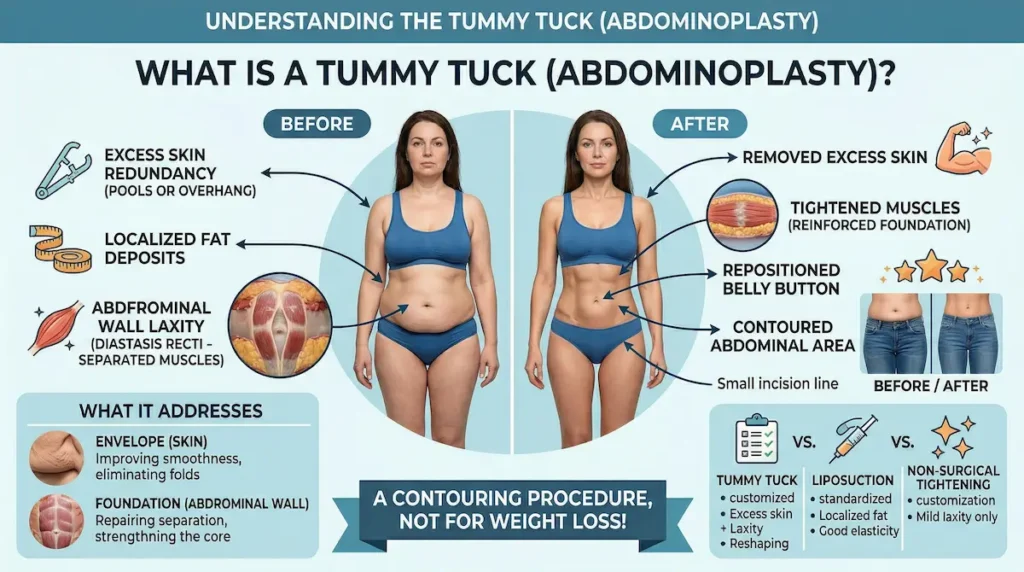
A tummy tuck is a tailored operation that removes excess abdominal skin, reshapes the contour of the abdominal area, and may reinforce the abdominal wall when there is clinically meaningful laxity. It is not a weight-loss procedure. Instead, it is a contouring procedure that aims to improve proportion, smoothness, and the way clothing fits by correcting laxity and redundancy that remain after weight changes or pregnancy.
Tummy Tuck Medical Term: “Abdominoplasty”
The medical term abdominoplasty describes a family of techniques that share one core objective: reshaping the abdomen by treating skin excess and contour irregularities. In common conversation, “tummy tuck” may imply a single standard operation, but in practice abdominoplasty is individualized. The incision pattern, the amount of skin removal, whether the belly button is repositioned, and whether the abdominal wall is tightened all depend on your anatomy and goals.
What Tissues Does It Actually Address?
A tummy tuck can address several layers—each of which may contribute differently to the “round,” “loose,” or “overhanging” appearance some patients describe:
- Skin redundancy: loose skin that pools in the lower abdomen or folds over the waistband.
- Subcutaneous fat distribution: localized fullness that may be improved with targeted liposuction when appropriate.
- Abdominal wall laxity: separation or weakening of the midline support (often discussed as diastasis), which can make the abdomen protrude even at a stable weight.
- Scar position and tension lines: planning that impacts how a scar matures and where it can be hidden.
A practical way to think about it: a tummy tuck improves the “envelope” (skin) and may reinforce the “foundation” (abdominal wall) when needed. This is why two patients of the same weight can have completely different surgical plans—because their envelope and foundation are different.
Tummy Tuck vs Liposuction vs Non-Surgical Tightening
A common research path is comparing tummy tuck to liposuction or non-surgical tightening. Each option treats a different primary problem:
- Liposuction is best for reducing localized fat when the skin has good elasticity and can retract.
- Non-surgical tightening may offer mild improvement for early laxity, but it cannot remove significant excess skin or correct meaningful abdominal wall laxity.
- Tummy tuck (abdominoplasty) is best when the issue is skin redundancy, lower-abdominal overhang, or abdominal wall laxity that creates persistent protrusion.
Still Unsure? Take the 60-Second Self-Check
Is your main issue loose skin, stubborn fat, or muscle separation? Don’t guess. Use our interactive decision tree in the Tummy Tuck vs. Liposuction Guide to find the exact procedure your anatomy needs.
Ideal Candidates: Who Benefits Most?
The strongest candidates aren’t defined by a single number on the scale—they’re defined by anatomy, stability, and realistic expectations. In general, the procedure is most rewarding when a patient has maintained a stable weight, has a clear contour concern (skin laxity, lower-abdominal redundancy, abdominal wall laxity), and is willing to follow a structured recovery plan. The best outcomes are typically the result of matching the right technique to the right problem.
Post-Pregnancy and Post-Weight-Loss Candidates
Two of the most common candidate profiles are:
- Post-pregnancy patients who have persistent lower-abdominal skin laxity and/or abdominal wall weakness that does not improve with exercise.
- Post-weight-loss patients who have excess skin and tissue laxity that creates folds, irritation, and difficulty finding clothing that fits comfortably.
In both groups, the procedure can restore a smoother abdominal contour and improve how the waistline transitions into the hips. The plan should always prioritize proportion and scar placement strategy—not simply “maximum tightening.”
Weight Stability, BMI Considerations, and Smoking
Most surgeons prioritize weight stability over a specific “perfect” number. Rapid fluctuations can compromise results. Smoking (including nicotine use) is particularly important because it can impair microcirculation and wound healing—factors that directly influence scar quality and complication risk. If you are considering surgery, a candid discussion about nicotine cessation and overall health optimization is a core part of responsible planning.
Who Should Delay or Avoid Surgery?
There are situations where timing matters. You may be advised to delay a tummy tuck if:
- You plan future pregnancies (which can re-stretch the tissues).
- Your weight is actively changing or you are early in a major weight-loss journey.
- You have uncontrolled medical conditions that increase surgical risk.
- You are unable to commit to post-operative activity restrictions and follow-up.
A high-quality surgical plan isn’t just about what can be done—it’s about what can be done safely and with a predictable recovery path.
Types of Tummy Tuck (Abdominoplasty Techniques)
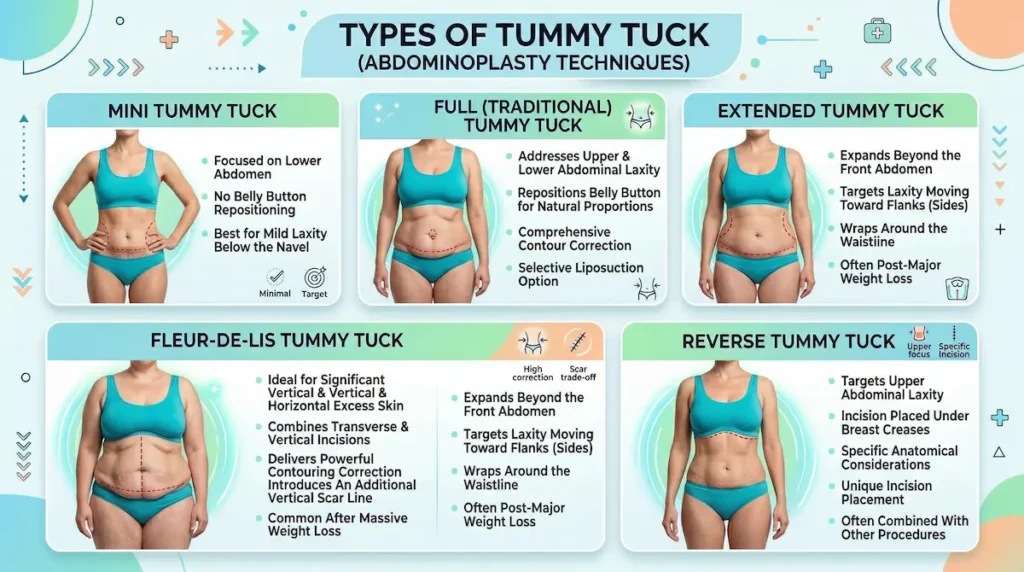
“Tummy tuck” is not one single operation. The technique is selected based on where your laxity is located (upper abdomen, lower abdomen, sides), how much skin needs to be removed, and whether the abdominal wall needs reinforcement. Understanding these categories helps you compare options more intelligently than simply asking for a “full” or “mini” tummy tuck.
Mini Tummy Tuck
A mini tummy tuck is typically focused on the area below the belly button. It may be appropriate when the main concern is lower-abdominal skin laxity without significant upper-abdominal laxity. In many cases, the belly button does not need to be repositioned. The trade-off is scope: if your laxity extends above the belly button, a mini approach may not fully address it.
Full (Traditional) Tummy Tuck
A full tummy tuck addresses both lower and upper abdominal skin laxity and often involves repositioning the belly button to maintain natural proportions after skin redraping. This approach is considered when laxity is more global and when a comprehensive contour change is desired. The plan may include selective liposuction to improve waistline definition if it can be done safely in your specific anatomy.
Extended Tummy Tuck
An extended tummy tuck expands the treatment zone beyond the front abdomen to address laxity that extends toward the flanks (sides). This may be relevant after major weight loss or when there is meaningful tissue redundancy that “wraps” around the waistline. The incision generally extends further laterally to improve the contour transition.
Fleur-de-Lis Tummy Tuck
A fleur-de-lis tummy tuck is considered when there is substantial excess in both the vertical and horizontal dimensions—often seen after significant weight loss. In addition to the lower transverse incision, this technique includes a vertical component that allows removal of excess tissue across the midline. The key consideration is scar trade-off: it can deliver powerful contour correction, but it introduces an additional visible scar line.
Reverse Tummy Tuck
A reverse tummy tuck targets upper-abdominal laxity, with incision placement typically oriented beneath the breast crease region. It may be considered when upper abdominal skin redundancy is the dominant issue. Like all variations, candidacy depends on anatomy and overall contour goals, and it is often discussed in the context of combination planning rather than as a default approach.
Mini vs. Full: Which One Do You Actually Need?
The right choice depends on where your loose skin sits and whether your abdominal muscles are separated (diastasis recti). Don’t guess—use our surgeon’s checklist and deep-dive comparison in our Mini vs Full Tummy Tuck Guide to find your exact match.
Key Surgical Decisions That Change Results
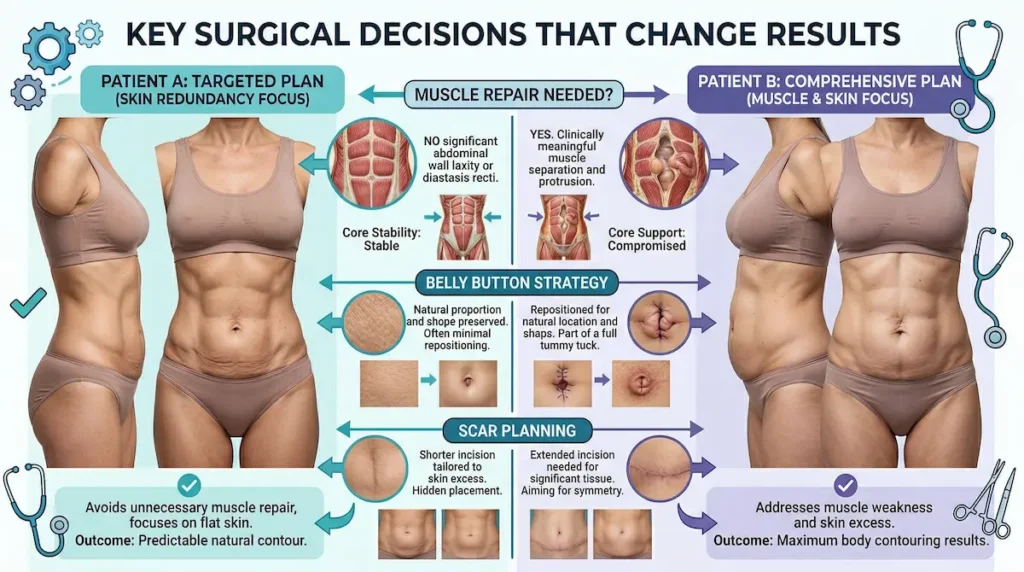
Two patients can both “want a tummy tuck,” yet require very different surgical plans. The difference usually comes down to a few high-impact decisions: whether muscle repair is needed, how the belly button is handled, how the scar is positioned, and whether adjunct contouring (like liposuction) is appropriate. Understanding these variables will help you evaluate consults more critically—and avoid choosing a plan that is either underpowered (leaving you disappointed) or overly aggressive (increasing trade-offs without improving the final look).
Tummy Tuck Without Muscle Repair: When Is It Possible?
Many patients search for “tummy tuck without muscle repair” because they want a faster recovery or worry about increased discomfort. The key point is that muscle repair is not a routine checkbox—it is a targeted step used when there is clinically meaningful abdominal wall laxity contributing to protrusion, poor waist definition, or a “rounded” abdominal profile at a stable weight.
A tummy tuck without muscle repair may be reasonable when:
- The primary issue is skin redundancy (loose skin) rather than abdominal wall laxity.
- The abdominal profile is relatively flat, but there is a lower abdominal overhang or creasing.
- Core function is stable and there is no significant midline separation driving contour.
Muscle repair may be discussed when:
- The abdomen protrudes even at a stable weight and after fitness efforts.
- There is clear evidence of midline laxity affecting contour and waistline definition.
- There is a functional component (for example, reduced core support) that aligns with the physical findings.
A high-quality consult should not “sell” muscle repair—your plan should explain why it is or isn’t necessary for your anatomy. If your main complaint is loose skin, the most important step is often the skin envelope strategy, not tightening everything by default.
Belly Button Strategy: Preserving Natural Proportion
One of the most visible signs of an unnatural abdominoplasty can be a belly button that looks misplaced, overly round, or “pulled.” In a full tummy tuck, the belly button is typically preserved as its own structure while the surrounding skin is redraped. The surgeon’s job is to maintain a natural position, shape, and shadowing so it looks like you—just more refreshed.
This usually includes decisions such as:
- Whether the belly button needs repositioning: common in full tummy tucks, less common in mini tummy tucks.
- How the opening is shaped: subtle contouring decisions influence whether it looks natural or “surgical.”
- Tension management: minimizing excessive pull helps reduce widening scars and distortion.
Ask to see examples of belly button outcomes in real post-op photos. This is one of the easiest ways to evaluate a surgeon’s aesthetic judgment beyond “flatness” alone.
Scar Planning: Bikini-Line Placement and Symmetry
Every tummy tuck involves a scar. The goal is to place it strategically, close it meticulously, and support healing so it matures as favorably as your biology allows. Scar planning isn’t only about “how low” it can go—it’s about balancing access, tissue removal, symmetry, and long-term scar behavior.
Key variables include:
- Incision length: generally increases as more lateral tissue is addressed (for example, extended tummy tucks).
- Contour goals: a plan that tightens aggressively without respecting tissue behavior can increase tension and worsen scarring.
- Body mechanics: posture, hip shape, and waist curvature can influence how scars sit in underwear or swimwear.
A well-planned scar should aim to sit within typical underwear coverage while prioritizing safe closure and stable healing. A “perfectly hidden scar” promise is less valuable than a realistic plan that produces a predictable, natural contour and a scar that matures well over time.
Anesthesia Options: General vs “Awake/Twilight” Concepts
Anesthesia is not a one-size-fits-all decision. For many Expert Patients, this is where confidence is won or lost—because anesthesia influences comfort, safety planning, nausea risk, and early recovery. The most responsible approach is individualized: the safest and most appropriate option depends on the extent of surgery, your medical history, and the surgical team’s protocols.
General Anesthesia: What to Expect
General anesthesia is commonly used for tummy tuck procedures because it allows full comfort and stillness during longer, more involved surgery. A structured general anesthesia pathway typically includes:
- Pre-op evaluation: review of medical history, medications, allergies, and anesthesia risk factors.
- Intraoperative monitoring: continuous monitoring of vital functions throughout the procedure.
- Post-op recovery: a monitored wake-up phase focused on comfort, nausea control, and safe discharge planning.
If you have concerns about nausea, anxiety, or prior anesthesia experiences, these should be addressed proactively—there are well-established strategies to reduce nausea and improve comfort in the immediate recovery period.
What Patients Mean by “Awake Tummy Tuck”
The term “awake tummy tuck” is widely searched, but it can mean different things in different settings. In practical terms, “awake” usually refers to a spectrum ranging from local anesthesia with sedation to twilight-style sedation where you are deeply relaxed and comfortable but not fully under general anesthesia. The key idea for many patients is reducing anxiety about going fully “asleep,” while still ensuring the procedure is tolerable and safe.
However, not every tummy tuck is appropriate for a non-general approach. The feasibility depends on:
- Procedure extent: mini vs full vs extended vs fleur-de-lis variations can differ significantly in complexity and time.
- Your comfort profile: anxiety level, pain sensitivity, and ability to remain relaxed for the duration.
- Medical suitability: health history, airway considerations, and safety assessment.
A trustworthy consult should define exactly what the clinic means by “awake,” explain why it is or isn’t appropriate for your case, and never imply that “awake” automatically equals safer for every patient. Safety comes from appropriate selection, experienced teams, and disciplined protocols.
AKM Clinic Approach: Comfort-Focused Options and Safety Protocols
AKM Clinic’s clinical philosophy emphasizes patient-centered comfort and safety—especially for those who are anxious about anesthesia. Depending on candidacy and surgical plan, the team may discuss options that include twilight-style sedation and comfort-forward protocols. The goal is to reduce fear while maintaining strict safety standards, with suitability determined during medical evaluation rather than marketing labels.
In addition, AKM Clinic integrates a structured “Rapid Recovery & Safety Protocol” that includes supportive technologies used in the recovery phase—such as Hyperbaric Oxygen Therapy (HBOT) and Low-Level Laser Therapy (LLLT)—to promote tissue recovery, reduce swelling, and optimize healing conditions when medically appropriate.
Step-by-Step: What Happens During Tummy Tuck Surgery?
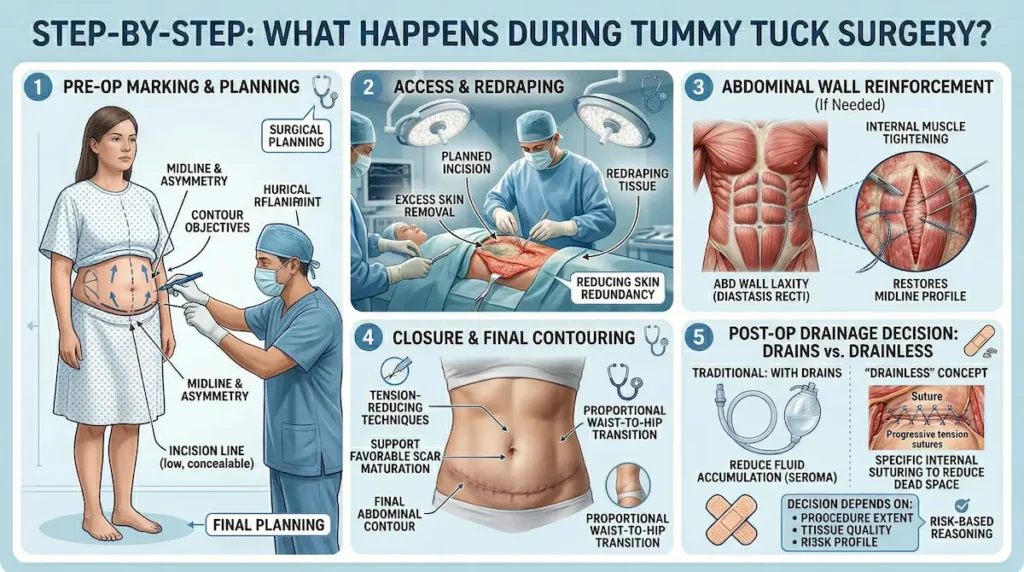
A tummy tuck is best understood as a sequence of controlled steps: assessment and marking, access through a planned incision, reshaping of the abdominal “envelope” (skin and soft tissue), selective reinforcement of the abdominal wall when appropriate, then closure with a strategy designed to reduce tension and support favorable scar maturation. While each surgeon has preferences, the core workflow is consistent—and understanding it helps you ask better questions during consultation.
Pre-Op Marking, Positioning, and Surgical Planning
The most important “technical” work often happens before the first incision. With you standing, the surgeon typically marks the intended incision line (aiming for a low, underwear-concealable position when feasible), the midline, and any asymmetries in skin redundancy. This planning determines how the tissues will be redraped and how the final scar will sit relative to your natural anatomy.
- Incision design: tailored to the amount and distribution of excess skin (mini vs full vs extended vs fleur-de-lis).
- Contour objectives: not just “flat,” but proportional waist-to-hip transitions and smoothness across the lower abdomen.
- Safety mapping: attention to tissue perfusion and closure tension to reduce wound healing risk.
Tissue Redraping, Skin Removal, and (When Needed) Abdominal Wall Reinforcement
After incision and careful elevation of the abdominal skin/soft tissue layer, the surgeon reshapes the abdominal contour by removing redundant skin and re-draping the remaining tissue in a controlled manner. If abdominal wall laxity is a key contributor to protrusion, a reinforcement step may be performed to restore a firmer midline profile. The exact technique and extent vary based on your anatomy and the chosen abdominoplasty type.
A high-quality outcome depends on balance: removing enough tissue to create meaningful improvement without creating excessive tension that can widen scars or distort the belly button region. This is also where surgical judgment matters most—because “tighter” is not always “better” if it compromises natural proportion or healing.
Closure Strategy: Drains vs “Drainless” Concepts
Patients frequently research “drainless tummy tuck” because drains can feel intimidating. Drains are used to reduce fluid accumulation (seroma) by allowing fluid to exit during the early healing phase. A “drainless” approach generally refers to techniques that aim to reduce dead space and fluid accumulation—often through specific internal suturing strategies—so drains may be reduced or avoided in select cases.
Interested in a Drain-Free Recovery? Using advanced internal suturing (quilting) techniques, our surgeons can often perform abdominoplasty without external tubes, reducing early fluid buildup. Discover how it works, its specific benefits, and if your anatomy qualifies in our dedicated Drainless (Tube) Tummy Tuck Guide.
Recovery Timeline and Stages of Swelling (What’s Normal vs Not)
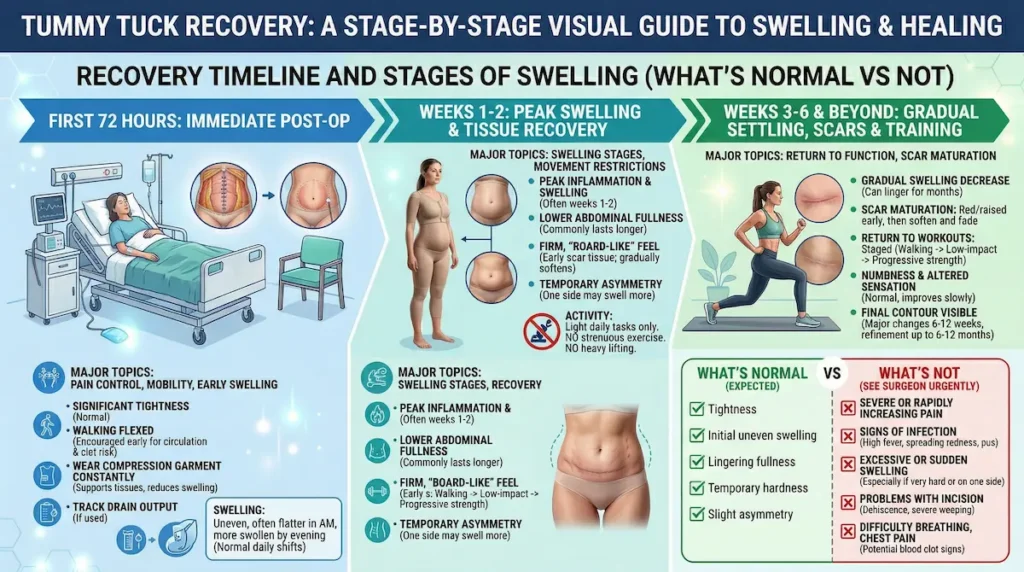
Recovery after a tummy tuck is a process, not a moment—and most “surprises” patients experience are actually predictable stages of swelling, tightness, and gradual tissue settling. The key is to know what tends to happen when, what you can do to support healing, and which signs should trigger an urgent call. While individual timelines vary, a structured, week-by-week roadmap is one of the most valuable tools for reducing anxiety and improving outcomes.
The First 72 Hours: Pain Control, Mobility, and Early Swelling
The first few days are typically the most intense due to tissue inflammation, tightness, and the body’s initial healing response. Most patients feel significant tightness through the lower abdomen and may walk slightly flexed at the hips at first to reduce tension on the incision line.
- Pain and tightness: expected, usually managed with a structured medication plan.
- Walking early: gentle, frequent walking is often encouraged to support circulation and reduce clot risk.
- Compression garment: commonly used to support tissues, reduce swelling, and improve comfort.
- Drain care (if used): tracking output and keeping sites clean is part of early recovery.
Swelling often looks uneven early on. It can also shift during the day—many patients notice they look “flatter” in the morning and more swollen by evening, especially in the first 2–3 weeks.
Weeks 1–2: The “Swelling Stages” Patients Commonly Notice
When patients search “stages of swelling after tummy tuck,” they’re usually trying to understand why they can look dramatically different from day to day. This is normal. Typical swelling patterns include:
- Early peak swelling: often within the first 1–2 weeks, driven by inflammation and fluid shifts.
- Lower abdominal fullness: commonly lingers longer than upper abdominal swelling.
- Firmness and “board-like” feel: early scar tissue and swelling can feel hard, then gradually soften.
- Temporary asymmetry: one side may swell more, especially if you favor a sleeping position.
During this phase, activity restrictions matter. Pushing too hard too early can prolong swelling and increase complication risk. Most patients can do light daily activities, but strenuous exercise and heavy lifting are typically restricted until cleared by the surgical team.
Weeks 3–6 and Beyond: Settling, Scar Maturation, and Return to Training
From week 3 onward, many patients feel a meaningful improvement in mobility, comfort, and daily function. Swelling typically decreases gradually—but it can persist in subtle forms for months. Scar maturation is also a long-term process: scars may look red or raised early on, then soften and fade over time.
- Return to workouts: often staged—walking first, then low-impact exercise, then progressive strength training as cleared.
- Numbness and altered sensation: common and usually improves gradually, though timelines vary.
- Final contour: many patients see major changes by 6–12 weeks, with continued refinement up to 6–12 months.
If you’re seeking a predictable recovery, a structured plan matters as much as surgical technique. This is where advanced recovery support can play a role—not as a shortcut, but as part of an evidence-informed approach to comfort and healing optimization.
AKM Clinic’s Accelerated Recovery Support (HBOT + LLLT)
AKM Clinic integrates a structured recovery support approach that includes Hyperbaric Oxygen Therapy (HBOT) and Low-Level Laser Therapy (LLLT) as part of a broader “Rapid Recovery & Safety Protocol” when medically appropriate. These modalities are positioned as recovery-support tools—aimed at optimizing the healing environment, supporting tissue recovery, and reducing the recovery burden for suitable patients.
- HBOT: may support recovery by improving oxygen delivery to tissues, which can be beneficial in healing phases where tissue oxygenation and inflammation management matter.
- LLLT: is commonly discussed as a supportive modality for tissue recovery, with goals that can include promoting cellular repair processes and helping with swelling and redness in targeted contexts.
The right way to evaluate any recovery technology is to ask: “What is it intended to improve in my specific case, and how is it integrated into the overall recovery plan?” The answer should be individualized—based on your health profile, your surgical plan, and your surgeon’s post-op pathway.
Tummy Tuck Scar: What They Look Like and How to Optimize Healing
A tummy tuck scar is not a “complication”—it’s the trade-off that makes real skin removal and contour reshaping possible. The right question isn’t “Will I have a scar?” but “Where will it sit, how will it mature, and what can I do to help it heal as well as my biology allows?” A high-quality plan focuses on strategic placement, tension-minimizing closure, and a structured scar-care protocol that starts early and stays consistent for months.
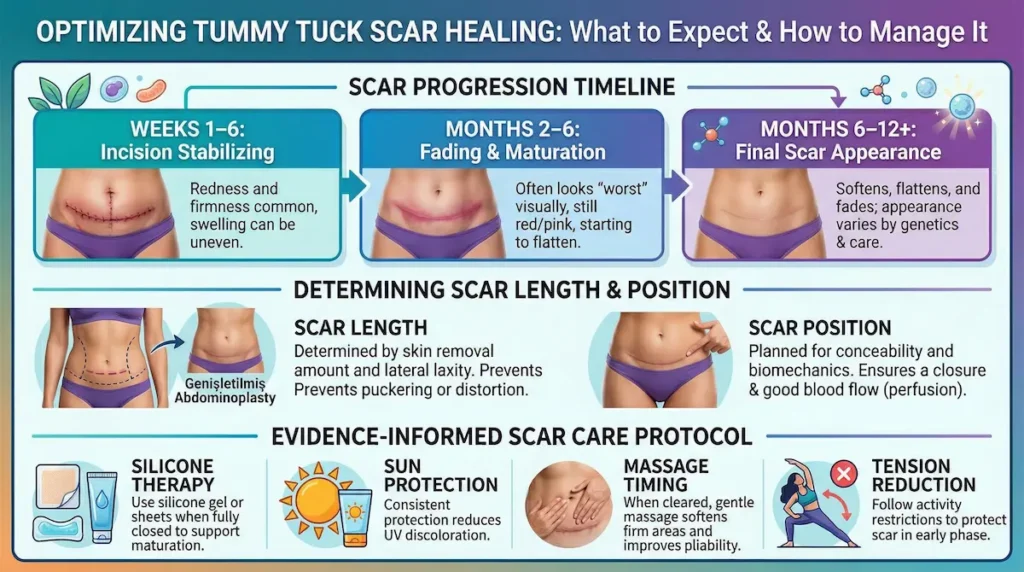
What Does a Tummy Tuck Scar Look Like Over Time?
Most tummy tuck scars go through predictable phases. Early on, they can look more intense than patients expect—then gradually improve.
- Weeks 1–6: the incision is closed and stabilizing; redness and firmness are common, and swelling can make the area look uneven.
- Months 2–6: many scars look their “worst” visually during this window—often red/pink and slightly raised—before they start fading.
- Months 6–12+: scars generally soften, flatten, and fade; the final appearance varies by skin type, genetics, and care.
It’s normal for scars to look uneven early, especially if swelling is asymmetric. The goal is long-term maturation—not perfection at week two.
How Scar Length and Position Are Determined
Scar length is primarily determined by how much skin needs to be removed and how far laxity extends laterally. Techniques that address more tissue across the waist (such as extended abdominoplasty) typically require a longer incision so excess tissue can be redistributed safely without creating puckering or distortion. A scar that is too short for the amount of laxity can force high tension—raising the risk of widened scars, contour irregularities, or compromised healing.
Position is planned to balance concealability and biomechanics. “Lower is better” only up to a point; the safest and most stable scar placement is one that allows a secure closure and consistent perfusion of the tissues being redraped.
Evidence-Informed Scar Care: What Actually Helps
Scar quality is influenced by biology (your tendency toward hypertrophic scarring or keloids), but a structured scar-care routine can meaningfully improve the chance of a smoother scar. Common pillars include:
- Silicone therapy: silicone gel or silicone sheets are widely used to support scar maturation when the incision is fully closed and your surgeon approves.
- Sun protection: UV exposure can darken scars; consistent protection helps reduce discoloration.
- Massage timing: when cleared, gentle massage can help soften firm areas and improve pliability.
- Tension reduction: following activity restrictions protects the scar during the most vulnerable early healing phase.
If you have a history of thick scars, discuss this early. Preventive planning is always easier than revision later.
Risks, Complications, and Safety: A Transparent Guide
An abdominoplasty is a major surgery, and honest risk discussion is part of informed consent—not fear. The “Expert Patient” approach is to understand what can go wrong, how often it tends to happen, what early signs look like, and what protocols reduce risk. The safest outcomes are usually created by a combination of appropriate patient selection, disciplined surgical technique, and structured post-operative monitoring.
Common Complications: Seroma, Hematoma, Infection
When patients search “seroma after tummy tuck,” they’re usually asking a practical question: “Will I have fluid buildup, and what happens if I do?” A seroma is a fluid collection that can occur as the body heals. It may be managed with observation, aspiration in clinic, compression, or (rarely) additional intervention depending on size and symptoms.
Other common risks include:
- Hematoma: a collection of blood that may cause sudden swelling, pain, firmness, or bruising; urgent evaluation is required.
- Infection: may present with increasing redness, warmth, pain, fever, or drainage; early treatment matters.
- Delayed wound healing: more likely with high tension closures, nicotine exposure, or certain medical conditions.
Many risk-reduction strategies revolve around minimizing dead space, managing tension, and ensuring the patient follows early activity restrictions to protect the incision and internal healing.
Blood Clot Risk (DVT/PE): Why It’s Discussed and How It’s Reduced
“Tummy tuck risks of death” is a distressing search term—but it reflects a real due-diligence mindset. The most feared rare events often relate to blood clots (deep vein thrombosis and pulmonary embolism). While these events are uncommon, responsible surgical programs treat prevention as non-negotiable.
Prevention commonly includes:
- Risk stratification: evaluating personal and family history, clotting risks, hormonal medications, and other factors.
- Early mobilization: gentle, frequent walking as soon as safely possible.
- Compression strategies: as advised by your surgical team.
- Medication prophylaxis: when clinically appropriate based on your risk profile.
Your safest path is a plan that treats prevention as a system—not a single step.
Skin Perfusion, Necrosis, Asymmetry, and Revision Risk
More extensive tightening and larger tissue shifts increase the importance of tissue perfusion and tension management. When perfusion is compromised, there can be delayed healing or, rarely, skin necrosis. This is one reason nicotine cessation is taken seriously. Asymmetry and revision need are also real possibilities, especially in complex post-weight-loss anatomy or when expectations aren’t aligned with what is anatomically achievable.
A high-quality surgeon frames results as a probability distribution, not a guarantee—then explains the technical and behavioral steps that move you toward the best end of that distribution.
AKM Clinic Safety Signals: Standards, Facility Quality, and Recovery Discipline
In the provider-selection phase, patients often look for verifiable safety signals: board-level training, hospital standards, structured monitoring, and a disciplined follow-up pathway. AKM Clinic’s safety positioning emphasizes operating within a high-standard hospital environment and integrating a structured recovery protocol. In practice, what matters is that your care pathway is organized: pre-op screening, intraoperative monitoring, clear discharge criteria, and responsive post-op access if symptoms change.
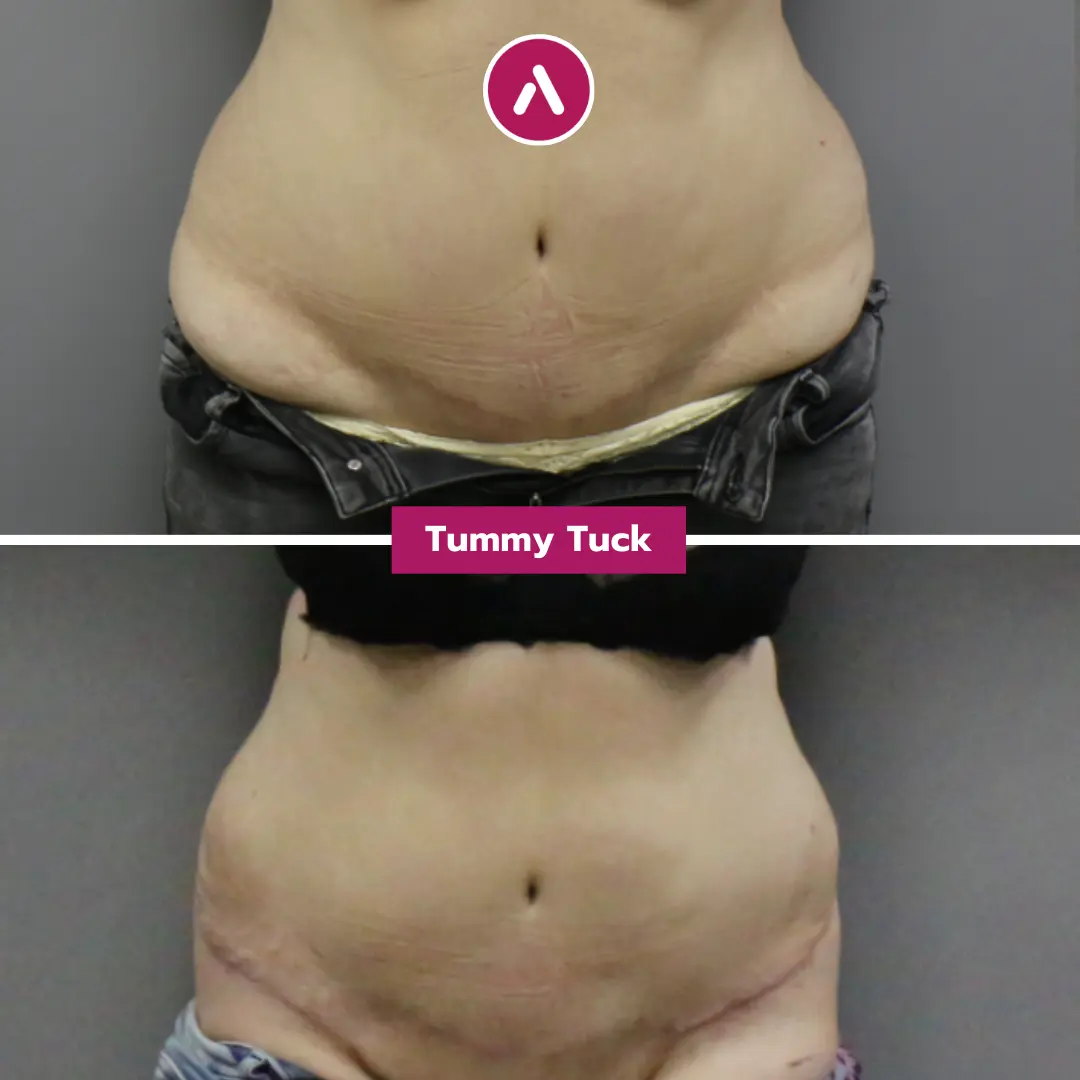
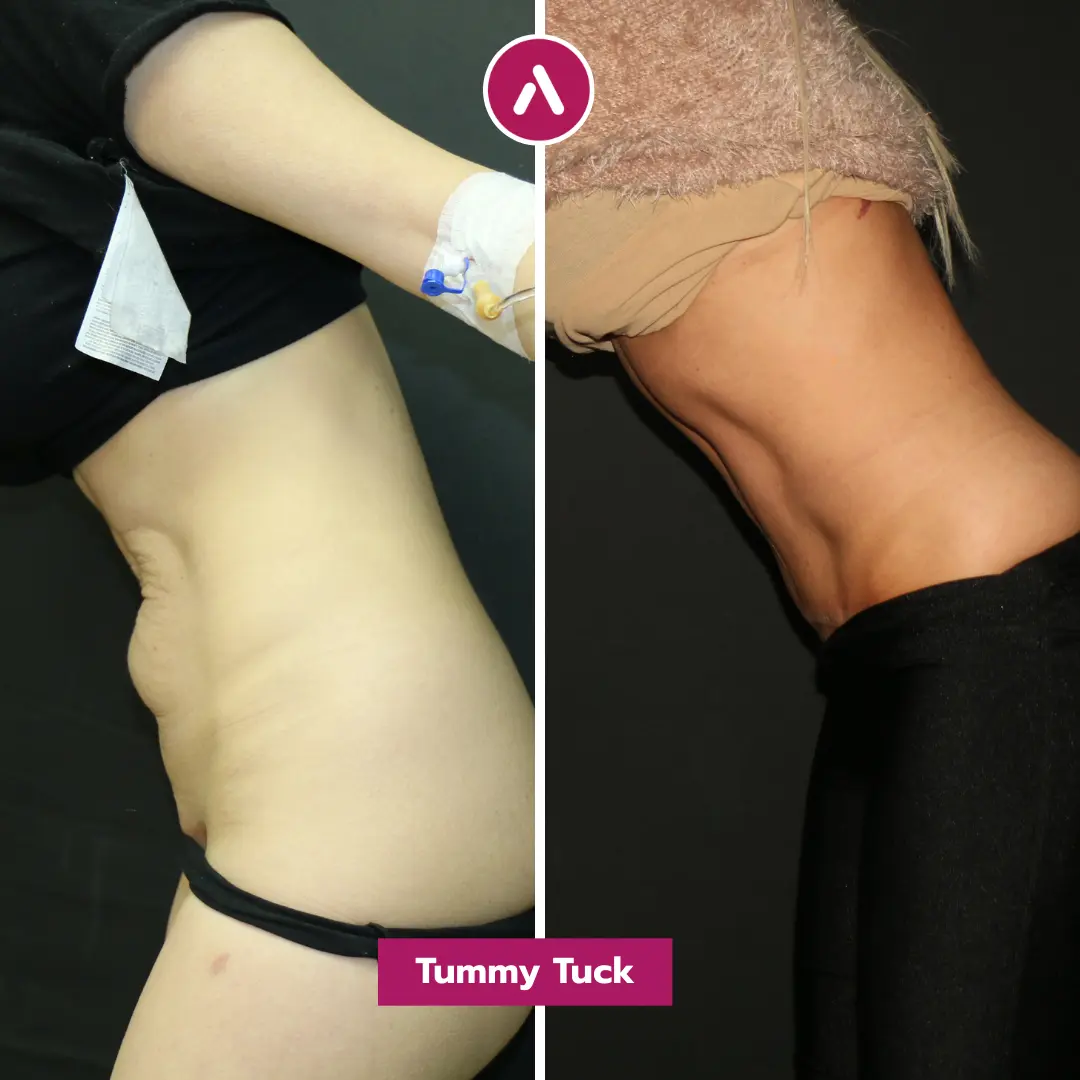
Tummy Tuck Before and After: Results and Expectations
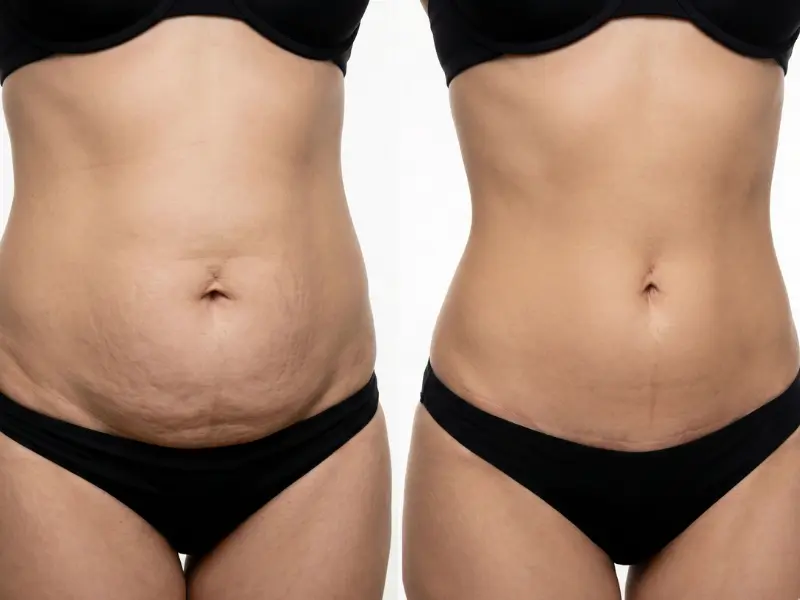
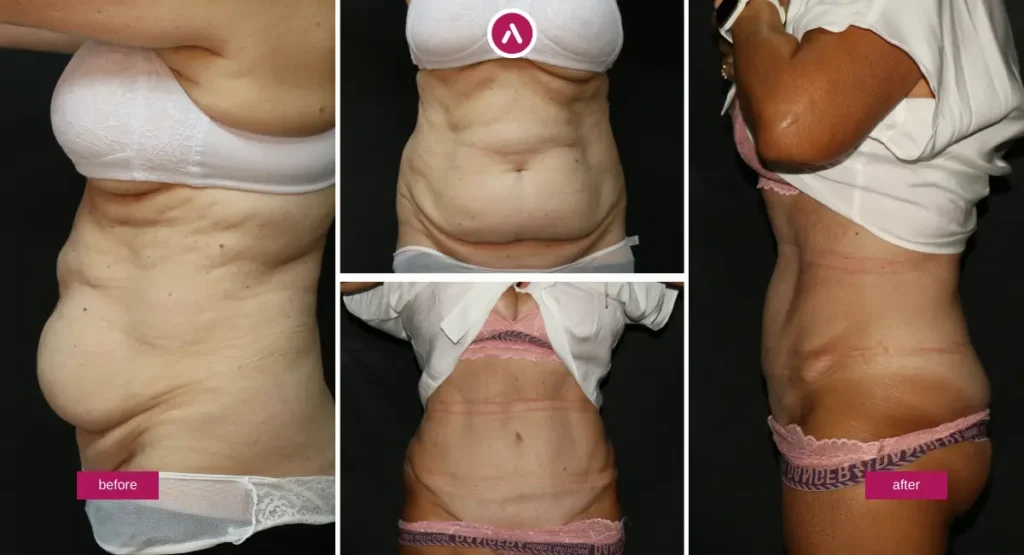
The best tummy tuck outcomes look like they “belong” to the patient—proportional, smooth, and consistent with the natural waist-to-hip transition. A flatter abdomen is often part of the goal, but a natural result is more than flatness: it’s the right tension, the right scar position, the right belly button appearance, and the right overall silhouette. This is where the philosophy of rejuvenation—rather than alteration—matters.
A refined result is not defined by maximum tightness. It is defined by balance—natural proportion, stable healing, and a contour that looks like you, just restored.
What Changes Can You Realistically Expect?
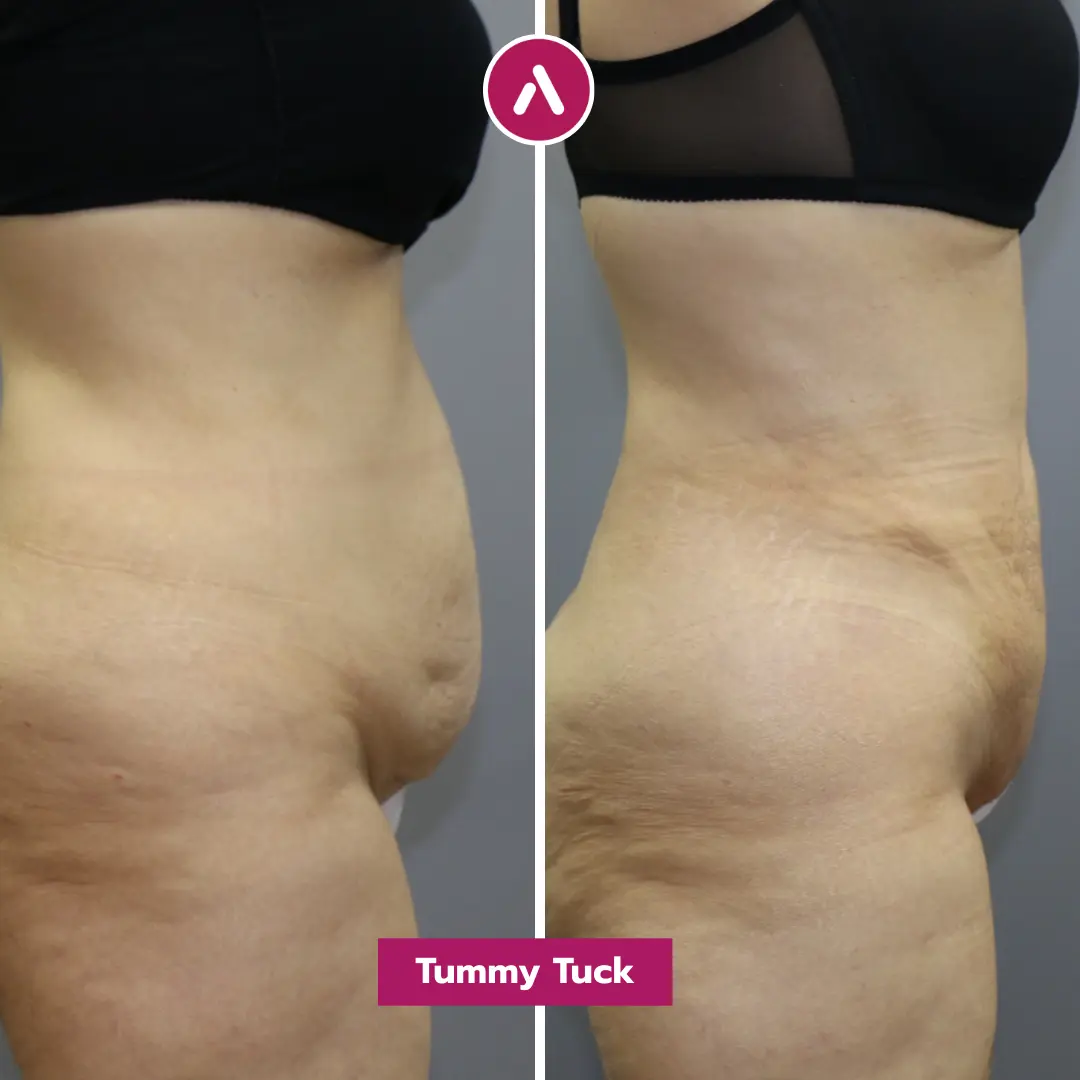
Most patients can expect improvement in:
- Lower abdominal overhang and creasing: especially when skin redundancy is the dominant issue.
- Abdominal smoothness: improved transition across the lower abdomen and toward the waist.
- Clothing fit: reduction in bulging and folding that makes certain clothing uncomfortable.
If abdominal wall reinforcement is performed when indicated, some patients also report a firmer “core” feel, though the procedure is primarily aesthetic contouring rather than a functional rehab program.
Stretch Marks, Upper vs Lower Abdomen, and “What Won’t Change”
A tummy tuck can remove skin—and any stretch marks located on that removed skin may also be removed. This is most often the case for stretch marks below the belly button. Stretch marks above the belly button may be improved by redraping but are not always fully removed. Likewise, a tummy tuck does not prevent future weight changes, pregnancy-related stretching, or the natural aging process.
Why “Tightest Possible” Can Backfire
Chasing the tightest possible pull can increase closure tension and compromise scar quality or the natural appearance of the belly button. The more sustainable objective is a contour that looks natural, heals predictably, and remains stable over time. This is why technique selection, scar planning, and recovery discipline matter as much as “how much skin is removed.”
Combining Procedures: Mommy Makeover and Body Contouring Strategy
Many patients considering a tummy tuck are not looking for a single change—they’re looking for a cohesive body contour plan that restores proportion after pregnancy, weight loss, or natural aging. Combination surgery can be efficient and aesthetically powerful, but it must be planned with a safety-first mindset: the right combinations for the right candidates, with realistic limits on operative time, tissue stress, and recovery demands.
Tummy Tuck + Liposuction: When the Combination Makes Sense
A tummy tuck primarily addresses skin excess and, when needed, abdominal wall laxity. Liposuction primarily addresses fat distribution. In many anatomies, the best result comes from using each tool for what it does best—rather than expecting one procedure to solve everything.
- Best-case scenario: loose lower-abdominal skin (treated with abdominoplasty) plus localized flank/waist fullness (treated with selective liposuction) to improve the waist-to-hip transition.
- Key safety principle: contouring should not compromise tissue perfusion. A responsible plan balances improvement with predictable healing.
During consultation, ask specifically where liposuction would be used and why—and whether it changes your seroma risk, drain strategy, or activity restrictions.
Mommy Makeover: Coordinating Abdominal and Breast Goals
“Mommy makeover” is a planning framework, not a single standardized surgery. It often includes a tummy tuck combined with breast surgery (breast augmentation, breast lift, breast reduction) and sometimes liposuction. The advantage is synergy: one recovery window, one coordinated aesthetic plan, and a more harmonious overall result.
The trade-off is that combination surgery can be more demanding physiologically. A high-quality plan should outline:
- Which procedures are truly needed vs. optional enhancements.
- Operative time boundaries tailored to your health profile and risk factors.
- Recovery logistics (help at home, travel timing, mobility limitations).
Single-Stage vs Staged Surgery: How to Decide
Some patients do best with a single-stage approach; others benefit from staging. Staging may be considered if the planned combination is extensive, if there are meaningful medical risk factors, or if tissue quality suggests a safer outcome with sequential healing.
- Single-stage may suit you if: you are medically optimized, a moderate combination is planned, and you can follow a structured recovery path.
- Staging may suit you if: the plan is extensive, you are post-massive weight loss with significant laxity, or your surgeon recommends reducing physiologic stress.
The most reliable strategy is the one that keeps the result stable long-term—without forcing the body into a recovery burden it can’t comfortably support.
Choosing the Best Tummy Tuck Surgeon and Facility
When people search “best tummy tuck surgeon,” they’re usually trying to reduce uncertainty: How do I know I’m choosing someone who can deliver a natural result and manage risk responsibly? The most useful approach is a credential-and-process checklist. Your decision should be based on verified training, consistent results, disciplined safety systems, and a consultation process that demonstrates clinical honesty—not vague promises.
Credentials That Matter (and How to Verify Them)
Look for a surgeon whose training and professional standing reflect a genuine commitment to surgical standards. In a high-trust evaluation, you want:
- Board-level credentials and a track record of focused experience in body contouring.
- Transparent case discussion (who is an appropriate candidate, what technique is recommended, what trade-offs exist).
- Revision competence (a surgeon who can explain how complications are handled—not just how they’re prevented).
A confident surgeon can explain the “why” behind each decision—mini vs full vs extended vs fleur-de-lis—using your anatomy as the reference point.
Facility Standards and Safety Systems
A tummy tuck is not only about aesthetic judgment—it’s about systems. Safety is built into pre-operative screening, intraoperative monitoring, sterilization protocols, and structured follow-up access. When evaluating a provider, ask:
- Where is the procedure performed (accredited hospital environment vs. a limited setting)?
- What pre-operative tests and screenings are standard?
- What intraoperative monitoring is used throughout the procedure?
- How are infection prevention and wound-healing risks managed?
These questions help you distinguish “marketing” from infrastructure.
What a High-Quality Consultation Should Feel Like
For an Expert Patient, the consultation itself is a signal of quality. You should leave with clarity, not confusion. A strong consult typically includes:
- A technique recommendation anchored to your anatomy and goals (not a default template).
- A scar plan and discussion of likely scar length and placement logic.
- A risk-based pathway (clot prevention approach, drain vs drainless reasoning, recovery roadmap).
- A realistic expectations discussion (what will change, what won’t, and how long results take to settle).
If a consult avoids hard questions—scars, swelling stages, seroma risk, revision possibility—that’s usually a negative signal.
The Medical Journey for International Patients: What the Process Looks Like
For patients traveling internationally, the surgery is only one part of the experience. The other part is logistics: airport transfers, hotel recovery comfort, post-op access, and the fear that support will vanish after you fly home. A well-designed international pathway reduces stress, protects recovery, and gives you a predictable structure from first consultation through long-term follow-up.
A Six-Step VIP Pathway (From First Call to Long-Term Follow-Up)
A structured international pathway typically includes a clear sequence:
- Free virtual consultation: goals, photo review, and a personalized plan with a transparent quote.
- Date secured + VIP planning: hotel and transfers coordinated so you can focus on travel and preparation.
- VIP airport welcome: direct pickup and private transfer to the hotel.
- In-person consultation + procedure day: final surgical plan confirmation and pre-op testing.
- Post-op care in Istanbul: structured check-ins, recovery guidance, and clearance before flying.
- Long-term follow-up back home: scheduled virtual follow-ups (often at 1, 3, 6, and 12 months) for continuity of care.
This structure matters because it addresses the most common international concerns: solo travel anxiety, anesthesia fear, and the need for a reliable aftercare continuum.
What’s Typically Included in an All-Inclusive Model (and What Isn’t)
All-inclusive pricing is most valuable when it is specific. The goal is to eliminate hidden costs and planning friction, so you can budget and recover without surprises. Below is a practical way to evaluate what a package truly covers:
| Typically Included | Typically Not Included |
|---|---|
| Surgical procedure + operating room/anesthesia fees | International flight tickets |
| Pre-operative tests | Personal travel insurance |
| Hotel accommodation (often 5-star partner hotel) | Personal expenses (e.g., meals beyond what is provided) |
| VIP airport + clinic transfers | Visa fees (if applicable) |
| Post-op medications + garments | Additional hotel nights (if extending) |
| Dedicated patient host + long-term virtual follow-up | — |
If you are comparing “tummy tuck near me” versus traveling, this is the real comparison: not just price, but how much of your recovery environment is controlled and supported.
Comfort, Privacy, and Recovery Support: Why Logistics Affects Outcomes
After an abdominoplasty, small friction points become big problems—long walks, inconvenient transportation, uncertainty about check-ins, or difficulty getting questions answered quickly. A logistics-forward pathway can reduce stress, protect activity restrictions, and help patients stay consistent with a structured recovery plan.
Tummy Tuck Cost 2026: US vs Turkey
Cost research is where many patients get misled—because “tummy tuck price” can refer to the surgeon’s fee only, or it can refer to a bundled total that includes anesthesia, facility fees, post-op garments, medications, and follow-up. A meaningful comparison is not “Which number is lower?” but “What does that number actually include—and what risks or trade-offs sit behind it?”
What a Tummy Tuck Cost Typically Includes (and What It Often Doesn’t)
In the U.S., many published “average costs” reflect surgeon’s fee only, not the full episode-of-care. Your final total can include:
- Surgeon’s fee
- Anesthesia fee (anesthesiologist/CRNA + medications)
- Facility fee (OR time, recovery room, supplies)
- Pre-op testing (labs, medical clearance when required)
- Post-op items (compression garment, medications)
- Follow-ups (in-person visits, potential aftercare)
This is why two quotes can differ dramatically even in the same city. One might be a surgeon’s fee; the other might be a comprehensive total.
US Price Benchmarks: National Average vs Major Metro Areas
For a national baseline, the American Society of Plastic Surgeons (ASPS) reports an average tummy tuck (abdominoplasty) cost of $8,174—and explicitly notes this is only part of the total (it excludes anesthesia and facility fees). City-specific totals vary significantly due to overhead and demand. RealSelf’s published metro averages (based on patient-reported pricing data) commonly show higher totals in major markets such as Los Angeles and New York, with Miami often lower than those two markets.
| Location | Typical Reference Point | What It Usually Represents |
|---|---|---|
| United States (national baseline) | ASPS “average cost” | Surgeon’s fee only (excludes anesthesia + facility) |
| New York City (NYC) | Metro pricing varies widely | Often a bundled total in higher-overhead markets |
| Los Angeles (LA) | Metro pricing varies widely | Often a bundled total in higher-overhead markets |
| Miami | Metro pricing varies widely | Often lower than NYC/LA but depends heavily on scope and safety systems |
The key takeaway: “average” is not a quote. Your anatomy (mini vs full vs extended vs fleur-de-lis), whether abdominal wall reinforcement is needed, and whether liposuction is added all shift cost—sometimes meaningfully.
Why Turkey Can Be Lower Cost Without Automatically Implying Lower Standards
Many Expert Patients are not “price-shopping”—they are value-shopping. The most rational question is: “If it’s less expensive, what explains the difference?” In AKM Clinic’s patient education materials, the price differential is framed as primarily driven by macroeconomic factors (exchange rate and national operational costs such as staffing and rent), rather than a deliberate reduction in quality.
AKM Clinic further positions its value proposition around using FDA-approved materials and operating in JCI-accredited hospitals, while emphasizing surgeon credentialing aligned with European board standards for equivalency to US-style board rigor. This structure is intended to help “Expert Patients” reconcile lower prices with a credible safety narrative.
AKM Clinic’s All-Inclusive Model: What It Covers (Clarity Matters)
When you compare “tummy tuck cost in Turkey” to a U.S. quote, the most useful exercise is to break it into categories. AKM Clinic describes a VIP package designed to reduce uncertainty by bundling major line items into a single transparent plan.
| Included (AKM VIP Package) | Not Included |
|---|---|
| Your complete surgical procedure | International flight tickets |
| Anesthesia & operating room fees | Personal travel insurance |
| All pre-operative tests | Personal expenses (e.g., meals beyond the first post-op meal) |
| 5-star hotel accommodation | Additional hotel nights (if extending) |
| VIP airport & clinic transfers | Visa fees (if applicable) |
| 24/7 dedicated patient host | — |
| Post-operative medications & garments | — |
| First post-op meal | — |
| Long-term virtual follow-up care | — |
If you are comparing options, ask every provider—U.S. or international—to list the same categories. That’s how you avoid “headline price” traps.
Insurance, Financing, and “Is a Tummy Tuck Covered?”
Many patients search for insurance coverage and financing because they’re trying to plan responsibly—not because they’re unsure they want surgery. In most cases, tummy tuck is categorized as cosmetic. However, edge cases exist, and the only reliable answer comes from your insurer’s policy language and a surgeon’s documentation.
When Insurance Might Be Relevant (Rare but Possible)
Insurance coverage is not the norm for abdominoplasty. Still, some patients ask about coverage when there are medical issues such as recurrent rashes, infections in skin folds, or functional impairment. Coverage decisions are insurer-specific and often require extensive documentation and pre-authorization. Even when a related procedure is covered, the “cosmetic” components may remain out-of-pocket.
Financing Options: How Patients Typically Structure Payment
Financing is common in cosmetic surgery and may be offered through third-party healthcare financing providers or payment plans depending on the clinic. The right financing plan is the one that is transparent about total cost, APR, fees, and what happens if you need to adjust travel dates or reschedule.
- Ask for total cost disclosure: not just monthly payment.
- Ask what happens if you revise the plan: mini → full, or adding liposuction.
- Ask about contingency costs: extra hotel nights, additional garments, or unexpected follow-up needs.
How to Compare a “Near Me” Quote vs Traveling for Surgery
If you are comparing “tummy tuck near me” with an international option, the best framework is not just cost—it’s the total care environment:
- Who provides follow-up and how accessible are they?
- What is the facility standard and safety monitoring pathway?
- What is included in the recovery plan (garments, medications, structured check-ins)?
- What happens if you need advice from home? (virtual follow-up, response times)
A smart decision balances financial logic with risk management and continuity of care—especially for a procedure where swelling, scar maturation, and tissue settling continue for months.
FAQ: Tummy Tuck (Abdominoplasty)
These are the most common, high-intent questions people ask while researching tummy tuck surgery. Answers are written to be direct and practical—focused on what typically happens, what varies by technique (mini vs full vs extended vs fleur-de-lis), and what to discuss during consultation.
How long does tummy tuck recovery take?
Most patients plan for 1–2 weeks of meaningful downtime from work and daily obligations (especially if your job is active). Light walking is usually encouraged early, but strenuous exercise and heavy lifting typically require clearance and are often restricted for several weeks. Final contour refinement can continue for months, with scar maturation commonly evolving for 6–12+ months.
What’s the difference between a mini and a full tummy tuck?
A mini tummy tuck mainly targets the area below the belly button and is best when laxity is limited to the lower abdomen. A full tummy tuck addresses both upper and lower abdominal laxity and often includes belly button repositioning to preserve natural proportion after skin redraping. The right choice depends on where your skin excess and laxity actually sit.
What is fleur-de-lis tummy tuck—and who is it for?
A fleur-de-lis tummy tuck is designed for patients with significant excess tissue in both the horizontal and vertical dimensions, often after major weight loss. It can create powerful contour improvement, but it adds an additional vertical scar component—so the decision is a deliberate trade-off between contour correction and scar visibility.
What are the stages of swelling after tummy tuck?
Swelling tends to be most noticeable in the first 1–2 weeks, then gradually improves. Many patients notice daily fluctuation (often less swollen in the morning, more swollen by evening). Lower abdominal swelling can linger longer than upper abdominal swelling, and firmness can persist as tissues settle. Mild asymmetry early is common; sudden, painful, rapidly increasing swelling is not and should be evaluated promptly.
Can you get a tummy tuck without muscle repair?
Yes—if your primary issue is skin redundancy rather than abdominal wall laxity. Muscle repair (abdominal wall reinforcement) is typically discussed when midline laxity contributes to protrusion or poor contour despite stable weight and fitness. A quality consult should explain the “why” based on your anatomy rather than treating muscle repair as automatic.
Is a drainless tummy tuck safer?
“Drainless” is not automatically safer—it’s a technique choice. Drains can reduce fluid buildup (seroma) early in healing, while “drainless” approaches aim to reduce dead space using internal suturing strategies. The safest option depends on procedure extent (mini vs extended), tissue quality (post-weight-loss vs postpartum), and whether liposuction is added.
How painful is a tummy tuck?
Most patients describe significant tightness and soreness in the early phase, often strongest in the first few days. Discomfort typically improves week by week. Pain experience varies based on the extent of surgery, whether abdominal wall reinforcement is performed, and your individual sensitivity. A structured pain-control plan and early gentle mobility usually make the process more manageable.
What does a tummy tuck scar look like—and can it be hidden?
You should expect a lower abdominal scar. Surgeons usually plan for a low, underwear-concealable placement when feasible, but scar length is driven by how much tissue must be addressed (extended approaches generally require longer scars). Scars often look red/pink and more visible in the first months, then soften and fade over time. Consistent scar care (e.g., silicone therapy when cleared and sun protection) can help optimize maturation.
How much does a tummy tuck cost in the U.S. (NYC vs Miami vs LA)?
Costs vary widely by scope, surgeon, and what’s included. As a baseline, the American Society of Plastic Surgeons lists an average tummy tuck cost of $8,174 (not including anesthesia and facility fees). Metro averages can be higher: RealSelf lists examples such as Los Angeles $15,409, New York City $14,538, and Miami $8,000 (patient-reported data). Use these as reference points—not quotes—and compare line-by-line inclusions.
When can I fly after a tummy tuck—especially if I’m traveling internationally?
Flight timing should be individualized, because clot risk prevention and comfort matter. In general, you should expect a post-op window where in-person checks and stability are confirmed before flying. If you travel, you’ll want a clear plan for mobility, hydration, compression guidance, and what symptoms require urgent evaluation. AKM Clinic’s international pathway emphasizes structured check-ins and long-term virtual follow-up so patients aren’t “on their own” once they return home.
Medical Disclaimer: This page is provided for general educational purposes only and does not replace a face-to-face medical consultation, diagnosis, or personalised treatment plan. All surgery carries risks and outcomes vary between individuals. Suitability for a tummy tuck, procedure selection, and anesthesia choice can only be determined after a full clinical assessment by a qualified surgeon. Always follow your clinician’s instructions and seek urgent medical attention if you develop concerning symptoms during recovery.