




A mommy makeover is a customized combination of body-contouring procedures designed to address the most common physical changes that can persist after pregnancy, breastfeeding, and major weight shifts. It is not a single operation with a fixed checklist. Instead, it’s a surgical plan that blends specific techniques—most often focused on the abdomen and breasts, and sometimes the waist/hips—to restore proportion, comfort, and confidence while keeping results natural and anatomically coherent.
For many patients, the frustration isn’t “weight.” It’s the reality that diet and exercise can’t fully correct skin laxity, stretch-related tissue changes, or separation of the abdominal muscles (diastasis recti). A mommy makeover is best understood as a structural solution: it tightens what is mechanically loose, removes what cannot retract, and re-contours what has changed shape—while respecting your baseline anatomy.
Surgeon’s Insight: The goal is rejuvenation, not alteration—to help your body look like a healthier, more rested version of itself, not a different person’s silhouette.
This guide walks through what a mommy makeover typically includes, who it’s for, how the surgery is planned, what recovery really looks like, and how to evaluate safety and long-term outcomes.
Table of Contents
What Is a Mommy Makeover?
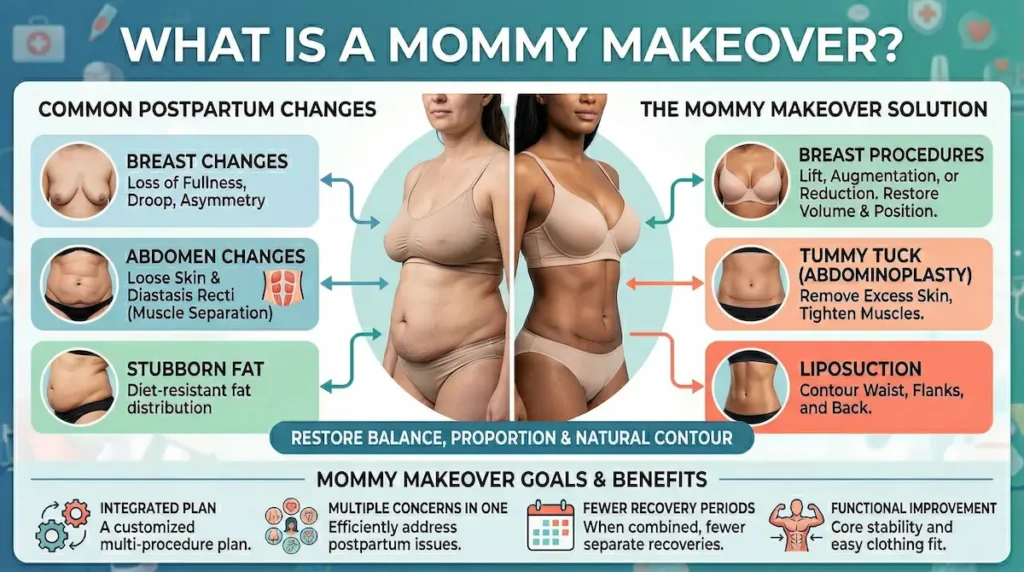
A clinical overview of a mommy makeover describes it as a customized, multi-procedure body-contouring plan that combines two or more operations in a single session (or as a staged approach) to address multiple postpartum anatomical concerns efficiently. This integrated strategy can reduce the number of separate recovery periods and allows the surgeon to restore whole-torso proportion—harmonizing the abdomen, waist, and breasts—rather than treating each area in isolation. For patients who want to go deeper, this approach is often discussed in the context of a broader scientific and clinical research framework on outcomes, recovery burden, and risk management when procedures are combined versus staged.
Definition: A tailored combination, not a standardized package
Most mommy makeovers include an abdominal procedure (such as a tummy tuck) and a breast procedure (lift, augmentation, reduction, or a combination). Liposuction is frequently added for contouring—especially around the flanks (“love handles”), waist, and sometimes back. The exact combination depends on your anatomy, your skin quality, your breast tissue characteristics, and your goals.
What postpartum changes can (and can’t) be corrected
Common concerns addressed include:
- Loose abdominal skin that doesn’t tighten, even with exercise.
- Diastasis recti (separation of the rectus muscles), which can contribute to a “pooch,” core weakness, and a less defined waist.
- Stretch marks located on skin that would be removed during a tummy tuck (not all stretch marks are removable).
- Breast deflation (loss of upper fullness), ptosis (droop), or asymmetry after breastfeeding.
- Stubborn fat distribution around the waist/flanks that disrupts proportion.
It’s equally important to be clear about limitations. Surgery cannot guarantee a “perfect” body, erase all stretch marks, or freeze future changes. What it can do is reliably improve structure and contour when the plan matches the anatomy.
Core goals: comfort, proportion, and natural contour
While aesthetics matter, many patients value functional improvements too—such as better core stability after muscle repair, easier clothing fit, and reduced skin irritation. From a planning standpoint, the best outcomes typically follow three principles:
- Structural correction first: repair laxity or separation, then refine contour.
- Proportion over extremes: aim for balance between the breasts, waist, and hips.
- Long-term thinking: choose techniques that preserve tissue health and minimize revision risk.
Who Is an Ideal Candidate for Mommy Makeover?
Candidate selection is the foundation of both safety and predictability. A mommy makeover is elective surgery, and the “right candidate” is not defined by a number on the scale, but by medical stability, realistic expectations, and a body that is unlikely to undergo major near-term changes. A thoughtful evaluation also considers how many procedures are being combined and whether staging may be safer for your unique case.
Medical criteria: overall health, weight stability, and lifestyle factors
In general, ideal candidates are adults in good overall health who can safely undergo anesthesia and healing. Key considerations typically include:
- Stable weight: major weight loss or gain after surgery can compromise results.
- Nicotine use: smoking or nicotine exposure can impair blood flow and wound healing.
- Medical history: conditions affecting clotting, immunity, or healing may require additional precautions.
- Support system: you’ll need help at home during the early recovery phase.
If your surgery plan includes multiple components, your surgeon will also consider operative time and your individual risk profile when deciding whether to combine procedures or stage them.
Timing after pregnancy and breastfeeding: planning for tissue stability
Timing matters because your body is still changing for months after pregnancy. Many patients benefit from waiting until:
- Breastfeeding has ended and breast size has stabilized.
- Hormonal and fluid shifts have settled (which can affect swelling and tissue behavior).
- Your family planning is complete (a future pregnancy can re-stretch the abdomen and affect breast shape).
That said, “complete family planning” is not an absolute requirement—some patients still choose surgery earlier, understanding that future pregnancy may change results and potentially require revision.
Expectations and mindset: what a “good result” truly means
The best candidates have goals that are specific and achievable. A mommy makeover can create a flatter abdomen, tighter waistline, and a more youthful breast position—but it won’t replicate a filtered image or eliminate every natural asymmetry. During consultation, a high-quality plan translates your goals into concrete surgical choices (for example, a lift pattern, implant vs. no implant, the extent of abdominal tightening) and clarifies trade-offs such as scar placement versus shaping power.
What Does a Mommy Makeover Consist Of?
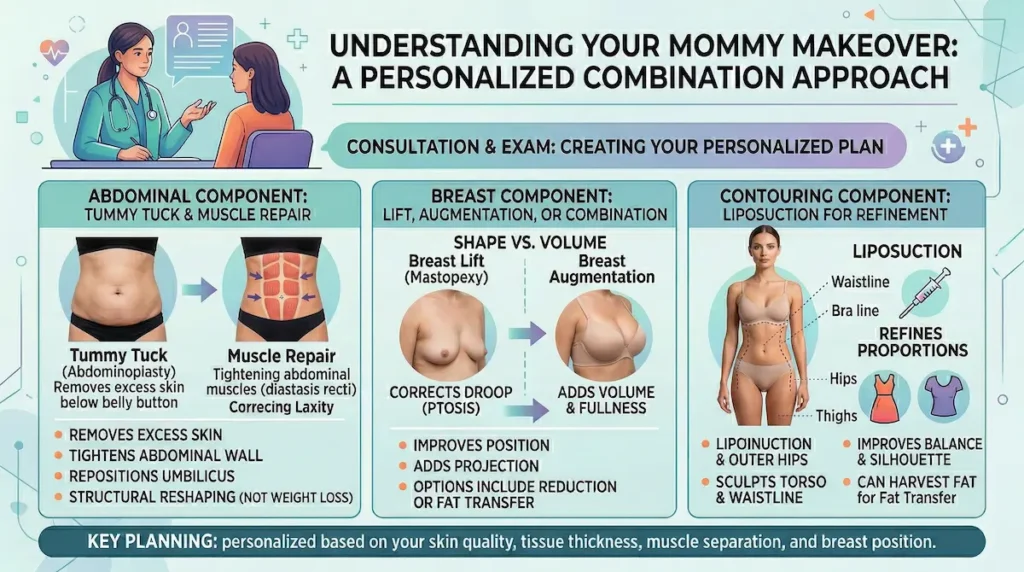
Most mommy makeovers focus on two zones: the abdomen and the breasts. A third component—usually liposuction for contouring—is commonly added to refine the waistline and improve overall balance. The exact combination is personalized after a physical exam (or detailed virtual review with standardized photos) because the best plan depends on skin quality, tissue thickness, muscle separation, breast position, and how your body stores fat.
The abdominal component: tummy tuck (abdominoplasty) and muscle repair
Pregnancy can stretch the abdominal skin and also widen the connective tissue between the rectus muscles (diastasis recti). When this happens, the abdomen may look rounded even at a healthy weight, and some patients notice reduced “core strength” or a weaker feeling when lifting, exercising, or standing for long periods.
A tummy tuck typically addresses:
- Excess skin removal in the lower abdomen (often the area that won’t retract after weight loss).
- Muscle repair (tightening the abdominal wall) when diastasis is present.
- Umbilical positioning and overall abdominal contour.
Importantly, a tummy tuck is not a weight-loss surgery. Its strength is structural reshaping—making the abdomen flatter and smoother by correcting laxity that exercise can’t fully fix.
The breast component: lift, augmentation, reduction, or fat transfer
After pregnancy and breastfeeding, the breasts commonly experience one (or both) of these changes: volume loss (“deflation”) and ptosis (droop). The surgical solution depends on which issue is dominant.
- Breast lift (mastopexy): repositions the nipple-areola complex and tightens the skin envelope. This is the primary tool for correcting droop.
- Breast augmentation: adds volume and can improve upper pole fullness (the “top” of the breast). It may be combined with a lift if droop is present.
- Breast reduction: removes excess tissue for patients who feel heavy, uncomfortable, or experience back/neck pain.
- Fat transfer: uses your own fat (harvested via liposuction) to add modest volume and subtle contour refinement in select candidates.
The key planning concept is shape vs. volume. A lift improves shape and position; augmentation improves volume and projection. When you want both, combining them can produce balanced results—but it also requires careful technique selection to protect tissue health and reduce revision risk.
The contouring component: liposuction to refine proportion
Liposuction is often included to improve transitions—especially around the waist, flanks, bra line, and sometimes hips or thighs. In the context of a mommy makeover, it’s less about “removing fat everywhere” and more about sculpting proportion so the abdomen and breasts look harmonious with the torso.
Liposuction may be used to:
- Define the waist and reduce flank fullness.
- Improve the silhouette in clothing (particularly fitted tops and dresses).
- Harvest fat for fat transfer when appropriate.
However, liposuction does not correct loose skin in the same way a tummy tuck does. If skin laxity is significant, your surgeon may recommend excisional surgery (tummy tuck) rather than relying on liposuction alone.
Mommy Makeover Surgical Technique Options (The “Types”)
There isn’t a single “mommy makeover technique.” Each component has multiple options, and the best plan balances shaping power, scar placement, tissue safety, and recovery demands. Below is a practical overview of common technique pathways your surgeon may discuss during consultation.
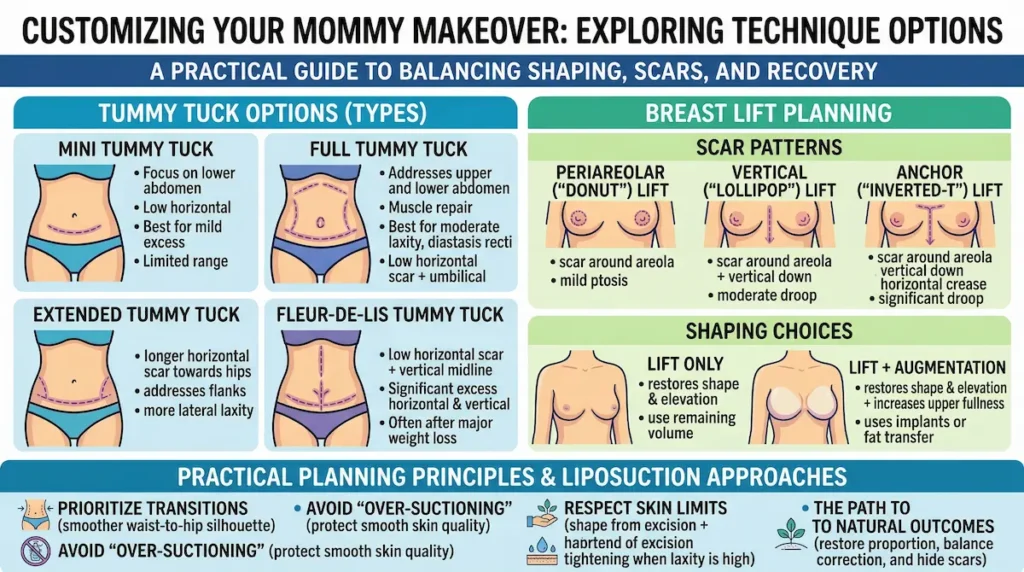
Tummy tuck types: mini, full, extended, and fleur-de-lis
Tummy tucks vary mainly by how much skin is removed and how far the tightening extends. In general, the more significant the laxity, the more comprehensive the tummy tuck option needs to be.
- Mini tummy tuck: focuses on the lower abdomen (below the belly button) with a shorter incision; may be suitable for mild skin excess and limited muscle laxity.
- Full tummy tuck: addresses both upper and lower abdomen, typically includes repositioning the belly button, and commonly includes muscle repair.
- Extended tummy tuck: continues the incision further toward the hips to address more lateral skin laxity (useful when laxity wraps around the sides).
- Fleur-de-lis tummy tuck: adds a vertical component (in addition to the low horizontal incision) to address significant horizontal and vertical skin excess—often in patients after major weight loss.
Breast lift planning: scar patterns and “lift-only” vs “lift + augmentation”
Breast lifts can be performed with different scar patterns, selected according to the degree of droop and how much shaping is required. You may hear terms like:
- Periareolar (“donut”) lift: scar around the areola; typically for mild ptosis and limited reshaping needs.
- Vertical (“lollipop”) lift: scar around the areola plus a vertical line downward; commonly used for moderate droop and stronger shaping.
- Anchor (“inverted-T”) lift: adds a horizontal scar in the breast crease; often used when there is more skin excess or significant droop.
Choosing between lift-only and lift + implants usually comes down to your desired upper fullness and projection. A lift can elevate and tighten, but it doesn’t create the same upper pole volume as an implant. When volume is a priority, augmentation (or, in select cases, fat transfer) may be considered.
Liposuction approaches: contour strategy and skin behavior
Liposuction technique choices depend on fat distribution and skin elasticity. Your surgeon will evaluate whether your skin is likely to retract well after fat removal, and whether combining liposuction with skin excision (such as a tummy tuck) provides the most predictable outcome.
Practical planning principles include:
- Prioritize transitions: refine the waist-to-hip and rib-to-waist areas for a smoother silhouette.
- Avoid “over-suctioning”: overly aggressive fat removal can compromise smoothness and skin quality.
- Respect skin limits: when laxity is high, shape comes from excision + tightening, not just volume reduction.
| Technique | Best for | Primary trade-off | Typical scar placement |
|---|---|---|---|
| Mini Tummy Tuck | Mild lower-abdominal skin excess | Limited tightening and reshaping range | Low horizontal scar (shorter) |
| Full Tummy Tuck | Moderate laxity and/or diastasis recti | More comprehensive surgery and recovery | Low horizontal scar + umbilical scar |
| Extended Tummy Tuck | Laxity extending toward the flanks | Longer scar to address broader laxity | Low horizontal scar extending toward hips |
| Fleur-de-lis Tummy Tuck | Significant skin excess (often after major weight loss) | Added vertical scar for stronger tightening | Low horizontal scar + vertical midline scar |
| Breast Lift Only | Droop is the main issue; adequate volume remains | Limited increase in upper fullness | Periareolar / vertical / anchor (case-dependent) |
| Lift + Augmentation | Droop + volume loss; desire for upper fullness | More variables to plan (tissue safety, implant choice) | Lift pattern scars + (implant incision, if needed) |
Planning principle: The most “natural” outcomes usually come from choosing the right amount of correction—enough to restore proportion, but not so aggressive that it compromises tissue quality or makes scars the center of attention.
Anesthesia Options (Awake/Twilight vs General)
Anesthesia selection is a safety decision as much as a comfort decision. The right choice depends on the number of procedures being combined, expected operative time, your medical profile, and your surgeon’s protocol. In many practices, mommy makeovers are most commonly performed under general anesthesia, but certain components (or staged plans) may be possible under local anesthesia with sedation in appropriately selected cases.
What “awake” and “twilight” mean in practical terms
These terms can be confusing, so here’s the practical interpretation:
- Local anesthesia: numbs the surgical area. You remain awake, but discomfort is minimized in the treated zone.
- IV sedation (“twilight”): medication helps you relax and may make you drowsy; many patients remember little or nothing of the procedure.
- General anesthesia: you are fully asleep, with airway and breathing managed by the anesthesia team.
“Awake” does not mean you feel everything; it refers to avoiding full general anesthesia when clinically appropriate.
When general anesthesia is commonly preferred
General anesthesia is often favored when the surgical plan is more extensive—such as a full tummy tuck with muscle repair combined with breast surgery and significant contouring—because it allows:
- More controlled conditions for longer procedures.
- Stable patient positioning for multi-area surgery.
- Predictable comfort throughout comprehensive correction.
How anesthesia choice can influence early recovery
Recovery experiences vary, but anesthesia choice can affect early postoperative nausea, drowsiness, and how quickly you feel “clear-headed.” Regardless of anesthesia type, the more important drivers of recovery quality are typically:
- Thoughtful surgical planning (avoiding unnecessary overcorrection).
- Multimodal pain control (using several strategies rather than relying on one medication).
- Early safe mobility (walking soon, as directed) and appropriate compression/garment use.
Next section preview: In the next part, we’ll walk through what happens on surgery day—pre-op screening, surgical sequencing, drains/garments, and immediate aftercare—so you know exactly what to expect.
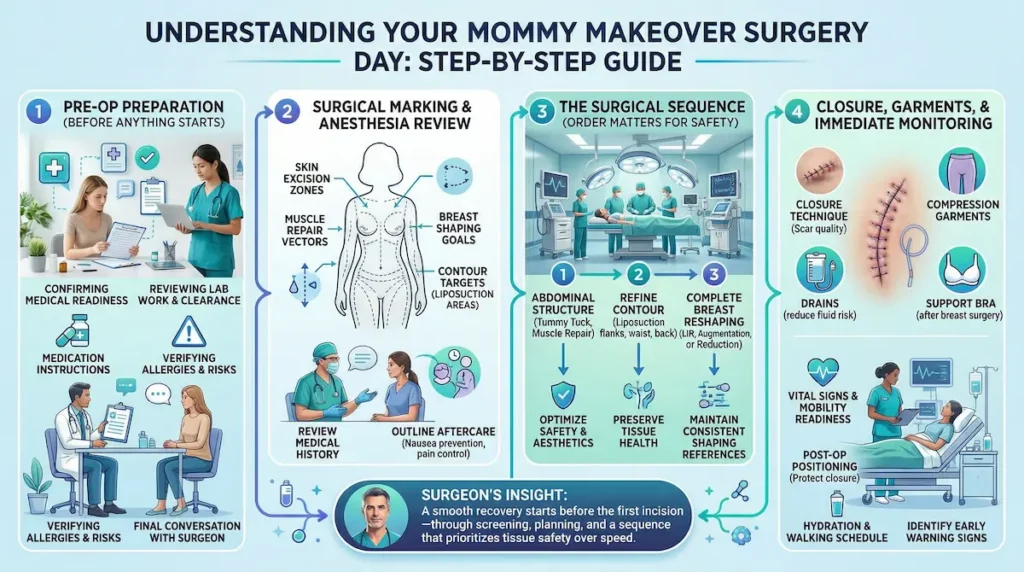
Mommy Makeover Procedure Steps: What Happens on Surgery Day?
Understanding the day-of-surgery flow removes a huge amount of anxiety—especially for patients who are combining multiple procedures. While exact steps vary by surgeon and facility, a well-run mommy makeover follows a predictable safety-first sequence: verify your medical readiness, confirm the surgical plan with precise markings, perform the procedures in an order that protects tissue health, and then transition you into structured monitoring and aftercare.
Mommy Makeover Pre-op screening, markings, and “final checks”
Before anything starts, your team confirms that you’re medically optimized for surgery. This typically includes reviewing recent lab work (and, when indicated, additional medical clearance), confirming medication instructions, and verifying allergies or risk factors. A final conversation with your surgeon should clarify what is being done and why—especially if the plan includes more than one anatomical area.
Then comes surgical marking. This is more than “drawing lines.” Markings help the surgeon map:
- Skin excision zones (where tissue will be removed and tightened).
- Muscle repair vectors (how the abdominal wall will be re-approximated when diastasis is present).
- Breast shaping goals (lift pattern, areola position, symmetry strategy).
- Contour targets for liposuction (where reduction improves proportion without harming smoothness).
If your plan involves sedation or general anesthesia, the anesthesia team typically reviews your medical history and outlines what to expect immediately afterward (nausea prevention, early mobility, pain control strategy).
The surgical sequence: why the order matters
A mommy makeover is not “multiple random procedures done together.” Sequence is chosen to optimize safety and aesthetics. A common logic (not universal) is to address abdominal structure and skin management first, then refine contour, and then complete breast reshaping. This approach can help preserve clean operative fields and maintain consistent shaping references.
Depending on your plan, the combined surgery may include:
- Abdominoplasty (tummy tuck) with muscle repair when needed.
- Liposuction of the flanks/waist/back for improved transitions and proportion.
- Breast lift (with or without augmentation) or reduction, based on shape and volume goals.
Throughout the operation, the core objective stays the same: produce a balanced, natural contour while protecting tissue viability. That means avoiding “over-tightening,” choosing scar placements that can be hidden by typical clothing lines, and maintaining symmetry through repeated checks during the procedure.
Surgeon’s Insight: A smooth recovery starts before the first incision—through screening, planning, and a sequence that prioritizes tissue safety over speed.
Closure, drains, garments, and immediate monitoring
At the end of surgery, closure technique and early stabilization are major determinants of comfort and scar quality. Many patients also receive:
- Compression garments to support swelling control and contour stability.
- Drains (most commonly after tummy tuck) to reduce fluid accumulation risk during early healing.
- Support bra after breast surgery, tailored to the technique used.
Immediately post-op, your team monitors vital signs, comfort, and early mobility readiness. You’ll also receive clear instructions for positioning (how to sleep and stand to protect abdominal closure), hydration, walking schedule, and how to identify early warning signs that require a call.
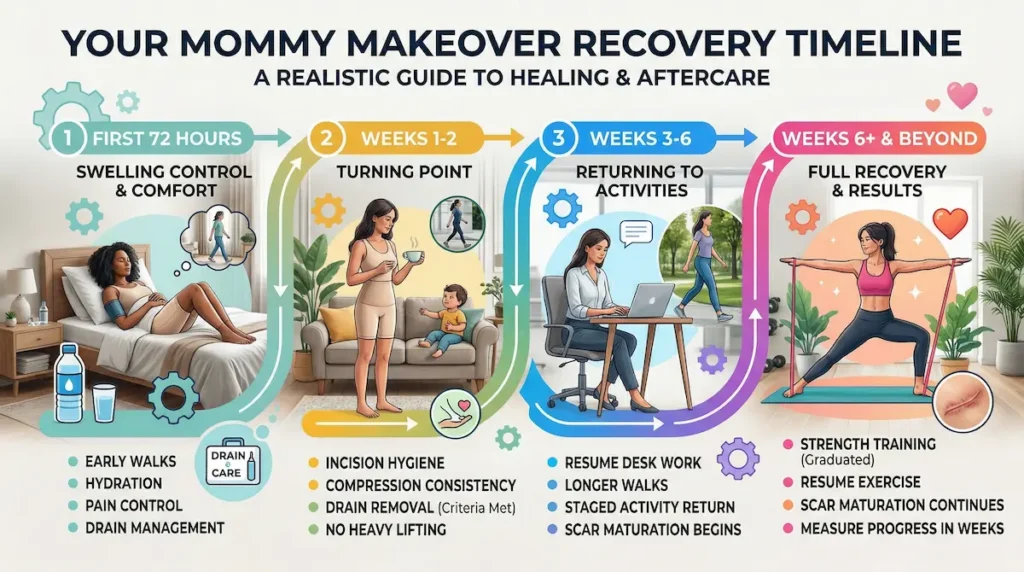
Mommy Makeover Recovery & Aftercare: A Realistic Timeline
Recovery is not a single event—it’s a series of milestones. The goal is to reduce swelling, protect incisions, prevent complications, and gradually restore normal movement and energy. Because a mommy makeover often combines abdominal tightening with breast surgery and contouring, “feeling normal again” can take longer than a single-procedure recovery. The key is to follow a structured plan and measure progress in weeks, not days.
The first 72 hours: swelling control, mobility, and comfort
The first three days are typically the most intense. Expect tightness (especially after muscle repair), swelling, and fatigue. Most surgeons emphasize:
- Early, gentle walking (short, frequent walks) to support circulation.
- Positioning that protects the abdomen (often slightly flexed posture initially).
- Hydration and nutrition that support healing and reduce constipation risk.
- Multi-modal pain control—a strategy that uses complementary methods rather than relying on a single medication.
If drains are present, your team will teach you exactly how to measure output and keep the sites clean. This is often one of the biggest confidence gaps for first-time patients—yet with clear instructions, most people find drain care manageable.
Week 1–2: incision care, drains (when used), and daily function
During the first two weeks, swelling and bruising remain noticeable, but many patients experience a meaningful “turning point” as energy returns. Typical priorities include:
- Incision hygiene and keeping sites dry/clean as directed.
- Compression consistency (garments worn as instructed, not “as tolerated”).
- Drain management until criteria for removal are met.
- Activity boundaries (no heavy lifting; careful movement to protect muscle repair).
Many patients can do light home tasks within this phase, but childcare and lifting restrictions often require planning. If you have young children, you’ll want help arranged in advance—especially for the first 7–10 days.
Weeks 3–6 and beyond: returning to work, exercise, and scar maturation
Between weeks three and six, swelling gradually declines, movement feels more natural, and patients often resume desk work and longer walks. Your surgeon typically guides a staged return to activity, which may include:
- Increasing daily steps before returning to structured exercise.
- Gentle core re-engagement only when cleared—especially after muscle repair.
- Graduated strength training later in the timeline to protect abdominal closure and breast healing.
It’s also important to set expectations for scars. Incisions often look “worse before they look better,” with redness and firmness early on. The real refinement happens over months as collagen remodels and scars mature.
The Rapid Recovery & Safety Protocol: HBOT + LLLT (accelerated healing support)
Beyond standard aftercare, some recovery programs incorporate advanced supportive therapies designed to improve tissue resilience and reduce “social downtime.” At AKM Clinic, Hyperbaric Oxygen Therapy (HBOT) and Low-Level Laser Therapy (LLLT) are integrated as a structured Rapid Recovery & Safety Protocol rather than “add-ons.”
HBOT (Hyperbaric Oxygen Therapy): This therapy exposes the body to 100% oxygen in a pressurized environment, which increases oxygen delivery to healing tissues—even when circulation is temporarily disrupted after surgery. In practical patient terms, HBOT is positioned as a safety-forward intervention that supports tissue survival, reduces inflammation, improves scar quality by stimulating fibroblasts (collagen-building cells), and provides an additional defense against infection by creating an oxygen-rich environment that is hostile to many bacteria while supporting immune response.
LLLT (Low-Level Laser Therapy): LLLT delivers a precise “soft laser” wavelength (650 nm) to stimulate cellular repair without heat damage. The intended benefits include boosting ATP production (cellular energy), encouraging collagen synthesis via fibroblast stimulation, and helping reduce swelling and redness. When paired with HBOT, LLLT is used as a targeted “second layer” of recovery acceleration—supporting smoother healing and a more comfortable early course.
Patient-centered takeaway: Recovery isn’t only about “toughing it out.” The smartest plans reduce swelling, protect tissue, and shorten downtime by supporting the biology of healing.
Mommy Makeover Scars, Drains, and Long-Term Skin Quality
Scars and drains are two of the most searched (and most misunderstood) parts of a mommy makeover. The reality is nuanced: scars are the trade-off that makes meaningful tightening possible, and drains—when used—are a temporary tool to reduce fluid buildup during early healing. Long-term, scar quality depends less on “luck” and more on a combination of surgical technique, tissue biology, and disciplined aftercare.
Where scars typically sit (and how surgeons try to hide them)
Scar placement is planned with clothing in mind. While every body is different, common scar “zones” include:
- Tummy tuck scar: a low horizontal line, usually designed to sit below most underwear and bikini lines.
- Belly button scar: a small scar around the umbilicus when the belly button is repositioned in a full tummy tuck.
- Breast lift scars: around the areola (periareolar), plus a vertical line (lollipop), and sometimes a crease-line scar (anchor) depending on how much lift is required.
- Liposuction access points: small “keyhole” incisions, typically a few millimeters, placed in discreet locations.
The most important principle is that scar length is often proportional to how much correction is needed. Stronger tightening generally requires more skin management—and therefore more scar commitment.
Scar maturation: why scars can look “worse” before they look better
Scars change over time. Early scars are often pink/red and slightly raised because collagen remodeling is active. Over the following months, scars typically soften, flatten, and fade. A realistic timeline looks like:
- Weeks 0–6: incisions seal; scars may appear red and firm; swelling can make scars feel “tight.”
- Months 2–6: remodeling accelerates; color begins to soften; texture becomes smoother.
- Months 6–12+: many scars continue to fade and flatten; the final appearance often isn’t clear until the 12-month mark.
Because scar biology varies by genetics, skin tone, and location, your surgeon may also screen for a history of hypertrophic scars or keloids and adjust the plan accordingly.
Evidence-based scar care habits (what matters most)
Scar care is not about “miracle creams.” The habits with the best track record are consistent, simple, and time-based:
- Follow incision instructions exactly (early healing is about keeping incisions protected and clean).
- Silicone support (when cleared): silicone gel or silicone sheets are commonly recommended after the incision is fully closed.
- Sun avoidance: UV exposure can darken scars and prolong redness; covering scars and using sun protection matters.
- Compression as directed: helps swelling control and supports tissue settling during early remodeling.
- Nutrition and hydration: healing is metabolically demanding—protein, micronutrients, and hydration contribute to tissue quality.
If you notice thickening, itching, or unusually raised scar texture, early intervention can help. Many surgeons tailor scar prevention plans with timing-based steps rather than waiting “to see what happens.”
Reality check: Scars are the “receipt” for meaningful tightening. The best results usually come from accepting the trade-off and then managing scars systematically rather than emotionally.
Drains: why they’re used and when they come out
Drains are most commonly associated with tummy tucks. Their job is to remove fluid that can accumulate in the space created when tissue is lifted and tightened. Not every patient needs drains, and techniques vary by surgeon, but the decision is usually based on the extent of dissection and your individual risk factors for fluid collection.
Practical facts that help patients feel more confident:
- Drains are temporary: many are removed once output drops to a safe threshold.
- Drain care is learnable: you’ll be taught how to empty, measure, and keep sites clean.
- Comfort improves quickly: most patients find drains annoying rather than painful, and removal is typically brief.
Mommy Makeover Risks, Safety, and How to Reduce Complications
Every surgery has risks, and a mommy makeover—because it can combine multiple procedures—requires an especially disciplined approach to safety. The goal is not to promise “zero risk,” but to reduce risk through smart selection, thoughtful surgical planning, and structured aftercare. When patients understand what can happen and how it’s prevented, they make better decisions and recover with more confidence.
General surgical risks (the risks shared by most operations)
General risks can apply to many elective procedures, regardless of the body area:
- Bleeding and hematoma (blood collection under the skin).
- Infection at incision sites or deeper tissues.
- Wound healing issues such as delayed healing or minor separation.
- Blood clots (DVT/PE), which is why early mobility and risk screening matter.
- Anesthesia-related effects like nausea, fatigue, or rare adverse reactions.
Your surgeon’s job is to assess your baseline risk and design a plan that keeps the procedure within safe parameters—including choosing whether to combine or stage procedures.
Procedure-specific risks (what’s unique to tummy tuck, breast surgery, and liposuction)
Each component carries its own set of considerations:
- Tummy tuck: seroma (fluid collection), tightness, prolonged swelling, and—less commonly—skin healing problems if circulation is compromised.
- Muscle repair: increased early tightness and activity limitations; overexertion too soon can stress repair.
- Breast lift/augmentation: asymmetry, changes in nipple sensation, delayed healing at incision junctions, implant-related risks (if implants are used), and potential need for revision over time.
- Liposuction: contour irregularities, prolonged swelling, temporary numbness, and skin laxity if elasticity is limited.
A high-quality plan minimizes risk by matching technique to tissue quality—especially skin behavior and blood supply.
How to reduce risk (what high-quality surgical planning looks like)
Risk reduction is a system, not a slogan. Key elements often include:
- Pre-op screening: health history, labs, and additional clearance when indicated.
- Operative time management: keeping the plan within a safe duration for your profile.
- Early mobilization: gentle walking soon after surgery to support circulation.
- Compression and support garments: used correctly to reduce swelling and support tissue settling.
- Clear “do not” boundaries: lifting restrictions, exercise timing, and sleep positioning.
- Smoking/nicotine avoidance: one of the most important controllable factors for healing quality.
From a patient perspective, the safest choice is not always “the most done at once.” Sometimes staging procedures can reduce risk and improve predictability—especially if your anatomy requires extensive correction.
Safety mindset: The best results come from a plan that respects biology—tissue blood supply, healing capacity, and recovery limits—not from doing the maximum possible in one session.
When to call your surgeon (early warning signs that matter)
Patients do best when they know what is normal and what isn’t. Contact your surgical team immediately if you experience symptoms such as:
- Sudden increasing swelling on one side, severe localized pain, or rapidly expanding bruising.
- Fever, chills, or spreading redness around incisions.
- Shortness of breath, chest pain, or calf swelling/tenderness.
- Drain output that changes dramatically or has concerning odor/appearance (if drains are used).
Early communication is not “overreacting.” It’s how small issues stay small.
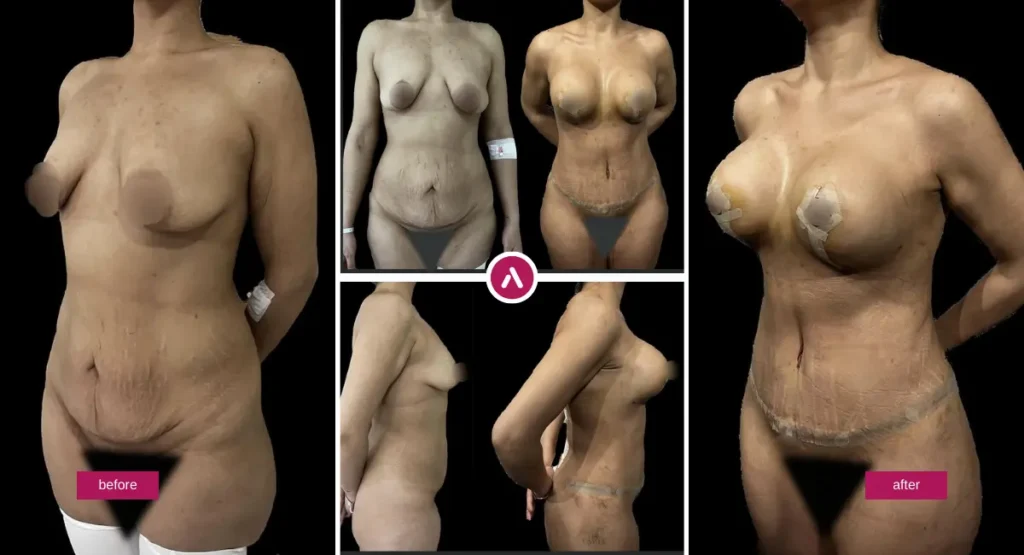
Mommy Makeover Before and After: Realistic Results & Longevity
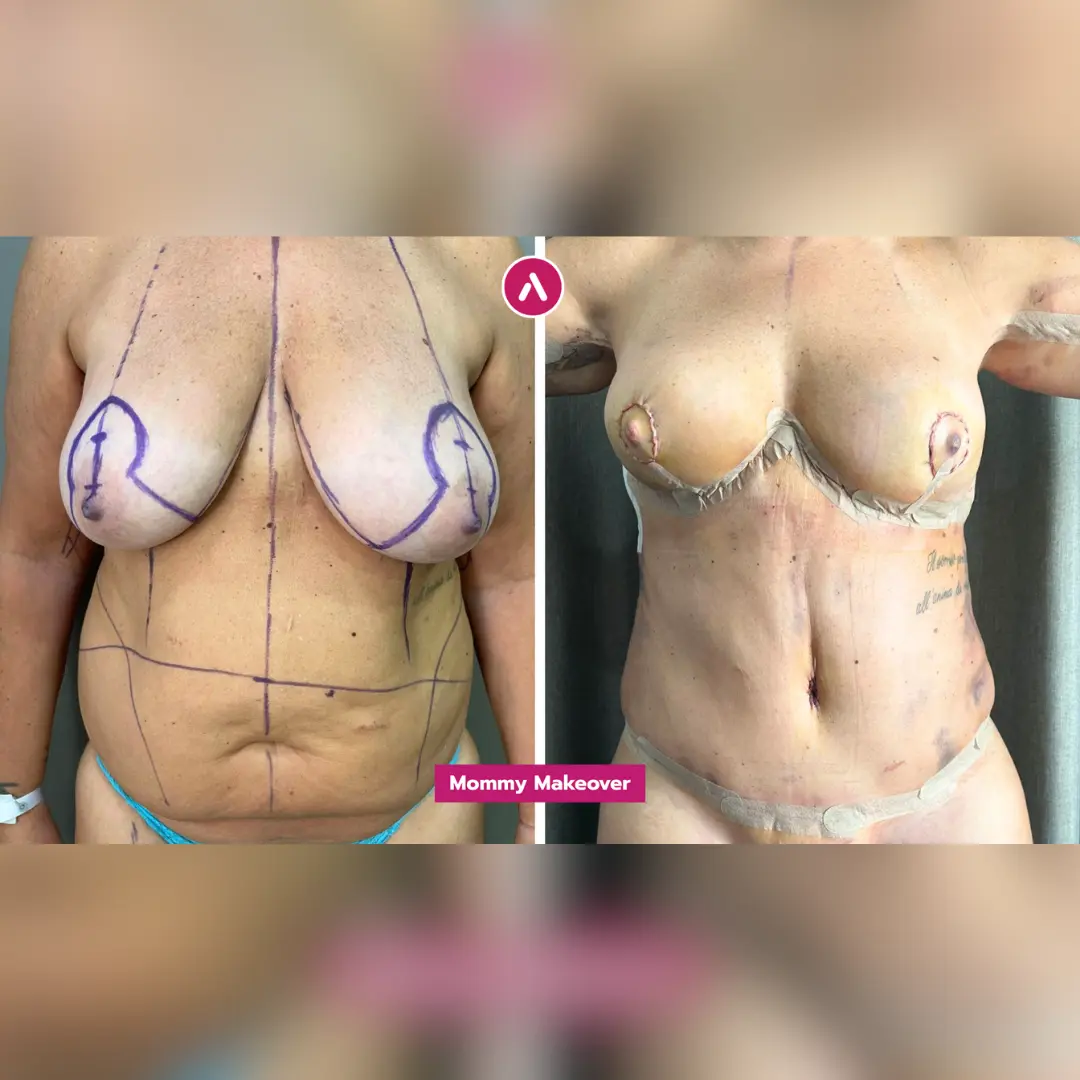
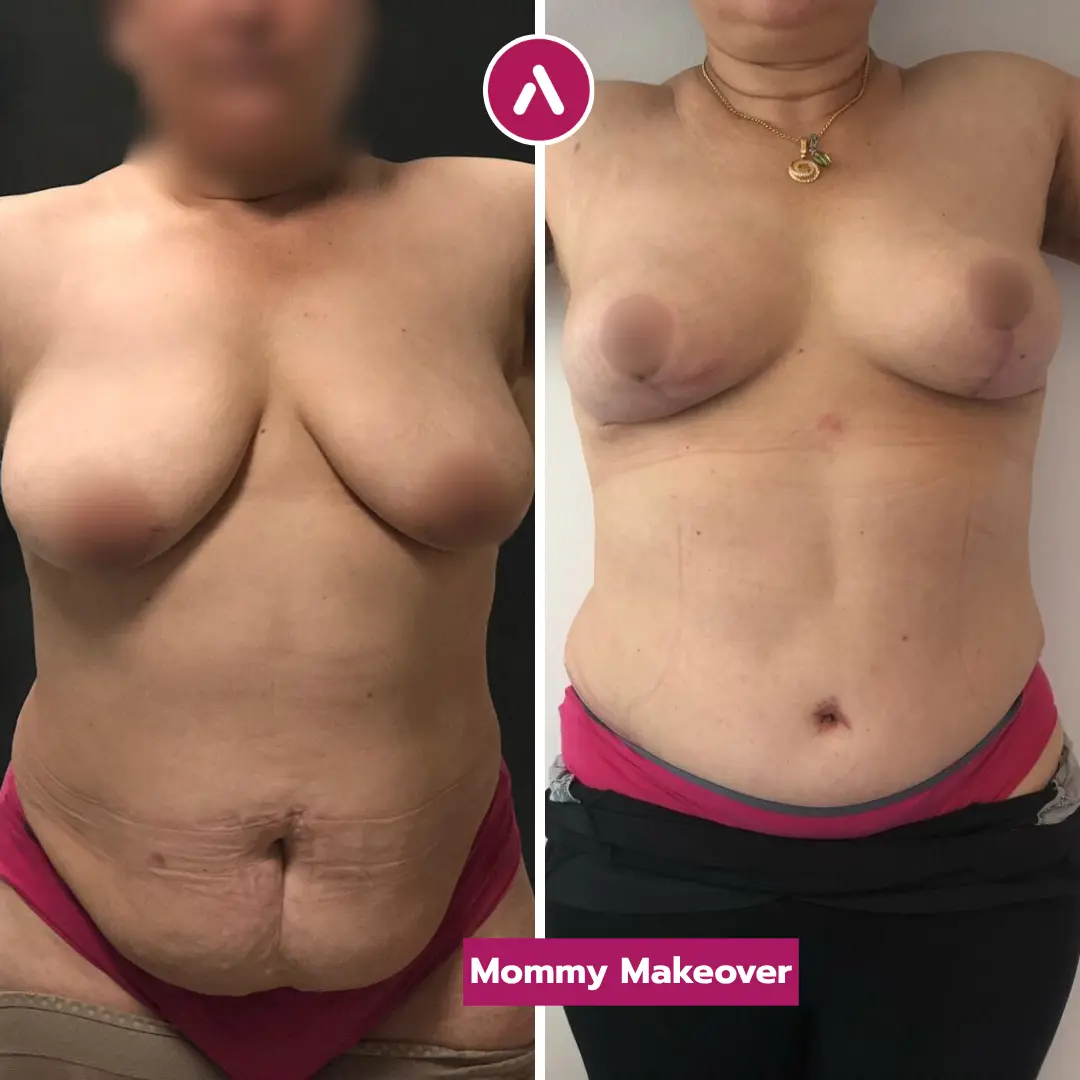
Mommy makeover results evolve. You’ll see improvement early, but the most refined contour typically appears over months as swelling resolves and tissues settle. Longevity is usually excellent when the plan matches your anatomy and you maintain stable habits—yet results are not immune to future weight shifts, pregnancy, and natural aging.
What improves immediately vs what takes months
- Early wins (first weeks): improved shape and tighter silhouette, even with swelling.
- Mid-term refinement (months 2–6): swelling reduces, scars soften, and the waistline becomes more defined.
- Long-term finishing (6–12+ months): scar maturation, final tissue settling, and the “natural look” becomes more apparent.
Results perspective: A mommy makeover is a body restoration strategy. The best results look believable—like your body recovered, not like it was “redesigned.”
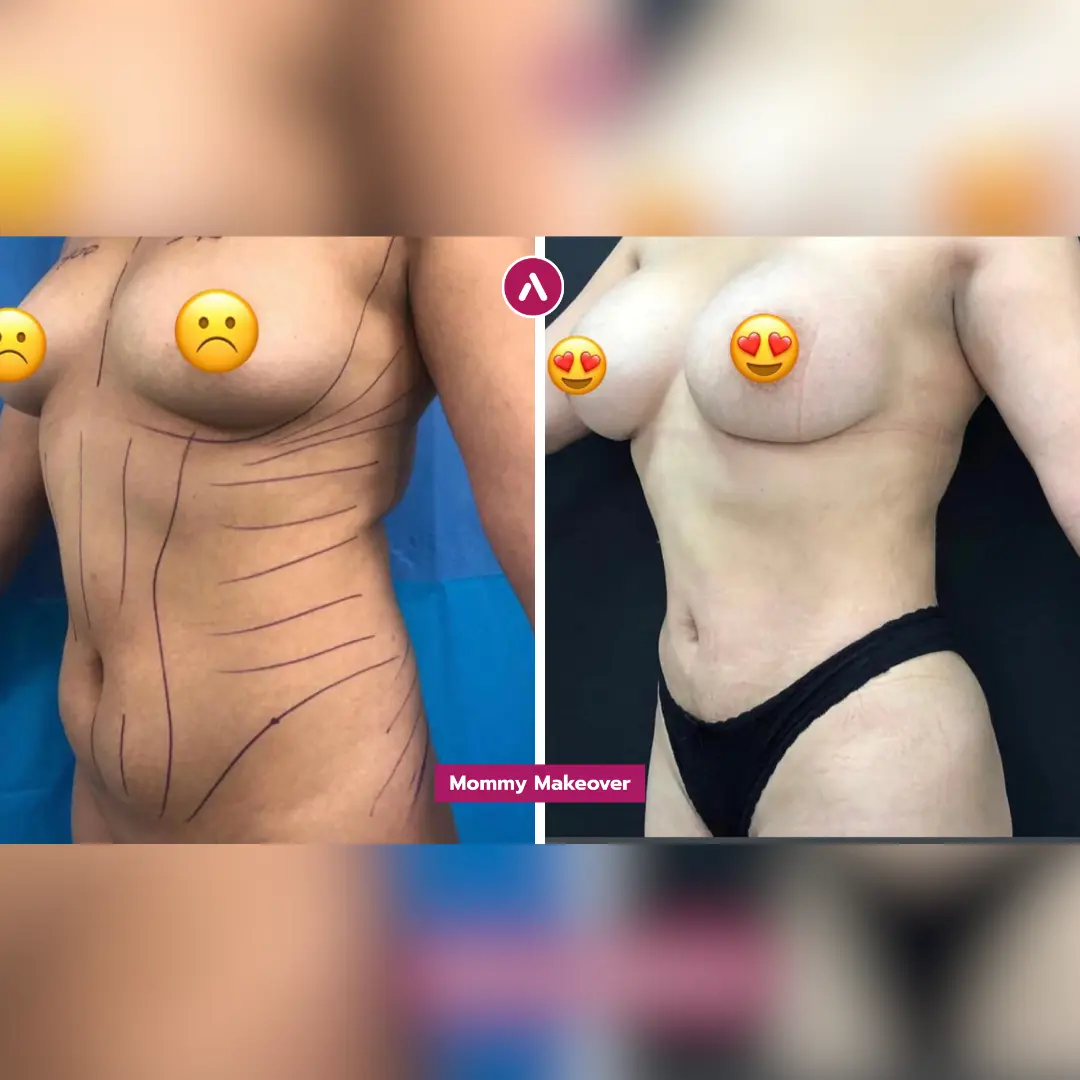
What affects longevity the most
Several variables influence how long results hold:
- Stable weight: repeated gain/loss cycles can stretch skin and soften contour.
- Future pregnancy: can re-stretch the abdomen and alter breast shape.
- Skin quality and genetics: elasticity and collagen behavior vary.
- Lifestyle: activity, nutrition, and smoking status influence tissue quality long-term.
A “natural-first” benchmark: rejuvenation, not alteration
The most satisfying outcomes typically look proportionate in everyday clothing and natural in movement. A high-quality mommy makeover is often recognized not by exaggerated curves, but by subtle harmony: a smoother abdomen, a be
Mommy Makeover Cost 2026: USA vs Turkey
“How much is a mommy makeover?” is a reasonable question—and also one of the hardest to answer with a single number. Cost varies widely because a mommy makeover is not one procedure; it’s a custom plan that can include a tummy tuck (with or without muscle repair), breast surgery (lift/augmentation/reduction), and liposuction (sometimes across multiple areas). Pricing also changes based on facility standards, anesthesia type, operative time, the surgeon’s experience, and what is included in aftercare.
What typically drives the total price
When you see large price differences between clinics (even within the same city), it’s often because you’re comparing different “bundles,” not different “surgeries.” Cost is commonly influenced by:
- Number of procedures: tummy tuck alone vs tummy tuck + lift + lipo + implants can be very different plans.
- Operative time and complexity: longer cases require more OR time and staffing.
- Anesthesia model: general anesthesia vs local + sedation (case-dependent).
- Facility standards: accredited hospitals and high-level monitoring protocols often cost more.
- Aftercare coverage: garments, medications, follow-up schedule, and recovery support may or may not be included.
Why “US pricing” can feel disproportionately high in major cities
In high-overhead markets (e.g., large metro areas), pricing often reflects more than surgical skill: it can include facility costs, staffing expenses, insurance overhead, and market-based pricing. This is why two patients receiving “mommy makeovers” can see dramatically different quotes even when the procedures sound similar on paper.
Why international options can offer better value (without turning it into a “cheap” decision)
Many US patients explore medical travel not because they want to cut corners, but because they want to re-allocate their budget—toward strong facility standards, an experienced surgical team, and structured aftercare—without paying premium-market overhead. The value proposition is strongest when the international provider offers:
- Transparent inclusions (what’s included, what’s not, and why).
- Clear safety protocols and medical screening standards.
- Structured follow-up after you return home (remote check-ins matter).
| Market / Scenario | What patients often pay for | Typical “value gap” drivers | What to verify |
|---|---|---|---|
| US major metros (NYC / LA / Miami) | High facility + staffing overhead | Market pricing, operating room costs, insurance overhead | Exact inclusions, revision policy, aftercare scope |
| International centers (e.g., Istanbul) | Bundled care model may be available | Lower operational costs; package-based planning | Hospital standards, anesthesia team, follow-up plan |
What an “all-inclusive package” should include (and what’s often missing)
If you’re comparing a US quote to an international “package,” the only fair comparison is total value and total coverage. A well-structured package should clearly list:
- Pre-op assessment: labs, imaging if needed, medical screening.
- Surgery costs: surgeon fee, anesthesia, operating room/facility charges.
- Post-op needs: garments, medications, wound checks, drain care support.
- Logistics: airport transfers and local coordination (for medical travelers).
- Follow-up timeline: scheduled check-ins after you return home.
| Category | Should be clearly included | Questions to ask |
|---|---|---|
| Medical screening | Pre-op labs + clearance pathway | “What happens if a screening issue is found?” |
| Facility & anesthesia | Accredited facility + anesthesia team | “Who provides anesthesia and what monitoring is used?” |
| Aftercare | Scheduled follow-ups + wound/drain support | “How many in-person checks before I fly home?” |
| Complication plan | Clear escalation and support protocol | “If something happens after I return, what’s the plan?” |
Value mindset: The smartest comparison isn’t “cheapest vs most expensive.” It’s “most predictable and safest outcome per dollar,” including aftercare and follow-up.
Choosing the Best Mommy Makeover Surgeon and Facility
For an “expert patient,” choosing a provider is less about marketing and more about verifiable standards. Your best protection is a checklist that forces clarity: credentials, facility quality, safety systems, and a realistic recovery plan. This is especially important when combining procedures.
Credentials and experience to verify
Look for clear evidence of training and ongoing standards. Depending on your region, that may include board certification, society memberships, and a track record with combined-body procedures (not only single-procedure cases).
- Board certification (or equivalent): confirm what the certification represents in that country.
- Procedure-specific experience: ask how often they perform tummy tuck + breast surgery combinations.
- Before/after consistency: look for results with similar anatomy to yours (skin quality, frame, breast position).
Facility quality and safety systems that matter
The facility is part of your outcome. A high-quality setting typically has:
- Appropriate monitoring standards during and after surgery.
- Clear infection control processes and sterilization protocols.
- Emergency readiness (systems, staff, and transfer pathways as needed).
If you are traveling internationally, ask whether surgery is performed in a hospital environment or a dedicated surgical center, and what standards/accreditations apply.
Questions that predict a high-quality plan (not just a confident sales call)
- “Which procedures do I actually need—and which do I not need?”
- “Should we combine or stage my procedures for safety?”
- “Where will my scars be placed and why?”
- “What is your plan for drains, garments, and early mobility?”
- “How do you manage complications if they occur after I return home?”
Green flag: A great surgeon can clearly explain trade-offs—scar vs tightening power, lift-only vs lift + implant, combine vs stage—without rushing you into the maximum plan.
The Medical Journey for US Patients: Mommy Makeover in Turkey
If you’re considering a mommy makeover abroad, the biggest fear is rarely the surgery itself—it’s the unknown logistics: travel, communication, aftercare, and what happens if you need support after you return home. A high-quality medical travel pathway is structured like a “continuum of care,” not a single procedure in a new country.
Step 1: Virtual consultation (clarity before commitment)
A proper virtual consult should feel clinical, not promotional. You should receive a draft plan that explains:
- Which components are recommended (and why).
- Whether combining procedures is appropriate for your case.
- Expected scar placement, recovery timeline, and time-off planning.
- Medical screening requirements and contraindications (e.g., nicotine, clotting risks).
Step 2: Arrival, pre-op screening, and final planning
For US patients traveling to Istanbul, a well-run itinerary typically includes airport pickup, hotel coordination, and a pre-op day for screening and in-person examination. This is the point where your surgeon confirms the plan with live measurements and markings and finalizes the safest approach.
Step 3: Surgery, early recovery, and structured follow-up
After surgery, what matters most is structured monitoring and practical aftercare: comfort control, mobility guidance, incision/drain support (when used), and a clear plan for garments and activity boundaries. Before you fly home, you should have at least one formal post-op review and a written follow-up plan.
Step 4: Remote follow-up after you return to the United States
International care should not “end at the airport.” Remote follow-up check-ins (for example at 1, 3, 6, and 12 months) help track scar maturation, swelling resolution, and any recovery questions that arise as you resume normal life.
Patient voice (common concern): “My biggest fear wasn’t the surgery—it was whether I’d feel supported once I got back home.” A structured follow-up plan is what turns travel into a safe, confident decision.
AKM Clinic note: For patients traveling to Istanbul, our care model is built around coordinated logistics and staged follow-up so you always know what happens next—from pre-op screening to post-op check-ins after you return home.
FAQ: Mommy Makeover in Turkey
What is a mommy makeover and what does it include?
A mommy makeover is a customized combination of procedures—most commonly a tummy tuck (often with muscle repair), breast surgery (lift and/or augmentation or reduction), and liposuction to refine contour. Your exact plan depends on skin laxity, muscle separation, breast position, and goals.
What does a mommy makeover consist of for most patients?
Many patients combine a tummy tuck and a breast lift (with or without implants). Liposuction is often added to improve the waist and flank contour. Some patients may need only two components; others may benefit from a staged approach.
How long is mommy makeover recovery time?
Most patients need a focused recovery period in the first 1–2 weeks, then gradual improvement over the next 3–6 weeks. Swelling and scar maturation continue to refine results for months, with many scars still improving up to 12 months or longer.
How painful is a mommy makeover?
Discomfort varies, but tightness is common—especially after abdominal muscle repair. Most patients do best with a structured pain-control plan, early gentle walking, and clear positioning guidance. Expect “tight and sore” more than “sharp pain,” though individual experiences differ.
Do I need drains after a tummy tuck?
Many tummy tucks use drains, especially when there is significant skin lifting and tightening. Some surgeons use techniques that may reduce drain use in select cases. If drains are used, they are temporary and removed once output decreases to a safe threshold.
What do mommy makeover scars look like over time?
Scars often start red/pink and firm, then flatten and fade over months. Final scar quality depends on technique, your biology, and consistent aftercare (including sun avoidance and scar management when cleared).
Can I do a breast lift without implants and still have fullness?
A lift improves shape and position but does not create the same upper pole volume as implants. Some patients are satisfied with lift-only results; others choose implants (or selected fat transfer) if they want more upper fullness and projection.
Is liposuction dangerous?
Liposuction is generally safe when performed by a qualified team in an appropriate facility with proper screening. Risks exist (like any surgery), including contour irregularities, swelling, and rare complications. Safety depends on patient selection, technique, and aftercare.
When can I fly after a mommy makeover?
Timing depends on what procedures were performed and your recovery progress. Because travel adds clot-risk considerations, your surgeon will give a specific clearance timeline and mobility plan. Always follow your surgeon’s guidance rather than a generic rule.
How do I choose the right surgeon for a mommy makeover?
Verify credentials, facility standards, and a clear safety protocol. Ask for realistic trade-offs (scars, recovery, combine vs stage), review consistent before/after outcomes, and ensure you have a structured aftercare and follow-up plan—especially if traveling.
Medical Disclaimer: This page is provided for general educational purposes only and does not replace a face-to-face medical consultation, diagnosis, or personalised treatment plan. All surgery carries risks and outcomes vary between individuals. Suitability for a mommy makeover, procedure selection, and anesthesia choice can only be determined after a full clinical assessment by a qualified surgeon. Always follow your clinician’s instructions and seek urgent medical attention if you develop concerning symptoms during recovery.