




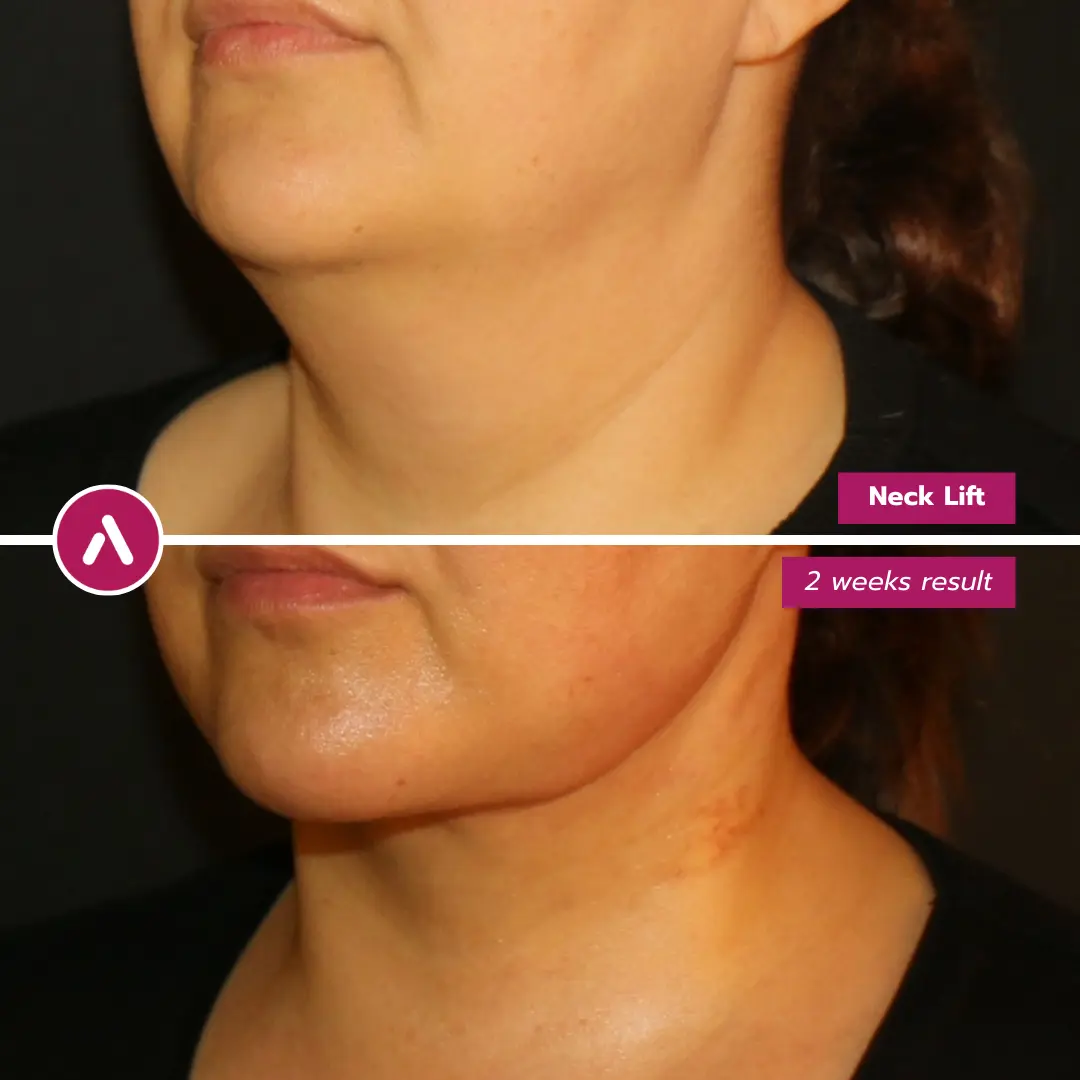
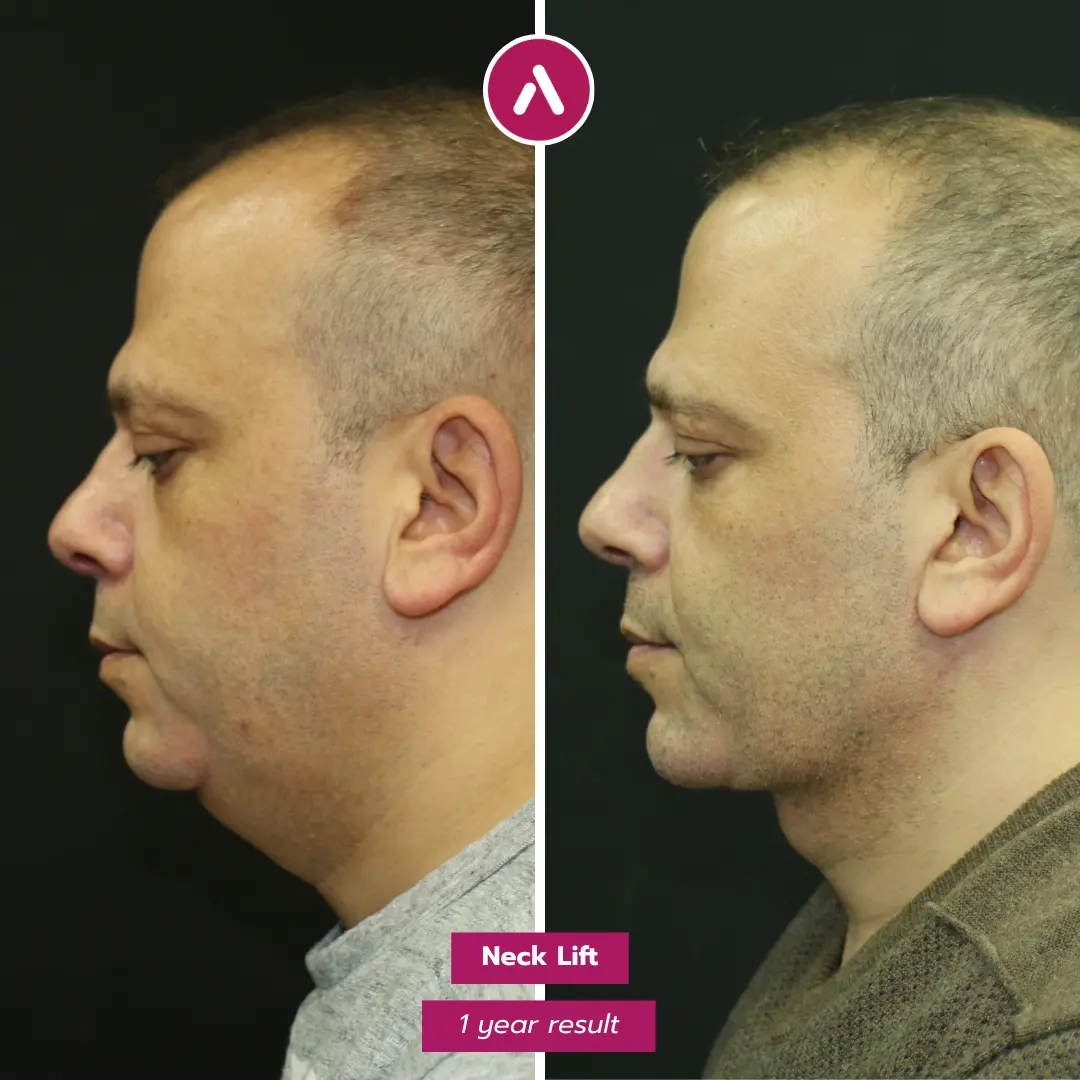
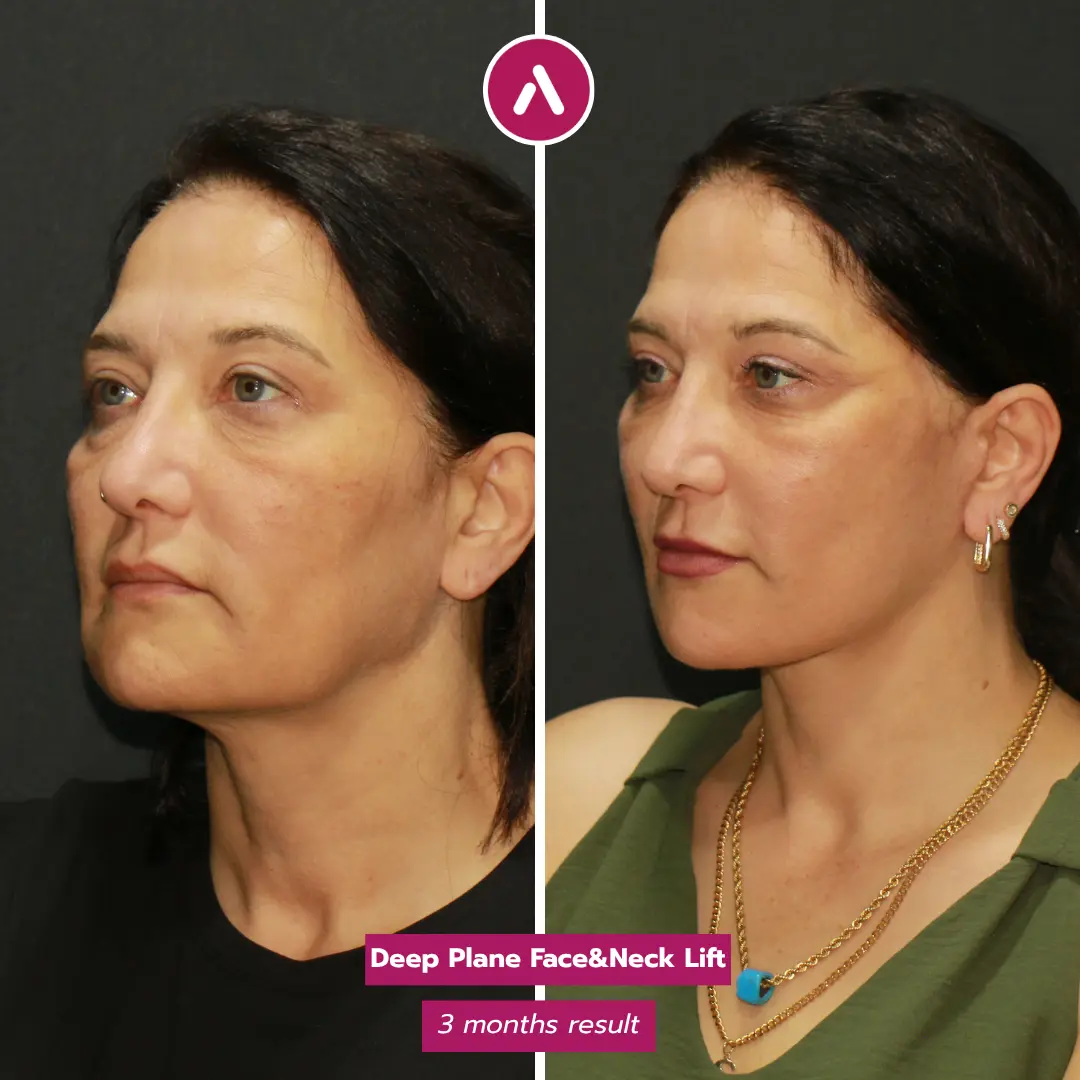
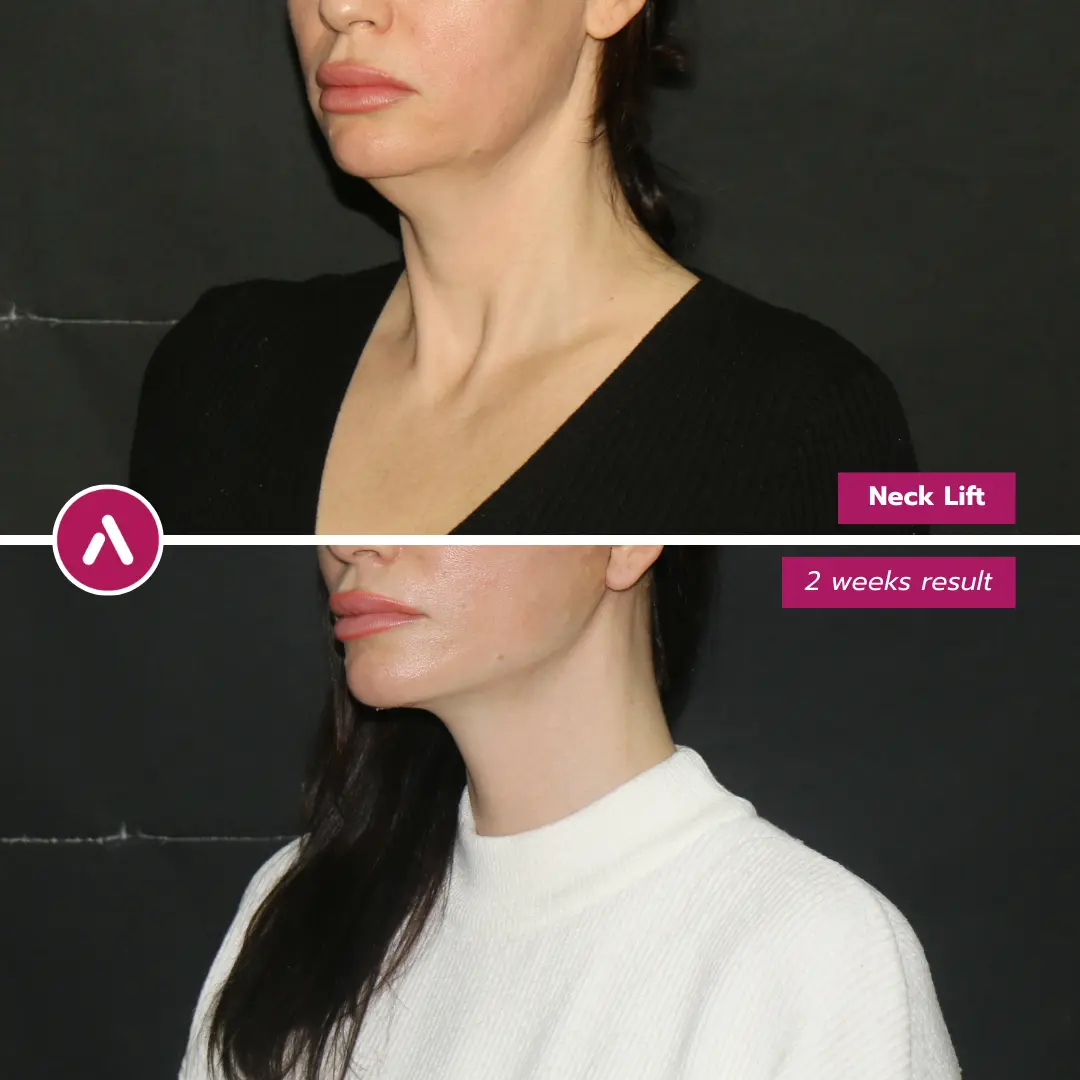
A neck lift (also called a lower neck rejuvenation or platysmaplasty-based neck tightening) is a surgical procedure designed to restore a cleaner, more defined neck contour by addressing the true structural causes of neck aging—loose skin, excess submental fat (“under-chin” fullness), and separation or laxity of the platysma muscle bands. For the “Expert Patient,” the key is understanding that a great neck lift is rarely about simply “pulling skin.” The best results come from correcting deeper anatomy so the neck looks naturally refreshed—not tight, shiny, or obviously operated.
At AKM Clinic, the guiding philosophy is simple: the goal is rejuvenation, not alteration—results should look subtle, refined, and authentic to you.
Surgeon’s Insight: “The most successful aesthetic surgery is the one that goes unnoticed—people see you look well-rested, not surgically changed.”
Table of Contents
What Is a Neck Lift? Understanding Neck Aging Anatomy
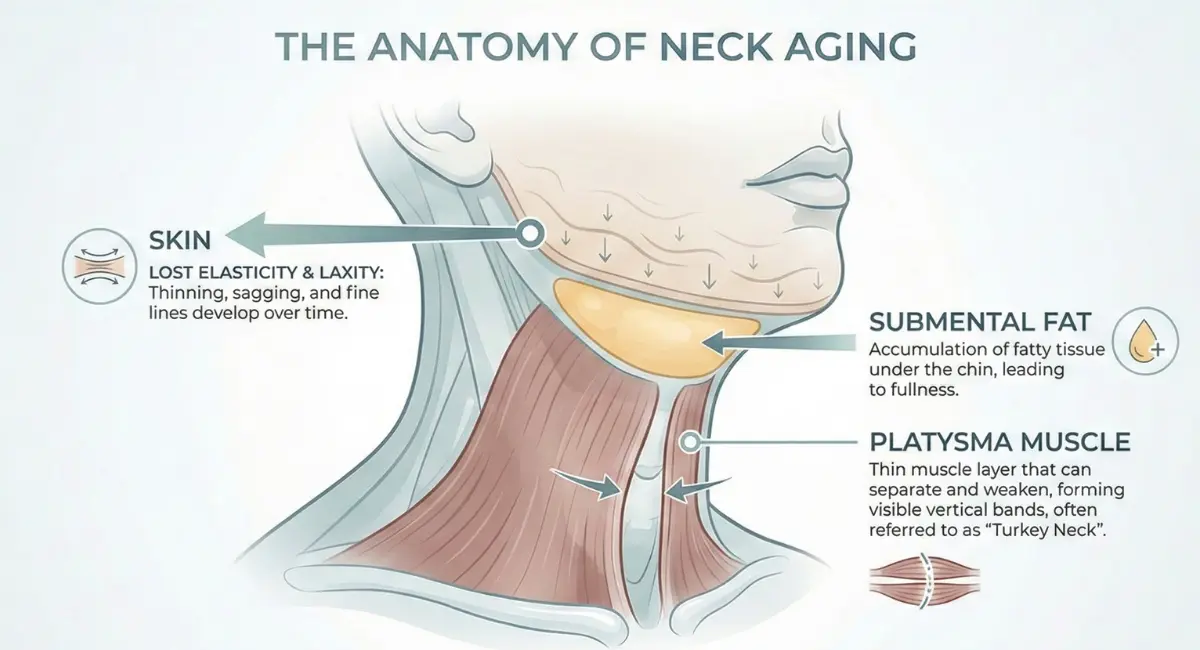
Neck aging is a multi-layer problem. Skin laxity is one layer, but it’s often not the main driver. The “turkey neck” appearance, vertical banding, and loss of jawline definition usually reflect changes in fat compartments and the platysma muscle—plus how these structures descend over time. In clinical overviews of neck rejuvenation, this layered anatomy is emphasized as the reason that effective correction often requires addressing deeper structures rather than skin alone. A neck lift aims to restore a more youthful neck contour by treating the specific layers responsible for what you see in the mirror.
The Structures That Define the Neck and Jawline
To understand technique choices, it helps to know what surgeons evaluate:
- Skin: The outer envelope. Over time, collagen and elastin change, and the skin may no longer “snap back” over the neck.
- Submental fat: Fat under the chin can soften the cervicomental angle (the “neck angle” that creates a crisp profile).
- Platysma muscle: A thin, sheet-like muscle in the neck. With aging, it can separate and form visible vertical bands.
- Jawline transition zone: The neck and lower face are aesthetically connected. Jowling can visually blur the jawline and make the neck look heavier—even if the neck itself isn’t the only issue.
What Causes “Turkey Neck,” Banding, and Submental Fullness
Most neck aging concerns fall into a few common patterns:
- Skin laxity: Loose skin that gathers or folds, especially when you tilt your head down.
- Platysmal banding: Prominent “cords” running vertically in the neck, often more visible during facial expression or speaking.
- Submental fullness: A rounded or “double chin” contour caused by fat, skin laxity, or both.
- Loss of definition at the jawline: The neck may appear heavier because the jawline edge has softened.
The best surgical plan is the one that targets the true anatomic cause—not a one-size-fits-all approach.
What a Neck Lift Can—and Cannot—Fix
A neck lift is highly effective for contour concerns that originate in the neck structures. However, the procedure has limits, and clarity here reduces the risk of disappointment.
- Often improves: loose neck skin, submental fullness (when appropriate), visible platysmal bands, and a blurred neck-jawline contour.
- May require combination treatment: significant jowling or mid-face descent (these are lower face issues that can affect the neck’s visual balance).
- Does not “stop aging”: it resets the clock structurally, but natural aging continues.
Ideal Candidates: Who Benefits Most (and Who Should Wait)
The right candidate isn’t defined by age—it’s defined by anatomy, health profile, and goals. Some patients want a subtle refinement of the neckline; others want a more dramatic restoration of jawline definition. The best outcomes happen when your concerns match what a neck lift can reliably correct, and your plan is tailored to the layers that are actually driving the problem.
The Best Candidate Profile: Goals, Skin Quality, and Expectations
You may be a strong candidate if you:
- Notice neck skin laxity, banding, or under-chin fullness that doesn’t respond to weight changes or skincare.
- Want a natural improvement—more definition and a “cleaner” neck profile—rather than an over-tightened look.
- Have stable weight and understand that surgery is a structural reset, not a substitute for overall wellness.
Factors That Increase Risk (Smoking, Medications, Medical Conditions)
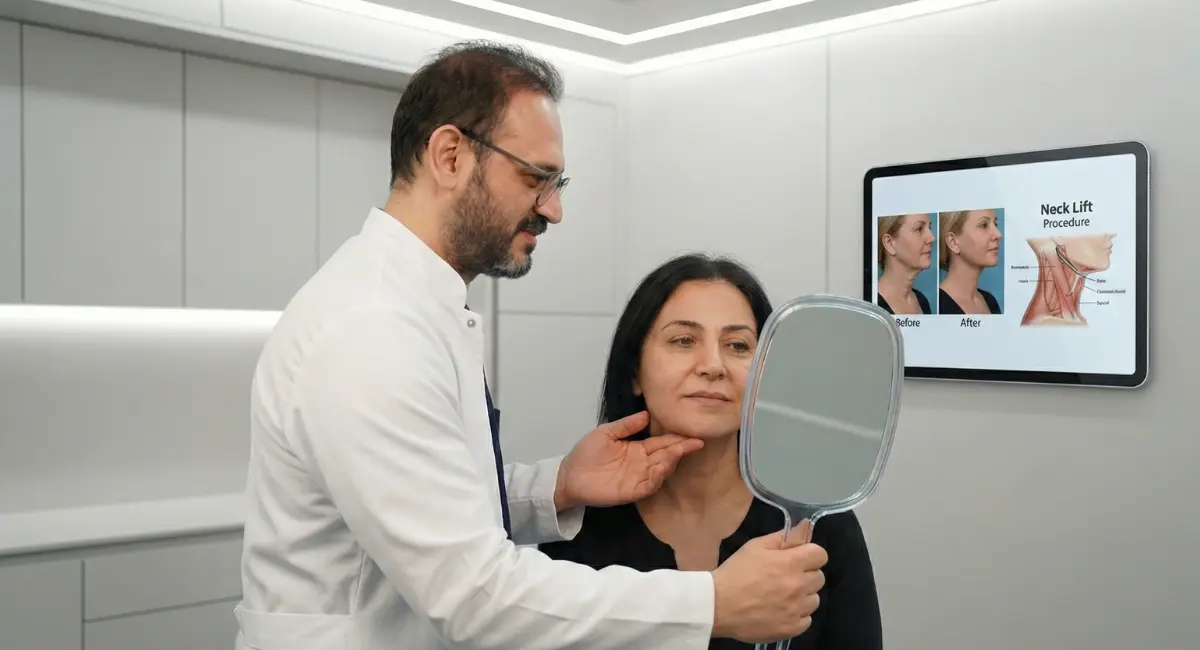
Safety starts with selecting the right patients. A responsible surgical team will review:
- Smoking/vaping/nicotine: Nicotine is strongly associated with impaired healing and higher complication risk. Many surgeons require stopping nicotine well before and after surgery.
- Blood thinners and supplements: Certain prescriptions and over-the-counter supplements can increase bruising or bleeding risk.
- Uncontrolled medical conditions: Poorly controlled diabetes, bleeding disorders, or significant cardiovascular disease may require additional clearance or may shift the risk-benefit equation.
For the “Expert Patient,” the takeaway is simple: the best cosmetic result is built on a safe physiologic environment for healing.
When Non-Surgical Options Make Sense—and When They Don’t
Non-surgical tightening (energy devices), injectable options, and thread lifts can help selected patients—typically those with mild laxity and realistic expectations. However, non-surgical methods cannot reliably repair separated platysmal bands or remove meaningful excess skin. If your primary concern is banding and significant laxity, surgery is usually the definitive option.
Neck Lift Techniques: Choosing the Right Approach for Your Anatomy
“Neck lift” is an umbrella term. In practice, surgeons choose from multiple technique elements—often combining them—to match your anatomy. The goal is not maximal tightness; it’s balanced, structural correction that looks like you, just more refined and rested.
Platysmaplasty + Skin Redraping: The Foundation of Neck Lifting
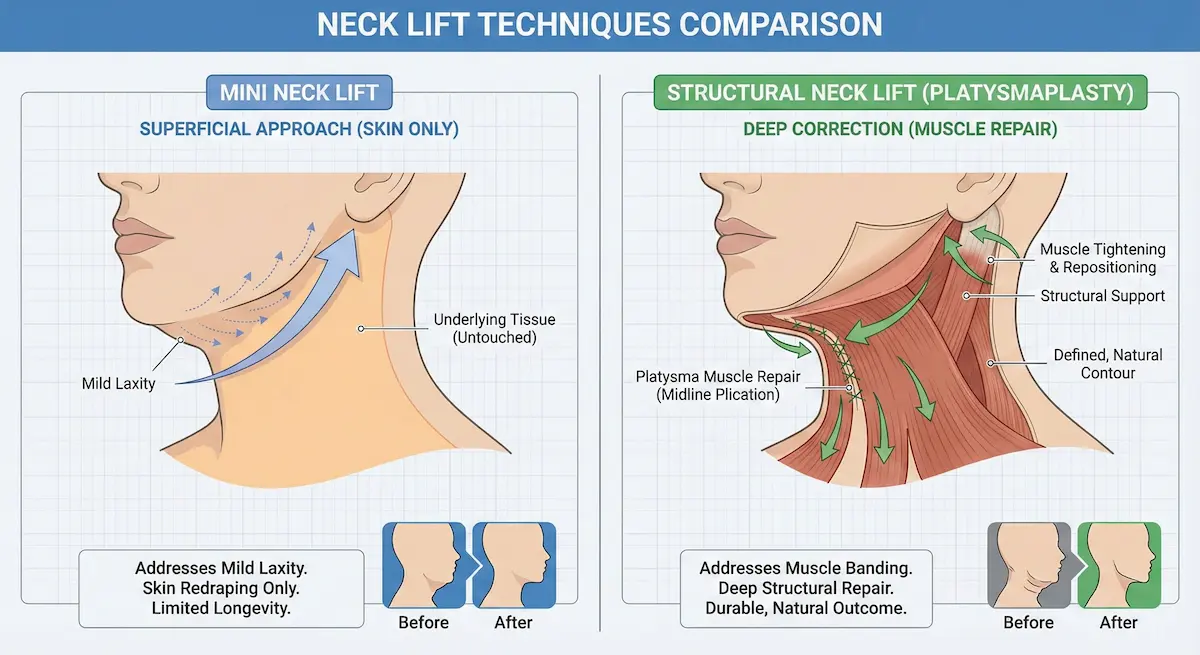
For many patients, the cornerstone of neck lifting is platysmaplasty—surgically repairing and tightening the platysma muscle when it has separated or weakened. By restoring this deeper support layer, the neck can look smoother and better defined without relying on excessive skin tension. Skin is then redraped in a controlled, natural manner, with the intent of minimizing “pulled” stigmata.
Deep Neck Contouring (“Deep Neck Lift”): When Deeper Sculpting Is Needed
Some patients have a heavier submental region due to fat distribution or deeper structural fullness. In these cases, a surgeon may incorporate deeper neck contouring steps to refine the area under the chin and improve the cervicomental angle. This is often what patients mean when they search “deep plane neck lift vs neck lift”—they are usually comparing a more structural/deeper contouring approach vs a more surface-focused tightening plan.
What matters most is not the label—it’s whether the plan addresses your layers of aging in the safest way possible.
Mini Neck Lift: Who It’s For, Who It’s Not
A “mini neck lift” typically refers to a less extensive approach intended for early laxity or mild contour concerns. It can be appropriate when the issue is limited and you want a smaller surgical footprint. But when banding, significant skin excess, or a major loss of definition is present, a mini approach may under-correct—leading to dissatisfaction or a shorter-lived improvement.
Practical rule of thumb: the more your neck concern involves muscle banding and true laxity (not just mild skin looseness), the more likely you’ll benefit from a structural, platysma-focused plan rather than a “mini” solution.
Your Consultation & Surgical Plan: How Natural Results Are Designed
The difference between an elegant neck lift and a “worked-on” neck is rarely about how tight the skin is. It’s about whether the surgical plan is built around your anatomy, your healing profile, and your aesthetic priorities—especially your tolerance for scars, downtime, and anesthesia. A high-quality consultation should feel like a diagnostic process, not a sales pitch.
What Your Surgeon Evaluates: Bands, Fat, Glands, and Skin Excess
An expert evaluation typically focuses on identifying which layer (or layers) are driving your concerns:
- Platysmal banding: visible vertical cords that often need a structural repair (platysmaplasty) to fully resolve.
- Submental fullness: can come from superficial fat, deeper fullness, or skin laxity—and each has a different surgical solution.
- Skin quality and elasticity: helps determine how much tightening and redraping is realistic without creating unnatural tension.
- Jawline transition: the neck is not an isolated area; lower-face laxity (jowls) can blur the jawline and make the neck appear heavier.
This is why “neck lift” is not a single standardized technique. The best plan is anatomy-driven and layered.
Planning With Photography and Measurements: Aligning Goals With Anatomy
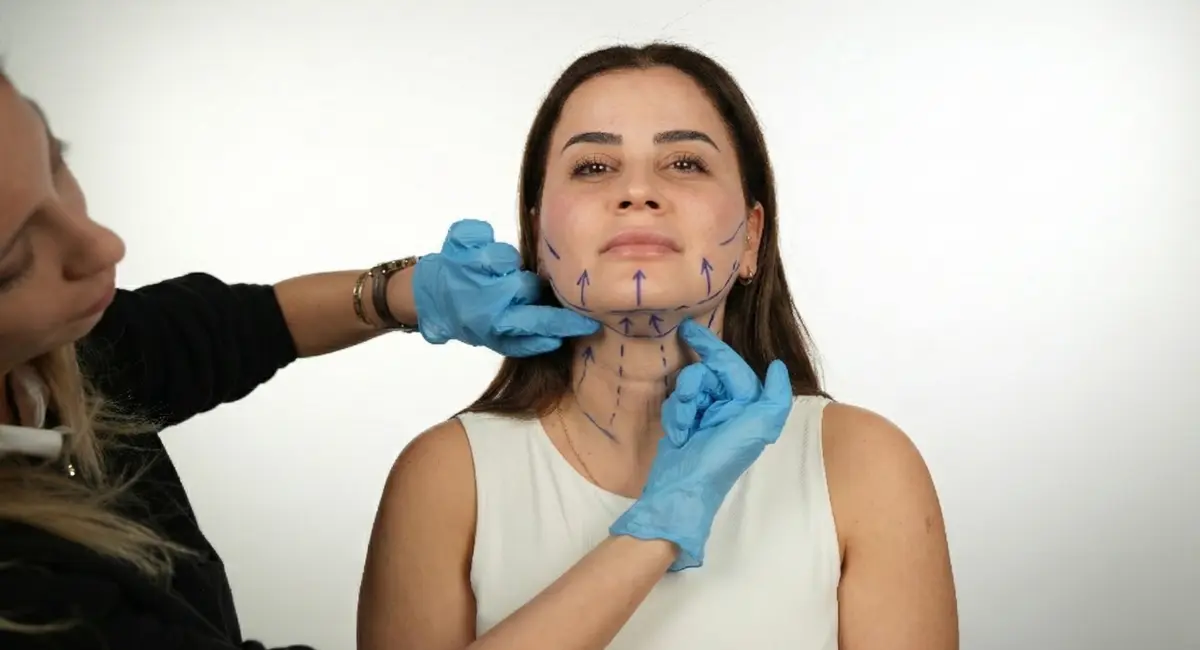
Expert-level planning typically includes standardized photography and a structured discussion of what you want to change—and what you want to keep. This step matters for two reasons:
- It prevents overcorrection: patients often fear a tight, pulled, or “wind-swept” look. Planning focuses on restoring structure, not forcing skin tension.
- It defines your “success criteria”: a sharper cervicomental angle, less banding, smoother contour, and a cleaner jawline transition—without making you look like a different person.
“Rejuvenation, Not Alteration”: Avoiding the Tight or “Operated” Look
For the expert patient, the most important philosophical point is this: natural-looking neck rejuvenation is created by correcting deeper support, not by pulling the surface. When the structural foundation is addressed (especially the platysma), the skin can be re-draped with lower tension—reducing the risk of an obvious surgical signature and supporting better scar aesthetics.
Surgeon’s Insight: “The most successful aesthetic surgery is the one that goes unnoticed—patients want to look like the most confident, revitalized version of themselves, not like a different person.”
Anesthesia Options: Awake/Twilight Sedation vs General Anesthesia
Anesthesia is a major decision driver for many neck lift patients, particularly those who have had prior unpleasant experiences or who feel anxious about general anesthesia. Your best option depends on the complexity of your plan, your medical profile, and what is safest and most comfortable for you. Importantly, anesthesia choice can also influence the recovery experience.
Awake Neck Lift: Who May Be a Fit and Why It Matters
“Awake” surgery typically refers to performing a procedure under local anesthesia (with appropriate comfort measures). For selected patients, this approach can be compelling—especially when general anesthesia anxiety is a major barrier to treatment. In AKM Clinic’s patient narratives, the ability to undergo major facial procedures without general anesthesia is repeatedly described as a decisive factor for patients who otherwise felt stuck by fear.
That said, “awake” is not a marketing term—it’s a clinical decision. A responsible team will recommend it only when the procedure plan and your profile make it a safe, appropriate match.
Twilight Sedation: Comfort, Safety, and Control
Twilight sedation is often described as a balance point: patients are typically deeply relaxed and comfortable while avoiding some of the concerns patients associate with general anesthesia. At AKM Clinic, mastery of twilight/awake approaches is positioned as a meaningful differentiator for patients who prioritize anesthesia comfort and a smoother overall experience.
When General Anesthesia Is Recommended
General anesthesia may be recommended when the surgical plan is more extensive, when multiple procedures are combined, or when a patient’s comfort and safety are best supported with full anesthesia. The “right” anesthesia is the one that aligns with:
- procedure complexity (including combination surgery),
- medical clearance and risk profile,
- your ability to tolerate positioning and surgical duration,
- and the anesthetic plan that provides the most controlled environment for safety.
Procedure Walkthrough: How a Neck Lift Is Performed Step by Step
A neck lift is best understood as a sequence of controlled maneuvers designed to restore structure, refine contour, and place incisions where they can heal discreetly. While technique details vary by anatomy, the steps below reflect the core logic of modern neck rejuvenation: structural correction first, skin redraping second, and scar management throughout.
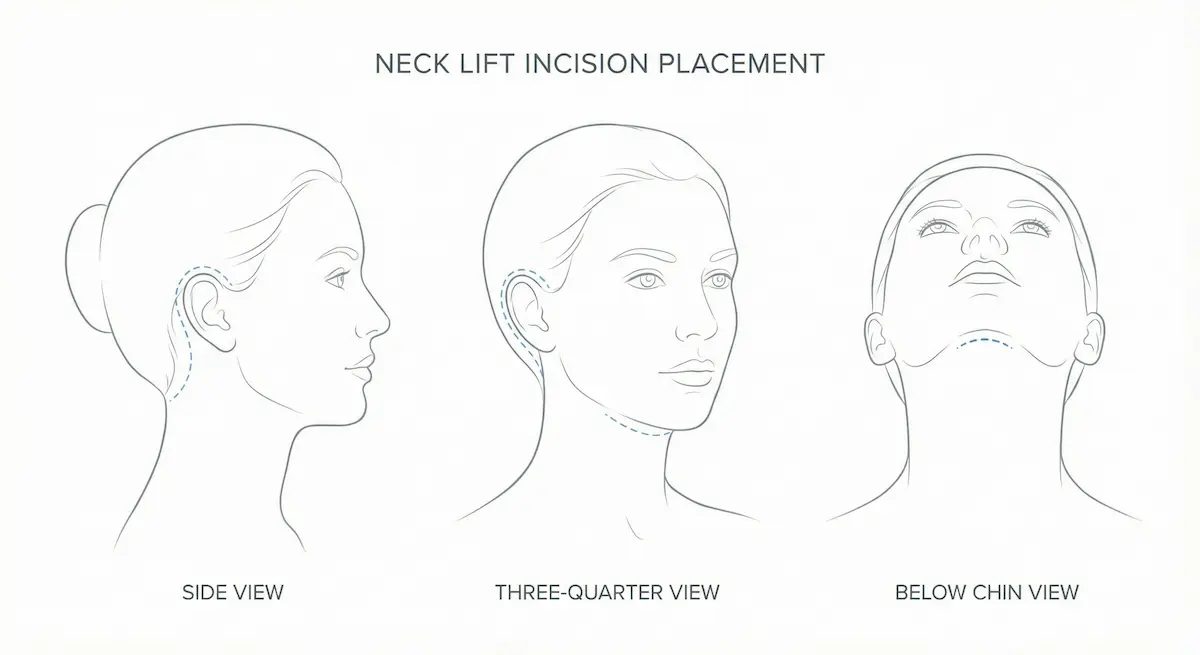
Incision Placement: Behind the Ear and Under the Chin
Incision strategy is chosen to balance access, precision, and scar concealment. Depending on what needs to be corrected, incisions may include:
- Behind the ear / around natural creases: commonly used to allow skin redraping and tightening while hiding scars in natural contours.
- Under the chin (submental): may be used when direct access is needed for platysma repair or targeted contouring under the chin.
For patients searching “neck lift scars pictures,” the key takeaway is that scar visibility is influenced by placement, tension management, and your biology of healing—not simply the existence of an incision.
Platysma Repair and Contour Creation: Structural Tightening
When platysmal banding is present, repairing and tightening the platysma is often the central step. This structural component is what allows the neck to look smooth and defined without relying on aggressive skin pull. In AKM Clinic’s case-based analysis, platysmaplasty is explicitly described as the structural intervention that repairs separated bands and supports a sharper, sculpted neck angle.
Drains, Dressings, Compression, and the First 24 Hours
Immediate post-operative care is designed to control swelling, protect the repair, and support predictable healing. Common elements include:
- Dressings and a compression garment: to support the neck contour and reduce fluid accumulation.
- Close monitoring: especially during the first hours when swelling patterns are established.
- Clear instructions: on head elevation, movement limits, and early signs that warrant immediate contact.
Combining Procedures: Why the Neck and Lower Face Are Often Treated Together
Many patients discover something surprising during consultation: what they think is a “neck problem” is partly a jawline/lower-face problem. The lower face and neck form a single aesthetic unit. If jowling is significant, treating the neck alone may leave the jawline transition under-corrected. This is why combination planning is common—especially for patients seeking a defined, natural jawline without a tight surgical look.
Neck Lift + Lower Facelift: Jawline Continuity and Jowl Correction
A combined lower face and neck approach can better address the blurred jawline-jowl transition and create a more continuous contour from the cheek to the jawline and into the neck. In AKM Clinic’s structural analysis framework, deeper structural repositioning is consistently presented as the way to avoid the “pulled” look patients fear—because it relies less on skin tension and more on restoring deeper anatomy.
Chin Enhancement or Submental Liposuction: Refining Definition
For selected patients, chin and submental refinement can improve balance and sharpen the cervicomental angle. The right combination depends on whether fullness is driven by fat, laxity, or both—and whether the chin-jaw projection supports a crisp neck profile.
Building Balanced Results Without “Pulling” the Face
The common thread in natural-looking rejuvenation is balance: structural correction, conservative skin redraping, and a plan that respects your baseline anatomy. This is the foundation of results that look refreshed and “unoperated”—an explicit priority repeatedly reflected in AKM Clinic’s patient outcomes and philosophy.
Neck Lift Recovery: A Day-by-Day Timeline (What to Expect Realistically)
Neck lift recovery is highly predictable when the surgical plan is structural (not skin-tension driven) and when post-op instructions are followed closely. Your “visible recovery” (swelling/bruising/social downtime) usually improves rapidly in the first 2 weeks, while scar maturation and final contour refinement continue for months. Many expert patients benefit from thinking in two timelines: how you feel versus how you look.
First 72 Hours: Swelling, Tightness, and the “Compression” Phase
The first 2–3 days are typically the peak period for swelling and tightness, and it’s when your recovery setup matters most. Common experiences include:
- Neck tightness and pressure: often described as “firmness” rather than sharp pain.
- Swelling under the chin and along the jawline: this can temporarily make the neck look fuller before it looks better.
- Bruising: variable by patient and whether liposuction/combination procedures were performed.
- Compression garment: worn as directed to support contour and reduce fluid accumulation.
Many patients feel most comfortable sleeping with the head elevated and avoiding sudden neck extension or heavy bending. Some patients describe the first 48 hours as the toughest, followed by rapid improvement as swelling begins to settle.
Week 1–2: Social Downtime and “When Will I Look Normal?”
In week one, swelling begins to drop meaningfully, and bruising (if present) transitions through typical color changes. By days 7–14, many patients look “presentable” with normal grooming and styling choices—even if the neck is not yet fully refined.
From AKM Clinic’s patient narratives, recovery is commonly described as smoother than expected, with some patients stopping pain medications quickly and feeling “fantastic” within days after major combination surgery (example: a U.S. patient who underwent an awake deep plane face and neck lift and reported feeling fantastic by day four). Another patient story notes stopping painkillers within 2–3 days after a rapid recovery.
Month 1–12: Scar Maturation and Final Contour
By 4–6 weeks, swelling is typically significantly improved and the neck looks more refined in most lighting. However, “final” neck lift results are best judged later, because scar maturation and deeper tissue settling continue for months. In AKM Clinic’s case-based analysis, outcomes at 3–6 months are described as refreshed, natural, and free of obvious surgical signs, with meticulous scar concealment and tension-free closure principles supporting “invisible” scarring.
Accelerated Recovery Protocol: HBOT + LLLT for Faster Healing and Lower Perceived Downtime
For expert patients who want to reduce “social downtime” and support high-quality scar outcomes, AKM Clinic frames Hyperbaric Oxygen Therapy (HBOT) and Low-Level Laser Therapy (LLLT) as a structured recovery protocol—designed to reduce inflammation, support lymphatic drainage, and improve the biologic environment for tissue repair.

HBOT: Systemic Oxygenation to Support Tissue Survival and Regeneration
HBOT is presented as a strategic medical intervention to support healing in tissues where circulation may be temporarily disrupted after surgery. The mechanism is described as breathing 100% oxygen in a pressurized environment, which increases oxygen delivery into surgical tissues.
- Accelerated recovery: HBOT is described as significantly reducing inflammation and supporting lymphatic drainage, which can cut down social downtime.
- Enhanced scar healing: HBOT is described as stimulating fibroblasts (collagen-producing cells), supporting smoother, less visible scarring.
- Infection defense: HBOT is described as creating an oxygen-rich environment hostile to many bacteria while also boosting immune response.
Clinically, the “why” is straightforward: oxygen is a core requirement for wound healing biology, and HBOT is positioned as a method to increase oxygen availability during the most vulnerable post-op phase.
LLLT: Targeted Cellular “Fuel” for Skin Healing
LLLT is described as a “soft laser” system using medical-grade laser diodes at a validated 650nm wavelength, designed to stimulate cellular activity without heat or tissue damage. For post-surgical skin healing, the reported benefits include:
- Faster cellular repair: boosting ATP production (cellular energy) to support recovery.
- Collagen support: stimulating fibroblasts to enhance collagen synthesis, complementing HBOT’s collagen-supporting effect.
- Swelling/redness reduction: positioned as an adjunct to HBOT for a smoother recovery.
Why the Combination Matters: Macro-to-Micro Healing Support
AKM Clinic describes a “macro-to-micro” sequence: HBOT addresses systemic oxygenation first, then LLLT provides a targeted cellular-level boost (ATP/collagen) within that improved oxygen environment. In the clinic’s case study synthesis, HBOT and LLLT are highlighted as key components of an accelerated pathway, correlated with “drastically reduced inflammation and bruising” for patients prioritizing minimal downtime.
Neck Lift Scars: What They Look Like and How They’re Managed
When patients search “neck lift scars pictures,” they’re usually asking two things: where scars are located, and whether they’ll be noticeable in real life (not just in ideal lighting). Scar outcome is influenced by incision placement, how much tension is placed on the skin, and your individual healing biology. Technique matters—especially the difference between structural tightening and skin-only pull.
What Determines Scar Visibility (Placement, Tension, Healing Biology)
In modern structural rejuvenation, the goal is to minimize skin tension by correcting deeper anatomy. In AKM Clinic’s case-based analysis, a “tension-free closure” is directly associated with “invisible scarring.” This aligns with the broader principle that scars tend to heal best when they are not forced to “carry” the lifting result.
Scar Care Protocol: Supporting the Biology of a Clean Heal
Scar care is typically a structured process (your surgeon’s protocol may vary), but it commonly includes:
- Incision protection early on: keeping the area clean and protected as instructed.
- Long-term scar support: strategies such as silicone-based scar management and consistent sun protection are often used to reduce discoloration and thickening.
- Follow-up monitoring: to address early signs of hypertrophy, irritation, or delayed healing before they become persistent issues.
At AKM Clinic, HBOT is positioned as supporting scar quality by stimulating fibroblasts and collagen production for stronger, smoother skin—an example of using biology to improve the aesthetic “finish” of surgery.
When Scars Look “Botched”: Causes and Revision Options
Problematic scarring can occur when incisions heal under excessive tension, when wound care is disrupted, or when individual biology trends toward thicker scars. Revision options depend on what’s wrong (width, pigmentation, thickening, contour irregularity), and timing is crucial—many scar concerns improve significantly during the natural maturation process before any procedure is considered.
Risks, Complications & “Signs of a Bad Neck Lift”
Every surgery has risks, and a trustworthy guide doesn’t avoid them. For the expert patient, the goal is not “zero risk” (which is unrealistic), but risk reduction through proper candidacy screening, surgeon skill, and a recovery protocol designed to reduce common complications. AKM Clinic specifically positions HBOT as a “#1 safety promise” for tissue survival and regeneration in the post-surgical period.
Normal Healing vs Warning Signs
Some swelling, bruising, firmness, and temporary asymmetry are normal in early healing. Warning signs—especially if sudden or worsening—require urgent medical contact. While your surgeon will provide specific instructions, high-level red flags include:
- Rapidly increasing swelling (especially one-sided) or severe, escalating pain
- Bleeding, expanding bruising, or significant pressure under the skin
- Fever, spreading redness, or drainage that suggests infection
- Breathing or swallowing difficulty (rare, urgent)
AKM Clinic frames HBOT as providing dual support against infection by creating an oxygen environment hostile to many bacteria while strengthening immune response.
Why “Neck Lift Regrets” Happen (and How to Avoid Them)
Regret is often less about the procedure itself and more about mismatch:
- Expectation mismatch: expecting surgery to stop aging, or expecting skin tightening to solve deeper muscle banding.
- Technique mismatch: choosing a mini approach when structural platysma repair is needed.
- Overcorrection fear: patients commonly fear a “pulled” or “wind-swept” look; AKM Clinic’s case synthesis highlights this as a shared anxiety among international patients and positions structural, tension-minimizing strategies as the antidote.
When Revision Surgery Is Considered—and How Timing Works
Revision is not automatically a failure—sometimes it’s the correct next step if there is persistent contour irregularity, problematic scarring, or under-correction. However, timing matters. Many issues improve as swelling resolves and scars mature. A responsible team will typically recommend waiting through a meaningful healing window unless there is a safety concern that demands earlier intervention.
Results & Longevity: How Long Does a Neck Lift Last?
A neck lift can deliver a major aesthetic payoff because it addresses the structural causes of neck aging—not just the surface. Longevity depends on the specific technique used (especially whether platysmal banding is structurally repaired), your baseline anatomy, and how your tissues age over time. The most satisfied patients tend to define success as “looking well-rested and natural,” not “looking pulled.” That priority—avoiding an “operated” look—is repeatedly identified as a core concern among international expert patients.
What “Natural” Neck Lift Results Actually Look Like
Natural results typically mean:
- A cleaner cervicomental angle: the under-chin area looks smoother and more defined.
- Reduced or eliminated platysmal banding: especially when a structural platysmaplasty is performed to tighten separated bands.
- A smoother jawline-to-neck transition: the jawline reads more clearly without a harsh, over-tightened appearance.
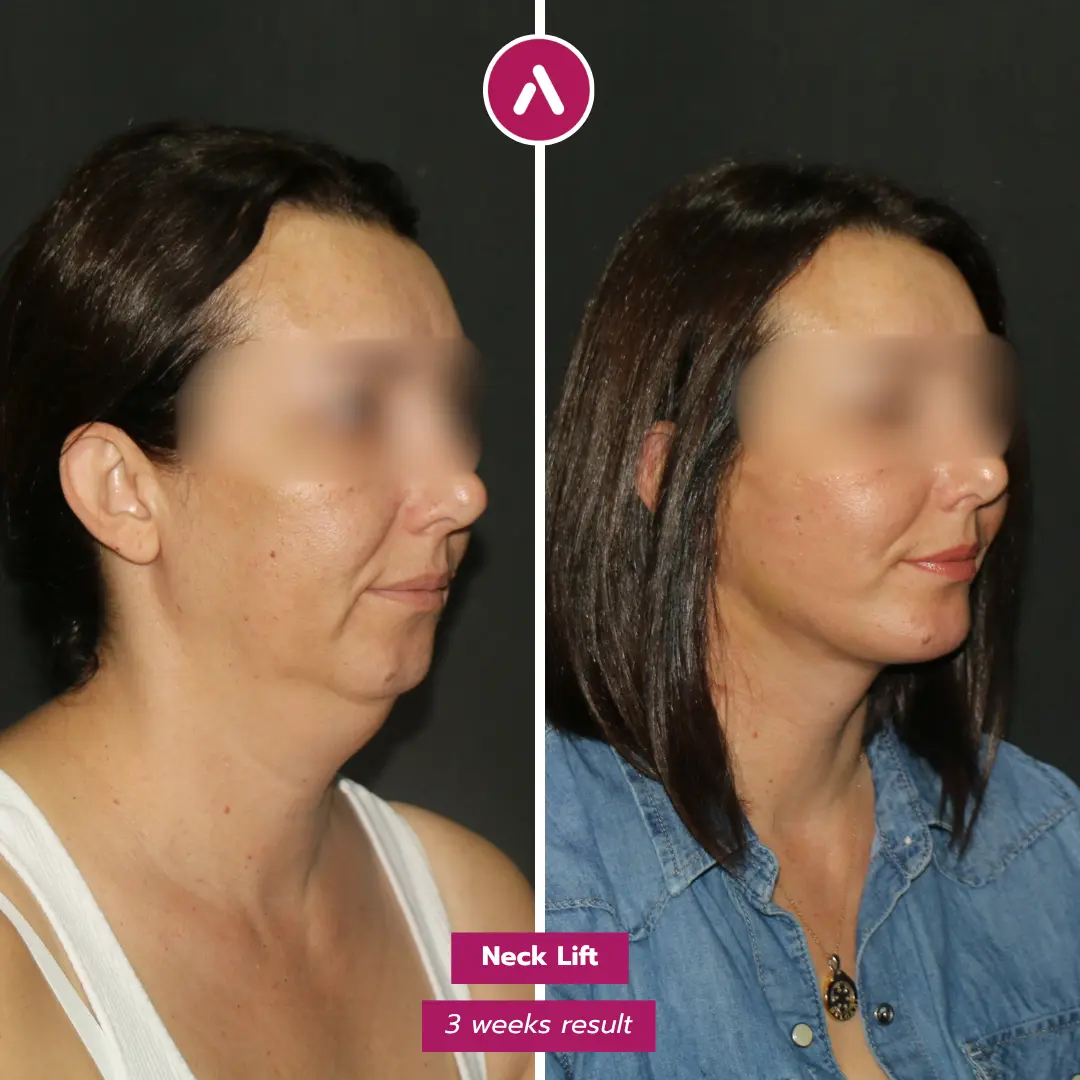
In AKM Clinic’s case analysis, a structural neck lift (platysmaplasty) is specifically described as repairing and tightening separated platysmal bands, with outcomes at 3 months described as natural and “unoperated-on.”
When You’ll See Your “True” Result
While many patients look presentable within 1–2 weeks, neck lift results should be judged later. In AKM’s case materials, 3–6 month outcomes are emphasized as the point where results look refined, scars are meticulously hidden, and the absence of surgical signs becomes most evident.
For the expert patient, this is an important mindset shift: early swelling can temporarily disguise contour improvements, and scar maturation continues well beyond the early healing phase.
How Long Do Results Last (and What Changes Over Time)?
A neck lift “resets” structure, but it doesn’t freeze time. Aging continues, and changes in weight, skin quality, and genetics still apply. The goal is long-term improvement that ages well. The most durable aesthetic logic is structural correction—especially when platysma repair is part of the plan, rather than relying on skin tension alone.
Cost & Value: NYC/LA/Miami vs Istanbul—How to Think About Price
Cost research is a normal—and rational—part of an expert patient’s journey. The key is interpreting numbers correctly. Many “average cost” figures reflect surgeon fee only and exclude anesthesia, facility charges, and aftercare. A smart comparison is always apples-to-apples: total costs, what’s included, and what safety systems are in place.
What You’re Paying For: Surgeon Fee vs Total Cost
In the U.S., the American Society of Plastic Surgeons (ASPS) lists an average surgeon fee for a neck lift (lower rhytidectomy) of $7,885, while explicitly noting this does not include anesthesia, operating room facilities, or related expenses.
Some cost guides also publish procedure averages (for example, The Aesthetic Society lists “Neck Lift” averages), but these numbers vary depending on what’s included and how the data is collected.
Typical Ranges in Major U.S. Markets (Why NYC Often Runs Higher)
City-level pricing varies widely based on surgeon expertise, facility costs, and whether your plan includes deeper structural work or combination procedures. Examples published by U.S. practices and cost guides show large ranges:
- New York City: some guides estimate city averages in the single-to-low five figures, while some NYC premium practice resources cite much higher upper ranges (especially for more comprehensive plans).
- Los Angeles: published estimates commonly cluster in the mid-to-high four figures through the teens, depending on extent and neighborhood market.
- Miami: published ranges vary; some Miami practices list ballpark ranges in the mid-to-high four figures for neck lift alone.
Important: these figures are examples from public sources and can’t predict your personal quote. Your anatomy and whether you’re combining lower face work can move the number significantly.
Why Costs Differ Internationally: The “Value Equation,” Not “Cheap Care”
AKM Clinic’s internal positioning is explicit: the price difference between Turkey and the USA is driven by macroeconomic factors (exchange rate and lower national operational costs such as salaries and rent), not a decision to compromise on quality.
In the clinic’s value model, the “expert patient” trade is receiving premium, system-based care in a transparent package. The VIP package is designed to remove uncertainty and hidden add-ons—especially important when you’re planning surgery internationally.
| Cost Category | Typical U.S. Quote Structure | AKM Clinic “All-Inclusive” Model |
|---|---|---|
| Surgeon fee | Often listed separately (and may exclude other costs) | Included in a single transparent quote after virtual consultation |
| Anesthesia + OR/facility | Frequently billed as separate line items | Included |
| Pre-op tests | May be billed separately depending on facility | Included |
| Hotel + transfers | Typically separate personal expenses | 5-star partner hotel + VIP transfers included |
| Medications + garments | Often separate pharmacy/medical purchases | Included |
| Follow-up | Varies by practice; some charge for extended follow-up | Long-term virtual follow-up included |
| Not included | — | International flights, travel insurance, personal expenses, possible visa fees |
Choosing the Right Surgeon: What Credentials and Proof to Look For
If you’re searching “best neck lift surgeon,” the most reliable filter isn’t marketing—it’s verifiable training, board certification, a track record of natural results, and a consultation process that feels clinically honest. In AKM’s materials, “board certified” status is repeatedly emphasized as an objective trust signal for discerning patients.
Board Certification, Advanced Training, and Subspecialty Fit
Look for surgeons who can demonstrate:
- Board certification (European-equivalent standards where applicable): AKM’s surgeon documentation highlights European board certifications and international training as trust markers for US/UK/Canada patients.
- US-aligned training exposure: documented US training and globally recognized institutional experience are positioned as signals of familiarity with Western patient expectations.
- A stated commitment to natural outcomes: explicitly addressing the fear of looking “overdone.”
Questions to Ask in Consultation (Scars, Revisions, and Safety Systems)
High-yield questions include:
- “What layer is driving my concern—skin, fat, platysma bands, or a combination?”
- “Will I need platysmaplasty, and what does that change about my result?”
- “Where will scars be placed, and how do you reduce tension on incisions?”
- “If I’m worried about a ‘pulled’ look, what technique choices prevent that?”
- “What is your revision policy and how do you time revision decisions?”
Surgeon-Led Communication and High-Touch Follow-Up (The International Difference-Maker)
For international patients, competence is necessary but not sufficient—continuity of care matters. In AKM’s patient experience analysis, robust long-distance aftercare is positioned as essential to counter the fear of post-op abandonment after returning home.
Patients also repeatedly describe surgeon-led trust building—consultations that answer fears directly, set expectations clearly, and remain responsive during recovery.
Non-Surgical Neck Lift Options: What They Can (and Cannot) Do
“Non-surgical neck lift” searches usually come from patients who want improvement with minimal downtime—or who are not ready for surgery yet. The most important expert-level truth is that non-surgical options can improve mild laxity and skin quality, but they cannot reliably recreate what surgery does when the issue is structural (platysma banding, significant skin excess, or a softened cervicomental angle driven by deeper anatomy). Understanding these limits helps you avoid wasted time, money, and “almost-there” results.
Energy-Based Tightening: RF, Ultrasound, and Skin Quality Improvements
Energy-based treatments (radiofrequency and ultrasound devices) can help with:
- mild skin laxity (early looseness, not major hanging skin),
- texture and collagen support (a more refined skin “finish”),
- subtle contour enhancement in carefully selected patients.
However, these treatments do not remove excess skin in the way surgery does, and they do not repair platysmal separation. Expert patients often use them as maintenance—or as a “bridge” while planning surgical timing.
Injectables: When Neuromodulators or Skin Boosters Help
In selected cases, neuromodulators may soften the appearance of neck bands during expression, and skin boosters may improve skin texture. These approaches are generally best for:
- patients with dynamic banding (more visible with movement),
- those seeking subtle refinement rather than a true lift,
- patients who want to test conservative improvement before committing to surgery.
They are not a replacement for structural lifting when significant banding and laxity are present.
Thread Lifts: Why “Lift” Can Be Overpromised in the Neck
Thread lifts may create a temporary sense of tightness for some patients, but the neck is an unforgiving area for overpromising. If your primary issue is:
- significant skin excess or crepey looseness,
- prominent platysmal bands,
- a blunted cervicomental angle that needs structural correction,
…a surgical approach is typically the definitive option. For the expert patient, the best use of threads is highly selective and expectation-managed.
Real Results: What to Look for in Neck Lift Before-and-After Photos
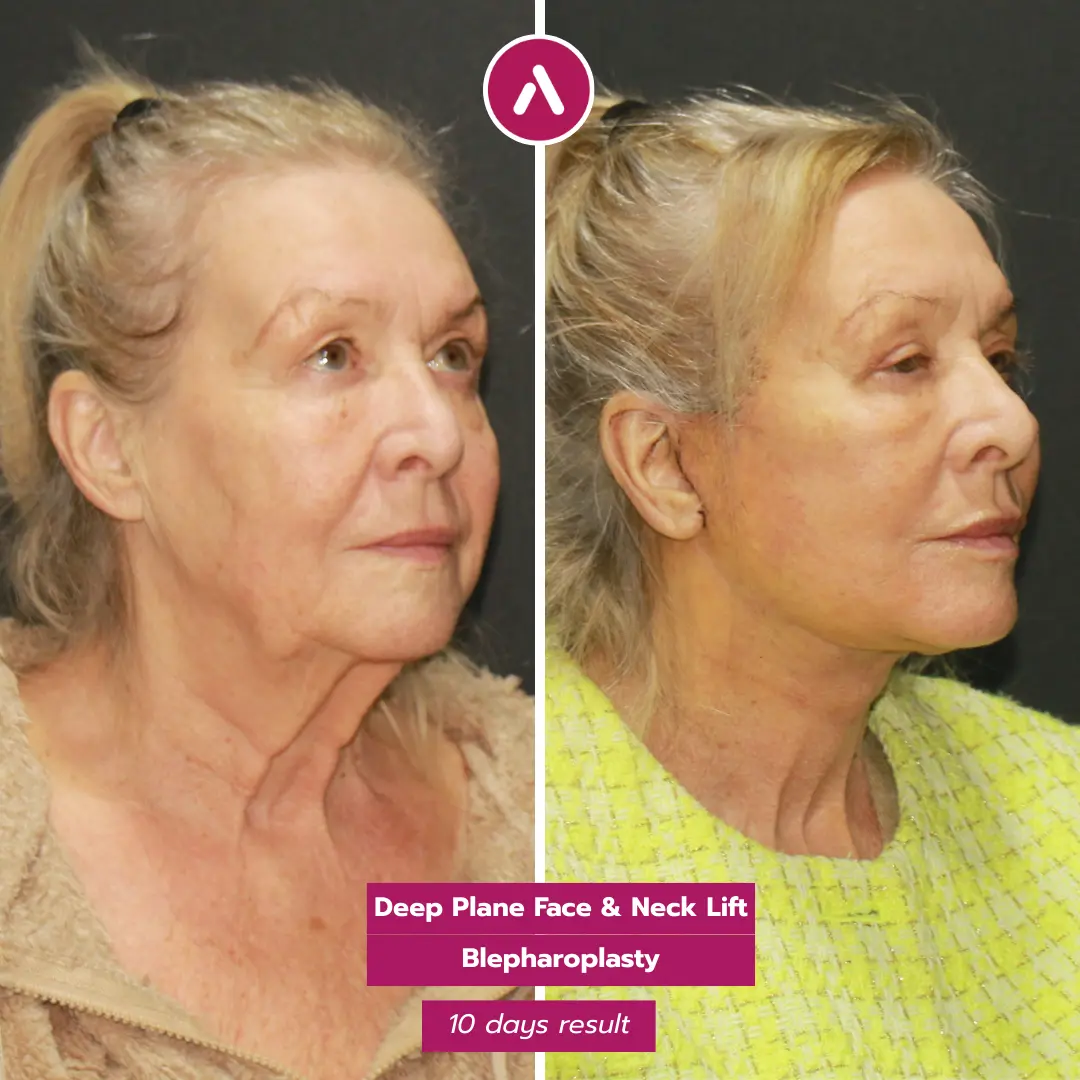
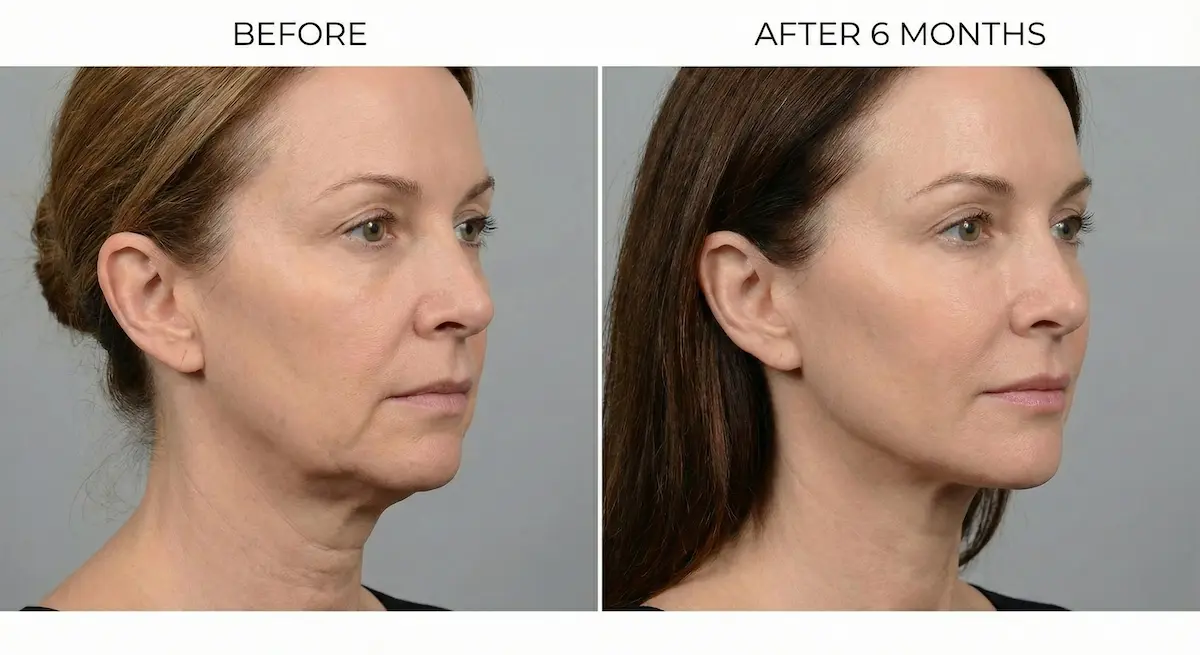
Before-and-after photos are one of the most useful tools for expert-level decision-making—if you know how to read them. The goal is not “tightest neck possible.” It’s a neck that looks naturally defined, proportionate to the face, and consistent in multiple angles and lighting. A strong photo set helps you evaluate whether a surgeon consistently delivers the kind of result you want.
Signs of High-Quality, Natural Neck Lift Results
- Improved cervicomental angle without a harsh, over-tightened contour.
- Reduced banding that looks smooth at rest and during expression.
- A clean jawline transition that doesn’t look “pulled back.”
- Consistency across views (front, 45-degree, profile).
How to Evaluate Scars in Photo Sets (Without Being Misled)
Scar assessment requires realism:
- Look for hair-up or ear-exposed angles when possible (not only best-case styling).
- Prefer multiple time points (early healing vs 3–6–12 months).
- Watch for “tension clues” (shiny tightness, unnatural skin pull), which can correlate with more noticeable scarring and a less natural look.
Patient-Centered Goal Setting: “Refreshed, Not Different”
AKM Clinic’s guiding philosophy is “Rejuvenation, Not Alteration”—patients want to look younger and more refined without signaling that they’ve had surgery. In patient stories, a recurring theme is relief: the face and neck look “20 years younger,” but still authentic to the person’s identity and facial character.
Patient Perspective: Many expert patients describe the “win” as looking like a healthier, more rested version of themselves—without the fear of an obvious or overdone surgical look.
The Medical Journey for International Patients: A Practical Timeline
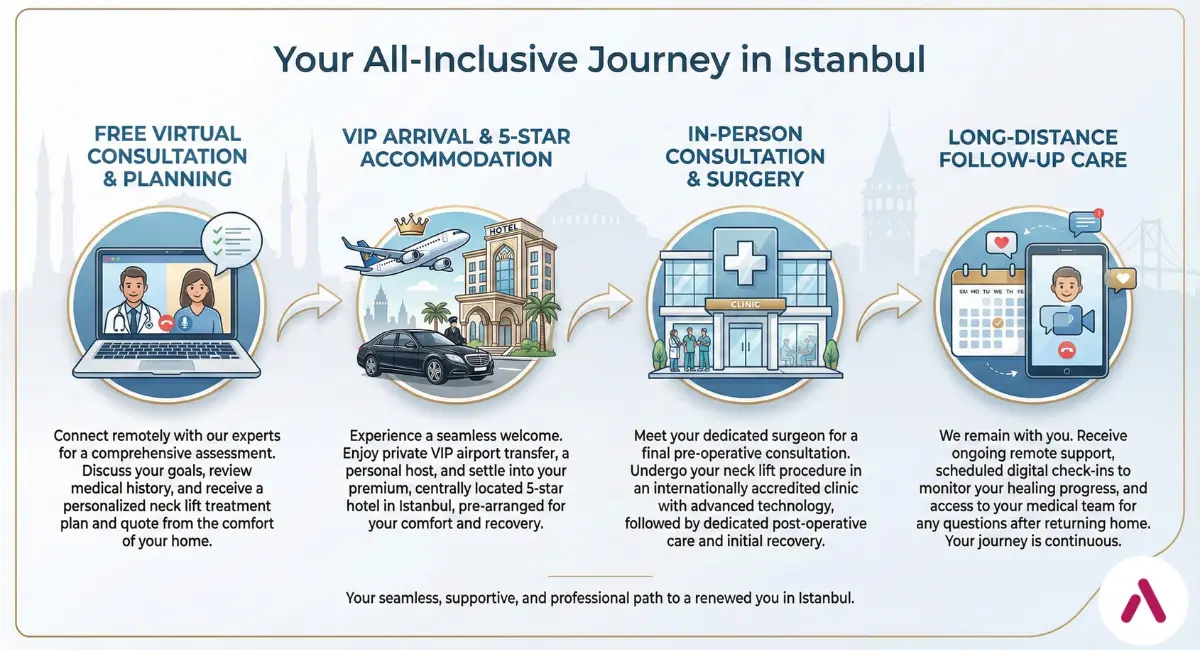
For international patients, choosing a surgeon is only one part of the decision. The process must also be logistically predictable: clear timelines, transparent inclusions, structured aftercare, and continuity once you return home. A well-designed medical journey reduces stress—and that matters, because lower stress often supports smoother recovery behavior (sleep, hydration, compliance).
Step 1: Virtual Assessment and a Clear Surgical Plan
The process typically begins with a remote evaluation (photos/video and a health questionnaire). The goal is to identify:
- your main anatomic drivers (skin laxity vs banding vs under-chin fullness),
- whether you’re a better candidate for a neck-only plan or a lower face + neck strategy,
- your best anesthesia pathway (awake/twilight vs general),
- and a realistic recovery timeline aligned with your travel window.
A strong international plan also clarifies what’s included in your quote (surgery, facility, aftercare) so you can compare options accurately.
Step 2: Arrival Week—In-Person Exam, Surgery, and Early Follow-Up
While exact schedules vary, an organized surgical week often follows a predictable rhythm:
- Arrival + settling in: so you’re rested before pre-op steps.
- In-person evaluation: exam, photography, confirmation of the surgical map, and a final safety checklist.
- Surgery day: procedure performed with the planned anesthesia approach, followed by monitored recovery.
- Early follow-ups: dressing checks, garment guidance, swelling management, and day-by-day instructions.
For expert patients, the main question to ask is: “Who is accountable for my care from landing through the first 7–10 days?” High-touch support is not a luxury in aesthetic surgery—it’s a safety and outcome variable.
Step 3: Flight Readiness, At-Home Aftercare, and Long-Distance Follow-Up
International planning should include:
- Flight-readiness guidance: when swelling is controlled and early healing milestones are met.
- At-home aftercare instructions: garment schedule, activity progression, scar care timeline, and warning signs.
- Structured virtual follow-up: check-ins at meaningful recovery landmarks (often around 1, 3, 6, and 12 months) to monitor scar maturation and final contour.
FAQ: 10 Answers to Common Neck Lift Questions
This FAQ is designed for voice-search and “expert patient” concerns—direct, specific, and oriented toward decision-making. Keep in mind: your exact plan depends on anatomy, health profile, and whether you’re combining procedures.
How long does a neck lift last?
A neck lift can provide long-lasting improvement because it corrects structural causes (especially when platysmal banding is repaired). Aging continues, but you typically look “set back” on the aging curve rather than frozen in time.
What is a “deep neck lift” and how is it different?
Patients usually mean a plan that includes deeper neck contouring steps (beyond skin tightening) to refine the under-chin region and cervicomental angle. It’s anatomy-dependent—not automatically “better” for everyone.
Can a neck lift fix platysmal bands?
Yes—when the plan includes structural platysma repair (platysmaplasty). Skin-only tightening often under-corrects banding or creates unnatural tension.
What are the signs of a bad neck lift?
Red flags include an overly tight or shiny look, unnatural pulling around the ear, persistent contour irregularities after healing, or scars that appear widened due to high tension. Early swelling can mimic issues, so timing and follow-up matter.
How painful is neck lift recovery?
Most patients describe tightness, pressure, and swelling more than sharp pain. Discomfort is typically most noticeable in the first few days, then improves steadily with proper aftercare.
When will I look normal after a neck lift?
Many patients feel socially presentable within 7–14 days, depending on bruising and swelling. “Final” refinement is better judged over months as swelling resolves and scars mature.
Where are neck lift scars?
Scars are commonly placed behind the ear and sometimes under the chin, depending on what needs to be corrected. Skilled incision planning and tension-minimizing closure are key to discreet scars.
Is an awake neck lift safe?
It can be appropriate for selected patients when the procedure plan and health profile support it. The safest anesthesia is the one matched to your anatomy, surgical scope, and medical clearance.
Can I do a neck lift without a facelift?
Yes—if your primary issue is in the neck. But if jowling or lower-face descent is significant, a combined lower face + neck approach may create a more balanced, natural outcome.
Are non-surgical neck lifts worth it?
They can be worth it for mild laxity and skin quality improvements, but they cannot reliably repair separated platysma bands or remove significant excess skin. For structural issues, surgery is typically the definitive solution.