



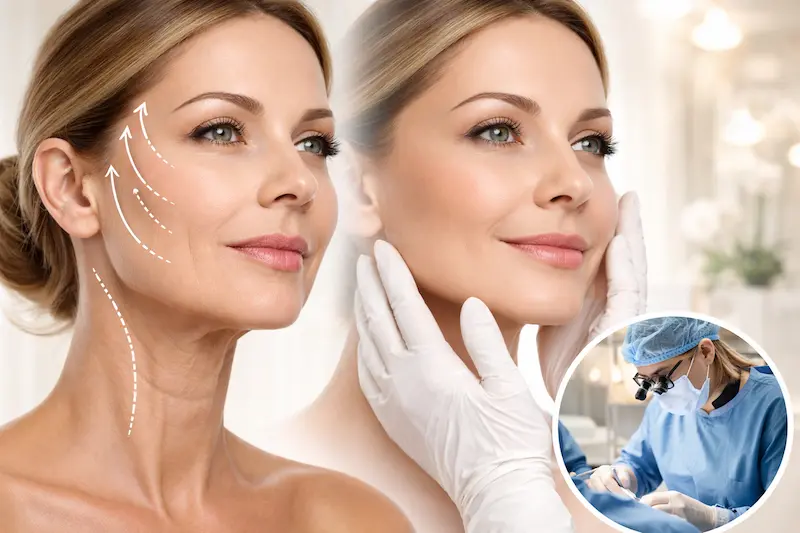
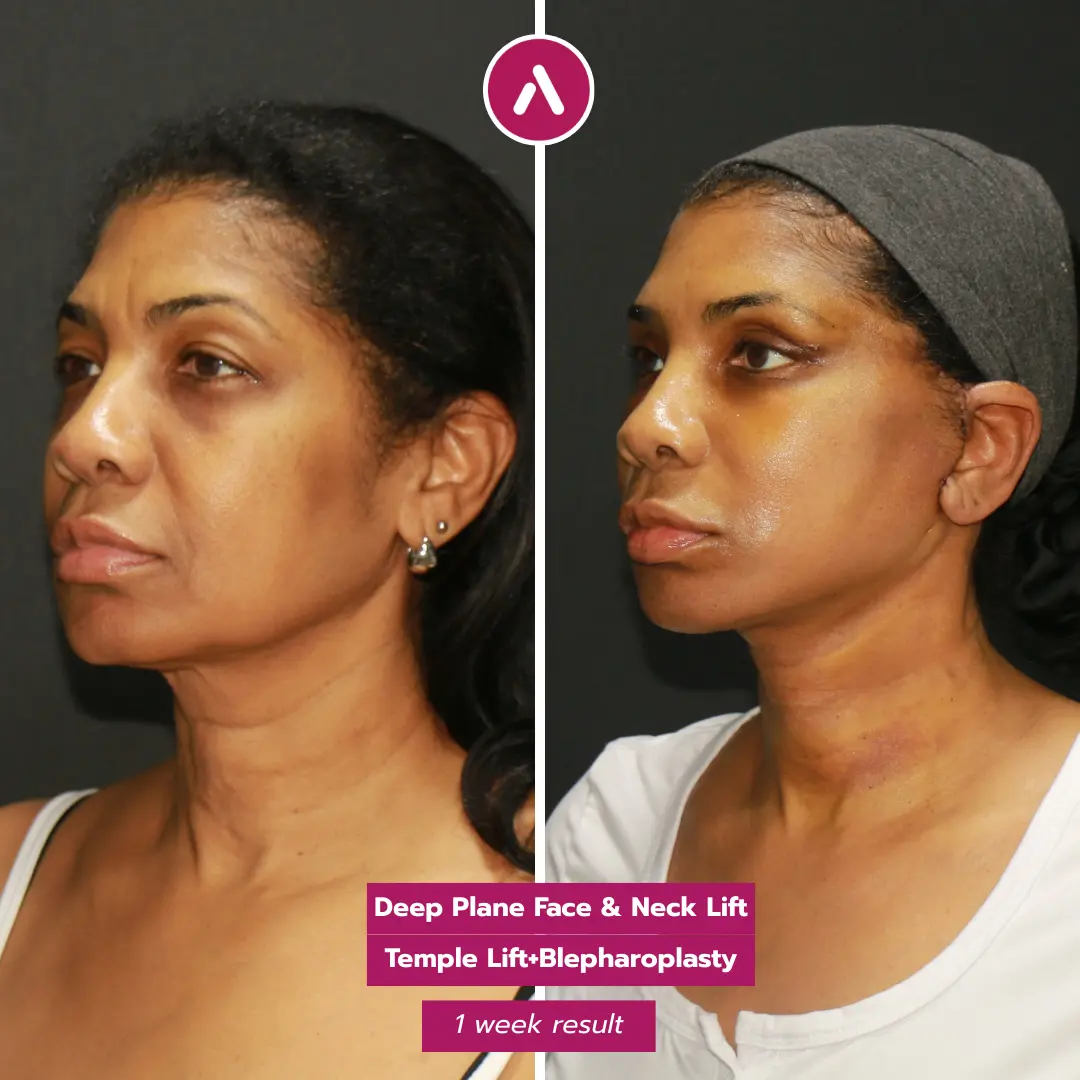
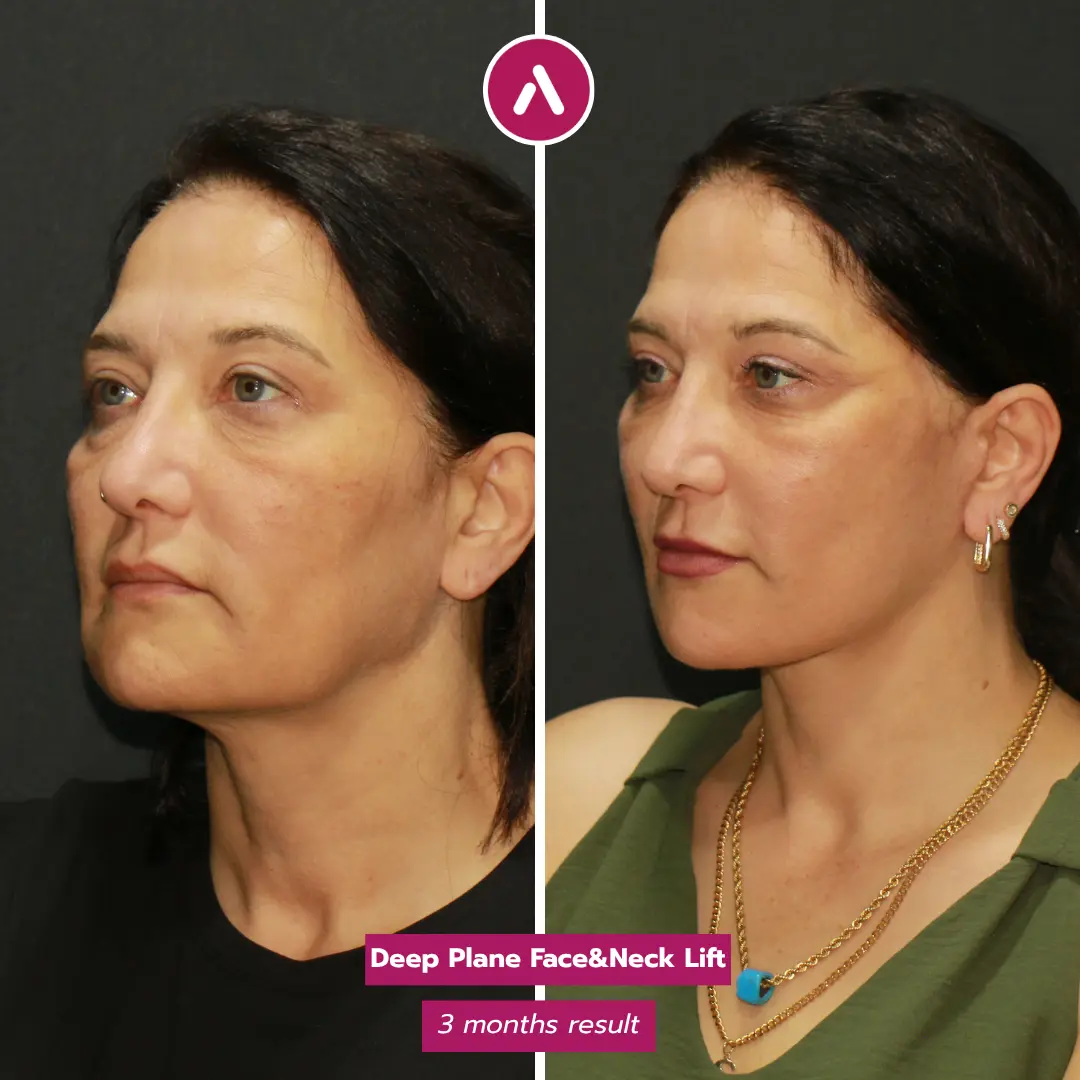
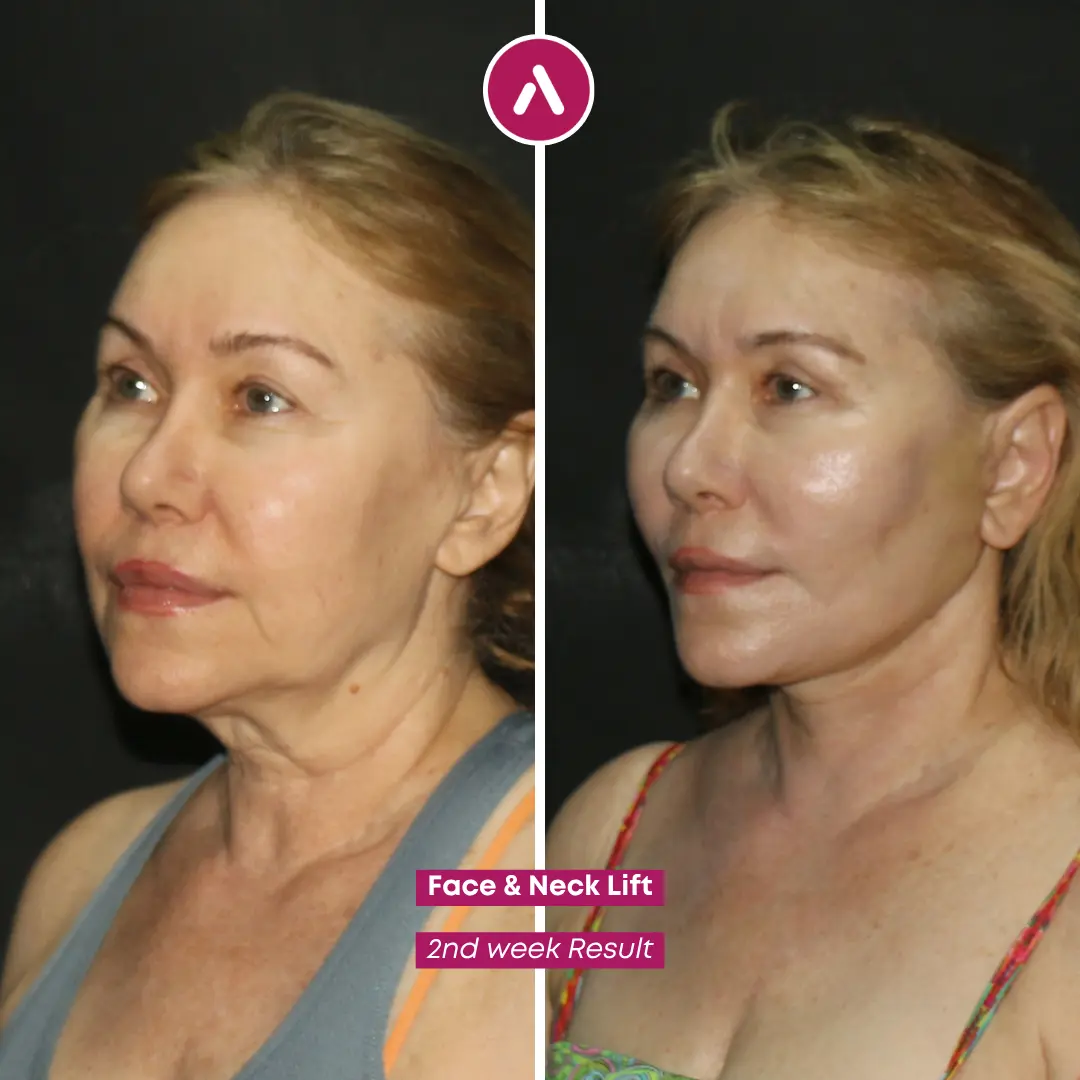
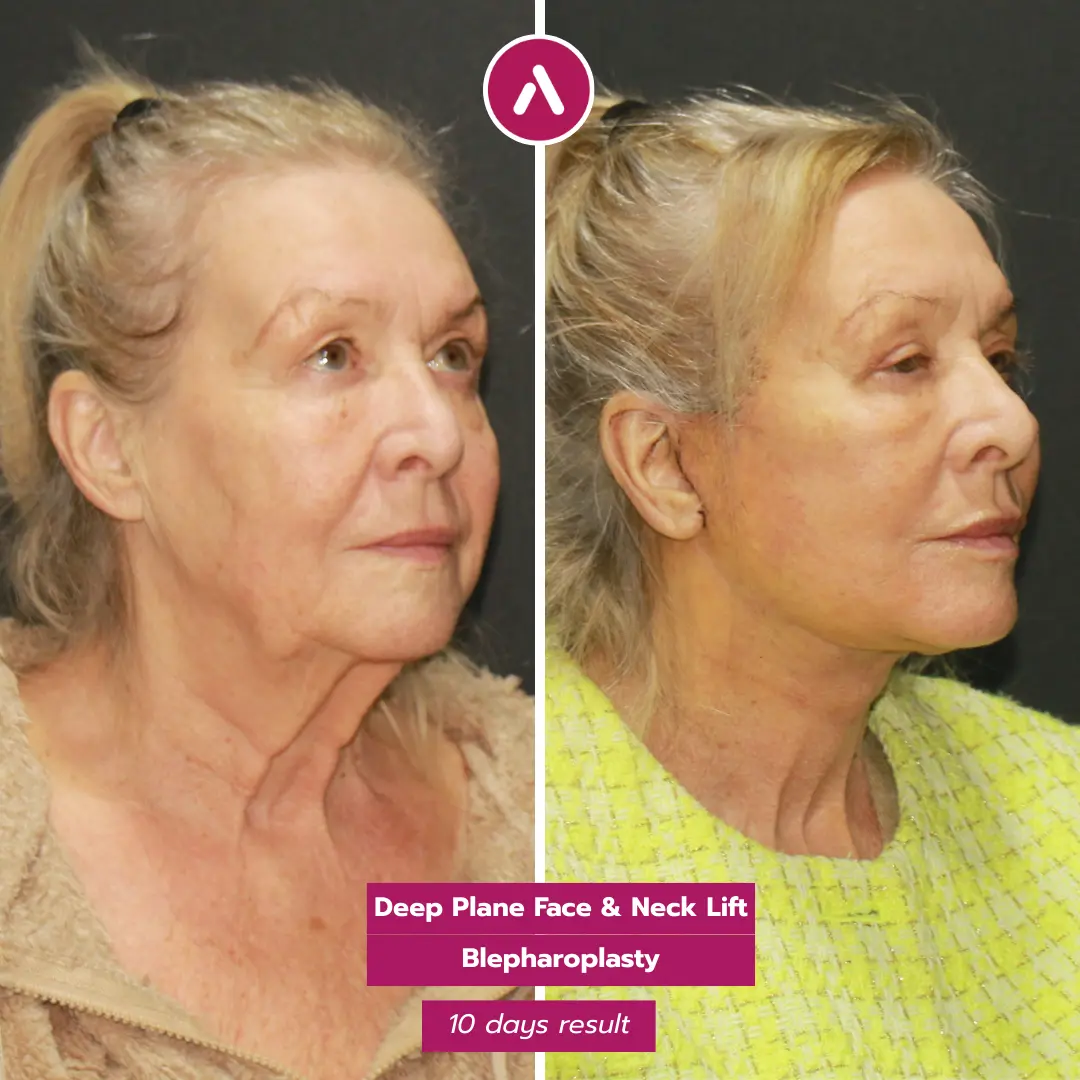
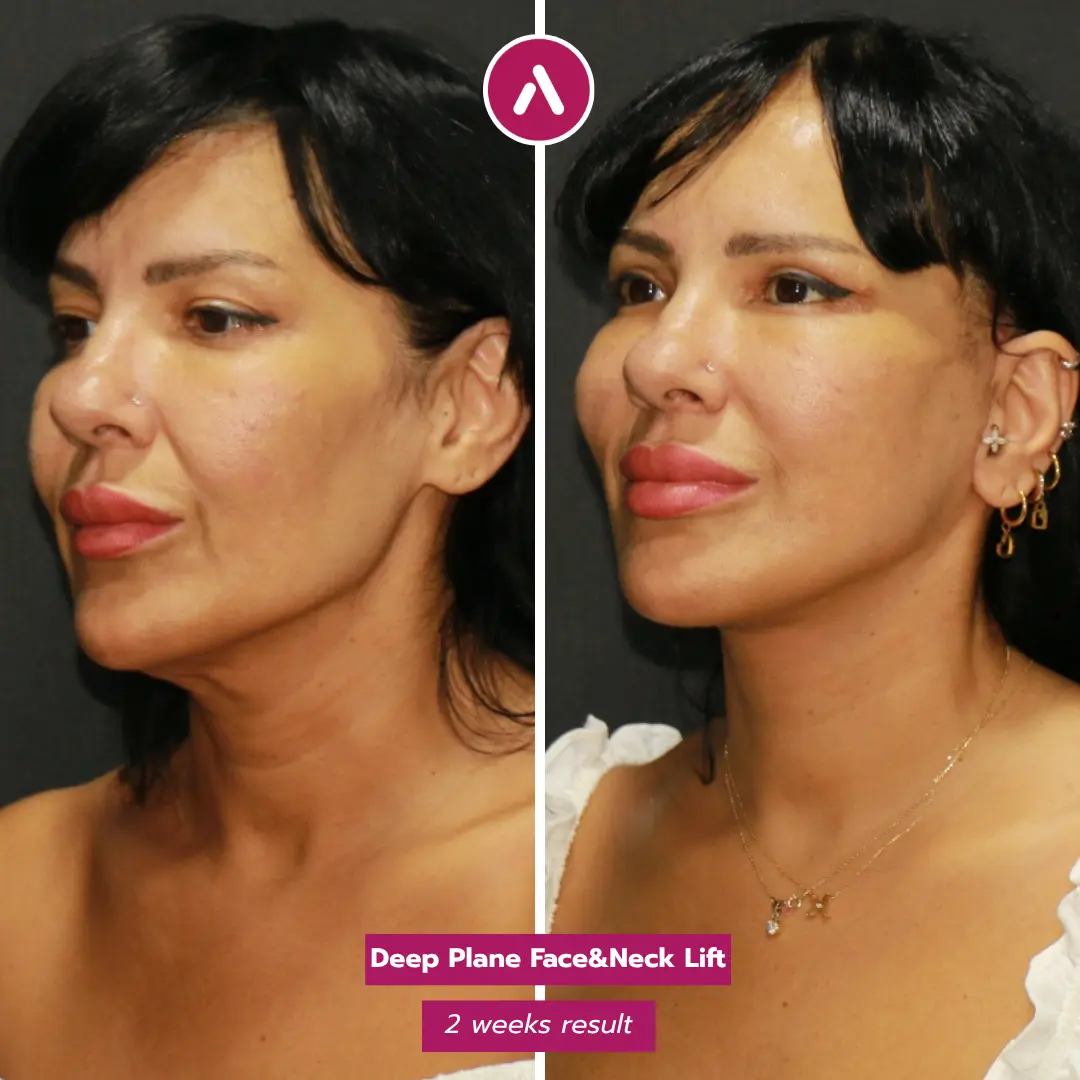
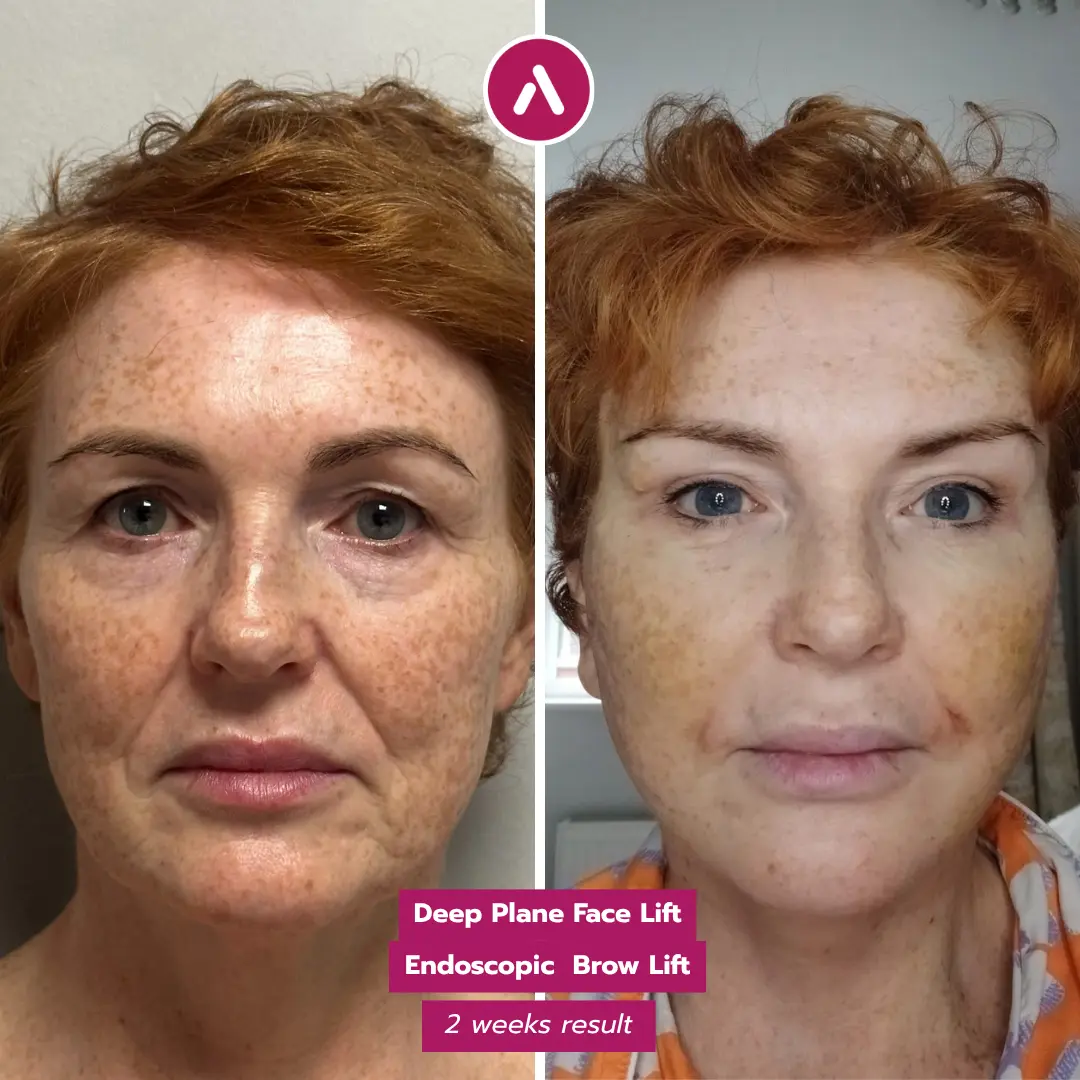
Entrusting your face to a surgeon is an act of profound vulnerability. When that trust results in disappointment—whether through visible scarring, unnatural “wind-swept” distortion, or a premature return of aging—the emotional toll is often heavier than the physical one. You are likely here not because you are looking for a simple cosmetic change, but because you are seeking a solution to a problem that greets you in the mirror every morning.
A revision facelift is far more than just a “second surgery”; it is a complex reconstructive undertaking that demands a master’s understanding of facial anatomy. It requires navigating through scar tissue, correcting compromised structural planes, and reversing the errors of previous techniques. At AKM Clinic in Istanbul, we specialize in these high-stakes corrections. We understand that for our international patients, this procedure is not merely about vanity—it is about the restoration of dignity and the reclamation of your natural identity.
Table of Contents
What is a Revision Facelift (Secondary Rhytidectomy)?
A revision facelift, clinically known as a secondary rhytidectomy, is a specialized surgical procedure designed to correct dissatisfaction, address complications, or treat recurrent signs of aging following a primary facelift. Unlike a primary surgery which operates on “virgin” anatomy, a detailed clinical overview of this complex restorative procedure confirms the need for navigating altered tissue planes and scar tissue to improve facial contours, correct visible deformities, and restore a natural, balanced appearance.
Why Do Primary Facelifts Fail? (The Anatomy of Recurrence)
The most common question we receive during consultations is, “Why didn’t my first facelift last?” The answer often lies in the technique employed during the initial surgery. A significant number of primary procedures rely on “skin-only” techniques or superficial SMAS plication, which essentially pull the skin tight without adequately addressing the deeper structural causes of aging.
Skin is elastic; it stretches. If a surgeon relies on skin tension to lift the face, the results are often short-lived, leading to the “rebound effect” where jowls and neck laxity return within 1-2 years. Furthermore, excessive tension on the skin is the primary culprit behind the dreaded “wind-swept” or “pulled” appearance that many international patients explicitly fear.
Our European Board Certified Surgeons frequently encounter the following technical failures in revision cases:
- Superficial Dissection: Failure to release the facial retaining ligaments, preventing a true vertical lift of the mid-face.
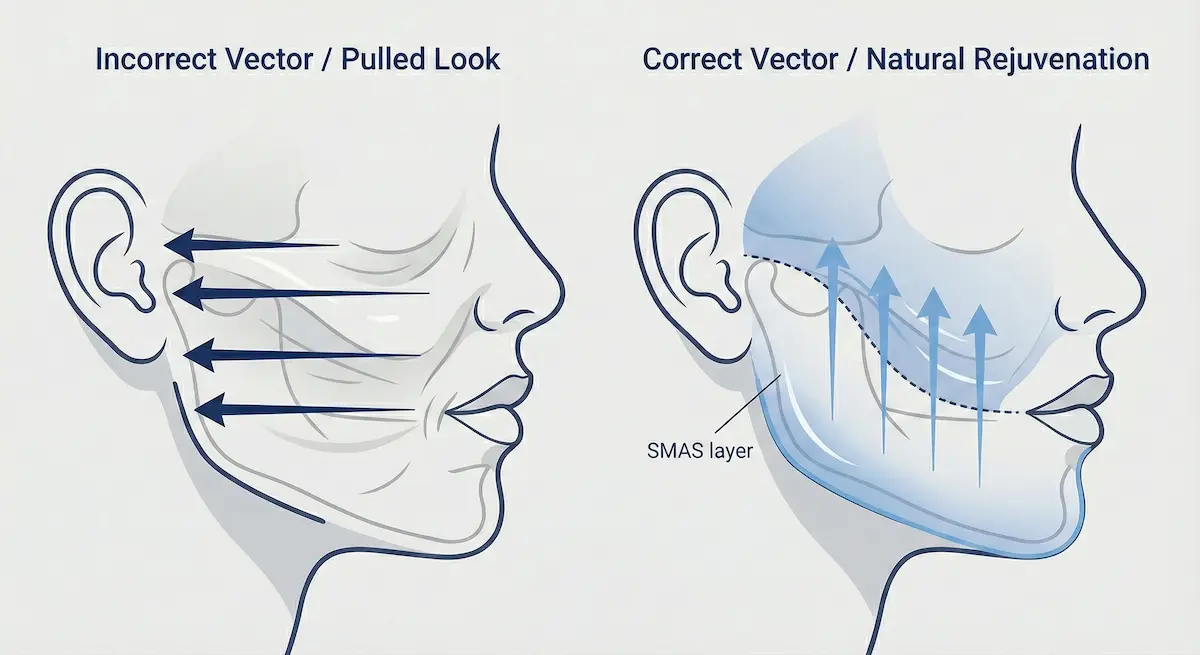
- Vector Misalignment: Pulling the tissue horizontally (towards the ears) instead of vertically (anti-gravity), resulting in a widened mouth or distorted hairline.
- Undertreated Neck: Neglecting the platysma muscle bands, leading to a disconnect between a tight face and an aged neck.
The Difference Between a “Refresh” and a “Correction”
It is crucial to distinguish between a patient seeking a “refresh” due to natural aging and one requiring a “correction” for a suboptimal outcome. If your primary facelift was performed 10 to 15 years ago and you liked the results, a secondary facelift is a natural maintenance step to address the ongoing effects of gravity and volume loss.
However, if your surgery was recent—within the last 2 to 3 years—and you are experiencing visible asymmetry, visible scarring, or persistent jowling, this is a corrective intervention. In these cases, our objective shifts from pure rejuvenation to structural repair, often requiring advanced techniques like the Deep Plane approach to reposition tissues that were not adequately lifted the first time.
Understanding the Complexity: Scar Tissue and Anatomy
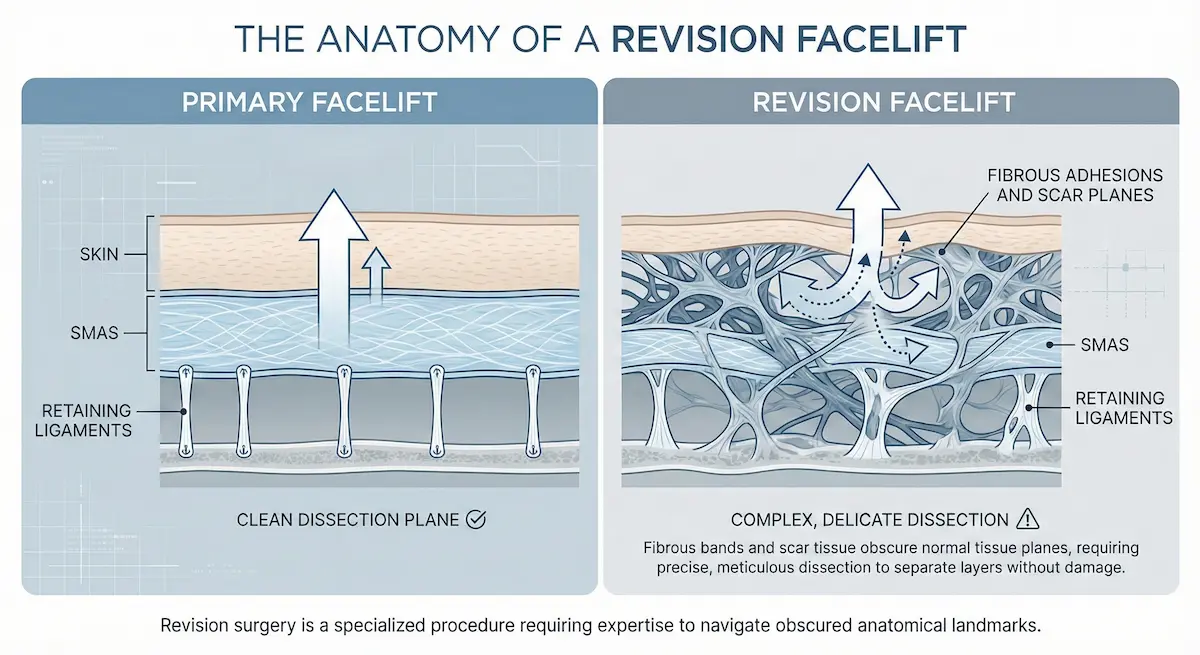
Revision facelift surgery is exponentially more complex than a primary procedure. The original anatomical landmarks may have been shifted, and the natural separation between tissue layers is often obscured by fibrosis (scar tissue). This requires a surgeon with a profound understanding of facial anatomy and high-volume experience in secondary cases.
“In revision surgery, we are not just fighting gravity; we are navigating through the history of the previous surgery. We must carefully release the scar tissue to mobilize the deep layers again, ensuring a tension-free lift that looks completely natural.”
Our surgeons utilize precise dissection techniques to safely release these adhesions. By operating deeper than the previous scar plane—specifically utilizing the Deep Plane technique—we can bypass the scarred subcutaneous layers, minimizing trauma and ensuring a safer, more effective lift.
What Can a Revision Facelift Correct? (Benefits & Goals)
The primary goal of a revision procedure at AKM Clinic is “Restoration, Not Alteration”. We aim to erase the signs of surgery while effectively treating the signs of aging. We do not want you to look different; we want you to look like the best version of yourself that the primary surgery failed to deliver.
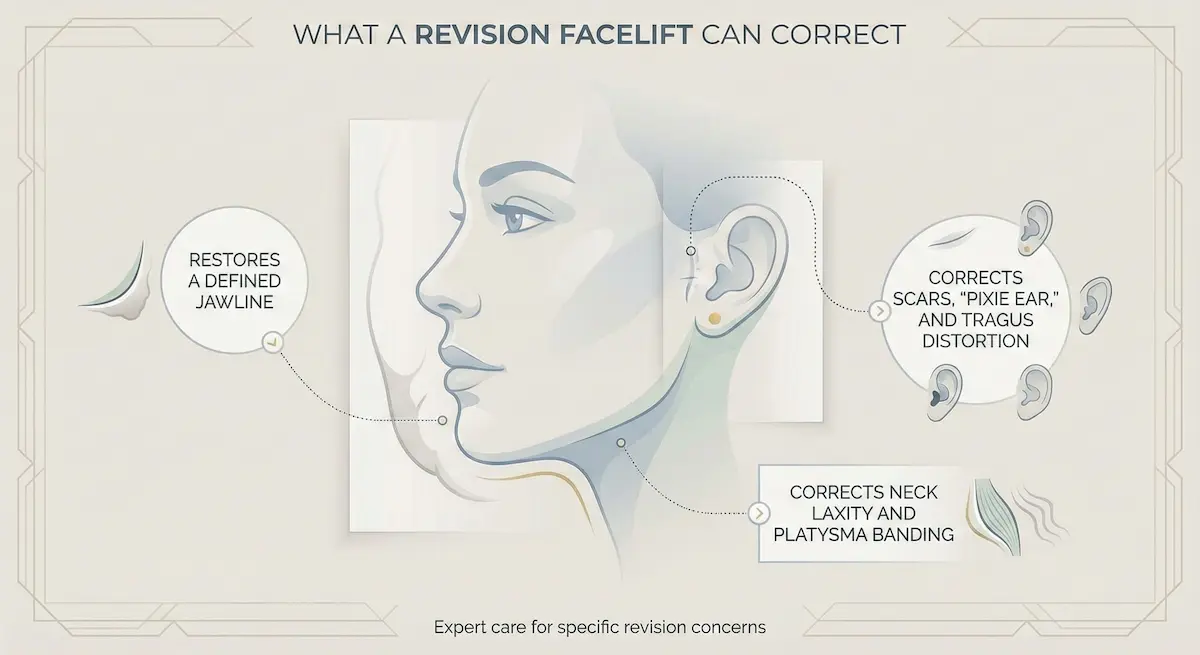
Fixing the “Pixie Ear” and Visible Scars
One of the most tell-tale signs of a poorly executed facelift is the “Pixie Ear” deformity, where the earlobe is pulled down and attached to the cheek due to excessive skin tension. This creates a distinct, elongated appearance that signals “surgery” to the observer.
Through scar revision facelift techniques, we can correct this by releasing the tension on the earlobe. We re-support the deep facial tissues so that the skin can be re-draped gently, allowing the earlobe to settle back into its natural, unattached position. Similarly, widened or visible scars around the ears can be excised and re-closed using tension-free methods to make them virtually invisible.
Addressing the “Cobra Neck” and Recurrent Jowls
A “Cobra Neck” deformity occurs when the center of the neck is hollowed out while the platysma muscle bands remain prominent on the sides, or when fat is aggressively removed without tightening the muscle. Additionally, recurrent jowls are often the result of failing to lift the fallen cheek fat pads.
To correct this, we often perform a concurrent neck lift. We surgically tighten the underlying platysma muscles (Platysmaplasty) and remove deep excess tissue to restore a crisp, 90-degree neck angle. This creates a smooth, defined jawline that serves as the foundation for the entire face.
Restoring Lost Volume and Midface Projection
Many traditional facelifts flatten the face, removing the youthful convexity of the cheeks. A revision surgery offers the opportunity to restore this three-dimensional volume.
By utilizing the deep plane facelift technique, we release the retaining ligaments and lift the mid-face vertically. This action naturally volumizes the cheek area with your own tissue, eliminating the need for excessive fillers and correcting the deep nasolabial folds that surface-level lifts often miss.
The 6 Most Common Reasons Patients Seek a Revision Facelift
Some patients come in with a clearly “bad” result. Others simply feel something is off — tightness, unevenness, or a result that faded too soon. Understanding the most common scenarios helps you evaluate your own case realistically before the consultation.

Over-tightened or “pulled” appearance
One of the most common revision triggers is an overpulled look — tight, distorted features that signal the face has been “operated on.” This usually results from excessive skin tension during the primary surgery rather than proper deep-tissue repositioning. Common signs include a stretched cheek contour, distorted earlobe (the “pixie ear” effect), pulled mouth corners, or an unnatural shine along tension lines.
Visible asymmetry after full healing
Minor post-operative asymmetry is normal during healing, but persistent imbalance after 6–12 months often signals a technical issue that needs correction. This can include differences in jawline contour, uneven neck tightness, mismatched earlobe position, or asymmetric scar placement.
Hematoma, seroma, or scar complications
Medical complications during the primary surgery — hematoma (blood collection), seroma (fluid collection), or infection — can leave residual contour problems, thickened scar tissue, or skin discoloration that benefit from revision. Widened scars, hypertrophic scarring, or visible scar migration are also frequent revision triggers.
Under-correction (results that didn’t do enough)
Not every revision is about “fixing damage.” Some patients simply didn’t get enough lift from a limited/mini approach when their anatomy required a deeper structural intervention. Classic under-correction signs include persistent neck laxity, unchanged jowls, or an overall result that “looks tired” within 12–24 months of the primary surgery.
Natural aging after an older facelift
Even a technically perfect facelift will gradually relax as you age. Many revision patients aren’t correcting a mistake — they’re refreshing a result from 8–15 years ago. This is a planned, anticipated revision, typically easier and more predictable than correcting complications.
This is a planned, anticipated revision, typically easier and more predictable than correcting complications. For a comparison of primary facelift techniques and their expected longevity, see the primary facelift in Turkey guide.
Candidate-technique mismatch in the first surgery
Sometimes the “problem” wasn’t execution — it was a mismatch between the patient’s anatomy and the technique chosen, or between expectations and what the procedure could realistically deliver. Revision in these cases is partly technical and partly about realistic re-planning with an experienced surgeon who will tell you what is and isn’t achievable.
Important: If any of these scenarios sound like your case, you are not a “failed” patient. Revision facelift surgery is a recognized specialty precisely because primary results vary across surgeons, techniques, and patient biology.
Am I a Good Candidate? (Medical Criteria & Timing)
Determining candidacy for revision surgery requires a rigorous evaluation of your physical anatomy, skin quality, and emotional readiness. Not every patient is immediately ready for a second procedure, and as ethical medical providers, we prioritize your long-term safety over immediate intervention.
The Waiting Period: How Long to Wait for Revision Facelift?
Patience is perhaps the hardest prescription to fill, but it is medically non-negotiable. If you are unhappy with a recent surgery, the standard medical protocol is to wait a minimum of 6 to 12 months before undergoing a revision facelift.
This waiting period is essential for several reasons:
- Tissue Softening: Post-operative induration (hardness) and inflammation must fully resolve to allow for safe dissection.
- Scar Maturation: Scar tissue needs time to mature and soften; operating too soon can lead to unpredictable healing and increased bleeding risk.
- Swelling Resolution: Residual swelling can mask the true contours of the face, making it impossible to accurately plan the corrective strategy.
Physical and Psychological Readiness
Beyond the timeline, your tissue quality must be healthy enough to support another surgery. Patients with extremely thin skin or compromised vascularity (blood supply) may require a modified approach. Physically, we assess the elasticity of your skin and the integrity of the underlying SMAS layer during your consultation.
Psychologically, the “Expert Patient” understands that revision surgery is a journey, not a magic wand. You must be emotionally prepared for another recovery period. Our most successful patients are those who have clear, realistic goals—seeking improvement and restoration rather than perfection. We work closely with you to ensure your expectations align with what is surgically achievable.
Who Should Avoid Revision Surgery?
Safety is our absolute priority. There are specific conditions where the risks of revision surgery outweigh the potential benefits. We may advise against or delay surgery if you:
- Are an Active Smoker: Nicotine aggressively constricts blood vessels. In revision surgery, where blood supply is already altered by scar tissue, smoking significantly increases the risk of skin necrosis (tissue death). You must be nicotine-free for at least 4 weeks prior to surgery.
- Have Unrealistic Expectations: If you are seeking to look like a completely different person or erase every single microscopic line, surgery may not be the answer.
- Have Uncontrolled Medical Conditions: Issues like uncontrolled diabetes or high blood pressure must be managed before we can proceed, as they impact healing and anesthesia safety.
Surgical Techniques: Why We Prefer the Deep Plane Approach
The success of a revision facelift is almost entirely dependent on the surgical plane in which the surgeon operates. In primary facelifts, many surgeons utilize the SMAS (Superficial Musculoaponeurotic System) plication technique, which involves stitching the muscle layer to tighten it. While this can be effective initially, it creates a layer of scar tissue that makes a secondary surgery in the same plane difficult and risky.
At AKM Clinic, we advocate for the Deep Plane Facelift as the gold standard for revision cases. By definition, this technique involves dissecting under the SMAS layer and releasing the facial retaining ligaments. This allows us to bypass the scar tissue left by previous superficial lifts, accessing a “virgin” plane of tissue that can be mobilized freely. This strategic advantage enables us to achieve a tension-free lift, correcting the “pulled” look without compromising the skin’s blood supply—a critical safety factor in secondary surgery.
Deep Plane vs. SMAS: The Superiority in Revision Cases
For the patient seeking technical clarity, the difference lies in the vector of movement. Traditional SMAS lifts often pull the face horizontally (towards the ears), which can widen the mouth and create an unnatural sweep.
In contrast, the Deep Plane technique allows for a true vertical vector lift. By releasing the ligaments that tether the facial tissues to the bone, we can reposition the fallen cheek fat pads and muscle vertically to their youthful position. In revision surgery, this vertical repositioning is the only effective way to correct the “lateral sweep” deformity caused by a previous horizontal pull.
| Feature | Traditional SMAS Lift (Common) | Deep Plane Facelift (AKM Standard) |
|---|---|---|
| Surgical Plane | Above the muscle (Subcutaneous/SMAS Plication) | Below the muscle (Sub-SMAS) |
| Handling Scar Tissue | Difficult; fights against existing fibrosis | Bypasses superficial scarring entirely |
| Lift Vector | Horizontal/Diagonal (Risk of “Wind-Swept” look) | Vertical (Anti-Gravity) |
| Skin Tension | High (Relies on skin for tightness) | Zero (Lift is borne by deep structure) |
| Longevity | 5-7 Years (Prone to “Rebound”) | Long-lasting structural correction |
Endoscopic Revision Facelift: When Less is More
Not every revision requires a full lower face intervention. In cases where the dissatisfaction is localized to the upper face—such as a heavy brow or recurrent hooding of the eyes—we utilize an endoscopic revision facelift approach.
Using tiny incisions hidden within the hairline, we insert an endoscope (camera) to visualize and release the brow tissue. This allows us to lift the upper third of the face without removing skin, integrating seamlessly with previous work done on the lower face. This technique is particularly effective for patients who feel their previous surgery left them looking “tired” around the eyes despite a tight jawline.
Male Revision Facelift: Preserving Masculinity
Revision surgery for men presents a unique set of challenges, particularly regarding the preservation of hair growth patterns and masculine features. A poorly executed primary lift on a male patient often results in the loss of sideburns or the displacement of beard hair behind the ear (the “tragus” deformity).
When performing a male revision facelift—a procedure frequently sought by our patients from competitive markets like Beverly Hills—our priority is to restore a strong, defined jawline without feminizing the face. We pay meticulous attention to the incision placement to ensure that the beard line is not distorted further. The Deep Plane approach is essential here, as it defines the jaw angle aggressively (a key masculine trait) without pulling the skin so tight that it looks shiny or artificial.
Anesthesia: The Safety of Awake & Twilight Sedation
For many patients considering a second surgery, the fear is not just about the aesthetic outcome, but about the medical risk—specifically, the risks associated with General Anesthesia. Older patients, or those who had a difficult recovery from anesthesia in their first surgery, often cite this as a major barrier.
At AKM Clinic, we differentiate our practice by offering Awake Facelift and Twilight Sedation protocols. We believe that for facial surgery, deep general anesthesia is often unnecessary and can increase recovery time.
Eliminating General Anesthesia Risks
General anesthesia requires intubation and a machine to breathe for you, which places systemic stress on the body. In contrast, our Twilight Sedation (IV Sedation) keeps you in a state of deep relaxation and sleep, but you continue to breathe on your own. You feel no pain and have no memory of the surgery, but you avoid the “anesthesia hangover,” nausea, and grogginess that typically follow general anesthesia.
“We utilize Twilight Sedation to turn a major surgery into a comfortable experience. By avoiding general anesthesia, we reduce the systemic trauma to the body, allowing our revision patients to walk out of the clinic shortly after surgery, feeling refreshed rather than exhausted.”
Faster Recovery and Reduced Trauma
The “Awake” or “Twilight” approach is not just about comfort; it is a surgical advantage. General anesthesia often causes vasodilation (widening of blood vessels), which can increase bleeding during surgery. By using local anesthesia with sedation, we utilize tumescent fluid which constricts blood vessels, significantly minimizing intra-operative bleeding.
Less bleeding during surgery translates directly to less bruising and swelling during recovery. This is particularly vital in revision facelift surgery, where the tissues are already vascularly compromised due to scar tissue. The gentle nature of this anesthesia protocol supports safer healing and a quicker return to social activities.
Patient Comfort: Exploring the “Awake” Experience
It is natural to be skeptical about being “awake” during surgery. However, patients who have experienced our protocol describe it as surprisingly easy.
Take the experience of our patient Lisa from the USA, who had a “lifelong dream” of rejuvenation but was paralyzed by fear of general anesthesia. After undergoing her procedure under our local anesthesia protocol, she described the recovery as “easy” and “smooth,” feeling “fantastic” just four days later. Similarly, Mehtap from Germany noted she felt “very, very good” immediately after her surgery. This protocol allows us to perform complex corrections with the safety profile of a minor procedure.
Finding the Best Revision Facelift Surgeon: Why Expertise Matters
Choosing a surgeon for a primary facelift is a decision based on aesthetics; choosing a surgeon for a revision facelift is a decision based on anatomy and risk management. Revision surgery requires a skill set that goes far beyond standard plastic surgery training. It demands an intimate knowledge of scar tissue behavior, altered anatomical planes, and the psychological nuance of restoring a patient’s confidence.
At AKM Clinic, we advise patients—especially those conducting high-level research from the US—to look beyond general marketing claims. A “jack-of-all-trades” surgeon is rarely the master of complex secondary facial reconstruction. You need a specialist who understands both the skin surface and the deep functional structures of the face.
The Importance of European Board Certification
In the unregulated world of aesthetic marketing, credentials are your only safety net. Our surgical team is led by European Board Certified Surgeons, a distinction that carries significant weight. Specifically, our leadership includes expertise in Otorhinolaryngology (Head & Neck Surgery) and Facial Plastic Surgery.
This dual-expertise is critical for revision cases. An ENT-based background provides a deeper understanding of the facial nerve pathways and functional structures that are often at risk during secondary dissection. Furthermore, membership in prestigious organizations like the European Academy of Facial Plastic Surgery (EAFPS) signals adherence to the rigorous standards expected by our international patients. When you choose a surgeon with these qualifications, you are choosing a professional whose competence has been peer-reviewed at the highest international level.
Why US Patients Choose AKM Clinic
Patients from competitive medical hubs like New York, Miami and Beverly Hills often ask: “Why should I travel to Istanbul when I have surgeons next door?” The answer lies in the volume of complex cases we manage.
While a typical surgeon in the West may see a handful of deep plane revisions a year, our high-volume practice in Istanbul allows our surgeons to refine their skills on hundreds of complex international cases annually. This depth of experience—specifically with the Deep Plane technique—means we have encountered and solved virtually every complication, from “pixie ears” to asymmetry, giving us the foresight to prevent them in your surgery.
Questions You Must Ask Your Surgeon
If you are interviewing surgeons for a revision facelift, whether in New York or Istanbul, you must be armed with the right questions. We encourage you to ask the following to validate their expertise:
- “Do you perform a Deep Plane lift, or will you just rely on SMAS plication?” (Look for detailed knowledge of ligament release).
- “How will you handle the scar tissue from my previous surgery to prevent nerve damage?”
- “Can I see ‘Before & After’ photos specifically of revision cases, not just primary facelifts?”
- “What is your plan if the skin elasticity is compromised?”
Expert vs Novice: Behavioral Differences That Drive Revision Rates
A facelift revision rate — the proportion of patients who need a second operation after a primary facelift — is a reflection of how consistently a surgical team executes anatomy-first planning, tension control, bleeding management, and structured aftercare. Understanding the real behavioral differences between expert and novice surgical environments helps you evaluate risk realistically before committing to any provider for revision work.
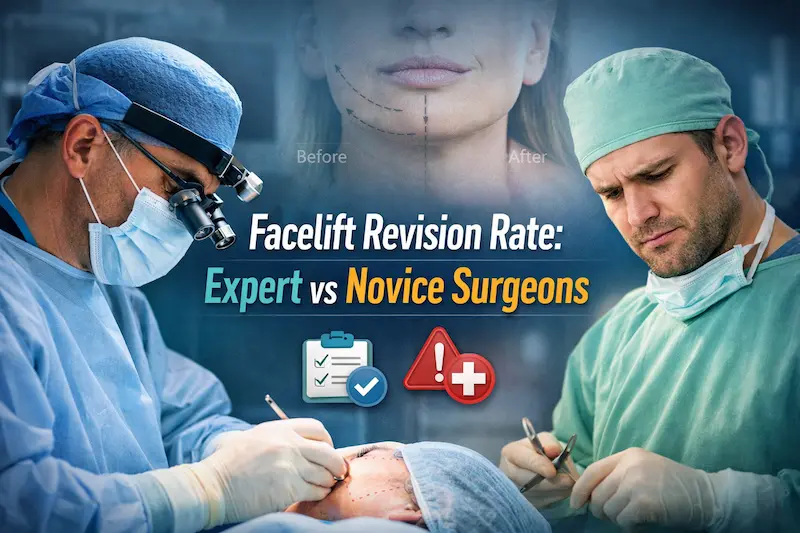
Experience isn’t about years in practice alone — it’s about repeatable decision-making under complexity. The table below shows how the two approaches differ across outcome-relevant factors:
| Factor | More Typical of Expert Surgeons | More Typical of Novice Surgeons |
|---|---|---|
| Case selection | Clear inclusion/exclusion criteria; willing to decline unsafe candidates | Broader inclusion; more likely to accept mismatched anatomy |
| Technique match | Anatomy-driven choice (deep plane where needed, mini only when indicated) | Technique-driven (fits patient into their preferred method) |
| Tension management | Structural support — lifts deep tissue, not skin | Higher reliance on skin pull (distortion, widened scars) |
| Complication response | Defined pathway for hematoma, infection, scar issues | More reactive; minor issues progress |
| Revision readiness | Comfortable with scarred planes, altered blood supply | Less experienced with secondary anatomy |
| Follow-up tracking | Long-term outcome documentation | Limited follow-up beyond early post-op period |
The most important question for the expert patient: ‘Was the second step planned from the beginning, or is it required to fix a problem?’ This single distinction separates a well-designed staged treatment plan from a damage-control operation. Many revision cases benefit from a deep plane approach, which bypasses scar tissue from the primary surgery.
Key terminology to clarify before your consultation
Confusion between terms is one of the biggest reasons patients feel blindsided by a “revision” recommendation. Know the difference:
| Term | What It Usually Means |
|---|---|
| True revision | A second operation to correct an aesthetic or medical problem after healing |
| Touch-up | A small corrective procedure, sometimes office-based under local anesthesia |
| Staged plan | A planned second step (e.g., later fat grafting) discussed upfront from day one |
| Revision facelift surgery | A true secondary facelift performed to correct or refine a prior facelift |
The most important question for the expert patient: “Was the second step planned from the beginning, or is it required to fix a problem?” This single distinction separates a well-designed staged treatment plan from a damage-control operation.
Common novice-environment failure points
A “novice” label doesn’t automatically mean unsafe — but certain failure patterns are more common in less-experienced surgical environments, and they often trigger revision work:
- Wrong tissue plane during the primary surgery, leading to insufficient lift or contour irregularities
- Over-reliance on skin tension instead of deep-tissue repositioning, causing distortion and widened scars
- Inconsistent neck strategy — under-addressing platysma bands or submental laxity
- Weak nicotine/smoking screening, which impairs wound healing
- Limited complication pathways — no clear escalation plan when something isn’t healing as expected
- Weak continuity of care for international patients needing structured remote follow-up
Weak continuity of care for international patients needing structured remote follow-up. For an overview of how an accountable revision consultation and remote follow-up should be structured, see the AKM Clinic patient journey.
Practical rule for evaluating any surgeon: A surgeon who handles revision work routinely will calmly and transparently answer all of these questions. Evasion, defensiveness, or “every patient is different” non-answers are red flags — especially when you’re comparing providers internationally.
Step-by-Step: Your Revision Journey in Istanbul
We understand that traveling abroad for corrective surgery adds a layer of logistical anxiety to an already emotional process. That is why we have engineered a seamless, VIP patient journey designed to remove every variable except your recovery. From the moment you land, you are not a tourist; you are our guest.
The Virtual Consultation: Accurate Diagnosis Remotely
Your journey begins long before you board a plane. We utilize a comprehensive free virtual consultation process to assess your candidacy remotely. During this video call, our medical team analyzes your current facial structure, scar placement, and the specific issues from your previous surgery.
This is not a sales call; it is a medical evaluation. We discuss your aesthetic goals, review your photos, and provide a personalized treatment plan with a transparent, all-inclusive price quote. This ensures that you have a complete understanding of the surgical strategy and costs before you ever leave your home.
Arrival and Pre-Operative Mapping
Upon arrival at Istanbul Airport (IST or SAW), you are greeted by a private driver and escorted to your 5-star hotel via a VIP vehicle. Once at the clinic, we move beyond simple photography. We utilize the 3D Vectra Imaging System for meticulous pre-operative planning.
This advanced technology allows us to create a 3D simulation of your face. In revision cases, where asymmetry is a common concern, this tool is invaluable. It allows us to show you realistic potential outcomes, map out the volume restoration needed, and ensure that our surgical plan aligns perfectly with your expectations.
The Surgery Day: What to Expect
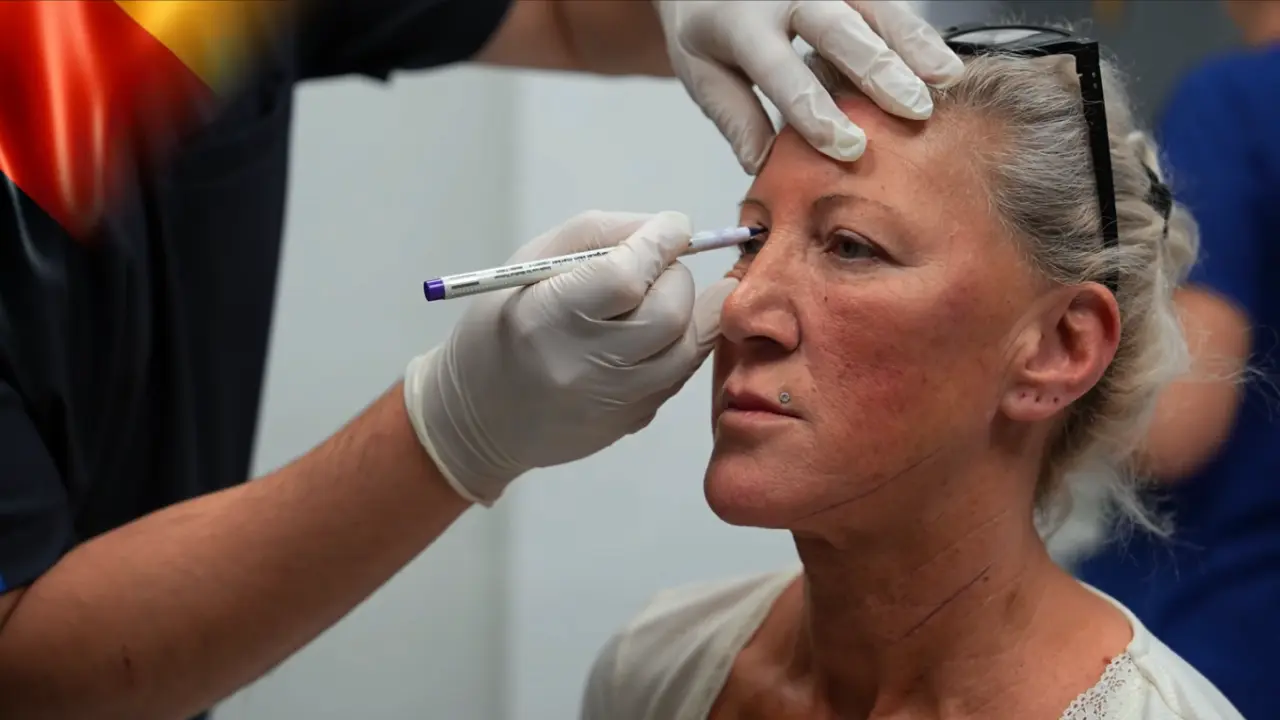
On the day of your procedure, your dedicated Patient Host—who speaks your language—accompanies you to the clinic. You will have a final, detailed in-person consultation with your surgeon to mark the incision sites and confirm the plan.
Because we prioritize your safety, strict pre-operative health screenings are conducted to ensure you are fit for surgery. Whether you opt for our signature Awake Facelift or Twilight Sedation, our team monitors your vitals continuously. Post-surgery, you are never left alone; our team monitors your initial recovery, and your host remains available 24/7 to address any needs.
Recovery Timeline: Accelerating Your Healing
For the busy professional or the anxious patient, “downtime” is often the biggest logistical barrier. In revision facelift cases, where tissue handling is more extensive, patients often fear a prolonged and painful recovery. However, our protocols are engineered to defy these expectations.
We do not just wait for you to heal; we actively accelerate the process. By combining advanced surgical techniques that minimize trauma with state-of-the-art recovery technology, we aim to cut your “social downtime” significantly, often allowing patients to be camera-ready in just 14 days.
Week 1: The Critical Healing Phase
The first week is about rest and protection. Because we use the Deep Plane technique, the skin is not under tension, which ironically can make the recovery less painful than a tight, skin-only lift. However, you must expect swelling and bruising, which is a natural response to the release of deep tissues.
During this phase, you are not alone. Your dedicated Patient Host remains available 24/7 via WhatsApp to address any needs or questions. We monitor your incision sites closely to ensure the skin edges are healing perfectly. Most patients report feeling “fantastic” or “very, very good” within just a few days, often stopping painkillers after the first day.
Our Secret Weapon: HBOT & LLLT Technology
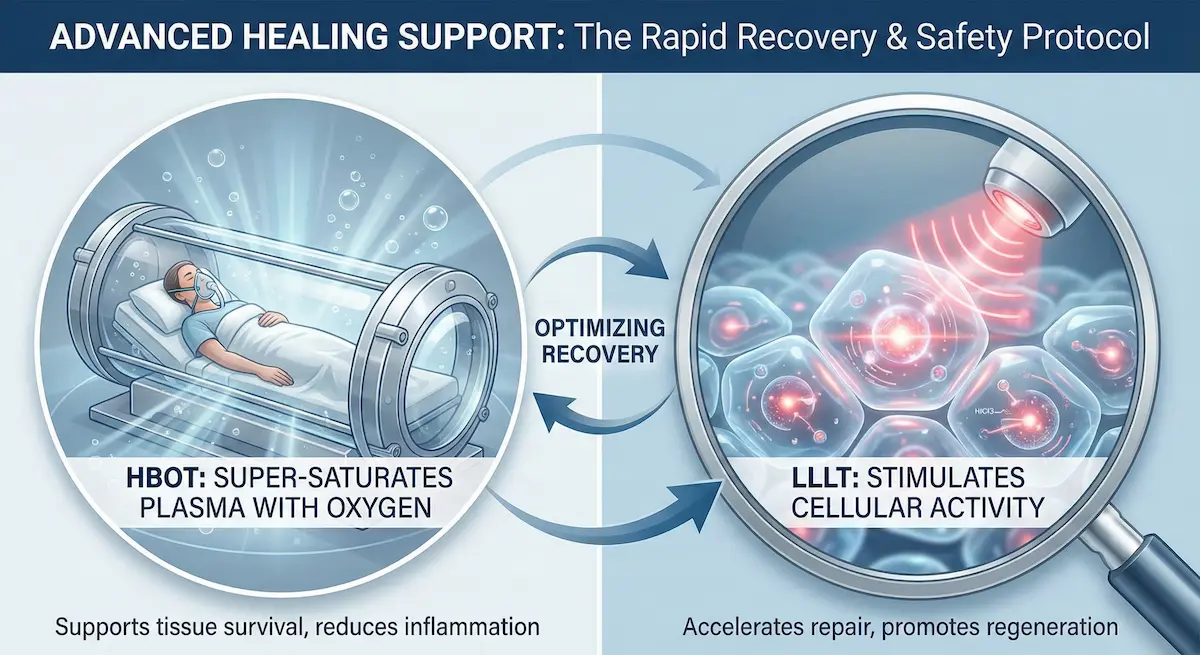
In revision surgery, the blood supply to the skin can be compromised due to old scar tissue. To mitigate this and turbocharge your recovery, we utilize a specific “Rapid Recovery & Safety Protocol” involving Hyperbaric Oxygen Therapy (HBOT) and Low-Level Laser Therapy (LLLT).
Hyperbaric Oxygen Therapy (HBOT) for Tissue Survival:
We expose you to 100% pure oxygen in a pressurized environment. This process super-saturates your blood plasma with oxygen, enabling it to diffuse deep into surgical tissues—even in areas where circulation is compromised by previous scarring.
- It actively ensures tissue survival and promotes regeneration, acting as our “#1 safety promise”.
- It drastically reduces inflammation and bruising, which is critical for getting you back to your normal life quickly.
- It provides a dual defense against infection by creating an environment hostile to bacteria.
Low-Level Laser Therapy (LLLT) for Scar Management:
To ensure your incisions heal invisibly, we use medical-grade laser diodes emitting a therapeutic 650nm wavelength. This stimulates fibroblasts to produce collagen, resulting in stronger, smoother skin and improved, less visible scarring.
Long-Term Maturation: 1 Month to 1 Year
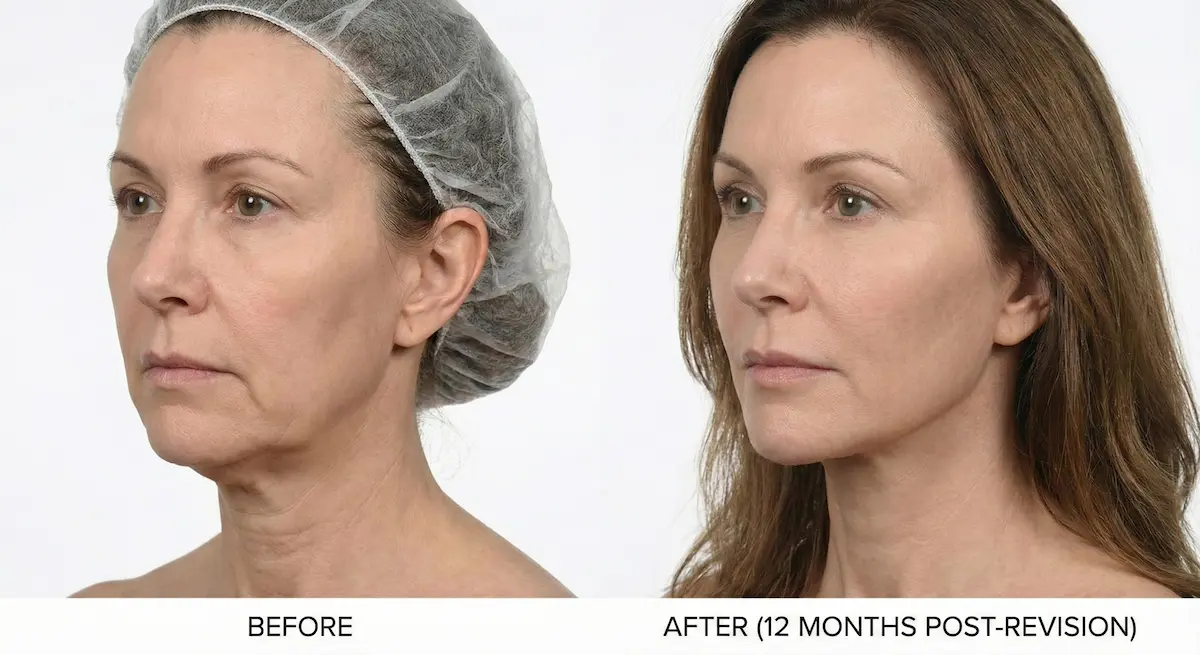
By the one-month mark, most patients look “refreshed” and “revitalized”. However, revision facelift before and after results continue to improve. The deep structures settle into their new position, and the skin texture often improves, developing what we call the “deep plane glow”. True maturation of the fine internal scars takes 6 to 12 months, but for the outside world, you will look like yourself—just younger—much sooner.
Safety & Risks: Is Revision Surgery Safe in Turkey?
We believe in radical transparency. Revision facelift surgery carries higher risks than primary surgery due to the altered anatomy. However, these risks are manageable when placed in expert hands. We do not shy away from discussing them; instead, we explain exactly how we mitigate them.
Managing Nerve Injury Risks
The facial nerve is the “electric wiring” of your face. In revision cases, scar tissue can distort the location of these nerves. This is why the surgeon’s expertise is non-negotiable. Our lead surgeons, with backgrounds in Otorhinolaryngology (Head & Neck Surgery), possess a deep, functional knowledge of these pathways.
We utilize the Deep Plane technique precisely because it is safer for the nerves. By dissecting under the SMAS layer and releasing ligaments under direct vision, we avoid the blind pulling that can damage nerve branches. This visual precision is your best insurance against nerve injury.
Skin Necrosis and Circulation Issues
Skin necrosis (tissue death) occurs when the skin does not get enough blood. This is the most feared complication in revision surgery, especially if the skin was thinned during a previous procedure.
We mitigate this in two ways:
- First, the Deep Plane lift places zero tension on the skin, ensuring that blood vessels are not compressed.
- Second, our use of HBOT floods the tissue with oxygen, supporting survival even in fragile areas. This technology is not just a luxury; for revision patients, it is a critical safety net.
Infection Control Standards (JCI/ISO)
Safety also means sterility. We operate on a “zero-compromise” policy for hygiene. Our surgeries are performed in JCI-accredited hospitals that meet or exceed the rigorous standards of the USA.
We strictly adhere to multi-stage sterilization protocols identical to those mandated by the CDC and the World Health Organization (WHO). Furthermore, our clinic is fully licensed by the Turkish Ministry of Health to serve international patients, ensuring that your procedure takes place in a regulated, verified medical environment.
Cost Analysis: Revision Facelift Cost 2026(Turkey vs. US)
For the discerning patient, price is not the only factor, but it is a significant one. The cost of a revision facelift in major Western hubs like New York, Miami, or Beverly Hills can be prohibitive, often ranging from USD 50,000 to over USD 100,000 when facility fees and anesthesia are added. At AKM Clinic, we offer a solution that provides “USA-Level” quality at a fraction of that cost, but it is crucial to understand why.
Understanding the Price Gap
A lower price tag does not mean lower quality; it reflects a different economic reality. The primary reason for the cost difference is the favorable exchange rate between the US Dollar/GBP and the Turkish Lira, combined with significantly lower national operational costs in Turkey (such as staff salaries, insurance, and facility rents).
We do not compromise on medical standards. We use the same FDA-approved materials, operate in JCI-accredited hospitals that meet Western standards, and utilize advanced technologies like the 3D Vectra Imaging System. Effectively, you are paying for the surgeon’s expertise and the medical service, not the inflated overhead costs of a Manhattan or Harley Street clinic.
What is Included in Our VIP Packages?
In the US, patients are often blindsided by “hidden costs”—separate bills for the anesthesiologist, the operating room hourly rate, or post-op garments. At AKM Clinic, we operate on a model of absolute financial transparency. Our revision facelift cost is presented as a comprehensive VIP package.
| What’s Included in Your VIP Package | What’s Not Included |
|---|---|
| Complete Surgical Procedure (Surgeon fees) Anesthesia & Operating Room Fees All Pre-Operative Tests & Health Screenings 5-Star Hotel Accommodation (Premium Partner Hotels) VIP Airport & Clinic Transfers (Private Vehicle) 24/7 Dedicated Patient Host All Post-Operative Medications & Garments Long-Term Virtual Follow-Up Care | International Flight Tickets Personal Travel Insurance Personal Expenses (e.g., extra meals, shopping) Visa Fees (if applicable) |
Hidden Costs to Watch Out For Elsewhere
When comparing quotes, be vigilant. Many clinics advertise a “surgical fee” that excludes the facility fee, which can be thousands of dollars. Others may charge extra for revision cases due to the increased time required. Our quote is final. There are no surprise bills on your departure.
Frequently Asked Questions (FAQ)
Can a facelift be done a third time?
Yes, a third or even fourth facelift is possible, but the complexity increases with each intervention. The key factor is not the number of previous surgeries, but the quality of the skin and the amount of scar tissue present. Our surgeons will evaluate your tissue elasticity to determine if another procedure can be performed safely without compromising blood supply.
Is revision facelift more painful than the first one?
Surprisingly, many patients report less pain with our revision techniques. This is because we use the Deep Plane approach, which releases tension on the skin. Pain in a facelift usually comes from tight skin pulling; by lifting the deep layers instead, we eliminate that tension. Furthermore, our "Awake" or Twilight Sedation protocols significantly reduce post-operative grogginess and nausea.
Can I combine revision facelift with a neck lift?
Absolutely. In fact, it is the most common combination. A "Cobra Neck" or persistent banding is a frequent reason for seeking revision. We almost always perform a Deep Neck Lift (Platysmaplasty) concurrently to ensure the neck matches the rejuvenated jawline, creating a harmonious profile.
Will I look "pulled" after a second surgery?
This is the #1 fear of our patients. The "pulled" look is caused by horizontal tension on the skin. Because we utilize the Deep Plane technique, we lift the tissues vertically (anti-gravity) and place zero tension on the skin itself. This restores natural volume and contour, avoiding the "wind-swept" distortion associated with traditional skin-tightening lifts.
Where are the incision scars placed, and will they be visible?
In revision surgery, we often have the opportunity to improve previous bad scarring. We place incisions meticulously within the natural creases of the ear (tragus) and hidden within the hairline. Using tension-free closure techniques ensures that the new scars heal as fine, invisible lines, correcting any widened or visible scars from your primary surgery.
How long will the results of a revision facelift last?
While no surgery stops the clock, a deep plane revision facelift turns it back significantly. Because we reposition the deep structural layers of the face rather than just stretching the skin, the results are far more durable than standard lifts. You can expect the structural correction to last 10 to 15 years, depending on your skin quality and lifestyle.
Can I undergo this surgery if I have had fillers or threads?
Yes, but we need to know about them. Fillers usually do not interfere with surgery, but non-absorbable threads or massive scar tissue from previous thread lifts can complicate dissection. During your consultation, we map out these variables. In many cases, we can remove old, problematic threads or dissolved filler during the revision procedure to restore a smooth contour.
Can I combine Eyelid Surgery (Blepharoplasty) with my Revision Facelift?
Yes, this is a highly recommended synergy for a "complete structural reset". Many revision patients feel their eyes look tired even if their jawline is tight. Combining an upper or lower blepharoplasty with your facelift ensures a harmonious, balanced rejuvenation across the entire face, performed under the same anesthesia period.
How soon can I fly home after surgery?
Most of our international patients are cleared to fly home 7 to 10 days after surgery. By this time, your initial healing is checked, drains (if any) are removed, and you are fit for travel. Our VIP team manages all your transfers to the airport to ensure your journey is smooth and stress-free.
Is "Awake" or Twilight Sedation really safe for a complex revision?
Yes, and often safer than General Anesthesia. We specialize in performing complex Deep Plane Facelifts under Twilight Sedation or Local Anesthesia. This avoids the systemic stress, nausea, and "hangover" of general anesthesia, allowing for a faster recovery. Patients like Lisa from the USA describe this experience as "easy" and "smooth," even for major combination surgeries.
What is a typical facelift revision rate?
A meaningful revision rate depends entirely on how it's measured — specifically the numerator (how many patients had a second operation), denominator (out of how many total), and time window (6 months, 1 year, or longer). Published plastic surgery literature typically reports revision rates in the range of 5–15% for primary facelifts, but this varies significantly based on follow-up duration, technique, and whether minor touch-ups are counted. A surgeon who tracks outcomes honestly over several years may appear to have a "higher" rate simply because they measure what many clinics don't.
How do I know if I actually need a revision or just more healing time?
Swelling, asymmetry, and contour changes during the first 6–12 months after a facelift are often part of normal healing — not revision triggers. True revision candidates usually show persistent issues after the full healing window: unchanged asymmetry, obvious overpulled appearance, visible scar widening, earlobe distortion (the "pixie ear" effect), or results that don't match what was discussed pre-operatively. If you're uncertain, wait at least 9–12 months before deciding and consult a revision-focused surgeon for an objective second opinion.
Is a revision facelift harder than a primary facelift?
Generally yes. Revision surgery involves navigating scarred tissue planes, altered blood supply, and anatomy that differs from "textbook" after the first operation. Not every facelift surgeon is experienced with these challenges, which is why revision work is considered a specialty within facial plastic surgery. When evaluating a surgeon for your revision, ask specifically about their volume of revision cases — not just their total facelift volume.
How long should I wait between my primary facelift and a revision?
For most patients, a minimum of 6–12 months is recommended to allow tissue healing, scar maturation, and final result assessment. Rushing into revision before the tissues have fully settled can make the second surgery riskier and may correct problems that would have resolved on their own. Exceptions include urgent medical issues (infection, unresolved hematoma) or severe distortion that doesn't improve with conservative management.
What questions should I ask a surgeon about their revision rate?
Focus on five questions during the consultation: (1) How do you define a revision? (2) What is your follow-up window — 6 months, 1 year, or longer? (3) What percentage of your practice is revision work? (4) Can you show me revision cases you've corrected, with consistent photo standards? (5) What is your protocol if my revision doesn't heal as expected? Clinics that answer these clearly are signaling a safety-first, evidence-driven practice.
Medical Disclaimer: The content on this page is for educational and informational purposes only and does not constitute medical advice, diagnosis, or treatment. The information provided here has been reviewed by the AKM Clinic Medical Board for accuracy. However, individual results may vary, and candidacy for specific procedures, including Revision Facelift, can only be determined through a private medical consultation with our surgeons. Always seek the advice of your physician or other qualified health provider with any questions you may have regarding a medical condition.